

Mouse Genome Database (MGD) 2019
Open accessThe DOI matches its Crossref record; 16 of the 17 references it cites were found in a registry or an index.
Abstract
The Mouse Genome Database (MGD; http://www.informatics.jax.org) is the community model organism genetic and genome resource for the laboratory mouse. MGD is the authoritative source for biological reference data sets related to mouse genes, gene functions, phenotypes, and mouse models of human disease. MGD is the primary outlet for official gene, allele and mouse strain nomenclature based on the guidelines set by the International Committee on Standardized Nomenclature for Mice. In this report we describe significant enhancements to MGD, including two new graphical user interfaces: (i) the Multi Genome Viewer for exploring the genomes of multiple mouse strains and (ii) the Phenotype-Gene Expression matrix which was developed in collaboration with the Gene Expression Database (GXD) and allows researchers to compare gene expression and phenotype annotations for mouse genes. Other recent improvements include enhanced efficiency of our literature curation processes and the incorporation of Transcriptional Start Site (TSS) annotations from RIKEN's FANTOM 5 initiative.
Overview
The claims and statistics of this paper haven’t been checked yet.
Free: it reads the open-access text and checks the first 5 claims that cite a source we can check. Create a free account to check every claim.
Integrity signals
Registry
Cites
Statistics
Figures
Verification
Claims the paper makes
The claims and statistics of this paper haven’t been checked yet.
Free: it reads the open-access text and checks the first 5 claims that cite a source we can check. Create a free account to check every claim.
Claims other papers make about this one
Each is checked against this paper’s own text: does it say what the citing paper says it does?
The source backs part of the claim, not all of it — or backs it for a different population, condition or comparison.
In the citing paper
“However, available information in the MGI database [32, 34, 36] indicates that for some of these genes, their knock-out results in heart defects (Fig. 4, red border) or they are expressed in the heart (Fig. 4, double-line border).”
From A cis-regulatory-directed pipeline for the identification of genes involved in cardiac development and disease (2021) · cites this paper as [34]
Experimental — accuracy not yet measuredThe check wasn’t confident either way, so it gives no verdict — never disputed.
In the citing paper
“Most (15/16) of nearby genes or 3D interaction genes were expressed in branchial arch and embryo ectoderm in mice [36,37].”
From Combined genome-wide association study of 136 quantitative ear morphology traits in multiple populations reveal 8 novel loci (2023) · cites this paper as [37]
Experimental — accuracy not yet measuredThe check wasn’t confident either way, so it gives no verdict — never disputed.
In the citing paper
“Yet, it is expressed in several tissues based on the transcriptome data (Fig. 3A) and in situ hybridization results of E14.5 mouse embryos [34] (Fig. 3C).”
From A cis-regulatory-directed pipeline for the identification of genes involved in cardiac development and disease (2021) · cites this paper as [34]
Experimental — accuracy not yet measuredThe check wasn’t confident either way, so it gives no verdict — never disputed.
In the citing paper
“Similarly, Cbx5 is also highly expressed in all four tissues (Fig. 3A) and is widely expressed in E14.5 embryo [34] (Fig. 3D).”
From A cis-regulatory-directed pipeline for the identification of genes involved in cardiac development and disease (2021) · cites this paper as [34]
Experimental — accuracy not yet measured
Self-check
Percentages, sums and reported differences re-computed from the paper’s own numbers.
The self-check needs the paper’s full text.
Citations
Cites
The Gene Ontology Resource: 20 years and still GOing strong
The Gene Ontology Consortium (2019) · Nucleic Acids Research · doi:10.1093/nar/gky1055 · Cited by 4,747
A promoter-level mammalian expression atlas
The FANTOM Consortium and the RIKEN PMI and CLST (DGT) (2014) · Nature · doi:10.1038/nature13182 · Cited by 1,982
Expansion of the Gene Ontology knowledgebase and resources
The Gene Ontology Consortium (2017) · Nucleic Acids Research · doi:10.1093/nar/gkw1108 · Cited by 1,850
JBrowse: A next-generation genome browser
Skinner, M. E., Uzilov, A. V., Stein, L. D., Mungall, C. J., & Holmes, I. H. (2009) · Genome Research · doi:10.1101/gr.094607.109 · Cited by 717 · cited 1×
“org/), a JavaScriptbased interactive genome browser with multiple features for navigation and track selection (14).”
BackgroundThe Mouse Genome Database (MGD): facilitating mouse as a model for human biology and disease
Eppig, J. T., Blake, J. A., Bult, C. J., Kadin, J. A., Richardson, J. E., & The Mouse Genome Database Group (2015) · Nucleic Acids Research · doi:10.1093/nar/gku967 · Cited by 357
Self-citationSupporting conditional mouse mutagenesis with a comprehensive cre characterization resource
Heffner, C. S., Herbert Pratt, C., Babiuk, R. P., Sharma, Y., Rockwood, S. F., Donahue, L. R., Eppig, J. T., & Murray, S. A. (2012) · Nature Communications · doi:10.1038/ncomms2186 · Cited by 230 · cited 1×
“Other database resources that are coordinated within the MGI consortium include the Gene Expression Database (GXD) (3), the Mouse Tumor Biology Database (MTB) (4), the Gene Ontology project (GO) (5), MouseMine (6), the International Mouse Strain Resource (IMSR) (7) and the CrePortal database of recombinase expressing…”
BackgroundMouse Genome Database (MGD)-2018: knowledgebase for the laboratory mouse
Smith, C. L., Blake, J. A., Kadin, J. A., Richardson, J. E., Bult, C. J., & the Mouse Genome Database Group (2018) · Nucleic Acids Research · doi:10.1093/nar/gkx1006 · Cited by 219
Self-citationMouseMine: a new data warehouse for MGI
Motenko, H., Neuhauser, S. B., O’Keefe, M., & Richardson, J. E. (2015) · Mammalian Genome · doi:10.1007/s00335-015-9573-z · Cited by 132 · cited 9×
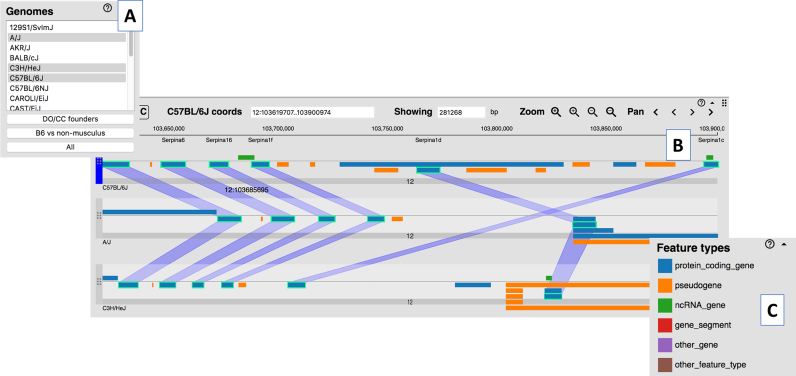
“Gene model structure details and sequences for all 19 annotated mouse genomes are also accessible from MGI’s MouseMine (http://www.mousemine.org) through its user interface and web services (MouseMine web services back the Multiple Genome Viewer).”
BackgroundInfluentialSelf-citationThe mouse Gene Expression Database (GXD): 2019 update
Smith, C. M., Hayamizu, T. F., Finger, J. H., Bello, S. M., McCright, I. J., Xu, J., Baldarelli, R. M., Beal, J. S., Campbell, J., Corbani, L. E., et al. (2019) · Nucleic Acids Research · doi:10.1093/nar/gky922 · Cited by 119
Self-citationThybert, D., Roller, M., Navarro, F. C. P., Fiddes, I., Streeter, I., Feig, C., Martin-Galvez, D., Kolmogorov, M., Janoušek, V., Akanni, W., et al. (2018) · Genome Research · doi:10.1101/gr.234096.117 · Cited by 117 · cited 2×
“The recent release of assembled and annotated genomes for 16 inbred mouse strains (https://www.biorxiv.org/content/ early/2018/02/12/235838) and two wild-derived strains (CAROLI/EiJ and PAHARI/EiJ) (10) represent major milestones in mouse genetics and comparative genomics.”
Background
Cited by
Items 501–600 of 723
Yang, A. X., Ramos-Rodriguez, L., Sorkhdini, P., Yang, D., Norbrun, C., Majid, S., Lee, S., Zhang, Y., Holtzman, M. J., Boyd, D. F., et al. (2025) · eLife · doi:10.7554/elife.104359.3 · Cited by 4
KibioR & Kibio: a new architecture for next-generation data querying and sharing in big biology
Ongaro-Carcy, R., Scott‐Boyer, M., Dessemond, A., Belleau, F., Leclercq, M., Périn, O., & Droit, A. (2021) · Bioinformatics · doi:10.1093/bioinformatics/btab157 · Cited by 4
Konopka, T., Ng, S. L.-K., & Smedley, D. P. (2021) · PLoS Computational Biology · doi:10.1371/journal.pcbi.1009283 · Cited by 3
de la Fuente, L., Pozo‐Valero, M. D., Perea‐Romero, I., Blanco‐Kelly, F., Fernández‐Caballero, L., Cortón, M., Ayuso, C., & Mínguez, P. (2023) · International Journal of Molecular Sciences · doi:10.3390/ijms24021661 · Cited by 3
An approach for proteins and their encoding genes synonyms integration based on protein ontology
Wang, X., Jing, X., Dou, F., & Cao, H. (2023) · BMC Bioinformatics · doi:10.1186/s12859-023-05464-0 · Cited by 3
Novel markers and networks related to restored skeletal muscle transcriptome after bariatric surgery
Ouni, M., Kovac, L., Gancheva, S., Jähnert, M., Zuljan, E., Gottmann, P., KAHL, S., de Angelis, M. H., Roden, M., & Schürmann, A. (2023) · Obesity · doi:10.1002/oby.23954 · Cited by 3
“Genes identified in module M1 were screened for obesity-related phenotypes obtained in knockout mice that were analyzed by the International Mouse Phenotyping Consortium (IMPC) and Mouse Genome Informatics (MGI) [21, 22].”
MethodZhang, L., Huang, T., He, H., Xu, F., Yang, C., Lu, L., Tian, G., Wang, L., & Mi, J. (2024) · Experimental Neurology · doi:10.1016/j.expneurol.2024.114921 · Cited by 4
Differential expression of microRNAs in the developing avian auditory hindbrain
Saleh, A. J., & Nothwang, H. G. (2021) · The Journal of Comparative Neurology · doi:10.1002/cne.25205 · Cited by 3
Meng, X., Pan, B., Zhang, Z., Guo, P., Wang, C., Huang, X., Si, N., & Jiang, H. (2022) · Journal of Craniofacial Surgery · doi:10.1097/scs.0000000000008904 · Cited by 5
Frederiksen, S., Wicki‐Stordeur, L. E., & Swayne, L. A. (2019) · bioRxiv (Cold Spring Harbor Laboratory) · doi:10.1101/801563 · Cited by 3
NOTCH-YAP1/TEAD-DNMT1 axis regulates hepatocyte reprogramming into intrahepatic cholangiocarcinomaPreprint
Hu, S., Molina, L. M., Tao, J., Liu, S., Hassan, M., Singh, S., Poddar, M., Bell, A. W., Sia, D., Oertel, M., et al. (2020) · bioRxiv (Cold Spring Harbor Laboratory) · doi:10.1101/2020.12.03.410993 · Cited by 3
Bowman, J. D., Silva, N., Schüftan, E., Almeida, J. M., Correia, R. B., Oliveira, R. A., Tüttelmann, F., Enard, D., Navarro‐Costa, P., & Lynch, V. J. (2026) · eLife · doi:10.7554/elife.94563 · Cited by 7
“We used the Gene List Analysis and Visualization (VLAD) tool (https://www.informatics.jax.org/vlad/) to test if genes with K≠1 were enriched in the Mouse Genome Informatics database ( Bult et al., 2019 ).”
Ee, L.-S., Medina-Cano, D., Uyehara, C. M., Schwarz, C., Goetzler, E., Salataj, E., Polyzos, A., Madhuranath, S., Evans, T., Hadjantonakis, A., et al. (2024) · bioRxiv (Cold Spring Harbor Laboratory) · doi:10.1101/2024.05.30.596630 · Cited by 3
Armirola-Ricaurte, C., Morant, L., Adant, I., Hamed, S. A., Pipis, M., Efthymiou, S., Amor‐Barris, S., Atkinson, D., de Vondel, L. V., Tomić, A., et al. (2024) · medRxiv · doi:10.1101/2024.07.03.24309787 · Cited by 3
Generation and analysis of a mouse multitissue genome annotation atlas
Adams, M. S., & Vollmers, C. (2024) · Genome Research · doi:10.1101/gr.279217.124 · Cited by 7
Bulut, B., Gürel, S., Ünüvar, Ö. C., Gürel, E., Şahin, Y., Çabuk, U., & Ünlü, E. S. (2023) · Tropical Plant Biology · doi:10.1007/s12042-023-09344-y · Cited by 2
Exploring the omnigenic architecture of selected complex traits
Ratajczak, F., Heinig, M., & Falter‐Braun, P. (2025) · The American Journal of Human Genetics · doi:10.1016/j.ajhg.2025.07.006 · Cited by 3
“For validation, we have queried the Mouse Genome Informatics 35,36 (MGI) data-base using the same standardized clinical phenotype terms and then compared enrichment among candidates and peripherals using Fisher’s exact tests.”
Vinogradov, E., Edri, B., Ravkaie, L., Lazarescu, O., Gharra, F., Jubran, J., Ben‐Zvi, A., & Yeger‐Lotem, E. (2025) · Autophagy · doi:10.1080/15548627.2025.2580035 · Cited by 2
“We associated each human gene with its homologous mouse gene using data on orthologous genes from Mouse Genome Informatics (MGI) website [119,120].”
Su, R., Du, Z., Li, S., Liu, H., Gao, D., Zhan, S., Li, C., Meng, T., Chen, L.-N., Fan, L.-H., et al. (2026) · Nucleic Acids Research · doi:10.1093/nar/gkag103 · Cited by 6
Exploring automatic inconsistency detection for literature-based gene ontology annotation
Chen, J., Goudey, B., Zobel, J., Geard, N. L., & Verspoor, K. M. (2022) · Bioinformatics · doi:10.1093/bioinformatics/btac230 · Cited by 4
A genetic locus complements resistance to Bordetella pertussis-induced histamine sensitization
Raza, A., Diehl, S. A., Krementsov, D. N., Case, L. K., Li, D., Kost, J., Ball, R. L., Chesler, E. J., Philip, V. M., Huang, R., et al. (2023) · Communications Biology · doi:10.1038/s42003-023-04603-w · Cited by 2
Machine learning reveals genetic modifiers of the immune microenvironment of cancer
Riley-Gillis, B. M., Tsaih, S., King, E. A., Wollenhaupt, S., Reeb, J., Peck, A. R., Wackman, K. K., Lemke, A., Rui, H., Dezső, Z., et al. (2023) · iScience · doi:10.1016/j.isci.2023.107576 · Cited by 2
“MGI Mouse Knockout Phenotypes – Gene annotations for immunological and BrCa phenotypes from genetically engineered mouse models (GEMMs) were downloaded from the MGI database (Bult et al. 2019) (Table S20-S21).”
MethodZhang, C., Hu, Y., & Gao, L. (2023) · Scientific Reports · doi:10.1038/s41598-023-42883-8 · Cited by 4
Uncovering Evolutionary Adaptations in Common Warthogs through Genomic Analyses
Yang, X., Li, X., Bao, Q., Wang, Z., He, S., Qu, X., Tang, Y., Song, B., Huang, J., & Yi, G. (2024) · Genes · doi:10.3390/genes15020166 · Cited by 2
“The corresponding genes were then converted to mouse orthologous genes and phenotype analysis was conducted in the MGI database. https://www.informatics.jax.org/ (accessed on 18 October 2023) [52].”
MethodInfluentialXie, H., Crawford, L. A., & Conard, A. M. (2024) · BMC Bioinformatics · doi:10.1186/s12859-024-05819-1 · Cited by 2
Zhai, W., Fu, Y., Liu, L., Huang, X., & Wang, S. (2024) · Metabolites · doi:10.3390/metabo14100568 · Cited by 2
“In anxiety studies, researchers often select mammals such as rats as experimental subjects to measure anxiety states and explore the underlying biological mechanisms [87].”
BackgroundSmith, J. R., Tutaj, M., Thota, J., Lamers, L., Gibson, A. C., Kundurthi, A., Gollapally, V. R., Brodie, K. C., Zacher, S., Laulederkind, S. J. F., et al. (2025) · Database · doi:10.1093/database/baae132 · Cited by 2
Advances in Big Data Bio Analytics
Angelopoulos, N., & Wielemaker, J. (2019) · Electronic Proceedings in Theoretical Computer Science · doi:10.4204/eptcs.306.36 · Cited by 2
A novel cancer drug target module mining approach using nonswarm intelligence
Gowri, R., & Rathipriya, R. (2023) · Elsevier eBooks · doi:10.1016/b978-0-323-85240-1.00019-5 · Cited by 2
Gong, S., Ge, Y., Wei, Y., & Gao, Y. (2023) · Ecology and Evolution · doi:10.1002/ece3.10361 · Cited by 1
Rinčić, M., Radoš, M., Kopić, J., Krsnik, Ž., & Liehr, T. (2021) · Frontiers in Molecular Neuroscience · doi:10.3389/fnmol.2021.613091 · Cited by 2
“Kcna1 homozygote knock-out mice exhibit diverse phenotypic changes including: behavioral abnormalities, megencephaly, and in one case, embryonic lethality; while Kcna6 mice exhibit changes non-related to nervous system (an increased thermal nociceptive threshold and in females an increase in circulating triglyceride l…”
BackgroundSAP30 Gene Is a Probable Regulator of Muscle Hypertrophy in Chickens
Petry, B., Moreira, G. C. M., Copola, A. G. L., de Souza, M. M., da Veiga, F. C., Jorge, É. C., Peixoto, J. D. O., Ledur, M. C., Koltes, J. E., & Coutinho, L. L. (2021) · Frontiers in Genetics · doi:10.3389/fgene.2021.709937 · Cited by 5
3D chromatin organization changes modulate adipogenesis and osteogenesisPreprint
Hao, R.-H., Guo, Y., Guo, J., Rong, Y., Yao, S., Chen, Y.-X., Dong, S., Zhu, D., Chen, H., & Yang, T.-L. (2020) · bioRxiv (Cold Spring Harbor Laboratory) · doi:10.1101/2020.05.25.114272 · Cited by 2
Vysotskiy, M., Zhong, X. Y., Miller‐Fleming, T. W., Zhou, D., Cox, N. J., & Weiss, L. A. (2020) · bioRxiv (Cold Spring Harbor Laboratory) · doi:10.1101/2020.06.23.166181 · Cited by 2
Knocking-out the human face genes TBX15 and PAX1 in mice alters facial and other physical morphologyPreprint
Yu, Q., Xiong, Z., Li, Y., Zhou, H., Kayser, M., Liu, L., & Liu, F. (2021) · bioRxiv (Cold Spring Harbor Laboratory) · doi:10.1101/2021.05.26.445773 · Cited by 2
“and they showed less body weight and shorter body length [29-31].”
BackgroundCisterna, A., González-Vidal, A., Ruiz, D. F., Ortiz, J., Gómez-Pascual, A., Chen, Z., Nalls, M., Faghri, F., Hardy, J., Díez, I., et al. (2021) · bioRxiv · doi:10.1101/2021.06.29.450324 · Cited by 2
“At the EOD analysis, we found Dystonia (HP:0001332; P = 3.51×10−42) and Dysarthria (HP:0001260; P = 5.38×10−41) for HPO, impaired coordination (MP:0001405; P = 7.4×10⁻¹⁴) and Abnormal gait (MP:0001406; P = 3.17×10⁻¹⁰) for MGD, Parkinsonism, Juvenile (C0752105; P = 7.4×10⁻¹³) and Ramsay Hunt Paralysis Syndrome (C024242…”
MethodInfluentialLaPolice, T. M., & Huang, Y.-F. (2021) · bioRxiv (Cold Spring Harbor Laboratory) · doi:10.1101/2021.12.21.473690 · Cited by 2
Boeddrich, A., Haenig, C., Neuendorf, N., Blanc, E., Ivanov, A., Kirchner, M., Schleumann, P., Bayraktaroğlu, I., Richter, M., Molenda, C., et al. (2023) · bioRxiv (Cold Spring Harbor Laboratory) · doi:10.1101/2023.01.16.523715 · Cited by 2
The Mayo Clinic Salivary Tissue-Organoid Biobanking: A Resource for Salivary Regeneration ResearchPreprint
Aalam, S. M. M., Varela, A. R., Khaderi, A., Mondesir, R. J., Mun, D., Ding, A. Z., Lombaert, I. M. A., Coppes, R. P., Emperumal, C. P., Pandey, A., et al. (2024) · bioRxiv (Cold Spring Harbor Laboratory) · doi:10.1101/2024.02.23.581761 · Cited by 2
“Cell types were annotated based on protein and gene expression signatures cross-referenced through Human Protein Atlas immunostaining, Mouse Genome Informatics 71 , Enrichr 72 , Hauser et al. 2020 45 , and additional literature review.”
Seong, H.-S., Kim, Y.-S., Sa, S.-J., Jeong, Y. D., Hong, J. K., & Cho, E.-S. (2022) · Animals · doi:10.3390/ani12172300 · Cited by 5
Balancing selection on the complement system of a wild rodent
Nandakumar, M., Lundberg, M., Carlsson, F., & Råberg, L. (2023) · BMC Ecology and Evolution · doi:10.1186/s12862-023-02122-0 · Cited by 1
A New Mouse Model for Usher Syndrome Crossing Kunming Mice with CBA/J Mice
Li, S., Jiang, Y., Zhang, L., Yan, W., Wei, D., Zhang, M., Zhu, B., Chen, T., Wang, X., Zhang, Z., et al. (2024) · Gene · doi:10.1016/j.gene.2024.148562 · Cited by 2
Tv, N., Фонова, Е. А., & Лебедев, И. Н. (2025) · Journal of Assisted Reproduction and Genetics · doi:10.1007/s10815-025-03726-9 · Cited by 2
“Using model organisms, it was shown that in yeast, knockout of 19% of genes is lethal [94], and in mice, a quarter of gene knockouts lead to embryonic lethality [95, 96].”
Arcego, D. M., Dalmaz, C., Pokhvisneva, I., Wang, Z., Barth, B., Patel, S. H., Xia, Q., de Lima, R. M. S., Filho, E. J. D. M., Kobor, M. S., et al. (2025) · EBioMedicine · doi:10.1016/j.ebiom.2025.106062 · Cited by 2
“Although human PFC data are available, we initially chose mouse data for its controlled developmental context, (ii) Human orthologs for these genes were identified using the Mouse Genome Informatics database 43 through biomaRt.”
TCM Data Hub: A traditional Chinese medicine data platform powered by YiYuan large language models
Zhou, C., Li, Q., Cui, T., Cui, C., Wang, P., Meiling, S., Nie, Y., Bai, Y., & Li, H. (2026) · Science of Traditional Chinese Medicine · doi:10.1097/st9.0000000000000118 · Cited by 1
Range and diet diversity in the Pleistocene American “cheetah,” Miracinonyx trumani
Cassatt‐Johnstone, M., Wooldridge, T. B., Ghosh, S., Hall, E., Hewitson, S., Meachen, J., Wooller, M. J., Zazula, G., & Shapiro, B. (2026) · Current Biology · doi:10.1016/j.cub.2026.07.072 · Cited by 1
Dvořáková, E., Kumar, S., Kléma, J., Železný, F., Drbal, K., & Song, M. J. (2019) · International Conference on Bioinformatics Research and Applications (ICBRA) · doi:10.1145/3383783.3383793 · Cited by 1
Challenges and opportunities in rare diseases research
Gonzaga-Jauregui, C. G. (2021) · Elsevier eBooks · doi:10.1016/b978-0-12-820140-4.00013-2 · Cited by 2
Ancestry analysis indicates two different sets of essential genes in eukaryotic model species
de Souza, I. D., dos Reis, C. F., Morais, D. A. A., Fernandes, V. G. S., Cavalcante, J. V. F., & Dalmolin, R. J. S. (2021) · Functional & Integrative Genomics · doi:10.1007/s10142-021-00794-9 · Cited by 1
Model Organisms and Systems in Life Sciences
Polat, M., Şahin, F. İ., & Terzi, Y. K. (2022) · Cumhuriyet Tıp Dergisi/Cumhuriyet Üniversitesi Tıp Fakültesi dergisi · doi:10.7197/cmj.991430 · Cited by 1
QTL Mapping for Age-Related Eye Pigmentation in the Pink-Eyed Dilution Castaneus Mutant Mouse
Nakano, T., Takenaka, M., Sugiyama, M., & Ishikawa, A. (2022) · Genes · doi:10.3390/genes13071138 · Cited by 1
Mize, T. J., Funkhouser, S. A., Buck, J. M., Stitzel, J. A., Ehringer, M. A., & Evans, L. M. (2022) · Nicotine & Tobacco Research · doi:10.1093/ntr/ntac269 · Cited by 1
Alkšere, B., Puzuka, A., Lazovska, M., Vainselbaum, N. M., Vasiļonoks, J. K., Penka, E., Fodina, V., & Ērenpreiss, J. (2023) · Andrologia · doi:10.1155/2023/3107568 · Cited by 1
Chen, P., & Ko, T. (2024) · Advanced Intelligent Systems · doi:10.1002/aisy.202400321 · Cited by 1
Unveiling Genetic Potential for Equine Meat Production: A Bioinformatics Approach
Šimon, M., Kaić, A., & Potočnik, K. (2024) · Animals · doi:10.3390/ani14162441 · Cited by 4
“Gene associations with mammalian phenotypes were obtained from the Mouse Genome Database (MGD, 2024, https://www.informatics.jax.org (accessed on 2 April 2024) [26], providing insights into potential phenotypic effects.”
MethodListiyani, P., Sanjaya, R. B., Nathanael, J., Chandra, P. S., Artadana, I. B. M., & Putra, S. E. D. (2024) · Molecular and Cellular Biochemistry · doi:10.1007/s11010-024-05141-7 · Cited by 1
“There are several mouse strains that are commonly used for disease modeling, such as C57BL6, 129X1, DBA/2, FVB/N, BALB/c and SWR/J. BALB/c is a strain that is easily accessed and widely used as an experimental animal [13].”
Davis, K., Serrano, M. A., Martin, M. M., Vanzo, R. J., Rimmasch, M., Hom, Y., Uddin, M. J., & Bilancia, C. G. (2021) · Scientific Reports · doi:10.1016/s1096-7192(21)00488-1 · Cited by 2
“…our model, we applied Neu-roSCORE to the 27 high-level phenotypes of mouse model data curated by Jackson Labs Mouse Genome Informatics database 18 p 0.002), we found high scoring gene orthologs were significantly enriched in seven phenotypes including: mortality and aging, embryonic…”
MethodInfluentialSypniewski, M., & Szydłowski, M. (2023) · Veterinary Sciences · doi:10.3390/vetsci10060390 · Cited by 4
Genes essential for embryonic stem cells are associated with neurodevelopmental disorders
Shohat, S., & Shifman, S. (2019) · doi:10.1101/567073 · Cited by 1
NCBP2 modulates neurodevelopmental defects of the 3q29 deletion in Drosophila and X. laevis modelsPreprint
Singh, M. D., Jensen, M., Lasser, M. C., Huber, E., Yusuff, T., Pizzo, L., Lifschutz, B., Desai, I., Kubina, A., Yennawar, S., et al. (2019) · bioRxiv (Cold Spring Harbor Laboratory) · doi:10.1101/614750 · Cited by 2
A Multi-Layered Systems Approach for Renal Cell CarcinomaPreprint
Cooley, L. S., Rudewicz, J., Souleyreau, W., Clarke, K., Falciani, F., Dufies, M., Verbeke, S., Emanuelli, A., Benzekry, S., Taing, C., et al. (2020) · SSRN Electronic Journal · doi:10.2139/ssrn.3577243 · Cited by 1
Nair, N. U., Cheng, K., Naddaf, L., Sharon, E., Pal, L. R., Rajagopal, P. S., Unterman, I., Aldape, K., Hannenhalli, S. S., Day, C., et al. (2021) · bioRxiv (Cold Spring Harbor Laboratory) · doi:10.1101/2021.05.19.444895 · Cited by 1
Nomura, Y., Nomura, J., Nishikawa, T., & Takumi, T. (2021) · bioRxiv (Cold Spring Harbor Laboratory) · doi:10.1101/2021.09.13.460033 · Cited by 2
Iyer, N. R., Shin, J., Cuskey, S., Tian, Y., Nicol, N. R., Doersch, T. E., McCalla, S. G., Roy, S., & Ashton, R. S. (2021) · bioRxiv (Cold Spring Harbor Laboratory) · doi:10.1101/2021.10.14.464440 · Cited by 1
Sheppard, H. W., Janke, L. J., Rehg, J. E., & Vogel, P. (2021) · Wiley eBooks · doi:10.1002/9781119624608.ch22 · Cited by 1
The lupus susceptibility allele DRB1*03:01 encodes a disease-driving epitopePreprint
Scavuzzi, B. M., van Drongelen, V., Kaur, B., Fox, J. C., Liu, J. J., Mesquita‐Ferrari, R. A., Kahlenberg, J. M., Farkash, E. A., Benavides, F. J., Miller, F. W., et al. (2022) · bioRxiv (Cold Spring Harbor Laboratory) · doi:10.1101/2022.05.31.494172 · Cited by 1
Impaired BCAA catabolism during adipocyte differentiation decreases glycolytic fluxPreprint
Green, C. R., Wessendorf-Rodriguez, K. A., Turner, R., Hover, J. D., Murphy, A. N., Metallo, C. M., & Wallace, M. (2022) · bioRxiv (Cold Spring Harbor Laboratory) · doi:10.1101/2022.05.27.493780 · Cited by 1
Myc controls IL-15-driven expansion and translational machinery of NK cellsPreprint
Khameneh, H. J., Fonta, N., Zenobi, A., Niogret, C., Ventura, P., Guerra, C., Kwee, I., Rinaldi, A., Pecoraro, M., Geiger, R., et al. (2022) · bioRxiv (Cold Spring Harbor Laboratory) · doi:10.1101/2022.12.20.521160 · Cited by 1
Yang, A. X., Ramos-Rodriguez, L., Sorkhdini, P., Yang, D., Norbrun, C., Majid, S., Lee, S., Zhang, Y., Holtzman, M. J., Boyd, D. F., et al. (2025) · eLife · doi:10.7554/elife.104359 · Cited by 4
Wang, J., Chang, J., Chiang, A. H., & Vitkup, D. (2025) · bioRxiv (Cold Spring Harbor Laboratory) · doi:10.1101/2025.08.13.670113 · Cited by 1
DeepPheno: Predicting single gene knockout phenotypesPreprint
Kulmanov, M., & Hoehndorf, R. (2019) · King Abdullah University of Science and Technology Repository (King Abdullah University of Science and Technology) · doi:10.1101/839332
Netherton, J. K., Ogle, R. A., Hetherington, L., Velkov, T., Rose, R., & Baker, M. A. (2019) · Human Fertility · doi:10.1080/14647273.2019.1679397 · Cited by 1
“, 2000) decreased testis weight arrest of male meiosis abnormal spermatogenesis FBXO22 F-box protein 22 Male infertility (Bult et al., 2019) abnormal tail morphology HSPA4L Heat shock protein 4 like Reduced male fertility (Held et al.”
BackgroundInfluentialWall, E. A., Scoles, J., Joo, A., Klein, O. D., Quiñonez, C., Bush, J. O., Martin, G. R., & Laird, D. J. (2020) · G3 Genes Genomes Genetics · doi:10.1534/g3.120.401086
“Thisinformationisobtained from MGI,whichcurates information on mouse mutants from (cid:1) 12,000 primary research publications annually (Bult et al. 2019).”
BackgroundDissecting HSV-1-induced host shut-off at RNA levelPreprint
Friedel, C. C., Whisnant, A. W., Djaković, L., Rutkowski, A. J., Friedl, M.-S., Kluge, M., Williamson, J. C., Sai, S., Vidal, R. O., Sauer, S., et al. (2020) · bioRxiv (Cold Spring Harbor Laboratory) · doi:10.1101/2020.05.20.106039
Inferring the Allelic Series at QTL in Multiparental PopulationsPreprint
Crouse, W. L., Kelada, S. N. P., & Valdar, W. S. J. (2020) · bioRxiv (Cold Spring Harbor Laboratory) · doi:10.1101/2020.05.23.112326
Learning feedback loops in transcriptome network during cell fate transitionPreprint
Xiong, L., Schoenberg, W. A., & Swartz, J. D. (2020) · bioRxiv (Cold Spring Harbor Laboratory) · doi:10.1101/2020.06.24.169490
Limited evidence for parallel evolution among desert adapted Peromyscus deer micePreprint
Colella, J. P., Tigano, A., Dudchenko, O., Omer, A. D., Khan, R., Bochkov, I. D., Aiden, E. L., & MacManes, M. D. (2020) · bioRxiv (Cold Spring Harbor Laboratory) · doi:10.1101/2020.06.29.178392
Sezerman, O. U., Bozkurt‐Yozgatli, T., & Isleyen, F. S. (2020) · IntechOpen eBooks · doi:10.5772/intechopen.92738 · Cited by 2
Huang, J., Zhong, Y., Makohon-Moore, A. P., White, T., Jasin, M., Norell, M. A., Wheeler, W. C., & Iacobuzio–Donahue, C. A. (2020) · bioRxiv (Cold Spring Harbor Laboratory) · doi:10.1101/2020.11.16.384677
Davis, K., Bilancia, C. G., Martin, M. M., Vanzo, R. J., Rimmasch, M., Hom, Y., Uddin, M. J., & Serrano, M. A. (2021) · bioRxiv (Cold Spring Harbor Laboratory) · doi:10.1101/2021.02.04.429640
“We used the high-level phenotypic data provided by the Jackson Laboratory’s Mouse Genome Informatics database to further assess our model (accessed July 6 th , 2020; http://www.informatics.jax.org) 39 .”
MethodA ROR2 Coding Variant is Associated with Craniofacial Variation in Domestic PigeonsPreprint
Boer, E. F., Hollebeke, H. F. V., Holt, C., Yandell, M. D., & Shapiro, M. D. (2021) · SSRN Electronic Journal · doi:10.2139/ssrn.3808295
Raza, A., Diehl, S. A., Case, L. K., Krementsov, D. N., Li, D., Kost, J., Ball, R. L., Chesler, E. J., Philip, V. M., Huang, R., et al. (2021) · bioRxiv (Cold Spring Harbor Laboratory) · doi:10.1101/2021.08.18.456822
Group size planning of breedings of gene-modified animalsPreprint
Buch, T., Milchevskaya, V., Bugnon, P., ten Buren, E. B. J., Brand, F., & Tresch, A. (2021) · Research Square · doi:10.21203/rs.3.rs-951558/v1
Functional analysis of the SAP30 gene and its relation to muscle development
Petry, B. (2021) · Digital Library of Theses and Dissertations (Universidade de São Paulo) · doi:10.11606/t.11.2021.tde-10092021-125732
LeBlanc, S., Allain, E. P., Girouard, G., Mallet, M., & Amor, M. B. (2021) · American Journal of Medical Genetics Part A · doi:10.1002/ajmg.a.62586
Discovering Novel Genes in Non-Model Fly Accessory Glands Using De Novo Nanopore TranscriptomicsPreprint
Mrinalini, M., & Puniamoorthy, N. (2021) · Research Square · doi:10.21203/rs.3.rs-1080954/v1
“…are often only available for well-studied organisms such as humans (Garg et al., 2020; Venter et al., 2001), fruit ies (Adams et al., 2000), mice (Bult et al., 2019) etc. Partially or spuriously assembled CDS and chimeric transcripts are common pitfalls of de novo short-read assembly (Conesa et…”
BackgroundBegley, D. A., Schofield, P. N., & Sundberg, J. P. (2021) · Wiley eBooks · doi:10.1002/9781119624608.ch2
Haubrock, M. (2021) · eDiss (Georg-August-Universität Göttingen) · doi:10.53846/goediss-8880
Lv, B., Zhang, X.-O., & Pazour, G. J. (2022) · bioRxiv (Cold Spring Harbor Laboratory) · doi:10.1101/2022.02.20.481183
“Heterozygotes show a variety of cilia-related phenotypes including polycystic kidney disease and structural birth defects in kidney, skin, bone, and heart (https://www.mousephenotype.org/data/genes/MGI:1344361) (Bult et al., 2019; Dickinson et al., 2016).”
BackgroundPredicted mouse interactome and network-based interpretation of differentially expressed genes
Zhang, H., Ding, X., Jin, J., Guo, W., Yang, Q., Chen, P., Yao, H., Ruan, L., Tao, Y., & Chen, X. (2022) · PLoS ONE · doi:10.1371/journal.pone.0264174
“In this study, we used UniProt [26] and BioMart software [27] to convert different gene IDs to the unique MGI ID based on the reference gene ID from the MGI database [28] (Fig 1).”
Charron, F., & Yam, P. T. (2020) · Faculty Opinions – Post-Publication Peer Review of the Biomedical Literature · doi:10.3410/f.737316694.793572169
Group size planning of breedings of gene-modified animalsPreprint
Milchevskaya, V., Bugnon, P., ten Buren, E. B. J., Brand, F., Tresch, A., & Buch, T. (2021) · bioRxiv (Cold Spring Harbor Laboratory) · doi:10.1101/2021.09.17.460764
Smith, R. S., Hawes, N. L., Chang, B., & Nishina, P. M. (2001) · Research methods for mutant mice series · doi:10.1201/9781420041606.ch10
Weiner, J. A. (2020) · Faculty Opinions – Post-Publication Peer Review of the Biomedical Literature · doi:10.3410/f.737316694.793574115
From annotation to bacterial data models
Pedreira, T. (2022) · eDiss (Georg-August-Universität Göttingen) · doi:10.53846/goediss-9323
Wang, Y. J., Zhang, X., Lam, C. K., Guo, H., Wang, C., Zhang, S., Wu, J. C., Snyder, M. P., & Li, J. (2022) · bioRxiv (Cold Spring Harbor Laboratory) · doi:10.1101/2022.06.23.496464
Testing Human Anxiety Associations of Genes Previously Implicated by Mouse Anxiety ModelsPreprint
Brasher, M. S., Mize, T. J., Thomas, A. L., Hoeffer, C. A., Ehringer, M. A., & Evans, L. M. (2022) · bioRxiv (Cold Spring Harbor Laboratory) · doi:10.1101/2022.07.08.499186 · Cited by 1
Drug Target Module Mining Using Biological Multifunctional Score‐Based Coclustering
Gowri, R., & Rathipriya, R. (2022) · Wiley eBooks · doi:10.1002/9781119841937.ch11
The VGNC: Expanding Standardized Vertebrate Gene NomenclaturePreprint
Jones, T. E. M., Yates, B., Braschi, B., Gray, K. A., Tweedie, S., Seal, R. L., & Bruford, E. A. (2022) · bioRxiv (Cold Spring Harbor Laboratory) · doi:10.1101/2022.08.10.503477
Metadata
- Authors
- Bult, C. J., Blake, J. A., Smith, C. L., Kadin, J. A., Richardson, J. E., the Mouse Genome Database Group, Anagnostopoulos, A., Asabor, R., Baldarelli, R. M., Beal, J. S., Bello, S. M., Blodgett, O., Butler, N. E., Christie, K. R., Corbani, L. E., Creelman, J., Dolan, M. E., Drabkin, H. J., Giannatto, S. L., Hale, P., Hill, D. P., Law, M., Mendoza, A., McAndrews, M., Miers, D., Motenko, H., Ni, L., Onda, H., Perry, M., Recla, J. M., Richards-Smith, B., Sitnikov, D., Tomczuk, M., Tonorio, G., Wilming, L., & Zhu, Y.
- Affiliations
- Jackson Laboratory (US)
- Corresponding author
- Bult, Carol J
- ORCID
- Venue
- Nucleic Acids Research
- Publisher
- Oxford University Press (OUP)
- Published
- 2018-11-08
- Volume
- 47
- Issue
- D1
- Pages
- D801-D806
- ISSN
- 0305-1048 (ISSN-L)
- 1362-4962
- PMC
- PMC6323923
- OpenAlex
- W2900255713
- Cited by
- 686
- References
- 17
- Citations by year
- 2026: 18 · 2025: 33 · 2024: 58 · 2023: 101 · 2022: 133 · 2021: 177 · 2020: 126 · 2019: 37
- FWCI
- 31.47
- Type
- journal article
- Language
- en
- Open access
- gold
- doi.org
- Licence
- Locations
- Nucleic Acids Research (publishedVersion, cc-by)
- Europe PMC (PubMed Central) (publishedVersion, cc-by)
- PubMed Central (publishedVersion, cc-by)
- PubMed (publishedVersion)
- The Mouseion at the JAXlibrary (Jackson Laboratory) (submittedVersion, cc-by)
- Funders
- National Institutes of Health (U41 HG000330, R25 HG007053, U41 HG002223)
- Topics
- Health Sciences › Medicine › Health Informatics › Biomedical Text Mining and Ontologies
- Life Sciences › Biochemistry, Genetics and Molecular Biology › Molecular Biology › Genomics and Phylogenetic Studies
- Life Sciences › Biochemistry, Genetics and Molecular Biology › Molecular Biology › Bioinformatics and Genomic Networks
- Keywords
- Mouse Genome Database, laboratory mice, mouse genetics, mouse genomics, gene nomenclature, allele nomenclature, mouse models of human disease, phenotypes, gene expression, gene expression database, literature curation, transcription start sites, genome annotation
- MeSH terms
- Alleles, Animals, Terminology as Topic, Gene Expression, Genome, Internet, Genomics, Transcription Initiation Site, Databases, Genetic, Mice, Molecular Sequence Annotation
About these checks
Registry, retraction, Cites and statistics results are computed, not judged, with one exception: a printed reference that no index lists is read once by a model before it counts as a citation error. Claims are extracted by a model and kept only when their quote appears verbatim in the text; each cited source is then checked, with a model’s help, for whether it says what the claim relies on. Those verdicts can be wrong — read the claim’s quote and the cited source before relying on one.
Statistics and arithmetic are recomputed, not judged.
Confidence bands are shown only for fields calibrated on our annotated test set. None is calibrated yet, so no band is shown.
What counts as a claim ›How we measure confidence ›How we check this ›
Are you an author, or do you see a problem with this page? Request a review
Data sources
Bibliographic data: Semantic Scholar, OpenAlex, Crossref.
Contains information from the Semantic Scholar Academic Graph Datasets, made available under the ODC Attribution License (ODC-BY 1.0).
Semantic Scholar’s data is described in: Kinney, R., et al. (2023). The Semantic Scholar Open Data Platform. arXiv:2301.10140.
