

Mouse Genome Database (MGD) 2019
Open accessThe DOI matches its Crossref record; 16 of the 17 references it cites were found in a registry or an index.
Abstract
The Mouse Genome Database (MGD; http://www.informatics.jax.org) is the community model organism genetic and genome resource for the laboratory mouse. MGD is the authoritative source for biological reference data sets related to mouse genes, gene functions, phenotypes, and mouse models of human disease. MGD is the primary outlet for official gene, allele and mouse strain nomenclature based on the guidelines set by the International Committee on Standardized Nomenclature for Mice. In this report we describe significant enhancements to MGD, including two new graphical user interfaces: (i) the Multi Genome Viewer for exploring the genomes of multiple mouse strains and (ii) the Phenotype-Gene Expression matrix which was developed in collaboration with the Gene Expression Database (GXD) and allows researchers to compare gene expression and phenotype annotations for mouse genes. Other recent improvements include enhanced efficiency of our literature curation processes and the incorporation of Transcriptional Start Site (TSS) annotations from RIKEN's FANTOM 5 initiative.
Overview
The claims and statistics of this paper haven’t been checked yet.
Free: it reads the open-access text and checks the first 5 claims that cite a source we can check. Create a free account to check every claim.
Integrity signals
Registry
Cites
Statistics
Figures
Verification
Claims the paper makes
The claims and statistics of this paper haven’t been checked yet.
Free: it reads the open-access text and checks the first 5 claims that cite a source we can check. Create a free account to check every claim.
Claims other papers make about this one
Each is checked against this paper’s own text: does it say what the citing paper says it does?
The source backs part of the claim, not all of it — or backs it for a different population, condition or comparison.
In the citing paper
“However, available information in the MGI database [32, 34, 36] indicates that for some of these genes, their knock-out results in heart defects (Fig. 4, red border) or they are expressed in the heart (Fig. 4, double-line border).”
From A cis-regulatory-directed pipeline for the identification of genes involved in cardiac development and disease (2021) · cites this paper as [34]
Experimental — accuracy not yet measuredThe check wasn’t confident either way, so it gives no verdict — never disputed.
In the citing paper
“Most (15/16) of nearby genes or 3D interaction genes were expressed in branchial arch and embryo ectoderm in mice [36,37].”
From Combined genome-wide association study of 136 quantitative ear morphology traits in multiple populations reveal 8 novel loci (2023) · cites this paper as [37]
Experimental — accuracy not yet measuredThe check wasn’t confident either way, so it gives no verdict — never disputed.
In the citing paper
“Yet, it is expressed in several tissues based on the transcriptome data (Fig. 3A) and in situ hybridization results of E14.5 mouse embryos [34] (Fig. 3C).”
From A cis-regulatory-directed pipeline for the identification of genes involved in cardiac development and disease (2021) · cites this paper as [34]
Experimental — accuracy not yet measuredThe check wasn’t confident either way, so it gives no verdict — never disputed.
In the citing paper
“Similarly, Cbx5 is also highly expressed in all four tissues (Fig. 3A) and is widely expressed in E14.5 embryo [34] (Fig. 3D).”
From A cis-regulatory-directed pipeline for the identification of genes involved in cardiac development and disease (2021) · cites this paper as [34]
Experimental — accuracy not yet measured
Self-check
Percentages, sums and reported differences re-computed from the paper’s own numbers.
The self-check needs the paper’s full text.
Citations
Cites
The Gene Ontology Resource: 20 years and still GOing strong
The Gene Ontology Consortium (2019) · Nucleic Acids Research · doi:10.1093/nar/gky1055 · Cited by 4,747
A promoter-level mammalian expression atlas
The FANTOM Consortium and the RIKEN PMI and CLST (DGT) (2014) · Nature · doi:10.1038/nature13182 · Cited by 1,982
Expansion of the Gene Ontology knowledgebase and resources
The Gene Ontology Consortium (2017) · Nucleic Acids Research · doi:10.1093/nar/gkw1108 · Cited by 1,850
JBrowse: A next-generation genome browser
Skinner, M. E., Uzilov, A. V., Stein, L. D., Mungall, C. J., & Holmes, I. H. (2009) · Genome Research · doi:10.1101/gr.094607.109 · Cited by 717 · cited 1×
“org/), a JavaScriptbased interactive genome browser with multiple features for navigation and track selection (14).”
BackgroundThe Mouse Genome Database (MGD): facilitating mouse as a model for human biology and disease
Eppig, J. T., Blake, J. A., Bult, C. J., Kadin, J. A., Richardson, J. E., & The Mouse Genome Database Group (2015) · Nucleic Acids Research · doi:10.1093/nar/gku967 · Cited by 357
Self-citationSupporting conditional mouse mutagenesis with a comprehensive cre characterization resource
Heffner, C. S., Herbert Pratt, C., Babiuk, R. P., Sharma, Y., Rockwood, S. F., Donahue, L. R., Eppig, J. T., & Murray, S. A. (2012) · Nature Communications · doi:10.1038/ncomms2186 · Cited by 230 · cited 1×
“Other database resources that are coordinated within the MGI consortium include the Gene Expression Database (GXD) (3), the Mouse Tumor Biology Database (MTB) (4), the Gene Ontology project (GO) (5), MouseMine (6), the International Mouse Strain Resource (IMSR) (7) and the CrePortal database of recombinase expressing…”
BackgroundMouse Genome Database (MGD)-2018: knowledgebase for the laboratory mouse
Smith, C. L., Blake, J. A., Kadin, J. A., Richardson, J. E., Bult, C. J., & the Mouse Genome Database Group (2018) · Nucleic Acids Research · doi:10.1093/nar/gkx1006 · Cited by 219
Self-citationMouseMine: a new data warehouse for MGI
Motenko, H., Neuhauser, S. B., O’Keefe, M., & Richardson, J. E. (2015) · Mammalian Genome · doi:10.1007/s00335-015-9573-z · Cited by 132 · cited 9×
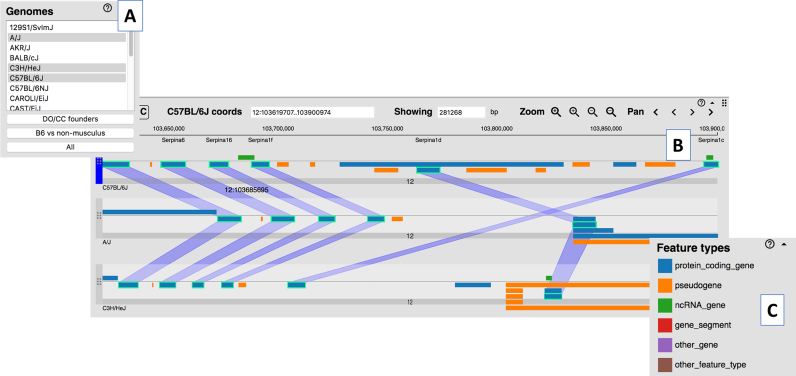
“Gene model structure details and sequences for all 19 annotated mouse genomes are also accessible from MGI’s MouseMine (http://www.mousemine.org) through its user interface and web services (MouseMine web services back the Multiple Genome Viewer).”
BackgroundInfluentialSelf-citationThe mouse Gene Expression Database (GXD): 2019 update
Smith, C. M., Hayamizu, T. F., Finger, J. H., Bello, S. M., McCright, I. J., Xu, J., Baldarelli, R. M., Beal, J. S., Campbell, J., Corbani, L. E., et al. (2019) · Nucleic Acids Research · doi:10.1093/nar/gky922 · Cited by 119
Self-citationThybert, D., Roller, M., Navarro, F. C. P., Fiddes, I., Streeter, I., Feig, C., Martin-Galvez, D., Kolmogorov, M., Janoušek, V., Akanni, W., et al. (2018) · Genome Research · doi:10.1101/gr.234096.117 · Cited by 117 · cited 2×
“The recent release of assembled and annotated genomes for 16 inbred mouse strains (https://www.biorxiv.org/content/ early/2018/02/12/235838) and two wild-derived strains (CAROLI/EiJ and PAHARI/EiJ) (10) represent major milestones in mouse genetics and comparative genomics.”
Background
Cited by
The Gene Ontology resource: enriching a GOld mine
The Gene Ontology Consortium, Carbon, S., Douglass, E., Good, B. M., Unni, D. R., Harris, N. L., Mungall, C. J., Basu, S., Chisholm, R. L., Dodson, R. J., et al. (2021) · Nucleic Acids Research · doi:10.1093/nar/gkaa1113 · Cited by 3,555
Self-citationThe Gene Ontology knowledgebase in 2023
The Gene Ontology Consortium, Aleksander, S. A., Balhoff, J., Carbon, S., Cherry, J. M., Drabkin, H. J., Ebert, D., Feuermann, M., Gaudet, P., Harris, N. L., et al. (2023) · GENETICS · doi:10.1093/genetics/iyad031 · Cited by 2,664
“MGI* (Bult et al. 2019) Mouse 106,435 8,051 Reactome* (Fabregat et al.”
Self-citationThe DisGeNET knowledge platform for disease genomics: 2019 update
Piñero, J., Ramírez-Anguita, J. M., Saüch-Pitarch, J., Ronzano, F., Centeno, E., Sanz, F., & Furlong, L. I. (2019) · Nucleic Acids Research · doi:10.1093/nar/gkz1021 · Cited by 2,639
New developments on the Encyclopedia of DNA Elements (ENCODE) data portal
Luo, Y., Hitz, B. C., Gabdank, I., Hilton, J. A., Kagda, M. S., Lam, B., Myers, Z., Sud, P., Jou, J., Lin, K., et al. (2020) · Nucleic Acids Research · doi:10.1093/nar/gkz1062 · Cited by 993
Xu, C., Lopez, R., Mehlman, E., Regier, J., Jordan, M. I., & Yosef, N. (2021) · Molecular Systems Biology · doi:10.15252/msb.20209620 · Cited by 691
Single-Cell Transcriptomic Atlas of Primate Ovarian Aging
Wang, S., Zheng, Y., Li, J., Yu, Y., Zhang, W., Song, M., Liu, Z., Min, Z., Hu, H., Jing, Y., et al. (2020) · Cell · doi:10.1016/j.cell.2020.01.009 · Cited by 588
Deciphering osteoarthritis genetics across 826,690 individuals from 9 populations
Boer, C. G., Hatzikotoulas, K., Southam, L., Stefánsdóttir, L., Zhang, Y., Coutinho de Almeida, R., Wu, T. T., Zheng, J., Hartley, A., Teder-Laving, M., et al. (2021) · Cell · doi:10.1016/j.cell.2021.07.038 · Cited by 434
Mouse genome database (MGD): Knowledgebase for mouse-human comparative biology
Blake, J. A., Baldarelli, R., Kadin, J. A., Richardson, J. E., Smith, C. L., Bult, C. J., the Mouse Genome Database Group, Anagnostopoulos, A. V., Beal, J. S., Bello, S. M., et al. (2021) · Nucleic Acids Research · doi:10.1093/nar/gkaa1083 · Cited by 422
Self-citationGroza, T., Gomez, F. L., Mashhadi, H. H., Muñoz-Fuentes, V., Gunes, O., Wilson, R., Cacheiro, P., Frost, A., Keskivali-Bond, P., Vardal, B., et al. (2023) · Nucleic Acids Research · doi:10.1093/nar/gkac972 · Cited by 413
Inferring spatial and signaling relationships between cells from single cell transcriptomic data
Cang, Z., & Nie, Q. (2020) · Nature Communications · doi:10.1038/s41467-020-15968-5 · Cited by 400
Gangoso, E., Southgate, B., Bradley, L., Rus, S., Galvez-Cancino, F., McGivern, N., Güç, E., Kapourani, C.-A., Byron, A., Ferguson, K. M., et al. (2021) · Cell · doi:10.1016/j.cell.2021.03.023 · Cited by 359
Genenames.org: the HGNC and VGNC resources in 2021
Tweedie, S., Braschi, B., Gray, K., Jones, T. E. M., Seal, R. L., Yates, B., & Bruford, E. A. (2021) · Nucleic Acids Research · doi:10.1093/nar/gkaa980 · Cited by 338
Discovery and prioritization of variants and genes for kidney function in >1.2 million individuals
Stanzick, K. J., Li, Y., Schlosser, P., Gorski, M., Wuttke, M., Thomas, L. F., Rasheed, H., Rowan, B. X., Graham, S. E., Vanderweff, B. R., et al. (2021) · Nature Communications · doi:10.1038/s41467-021-24491-0 · Cited by 302
Williams, J. A., Burgess, S., Suckling, J., Lalousis, P. A., Batool, F., Griffiths, S. L., Palmer, E., Karwath, A., Barsky, A., Gkoutos, G. V., et al. (2022) · JAMA Psychiatry · doi:10.1001/jamapsychiatry.2022.0407 · Cited by 304
Spatially aware dimension reduction for spatial transcriptomics
Shang, L., & Zhou, X. (2022) · Nature Communications · doi:10.1038/s41467-022-34879-1 · Cited by 254
“For the Slide-seq cerebellum data, we converted the MGI gene IDs to human homolog gene symbols before GSEA analysis 145 .”
MethodInfection trains the host for microbiota-enhanced resistance to pathogens
Stacy, A., Andrade-Oliveira, V., McCulloch, J. A., Hild, B., Oh, J. H., Perez-Chaparro, P. J., Sim, C. K., Lim, A. I., Link, V. M., Enamorado, M., et al. (2021) · Cell · doi:10.1016/j.cell.2020.12.011 · Cited by 239
“Ribosomal protein and antimicrobial peptide annotations were obtained from the Gene Ontology Browser of the Mouse Genome Informatics website (Bult et al., 2019).”
Mendelian Gene Discovery: Fast and Furious with No End in Sight
Bamshad, M. J., Nickerson, D. A., & Chong, J. X. (2019) · The American Journal of Human Genetics · doi:10.1016/j.ajhg.2019.07.011 · Cited by 243
“Use of transcriptome sequencing (RNA-seq) to identify abnormally spliced transcripts and/or assess transcript abundance facilitates identification of non-coding variants, deep intronic splice variants, 16–18 and to a lesser extent, synonymous variants with unexpected effects on splicing.”
BackgroundA comprehensive library of human transcription factors for cell fate engineering
Ng, A. H. M., Khoshakhlagh, P., Rojo Arias, J. E., Pasquini, G., Wang, K., Swiersy, A., Shipman, S. L., Appleton, E., Kiaee, K., Kohman, R. E., et al. (2021) · Nature Biotechnology · doi:10.1038/s41587-020-0742-6 · Cited by 240
Self-citationShefchek, K. A., Harris, N. L., Gargano, M., Matentzoglu, N., Unni, D., Brush, M., Keith, D., Conlin, T., Vasilevsky, N., Zhang, X. A., et al. (2020) · Nucleic Acids Research · doi:10.1093/nar/gkz997 · Cited by 236
Self-citationZebrafish information network, the knowledgebase for Danio rerio research
Bradford, Y. M., Van Slyke, C. E., Ruzicka, L., Singer, A., Eagle, A., Fashena, D., Howe, D. G., Frazer, K., Martin, R., Paddock, H., et al. (2022) · Genetics · doi:10.1093/genetics/iyac016 · Cited by 229
Functional Enrichment Analysis of Regulatory Elements
Garcia-Moreno, A., López-Domínguez, R., Villatoro-García, J. A., Ramirez-Mena, A., Aparicio-Puerta, E., Hackenberg, M., Pascual-Montano, A., & Carmona-Saez, P. (2022) · Biomedicines · doi:10.3390/biomedicines10030590 · Cited by 209
Below, C. R., Kelly, J., Brown, A., Humphries, J. D., Hutton, C., Xu, J., Lee, B. Y., Cintas, C., Zhang, X., Hernandez-Gordillo, V., et al. (2022) · Nature Materials · doi:10.1038/s41563-021-01085-1 · Cited by 194
Chen, J. J., Nathaniel, D. L., Raghavan, P., Nelson, M., Tian, R., Tse, E., Hong, J. Y., See, S. K., Mok, S.-A., Hein, M. Y., et al. (2019) · Journal of Biological Chemistry · doi:10.1074/jbc.ra119.009432 · Cited by 170
Zou, Z., Zhang, C., Wang, Q., Hou, Z., Xiong, Z., Kong, F., Wang, Q., Song, J., Liu, B., Liu, B., et al. (2022) · Science · doi:10.1126/science.abo7923 · Cited by 185
Buckley, M. T., Sun, E. D., George, B. M., Liu, L., Schaum, N., Xu, L., Reyes, J. M., Goodell, M. A., Weissman, I. L., Wyss-Coray, T., et al. (2022) · Nature Aging · doi:10.1038/s43587-022-00335-4 · Cited by 188
Han, L., Chaturvedi, P., Kishimoto, K., Koike, H., Nasr, T., Iwasawa, K., Giesbrecht, K., Witcher, P. C., Eicher, A., Haines, L., et al. (2020) · Nature Communications · doi:10.1038/s41467-020-17968-x · Cited by 182
A Potently Neutralizing Antibody Protects Mice against SARS-CoV-2 Infection
Alsoussi, W. B., Turner, J. S., Case, J. B., Zhao, H., Schmitz, A. J., Zhou, J. Q., Chen, R. E., Lei, T., Rizk, A. A., McIntire, K. M., et al. (2020) · The Journal of Immunology · doi:10.4049/jimmunol.2000583 · Cited by 181
The Human Obesity Gene Map: The 2001 Update
Rankinen, T., Pérusse, L., Weisnagel, S. J., Snyder, E. E., Chagnon, Y. C., & Bouchard, C. (2002) · Obesity Research · doi:10.1038/oby.2002.30 · Cited by 179
Alliance of Genome Resources Portal: unified model organism research platform
The Alliance of Genome Resources Consortium, Agapite, J., Albou, L.-P., Aleksander, S., Argasinska, J., Arnaboldi, V., Attrill, H., Bello, S. M., Blake, J. A., Blodgett, O., et al. (2020) · Nucleic Acids Research · doi:10.1093/nar/gkz813 · Cited by 177
Self-citationTansley, S., Uttam, S., Ureña Guzmán, A., Yaqubi, M., Pacis, A., Parisien, M., Deamond, H., Wong, C., Rabau, O., Brown, N., et al. (2022) · Nature Communications · doi:10.1038/s41467-022-28473-8 · Cited by 177
Luo, L., Ambrozkiewicz, M. C., Benseler, F., Chen, C., Dumontier, E., Falkner, S., Furlanis, E., Gomez, A. M., Hoshina, N., Huang, W.-H., et al. (2020) · Neuron · doi:10.1016/j.neuron.2020.01.008 · Cited by 175
A compendium and comparative epigenomics analysis of cis-regulatory elements in the pig genome
Zhao, Y., Hou, Y., Xu, Y., Luan, Y., Zhou, H., Qi, X., Hu, M., Wang, D., Wang, Z., Fu, Y., et al. (2021) · Nature Communications · doi:10.1038/s41467-021-22448-x · Cited by 169
KLIFS: an overhaul after the first 5 years of supporting kinase research
Kanev, G. K., de Graaf, C., Westerman, B. A., de Esch, I. J. P., & Kooistra, A. J. (2021) · Nucleic Acids Research · doi:10.1093/nar/gkaa895 · Cited by 163
Mills, M. C., Tropf, F. C., Brazel, D. M., van Zuydam, N., Vaez, A., eQTLGen Consortium, Agbessi, M., Ahsan, H., Alves, I., Andiappan, A. K., et al. (2021) · Nature Human Behaviour · doi:10.1038/s41562-021-01135-3 · Cited by 157
“For enriched cell types from mouse brain and tabula muris, the top-10 contributing genes were selected as candidate genes resulting in the prioritization of 296 genes for AFS and 95 for AFB based on mouse brain; and 97 genes for AFS based on tabula muris data.”
Smith, J. R., Hayman, G. T., Wang, S.-J., Laulederkind, S. J. F., Hoffman, M. J., Kaldunski, M. L., Tutaj, M., Thota, J., Nalabolu, H. S., Ellanki, S. L. R., et al. (2019) · Nucleic Acids Research · doi:10.1093/nar/gkz1041 · Cited by 155
“In this regard, RGD maintains an ongoing collaboration with the HUGO Gene Nomenclature Committee (HGNC) at the European Bioinformatics Institute and MGI at The Jackson Laboratory to coordinate gene nomenclature for orthologs across the species, and with MGI to ensure that strains and alleles are named correctly.”
MethodJin, S. C., Dong, W., Kundishora, A. J., Panchagnula, S., Moreno-De-Luca, A., Furey, C. G., Allocco, A. A., Walker, R. L., Nelson-Williams, C. J., Smith, H. L., et al. (2020) · Nature Medicine · doi:10.1038/s41591-020-1090-2 · Cited by 164
The mouse Gene Expression Database (GXD): 2021 update
Baldarelli, R. M., Smith, C. M., Finger, J. H., Hayamizu, T. F., McCright, I. J., Xu, J., Shaw, D. R., Beal, J. S., Blodgett, O., Campbell, J., et al. (2020) · Nucleic Acids Research · doi:10.1093/nar/gkaa914 · Cited by 172
Self-citationModeling clear cell renal cell carcinoma and therapeutic implications
Wolf, M. M., Kimryn Rathmell, W., & Beckermann, K. E. (2020) · Oncogene · doi:10.1038/s41388-020-1234-3 · Cited by 154
The Ah Receptor: Adaptive Metabolism, Ligand Diversity, and the Xenokine Model
Avilla, M. N., Malecki, K. M. C., Hahn, M. E., Wilson, R. H., & Bradfield, C. A. (2020) · Chemical Research in Toxicology · doi:10.1021/acs.chemrestox.9b00476 · Cited by 158
Winkler, T. W., Grassmann, F., Brandl, C., Kiel, C., Günther, F., Strunz, T., Weidner, L., Zimmermann, M. E., Korb, C. A., Poplawski, A., et al. (2020) · BMC Medical Genomics · doi:10.1186/s12920-020-00760-7 · Cited by 138
“(5) When querying the 17 genes in the Mouse Genome Informatics, MGI (33) or Online Mendelian Inheritance in Man, OMIM®, database, for eye phenotypes in mice or humans, we identified relevant eye phenotypes for five genes in mice (CD46, CR1, CR1L, PLXNA2; TYR; Table S8) and for one gene in human (TYR; Table S9).”
MethodInfluentialPRSet: Pathway-based polygenic risk score analyses and software
Choi, S. W., García‐González, J., Ruan, Y., Wu, H. M., Porras, C., Johnson, J., Hoggart, C. J., & O’Reilly, P. F. (2023) · PLoS Genetics · doi:10.1371/journal.pgen.1010624 · Cited by 148
Network inference with Granger causality ensembles on single-cell transcriptomics
Deshpande, A., Chu, L.-F., Stewart, R., & Gitter, A. (2022) · Cell Reports · doi:10.1016/j.celrep.2022.110333 · Cited by 130
Resolving organoid brain region identities by mapping single-cell genomic data to reference atlases
Fleck, J. S., Sanchís-Calleja, F., He, Z., Santel, M., Boyle, M. J., Camp, J. G., & Treutlein, B. (2021) · Cell Stem Cell · doi:10.1016/j.stem.2021.02.015 · Cited by 118
Kasak, L., & Laan, M. (2020) · Human Genetics · doi:10.1007/s00439-020-02112-y · Cited by 139
Wang, H., Robinson, J. L., Kocabas, P., Gustafsson, J., Anton, M., Cholley, P.-E., Huang, S., Gobom, J., Svensson, T., Uhlen, M., et al. (2021) · Proceedings of the National Academy of Sciences · doi:10.1073/pnas.2102344118 · Cited by 117
“Databases such as MGD (22), FlyBase (23), ZFIN (24), and WormBase (25) that provide organism-specific annotation and human orthologs have been recently integrated into a centralized portal, the Alliance of Genome Resources (26), for consistent annotation and curation of gene ontology in relation to…”
GRNdb: decoding the gene regulatory networks in diverse human and mouse conditions
Li, F., Li, Y., Ma, L., Xu, Q., Tan, F., & Chen, G. (2020) · Nucleic Acids Research · doi:10.1093/nar/gkaa995 · Cited by 123
Hunker, A. C., Soden, M. E., Krayushkina, D., Heymann, G., Awatramani, R. B., & Zweifel, L. S. (2020) · Cell Reports · doi:10.1016/j.celrep.2020.02.092 · Cited by 128
Shemesh, N., Jubran, J., Dror, S., Simonovsky, E., Basha, O., Argov, C. M., Hekselman, I., Abu‐Qarn, M., Vinogradov, E., Mauer, O., et al. (2021) · Nature Communications · doi:10.1038/s41467-021-22369-9 · Cited by 119
“Mouse Genome Informatics (MGI) website (81).”
The genetic architecture of sporadic and multiple consecutive miscarriage
Laisk, T., Soares, A. L. G., Ferreira, T., Painter, J. N., Censin, J. C., Laber, S., Bacelis, J., Chen, C.-Y., Lepamets, M., Lin, K., et al. (2020) · Nature Communications · doi:10.1038/s41467-020-19742-5 · Cited by 111
“The candidate gene list was also compared to information on mouse phenotypes based on two databases 38,39 , and against a recently published list of genes potentially relevant to infertility or recurrent intra-uterine death 40 .”
BackgroundInfluentialA resource of targeted mutant mouse lines for 5,061 genes
Birling, M., Yoshiki, A., Adams, D. J., Ayabe, S., Beaudet, A. L., BOTTOMLEY, J. R., Bradley, A., Brown, S. D. M., Bürger, A., Bushell, W., et al. (2021) · Nature Genetics · doi:10.1038/s41588-021-00825-y · Cited by 115
Zheng, X., Li, Z., Wang, G., Wang, H., Zhou, Y., Zhao, X., Cheng, C. Y., Qiao, Y., & Sun, F. (2021) · Cell Discovery · doi:10.1038/s41421-021-00343-5 · Cited by 130
Whole-genome sequencing analysis of the cardiometabolic proteome
Gilly, A., Park, Y.-C., Png, G., Barysenka, A., Fischer, I., Bjørnland, T., Southam, L., Suveges, D., Neumeyer, S., Rayner, N. W., et al. (2020) · Nature Communications · doi:10.1038/s41467-020-20079-2 · Cited by 107
seqr : A web‐based analysis and collaboration tool for rare disease genomics
Pais, L. S., Snow, H., Weisburd, B., Zhang, S., Baxter, S. M., DiTroia, S. P., O’Heir, E., England, E. M., Chao, K. R., Lemire, G., et al. (2022) · Human Mutation · doi:10.1002/humu.24366 · Cited by 135
“To aggregate available data for analysis, seqr displays links to external resources, including gene-related information (PubMed, Monarch, DECIPHER) (McMurry et al., 2016; Shefchek et al., 2020; Firth et al., 2009), transcript information (gnomAD, GTEx) (Karczewski et al., 2020; GTEx Consortium, 2013), and functional a…”
BackgroundMachine learning approach to gene essentiality prediction: a review
Aromolaran, O., Aromolaran, D., Isewon, I., & Oyelade, J. O. (2021) · Briefings in Bioinformatics · doi:10.1093/bib/bbab128 · Cited by 120
“…learning approach requires annotation of model organisms with experimentally determined gene essentiality for its construction,onlyafewmodelorganisms[suchas Drosophilamelanogaster [152] , Mus musculus [153] and Saccharomyces cerevisiae [154] have a dedicated database for essentiality annotation.”
BackgroundNOTCH-YAP1/TEAD-DNMT1 Axis Drives Hepatocyte Reprogramming Into Intrahepatic Cholangiocarcinoma
Hu, S., Molina, L., Tao, J., Liu, S., Hassan, M., Singh, S., Poddar, M., Bell, A., Sia, D., Oertel, M., et al. (2022) · Gastroenterology · doi:10.1053/j.gastro.2022.05.007 · Cited by 104
Revealing the role of the human blood plasma proteome in obesity using genetic drivers
Zaghlool, S. B., Sharma, S., Molnar, M., Matías-García, P. R., Elhadad, M. A., Waldenberger, M., Peters, A., Rathmann, W., Graumann, J., Gieger, C., et al. (2021) · Nature Communications · doi:10.1038/s41467-021-21542-4 · Cited by 102
Genetic and biological insights into spontaneous coronary artery dissection
Adlam, D., Berrandou, T.-E., Georges, A. B., Nelson, C. P., Giannoulatou, E., Henry, J., Ma, L., Blencowe, M., Turley, T. N., Yang, M., et al. (2023) · Nature Genetics · doi:10.1038/s41588-023-01410-1 · Cited by 108
Mouse germ line mutations due to retrotransposon insertions
Gagnier, L., Belancio, V. P., & Mager, D. L. (2019) · Mobile DNA · doi:10.1186/s13100-019-0157-4 · Cited by 96
Meta-analysis uncovers genome-wide significant variants for rapid kidney function decline
Gorski, M., Jung, B., Li, Y., Matías‐García, P. R., Wuttke, M., Coassin, S., Thio, C. H. L., Kleber, M. E., Winkler, T. W., Wanner, V., et al. (2020) · Kidney International · doi:10.1016/j.kint.2020.09.030 · Cited by 109
OGEE v3: Online GEne Essentiality database with increased coverage of organisms and human cell lines
Gurumayum, S., Jiang, P., Hao, X., Campos, T. L., Young, N. D., Korhonen, P. K., Gasser, R. B., Bork, P., Zhao, X.-M., He, L.-J., et al. (2021) · Nucleic Acids Research · doi:10.1093/nar/gkaa884 · Cited by 95
“From the orthogroup data generated by OrthoFinder (38) (see ‘Data generation’), we identified 3522 and 6214 knock-out genes for mice in the IMPC (21) and MGI (22) dataset, respectively.”
InfluentialHuman pathways in animal models: possibilities and limitations
Doncheva, N. T., Palasca, O., Yarani, R., Litman, T., Anthon, C., Groenen, M. A. M., Stadler, P. F., Pociot, F., Jensen, L. J., & Gorodkin, J. (2021) · Nucleic Acids Research · doi:10.1093/nar/gkab012 · Cited by 102
A simple standard for sharing ontological mappings (SSSOM)
Matentzoglu, N., Balhoff, J. P., Bello, S. M., Bizon, C., Brush, M., Callahan, T. J., Chute, C. G., Duncan, W. D., Evelo, C. T., Gabriel, D., et al. (2022) · Database · doi:10.1093/database/baac035 · Cited by 96
“A simple standard for mapping metadata and a simple table format have been instrumental for collaborating with groups such as OpenTargets, IMPC (80), MGI (81) and the Center for Cancer Data Harmonization (CCDH, (82)) to build better mapping sets, for example by sharing and editing mapping sets directly through Google…”
MethodSelf-citationEngel, S. R., Wong, E. D., Nash, R. S., Aleksander, S., Alexander, M., Douglass, E., Karra, K., Miyasato, S. R., Simison, M., Skrzypek, M. S., et al. (2021) · Genetics · doi:10.1093/genetics/iyab224 · Cited by 98
Pepple, A., Guy, J., McGinnis, R. J., Felsted, A. E., Song, B., Hubbard, R. T., Worlikar, T., Garavaglia, H., Dib, J., Chao, H., et al. (2023) · Frontiers in Immunology · doi:10.3389/fimmu.2023.1012799 · Cited by 105
Closing in on Mechanisms of Open Neural Tube Defects
Lee, S., & Gleeson, J. G. (2020) · Trends in Neurosciences · doi:10.1016/j.tins.2020.04.009 · Cited by 105
“reported (see Table S1 in the supplemental information online) [11], some of which show reduced penetrance or severity with FA supplementation (e.”
BackgroundYao, X., Glessner, J. T., Li, J., Qi, X., Hou, X., Zhu, C., Li, X., March, M. E., Yang, L., Mentch, F. D., et al. (2021) · Translational Psychiatry · doi:10.1038/s41398-020-01195-5 · Cited by 85
Harnessing Natural Killer Immunity in Metastatic SCLC
Best, S. A., Hess, J. B., Souza-Fonseca-Guimarães, F., Cursons, J., Kersbergen, A. J., Dong, X., Rautela, J., Hyslop, S. R., Ritchie, M. E., Davis, M. J., et al. (2020) · Journal of Thoracic Oncology · doi:10.1016/j.jtho.2020.05.008 · Cited by 90
Lee, E.-H., Park, J.-Y., Kwon, H.-J., & Han, P.-L. (2021) · Nature Communications · doi:10.1038/s41467-021-26968-4 · Cited by 82
Bogue, M. A., Philip, V. M., Walton, D. O., Grubb, S. C., Dunn, M. H., Kolishovski, G., Emerson, J., Mukherjee, G., Stearns, T., He, H., et al. (2019) · Nucleic Acids Research · doi:10.1093/nar/gkz1032 · Cited by 80
Choi, J., Jang, Y. J., Dabrowska, C., Iich, E., Evans, K. V., Hall, H., Janes, S. M., Simons, B. D., Koo, B., Kim, J., et al. (2021) · Nature Cell Biology · doi:10.1038/s41556-021-00742-6 · Cited by 83
Hu, Y., Comjean, A., Rodiger, J., Liu, Y., Gao, Y., Chung, V., Zirin, J. D., Perrimon, N., & Mohr, S. E. (2020) · Nucleic Acids Research · doi:10.1093/nar/gkaa936 · Cited by 89
Single-molecule long-read sequencing reveals a conserved intact long RNA profile in sperm
Sun, Y. H., Wang, A., Song, C. W., Shankar, G., Srivastava, R. K., Au, K. F., & Li, X. Z. (2021) · Nature Communications · doi:10.1038/s41467-021-21524-6 · Cited by 84
AnnoLnc2: the one-stop portal to systematically annotate novel lncRNAs for human and mouse
Lan, K., Yang, D.-C., Wang, Y., Ding, Y., & Gao, G. (2020) · Nucleic Acids Research · doi:10.1093/nar/gkaa368 · Cited by 77
“Genetic association Human: 96 455 trait-associated SNPs from the GWAS catalog (42), 298 590 SNPs in linkage disequilibrium with GWAS SNPs from dbSNP (61), and 4 365 369 eQTLs from GTEx (41); Mouse: 4013 phenotypic alleles and 997 QTL alleles from MGI (43).”
BackgroundMethodGlycobiology and schizophrenia: a biological hypothesis emerging from genomic research
Mealer, R. G., Williams, S., Daly, M. J., Scolnick, E. M., Cummings, R. D., & Smoller, J. W. (2020) · Molecular Psychiatry · doi:10.1038/s41380-020-0753-1 · Cited by 77
Mass spectrometry-based draft of the mouse proteome
Giansanti, P., Samaras, P., Bian, Y., Meng, C., Coluccio, A., Frejno, M., Jakubowsky, H., Dobiasch, S., Hazarika, R. R., Rechenberger, J., et al. (2022) · Nature Methods · doi:10.1038/s41592-022-01526-y · Cited by 83
Heterogeneous pericoerulear neurons tune arousal and exploratory behaviours
Luskin, A. T., Li, L., Fu, X., Martin, M. M., Barcomb, K., Girven, K. S., Blackburn, T., Wells, B. A., Thai, S., Li, E. M., et al. (2025) · Nature · doi:10.1038/s41586-025-08952-w · Cited by 68
Multi-trait genome-wide association study of opioid addiction: OPRM1 and beyond
Gaddis, N., Mathur, R., Marks, J. A., Zhou, L., Quach, B. C., Waldrop, A., Levran, O., Agrawal, A., Randesi, M., Adelson, M., et al. (2022) · Scientific Reports · doi:10.1038/s41598-022-21003-y · Cited by 80
“org/diseasePortal/genoCluster/view/20628).(55) 385 Predicted biological processes for PPP6C include G-protein coupled purinergic nucleotide receptor signaling 386”
BackgroundReduced reproductive success is associated with selective constraint on human genes
Gardner, E. J., Neville, M. D. C., Samocha, K. E., Barclay, K., Kolk, M., Niemi, M. E. K., Kirov, G., Martin, H. C., & Hurles, M. E. (2022) · Nature · doi:10.1038/s41586-022-04549-9 · Cited by 72
Sex- and age-dependent genetics of longevity in a heterogeneous mouse population
Sleiman, M. S. B., Roy, S., Gao, A. W., Sadler, M. C., von Alvensleben, G., Li, H., Sen, Ś., Harrison, D. E., Nelson, J. F., Strong, R., et al. (2022) · Science · doi:10.1126/science.abo3191 · Cited by 78
“To further explore whether QTLs overlap with known genetic associations, we looked for correspondence with known longevity, growth, and body size QTLs in the Mouse Genome Informatics database (13) (table S1).”
BackgroundBRG1 Loss Predisposes Lung Cancers to Replicative Stress and ATR Dependency
Gupta, M., Concepcion, C. P., Fahey, C. G., Keshishian, H., Bhutkar, A. J., Brainson, C. F., Rivera, F. J. S., Pessina, P., Kim, J. Y., Simoneau, A., et al. (2020) · Cancer Research · doi:10.1158/0008-5472.can-20-1744 · Cited by 80
A standardized nomenclature for mammalian histone genes
Seal, R. L., Denny, P., Bruford, E. A., Gribkova, A. K., Landsman, D., Marzluff, W. F., McAndrews-Hill, M., Panchenko, A. R., Shaytan, A. К., & Talbert, P. B. (2022) · Epigenetics & Chromatin · doi:10.1186/s13072-022-00467-2 · Cited by 79
Evidence of Superior and Inferior Sinoatrial Nodes in the Mammalian Heart
Brennan, J. A., Chen, Q., Gams, A., Dyavanapalli, J., Mendelowitz, D., Peng, W., & Efimov, I. R. (2020) · JACC. Clinical electrophysiology · doi:10.1016/j.jacep.2020.09.012 · Cited by 74
George, D., Hackelberg, S., Jayaraj, N. D., Ren, D., Edassery, S. L., Rathwell, C. A., Miller, R. E., Malfait, A., Savas, J. N., Miller, R. J., et al. (2021) · Pain · doi:10.1097/j.pain.0000000000002391 · Cited by 67
Liu, L., Khan, A., Sánchez, E., Zanoni, F., Li, Y., Steers, N. J., Balderes, O., Zhang, J. Y., Krithivasan, P., LeDesma, R. A., et al. (2022) · Nature Communications · doi:10.1038/s41467-022-34456-6 · Cited by 65
Zaro, B. W., Noh, J. J., Mascetti, V. L., Demeter, J., George, B., Zukowska, M., Gulati, G. S., Sinha, R., Flynn, R. A., Banuelos, A., et al. (2020) · eLife · doi:10.7554/elife.62210 · Cited by 58
A prime editor mouse to model a broad spectrum of somatic mutations in vivo
Ely, Z. A., Mathey‐Andrews, N., Naranjo, S., Gould, S. I., Mercer, K. L., Newby, G. A., Cabana, C. M., Rideout, W. M., Jaramillo, G. C., Khirallah, J., et al. (2023) · Nature Biotechnology · doi:10.1038/s41587-023-01783-y · Cited by 67
“We used the MouseMine tool from the Mouse Genome Informatics database 42,43 to obtain a comprehensive list of published transgenic alleles.”
How Natural Genetic Variation Shapes Behavior
Niepoth, N., & Bendesky, A. (2020) · Annual Review of Genomics and Human Genetics · doi:10.1146/annurev-genom-111219-080427 · Cited by 66
“For example, the Mouse Genome Informatics database contains more than 10,000 examples of artificial mutations that affect behavior in laboratory mice (17).”
BackgroundNeuronal apoptosis drives remodeling states of microglia and shifts in survival pathway dependence
Anderson, S. R., Roberts, J. M., Ghena, N., Irvin, E., Schwakopf, J., Cooperstein, I. B., Bosco, A., & Vetter, M. L. (2022) · eLife · doi:10.7554/elife.76564 · Cited by 65
Automated generation of gene summaries at the Alliance of Genome Resources
Kishore, R., Arnaboldi, V., Slyke, C. E. V., Chan, J., Nash, R. S., Urbano, J.-M., Dolan, M. E., Engel, S. R., Shimoyama, M. E., Sternberg, P. W., et al. (2020) · Database · doi:10.1093/database/baaa037 · Cited by 75
“Similar to previously described gene summary generation methods (1, 7, 10, 12), the approach described in this paper is based on an algorithm that uses sentence templates that include verb phrases (e.”
MethodSelf-citationGenome-wide association study identifies five risk loci for pernicious anemia
Laisk, T., Lepamets, M., Koel, M., Abner, E., Metspalu, A., Nelis, M., Milani, L. A., Esko, T., & Mägi, R. (2021) · Nature Communications · doi:10.1038/s41467-021-24051-6 · Cited by 60
tRFtarget: a database for transfer RNA-derived fragment targets
Li, N., Shan, N., Lu, L., & Wang, Z. (2020) · Nucleic Acids Research · doi:10.1093/nar/gkaa831 · Cited by 60
Ray, D., Venkataraghavan, S., Zhang, W., Leslie, E. J., Hetmanski, J. B., Weinberg, S. M., Murray, J. C., Marazita, M. L., Ruczinski, I., Taub, M. A., et al. (2021) · PLoS Genetics · doi:10.1371/journal.pgen.1009584 · Cited by 68
“Similarly, mouse experiments found cleft and neural tube defects (NTDs) following alterations of the SHROOM3 gene [39], and MAFB has been identified in GWAS of CLP with mouse models showing its role in palate development [16].”
BackgroundThe Rat: A Model Used in Biomedical Research
Smith, J. R., Bolton, E. R., & Dwinell, M. R. (2019) · Methods in molecular biology · doi:10.1007/978-1-4939-9581-3_1 · Cited by 73
Empowering biologists to decode omics data: the Genekitr R package and web server
Liu, Y., & Li, G. (2023) · BMC Bioinformatics · doi:10.1186/s12859-023-05342-9 · Cited by 60
Rosikiewicz, W., Chen, X., Domínguez, P. M., Ghamlouch, H., Aoufouchi, S., Bernard, O., Melnick, A. M., & Li, S. (2020) · Science Advances · doi:10.1126/sciadv.aay5872 · Cited by 64
Ietswaart, R., Gyori, B. M., Bachman, J. A., Sorger, P. K., & Churchman, L. S. (2021) · Genome biology · doi:10.1186/s13059-021-02264-8 · Cited by 61
Yang, L., Ng, Y. E., Sun, H., Li, Y., Chini, L., LeBrasseur, N. K., Chen, J., & Zhang, X. (2023) · BMC Biology · doi:10.1186/s12915-023-01728-6 · Cited by 61
“Unof-ficial gene names were revised based on Mouse Genome Informatics [17] and GeneCards [18].”
MethodDissecting Herpes Simplex Virus 1-Induced Host Shutoff at the RNA Level
Friedel, C. C., Whisnant, A. W., Djaković, L., Rutkowski, A. J., Friedl, M.-S., Kluge, M., Williamson, J. C., Sai, S., Vidal, R. O., Sauer, S., et al. (2020) · Journal of Virology · doi:10.1128/jvi.01399-20 · Cited by 52
The Alliance of Genome Resources: Building a Modern Data Ecosystem for Model Organism Databases
The Alliance of Genome Resources Consortium (2019) · Genetics · doi:10.1534/genetics.119.302523 · Cited by 51
Lu, T., & Mar, J. C. (2020) · Biology of Sex Differences · doi:10.1186/s13293-020-00335-2 · Cited by 66
Metadata
- Authors
- Bult, C. J., Blake, J. A., Smith, C. L., Kadin, J. A., Richardson, J. E., the Mouse Genome Database Group, Anagnostopoulos, A., Asabor, R., Baldarelli, R. M., Beal, J. S., Bello, S. M., Blodgett, O., Butler, N. E., Christie, K. R., Corbani, L. E., Creelman, J., Dolan, M. E., Drabkin, H. J., Giannatto, S. L., Hale, P., Hill, D. P., Law, M., Mendoza, A., McAndrews, M., Miers, D., Motenko, H., Ni, L., Onda, H., Perry, M., Recla, J. M., Richards-Smith, B., Sitnikov, D., Tomczuk, M., Tonorio, G., Wilming, L., & Zhu, Y.
- Affiliations
- Jackson Laboratory (US)
- Corresponding author
- Bult, Carol J
- ORCID
- Venue
- Nucleic Acids Research
- Publisher
- Oxford University Press (OUP)
- Published
- 2018-11-08
- Volume
- 47
- Issue
- D1
- Pages
- D801-D806
- ISSN
- 0305-1048 (ISSN-L)
- 1362-4962
- PMC
- PMC6323923
- OpenAlex
- W2900255713
- Cited by
- 686
- References
- 17
- Citations by year
- 2026: 18 · 2025: 33 · 2024: 58 · 2023: 101 · 2022: 133 · 2021: 177 · 2020: 126 · 2019: 37
- FWCI
- 31.47
- Type
- journal article
- Language
- en
- Open access
- gold
- doi.org
- Licence
- Locations
- Nucleic Acids Research (publishedVersion, cc-by)
- Europe PMC (PubMed Central) (publishedVersion, cc-by)
- PubMed Central (publishedVersion, cc-by)
- PubMed (publishedVersion)
- The Mouseion at the JAXlibrary (Jackson Laboratory) (submittedVersion, cc-by)
- Funders
- National Institutes of Health (U41 HG000330, R25 HG007053, U41 HG002223)
- Topics
- Health Sciences › Medicine › Health Informatics › Biomedical Text Mining and Ontologies
- Life Sciences › Biochemistry, Genetics and Molecular Biology › Molecular Biology › Genomics and Phylogenetic Studies
- Life Sciences › Biochemistry, Genetics and Molecular Biology › Molecular Biology › Bioinformatics and Genomic Networks
- Keywords
- Mouse Genome Database, laboratory mice, mouse genetics, mouse genomics, gene nomenclature, allele nomenclature, mouse models of human disease, phenotypes, gene expression, gene expression database, literature curation, transcription start sites, genome annotation
- MeSH terms
- Alleles, Animals, Terminology as Topic, Gene Expression, Genome, Internet, Genomics, Transcription Initiation Site, Databases, Genetic, Mice, Molecular Sequence Annotation
About these checks
Registry, retraction, Cites and statistics results are computed, not judged, with one exception: a printed reference that no index lists is read once by a model before it counts as a citation error. Claims are extracted by a model and kept only when their quote appears verbatim in the text; each cited source is then checked, with a model’s help, for whether it says what the claim relies on. Those verdicts can be wrong — read the claim’s quote and the cited source before relying on one.
Statistics and arithmetic are recomputed, not judged.
Confidence bands are shown only for fields calibrated on our annotated test set. None is calibrated yet, so no band is shown.
What counts as a claim ›How we measure confidence ›How we check this ›
Are you an author, or do you see a problem with this page? Request a review
Data sources
Bibliographic data: Semantic Scholar, OpenAlex, Crossref.
Contains information from the Semantic Scholar Academic Graph Datasets, made available under the ODC Attribution License (ODC-BY 1.0).
Semantic Scholar’s data is described in: Kinney, R., et al. (2023). The Semantic Scholar Open Data Platform. arXiv:2301.10140.
