

Mouse Genome Database (MGD) 2019
Open accessThe DOI matches its Crossref record; 16 of the 17 references it cites were found in a registry or an index.
Abstract
The Mouse Genome Database (MGD; http://www.informatics.jax.org) is the community model organism genetic and genome resource for the laboratory mouse. MGD is the authoritative source for biological reference data sets related to mouse genes, gene functions, phenotypes, and mouse models of human disease. MGD is the primary outlet for official gene, allele and mouse strain nomenclature based on the guidelines set by the International Committee on Standardized Nomenclature for Mice. In this report we describe significant enhancements to MGD, including two new graphical user interfaces: (i) the Multi Genome Viewer for exploring the genomes of multiple mouse strains and (ii) the Phenotype-Gene Expression matrix which was developed in collaboration with the Gene Expression Database (GXD) and allows researchers to compare gene expression and phenotype annotations for mouse genes. Other recent improvements include enhanced efficiency of our literature curation processes and the incorporation of Transcriptional Start Site (TSS) annotations from RIKEN's FANTOM 5 initiative.
Overview
The claims and statistics of this paper haven’t been checked yet.
Free: it reads the open-access text and checks the first 5 claims that cite a source we can check. Create a free account to check every claim.
Integrity signals
Registry
Cites
Statistics
Figures
Verification
Claims the paper makes
The claims and statistics of this paper haven’t been checked yet.
Free: it reads the open-access text and checks the first 5 claims that cite a source we can check. Create a free account to check every claim.
Claims other papers make about this one
Each is checked against this paper’s own text: does it say what the citing paper says it does?
The source backs part of the claim, not all of it — or backs it for a different population, condition or comparison.
In the citing paper
“However, available information in the MGI database [32, 34, 36] indicates that for some of these genes, their knock-out results in heart defects (Fig. 4, red border) or they are expressed in the heart (Fig. 4, double-line border).”
From A cis-regulatory-directed pipeline for the identification of genes involved in cardiac development and disease (2021) · cites this paper as [34]
Experimental — accuracy not yet measuredThe check wasn’t confident either way, so it gives no verdict — never disputed.
In the citing paper
“Most (15/16) of nearby genes or 3D interaction genes were expressed in branchial arch and embryo ectoderm in mice [36,37].”
From Combined genome-wide association study of 136 quantitative ear morphology traits in multiple populations reveal 8 novel loci (2023) · cites this paper as [37]
Experimental — accuracy not yet measuredThe check wasn’t confident either way, so it gives no verdict — never disputed.
In the citing paper
“Yet, it is expressed in several tissues based on the transcriptome data (Fig. 3A) and in situ hybridization results of E14.5 mouse embryos [34] (Fig. 3C).”
From A cis-regulatory-directed pipeline for the identification of genes involved in cardiac development and disease (2021) · cites this paper as [34]
Experimental — accuracy not yet measuredThe check wasn’t confident either way, so it gives no verdict — never disputed.
In the citing paper
“Similarly, Cbx5 is also highly expressed in all four tissues (Fig. 3A) and is widely expressed in E14.5 embryo [34] (Fig. 3D).”
From A cis-regulatory-directed pipeline for the identification of genes involved in cardiac development and disease (2021) · cites this paper as [34]
Experimental — accuracy not yet measured
Self-check
Percentages, sums and reported differences re-computed from the paper’s own numbers.
The self-check needs the paper’s full text.
Citations
Cites
The Gene Ontology Resource: 20 years and still GOing strong
The Gene Ontology Consortium (2019) · Nucleic Acids Research · doi:10.1093/nar/gky1055 · Cited by 4,747
A promoter-level mammalian expression atlas
The FANTOM Consortium and the RIKEN PMI and CLST (DGT) (2014) · Nature · doi:10.1038/nature13182 · Cited by 1,982
Expansion of the Gene Ontology knowledgebase and resources
The Gene Ontology Consortium (2017) · Nucleic Acids Research · doi:10.1093/nar/gkw1108 · Cited by 1,850
JBrowse: A next-generation genome browser
Skinner, M. E., Uzilov, A. V., Stein, L. D., Mungall, C. J., & Holmes, I. H. (2009) · Genome Research · doi:10.1101/gr.094607.109 · Cited by 717 · cited 1×
“org/), a JavaScriptbased interactive genome browser with multiple features for navigation and track selection (14).”
BackgroundThe Mouse Genome Database (MGD): facilitating mouse as a model for human biology and disease
Eppig, J. T., Blake, J. A., Bult, C. J., Kadin, J. A., Richardson, J. E., & The Mouse Genome Database Group (2015) · Nucleic Acids Research · doi:10.1093/nar/gku967 · Cited by 357
Self-citationSupporting conditional mouse mutagenesis with a comprehensive cre characterization resource
Heffner, C. S., Herbert Pratt, C., Babiuk, R. P., Sharma, Y., Rockwood, S. F., Donahue, L. R., Eppig, J. T., & Murray, S. A. (2012) · Nature Communications · doi:10.1038/ncomms2186 · Cited by 230 · cited 1×
“Other database resources that are coordinated within the MGI consortium include the Gene Expression Database (GXD) (3), the Mouse Tumor Biology Database (MTB) (4), the Gene Ontology project (GO) (5), MouseMine (6), the International Mouse Strain Resource (IMSR) (7) and the CrePortal database of recombinase expressing…”
BackgroundMouse Genome Database (MGD)-2018: knowledgebase for the laboratory mouse
Smith, C. L., Blake, J. A., Kadin, J. A., Richardson, J. E., Bult, C. J., & the Mouse Genome Database Group (2018) · Nucleic Acids Research · doi:10.1093/nar/gkx1006 · Cited by 219
Self-citationMouseMine: a new data warehouse for MGI
Motenko, H., Neuhauser, S. B., O’Keefe, M., & Richardson, J. E. (2015) · Mammalian Genome · doi:10.1007/s00335-015-9573-z · Cited by 132 · cited 9×
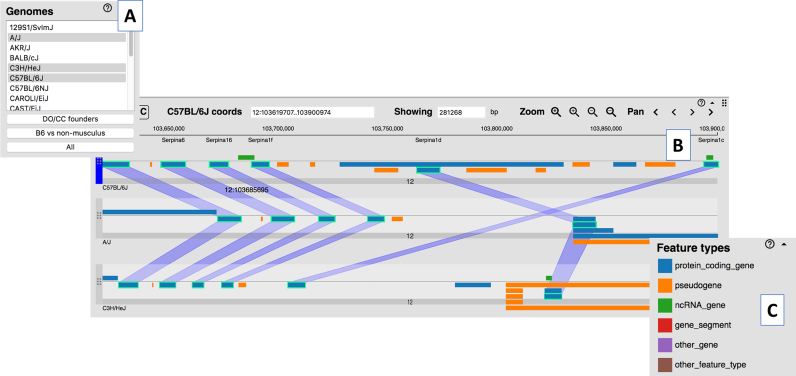
“Gene model structure details and sequences for all 19 annotated mouse genomes are also accessible from MGI’s MouseMine (http://www.mousemine.org) through its user interface and web services (MouseMine web services back the Multiple Genome Viewer).”
BackgroundInfluentialSelf-citationThe mouse Gene Expression Database (GXD): 2019 update
Smith, C. M., Hayamizu, T. F., Finger, J. H., Bello, S. M., McCright, I. J., Xu, J., Baldarelli, R. M., Beal, J. S., Campbell, J., Corbani, L. E., et al. (2019) · Nucleic Acids Research · doi:10.1093/nar/gky922 · Cited by 119
Self-citationThybert, D., Roller, M., Navarro, F. C. P., Fiddes, I., Streeter, I., Feig, C., Martin-Galvez, D., Kolmogorov, M., Janoušek, V., Akanni, W., et al. (2018) · Genome Research · doi:10.1101/gr.234096.117 · Cited by 117 · cited 2×
“The recent release of assembled and annotated genomes for 16 inbred mouse strains (https://www.biorxiv.org/content/ early/2018/02/12/235838) and two wild-derived strains (CAROLI/EiJ and PAHARI/EiJ) (10) represent major milestones in mouse genetics and comparative genomics.”
Background
Cited by
Items 301–400 of 723
Hillman, P., Baker, C. V., Hebert, L., Brown, M., Hixson, J. E., Ashley‐Koch, A. E., Morrison, A. C., Northrup, H., & Au, K. S. (2020) · Molecular Genetics & Genomic Medicine · doi:10.1002/mgg3.1495 · Cited by 13
Inferring the Allelic Series at QTL in Multiparental Populations
Crouse, W. L., Kelada, S. N. P., & Valdar, W. S. J. (2020) · Genetics · doi:10.1534/genetics.120.303393 · Cited by 12
Abdik, E., & Çakır, T. (2021) · Molecular Omics · doi:10.1039/d0mo00135j · Cited by 13
Pinson, M. R., Holloway, K. N., Douglas, J. C., Kane, C. J. M., Miranda, R. C., & Drew, P. D. (2021) · Alcoholism Clinical and Experimental Research · doi:10.1111/acer.14633 · Cited by 14
Deloge, R. B., Zhao, X., Luna, P. N., Shaw, C. A., Rosenfeld, J. A., & Scott, D. A. (2022) · European Journal of Human Genetics · doi:10.1038/s41431-022-01255-y · Cited by 14
“To generate ARM-specific pathogenicity scores for all RefSeq genes, we trained this machine learning algorithm with a set of 26 manually-curated genes that are known to cause ARMs in humans or are the human homologs of genes known to cause ARMs in mice: CDC45L, CDX1, CRIM1, DACT1, DCHS1, EFNB2, FAM58A (CCNQ), FREM1, G…”
BackgroundMethodMishra, M. K., Kane, A. E., Young, A. P., & Howlett, S. E. (2022) · Mechanisms of Ageing and Development · doi:10.1016/j.mad.2022.111762 · Cited by 13
Omelchenko, A., Menon, H., Donofrio, S. G., Kumar, G., Chapman, H. M., Roshal, J. A., Martinez-Montes, E. R., Wang, T. L., Spaller, M. R., & Firestein, B. L. (2020) · Molecular Neurobiology · doi:10.1007/s12035-020-01895-5 · Cited by 13
DNA repair gene expression is increased in HPV positive head and neck squamous cell carcinomas
Holcomb, A. J., Brown, L. E., Tawfik, O. W., Madan, R., Shnayder, Y., Thomas, S. M., & Wallace, N. A. (2020) · Virology · doi:10.1016/j.virol.2020.07.004 · Cited by 14
A recurrent de novo ATP5F1A substitution associated with neonatal complex V deficiency
Lines, M. A., Cuillerier, A., Chakraborty, P. K., Naas, T., Lasio, M. L. D., Michaud, J., Pileggi, C. A., Harper, M., Burelle, Y., Toler, T. L., et al. (2021) · European Journal of Human Genetics · doi:10.1038/s41431-021-00956-0 · Cited by 12
Zeng, F., Zhao, C., Wang, R., Ren, L., Qiu, H., Zou, Z., Ding, H., Sun, Z., Li, J., & Dong, S. (2022) · Genes & Diseases · doi:10.1016/j.gendis.2022.06.007 · Cited by 12
Testing associations between human anxiety and genes previously implicated by mouse anxiety models
Brasher, M. S., Mize, T. J., Thomas, A. L., Hoeffer, C. A., Ehringer, M. A., & Evans, L. M. (2023) · Genes Brain & Behavior · doi:10.1111/gbb.12851 · Cited by 14
Ocular manifestations of the genetic causes of focal and segmental glomerulosclerosis
Zhu, V., Huang, T., Wang, D., Colville, D. J., Mack, H. G., & Savige, J. (2023) · Pediatric Nephrology · doi:10.1007/s00467-023-06073-y · Cited by 14
Jurado, M. R., Tombor, L., Arsalan, M., Holubec, T., Emrich, F. C., Walther, T., Abplanalp, W. T., Fischer, A., Zeiher, A. M., Schulz, M. H., et al. (2024) · GigaScience · doi:10.1093/gigascience/giae011 · Cited by 12
“…anta geous br eed-ing c har acteristics and their high sequencing conservation to humans, hundreds of different mouse models have been developed to study human diseases [ 8 ] like heart failure [ 9 ] or even diseases that do not occur natur all y in mice like Alzheimer or Parkinson disease [ 10 ].”
Yusuff, T., Jensen, M., Yennawar, S., Pizzo, L., Karthikeyan, S., Gould, D. J., Sarker, A., Gedvilaite, E., Matsui, Y., Iyer, J. S., et al. (2020) · PLoS Genetics · doi:10.1371/journal.pgen.1008792 · Cited by 14
“%) knockout models of CNV genes within the Mouse Genome Informatics (MGI) database [75] exhibited non-neuronal phenotypes, including 20 homologs of CNV genes that showed both neuronal and non-neuronal phenotypes (S5 Data).”
BackgroundMethodPiao, M., Li, P., Zeng, X., Wang, X., Kang, L., Zhang, J., Wei, Y., Zhang, S., Tang, L., Zhu, J., et al. (2021) · Fundamental Research · doi:10.1016/j.fmre.2021.12.007 · Cited by 14
“The transcriptome references of other species were downloaded from Ensembl [43] and the homologous genes were determined according to the table HOM_AllOrganism.rpt from Mouse Genome Informatics [44] .”
MethodSwierkowska, J., Karolak, J. A., Vishweswaraiah, S., Mrugacz, M., Radhakrishna, U., & Gajęcka, M. (2022) · Investigative Ophthalmology & Visual Science · doi:10.1167/iovs.63.9.31 · Cited by 15
Li, M., Wang, S., Xu, P., Tian, H.-Y., Bai, M., Zhang, Y., Shao, Y., Xiong, Z., Qi, X., Cooper, D. N., et al. (2022) · Proceedings of the National Academy of Sciences · doi:10.1073/pnas.2123030119 · Cited by 13
Multi‐omic profiling reveals an RNA processing rheostat that predisposes to prostate cancer
Stentenbach, M., Ermer, J. A., Rudler, D. L., Perks, K. L., Raven, S. A., Lee, R. G., McCubbin, T., Marcellin, E., Siira, S. J., Rackham, O., et al. (2023) · EMBO Molecular Medicine · doi:10.15252/emmm.202317463 · Cited by 11
Hitomi, Y., Aiba, Y., Kawai, Y., Kojima, K., Ueno, K., Nishida, N., Kawashima, M., Gervais, O., Khor, S., Nagasaki, M., et al. (2021) · Scientific Reports · doi:10.1038/s41598-021-84042-x · Cited by 13
Restrepo, C. M., Llanes, A., Herrera, L., Ellis, E., Lleonart, R., & Fernández, P. L. (2021) · PLoS neglected tropical diseases · doi:10.1371/journal.pntd.0009225 · Cited by 14
A biallelic SNIP1 Amish founder variant causes a recognizable neurodevelopmental disorder
Ammous, Z., Rawlins, L. E., Jones, H. F., Leslie, J. S., Wenger, O. K., Scott, E. M., Deline, J., Herr, T., Evans, R., Scheid, A., et al. (2021) · PLoS Genetics · doi:10.1371/journal.pgen.1009803 · Cited by 11
Contribution of the Wolffian duct mesenchyme to the formation of the female reproductive tract
Zhao, F., Grimm, S. A., Jia, S., & Yao, H. H. (2022) · PNAS Nexus · doi:10.1093/pnasnexus/pgac182 · Cited by 12
Reduced reproductive success is associated with selective constraint on human genesPreprint
Gardner, E. J., Neville, M. D. C., Samocha, K. E., Barclay, K. J., Kolk, M., Niemi, M., Kirov, G., Martin, H. C., & Hurles, M. E. (2020) · bioRxiv (Cold Spring Harbor Laboratory) · doi:10.1101/2020.05.26.116111 · Cited by 12
Gould, R. L., Craig, S. W., McClatchy, S., Churchill, G. A., & Pazdro, R. (2021) · Redox Biology · doi:10.1016/j.redox.2021.102093 · Cited by 11
Nim, H. T., Dang, L., Thiyagarajah, H., Bakopoulos, D., See, M., Charitakis, N., Sibbritt, T., Eichenlaub, M. P., Archer, S. K., Fossat, N., et al. (2021) · Genome Biology · doi:10.1186/s13059-021-02539-0 · Cited by 11
“However, available information in the MGI database [32, 34, 36] indicates that for some of these genes, their knock-out results in heart defects (Fig.”
BackgroundWang, Y. J., Zhang, X., Lam, C. K., Guo, H., Wang, C., Zhang, S., Wu, J. C., Snyder, M. P., & Li, J. (2022) · Cell Systems · doi:10.1016/j.cels.2022.09.001 · Cited by 12
Mingardo, E., Beaman, G. M., Grote, P., Nordenskjöld, A., Newman, W. G., Woolf, A. S., Eckstein, M., Hilger, A. C., Dworschak, G. C., Rösch, W. H., et al. (2022) · Communications Biology · doi:10.1038/s42003-022-04092-3 · Cited by 11
Principles of metabolome conservation in animals
Liska, O., Boross, G. Z., Rocabert, C., Szappanos, B., Tengölics, R., & Papp, B. (2023) · Proceedings of the National Academy of Sciences · doi:10.1073/pnas.2302147120 · Cited by 18
“We also included “essentiality,” a feature describing whether a metabolite participates in a reaction catalyzed by an essential enzyme, as determined by gene deletions in mice (23).”
BackgroundInfluentialŠimon, M., Mikec, Š., Atanur, S. S., Konc, J., Morton, N. M., Horvat, S., & Kunej, T. (2024) · Genes & Genomics · doi:10.1007/s13258-024-01507-9 · Cited by 14
“…impact (McLaren et al. 2016), knockout effect from IMPC database, and their biological function, effect on phenotype, involvement of orthologous genes in human diseases related to obesity and its comorbidities using the Mouse Genome Database (MGD) (Bult et al. 2019), and differential expres - sion.”
MethodGreen, C. R., Alaeddine, L. M., Wessendorf-Rodriguez, K. A., Turner, R., Elmastas, M., Hover, J. D., Murphy, A. N., Rydén, M., Mejhert, N., Metallo, C. M., et al. (2024) · Journal of Biological Chemistry · doi:10.1016/j.jbc.2024.108004 · Cited by 16
“…pathway data-base, the differentially expressed genes in the present study were fi rst mapped to their human homologs using the publicly available mouse human genome homology database compiled by the mouse genome informatics organization (http://www.informatics.jax.org/downloads/reports/) (60).”
Genomic Targets of Positive Selection in Giant Mice from Gough Island
Payseur, B. A., & Jing, P. (2020) · Molecular Biology and Evolution · doi:10.1093/molbev/msaa255 · Cited by 13
“Mice with disrupted Gmds have altered numbers of immune cells and craniofacial morphology (Bush et al. 2012).”
BackgroundInfluentialEvolution and Expression of the Immune System of a Facultatively Anadromous Salmonid
Colgan, T. J., Moran, P. A., Archer, L. C., Wynne, R., Hutton, S. A., McGinnity, P., & Reed, T. E. (2021) · Frontiers in Immunology · doi:10.3389/fimmu.2021.568729 · Cited by 14
“org 3 Network (ZFIN) database; (63)], as well as for the mouse, Mus musculus (obtained from Mouse Genome Informatics (MFI) database (64) and human, Homo sapiens [obtained from ImmPort (65)].”
BackgroundMeis2 Is Required for Inner Ear Formation and Proper Morphogenesis of the Cochlea
Alonso, M. B. D., Vendrell, V., López‐Hernández, I., Alonso, M. T., Martin, D. M., Giráldez, F., Carramolino, L., Giovinazzo, G., Vázquez, E., Torres, M., et al. (2021) · Frontiers in Cell and Developmental Biology · doi:10.3389/fcell.2021.679325 · Cited by 10
“Genes twofold or greater were examined for their expression in the cochlea (Visel et al., 2004; Diez-Roux et al., 2011; Agoston et al., 2014; Bult et al., 2019) and are listed in Table 1.”
BackgroundAponte, J. D., Katz, D. C., Roth, D. M., Vidal‐García, M., Liu, W., Andrade, F., Roseman, C. C., Murray, S. A., Cheverud, J. M., Graf, D., et al. (2021) · eLife · doi:10.7554/elife.68623 · Cited by 15
rs9459874 and rs1012656 in CCR6/FGFR1OP confer susceptibility to primary biliary cholangitis
Hitomi, Y., Aiba, Y., Ueno, K., Nishida, N., Kawai, Y., Kawashima, M., Yasunami, M., Gervais, O., Ito, M., Cordell, H. J., et al. (2021) · Journal of Autoimmunity · doi:10.1016/j.jaut.2021.102775 · Cited by 11
Global phosphoproteomic analysis identified key kinases regulating male meiosis in mouse
Li, H., Chen, H., Zhang, X.-Z., Qi, Y.-L., Wang, B., Cui, Y., Ren, J., Zhao, Y.-C., Chen, Y., Zhu, T., et al. (2022) · Cellular and Molecular Life Sciences · doi:10.1007/s00018-022-04507-8 · Cited by 11
AutoCaSc: Prioritizing candidate genes for neurodevelopmental disorders
Lieberwirth, J. K., Büttner, B., Klöckner, C., Platzer, K., Popp, B., & Jamra, R. A. (2022) · Human Mutation · doi:10.1002/humu.24451 · Cited by 12
“Stogmann et al. (2013) Seizures are described in knockout mice (MGI).”
MethodInfluentialDickson, M. J., Gruzdev, A., & DeMayo, F. J. (2023) · Biology of Reproduction · doi:10.1093/biolre/ioad012 · Cited by 13
“Over the past 20 years, this Amhr2-IRESCre(Bhr) mouse model, Amhr2tm3(cre)Bhr (MGI 3042214), has been used for over 150 publications, especially to ablate genes in the reproductive tract including ovary, uterus, and testes [4].”
BackgroundIdentification of Rare Variants Involved in High Myopia Unraveled by Whole Genome Sequencing
Haarman, A. E. G., Klaver, C. C. W., Tedja, M. S., Roosing, S., Astuti, G., Gilissen, C., Hoefsloot, L. H., van Tienhoven, M., Brands, T., Magielsen, F. J., et al. (2023) · Ophthalmology Science · doi:10.1016/j.xops.2023.100303 · Cited by 11
“Evidence for an ocular phenotype in a knockout mouse or zebra fi sh model was assessed using the Mouse Genome Informatics database, 43 the International Mouse Phenotyping Consortium databases, 44,45 and the Zebra fi sh Information Network.”
Yüksel, Z., Yazol, M., & Gümüş, E. (2019) · American Journal of Medical Genetics Part A · doi:10.1002/ajmg.a.61210 · Cited by 14
Huang, S. S. Y., Makhlouf, M., AbouMoussa, E. H., Segura, M. L. R. T., Mathew, L. S., Wang, K., Leung, M. C., Chaussabel, D., Logan, D. W., Scialdone, A., et al. (2020) · Molecular Metabolism · doi:10.1016/j.molmet.2020.101038 · Cited by 12
“org/vocab/gene_ontology/GO:0002376) [31].”
Fuentealba, M., Fabian, D. K., Dönertaş, H. M., Thornton, J. M., & Partridge, L. (2021) · Mechanisms of Ageing and Development · doi:10.1016/j.mad.2021.111437 · Cited by 14
Multivariate Analysis Identifies Eight Novel Loci Associated with Meat Productivity Traits in Sheep
Zlobin, A. S., Nikulin, P. S., Волкова, Н. А., Zinovieva, N. A., Садраддинович, И. Б., Bagirov, V. A., Бородин, П. М., Aksenovich, T. I., & Tsepilov, Y. A. (2021) · Genes · doi:10.3390/genes12030367 · Cited by 12
“Due to the relative scarcity of data on sheep gene function, we supplemented our literature-based analysis with information published in the catalog of human genes Online Mendelian Inheritance in Man (OMIM) [15] and a mouse knockout database [16].”
MethodGenomic sequencing of rare diseases
Gonzaga-Jauregui, C. G., & Zepeda‐Mendoza, C. J. (2021) · Elsevier eBooks · doi:10.1016/b978-0-12-820140-4.00001-6 · Cited by 12
Duek, P. D., Mary, C., Zahn‐Zabal, M., Bairoch, A., & Lane, L. (2021) · Database · doi:10.1093/database/baab046 · Cited by 11
“Phenotype information was retrieved fromUniProtKB and the model organism databases for the organisms in which the protein is conserved: MGI (37), Zfin (38), Xenbase (39), Flybase (40), Wormbase (41), SGD and TAIR/Araport.”
MethodMansour, H., Banaganapalli, B., Nasser, K. K., Al-Aama, J. Y., Shaik, N. A., Saadah, O. I., & Elango, R. (2022) · Frontiers in Pediatrics · doi:10.3389/fped.2022.837957 · Cited by 12
Linking common and rare disease genetics through gene regulatory networksPreprint
Bakker, O. B., Claringbould, A., Westra, H.-J., Wiersma, H. H., Boulogne, F., Võsa, U., Symmons, S. M., Jonkers, I. H., Franke, L., & Deelen, P. (2021) · medRxiv · doi:10.1101/2021.10.21.21265342 · Cited by 11
Chuang, Y.-T., Shiau, J., Tang, J., Farooqi, A. A., Chang, F., Tsai, Y., Yen, C., & Chang, H. (2023) · Cancers · doi:10.3390/cancers15082215 · Cited by 10
Tang, J.-Y., Chuang, Y.-T., Shiau, J., Yen, C., Chang, F., Tsai, Y., Farooqi, A. A., & Chang, H. (2023) · International Journal of Molecular Sciences · doi:10.3390/ijms241512449 · Cited by 12
Identification of Novel Pleiotropic SNPs Associated with Osteoporosis and Rheumatoid Arthritis
Liu, Y., Liu, Y., Zhang, Q., Xiao, T., & Deng, H.-W. (2021) · Calcified Tissue International · doi:10.1007/s00223-021-00817-4 · Cited by 10
Novel FGFR1 Variants Are Associated with Congenital Scoliosis
Wang, S., Chai, X., Yan, Z., Zhao, S., Yang, Y., Li, X., Niu, Y., Lin, G., Su, Z., Wu, Z., et al. (2021) · Genes · doi:10.3390/genes12081126 · Cited by 11
Heritability and De Novo Mutations in Oesophageal Atresia and Tracheoesophageal Fistula Aetiology
Brosens, E., Brouwer, R. W. W., Douben, H., van Bever, Y., Brooks, A. S., Wijnen, R. M. H., van IJcken, W. F. J., Tibboel, D., Rottier, R. J., & de Klein, A. (2021) · Genes · doi:10.3390/genes12101595 · Cited by 11
Mouse genomic and cellular annotations
Long, H., Reeves, R., & Simon, M. M. (2022) · Mammalian Genome · doi:10.1007/s00335-021-09936-7 · Cited by 14
Qian, W., Zhang, M., Wan, K., Xie, Y.-X., Du, S., Li, J., Mu, X., Qiu, J., Xue, X., Zhuang, X., et al. (2022) · Journal of genetics and genomics/Journal of Genetics and Genomics · doi:10.1016/j.jgg.2022.02.020 · Cited by 13
Cytokine Receptor-Like Factor 3 (CRLF3) Contributes to Early Zebrafish Hematopoiesis
Taznin, T., Perera, K. L., Gibert, Y., Ward, A. C., & Liongue, C. (2022) · Frontiers in Immunology · doi:10.3389/fimmu.2022.910428 · Cited by 9
Alia, A. O., Jeon, S., Popović, J., Salvo, M. A., Sadleir, K. R., Vassar, R. J., & Cuddy, L. K. (2022) · Scientific Reports · doi:10.1038/s41598-022-26671-4 · Cited by 12
Modulating Effects of Cancer-Derived Exosomal miRNAs and Exosomal Processing by Natural Products
Chuang, Y.-T., Tang, J., Shiau, J., Yen, C., Chang, F., Yang, K., Hou, M., Farooqi, A. A., & Chang, H. (2023) · Cancers · doi:10.3390/cancers15010318 · Cited by 11
Arancibia-Opazo, S., Contreras-Riquelme, S., Sánchez, M., Cisternas-Olmedo, M., Vidal, R. L., Martín, A. J. M., & Sáez, M. (2023) · International Journal of Molecular Sciences · doi:10.3390/ijms241310848 · Cited by 13
Review on the reproductive biology of the Takifugu genus and its application in sex control
Zhao, C., Chu, P., Liu, Y., Wang, S., Wang, T., & Yin, S. (2023) · Aquaculture · doi:10.1016/j.aquaculture.2023.740241 · Cited by 12
Clay, S. M., Alladina, J. W., Smith, N. P., Visness, C. M., Wood, R. A., O’Connor, G. T., Cohen, R. T., Hershey, G. K. K., Kercsmar, C. M., Gruchalla, R. S., et al. (2023) · Journal of Allergy and Clinical Immunology · doi:10.1016/j.jaci.2023.10.023 · Cited by 12
“48,54 Although the type of granulocyte was not specified, these measures would have included eosinophils.”
Molecular basis of a new ovine model for human 3M syndrome-2
Woolley, S. A., Hayes, S. E., Shariflou, M. R., Nicholas, F. W., Willet, C. E., O’Rourke, B. A., & Tammen, I. (2020) · BMC Genetics · doi:10.1186/s12863-020-00913-8 · Cited by 10
The effects of Tbx15 and Pax1 on facial and other physical morphology in mice
Qian, Y., Xiong, Z., Li, Y., Kayser, M., Liu, L., & Liu, F. (2021) · FASEB BioAdvances · doi:10.1096/fba.2021-00094 · Cited by 10
Schierbaum, L. M., Schneider, S., Herms, S., Sivalingam, S., Fabian, J., Reutter, H. M., Weber, S., Merz, W. M., Tkaczyk, M., Miklaszewska, M., et al. (2021) · Genes · doi:10.3390/genes12091449 · Cited by 11
Vike, N. L., Bari, S., Stetsiv, K., Walter, A. E., Newman, S. D., Kawata, K., Bazarian, J. J., Martinovich, Z., Nauman, E. A., Talavage, T. M., et al. (2021) · iScience · doi:10.1016/j.isci.2021.103483 · Cited by 12
Shiau, C.-K., Huang, J., Liu, Y., & Tsai, H. (2022) · BMC Genomics · doi:10.1186/s12864-022-08537-1 · Cited by 11
Torshizi, A. D., & Wang, K. (2022) · npj Systems Biology and Applications · doi:10.1038/s41540-022-00243-8 · Cited by 17
Sundberg, J. P., Smith, R. S., & John, S. W. M. (2001) · Research methods for mutant mice series · doi:10.1201/9781420041606.ch5 · Cited by 10
Li, Y., Xiong, Z., Zhang, M., Hysi, P. G., Qian, Y., Adhikari, K., Weng, J., Wu, S., Du, S., Gonzalez-Jose, R., et al. (2023) · PLOS Genetics · doi:10.1371/journal.pgen.1010786 · Cited by 9
Matsuura, K., Mohamed, H. M. A., Youssef, M., Yoshida, Y., & Yamamoto, T. S. (2022) · iScience · doi:10.1016/j.isci.2022.104692 · Cited by 10
CRISPR/Cas9 genetic screens in hepatocellular carcinoma gene discovery
Chiu, C. H. (2023) · Current Research in Biotechnology · doi:10.1016/j.crbiot.2023.100127 · Cited by 10
“Currently, nearly 50,000 genes have been identified in mouse and more than 60,000 genes are present in the human genome (Bult, 2019; Nurk, 2022).”
Working with Miraculous Mice: Mus musculus as a Model Organism
Standley, A., Xie, J., Lau, A. W. Y., Grote, L., & Gifford, A. J. (2024) · Current Protocols · doi:10.1002/cpz1.70021 · Cited by 18
“…Web Portal (Groza et al., 2023) and is integrated with a community model organism knowledgebase for the laboratory mouse, the Mouse Genome Database (Bult et al., 2019; Blake et al., 2021) and the Monarch Initiative, which connects phenotypes to genotypes across a range of species (Shefchek et al.,…”
Plasma membrane folding enables constant surface area-to-volume ratio in growing mammalian cells
Wu, W., Lam, A. R., Suarez, K., Smith, G. N., Duquette, S. M., Yu, J., Mankus, D., Bisher, M., Lytton-Jean, A., Manalis, S. R., et al. (2025) · Current Biology · doi:10.1016/j.cub.2025.02.051 · Cited by 9
Yoo, H., La, H., Lee, E. J., Choi, H.-J., Oh, J., Thang, N. X., & Hong, K. (2020) · Biology · doi:10.3390/biology9120428 · Cited by 10
Variant analyses of candidate genes in orofacial clefts in multi‐ethnic populations
Li, M., Olotu, J., Buxó-Martínez, C. J., Mossey, P. A., Anand, D., Busch, T. D., Alade, A. A., Gowans, L. J. J., Eshete, M. A., Adeyemo, W. L., et al. (2021) · Oral Diseases · doi:10.1111/odi.13932 · Cited by 9
Genetic Influence on Frequencies of Myeloid-Derived Cell Subpopulations in Mouse
Krayem, I., Sohrabi, Y., Javorková, E., Volkova, V., Strnad, H., Havelková, H., Vojtíšková, J., Aidarova, A., Holáň, V., Démant, P., et al. (2022) · Frontiers in Immunology · doi:10.3389/fimmu.2021.760881 · Cited by 9
“Smap1 (small ArfGAP [ADPribosylation factor GTPase activating protein]1) is the gene involved in both the hematopoietic and the immune systems (43, 44); other genes with potential influence onMDC frequencies are Mir30a (microRNA 30a) (45), Mir30c-2 (microRNA 30c-2) (46), Ogfrl1 (opioid growth factor receptor-like 1) (…”
BackgroundLi, S., Shao, H., & Chang, L. (2020) · BioMed Research International · doi:10.1155/2020/4980609 · Cited by 9
Burger, L. L., Wagenmaker, E. R., Phumsatitpong, C., Olson, D. P., & Moenter, S. M. (2020) · Endocrinology · doi:10.1210/endocr/bqaa166 · Cited by 10
Farrar, J. S., Lownik, J. C., Way, G. W., Rodriguez, M. C., Celi, F. S., & Martin, R. (2021) · Adipocyte · doi:10.1080/21623945.2021.1880083 · Cited by 9
“Genome Database (MGD[21],) have an annotated chromosome insertion location.”
BackgroundWalz, C., Brenmoehl, J., Trakooljul, N., Noce, A., Caffier, C., Ohde, D., Langhammer, M., Wimmers, K., Ponsuksili, S., & Hoeflich, A. (2021) · Cells · doi:10.3390/cells10040736 · Cited by 10
Sun, Y., Zuo, Z., & Kuang, Y. (2021) · International Journal of Molecular Sciences · doi:10.3390/ijms22094456 · Cited by 10
Muñoz‐Fuentes, V., Haselimashhadi, H., Santos, L., Westerberg, H., Parkinson, H., & Mason, J. (2021) · Mammalian Genome · doi:10.1007/s00335-021-09917-w · Cited by 10
A Co-Association Network Analysis Reveals Putative Regulators for Health-Related Traits in Pigs
Crespo‐Piazuelo, D., Ramayo‐Caldas, Y., González-Rodríguez, O., Pascual, M., Quintanilla, R., & Ballester, M. (2021) · Frontiers in Immunology · doi:10.3389/fimmu.2021.784978 · Cited by 15
Acute Effects of Intratumor DNA Electrotransfer
Bhandary, M., Conniff, A. S., Miranda, K., & Heller, L. C. (2022) · Pharmaceutics · doi:10.3390/pharmaceutics14102097 · Cited by 9
Essential genes: a cross-species perspective
Cacheiro, P., & Smedley, D. P. (2023) · Mammalian Genome · doi:10.1007/s00335-023-09984-1 · Cited by 11
Gustafson, J. A., Park, S. S., & Cunningham, M. L. (2019) · PLoS ONE · doi:10.1371/journal.pone.0221402 · Cited by 9
“…thus were Gsk3 β (+/-) x Igf1 (+/tg) (or Igf1 (tg/tg) ) Gsk3 β (+/-) / Igf1 (+/tg) Twist1 (+/-) x GSK3 β (+/-) Twist1 (+/-) / Gsk3 β (+/-) Twist1 (+/-) x Igf1 (+/tg) (or Igf1 (tg/tg) ) Twist1 (+/-) / Igf1 (+/tg) https://doi.org/10.1371/journal.pone.0221402.t001 maintained as heterozygotes [34, 35].”
InfluentialThe role of indoleamine 2,3 dioxygenase 1 in the osteoarthritis.
Alahdal, M., Duan, L., Ouyang, H., & Wang, D. (2020) · PubMed Central · Cited by 13
Consoli, S., Coletti, P., Markov, P. V., Orfei, L., Biazzo, I., Schuh, L., Stefanovitch, N., Bertolini, L., Ceresa, M., & Stilianakis, N. I. (2025) · Scientific Data · doi:10.1038/s41597-025-05276-2 · Cited by 21
Thalmeier, D., Miller, G., Schneltzer, E., Hurt, A., de Angelis, M. H., Becker, L., Müller, C. L., & Maier, H. (2022) · BMC Neuroscience · doi:10.1186/s12868-022-00758-0 · Cited by 8
“For 35 of the genes, no mouse model was yet listed at the Mouse Genome Database (MGD) (Bult et al. 2018), while for 37 of them with a mouse model available no information about hearing sensitivity was provided.”
BackgroundDaamen, A. R., Wang, H., Bachali, P., Shen, N., Kingsmore, K. M., Robl, R. D., Grammer, A. C., Fu, S. M., & Lipsky, P. E. (2023) · Frontiers in Immunology · doi:10.3389/fimmu.2023.1147526 · Cited by 8
“Cell type and pathway gene signatures were generated based on literature mining, Mouse Genome Informatics (MGI) (19) gene ontology (GO) terms, and immune cell-specific expression derived from the Immunological Genome Project Consortium (ImmGen) (20).”
MethodStanzick, K. J., Stark, K. J., Gorski, M., Schödel, J., Krüger, R., Kronenberg, F., Warth, R., Heid, I. M., & Winkler, T. W. (2023) · BMC Bioinformatics · doi:10.1186/s12859-023-05472-0 · Cited by 10
“B: Shown are the number of genes known for (i) causing a genetic disorder in human with kidney phenotype [21–23], (ii) a kidney phenotype in mouse [20] (iii) being drug target in registered clinical trials for kidney disease or any other diseases [24] Columns: “PPA > 99%”: exactly one variant in…”
BackgroundHu, B., Yin, M.-Y., Zhang, C., Shi, Z., Wang, L., Lei, X., Li, M., Li, S. L., & Tuo, Q. (2025) · EBioMedicine · doi:10.1016/j.ebiom.2025.105645 · Cited by 11
“24 In this study, we carried out summary-data-based Mendelian randomization (SMR) analysis using PGC3 schizophrenia GWAS summary statistics and the largest brain cortex eQTL dataset to con fi rm that upregulated cortical Ino80e expression is linked with an increased risk of schizophrenia.”
Annotating genomes at increased scale and resolution
Ji, H. J., Pertea, M., & Salzberg, S. L. (2026) · Nature Reviews Genetics · doi:10.1038/s41576-026-00937-3 · Cited by 14
Genetic variants associated with inflammatory bowel disease and gut graft-versus-host disease
Martin, P. J., Storer, B. E., Levine, D., & Hansen, J. A. (2021) · Blood Advances · doi:10.1182/bloodadvances.2021004959 · Cited by 11
Loss-of-function mutation in Pcsk1 increases serum APOA1 level and LCAT activity in mice
Khan, A. A., Kim, N., Korstanje, R., & Choi, S. (2022) · Laboratory Animal Research · doi:10.1186/s42826-021-00111-2 · Cited by 9
Pienkowski, V. M., Kucharczyk, M., Rydzanicz, M., Poszewiecka, B., Pachota, K., Młynek, M., Stawiński, P., Pollak, A., Kosińska, J., Wojciechowska, K., et al. (2020) · Journal of Clinical Medicine · doi:10.3390/jcm9051245 · Cited by 15
Lin, G., Liang, Y., Wu, P., Chen, C.-K., Lai, Y., Jiang, T., Haung, Y., & Chuong, C. (2021) · Developmental Dynamics · doi:10.1002/dvdy.396 · Cited by 9
Beckman, E. J., Martins, F. M., Suzuki, T. A., Bi, K., Keeble, S., Good, J. M., Chavez, A. S., Ballinger, M. A., Agwamba, K., & Nachman, M. W. (2021) · Genetics · doi:10.1093/genetics/iyab226 · Cited by 10
“We used the MGI database (Bult et al. 2019), based largely on mutant alleles in inbred lines, to characterize the function of these six genes and found that they primarily affect the nervous system (four genes) and the cardiovascular system (three genes).”
Schulten, H.-J., Al-Adwani, F., Saddeq, H. A. B., Alkhatabi, H. A., Alganmi, N. A., Karim, S., Hussein, D. M., Al‐Ghamdi, K., Jamal, A., Al-Maghrabi, J. A., et al. (2022) · Scientific Reports · doi:10.1038/s41598-021-04214-7 · Cited by 8
Ni, P., Wilson, D., & Su, Z. (2022) · BMC Genomics · doi:10.1186/s12864-022-08933-7 · Cited by 8
“experimental data We next evaluated the sensitivity (recall rate) of our CRMs predicted at different p-values for recalling four types of experimentally determined CRM-related elements, including 620 mouse enhancers documented in the VISTA database [60], 163,311 mouse promoters and 49,385 mouse enhancers determined by…”
MethodFabian, J., Dworschak, G. C., Waffenschmidt, L., Schierbaum, L. M., Bendixen, C., Heilmann‐Heimbach, S., Sivalingam, S., Buneß, A., Schwarzer, N., Boemers, T. M., et al. (2022) · European Journal of Human Genetics · doi:10.1038/s41431-022-01216-5 · Cited by 8
“5–18, including the critical embryonic timeframe for ARM organ formation [18].”
Background
Metadata
- Authors
- Bult, C. J., Blake, J. A., Smith, C. L., Kadin, J. A., Richardson, J. E., the Mouse Genome Database Group, Anagnostopoulos, A., Asabor, R., Baldarelli, R. M., Beal, J. S., Bello, S. M., Blodgett, O., Butler, N. E., Christie, K. R., Corbani, L. E., Creelman, J., Dolan, M. E., Drabkin, H. J., Giannatto, S. L., Hale, P., Hill, D. P., Law, M., Mendoza, A., McAndrews, M., Miers, D., Motenko, H., Ni, L., Onda, H., Perry, M., Recla, J. M., Richards-Smith, B., Sitnikov, D., Tomczuk, M., Tonorio, G., Wilming, L., & Zhu, Y.
- Affiliations
- Jackson Laboratory (US)
- Corresponding author
- Bult, Carol J
- ORCID
- Venue
- Nucleic Acids Research
- Publisher
- Oxford University Press (OUP)
- Published
- 2018-11-08
- Volume
- 47
- Issue
- D1
- Pages
- D801-D806
- ISSN
- 0305-1048 (ISSN-L)
- 1362-4962
- PMC
- PMC6323923
- OpenAlex
- W2900255713
- Cited by
- 686
- References
- 17
- Citations by year
- 2026: 18 · 2025: 33 · 2024: 58 · 2023: 101 · 2022: 133 · 2021: 177 · 2020: 126 · 2019: 37
- FWCI
- 31.47
- Type
- journal article
- Language
- en
- Open access
- gold
- doi.org
- Licence
- Locations
- Nucleic Acids Research (publishedVersion, cc-by)
- Europe PMC (PubMed Central) (publishedVersion, cc-by)
- PubMed Central (publishedVersion, cc-by)
- PubMed (publishedVersion)
- The Mouseion at the JAXlibrary (Jackson Laboratory) (submittedVersion, cc-by)
- Funders
- National Institutes of Health (U41 HG000330, R25 HG007053, U41 HG002223)
- Topics
- Health Sciences › Medicine › Health Informatics › Biomedical Text Mining and Ontologies
- Life Sciences › Biochemistry, Genetics and Molecular Biology › Molecular Biology › Genomics and Phylogenetic Studies
- Life Sciences › Biochemistry, Genetics and Molecular Biology › Molecular Biology › Bioinformatics and Genomic Networks
- Keywords
- Mouse Genome Database, laboratory mice, mouse genetics, mouse genomics, gene nomenclature, allele nomenclature, mouse models of human disease, phenotypes, gene expression, gene expression database, literature curation, transcription start sites, genome annotation
- MeSH terms
- Alleles, Animals, Terminology as Topic, Gene Expression, Genome, Internet, Genomics, Transcription Initiation Site, Databases, Genetic, Mice, Molecular Sequence Annotation
About these checks
Registry, retraction, Cites and statistics results are computed, not judged, with one exception: a printed reference that no index lists is read once by a model before it counts as a citation error. Claims are extracted by a model and kept only when their quote appears verbatim in the text; each cited source is then checked, with a model’s help, for whether it says what the claim relies on. Those verdicts can be wrong — read the claim’s quote and the cited source before relying on one.
Statistics and arithmetic are recomputed, not judged.
Confidence bands are shown only for fields calibrated on our annotated test set. None is calibrated yet, so no band is shown.
What counts as a claim ›How we measure confidence ›How we check this ›
Are you an author, or do you see a problem with this page? Request a review
Data sources
Bibliographic data: Semantic Scholar, OpenAlex, Crossref.
Contains information from the Semantic Scholar Academic Graph Datasets, made available under the ODC Attribution License (ODC-BY 1.0).
Semantic Scholar’s data is described in: Kinney, R., et al. (2023). The Semantic Scholar Open Data Platform. arXiv:2301.10140.
