

Mouse Genome Database (MGD) 2019
Open accessThe DOI matches its Crossref record; 16 of the 17 references it cites were found in a registry or an index.
Abstract
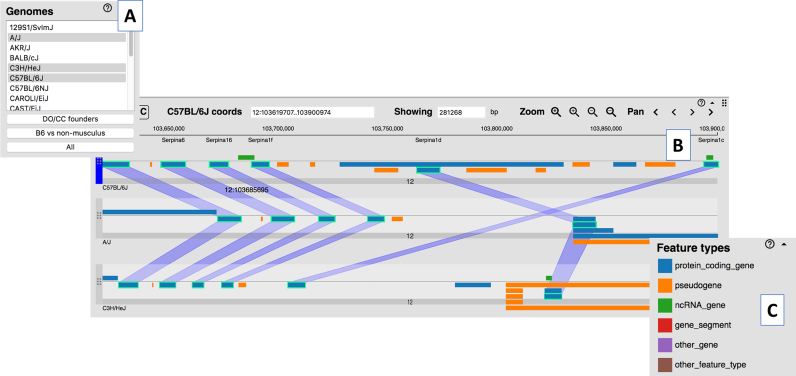
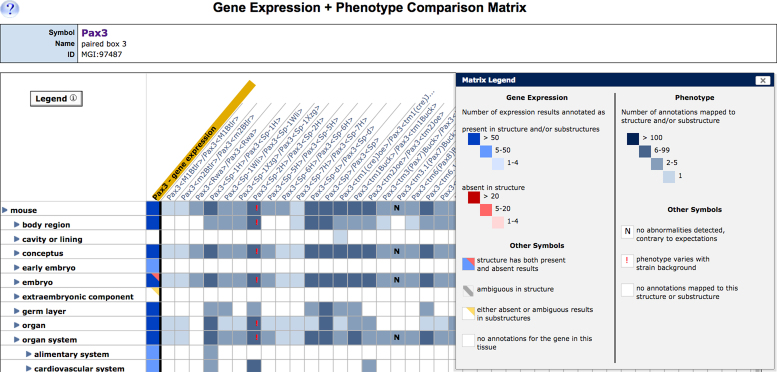
The Mouse Genome Database (MGD; http://www.informatics.jax.org) is the community model organism genetic and genome resource for the laboratory mouse. MGD is the authoritative source for biological reference data sets related to mouse genes, gene functions, phenotypes, and mouse models of human disease. MGD is the primary outlet for official gene, allele and mouse strain nomenclature based on the guidelines set by the International Committee on Standardized Nomenclature for Mice. In this report we describe significant enhancements to MGD, including two new graphical user interfaces: (i) the Multi Genome Viewer for exploring the genomes of multiple mouse strains and (ii) the Phenotype-Gene Expression matrix which was developed in collaboration with the Gene Expression Database (GXD) and allows researchers to compare gene expression and phenotype annotations for mouse genes. Other recent improvements include enhanced efficiency of our literature curation processes and the incorporation of Transcriptional Start Site (TSS) annotations from RIKEN's FANTOM 5 initiative.
Overview
The claims and statistics of this paper haven’t been checked yet.
Free: it reads the open-access text and checks the first 5 claims that cite a source we can check. Create a free account to check every claim.
Integrity signals
Registry
Cites
Statistics
Figures
Verification
Claims the paper makes
The claims and statistics of this paper haven’t been checked yet.
Free: it reads the open-access text and checks the first 5 claims that cite a source we can check. Create a free account to check every claim.
Claims other papers make about this one
Each is checked against this paper’s own text: does it say what the citing paper says it does?
The source backs part of the claim, not all of it — or backs it for a different population, condition or comparison.
In the citing paper
“However, available information in the MGI database [32, 34, 36] indicates that for some of these genes, their knock-out results in heart defects (Fig. 4, red border) or they are expressed in the heart (Fig. 4, double-line border).”
From A cis-regulatory-directed pipeline for the identification of genes involved in cardiac development and disease (2021) · cites this paper as [34]
Experimental — accuracy not yet measuredThe check wasn’t confident either way, so it gives no verdict — never disputed.
In the citing paper
“Most (15/16) of nearby genes or 3D interaction genes were expressed in branchial arch and embryo ectoderm in mice [36,37].”
From Combined genome-wide association study of 136 quantitative ear morphology traits in multiple populations reveal 8 novel loci (2023) · cites this paper as [37]
Experimental — accuracy not yet measuredThe check wasn’t confident either way, so it gives no verdict — never disputed.
In the citing paper
“Yet, it is expressed in several tissues based on the transcriptome data (Fig. 3A) and in situ hybridization results of E14.5 mouse embryos [34] (Fig. 3C).”
From A cis-regulatory-directed pipeline for the identification of genes involved in cardiac development and disease (2021) · cites this paper as [34]
Experimental — accuracy not yet measuredThe check wasn’t confident either way, so it gives no verdict — never disputed.
In the citing paper
“Similarly, Cbx5 is also highly expressed in all four tissues (Fig. 3A) and is widely expressed in E14.5 embryo [34] (Fig. 3D).”
From A cis-regulatory-directed pipeline for the identification of genes involved in cardiac development and disease (2021) · cites this paper as [34]
Experimental — accuracy not yet measured
Self-check
Percentages, sums and reported differences re-computed from the paper’s own numbers.
The self-check needs the paper’s full text.
Citations
Cites
The Gene Ontology Resource: 20 years and still GOing strong
The Gene Ontology Consortium (2019) · Nucleic Acids Research · doi:10.1093/nar/gky1055 · Cited by 4,747
A promoter-level mammalian expression atlas
The FANTOM Consortium and the RIKEN PMI and CLST (DGT) (2014) · Nature · doi:10.1038/nature13182 · Cited by 1,982
Expansion of the Gene Ontology knowledgebase and resources
The Gene Ontology Consortium (2017) · Nucleic Acids Research · doi:10.1093/nar/gkw1108 · Cited by 1,850
JBrowse: A next-generation genome browser
Skinner, M. E., Uzilov, A. V., Stein, L. D., Mungall, C. J., & Holmes, I. H. (2009) · Genome Research · doi:10.1101/gr.094607.109 · Cited by 717 · cited 1×
“org/), a JavaScriptbased interactive genome browser with multiple features for navigation and track selection (14).”
BackgroundThe Mouse Genome Database (MGD): facilitating mouse as a model for human biology and disease
Eppig, J. T., Blake, J. A., Bult, C. J., Kadin, J. A., Richardson, J. E., & The Mouse Genome Database Group (2015) · Nucleic Acids Research · doi:10.1093/nar/gku967 · Cited by 357
Self-citationSupporting conditional mouse mutagenesis with a comprehensive cre characterization resource
Heffner, C. S., Herbert Pratt, C., Babiuk, R. P., Sharma, Y., Rockwood, S. F., Donahue, L. R., Eppig, J. T., & Murray, S. A. (2012) · Nature Communications · doi:10.1038/ncomms2186 · Cited by 230 · cited 1×
“Other database resources that are coordinated within the MGI consortium include the Gene Expression Database (GXD) (3), the Mouse Tumor Biology Database (MTB) (4), the Gene Ontology project (GO) (5), MouseMine (6), the International Mouse Strain Resource (IMSR) (7) and the CrePortal database of recombinase expressing…”
BackgroundMouse Genome Database (MGD)-2018: knowledgebase for the laboratory mouse
Smith, C. L., Blake, J. A., Kadin, J. A., Richardson, J. E., Bult, C. J., & the Mouse Genome Database Group (2018) · Nucleic Acids Research · doi:10.1093/nar/gkx1006 · Cited by 219
Self-citationMouseMine: a new data warehouse for MGI
Motenko, H., Neuhauser, S. B., O’Keefe, M., & Richardson, J. E. (2015) · Mammalian Genome · doi:10.1007/s00335-015-9573-z · Cited by 132 · cited 9×
“Gene model structure details and sequences for all 19 annotated mouse genomes are also accessible from MGI’s MouseMine (http://www.mousemine.org) through its user interface and web services (MouseMine web services back the Multiple Genome Viewer).”
BackgroundInfluentialSelf-citationThe mouse Gene Expression Database (GXD): 2019 update
Smith, C. M., Hayamizu, T. F., Finger, J. H., Bello, S. M., McCright, I. J., Xu, J., Baldarelli, R. M., Beal, J. S., Campbell, J., Corbani, L. E., et al. (2019) · Nucleic Acids Research · doi:10.1093/nar/gky922 · Cited by 119
Self-citationThybert, D., Roller, M., Navarro, F. C. P., Fiddes, I., Streeter, I., Feig, C., Martin-Galvez, D., Kolmogorov, M., Janoušek, V., Akanni, W., et al. (2018) · Genome Research · doi:10.1101/gr.234096.117 · Cited by 117 · cited 2×
“The recent release of assembled and annotated genomes for 16 inbred mouse strains (https://www.biorxiv.org/content/ early/2018/02/12/235838) and two wild-derived strains (CAROLI/EiJ and PAHARI/EiJ) (10) represent major milestones in mouse genetics and comparative genomics.”
Background
Cited by
Items 201–300 of 723
Wilson, J. J., Wei, J. Q., Daamen, A. R., Sears, J. D., Bechtel, E., Mayberry, C. L., Stafford, G. A., Bechtold, L. S., Grammer, A. C., Lipsky, P. E., et al. (2023) · iScience · doi:10.1016/j.isci.2023.107487 · Cited by 25
Antounians, L., Figueira, R. L., Sbragia, L., & Zani, A. (2019) · European Journal of Pediatric Surgery · doi:10.1055/s-0039-1693993 · Cited by 22
Panov, J., Simchi, L., Feuermann, Y., & Kaphzan, H. (2020) · International Journal of Molecular Sciences · doi:10.3390/ijms21114156 · Cited by 26
Siemsen, B. M., Landin, J. D., McFaddin, J. A., Hooker, K. N., Chandler, L. J., & Scofield, M. D. (2020) · Journal of Neuroscience Research · doi:10.1002/jnr.24683 · Cited by 30
“These mice constitutively express EYFP in lieu of endogenous Cx3cr1 brain-wide in microglia (Bult et al., 2018).”
BackgroundQuantitative Proteomics Links the LRRC59 Interactome to mRNA Translation on the ER Membrane
Hannigan, M. M., Hoffman, A. M., Thompson, J. W., Zheng, T., & Nicchitta, C. V. (2020) · Molecular & Cellular Proteomics · doi:10.1074/mcp.ra120.002228 · Cited by 24
Computational Methods and Software Tools for Functional Analysis of miRNA Data
García-Moreno, A., & Carmona‐Sáez, P. (2020) · Biomolecules · doi:10.3390/biom10091252 · Cited by 27
Integrative Map of HIF1A Regulatory Elements and Variations
Kunej, T. (2021) · Genes · doi:10.3390/genes12101526 · Cited by 42
van Duijvenboden, S., Ramírez, J., Young, W. J., Olczak, K. J., Ahmed, F., Alhammadi, M. J. A. Y., Bell, C. G., Morris, A. P., & Munroe, P. B. (2023) · The American Journal of Human Genetics · doi:10.1016/j.ajhg.2023.08.009 · Cited by 25
Yang, Q., Chen, H., Ye, J., Liu, C., Wei, R., Chen, C., & Huang, L. (2019) · Frontiers in Genetics · doi:10.3389/fgene.2019.01174 · Cited by 26
Seaby, E. G., Smedley, D. P., Tavares, A. L. T., Brittain, H. K., van Jaarsveld, R. H., Baralle, D., Rehm, H. L., O’Donnell‐Luria, A., & Ennis, S. (2022) · Genetics in Medicine · doi:10.1016/j.gim.2022.04.019 · Cited by 27
Sex Chromosomes and Sex Phenotype Contribute to Biased DNA Methylation in Mouse Liver
Zhuang, Q. K.-W., Gálvez, J. H., Xiao, Q., AlOgayil, N., Hyacinthe, J., Taketo, T., Bourque, G., & Naumova, A. K. (2020) · Cells · doi:10.3390/cells9061436 · Cited by 26
Kctd15 regulates nephron segment development by repressing Tfap2a activity
Chambers, B. E., Clark, E. G., Gatz, A. E., & Wingert, R. A. (2020) · Development · doi:10.1242/dev.191973 · Cited by 24
Limited Evidence for Parallel Evolution Among Desert-AdaptedPeromyscusDeer Mice
Colella, J. P., Tigano, A., Dudchenko, O., Omer, A. D., Khan, R., Bochkov, I. D., Aiden, E. L., & MacManes, M. D. (2021) · Journal of Heredity · doi:10.1093/jhered/esab009 · Cited by 25
CNVxplorer: a web tool to assist clinical interpretation of CNVs in rare disease patients
Requena, F., Abdallah, H. H., García, A., Nitschké, P., Romana, S., Malan, V., & Rausell, A. (2021) · Nucleic Acids Research · doi:10.1093/nar/gkab347 · Cited by 25
“Mouse/Human orthology relations and phenotype data resulting from knockout experiments in mice were retrieved from Mouse Genome Informatics (MGI; version 2021–03-01; (52)).”
Designing and generating a mouse model: frequently asked questions
Gurumurthy, C. B., Saunders, T. L., & Ohtsuka, M. (2021) · Journal of Biomedical Research · doi:10.7555/jbr.35.20200197 · Cited by 26
The tweety Gene Family: From Embryo to Disease
Nalamalapu, R., Yue, M., Stone, A. R., Murphy, S. H., & Saha, M. S. (2021) · Frontiers in Molecular Neuroscience · doi:10.3389/fnmol.2021.672511 · Cited by 28
Hearing loss in Africa: current genetic profile
Adadey, S. M., Wonkam‐Tingang, E., Aboagye, E. T., Quaye, O., Awandare, G. A., & Wonkam, A. (2021) · Human Genetics · doi:10.1007/s00439-021-02376-y · Cited by 23
Identifying essential genes across eukaryotes by machine learning
Beder, T., Aromolaran, O., Dönitz, J., Tapanelli, S., Adedeji, E. O., Adebiyi, E. F., Bucher, G., & Koenig, R. (2021) · NAR Genomics and Bioinformatics · doi:10.1093/nargab/lqab110 · Cited by 32
Rodent Modeling of Alzheimer's Disease in Down Syndrome: In vivo and ex vivo Approaches
Farrell, C., Mumford, P., & Wiseman, F. K. (2022) · Frontiers in Neuroscience · doi:10.3389/fnins.2022.909669 · Cited by 22
POSTRE: a tool to predict the pathological effects of human structural variants
Sánchez-Gaya, V., & Rada-Iglesias, Á. (2023) · Nucleic Acids Research · doi:10.1093/nar/gkad225 · Cited by 25
“This information is obtained from the Online Mendelian Inheritance in Man (OMIM) (Amberger et al., 2009) and the Mouse Genome Informatics (MGI) (Bult et al., 2019) databases.”
BackgroundMethodInfluentialNowoshilow, S., & Tanaka, E. M. (2020) · Experimental Cell Research · doi:10.1016/j.yexcr.2020.112143 · Cited by 24
Russkikh, N., Antonets, D., Shtokalo, D., Makarov, A., Vyatkin, Y., Zakharov, A., & Terentyev, E. (2020) · Bioinformatics · doi:10.1093/bioinformatics/btaa624 · Cited by 21
Kulmanov, M., & Hoehndorf, R. (2020) · PLoS Computational Biology · doi:10.1371/journal.pcbi.1008453 · Cited by 25
Ahangari, M. M., Everest, E., Nguyen, T.-H., Verrelli, B. C., Webb, B. T., Bacanu, S., Turanlı, E. T., & Riley, B. P. (2022) · Brain Behavior and Immunity · doi:10.1016/j.bbi.2022.06.007 · Cited by 25
Xu, M., Liu, Q., Bi, R., Li, Y., Li, H., Kang, W.-B., Yan, Z., Zheng, Q., Sun, C., Ye, M., et al. (2023) · Biological Psychiatry · doi:10.1016/j.biopsych.2023.05.020 · Cited by 21
PathExt: a general framework for path-based mining of omics-integrated biological networks
Sambaturu, N., Pusadkar, V., Hannenhalli, S. S., & Chandra, N. R. (2020) · Bioinformatics · doi:10.1093/bioinformatics/btaa941 · Cited by 21
LAMA: automated image analysis for the developmental phenotyping of mouse embryos
Horner, N., Venkataraman, S., Armit, C. J., Casero, R., Brown, J. M., Wong, M. D., van Eede, M. C., Henkelman, R. M., Johnson, S., Teboul, L., et al. (2021) · Development · doi:10.1242/dev.192955 · Cited by 19
“Tables of known phenotypes were generated by querying MGI phenotype pages for the gene of interest Acan: www.informatics.jax.org/marker/ phenotypes/MGI:99602 .”
MethodInfluentialStudying Müllerian duct anomalies – from cataloguing phenotypes to discovering causation
González, L. S., Artibani, M., & Ahmed, A. A. (2021) · Disease Models & Mechanisms · doi:10.1242/dmm.047977 · Cited by 29
“…are essential for the study of diseases, as demonstrated by efforts from the international community, such as the International Mouse Phenotyping Consortium (IMPC; www.mousephenotype.org) and Mouse Genome Informatics (MGI; http://www.informatics.jax.org) (Brown and Moore, 2012; Bult et al., 2019).”
The Effect of Population Structure on Murine Genome-Wide Association Studies
Wang, M., Fang, Z., Yoo, B., Bejerano, G., & Peltz, G. (2021) · Frontiers in Genetics · doi:10.3389/fgene.2021.745361 · Cited by 20
“To do this, causative variants were downloaded from a public database that described the published evidence linking the variants to phenotypes (Bult et al., 2019).”
BackgroundMethodvan der Zee, M. J., Whiting, J. R., Paris, J. R., Bassar, R. D., Travis, J., Weigel, D., Reznick, D. N., & Fraser, B. A. (2022) · Evolution Letters · doi:10.1002/evl3.272 · Cited by 27
“Another candidate gene in this region is solute carrier 18 member A2 ( slc18a2 , figure 4c&d), which is involved in various growth and body-size phenotypes in mice, including head morphology (Bult et al. 2019; Stelzer et al .”
BackgroundScrutinizing the human TEX genes in the context of human male infertility
Sieper, M. H., Gaikwad, A., Fros, M., Weber, P., Persio, S. D., Oud, M. S., Kliesch, S., Neuhaus, N., Stallmeyer, B., Tüttelmann, F., et al. (2023) · Andrology · doi:10.1111/andr.13511 · Cited by 21
“32,33 Nevertheless, due to the high sequence homology of the TEX13 genes, it is conceivable that the encoded proteins sub-stitute for each other and a phenotype only arises when more than one TEX13 gene is impaired.”
BackgroundResource: A curated database of brain-related functional gene sets (Brain.GMT)
Hagenauer, M. H., Sannah, Y., Hebda‐Bauer, E. K., Rhoads, C., O’Connor, A. M., Flandreau, E. I., Watson, S. J., & Akil, H. (2024) · MethodsX · doi:10.1016/j.mex.2024.102788 · Cited by 26
“Then, when appropriate, species (rat, mouse, human) orthologs for the genes included in each gene set were identified using the ortholog database on the Mouse Genome Initiative (MGI) website [ 22 ] ( http://www.informatics.jax.org/homology.shtml , downloaded 02/28/2021).”
MethodDevelopmentally Driven Changes in Adipogenesis in Different Fat Depots Are Related to Obesity
Breitfeld, J., Kehr, S., Müller, L., Stadler, P. F., Böttcher, Y., Blüher, M., Stümvoll, M., & Kovacs, P. L. (2020) · Frontiers in Endocrinology · doi:10.3389/fendo.2020.00138 · Cited by 26
Xu, F., Gao, J. L., Munkhsaikhan, U., Li, N., Gu, Q., Pierre, J. F., Starlard‐Davenport, A., Towbin, J. A., Cui, Y., Purevjav, E., et al. (2020) · Frontiers in Cardiovascular Medicine · doi:10.3389/fcvm.2020.582949 · Cited by 24
Protein ontology on the semantic web for knowledge discovery
Chen, C., Huang, H., ROSS, K. E., Cowart, J. E., Arighi, C. N., Wu, C. H., & Natale, D. A. (2020) · Scientific Data · doi:10.1038/s41597-020-00679-9 · Cited by 25
In Vitro, In Vivo, and In Silico Methods for Assessment of Muscle Size and Muscle Growth Regulation
Rupert, J. E., Jengelley, D. H. A., & Zimmers, T. A. (2020) · Shock · doi:10.1097/shk.0000000000001498 · Cited by 20
Ten simple rules for creating reusable pathway models for computational analysis and visualization
Hanspers, K., Kutmon, M., Coort, S. L., Digles, D., Dupuis, L. J., Ehrhart, F., Hu, F., Lopes, É. N., Martens, M., Pham, N., et al. (2021) · PLoS Computational Biology · doi:10.1371/journal.pcbi.1009226 · Cited by 20
“Initiatives such as the HUGO Gene Nomenclature Committee (HGNC) [41] and the Mouse Genome Informatics (MGI) database [42] aim to provide a consistent vocabulary for gene symbols and names in such a way that they are unique and do not use problematic characters, are not autocorrected by tools like Microsoft Excel, are…”
Genome sequencing data analysis for rare disease gene discovery
Umlai, U. I., Bangarusamy, D. K., Estivill, X., & Jithesh, P. V. (2021) · Briefings in Bioinformatics · doi:10.1093/bib/bbab363 · Cited by 21
Ambeskovic, M., Ilnytskyy, Y., Kiss, D., Currie, C. L., Montina, T., Kovalchuk, I., & Metz, G. A. S. (2020) · Aging · doi:10.18632/aging.102848 · Cited by 20
Kaldunski, M. L., Smith, J. R., Hayman, G. T., Brodie, K. C., Pons, J. D., Demos, W., Gibson, A. C., Hill, M. L., Hoffman, M. J., Lamers, L., et al. (2021) · Mammalian Genome · doi:10.1007/s00335-021-09932-x · Cited by 21
A ROR2 coding variant is associated with craniofacial variation in domestic pigeons
Boer, E. F., Hollebeke, H. F. V., Maclary, E. T., Holt, C. H., Yandell, M. D., & Shapiro, M. D. (2021) · Current Biology · doi:10.1016/j.cub.2021.08.068 · Cited by 18
Zhou, W.-Z., Li, W., Shen, H., Wang, W., Chen, W., Zhang, Y., Zeng, Q., Wang, H., Yuan, M., Zeng, Z., et al. (2022) · Genomics Proteomics & Bioinformatics · doi:10.1016/j.gpb.2022.08.001 · Cited by 20
Lansdon, L. A., DICKINSON, A. J. G., Arlis, S., Liu, H., Hlas, A., Wetzel, A. S., Bonde, G., Long, A., Standley, J. M., Tyryshkina, A., et al. (2022) · The American Journal of Human Genetics · doi:10.1016/j.ajhg.2022.11.012 · Cited by 22
Wang, R., Bhatt, A. B., Minden‐Birkenmaier, B. A., Travis, O. K., Tiwari, S., Jia, H., Rosikiewicz, W., Martinot, O., Childs, E., Loesch, R., et al. (2023) · Science Advances · doi:10.1126/sciadv.abq3951 · Cited by 18
Age and Genetic Background Modify Hybrid Male Sterility in House Mice
Widmayer, S. J., Handel, M. A., & Aylor, D. L. (2020) · Genetics · doi:10.1534/genetics.120.303474 · Cited by 21
Prioritizing and characterizing functionally relevant genes across human tissues
Somepalli, G., Sahoo, S., Singh, A., & Hannenhalli, S. S. (2021) · PLoS Computational Biology · doi:10.1371/journal.pcbi.1009194 · Cited by 17
“First, we compiled from the whole genome mouse knockout study [13], 191 genes whose germline deletion lead to phenotypic aberration that could be unambiguously ascribed to one of the 6 tissues—Heart, Breast, Thyroid, Muscle, Lung, and Ovary (S2 Table).”
MethodSTAT3 maintains skin barrier integrity by modulating SPINK5 and KLK5 expression in keratinocytes
Kim, J., Kim, M., Jeong, S. H., Kim, H. J., & Son, S. W. (2021) · Experimental Dermatology · doi:10.1111/exd.14445 · Cited by 18
Corda, P. O., Santiago, J., & Fardilha, M. (2022) · Molecules · doi:10.3390/molecules27196503 · Cited by 19
“Information related to male infertility defects and phenotypes was retrieved from the Mouse Genome Informatics (MGI) database (downloaded on 10 March 2022) [66].”
MethodThe extended analogy of extraembryonic development in insects and amniotes
Panfilio, K. A., & Lopes, S. M. C. D. S. (2022) · Philosophical Transactions of the Royal Society B Biological Sciences · doi:10.1098/rstb.2021.0268 · Cited by 17
“providing integrated genetic, genomic and biological data’ [73].”
BackgroundA new haplotype-resolved turkey genome to enable turkey genetics and genomics research
Barros, C. P., Derks, M. F. L., Mohr, J. S., Wood, B. J., Crooijmans, R. P. M. A., Megens, H., Bink, M. C. A. M., & Groenen, M. A. M. (2022) · GigaScience · doi:10.1093/gigascience/giad051 · Cited by 20
“Knoc k out mice of the LRRC41 gene show increased circulating calcium and glucose le v els and incr eased lean body mass [ 34 ].”
Hogg, E. K. J., & Findlay, G. M. (2023) · FEBS Letters · doi:10.1002/1873-3468.14723 · Cited by 21
“In contrast, Srpk2 knockout mice are viable [177] and Srpk3 knockout mice display a developmental defect in skeletal muscle growth [14].”
BackgroundLi, T. M., Zyulina, V., Seltzer, E. S., Dacic, M., Chinenov, Y. V., Daamen, A. R., Veiga, K. R., Schwartz, N., Oliver, D. J., Zuckerman, P. C., et al. (2024) · eLife · doi:10.7554/elife.85914 · Cited by 17
“The mouse cytokine signatures were generated by an iterative process involving derivation through literature mining and GO term definitions provided by the Mouse Genome Informatics (MGI) GO Browser (Bult et al., 2019). qPCR Both “lesional” and “non-lesional” ears were collected from each IMQ-treated and control mouse.”
MethodInfluentialMizuno, S., Hirota, J.-N., Ishii, C., Iwasaki, H., Sano, Y., & Furuichi, T. (2020) · Frontiers in Cellular Neuroscience · doi:10.3389/fncel.2020.595607 · Cited by 19
“Mouse ASD gene orthologs were detected using the gene databases Homologene (Sayers et al., 2020b), Ensembl release 100 (Yates et al., 2020) and Mouse Genome Database (The Jackson Laboratory; Bult et al., 2019).”
BackgroundTopham, L., Grégoire, S., Kang, H., Salmon‐Divon, M., Lax, E., Millecamps, M., Szyf, M., & Stone, L. S. (2021) · PAIN Reports · doi:10.1097/pr9.0000000000000944 · Cited by 20
“Homology, Mouse Genome Informatics, The Jackson Laboratory, Bar Harbor, Maine.(12) The data discussed in this publication have been deposited in NCBI’s Gene Expression Omnibus(22) and are accessible through GEO Series accession number GSE162016.”
Bivalent EGFR-Targeting DARPin-MMAE Conjugates
Karsten, L., Janson, N., Joncour, V. L., Alam, S., Muller, B. Z., Ramanathan, J. T., Laakkonen, P. M., Sewald, N., & Müller, K. M. (2022) · International Journal of Molecular Sciences · doi:10.3390/ijms23052468 · Cited by 17
Rosenthal, S. B., Wang, H., Shi, D., Liu, C., Abagyan, R. A., McEvoy, L. K., & Chen, C. (2022) · PLoS Computational Biology · doi:10.1371/journal.pcbi.1009903 · Cited by 19
Althagafi, A., Alsubaie, L., Kathiresan, N., Mineta, K., Aloraini, T., Mutairi, F. A., Alfadhel, M., Gojobori, T., Alfares, A. A., & Hoehndorf, R. (2021) · Bioinformatics · doi:10.1093/bioinformatics/btab859 · Cited by 16
“…Ontology (HPO) database (Köhler et al. , 2019), the phenotypes associated with mouse orthologs in the Mouse Genome Informatics (MGI) database (Bult et al. , 2019), the functions of gene products from UniProt (UniProt Consortium, 2019), gene expression in humancelltypes(TabulaMurisConsortium…”
BackgroundMethodPalma-Vera, S., Reyer, H., Langhammer, M., Reinsch, N., Derežanin, L., Fickel, J., Qanbari, S., Weitzel, J. M., Franzenburg, S., Hemmrich‐Stanisak, G., et al. (2022) · BMC Biology · doi:10.1186/s12915-022-01248-9 · Cited by 20
“Finally, genes in quantitative trait loci (QTLs) were identified by finding overlaps with QTL data compiled in the Mouse Genome Database [158, 159].”
A standardised nomenclature for long non‐coding RNAs
Seal, R. L., Tweedie, S., & Bruford, E. A. (2022) · IUBMB Life · doi:10.1002/iub.2663 · Cited by 22
“Where there is a mouse ortholog, we provide a link to the relevant page of the Mouse Gene Database.11 Figure 2a demonstrates how rapidly the number of publications has increased with time for the seven most widely published lncRNA genes.”
BackgroundClarke, M. L., Lemma, R. B., Walton, D. S., Volpe, G., Noyvert, B., Gabrielsen, O. S., & Frampton, J. (2023) · Blood · doi:10.1182/blood.2022019138 · Cited by 20
Yang, Y. P., Wang, S., Wang, Z., Gao, R., & Lee, J. (2023) · Epigenetics · doi:10.1080/15592294.2023.2211362 · Cited by 17
Medina‐Gómez, C., Mullin, B. H., Chesi, A., Prijatelj, V., Kemp, J. P., Shochat-Carvalho, C., Trajanoska, K., Wang, C. A., Joro, R., Evans, T. E., et al. (2023) · Communications Biology · doi:10.1038/s42003-023-04869-0 · Cited by 23
GraphPCA: a fast and interpretable dimension reduction algorithm for spatial transcriptomics data
Yang, J., Wang, L., Liu, L. L., & Zheng, X. (2024) · Genome biology · doi:10.1186/s13059-024-03429-x · Cited by 25
Polymorphisms in miRNA binding sites involved in metabolic diseases in mice and humans
Gottmann, P., Ouni, M., Zellner, L., Jähnert, M., Rittig, K., Walther, D., & Schürmann, A. (2020) · Scientific Reports · doi:10.1038/s41598-020-64326-4 · Cited by 16
Zhu, T., Qi, X., Chen, Y., Wang, L., Lv, X., Yang, W., Zhang, J., Li, K., Ning, Z., Jiang, Z., et al. (2021) · BMC Ecology and Evolution · doi:10.1186/s12862-021-01894-7 · Cited by 26
Model organism databases are in jeopardy
Bellen, H. J., Hubbard, E. J. A., Lehmann, R., Madhani, H. D., Solnica‐Krezel, L., & Southard‐Smith, E. M. (2021) · Development · doi:10.1242/dev.200193 · Cited by 19
“…of bioinformatics resources and have been foundational to data science innovations that rely on semantic reasoning to support predictive biology (Bult et al., 2018; Cherry et al., 2012; Gene Ontology Consortium et al., 2020; Harris et al., 2019; Karimi et al., 2018; Larkin et al., 2020; Ruzicka…”
BackgroundSGID: a comprehensive and interactive database of the silkworm
Zhu, Z., Guan, Z., Liu, G., Wang, Y.-W., & Zhang, Z. (2019) · Database · doi:10.1093/database/baz134 · Cited by 18
“Many model organisms have their own online bioinformatics analysis platform, such as TAIR for Arabidopsis (13), Flybase (14) for Drosophila and MGI (15) for mouse.”
Lagger, C., Ursu, E., Equey, A., Avelar, R. A., Pisco, A. O., Tăcutu, R., & de Magalhães, J. P. (2021) · bioRxiv (Cold Spring Harbor Laboratory) · doi:10.1101/2021.08.13.456238 · Cited by 19
“We checked that gene symbols were HGNC approved 82 and, when mouse data were available, MGI approved 83 .”
MethodAftab, W., Lahiri, S., & Imhof, A. (2022) · Molecular & Cellular Proteomics · doi:10.1016/j.mcpro.2022.100242 · Cited by 15
“Data mining approaches revealed tubular localization (in mouse testis, (68)) of all the 41 proteins identified in the tubular cluster (panel 3; supplemental file S1).”
BackgroundCorda, P. O., Moreira, J., Howl, J., Oliveira, P. F., Fardilha, M., & Silva, J. V. (2023) · The World Journal of Men s Health · doi:10.5534/wjmh.220262 · Cited by 16
Wright, S. N., Leger, B. S., Rosenthal, S. B., Liu, S. N., Jia, T., Chitre, A. S., Polesskaya, O., Holl, K., Gao, J., Cheng, R., et al. (2023) · Cell Reports · doi:10.1016/j.celrep.2023.112873 · Cited by 17
Identification of novel genetic risk factors of dilated cardiomyopathy: from canine to human
Niskanen, J. E., Ohlsson, Å., Ljungvall, I., Drögemüller, M., Ernst, R. F., Dooijes, D., van Deutekom, H. W. M., van Tintelen, J. P., Blok, C. S., van Vugt, M., et al. (2023) · Genome Medicine · doi:10.1186/s13073-023-01221-3 · Cited by 22
“Additional annotations were obtained from the catalogs of Gene Ontology (GO) [59, 60], Mouse Genome Informatics (MGI) [61], and Human Protein Atlas [62].”
MethodBuilding the vertebrate codex using the gene breaking protein trap library
Ichino, N., Serres, M. R., Urban, R. M., Urban, M. D., Treichel, A. J., Schaefbauer, K. J., Tallant, L., Varshney, G. K., Skuster, K. J., McNulty, M. S., et al. (2020) · eLife · doi:10.7554/elife.54572 · Cited by 16
Bang, J., Han, M., Yoo, T.-J., Qiao, L., Jung, J., Na, J.-W., Carlson, B. A., Gladyshev, V. N., Hatfield, D. L., Kim, J., et al. (2021) · International Journal of Molecular Sciences · doi:10.3390/ijms222111647 · Cited by 18
Emerging insights into the function and structure of the Integrator complex
Pfleiderer, M. M., & Galej, W. P. (2021) · Transcription · doi:10.1080/21541264.2022.2047583 · Cited by 15
Hoyt, C. T., & Gyori, B. M. (2024) · Scientific Data · doi:10.1038/s41597-024-03406-w · Cited by 17
Deep learning-based image analysis in muscle histopathology using photo-realistic synthetic data
Mill, L., Aust, O., Ackermann, J. A., Burger, P., Pascual, M., Palumbo‐Zerr, K., Krönke, G., Uderhardt, S., Schett, G. A., Clemen, C. S., et al. (2025) · Communications Medicine · doi:10.1038/s43856-025-00777-y · Cited by 19
“As a proof of concept, we performed a comprehensive quantitative assessment of images from skeletal muscletissuesectionsderived from desminknock-out(DKO) mice 85 – 87 , a well-established animal model for human autosomal-recessive desminopathieswithlackofdesmin 88 .”
Mendelian gene identification through mouse embryo viability screening
Cacheiro, P., Westerberg, C. H., Mager, J., Dickinson, M. E., Nutter, L. M. J., Muñoz‐Fuentes, V., Hsu, C., den Veyver, I. B. V., Flenniken, A. M., McKerlie, C., et al. (2022) · Genome Medicine · doi:10.1186/s13073-022-01118-7 · Cited by 13
“They are of particular interest as several other genes from the same family have already been associated with similar disorders, and the IMPC lines are the first reported mouse models with abnormal phenotypes observed in the early adult heterozygous knockout [79].”
BackgroundTüysüz, B., Alkaya, D. U., Geyik, F. G., Alaylıoğlu, M., Kasap, B., Kuruğoğlu, S., Akman, Y. E., Vural, M., & Bilgüvar, K. (2022) · Journal of Medical Genetics · doi:10.1136/jmg-2022-108763 · Cited by 16
Holloway, K. N., Douglas, J. C., Rafferty, T. M., Majewska, A. K., Kane, C. J. M., & Drew, P. D. (2023) · Frontiers in Neuroscience · doi:10.3389/fnins.2023.1154637 · Cited by 12
“Using the Mouse Genome Database Gene Ontology Browser (Bult et al., 2019), genes associated with G1-S phase transition and G2-M phase transition cell cycle phases were extracted.”
MethodGao, Y., Khan, Y. A., Mo, W., White, K. I., Perkins, M., Pfuetzner, R. A., Trapani, J. G., Brünger, A. T., & Nicolson, T. A. (2023) · Cell Reports · doi:10.1016/j.celrep.2023.112345 · Cited by 15
Transforming the study of organisms: Phenomic data models and knowledge bases
Thessen, A., Walls, R., Vogt, L., Singer, J., Warren, R. B., Buttigieg, P. L., Balhoff, J. P., Mungall, C., McGuinness, D. L., Stucky, B. J., et al. (2020) · PLoS Computational Biology · doi:10.1371/journal.pcbi.1008376 · Cited by 14
Wu, Z., Gong, H., Zhang, M., Tong, X., Ai, H., Xiao, S., Pérez-Enciso, M., Yang, B. J., & Huang, L. (2021) · Genetics Selection Evolution · doi:10.1186/s12711-021-00631-4 · Cited by 14
“Among the top 20 candidate genes ranked by corresponding Rst values, we found genes with functions related to organ development (PMS1 [52]), puberty (SFT2D2 [53], Fig.”
BackgroundLi, Q., Chen, W., Wang, C., Liu, Z., Gu, Y., Xu, X., Xu, J., Jiang, T., Xu, M., Wang, Y., et al. (2021) · The American Journal of Human Genetics · doi:10.1016/j.ajhg.2021.06.004 · Cited by 16
Sheardown, E., Mech, A. M., Petrazzini, M. E. M., Leggieri, A., Gidziela, A., Hosseinian, S., Sealy, I. M., Torres-Pérez, J. V., Busch‐Nentwich, E. M., Malanchini, M., et al. (2022) · Neuroscience & Biobehavioral Reviews · doi:10.1016/j.neubiorev.2022.104559 · Cited by 15
Taeubert, M. J., de Prado-Bert, P., Geurtsen, M. L., Mancano, G., Vermeulen, M. J., Reiss, I. K. M., Caramaschi, D., Sunyer, J., Sharp, G. C., Julvez, J., et al. (2022) · Clinical Epigenetics · doi:10.1186/s13148-022-01276-w · Cited by 14
Cheleuitte-Nieves, C., & Lipman, N. S. (2019) · ILAR Journal · doi:10.1093/ilar/ilaa009 · Cited by 14
Deficit of homozygosity among 1.52 million individuals and genetic causes of recessive lethality
Oddsson, Á., Sulem, P., Sveinbjörnsson, G., Arnadottir, G. A., Steinthórsdóttir, V., Halldorsson, G. H., Atlason, B. A., Oskarsson, G. R., Helgason, H., Nielsen, H. S., et al. (2023) · Nature Communications · doi:10.1038/s41467-023-38951-2 · Cited by 18
Hub Proteins Involved in RAW 264.7 Macrophages Exposed to Direct Current Electric Field
Li, H., Liu, S., Du, Y., Tan, J., Luo, J., & Sun, Y. (2020) · International Journal of Molecular Sciences · doi:10.3390/ijms21124505 · Cited by 13
Wotton, J. M., Peterson, E., Flenniken, A. M., Bains, R. S., Veeraragavan, S., Bower, L. R., Bubier, J. A., Parisien, M., Bezginov, A., Haselimashhadi, H., et al. (2021) · Pain · doi:10.1097/j.pain.0000000000002481 · Cited by 15
Analysis of copy number variation in men with non‐obstructive azoospermia
Wyrwoll, M. J., Wabschke, R., Röpke, A., Wöste, M., Ruckert, C., Perrey, S., Rotte, N., Hardy, J. J., Astica, L., Lupiáñez, D. G., et al. (2022) · Andrology · doi:10.1111/andr.13267 · Cited by 14
“31 However, according to STRING database EIF2B2 and MLH3 do not interact with each other, making an oligogenic inheritance pattern rather unlikely.”
BackgroundHillis, D. A., & Garland, T. (2022) · Genetics · doi:10.1093/genetics/iyac165 · Cited by 14
Population dynamics and genome-wide selection scan for dogs in Chernobyl
Dillon, M. N., Thomas, R. J., Mousseau, T. A., Betz, J. A., Kleiman, N. J., Reiskind, M. O. B., & Breen, M. (2023) · Canine Medicine and Genetics · doi:10.1186/s40575-023-00124-1 · Cited by 13
The VGNC: expanding standardized vertebrate gene nomenclature
Jones, T. E. M., Yates, B., Braschi, B., Gray, K. A., Tweedie, S., Seal, R. L., & Bruford, E. A. (2023) · Genome biology · doi:10.1186/s13059-023-02957-2 · Cited by 20
Shapiro, D., Lee, K. D., Asmussen, J. K., Bourquard, T., & Lichtarge, O. (2023) · Journal of the American Heart Association · doi:10.1161/jaha.122.029103 · Cited by 14
“59 In total, there are 18 122 human genes with mouse orthologs present in the Mouse Genome Informatics database, and 2845 of these exhibit a cardiovascular system phenotype in at least 1 mouse model.”
BackgroundGenetic effects of sequence-conserved enhancer-like elements on human complex traits
Zhu, X., Ma, S., & Wong, W. H. (2024) · Genome biology · doi:10.1186/s13059-023-03142-1 · Cited by 16
A critical review of the impact of candidate copy number variants on autism spectrum disorder
Abedini, S. S., Akhavantabasi, S., Liang, Y., Heng, J. I., Alizadehsani, R., Dehzangi, A., Bauer, D. C., & Alinejad‐Rokny, H. (2024) · Mutation Research/Reviews in Mutation Research · doi:10.1016/j.mrrev.2024.108509 · Cited by 26
Enhancer remodeling by OTX2 directs specification and patterning of mammalian definitive endoderm
Ee, L.-S., Medina-Cano, D., Goetzler, E., Uyehara, C. M., Schwarz, C., Salataj, E., Madhuranath, S., Evans, T., Hadjantonakis, A., Apostolou, E., et al. (2025) · Developmental Cell · doi:10.1016/j.devcel.2025.07.020 · Cited by 19
Kafer, G. R., & Cesare, A. J. (2020) · Frontiers in Cell and Developmental Biology · doi:10.3389/fcell.2020.00416 · Cited by 12
Protocol to Design, Clone, and Validate sgRNAs for In Vivo Reverse Genetic Studies
Hunker, A. C., & Zweifel, L. S. (2020) · STAR Protocols · doi:10.1016/j.xpro.2020.100070 · Cited by 16
“Note: Isoforms for mouse genes can be found at the Mouse Genomics Informatics (MGI) website (Bult et al., 2019; Smith et al., 2019).”
Background
Metadata
- Authors
- Bult, C. J., Blake, J. A., Smith, C. L., Kadin, J. A., Richardson, J. E., the Mouse Genome Database Group, Anagnostopoulos, A., Asabor, R., Baldarelli, R. M., Beal, J. S., Bello, S. M., Blodgett, O., Butler, N. E., Christie, K. R., Corbani, L. E., Creelman, J., Dolan, M. E., Drabkin, H. J., Giannatto, S. L., Hale, P., Hill, D. P., Law, M., Mendoza, A., McAndrews, M., Miers, D., Motenko, H., Ni, L., Onda, H., Perry, M., Recla, J. M., Richards-Smith, B., Sitnikov, D., Tomczuk, M., Tonorio, G., Wilming, L., & Zhu, Y.
- Affiliations
- Jackson Laboratory (US)
- Corresponding author
- Bult, Carol J
- ORCID
- Venue
- Nucleic Acids Research
- Publisher
- Oxford University Press (OUP)
- Published
- 2018-11-08
- Volume
- 47
- Issue
- D1
- Pages
- D801-D806
- ISSN
- 0305-1048 (ISSN-L)
- 1362-4962
- PMC
- PMC6323923
- OpenAlex
- W2900255713
- Cited by
- 686
- References
- 17
- Citations by year
- 2026: 18 · 2025: 33 · 2024: 58 · 2023: 101 · 2022: 133 · 2021: 177 · 2020: 126 · 2019: 37
- FWCI
- 31.47
- Type
- journal article
- Language
- en
- Open access
- gold
- doi.org
- Licence
- Locations
- Nucleic Acids Research (publishedVersion, cc-by)
- Europe PMC (PubMed Central) (publishedVersion, cc-by)
- PubMed Central (publishedVersion, cc-by)
- PubMed (publishedVersion)
- The Mouseion at the JAXlibrary (Jackson Laboratory) (submittedVersion, cc-by)
- Funders
- National Institutes of Health (U41 HG000330, R25 HG007053, U41 HG002223)
- Topics
- Health Sciences › Medicine › Health Informatics › Biomedical Text Mining and Ontologies
- Life Sciences › Biochemistry, Genetics and Molecular Biology › Molecular Biology › Genomics and Phylogenetic Studies
- Life Sciences › Biochemistry, Genetics and Molecular Biology › Molecular Biology › Bioinformatics and Genomic Networks
- Keywords
- Mouse Genome Database, laboratory mice, mouse genetics, mouse genomics, gene nomenclature, allele nomenclature, mouse models of human disease, phenotypes, gene expression, gene expression database, literature curation, transcription start sites, genome annotation
- MeSH terms
- Alleles, Animals, Terminology as Topic, Gene Expression, Genome, Internet, Genomics, Transcription Initiation Site, Databases, Genetic, Mice, Molecular Sequence Annotation
About these checks
Registry, retraction, Cites and statistics results are computed, not judged, with one exception: a printed reference that no index lists is read once by a model before it counts as a citation error. Claims are extracted by a model and kept only when their quote appears verbatim in the text; each cited source is then checked, with a model’s help, for whether it says what the claim relies on. Those verdicts can be wrong — read the claim’s quote and the cited source before relying on one.
Statistics and arithmetic are recomputed, not judged.
Confidence bands are shown only for fields calibrated on our annotated test set. None is calibrated yet, so no band is shown.
What counts as a claim ›How we measure confidence ›How we check this ›
Are you an author, or do you see a problem with this page? Request a review
Data sources
Bibliographic data: Semantic Scholar, OpenAlex, Crossref.
Contains information from the Semantic Scholar Academic Graph Datasets, made available under the ODC Attribution License (ODC-BY 1.0).
Semantic Scholar’s data is described in: Kinney, R., et al. (2023). The Semantic Scholar Open Data Platform. arXiv:2301.10140.
