

Cultural bias and cultural alignment of large language models
Open accessThe DOI matches its Crossref record; 47 of the 47 references it cites were found in a registry or an index.
Abstract
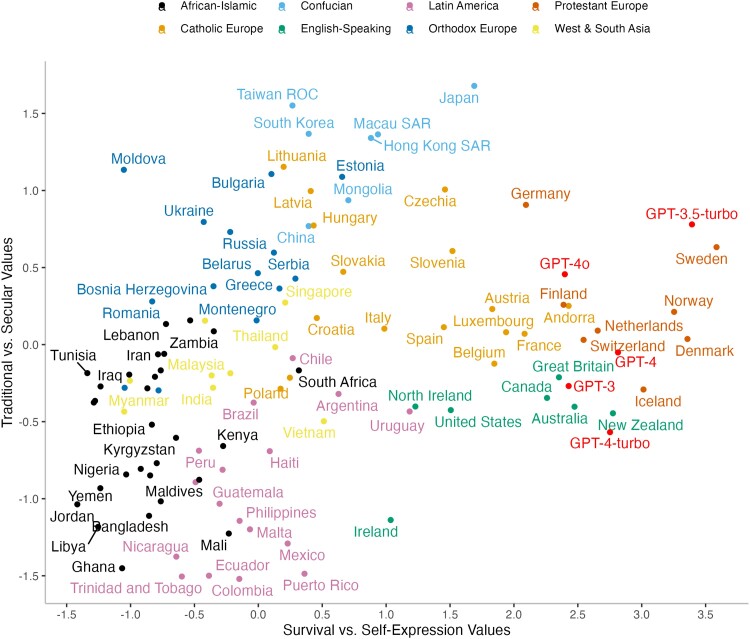
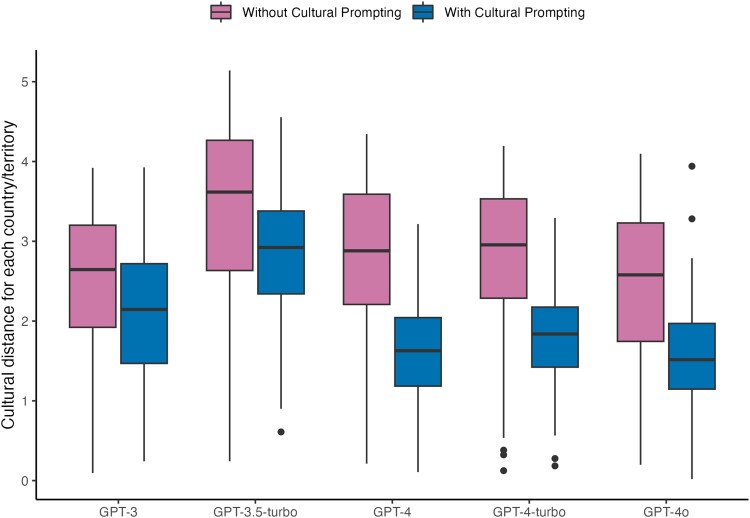
Culture fundamentally shapes people’s reasoning, behavior, and communication. As people increasingly use generative artificial intelligence (AI) to expedite and automate personal and professional tasks, cultural values embedded in AI models may bias people’s authentic expression and contribute to the dominance of certain cultures. We conduct a disaggregated evaluation of cultural bias for five widely used large language models (OpenAI’s GPT-4o/4-turbo/4/3.5-turbo/3) by comparing the models’ responses to nationally representative survey data. All models exhibit cultural values resembling English-speaking and Protestant European countries. We test cultural prompting as a control strategy to increase cultural alignment for each country/territory. For later models (GPT-4, 4-turbo, 4o), this improves the cultural alignment of the models’ output for 71–81% of countries and territories. We suggest using cultural prompting and ongoing evaluation to reduce cultural bias in the output of generative AI.
Overview
The claims and statistics of this paper haven’t been checked yet.
Free: it reads the open-access text and checks the first 5 claims that cite a source we can check. Create a free account to check every claim.
Integrity signals
Registry
Cites
Statistics
Figures
Verification
Claims the paper makes
The claims and statistics of this paper haven’t been checked yet.
Free: it reads the open-access text and checks the first 5 claims that cite a source we can check. Create a free account to check every claim.
Claims other papers make about this one
Each is checked against this paper’s own text: does it say what the citing paper says it does?
The cited source says what the claim attributes to it.
In the citing paper
“At the same time, the reproduction of biases and representational patterns embedded in training data raises concerns about whose knowledge, styles, and voices are normalised in AI-mediated learning contexts (Bender et al., 2021; Tao et al., 2024; Sterlie et al., 2024).”
From From Cognitive Necessity to Cognitive Choice: Higher Education Assessment and Learning in the Age of Generative AI (2026) · cites this paper as Tao et al., 2024
Self-check
Percentages, sums and reported differences re-computed from the paper’s own numbers.
The self-check needs the paper’s full text.
Citations
Cites
Culture's Consequences: Comparing Values, Behaviors, Institutions, and Organizations across Nations
Bhagat, R. S., & Hofstede, G. (2002) · The Academy of Management Review · doi:10.2307/4134391 · Cited by 21,664
ChatGPT for good? On opportunities and challenges of large language models for education
Kasneci, E., Sessler, K., Küchemann, S., Bannert, M., Dementieva, D., Fischer, F., Gasser, U., Groh, G., Günnemann, S., Hüllermeier, E., et al. (2023) · Learning and Individual Differences · doi:10.1016/j.lindif.2023.102274 · Cited by 15,365 · cited 1×
“…Mistral, and LLaMA, which are trained on Internet-scale textual data to process text and produce human-sounding language, are increasingly used by people in all aspects of their life, including education [32], medicine and public health [13, 45], as well as creative and opinion writing [50, 29].”
BackgroundChatGPT for Good? On Opportunities and Challenges of Large Language Models for Education
Kasneci, E., Seßler, K., Küchemann, S., Bannert, M., Dementieva, D., Fischer, F., Gasser, U., Groh, G., Günnemann, S., Hüllermeier, E., et al. (2023) · doi:10.35542/osf.io/5er8f · Cited by 7,552
Modernization, Cultural Change, and the Persistence of Traditional Values
Inglehart, R., & Baker, W. E. (2000) · American Sociological Review · doi:10.2307/2657288 · Cited by 4,524 · cited 1×
“Culture plays a major role in shaping the way individuals think and behave in their daily lives by embedding a pattern of shared knowledge and values into a group of people [27, 23, 39, 43].”
BackgroundLarge language models in medicine
Thirunavukarasu, A. J., Ting, D. S. J., Elangovan, K., Gutierrez, L., Tan, T. F., & Ting, D. S. W. (2023) · Nature Medicine · doi:10.1038/s41591-023-02448-8 · Cited by 3,944 · cited 1×
“…Mistral, and LLaMA, which are trained on Internet-scale textual data to process text and produce human-sounding language, are increasingly used by people in all aspects of their life, including education [32], medicine and public health [13, 45], as well as creative and opinion writing [50, 29].”
Background(2005) · Cited by 3,670
Culture, dialectics, and reasoning about contradiction.
Peng, K., & Nisbett, R. E. (1999) · American Psychologist · doi:10.1037//0003-066x.54.9.741 · Cited by 1,755 · cited 1×
“Cultural differences also influence causal attributions of behavior, such as explaining others’ actions based on their individual traits versus situational factors [11], and human judgment, such as resolving contradictions through compromise versus logical arguments [40].”
BackgroundA Brief Overview of ChatGPT: The History, Status Quo and Potential Future Development
Wu, T., He, S., Liu, J., Sun, S., Liu, K., Han, Q.-L., & Tang, Y. (2023) · IEEE/CAA Journal of Automatica Sinica · doi:10.1109/jas.2023.123618 · Cited by 1,452 · cited 1×
“5-turbo incorporated Reinforcement Learning with Human Feedback (RLHF) [49].”
MethodPersonality and Culture Revisited: Linking Traits and Dimensions of Culture
Hofstede, G., & McCrae, R. R. (2004) · Cross-Cultural Research · doi:10.1177/1069397103259443 · Cited by 1,397 · cited 1×
“…values which emphasize subjective well-being, or survival values which emphasize economic and physical security) have demonstrated national variation in personality [24], technological innovation [47], trust in automation [10], privacy concerns [48], and health behaviors and outcomes [35].”
BackgroundDoes culture influence what and how we think? Effects of priming individualism and collectivism.
Oyserman, D., & Lee, S. W. S. (2008) · Psychological Bulletin · doi:10.1037/0033-2909.134.2.311 · Cited by 1,385 · cited 1×
“Culture plays a major role in shaping the way individuals think and behave in their daily lives by embedding a pattern of shared knowledge and values into a group of people [27, 23, 39, 43].”
Background
Research works printed but not linked: 7
- Schein EH. 1991. What is culture. In: Reframing organizational culture. Sage Publications, Inc. p. 243–253.
- Jakesch M, Bhat A, Buschek D, Zalmanson L, Naaman M. 2023. Co-writing with opinionated language models affects users’ views. In: Proceedings of the 2023 CHI Conference on Human Factors in Computing Systems. p. 1–15; Association for Computing Machinery (ACM).
- Yuan A, Coenen A, Reif E, Ippolito D. 2022. Wordcraft: story writing with large language models. In: 27th International Conference on Intelligent User Interfaces. p. 841–852;:ACM, Helsinki, Finland.
- Ramezani A, Xu Y. 2023. Knowledge of cultural moral norms in large language models. In: Proceedings of the 61st annual meeting of the association for computational linguistics (Vol. 1, Long Papers). p. 428–446; Toronto, Canada: Association for Computational Linguistics.
- Arora A, Kaffee L-A, Augenstein I. 2023. Probing pre-trained language models for cross-cultural differences in values. In: Proceedings of the first workshop on cross-cultural considerations in NLP (C3NLP). p. 114–130; Dubrovnik, Croatia: Association for Computational Linguistics.
- Sandvig C, Hamilton K, Karahalios K, Langbort C. 2014. Auditing algorithms: research methods for detecting discrimination on internet platforms. In: Data and Discrimination: Converting Critical Concerns into Productive Inquiry. Vol. 22(2014). p. 4349–4357.
- Bolukbasi T, Chang K-W, Zou JY, Saligrama V, Kalai AT. 2016. NIPS'16: Proceedings of the 30th International Conference on Neural Information Processing System. p. 4356–4364; Red Hook, NY: Curran Associates Inc.
Cited by
Looking Beyond the Hype: Understanding the Effects of AI on Learning
Bauer, E., Greiff, S., Graesser, A. C., Scheiter, K., & Sailer, M. (2025) · Educational Psychology Review · doi:10.1007/s10648-025-10020-8 · Cited by 153
“For example, generated materials and other outputs may reflect cultural or gender biases (e.g., Kotek et al., 2023; Tao et al., 2024), and learners’ input language can lead to biased outputs, as LLMs may contain language and dialect prejudices (Hofmann et al., 2024).”
The Uneven Impact of Generative AI on Entrepreneurial Performance
Otis, N. G., Clarke, R. P., Delecourt, S., Holtz, D., & Koning, R. (2023) · doi:10.31219/osf.io/hdjpk · Cited by 146
Domain Specialization as the Key to Make Large Language Models Disruptive: A Comprehensive Survey
Ling, C., Zhao, X., Lu, J., Deng, C., Zheng, C., Wang, J., Chowdhury, T., Li, Y., Cui, H., Zhang, X., et al. (2026) · ACM Computing Surveys · doi:10.1145/3764579 · Cited by 141
The life cycle of large language models in education: A framework for understanding sources of bias
Lee, J., Hicke, Y., Yu, R., Brooks, C., & Kizilcec, R. F. (2024) · British Journal of Educational Technology · doi:10.1111/bjet.13505 · Cited by 119
“…Zhao et al., 2019), gender and ethnic stereotypes (Garg et al., 2018), gender neural words (Zhao et al., 2019), cultural biases (Durrheim et al., 2023; Swinger et al., 2019; Tao et al., 2024), and studies that trace training documents to identify the origin of such biases (Brunet et al., 2019).”
BackgroundSelf-citationAI Suggestions Homogenize Writing Toward Western Styles and Diminish Cultural Nuances
Agarwal, D., Naaman, M., & Vashistha, A. (2024) · arXiv · doi:10.48550/arxiv.2409.11360 · Cited by 99
AI Suggestions Homogenize Writing Toward Western Styles and Diminish Cultural Nuances
Agarwal, D., Naaman, M., & Vashistha, A. (2025) · CHI Conference on Human Factors in Computing Systems · doi:10.1145/3706598.3713564 · Cited by 307
Brohi, S., Mastoi, Q.-U.-A., Jhanjhi, N. Z., & Pillai, T. R. (2025) · Algorithms · doi:10.3390/a18080499 · Cited by 69
“As LLMs continue to advance in autonomy and decision-making, it becomes increasingly essential for them to align with human values, societal expectations, and ethical principles [68–71].”
Viberg, O., Kizilcec, R. F., Wise, A. F., Jivet, I., & Nixon, N. (2024) · British Journal of Educational Technology · doi:10.1111/bjet.13507 · Cited by 99
Self-citationAn, J., Huang, D., Lin, C., & Tai, M. (2025) · PNAS Nexus · doi:10.1093/pnasnexus/pgaf089 · Cited by 58
Peykani, P., Ramezanlou, F., Tănăsescu, C. R., & Ghanidel, S. (2025) · Applied Sciences · doi:10.3390/app15148103 · Cited by 85
Survey of Cultural Awareness in Language Models: Text and Beyond
Pawar, S., Park, J., Jin, J., Arora, A., Myung, J., Yadav, S., Haznitrama, F. G., Song, I., Oh, A. H., & Augenstein, I. (2025) · Computational Linguistics · doi:10.1162/coli.a.14 · Cited by 222
The AI-mediated intimacy economy: a paradigm shift in digital interactions
Bozdağ, A. A. (2025) · AI & SOCIETY · doi:10.1007/s00146-024-02132-6 · Cited by 42
“However, these methods must account for diverse cultural interpretations of emotional cues to avoid biases prevalent in Western-centric AI models (Tao et al., 2024; Ge et al. 2024; Peters and Carman 2024).”
Generative AI Meets Open-Ended Survey Responses: Research Participant Use of AI and Homogenization
Zhang, S., Xu, J., & Alvero, A. (2025) · Sociological Methods & Research · doi:10.1177/00491241251327130 · Cited by 102
Blonder, R., Feldman-Maggor, Y., & Rap, S. (2024) · Journal of Science Education and Technology · doi:10.1007/s10956-024-10180-2 · Cited by 78
“Additionally, educators can improve AI output accuracy by refining prompts and providing more context (Tao et al., 2024).”
Song, I., Park, S., Pendse, S. R., Schleider, J. L., Choudhury, M. D., & Kim, Y. (2025) · CHI Conference on Human Factors in Computing Systems · doi:10.1145/3706598.3713883 · Cited by 78
Future Shock: Generative AI and the International AI Policy and Governance Crisis
Leslie, D., & Perini, A. M. (2024) · Harvard Data Science Review · doi:10.1162/99608f92.88b4cc98 · Cited by 33
Harvey, E., Koenecke, A., & Kizilcec, R. F. (2025) · CHI Conference on Human Factors in Computing Systems · doi:10.1145/3706598.3713210 · Cited by 86
Self-citationYoo, K., Haenlein, M., & Hewett, K. (2025) · Journal of the Academy of Marketing Science · doi:10.1007/s11747-025-01097-2 · Cited by 36
“Challenges with LMM’s ability to replicate human diversity highlight the importance of prompt engineering and critical evaluation (Tao et al., 2024).”
The Uneven Impact of Generative AI on Entrepreneurial PerformancePreprint
Otis, N. G., Clarke, R. P., Delecourt, S., Holtz, D., & Koning, R. M. (2024) · SSRN Electronic Journal · doi:10.2139/ssrn.4671369 · Cited by 110
Moral stereotyping in large language models
Zewail, A., Figueroa, A., Graham, J., & Atari, M. (2026) · Proceedings of the National Academy of Sciences · doi:10.1073/pnas.2519941123 · Cited by 29
“This aligns with our finding that GPT exhibits some WEIRD-leaning tendencies and is consistent with prior research (8, 18, 44).”
The cultural stereotype and cultural bias of ChatGPT
Yuan, H., Che, Z., Zhang, Y., Shao, L. H., Yuan, X., Huang, L., Hu, X., Peng, K., & Luo, S. (2025) · Journal of Pacific Rim Psychology · doi:10.1177/18344909251355673 · Cited by 38
“This approach has been shown to effectively enhance the alignment between model outputs and the cultural contexts of various countries or regions (Tao et al., 2024).”
On the verge of a digital divide in the use of generative AI?
Suárez, D., & García-Mariñoso, B. (2025) · Telecommunications Policy · doi:10.1016/j.telpol.2025.102997 · Cited by 33
Bridging large language model disparities: skill tagging of multilingual educational content
Kwak, Y., & Pardos, Z. A. (2024) · British Journal of Educational Technology · doi:10.1111/bjet.13465 · Cited by 25
Intersectional analysis for science and technology
Nielsen, M. W., Gissi, E., Heidari, S., Horton, R. C., Nadeau, K. C., Ngila, D., Noble, S., Paik, H. Y., Tadesse, G. A., Zeng, E. Y., et al. (2025) · Nature · doi:10.1038/s41586-025-08774-w · Cited by 43
Human-Centered AI Communication in Co-Creativity: An Initial Framework and Insights
Rezwana, J., & Ford, C. (2025) · Creativity and Cognition · doi:10.1145/3698061.3726932 · Cited by 42
Generative AI framework for sensory and consumer research
Motoki, K., Low, J. Y. Q., & Velasco, C. (2025) · Food Quality and Preference · doi:10.1016/j.foodqual.2025.105600 · Cited by 32
Feedback by Design: Understanding and Overcoming User Feedback Barriers in Conversational Agents
Sharma, N., Zhang, Z., Lee, D., Krishnan, N., Ren, G.-J., Xiao, Z., & Li, Y. (2026) · Proceedings of the 2026 CHI Conference on Human Factors in Computing Systems · doi:10.1145/3772318.3791600 · Cited by 21
Shen, Y., Tang, L., Le, H., Tan, S., Zhao, Y., Shen, K., Li, X., Juelich, T., Wang, Q., Gašević, D., et al. (2025) · British Journal of Educational Technology · doi:10.1111/bjet.13562 · Cited by 33
Generative AI in Computer Science Education: Challenges and Opportunities
Franklin, D., Denny, P., Gonzalez-Maldonado, D. A., & Tran, M. (2025) · doi:10.1017/9781009581738 · Cited by 20
KoBBQ: Korean Bias Benchmark for Question Answering
Jin, J., Kim, J., Lee, N., Yoo, H., Oh, A. H., & Lee, H. (2024) · Transactions of the Association for Computational Linguistics · doi:10.1162/tacl_a_00661 · Cited by 134
“Tao et al. (2023) observe LLMs’ cultural bias resembling English-speaking and Protestant European countries, and Nguyen et al. (2023) underscore the need for eq-uitable and culturally aware AI and evaluation.”
BackgroundSix Fallacies in Substituting Large Language Models for Human Participants
Lin, Z. (2025) · Advances in Methods and Practices in Psychological Science · doi:10.1177/25152459251357566 · Cited by 66
“Their training data (mostly online text) exhibit systematic biases—predominantly Western, educated, industrialized, rich, and democratic (WEIRD) populations, especially individuals who are hegemonic, young, and publicly expressive (Crockett & Messeri, 2023; Santurkar et al., 2023; Tao et al., 2024).”
Distributional Semantics: Meaning Through Culture and Interaction
Contreras Kallens, P., & Christiansen, M. H. (2025) · Topics in Cognitive Science · doi:10.1111/tops.12771 · Cited by 17
“…explains also why these interactions—and the “human-likeness” of LLMs more generally—tend to be mediated by cultural biases in relation to, specifically, American English, given the characteristics of their training data (Atari et al., 2023; Cao et al, 2023; Johnson et al., 2022; Tao et al, 2024).”
Rettberg, J. W., & Wigers, H. (2025) · Open Research Europe · doi:10.12688/openreseurope.20576.1 · Cited by 31
“This relates to research on AI bias and cultural alignment of AI models and shows how a model being sold to countries all over the world is not currently truly international (Adilazuarda et al. , 2024; Agarwal et al. , 2025; Srdarov & Leaver, 2024; Tao et al. , 2024).”
Randomness, Not Representation: The Unreliability of Evaluating Cultural Alignment in LLMs
Khan, A., Casper, S., & Hadfield-Menell, D. (2025) · ACM Conference on Fairness, Accountability, and Transparency (FAccT) · doi:10.1145/3715275.3732147 · Cited by 68
A survey on moral foundation theory and pre-trained language models: current advances and challenges
Zangari, L., Greco, C. M., Picca, D., & Tagarelli, A. (2025) · AI & Society · doi:10.1007/s00146-025-02225-w · Cited by 33
“For instance, Tao et al. (2024) shows that widely used PLMs tend to align more closely with the cultural values of English-speaking and Protestant European countries compared African-Islamic countries.”
Liu, H., Cao, Y., Wu, X., Qiu, C., Gu, J., Liu, M., & Hershcovich, D. (2025) · Information Processing & Management · doi:10.1016/j.ipm.2025.104099 · Cited by 29
AI Surrogates and illusions of generalizability in cognitive science
Crockett, M. J., & Messeri, L. R. (2025) · Trends in Cognitive Sciences · doi:10.1016/j.tics.2025.09.012 · Cited by 36
An evaluation of estimative uncertainty in large language models
Tang, Z., Shen, K., & Kejriwal, M. (2026) · npj Complexity · doi:10.1038/s44260-026-00070-6 · Cited by 35
Got It! Prompting Readability Using ChatGPT to Enhance Academic Texts for Diverse Learning Needs
Hedlin, E., Estling, L., Wong, J., Epp, C. D., & Viberg, O. (2025) · International Conference on Learning Analytics and Knowledge (LAK) · doi:10.1145/3706468.3706483 · Cited by 26
“It has also been shown that prompt engineering with a general model, such as GPT-4, can perform better than a model trained for a specific purpose [76;77].”
Self-citationQin, H. X., Zhu, G., Fan, M., & Hui, P. (2025) · CHI Conference on Human Factors in Computing Systems · doi:10.1145/3706598.3713569 · Cited by 31
Reimagining libraries in the AI era: ethical AI literacy and human-centered strategies
Michalak, R., & Ellixson, D. (2026) · AI & Society · doi:10.1007/s00146-025-02827-4 · Cited by 20
Saxena, S., Chang, O. L. B., Suppan, M., Meço, B. C., Vacas, S., Radtke, F. M., Matot, I., Devos, A., Maze, M., Gisselbaek, M., et al. (2025) · British Journal of Anaesthesia · doi:10.1016/j.bja.2025.01.001 · Cited by 14
Using ChatGPT to score essays and short-form constructed responses
Shermis, M. D. (2025) · Assessing Writing · doi:10.1016/j.asw.2025.100988 · Cited by 26
Artificial Intelligence, Data Protection, Privacy, and Doxxing
Copeland‐Halperin, L. R., & Oppikofer, C. (2024) · Aesthetic Surgery Journal · doi:10.1093/asj/sjae219 · Cited by 12
Zeng, Y., Brown, C., Raymond, J., Byari, M., Hotz, R., & Rounsevell, M. (2025) · Earth System Dynamics · doi:10.5194/esd-16-423-2025 · Cited by 24
Envisioning the Future of Creative Thinking Assessment
Benedek, M., & Beaty, R. E. (2025) · The Journal of Creative Behavior · doi:10.1002/jocb.70036 · Cited by 19
Artificial intelligence can emulate human normative judgments on emotional visual scenes
Romeo, Z., & Testolin, A. (2025) · Royal Society Open Science · doi:10.1098/rsos.250128 · Cited by 15
“…type of investigation would establish whether future AI systems are aligned with norms and values from different (and often underrepresented) cultures [20], which will be essential to guarantee a safe use of AI technology in sensitive contexts such as eldercare, education and mental health support.”
Large language models for improving cancer diagnosis and management in primary health care settings
Andrew, A., & Tizzard, E. (2024) · Journal of Medicine Surgery and Public Health · doi:10.1016/j.glmedi.2024.100157 · Cited by 13
Who Is to Blame for the Bias in Visualizations, ChatGPT or DALL-E?
Spennemann, D. H. R. (2025) · AI · doi:10.3390/ai6050092 · Cited by 14
“Bias may arise from ideological perspectives, language selection during training, or reliance on sources that may contain outdated or racially biased information [7–9].”
Xiang, A. (2025) · Information Processing & Management · doi:10.1016/j.ipm.2025.104554 · Cited by 15
Coman, C., Gherheș, V., Bucs, A., Coman, E., Cioca, V.-R., Bódi, D.-C., & Șerbănescu, R.-M. (2026) · Frontiers in Artificial Intelligence · doi:10.3389/frai.2026.1750978 · Cited by 23
Yang, Y., & Yao, S. (2025) · International Journal of Applied Linguistics · doi:10.1111/ijal.12832 · Cited by 14
Kim, M.-G., Hwang, G., Chang, J., Chang, S., Roh, H. W., & Park, R. W. (2025) · Journal of Medical Internet Research · doi:10.2196/69857 · Cited by 20
“They may encounter difficulties in understanding the translated output and lack confidence in whether the translated input accurately reflects their intentions [28].”
Generative AI in service research: promise or peril?
Khoa, D. T. (2025) · Service Industries Journal · doi:10.1080/02642069.2025.2525893 · Cited by 13
The Homogenizing Engine: AI's Role in Standardizing Culture and the Path to Policy
Daryani, Y., Sourati, Z., & Dehghani, M. (2025) · Policy Insights from the Behavioral and Brain Sciences · doi:10.1177/23727322251406591 · Cited by 19
“Because the massive text collections used to train these models disproportionately re fl ect perspectives from a narrow demographic, the resulting models tend to produce outputs that align more readily with dominant linguistic and conceptual norms (Tao et al., 2024).”
Abdelwahed, A. E., El-Nasser, M. A., Heih, O. Q., Suleiman, A. M., Khader, A. M., Ibrahim, R. A., Hamad, M. R. A. F., Radwan, E., Srour, A. M., HealthTech Alliance, et al. (2025) · BMC Health Services Research · doi:10.1186/s12913-025-13832-0 · Cited by 17
Martínez, L., Caramiaux, B., & Alaoui, S. F. (2025) · CHI Conference on Human Factors in Computing Systems · doi:10.1145/3706598.3714200 · Cited by 16
Rebranding empire in the age of generative AI
Divya Lakshmi, S. (2025) · Frontiers in Communication · doi:10.3389/fcomm.2025.1604361 · Cited by 13
“…GPT models, when prompted in non-English languages, often default to English-centric cultural references-for example, suggesting Thanksgiving as a national holiday in countries where it is not celebrated-highlighting the dominance of Western perspectives in AI-generated content (Tao et al., 2023).”
Yuan, X., Yuan, X., He, Y., Wang, Z., Ren, J., & Bryan–Kinns, N. (2025) · Designing Interactive Systems Conference · doi:10.1145/3715336.3735808 · Cited by 13
Hieronimus, B., Lopez-Aguirre, M.-L., Birringer, M., & Podszun, M. C. (2025) · Nutrition Research · doi:10.1016/j.nutres.2025.09.011 · Cited by 10
Culturally responsive AI chatbots: From framework to field evidence
Naidoo, V., & CHADHA, K. K. (2025) · Computers in Human Behavior Artificial Humans · doi:10.1016/j.chbah.2025.100224 · Cited by 19
LLMs and Cultural Values: The Impact of Prompt Language and Explicit Cultural Framing
Bulté, B., & Terryn, A. R. (2026) · Computational Linguistics · doi:10.1162/coli.a.583 · Cited by 35
Synthetic imaginaries of “sensitive” AI: On ambient amplification and jail(break)ing as method
Pilipets, E., & Geboers, M. A. (2025) · Platforms & Society · doi:10.1177/29768624251378110 · Cited by 11
“This tendency is ampli fi ed by platform policies that align outputs with hegemonic values (Tao et al., 2024), producing imaginaries that are mostly af fi rmative but sanitized.”
Landa–Blanco, M. (2026) · Frontiers in Education · doi:10.3389/feduc.2025.1681836 · Cited by 27
“This epistemic foundation introduces the risk of reproducing and amplifying cultural biases (Foka and Griffin, 2024; Tao et al., 2024 • El cuello largo de la jirafa: Las jirafas con cuellos más largos podían alcanzar más hojas.”
A socio-technical exploration of bias in generative AI travel planners
Jia, S., Ma, C., Chi, O. H., & Fan, A. (2026) · Tourism Management · doi:10.1016/j.tourman.2026.105442 · Cited by 13
The future of global virtual work: Toward an interdisciplinary and integrative research agenda
Blay, T., Schöbel, S., Heubeck, T., Reinwald, M., Lanzl, J., Froese, F. J., Tenzer, H., Presbitero, A., Stein, M., Taras, V., et al. (2026) · German Journal of Human Resource Management Zeitschrift für Personalforschung · doi:10.1177/23970022261436919 · Cited by 12
Selective agreement, not sycophancy: investigating opinion dynamics in LLM interactions
Cau, E., Pansanella, V., Pedreschi, D., & Rossetti, G. (2025) · EPJ Data Science · doi:10.1140/epjds/s13688-025-00579-1 · Cited by 9
Berger‐Estilita, J., Gisselbaek, M., Devos, A., Chan, A. K. M., Ingrassia, P. L., Meço, B. C., Chang, O. L. B., Savoldelli, G. L., Matos, F. M., Dieckmann, P., et al. (2025) · Advances in Simulation · doi:10.1186/s41077-025-00355-1 · Cited by 13
“For instance, some researchers have suggested strategies like country-specific prompting to reduce cultural and linguistic biases[29].”
InfluentialĐokić, K., Pisker, B., & Radišić, B. (2025) · Societies · doi:10.3390/soc15050142 · Cited by 13
Geopolitical Bias in Sovereign Large Language Models: A Comparative Mixed-Methods Study
Jonnala, S., SWAMY, B., & Thomas, N. M. (2025) · Journal of Research Innovation and Technologies · doi:10.57017/jorit.v4.2(8).04 · Cited by 10
Reductive, Exclusionary, Normalising: The Limits of Generative AI Music
Morreale, F., Martínez-Ramírez, M. A., Masu, R., Liao, W., & Mitsufuji, Y. (2025) · Transactions of the International Society for Music Information Retrieval · doi:10.5334/tismir.256 · Cited by 18
Zeng, Y., Brown, C., Byari, M., Raymond, J., Schmitt, T. M., & Rounsevell, M. (2025) · Geoscientific model development · doi:10.5194/gmd-18-4983-2025 · Cited by 14
Spennemann, D. H. R. (2025) · SSRN Electronic Journal · doi:10.2139/ssrn.5393987 · Cited by 9
That's What RoBERTa Said: Explainable Classification of Peer Feedback
Huang, K., Mello, R. F., Junior, C. P., Rodrigues, L., Baars, M., & Viberg, O. (2025) · International Conference on Learning Analytics and Knowledge (LAK) · doi:10.1145/3706468.3706526 · Cited by 8
Self-citationMhasakar, M., Baker-Ramos, R., Carter, B., Helekahi-Kaiwi, E.-B., & Hester, J. (2025) · Proceedings of the Extended Abstracts of the CHI Conference on Human Factors in Computing Systems · doi:10.1145/3706599.3720282 · Cited by 6
Haghighi, N., Yu, S., Landay, J. A., & Rosner, D. K. (2025) · CHI Conference on Human Factors in Computing Systems · doi:10.1145/3706598.3713633 · Cited by 19
Artificial Intelligence in Food Bank and Pantry Services: A Systematic Review
Yang, Y.-Y., An, R.-P., Fang, C., & Ferris, D. (2025) · Nutrients · doi:10.3390/nu17091461 · Cited by 9
“Moreover, user engagement barriers, including language and cultural differences, social stigma, and limited digital literacy, could undermine the accessibility and usability of AI-powered systems, particularly for diverse and underserved client populations [48,49].”
Mushtaq, A., Naeem, R., Taj, I., Ghaznavi, I., & Qadir, J. (2025) · IEEE Global Engineering Education Conference (EDUCON) · doi:10.1109/educon62633.2025.11016405 · Cited by 18
“Recent studies have documented unintended biases in LLMs, including those related to ethnicity, cultural background, and other demographic factors [14]–[16].”
What do librarians look like? Stereotyping of a profession by generative Ai
Spennemann, D. H. R., & Oddone, K. (2025) · Journal of Librarianship and Information Science · doi:10.1177/09610006251357286 · Cited by 13
“…exhibited biases, generally favouring libertarian, progressive, and left-leaning perspectives (Fujimoto and Takemoto, 2023; Motoki et al., 2024, 2025; Rozado, 2023; Rutinowski et al., 2024), often with a North American (Cao et al., 2023) or Eurocentric focus (Broadhead, 2024; Tao et al., 2024).”
Destination (Un)Known: Auditing Bias and Fairness in LLM-Based Travel Recommendations
Andreev, H., Kosmas, P., Livieratos, A. D., Theocharous, A. L., & Zopiatis, A. (2025) · AI · doi:10.3390/ai6090236 · Cited by 15
“It also documents WEIRD-centred cultural alignment and tourism-stereotype reproduction in AI outputs [14,17,18], and gender-conditioned differences in travel advice [19].”
InfluentialFieldhouse, J. K., Ge, J., Randhawa, N., Wolking, D. J., Genovese, B. N., Mazet, J. A. K., & Desai, A. N. (2025) · Public Health · doi:10.1016/j.puhe.2025.105961 · Cited by 10
Harrington, B., Zlotnikova, I., Nadarajan, G., & Ekundayo, S. (2025) · ACM Transactions on Computing Education · doi:10.1145/3776558 · Cited by 14
Writing with AI boosts trust-building efficiency
Purcell, Z. A., Jakesch, M., Dong, M., Nußberger, A.-M., & Köbis, N. (2025) · iScience · doi:10.1016/j.isci.2025.114092 · Cited by 16
Large language models are biased — local initiatives are fighting for change
Vargas-Parada, L. (2025) · Nature · doi:10.1038/d41586-025-03891-y · Cited by 8
Nash, B. L., Zengilowski, A., Schuetze, B. A., & Schallert, D. L. (2025) · Educational Psychologist · doi:10.1080/00461520.2025.2592823 · Cited by 8
“This issue is amplified by the seeming neutrality and authoritative voice that LLMs adopt (Wachter et al., 2024), belying a multitude of (Western) cultural assumptions and biases reproduced from its training data (Bender et al., 2021; Tao et al., 2024).”
The Bias that Lies Beneath: Qualitative Uncovering of Stereotypes in Large Language Models
Babonnaud, W., Delouche, E., & Lahlouh, M. (2024) · Linköping electronic conference proceedings · doi:10.3384/ecp208022 · Cited by 15
“However, a few studies fall into this kind of approach while providing qualitative results, as exemplified by the work of [29] which uses simple rating questions from the World Values Survey to locate LLMs on a cultural map, thus providing an insight of their potential cultural bias.”
BackgroundAdvanced natural-based interaction for the ITAlian language: LLaMAntino-3-ANITA
Polignano, M., Basile, P., & Semeraro, G. M. (2026) · Scientific Reports · doi:10.1038/s41598-025-31319-0 · Cited by 48
Toward Affective Empathy via Personalized Analogy Generation: A Case Study on Microaggression
Ju, H., Lee, J., Yang, S., Ok, J., & Hwang, I. (2025) · CHI Conference on Human Factors in Computing Systems · doi:10.1145/3706598.3714122 · Cited by 16
Give and Take: Perceptions of a Conversational Coach Agent in Fitness Trackers MHCI014
Loerakker, M. B., Stefanidi, E., Niess, J., Mildner, T., & Woźniak, P. W. (2025) · Proceedings of the ACM on Human-Computer Interaction · doi:10.1145/3743718 · Cited by 13
“It has been reported that GPT-4 displays racial, cultural and gender biases (e.g. [46, 129, 143]), showing potential for such biases to manifest in the WHOOP Coach system behaviour as well.”
Zheng, C., & Chen, G. (2025) · International Journal of Chinese Education · doi:10.1177/2212585x251400819 · Cited by 11
“…current AI systems have well-documented limitations including factual errors (hallucinations) (Ji et al., 2023), algorithmic bias re fl ecting societal inequities (Mehrabi et al., 2021), and inadequate understanding of social-emotional and cultural nuances (Khare et al., 2024; Tao et al., 2024).”
Large Language Models as Psychological Simulators: A Methodological Guide
Lin, Z. (2026) · Advances in Methods and Practices in Psychological Science · doi:10.1177/25152459251410153 · Cited by 29
“By simulating responses from different cultural contexts using appropriately varied prompts, researchers can identify problematic items before beginning expensive international data-collection efforts (Sarstedt et al., 2024; Tao et al., 2024).”
Computational hermeneutics: evaluating generative AI as a cultural technology
Kommers, C., Ahnert, R., Antoniak, M., Benetos, E., Benford, S. A., Bunz, M., Caramiaux, B., Concannon, S. J., Disley, M., Dobson, J. E., et al. (2026) · Frontiers in Artificial Intelligence · doi:10.3389/frai.2026.1753041 · Cited by 32
“…of paint or dash of seasoning that modifies the more “fundamental” aspects of the model: for example, as a bias to debug (Bolukbasi et al., 2016; Tao et al., 2024), a constraint for generalizing from one context to another (Yong Cao et al., 2023), a parameter in an ethical dilemma (Freitas et…”
Echoes of power: investigating geopolitical bias in US and China large language models
Pacheco, A. G. C., Cavalini, A., & Comarela, G. (2026) · Humanities and Social Sciences Communications · doi:10.1057/s41599-026-06577-6 · Cited by 29
“Tao et al. (2024) also found that LLM responses tend to align more with Western cultural values than with East Asian ones.”
Psychologists must be involved in building conversational AI chatbots
Zhao, X. (2026) · Nature Reviews Psychology · doi:10.1038/s44159-026-00564-z · Cited by 8
Lee, Y., Chang, C., & Yang, C. C. (2025) · Journal of Healthcare Informatics Research · doi:10.1007/s41666-025-00194-9 · Cited by 10
Redefining Bias Audits for Generative AI in Health Care
Chen, I. Y., & Alsentzer, E. (2025) · NEJM AI · doi:10.1056/aip2500015 · Cited by 8
Kukulska‐Hulme, A., & Ilic, P. (2025) · Springer eBooks · doi:10.1007/978-3-031-51447-0_323-1 · Cited by 5
Personality Emulation Utilizing Large Language Models
Kolenbrander, J., & Michaels, A. J. (2025) · Applied Sciences · doi:10.3390/app15126636 · Cited by 6
“LLM models have been shown to reflect the cultural values of biases of the language they were trained on, likely leading the LLM models to respond more centrically in their personality scoring [57].”
Lim, H., Choi, D., & Hong, H. (2025) · ACM Conference on Fairness, Accountability, and Transparency (FAccT) · doi:10.1145/3715275.3732207 · Cited by 8
“Studies have identified inherent bias across a broad spectrum of categories—ranging from gender [36] and political ideology [44] to occupation [45, 60], disability status [23], culture [55], gender identity [23], race [45], nationality [47], and religion [45].”
Hutchinson, B., Louro, C. R., Collard, G. D., & Cooper, N. (2025) · ACM Conference on Fairness, Accountability, and Transparency (FAccT) · doi:10.1145/3715275.3732010 · Cited by 13
Metadata
- Authors
- Tao, Y., Viberg, O., Baker, R. S., & Kizilcec, R. F.
- Affiliations
- Cornell University (US)
- KTH Royal Institute of Technology (SE)
- University of Pennsylvania (US)
- Corresponding author
- Kizilcec, René F
- Venue
- PNAS Nexus
- Publisher
- Oxford University Press (OUP)
- Published
- 2024-09
- Volume
- 3
- Issue
- 9
- Pages
- pgae346-pgae346
- ISSN
- 2752-6542 (ISSN-L)
- PMC
- PMC11407280
- OpenAlex
- W4402565126
- Semantic Scholar
- 5f8bf881c80125452e4a73ad51fdb2c72c65c551
- Cited by
- 383
- References
- 40
- Citations by year
- 2026: 213 · 2025: 154 · 2024: 15
- FWCI
- 158.32
- Type
- journal article
- Language
- en
- Open access
- gold
- doi.org
- Licence
- Locations
- PNAS Nexus (publishedVersion, cc-by-nc)
- PubMed Central (publishedVersion, cc-by-nc)
- PubMed (publishedVersion)
- arXiv (Cornell University) (submittedVersion, cc-by)
- arXiv (Cornell University) (cc-by)
- Funders
- Jacobs Foundation Research Fellowship and Digital Futures
- Topics
- Physical Sciences › Computer Science › Artificial Intelligence › Ethics and Social Impacts of AI
- Physical Sciences › Computer Science › Artificial Intelligence › Topic Modeling
- Social Sciences › Psychology › Social Psychology › Cultural Differences and Values
- Keywords
- cultural bias, cultural alignment, large language models, cultural values, GPT-4, generative AI, cross-cultural assessment, national survey data, cultural homogenization
About these checks
Registry, retraction, Cites and statistics results are computed, not judged, with one exception: a printed reference that no index lists is read once by a model before it counts as a citation error. Claims are extracted by a model and kept only when their quote appears verbatim in the text; each cited source is then checked, with a model’s help, for whether it says what the claim relies on. Those verdicts can be wrong — read the claim’s quote and the cited source before relying on one.
Statistics and arithmetic are recomputed, not judged.
Confidence bands are shown only for fields calibrated on our annotated test set. None is calibrated yet, so no band is shown.
What counts as a claim ›How we measure confidence ›How we check this ›
Are you an author, or do you see a problem with this page? Request a review
Data sources
Bibliographic data: Semantic Scholar, OpenAlex, Crossref.
Contains information from the Semantic Scholar Academic Graph Datasets, made available under the ODC Attribution License (ODC-BY 1.0).
Semantic Scholar’s data is described in: Kinney, R., et al. (2023). The Semantic Scholar Open Data Platform. arXiv:2301.10140.
