

. Cognitive behavior therapy for schizophrenia: effect sizes, clinical models, and methodological rigor.
Open accessThe DOI matches its Crossref record; 98 of the 98 references it cites were found in a registry or an index.
Abstract
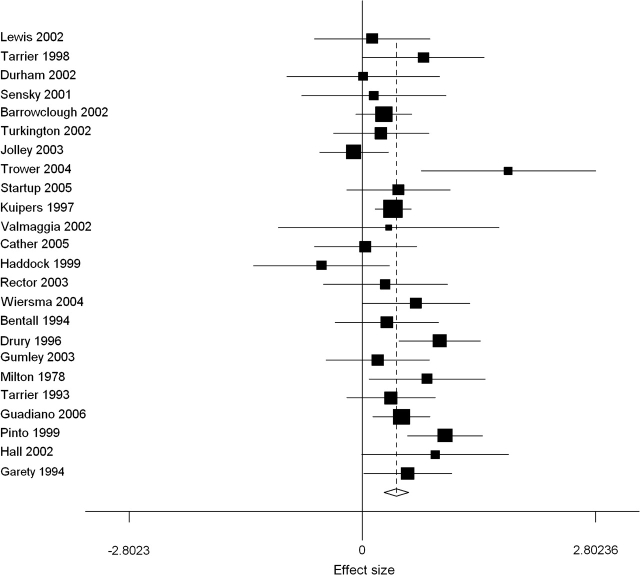
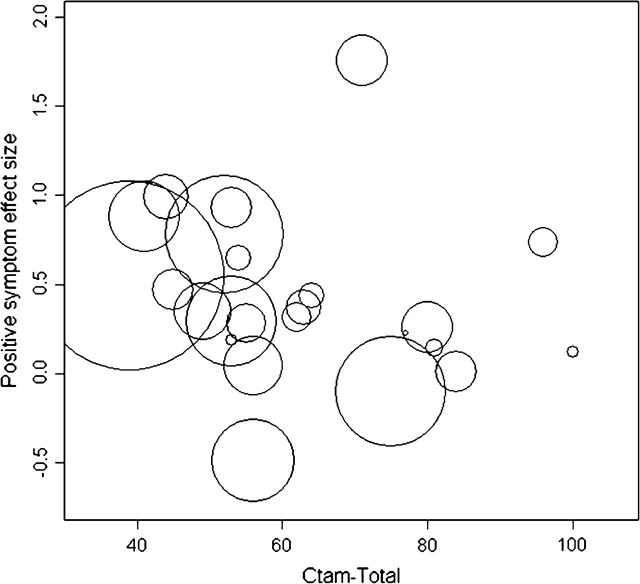
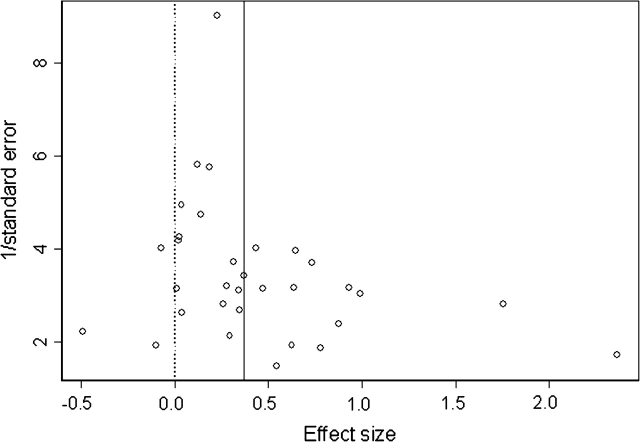
BACKGROUND: Guidance in the United States and United Kingdom has included cognitive behavior therapy for psychosis (CBTp) as a preferred therapy. But recent advances have widened the CBTp targets to other symptoms and have different methods of provision, eg, in groups. AIM: To explore the effect sizes of current CBTp trials including targeted and nontargeted symptoms, modes of action, and effect of methodological rigor. METHOD: Thirty-four CBTp trials with data in the public domain were used as source data for a meta-analysis and investigation of the effects of trial methodology using the Clinical Trial Assessment Measure (CTAM). RESULTS: There were overall beneficial effects for the target symptom (33 studies; effect size = 0.400 [95% confidence interval [CI] = 0.252, 0.548]) as well as significant effects for positive symptoms (32 studies), negative symptoms (23 studies), functioning (15 studies), mood (13 studies), and social anxiety (2 studies) with effects ranging from 0.35 to 0.44. However, there was no effect on hopelessness. Improvements in one domain were correlated with improvements in others. Trials in which raters were aware of group allocation had an inflated effect size of approximately 50%-100%. But rigorous CBTp studies showed benefit (estimated effect size = 0.223; 95% CI = 0.017, 0.428) although the lower end of the CI should be noted. Secondary outcomes (eg, negative symptoms) were also affected such that in the group of methodologically adequate studies the effect sizes were not significant. CONCLUSIONS: As in other meta-analyses, CBTp had beneficial effect on positive symptoms. However, psychological treatment trials that make no attempt to mask the group allocation are likely to have inflated effect sizes. Evidence considered for psychological treatment guidance should take into account specific methodological detail.
Overview
The claims and statistics of this paper haven’t been checked yet.
Free: it reads the open-access text and checks the first 5 claims that cite a source we can check. Create a free account to check every claim.
Integrity signals
Registry
Cites
Statistics
Figures
Verification
Claims the paper makes
The claims and statistics of this paper haven’t been checked yet.
Free: it reads the open-access text and checks the first 5 claims that cite a source we can check. Create a free account to check every claim.
Claims other papers make about this one
Each is checked against this paper’s own text: does it say what the citing paper says it does?
The cited source doesn’t support the claim as written.
In the citing paper
“The primary outcome was change in positive symptom severity at the end of treatment and at follow-up”
From A systematic review and meta-analysis of cognitive behavioural informed psychological interventions for psychiatric inpatients with psychosis (2020) · cites this paper as Wykes et al., 2008
Checked by a reasoning model — may be wrong.
Experimental — accuracy not yet measuredThe source backs part of the claim, not all of it — or backs it for a different population, condition or comparison.
In the citing paper
“Combining medication with evidence-based psychotherapy produces clinically significant improvement over medications alone for severe depression and psychotic disorders.9,10”
From Acceptance-based Behavior Therapy for Depression With Psychosis (2015) · cites this paper as [10]
Experimental — accuracy not yet measuredThe source backs part of the claim, not all of it — or backs it for a different population, condition or comparison.
In the citing paper
“Psychological therapies have demonstrated to be effective for patients experiencing psychotic symptoms (1, 2) and are recommended by treatment guidelines already in the acute illness and treatment phase (3, 4).”
From Developing a mechanism-based therapy for acute psychiatric inpatients with psychotic symptoms: an Intervention Mapping approach (2023) · cites this paper as [1]
Experimental — accuracy not yet measuredThe source backs part of the claim, not all of it — or backs it for a different population, condition or comparison.
In the citing paper
“There is limited evidence supporting the use of pharmacological and psychological interventions for depression in the context of schizophrenia (Whitehead et al. 2002; Wykes et al., 2008).”
From Acceptance and Commitment Therapy for depression following psychosis: An examination of clinically significant change (2015) · cites this paper as Wykes et al., 2008
Experimental — accuracy not yet measuredThe source backs part of the claim, not all of it — or backs it for a different population, condition or comparison.
In the citing paper
“Although effective at treating positive symptoms, Cognitive Behavioural Therapy for psychosis (CBTp) is less effective for treating emotional dysfunction associated with psychosis such as depression, hopelessness and suicide risk (Birchwood, 2003; Wykes et al., 2008; Tarrier et al., 2006).”
From Acceptance and Commitment Therapy for depression following psychosis: An examination of clinically significant change (2015) · cites this paper as Wykes et al., 2008
Experimental — accuracy not yet measured
4 more claims about this paper
Create a free account to see every claim other papers make about this one.
Self-check
Percentages, sums and reported differences re-computed from the paper’s own numbers.
The self-check needs the paper’s full text.
Citations
Cites
1 retracted
Cognitive behaviour therapy for schizophrenia
Jones, C., Cormac, I., Silveira da Mota Neto, J. I., & Campbell, C. (2004) · Cochrane Database of Systematic Reviews · doi:10.1002/14651858.cd000524.pub2 · Cited by 269
RetractedAssessing the quality of reports of randomized clinical trials: Is blinding necessary?
Jadad, A. R., Moore, R. A., Carroll, D., Jenkinson, C., Reynolds, D. J. M., Gavaghan, D. J., & McQuay, H. J. (1996) · Controlled Clinical Trials · doi:10.1016/0197-2456(95)00134-4 · Cited by 17,582 · cited 1×
“In addition, concurrent validity was assessed within an initial 22 studies by correlation with the scores from 3 other scales devised to assess methodological rigor.(42,43,52) The correlations of these scales with the CTAM scores on the corpus of CBTp data were as follows: CTAM and Jadad, q = .”
MethodZhang, Q., Wang, C., Zheng, M., Li, Y., Li, J., Zhang, L., Shang, X., & Yan, C. (2015) · Cerebrovascular Diseases · doi:10.1159/000369778 · Cited by 11,533
Schulz (1995) · doi:10.1001/jama.1995.03520290060030 · Cited by 5,634
Dong, Y., Hao, L., Shi, Z., Wang, G., Zhang, Z., & Han, C. (2013) · Urologia Internationalis · doi:10.1159/000351405 · Cited by 4,540
The Revised CONSORT Statement for Reporting Randomized Trials: Explanation and Elaboration
Altman, D. G., Schulz, K. F., Moher, D., Egger, M., Davidoff, F., Elbourne, D., Gøtzsche, P. C., Lang, T., & for the CONSORT Group (2001) · Annals of Internal Medicine · doi:10.7326/0003-4819-134-8-200104170-00012 · Cited by 3,835
The Handbook of Research Synthesis.
Howel, D., Cooper, H., & Hedges, L. V. (1995) · Biometrics · doi:10.2307/2533295 · Cited by 3,642
Moher, D., Pham, B., Jones, A., Cook, D. J., Jadad, A. R., Moher, M., Tugwell, P., & Klassen, T. P. (1998) · The Lancet · doi:10.1016/s0140-6736(98)01085-x · Cited by 3,560 · cited 1×
“For instance, poorer quality masking of allocation of treatments has been shown to be associated with up to 40% increased estimate of benefit in circulatory and digestive diseases, mental health, obstetrics, and childbirth.(36,37)”
BackgroundAssessing the quality of controlled clinical trials
Jüni, P., Altman, D. G., & Egger, M. (2001) · BMJ · doi:10.1136/bmj.323.7303.42 · Cited by 3,309
Improving the Quality of Reporting of Randomized Controlled Trials: The CONSORT Statement
Begg, C. (1996) · JAMA · doi:10.1001/jama.1996.03540080059030 · Cited by 3,127
Research works printed but not linked: 1
- [24]NICE Schizophrenia: Core interventions in the Treatment and Management of Schizophrenia in Primary and Secondary Care 2003 20704054
Cited by
Items 401–500 of 997
O'Keeffe, J., Conway, R. J., & McGuire, B. E. (2016) · Schizophrenia Research · doi:10.1016/j.schres.2016.11.021 · Cited by 35
“(2014a) report that, on average, 16% of patients discontinue CBTp, and of those who continue in therapy, approximately half do not show reliable symptom improvement (Wykes et al., 2008).”
Müller, H., Kommescher, M., Güttgemanns, J., Wessels, H., Walger, P., Lehmkuhl, G., Kuhr, K., Hamacher, S., Lehmacher, W., Müller, K., et al. (2019) · European Child & Adolescent Psychiatry · doi:10.1007/s00787-019-01415-4 · Cited by 26
May, K., Strauss, C., Coyle, A., & Hayward, M. (2012) · Psychosis · doi:10.1080/17522439.2012.708775 · Cited by 26
“…Trust, Hove, UK; cSchool of Psychology, University of Sussex, Brighton, UK (Received 27 February 2012; final version received 29 June 2012) This study sets out to develop an understanding of participants’ experiences of person-based cognitive therapy groups for distressing voices, a therapy that…”
BackgroundKim, D., Choi, J., Kim, S. H., Oh, D. H., Park, S., & Lee, S. (2010) · Saengmul jeongsin euihag/Saengmul jeongsin uihak · Cited by 23
Metacognitive Training in Schizophrenia
Moritz, S., Veckenstedt, R., Bohn, F., Köther, U., & Woodward, T. S. (2013) · Oxford University Press eBooks · doi:10.1093/med:psych/9780199777587.003.0015 · Cited by 28
Aran, G., Hicks, C., Demand, A., Johnson, A., Beaman, J., Bailey, Y., Haught, M., Lane, A., Sinnett, P., & Vassar, M. B. (2019) · BMJ Evidence-Based Medicine · doi:10.1136/bmjebm-2019-111233 · Cited by 22
Hasson‐Ohayon, I., Igra, L., Lavi‐Rotenberg, A., Goldzweig, G., & Lysaker, P. H. (2023) · Psychology and Psychotherapy Theory Research and Practice · doi:10.1111/papt.12485 · Cited by 25
Husain, N., Gire, N., KELLY, J. A., Duxbury, J. A., McKeown, M., Riley, M., Taylor, C. D. J., Taylor, P. J., Emsley, R., Farooq, S., et al. (2016) · SAGE Open Medicine · doi:10.1177/2050312116669613 · Cited by 25
“30,31 CBT is commonly used for the treatment of early psychosis 32 and is a recommended treatment for first episode psychosis (National Institute of Health and Care Excellence (NICE) 33 ).”
Pietrzak, T., Lohr, C., Jahn, B., & Hauke, G. (2018) · Behavioral Sciences · doi:10.3390/bs8030029 · Cited by 28
Bortolotti, L. (2018) · Springer eBooks · doi:10.1007/978-3-319-97202-2 · Cited by 31
Aunjitsakul, W., McGuire, N., McLeod, H. J., & Gumley, A. I. (2021) · Schizophrenia Bulletin · doi:10.1093/schbul/sbab026 · Cited by 29
Phillips, J. (2016) · Evidence-based practices in behavioral health · doi:10.1007/978-3-319-40537-7_10 · Cited by 22
Compassion Focused Group Therapy for Recovery after Psychosis
Braehler, C., Harper, J., & Gilbert, P. (2012) · Wiley eBooks · doi:10.1002/9781118330029.ch12 · Cited by 23
Cognitive-behavioral therapy and decision science
Leddy, M. A., Anderson, B. L., & Schulkin, J. A. (2013) · New Ideas in Psychology · doi:10.1016/j.newideapsych.2013.01.001 · Cited by 32
Dudley, R. E. J., Collerton, D., Nicholson, M., & Mosimann, U. P. (2012) · Psychosis · doi:10.1080/17522439.2012.699543 · Cited by 24
Caponigro, J. M., Moran, E. K., Kring, A. M., & Moskowitz, J. T. (2013) · Clinical Psychology & Psychotherapy · doi:10.1002/cpp.1839 · Cited by 22
Merging Evidence-Based Psychosocial Interventions in Schizophrenia
Lecomte, T., Corbière, M., Simard, S., & Leclerc, C. (2014) · Behavioral Sciences · doi:10.3390/bs4040437 · Cited by 26
Cohen, A. N., Hamilton, A. B., Saks, E. R., Glover, D. L., Glynn, S. M., Brekke, J. S., & Marder, S. R. (2016) · Psychiatric Services · doi:10.1176/appi.ps.201600031 · Cited by 23
Fowler, D. G., French, P., Banerjee, R. A., Barton, G., Berry, C., Byrne, R. E., Clarke, T., Fraser, R., Gee, B., Greenwood, K., et al. (2017) · Trials · doi:10.1186/s13063-017-2062-9 · Cited by 23
“Systematic reviews of CBT for psychosis have consistently shown moderate effect size improvements in social disability where this has been assessed as a secondary outcome [42, 43].”
BackgroundBaker, A., Turner, A., Beck, A. K., Berry, K., Haddock, G., Kelly, P. J., & Bucci, S. (2018) · Psychological Medicine · doi:10.1017/s0033291718001125 · Cited by 30
“…increasing evidence supports the role of psychological interventions (e.g. cognitive behaviour therapy, family therapy) for improving symptoms (Wykes et al. , 2008; Jauhar et al. , 2014), reducing relapse (Bucci et al. , 2016; Oud et al. , 2016), improving medication adherence (Barkhof et al.…”
Smart, E. L., BROWN, L. J. E., Palmier‐Claus, J. E., Raphael, J., & Berry, K. (2020) · International Journal of Geriatric Psychiatry · doi:10.1002/gps.5264 · Cited by 26
“However, across the literature as a whole, the majority of randomised control trials of psychological treatments for severe mental illness aim to address psychotic symptoms and do not specifically target social functioning.(8,9) The vast majority of research has also been conducted with working-aged adults from 18 to…”
BackgroundInfluentialCognitive and Behavioral Therapies
Friedman, E. S., & Thase, M. E. (2008) · Humana Press eBooks · doi:10.1007/978-1-59745-252-6_35 · Cited by 26
Leclerc, C., & Lecomte, T. (2012) · Journal de Thérapie Comportementale et Cognitive · doi:10.1016/j.jtcc.2012.07.006 · Cited by 20
Insight and treatment outcome with cognitive-behavioral social skills training for older people
Emmerson, L. C., Granholm, E. L., Link, P. C., McQuaid, J. R., & Jeste, D. V. (2009) · The Journal of Rehabilitation Research and Development · doi:10.1682/jrrd.2009.04.0042 · Cited by 20
Shivashankar, S., Telfer, S., Arunagiriraj, J., McKinnon, M., Jauhar, S., Krishnadas, R., & McCreadie, R. G. (2013) · Schizophrenia Research · doi:10.1016/j.schres.2013.02.006 · Cited by 23
Assessment Fidelity in Aphasia Research
Richardson, J. D., Dalton, S. G., Shafer, J. S., & Patterson, J. P. (2016) · American Journal of Speech-Language Pathology · doi:10.1044/2016_ajslp-15-0146 · Cited by 25
“Although we argue that the effects of poor assessment fidelity could negatively have an impact on interpretation and validity of research on the basis of reports of scoring errors and blinding effects in other fields (Alfonso et al., 1998; Charter et al., 2000; Cummings et al., 2014; Hrobjartsson et al., 2013; Loe et…”
BackgroundInfluentialTolmeijer, E., Kumari, V., PETERS, E. R., Williams, S., & Mason, L. (2018) · NeuroImage Clinical · doi:10.1016/j.nicl.2018.10.011 · Cited by 23
Treatment Approaches with a Special Focus on Social Cognition: Overview and Empirical Results
Wölwer, W., Combs, D. R., Frommann, N., & Penn, D. L. (2010) · Key issues in mental health (Online)/Key issues in mental health (Print) · doi:10.1159/000284379 · Cited by 21
Morrison, A. P., Law, H., Barrowclough, C., Bentall, R. P., Haddock, G., Jones, S. H., Kilbride, M., Pitt, E., Shryane, N. M., Tarrier, N., et al. (2016) · Programme Grants for Applied Research · doi:10.3310/pgfar04050 · Cited by 29
Self-citationLecomte, T., Corbière, M., & Lysaker, P. H. (2014) · L Encéphale · doi:10.1016/j.encep.2014.04.005 · Cited by 31
Granholm, E. L., Holden, J. L., Sommerfeld, D. H., Rufener, C. A., Perivoliotis, D., Mueser, K. T., & Aarons, G. A. (2015) · Trials · doi:10.1186/s13063-015-0967-8 · Cited by 22
“In a meta-analysis of 35 clinical trials of CBT for schizophrenia [14], the majority of studies focused on positive”
BackgroundMethodKingdon, D. (2009) · Psychological Medicine · doi:10.1017/s0033291709990201 · Cited by 18
“A number of meta-analyses of cognitive behavioural therapy (CBT) in severe mental illness have been published by its advocates (Wykes et al. 2008), independent commentators (Jones et al. 2004) and now finally by its opponents (McKenna, 2001, 2006 ; Turkington & McKenna, 2003).”
BackgroundMueser, K. T., Silverstein, S. M., & Farkas, M. D. (2013) · Psychiatric Rehabilitation Journal · doi:10.1037/h0094750 · Cited by 25
Paterson, C., Karatzias, T., Harper, S. F., Dougall, N. J., Dickson, A., & Hutton, P. (2018) · British Journal of Clinical Psychology · doi:10.1111/bjc.12209 · Cited by 22
Bighelli, I., Leucht, C., Huhn, M., Reitmeir, C., Schwermann, F., Wallis, S., Davis, J. M., & Leucht, S. (2019) · Schizophrenia Bulletin · doi:10.1093/schbul/sbz090 · Cited by 23
CBT to Address and Prevent Social Disability in Early and Emerging Psychosis
Fowler, D., French, P., Hodgekins, J., Lower, R., Turner, R., Burton, S., & Wilson, J. (2013) · CBT for Schizophrenia · doi:10.1002/9781118330029.ch8 · Cited by 18
Diagnosis and treatment depression in schizophrenia
Mosolov, S. N. (2020) · Consortium Psychiatricum · doi:10.17650/2712-7672-2020-1-2-29-42 · Cited by 30
“In addition to biological therapies, attention should be drawn to the proven effectiveness of exercise, including fitness, in reducing depression among patients with schizophrenia, 127 as well as cognitive behavioural therapy 128,129 and psychosocial rehabilitation measures.”
BackgroundMarco, J. H., Martinez‐Micó, A., García‐Alandete, J., Guillén, V., Grimaldos, J., Pérez, S., & Quero, S. (2023) · Clinical Psychology & Psychotherapy · doi:10.1002/cpp.2936 · Cited by 23
Penadés, R., Catalán, R., Pujol, N., Masana, G., García‐Rizo, C., & Bernardo, M. (2012) · Rehabilitation Research and Practice · doi:10.1155/2012/386895 · Cited by 23
“[14] explored the effect sizes of current CBT trials including targeted and nontargeted symptoms, modes of action, and the effect of methodological rigor.”
BackgroundGroup cognitive behavioural therapy as a treatment for negative symptoms in first-episode psychosis
Gaynor, K., Dooley, B. A., Lawlor, E., Lawoyin, L. R., & O’Callaghan, E. (2011) · Early Intervention in Psychiatry · doi:10.1111/j.1751-7893.2011.00270.x · Cited by 23
“A lack of blinding may account for differences between the groups.(33) However, contrary to the hypothesis, there were few differences between the groups and both clinician-rated and participant-rated measures showed improvements (Table 2.”
ResultVelligan, D. I., Draper, M., Stutes, D. S., Maples, N. J., Mintz, J., Tai, S., & Turkington, D. (2009) · Schizophrenia Bulletin · doi:10.1093/schbul/sbp075 · Cited by 19
“15, respectively.(14) CAT studies have found functional outcomes to improve with effect sizes larger than 1 for all trials.”
BackgroundMethodSteel, C., Korrelboom, K., Baksh, M. F., Kingdon, D., Simon, J., Wykes, T., Phiri, P., & van der Gaag, M. (2018) · Behaviour Research and Therapy · doi:10.1016/j.brat.2020.103734 · Cited by 19
“The current moderate end of treatment effect size of 0.43 is comparable to that of 0.36 reported within the only meta-analysis of CBT for psychosis outcomes on mood (Wykes, Steel, Everitt & Tarrier 2008).”
ResultInfluentialSelf-citationA systematic review of adherence to group interventions in psychosis: do people attend?
Sedgwick, O., Hardy, A., Newbery, K., & Cella, M. (2021) · Psychological Medicine · doi:10.1017/s0033291721000404 · Cited by 20
Korrelboom, K., IJdema, T., Karreman, A., & van der Gaag, M. (2022) · Cognitive Therapy and Research · doi:10.1007/s10608-021-10286-6 · Cited by 15
“It has demonstrated good inter-rater agreement and excellent concurrent validity (Wykes et al., 2008).”
BackgroundThe Role of Cognitive Behavioral Therapy in the Management of Psychosis
Agbor, C., Kaur, G., Soomro, F. M., Eche, V. C., Urhi, A., Ayisire, O. E., Kilanko, A., Babalola, F., Eze-Njoku, C., Adaralegbe, N., et al. (2022) · Cureus · doi:10.7759/cureus.28884 · Cited by 21
“Cognitive Behavioral Therapy for Psychosis (CBTp) was initially developed as an individual treatment but was later found to be efficacious in group settings, aimed to reduce the distress associated with the symptoms of psychosis and improve functioning [2,3].”
BackgroundMethodZanello, A., Mohr, S., Merlo, M. C. G., Huguelet, P., & Rey-Bellet, P. (2014) · The Journal of Nervous and Mental Disease · doi:10.1097/nmd.0000000000000084 · Cited by 22
“Finally, methodological weaknesses should also be mentioned: a) the assessments were not blind, which may have led to inflated ESs (Lynch et al., 2010; Wykes et al., 2008); b) the sample size was too small to permit generalization of the findings; and c) the study design could be criticized because no appropriate cont…”
BackgroundResultInfluentialGottlieb, J., Mueser, K., Rosenberg, S., Xie, H.-Y., & Wolfe, R. S. (2010) · Comprehensive Psychiatry · doi:10.1016/j.comppsych.2010.04.012 · Cited by 17
Cognitive Behaviour Therapy for Psychosis: Current Evidence and Future Directions
Steel, C. (2008) · Behavioural and Cognitive Psychotherapy · doi:10.1017/s1352465808004785 · Cited by 21
Self-citationCognitive Behavioural Therapy for Psychosis: A Health Technology Assessment.
(2018) · Europe PMC (PubMed Central) · Cited by 37
Symptômes négatifs de la schizophrénie : une revue des instruments d’évaluation
Mach, C., & Dollfus, S. (2016) · L Encéphale · doi:10.1016/j.encep.2015.12.020 · Cited by 23
Pyle, M., Norrie, J. D., Schwannauer, M., Kingdon, D., Gumley, A. I., Turkington, D., Byrne, R. E., Syrett, S., MacLennan, G., Dudley, R. E. J., et al. (2016) · BMC Psychiatry · doi:10.1186/s12888-016-0983-6 · Cited by 20
“4 from Wykes et al’s review of CBTp [17].”
BackgroundKopelovich, S. L., Hughes, M., Monroe‐DeVita, M., Peterson, R. S., Cather, C., & Gottlieb, J. D. (2018) · Cognitive and Behavioral Practice · doi:10.1016/j.cbpra.2018.08.004 · Cited by 19
Brockman, R., Kiernan, M., & Murrell, E. (2015) · Clinical Psychology & Psychotherapy · doi:10.1002/cpp.1916 · Cited by 16
Xanidis, N., & Gumley, A. I. (2019) · Psychology and Psychotherapy Theory Research and Practice · doi:10.1111/papt.12217 · Cited by 18
Does Yoga Have a Role in Schizophrenia Management?
Govindaraj, R., Varambally, S. S., Rao, N. P., Venkatasubramanian, G., & Gangadhar, B. N. (2020) · Current Psychiatry Reports · doi:10.1007/s11920-020-01199-4 · Cited by 19
Pinninti, N. R., Fisher, J., Thompson, K., & Steer, R. A. (2009) · Community Mental Health Journal · doi:10.1007/s10597-009-9271-y · Cited by 16
Ryan, A. T., MacDonald, A. N., & Walker, E. F. (2013) · Clinical Psychology Science and Practice · doi:10.1037/h0101721 · Cited by 19
Cognitive-behaviour therapy and schizophrenia
Wykes, T. (2014) · Evidence-Based Mental Health · doi:10.1136/eb-2014-101887 · Cited by 19
“For instance in a paradigm changing study for people with continuing symptoms but who refuse medication, Morrison et al19 demonstrated successful treatment by CBTp.”
MethodInfluentialSelf-citationCognitive model and cognitive behavior therapy for schizophrenia: An overview
Sarin, F., & Wallin, L. (2013) · Nordic Journal of Psychiatry · doi:10.3109/08039488.2013.789074 · Cited by 27
Jacobsen, P., Peters, E., & Chadwick, P. (2016) · Pilot and Feasibility Studies · doi:10.1186/s40814-016-0082-y · Cited by 16
“psychotic symptoms that have not responded adequately to pharmacological intervention [3].”
BackgroundCarrà, G., Crocamo, C., Bartoli, F., Angermeyer, M. C., Brugha, T. S., Toumi, M., & Bebbington, P. (2019) · Psychological Medicine · doi:10.1017/s0033291719000321 · Cited by 17
“As yet no studies have used depression as a primary outcome (Mehl et al., 2015), and secondary evidence shows no effect on hopelessness (Wykes et al., 2008).”
BackgroundResultCharacterizing core beliefs in psychosis: a qualitative study
Taylor, C. D. J., Haddock, G., Speer, S. A., & Bee, P. (2019) · Behavioural and Cognitive Psychotherapy · doi:10.1017/s1352465819000274 · Cited by 22
“However, CBT does not work for everyone and treatment effects are often small (Wykes, Steel, Everitt & Tarrier, 2008; Jauhar, McKenna, Radua, Fung, Salvador & Laws, 2014).”
Schneider, M., der Linden, M. V., Menghetti, S., Debbané, M., & Eliez, S. (2015) · Early Intervention in Psychiatry · doi:10.1111/eip.12224 · Cited by 20
“Furthermore, pharmacological treatments and classical cognitive-behaviour therapy (CBT) in patients with schizophrenia typically show modest improvements on negative symptoms.(17,18) This stresses the need to develop psychosocial interventions that specifically target negative symptoms and are adapted for patients wit…”
BackgroundDo personality traits matter when choosing a group therapy for early psychosis?
Beauchamp, M., Lecomte, T., Lecomte, C., Leclerc, C., & Corbière, M. (2011) · Psychology and Psychotherapy Theory Research and Practice · doi:10.1111/j.2044-8341.2011.02052.x · Cited by 22
Do antidepressants improve negative symptoms in schizophrenia?
Barnes, T. R. E., & Paton, C. (2011) · BMJ · doi:10.1136/bmj.d3371 · Cited by 19
“A meta-analysis of 23 randomised controlled trials of such therapy for psychosis found a modest improvement in negative symptoms.”
MethodGriffiths, R., Mansell, W., Carey, T. A., Edge, D., Emsley, R., & Tai, S. (2019) · Journal of Clinical Psychology · doi:10.1002/jclp.22820 · Cited by 16
Hazell, C. M., Hayward, M., Cavanagh, K., Jones, A.-M., & Strauss, C. (2016) · Trials · doi:10.1186/s13063-016-1494-y · Cited by 15
“However, the authors of a previous meta-analysis of CBTp more broadly showed that trial quality is an important moderator of treatment effects; with high-quality CBTp trials producing smaller effect sizes than lowerquality trials [22, 23].”
Winkler, K., Lincoln, T. M., Wiesjahn, M., Jung, E., & Schlier, B. (2024) · Schizophrenia Research · doi:10.1016/j.schres.2024.07.024 · Cited by 20
“This is in line with the established efficacy of CBTp in reducing psychotic symptoms (e.g., Sitko et al., 2020; Wykes et al., 2007).”
ResultSamson, C., Livet, A., Gilker, A., Potvin, S., Sicard, V., & Lecomte, T. (2024) · PLoS ONE · doi:10.1371/journal.pone.0314965 · Cited by 21
Cognitive behavioural therapy for obsessive-compulsive symptoms in schizophrenia
Schirmbeck, F. N., & Zink, M. (2013) · The Cognitive Behaviour Therapist · doi:10.1017/s1754470x13000123 · Cited by 17
“Several controlled clinical trials and recent meta-analyses demonstrated positive effects including cognitive remediation, treatment-resistant positive and negative symptoms, as well as comorbid depressive episodes (Wykes et al. 2008; Sarin et al. 2011; Grant et al. 2012).”
BackgroundFowler, D. G., Rollinson, R., & French, P. (2011) · Epidemiology and Psychiatric Sciences · doi:10.1017/s2045796011000199 · Cited by 15
“Recent meta-analyses show that cognitive behaviour for psychosis is an effective intervention that addresses a variety of problems (Wykes et al. 2008).”
BackgroundLonergan, A. (2017) · Europe’s Journal of Psychology · doi:10.5964/ejop.v13i2.1199 · Cited by 24
Schlier, B., Wiese, S., Frantz, I., & Lincoln, T. M. (2017) · Verhaltenstherapie · doi:10.1159/000478533 · Cited by 16
Garety, P. A., Craig, T., Iredale, C., Basit, N., Fornells‐Ambrojo, M., Halkoree, R., Jolley, S., Landau, S., McCrone, P., Tunnard, C., et al. (2018) · Psychiatric Services · doi:10.1176/appi.ps.201700268 · Cited by 18
McCluskey, A., & de Vries, J. (2020) · Journal of Psychiatric and Mental Health Nursing · doi:10.1111/jpm.12642 · Cited by 13
Evidenzbasierte Psychotherapie bei schizophrenen Psychosen
Klingberg, S., & Wittorf, A. (2012) · Der Nervenarzt · doi:10.1007/s00115-012-3553-2 · Cited by 18
Gawęda, Ł., Moritz, S., & Kokoszka, A. (2009) · PubMed · Cited by 15
Kao, Y., Wang, T., Lu, C.-W., Cheng, T.-H., & Liu, Y. (2011) · Social Psychiatry and Psychiatric Epidemiology · doi:10.1007/s00127-011-0428-y · Cited by 17
“However, despite many advantages, researcher-rated assessments are time-consuming, costly and prone to socially desirable answers; they are also quite susceptible to researcher bias [15, 16].”
BackgroundLobban, F. A., & Barrowclough, C. (2015) · Cognitive Therapy and Research · doi:10.1007/s10608-015-9731-3 · Cited by 18
“It benefits from: a strong and extensive evidence base for effectiveness in symptom reduction when compared to both treatment as usual (TAU) (Wykes et al. 2008), and some evidence of superiority over other psychological interventions (Hutton 2013; Jauhar et al. 2014; Jones et al. 2012); an underlying theoretical frame…”
BackgroundResultInfluentialMethod for Increased Treatment Adherence in Mental Disorders: Adherence Therapy
Dıkeç, G. (2015) · Journal of Psychiatric Nursing · doi:10.5505/phd.2015.69875 · Cited by 15
Cognitive behavioural therapy for thought disorder in psychosis
Palmier-Claus, J., Griffiths, R., Murphy, E., Parker, S., Longden, E., Bowe, S., Steele, A., French, P., Morrison, A., & Tai, S. (2017) · Psychosis · doi:10.1080/17522439.2017.1363276 · Cited by 14
Candida, M., Campos, C., Monteiro, B., Rocha, N., Paes, F., Nardi, A. E., & Machado, S. E. D. C. (2016) · Medical Express · doi:10.5935/medicalexpress.2016.05.01 · Cited by 19
Cognitive and behavioural therapies for psychosis
Farhall, J., & Thomas, N. (2013) · Australian & New Zealand Journal of Psychiatry · doi:10.1177/0004867413483370 · Cited by 15
“A substantial number of randomised controlled trials of CBTp have been published, mostly focusing on persons with medication-resistant positive symptoms or first-episode presentations (National Collaborating Centre for Mental Health (NCCMH), 2009; Wykes et al., 2008).”
BackgroundO’Reilly, K., Donohoe, G. J., O’Sullivan, D., Coyle, C., Mullaney, R., O’Connell, P., Maddock, C., Nulty, A., O’Flynn, P., O’Connell, C., et al. (2016) · BMC Psychiatry · doi:10.1186/s12888-016-0707-y · Cited by 20
“The method was informed by the Clinical Trials Assessment Measure for psychological treatments, which is an instrument designed to assess the quality of psychological trials [54].”
MethodLeonhardt, B. L., Kukla, M., Belanger, E. A., Chaudoin–Patzoldt, K. A., Buck, K. D., Minor, K. S., Vohs, J. L., Hamm, J. A., & Lysaker, P. H. (2016) · Psychotherapy Research · doi:10.1080/10503307.2016.1219421 · Cited by 16
Effects of Group Cognitive-Behavioral Therapy in Young Patients in the Early Stage of Psychosis
Kim, S., Jang, J.-E., Lee, J., Lee, G.-Y., Yu, H.-Y., Park, C., Kang, H., Kim, J., & Yoon, J. (2017) · Psychiatry Investigation · doi:10.4306/pi.2017.14.5.609 · Cited by 17
Mouncey, P., Wade, D. M., Richards‐Belle, A., Sadique, Z., Wulff, J., Grieve, R., Emerson, L. M., Brewin, C. R., Harvey, S. E., Howell, D. C. J., et al. (2019) · Health Services and Delivery Research · doi:10.3310/hsdr07300 · Cited by 16
Todorović, A., Lal, S., Dark, F. L., Monte, V. E. D., Kisely, S. R., & Siskind, D. J. (2020) · Journal of Mental Health · doi:10.1080/09638237.2020.1836558 · Cited by 18
“Cognitive behavioural therapy for psychosis (CBTp) is a structured, time-limited psychotherapy, that uses both cognitive and behavioural strategies to address unhelpful thought patterns, that has been successfully used in people with psychotic illnesses (Wykes et al., 2008).”
BackgroundWhat factors affect the lifestyle choices of people with schizophrenia?
Abed, H. (2010) · Mental Health Review Journal · doi:10.5042/mhrj.2010.0368 · Cited by 21
Cognitive-Behavioral Therapy for Schizophrenia: Applications to Social Work Practice
Gregory, V. L. (2010) · Social Work in Mental Health · doi:10.1080/15332980902791086 · Cited by 15
“The most extensive meta-analysis conducted thus far shows CBT as having favorable effects on positive, negative, and affective symptoms (Wykes et al., 2008).”
BackgroundCognitive Behavioral Therapy With a Paranoid Schizophrenic Patient
Kuller, A. M., & Björgvinsson, Þ. (2010) · Clinical Case Studies · doi:10.1177/1534650110383009 · Cited by 16
CBT for psychosis: effectiveness, diversity, dissemination, politics, the future and technology
Tarrier, N. (2014) · World Psychiatry · doi:10.1002/wps.20161 · Cited by 14
“It is worth noting that Wykes et al (2) found that generic CBTp did not reduce feelings of hopelessness, a risk factor for suicide, while a recent study with a theoretically based intervention was successful in reducing suicide behavior (3), indicating that specialist interventions are required for specific clinical p…”
BackgroundSelf-citationSchaub, A., Hippius, H., Möller, H., & Falkai, P. (2016) · Schizophrenia Bulletin · doi:10.1093/schbul/sbw057 · Cited by 19
An oversimplification of psychosis, its treatment, and its outcomes?
PETERS, E. R. (2014) · The British Journal of Psychiatry · doi:10.1192/bjp.205.2.159a · Cited by 19
CBT for psychosis: not a ‘quasi-neuroleptic’
Birchwood, M. J., Shiers, D., & Smith, J. (2014) · The British Journal of Psychiatry · doi:10.1192/bjp.204.6.488a · Cited by 14
Cognitive behavioural therapy (brief versus standard duration) for schizophrenia
Naeem, F., Farooq, S., & Kingdon, D. (2014) · Cochrane Database of Systematic Reviews · doi:10.1002/14651858.cd010646.pub2 · Cited by 20
White, R. G., Gumley, A. I., McTaggart, J., Rattrie, L., McConville, D., Cleare, S., McLeod, H. J., & Mitchell, G. (2015) · Journal of Contextual Behavioral Science · doi:10.1016/j.jcbs.2015.06.004 · Cited by 13
“for psychosis (CBTp) is less effective for treating emotional dysfunction associated with psychosis such as depression, hopelessness and suicide risk (Birchwood, 2003; Wykes et al., 2008; Tarrier et al., 2006).”
BackgroundEstablishment of a liaison clinic for patients with intractable chronic pain
Tetsunaga, T., Tetsunaga, T., Nishie, H., & Ozaki, T. (2015) · Journal of Orthopaedic Science · doi:10.1007/s00776-015-0748-y · Cited by 13
“CBT has been shown to produce significant improvement in negative symptoms, negative mood, and social anxiety [18, 19].”
BackgroundMorrison, A. P., Wardle, M., Hutton, P., Davies, L. M., Dunn, G., Brabban, A., Byrne, R. E., Drage, L., Spencer, H. M., & Turkington, D. (2013) · Psychosis · doi:10.1080/17522439.2012.756539 · Cited by 18
Waller, H., Craig, T., Landau, S., Fornells‐Ambrojo, M., Hassanali, N., Iredale, C., Jolley, S., McCrone, P., & Garety, P. A. (2014) · Trials · doi:10.1186/1745-6215-15-255 · Cited by 14
“There is evidence that cognitive behavioural therapy (CBT), in conjunction with antipsychotic medication, is effective in reducing distressing symptoms and hospitalizations, in comparison with medication alone [5,6].”
BackgroundMethod
Metadata
- Authors
- Wykes, T., Steel, C., Everitt, B., & Tarrier, N.
- Affiliations
- King's College London (GB)
- University of Manchester (GB)
- Venue
- Schizophrenia Bulletin
- Publisher
- Oxford University Press (OUP)
- Published
- 2007-05-04
- Volume
- 34
- Issue
- 3
- Pages
- 523-537
- ISSN
- 0586-7614 (ISSN-L)
- 1745-1701
- PMC
- PMC2632426
- OpenAlex
- W2140526915
- Cited by
- 1,029
- References
- 98
- Citations by year
- 2026: 16 · 2025: 27 · 2024: 29 · 2023: 39 · 2022: 42 · 2021: 39 · 2020: 38 · 2019: 64 · 2018: 59 · 2017: 62 · 2016: 76 · 2015: 73 · 2014: 91 · 2013: 96 · 2012: 87
- FWCI
- 5.68
- Type
- journal article
- Language
- en
- Open access
- hybrid
- doi.org
- Licence
- cc-by-nc
- Locations
- Schizophrenia Bulletin (publishedVersion, cc-by-nc)
- PubMed Central (publishedVersion, cc-by-nc)
- PubMed (publishedVersion)
- Research Explorer (The University of Manchester) (publishedVersion)
- CentAUR (University of Reading) (acceptedVersion)
- Research Portal (King's College London) (submittedVersion, public-domain)
- Topics
- Health Sciences › Medicine › Psychiatry and Mental health › Schizophrenia research and treatment
- Social Sciences › Psychology › Clinical Psychology › Psychotherapy Techniques and Applications
- Social Sciences › Psychology › Clinical Psychology › Psychological Treatments and Assessments
- Keywords
- schizophrenia
- MeSH terms
- Humans, Psychometrics, Schizophrenia, Cognitive Behavioral Therapy
About these checks
Registry, retraction, Cites and statistics results are computed, not judged, with one exception: a printed reference that no index lists is read once by a model before it counts as a citation error. Claims are extracted by a model and kept only when their quote appears verbatim in the text; each cited source is then checked, with a model’s help, for whether it says what the claim relies on. Those verdicts can be wrong — read the claim’s quote and the cited source before relying on one.
Statistics and arithmetic are recomputed, not judged.
Confidence bands are shown only for fields calibrated on our annotated test set. None is calibrated yet, so no band is shown.
What counts as a claim ›How we measure confidence ›How we check this ›
Are you an author, or do you see a problem with this page? Request a review
Data sources
Bibliographic data: Semantic Scholar, OpenAlex, Crossref.
Contains information from the Semantic Scholar Academic Graph Datasets, made available under the ODC Attribution License (ODC-BY 1.0).
Semantic Scholar’s data is described in: Kinney, R., et al. (2023). The Semantic Scholar Open Data Platform. arXiv:2301.10140.
