

. Cognitive behavior therapy for schizophrenia: effect sizes, clinical models, and methodological rigor.
Open accessThe DOI matches its Crossref record; 98 of the 98 references it cites were found in a registry or an index.
Abstract
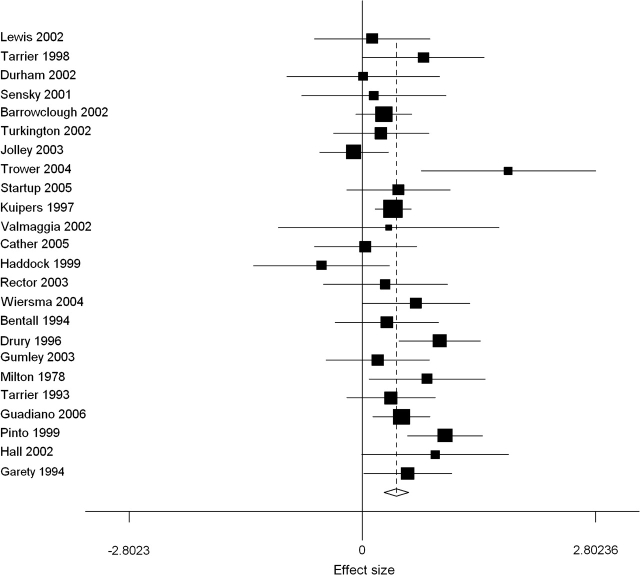
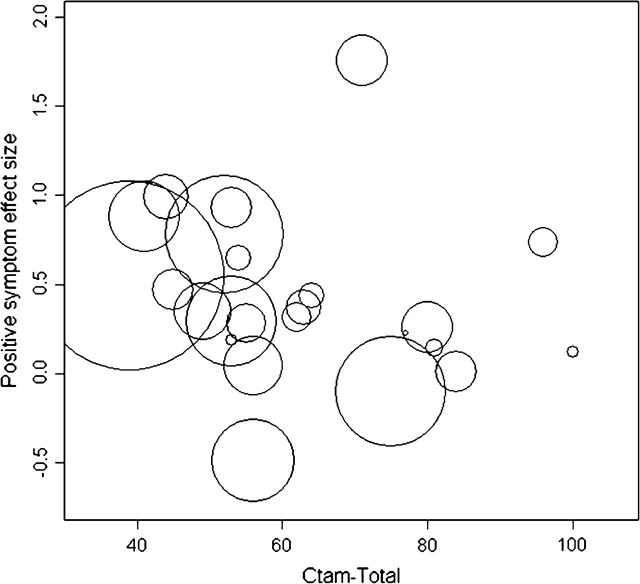
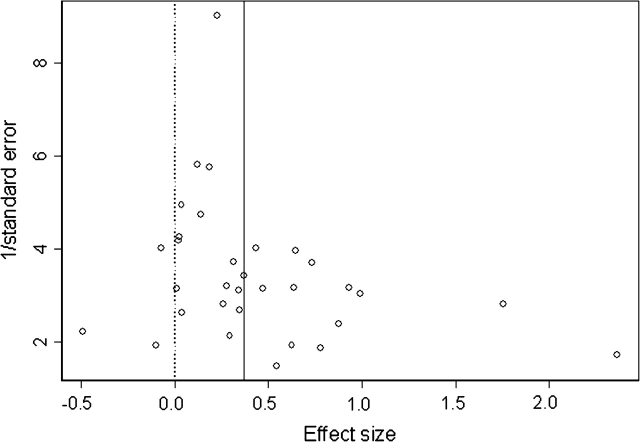
BACKGROUND: Guidance in the United States and United Kingdom has included cognitive behavior therapy for psychosis (CBTp) as a preferred therapy. But recent advances have widened the CBTp targets to other symptoms and have different methods of provision, eg, in groups. AIM: To explore the effect sizes of current CBTp trials including targeted and nontargeted symptoms, modes of action, and effect of methodological rigor. METHOD: Thirty-four CBTp trials with data in the public domain were used as source data for a meta-analysis and investigation of the effects of trial methodology using the Clinical Trial Assessment Measure (CTAM). RESULTS: There were overall beneficial effects for the target symptom (33 studies; effect size = 0.400 [95% confidence interval [CI] = 0.252, 0.548]) as well as significant effects for positive symptoms (32 studies), negative symptoms (23 studies), functioning (15 studies), mood (13 studies), and social anxiety (2 studies) with effects ranging from 0.35 to 0.44. However, there was no effect on hopelessness. Improvements in one domain were correlated with improvements in others. Trials in which raters were aware of group allocation had an inflated effect size of approximately 50%-100%. But rigorous CBTp studies showed benefit (estimated effect size = 0.223; 95% CI = 0.017, 0.428) although the lower end of the CI should be noted. Secondary outcomes (eg, negative symptoms) were also affected such that in the group of methodologically adequate studies the effect sizes were not significant. CONCLUSIONS: As in other meta-analyses, CBTp had beneficial effect on positive symptoms. However, psychological treatment trials that make no attempt to mask the group allocation are likely to have inflated effect sizes. Evidence considered for psychological treatment guidance should take into account specific methodological detail.
Overview
The claims and statistics of this paper haven’t been checked yet.
Free: it reads the open-access text and checks the first 5 claims that cite a source we can check. Create a free account to check every claim.
Integrity signals
Registry
Cites
Statistics
Figures
Verification
Claims the paper makes
The claims and statistics of this paper haven’t been checked yet.
Free: it reads the open-access text and checks the first 5 claims that cite a source we can check. Create a free account to check every claim.
Claims other papers make about this one
Each is checked against this paper’s own text: does it say what the citing paper says it does?
The cited source doesn’t support the claim as written.
In the citing paper
“The primary outcome was change in positive symptom severity at the end of treatment and at follow-up”
From A systematic review and meta-analysis of cognitive behavioural informed psychological interventions for psychiatric inpatients with psychosis (2020) · cites this paper as Wykes et al., 2008
Checked by a reasoning model — may be wrong.
Experimental — accuracy not yet measuredThe source backs part of the claim, not all of it — or backs it for a different population, condition or comparison.
In the citing paper
“Combining medication with evidence-based psychotherapy produces clinically significant improvement over medications alone for severe depression and psychotic disorders.9,10”
From Acceptance-based Behavior Therapy for Depression With Psychosis (2015) · cites this paper as [10]
Experimental — accuracy not yet measuredThe source backs part of the claim, not all of it — or backs it for a different population, condition or comparison.
In the citing paper
“Psychological therapies have demonstrated to be effective for patients experiencing psychotic symptoms (1, 2) and are recommended by treatment guidelines already in the acute illness and treatment phase (3, 4).”
From Developing a mechanism-based therapy for acute psychiatric inpatients with psychotic symptoms: an Intervention Mapping approach (2023) · cites this paper as [1]
Experimental — accuracy not yet measuredThe source backs part of the claim, not all of it — or backs it for a different population, condition or comparison.
In the citing paper
“There is limited evidence supporting the use of pharmacological and psychological interventions for depression in the context of schizophrenia (Whitehead et al. 2002; Wykes et al., 2008).”
From Acceptance and Commitment Therapy for depression following psychosis: An examination of clinically significant change (2015) · cites this paper as Wykes et al., 2008
Experimental — accuracy not yet measuredThe source backs part of the claim, not all of it — or backs it for a different population, condition or comparison.
In the citing paper
“Although effective at treating positive symptoms, Cognitive Behavioural Therapy for psychosis (CBTp) is less effective for treating emotional dysfunction associated with psychosis such as depression, hopelessness and suicide risk (Birchwood, 2003; Wykes et al., 2008; Tarrier et al., 2006).”
From Acceptance and Commitment Therapy for depression following psychosis: An examination of clinically significant change (2015) · cites this paper as Wykes et al., 2008
Experimental — accuracy not yet measured
4 more claims about this paper
Create a free account to see every claim other papers make about this one.
Self-check
Percentages, sums and reported differences re-computed from the paper’s own numbers.
The self-check needs the paper’s full text.
Citations
Cites
1 retracted
Cognitive behaviour therapy for schizophrenia
Jones, C., Cormac, I., Silveira da Mota Neto, J. I., & Campbell, C. (2004) · Cochrane Database of Systematic Reviews · doi:10.1002/14651858.cd000524.pub2 · Cited by 269
RetractedAssessing the quality of reports of randomized clinical trials: Is blinding necessary?
Jadad, A. R., Moore, R. A., Carroll, D., Jenkinson, C., Reynolds, D. J. M., Gavaghan, D. J., & McQuay, H. J. (1996) · Controlled Clinical Trials · doi:10.1016/0197-2456(95)00134-4 · Cited by 17,582 · cited 1×
“In addition, concurrent validity was assessed within an initial 22 studies by correlation with the scores from 3 other scales devised to assess methodological rigor.(42,43,52) The correlations of these scales with the CTAM scores on the corpus of CBTp data were as follows: CTAM and Jadad, q = .”
MethodZhang, Q., Wang, C., Zheng, M., Li, Y., Li, J., Zhang, L., Shang, X., & Yan, C. (2015) · Cerebrovascular Diseases · doi:10.1159/000369778 · Cited by 11,533
Schulz (1995) · doi:10.1001/jama.1995.03520290060030 · Cited by 5,634
Dong, Y., Hao, L., Shi, Z., Wang, G., Zhang, Z., & Han, C. (2013) · Urologia Internationalis · doi:10.1159/000351405 · Cited by 4,540
The Revised CONSORT Statement for Reporting Randomized Trials: Explanation and Elaboration
Altman, D. G., Schulz, K. F., Moher, D., Egger, M., Davidoff, F., Elbourne, D., Gøtzsche, P. C., Lang, T., & for the CONSORT Group (2001) · Annals of Internal Medicine · doi:10.7326/0003-4819-134-8-200104170-00012 · Cited by 3,835
The Handbook of Research Synthesis.
Howel, D., Cooper, H., & Hedges, L. V. (1995) · Biometrics · doi:10.2307/2533295 · Cited by 3,642
Moher, D., Pham, B., Jones, A., Cook, D. J., Jadad, A. R., Moher, M., Tugwell, P., & Klassen, T. P. (1998) · The Lancet · doi:10.1016/s0140-6736(98)01085-x · Cited by 3,560 · cited 1×
“For instance, poorer quality masking of allocation of treatments has been shown to be associated with up to 40% increased estimate of benefit in circulatory and digestive diseases, mental health, obstetrics, and childbirth.(36,37)”
BackgroundAssessing the quality of controlled clinical trials
Jüni, P., Altman, D. G., & Egger, M. (2001) · BMJ · doi:10.1136/bmj.323.7303.42 · Cited by 3,309
Improving the Quality of Reporting of Randomized Controlled Trials: The CONSORT Statement
Begg, C. (1996) · JAMA · doi:10.1001/jama.1996.03540080059030 · Cited by 3,127
Research works printed but not linked: 1
- [24]NICE Schizophrenia: Core interventions in the Treatment and Management of Schizophrenia in Primary and Secondary Care 2003 20704054
Cited by
Items 101–200 of 997
Does exercise improve sleep for adults with insomnia? A systematic review with quality appraisal
Lowe, H., Haddock, G., Mulligan, L. D., Gregg, L., Fuzellier-Hart, A., Carter, L.-A., & Kyle, S. D. (2019) · Clinical Psychology Review · doi:10.1016/j.cpr.2018.11.002 · Cited by 121
Garety, P., Waller, H., Emsley, R., Jolley, S., Kuipers, E., Bebbington, P., Dunn, G., Fowler, D., Hardy, A., & Freeman, D. (2015) · Schizophrenia Bulletin · doi:10.1093/schbul/sbu103 · Cited by 120
Penn, D. L., Meyer-Kalos, P., Evans, E., Wirth, R. J., Cai, K., & Burchinal, M. (2009) · Schizophrenia Research · doi:10.1016/j.schres.2008.12.009 · Cited by 142
“This has prompted researchers to examine more efficient ways of delivering this intervention, such as group therapy (Mueser and Noordsy, 2005), which has comparable effect sizes to individual CBT for psychosis (Wykes et al., 2008).”
BackgroundMethodKumari, V., Peters, E. R., Fannon, D., Antonova, E., Premkumar, P., Anilkumar, A. P., Williams, S. C. R., & Kuipers, E. (2009) · Biological Psychiatry · doi:10.1016/j.biopsych.2009.04.036 · Cited by 117
Brand, R. M., McEnery, C., Rossell, S. L., Bendall, S., & Thomas, N. (2017) · Schizophrenia Research · doi:10.1016/j.schres.2017.08.037 · Cited by 144
Waller, H., Freeman, D., Jolley, S., Dunn, G., & Garety, P. (2011) · Journal of Behavior Therapy and Experimental Psychiatry · doi:10.1016/j.jbtep.2011.03.001 · Cited by 115
Forbes, C., Blanchard, J. J., Bennett, M., Horan, W. P., Kring, A., & Gur, R. (2010) · Schizophrenia Research · doi:10.1016/j.schres.2010.08.039 · Cited by 115
“Although psychosocial interventions have promise for possibly ameliorating negative symptoms, again the effects (especially when considering methodologically rigorous studies) of these treatments are limited (Kurtz and Mueser, 2008; Wykes et al., 2008).”
Lincoln, T. M., & Peters, E. (2019) · Schizophrenia Research · doi:10.1016/j.schres.2017.12.014 · Cited by 115
“For the primary outcome (generally an overall symptomatology measure) the average effect is in the small to moderate range (d=0.40;Wykes et al., 2008),with smaller effects inmethodologically rigorous trials (Jauhar et al.”
InfluentialMoseley, P., Fernyhough, C., & Ellison, A. (2013) · Neuroscience & Biobehavioral Reviews · doi:10.1016/j.neubiorev.2013.10.001 · Cited by 113
Rathod, S., Phiri, P., Harris, S., Underwood, C., Thagadur, M., Padmanabi, U., & Kingdon, D. (2012) · Schizophrenia Research · doi:10.1016/j.schres.2012.11.007 · Cited by 146
Disorder specific and trans-diagnostic case conceptualisation
Dudley, R. E. J., Kuyken, W., & Padesky, C. A. (2010) · Clinical Psychology Review · doi:10.1016/j.cpr.2010.07.005 · Cited by 142
The Utility of Home-Practice in Mindfulness-Based Group Interventions: A Systematic Review
Lloyd, A., White, R., Eames, C., & Crane, R. (2018) · Mindfulness · doi:10.1007/s12671-017-0813-z · Cited by 113
“, 1992) YMRS- Young Mania Rating Scale (Young et al., 1978) SOSI- Symptoms of Stress Inventory (Leckie & Thompson, 1979) Study and Method Participants Recruitment Intervention/ Conditions Measures Utilised Key Findings”
MethodWada, M., Noda, Y., Iwata, Y., Tsugawa, S., Yoshida, K., Tani, H., Hirano, Y., Koike, S., Sasabayashi, D., Katayama, H., et al. (2022) · Molecular Psychiatry · doi:10.1038/s41380-022-01572-0 · Cited by 118
Degnan, A., Baker, S., Edge, D., Nottidge, W., Noke, M., Press, C. J., Husain, N., Rathod, S., & Drake, R. J. (2018) · Psychological Medicine · doi:10.1017/s0033291717002264 · Cited by 109
“2010; National Institute for Health & Care Excellence, 2014) recommend cognitive behavioural therapy (CBT) and family intervention (FI) for schizophrenia based on meta-analytic evidence of effectiveness (Wykes et al. 2008; Pharoah et al. 2010).”
InfluentialPrytys, M., Garety, P. A., Jolley, S., Onwumere, J., & Craig, T. (2011) · Clinical Psychology & Psychotherapy · doi:10.1002/cpp.691 · Cited by 107
Morrison, K. E., DeBrabander, K. M., Jones, D. R., Ackerman, R. A., & Sasson, N. J. (2020) · Frontiers in Psychology · doi:10.3389/fpsyg.2020.591100 · Cited by 105
“Training programs targeting social skills to improve social functioning among autistic adolescents and adults have yielded some limited benefits (Wykes et al., 2008; Bishop-Fitzpatrick et al., 2014), but they tend to lack generalizability to real-world outcomes (Palmen et al.”
BackgroundUnderstanding Psychosis and Schizophrenia
Cooke, A. (2014) · Cited by 165
Embodiment and Schizophrenia: A Review of Implications and Applications
Tschacher, W., Giersch, A., & Friston, K. (2017) · Schizophrenia Bulletin · doi:10.1093/schbul/sbw220 · Cited by 102
A Compassion Focused Model of Recovery after Psychosis
Gumley, A. I., Braehler, C., Laithwaite, H., MacBeth, A. M., & Gilbert, P. (2010) · International Journal of Cognitive Therapy · doi:10.1521/ijct.2010.3.2.186 · Cited by 143
“British Journal of Psychiatry, 185, 410-415. Thwaites, R., & Freeston, M.H. (2005). Safetyseeking behaviours: Fact or fiction: How can we clinically differentiate between safety behaviours and additive coping strategies across anxiety disorders.”
BackgroundMetacognitive and cognitive-behavioral interventions for psychosis: new developments.
Moritz, S., Klein, J. P., Lysaker, P. H., & Mehl, S. (2019) · Dialogues in Clinical Neuroscience · doi:10.31887/dcns.2019.21.3/smoritz · Cited by 101
Sustained antipsychotic effect of metacognitive training in psychosis: A randomized-controlled study
Favrod, J., Rexhaj, S., Bardy, S., Ferrari, P., Hayoz, C., Moritz, S., Conus, P., & Bonsack, C. (2014) · European Psychiatry · doi:10.1016/j.eurpsy.2013.08.003 · Cited by 105
“As trials in which raters are aware of group allocation have an inflated effect size [54] the sample size was increased to 52.”
BackgroundGrant, N., Lawrence, M., Preti, A., Wykes, T., & Cella, M. (2017) · Clinical Psychology Review · doi:10.1016/j.cpr.2017.06.001 · Cited by 117
“To put this in context, other reviews using the same bias rating measure reported greater data quality ratings, with means of 57.4 and 61.2 (Wykes et al., 2008; Wykes et al., 2011) for other psychological interventions in people with a diagnosis of schizophrenia, compared to the mean in this review…”
MethodInfluentialSelf-citationOchoa, S., López-Carrilero, R., Barrigón, M. L., Pousa, E., Barajas, A., Lorente-Rovira, E., González-Higueras, F., Grasa, E., Ruiz-Delgado, I., Cid, J., et al. (2017) · Psychological Medicine · doi:10.1017/s0033291716003421 · Cited by 97
“However, over the last decades great interest has emerged in the effectiveness of psychological interventions (Wykes et al. 2008; Morrison et al. 2014).”
BackgroundSarin, F., Wallin, L., & Widerlöv, B. (2011) · Nordic Journal of Psychiatry · doi:10.3109/08039488.2011.577188 · Cited by 97
Fowler, D., Hodgekins, J., French, P., Marshall, M., Freemantle, N., McCrone, P., Everard, L., Lavis, A., Jones, P. B., Amos, T., et al. (2018) · The Lancet Psychiatry · doi:10.1016/s2215-0366(17)30476-5 · Cited by 95
Cognitive behavioral therapy for negative symptoms (CBT-n) in psychotic disorders: A pilot study
Staring, A. B. P., ter Huurne, M.-A. B., & van der Gaag, M. (2013) · Journal of Behavior Therapy and Experimental Psychiatry · doi:10.1016/j.jbtep.2013.01.004 · Cited by 95
Lincoln, T. M., Ziegler, M., Mehl, S., Kesting, M.-L., Lüllmann, E., Westermann, S., & Rief, W. (2012) · Journal of Consulting and Clinical Psychology · doi:10.1037/a0028665 · Cited by 95
“On the basis of results from randomized controlled efficacy studies (Wykes et al., 2008), we expected a medium effect (Cohen, 1988).”
BackgroundInfluentialDegnan, A., Berry, K., Humphrey, C., & Bucci, S. (2021) · Clinical Psychology Review · doi:10.1016/j.cpr.2021.102003 · Cited by 123
Schlosser, D. A., Campellone, T. R., Biagianti, B., Delucchi, K. L., Gard, D. E., Fulford, D., Stuart, B. K., Fisher, M., Loewy, R. L., & Vinogradov, S. (2015) · Schizophrenia Research · doi:10.1016/j.schres.2015.10.036 · Cited by 95
“While cognitive behavior therapy (CBT) might be able to target some aspects that influence negative symptoms and functioning, such as defeatist beliefs, the results on improving functioning have been mixed (Carbon and Correll, 2014; Velthorst et al., 2014;Wykes et al., 2008).”
Treatment for Negative Symptoms in Schizophrenia: A Comprehensive Review
Veerman, S. R. T., Schulte, P. F. J., & de Haan, L. (2017) · Drugs · doi:10.1007/s40265-017-0789-y · Cited by 124
The cognitive behavioural prevention of suicide in psychosis: A clinical trial
Tarrier, N., Kelly, J., Maqsood, S., Snelson, N., Maxwell, J., Law, H., Dunn, G., & Gooding, P. (2014) · Schizophrenia Research · doi:10.1016/j.schres.2014.04.029 · Cited by 90
“Cognitive behaviour therapy for psychosis (CBTp) reduces positive and negative symptoms of psychosis, depression, and anxiety but has less effect on hopelessness (Wykes et al., 2008) and suicidality (Tarrier et al.”
BackgroundSelf-citationTaş, C., Brown, E., Esen-Danacı, A., Lysaker, P., & Brüne, M. (2012) · Journal of Psychiatric Research · doi:10.1016/j.jpsychires.2012.04.027 · Cited by 94
Granholm, E. L., Holden, J. L., & Worley, M. J. (2017) · Schizophrenia Bulletin · doi:10.1093/schbul/sbx099 · Cited by 101
Livet, A., Navarri, X., Potvin, S., & Conrod, P. (2020) · Schizophrenia Research · doi:10.1016/j.schres.2020.06.016 · Cited by 107
Music therapy for service users with dementia: a critical review of the literature
Blackburn, R., & Bradshaw, T. (2014) · Journal of Psychiatric and Mental Health Nursing · doi:10.1111/jpm.12165 · Cited by 121
Jackson, C., Trower, P., Reid, I., Smith, J., Hall, M., Townend, M., Barton, K., Jones, J., Ross, K., Russell, R., et al. (2009) · Behaviour Research and Therapy · doi:10.1016/j.brat.2009.02.009 · Cited by 99
“In a recent review of 33 RCTs of CBT for Schizophrenia (Wykes et al., 2008), not one selected depression as a primary outcome measure.”
Keefe, R. S. E., Vinogradov, S., Medalia, A., Silverstein, S. M., Bell, M. D., Dickinson, D., Ventura, J., Marder, S. R., & Stroup, T. S. (2011) · Schizophrenia Bulletin · doi:10.1093/schbul/sbq010 · Cited by 83
“tion, as has been discussed in detail in previously published articles.(19,20) Cognitive remediation strategies”
BackgroundSwan, S., Keen, N., Reynolds, N., & Onwumere, J. (2017) · Frontiers in Psychology · doi:10.3389/fpsyg.2017.00341 · Cited by 83
“The measure has been used within reviews of psychological interventions (Gregg and Tarrier, 2007; Tarrier et al., 2008) and in reviews specifically within psychosis (Tarrier and Wykes, 2004; Wykes et al., 2008, 2011 ).”
MethodMetacognitive training for schizophrenia spectrum patients: a meta-analysis on outcome studies
van Oosterhout, B., Smit, F., Krabbendam, L., Castelein, S., Staring, A. B. P., & van der Gaag, M. (2016) · Psychological Medicine · doi:10.1017/s0033291715001105 · Cited by 83
“Also, the association between datagathering bias and delusions is not very robust, as some studies found no such associations (Young & Bentall, 1997; McKay et al. 2007).”
ResultMorrison, A. P., Law, H., Carter, L., Sellers, R., Emsley, R., Pyle, M., French, P., Shiers, D., Yung, A. R., Murphy, E. K., et al. (2018) · The Lancet Psychiatry · doi:10.1016/s2215-0366(18)30096-8 · Cited by 84
Peters, E., Landau, S., McCrone, P., Cooke, M., Fisher, P., Steel, C., Evans, R., Carswell, K., Dawson, K., Williams, S., et al. (2010) · Acta Psychiatrica Scandinavica · doi:10.1111/j.1600-0447.2010.01572.x · Cited by 82
“A number of randomised-controlled trials (RCTs) have established that cognitive-behaviour therapy for psychosis (CBTp) can be efficacious (1).”
Self-citationMorrison, A. P., Pyle, M., Chapman, N., French, P., Parker, S. K., & Wells, A. (2014) · Journal of Behavior Therapy and Experimental Psychiatry · doi:10.1016/j.jbtep.2013.11.003 · Cited by 82
Improving cognitive treatments for delusions
Freeman, D. H. (2011) · Schizophrenia Research · doi:10.1016/j.schres.2011.08.012 · Cited by 92
Kaneko, K. (2018) · Yonago acta medica · doi:10.33160/yam.2018.06.001 · Cited by 99
Gottlieb, J. D., Romeo, K. H., Penn, D. L., Mueser, K. T., & Chiko, B. P. (2013) · Schizophrenia Research · doi:10.1016/j.schres.2013.01.002 · Cited by 95
“In addition, traditional CBTp has consistently been shown to improve the severity of auditory hallucinations (Wykes et al., 2008).”
BackgroundResultNeural changes following cognitive behaviour therapy for psychosis: a longitudinal study
Kumari, V., Fannon, D., Peters, E. R., ffytche, D. H., Sumich, A. L., Premkumar, P., Anilkumar, A. P., Andrew, C., Phillips, M. L., Williams, S. C. R., et al. (2011) · Brain · doi:10.1093/brain/awr154 · Cited by 80
Naeem, F., Khoury, B., Munshi, T., Ayub, M., Lecomte, T., Kingdon, D., & Farooq, S. (2016) · International Journal of Cognitive Therapy · doi:10.1521/ijct_2016_09_04 · Cited by 80
“While there is evidence to suggest that CBTp can be effective in reducing symptoms of schizophrenia (Wykes et al., 2008), two Cochrane reviews concluded that standard CBTp might be as effective as other psychological interventions for schizophrenia (Jones, Hacker, Cormac, Meaden, & Irving, 2012), as well as supportive…”
BackgroundResultBargenquast, R., & Schweitzer, R. D. (2014) · Psychology and Psychotherapy: Theory, Research and Practice · doi:10.1111/papt.12019 · Cited by 80
Lincoln, T. M., Ziegler, M., Lüllmann, E., Müller, M. J., & Rief, W. (2010) · Psychiatry Research · doi:10.1016/j.psychres.2009.04.019 · Cited by 88
“…in observer ratings of psychosis has been clearly demonstrated in meta-analyses of cognitive behaviour therapy for psychosis finding overall effect sizes in non-blind observer-rated studies to be twice the size of the ones in blind-assessment studies (Tarrier et al., 2004; Wykes et al., 2008).”
Chien, W. T., & Yip, A. L. (2013) · Neuropsychiatric Disease and Treatment · doi:10.2147/ndt.s37485 · Cited by 79
“…moderate to large effect sizes in symptom control, relapse prevention, and levels of psychosocial functioning included patient and/or family psychoeducation programs, 125 cognitive–behavioral therapy, 126 and an integrated program with antipsychotics and different approaches to psychosocial care.”
Roberts, D. L., Penn, D. L., Labate, D., Margolis, S. A., & Sterne, A. (2010) · Behavioural and Cognitive Psychotherapy · doi:10.1017/s1352465809990464 · Cited by 78
“The drop-out rate of 24% was higher than observed in this previous outpatient trial; however, it is on par with rates observed in previous outpatient trials of CBT for psychosis (Wykes et al., 2008), as”
Freeman, D., Dunn, G., Garety, P., Weinman, J., Kuipers, E., Fowler, D., Jolley, S., & Bebbington, P. (2013) · Psychological Medicine · doi:10.1017/s0033291712001225 · Cited by 75
“Meta-analyses lead to conclusions that cognitive behaviour therapy (CBT) can reduce the positive symptoms of psychosis (e.g. Zimmermann et al. 2005 ; Wykes et al. 2008 ; NICE, 2009), although the effect sizes in intention-to-treat (ITT) analyses of this first generation of therapies lie in the weak to moderate range.”
Therapeutic alliance in schizophrenia: The role of recovery orientation, self-stigma, and insight
Kvrgic, S., Cavelti, M., Beck, E., Rüsch, N., & Vauth, R. (2012) · Psychiatry Research · doi:10.1016/j.psychres.2012.10.009 · Cited by 97
van Oosterhout, B., Krabbendam, L., de Boer, K., Ferwerda, J., van der Helm, M., Stant, A. D., & van der Gaag, M. (2014) · Psychological Medicine · doi:10.1017/s0033291714000555 · Cited by 75
“There is increasing evidence for the effectiveness of cognitive behavioural therapy for psychosis (CBTp) as an add-on therapy to pharmacotherapy (Gould et al. 2004; Wykes et al. 2008).”
BackgroundSandhu, A., Ives, J., Birchwood, M. J., & Upthegrove, R. (2013) · Journal of Affective Disorders · doi:10.1016/j.jad.2013.01.018 · Cited by 99
“Traditional CBT may not be sufficient, as is demonstrated by the lack of evidence of its effectiveness for depression in psychosis (Barnes, 2011; Garety et al., 2008; Wykes et al., 2008).”
BackgroundD-cycloserine facilitation of cognitive behavioral therapy for delusions in schizophrenia
Gottlieb, J. D., Cather, C., Shanahan, M., Creedon, T., Macklin, E. A., & Goff, D. C. (2011) · Schizophrenia Research · doi:10.1016/j.schres.2011.05.029 · Cited by 73
“Cognitive–behavioral techniques have been developed with modest success to facilitate such reality-testing or “unlearning” of delusional beliefs (Wykes et al., 2008).”
BackgroundMethodInfluentialCognitive remediation for schizophrenia: it is even more complicated
Wykes, T., & Huddy, V. C. (2009) · Current Opinion in Psychiatry · doi:10.1097/yco.0b013e328322fbf4 · Cited by 86
Self-citationYeo, H., Yoon, S., Lee, J.-H., Kurtz, M. M., & Choi, K. (2021) · British Journal of Clinical Psychology · doi:10.1111/bjc.12320 · Cited by 81
Morrison, A. P., Hutton, P., Wardle, M., Spencer, H., Barratt, S., Brabban, A., Callcott, P., Christodoulides, T., Dudley, R., French, P., et al. (2012) · Psychological Medicine · doi:10.1017/s0033291711001899 · Cited by 73
“Cognitive therapy (CT) has been shown to be effective when delivered in combination with antipsychotic medication, with several meta-analyses showing robust support for this approach (e.g. Pilling et al. 2002 ; Wykes et al. 2008), although there is not complete consensus regarding such conclusions (Lynch et al.”
Bizik, G., Picard, M., Nijjar, R., Tourjman, V., McEwen, B. S., Lupien, S. J., & Juster, R.-P. (2013) · Harvard Review of Psychiatry · doi:10.1097/hrp.0000000000000012 · Cited by 72
“For instance, psychopharmacological interventions can exert prophylactic effects (“advance guard”) that further contribute to recovery by improving coping mechanisms and reducing distress.(193) But how can such strategies be reconciled with PAL? It is our belief that a greater understanding of allostatic processes can…”
BackgroundFisher, M., Loewy, R., Hardy, K., Schlosser, D., & Vinogradov, S. (2013) · Annual Review of Clinical Psychology · doi:10.1146/annurev-clinpsy-032511-143134 · Cited by 71
Francey, S. M., O’Donoghue, B., Nelson, B., Graham, J., Baldwin, L., Yuen, H. P., Kerr, M. J., Ratheesh, A., Allott, K., Alvarez-Jimenez, M., et al. (2020) · Schizophrenia Bulletin Open · doi:10.1093/schizbullopen/sgaa015 · Cited by 71
“18 CBT strategies delivered within a specialized first-episode psychosis (FEP) service may be effective in delaying and preventing psychotic relapse, 19 as well as managing auditory hallucinations, 20,21 hopelessness, 22 adaptation to illness, 23 treatment adherence, 24 and comorbid substance use.”
Cella, M., Roberts, S., Pillny, M., Riehle, M., O'Donoghue, B. N., Lyne, J., Tomlin, P., Valmaggia, L., & Preti, A. (2023) · The British Journal of Psychiatry · doi:10.1192/bjp.2023.21 · Cited by 87
“The results by Velthorst et al 16 and Wykes et al 63 suggest that these effects are smaller and non-significant in studies with lower risk of bias.”
Cognitive insight predicts favorable outcome in cognitive behavioral therapy for psychosis
Perivoliotis, D., Grant, P. M., Peters, E. R., Ison, R., Kuipers, E., & Beck, A. T. (2010) · Psychosis · doi:10.1080/17522430903147520 · Cited by 71
Škodlar, B., Henriksen, M. G., Sass, L. A., Nelson, B., & Parnas, J. (2013) · Psychopathology · doi:10.1159/000342536 · Cited by 71
A review of hearing voices groups: evidence and mechanisms of change
Ruddle, A., Mason, O., & Wykes, T. (2011) · Clinical Psychology Review · doi:10.1016/j.cpr.2011.03.010 · Cited by 70
Self-citationSitko, K., Bewick, B. M., Owens, D., & Masterson, C. (2020) · Schizophrenia Bulletin Open · doi:10.1093/schizbullopen/sgaa023 · Cited by 70
“In our systematic review, as in other reviews, 3,5 the hal-lucination and delusion scores were averaged to generate a positive symptom score in studies that did not report an overall score.”
InfluentialVita, A., Barlati, S., Ceraso, A., Nibbio, G., Durante, F., Facchi, M., Deste, G., & Wykes, T. (2024) · American Journal of Psychiatry · doi:10.1176/appi.ajp.20230396 · Cited by 92
Self-citationSchneider, M., Reininghaus, U., van Nierop, M., Janssens, M., Myin-Germeys, I., & GROUP Investigators (2017) · Psychological Medicine · doi:10.1017/s0033291717001295 · Cited by 70
“Functional recovery especially remains an unmet therapeutic challenge, as most therapeutic interventions only have marginal effects on functioning (Robinson et al. 2004; Wykes et al. 2008), and the majority of patients reaching symptomatic recovery still experience social and functional problems (Oorschot et al.”
BackgroundHolding on to false beliefs: The bias against disconfirmatory evidence over the course of psychosis
Eisenacher, S., & Zink, M. (2016) · Journal of Behavior Therapy and Experimental Psychiatry · doi:10.1016/j.jbtep.2016.08.015 · Cited by 82
Hanssen, E., Balvert, S., Oorschot, M., Borkelmans, K., van Os, J., Delespaul, P., & Fett, A.-K. (2020) · Psychiatry Research · doi:10.1016/j.psychres.2019.112695 · Cited by 68
“Functional and social impairments remain a challenge to treat (Robinson et al., 2004; Wykes et al., 2008).”
Gleeson, J., Álvarez‐Jiménez, M., Cotton, S., Parker, A. G., & Hetrick, S. E. (2010) · Schizophrenia Research · doi:10.1016/j.schres.2010.02.1073 · Cited by 81
“This leads to concerns regarding the conclusions and raises concerns about the possibility of bias in favor of experimental interventions (Wykes et al., 2008).”
Clinical Social Work and the Biomedical Industrial Complex
Gomory, T., Wong, S. E., Cohen, D., & Lacasse, J. R. (2011) · The Journal of Sociology & Social Welfare · doi:10.15453/0191-5096.3635 · Cited by 80
Paterson, C., Karatzias, T., Dickson, A., Harper, S., Dougall, N., & Hutton, P. (2018) · British Journal of Clinical Psychology · doi:10.1111/bjc.12182 · Cited by 69
Vollbehr, N. K., Bartels-Velthuis, A. A., Nauta, M. H., Castelein, S., Steenhuis, L. A., Hoenders, H. J. R., & Ostafin, B. D. (2018) · PLOS ONE · doi:10.1371/journal.pone.0204925 · Cited by 69
Wiesjahn, M., Jung, E., Kremser, J. D., Rief, W., & Lincoln, T. M. (2015) · Journal of Behavior Therapy and Experimental Psychiatry · doi:10.1016/j.jbtep.2015.09.007 · Cited by 75
Swildens, W., van Busschbach, J. T., Michon, H., Kroon, H., Koeter, M. W. J., Wiersma, D., & van Os, J. (2011) · The Canadian Journal of Psychiatry · doi:10.1177/070674371105601207 · Cited by 67
Effect of meta-cognitive training in the reduction of positive symptoms in schizophrenia
Kumar, D., Zia Ul Haq, M., Dubey, I., Dotivala, K. N., Veqar Siddiqui, S., Prakash, R., Abhishek, P., & Nizamie, S. H. (2010) · European Journal of Psychotherapy & Counselling · doi:10.1080/13642537.2010.488875 · Cited by 67
Granholm, E., Ben-Zeev, D., & Link, P. C. (2009) · Schizophrenia Bulletin · doi:10.1093/schbul/sbp072 · Cited by 67
. Development and pilot investigation of behavioral activation for negative symptoms.
Mairs, H., Lovell, K., Campbell, M., & Keeley, P. (2011) · Behavior Modification · doi:10.1177/0145445511411706 · Cited by 66
Bechdolf, A., Muller, H., Stutzer, H., Wagner, M., Maier, W., Lautenschlager, M., Heinz, A., de Millas, W., Janssen, B., Gaebel, W., et al. (2011) · Schizophrenia Bulletin · doi:10.1093/schbul/sbr083 · Cited by 66
“Further evidence suggests treatment effects in clients with schizophrenia.(24) Therefore, many authors call for methodologically sound, collaborative, large-scale RCTs on indicated prevention in people atrisk of psychosis involving psychological and pharmacological preventive strategies.”
Steel, C., Hardy, A., Smith, B., Wykes, T., Rose, S., Enright, S., Hardcastle, M., Landau, S., Baksh, M. F., Gottlieb, J. D., et al. (2017) · Psychological Medicine · doi:10.1017/s0033291716002117 · Cited by 66
“This result should be considered within the context of meta-analyses which suggest the overall effect size of generic CBT for psychosis to be in the region of 0.4 (Wykes et al. 2008; van der Gaag et al. 2014).”
BackgroundInfluentialSelf-citationHazell, C. M., Hayward, M., Cavanagh, K., Jones, A.-M., & Strauss, C. (2018) · Schizophrenia Research · doi:10.1016/j.schres.2017.10.004 · Cited by 65
Dunn, G., Fowler, D., Rollinson, R., Freeman, D., Kuipers, E., Smith, B., Steel, C., Onwumere, J., Jolley, S., Garety, P., et al. (2012) · Psychological Medicine · doi:10.1017/s0033291711001954 · Cited by 65
Self-citationD-Cycloserine: An Evolving Role in Learning and Neuroplasticity in Schizophrenia
GOFF, D. C. (2012) · Schizophrenia Bulletin · doi:10.1093/schbul/sbs012 · Cited by 70
Wood, L., Williams, C., Billings, J., & Johnson, S. (2020) · Schizophrenia Research · doi:10.1016/j.schres.2020.03.041 · Cited by 63
Hamm, J., Hasson-Ohayon, I., Kukla, M., & Paul H Lysaker, P. (2013) · Psychology Research and Behavior Management · doi:10.2147/prbm.s47891 · Cited by 64
Evidence-Based Psychotherapy for Schizophrenia
Dickerson, F. B., & Lehman, A. F. (2011) · Journal of Nervous & Mental Disease · doi:10.1097/nmd.0b013e318225ee78 · Cited by 63
“The largest meta-analysis of CBT trials for psychosis was based on the results of 34 studies, most of which were performed in the United Kingdom, and that included a total of 1964 patients, most of whom are with schizophrenia (Wykes et al., 2008).”
ResultBalzan, R. P., Delfabbro, P. H., Galletly, C. A., & Woodward, T. S. (2014) · Australian & New Zealand Journal of Psychiatry · doi:10.1177/0004867413508451 · Cited by 63
“Recent reviews and meta-analyses of its efficacy as an adjunct therapy to psychopharmacological treatments have revealed small-tomoderate effect sizes equal to, and sometimes reportedly better than, the efficacy of antipsychotic medication (Wykes et al., 2008; Zimmermann et al., 2005).”
BackgroundBerendsen, S., Berendse, S., van der Torren, J., Vermeulen, J. M., & de Haan, L. (2024) · EClinicalMedicine · doi:10.1016/j.eclinm.2023.102392 · Cited by 74
“Results range from null-fi ndings 5 to small, 6 – and moderate effect sizes 7,8 in favor of CBT against treatment as usual, mixed, or active conditions.”
BackgroundSalvatore, G., Lysaker, P. H., Gumley, A., Popolo, R., Mari, J., & Dimaggio, G. (2012) · American Journal of Psychotherapy · doi:10.1176/appi.psychotherapy.2012.66.1.85 · Cited by 63
Li, J., Huang, Y.-G., Ran, M.-S., Fan, Y., Chen, W., Evans-Lacko, S., & Thornicroft, G. (2018) · Asian Journal of Psychiatry · doi:10.1016/j.ajp.2018.04.017 · Cited by 63
“CBT focuses on reframing psychotic ideas and rebuilding healthy beliefs in the mind of people with schizophrenia (Sarin and Wallin, 2013; Wykes et al., 2008).”
BackgroundThird-wave strategies for emotion regulation in early psychosis: A pilot study
Khoury, B., Lecomte, T., Comtois, G., & Nicole, L. (2015) · Early Intervention in Psychiatry · doi:10.1111/eip.12095 · Cited by 64
“Most of the results were stronger at 3-month follow up than immediately following the 8-week CAM sessions, suggesting that the treatment might be more beneficial in the long run, as suggested by many CBT studies.(6) More longitudinal results will be needed to reach conclusive results.”
ResultLam, K. C. K., Ho, C. P. S., Wa, J. C., Chan, S. M. Y., Yam, K. K. N., Yeung, O. S. F., Wong, W. C. H., & Balzan, R. P. (2015) · Behaviour Research and Therapy · doi:10.1016/j.brat.2014.11.008 · Cited by 62
Naughton, M., Nulty, A., Abidin, Z., Davoren, M., O’Dwyer, S., & Kennedy, H. G. (2012) · BMC Research Notes · doi:10.1186/1756-0500-5-302 · Cited by 62
“Evidence has developed from case studies, randomised controlled trials and metaanalyses [3,4] confirming the effectiveness of CBT for persistent positive and negative symptoms of schizophrenia, usually with small to medium effect sizes.”
BackgroundMethodDistinct profiles of social skill in adults with autism spectrum disorder and schizophrenia
Morrison, K. E., Pinkham, A. E., Penn, D. L., Kelsven, S., Ludwig, K., & Sasson, N. J. (2017) · Autism Research · doi:10.1002/aur.1734 · Cited by 62
“For both groups, psychosocial treatments have yielded some gains in social functioning [Bishop-Fitzpatrick et al., 2014; Wykes et al., 2008], but the extent of improvement and generalization to real-world outcomes are often limited.”
BackgroundWho stays, who benefits? Predicting dropout and change in cognitive behaviour therapy for psychosis
Lincoln, T. M., Rief, W., Westermann, S., Ziegler, M., Kesting, M.-L., Heibach, E., & Mehl, S. (2014) · Psychiatry Research · doi:10.1016/j.psychres.2014.02.012 · Cited by 61
“Nevertheless, a number of patients discontinue therapy (on average 16% according to a meta-analysis by Lincoln et al., 2008) and among those that continue, approximately half do not show reliable symptom improvement (Jones et al., 2004; Wykes et al., 2008).”
InfluentialFavrod, J., Maire, A., Bardy, S., Pernier, S., & Bonsack, C. (2011) · Journal of Advanced Nursing · doi:10.1111/j.1365-2648.2010.05470.x · Cited by 61
Omer, S., Golden, E., & Priebe, S. (2016) · PLoS ONE · doi:10.1371/journal.pone.0148415 · Cited by 66
“34) and comparable to much more intensive treatments, including Cognitive Behavioural Therapy [7, 8].”
ResultInfluentialMorrison, P., Meehan, T., & Stomski, N. J. (2014) · International Journal of Mental Health Nursing · doi:10.1111/inm.12110 · Cited by 73
“Systematic reviews have established that psychosocial treatment is effective when used in conjunction with antipsychotic medication (Pilling et al. 2002; Wykes et al. 2008), and limited recent evidence suggests cognitive therapy reduces psychotic symptoms in consumers not taking medication (Morrison et al.”
Background
Metadata
- Authors
- Wykes, T., Steel, C., Everitt, B., & Tarrier, N.
- Affiliations
- King's College London (GB)
- University of Manchester (GB)
- Venue
- Schizophrenia Bulletin
- Publisher
- Oxford University Press (OUP)
- Published
- 2007-05-04
- Volume
- 34
- Issue
- 3
- Pages
- 523-537
- ISSN
- 0586-7614 (ISSN-L)
- 1745-1701
- PMC
- PMC2632426
- OpenAlex
- W2140526915
- Cited by
- 1,029
- References
- 98
- Citations by year
- 2026: 16 · 2025: 27 · 2024: 29 · 2023: 39 · 2022: 42 · 2021: 39 · 2020: 38 · 2019: 64 · 2018: 59 · 2017: 62 · 2016: 76 · 2015: 73 · 2014: 91 · 2013: 96 · 2012: 87
- FWCI
- 5.68
- Type
- journal article
- Language
- en
- Open access
- hybrid
- doi.org
- Licence
- cc-by-nc
- Locations
- Schizophrenia Bulletin (publishedVersion, cc-by-nc)
- PubMed Central (publishedVersion, cc-by-nc)
- PubMed (publishedVersion)
- Research Explorer (The University of Manchester) (publishedVersion)
- CentAUR (University of Reading) (acceptedVersion)
- Research Portal (King's College London) (submittedVersion, public-domain)
- Topics
- Health Sciences › Medicine › Psychiatry and Mental health › Schizophrenia research and treatment
- Social Sciences › Psychology › Clinical Psychology › Psychotherapy Techniques and Applications
- Social Sciences › Psychology › Clinical Psychology › Psychological Treatments and Assessments
- Keywords
- schizophrenia
- MeSH terms
- Humans, Psychometrics, Schizophrenia, Cognitive Behavioral Therapy
About these checks
Registry, retraction, Cites and statistics results are computed, not judged, with one exception: a printed reference that no index lists is read once by a model before it counts as a citation error. Claims are extracted by a model and kept only when their quote appears verbatim in the text; each cited source is then checked, with a model’s help, for whether it says what the claim relies on. Those verdicts can be wrong — read the claim’s quote and the cited source before relying on one.
Statistics and arithmetic are recomputed, not judged.
Confidence bands are shown only for fields calibrated on our annotated test set. None is calibrated yet, so no band is shown.
What counts as a claim ›How we measure confidence ›How we check this ›
Are you an author, or do you see a problem with this page? Request a review
Data sources
Bibliographic data: Semantic Scholar, OpenAlex, Crossref.
Contains information from the Semantic Scholar Academic Graph Datasets, made available under the ODC Attribution License (ODC-BY 1.0).
Semantic Scholar’s data is described in: Kinney, R., et al. (2023). The Semantic Scholar Open Data Platform. arXiv:2301.10140.
