

. Cognitive behavior therapy for schizophrenia: effect sizes, clinical models, and methodological rigor.
Open accessThe DOI matches its Crossref record; 98 of the 98 references it cites were found in a registry or an index.
Abstract
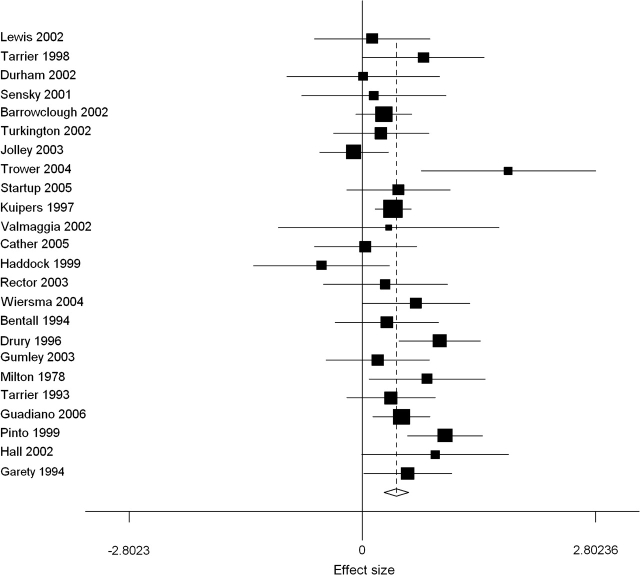
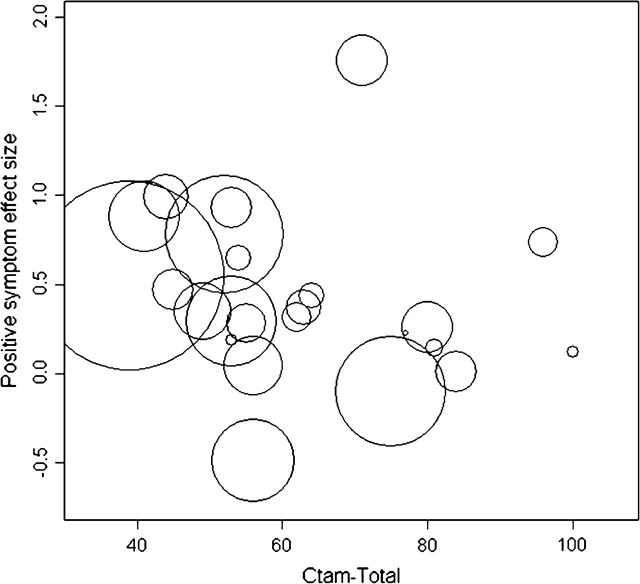
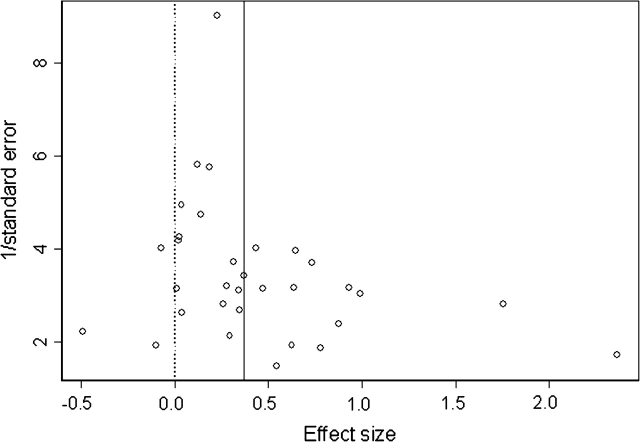
BACKGROUND: Guidance in the United States and United Kingdom has included cognitive behavior therapy for psychosis (CBTp) as a preferred therapy. But recent advances have widened the CBTp targets to other symptoms and have different methods of provision, eg, in groups. AIM: To explore the effect sizes of current CBTp trials including targeted and nontargeted symptoms, modes of action, and effect of methodological rigor. METHOD: Thirty-four CBTp trials with data in the public domain were used as source data for a meta-analysis and investigation of the effects of trial methodology using the Clinical Trial Assessment Measure (CTAM). RESULTS: There were overall beneficial effects for the target symptom (33 studies; effect size = 0.400 [95% confidence interval [CI] = 0.252, 0.548]) as well as significant effects for positive symptoms (32 studies), negative symptoms (23 studies), functioning (15 studies), mood (13 studies), and social anxiety (2 studies) with effects ranging from 0.35 to 0.44. However, there was no effect on hopelessness. Improvements in one domain were correlated with improvements in others. Trials in which raters were aware of group allocation had an inflated effect size of approximately 50%-100%. But rigorous CBTp studies showed benefit (estimated effect size = 0.223; 95% CI = 0.017, 0.428) although the lower end of the CI should be noted. Secondary outcomes (eg, negative symptoms) were also affected such that in the group of methodologically adequate studies the effect sizes were not significant. CONCLUSIONS: As in other meta-analyses, CBTp had beneficial effect on positive symptoms. However, psychological treatment trials that make no attempt to mask the group allocation are likely to have inflated effect sizes. Evidence considered for psychological treatment guidance should take into account specific methodological detail.
Overview
The claims and statistics of this paper haven’t been checked yet.
Free: it reads the open-access text and checks the first 5 claims that cite a source we can check. Create a free account to check every claim.
Integrity signals
Registry
Cites
Statistics
Figures
Verification
Claims the paper makes
The claims and statistics of this paper haven’t been checked yet.
Free: it reads the open-access text and checks the first 5 claims that cite a source we can check. Create a free account to check every claim.
Claims other papers make about this one
Each is checked against this paper’s own text: does it say what the citing paper says it does?
The cited source doesn’t support the claim as written.
In the citing paper
“The primary outcome was change in positive symptom severity at the end of treatment and at follow-up”
From A systematic review and meta-analysis of cognitive behavioural informed psychological interventions for psychiatric inpatients with psychosis (2020) · cites this paper as Wykes et al., 2008
Checked by a reasoning model — may be wrong.
Experimental — accuracy not yet measuredThe source backs part of the claim, not all of it — or backs it for a different population, condition or comparison.
In the citing paper
“Combining medication with evidence-based psychotherapy produces clinically significant improvement over medications alone for severe depression and psychotic disorders.9,10”
From Acceptance-based Behavior Therapy for Depression With Psychosis (2015) · cites this paper as [10]
Experimental — accuracy not yet measuredThe source backs part of the claim, not all of it — or backs it for a different population, condition or comparison.
In the citing paper
“Psychological therapies have demonstrated to be effective for patients experiencing psychotic symptoms (1, 2) and are recommended by treatment guidelines already in the acute illness and treatment phase (3, 4).”
From Developing a mechanism-based therapy for acute psychiatric inpatients with psychotic symptoms: an Intervention Mapping approach (2023) · cites this paper as [1]
Experimental — accuracy not yet measuredThe source backs part of the claim, not all of it — or backs it for a different population, condition or comparison.
In the citing paper
“There is limited evidence supporting the use of pharmacological and psychological interventions for depression in the context of schizophrenia (Whitehead et al. 2002; Wykes et al., 2008).”
From Acceptance and Commitment Therapy for depression following psychosis: An examination of clinically significant change (2015) · cites this paper as Wykes et al., 2008
Experimental — accuracy not yet measuredThe source backs part of the claim, not all of it — or backs it for a different population, condition or comparison.
In the citing paper
“Although effective at treating positive symptoms, Cognitive Behavioural Therapy for psychosis (CBTp) is less effective for treating emotional dysfunction associated with psychosis such as depression, hopelessness and suicide risk (Birchwood, 2003; Wykes et al., 2008; Tarrier et al., 2006).”
From Acceptance and Commitment Therapy for depression following psychosis: An examination of clinically significant change (2015) · cites this paper as Wykes et al., 2008
Experimental — accuracy not yet measured
4 more claims about this paper
Create a free account to see every claim other papers make about this one.
Self-check
Percentages, sums and reported differences re-computed from the paper’s own numbers.
The self-check needs the paper’s full text.
Citations
Cites
1 retracted
Cognitive behaviour therapy for schizophrenia
Jones, C., Cormac, I., Silveira da Mota Neto, J. I., & Campbell, C. (2004) · Cochrane Database of Systematic Reviews · doi:10.1002/14651858.cd000524.pub2 · Cited by 269
RetractedAssessing the quality of reports of randomized clinical trials: Is blinding necessary?
Jadad, A. R., Moore, R. A., Carroll, D., Jenkinson, C., Reynolds, D. J. M., Gavaghan, D. J., & McQuay, H. J. (1996) · Controlled Clinical Trials · doi:10.1016/0197-2456(95)00134-4 · Cited by 17,582 · cited 1×
“In addition, concurrent validity was assessed within an initial 22 studies by correlation with the scores from 3 other scales devised to assess methodological rigor.(42,43,52) The correlations of these scales with the CTAM scores on the corpus of CBTp data were as follows: CTAM and Jadad, q = .”
MethodZhang, Q., Wang, C., Zheng, M., Li, Y., Li, J., Zhang, L., Shang, X., & Yan, C. (2015) · Cerebrovascular Diseases · doi:10.1159/000369778 · Cited by 11,533
Schulz (1995) · doi:10.1001/jama.1995.03520290060030 · Cited by 5,634
Dong, Y., Hao, L., Shi, Z., Wang, G., Zhang, Z., & Han, C. (2013) · Urologia Internationalis · doi:10.1159/000351405 · Cited by 4,540
The Revised CONSORT Statement for Reporting Randomized Trials: Explanation and Elaboration
Altman, D. G., Schulz, K. F., Moher, D., Egger, M., Davidoff, F., Elbourne, D., Gøtzsche, P. C., Lang, T., & for the CONSORT Group (2001) · Annals of Internal Medicine · doi:10.7326/0003-4819-134-8-200104170-00012 · Cited by 3,835
The Handbook of Research Synthesis.
Howel, D., Cooper, H., & Hedges, L. V. (1995) · Biometrics · doi:10.2307/2533295 · Cited by 3,642
Moher, D., Pham, B., Jones, A., Cook, D. J., Jadad, A. R., Moher, M., Tugwell, P., & Klassen, T. P. (1998) · The Lancet · doi:10.1016/s0140-6736(98)01085-x · Cited by 3,560 · cited 1×
“For instance, poorer quality masking of allocation of treatments has been shown to be associated with up to 40% increased estimate of benefit in circulatory and digestive diseases, mental health, obstetrics, and childbirth.(36,37)”
BackgroundAssessing the quality of controlled clinical trials
Jüni, P., Altman, D. G., & Egger, M. (2001) · BMJ · doi:10.1136/bmj.323.7303.42 · Cited by 3,309
Improving the Quality of Reporting of Randomized Controlled Trials: The CONSORT Statement
Begg, C. (1996) · JAMA · doi:10.1001/jama.1996.03540080059030 · Cited by 3,127
Research works printed but not linked: 1
- [24]NICE Schizophrenia: Core interventions in the Treatment and Management of Schizophrenia in Primary and Secondary Care 2003 20704054
Cited by
Items 201–300 of 997
Recent advances in understanding schizophrenia
Haller, C. S., Padmanabhan, J. L., Lizano, P. L., Torous, J. B., & Keshavan, M. S. (2014) · F1000Prime Reports · doi:10.12703/p6-57 · Cited by 82
“Research shows that CBT can improve positive symptoms [103, 104] but is less consistent with the improvement of negative symptoms [105, 106].”
BackgroundDrake, R. J., Day, C. J., Picucci, R., Warburton, J., Larkin, W., Husain, N., Reeder, C., Wykes, T., & Marshall, M. (2014) · Psychological Medicine · doi:10.1017/s0033291713002559 · Cited by 58
“…performance or employment rates are affected by open rating, previous metaanalysis of CBTp suggests that symptoms are sensitive, since limiting inclusion to studies with masking and other rigorous design features diminished CBTp’s effect size from 0.40 to 0.22 (Wykes et al. 2008).”
BackgroundInfluentialSelf-citationMetacognitive therapy in treatment-resistant psychosis: a multiple-baseline study.
Hutton, P., Morrison, A. P., Wardle, M., & Wells, A. (2014) · Behavioural and Cognitive Psychotherapy · doi:10.1017/s1352465812001026 · Cited by 58
“Given that use of non-blinded assessors is associated with inflated estimates of effect size in clinical trials of CBT for psychosis (Wykes et al., 2008), future studies of MCT for psychosis should, if the design allows, employ independent and blinded raters.”
BackgroundHugdahl, K., Nygård, M., Falkenberg, L. E., Kompus, K., Westerhausen, R., Kroken, R. A., Johnsen, E., & Løberg, E. (2013) · Schizophrenia Research · doi:10.1016/j.schres.2013.04.005 · Cited by 62
“The results showed significant improvements also after a 12 month period (see also Shergill et al., 1998; Wykes et al., 2008; Sommer et al., 2012).”
BackgroundNaeem, F., Habib, N., Gul, M., Khalid, M., Saeed, S., Farooq, S., Munshi, T., Gobbi, M., Husain, N., Ayub, M., et al. (2016) · Behavioural and Cognitive Psychotherapy · doi:10.1017/s1352465814000332 · Cited by 58
Thase, M. E., Kingdon, D., & Turkington, D. (2014) · World Psychiatry · doi:10.1002/wps.20149 · Cited by 58
“In one of the most influential metaanalyses, Wykes et al (6) found an average effect size for target symptom (33 studies) of 0.”
BackgroundInfluentialMindfulness interventions for psychosis: a systematic review of the literature
Aust, J., & Bradshaw, T. (2017) · Journal of Psychiatric and Mental Health Nursing · doi:10.1111/jpm.12357 · Cited by 57
Thomas, N., Rossell, S., Farhall, J., Shawyer, F., & Castle, D. (2011) · Behavioural and Cognitive Psychotherapy · doi:10.1017/s1352465810000548 · Cited by 57
“…has become established as an evidence-based treatment for reducing the emotional and behavioural impact of medication-resistant psychotic phenomena such as hallucinations and delusions in schizophrenia (National Institute for Clinical Excellence, 2009; Wykes, Steel, Everitt and Tarrier, 2008).”
Trauelsen, A. M., Gumley, A. I., Jansen, J. E., Pedersen, M. B., Nielsen, H. L., Trier, C. H., Haahr, U., & Simonsen, E. H. (2016) · Psychiatry Research · doi:10.1016/j.psychres.2016.02.003 · Cited by 69
“Positive and negative symptoms are defining features of psychosis; to date, negative symptoms have remained largely unaffected by both pharmacological and psychosocial interventions (Blanchard et al., 2011, 2005; Jordan et al., 2014; Kirkpatrick et al., 2006; Wykes et al., 2008).”
BackgroundHabib, N., Dawood, S., Kingdon, D., & Naeem, F. (2015) · Behavioural and Cognitive Psychotherapy · doi:10.1017/s1352465813000829 · Cited by 55
Bucci, S., Barrowclough, C., Ainsworth, J., Morris, R., Berry, K., Machin, M., Emsley, R., Lewis, S., Edge, D., Buchan, I., et al. (2015) · Trials · doi:10.1186/s13063-015-0943-3 · Cited by 55
“Wykes and colleagues [6] carried out a meta-analytic review of 34 cognitive behaviour therapy (CBT) trials targeting people with a schizophrenia-related diagnosis across various countries.”
BackgroundResultCella, M., Reeder, C., & Wykes, T. (2015) · Frontiers in Psychology · doi:10.3389/fpsyg.2015.01259 · Cited by 55
Self-citationValiente, C., Espinosa, R., Trucharte, A., Nieto, J., & Martínez-Prado, L. (2019) · Schizophrenia Research · doi:10.1016/j.schres.2019.01.040 · Cited by 65
Zink, M. (2014) · Advances in Medicine · doi:10.1155/2014/317980 · Cited by 61
“[8] T.”
Fowler, D., Hodgekins, J., & French, P. (2019) · Schizophrenia Research · doi:10.1016/j.schres.2017.10.006 · Cited by 53
Strauss, C., Thomas, N., & Hayward, M. (2015) · Frontiers in Psychology · doi:10.3389/fpsyg.2015.01154 · Cited by 53
“…psychological therapeutic approach to working with people distressed by hearing voices has been cognitive behavioral therapy for psychosis (CBTp) which has been evaluated in a large number of randomized controlled trials and subsequent meta-analyses (Wykes et al., 2008; van der Gaag et al., 2014).”
BackgroundLysaker, P. H., Roe, D., & Buck, K. D. (2010) · Journal of the American Psychiatric Nurses Association · doi:10.1177/1078390309353943 · Cited by 53
Farhall, J., Freeman, N. C., Shawyer, F., & Trauer, T. (2009) · British Journal of Clinical Psychology · doi:10.1111/j.2044-8260.2009.tb00456.x · Cited by 51
Cognitive behavioral therapy of negative symptoms
Perivoliotis, D., & Cather, C. (2009) · Journal of Clinical Psychology · doi:10.1002/jclp.20614 · Cited by 52
“A review determined the mean weighted effect size of CBT on negative symptoms across 34 randomized controlled trials (RCTs) to be .44 ( Wykes, Steel, Everitt, & Tarrier, 2008 ).”
BackgroundA Systematic Review and Meta-Analysis on the Efficacy of Self-Help Interventions in Tinnitus
Nyenhuis, N., Golm, D., & Kröner-Herwig, B. (2013) · Cognitive Behaviour Therapy · doi:10.1080/16506073.2013.803496 · Cited by 53
Emotion Regulation and Schizophrenia
Khoury, B., & Lecomte, T. (2012) · International Journal of Cognitive Therapy · doi:10.1521/ijct.2012.5.1.67 · Cited by 65
“Journal of Clinical Psychology, 65, 499–509. Kee, K. S., Green, M. F., Mintz, J., & Brekke, J. S. (2003). Is emotion processing a predictor of functional outcome in schizophrenia? Schizophrenia Bulletin, 29, 487–497.”
BackgroundInfluentialLincoln, T. M., Jung, E., Wiesjahn, M., & Schlier, B. (2016) · European Psychiatry · doi:10.1016/j.eurpsy.2016.05.004 · Cited by 51
“The effectiveness of CBT for psychosis (CBTp) for improving symptoms is well established [1,2] and various international guidelines now recommend to offer CBTp as an adjunct to medical treatment to patients with psychosis [3–5].”
BackgroundThompson, C., de la Cruz, L. F., Mataix‐Cols, D., & Onwumere, J. (2017) · Asian Journal of Psychiatry · doi:10.1016/j.ajp.2017.02.020 · Cited by 62
“The CTAM was designed specifically to assess the methodological quality of psychological treatments (Tarrier and Wykes, 2004; Wykes et al., 2008).”
BackgroundInfluentialRiehle, M., Böhl, M. C., Pillny, M., & Lincoln, T. M. (2020) · Clinical Psychology in Europe · doi:10.32872/cpe.v2i3.2899 · Cited by 51
“For example for CBTp, only 3 out of 30 studies (Velthorst et al., 2015; Wykes et al., 2008) specifically targeted negative symptoms.”
BackgroundMethodResultKorman, N., Stanton, R., Vecchio, A., Chapman, J., Parker, S., Martland, R., Siskind, D. J., & Firth, J. (2023) · Schizophrenia Research · doi:10.1016/j.schres.2023.04.012 · Cited by 62
Orfanos, S., Banks, C., & Priebe, S. (2015) · Psychotherapy and Psychosomatics · doi:10.1159/000377705 · Cited by 51
“Whilst Wykes and colleagues [67] found no difference in the two treatment modalities, the validity of this comparison is limited by the fact that only seven group CBT studies were compared to 26 studies on individual CBT.”
ResultNeural correlates of cognitive impairment in schizophrenia
Ortiz‐Gil, J., Pomarol‐Clotet, E., Salvador, R. M., Canales-Rodríguez, E. J., Sarró, S., Gomar, J. J., Guerrero, A., Sans-Sansa, B., Capdevila, A., Junqué, C., et al. (2011) · The British Journal of Psychiatry · doi:10.1192/bjp.bp.110.083600 · Cited by 55
Effects of online intervention for depression on mood and positive symptoms in schizophrenia
Moritz, S., Schröder, J., Klein, J. P., Lincoln, T. M., Andreou, C., Fischer, A., & Arlt, S. (2016) · Schizophrenia Research · doi:10.1016/j.schres.2016.04.033 · Cited by 49
“Cognitivebehavioral therapy (CBT) yields a small to medium effect size (0.36) for the improvement of mood (Wykes et al., 2008).”
InfluentialTime for a separate psychosis caregiver service?
Kuipers, E. (2010) · Journal of Mental Health · doi:10.3109/09638237.2010.510155 · Cited by 51
“The success of family interventions then helped in the subsequent development of individual CBT work for psychosis, which has also been shown to improve service user outcomes, without adverse effects (Wykes et al., 2008).”
BackgroundVan Roekel, E., Vrijen, C., Heininga, V. E., Masselink, M., Bos, E. H., & Oldehinkel, A. J. (2017) · Behavior Therapy · doi:10.1016/j.beth.2016.09.009 · Cited by 50
Gottlieb, J. D., Gidugu, V., Maru, M., Tepper, M. C., Davis, M. J., Greenwold, J., Barron, R. A., Chiko, B. P., & Mueser, K. T. (2017) · Psychiatric Rehabilitation Journal · doi:10.1037/prj0000258 · Cited by 48
“Furthermore, CBTp has been found to improve social functioning (Wykes et al., 2008), and recent research indicates that CBTp may reduce such beliefs and improve negative symptoms and social functioning (Granholm, Holden, Link, McQuaid, & Jeste, 2013).”
BackgroundWickham, S., Shryane, N., Lyons, M., Dickins, T., & Bentall, R. (2014) · Journal of Public Mental Health · doi:10.1108/jpmh-06-2013-0049 · Cited by 48
Li, Z.-J., Guo, Z.-H., Wang, N., Xu, Z.-Y., Qu, Y., Wang, X.-Q., Sun, J., Yan, L.-Q., Ng, R. M. K., Turkington, D., et al. (2015) · Psychological Medicine · doi:10.1017/s0033291714002992 · Cited by 49
“have a beneficial effect on positive and negative symptoms, mood, social functioning and social anxiety and may be effective in reducing readmissions to hospital and duration of admission in Western clinical practice (Lysaker et al. 2004; Wykes et al. 2008).”
BackgroundMethodAssessment of subjective cognitive and emotional effects of antipsychotic drugs. Effect by defect?
Moritz, S., Andreou, C., Klingberg, S., Thoering, T., & Peters, M. J. V. (2013) · Neuropharmacology · doi:10.1016/j.neuropharm.2013.04.039 · Cited by 60
“First, cognitive behavioral therapy (CBT; Klingberg et al., 2010b; Lincoln et al., 2008; Sarin et al., 2011; Wykes et al., 2008) focuses on challenging beliefs associated with delusional ideas and hallucinations as well as on stress reduction and emotion regulation (Klingberg et al.”
BackgroundTailoring Cognitive Behavioral Therapy to Subtypes of Voice-Hearing
Smailes, D., Alderson-Day, B., Fernyhough, C., McCarthy-Jones, S., & Dodgson, G. (2015) · Frontiers in Psychology · doi:10.3389/fpsyg.2015.01933 · Cited by 49
Nowak, I., Sabariego, C., Świtaj, P., & Anczewska, M. (2016) · BMC Psychiatry · doi:10.1186/s12888-016-0912-8 · Cited by 73
“[17] improvements in positive symptoms were correlated with improvements in negative symptoms but did not quite reach significance with regards to improved global functioning among people with schizophrenia spectrum disorders.”
BackgroundTurner, D. T., Reijnders, M., van der Gaag, M., Karyotaki, E., Valmaggia, L., Moritz, S., Lecomte, T., Turkington, D., Penadés, R., Elkis, H., et al. (2020) · Frontiers in Psychiatry · doi:10.3389/fpsyt.2020.00402 · Cited by 59
“In instances of multi-scale use, we selected the main outcome using the following rank order: (1) PANSS; (2) BPRS; (3) SANS.”
BackgroundMethodSönmez, N., Romm, K. L., Østefjells, T., Grande, M., Jensen, L. H., Hummelen, B., Tesli, M., Melle, I. S., & Røssberg, J. I. (2019) · Comprehensive Psychiatry · doi:10.1016/j.comppsych.2019.152157 · Cited by 60
“[59] report a small to moderate effect of CBT for psychosis on depressive symptoms, but depression was not a primary outcome in any of the studies they identified and included.”
BackgroundDelusional evidence-responsiveness
Flores, C. (2021) · Synthese · doi:10.1007/s11229-021-03070-2 · Cited by 74
The evidence base of Acceptance and Commitment Therapy (ACT) in psychosis: A systematic review
Wakefield, S., Roebuck, S., & Boyden, P. (2018) · Journal of Contextual Behavioral Science · doi:10.1016/j.jcbs.2018.07.001 · Cited by 48
Edge, D., Degnan, A., Cotterill, S., Berry, K., Baker, J. A., Drake, R., & Abel, K. M. (2018) · Health Services and Delivery Research · doi:10.3310/hsdr06320 · Cited by 56
A systematic review of moderators of cognitive remediation response for people with schizophrenia
Seccomandi, B., Tsapekos, D., Newbery, K., Wykes, T., & Cella, M. (2019) · Schizophrenia Research Cognition · doi:10.1016/j.scog.2019.100160 · Cited by 55
“The maximum score is 100 and studies with a CTAM score 65 are considered at higher risk of bias (Wykes et al., 2008).”
InfluentialSelf-citationKilbride, M., Byrne, R. E., Price, J., Wood, L., Barratt, S., Welford, M., & Morrison, A. P. (2012) · Behavioural and Cognitive Psychotherapy · doi:10.1017/s1352465812000495 · Cited by 58
Beyond Antipsychotics: Pharmacologically-Augmented Cognitive Therapies (PACTs) for Schizophrenia
Swerdlow, N. R. (2011) · Neuropsychopharmacology · doi:10.1038/npp.2011.195 · Cited by 48
“…therapies, broadly including cognitive-behavioral and neurorehabilitative therapies and cognitive training, may reduce symptoms and restore function in schizophrenia (McGurk et al, 2007; and Wykes et al, 2008) by engaging healthy neural systems to learn adaptive cognitive and behavioral strategies.”
Vilardaga, R., Hayes, S. C., Atkins, D. C., Bresee, C., & Kambiz, A. (2013) · Behaviour Research and Therapy · doi:10.1016/j.brat.2013.04.003 · Cited by 47
Jumping to conclusions: the psychology of delusional reasoning
Garety, P. A., Freeman, D. H., Jolley, S., Ross, K., Waller, H., & Dunn, G. (2011) · Advances in Psychiatric Treatment · doi:10.1192/apt.bp.109.007104 · Cited by 58
McGurk, S. R., Mueser, K. T., Covell, N. H., Cicerone, K. D., Drake, R. E., Silverstein, S. M., Medialia, A., Myers, R., Bellack, A. S., Bell, M. D., et al. (2013) · Psychiatric Rehabilitation Journal · doi:10.1037/prj0000020 · Cited by 58
“" As with many other interventions for people with serious mental illnesses (e.g., cognitive– behavioral therapy for psychosis; Wykes et al., 2008), there is no definitive answer to this question.”
Klingberg, S., Herrlich, J., Wiedemann, G., Wölwer, W., Meisner, C., Engel, C., Jakobi-Malterre, U. E., Buchkremer, G., & Wittorf, A. (2012) · Journal of Nervous & Mental Disease · doi:10.1097/nmd.0b013e31825bfa1d · Cited by 47
“According to Wykes et al. (2008), even studies that apply rigorous methodology with respect to efficacy did not report a systematic assessment of adverse events or negative outcomes (Lewis et al., 2002; Sensky et al., 2000; Tarrier et al., 1998; Valmaggia et al., 2005).”
BackgroundResultTsapekos, D., Seccomandi, B., Mantingh, T., Cella, M., Wykes, T., & Young, A. H. (2019) · Bipolar Disorders · doi:10.1111/bdi.12848 · Cited by 50
Self-citationMindfulness and relaxation treatment reduce depressive symptoms in individuals with psychosis
Moritz, S., Cludius, B., Hottenrott, B., Schneider, B. C., Saathoff, K., Kuelz, A. K., & Gallinat, J. (2015) · European Psychiatry · doi:10.1016/j.eurpsy.2015.05.002 · Cited by 46
“The dearth of psychotherapy in psychosis is not an issue of evidence [53,57], but rather of dissemination [7,50].”
BackgroundExperiential avoidance and appraisals of voices as predictors of voice‐related distress
Varese, F., Morrison, A. P., Beck, R., Heffernan, S., Law, H., & Bentall, R. P. (2016) · British Journal of Clinical Psychology · doi:10.1111/bjc.12102 · Cited by 45
Mc Glanaghy, E., Turner, D., Davis, G. A., Sharpe, H., Dougall, N., Morris, P., Prentice, W., & Hutton, P. (2021) · Schizophrenia Research · doi:10.1016/j.schres.2020.12.036 · Cited by 46
Motivational Deficits and Negative Symptoms in Schizophrenia: Concepts and Assessments
Reddy, L. F., Horan, W. P., & Green, M. F. (2015) · Current topics in behavioral neurosciences · doi:10.1007/7854_2015_379 · Cited by 58
Mapping autobiographical memory in schizophrenia: Clinical implications
Ricarte, J. J., Ros, L., Latorre, J. M., & Watkins, E. (2017) · Clinical Psychology Review · doi:10.1016/j.cpr.2016.11.004 · Cited by 45
Nonadherence to antipsychotics: The role of positive attitudes towards positive symptoms
Moritz, S., Hünsche, A., & Lincoln, T. M. (2014) · European Neuropsychopharmacology · doi:10.1016/j.euroneuro.2014.09.008 · Cited by 54
Cognitive-Behavioral Therapy of Schizophrenia
Kingdon, D., Turkington, D., & Friedberg, R. D. (1996) · Journal of Cognitive Psychotherapy · doi:10.1891/0889-8391.10.2.153 · Cited by 45
Wood, L., Burke, E., & Morrison, A. P. (2013) · Behavioural and Cognitive Psychotherapy · doi:10.1017/s1352465813000970 · Cited by 56
Fernández‐Caballero, A., Navarro, E., Fernández-Sotos, P., González, P., Ricarte, J. J., Latorre, J. M., & Rodríguez–Jiménez, R. (2017) · Frontiers in Neuroinformatics · doi:10.3389/fninf.2017.00064 · Cited by 50
“In this context, given the relative stagnation in the last decades of pharmacological alternatives focused on the dopaminergic system, proposals based on non-pharmacological strategies have acquired new value (Wykes et al., 2008).”
BackgroundTe evidence-based psychotherapy of psychoses: current analysis of the problem
Давыдович, В. В., & Lutova, N. B. (2019) · V M BEKHTEREV REVIEW OF PSYCHIATRY AND MEDICAL PSYCHOLOGY · doi:10.31363/2313-7053-2018-4-12-16 · Cited by 44
Ganguly, P., Soliman, A. M., & Moustafa, A. A. (2018) · Frontiers in Public Health · doi:10.3389/fpubh.2018.00166 · Cited by 60
“(113) in the United States and United Kingdom, it has been found that CBT is more preferred than other behavioral therapies.”
Backgroundvan der Gaag, M., Stant, A. D., Wolters, K. J. K., Buskens, E., & Wiersma, D. (2011) · British Journal of Psychiatry · doi:10.1192/bjp.bp.109.071522 · Cited by 44
Dubreucq, J., Haesebaert, F., Plasse, J., Dubreucq, M., & Franck, N. (2022) · Journal of Autism and Developmental Disorders · doi:10.1007/s10803-021-05058-w · Cited by 49
Steel, C., Wykes, T., Ruddle, A., Smith, G. M., Shah, D. M., & Holmes, E. A. (2010) · Psychiatry Research · doi:10.1016/j.psychres.2010.04.042 · Cited by 48
“It is perhaps not surprising that the majority of cognitive behavioral therapy protocols developed for use with individuals diagnosed with schizophrenia are directly aimed at the reduction of positive symptoms (Wykes et al., 2008).”
BackgroundSelf-citationLecardeur, L., Stip, É., Giguère, M., Blouin, G., Rodriguez, J.-P., & Champagne‐Lavau, M. (2009) · Schizophrenia Research · doi:10.1016/j.schres.2009.03.029 · Cited by 53
“Several studies are now demonstrating that improvement of mental flexibility is related to a decline of symptoms in patients with schizophrenia (Wykes et al., 2003, 2007, 2008; Reeder et al., 2004, 2006).”
BackgroundBalzan, R. P., Mattiske, J. K., Delfabbro, P., Liu, D., & Galletly, C. A. (2018) · Schizophrenia Bulletin · doi:10.1093/schbul/sby152 · Cited by 51
“050 BACS Digit Sequencing Time F(2,100) = 4.”
BackgroundMethodInfluentialBöge, K., Hahne, I., Bergmann, N., Wingenfeld, K., Zierhut, M., Thomas, N., Ta, T. M. T., Bajbouj, M., & Hahn, E. (2021) · Schizophrenia Research · doi:10.1016/j.schres.2020.12.008 · Cited by 44
Morris, E. M. J., Johns, L., & Gaudiano, B. A. (2023) · Psychology and Psychotherapy Theory Research and Practice · doi:10.1111/papt.12479 · Cited by 53
Individualized metacognitive therapy for delusions: A randomized controlled rater-blind study
Andreou, C., Wittekind, C. E., Fieker, M., Heitz, U., Veckenstedt, R., Bohn, F., & Moritz, S. (2016) · Journal of Behavior Therapy and Experimental Psychiatry · doi:10.1016/j.jbtep.2016.11.013 · Cited by 54
“Having provided a wide empirical basis supporting its efficacy in treating delusions (Hutton and Taylor, 2014; Turner et al., 2014; Wykes et al., 2008), CBT was one of the first psychological interventions to be included in treatment guidelines for psychosis.”
BackgroundGroup therapy for schizophrenia: A meta-analysis.
Burlingame, G. M., Svien, H., Hoppe, L., Hunt, I. J., & Rosendahl, J. (2020) · Psychotherapy · doi:10.1037/pst0000293 · Cited by 46
The Effects of Mindfulness-Based Interventions on Suicide Outcomes: A Meta-Analysis
Schmelefske, E., Per, M., Khoury, B., & Heath, N. L. (2020) · Archives of Suicide Research · doi:10.1080/13811118.2020.1833796 · Cited by 42
Allott, K., Álvarez‐Jiménez, M., Killackey, E. J., Bendall, S., McGorry, P. D., & Jackson, H. J. (2011) · Schizophrenia Research · doi:10.1016/j.schres.2011.08.011 · Cited by 50
“symptoms, as well as functional outcomes (Gould et al., 2001; Pilling et al., 2002; Zimmermann et al., 2005; Pfammatter et al., 2006; Wykes et al., 2008), but not all reviews have been positive (Jones et al.”
Wykes, T., Bowie, C. R., & Cella, M. (2024) · Schizophrenia Bulletin · doi:10.1093/schbul/sbae075 · Cited by 47
“39 However, this has not prevented CBTp being included in treatment guidance, and in some it is also a mandated treatment.”
BackgroundSelf-citationLu, W., Yanos, P. T., Gottlieb, J. D., Duva, S. M., Silverstein, S. M., Xie, H., Rosenberg, S. D., & Mueser, K. T. (2012) · Psychiatric Services · doi:10.1176/appi.ps.201000458 · Cited by 41
Priebe, S., Golden, E., Kingdon, D., Omer, S., Walsh, S., Katevas, K., McCrone, P., Eldridge, S. M., & McCabe, R. (2017) · Programme Grants for Applied Research · doi:10.3310/pgfar05060 · Cited by 51
“Characteristics Missing data, n (%) Group Total (N= 179) Intervention (N= 94) Control (N= 85) Gender, n (%) 0 (0) Female 28 (30) 28 (33) 56 (31) Male 66 (70) 57 (67) 123 (68) Ethnicity, n (%) 0 (0) White 23 (24) 23 (27) 46 (26) Black 38 (40) 32 (38) 70 (39) Asian 28 (30) 21 (25) 49 (27) Mixed/other 5 (5) 9 (11) 14 (8)…”
Negative symptoms of psychosis: A life course approach and implications for prevention and treatment
Lyne, J., O'Donoghue, B. N., Roche, E., Renwick, L., Cannon, M. D., & Clarke, M. (2017) · Early Intervention in Psychiatry · doi:10.1111/eip.12501 · Cited by 51
Swerdlow, N. R. (2010) · Current topics in behavioral neurosciences · doi:10.1007/7854_2010_48 · Cited by 43
Cognitive Behaviour Therapy for Psychotic Symptoms: A Randomized Controlled Effectiveness Trial
Kråkvik, B., Gråwe, R. W., Hagen, R., & Stiles, T. C. (2013) · Behavioural and Cognitive Psychotherapy · doi:10.1017/s1352465813000258 · Cited by 41
“Based on the results of several reviews and meta-analyses CBTp has been recommended as a psychosocial treatment for persons suffering from persistent psychotic symptoms (Dickerson, 2004; Gaudiano, 2005; Jones, Cormac, Silveira and Campbell, 2010; Pfammatter, Junghan and Brenner, 2006; Pilling et al., 2002; Rathod, Kin…”
ResultLewandowski, K. E., Ongur, D., & Keshavan, M. S. (2018) · Schizophrenia Research · doi:10.1016/j.schres.2017.06.010 · Cited by 40
“For example, studies of CBT for psychosis (CBTp) have shown that most interventions are moderately effective (Wykes et al., 2008), but may not differ in terms of symptom reduction from other psychosocial interventions (Jones et al.”
BackgroundRüegg, N., Moritz, S., Berger, T., Lüdtke, T., & Westermann, S. (2018) · BMC Psychiatry · doi:10.1186/s12888-018-1644-8 · Cited by 43
Khazaal, Y., Chatton, A., Dieben, K., Huguelet, P., Boucherie, M., Monney, G., Lecardeur, L., Salamin, V., Bretel, F., Azoulay, S., et al. (2015) · Frontiers in Psychiatry · doi:10.3389/fpsyt.2015.00066 · Cited by 45
Moritz, S., Voigt, M., Köther, U., Leighton, L., Kjahili, B., Babur, Z., Jungclaussen, D., Veckenstedt, R., & Grzella, K. (2013) · Journal of Behavior Therapy and Experimental Psychiatry · doi:10.1016/j.jbtep.2013.11.005 · Cited by 47
Entwicklungsprozess der DGPPN-Qualitätsindikatoren
Großimlinghaus, I., Falkai, P., Gäebel, W., Janssen, B., Reich‐Erkelenz, D., Wobrock, T., & Zielasek, J. (2013) · Der Nervenarzt · doi:10.1007/s00115-012-3705-4 · Cited by 47
So, S. H.-W., Chan, A. P., Chong, C. S.-Y., Wong, M. H.-M., Lo, W. T.-L., Chung, D. W.-S., & Chan, S. S. (2015) · Frontiers in Psychology · doi:10.3389/fpsyg.2015.00730 · Cited by 39
“…therapy for psychosis (CBTp) to be effective in reducing treatment-resistant psychotic symptoms as well as depression in association with psychosis (Tarrier and Wykes, 2004; Garety et al., 2008; Wykes et al., 2008; National Institute of Clinical Excellence [NICE], 2014; Turner et al., 2014).”
BackgroundMoritz, S., Thoering, T., Kühn, S., Willenborg, B., Westermann, S., & Nagel, M. (2015) · Frontiers in Psychology · doi:10.3389/fpsyg.2015.01048 · Cited by 45
“Likewise, psychotherapy with cognitive-behavioral therapy only yields a small-to-medium effect according to a meta-analysis (Wykes et al., 2008).”
BackgroundEffects of Multidimensional Treatment Foster Care on Psychotic Symptoms in Girls
Poulton, R., Ryzin, M. J. V., Harold, G. T., Chamberlain, P., Fowler, D. G., Cannon, M. D., Arseneault, L., & Leve, L. D. (2014) · Journal of the American Academy of Child & Adolescent Psychiatry · doi:10.1016/j.jaac.2014.08.014 · Cited by 44
Morrison, A. P., Turkington, D., Wardle, M., Spencer, H., Barratt, S., Dudley, R., Brabban, A., & Hutton, P. (2012) · Behaviour Research and Therapy · doi:10.1016/j.brat.2011.12.001 · Cited by 39
Treating depressive episodes or symptoms in patients with schizophrenia
van Rooijen, G., Vermeulen, J. M., Ruhé, H. G., & de Haan, L. (2017) · CNS Spectrums · doi:10.1017/s1092852917000554 · Cited by 47
What Community Living Problems Do Persons With Schizophrenia Report During Periods of Stability?
Beebe, L. H. (2009) · Perspectives In Psychiatric Care · doi:10.1111/j.1744-6163.2009.00237.x · Cited by 50
Vocational functioning in schizotypal and paranoid personality disorders
McGurk, S. R., Mueser, K. T., Mischel, R., Adams, R., Harvey, P. D., McClure, M. M., Look, A. E., Leung, W. W.-M., & Siever, L. J. (2013) · Psychiatry Research · doi:10.1016/j.psychres.2013.06.019 · Cited by 42
“Finally, the effects of symptoms on work functioning could be reduced by teaching coping skills for reducing stress and dealing with anxiety or upsetting thoughts, such as in the illness management and recovery program (Mueser and Gingerich, 2013), or cognitive behavioral therapy for psychosis focused on helping indiv…”
Morgan, A. J., Jorm, A. F., & Reavley, N. J. (2013) · Australian & New Zealand Journal of Psychiatry · doi:10.1177/0004867413490035 · Cited by 37
“Delivered in addition to usual care, CBT has evidence supporting its modest effect on positive symptoms, negative symptoms and functioning (Wykes et al., 2008), though a recent review suggests it may not be any more effective than nonspecific supportive therapy (Newton-Howes and Wood, 2011).”
BackgroundTonarelli, S. B., & Pasillas, R. (2016) · Journal of psychiatry · doi:10.4172/2378-5756.1000366 · Cited by 38
“Cognitive-behavioral and family therapies [6-8] have been shown to produce benefits beyond medications alone.”
BackgroundKimhy, D., Tarrier, N., Essock, S. M., Malaspina, D., Cabannis, D., & Beck, A. T. (2012) · Psychosis · doi:10.1080/17522439.2012.704932 · Cited by 41
“, 2008), along with a number of meta-analyses indicating that CBTp produces significant reduction in the severity of psychotic symptoms above and beyond the impact of pharmacological treatments, along with significant improvements in negative symptoms, negative mood, and social anxiety ((Wykes et al., 2008; Tarrier &…”
InfluentialSelf-citationA Temporal Network Approach to Paranoia: A Pilot Study
Contreras, A., Valiente, C., Heeren, A., & Bentall, R. P. (2020) · Frontiers in Psychology · doi:10.3389/fpsyg.2020.544565 · Cited by 39
White, R. G., Gumley, A. I., McTaggart, J., Rattrie, L., McConville, D., Cleare, S., & Mitchell, G. (2013) · Behavioural and Cognitive Psychotherapy · doi:10.1017/s1352465812000239 · Cited by 37
Acceptance-based Behavior Therapy for Depression With Psychosis
GAUDIANO, B. A., BUSCH, A. M., WENZE, S. J., NOWLAN, K., EPSTEIN-LUBOW, G., & MILLER, I. W. (2015) · Journal of Psychiatric Practice · doi:10.1097/pra.0000000000000092 · Cited by 37
Bacon, T., Farhall, J., & Fossey, E. (2014) · Behavioural and Cognitive Psychotherapy · doi:10.1017/s1352465813000209 · Cited by 36
Bryce, S., Sloan, E., Lee, S. J., Ponsford, J. L., & Rossell, S. L. (2016) · Journal of Psychiatric Research · doi:10.1016/j.jpsychires.2016.01.004 · Cited by 44
“In addition, as reported in a meta-analysis byWykes et al. (2008), trial quality has been found to be inversely related to treatment effect sizes in schizophrenia following Cognitive Behavioral Therapy (Wykes et al., 2008).”
BackgroundMethodShame and the psychosis continuum: A systematic review of the literature
Carden, L. J., Saini, P., Seddon, C., Watkins, M., & Taylor, P. J. (2018) · Psychology and Psychotherapy Theory Research and Practice · doi:10.1111/papt.12204 · Cited by 54
Gumley, A. I., Bradstreet, S., Ainsworth, J. D., Allan, S., Álvarez‐Jiménez, M., Birchwood, M. J., Briggs, A. H., Bucci, S., Cotton, S., Engel, L., et al. (2022) · Health Technology Assessment · doi:10.3310/hlze0479 · Cited by 44
Cognitive behavioral therapy for psychosis in clinical practice.
Sivec, H. J., & Montesano, V. L. (2012) · Psychotherapy · doi:10.1037/a0028256 · Cited by 44
“CBT-P for negative symptoms showed modest benefits across studies using TAU and active control groups (Wykes et al., 2008) and no benefit when compared with studies only using active therapy controls (see Lynch et al., 2010).”
BackgroundMethodResultInfluential
Metadata
- Authors
- Wykes, T., Steel, C., Everitt, B., & Tarrier, N.
- Affiliations
- King's College London (GB)
- University of Manchester (GB)
- Venue
- Schizophrenia Bulletin
- Publisher
- Oxford University Press (OUP)
- Published
- 2007-05-04
- Volume
- 34
- Issue
- 3
- Pages
- 523-537
- ISSN
- 0586-7614 (ISSN-L)
- 1745-1701
- PMC
- PMC2632426
- OpenAlex
- W2140526915
- Cited by
- 1,029
- References
- 98
- Citations by year
- 2026: 16 · 2025: 27 · 2024: 29 · 2023: 39 · 2022: 42 · 2021: 39 · 2020: 38 · 2019: 64 · 2018: 59 · 2017: 62 · 2016: 76 · 2015: 73 · 2014: 91 · 2013: 96 · 2012: 87
- FWCI
- 5.68
- Type
- journal article
- Language
- en
- Open access
- hybrid
- doi.org
- Licence
- cc-by-nc
- Locations
- Schizophrenia Bulletin (publishedVersion, cc-by-nc)
- PubMed Central (publishedVersion, cc-by-nc)
- PubMed (publishedVersion)
- Research Explorer (The University of Manchester) (publishedVersion)
- CentAUR (University of Reading) (acceptedVersion)
- Research Portal (King's College London) (submittedVersion, public-domain)
- Topics
- Health Sciences › Medicine › Psychiatry and Mental health › Schizophrenia research and treatment
- Social Sciences › Psychology › Clinical Psychology › Psychotherapy Techniques and Applications
- Social Sciences › Psychology › Clinical Psychology › Psychological Treatments and Assessments
- Keywords
- schizophrenia
- MeSH terms
- Humans, Psychometrics, Schizophrenia, Cognitive Behavioral Therapy
About these checks
Registry, retraction, Cites and statistics results are computed, not judged, with one exception: a printed reference that no index lists is read once by a model before it counts as a citation error. Claims are extracted by a model and kept only when their quote appears verbatim in the text; each cited source is then checked, with a model’s help, for whether it says what the claim relies on. Those verdicts can be wrong — read the claim’s quote and the cited source before relying on one.
Statistics and arithmetic are recomputed, not judged.
Confidence bands are shown only for fields calibrated on our annotated test set. None is calibrated yet, so no band is shown.
What counts as a claim ›How we measure confidence ›How we check this ›
Are you an author, or do you see a problem with this page? Request a review
Data sources
Bibliographic data: Semantic Scholar, OpenAlex, Crossref.
Contains information from the Semantic Scholar Academic Graph Datasets, made available under the ODC Attribution License (ODC-BY 1.0).
Semantic Scholar’s data is described in: Kinney, R., et al. (2023). The Semantic Scholar Open Data Platform. arXiv:2301.10140.
