

. Cognitive behavior therapy for schizophrenia: effect sizes, clinical models, and methodological rigor.
Open accessThe DOI matches its Crossref record; 98 of the 98 references it cites were found in a registry or an index.
Abstract
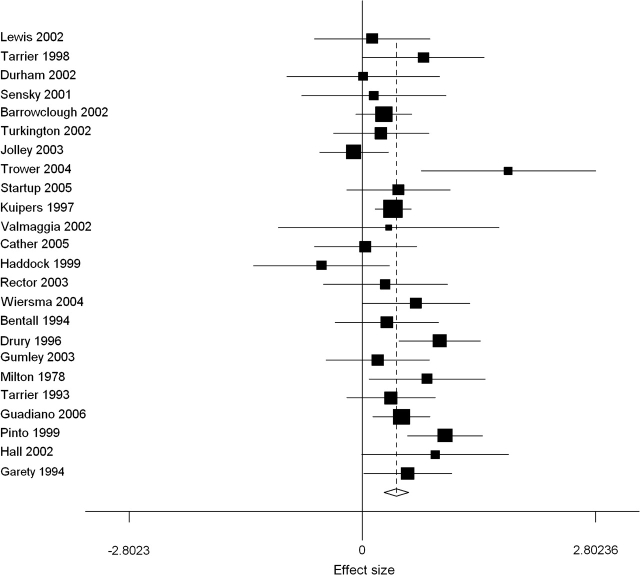
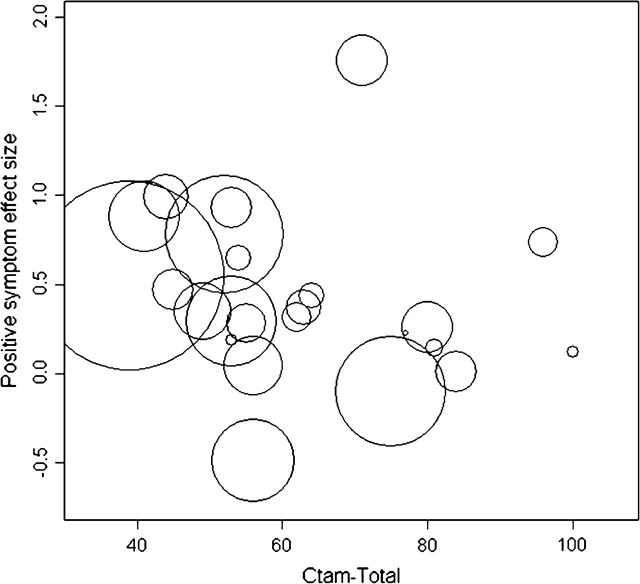
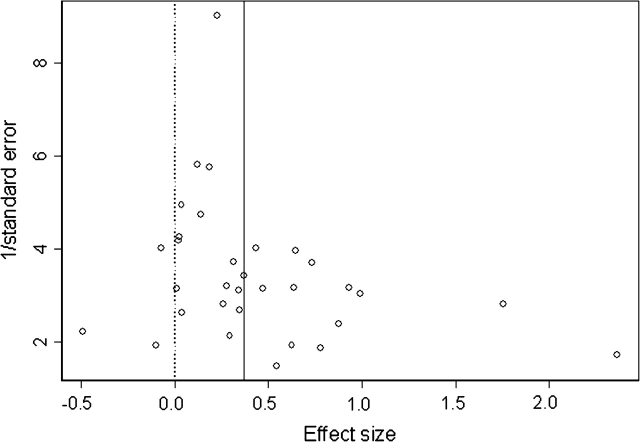
BACKGROUND: Guidance in the United States and United Kingdom has included cognitive behavior therapy for psychosis (CBTp) as a preferred therapy. But recent advances have widened the CBTp targets to other symptoms and have different methods of provision, eg, in groups. AIM: To explore the effect sizes of current CBTp trials including targeted and nontargeted symptoms, modes of action, and effect of methodological rigor. METHOD: Thirty-four CBTp trials with data in the public domain were used as source data for a meta-analysis and investigation of the effects of trial methodology using the Clinical Trial Assessment Measure (CTAM). RESULTS: There were overall beneficial effects for the target symptom (33 studies; effect size = 0.400 [95% confidence interval [CI] = 0.252, 0.548]) as well as significant effects for positive symptoms (32 studies), negative symptoms (23 studies), functioning (15 studies), mood (13 studies), and social anxiety (2 studies) with effects ranging from 0.35 to 0.44. However, there was no effect on hopelessness. Improvements in one domain were correlated with improvements in others. Trials in which raters were aware of group allocation had an inflated effect size of approximately 50%-100%. But rigorous CBTp studies showed benefit (estimated effect size = 0.223; 95% CI = 0.017, 0.428) although the lower end of the CI should be noted. Secondary outcomes (eg, negative symptoms) were also affected such that in the group of methodologically adequate studies the effect sizes were not significant. CONCLUSIONS: As in other meta-analyses, CBTp had beneficial effect on positive symptoms. However, psychological treatment trials that make no attempt to mask the group allocation are likely to have inflated effect sizes. Evidence considered for psychological treatment guidance should take into account specific methodological detail.
Overview
The claims and statistics of this paper haven’t been checked yet.
Free: it reads the open-access text and checks the first 5 claims that cite a source we can check. Create a free account to check every claim.
Integrity signals
Registry
Cites
Statistics
Figures
Verification
Claims the paper makes
The claims and statistics of this paper haven’t been checked yet.
Free: it reads the open-access text and checks the first 5 claims that cite a source we can check. Create a free account to check every claim.
Claims other papers make about this one
Each is checked against this paper’s own text: does it say what the citing paper says it does?
The cited source doesn’t support the claim as written.
In the citing paper
“The primary outcome was change in positive symptom severity at the end of treatment and at follow-up”
From A systematic review and meta-analysis of cognitive behavioural informed psychological interventions for psychiatric inpatients with psychosis (2020) · cites this paper as Wykes et al., 2008
Checked by a reasoning model — may be wrong.
Experimental — accuracy not yet measuredThe source backs part of the claim, not all of it — or backs it for a different population, condition or comparison.
In the citing paper
“Combining medication with evidence-based psychotherapy produces clinically significant improvement over medications alone for severe depression and psychotic disorders.9,10”
From Acceptance-based Behavior Therapy for Depression With Psychosis (2015) · cites this paper as [10]
Experimental — accuracy not yet measuredThe source backs part of the claim, not all of it — or backs it for a different population, condition or comparison.
In the citing paper
“Psychological therapies have demonstrated to be effective for patients experiencing psychotic symptoms (1, 2) and are recommended by treatment guidelines already in the acute illness and treatment phase (3, 4).”
From Developing a mechanism-based therapy for acute psychiatric inpatients with psychotic symptoms: an Intervention Mapping approach (2023) · cites this paper as [1]
Experimental — accuracy not yet measuredThe source backs part of the claim, not all of it — or backs it for a different population, condition or comparison.
In the citing paper
“There is limited evidence supporting the use of pharmacological and psychological interventions for depression in the context of schizophrenia (Whitehead et al. 2002; Wykes et al., 2008).”
From Acceptance and Commitment Therapy for depression following psychosis: An examination of clinically significant change (2015) · cites this paper as Wykes et al., 2008
Experimental — accuracy not yet measuredThe source backs part of the claim, not all of it — or backs it for a different population, condition or comparison.
In the citing paper
“Although effective at treating positive symptoms, Cognitive Behavioural Therapy for psychosis (CBTp) is less effective for treating emotional dysfunction associated with psychosis such as depression, hopelessness and suicide risk (Birchwood, 2003; Wykes et al., 2008; Tarrier et al., 2006).”
From Acceptance and Commitment Therapy for depression following psychosis: An examination of clinically significant change (2015) · cites this paper as Wykes et al., 2008
Experimental — accuracy not yet measured
4 more claims about this paper
Create a free account to see every claim other papers make about this one.
Self-check
Percentages, sums and reported differences re-computed from the paper’s own numbers.
The self-check needs the paper’s full text.
Citations
Cites
1 retracted
Cognitive behaviour therapy for schizophrenia
Jones, C., Cormac, I., Silveira da Mota Neto, J. I., & Campbell, C. (2004) · Cochrane Database of Systematic Reviews · doi:10.1002/14651858.cd000524.pub2 · Cited by 269
RetractedAssessing the quality of reports of randomized clinical trials: Is blinding necessary?
Jadad, A. R., Moore, R. A., Carroll, D., Jenkinson, C., Reynolds, D. J. M., Gavaghan, D. J., & McQuay, H. J. (1996) · Controlled Clinical Trials · doi:10.1016/0197-2456(95)00134-4 · Cited by 17,582 · cited 1×
“In addition, concurrent validity was assessed within an initial 22 studies by correlation with the scores from 3 other scales devised to assess methodological rigor.(42,43,52) The correlations of these scales with the CTAM scores on the corpus of CBTp data were as follows: CTAM and Jadad, q = .”
MethodZhang, Q., Wang, C., Zheng, M., Li, Y., Li, J., Zhang, L., Shang, X., & Yan, C. (2015) · Cerebrovascular Diseases · doi:10.1159/000369778 · Cited by 11,533
Schulz (1995) · doi:10.1001/jama.1995.03520290060030 · Cited by 5,634
Dong, Y., Hao, L., Shi, Z., Wang, G., Zhang, Z., & Han, C. (2013) · Urologia Internationalis · doi:10.1159/000351405 · Cited by 4,540
The Revised CONSORT Statement for Reporting Randomized Trials: Explanation and Elaboration
Altman, D. G., Schulz, K. F., Moher, D., Egger, M., Davidoff, F., Elbourne, D., Gøtzsche, P. C., Lang, T., & for the CONSORT Group (2001) · Annals of Internal Medicine · doi:10.7326/0003-4819-134-8-200104170-00012 · Cited by 3,835
The Handbook of Research Synthesis.
Howel, D., Cooper, H., & Hedges, L. V. (1995) · Biometrics · doi:10.2307/2533295 · Cited by 3,642
Moher, D., Pham, B., Jones, A., Cook, D. J., Jadad, A. R., Moher, M., Tugwell, P., & Klassen, T. P. (1998) · The Lancet · doi:10.1016/s0140-6736(98)01085-x · Cited by 3,560 · cited 1×
“For instance, poorer quality masking of allocation of treatments has been shown to be associated with up to 40% increased estimate of benefit in circulatory and digestive diseases, mental health, obstetrics, and childbirth.(36,37)”
BackgroundAssessing the quality of controlled clinical trials
Jüni, P., Altman, D. G., & Egger, M. (2001) · BMJ · doi:10.1136/bmj.323.7303.42 · Cited by 3,309
Improving the Quality of Reporting of Randomized Controlled Trials: The CONSORT Statement
Begg, C. (1996) · JAMA · doi:10.1001/jama.1996.03540080059030 · Cited by 3,127
Research works printed but not linked: 1
- [24]NICE Schizophrenia: Core interventions in the Treatment and Management of Schizophrenia in Primary and Secondary Care 2003 20704054
Cited by
The Efficacy of Cognitive Behavioral Therapy: A Review of Meta-analyses
Hofmann, S. G., Asnaani, A., Vonk, I. J. J., Sawyer, A. T., & Fang, A. (2012) · Cognitive Therapy and Research · doi:10.1007/s10608-012-9476-1 · Cited by 3,445
Mindfulness-based therapy: a comprehensive meta-analysis
Khoury, B., Lecomte, T., Fortin, G., Masse, M., Therien, P., Bouchard, V., Chapleau, M.-A., Paquin, K., & Hofmann, S. G. (2013) · Clinical Psychology Review · doi:10.1016/j.cpr.2013.05.005 · Cited by 2,003
van Os, J., & Kapur, S. (2009) · The Lancet · doi:10.1016/s0140-6736(09)60995-8 · Cited by 1,971
A Meta-Analysis of Cognitive Remediation for Schizophrenia: Methodology and Effect Sizes
Wykes, T., Huddy, V., Cellard, C., McGurk, S. R., & Czobor, P. (2011) · American Journal of Psychiatry · doi:10.1176/appi.ajp.2010.10060855 · Cited by 1,693
“, average Clinical Trial Assessment Measure scores for CBT for psychosis [29] and cognitive remediation).”
BackgroundSelf-citationGalletly, C., Castle, D., Dark, F., Humberstone, V., Jablensky, A., Killackey, E., Kulkarni, J., McGorry, P., Nielssen, O., & Tran, N. (2016) · Australian & New Zealand Journal of Psychiatry · doi:10.1177/0004867416641195 · Cited by 877
“Although positive symptoms were the initial targets of CBTp, research has also been conducted using CBTp for negative symptoms and for comorbid depression, anxiety and substance use (Wykes et al., 2008).”
BackgroundThe 2009 schizophrenia PORT psychosocial treatment recommendations and summary statements
Dixon, L. B., Dickerson, F., Bellack, A. S., Bennett, M., Dickinson, D., Goldberg, R. W., Lehman, A., Tenhula, W. N., Calmes, C., Pasillas, R. M., et al. (2010) · Schizophrenia Bulletin · doi:10.1093/schbul/sbp115 · Cited by 774
“Both individual and group formats have been used to deliver CBT psychotherapy and seem to have similar benefit.(108)”
BackgroundMethodFusar-Poli, P., Papanastasiou, E., Stahl, D., Rocchetti, M., Carpenter, W., Shergill, S., & McGuire, P. (2015) · Schizophrenia Bulletin · doi:10.1093/schbul/sbu170 · Cited by 683
Mind the gap: improving the dissemination of CBT
Shafran, R., Clark, D. M., Fairburn, C. G., Arntz, A., Barlow, D. H., Ehlers, A., Freeston, M., Garety, P. A., Hollon, S. D., Ost, L. G., et al. (2009) · Behaviour Research and Therapy · doi:10.1016/j.brat.2009.07.003 · Cited by 569
Prediction as a Humanitarian and Pragmatic Contribution from Human Cognitive Neuroscience
Gabrieli, J. D. E., Ghosh, S. S., & Whitfield-Gabrieli, S. (2015) · Neuron · doi:10.1016/j.neuron.2014.10.047 · Cited by 535
Marder, S. R., & Cannon, T. D. (2019) · New England Journal of Medicine · doi:10.1056/nejmra1808803 · Cited by 529
Jauhar, S., McKenna, P. J., Radua, J., Fung, E., Salvador, R., & Laws, K. R. (2014) · British Journal of Psychiatry · doi:10.1192/bjp.bp.112.116285 · Cited by 517
“Wykes et al 19 found values of 7 0.31 in 14 masked studies compared with 7 0.49 in 10 non-masked studies; they did not state whether this represented a significant difference.”
InfluentialVita, A., Barlati, S., Ceraso, A., Nibbio, G., Ariu, C., Deste, G., & Wykes, T. (2021) · JAMA Psychiatry · doi:10.1001/jamapsychiatry.2021.0620 · Cited by 457
Self-citationPsychosocial Treatments for Schizophrenia
Mueser, K. T., Deavers, F., Penn, D. L., & Cassisi, J. E. (2013) · Annual Review of Clinical Psychology · doi:10.1146/annurev-clinpsy-050212-185620 · Cited by 402
“For a more detailed discussion of the effect of methodological rigor of RCTs on meta-analytic results, see Wykes et al. (2008, 2011).”
BackgroundResultInfluentialSchizophrenia, “Just the Facts” 5. Treatment and prevention Past, present, and future
Tandon, R., Nasrallah, H. A., & Keshavan, M. S. (2010) · Schizophrenia Research · doi:10.1016/j.schres.2010.05.025 · Cited by 385
van der Gaag, M., Smit, F., Bechdolf, A., French, P., Linszen, D. H., Yung, A. R., McGorry, P., & Cuijpers, P. (2013) · Schizophrenia Research · doi:10.1016/j.schres.2013.07.004 · Cited by 384
“The quality of the studies was assessed with the Clinical Trials Assessment Measure (CTAM) (Tarrier and Wykes, 2004; Wykes et al., 2008).”
MethodPsychological interventions for psychosis: A meta-analysis of comparative outcome studies
Turner, D. T., van der Gaag, M., Karyotaki, E., & Cuijpers, P. (2014) · American Journal of Psychiatry · doi:10.1176/appi.ajp.2013.13081159 · Cited by 350
“(11) found a trend for larger effect sizes in more behavioral CBT.”
BackgroundGrant, P. M. (2012) · Archives of General Psychiatry · doi:10.1001/archgenpsychiatry.2011.129 · Cited by 353
Hesser, H., Weise, C., Westin, V. Z., & Andersson, G. (2011) · Clinical Psychology Review · doi:10.1016/j.cpr.2010.12.006 · Cited by 340
Morrison, A. P., French, P., Stewart, S. L. K., Birchwood, M., Fowler, D., Gumley, A. I., Jones, P. B., Bentall, R. P., Lewis, S. W., Murray, G. K., et al. (2012) · BMJ · doi:10.1136/bmj.e2233 · Cited by 332
Sowing the seeds of doubt: a narrative review on metacognitive training in schizophrenia
Moritz, S., Andreou, C., Schneider, B. C., Wittekind, C. E., Menon, M., Balzan, R. P., & Woodward, T. S. (2014) · Clinical Psychology Review · doi:10.1016/j.cpr.2014.04.004 · Cited by 325
What is the risk‐benefit ratio of long‐term antipsychotic treatment in people with schizophrenia?
Correll, C. U., Rubio, J. M., & Kane, J. M. (2018) · World Psychiatry · doi:10.1002/wps.20516 · Cited by 324
Lynch, D., Laws, K. R., & McKenna, P. J. (2010) · Psychological Medicine · doi:10.1017/s003329170900590x · Cited by 317
“…schizophrenia (Gould et al. 2001 ; Rector & Beck, 2001; Pilling et al. 2002 ; Jones et al. 2004 ; Tarrier & Wykes, 2004 ; Zimmermann et al. 2005 ; Wykes et al. 2008), only two (Zimmermann et al. 2005; Wykes et al. 2008) examined the influence of blindness on effect size, and neither of these…”
BackgroundResultInfluentialTreatment resistant schizophrenia: Clinical, biological, and therapeutic perspectives
Nucifora, F. C., Woznica, E., Lee, B. J., Cascella, N., & Sawa, A. (2019) · Neurobiology of Disease · doi:10.1016/j.nbd.2018.08.016 · Cited by 304
Mindfulness interventions for psychosis: A meta-analysis
Khoury, B., Lecomte, T., Gaudiano, B. A., & Paquin, K. (2013) · Schizophrenia Research · doi:10.1016/j.schres.2013.07.055 · Cited by 292
“Findings are comparable to those obtained for CBTp (Wykes et al., 2008) and for mindfulnessbased treatments for other disorders (e.”
BackgroundResultGooding, P., & Tarrier, N. (2009) · Behaviour Research and Therapy · doi:10.1016/j.brat.2009.04.002 · Cited by 267
“As has been found previously (Tarrier et al., 2008; Tarrier & Wykes, 2004; Wykes et al., 2008), large effect sizes were associated with poor methodological quality.”
BackgroundMethodResultInfluentialSelf-citationvan der Gaag, M., Valmaggia, L. R., & Smit, F. (2014) · Schizophrenia Research · doi:10.1016/j.schres.2014.03.016 · Cited by 271
“The quality of the studies was assessed with the Clinical Trials Assessment Measure (CTAM) (Tarrier and Wykes, 2004; Wykes et al., 2008).”
InfluentialPsychosocial Treatments to Promote Functional Recovery in Schizophrenia
Kern, R. S., Glynn, S. M., Horan, W. P., & Marder, S. R. (2009) · Schizophrenia Bulletin · doi:10.1093/schbul/sbn177 · Cited by 267
Carbon, M., & Correll, C. U. (2014) · CNS Spectrums · doi:10.1017/s1092852914000601 · Cited by 258
“This technique uses the individual’s strengths and actively engages those strengths to define and achieve goals.(109) A positive, though moderate impact of CBTon negative symptoms (adjunctive to antipsychotic treatment), with a reduction of apathy and enhanced motivation, was shown particularly using individual sessio…”
MethodMorrison, A. P., Turkington, D., Pyle, M., Spencer, H., Brabban, A., Dunn, G., Christodoulides, T., Dudley, R., Chapman, N., Callcott, P., et al. (2014) · The Lancet · doi:10.1016/s0140-6736(13)62246-1 · Cited by 251
Longden, E., Madill, A., & Waterman, M. G. (2012) · Psychological Bulletin · doi:10.1037/a0025995 · Cited by 248
Barrowclough, C., Haddock, G., Wykes, T., Beardmore, R., Conrod, P., Craig, T., Davies, L., Dunn, G., Eisner, E., Lewis, S., et al. (2010) · BMJ · doi:10.1136/bmj.c6325 · Cited by 245
Self-citationEmotions, self-esteem, and paranoid episodes: An experience sampling study
Thewissen, V., Bentall, R. P., Oorschot, M., à Campo, J., van Lierop, T., van Os, J., & Myin‐Germeys, I. (2011) · British Journal of Clinical Psychology · doi:10.1348/014466510x508677 · Cited by 236
Laws, K. R., Darlington, N., Kondel, T. K., McKenna, P. J., & Jauhar, S. (2018) · BMC Psychology · doi:10.1186/s40359-018-0243-2 · Cited by 234
A Meta-Analysis of Social Skills Training and Related Interventions for Psychosis
Turner, D. T., McGlanaghy, E., Cuijpers, P., van der Gaag, M., Karyotaki, E., & MacBeth, A. (2018) · Schizophrenia Bulletin · doi:10.1093/schbul/sbx146 · Cited by 232
“Male outpatients SST (13) vs SC (14) BPRS Exacerbations Group 3 104 N/A”
BackgroundSchlosser, D. A., Campellone, T. R., Truong, B., Etter, K., Vergani, S., Komaiko, K., & Vinogradov, S. (2018) · Schizophrenia Bulletin · doi:10.1093/schbul/sby078 · Cited by 206
Eichner, C., & Berna, F. (2016) · Schizophrenia Bulletin · doi:10.1093/schbul/sbv225 · Cited by 218
Secondary negative symptoms — A review of mechanisms, assessment and treatment
Kirschner, M., Aleman, A., & Kaiser, S. (2017) · Schizophrenia Research · doi:10.1016/j.schres.2016.05.003 · Cited by 215
Cognitive remediation for negative symptoms of schizophrenia: A network meta-analysis
Cella, M., Preti, A., Edwards, C., Dow, T., & Wykes, T. (2017) · Clinical Psychology Review · doi:10.1016/j.cpr.2016.11.009 · Cited by 215
Self-citationWhat Are the Components of CBT for Psychosis? A Delphi Study
Morrison, A. P., & Barratt, S. (2010) · Schizophrenia Bulletin · doi:10.1093/schbul/sbp118 · Cited by 212
Schizophrenia--Time to Commit to Policy Change
Fleischhacker, W. W., Arango, C., Arteel, P., Barnes, T. R. E., Carpenter, W., Duckworth, K., Galderisi, S., Halpern, L., Knapp, M., Marder, S. R., et al. (2014) · Schizophrenia Bulletin · doi:10.1093/schbul/sbu006 · Cited by 214
Lean, M., Fornells-Ambrojo, M., Milton, A., Lloyd-Evans, B., Harrison-Stewart, B., Yesufu-Udechuku, A., Kendall, T., & Johnson, S. (2019) · The British Journal of Psychiatry · doi:10.1192/bjp.2019.54 · Cited by 211
Hickie, I. B., Scott, E. M., Cross, S. P., Iorfino, F., Davenport, T. A., Guastella, A. J., Naismith, S. L., Carpenter, J. S., Rohleder, C., Crouse, J. J., et al. (2019) · Medical Journal of Australia · doi:10.5694/mja2.50383 · Cited by 208
Computerised cognitive-behavioural therapy for depression: systematic review
Kaltenthaler, E., Parry, G., Beverley, C., & Ferriter, M. (2008) · British Journal of Psychiatry · doi:10.1192/bjp.bp.106.025981 · Cited by 206
Cognitive-behavioral therapy for medication-resistant psychosis: A meta-analytic review
Burns, A. M. N., Erickson, D. H., & Brenner, C. A. (2014) · Psychiatric Services · doi:10.1176/appi.ps.201300213 · Cited by 199
Austin, S. F., Mors, O., Budtz-Jørgensen, E., Secher, R. G., Hjorthøj, C. R., Bertelsen, M., Jeppesen, P., Petersen, L., Thorup, A., & Nordentoft, M. (2015) · Schizophrenia Research · doi:10.1016/j.schres.2015.07.021 · Cited by 203
“The reduction of duration of untreated psychosis (Melle et al., 2008), cognitive behavioral therapy (Wykes et al., 2008) and cognitive remediation (Pfammatter et al., 2006) are promising psychosocial interventions that have been shown to potentially reduce negative symptoms, although more trials…”
Bighelli, I., Salanti, G., Huhn, M., Schneider‐Thoma, J., Krause, M., Reitmeir, C., Wallis, S., Schwermann, F., Pitschel‐Walz, G., Barbui, C., et al. (2018) · World Psychiatry · doi:10.1002/wps.20577 · Cited by 199
Thomas, N., Hayward, M., Peters, E., van der Gaag, M., Bentall, R. P., Jenner, J., Strauss, C., Sommer, I. E., Johns, L. C., Varese, F., et al. (2014) · Schizophrenia Bulletin · doi:10.1093/schbul/sbu037 · Cited by 195
“Methodological differences in trials, such as blinding, may moderate positive symptom effect sizes.(6,26) There may also be smaller magnitude effects when compared with control therapies as opposed to TAU(26) (although these effect sizes did not signiicantly differ in a recent meta-analysis),(6) but it is likely that…”
BackgroundResultThe Treatment of Hallucinations in Schizophrenia Spectrum Disorders
Sommer, I. E. C., Slotema, C. W., Daskalakis, Z. J., Derks, E. M., Blom, J. D., & van der Gaag, M. (2012) · Schizophrenia Bulletin · doi:10.1093/schbul/sbs034 · Cited by 194
“1.(15) Group therapy, however, has not yielded any clinically significant results.”
BackgroundFurther evidence for the efficacy of a metacognitive group training in schizophrenia
Moritz, S., Kerstan, A., Veckenstedt, R., Randjbar, S., Vitzthum, F., Schmidt, C., Heise, M., & Woodward, T. S. (2011) · Behaviour Research and Therapy · doi:10.1016/j.brat.2010.11.010 · Cited by 194
Predictors of recovery in first episode psychosis: The OPUS cohort at 10year follow-up
Austin, S. F., Mors, O., Secher, R. G., Hjorthøj, C. R., Albert, N., Bertelsen, M., Jensen, H., Jeppesen, P., Petersen, L., Randers, L., et al. (2013) · Schizophrenia Research · doi:10.1016/j.schres.2013.07.031 · Cited by 186
“A review of cognitive behavioral interventions demonstrated a moderate effect on negative symptoms although further studies are required (Wykes et al., 2008).”
BackgroundLysaker, P. H., Buck, K. D., Carcione, A., Procacci, M., Salvatore, G., Nicolò, G., & Dimaggio, G. (2011) · Psychology and Psychotherapy: Theory, Research and Practice · doi:10.1348/147608310x520436 · Cited by 184
Detecting and defusing cognitive traps: metacognitive intervention in schizophrenia
Moritz, S., Vitzthum, F., Randjbar, S., Veckenstedt, R., & Woodward, T. S. (2010) · Current Opinion in Psychiatry · doi:10.1097/yco.0b013e32833d16a8 · Cited by 182
EPA guidance on treatment of negative symptoms in schizophrenia
Galderisi, S., Kaiser, S., Bitter, I., Nordentoft, M., Mucci, A., Sabé, M., Giordano, G. M., Nielsen, M. Ø., Glenthøj, L. B., Pezzella, P., et al. (2021) · European Psychiatry · doi:10.1192/j.eurpsy.2021.13 · Cited by 181
“However, CBT interventions primarily targeting positive symptoms have shown a reduction in negative symptoms that may have been secondary to improvement of positive symptoms [28,34].”
BackgroundDoes schema therapy change schemas and symptoms? A systematic review across mental health disorders
Taylor, C. D. J., Bee, P., & Haddock, G. (2017) · Psychology and Psychotherapy: Theory, Research and Practice · doi:10.1111/papt.12112 · Cited by 179
“However, a common finding across many treatment studies is that early phase pilots report large effect sizes which have been noted to decrease in magnitude when evaluated in more rigorously designed RCTs (Wykes et al., 2008).”
BackgroundMethodInfluentialTreatment of negative symptoms: Where do we stand, and where do we go?
Aleman, A., Lincoln, T. M., Bruggeman, R., Melle, I., Arends, J., Arango, C., & Knegtering, H. (2017) · Schizophrenia Research · doi:10.1016/j.schres.2016.05.015 · Cited by 176
Wittkowski, A., Dowling, H., & Smith, D. M. (2016) · Journal of Child and Family Studies · doi:10.1007/s10826-016-0464-z · Cited by 177
“As parenting style has been shown to be adaptable to change (Taylor and Biglan 1998; Wykes et al. 2008), a & Anja Wittkowski anja.wittkowski@manchester.ac.uk 1 School of Psychological Sciences, 2nd Floor Zochonis Building, Brunswick Street, Manchester M13 9PL, UK pivotal mechanism for early…”
BackgroundMethodInfluentialKurtz, M. M., Gagen, E., Rocha, N. B. F., Machado, S., & Penn, D. L. (2016) · Clinical Psychology Review · doi:10.1016/j.cpr.2015.09.003 · Cited by 176
Formal thought disorders: from phenomenology to neurobiology
Kircher, T., Bröhl, H., Meier, F., & Engelen, J. (2018) · The Lancet Psychiatry · doi:10.1016/s2215-0366(18)30059-2 · Cited by 172
Goldsmith, L. P., Lewis, S. W., Dunn, G., & Bentall, R. P. (2015) · Psychological Medicine · doi:10.1017/s003329171500032x · Cited by 174
Elis, O., Caponigro, J. M., & Kring, A. M. (2013) · Clinical Psychology Review · doi:10.1016/j.cpr.2013.07.001 · Cited by 172
“, 2006) and meta-analyses (Gould et al., 2001; Pilling et al., 2002; Wykes et al., 2008; Zimmermann, Favrod, Trieu, & Pomini, 2005) suggest that CBT is an effective adjunctive treatment for persistent positive symptoms.”
BackgroundGranholm, E., Holden, J., Link, P. C., & McQuaid, J. R. (2014) · Journal of Consulting and Clinical Psychology · doi:10.1037/a0037098 · Cited by 166
“It should be noted that these treatment effects were attenuated in trials with higher design quality (Wykes et al., 2008).”
BackgroundMoritz, S., Veckenstedt, R., Andreou, C., Bohn, F., Hottenrott, B., Leighton, L., Köther, U., Woodward, T. S., Treszl, A., Menon, M., et al. (2014) · JAMA Psychiatry · doi:10.1001/jamapsychiatry.2014.1038 · Cited by 163
What We Know: Findings That Every Theory of Schizophrenia Should Explain
MacDonald, A. W., & Schulz, S. C. (2009) · Schizophrenia Bulletin · doi:10.1093/schbul/sbp017 · Cited by 165
“These techniques allow one to challenge, and ultimately shape, the meaning of various negative emotions or aberrant experiences into something less threatening.(78) A technique adapted from stroke rehabilitation that has proved to be useful is called cognitive remediation.”
Emotion in Schizophrenia: Where Feeling Meets Thinking
Kring, A. M., & Caponigro, J. M. (2010) · Current Directions in Psychological Science · doi:10.1177/0963721410377599 · Cited by 162
White, R., Gumley, A., McTaggart, J., Rattrie, L., McConville, D., Cleare, S., & Mitchell, G. (2011) · Behaviour Research and Therapy · doi:10.1016/j.brat.2011.09.003 · Cited by 161
“Randomised clinical trials have found that Cognitive Behaviour Therapy for psychosis (CBTp) is efficacious for treating residual distressing positive and negative symptoms (Wykes et al., 2008).”
BackgroundInfluentialLouise, S., Fitzpatrick, M., Strauss, C., Rossell, S. L., & Thomas, N. (2018) · Schizophrenia Research · doi:10.1016/j.schres.2017.05.023 · Cited by 160
Velthorst, E., Koeter, M., van der Gaag, M., Nieman, D. H., Fett, A.-K. J., Smit, F., Staring, A. B. P., Meijer, C., & de Haan, L. (2015) · Psychological Medicine · doi:10.1017/s0033291714001147 · Cited by 162
“Two more were identified after manually searching through the reference lists of relevant reviews (Wykes et al. 2008; Saksa et al. 2009), resulting in a total of 1536 publications that were screened for eligibility.”
BackgroundMethodResultInfluentialLoving‐kindness meditation to enhance recovery from negative symptoms of schizophrenia
Johnson, D. P., Penn, D. L., Fredrickson, B. L., Meyer, P. S., Kring, A. M., & Brantley, M. (2009) · Journal of Clinical Psychology · doi:10.1002/jclp.20591 · Cited by 159
Tai, S., & Turkington, D. (2009) · Schizophrenia Bulletin · doi:10.1093/schbul/sbp080 · Cited by 154
“There is now a considerable body of evidence that illustrates the efficacy of CBT for schizophrenia.(20) Randomized controlled trials (RCTs) have shown moderate effect sizes for positive and negative symptoms at the end stages of therapy with sustained benefits over time.”
BackgroundAghotor, J., Pfueller, U., Moritz, S., Weisbrod, M., & Roesch-Ely, D. (2010) · Journal of Behavior Therapy and Experimental Psychiatry · doi:10.1016/j.jbtep.2010.01.004 · Cited by 156
Moritz, S., Veckenstedt, R., Randjbar, S., Vitzthum, F., & Woodward, T. S. (2011) · Psychological Medicine · doi:10.1017/s0033291710002618 · Cited by 156
“2010) and is in the upper range of the effect sizes found for CBT (Wykes et al. 2008).”
BackgroundResultInfluentialRehabilitation Interventions to Promote Recovery from Schizophrenia: A Systematic Review
Morin, L., & Franck, N. (2017) · Frontiers in Psychiatry · doi:10.3389/fpsyt.2017.00100 · Cited by 155
“A study showed the efficacy of CT on psychosocial functioning (77).”
BackgroundMethodResultInfluentialMetacognitive reflection and insight therapy (MERIT) for patients with schizophrenia
de Jong, S., van Donkersgoed, R. J. M., Timmerman, M. E., aan het Rot, M., Wunderink, L., Arends, J., van Der Gaag, M., Aleman, A., Lysaker, P. H., & Pijnenborg, G. H. M. (2019) · Psychological Medicine · doi:10.1017/s0033291718000855 · Cited by 154
Chien, W. T., Leung, S. F., Yeung, F. K., & Wong, W. K. (2013) · Neuropsychiatric Disease and Treatment · doi:10.2147/ndt.s49263 · Cited by 150
“Similar to the findings of the recent systematic reviews, 21–23, 26 the evidence identified for the effectiveness of CBT in”
Jansen, J. E., Gleeson, J., Bendall, S., Rice, S., & Alvarez-Jimenez, M. (2020) · Schizophrenia Research · doi:10.1016/j.schres.2019.11.016 · Cited by 144
Rathod, S., Kingdon, D., Phiri, P., & Gobbi, M. (2010) · Behavioural and Cognitive Psychotherapy · doi:10.1017/s1352465810000378 · Cited by 147
Complementary group Metacognitive Training (MCT) reduces delusional ideation in schizophrenia.
Moritz, S., Veckenstedt, R., Bohn, F., Hottenrott, B., Scheu, F., Randjbar, S., Aghotor, J., Köther, U., Woodward, T. S., Treszl, A., et al. (2013) · Schizophrenia Research · doi:10.1016/j.schres.2013.10.007 · Cited by 146
“Different forms of cognitive therapy – especially cognitivebehavioral therapy (CBT) and cognitive remediation therapy (CRT) – are increasingly adopted as complementary strategies to psychopharmacology (Zimmermann et al., 2005; Lincoln et al., 2008; Wykes et al., 2008).”
BackgroundMueser, K. T., Pratt, S. I., Bartels, S. J., Swain, K., Forester, B., Cather, C., & Feldman, J. (2010) · Journal of Consulting and Clinical Psychology · doi:10.1037/a0019629 · Cited by 145
A Randomized Experimental Investigation of Reasoning Training for People With Delusions
Ross, K., Freeman, D., Dunn, G., & Garety, P. (2011) · Schizophrenia Bulletin · doi:10.1093/schbul/sbn165 · Cited by 145
Mei, C., van der Gaag, M., Nelson, B., Smit, F., Yuen, H. P., Berger, M., Krcmar, M., French, P., Amminger, G. P., Bechdolf, A., et al. (2021) · Clinical Psychology Review · doi:10.1016/j.cpr.2021.102005 · Cited by 143
Priebe, S., Kelley, L., Omer, S., Golden, E., Walsh, S., Khanom, H., Kingdon, D., Rutterford, C., McCrone, P., & McCabe, R. (2015) · Psychotherapy and Psychosomatics · doi:10.1159/000430991 · Cited by 140
Lobban, F., Postlethwaite, A., Glentworth, D., Pinfold, V., Wainwright, L., Dunn, G., Clancy, A., & Haddock, G. (2013) · Clinical Psychology Review · doi:10.1016/j.cpr.2012.12.004 · Cited by 140
“A total CTAM score of 65 or above was chosen by Wykes et al. (2008) to indicate adequate methodology, however the validity of this as an indication of methodological rigour has yet to be tested.”
BackgroundMethodInfluentialKlingberg, S., Wolwer, W., Engel, C., Wittorf, A., Herrlich, J., Meisner, C., Buchkremer, G., & Wiedemann, G. (2011) · Schizophrenia Bulletin · doi:10.1093/schbul/sbr073 · Cited by 140
Granholm, E., Holden, J., Link, P. C., McQuaid, J. R., & Jeste, D. V. (2013) · The American Journal of Geriatric Psychiatry · doi:10.1016/j.jagp.2012.10.014 · Cited by 135
“A meta-analysis of 35 CBT clinical trials (9) recently showed that, although the vast majority of studies focused on positive symptoms as the primary treatment target, CBT also had beneficial impact on functioning.”
BackgroundShattock, L., Berry, K., Degnan, A., & Edge, D. (2018) · Clinical Psychology & Psychotherapy · doi:10.1002/cpp.2135 · Cited by 137
Shawyer, F., Farhall, J., Mackinnon, A., Trauer, T., Sims, E., Ratcliff, K., Larner, C., Thomas, N., Castle, D., Mullen, P., et al. (2012) · Behaviour Research and Therapy · doi:10.1016/j.brat.2011.11.007 · Cited by 137
European Psychiatric Association guidance on treatment of cognitive impairment in schizophrenia
Vita, A., Gäebel, W., Mucci, A., Sachs, G., Barlati, S., Giordano, G. M., Nibbio, G., Nordentoft, M., Wykes, T., & Galderisi, S. (2022) · European Psychiatry · doi:10.1192/j.eurpsy.2022.2315 · Cited by 177
Self-citationNeill, J. C., Harte, M., Haddad, P. M., Lydall, E. S., & Dwyer, D. M. (2013) · European Neuropsychopharmacology · doi:10.1016/j.euroneuro.2013.09.011 · Cited by 147
Wickham, S., Taylor, P., Shevlin, M., & Bentall, R. P. (2014) · PLoS ONE · doi:10.1371/journal.pone.0105140 · Cited by 131
“cognitive-behaviour therapy (CBT) and interpersonal psychotherapy) which already aim to address self-esteem and are thought to be effective in depression [85], and in the case of CBT at least, effective for psychosis (CBTp [86]).”
BackgroundMehl, S., Werner, D., & Lincoln, T. M. (2015) · Frontiers in Psychology · doi:10.3389/fpsyg.2015.01450 · Cited by 129
Wilson, C., & Koenig, J. I. (2013) · European Neuropsychopharmacology · doi:10.1016/j.euroneuro.2013.11.008 · Cited by 158
“Additionally, the effectiveness of currently available treatment options (e.g., antipsychotics, cognitive-behavioral therapy, and psychosocial treatments) has been found to be inadequate (Keefe et al., 1999; Leucht et al., 2009; Swartz et al., 2007; Wykes et al., 2008). reserved.”
BackgroundCognitive Behavioral Therapy for Schizophrenia
Rathod, S., Phiri, P., & Kingdon, D. (2010) · Psychiatric Clinics of North America · doi:10.1016/j.psc.2010.04.009 · Cited by 142
Berry, K., Ford, S., Jellicoe-Jones, L., & Haddock, G. (2013) · Clinical Psychology Review · doi:10.1016/j.cpr.2013.01.011 · Cited by 128
Greenwood, K. E., Sweeney, A., Williams, S., Garety, P., Kuipers, E., Scott, J., & Peters, E. (2010) · Schizophrenia Bulletin · doi:10.1093/schbul/sbp117 · Cited by 128
Negative Symptoms and Social Cognition: Identifying Targets for Psychological Interventions
Lincoln, T. M., Mehl, S., Kesting, M.-L., & Rief, W. (2011) · Schizophrenia Bulletin · doi:10.1093/schbul/sbr066 · Cited by 127
“therapy (CBT) shows some impact on negative symptoms but the effect sizes are small.(3) Even psychosocial”
BackgroundFowler, D., Hodgekins, J., Painter, M., Reilly, T., Crane, C., Macmillan, I., Mugford, M., Croudace, T., & Jones, P. B. (2009) · Psychological Medicine · doi:10.1017/s0033291709005467 · Cited by 125
“Several studies have reported evidence for the efficacy of CBT on depression and negative symptoms, where these have been assessed as secondary outcomes (Sensky et al. 2000 ; Turkington et al. 2002 ; Durham et al. 2003 ; Gumley et al. 2003 ; Wykes et al. 2008).”
BackgroundA systematic review and meta-analysis of low intensity CBT for psychosis
Hazell, C. M., Hayward, M., Cavanagh, K., & Strauss, C. (2016) · Clinical Psychology Review · doi:10.1016/j.cpr.2016.03.004 · Cited by 120
“While findings for low intensity CBTp show promise, there is potentially room to improve the effectiveness of CBTp more broadly as effect sizes from meta-analyses, including the current one, are in the small– medium range (see Jauhar et al., 2014; Wykes et al., 2008).”
BackgroundMethodResultInfluentialSchlosser, D., Campellone, T., Kim, D., Truong, B., Vergani, S., Ward, C., & Vinogradov, S. (2016) · JMIR Research Protocols · doi:10.2196/resprot.5450 · Cited by 103
“…deficits, which limit the degree to which the skills may be used in real-world settings, the evidence suggests that the current gold-standard treatments do not lead to clinically meaningful improvements in motivated behavior, negative symptom severity, functioning, and quality of life [12,13].”
Controversies in Computerized Cognitive Training
Harvey, P. D., McGurk, S. R., Mahncke, H., & Wykes, T. (2018) · Biological Psychiatry: Cognitive Neuroscience and Neuroimaging · doi:10.1016/j.bpsc.2018.06.008 · Cited by 121
Self-citationKillikelly, C., He, Z., Reeder, C., & Wykes, T. (2017) · JMIR mHealth and uHealth · doi:10.2196/mhealth.7088 · Cited by 105
“This scale has good interrater reliability (.96) and high concurrent validity (.97) [26].”
BackgroundSelf-citation
Metadata
- Authors
- Wykes, T., Steel, C., Everitt, B., & Tarrier, N.
- Affiliations
- King's College London (GB)
- University of Manchester (GB)
- Venue
- Schizophrenia Bulletin
- Publisher
- Oxford University Press (OUP)
- Published
- 2007-05-04
- Volume
- 34
- Issue
- 3
- Pages
- 523-537
- ISSN
- 0586-7614 (ISSN-L)
- 1745-1701
- PMC
- PMC2632426
- OpenAlex
- W2140526915
- Cited by
- 1,029
- References
- 98
- Citations by year
- 2026: 16 · 2025: 27 · 2024: 29 · 2023: 39 · 2022: 42 · 2021: 39 · 2020: 38 · 2019: 64 · 2018: 59 · 2017: 62 · 2016: 76 · 2015: 73 · 2014: 91 · 2013: 96 · 2012: 87
- FWCI
- 5.68
- Type
- journal article
- Language
- en
- Open access
- hybrid
- doi.org
- Licence
- cc-by-nc
- Locations
- Schizophrenia Bulletin (publishedVersion, cc-by-nc)
- PubMed Central (publishedVersion, cc-by-nc)
- PubMed (publishedVersion)
- Research Explorer (The University of Manchester) (publishedVersion)
- CentAUR (University of Reading) (acceptedVersion)
- Research Portal (King's College London) (submittedVersion, public-domain)
- Topics
- Health Sciences › Medicine › Psychiatry and Mental health › Schizophrenia research and treatment
- Social Sciences › Psychology › Clinical Psychology › Psychotherapy Techniques and Applications
- Social Sciences › Psychology › Clinical Psychology › Psychological Treatments and Assessments
- Keywords
- schizophrenia
- MeSH terms
- Humans, Psychometrics, Schizophrenia, Cognitive Behavioral Therapy
About these checks
Registry, retraction, Cites and statistics results are computed, not judged, with one exception: a printed reference that no index lists is read once by a model before it counts as a citation error. Claims are extracted by a model and kept only when their quote appears verbatim in the text; each cited source is then checked, with a model’s help, for whether it says what the claim relies on. Those verdicts can be wrong — read the claim’s quote and the cited source before relying on one.
Statistics and arithmetic are recomputed, not judged.
Confidence bands are shown only for fields calibrated on our annotated test set. None is calibrated yet, so no band is shown.
What counts as a claim ›How we measure confidence ›How we check this ›
Are you an author, or do you see a problem with this page? Request a review
Data sources
Bibliographic data: Semantic Scholar, OpenAlex, Crossref.
Contains information from the Semantic Scholar Academic Graph Datasets, made available under the ODC Attribution License (ODC-BY 1.0).
Semantic Scholar’s data is described in: Kinney, R., et al. (2023). The Semantic Scholar Open Data Platform. arXiv:2301.10140.
