

. Cognitive behavior therapy for schizophrenia: effect sizes, clinical models, and methodological rigor.
Open accessThe DOI matches its Crossref record; 98 of the 98 references it cites were found in a registry or an index.
Abstract
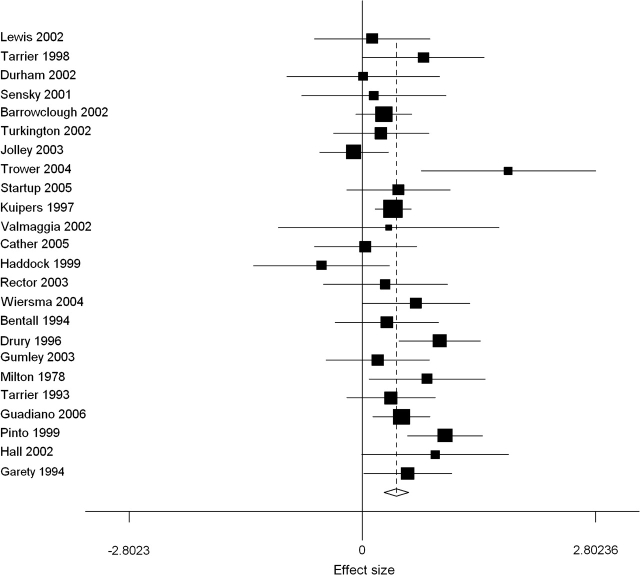
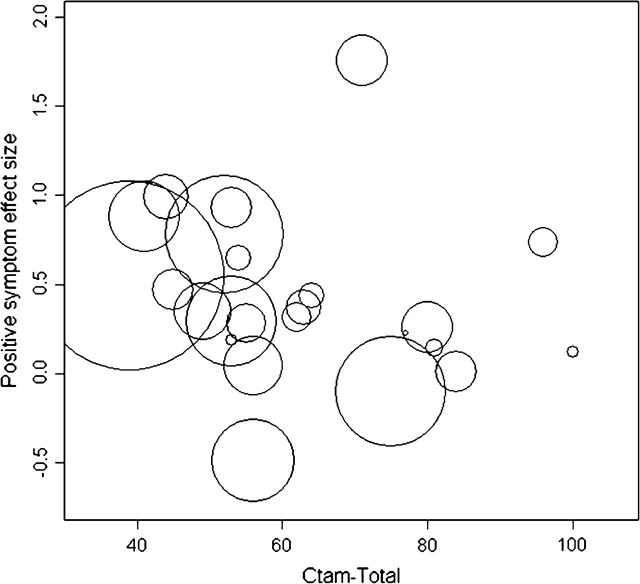
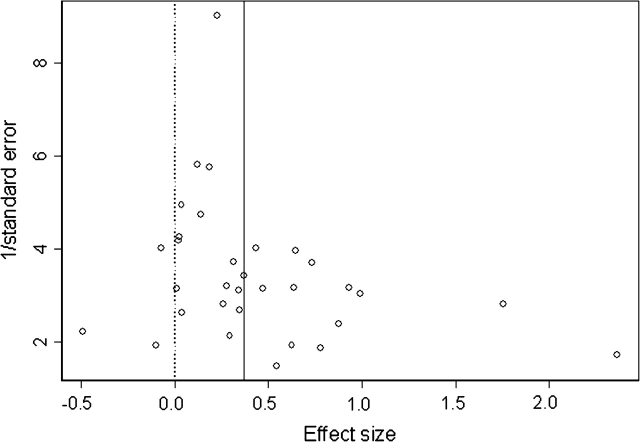
BACKGROUND: Guidance in the United States and United Kingdom has included cognitive behavior therapy for psychosis (CBTp) as a preferred therapy. But recent advances have widened the CBTp targets to other symptoms and have different methods of provision, eg, in groups. AIM: To explore the effect sizes of current CBTp trials including targeted and nontargeted symptoms, modes of action, and effect of methodological rigor. METHOD: Thirty-four CBTp trials with data in the public domain were used as source data for a meta-analysis and investigation of the effects of trial methodology using the Clinical Trial Assessment Measure (CTAM). RESULTS: There were overall beneficial effects for the target symptom (33 studies; effect size = 0.400 [95% confidence interval [CI] = 0.252, 0.548]) as well as significant effects for positive symptoms (32 studies), negative symptoms (23 studies), functioning (15 studies), mood (13 studies), and social anxiety (2 studies) with effects ranging from 0.35 to 0.44. However, there was no effect on hopelessness. Improvements in one domain were correlated with improvements in others. Trials in which raters were aware of group allocation had an inflated effect size of approximately 50%-100%. But rigorous CBTp studies showed benefit (estimated effect size = 0.223; 95% CI = 0.017, 0.428) although the lower end of the CI should be noted. Secondary outcomes (eg, negative symptoms) were also affected such that in the group of methodologically adequate studies the effect sizes were not significant. CONCLUSIONS: As in other meta-analyses, CBTp had beneficial effect on positive symptoms. However, psychological treatment trials that make no attempt to mask the group allocation are likely to have inflated effect sizes. Evidence considered for psychological treatment guidance should take into account specific methodological detail.
Overview
The claims and statistics of this paper haven’t been checked yet.
Free: it reads the open-access text and checks the first 5 claims that cite a source we can check. Create a free account to check every claim.
Integrity signals
Registry
Cites
Statistics
Figures
Verification
Claims the paper makes
The claims and statistics of this paper haven’t been checked yet.
Free: it reads the open-access text and checks the first 5 claims that cite a source we can check. Create a free account to check every claim.
Claims other papers make about this one
Each is checked against this paper’s own text: does it say what the citing paper says it does?
The cited source doesn’t support the claim as written.
In the citing paper
“The primary outcome was change in positive symptom severity at the end of treatment and at follow-up”
From A systematic review and meta-analysis of cognitive behavioural informed psychological interventions for psychiatric inpatients with psychosis (2020) · cites this paper as Wykes et al., 2008
Checked by a reasoning model — may be wrong.
Experimental — accuracy not yet measuredThe source backs part of the claim, not all of it — or backs it for a different population, condition or comparison.
In the citing paper
“Combining medication with evidence-based psychotherapy produces clinically significant improvement over medications alone for severe depression and psychotic disorders.9,10”
From Acceptance-based Behavior Therapy for Depression With Psychosis (2015) · cites this paper as [10]
Experimental — accuracy not yet measuredThe source backs part of the claim, not all of it — or backs it for a different population, condition or comparison.
In the citing paper
“Psychological therapies have demonstrated to be effective for patients experiencing psychotic symptoms (1, 2) and are recommended by treatment guidelines already in the acute illness and treatment phase (3, 4).”
From Developing a mechanism-based therapy for acute psychiatric inpatients with psychotic symptoms: an Intervention Mapping approach (2023) · cites this paper as [1]
Experimental — accuracy not yet measuredThe source backs part of the claim, not all of it — or backs it for a different population, condition or comparison.
In the citing paper
“There is limited evidence supporting the use of pharmacological and psychological interventions for depression in the context of schizophrenia (Whitehead et al. 2002; Wykes et al., 2008).”
From Acceptance and Commitment Therapy for depression following psychosis: An examination of clinically significant change (2015) · cites this paper as Wykes et al., 2008
Experimental — accuracy not yet measuredThe source backs part of the claim, not all of it — or backs it for a different population, condition or comparison.
In the citing paper
“Although effective at treating positive symptoms, Cognitive Behavioural Therapy for psychosis (CBTp) is less effective for treating emotional dysfunction associated with psychosis such as depression, hopelessness and suicide risk (Birchwood, 2003; Wykes et al., 2008; Tarrier et al., 2006).”
From Acceptance and Commitment Therapy for depression following psychosis: An examination of clinically significant change (2015) · cites this paper as Wykes et al., 2008
Experimental — accuracy not yet measured
4 more claims about this paper
Create a free account to see every claim other papers make about this one.
Self-check
Percentages, sums and reported differences re-computed from the paper’s own numbers.
The self-check needs the paper’s full text.
Citations
Cites
1 retracted
Cognitive behaviour therapy for schizophrenia
Jones, C., Cormac, I., Silveira da Mota Neto, J. I., & Campbell, C. (2004) · Cochrane Database of Systematic Reviews · doi:10.1002/14651858.cd000524.pub2 · Cited by 269
RetractedAssessing the quality of reports of randomized clinical trials: Is blinding necessary?
Jadad, A. R., Moore, R. A., Carroll, D., Jenkinson, C., Reynolds, D. J. M., Gavaghan, D. J., & McQuay, H. J. (1996) · Controlled Clinical Trials · doi:10.1016/0197-2456(95)00134-4 · Cited by 17,582 · cited 1×
“In addition, concurrent validity was assessed within an initial 22 studies by correlation with the scores from 3 other scales devised to assess methodological rigor.(42,43,52) The correlations of these scales with the CTAM scores on the corpus of CBTp data were as follows: CTAM and Jadad, q = .”
MethodZhang, Q., Wang, C., Zheng, M., Li, Y., Li, J., Zhang, L., Shang, X., & Yan, C. (2015) · Cerebrovascular Diseases · doi:10.1159/000369778 · Cited by 11,533
Schulz (1995) · doi:10.1001/jama.1995.03520290060030 · Cited by 5,634
Dong, Y., Hao, L., Shi, Z., Wang, G., Zhang, Z., & Han, C. (2013) · Urologia Internationalis · doi:10.1159/000351405 · Cited by 4,540
The Revised CONSORT Statement for Reporting Randomized Trials: Explanation and Elaboration
Altman, D. G., Schulz, K. F., Moher, D., Egger, M., Davidoff, F., Elbourne, D., Gøtzsche, P. C., Lang, T., & for the CONSORT Group (2001) · Annals of Internal Medicine · doi:10.7326/0003-4819-134-8-200104170-00012 · Cited by 3,835
The Handbook of Research Synthesis.
Howel, D., Cooper, H., & Hedges, L. V. (1995) · Biometrics · doi:10.2307/2533295 · Cited by 3,642
Moher, D., Pham, B., Jones, A., Cook, D. J., Jadad, A. R., Moher, M., Tugwell, P., & Klassen, T. P. (1998) · The Lancet · doi:10.1016/s0140-6736(98)01085-x · Cited by 3,560 · cited 1×
“For instance, poorer quality masking of allocation of treatments has been shown to be associated with up to 40% increased estimate of benefit in circulatory and digestive diseases, mental health, obstetrics, and childbirth.(36,37)”
BackgroundAssessing the quality of controlled clinical trials
Jüni, P., Altman, D. G., & Egger, M. (2001) · BMJ · doi:10.1136/bmj.323.7303.42 · Cited by 3,309
Improving the Quality of Reporting of Randomized Controlled Trials: The CONSORT Statement
Begg, C. (1996) · JAMA · doi:10.1001/jama.1996.03540080059030 · Cited by 3,127
Research works printed but not linked: 1
- [24]NICE Schizophrenia: Core interventions in the Treatment and Management of Schizophrenia in Primary and Secondary Care 2003 20704054
Cited by
Items 301–400 of 997
Group CBT for Early Psychosis—Are There Still Benefits One Year Later?
Lecomte, T., Leclerc, C., & Wykes, T. (2012) · International Journal of Group Psychotherapy · doi:10.1521/ijgp.2012.62.2.309 · Cited by 38
Self-citationHolding, J. C., Gregg, L., & Haddock, G. (2015) · Clinical Psychology Review · doi:10.1016/j.cpr.2015.10.004 · Cited by 42
Autistic Symptoms and Social Functioning in Psychosis: A Network Approach
Isvoranu, A., Ziermans, T. B., Schirmbeck, F. N., Borsboom, D., Geurts, H. M., de Haan, L., GROUP Investigators, van Amelsvoort, T., Bartels‐Velthuis, A. A., Simons, C. J. P., et al. (2021) · Schizophrenia Bulletin · doi:10.1093/schbul/sbab084 · Cited by 42
“Our network analyses revealed the following: (1) across all group networks, all autistic nodes, except attention to detail, were more closely related to nodes reflecting frequency of social interactions than psychotic symptom nodes; (2) the FR an TC networks were highly similar in terms of global strength and network…”
InfluentialHasan, A., Falkai, P., Lehmann, I., & Gäebel, W. (2020) · Deutsches Ärzteblatt international · doi:10.3238/arztebl.2020.0412 · Cited by 80
Thomas, N., Shawyer, F., Castle, D. J., Copolov, D., Hayes, S. C., & Farhall, J. (2014) · BMC Psychiatry · doi:10.1186/1471-244x-14-198 · Cited by 35
“It thus rises to the challenge of critics both of ACT trials, such as Öst [83], who point out the scarcity of well-controlled trials of the therapy across many client groups, and critics of CBTp trials who note variable trial quality [13,15] and the negative correlation between trial quality and strength of outcome [1…”
BackgroundMetacognitive training for schizophrenia: a systematic review.
Jiang, J., Zhang, L., Zhu, Z., Li, W., & Li, C. (2015) · PubMed · doi:10.11919/j.issn.1002-0829.215065 · Cited by 35
“More recently, several studies have shown that adjunctive treatment using cognitive behavioral therapy for psychosis (CBTp) can improve the effectiveness of pharmacotherapy.([9]) These studies have identified specific cognitive processes and biases among persons with schizophrenia,([10,11]) some of which are associate…”
BackgroundPsychosocial Treatments for Schizophrenia
Addington, J., Piskulic, D., & Marshall, C. (2010) · Current Directions in Psychological Science · doi:10.1177/0963721410377743 · Cited by 35
Depression in schizophrenia and early psychosis: implications for assessment and treatment
Upthegrove, R. (2009) · Advances in Psychiatric Treatment · doi:10.1192/apt.bp.108.005629 · Cited by 35
The predictive value of early maladaptive schemas in paranoid responses to social stress
Sundag, J., Ascone, L., & Lincoln, T. M. (2018) · Clinical Psychology & Psychotherapy · doi:10.1002/cpp.2128 · Cited by 35
Opoka, S. M., & Lincoln, T. M. (2017) · Psychiatric Clinics of North America · doi:10.1016/j.psc.2017.08.005 · Cited by 33
Gumley, A., White, R., Briggs, A., Ford, I., Barry, S., Stewart, C., Beedie, S., McTaggart, J., Clarke, C., MacLeod, R., et al. (2017) · Schizophrenia Research · doi:10.1016/j.schres.2016.11.026 · Cited by 34
“…preliminary evidence that depression symptoms improve in people receiving CBT for psychosis (CBTp) (Wykes et al., 2008) this important outcome domain is not typically assessed in CBTp trials (Jauhar et al., 2014) so there is a need to build the…”
InfluentialVita, A., Nibbio, G., & Barlati, S. (2024) · Psychiatry Research · doi:10.1016/j.psychres.2024.116126 · Cited by 38
Kuller, A. M., Ott, B. D., Goisman, R. M., Wainwright, L. D., & Rabin, R. J. (2009) · Community Mental Health Journal · doi:10.1007/s10597-009-9223-6 · Cited by 36
“As suggested by Wykes et al. (2008) , the relative optimism of UK clinicians could be rooted in a service structure that promotes individualized case formulation and idiosyncratic approaches to treatment.”
BackgroundMethodInfluentialDoes the Cognitive Dispute of Psychotic Symptoms do Harm to the Therapeutic Alliance?
Wittorf, A., Jakobi, U. E., Bannert, K. K., Bechdolf, A., Müller, B. W., Sartory, G., Wagner, M., Wiedemann, G., Wölwer, W., Herrlich, J., et al. (2010) · Journal of Nervous & Mental Disease · doi:10.1097/nmd.0b013e3181e4f526 · Cited by 34
“Although it has been demonstrated that cognitive behavioral treatments have a moderate effect on symptom reduction and on general well being in patients suffering from psychosis (for review: Wykes et al., 2008), research on the therapeutic alliance has not yet been a major focus.”
BackgroundKlingberg, S., Wittorf, A., Meisner, C., Wölwer, W., Wiedemann, G., Herrlich, J., Bechdolf, A., Müller, B. W., Sartory, G., Wagner, M., et al. (2010) · Trials · doi:10.1186/1745-6215-11-123 · Cited by 38
“[2] found that outcome in CBT trials is associated with methodological rigor.”
BackgroundSkill Building: Assessing the Evidence
Lyman, D. R., Kurtz, M. M., Farkas, M. D., George, P., Dougherty, R. H., Daniels, A. S., Ghose, S. S., & Delphin-Rittmon, M. E. (2014) · Psychiatric Services · doi:10.1176/appi.ps.201300251 · Cited by 42
Cognitive behavior therapy for people with schizophrenia.
Morrison, A. (2009) · PubMed · Cited by 36
Wood, L., Williams, C., Billings, J., & Johnson, S. (2019) · Qualitative Health Research · doi:10.1177/1049732319843499 · Cited by 33
Self-Help Interventions for Psychosis: A Meta-Analysis
Scott, A. J., Webb, T. L., & Rowse, G. (2015) · Clinical Psychology Review · doi:10.1016/j.cpr.2015.05.002 · Cited by 33
Bentall, R. P. (2018) · Springer eBooks · doi:10.1007/978-3-319-97202-2_3 · Cited by 41
PETERS, E. R., Crombie, T., Agbedjro, D., Johns, L., Stahl, D. R., Greenwood, K., Keen, N., Onwumere, J., Hunter, E. C. M., Smith, L., et al. (2015) · Frontiers in Psychology · doi:10.3389/fpsyg.2015.01658 · Cited by 42
“Two of the larger meta-analyses reported an inverse relationship between effect size and methodological rigor, especially blinding (Wykes et al., 2008; Jauhar et al., 2014), suggesting caution in interpreting previous positive outcomes of CBTp.”
Sungur, M. Z., Soygür, H., Güner, P., Üstün, B., Çetin, İ., & Falloon, I. R. H. (2011) · International Journal of Psychiatry in Clinical Practice · doi:10.3109/13651501.2011.554987 · Cited by 36
“554987 evidence supports the effi cacy and effectiveness of integrated care, bringing this integrated approach into routine treatment settings remains challenging [11,12].”
BackgroundCognitive behaviour therapy for first episode psychosis: Good for nothing or fit for purpose?
Morrison, A. P. (2009) · Psychosis · doi:10.1080/17522430903026393 · Cited by 33
“Recent meta‐analyses have concluded that cognitive behavioural treatment (CBT) of psychosis is effective (Rector & Beck, 2001 ; Wykes, Steel, & Tarrier, 2008 ; Zimmerman, Favrod, Trieu, & Pomini, 2005 ).”
Jeppesen, U. N., Due, A. S., Mariegaard, L. S., Pinkham, A. E., Vos, M., Veling, W., Nordentoft, M., & Glenthøj, L. B. (2022) · Trials · doi:10.1186/s13063-022-06614-0 · Cited by 40
“Besides a more targeted approach, the appropriate weighting between the behavioral and cognitive components of therapy is important, as meta-analytical evidence shows that CBT for paranoid ideations is significantly better when focusing on the behavioral component of therapy [20].”
BackgroundGroup cognitive remediation therapy for chronic schizophrenia: A randomized controlled trial
Tan, S., Zou, Y., Wykes, T., Reeder, C., Zhu, X., Yang, F., Zhao, Y., Tan, Y., Fan, F., & Zhou, D. (2015) · Neuroscience Letters · doi:10.1016/j.neulet.2015.08.036 · Cited by 39
“Moreover, most studies have found significant functional outcome improvements accompanying changes in the level of cognitive functioning [8, 28, 37].”
BackgroundSelf-citationHorvitz-Lennon, M. V., Volya, R., Donohue, J. M., Lave, J. R., Stein, B. D., & Normand, S. T. (2014) · Health Services Research · doi:10.1111/1475-6773.12162 · Cited by 38
“…and supported employment improve functioning and, in the case of ACT, also reduce risk of hospitalization (e.g., Dixon et al. 2010), and psychotherapy (namely, cognitive behavioral therapy) reduces disturbing psychotic symptoms and improves functioning (e.g., Wykes et al. 2008; Dixon et al. 2010).”
BackgroundUnderstanding process in group cognitive behaviour therapy for psychosis
Lecomte, T., Leclerc, C., Wykes, T., Nicole, L., & Abdel‐Baki, A. (2014) · Psychology and Psychotherapy Theory Research and Practice · doi:10.1111/papt.12039 · Cited by 45
Self-citationThe needs of older adults with schizophrenia Implications for psychological interventions
Berry, K., & Barrowclough, C. (2008) · Clinical Psychology Review · doi:10.1016/j.cpr.2008.09.010 · Cited by 39
Integrated Psychosocial Treatment for Negative Symptoms
Velligan, D. I., Maples, N. J., Roberts, D. L., & Medellin, E. M. (2014) · American Journal of Psychiatric Rehabilitation · doi:10.1080/15487768.2013.873370 · Cited by 42
“There is some evidence from metaanalyses that CBT has modest effects on negative symptom (Wykes et al., 2008). e. Skill Building This component of MOVE includes social skills as well as independent living skills training.”
BackgroundSelf-concept, emotion and memory performance in schizophrenia
Pauly, K. D., Kircher, T. T. J., Weber, J., Schneider, F. W., & Habel, U. (2010) · Psychiatry Research · doi:10.1016/j.psychres.2010.08.017 · Cited by 34
“For other positive symptoms, moderate effect sizes of cognitive behavior therapy already could be approved (Wykes et al., 2008; Klingberg and Buchkremer, 2009).”
BackgroundKöther, U., Vettorazzi, E., Veckenstedt, R., Hottenrott, B., Bohn, F., Scheu, F., Pfueller, U., Roesch-Ely, D., & Moritz, S. (2017) · Journal of Experimental Psychopathology · doi:10.5127/jep.054516 · Cited by 35
Westermann, S., Rief, W., & Lincoln, T. M. (2014) · Psychology and Psychotherapy: Theory, Research and Practice · doi:10.1111/papt.12000 · Cited by 32
A Preliminary Trial of Adherence-Coping-Education (ACE) Therapy for Early Psychosis
Uzenoff, S. R., Perkins, D. O., Hamer, R. M., Wiesen, C., & Penn, D. L. (2008) · The Journal of Nervous and Mental Disease · doi:10.1097/nmd.0b013e31817d01a5 · Cited by 32
“These data are consistent with findings across trials of cognitive-behavioral interventions for psychosis, and support the demonstrated efficacy of such interventions for psychotic symptom reduction (Wykes et al., 2008).”
ResultPremkumar, P., Fannon, D. G., Kuipers, E., PETERS, E. R., Anilkumar, A. P. P., Simmons, A., & Kumari, V. (2009) · Schizophrenia Research · doi:10.1016/j.schres.2009.08.007 · Cited by 34
“A meaningful clinical response to CBTp, however, is seen in only about 50% of patients with psychosis who receive it (Pfammatter et al., 2006; Wykes et al., 2008).”
Cognitive‐Behavioural Interventions
Jolley, S., & Garety, P. A. (2011) · Wiley eBooks · doi:10.1002/9780470978672.ch7 · Cited by 33
MDMA for the Treatment of Negative Symptoms in Schizophrenia
Arnovitz, M. D., Spitzberg, A. J., Davani, A. J., Vadhan, N. P., Holland, J. A., Kane, J. M., & Michaels, T. I. (2022) · Journal of Clinical Medicine · doi:10.3390/jcm11123255 · Cited by 33
Varese, F., Sellwood, W., Pulford, D., Awenat, Y. F., Bird, L., Bhutani, G., Carter, L., Davies, L. M., Aseem, S., Davis, C., et al. (2023) · Psychological Medicine · doi:10.1017/s0033291723002532 · Cited by 42
“…were screened using the Positive and Negative Syndrome Scale (PANSS; Kay, Fiszbein, & Opler, 1987) and a modified version of the Trauma Screening Questionnaire (TSQ), a brief 10-item screener for trauma and post-traumatic symptoms used in previous trials of trauma-focused therapy for people…”
Niemeyer, H., Musch, J., & Pietrowsky, R. (2012) · Schizophrenia Research · doi:10.1016/j.schres.2012.03.023 · Cited by 31
“Wykes et al. (2008) provided a data set regarding the efficacy of CBT in reducing positive symptoms (#4).”
BackgroundMethodInfluentialFulford, D., Mote, J., Gard, D. E., Mueser, K. T., Gill, K., Leung, L., & Dillaway, K. (2020) · Journal of Behavioral and Cognitive Therapy · doi:10.1016/j.jbct.2020.03.016 · Cited by 33
Kimhy, D., & Corcoran, C. (2008) · Early Intervention in Psychiatry · doi:10.1111/j.1751-7893.2008.00083.x · Cited by 31
Naeem, F., Johal, R. K., McKenna, C., Rathod, S., Ayub, M., Lecomte, T., Husain, N., Kingdon, D., & Farooq, S. (2016) · Schizophrenia Research · doi:10.1016/j.schres.2016.03.003 · Cited by 41
“Of particular note are the high effect sizes our study, compared with the overall effect sizes reported in recent meta-analyses (Wykes et al., 2008; Scott et al., 2015).”
ResultSteel, C., van der Gaag, M., Korrelboom, K., Simon, J., Phiri, P., Baksh, M. F., Wykes, T., Rose, D. S., Rose, S., Hardcastle, M., et al. (2015) · BMC Psychiatry · doi:10.1186/s12888-015-0453-6 · Cited by 32
“There is some evidence that 6 to 12 months of generic CBT targeting the symptoms of schizophrenia does achieve a small to moderate effect on mood [9].”
Self-citationCognitive behavioural therapy (brief versus standard duration) for schizophrenia
Naeem, F., Farooq, S., & Kingdon, D. (2015) · Cochrane Database of Systematic Reviews · doi:10.1002/14651858.cd010646.pub3 · Cited by 36
Kopelovich, S. L., Strachan, E. D., Sivec, H. J., & Kreider, V. A. L. (2019) · Community Mental Health Journal · doi:10.1007/s10597-018-00365-6 · Cited by 34
“As alluded to above, there are multiple impediments to promoting traditional, high-intensity CBTp as standard of care for individuals with SSDs. Graduate-level clinicians with advanced training in CBT and other EBPIs rarely staff CMHAs.”
BackgroundInfluentialElucidating the role of Early Maladaptive Schemas for psychotic symptomatology
Sundag, J., Ascone, L., Marques, A. D. M., Moritz, S., & Lincoln, T. M. (2016) · Psychiatry Research · doi:10.1016/j.psychres.2016.02.008 · Cited by 36
Goal Attainment Scaling: Tracking Goal Achievement in Consumers with Serious Mental Illness
Tabak, N. T., Link, P. C., Holden, J. L., & Granholm, E. L. (2015) · American Journal of Psychiatric Rehabilitation · doi:10.1080/15487768.2014.954159 · Cited by 36
Motivation and avolition in schizophrenia patients: The role of self‐efficacy
Bentall, R. P., Simpson, P. W., Lee, D. A., Williams, S., Elves, S., Brabbins, C., & Morrison, A. P. (2010) · Psychosis · doi:10.1080/17522430903505966 · Cited by 39
“Although a recent meta‐analysis of CBT outcomes reported larger effect sizes for positive than negative symptoms (Wykes, Steel, Everitt, & Tarrier, 2008 ), this may be because negative symptoms have been relatively neglected by therapists.”
BackgroundUsing Acceptance and Commitment Therapy With People With Psychosis: A Case Study
Bloy, S., Oliver, J. E., & Morris, E. (2011) · Clinical Case Studies · doi:10.1177/1534650111420863 · Cited by 32
“However, the effect sizes of such interventions are modest (Wykes et al., 2008).”
BackgroundSensorimotor gating and clinical outcome following cognitive behaviour therapy for psychosis
Kumari, V., Premkumar, P., Fannon, D. G., Aasen, I., Raghuvanshi, S., Anilkumar, A. P., Antonova, E., PETERS, E. R., & Kuipers, E. (2011) · Schizophrenia Research · doi:10.1016/j.schres.2011.11.020 · Cited by 33
“The beneficial effects of CBTp, however, are seen with modest effect sizes and to a meaningful degree in only about 50% of patients who undergo this therapy (Pilling et al., 2002; Pfammatter et al., 2006; Wykes et al., 2008).”
BackgroundKlingberg, S., Wittorf, A., Herrlich, J., Wiedemann, G., Meisner, C., Buchkremer, G., Frommann, N., & Wölwer, W. (2009) · European Archives of Psychiatry and Clinical Neuroscience · doi:10.1007/s00406-009-0047-8 · Cited by 34
“However, according to Wykes et al. [ 23 ] 27 studies of CBT for psychotic disorders reported effects on negative symptoms as secondary outcomes.”
MethodVitzthum, F., Veckenstedt, R., & Moritz, S. (2013) · Behavioural and Cognitive Psychotherapy · doi:10.1017/s1352465813000246 · Cited by 35
Cognitive-behavioural therapy for severe mental disorders: Back to the future?
Scott, J. L. (2008) · The British Journal of Psychiatry · doi:10.1192/bjp.bp.108.053876 · Cited by 29
Newton‐Howes, G., & Wood, R. (2011) · Psychology and Psychotherapy Theory Research and Practice · doi:10.1111/j.2044-8341.2011.02048.x · Cited by 41
“…formal theoretically based CBT itself in this patient group, a finding at variance with some other recent reviews (Pfammatter, Junghan, & Brenner, 2006; Wykes et al., 2008) and recommendations (NICE, 2010), but in line with the findings from other groups (Jones et al., 2004, Langdon et al., 2010).”
ResultA randomised controlled pilot study of Experience Focused Counselling with voice hearers
Schnackenberg, J., Fleming, M. P., & Martin, C. R. (2016) · Psychosis · doi:10.1080/17522439.2016.1185452 · Cited by 31
“…as language used might unintentionally betray VH group allocation (Turkington, Kingdon, & Weiden, 2006), it has the advantage of reducing potential raters’ bias and social desirability responses by participants, as evidenced by lowered effect sizes in blinded CBTp trials (Wykes et al., 2008).”
BackgroundLecomte, T., Leclerc, C., & Wykes, T. (2017) · Psychology and Psychotherapy Theory Research and Practice · doi:10.1111/papt.12139 · Cited by 31
Self-citationPayne, K., & Myhr, G. (2010) · Healthcare Policy | Politiques de Santé · doi:10.12927/hcpol.2013.21647 · Cited by 28
Evaluating virtual reality technology in psychotherapy: impacts on anxiety, depression, and ADHD
Wang, P., Ai, X., Zhang, X. Q., Ma, F., Zhuang, Y., & Wang, S. (2024) · Frontiers in Psychiatry · doi:10.3389/fpsyt.2024.1480788 · Cited by 41
Cognitive Behavior Therapy for Schizophrenia and Psychosis: Current Status and Future Directions
Tarrier, N. (2010) · Clinical Schizophrenia & Related Psychoses · doi:10.3371/csrp.4.3.4 · Cited by 29
Self-citationCoping as a predictor of treatment outcome in people at clinical high risk of psychosis
Kommescher, M., Wagner, M., Pützfeld, V., Berning, J., Janssen, B., Decker, P., Bottlender, R., Möller, H., Gäebel, W., Maier, W., et al. (2014) · Early Intervention in Psychiatry · doi:10.1111/eip.12130 · Cited by 32
Liu, Y., Yang, X., Gillespie, A. L., Guo, Z., Ma, Y., Chen, R., & Li, Z. (2018) · Psychiatry Research · doi:10.1016/j.psychres.2018.12.130 · Cited by 34
The efficacy of extended metacognitive training for psychosis: A randomized controlled trial
Ishikawa, R., Ishigaki, T., Shimada, T., Tanoue, H., Yoshinaga, N., Oribe, N., Morimoto, T., Matsumoto, T., & Hosono, M. (2019) · Schizophrenia Research · doi:10.1016/j.schres.2019.08.006 · Cited by 35
Cognitive Models of Positive and Negative Symptoms of Schizophrenia and Implications for Treatment.
Batinić, B. (2019) · PubMed · Cited by 52
Cognitive behaviour therapy for schizophrenia
Addington, J., & Lecomte, T. (2012) · F1000 Medicine Reports · doi:10.3410/m4-6 · Cited by 33
“[5] have begun to address functional outcome (that is the ability to develop and maintain relationships and to work or attend school) but only as a secondary outcome to symptoms.”
BackgroundResultInfluentialHusain, M. O., Chaudhry, I. B., Mehmood, N., Rehman, R. U., Kazmi, A., Hamirani, M. M., Kiran, T., Khoso, A. B., Bassett, P., Husain, M. I., et al. (2017) · BMC Health Services Research · doi:10.1186/s12913-017-2740-z · Cited by 29
“Beneficial effects have been reported on positive and negative symptoms, along with mood, anxiety and social functioning [30].”
BackgroundThe effect of hope on the treatment adherence of schizophrenia patients
Kavak, F., & Yılmaz, E. (2018) · Annals of Medical Research · doi:10.5455/annalsmedres.2018.05.092 · Cited by 27
“determined that the treatment compliance of the patients was moderate (22).”
BackgroundAcheson, D. T., Twamley, E. W., & Young, J. W. (2013) · Frontiers in Neuroscience · doi:10.3389/fnins.2013.00103 · Cited by 26
“Cognitive behavioral therapy (Wykes et al., 2008) focuses on challenging maladaptive thoughts and changing behaviors, whereas social skills training (Kurtz and Mueser, 2008) and social cognitive training (Kurtz and Richardson, 2012) focus on improving social skills and functioning.”
BackgroundBouchard, J. (2014) · Annales Médico-psychologiques revue psychiatrique · doi:10.1016/j.amp.2013.09.015 · Cited by 27
Giordano, G. M., Brando, F., Pezzella, P., Angelis, M. D., Mucci, A., & Galderisi, S. (2022) · Frontiers in Psychiatry · doi:10.3389/fpsyt.2022.970210 · Cited by 38
“Cognitive remediation for schizophrenia is a behavioral training-based intervention aimed to determine an improvement of individual’s cognitive functions (51, 52).”
BackgroundMoving from risk to resilience in psychosis research
Thakkar, K. N., McCleery, A., Minor, K. S., Lee, J., Humpston, C. S., Chopik, W. J., Burt, S. A., Pearson, A. L., Ungar, M. T., & Park, S. (2023) · Nature Reviews Psychology · doi:10.1038/s44159-023-00205-9 · Cited by 31
Wilson, R., Collerton, D., Freeston, M. H., Christodoulides, T., & Dudley, R. E. J. (2015) · Clinical Psychology & Psychotherapy · doi:10.1002/cpp.1962 · Cited by 31
Motive-oriented therapeutic relationship building for patients diagnosed with schizophrenia
Westermann, S., Cavelti, M., Heibach, E., & Caspar, F. (2015) · Frontiers in Psychology · doi:10.3389/fpsyg.2015.01294 · Cited by 27
“Besides antipsychotic medication, cognitive behavioral therapy for psychosis (CBTp) is an evidencebased treatment option for patientswith schizophrenia and related disorders (Pfammatter et al., 2006; Wykes et al., 2008; Turner et al., 2014).”
BackgroundCBT for psychosis in a psychoanalytic frame
Garrett, M., & Turkington, D. (2011) · Psychosis · doi:10.1080/17522439.2010.544403 · Cited by 33
“Meanwhile, cognitively oriented researchers and clinicians in Great Britain and elsewhere have made gains in cognitive behavioral approaches to psychosis (CBTp) (Morrison, 2009 ; Tai & Turkington, 2009 ; Wykes, Steel, Everitt & Turner, 2008 ).”
BackgroundKumari, V. (2010) · Frontiers in Behavioral Neuroscience · doi:10.3389/neuro.08.004.2010 · Cited by 30
“, 2009) and fi ndings of recent meta analyses of RCTs for CBTp (Pilling et al., 2002; Zimmermann et al., 2005; Pfammatter et al., 2006; Wykes et al., 2008; NICE, 2009) we found reduced symptom severity, on average, in patients who received 6–8 months of CBTp adjunct to their usual treatment compared”
InfluentialZahodne, L. B., & Fernandez, H. H. (2010) · Current Treatment Options in Neurology · doi:10.1007/s11940-010-0072-y · Cited by 26
Dudley, R. E. J., Park, I., James, I. A., & Dodgson, G. (2010) · Behavioural and Cognitive Psychotherapy · doi:10.1017/s1352465809990658 · Cited by 33
“As yet, there is no widely accepted cognitive model of psychosis (Wykes et al., 2008), nor of delusional beliefs.”
BackgroundQuinn, J., & Kolla, N. J. (2016) · The Canadian Journal of Psychiatry · doi:10.1177/0706743716656830 · Cited by 33
Schaub, A., Mueser, K. T., von Werder, T., Engel, R. R., Möller, H., & Falkai, P. (2016) · Schizophrenia Bulletin · doi:10.1093/schbul/sbw032 · Cited by 31
Cognitive Analytic Therapy for psychosis: A case series
Taylor, P. J., Perry, A., Hutton, P., Tan, R., Fisher, N. R., Focone, C., Griffiths, D., & Seddon, C. (2018) · Psychology and Psychotherapy Theory Research and Practice · doi:10.1111/papt.12183 · Cited by 30
Psychotherapie bei schizophrenen Störungen: Kein Evidenz-, sondern ein Implementierungsproblem
Bechdolf, A., & Klingberg, S. (2014) · Psychiatrische Praxis · doi:10.1055/s-0033-1359957 · Cited by 32
Mueller, D. R., Khalesi, Z., Benzing, V., Castiglione, C. I., & Roder, V. (2017) · Schizophrenia Research · doi:10.1016/j.schres.2017.01.037 · Cited by 27
Dubreucq, J., Ycart, B., Gabayet, F., Perier, C. C., Hamon, A., Llorca, P., Boyer, L., Godin, O., Bulzacka, E., Andrianarisoa, M., et al. (2019) · European Archives of Psychiatry and Clinical Neuroscience · doi:10.1007/s00406-019-01001-4 · Cited by 29
Evidence-Based Psychosocial Treatment for Individuals with Early Psychosis
Wright, A. C., Browne, J., Mueser, K. T., & Cather, C. (2019) · Child and Adolescent Psychiatric Clinics of North America · doi:10.1016/j.chc.2019.08.013 · Cited by 28
The First Episode Psychosis Services Fidelity Scale 1.0: Review and Update
Addington, D. E. (2021) · Schizophrenia Bulletin Open · doi:10.1093/schizbullopen/sgab007 · Cited by 25
“72 A standardized and widely used definition of a minimal effective dose of psychotherapy is 8 or more sessions.”
Cognitive Behavioural Therapy for Unusual Experiences in Children: A Case Series
Maddox, L., Jolley, S., Laurens, K. R., Hirsch, C. R., Hodgins, S., Browning, S., Bravery, L., Bracegirdle, K., Smith, P. A., & Kuipers, E. (2012) · Behavioural and Cognitive Psychotherapy · doi:10.1017/s1352465812000343 · Cited by 32
Crespo‐Facorro, B., Pelayo‐Terán, J. M., & Son, J. M.-V. (2016) · Neurology and Therapy · doi:10.1007/s40120-016-0050-8 · Cited by 27
Hazell, C. M., Greenwood, K., Fielding-Smith, S. F., Rammou, A., Bogen‐Johnston, L., Berry, C., Bibby-Jones, A.-M., & Hayward, M. (2018) · Frontiers in Psychology · doi:10.3389/fpsyg.2018.00727 · Cited by 30
“In terms of effect sizes, meta-analyses confirm a small-moderate effect of CBTp on general positive symptoms (Wykes et al., 2007; Jauhar et al., 2014), and voices specifically where they are measured as a secondary outcome (Van der Gaag et al., 2014).”
BackgroundCognitive-Behavioral Psychotherapy
German, R. E., & DeRubeis, R. J. (2015) · Elsevier eBooks · doi:10.1016/b978-0-12-397045-9.00018-5 · Cited by 25
Guo, Z.-H., Li, Z.-J., Ma, Y., Sun, J., Guo, J.-H., Li, W.-X., Wang, Z.-Q., Xu, H.-L., Ng, R. M. K., Turkington, D., et al. (2017) · British Journal of Psychiatry · doi:10.1192/bjp.bp.116.183285 · Cited by 24
“The reason for this slight difference may be that CBT only has a small effect size on negative symptoms 6 and the measurement instrument (PANSS) used here may not be as sensitive as the NSRS.”
RetractedCognitive–behavioural therapy for clozapine-resistant schizophrenia: the FOCUS RCT
Morrison, A. P., Pyle, M., Gumley, A. I., Schwannauer, M., Turkington, D., MacLennan, G., Norrie, J. D., Hudson, J., Bowe, S. E., French, P., et al. (2019) · Health Technology Assessment · doi:10.3310/hta23070 · Cited by 27
Varese, F., Sellwood, W., Aseem, S., Awenat, Y. F., Bird, L., Bhutani, G., Carter, L., Davies, L. M., Davis, C., Horne, G., et al. (2020) · Early Intervention in Psychiatry · doi:10.1111/eip.13071 · Cited by 30
Paliperidone to Treat Psychotic Disorders
Minwalla, H. D., Wrzesinski, P., Desforges, A. D., Caskey, J., Wagner, B., Ingraffia, P., Patterson, J. C., Edinoff, A. N., Kaye, A. M., Kaye, A. D., et al. (2021) · Neurology International · doi:10.3390/neurolint13030035 · Cited by 27
Berry, K., Raphael, J., Wilson, H., Bucci, S., Drake, R., Edge, D., Emsley, R., Gilworth, G., Lovell, K., Odebiyi, B., et al. (2022) · BMC Psychiatry · doi:10.1186/s12888-022-03696-7 · Cited by 24
“The findings of the research will be widely disseminated to all relevant stakeholders, including patients, mental health staff, NHS managers, service commissioners and the general public.”
BackgroundInfluentialThe evolution of cognitive–behavioral therapy for psychosis
Kingdon, D., & Mander, H. (2015) · Psychology Research and Behavior Management · doi:10.2147/prbm.s52267 · Cited by 39
Evaluation of a cognitive behaviourally oriented service for relapse prevention in schizophrenia
Klingberg, S., Wittorf, A., Fischer, A., Jakob‐Deters, K., Buchkremer, G., & Wiedemann, G. (2009) · Acta Psychiatrica Scandinavica · doi:10.1111/j.1600-0447.2009.01479.x · Cited by 25
“There is evidence that studies applying more rigorous methodology show lower effect sizes (1).”
BackgroundKališová, L., Michalec, J., Děchtěrenko, F., Petr, Š., Hýža, M., Chlebovcová, M., Brenova, M., & Bezdíček, O. (2023) · Schizophrenia · doi:10.1038/s41537-023-00374-9 · Cited by 30
Cognitive Behavioral Therapy With Religious and Spiritual Clients: A Critical Perspective
Carlson, K. M., & González-Prendes, A. A. (2016) · Journal of Spirituality in Mental Health · doi:10.1080/19349637.2016.1159940 · Cited by 32
Culture and therapist self-disclosure
Phiri, P., Rathod, S., Gobbi, M., Carr, H., & Kingdon, D. (2019) · The Cognitive Behaviour Therapist · doi:10.1017/s1754470x19000102 · Cited by 26
Kopelovich, S. L., Nutting, E., Blank, J. M., Buckland, H. T., & Spigner, C. (2022) · Psychosis · doi:10.1080/17522439.2021.1971744 · Cited by 27
Group CBT for psychosis: A longitudinal, controlled trial with inpatients
Owen, M. J., Sellwood, W., Kan, S., Murray, J., & Sarsam, M. (2014) · Behaviour Research and Therapy · doi:10.1016/j.brat.2014.12.008 · Cited by 31
Kukla, M., Davis, L. W., & Lysaker, P. H. (2013) · Behavioural and Cognitive Psychotherapy · doi:10.1017/s1352465813000428 · Cited by 31
Metadata
- Authors
- Wykes, T., Steel, C., Everitt, B., & Tarrier, N.
- Affiliations
- King's College London (GB)
- University of Manchester (GB)
- Venue
- Schizophrenia Bulletin
- Publisher
- Oxford University Press (OUP)
- Published
- 2007-05-04
- Volume
- 34
- Issue
- 3
- Pages
- 523-537
- ISSN
- 0586-7614 (ISSN-L)
- 1745-1701
- PMC
- PMC2632426
- OpenAlex
- W2140526915
- Cited by
- 1,029
- References
- 98
- Citations by year
- 2026: 16 · 2025: 27 · 2024: 29 · 2023: 39 · 2022: 42 · 2021: 39 · 2020: 38 · 2019: 64 · 2018: 59 · 2017: 62 · 2016: 76 · 2015: 73 · 2014: 91 · 2013: 96 · 2012: 87
- FWCI
- 5.68
- Type
- journal article
- Language
- en
- Open access
- hybrid
- doi.org
- Licence
- cc-by-nc
- Locations
- Schizophrenia Bulletin (publishedVersion, cc-by-nc)
- PubMed Central (publishedVersion, cc-by-nc)
- PubMed (publishedVersion)
- Research Explorer (The University of Manchester) (publishedVersion)
- CentAUR (University of Reading) (acceptedVersion)
- Research Portal (King's College London) (submittedVersion, public-domain)
- Topics
- Health Sciences › Medicine › Psychiatry and Mental health › Schizophrenia research and treatment
- Social Sciences › Psychology › Clinical Psychology › Psychotherapy Techniques and Applications
- Social Sciences › Psychology › Clinical Psychology › Psychological Treatments and Assessments
- Keywords
- schizophrenia
- MeSH terms
- Humans, Psychometrics, Schizophrenia, Cognitive Behavioral Therapy
About these checks
Registry, retraction, Cites and statistics results are computed, not judged, with one exception: a printed reference that no index lists is read once by a model before it counts as a citation error. Claims are extracted by a model and kept only when their quote appears verbatim in the text; each cited source is then checked, with a model’s help, for whether it says what the claim relies on. Those verdicts can be wrong — read the claim’s quote and the cited source before relying on one.
Statistics and arithmetic are recomputed, not judged.
Confidence bands are shown only for fields calibrated on our annotated test set. None is calibrated yet, so no band is shown.
What counts as a claim ›How we measure confidence ›How we check this ›
Are you an author, or do you see a problem with this page? Request a review
Data sources
Bibliographic data: Semantic Scholar, OpenAlex, Crossref.
Contains information from the Semantic Scholar Academic Graph Datasets, made available under the ODC Attribution License (ODC-BY 1.0).
Semantic Scholar’s data is described in: Kinney, R., et al. (2023). The Semantic Scholar Open Data Platform. arXiv:2301.10140.
