

. Cognitive behavior therapy for schizophrenia: effect sizes, clinical models, and methodological rigor.
Open accessThe DOI matches its Crossref record; 98 of the 98 references it cites were found in a registry or an index.
Abstract
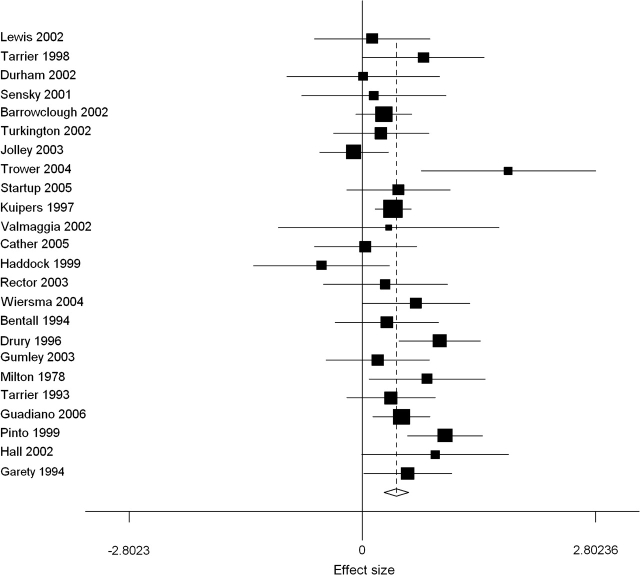
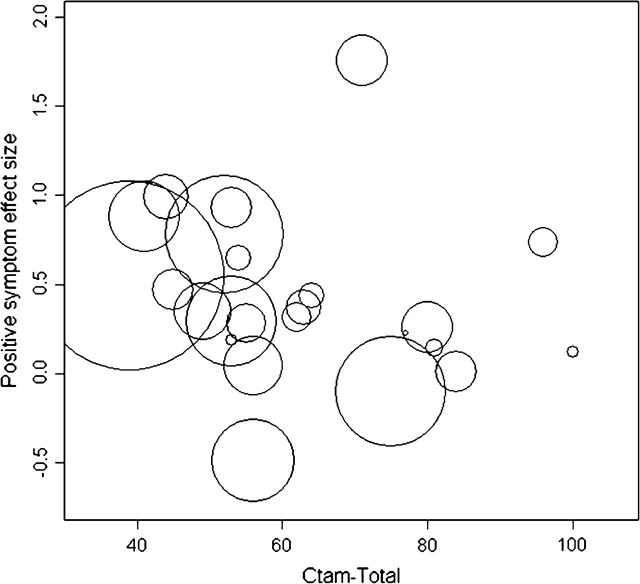
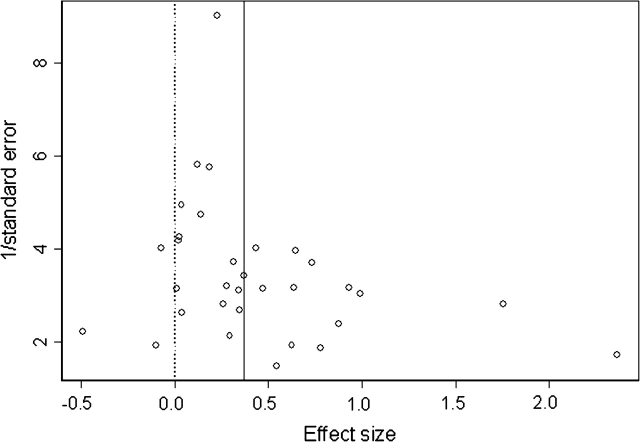
BACKGROUND: Guidance in the United States and United Kingdom has included cognitive behavior therapy for psychosis (CBTp) as a preferred therapy. But recent advances have widened the CBTp targets to other symptoms and have different methods of provision, eg, in groups. AIM: To explore the effect sizes of current CBTp trials including targeted and nontargeted symptoms, modes of action, and effect of methodological rigor. METHOD: Thirty-four CBTp trials with data in the public domain were used as source data for a meta-analysis and investigation of the effects of trial methodology using the Clinical Trial Assessment Measure (CTAM). RESULTS: There were overall beneficial effects for the target symptom (33 studies; effect size = 0.400 [95% confidence interval [CI] = 0.252, 0.548]) as well as significant effects for positive symptoms (32 studies), negative symptoms (23 studies), functioning (15 studies), mood (13 studies), and social anxiety (2 studies) with effects ranging from 0.35 to 0.44. However, there was no effect on hopelessness. Improvements in one domain were correlated with improvements in others. Trials in which raters were aware of group allocation had an inflated effect size of approximately 50%-100%. But rigorous CBTp studies showed benefit (estimated effect size = 0.223; 95% CI = 0.017, 0.428) although the lower end of the CI should be noted. Secondary outcomes (eg, negative symptoms) were also affected such that in the group of methodologically adequate studies the effect sizes were not significant. CONCLUSIONS: As in other meta-analyses, CBTp had beneficial effect on positive symptoms. However, psychological treatment trials that make no attempt to mask the group allocation are likely to have inflated effect sizes. Evidence considered for psychological treatment guidance should take into account specific methodological detail.
Overview
The claims and statistics of this paper haven’t been checked yet.
Free: it reads the open-access text and checks the first 5 claims that cite a source we can check. Create a free account to check every claim.
Integrity signals
Registry
Cites
Statistics
Figures
Verification
Claims the paper makes
The claims and statistics of this paper haven’t been checked yet.
Free: it reads the open-access text and checks the first 5 claims that cite a source we can check. Create a free account to check every claim.
Claims other papers make about this one
Each is checked against this paper’s own text: does it say what the citing paper says it does?
The cited source doesn’t support the claim as written.
In the citing paper
“The primary outcome was change in positive symptom severity at the end of treatment and at follow-up”
From A systematic review and meta-analysis of cognitive behavioural informed psychological interventions for psychiatric inpatients with psychosis (2020) · cites this paper as Wykes et al., 2008
Checked by a reasoning model — may be wrong.
Experimental — accuracy not yet measuredThe source backs part of the claim, not all of it — or backs it for a different population, condition or comparison.
In the citing paper
“Combining medication with evidence-based psychotherapy produces clinically significant improvement over medications alone for severe depression and psychotic disorders.9,10”
From Acceptance-based Behavior Therapy for Depression With Psychosis (2015) · cites this paper as [10]
Experimental — accuracy not yet measuredThe source backs part of the claim, not all of it — or backs it for a different population, condition or comparison.
In the citing paper
“Psychological therapies have demonstrated to be effective for patients experiencing psychotic symptoms (1, 2) and are recommended by treatment guidelines already in the acute illness and treatment phase (3, 4).”
From Developing a mechanism-based therapy for acute psychiatric inpatients with psychotic symptoms: an Intervention Mapping approach (2023) · cites this paper as [1]
Experimental — accuracy not yet measuredThe source backs part of the claim, not all of it — or backs it for a different population, condition or comparison.
In the citing paper
“There is limited evidence supporting the use of pharmacological and psychological interventions for depression in the context of schizophrenia (Whitehead et al. 2002; Wykes et al., 2008).”
From Acceptance and Commitment Therapy for depression following psychosis: An examination of clinically significant change (2015) · cites this paper as Wykes et al., 2008
Experimental — accuracy not yet measuredThe source backs part of the claim, not all of it — or backs it for a different population, condition or comparison.
In the citing paper
“Although effective at treating positive symptoms, Cognitive Behavioural Therapy for psychosis (CBTp) is less effective for treating emotional dysfunction associated with psychosis such as depression, hopelessness and suicide risk (Birchwood, 2003; Wykes et al., 2008; Tarrier et al., 2006).”
From Acceptance and Commitment Therapy for depression following psychosis: An examination of clinically significant change (2015) · cites this paper as Wykes et al., 2008
Experimental — accuracy not yet measured
4 more claims about this paper
Create a free account to see every claim other papers make about this one.
Self-check
Percentages, sums and reported differences re-computed from the paper’s own numbers.
The self-check needs the paper’s full text.
Citations
Cites
1 retracted
Cognitive behaviour therapy for schizophrenia
Jones, C., Cormac, I., Silveira da Mota Neto, J. I., & Campbell, C. (2004) · Cochrane Database of Systematic Reviews · doi:10.1002/14651858.cd000524.pub2 · Cited by 269
RetractedAssessing the quality of reports of randomized clinical trials: Is blinding necessary?
Jadad, A. R., Moore, R. A., Carroll, D., Jenkinson, C., Reynolds, D. J. M., Gavaghan, D. J., & McQuay, H. J. (1996) · Controlled Clinical Trials · doi:10.1016/0197-2456(95)00134-4 · Cited by 17,582 · cited 1×
“In addition, concurrent validity was assessed within an initial 22 studies by correlation with the scores from 3 other scales devised to assess methodological rigor.(42,43,52) The correlations of these scales with the CTAM scores on the corpus of CBTp data were as follows: CTAM and Jadad, q = .”
MethodZhang, Q., Wang, C., Zheng, M., Li, Y., Li, J., Zhang, L., Shang, X., & Yan, C. (2015) · Cerebrovascular Diseases · doi:10.1159/000369778 · Cited by 11,533
Schulz (1995) · doi:10.1001/jama.1995.03520290060030 · Cited by 5,634
Dong, Y., Hao, L., Shi, Z., Wang, G., Zhang, Z., & Han, C. (2013) · Urologia Internationalis · doi:10.1159/000351405 · Cited by 4,540
The Revised CONSORT Statement for Reporting Randomized Trials: Explanation and Elaboration
Altman, D. G., Schulz, K. F., Moher, D., Egger, M., Davidoff, F., Elbourne, D., Gøtzsche, P. C., Lang, T., & for the CONSORT Group (2001) · Annals of Internal Medicine · doi:10.7326/0003-4819-134-8-200104170-00012 · Cited by 3,835
The Handbook of Research Synthesis.
Howel, D., Cooper, H., & Hedges, L. V. (1995) · Biometrics · doi:10.2307/2533295 · Cited by 3,642
Moher, D., Pham, B., Jones, A., Cook, D. J., Jadad, A. R., Moher, M., Tugwell, P., & Klassen, T. P. (1998) · The Lancet · doi:10.1016/s0140-6736(98)01085-x · Cited by 3,560 · cited 1×
“For instance, poorer quality masking of allocation of treatments has been shown to be associated with up to 40% increased estimate of benefit in circulatory and digestive diseases, mental health, obstetrics, and childbirth.(36,37)”
BackgroundAssessing the quality of controlled clinical trials
Jüni, P., Altman, D. G., & Egger, M. (2001) · BMJ · doi:10.1136/bmj.323.7303.42 · Cited by 3,309
Improving the Quality of Reporting of Randomized Controlled Trials: The CONSORT Statement
Begg, C. (1996) · JAMA · doi:10.1001/jama.1996.03540080059030 · Cited by 3,127
Research works printed but not linked: 1
- [24]NICE Schizophrenia: Core interventions in the Treatment and Management of Schizophrenia in Primary and Secondary Care 2003 20704054
Cited by
Items 601–700 of 997
Postdoctoral psychology training in preparation for specialization in serious mental illness.
Stacy, M. A., Klee, A. S., & Jansen, M. A. (2018) · Training and Education in Professional Psychology · doi:10.1037/tep0000179 · Cited by 9
Kukla, M., Strasburger, A. M., Salyers, M. P., Rollins, A. L., & Lysaker, P. H. (2018) · The Journal of Nervous and Mental Disease · doi:10.1097/nmd.0000000000000796 · Cited by 9
Schnackenberg, J., Fleming, M. P., Walker, H., & Martin, C. R. (2018) · Community Mental Health Journal · doi:10.1007/s10597-018-0280-6 · Cited by 8
“2009) and effect sizes of Cognitive Behavioural Therapy for Psychosis (CBTp) remain low to medium (Wykes et al. 2008).”
BackgroundMehl, S., Schlier, B., & Lincoln, T. M. (2018) · Zeitschrift für Psychologie · doi:10.1027/2151-2604/a000335 · Cited by 15
Beyond Belief—New Approaches to the Treatment of Paranoia
Garety, P. A., Ward, T., & Rus‐Calafell, M. (2019) · Elsevier eBooks · doi:10.1016/b978-0-12-815012-2.00025-0 · Cited by 10
Gaughran, F., Stahl, D. R., Patel, A. K., Ismail, K., Smith, S. M., Greenwood, K., Atakan, Z., Gardner-Sood, P., Stringer, D., Hopkins, D., et al. (2020) · Programme Grants for Applied Research · doi:10.3310/pgfar08010 · Cited by 10
Hartley, S., Scarratt, P., Bucci, S., KELLY, J. A., Mulligan, J., Neil, S. T., Rivers, Z., Taylor, C. D. J., Welford, M., & Haddock, G. (2013) · Behavioural and Cognitive Psychotherapy · doi:10.1017/s135246581300026x · Cited by 10
“Outcomes in CBT for psychosis treatment trials have been varied, although they have tended to focus on symptom removal or symptom reduction (Wykes et al., 2008).”
Backgroundde Pinho, L. G., Sequeira, C., Sampaio, F., Rocha, N., & Ferré‐Grau, C. (2019) · Journal of Advanced Nursing · doi:10.1111/jan.14240 · Cited by 13
Evidence-Based Psychotherapy for Schizophrenia 2011 Update
Dickerson, F., & Lehman, A. F. (2012) · FOCUS The Journal of Lifelong Learning in Psychiatry · doi:10.1176/appi.focus.10.2.217 · Cited by 10
Preventing or masking psychosis? Possible unintended consequences of the ultra high-risk strategy
Preti, A., Cella, M., & Raballo, A. (2014) · Schizophrenia Research · doi:10.1016/j.schres.2014.01.002 · Cited by 9
Letter to the Editor: A comment on Lynch et al. (2009)
Lincoln, T. M. (2009) · Psychological Medicine · doi:10.1017/s0033291709991838 · Cited by 10
“For example, one study that used an active control design (Levine et al. 1998) and was included in other meta-analyses (Lincoln et al. 2008 ; Wykes et al. 2008) were not even listed in the list of excluded studies (see supplementary online Appendix in Lynch et al. 2009).”
Group psychoeducation for forensic long-term patients with schizophrenia
Aho‐Mustonen, K. (2011) · UEF eRepo (University of Eastern Finland) · Cited by 227
Hayward, M., Berry, C., Cameron, B., Arnold, K., Berry, K., Bremner, S., Cavanagh, K., Fowler, D., Gage, H., Greenwood, K., et al. (2020) · Trials · doi:10.1186/s13063-020-4181-y · Cited by 7
Social recovery therapy for young people with emerging severe mental illness: the Prodigy RCT
Fowler, D., Berry, C., Hodgekins, J., Banerjee, R., Barton, G., Byrne, R., Clarke, T., Fraser, R., Grant, K., Greenwood, K., et al. (2021) · Health Technology Assessment · doi:10.3310/hta25700 · Cited by 7
Knott, V., Wright, N. P., Shah, D. K., Baddeley, A., Bowers, H., de la Salle, S., & Labelle, A. (2020) · Frontiers in Psychiatry · doi:10.3389/fpsyt.2020.00555 · Cited by 10
McDarby, F., & Looney, K. (2023) · International Journal of Obesity · doi:10.1038/s41366-023-01390-6 · Cited by 12
“Scores range from 0 – 100, with scores of 65 or above representing adequate methodology [23].”
Social cognition interventions for patients with first-episode psychosis: A scoping review
Tang, J. M. Y., Chiu, K. K. Y., Yang, C., Cheung, D. S. K., Smith, G. D., & Ho, K. H. M. (2024) · Psychiatry Research · doi:10.1016/j.psychres.2024.116191 · Cited by 7
“Wykes et al. (2008) suggested a total CTAM score of 65 or above could indicate adequate methodology.”
MethodBerry, K., Purandare, N. B., Drake, R., Elmsley, R., Jones, L. A., & Barrowclough, C. (2013) · Behavioural and Cognitive Psychotherapy · doi:10.1017/s1352465812001075 · Cited by 8
CBT for psychotic disorders: beyond meta-analyses and guidelines - it is time to implement!
Nordentoft, M., & Austin, S. F. (2014) · World Psychiatry · doi:10.1002/wps.20164 · Cited by 9
“The effect size in the most rigorously conducted trials is small (3), and evidence is lacking about the effectiveness of short versus long duration CBT (4).”
BackgroundA Model to Transform Psychosis Milieu Treatment Using CBT-Informed Interventions
Riggs, S. E., & Creed, T. A. (2016) · Cognitive and Behavioral Practice · doi:10.1016/j.cbpra.2016.08.001 · Cited by 7
Fattahi, C. B., Hamada, K., Chiang, M., Kosuru, S., Polavarapu, M., Sitthichai, R., & Fan, X. (2021) · Psychiatry Research · doi:10.1016/j.psychres.2021.113707 · Cited by 8
García, A. S., Fernández-Sotos, P., Vicente-Querol, M. Á., Sánchez-Reolid, R., Rodríguez–Jiménez, R., & Fernández‐Caballero, A. (2021) · Virtual Reality · doi:10.1007/s10055-021-00558-7 · Cited by 9
Erickson, D. H. (2010) · Early Intervention in Psychiatry · doi:10.1111/j.1751-7893.2010.00184.x · Cited by 7
Treatment of hallucinations: A comment
Corstens, D., Longden, E., Rydinger, B., Bentall, R. P., & van Os, J. (2012) · Psychosis · doi:10.1080/17522439.2012.740069 · Cited by 11
Greer, J., Smailes, D., Spencer, H. M., Freeston, M. H., & Dudley, R. E. J. (2015) · Journal of Behavior Therapy and Experimental Psychiatry · doi:10.1016/j.jbtep.2015.04.005 · Cited by 7
Measuring adherence in social recovery therapy with people with first episode psychosis
Lowen, C., Hodgekins, J., Pugh, K., Berry, C., Fitzsimmons, M., French, P., Sacadura, C., Birchwood, M. J., Jackson, C., Baggott, E., et al. (2019) · Behavioural and Cognitive Psychotherapy · doi:10.1017/s1352465819000432 · Cited by 8
Third-Wave CBT Interventions for Psychosis
Ellett, L., & Kingston, J. L. (2019) · Elsevier eBooks · doi:10.1016/b978-0-12-815012-2.00016-x · Cited by 10
ACT early: Acceptance and commitment therapy in early intervention in psychosis
Morris, E. M. J., & Oliver, J. (2009) · Clinical Psychology Forum · doi:10.53841/bpscpf.2009.1.196.27 · Cited by 7
Clark, C. M. (2013) · Clinical Schizophrenia & Related Psychoses · doi:10.3371/csrp.cl.061213 · Cited by 9
Cognitive Behavioural Therapies for Psychosis
Johns, L., Isham, L., & Manser, R. (2019) · Elsevier eBooks · doi:10.1016/b978-0-12-815012-2.00015-8 · Cited by 11
Advances in Cognitive Behavior Therapy for Psychosis
Turkington, D., Wright, N. P., & Tai, S. (2013) · International Journal of Cognitive Therapy · doi:10.1521/ijct.2013.6.2.150 · Cited by 7
Cultural Adaptation of Cognitive Behavioural Therapy
Rathod, S., Kingdon, D., Pinninti, N. R., Turkington, D., & Phiri, P. (2015) · Wiley eBooks · doi:10.1002/9781118976159.ch2 · Cited by 9
Lecomte, T., & Lecomte, C. (2012) · Journal of Psychotherapy Integration · doi:10.1037/a0029575 · Cited by 7
Bédard, M., Russell, J. J., & Myhr, G. (2015) · Psychiatry Research · doi:10.1016/j.psychres.2015.09.049 · Cited by 5
“Cognitive behavioral therapy (CBT) is efficacious in the treatment of most psychiatric disorders (Norton and Price, 2007; Wykes et al., 2008; Da Costa et al., 2010).”
BackgroundChang, Y., Davidavičienė, V., Bronner, A., & Yeshwant Raj., S. (2025) · IEEE Transactions on Engineering Management · doi:10.1109/tem.2025.3546164 · Cited by 9
“To assess the stability and robustness of the hierarchical regression findings [17], [57], subsample analyses were conducted using 75% and 85% of the dataset, with results compared against those derived from the full dataset.”
Cheng, B.-F., Liang, Y., & Wu, Q. (2025) · World Journal of Psychiatry · doi:10.5498/wjp.v15.i11.107604 · Cited by 8
Bornheimer, L. A., Verdugo, J. L., Brdar, N. M., Im, V., Jeffers, N., Bushnell, C. B., Hoener, K., Tasker, M., DeWeese, K., Florence, T., et al. (2024) · Pilot and Feasibility Studies · doi:10.1186/s40814-024-01523-2 · Cited by 7
“…therapy for psychosis (CBTp) lacks an evidence base that demonstrates efficacy in reducing suicide thoughts and behaviors [4, 40, 41], and cognitive-behavioral therapy for suicide prevention (CBT-SP) does not target psychosis symptoms nor demonstrate efficacy in reducing…”
BackgroundMankiewicz, P. D. (2019) · Clinical Case Studies · doi:10.1177/1534650119826713 · Cited by 8
Eficacia del entrenamiento metacognitivo en una muestra chilena de personas con esquizofrenia
Vanessa Acuña, P., Otto, A., Álvaro Cavieres, F., & Villalobos, H. (2021) · Revista Colombiana de Psiquiatría · doi:10.1016/j.rcp.2020.12.006 · Cited by 7
Ryan, M., Sattenspiel, D., Chianese, A. A., & Rice, H. (2022) · AJN American Journal of Nursing · doi:10.1097/01.naj.0000854488.48801.59 · Cited by 6
“In all eight studies, patients were receiving antipsychotic medications: five studies named clozapine specifically 21, 30, 32, (33); two studies cited the use of atypical antipsychotics without naming clozapine, 31 and one simply noted the use of “appropriate” medications.(34) In all eight studies, antipsychotic medic…”
Kopelovich, S. L., Maura, J., Blank, J. M., & Lockwood, G. J. (2022) · BMC Health Services Research · doi:10.1186/s12913-022-08725-5 · Cited by 8
“In a comprehensive analysis of extant RCTs, Wykes and colleagues [10] found no evidence of a statistically significant difference in effect size between individual and group CBTp for the target symptom (individual ES = 0.”
BackgroundHave the potential benefits of CBT for severe mental disorders been undersold?
Mueser, K. T., & Glynn, S. M. (2014) · World Psychiatry · doi:10.1002/wps.20160 · Cited by 6
“measure a broad range of study characteristics, such as using standardized approaches to quantify methodological rigor, publication bias, and the outcomes themselves, and this has been true in work evaluating the outcomes from CBT for psychosis (2,4,5).”
BackgroundSteenhuis, L. A., Nauta, M. H., Bocking, C. L. H., & Pijnenborg, G. H. M. (2015) · PLoS ONE · doi:10.1371/journal.pone.0140637 · Cited by 11
“36) on mood in psychosis [14], but this is most likely a secondary effect through relief of positive symptoms.”
BackgroundPsychotherapie der Schizophrenie
Vauth, R. (2012) · PSYCH up2date · doi:10.1055/s-0032-1305336 · Cited by 7
La terapia cognitivo conductual y los síntomas negativos en la esquizofrenia
Morales, T., Fresán, A., Robles-García, R., Domínguez, M., Facultad de Psicología, U. N. A. D. M., Instituto Nacional de Psiquiatría Ramón de la Fuente Muñiz, M., & Psicología Clínica, U. D. V. D. M. (2015) · Salud Mental · doi:10.17711/sm.0185-3325.2015.050 · Cited by 12
Kumar, D., & Venkatasubramanian, G. (2018) · Journal of Cognitive Psychotherapy · doi:10.1891/0889-8391.32.3.192 · Cited by 8
Delusional Beliefs in the Clinical Context
Upthegrove, R., & Stoljarova, A. A. (2018) · Springer eBooks · doi:10.1007/978-3-319-97202-2_1 · Cited by 9
Toward a family-oriented treatment approach for consumers and carers of mental illness
Sawrikar, P., & Muir, K. (2017) · International Journal of Mental Health · doi:10.1080/00207411.2017.1367448 · Cited by 8
Hesse, K., Herrlich, J., Kossow, S. B., Wiedemann, G., Wittorf, A., Wölwer, W., Buchkremer, G., & Klingberg, S. (2008) · Nervenheilkunde · doi:10.1055/s-0038-1627232 · Cited by 7
McKenna, P. J., & Mortimer, A. M. (2013) · Expert Review of Neurotherapeutics · doi:10.1586/14737175.2014.864237 · Cited by 7
Is treatment-resistance in psychiatric disorders a trap for polypharmacy?
Jašović‐Gašić, M. (2015) · PubMed · Cited by 6
Hutton, P. (2016) · Wiley eBooks · doi:10.1002/9781118468197.ch17 · Cited by 7
A temporal network approach to paranoia: A pilot studyPreprint
Contreras, A., Valiente, C., Heeren, A., & Bentall, R. P. (2020) · PsyArXiv (OSF Preprints) · doi:10.31234/osf.io/fvpt5 · Cited by 7
Kamp, D., Lowe, A., Weide, K., Riesbeck, M., Bechdolf, A., Leopold, K., Brockhaus‐Dumke, A., Klos, B., Hurlemann, R., Wasserthal, S., et al. (2025) · Schizophrenia Research · doi:10.1016/j.schres.2025.02.015 · Cited by 7
“…– 0.5) on global measures of functioning in schizophrenia were reported for treatments aimed at symptom reduction, such as antipsychotic drugs (Swartz et al., 2007) or behavioural therapy (Wykes et al., 2008) and for social skills training aimed at promoting social skills (Kurtz and Mueser, 2008).”
InfluentialGelner, H., Krężołek, M., Aleksandrowicz, A., Piwińska, J., Lamarca, M., Berna, F. S., Vanessa Acuña, P., König, C., Moritz, S., Ochoa, S., et al. (2025) · Schizophrenia Research · doi:10.1016/j.schres.2025.06.017 · Cited by 6
Wong, J. P.-S., Ting, K. T., & Wong, A. W. S. (2019) · International Review of Psychiatry · doi:10.1080/09540261.2019.1634012 · Cited by 6
“Unfortunately, all of these studies have their own methodological limitations that undermine the rigour of their reported positive effects, including the lack of a well-controlled group (Rothwell, 2006; Wykes et al., 2008) and the absence of unblinded raters (Jadad et al.”
BackgroundMethodKatsushima, M., Nakamura, H., Shiko, Y., Hanaoka, H., & Shimizu, E. (2025) · JMIR Formative Research · doi:10.2196/59540 · Cited by 10
Steel, C. (2017) · Frontiers in Psychology · doi:10.3389/fpsyg.2016.02035 · Cited by 5
“Whilst clinical trials have produced impressive results within CBT for anxiety disorders such as panic and social phobia, the outcomes of CBTp trials have been modest with an effect size typically in the region of 0.4 (Wykes et al., 2008).”
InfluentialSelf-citationKlingberg, S., & Hesse, K. (2013) · Psychotherapeut · doi:10.1007/s00278-013-0999-z · Cited by 6
ACT and CBT for psychosis: comparisons and contrasts
McLeod, H. J. (2009) · Research Online (University of Wollongong) · Cited by 6
Cognitive Behavioral Therapy for Psychosis (CBTp)
Garrett, M. (2012) · Springer eBooks · doi:10.1007/978-1-4614-3149-7_13 · Cited by 6
“Studies have demonstrated that CBTp can result in decreased positive symptoms, improvement in negative symptoms, and improved functioning (Wykes et al., 2008; Burns et al., 2014; Turner et al., 2014, van der Gaag, Valmaggia & Smit, 2014).”
Psychiatry and Reality – Perception of Matter or Matter of Perception?
Werneke, U. (2010) · NeuroQuantology · doi:10.14704/nq.2011.9.1.322 · Cited by 7
“It may, however, explain why although cognitive behavioral therapy has some effect on positive psychotic symptoms helping people to cope with their subjective realities (Wykes et al, 2008; Penn, 2009 ) it still fails to dislodge such realities and prevent relapse (Garety et al, 2008 ).”
BackgroundBrockman, R. N., Kiernan, M. J., Brakoulias, V., & Murrell, E. (2014) · Journal of Cognitive Psychotherapy · doi:10.1891/0889-8391.28.2.101 · Cited by 6
“Interestingly, of the 18 studies included in the Wykes et al. (2008) meta-analysis of CBTp interventions delivered in an individual format, all but 1 used global syndrome-focused outcome measures such as the Positive subscale of the Positive and Negative Syndrome Scale (P-PANSS; Kay, Fiszbein, &…”
BackgroundResultSchizophrenia in the 21st Century
Burne, T. H. J. (2012) · InTech eBooks · doi:10.5772/1669 · Cited by 5
Metacognitive Training and Therapy
Woodward, T. S., Balzan, R. P., Menon, M., & Moritz, S. (2014) · Elsevier eBooks · doi:10.1016/b978-0-12-405172-0.00011-9 · Cited by 7
Kukla, M., Strasburger, A. M., Salyers, M. P., Rollins, A. L., & Lysaker, P. H. (2020) · Journal of Clinical Psychology · doi:10.1002/jclp.23048 · Cited by 8
Möller, H. ‐., Schaub, A., & Riedel, M. (2011) · Springer eBooks · doi:10.1007/978-3-642-03637-8_52 · Cited by 5
Pradhan, B., & Pinninti, N. R. (2016) · Springer eBooks · doi:10.1007/978-3-319-30521-9_5 · Cited by 7
Metacognition, Empathy, and Cognitive Biases in Schizophrenia and OCD
Coulacoglou, C., & Saklofske, D. H. (2017) · Elsevier eBooks · doi:10.1016/b978-0-12-802219-1.00006-7 · Cited by 7
Klingberg, S., & Hesse, K. (2018) · Der Nervenarzt · doi:10.1007/s00115-017-0474-0 · Cited by 5
Negativsymptome in der Schizophrenie und ihre Differenzialdiagnose
Unger, A., Erfurth, A., & Sachs, G. (2018) · psychopraxis neuropraxis · doi:10.1007/s00739-018-0455-5 · Cited by 7
“An dieser Stelle sei auch dargestellt, wie dieTherapie von Negativsymptomen bei gesicherter Schizophrenie durchgeführt werden könnte: Negativsymptome sind schwierig zu behandeln, moderate BehandlungseffektewurdenfüreinigepsychosozialeTherapienwiesozialesKompetenztraining[19] undkognitiveVerhaltenstherapie [20,21] geze…”
BackgroundGarrett, M., Ahmed, A. O., Athineos, C., Cruz, L. N., Harris, K. R., Pozzo, J. D., Forster, V., & Gallego, J. (2019) · Psychosis · doi:10.1080/17522439.2019.1632377 · Cited by 5
Hunter, N. (2013) · Ethical Human Psychology and Psychiatry · doi:10.1891/1559-4343.15.3.160 · Cited by 5
A possible role for Progressive Muscle Relaxation in the treatment of persecutory ideation
Ben‐Zeev, D., Larson, J. E., & Sarratt, M. (2010) · Medical Hypotheses · doi:10.1016/j.mehy.2010.07.033 · Cited by 9
“Cognitive Behavioral Therapies (CBT) have received the most amount of attention and have been shown to have small to moderate effect sizes in improving positive symptoms of psychosis overall, including persecutory delusions [23].”
BackgroundGroup Person‐based Cognitive Therapy for Distressing Psychosis
Strauss, C., & Hayward, M. (2013) · Wiley eBooks · doi:10.1002/9781118499184.ch16 · Cited by 5
CBT for psychosis: not a ‘quasi-neuroleptic’
Byrne, R. E. (2014) · The British Journal of Psychiatry · doi:10.1192/bjp.204.6.489 · Cited by 6
Computerized Trans-Diagnostic Dialectical Behavior Therapy Skills Training for Emotion Dysregulation
Lungu, A. (2015) · ResearchWorks at the University of Washington (University of Washington) · Cited by 9
Stefaniak, I., Gabor-Siatkowska, K., Kozłowski, M., & Janicki, A. (2026) · PLoS ONE · doi:10.1371/journal.pone.0343519 · Cited by 4
DO CHILDHOOD MEMORIES INFLUENCE THE THERAPEUTIC RELATIONSHIP? AN EMPIRICAL BAYESIAN SEM APPROACH
Fuchshuber, J., Schwigon, D., Masic, N., & Löffler‐Stastka, H. (2024) · Psychiatria Danubina · doi:10.24869/psyd.2024.224 · Cited by 4
“Psychotherapeutic treatment of schizophrenia and related psychotic disorders are commonly accepted as effective (Gottdiener & Haslam 2002, Pfammatter et al. 2006, Pharoah et al. 2010, Wykes et al. 2008), but more research is needed to understand predictors of better out - comes.”
Silverstein, S. M., & Lysaker, P. H. (2009) · Clinical Case Studies · doi:10.1177/1534650109352004 · Cited by 5
Can jinn be a tonic? The therapeutic value of spirit-related beliefs, practices and experiences
Scrutton, A. P. (2016) · Filosofia Unisinos · doi:10.4013/fsu.2016.172.12 · Cited by 4
Sheaves, B., PETERS, E. R., Stahl, D. R., & Johns, L. (2019) · Journal of Mental Health · doi:10.1080/09638237.2019.1581327 · Cited by 4
Wood, L., Morrison, A. P., Lay, B., Williams, C., & Johnson, S. (2024) · Psychosis · doi:10.1080/17522439.2024.2386176 · Cited by 5
Fear and Anxiety in Schizophrenia: A Focus on Development, Assessment, and Mechanisms
Feola, B., Jenkins, M., Sheffield, J. M., & Blackford, J. U. (2024) · Current topics in behavioral neurosciences · doi:10.1007/7854_2024_558 · Cited by 8
Bottoms, H. C., Treichler, E. B. H., Davidson, C. A., & Spaulding, W. D. (2015) · American Journal of Psychiatric Rehabilitation · doi:10.1080/15487768.2014.954157 · Cited by 4
“…even simple operational measures of key features of insight provide targets for educational and cognitivebehavioral treatments, known to be effective in improving the understanding and managing of one’s illness (e.g., Kemp, David, & Hayward, 1996; Rathod & Turkington, 2005; Wykes et al., 2008).”
BackgroundBrockman, R. N., & Murrell, E. (2015) · Journal of Cognitive Psychotherapy · doi:10.1891/0889-8391.29.1.45 · Cited by 6
“Of the 27 studies included in the Wykes et al. (2008) meta-analysis of CBTp interventions delivered in an individual format, 24 used syndrome-focused instruments as the primary measure of outcome, with the positive subscale of the Positive and Negative Syndrome Scale (PANSS; Kay, Fiszbein, & Opler,…”
BackgroundMethodResultInfluentialThe Importance of Cognitive Processes for the Integrative Treatment of Persons with Schizophrenia
Pfammatter, M., Brenner, H. D., Junghan, U. M., & Tschacher, W. (2011) · Schizophrenia Bulletin · doi:10.1093/schbul/sbr099 · Cited by 6
Further evidence for the effectiveness of a metacognitive group training in schizophrenia
Moritz, S., Kerstan, A., Veckenstedt, R., Randjbar, S., Vitzthum, F., Schmidt, C. S., & Heise, M. (2010) · Cited by 5
Metakognitives Training bei Psychose und Depression
Jelinek, L., Kolbeck, K., & Moritz, S. (2016) · DNP - Der Neurologe und Psychiater · doi:10.1007/s15202-016-1396-6 · Cited by 4
Exploring the barriers to the implementation of cognitive behavioural therapy for psychosis (CBTp)
Switzer, F., Harper, S. F., & Peck, D. (2019) · Mental Health Review Journal · doi:10.1108/mhrj-06-2018-0017 · Cited by 7
Effectiveness of Cognitive Behavioural Therapy for Suicide in Schizophrenia: A Systematic Review
Penadés, R., Forte, M. F., Mezquida, G., González-Rodríguez, A., García‐Rizo, C., Catalán, R., & Bernardo, M. (2021) · Current Psychiatry Research and Reviews · doi:10.2174/2666082218666211220164527 · Cited by 4
Aunjitsakul, W., McLeod, H. J., & Gumley, A. I. (2022) · Psychiatry Research Communications · doi:10.1016/j.psycom.2022.100028 · Cited by 5
“, 2019), along with well-defined psychological treatment studies (Wykes et al., 2008).”
BackgroundBaharnoori, M., Bartholomeusz, C., Boucher, A. A., Buchy, L., Chaddock, C., Chiliza, B., Föcking, M., Fornito, A., Gallego, J. A., Hori, H., et al. (2010) · Schizophrenia Research · doi:10.1016/j.schres.2010.09.008 · Cited by 8
“A recent review on CBTp suggested that a good therapeutic alliance, therapeutic expertise, prolonged therapy, and the presence of caregivers improve therapeutic outcome.”
InfluentialGrossman, M., Doell, F. K., Watson-Gaze, J., Baer, L. H., Martins, F., & Kidd, S. A. (2022) · Community Mental Health Journal · doi:10.1007/s10597-022-00956-4 · Cited by 5
“group-based CBTp (Wykes et al., 2008), negative perceptions of group treatment may also influence attrition rates.”
BackgroundEfficacy of Metacognitive Training in a Chilean Sample of People with Schizophrenia
Vanessa Acuña, P., Otto, A., Álvaro Cavieres, F., & Villalobos, H. (2022) · Revista Colombiana de Psiquiatría (English ed ) · doi:10.1016/j.rcpeng.2020.12.002 · Cited by 8
Promoting psychological interventions in psychosis: the NSW Tertiary Referral Service for Psychosis
Davies, K., Gott, C., Ferdman, A., Lloyd, K., Pnevmatikos, N., Chase, E., & Lappin, J. (2023) · Australian Psychologist · doi:10.1080/00050067.2023.2211759 · Cited by 5
Khakbaz, H., Khanjani, M. S., Younesi, S. J., Ardakani, M. R. K., Safi, M. H., & Hosseinzadeh, S. (2023) · فصلنامه علمی پژوهشی توانبخشی · doi:10.32598/rj.24.1.1450.3 · Cited by 4
Katsushima, M., Nakamura, H., Hanaoka, H., Shiko, Y., Komatsu, H., & Shimizu, E. (2023) · BMJ Open · doi:10.1136/bmjopen-2022-069734 · Cited by 4
Takeda, T., Nakataki, M., Umehara, H., & Numata, S. (2023) · Schizophrenia Research Cognition · doi:10.1016/j.scog.2023.100298 · Cited by 9
“Several meta-analyses demonstrate the benefits of cognitive behavioral therapy for psychosis (CBT-p) (Jauhar et al., 2014; Pfammatter, 2011; Wykes et al., 2008).”
BackgroundSivec, H. J., Montesano, V. L., Skubby, D., Knepp, K. A., & Munetz, M. R. (2015) · Community Mental Health Journal · doi:10.1007/s10597-015-9930-0 · Cited by 7
“This recommendation rests upon a series of metaanalyses reporting small to medium pre- to post-treatment effect sizes (see Wykes et al. 2008).”
Background
Metadata
- Authors
- Wykes, T., Steel, C., Everitt, B., & Tarrier, N.
- Affiliations
- King's College London (GB)
- University of Manchester (GB)
- Venue
- Schizophrenia Bulletin
- Publisher
- Oxford University Press (OUP)
- Published
- 2007-05-04
- Volume
- 34
- Issue
- 3
- Pages
- 523-537
- ISSN
- 0586-7614 (ISSN-L)
- 1745-1701
- PMC
- PMC2632426
- OpenAlex
- W2140526915
- Cited by
- 1,029
- References
- 98
- Citations by year
- 2026: 16 · 2025: 27 · 2024: 29 · 2023: 39 · 2022: 42 · 2021: 39 · 2020: 38 · 2019: 64 · 2018: 59 · 2017: 62 · 2016: 76 · 2015: 73 · 2014: 91 · 2013: 96 · 2012: 87
- FWCI
- 5.68
- Type
- journal article
- Language
- en
- Open access
- hybrid
- doi.org
- Licence
- cc-by-nc
- Locations
- Schizophrenia Bulletin (publishedVersion, cc-by-nc)
- PubMed Central (publishedVersion, cc-by-nc)
- PubMed (publishedVersion)
- Research Explorer (The University of Manchester) (publishedVersion)
- CentAUR (University of Reading) (acceptedVersion)
- Research Portal (King's College London) (submittedVersion, public-domain)
- Topics
- Health Sciences › Medicine › Psychiatry and Mental health › Schizophrenia research and treatment
- Social Sciences › Psychology › Clinical Psychology › Psychotherapy Techniques and Applications
- Social Sciences › Psychology › Clinical Psychology › Psychological Treatments and Assessments
- Keywords
- schizophrenia
- MeSH terms
- Humans, Psychometrics, Schizophrenia, Cognitive Behavioral Therapy
About these checks
Registry, retraction, Cites and statistics results are computed, not judged, with one exception: a printed reference that no index lists is read once by a model before it counts as a citation error. Claims are extracted by a model and kept only when their quote appears verbatim in the text; each cited source is then checked, with a model’s help, for whether it says what the claim relies on. Those verdicts can be wrong — read the claim’s quote and the cited source before relying on one.
Statistics and arithmetic are recomputed, not judged.
Confidence bands are shown only for fields calibrated on our annotated test set. None is calibrated yet, so no band is shown.
What counts as a claim ›How we measure confidence ›How we check this ›
Are you an author, or do you see a problem with this page? Request a review
Data sources
Bibliographic data: Semantic Scholar, OpenAlex, Crossref.
Contains information from the Semantic Scholar Academic Graph Datasets, made available under the ODC Attribution License (ODC-BY 1.0).
Semantic Scholar’s data is described in: Kinney, R., et al. (2023). The Semantic Scholar Open Data Platform. arXiv:2301.10140.
