

. Cognitive behavior therapy for schizophrenia: effect sizes, clinical models, and methodological rigor.
Open accessThe DOI matches its Crossref record; 98 of the 98 references it cites were found in a registry or an index.
Abstract
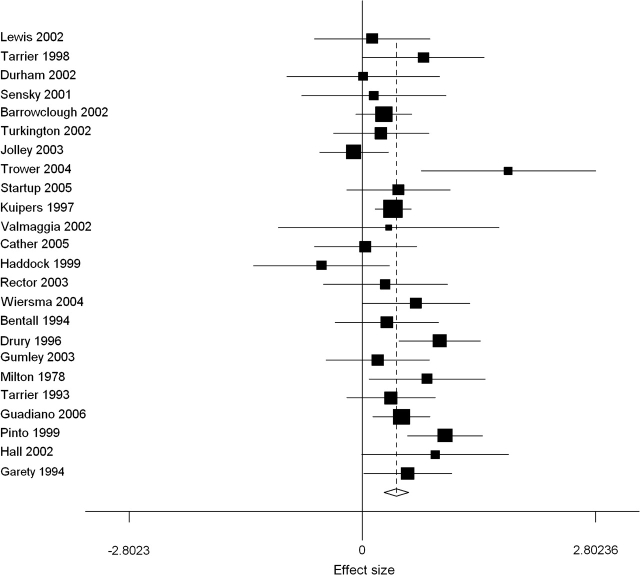
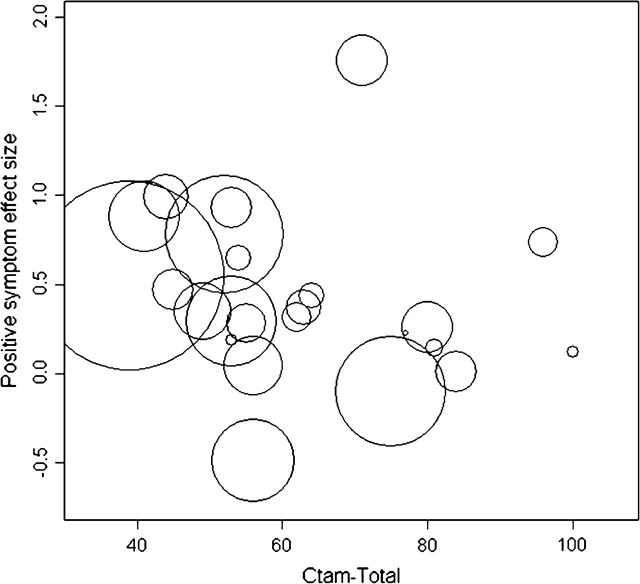
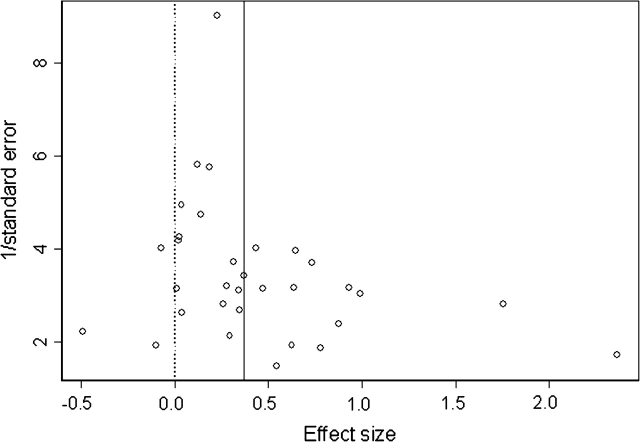
BACKGROUND: Guidance in the United States and United Kingdom has included cognitive behavior therapy for psychosis (CBTp) as a preferred therapy. But recent advances have widened the CBTp targets to other symptoms and have different methods of provision, eg, in groups. AIM: To explore the effect sizes of current CBTp trials including targeted and nontargeted symptoms, modes of action, and effect of methodological rigor. METHOD: Thirty-four CBTp trials with data in the public domain were used as source data for a meta-analysis and investigation of the effects of trial methodology using the Clinical Trial Assessment Measure (CTAM). RESULTS: There were overall beneficial effects for the target symptom (33 studies; effect size = 0.400 [95% confidence interval [CI] = 0.252, 0.548]) as well as significant effects for positive symptoms (32 studies), negative symptoms (23 studies), functioning (15 studies), mood (13 studies), and social anxiety (2 studies) with effects ranging from 0.35 to 0.44. However, there was no effect on hopelessness. Improvements in one domain were correlated with improvements in others. Trials in which raters were aware of group allocation had an inflated effect size of approximately 50%-100%. But rigorous CBTp studies showed benefit (estimated effect size = 0.223; 95% CI = 0.017, 0.428) although the lower end of the CI should be noted. Secondary outcomes (eg, negative symptoms) were also affected such that in the group of methodologically adequate studies the effect sizes were not significant. CONCLUSIONS: As in other meta-analyses, CBTp had beneficial effect on positive symptoms. However, psychological treatment trials that make no attempt to mask the group allocation are likely to have inflated effect sizes. Evidence considered for psychological treatment guidance should take into account specific methodological detail.
Overview
The claims and statistics of this paper haven’t been checked yet.
Free: it reads the open-access text and checks the first 5 claims that cite a source we can check. Create a free account to check every claim.
Integrity signals
Registry
Cites
Statistics
Figures
Verification
Claims the paper makes
The claims and statistics of this paper haven’t been checked yet.
Free: it reads the open-access text and checks the first 5 claims that cite a source we can check. Create a free account to check every claim.
Claims other papers make about this one
Each is checked against this paper’s own text: does it say what the citing paper says it does?
The cited source doesn’t support the claim as written.
In the citing paper
“The primary outcome was change in positive symptom severity at the end of treatment and at follow-up”
From A systematic review and meta-analysis of cognitive behavioural informed psychological interventions for psychiatric inpatients with psychosis (2020) · cites this paper as Wykes et al., 2008
Checked by a reasoning model — may be wrong.
Experimental — accuracy not yet measuredThe source backs part of the claim, not all of it — or backs it for a different population, condition or comparison.
In the citing paper
“Combining medication with evidence-based psychotherapy produces clinically significant improvement over medications alone for severe depression and psychotic disorders.9,10”
From Acceptance-based Behavior Therapy for Depression With Psychosis (2015) · cites this paper as [10]
Experimental — accuracy not yet measuredThe source backs part of the claim, not all of it — or backs it for a different population, condition or comparison.
In the citing paper
“Psychological therapies have demonstrated to be effective for patients experiencing psychotic symptoms (1, 2) and are recommended by treatment guidelines already in the acute illness and treatment phase (3, 4).”
From Developing a mechanism-based therapy for acute psychiatric inpatients with psychotic symptoms: an Intervention Mapping approach (2023) · cites this paper as [1]
Experimental — accuracy not yet measuredThe source backs part of the claim, not all of it — or backs it for a different population, condition or comparison.
In the citing paper
“There is limited evidence supporting the use of pharmacological and psychological interventions for depression in the context of schizophrenia (Whitehead et al. 2002; Wykes et al., 2008).”
From Acceptance and Commitment Therapy for depression following psychosis: An examination of clinically significant change (2015) · cites this paper as Wykes et al., 2008
Experimental — accuracy not yet measuredThe source backs part of the claim, not all of it — or backs it for a different population, condition or comparison.
In the citing paper
“Although effective at treating positive symptoms, Cognitive Behavioural Therapy for psychosis (CBTp) is less effective for treating emotional dysfunction associated with psychosis such as depression, hopelessness and suicide risk (Birchwood, 2003; Wykes et al., 2008; Tarrier et al., 2006).”
From Acceptance and Commitment Therapy for depression following psychosis: An examination of clinically significant change (2015) · cites this paper as Wykes et al., 2008
Experimental — accuracy not yet measured
4 more claims about this paper
Create a free account to see every claim other papers make about this one.
Self-check
Percentages, sums and reported differences re-computed from the paper’s own numbers.
The self-check needs the paper’s full text.
Citations
Cites
1 retracted
Cognitive behaviour therapy for schizophrenia
Jones, C., Cormac, I., Silveira da Mota Neto, J. I., & Campbell, C. (2004) · Cochrane Database of Systematic Reviews · doi:10.1002/14651858.cd000524.pub2 · Cited by 269
RetractedAssessing the quality of reports of randomized clinical trials: Is blinding necessary?
Jadad, A. R., Moore, R. A., Carroll, D., Jenkinson, C., Reynolds, D. J. M., Gavaghan, D. J., & McQuay, H. J. (1996) · Controlled Clinical Trials · doi:10.1016/0197-2456(95)00134-4 · Cited by 17,582 · cited 1×
“In addition, concurrent validity was assessed within an initial 22 studies by correlation with the scores from 3 other scales devised to assess methodological rigor.(42,43,52) The correlations of these scales with the CTAM scores on the corpus of CBTp data were as follows: CTAM and Jadad, q = .”
MethodZhang, Q., Wang, C., Zheng, M., Li, Y., Li, J., Zhang, L., Shang, X., & Yan, C. (2015) · Cerebrovascular Diseases · doi:10.1159/000369778 · Cited by 11,533
Schulz (1995) · doi:10.1001/jama.1995.03520290060030 · Cited by 5,634
Dong, Y., Hao, L., Shi, Z., Wang, G., Zhang, Z., & Han, C. (2013) · Urologia Internationalis · doi:10.1159/000351405 · Cited by 4,540
The Revised CONSORT Statement for Reporting Randomized Trials: Explanation and Elaboration
Altman, D. G., Schulz, K. F., Moher, D., Egger, M., Davidoff, F., Elbourne, D., Gøtzsche, P. C., Lang, T., & for the CONSORT Group (2001) · Annals of Internal Medicine · doi:10.7326/0003-4819-134-8-200104170-00012 · Cited by 3,835
The Handbook of Research Synthesis.
Howel, D., Cooper, H., & Hedges, L. V. (1995) · Biometrics · doi:10.2307/2533295 · Cited by 3,642
Moher, D., Pham, B., Jones, A., Cook, D. J., Jadad, A. R., Moher, M., Tugwell, P., & Klassen, T. P. (1998) · The Lancet · doi:10.1016/s0140-6736(98)01085-x · Cited by 3,560 · cited 1×
“For instance, poorer quality masking of allocation of treatments has been shown to be associated with up to 40% increased estimate of benefit in circulatory and digestive diseases, mental health, obstetrics, and childbirth.(36,37)”
BackgroundAssessing the quality of controlled clinical trials
Jüni, P., Altman, D. G., & Egger, M. (2001) · BMJ · doi:10.1136/bmj.323.7303.42 · Cited by 3,309
Improving the Quality of Reporting of Randomized Controlled Trials: The CONSORT Statement
Begg, C. (1996) · JAMA · doi:10.1001/jama.1996.03540080059030 · Cited by 3,127
Research works printed but not linked: 1
- [24]NICE Schizophrenia: Core interventions in the Treatment and Management of Schizophrenia in Primary and Secondary Care 2003 20704054
Cited by
Items 701–800 of 997
New Targets for the Management of Schizophrenia
Dılbaz, N., & CONTINUUM Treatment Group (2015) · Klinik Psikofarmakoloji Bülteni-Bulletin of Clinical Psychopharmacology · doi:10.5455/bcp.20151125024949 · Cited by 7
Moritz, S., & Schneider, B. C. (2016) · Current Treatment Options in Psychiatry · doi:10.1007/s40501-016-0081-x · Cited by 6
Emerging behavioral and psychotherapeutic interventions for schizophrenia
O’Donnell, B. F., & Martin, A. M. S. (2016) · Dusunen Adam The Journal of Psychiatry and Neurological Sciences · doi:10.5350/dajpn20162903001 · Cited by 6
“08 for negative symptoms (56,57,59,61), and from 0.”
Cognitive behavioural therapy for anxiety in psychosis: a systematic review and meta-analysis
Heavens, D., Odgers, K., & Hodgekins, J. (2019) · Psychosis · doi:10.1080/17522439.2019.1618380 · Cited by 5
Further validation of the Cognitive Biases Questionnaire for psychosis
Samson, C., Achim, A. M., Sicard, V., Gilker, A., Francoeur, A., Franck, N., Cloutier, B., Giguère, C., Jean-Baptiste, F., & Lecomte, T. (2022) · BMC Psychiatry · doi:10.1186/s12888-022-04203-8 · Cited by 4
Lee, D., Ko, S.-M., Choi, Y.-S., Kim, K.-J., & Park, H. (2012) · 신경정신의학 · doi:10.4306/jknpa.2012.51.4.192 · Cited by 5
“총 18문항으로 구성되 어 있고, 사고장애(4, 12, 15), 철퇴-지연(3~13, 16), 불안-우 울(2, 5, 9), 적대-의심(10, 11, 14), 동요-흥분(6~17)의 다섯 가지 하위척도 점수를 얻을 수 있다.”
Bridle, D., McCabe, R., & Priebe, S. (2012) · Psychosis · doi:10.1080/17522439.2012.683036 · Cited by 4
Neuropsychologie der Schizophrenie
Wölwer, W., & Drusch, K. (2011) · Zeitschrift für Psychiatrie Psychologie und Psychotherapie · doi:10.1024/1661-4747/a000061 · Cited by 4
« Michael's game » Une approche cognitive ludique des troubles psychotiques
Khazaal, Y., & Favrod, J. (2012) · Journal de Thérapie Comportementale et Cognitive · doi:10.1016/j.jtcc.2012.06.003 · Cited by 4
Therapeutic Considerations in Individuals at Clinical Risk for Developing Psychosis
Singh, F., DeJoseph, M. L., & Cadenhead, K. S. (2014) · Current Treatment Options in Psychiatry · doi:10.1007/s40501-014-0009-2 · Cited by 4
Brief Cognitive Behavior Therapy for Psychosis
Naeem, F., & Kingdon, D. (2016) · Springer eBooks · doi:10.1007/978-3-319-30521-9_3 · Cited by 4
The Impact of Metacognition on the Development and Maintenance of Negative Symptoms
McLeod, H. J., Gumley, A. I., & Schwannauer, M. (2014) · Elsevier eBooks · doi:10.1016/b978-0-12-405172-0.00007-7 · Cited by 9
Novacek, D. M., LoPilato, A. M., Goines, K., Trotman, H. D., Compton, M. T., & Walker, E. F. (2019) · Springer eBooks · doi:10.1007/978-3-030-17336-4_10 · Cited by 4
Psychological Treatment of Psychosis
Haddock, G., & Spaulding, W. D. (2010) · Wiley eBooks · doi:10.1002/9781444327298.ch32 · Cited by 5
“Several trials have demonstrated the superiority of CBT over control treatments and treatment as usual (usually anti-psychotic medication and care/case management approaches (See Pfammatter et al, 2006; Jones et al, 2007; Wykes et al, 2008 for reviews).”
BackgroundInfluentialBehavior Therapy and Cognitive‐Behavioral Therapy
Craighead, W. E., Craighead, L. W., Ritschel, L. A., & Zagoloff, A. D. (2012) · Wiley eBooks · doi:10.1002/9781118133880.hop208012 · Cited by 7
Varese, F., Sudell, M., Morrison, A. P., Longden, E., & Smith, C. T. (2025) · Health Technology Assessment · doi:10.3310/ncfr5074 · Cited by 5
Morén, C., Mezquida, G., Penadés, R., García‐Rizo, C., Pozón, S. R., & Sánchez‐Balcells, S. (2026) · Archives of Psychiatric Nursing · doi:10.1016/j.apnu.2026.152094 · Cited by 2
Pilot study of a group worry intervention for recent onset psychosis
Mackintosh, T., Lean, M., & Hardy, K. V. (2021) · The Cognitive Behaviour Therapist · doi:10.1017/s1754470x21000106 · Cited by 3
“In a review of the literature, CBTp demonstrated only minimal effects on overall symptom reduction, relapse and re-admission in first episode psychosis (FEP) populations; however, it did demonstrate benefits in terms of the rate of recovery, quality of life, and improvement of specific symptoms, such as hallucinations…”
BackgroundInfluentialboroujeni, M. K., Karimi, M. T., Sharifmoradi, K., & Aghdam, H. A. (2023) · فصلنامه علمی پژوهشی توانبخشی · doi:10.32598/rj.24.1.3482.1 · Cited by 3
Thérapie comportementale et cognitive des troubles schizophréniques : actualités et perspectives
Rousselet, A.-V. (2012) · Annales Médico-psychologiques revue psychiatrique · doi:10.1016/j.amp.2012.05.006 · Cited by 3
Cognitive Behavior Therapy for Psychosis (CBT-p) as an Adjunct to Competency Restoration
Grossi, L., Cabeldue, M. K., & Brereton, A. L. (2021) · Journal of Forensic Psychology Research and Practice · doi:10.1080/24732850.2021.1877022 · Cited by 6
“However, a meta-analysis found that CBT-p also has positive effects on negative symptoms, mood, functioning, and social anxiety (Wykes et al., 2008).”
BackgroundCochrane, R. E., Laxton, K. L., Mulay, A. L., & Herbel, B. L. (2021) · Journal of Forensic Sciences · doi:10.1111/1556-4029.14746 · Cited by 3
“More research is certainly needed, but these findings are consistent with systematic reviews and meta- analyses [35,36] and are encouraging as an alternative treatment option for some patients.”
ResultSolar, A., Bennett, K., & Hulse, G. K. (2022) · Australasian Psychiatry · doi:10.1177/10398562221108815 · Cited by 4
Mehl, S., Hesse, K., Moritz, S., Müller, D., Kircher, T. T. J., & Bechdolf, A. (2023) · Der Nervenarzt · doi:10.1007/s00115-022-01433-9 · Cited by 5
The Promise of Digital Health Interventions for Addressing Loneliness in Serious Mental Illness
Gandhi, A., Mote, J., & Fulford, D. (2023) · Current Treatment Options in Psychiatry · doi:10.1007/s40501-023-00289-3 · Cited by 5
Katsushima, M., & Shimizu, E. (2024) · Behavioral Sciences · doi:10.3390/bs14080680 · Cited by 4
“A meta-analysis of 33 RCTs (n = 1940) on CBTp reported an effect size of 0.35–0.44 [13].”
ResultInfluentialPrinciples of Occupational Therapy Group Outcome Assessment in Mental Health
Schwartzberg, S. L., Trudeau, S. A., & Vega, V. (2013) · Occupational Therapy in Mental Health · doi:10.1080/0164212x.2013.788976 · Cited by 4
Schizophrenia and Suicide: Treatment Optimization
Agarwal, G., Pirigyi, M., & Meltzer, H. Y. (2014) · Current Treatment Options in Psychiatry · doi:10.1007/s40501-014-0012-7 · Cited by 4
Baker, J. C., Fairchild, K. M., & Seefeldt, D. A. (2015) · Elsevier eBooks · doi:10.1016/b978-0-12-420249-8.00017-4 · Cited by 4
Neue Entwicklungen in der Psychotherapie schizophrener Psychosen
Klingberg, S., & Buchkremer, G. (2009) · Der Nervenarzt · doi:10.1007/s00115-008-2617-9 · Cited by 4
Sickinger, S., & Klingberg, S. (2010) · Verhaltenstherapie · doi:10.1159/000319581 · Cited by 3
“Aktuelle Metaanalysen [Wykes et al., 2008; Zimmermann et al., 2005] belegen für die KVT moderate, mittlere Effektstärken um 0,4 bei der Reduktion der Positivsymptomatik, die über die Wirkung der antipsychotischen Medikation hinaus erzielt werden können.”
BackgroundTherapeutic potentials of mind–body interventions for psychosis
Lin, J., Lee, E. H. M., Tong, C.-Y., Lee, J. T.-M., & Chen, E. Y. H. (2014) · Clinical Practice · doi:10.2217/cpr.14.74 · Cited by 5
Harper, K. M. (2013) · Carolina Digital Repository (University of North Carolina at Chapel Hill) · doi:10.17615/j997-0s97 · Cited by 3
Slater, J. J. G., & Painter, G. (2016) · The Cognitive Behaviour Therapist · doi:10.1017/s1754470x16000064 · Cited by 3
“Individual cognitive behavioural therapy for psychosis (CBTp) has proven efficacy as an adjunct to pharmacological interventions for psychosis (Wykes et al. 2008; Burns et al. ∗Author for correspondence: Mr J. J. G. Slater, Nursing Practice, Rampton Hospital, Nottinghamshire Healthcare NHS…”
BackgroundCognitive Behavioural Therapy for Psychosis
Hunter, E. C. M., Johns, L., Onwumere, J., & PETERS, E. R. (2014) · Springer eBooks · doi:10.1007/978-3-642-45257-4_10 · Cited by 3
Cognitive Behaviour Therapy for Psychosis: Insights from Neuroimaging
Kumari, V., & Terca, T. (2017) · Journal of Neuroimaging in Psychiatry and Neurology · doi:10.17756/jnpn.2017-014 · Cited by 3
“Symptom reduction with CBTp is seen with modest effect sizes and found to a noticeable degree in only about 50% of patients who undergo this therapy [6-8].”
BackgroundDetermination of Adherence to Treatment of Schizophrenia Patients in Turkey
Kavak, F. (2018) · Annals of Clinical and Laboratory Research · doi:10.21767/2386-5180.100234 · Cited by 4
Schizophrenia and related disorders
Lawrie, S. M., Hall, J., & Johnstone, E. C. (2010) · Elsevier eBooks · doi:10.1016/b978-0-7020-3137-3.00015-2 · Cited by 6
Assessing Social Functioning Across the Life Course of Psychosis
Stain, H. J., & Bjørnestad, J. R. (2019) · Elsevier eBooks · doi:10.1016/b978-0-12-815012-2.00009-2 · Cited by 3
Is cognitive behavioural therapy effective for individuals experiencing thought disorder?
Shryane, N. M., Drake, R., Morrison, A. P., & Palmier‐Claus, J. E. (2020) · Psychiatry Research · doi:10.1016/j.psychres.2020.112806 · Cited by 5
Barry, T. J., Hernández‐Viadel, J. V., & Ricarte, J. J. (2020) · International Journal of Cognitive Therapy · doi:10.1007/s41811-020-00071-w · Cited by 2
Metacognitive change as a predictor of outcome in cognitive therapy for psychosis.
Parker, S., Adrian Wells, A., & Morrison, A. P. (2014) · PubMed · Cited by 4
Psychotherapy for schizophrenia and bipolar disorder
Irfan, M., Muzaffar, S., Kingdon, D., Rathod, S., & Naeem, F. (2019) · Elsevier eBooks · doi:10.1016/b978-0-12-814932-4.00010-0 · Cited by 5
Weaver, A., Himle, J. A., Steketee, G. S., & Muroff, J. R. (2014) · Oxford University Press eBooks · doi:10.1093/acrefore/9780199975839.013.874 · Cited by 5
Improving Sleep, Improving Delusions
Myers, E., Startup, H. M., & Freeman, D. H. (2012) · Wiley eBooks · doi:10.1002/9781118330029.ch11 · Cited by 3
Gussmann, E., Lucae, S., Falkai, P., Padberg, F., Egli, S., & Kopf-Beck, J. (2023) · Frontiers in Psychiatry · doi:10.3389/fpsyt.2023.1160075 · Cited by 2
“Following the framework’s phases, we covered information on (1) mental health problems of acute inpatients with psychotic symptoms, (2) their effects on quality of life (QoL), (3) potentially associated pathogenetic psychological and environmental processes causing the problem and 4) characteristics (policies) of acut…”
BackgroundMethodInfluentialGumley, A., White, R., Briggs, A., Ford, I., Barry, S., Stewart, C., Beedie, S., Clarke, C., MacLeod, R., Lidstone, E., et al. (2016) · Psychosis · doi:10.1080/17522439.2015.1100669 · Cited by 2
East‐Richard, C., Cayouette, A., Allott, K., Anderson, E. L., Haesebaert, F., Cella, M., & Cellard, C. (2025) · Early Intervention in Psychiatry · doi:10.1111/eip.70016 · Cited by 249
“CTAM scores range from 0 to 100 points, and a score under 65 indicates a higher risk of bias (Wykes et al. 2008).”
Cognitive Theory and Therapy for Command Hallucinations
Griffiths, S. L., Michail, M., & Birchwood, M. J. (2012) · Journal of Experimental Psychopathology · doi:10.5127/jep.025811 · Cited by 3
Persistent negative symptoms in schizophrenia: survey of Canadian psychiatrists
Lutgens, D., Lepage, M., Manchanda, R., & MALLA, A. K. (2013) · International Psychiatry · doi:10.1192/s174936760000391x · Cited by 2
“CBT is reported to be somewhat more promising than anti psychotic or antidepressant medications (Rector & Beck, 2001; Wykes et al, 2008).”
BackgroundLes thérapies cognitives et comportementales, une coconstruction des soins
Livet, A., & McCluskey, I. (2019) · Soins Psychiatrie · doi:10.1016/j.spsy.2019.07.001 · Cited by 2
Psychosocial Recovery-Oriented Interventions in Schizophrenia
Barlati, S., Regina, V., Deste, G., Galluzzo, A., Turrina, C., Valsecchi, P., & Vita, A. (2022) · Comprehensive approach to psychiatry · doi:10.1007/978-3-030-98301-7_6 · Cited by 6
Fereidooni, S., Mehryar, A. H., Javidi, H., & Afshari, R. (2023) · Jundishapur Journal of Chronic Disease Care · doi:10.5812/jjcdc-126540 · Cited by 4
A Systematic Approach to Explore the Rigor of Applied Behavioral Pharmacology Research
Khokhar, N., Cox, A. D., & Kozluk, A. (2023) · Review Journal of Autism and Developmental Disorders · doi:10.1007/s40489-023-00400-7 · Cited by 4
“…the gold standard for pharmacological evaluation and have been observed in the literature (e.g., Hollander et al., 2012), their appropriateness in some disciplines (e.g., psychological, applied pharmacological assessment) has at times been questioned (Slade & Priebe, 2001; Wykes et al., 2008).”
Holzworth, J., Brdar, N. M., & Bornheimer, L. A. (2024) · Mental Health Science · doi:10.1002/mhs2.80 · Cited by 2
Change in Clinical Risk Factors During Stay and Treatment in a Penitentiary Psychiatric Center
Slootmaker, J., van Koppen, M. V., & Harte, J. M. (2024) · International Journal of Offender Therapy and Comparative Criminology · doi:10.1177/0306624x241282279 · Cited by 3
“Reduction of psychotic symptoms may be achieved by participation in therapeutic interventions such as cognitive-behavioral therapy, social skills training, and other interventions offered in the PPC, leading to further improvements on risk factors (Barrowclough et al., 2011; Wykes et al., 2008).”
Delay, C., Link, P. C., Holden, J. L., & Granholm, E. L. (2025) · Schizophrenia Research · doi:10.1016/j.schres.2025.01.014 · Cited by 2
Rakitzi, S. (2015) · Journal of Psychology & Clinical Psychiatry · doi:10.15406/jpcpy.2015.03.00148 · Cited by 2
“Cognitive behavioural therapy has been found to be efficacious in the treatment of schizophrenia [3-12].”
BackgroundTomlinson, M. F., & Wright, J. D. (2018) · Journal of Cognitive Psychotherapy · doi:10.1891/0889-8391.32.3.203 · Cited by 3
“There is some evidence that individual therapy is superior to group therapy (e.g., Velthorst et al., 2015), although this evidence is not consistent across meta-analyses (e.g., Wykes et al., 2008).”
BackgroundResultInfluentialBeames, L., Strodl, E. S., Dark, F. L., Wilson, J., Sheridan, J. S., & Kerswell, N. L. (2020) · Behaviour Change · doi:10.1017/bec.2020.1 · Cited by 2
Treatment of Schizophrenia in the 21st Century: Towards a more Personalised Approach
Hunter, R. (2012) · InTech eBooks · doi:10.5772/36078 · Cited by 4
Martínez, J. T., & Pousa, E. (2012) · Papeles del Psicólogo - Psychologist Papers · Cited by 12
Neural Substrates of Emotion Dysfunctions in Patients with Schizophrenia Spectrum Disorders
Pauly, K. D., & Habel, U. (2011) · Springer eBooks · doi:10.1007/978-94-007-0837-2_18 · Cited by 2
Psychosocial Rehabilitation and Psychotherapy Approaches
Kern, R. S., Horan, W. P., Glynn, S. M., Reddy, L. F., Holden, J. L., Granholm, E. L., Turner, L. R., Sullivan, M. E., & Spaulding, W. D. (2014) · Springer eBooks · doi:10.1007/978-1-4939-0656-7_14 · Cited by 2
Wenn Antipsychotika nicht helfen
Vauth, R. (2011) · Nervenheilkunde · doi:10.1055/s-0038-1627803
“Kognitiv-verhaltenstherapeutische Interventionen zur Verbesserung des Umgangs mit dieser Restsymptomatik haben vor allem in England in den Gruppen um Tarrier, Kuipers und Bebbington in den letzten zehn Jahren zunehmende Beachtung und empirische Wirksamkeitsabsicherung erfahren (6, 7, 19, 21, 27).”
BackgroundHarper, S. F. (2011) · Clinical Psychology & Psychotherapy · doi:10.1002/cpp.771 · Cited by 2
Addressing Challenges in Individual Psychotherapy with Delusional Patients: A Case Study
Barber, C. R., Morrison, K. R., & Gabbard, G. O. (2011) · Journal of Contemporary Psychotherapy · doi:10.1007/s10879-011-9191-3 · Cited by 2
“Since the development of Kingdon and Turkington’s (1995) cognitive therapy protocol for schizophrenia, there has been an explosion of research supporting the efficacy of cognitive-behavioral therapy (CBT) for managing symptoms of schizophrenia (Rathod et al. 2010; Tai and Turkington 2009; Wykes et al. 2008 ).”
MethodSupportive Therapie bei schizophrenen Störungen
Klingberg, S., Jakobi, U. E., & Wittorf, A. (2010) · Verhaltenstherapie · doi:10.1159/000318718 · Cited by 3
Cognitieve gedragstherapie voor patiënten met postpsychotische demoralisatie
Staring, A. B. P., & Berg, N. V. D. (2010) · Directieve therapie · doi:10.1007/s12433-010-0241-x · Cited by 2
Cognitive-Behavioral Therapy for Individuals with Schizophrenia: A Recovery Approach
Dopke, C. A., & Batscha, C. L. (2014) · American Journal of Psychiatric Rehabilitation · doi:10.1080/15487768.2013.876458 · Cited by 5
Clinical process examples of cognitive behavioral therapy for psychosis.
Sivec, H. J., & Montesano, V. L. (2013) · Psychotherapy · doi:10.1037/a0032597 · Cited by 3
Beck, A. K., Baker, A., Turner, A., Haddock, G., Kelly, P. J., Berry, K., & Bucci, S. (2015) · BMJ Open · doi:10.1136/bmjopen-2015-009985 · Cited by 3
Johnson, D. P. (2009) · Carolina Digital Repository (University of North Carolina at Chapel Hill) · doi:10.17615/p85b-n729 · Cited by 3
Cognitive Behavioral Approaches for Schizophrenia and Other Psychotic Disorders
Marcus, P. H., & Cather, C. (2015) · Springer eBooks · doi:10.1007/978-1-4939-2605-3_14 · Cited by 2
Current approaches to the management of schizophrenia
Behan, C. L. (2009) · Irish Journal of Psychological Medicine · doi:10.1017/s0790966700000586 · Cited by 2
Leucht, S. (2016) · Elsevier eBooks · doi:10.1016/b978-3-437-22305-1.00009-0 · Cited by 2
Lincoln, T. M. (2016) · Elsevier eBooks · doi:10.1016/b978-3-437-22305-1.00007-7 · Cited by 2
Poli, S., Ruggeri, M., Bonetto, C., Santi, K. D., Miglietta, E., Petterlini, S., Alpi, A., Bislenghi, L., Bolis, T., Fascendini, S., et al. (2020) · The Cognitive Behaviour Therapist · doi:10.1017/s1754470x20000355 · Cited by 2
“…illness (Bird et al ., 2010; Birchwood et al ., 1998; Dixon et al ., 2010; Dunn et al ., 2012; Edwards et al ., 2005; Kuipers et al ., 1997; Lecomte et al ., 2012; Morrison et al ., 2004; Penn et al ., 2005; Ruggeri et al ., 2015; Sarin et al ., 2011; Tarrier et al ., 1998; Wykes et al ., 2008).”
Mikkonen, K., Wegelius, A., Salmijärvi, L., Paunio, T., & Kieseppä, T. (2020) · Helda - University of Helsinki Institutional Repository · Cited by 3
Sudell, M., Smith, C. T., Liao, X., Longden, E., Dunn, G., Kendall, T., Emsley, R., Morrison, A. P., & Varese, F. (2021) · BMJ Open · doi:10.1136/bmjopen-2019-035062 · Cited by 2
The facilitators’ perspectives of delivering a ‘Coping with Voices’ group (Part 1)
Kay, G., Slattery, M., & Kendall, E. A. (2021) · Psychosis · doi:10.1080/17522439.2021.1956575 · Cited by 3
ACT for the Treatment of Psychosis and Schizophrenia-Spectrum Disorders
Gaudiano, B. A., & Ellenberg, S. (2022) · Oxford University Press eBooks · doi:10.1093/oxfordhb/9780197550076.013.24 · Cited by 2
Cognitive behavioural therapy without medication for schizophrenia
Bighelli, I., Çıray, O., & Leucht, S. (2022) · Cochrane Database of Systematic Reviews · doi:10.1002/14651858.cd015332 · Cited by 2
An overview of Schizophrenia treatment options
Pan, J. (2022) · AIP conference proceedings · doi:10.1063/5.0094794 · Cited by 2
Cognitive and Behavioral Therapies
Thase, M. E., Khazanov, G. K., & Wright, J. H. (2023) · Springer eBooks · doi:10.1007/978-3-030-42825-9_35-1 · Cited by 5
Cognitive Behavioural Therapy for Co-occurring Obsessive-Compulsive Symptoms
Schirmbeck, F. N., & Tundo, A. (2015) · Springer eBooks · doi:10.1007/978-3-319-12952-5_12 · Cited by 2
Ethische Probleme in der Schizophrenieforschung
Cordes, J., Wölwer, W., Lowe, A., & Gäebel, W. (2013) · Springer eBooks · doi:10.1007/978-3-642-35055-9_13 · Cited by 2
An Overview of Cognitive Behaviour Therapy in Schizophrenia Spectrum Disorders
O’Connor, K. P., & Lecomte, T. (2011) · Springer eBooks · doi:10.1007/978-94-007-0834-1_12 · Cited by 6
“Likewise Wykes et al.’s [ 57 ] meta-analyses supported the benefit of CBT, showing moderate effect sizes (0.40) but pointed to the heterogeneity of methodological rigour.”
ResultInfluentialNon-pharmacological Approaches to Violence Among People with Severe Mental Disorders
Vita, A., Stanga, V., Ceraso, A., Deste, G., & Barlati, S. (2019) · Comprehensive approach to psychiatry · doi:10.1007/978-3-030-33188-7_15 · Cited by 3
CBT for Medication‐Resistant Psychosis
Rector, N. A. (2012) · Wiley eBooks · doi:10.1002/9781118330029.ch5 · Cited by 4
Hendry, G. L. (2011) · White Rose eTheses Online (University of Leeds, The University of Sheffield, University of York) · Cited by 8
Klingberg, S. (2010) · Zeitschrift für Psychiatrie Psychologie und Psychotherapie · doi:10.1024/1661-4747/a000013 · Cited by 3
Garety, P. A., Fowler, D. G., Freeman, D. H., Bebbington, P., Dunn, G., & Kuipers, E. (2008) · The British Journal of Psychiatry · doi:10.1192/bjp.193.4.345a · Cited by 2
Acceptance and Commitment Therapy for Emotional Dysfunction following Psychosis
White, R. (2013) · Acceptance and Commitment Therapy and Mindfulness for Psychosis · doi:10.1002/9781118499184.ch9 · Cited by 1
del Castillo, I. G., López, M. M., & Martínez, L. C. (2019) · Psiquiatría Biológica · doi:10.1016/j.psiq.2019.04.001 · Cited by 4
ŞAHİN, M. D. (2022) · Abant Medical Journal · doi:10.47493/abantmedj.1069336 · Cited by 1
Cognitive-behavioral therapy in ultra high risk states of psychosis (UHR)
Rek-Owodziń, K., & Konopka, A. (2023) · Archives of Psychiatry and Psychotherapy · doi:10.12740/app/152940 · Cited by 2
Moitra, E., Amaral, T. M., Benz, M. B., Cambow, S., Elwy, A. R., Kunicki, Z. J., Lu, Z., Rafferty, N. S., Rabasco, A., Rossi, R., et al. (2024) · Contemporary Clinical Trials · doi:10.1016/j.cct.2024.107481 · Cited by 1
Koks, C., Rijckmans, M. J. N., & van Dam, A. (2024) · Psychology · doi:10.4236/psych.2024.158077 · Cited by 1
Meins, I. A., van der Stouwe, E. C. D., Muijsson, D. C., Nijman, S. A., Misier, R. B., Veling, W., & Pijnenborg, G. H. M. (2025) · The Cognitive Behaviour Therapist · doi:10.1017/s1754470x25000108 · Cited by 1
“Similarly, current psychosocial interventions yield only moderate effects on social functioning (Kurtz and Mueser, 2008a; Wykes et al ., 2008).”
Metadata
- Authors
- Wykes, T., Steel, C., Everitt, B., & Tarrier, N.
- Affiliations
- King's College London (GB)
- University of Manchester (GB)
- Venue
- Schizophrenia Bulletin
- Publisher
- Oxford University Press (OUP)
- Published
- 2007-05-04
- Volume
- 34
- Issue
- 3
- Pages
- 523-537
- ISSN
- 0586-7614 (ISSN-L)
- 1745-1701
- PMC
- PMC2632426
- OpenAlex
- W2140526915
- Cited by
- 1,029
- References
- 98
- Citations by year
- 2026: 16 · 2025: 27 · 2024: 29 · 2023: 39 · 2022: 42 · 2021: 39 · 2020: 38 · 2019: 64 · 2018: 59 · 2017: 62 · 2016: 76 · 2015: 73 · 2014: 91 · 2013: 96 · 2012: 87
- FWCI
- 5.68
- Type
- journal article
- Language
- en
- Open access
- hybrid
- doi.org
- Licence
- cc-by-nc
- Locations
- Schizophrenia Bulletin (publishedVersion, cc-by-nc)
- PubMed Central (publishedVersion, cc-by-nc)
- PubMed (publishedVersion)
- Research Explorer (The University of Manchester) (publishedVersion)
- CentAUR (University of Reading) (acceptedVersion)
- Research Portal (King's College London) (submittedVersion, public-domain)
- Topics
- Health Sciences › Medicine › Psychiatry and Mental health › Schizophrenia research and treatment
- Social Sciences › Psychology › Clinical Psychology › Psychotherapy Techniques and Applications
- Social Sciences › Psychology › Clinical Psychology › Psychological Treatments and Assessments
- Keywords
- schizophrenia
- MeSH terms
- Humans, Psychometrics, Schizophrenia, Cognitive Behavioral Therapy
About these checks
Registry, retraction, Cites and statistics results are computed, not judged, with one exception: a printed reference that no index lists is read once by a model before it counts as a citation error. Claims are extracted by a model and kept only when their quote appears verbatim in the text; each cited source is then checked, with a model’s help, for whether it says what the claim relies on. Those verdicts can be wrong — read the claim’s quote and the cited source before relying on one.
Statistics and arithmetic are recomputed, not judged.
Confidence bands are shown only for fields calibrated on our annotated test set. None is calibrated yet, so no band is shown.
What counts as a claim ›How we measure confidence ›How we check this ›
Are you an author, or do you see a problem with this page? Request a review
Data sources
Bibliographic data: Semantic Scholar, OpenAlex, Crossref.
Contains information from the Semantic Scholar Academic Graph Datasets, made available under the ODC Attribution License (ODC-BY 1.0).
Semantic Scholar’s data is described in: Kinney, R., et al. (2023). The Semantic Scholar Open Data Platform. arXiv:2301.10140.
