

. Cognitive behavior therapy for schizophrenia: effect sizes, clinical models, and methodological rigor.
Open accessThe DOI matches its Crossref record; 98 of the 98 references it cites were found in a registry or an index.
Abstract
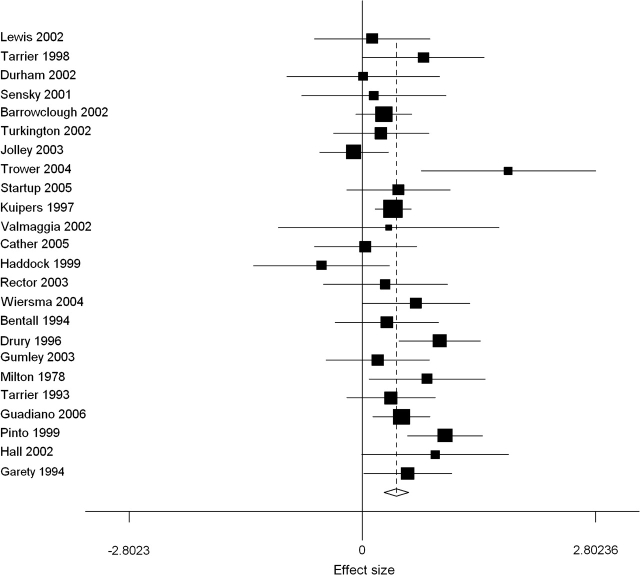
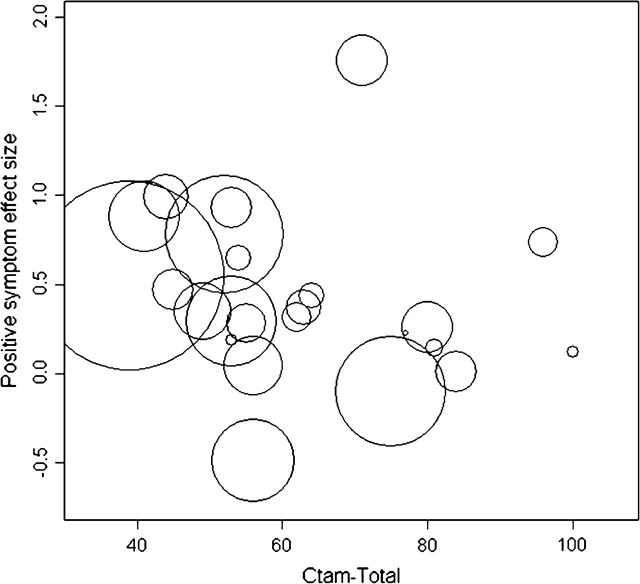
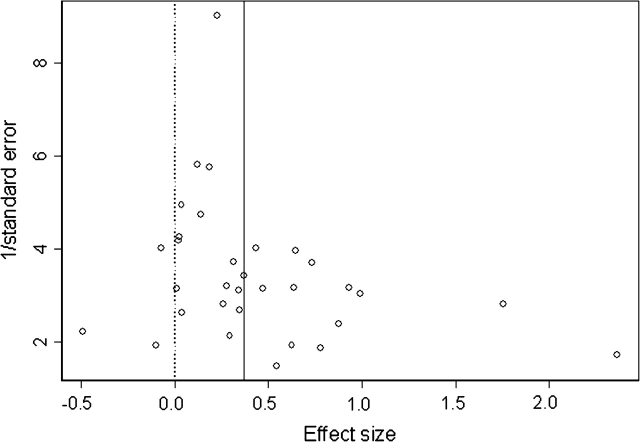
BACKGROUND: Guidance in the United States and United Kingdom has included cognitive behavior therapy for psychosis (CBTp) as a preferred therapy. But recent advances have widened the CBTp targets to other symptoms and have different methods of provision, eg, in groups. AIM: To explore the effect sizes of current CBTp trials including targeted and nontargeted symptoms, modes of action, and effect of methodological rigor. METHOD: Thirty-four CBTp trials with data in the public domain were used as source data for a meta-analysis and investigation of the effects of trial methodology using the Clinical Trial Assessment Measure (CTAM). RESULTS: There were overall beneficial effects for the target symptom (33 studies; effect size = 0.400 [95% confidence interval [CI] = 0.252, 0.548]) as well as significant effects for positive symptoms (32 studies), negative symptoms (23 studies), functioning (15 studies), mood (13 studies), and social anxiety (2 studies) with effects ranging from 0.35 to 0.44. However, there was no effect on hopelessness. Improvements in one domain were correlated with improvements in others. Trials in which raters were aware of group allocation had an inflated effect size of approximately 50%-100%. But rigorous CBTp studies showed benefit (estimated effect size = 0.223; 95% CI = 0.017, 0.428) although the lower end of the CI should be noted. Secondary outcomes (eg, negative symptoms) were also affected such that in the group of methodologically adequate studies the effect sizes were not significant. CONCLUSIONS: As in other meta-analyses, CBTp had beneficial effect on positive symptoms. However, psychological treatment trials that make no attempt to mask the group allocation are likely to have inflated effect sizes. Evidence considered for psychological treatment guidance should take into account specific methodological detail.
Overview
The claims and statistics of this paper haven’t been checked yet.
Free: it reads the open-access text and checks the first 5 claims that cite a source we can check. Create a free account to check every claim.
Integrity signals
Registry
Cites
Statistics
Figures
Verification
Claims the paper makes
The claims and statistics of this paper haven’t been checked yet.
Free: it reads the open-access text and checks the first 5 claims that cite a source we can check. Create a free account to check every claim.
Claims other papers make about this one
Each is checked against this paper’s own text: does it say what the citing paper says it does?
The cited source doesn’t support the claim as written.
In the citing paper
“The primary outcome was change in positive symptom severity at the end of treatment and at follow-up”
From A systematic review and meta-analysis of cognitive behavioural informed psychological interventions for psychiatric inpatients with psychosis (2020) · cites this paper as Wykes et al., 2008
Checked by a reasoning model — may be wrong.
Experimental — accuracy not yet measuredThe source backs part of the claim, not all of it — or backs it for a different population, condition or comparison.
In the citing paper
“Combining medication with evidence-based psychotherapy produces clinically significant improvement over medications alone for severe depression and psychotic disorders.9,10”
From Acceptance-based Behavior Therapy for Depression With Psychosis (2015) · cites this paper as [10]
Experimental — accuracy not yet measuredThe source backs part of the claim, not all of it — or backs it for a different population, condition or comparison.
In the citing paper
“Psychological therapies have demonstrated to be effective for patients experiencing psychotic symptoms (1, 2) and are recommended by treatment guidelines already in the acute illness and treatment phase (3, 4).”
From Developing a mechanism-based therapy for acute psychiatric inpatients with psychotic symptoms: an Intervention Mapping approach (2023) · cites this paper as [1]
Experimental — accuracy not yet measuredThe source backs part of the claim, not all of it — or backs it for a different population, condition or comparison.
In the citing paper
“There is limited evidence supporting the use of pharmacological and psychological interventions for depression in the context of schizophrenia (Whitehead et al. 2002; Wykes et al., 2008).”
From Acceptance and Commitment Therapy for depression following psychosis: An examination of clinically significant change (2015) · cites this paper as Wykes et al., 2008
Experimental — accuracy not yet measuredThe source backs part of the claim, not all of it — or backs it for a different population, condition or comparison.
In the citing paper
“Although effective at treating positive symptoms, Cognitive Behavioural Therapy for psychosis (CBTp) is less effective for treating emotional dysfunction associated with psychosis such as depression, hopelessness and suicide risk (Birchwood, 2003; Wykes et al., 2008; Tarrier et al., 2006).”
From Acceptance and Commitment Therapy for depression following psychosis: An examination of clinically significant change (2015) · cites this paper as Wykes et al., 2008
Experimental — accuracy not yet measured
4 more claims about this paper
Create a free account to see every claim other papers make about this one.
Self-check
Percentages, sums and reported differences re-computed from the paper’s own numbers.
The self-check needs the paper’s full text.
Citations
Cites
1 retracted
Cognitive behaviour therapy for schizophrenia
Jones, C., Cormac, I., Silveira da Mota Neto, J. I., & Campbell, C. (2004) · Cochrane Database of Systematic Reviews · doi:10.1002/14651858.cd000524.pub2 · Cited by 269
RetractedAssessing the quality of reports of randomized clinical trials: Is blinding necessary?
Jadad, A. R., Moore, R. A., Carroll, D., Jenkinson, C., Reynolds, D. J. M., Gavaghan, D. J., & McQuay, H. J. (1996) · Controlled Clinical Trials · doi:10.1016/0197-2456(95)00134-4 · Cited by 17,582 · cited 1×
“In addition, concurrent validity was assessed within an initial 22 studies by correlation with the scores from 3 other scales devised to assess methodological rigor.(42,43,52) The correlations of these scales with the CTAM scores on the corpus of CBTp data were as follows: CTAM and Jadad, q = .”
MethodZhang, Q., Wang, C., Zheng, M., Li, Y., Li, J., Zhang, L., Shang, X., & Yan, C. (2015) · Cerebrovascular Diseases · doi:10.1159/000369778 · Cited by 11,533
Schulz (1995) · doi:10.1001/jama.1995.03520290060030 · Cited by 5,634
Dong, Y., Hao, L., Shi, Z., Wang, G., Zhang, Z., & Han, C. (2013) · Urologia Internationalis · doi:10.1159/000351405 · Cited by 4,540
The Revised CONSORT Statement for Reporting Randomized Trials: Explanation and Elaboration
Altman, D. G., Schulz, K. F., Moher, D., Egger, M., Davidoff, F., Elbourne, D., Gøtzsche, P. C., Lang, T., & for the CONSORT Group (2001) · Annals of Internal Medicine · doi:10.7326/0003-4819-134-8-200104170-00012 · Cited by 3,835
The Handbook of Research Synthesis.
Howel, D., Cooper, H., & Hedges, L. V. (1995) · Biometrics · doi:10.2307/2533295 · Cited by 3,642
Moher, D., Pham, B., Jones, A., Cook, D. J., Jadad, A. R., Moher, M., Tugwell, P., & Klassen, T. P. (1998) · The Lancet · doi:10.1016/s0140-6736(98)01085-x · Cited by 3,560 · cited 1×
“For instance, poorer quality masking of allocation of treatments has been shown to be associated with up to 40% increased estimate of benefit in circulatory and digestive diseases, mental health, obstetrics, and childbirth.(36,37)”
BackgroundAssessing the quality of controlled clinical trials
Jüni, P., Altman, D. G., & Egger, M. (2001) · BMJ · doi:10.1136/bmj.323.7303.42 · Cited by 3,309
Improving the Quality of Reporting of Randomized Controlled Trials: The CONSORT Statement
Begg, C. (1996) · JAMA · doi:10.1001/jama.1996.03540080059030 · Cited by 3,127
Research works printed but not linked: 1
- [24]NICE Schizophrenia: Core interventions in the Treatment and Management of Schizophrenia in Primary and Secondary Care 2003 20704054
Cited by
Items 501–600 of 997
Jones, H. J., Martin, D., Lewis, S. J., Smith, G. D., O’Donovan, M. C., Owen, M. J., Walters, J., & Zammit, S. (2020) · American Journal of Medical Genetics Part B Neuropsychiatric Genetics · doi:10.1002/ajmg.b.32808 · Cited by 14
“…of targeting the treatment of neuroticism or anxiety to prevent transition to psychosis in people at clinical high-risk is unclear, psychological (Wykes, Steel, Everitt, & Tarrier, 2008) and pharmacological (Temmingh & Stein, 2015) therapies for anxiety may be useful not only in alleviating…”
Li, D., Xu, T., Xie, D., Wang, M., Sun, S., Wang, M., Zhang, S., Yang, X., Zhang, Z., Wang, S., et al. (2023) · Journal of Medical Internet Research · doi:10.2196/44939 · Cited by 13
“CBT is mainly used to treat anxiety, depression, and mental diseases [13] and can significantly improve mental and psychological symptoms such as anxiety, depression, and hopelessness [14-16].”
Menon, M., Andersen, D., Quilty, L. C., & Woodward, T. S. (2015) · Frontiers in Psychology · doi:10.3389/fpsyg.2015.01563 · Cited by 14
Cognitive therapy: at last an alternative to antipsychotics?
Howes, O. D. (2014) · The Lancet · doi:10.1016/s0140-6736(13)62569-6 · Cited by 15
Mehl, S., Falkai, P., Berger, T., Löhr, M. J., Rujescu, D., Wolff, J., & Kircher, T. T. J. (2016) · Der Nervenarzt · doi:10.1007/s00115-015-0056-y · Cited by 13
Morrison, A. P., Pyle, M., Byrne, R. E., Broome, M. R., Freeman, D. H., Johns, L., James, A. C., Husain, N., Whale, R., MacLennan, G., et al. (2021) · Health Technology Assessment · doi:10.3310/hta25040 · Cited by 16
MYHR, G., RUSSELL, J. J., SAINT-LAURENT, M., TAGALAKIS, V., BELISLE, D., KHODARY, F., FARIDI, K., & PINARD, G. (2013) · Journal of Psychiatric Practice® · doi:10.1097/01.pra.0000426325.49396.4c · Cited by 12
Balzan, R. P., & Galletly, C. (2015) · Frontiers in Psychology · doi:10.3389/fpsyg.2015.00967 · Cited by 12
“…Australia Background: Psychotherapies for psychosis typically aim to develop an awareness of the implausible content of a delusion or target the underlying cognitive biases (i.e., problematic thinking styles, such as hasty decisions and illusory control) that foster and maintain delusional beliefs.”
BackgroundLisoni, J., Nibbio, G., Baldacci, G., Zucchetti, A., Cicale, A., Zardini, D., Miotto, P., Deste, G., Barlati, S., & Vita, A. (2024) · Journal of Affective Disorders · doi:10.1016/j.jad.2024.01.050 · Cited by 12
Cognitive Behaviour Therapy for Psychosis: The Impact of Therapist Training and Supervision
Steel, C., Tarrier, N., Stahl, D. R., & Wykes, T. (2012) · Psychotherapy and Psychosomatics · doi:10.1159/000334250 · Cited by 12
Self-citationLungu, A., & Linehan, M. M. (2017) · Elsevier eBooks · doi:10.1016/b978-0-12-803457-6.00018-0 · Cited by 15
Griffiths, R., Mansell, W., Carey, T. A., Edge, D., Emsley, R., & Tai, S. (2018) · BJPsych Open · doi:10.1192/bjo.2018.44 · Cited by 12
Espinosa, R., Valiente, C., Varese, F., & Bentall, R. P. (2018) · The Journal of Nervous and Mental Disease · doi:10.1097/nmd.0000000000000858 · Cited by 17
Effect of Mobile Health on In-person Service Use Among People With Serious Mental Illness
Ben‐Zeev, D., Buck, B., Hallgren, K. A., & Drake, R. E. (2019) · Psychiatric Services · doi:10.1176/appi.ps.201800542 · Cited by 14
Valiente, C., Espinosa, R., Contreras, A., Trucharte, A., Duque, A., Nieto, J., Lozano, B., & Chaves, C. (2019) · The Journal of Positive Psychology · doi:10.1080/17439760.2019.1627400 · Cited by 14
Gültekin, A., & Budak, F. K. (2021) · Journal of Religion and Health · doi:10.1007/s10943-021-01322-6 · Cited by 13
“A study by Wykes et al. showed that patients had a moderate level of medication adherence (Wykes et al., 2008).”
Shukla, P., Padhi, D., Sengar, K. S., Singh, A., & Chaudhury, S. (2021) · Industrial Psychiatry Journal · doi:10.4103/ipj.ipj_94_20 · Cited by 19
“[19] Table 5 shows the status of the control group and Table 6 shows the status of the experimental group.”
Obsessive-Compulsive Syndromes in Schizophrenia: A Case for Polypharmacy?
Schirmbeck, F. N., & Zink, M. (2012) · Springer eBooks · doi:10.1007/978-94-007-5799-8_12 · Cited by 14
Wittorf, A., Jakobi, U. E., Beulen, S., Bechdolf, A., Müller, B. W., Sartory, G., Wagner, M., Wiedemann, G., Wölwer, W., Herrlich, J., et al. (2013) · Psychiatry Research · doi:10.1016/j.psychres.2013.08.011 · Cited by 15
“The most recent meta-analyses (Zimmermann et al., 2005; Wykes et al., 2008) demonstrated that cognitive behavioral treatment for psychosis (CBTp) has a moderate effect on symptom reduction and on general well being of patients suffering from psychosis.”
BackgroundRathbone, C. J., & Steel, C. (2014) · Memory · doi:10.1080/09658211.2014.906621 · Cited by 16
Self-citationPienkos, E., & Sass, L. A. (2012) · Pragmatic Case Studies in Psychotherapy · doi:10.14713/pcsp.v8i1.1119 · Cited by 17
Петретто, Д. Р., Preti, A., Zuddas, C., Veltro, F., Rocchi, M., Sisti, D., Martinelli, V., Carta, M. G., Masala, C., & on behalf of the SPERA-S group (2013) · Trials · doi:10.1186/1745-6215-14-323 · Cited by 24
“In recent years, many educational programs have been aimed at improve knowledge of the disorder, its symptoms, course and outcome, and the availability of treatment, and have focused specifically on the patients and their families [14-17].”
BackgroundNikolitch, K., Laliberté, V., Yu, C., Strychowsky, N., Segal, M., Looper, K. J., & Rej, S. (2016) · International Journal of Psychiatry in Clinical Practice · doi:10.1080/13651501.2016.1197276 · Cited by 16
“Another limitation is that this pilot study was non-blinded, which is known to inflate the effect size (Wykes et al. 2008; Jauhar et al. 2014), and the data were not collected by an independent assessor.”
BackgroundPyle, M., Broome, M. R., Joyce, E., MacLennan, G., Norrie, J. D., Freeman, D. H., Fowler, D. G., Haddad, P. M., Shiers, D., Hollis, C. P., et al. (2019) · Trials · doi:10.1186/s13063-019-3506-1 · Cited by 14
“Meta-analyses in adult populations suggest that a combination of CBT and APs has small but statistically significant effects on symptoms and rehospitalisation rates [17, 18].”
BackgroundBornheimer, L. A., Verdugo, J. L., Holzworth, J., Im, V., Smith, F. N., Sliwa, H., Taylor, S. F., King, C. A., Florence, T., Tarrier, N., et al. (2022) · Psychiatry Research · doi:10.1016/j.psychres.2022.114505 · Cited by 20
Self-citationWood, L., Williams, C., Pinfold, V., Nolan, F., Morrison, A. P., Morant, N., Lloyd-Evans, B., Lewis, G., Lay, B., Jones, R., et al. (2022) · Pilot and Feasibility Studies · doi:10.1186/s40814-022-01160-7 · Cited by 12
“recent reviews challenging the effectiveness of CBTp [21, 22], the evidence base generally demonstrates that CBTp is an effective intervention, with a small to medium effect size, in improving outcomes for people experiencing psychosis [46, 52].”
BackgroundBuck, B., Romeo, K. H., Olbert, C. M., & Penn, D. L. (2014) · Journal of Mental Health · doi:10.3109/09638237.2014.924048 · Cited by 12
“Interventions like cognitive behavioral therapy and social skills training have been recommended as adjunctive treatments for psychotic disorders (Bellack, 2004; Lehman et al., 2004; Wykes et al., 2008), yet dissemination of these treatments is hampered by the lack of trained clinicians (Kuller et al.”
BackgroundPinninti, N. R., Rissmiller, D. J., & Steer, R. A. (2010) · Psychiatric Services · doi:10.1176/ps.2010.61.9.940 · Cited by 13
Mehl, S., Werner, D., & Lincoln, T. M. (2019) · Frontiers in Psychology · doi:10.3389/fpsyg.2019.01868 · Cited by 13
Martins, M. J. R. V., Castilho, P., Carvalho, C. B., Pereira, A. T., Santos, V., Gumley, A., & de Macedo, A. F. (2017) · European Psychologist · doi:10.1027/1016-9040/a000283 · Cited by 11
Berna, F., Evrard, R., Coutelle, R., Kobayashi, H., Laprévote, V., & Danion, J.-M. (2017) · Journal of Behavior Therapy and Experimental Psychiatry · doi:10.1016/j.jbtep.2016.07.001 · Cited by 11
Abram, M., Awenat, Y. F., Byrne, R. E., Fin, M., Finlayson, S., Foat-Smith, G., Galarza, M. V. Z., Haddock, G., Jackson, P., Lee, G., et al. (2019) · Advances in Mental Health · doi:10.1080/18387357.2019.1604070 · Cited by 12
Meins, I. A., Muijsson, D. C., Nijman, S. A., Greaves‐Lord, K., Veling, W., Pijnenborg, G. H. M., & van der Stouwe, E. C. D. (2023) · Trials · doi:10.1186/s13063-023-07241-z · Cited by 13
“5 [13, 53, 54], two groups, statistical power of 0.”
BackgroundYu, H., Chen, Y., Bai, Y., & Tan, W. (2025) · PLoS ONE · doi:10.1371/journal.pone.0324685 · Cited by 16
“As a structured and goal-oriented psychotherapy, CBT has garnered significant attention in the treatment of schizophrenia in recent years [11–13], aimed at improving patients’ cognitive functions, reducing symptoms, enhancing the quality of life, and promoting the recovery of social functioning.”
Functional brain networks underlying probabilistic reasoning and delusions in schizophrenia
Fouladirad, S., Chen, L., Roes, M., Chinchani, A. M., Percival, C. M., Khangura, J., Zahid, H. B., Moscovitz, A. M., Arreaza, L., Wun, C., et al. (2022) · Psychiatry Research Neuroimaging · doi:10.1016/j.pscychresns.2022.111472 · Cited by 23
Silverstein, S. M., Roché, M. W., Khan, Z., Carson, S. J., Malinovsky, I., Newbill, W. A., Menditto, A. A., & WILKNISS, S. M. (2014) · American Journal of Psychiatric Rehabilitation · doi:10.1080/15487768.2014.935681 · Cited by 15
A Pilot Study of Cognitive Behavior Therapy for Depression in Early Psychosis
Singer, A. R., Addington, D. E., Dobson, K. S., & Wright, C. A. (2013) · Cognitive and Behavioral Practice · doi:10.1016/j.cbpra.2013.08.004 · Cited by 13
The Theory of Neural Cognition Applied to Robotics
Touzet, C. F. (2015) · International Journal of Advanced Robotic Systems · doi:10.5772/60693 · Cited by 12
“The success of cognitive behavioural therapy (CBT) in schizophrenia [45-46] is based on its goal-oriented, explicit systematic procedures.”
BackgroundNarrative Cognitive Behavior Therapy for Psychosis
Praško, J. P., Diveky, T., Grambal, A., Kamarádová, D., Látalová, K., Mainerová, B., Vrbová, K., & Trcova, A. (2010) · Cited by 17
Demily, C., & Franck, N. (2016) · European Journal of Medical Genetics · doi:10.1016/j.ejmg.2016.09.007 · Cited by 12
Sommerfeld, D. H., Aarons, G. A., Naqvi, J. B., Holden, J. L., Perivoliotis, D., Mueser, K. T., & Granholm, E. L. (2018) · Administration and Policy in Mental Health and Mental Health Services Research · doi:10.1007/s10488-018-0904-8 · Cited by 11
Bendall, S., Allott, K., Jovev, M., Marois, M.-J., Killackey, E. J., Gleeson, J., Álvarez‐Jiménez, M., McGorry, P. D., & Jackson, H. J. (2013) · Behavioural and Cognitive Psychotherapy · doi:10.1017/s1352465813000921 · Cited by 14
“One exception was a recent review examining the methodological sophistication of studies of CBT for schizophrenia, which included the examination of the quality of the treatment adherence measures used (Wykes et al., 2008).”
BackgroundInfluentialWhat are the key elements of cognitive analytic therapy for psychosis? A Delphi study
Taylor, P. J., Jones, S., Huntley, C. D., & Seddon, C. (2017) · Psychology and Psychotherapy Theory Research and Practice · doi:10.1111/papt.12119 · Cited by 14
Introduction to Mindfulness and Acceptance‐based Therapies for Psychosis
Oliver, J. E., Joseph, C., Byrne, M., Johns, L., & Morris, E. M. J. (2013) · Wiley eBooks · doi:10.1002/9781118499184.ch1 · Cited by 16
The Place of Psychological Well-being in Cognitive Therapy
MacLeod, A. K., & Luzon, O. (2014) · Cross-Cultural Advancements in Positive Psychology · doi:10.1007/978-94-017-8669-0_3 · Cited by 10
Schormann, A. L. A., Pillny, M., Haß, K., & Lincoln, T. M. (2023) · Pilot and Feasibility Studies · doi:10.1186/s40814-023-01284-4 · Cited by 11
“Several meta-analyses found that psychological approaches, such as cognitive behavior therapy (CBT), social skills training, and cognitive remediation, can alleviate motivational negative symptoms, however, with only small to moderate effect sizes [10-14].”
BackgroundGreen, S. A., Smith, B., & Mathur, M. B. (2025) · Appetite · doi:10.1016/j.appet.2025.108233 · Cited by 14
Jeppesen, U. N., Vernal, D. L., Due, A. S., Mariegaard, L. S., Pinkham, A. E., Austin, S. F., Vos, M., Christensen, M. J., Hansen, N. S., Smith, L. C., et al. (2025) · Nature Medicine · doi:10.1038/s41591-025-03880-8 · Cited by 14
“This contrasts with meta-analysis evidence 13 suggesting that a stronger behavioral component in CBT for psychosis is associated with larger effects.”
InfluentialTraining in Illness Self-Management for People with Mental Illness in the Criminal Justice System
MacKain, S. J., & Mueser, K. T. (2009) · American Journal of Psychiatric Rehabilitation · doi:10.1080/15487760802615590 · Cited by 10
“Results of numerous studies have supported the use of cognitive-behavioral treatment (with an emphasis on cognitive restructuring) for people with persistent psychotic symptoms (Gould, Mueser, Bolton, Mays, & Goff, 2001 ; Wykes, Steel, Everitt, & Tarrier, 2008 ).”
BackgroundLysaker, P. H., Roe, D., & Kukla, M. (2012) · Journal of Psychotherapy Integration · doi:10.1037/a0029580 · Cited by 10
Wong, A. W. S., Ting, K. T., & Chen, E. Y. H. (2018) · Asian Journal of Psychiatry · doi:10.1016/j.ajp.2018.12.015 · Cited by 13
Jacobsen, P. C., Haddock, G., Raphael, J., Peak, C., Winter, R., & Berry, K. (2022) · BJPsych Open · doi:10.1192/bjo.2022.527 · Cited by 11
Cognitive behavioural therapy without medication for schizophrenia
Bighelli, I., Çıray, O., Salahuddin, N. H., & Leucht, S. (2024) · Cochrane Database of Systematic Reviews · doi:10.1002/14651858.cd015332.pub2 · Cited by 17
A case series exploring possible predictors and mechanisms of change in hearing voices groups
Ruddle, A., Livingstone, S., Huddy, V. C., Johns, L., Stahl, D. R., & Wykes, T. (2012) · Psychology and Psychotherapy Theory Research and Practice · doi:10.1111/j.2044-8341.2012.02074.x · Cited by 19
Self-citationCuriosity and the CAT: Considering Cognitive Analytic Therapy as an intervention for psychosis
Taylor, P. J., Perry, A., Hutton, P., Seddon, C., & Tan, R. (2014) · Psychosis · doi:10.1080/17522439.2014.956785 · Cited by 11
Hutton, P., Wood, L., Taylor, P. J., Irving, K., & Morrison, A. P. (2013) · Psychosis · doi:10.1080/17522439.2013.825005 · Cited by 16
“We will search through references of the reviews mentioned above, as well as the comprehensive review by Wykes et al. (2008).”
MethodSönmez, N., Hagen, R., Andreassen, O. A., Romm, K. L., Grande, M., Jensen, L. H., Morrison, A. P., Melle, I. S., & Røssberg, J. I. (2013) · Cognitive and Behavioral Practice · doi:10.1016/j.cbpra.2013.06.001 · Cited by 15
Greenwood, K., Alford, K., O’Leary, I., PETERS, E. R., Hardy, A., Cavanagh, K., Field, A. P., de Visser, R. O., Fowler, D. G., Davies, M., et al. (2018) · Trials · doi:10.1186/s13063-018-3023-7 · Cited by 11
Fostering coping as a mechanism of symptom change in cognitive behavioural therapy for psychosis
Schlier, B., Ludwig, L., Wiesjahn, M., Jung, E., & Lincoln, T. M. (2019) · Schizophrenia Research · doi:10.1016/j.schres.2019.07.047 · Cited by 14
Wang, D., Taylor-Vaisey, A. L., Négrini, S., & Côté, P. (2020) · American Journal of Physical Medicine & Rehabilitation · doi:10.1097/phm.0000000000001601 · Cited by 11
Shean, G. D. (2013) · Schizophrenia Research and Treatment · doi:10.1155/2013/792769 · Cited by 11
Cognitive Behavior Therapy for Psychosis: Where Have We Been and Where Are We Going?
Velligan, D. I. (2009) · Schizophrenia Bulletin · doi:10.1093/schbul/sbp076 · Cited by 10
“The most recent meta-analysis included 34 studies with 22 studies of individually delivered CBT focused on positive symptoms.(1) Despite the number of trials and the evidence supporting CBTp, many questions remain unanswered.”
BackgroundThe “Clinical Interview for Psychotic Disorders” (CIPD): Development and expert evaluation
Martins, M. J., Carvalho, C. B., Castilho, P., Pereira, A. T., & Macedo, A. (2015) · International Journal of Clinical Neurosciences and Mental Health · doi:10.21035/ijcnmh.2015.2.7 · Cited by 13
“Particularly interventions based on the theory of learned behavior and cognitive mediation —mainly cognitive-behavioral therapy—have been shown as effective for this population [2, 13-15].”
Combining CBT and Medication: An Evidence‐Based Approach
Sudak, D. M. (2011) · Wiley eBooks · doi:10.1002/9781118093368 · Cited by 17
Illness management and recovery in community practice.
McGuire, A. B., Bartholomew, T., Anderson, A. I., Bauer, S. M., McGrew, J. H., White, D. A., Luther, L., Rollins, A. L., Pereira, Â. M. R. S., & Salyers, M. P. (2016) · Psychiatric Rehabilitation Journal · doi:10.1037/prj0000200 · Cited by 13
The Impact of Irrational Beliefs on Paranoid Thoughts
Șoflău, R., & David, D. O. (2018) · Behavioural and Cognitive Psychotherapy · doi:10.1017/s1352465818000565 · Cited by 12
Mental Health Is an Abominable Mess: Mind and Nature Is a Necessary Unity
Drury, N. (2014) · New Zealand journal of psychology · Cited by 13
Treatment of People with Schizophrenia Who Behave Violently Towards Others
Kolla, N. J., & Hodgins, S. (2013) · Wiley eBooks · doi:10.1002/9781118320655.ch18 · Cited by 13
CBT with People with Psychosis
Johns, L., Jolley, S., Keen, N., & PETERS, E. R. (2014) · Wiley eBooks · doi:10.1002/9781394266487.ch13 · Cited by 11
Fusar‐Poli, P., Pillinger, T., McCutcheon, R. A., Rangaswamy, T., Asmal, L., Singh, S. P., Oliver, D., Stefanelli, R., Crossley, N. A., Gadelha, A., et al. (2026) · World Psychiatry · doi:10.1002/wps.70066 · Cited by 20
“It also reduces distress associated with symptoms, improves coping strategies 41,302 , and may have an impact on both positive and negative symptoms 303 , particularly if the latter are associated with antipsychotic treatment.”
Shiraishi, N., Watanabe, N., Kinoshita, Y., Kaneko, A., Yoshida, S., Furukawa, T. A., & Akechi, T. (2013) · The Journal of Nervous and Mental Disease · doi:10.1097/nmd.0000000000000064 · Cited by 12
“As an intervention to reevaluate their cognitions relating to the target symptoms, cognitive behavioral therapy (CBT) is clinically effective on positive symptoms (Wykes et al., 2008).”
BackgroundMueser, K. T. (2012) · Journal of Mental Health · doi:10.3109/09638237.2012.745192 · Cited by 11
“…psychotic symptoms (reducing low self-esteem) and promoting hope and self-efficacy, and teaching more effective personal skills for coping with persistent symptoms, and examining and changing inaccurate or unhelpful distressing thoughts and beliefs related to symptoms (Wykes et al., 2008).”
BackgroundAbbs, B., Achalia, R. M., Adelufosi, A. O., Aktener, A. Y., Beveridge, N. J., Bhakta, S. G., Blackman, R. K., Bora, E., Byun, M. S., Cabanis, M., et al. (2012) · Schizophrenia Research · doi:10.1016/j.schres.2012.07.024 · Cited by 11
von Haebler, D. (2015) · Forum der Psychoanalyse · doi:10.1007/s00451-015-0218-3 · Cited by 9
A review of psychotherapeutic models and treatments for psychosis
Ridenour, J. M., Hamm, J. A., & Czaja, M. M. (2019) · Psychosis · doi:10.1080/17522439.2019.1615111 · Cited by 10
Relating therapy for voices (the R2V study): study protocol for a pilot randomized controlled trial
Hayward, M., Strauss, C., & Bogen‐Johnston, L. (2014) · Trials · doi:10.1186/1745-6215-15-325 · Cited by 13
Mas-Expósito, L., Amador, J. A., Gómez‐Benito, J., & Lalucat-Jo, L. (2013) · Community Mental Health Journal · doi:10.1007/s10597-013-9621-7 · Cited by 9
“In view of the between-group differences, strategies such as cognitive behaviour therapy may be considered to reduce positive psychiatric symptoms (Wykes et al. 2008); while, in view of the logistic regression results, strategies that target patients’ social cognition may help to promote community functioning (Harvey…”
BackgroundSchizophrenia and psychotic disorders
Bucci, S., & Tarrier, N. (2010) · Cambridge University Press eBooks · doi:10.1017/cbo9780511781919.012 · Cited by 9
Self-citationWessels, H., Wagner, M., Kuhr, K., Berning, J., Pützfeld, V., Janssen, B., Bottlender, R., Maurer, K., Möller, H., Gäebel, W., et al. (2017) · Early Intervention in Psychiatry · doi:10.1111/eip.12460 · Cited by 9
Aguilar, E. J., Corripio, I., García‐Martí, G., Grasa, E., Martí‐Bonmatí, L., Gómez‐Ansón, B., Sanjuán, J., Núñez-Marín, F., Lorente-Rovira, E., Escartí, M. J., et al. (2017) · Schizophrenia Research · doi:10.1016/j.schres.2017.07.024 · Cited by 10
“Cognitive behavior therapy (CBT) effectively modifies persistent positive symptoms as an adjunct to antipsychotic drugs (Pfammatter et al., 2006; Turkington et al., 2006; Wykes et al., 2008).”
Mankiewicz, P. D., O’Leary, J., & Collier, O. (2018) · Counselling Psychology Review · doi:10.53841/bpscpr.2018.33.2.4 · Cited by 12
Delusions in Schizophrenia: where are we and where Do we need to go?
Ryan, M. E., & Melzer, T. (2014) · International Journal of School and Cognitive Psychology · doi:10.4172/2469-9837.1000115 · Cited by 8
“[29] revealed that the absence of single-blind procedures could inflate effect sizes.”
BackgroundTraining early psychosis community clinicians in CBT for psychosis: Implementation and feasibility
Hardy, K. V., Espil, F. M., Smith, C. L., Furuzawa, A., Lean, M., Zhao, Z., Godzikovskaya, J., Gilbert, A., & Loewy, R. L. (2020) · Early Intervention in Psychiatry · doi:10.1111/eip.13010 · Cited by 9
Wright, A. C., Browne, J., Cather, C., Pratt, S. I., Bartels, S. J., & Mueser, K. T. (2020) · Cognitive Therapy and Research · doi:10.1007/s10608-020-10171-8 · Cited by 12
Bennett, M. E., Brown, C. H., Fang, L., & Blanchard, J. J. (2023) · Schizophrenia Research · doi:10.1016/j.schres.2023.01.005 · Cited by 10
Greben, M., Schweitzer, R., & Bargenquast, R. (2014) · Australian Journal of Rehabilitation Counselling · doi:10.1017/jrc.2014.4 · Cited by 9
Group CBT for psychosis in acute care: a review of outcome studies
Owen, M. J., Speight, T., Sarsam, M., & Sellwood, W. (2015) · The Cognitive Behaviour Therapist · doi:10.1017/s1754470x15000021 · Cited by 9
Moritz, S., Werner, D., Menon, M., Balzan, R. P., & Woodward, T. S. (2015) · Psychological Medicine · doi:10.1017/s0033291715002068 · Cited by 11
“…of the six RCTs in the van Oosterhout dataset indicate a significant mean effect size of g = 0.36 (S.E. = 0.122, p = 0.003) in favor of MCT on positive symptoms – similar to the effectiveness of CBT (Wykes et al. 2008) – with a low amount of heterogeneity (I2 = 11.3%, Q = 5.64, p = 0.343).”
BackgroundResultInfluentialTetsunaga, T., Tetsunaga, T., Nishida, K., Tanaka, M., Sugimoto, Y., Takigawa, T., & Ozaki, T. (2017) · Journal of Orthopaedic Science · doi:10.1016/j.jos.2017.01.004 · Cited by 9
Schnackenberg, J., Fleming, M., & Martin, C. R. (2018) · Community Mental Health Journal · doi:10.1007/s10597-018-0294-0 · Cited by 11
“Traditional psychosis definitions may therefore in fact be based on incorrect, untested inferences (Romme and Escher 2000; Wykes et al. 2008).”
MethodSivec, H. J., Kreider, V. A. L., Buzzelli, C., Hrouda, D. R., & Hricovec, M. M. (2020) · Community Mental Health Journal · doi:10.1007/s10597-020-00611-w · Cited by 10
Rakitzi, S., Georgila, P., & Becker-Woitag, A. P. (2020) · European Psychologist · doi:10.1027/1016-9040/a000400 · Cited by 8
Five-year illness trajectories across racial groups in the UK following a first episode psychosis
Griffiths, S. L., Bogatsu, T., Longhi, M., Butler, E., Alexander, B., Bandawar, M., Everard, L., Jones, P. B., Fowler, D. G., Hodgekins, J., et al. (2023) · Social Psychiatry and Psychiatric Epidemiology · doi:10.1007/s00127-023-02428-w · Cited by 10
Collaborative Empiricism in Cognitive Therapy for Psychosis: A Practice Guide
Hutton, P., & Morrison, A. P. (2012) · Cognitive and Behavioral Practice · doi:10.1016/j.cbpra.2012.08.003 · Cited by 10
Marshall, M., Barrowclough, C., Drake, R., Husain, N., Lobban, F. A., Lovell, K., Wearden, A. J., Bradshaw, T., Day, C., Fitzsimmons, M., et al. (2015) · Programme Grants for Applied Research · doi:10.3310/pgfar03020 · Cited by 12
“22.(17) Although it was difficult to mask allocation from CBTp therapists, they identified allocation in only 13% of participants.”
BackgroundHeibach, E., Brabban, A., & Lincoln, T. M. (2014) · Clinical Psychology Science and Practice · doi:10.1111/cpsp.12074 · Cited by 12
Granholm, E. L., Loh, C., Link, P. C., & Jeste, D. V. (2010) · International Journal of Cognitive Therapy · doi:10.1521/ijct.2010.3.3.295 · Cited by 8
“Despite evidence that CBTp is effective in university research clinics, there has been no published research on the effectiveness of CBTp when delivered by community therapists with heterogeneous clients (Wykes et al., 2008).”
BackgroundGwinner, K., & Ward, L. (2014) · Journal of Psychiatric Intensive Care · doi:10.1017/s1742646414000181 · Cited by 8
Lecomte, T., Corbière, M., & Leclerc, C. (2014) · The Canadian Journal of Psychiatry · doi:10.1177/070674371405900404 · Cited by 12
Are Hearing Voices Networks Compatible with Cognitive Behavioural Therapy for Psychosis?
Kay, G., Kendall, E. A., & Dark, F. L. (2017) · Australian Social Work · doi:10.1080/0312407x.2016.1262883 · Cited by 12
Metadata
- Authors
- Wykes, T., Steel, C., Everitt, B., & Tarrier, N.
- Affiliations
- King's College London (GB)
- University of Manchester (GB)
- Venue
- Schizophrenia Bulletin
- Publisher
- Oxford University Press (OUP)
- Published
- 2007-05-04
- Volume
- 34
- Issue
- 3
- Pages
- 523-537
- ISSN
- 0586-7614 (ISSN-L)
- 1745-1701
- PMC
- PMC2632426
- OpenAlex
- W2140526915
- Cited by
- 1,029
- References
- 98
- Citations by year
- 2026: 16 · 2025: 27 · 2024: 29 · 2023: 39 · 2022: 42 · 2021: 39 · 2020: 38 · 2019: 64 · 2018: 59 · 2017: 62 · 2016: 76 · 2015: 73 · 2014: 91 · 2013: 96 · 2012: 87
- FWCI
- 5.68
- Type
- journal article
- Language
- en
- Open access
- hybrid
- doi.org
- Licence
- cc-by-nc
- Locations
- Schizophrenia Bulletin (publishedVersion, cc-by-nc)
- PubMed Central (publishedVersion, cc-by-nc)
- PubMed (publishedVersion)
- Research Explorer (The University of Manchester) (publishedVersion)
- CentAUR (University of Reading) (acceptedVersion)
- Research Portal (King's College London) (submittedVersion, public-domain)
- Topics
- Health Sciences › Medicine › Psychiatry and Mental health › Schizophrenia research and treatment
- Social Sciences › Psychology › Clinical Psychology › Psychotherapy Techniques and Applications
- Social Sciences › Psychology › Clinical Psychology › Psychological Treatments and Assessments
- Keywords
- schizophrenia
- MeSH terms
- Humans, Psychometrics, Schizophrenia, Cognitive Behavioral Therapy
About these checks
Registry, retraction, Cites and statistics results are computed, not judged, with one exception: a printed reference that no index lists is read once by a model before it counts as a citation error. Claims are extracted by a model and kept only when their quote appears verbatim in the text; each cited source is then checked, with a model’s help, for whether it says what the claim relies on. Those verdicts can be wrong — read the claim’s quote and the cited source before relying on one.
Statistics and arithmetic are recomputed, not judged.
Confidence bands are shown only for fields calibrated on our annotated test set. None is calibrated yet, so no band is shown.
What counts as a claim ›How we measure confidence ›How we check this ›
Are you an author, or do you see a problem with this page? Request a review
Data sources
Bibliographic data: Semantic Scholar, OpenAlex, Crossref.
Contains information from the Semantic Scholar Academic Graph Datasets, made available under the ODC Attribution License (ODC-BY 1.0).
Semantic Scholar’s data is described in: Kinney, R., et al. (2023). The Semantic Scholar Open Data Platform. arXiv:2301.10140.
