

Diabetic polyneuropathy and pain, prevalence, and patient characteristics: a cross-sectional questionnaire study of 5,514 patients with recently diagnosed type 2 diabetes
Open accessThe DOI matches its Crossref record; 44 of the 44 references it cites were found in a registry or an index.
Abstract
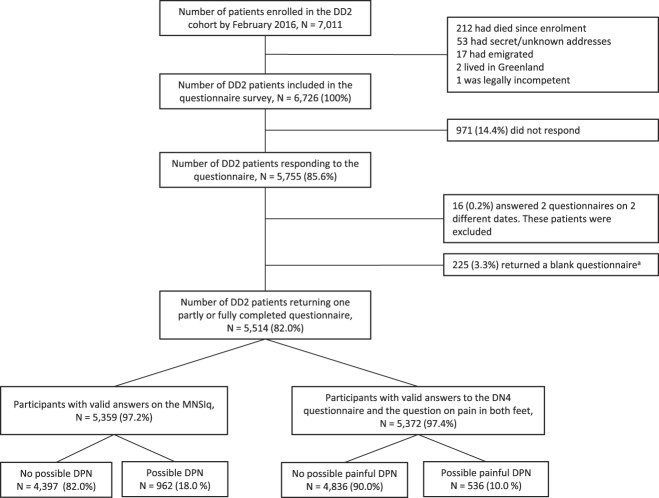
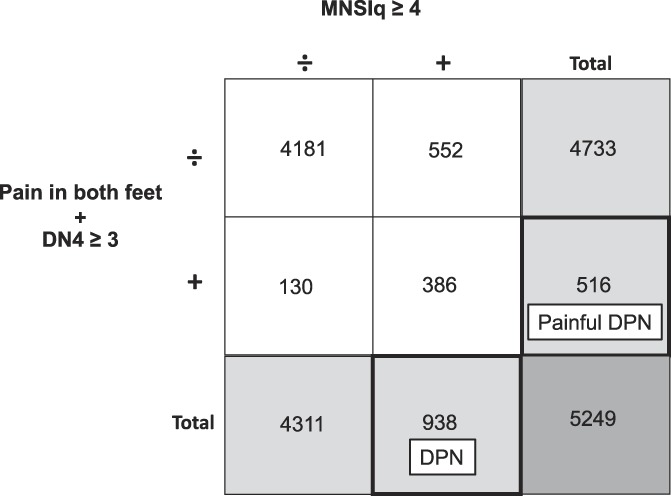
Most studies of diabetic polyneuropathy (DPN) and painful DPN are conducted in persons with longstanding diabetes. This cross-sectional study aimed to estimate the prevalence of DPN and painful DPN, important risk factors, and the association with mental health in recently diagnosed type 2 diabetes. A total of 5514 (82%) patients (median diabetes duration 4.6 years) enrolled in the Danish Centre for Strategic Research in Type 2 Diabetes cohort responded to a detailed questionnaire on neuropathy and pain. A score ≥4 on the MNSI questionnaire determined possible DPN, whereas pain presence in both feet together with a score ≥3 on the DN4 questionnaire determined possible painful DPN. The prevalence of possible DPN and possible painful DPN was 18% and 10%, respectively. Female sex, age, diabetes duration, body mass index, and smoking were associated with possible DPN, whereas only smoking showed a clear association with possible painful DPN (odds ratio 1.52 [95% confidence interval: 1.20-1.93]). Possible DPN and painful DPN were independently and additively associated with lower quality of life, poorer sleep, and symptoms of depression and anxiety. Possible DPN itself had greater impact on mental health than neuropathic pain. This large study emphasizes the importance of careful screening for DPN and pain early in the course of type 2 diabetes.
Overview
The claims and statistics of this paper haven’t been checked yet.
Free: it reads the open-access text and checks the first 5 claims that cite a source we can check. Create a free account to check every claim.
Integrity signals
Registry
Cites
Statistics
Figures
Verification
Claims the paper makes
The claims and statistics of this paper haven’t been checked yet.
Free: it reads the open-access text and checks the first 5 claims that cite a source we can check. Create a free account to check every claim.
Claims other papers make about this one
Each is checked against this paper’s own text: does it say what the citing paper says it does?
The cited source doesn’t support the claim as written.
In the citing paper
“Neuropathic pain may be the first symptom that prompts persons to seek medical care and is present in up to 25% to 30% of individuals with DPN.547,555–559”
From American Association of Clinical Endocrinology Clinical Practice Guideline: Developing a Diabetes Mellitus Comprehensive Care Plan-2022 Update. (2022) · cites this paper as [555]
Checked by a reasoning model — may be wrong.
Experimental — accuracy not yet measuredThe source backs part of the claim, not all of it — or backs it for a different population, condition or comparison.
In the citing paper
“The earliest affected nerve fibers are usually the small myelinated and unmyelinated fibers; thus, the most common early symptoms are pain and dysesthesias (unpleasant sensations of burning).547,554,555”
From American Association of Clinical Endocrinology Clinical Practice Guideline: Developing a Diabetes Mellitus Comprehensive Care Plan-2022 Update. (2022) · cites this paper as [555]
Experimental — accuracy not yet measuredThe source backs part of the claim, not all of it — or backs it for a different population, condition or comparison.
In the citing paper
“and is an established risk factor for poorer quality of life, and sleep, and symptoms of depression and anxiety [6].”
From A Consideration of the Psychological Aspects to Managing Patients with Painful Diabetic Neuropathy: An Insight into Pain Management Services at a Tertiary Centre in the UK (2021) · cites this paper as [6]
Experimental — accuracy not yet measuredThe check wasn’t confident either way, so it gives no verdict — never disputed.
In the citing paper
“The earliest affected nerve fibers are usually the small myelinated and unmyelinated fibers; thus, the most common early symptoms are pain and dysesthesias (unpleasant sensations of burning).547,554,555”
From American Association of Clinical Endocrinology Clinical Practice Guideline: Developing a Diabetes Mellitus Comprehensive Care Plan-2022 Update. (2022) · cites this paper as [555]
Experimental — accuracy not yet measuredThe check wasn’t confident either way, so it gives no verdict — never disputed.
In the citing paper
“Neuropathic pain may be the first symptom that prompts persons to seek medical care and is present in up to 25% to 30% of individuals with DPN.547,555–559”
From American Association of Clinical Endocrinology Clinical Practice Guideline: Developing a Diabetes Mellitus Comprehensive Care Plan-2022 Update. (2022) · cites this paper as [555]
Experimental — accuracy not yet measured
Self-check
Percentages, sums and reported differences re-computed from the paper’s own numbers.
The self-check needs the paper’s full text.
Citations
Cites
Pharmacotherapy for neuropathic pain in adults: a systematic review and meta-analysis
Finnerup, N. B., Attal, N., Haroutounian, S., McNicol, E., Baron, R., Dworkin, R. H., Gilron, I., Haanpää, M., Hansson, P., Jensen, T. S., et al. (2015) · The Lancet Neurology · doi:10.1016/s1474-4422(14)70251-0 · Cited by 3,980 · cited 1×
“The fact that many of the patients had moderate to severe pain intensity despite taking drugs for their pain may indicate either inappropriate treatment or a lack of effective neuropathic drug treatments.(16) The main strength of this questionnaire study is the large sample size, the high response rate (85.”
BackgroundSelf-citationBouhassira, D., Attal, N., Alchaar, H., Boureau, F., Brochet, B., Bruxelle, J., Cunin, G., Fermanian, J., Ginies, P., Grun-Overdyking, A., et al. (2005) · Pain · doi:10.1016/j.pain.2004.12.010 · Cited by 2,741
Tesfaye, S., Boulton, A. J. M., Dyck, P. J., Freeman, R., Horowitz, M., Kempler, P., Lauria, G., Malik, R. A., Spallone, V., Vinik, A., et al. (2010) · Diabetes Care · doi:10.2337/dc10-1303 · Cited by 2,690 · cited 15×
“There is no gold standard for identifying polyneuropathy for epidemiological research purposes, but the Michigan Neuropathy Screening Instrument questionnaire part (MNSIq)15 is a commonly used symptom-based screening tool for identifying DPN.2,8,43 We used the MNSIq and the validated cutoff of$4/13 abnormal responses…”
MethodInfluentialA Critical Appraisal of the Quality of Quality-of-Life Measurements
Gill, T. M. (1994) · JAMA: The Journal of the American Medical Association · doi:10.1001/jama.1994.03520080061045 · Cited by 2,208 · cited 1×
“The patients rated their QoL in the previous 7 days using an NRS ranging from 0 to 10, with 10 being the best QoL possible and 0 the worst.(20) Sleep disturbance and symptoms of depression and anxiety were assessed using the PROMIS Short Forms 4a.”
MethodPilkonis, P. A., Choi, S. W., Reise, S. P., Stover, A. M., Riley, W. T., Cella, D., & PROMIS Cooperative Group (2011) · Assessment · doi:10.1177/1073191111411667 · Cited by 2,132
Young, M. J., Boulton, A. J. M., Macleod, A. F., Williams, D. R. R., & Sonksen, P. H. (1993) · Diabetologia · doi:10.1007/bf00400697 · Cited by 1,502 · cited 2×
“An explanation may be our analytical approach which—in comparison with most previous studies—allowed us to disentangle the effect of the risk factor on pain occurrence in DPN independent from that on DPN risk itself.(23,27,44) Moreover, power was reduced for painful DPN due to the lower prevalence; however, the estima…”
ResultNeuropathic pain: an updated grading system for research and clinical practice
Finnerup, N. B., Haroutounian, S., Kamerman, P., Baron, R., Bennett, D. L. H., Bouhassira, D., Cruccu, G., Freeman, R., Hansson, P., Nurmikko, T., et al. (2016) · Pain · doi:10.1097/j.pain.0000000000000492 · Cited by 1,332
Self-citationFeldman, E. L., Stevens, M. J., Thomas, P. K., Brown, M. B., Canal, N., & Greene, D. A. (1994) · Diabetes Care · doi:10.2337/diacare.17.11.1281 · Cited by 1,293 · cited 14×
“There is no gold standard for identifying polyneuropathy for epidemiological research purposes, but the Michigan Neuropathy Screening Instrument questionnaire part (MNSIq)15 is a commonly used symptom-based screening tool for identifying DPN.2,8,43 We used the MNSIq and the validated cutoff of$4/13 abnormal responses…”
MethodInfluentialAbbott, C. A., Malik, R. A., van Ross, E. R. E., Kulkarni, J., & Boulton, A. J. M. (2011) · Diabetes Care · doi:10.2337/dc11-1108 · Cited by 868
The Prevalence, Severity, and Impact of Painful Diabetic Peripheral Neuropathy in Type 2 Diabetes
Davies, M., Brophy, S., Williams, R., & Taylor, A. (2006) · Diabetes Care · doi:10.2337/dc05-2228 · Cited by 746
England, J. D., Gronseth, G. S., Franklin, G., Miller, R. G., Asbury, A. K., Carter, G. T., Cohen, J. A., Fisher, M. A., Howard, J. F., Kinsella, L. J., et al. (2005) · Neurology · doi:10.1212/01.wnl.0000149522.32823.ea · Cited by 742
Advances in the epidemiology, pathogenesis and management of diabetic peripheral neuropathy
Tesfaye, S., & Selvarajah, D. (2012) · Diabetes/Metabolism Research and Reviews · doi:10.1002/dmrr.2239 · Cited by 615 · cited 1×
“This variation may be explained by different assessment methods and definitions of DPN, and differentially selected study populations.(28,31,34,40,42) Most studies have examined patients with long duration of diabetes, ie, 8 to 17 years,(3,7,13,30,31,35,37,38,44) whereas little is known about the prevalence ofDPNandpa…”
MethodPainful diabetic polyneuropathy: epidemiology, pain description, and quality of life
Galer, B. S., Gianas, A., & Jensen, M. P. (2000) · Diabetes Research and Clinical Practice · doi:10.1016/s0168-8227(99)00112-6 · Cited by 601 · cited 1×
“In patients with diabetes, chronic neuropathic pain has been related to decreased quality of life (QoL), poor sleep, and symptoms of anxiety and depression.(4,7,11,13,18,19,21,35,38,41) By contrast, the impact of DPN itself—regardless of pain—onQoL and mental health comorbidities is uncertain in type 2 diabetes.”
BackgroundHerman, W. H., Pop‐Busui, R., Braffett, B. H., Martin, C. L., Cleary, P. A., Albers, J. W., Feldman, E. L., & The DCCT/EDIC Research Group (2012) · Diabetic Medicine · doi:10.1111/j.1464-5491.2012.03644.x · Cited by 493 · cited 1×
“This cutoff had a sensitivity of 40% and a specificity of 92% for detecting confirmed clinical neuropathy in a selected group of patients with longstanding type 1 diabetes.(24) Questions on gait instability and falls, as well as frequency and severity of falls, were also included in the questionnaire.”
BackgroundDiabetic Peripheral Neuropathy: Epidemiology, Diagnosis, and Pharmacotherapy
Iqbal, Z., Azmi, S., Yadav, R., Ferdousi, M., Kumar, M., Cuthbertson, D. J., Lim, J., Malik, R. A., & Alam, U. (2018) · Clinical Therapeutics · doi:10.1016/j.clinthera.2018.04.001 · Cited by 487 · cited 1×
“Other studies of more longstanding diabetes have likewise reported higher prevalence of both DPN and painful DPN than our study.(1,3,25,31,37,38) These differences may be partly explained by the longer diabetes duration, but also by the different diagnostic criteria used for DPN and painful DPN.”
ResultDaousi, C., MacFarlane, I. A., Woodward, A., Nurmikko, T. J., Bundred, P. E., & Benbow, S. J. (2004) · Diabetic Medicine · doi:10.1111/j.1464-5491.2004.01271.x · Cited by 454 · cited 2×
“Previous studies have reported a wide range of prevalence from 26% to 50% for DPN,(1,25,37,38,44) and between 8% and 30% for painful DPN.(1,3,7,12,13,37,43) This variation may be explained by different assessment methods and definitions of DPN, and differentially selected study populations.”
BackgroundVan Acker, K., Bouhassira, D., De Bacquer, D., Weiss, S., Matthys, K., Raemen, H., Mathieu, C., & Colin, I. M. (2009) · Diabetes & Metabolism · doi:10.1016/j.diabet.2008.11.004 · Cited by 408
Painful Diabetic Neuropathy: Epidemiology, Natural History, Early Diagnosis, and Treatment Options
Veves, A., Backonja, M., & Malik, R. A. (2008) · Pain Medicine · doi:10.1111/j.1526-4637.2007.00347.x · Cited by 375 · cited 1×
“This variation may be explained by different assessment methods and definitions of DPN, and differentially selected study populations.(28,31,34,40,42) Most studies have examined patients with long duration of diabetes, ie, 8 to 17 years,(3,7,13,30,31,35,37,38,44) whereas little is known about the prevalence ofDPNandpa…”
MethodVinik, A. I., Nevoret, M.-L., Casellini, C., & Parson, H. (2013) · Endocrinology and Metabolism Clinics of North America · doi:10.1016/j.ecl.2013.06.001 · Cited by 366 · cited 1×
“This variation may be explained by different assessment methods and definitions of DPN, and differentially selected study populations.(28,31,34,40,42) Most studies have examined patients with long duration of diabetes, ie, 8 to 17 years,(3,7,13,30,31,35,37,38,44) whereas little is known about the prevalence ofDPNandpa…”
MethodThemistocleous, A. C., Ramirez, J. D., Shillo, P. R., Lees, J. G., Selvarajah, D., Orengo, C., Tesfaye, S., Rice, A. S. C., & Bennett, D. L. H. (2016) · Pain · doi:10.1097/j.pain.0000000000000491 · Cited by 313
Validation of DN4 as a screening tool for neuropathic pain in painful diabetic polyneuropathy
Spallone, V., Morganti, R., D’Amato, C., Greco, C., Cacciotti, L., & Marfia, G. A. (2012) · Diabetic Medicine · doi:10.1111/j.1464-5491.2011.03500.x · Cited by 309 · cited 2×
“They filled out the 7-item Douleur Neuropathique en 4 Questions (DN4) that is a screening tool for neuropathic pain and with a high performance in DPN.(32,35) The DN4 questionnaire comprises 7 “yes” or “no” items related to pain quality; 4 sensory descriptors (tingling, pins and needles, numbness, and itching) and 3 p…”
BackgroundMethodAndersen, S. T., Witte, D. R., Dalsgaard, E.-M., Andersen, H., Nawroth, P., Fleming, T., Jensen, T. M., Finnerup, N. B., Jensen, T. S., Lauritzen, T., et al. (2018) · Diabetes Care · doi:10.2337/dc17-2062 · Cited by 248 · cited 2×
“(18%) and painful DPN (10%) found in this study are similar to the prevalence reported in 2 survey studies using the MNSIq for the diagnosis of DPN and the MNSIq in combination with brief pain inventory (BPI) to diagnose painful DPN.(2,43) In the ADDITION Denmark cohort study consisting of 1445 screenings-detected typ…”
MethodResultSelf-citationBurden of Illness in Painful Diabetic Peripheral Neuropathy: The Patients’ Perspectives
Gore, M., Brandenburg, N. A., Hoffman, D. L., Tai, K.-S., & Stacey, B. (2006) · The Journal of Pain · doi:10.1016/j.jpain.2006.04.013 · Cited by 239 · cited 3×
“In patients with diabetes, chronic neuropathic pain has been related to decreased quality of life (QoL), poor sleep, and symptoms of anxiety and depression.(4,7,11,13,18,19,21,35,38,41) By contrast, the impact of DPN itself—regardless of pain—onQoL and mental health comorbidities is uncertain in type 2 diabetes.”
BackgroundResultPeltier, A., Goutman, S. A., & Callaghan, B. C. (2014) · BMJ · doi:10.1136/bmj.g1799 · Cited by 218
Self-citationRisk Factors and Comorbidities in Diabetic Neuropathy: An Update 2015
Papanas, N., & Ziegler, D. (2015) · The Review of Diabetic Studies · doi:10.1900/rds.2015.12.48 · Cited by 207
Chronic Pain with Neuropathic Characteristics in Diabetic Patients: A French Cross-Sectional Study
Bouhassira, D., Letanoux, M., & Hartemann, A. (2013) · PLoS ONE · doi:10.1371/journal.pone.0074195 · Cited by 170 · cited 17×
“There is no gold standard for identifying polyneuropathy for epidemiological research purposes, but the Michigan Neuropathy Screening Instrument questionnaire part (MNSIq)15 is a commonly used symptom-based screening tool for identifying DPN.2,8,43 We used the MNSIq and the validated cutoff of$4/13 abnormal responses…”
BackgroundResultInfluentialRaputova, J., Srotova, I., Vlckova, E., Sommer, C., Üçeyler, N., Birklein, F., Rittner, H. L., Rebhorn, C., Adamova, B., Kovalova, I., et al. (2017) · Pain · doi:10.1097/j.pain.0000000000001034 · Cited by 169
Vileikyte, L., Peyrot, M., Gonzalez, J. S., Rubin, R. R., Garrow, A. P., Stickings, D., Waterman, C., Ulbrecht, J. S., Cavanagh, P. R., & Boulton, A. J. M. (2009) · Diabetologia · doi:10.1007/s00125-009-1363-2 · Cited by 123 · cited 1×
“In patients with diabetes, chronic neuropathic pain has been related to decreased quality of life (QoL), poor sleep, and symptoms of anxiety and depression.(4,7,11,13,18,19,21,35,38,41) By contrast, the impact of DPN itself—regardless of pain—onQoL and mental health comorbidities is uncertain in type 2 diabetes.”
BackgroundRisk factors for neuropathic pain in diabetes mellitus
Hébert, H. L., Veluchamy, A., Torrance, N., & Smith, B. H. (2017) · Pain · doi:10.1097/j.pain.0000000000000785 · Cited by 117 · cited 5×
“Our associations of female sex, smoking, higher BMI, and longer duration of diabetes with DPN in recently diagnosed type 2 diabetes corroborate previous studies of patients with longstanding diabetes.23,27,44 However, in contrast to some previous studies, we only observed an association of painful DPN with smoking sta…”
ResultInfluentialvan Hecke, O., Kamerman, P. R., Attal, N., Baron, R., Björnsdóttir, G., Bennett, D., Bennett, M., Bouhassira, D., Diatchenko, L. B., Freeman, R. L., et al. (2015) · Pain · doi:10.1097/j.pain.0000000000000335 · Cited by 98
Self-citationPainful and Painless Diabetic Neuropathy: One Disease or Two?
Spallone, V., & Greco, C. (2013) · Current Diabetes Reports · doi:10.1007/s11892-013-0387-7 · Cited by 92 · cited 5×
“Other studies of more longstanding diabetes have likewise reported higher prevalence of both DPN and painful DPN than our study.(1,3,25,31,37,38) These differences may be partly explained by the longer diabetes duration, but also by the different diagnostic criteria used for DPN and painful DPN.”
MethodResultInfluentialTruini, A., Spallone, V., Morganti, R., Tamburin, S., Zanette, G., Schenone, A., De Michelis, C., Tugnoli, V., Simioni, V., Manganelli, F., et al. (2018) · Pain · doi:10.1097/j.pain.0000000000001378 · Cited by 85
D’Amato, C., Morganti, R., Greco, C., Di Gennaro, F., Cacciotti, L., Longo, S., Mataluni, G., Lauro, D., Marfia, G. A., & Spallone, V. (2016) · Diabetes and Vascular Disease Research · doi:10.1177/1479164116653240 · Cited by 83 · cited 16×
“There is no gold standard for identifying polyneuropathy for epidemiological research purposes, but the Michigan Neuropathy Screening Instrument questionnaire part (MNSIq)15 is a commonly used symptom-based screening tool for identifying DPN.2,8,43 We used the MNSIq and the validated cutoff of$4/13 abnormal responses…”
BackgroundMethodResultInfluentialPeripheral Insensate Neuropathy—A Tall Problem for US Adults?
Cheng, Y. J., Gregg, E. W., Kahn, H. S., Williams, D. E., De Rekeneire, N., & Narayan, K. M. V. (2006) · American Journal of Epidemiology · doi:10.1093/aje/kwj281 · Cited by 68 · cited 1×
“We did not observe an association between body height and DPN, although it has been proposed that tall stature is a risk factor for peripheral neuropathy due to increased nerve length and nerve surface area.(9) Surprisingly, we observed that DPN was negatively associated with age.”
BackgroundEngland, J. D., Gronseth, G., Franklin, G. M., Miller, R. G., Asbury, A. K., Carter, G. T., Cohen, J. A., Fisher, M. A., Howard, J. F., Kinsella, L. J., et al. (2005) · Archives of Physical Medicine and Rehabilitation · doi:10.1016/j.apmr.2004.09.011 · Cited by 65 · cited 1×
“Thus, our use of questionnaire-based tools to determine DPN and painful DPN in the absence of clinical examination and confirmatory tests reduces the level of certainty of the DPN diagnoses.(14,17,33) Moreover, the sensitivity of an MNSIq score $4 was 40% compared with clinically defined DPN in a study of younger pati…”
MethodBo, A., Thomsen, R. W., Nielsen, J. S., Nicolaisen, S. K., Beck‐Nielsen, H., Rungby, J., Sørensen, H. T., Hansen, T. K., Søndergaard, J., Friborg, S., et al. (2018) · Diabetes/Metabolism Research and Reviews · doi:10.1002/dmrr.2968 · Cited by 62
Self-citationChristensen, D. H., Nicolaisen, S. K., Berencsi, K., Beck‐Nielsen, H., Rungby, J., Friborg, S. G., Brandslund, I., Christiansen, J. S., Vaag, A. A., Sørensen, H. T., et al. (2018) · BMJ Open · doi:10.1136/bmjopen-2017-017273 · Cited by 60 · cited 8×
“During the DD2 enrolment period, all patients have been diagnosed with diabetes according to the WHO criteria.(10)”
BackgroundMethodResultInfluentialSelf-citationBai, J.-W., Lovblom, L. E., Cardinez, M., Weisman, A., Farooqi, M. A., Halpern, E. M., Boulet, G., Eldelekli, D., Lovshin, J. A., Lytvyn, Y., et al. (2017) · Journal of Diabetes and its Complications · doi:10.1016/j.jdiacomp.2017.05.002 · Cited by 54 · cited 15×
“There is no gold standard for identifying polyneuropathy for epidemiological research purposes, but the Michigan Neuropathy Screening Instrument questionnaire part (MNSIq)15 is a commonly used symptom-based screening tool for identifying DPN.2,8,43 We used the MNSIq and the validated cutoff of$4/13 abnormal responses…”
BackgroundMethodInfluentialAnxiety affects disability and quality of life in patients with painful diabetic neuropathy
Geelen, C. C., Smeets, R. J. E. M., Schmitz, S., van den Bergh, J. P., Goossens, M. E. J. B., & Verbunt, J. A. (2017) · European Journal of Pain · doi:10.1002/ejp.1067 · Cited by 54 · cited 1×
“In patients with diabetes, chronic neuropathic pain has been related to decreased quality of life (QoL), poor sleep, and symptoms of anxiety and depression.(4,7,11,13,18,19,21,35,38,41) By contrast, the impact of DPN itself—regardless of pain—onQoL and mental health comorbidities is uncertain in type 2 diabetes.”
BackgroundEstimated prevalence of peripheral neuropathy and associated pain in adults with diabetes in France
Wu, E. Q., Borton, J., Saïd, G., Le, T. K., Monz, B. U., Rosilio, M., & Avoinet, S. (2007) · Current Medical Research and Opinion · doi:10.1185/030079907x210516 · Cited by 53 · cited 4×
“(18%) and painful DPN (10%) found in this study are similar to the prevalence reported in 2 survey studies using the MNSIq for the diagnosis of DPN and the MNSIq in combination with brief pain inventory (BPI) to diagnose painful DPN.(2,43) In the ADDITION Denmark cohort study consisting of 1445 screenings-detected typ…”
BackgroundMethodResultInfluentialNielsen, J. S., Thomsen, R. W., Steffensen, & Christiansen (2012) · Clinical Epidemiology · doi:10.2147/clep.s30838 · Cited by 50 · cited 1×
“Detailed information on the logistics and characteristics of this cohort has previously been reported.(10,26) In brief, the DD2 cohort began enrolment in November 2010, and the project is ongoing.”
BackgroundSelf-citationThomsen, R. W., Baggesen, L. M., Svensson, E., Pedersen, L., Nørrelund, H., Buhl, E. S., Haase, C. L., & Johnsen, S. P. (2015) · Diabetes, Obesity and Metabolism · doi:10.1111/dom.12484 · Cited by 38 · cited 6×
“However, baseline data from the DD2 cohort are similar to data from a cohort of type 2 patients receiving their first glucose-lowering drug indicating that the DD2 cohort is representative of recently diagnosed type 2 diabetes patients in Denmark.10,36 The cross-sectional design of this study has some innate limitatio…”
ResultInfluentialSelf-citationCardinez, N., Lovblom, L. E., Bai, J.-W., Lewis, E. J. H., Abraham, A., Scarr, D., Lovshin, J. A., Lytvyn, Y., Boulet, G., Farooqi, M. A., et al. (2018) · Journal of Diabetes and its Complications · doi:10.1016/j.jdiacomp.2018.05.001 · Cited by 36 · cited 14×
“There is no gold standard for identifying polyneuropathy for epidemiological research purposes, but the Michigan Neuropathy Screening Instrument questionnaire part (MNSIq)15 is a commonly used symptom-based screening tool for identifying DPN.2,8,43 We used the MNSIq and the validated cutoff of$4/13 abnormal responses…”
MethodInfluentialAslam, A., Singh, J., & Rajbhandari, S. M. (2015) · Canadian Journal of Diabetes · doi:10.1016/j.jcjd.2014.12.007 · Cited by 34 · cited 3×
“Previous studies have reported a wide range of prevalence from 26% to 50% for DPN,(1,25,37,38,44) and between 8% and 30% for painful DPN.(1,3,7,12,13,37,43) This variation may be explained by different assessment methods and definitions of DPN, and differentially selected study populations.”
BackgroundResult
Cited by
Neuropathic Pain: From Mechanisms to Treatment
Finnerup, N. B., Kuner, R., & Jensen, T. S. (2021) · Physiological Reviews · doi:10.1152/physrev.00045.2019 · Cited by 1,558
Self-citationPathogenesis, diagnosis and clinical management of diabetic sensorimotor peripheral neuropathy
Sloan, G., Selvarajah, D., & Tesfaye, S. (2021) · Nature Reviews Endocrinology · doi:10.1038/s41574-021-00496-z · Cited by 534
Blonde, L., Umpierrez, G. E., Reddy, S. S., McGill, J. B., Berga, S. L., Bush, M., Chandrasekaran, S., DeFronzo, R. A., Einhorn, D., Galindo, R. J., et al. (2022) · Endocrine Practice · doi:10.1016/j.eprac.2022.08.002 · Cited by 507
12. Retinopathy, Neuropathy, and Foot Care: Standards of Care in Diabetes—2025
American Diabetes Association Professional Practice Committee, ElSayed, N. A., McCoy, R. G., Aleppo, G., Balapattabi, K., Beverly, E. A., Briggs Early, K., Bruemmer, D., Callaghan, B. C., Echouffo-Tcheugui, J. B., et al. (2025) · Diabetes Care · doi:10.2337/dc25-s012 · Cited by 176
Self-citationDiabetic neuropathy and neuropathic pain: a (con)fusion of pathogenic mechanisms?
Calcutt, N. A. (2020) · Pain · doi:10.1097/j.pain.0000000000001922 · Cited by 159
Metadata
- Authors
- Gylfadottir, S. S., Christensen, D. H., Nicolaisen, S. K., Andersen, H., Callaghan, B. C., Itani, M., Khan, K. S., Kristensen, A. G., Nielsen, J. S., Sindrup, S. H., Andersen, N. T., Jensen, T. S., Thomsen, R. W., & Finnerup, N. B.
- Affiliations
- Aarhus University (DK)
- Aarhus University Hospital (DK)
- Odense University Hospital (DK)
- Corresponding author
- Christensen, Diana Hedevang
- ORCID
- Venue
- Pain
- Published
- 2019-11-04
- Volume
- 161
- Issue
- 3
- Pages
- 574-583
- ISSN
- 0304-3959 (ISSN-L)
- 1872-6623
- PMC
- PMC7017941
- OpenAlex
- W2987337568
- Semantic Scholar
- b7ffda4293ae806ee3da59bcf1546d063f874c1f
- Cited by
- 151
- References
- 44
- Citations by year
- 2026: 19 · 2025: 23 · 2024: 22 · 2023: 37 · 2022: 24 · 2021: 16 · 2020: 10
- FWCI
- 8.58
- Type
- journal article
- Language
- en
- Open access
- hybrid
- doi.org
- Licence
- Locations
- Pain (publishedVersion, cc-by-nc-nd)
- PubMed Central (publishedVersion, cc-by-nc-nd)
- PubMed (publishedVersion)
- University of Southern Denmark Research Portal (University of Southern Denmark) (submittedVersion, cc-by-nc-nd)
- Funders
- Novo Nordisk Fonden (NNF17SA0030962-2, NNF14OC0011633)
- National Institute of Diabetes and Digestive and Kidney Diseases (P30DK092926, P30DK020572)
- Topics
- Health Sciences › Medicine › Physiology (medical) › Pain Mechanisms and Treatments
- Health Sciences › Medicine › Clinical Neurology › Peripheral Neuropathies and Disorders
- Health Sciences › Medicine › Endocrinology, Diabetes and Metabolism › Diabetic Foot Ulcer Assessment and Management
- Keywords
- diabetic polyneuropathy, diabetic neuropathic pain, type 2 diabetes, prevalence, risk factors, smoking, mental health, depression, anxiety, quality of life, sleep, neuropathic pain, early diabetes, neuropathy screening
- MeSH terms
- Aged, Cross-Sectional Studies, Diabetes Mellitus, Type 2, Diabetic Neuropathies, Female, Humans, Male, Middle Aged, Neuralgia, Pain Measurement, Surveys and Questionnaires, Cohort Studies, Prevalence
About these checks
Registry, retraction, Cites and statistics results are computed, not judged, with one exception: a printed reference that no index lists is read once by a model before it counts as a citation error. Claims are extracted by a model and kept only when their quote appears verbatim in the text; each cited source is then checked, with a model’s help, for whether it says what the claim relies on. Those verdicts can be wrong — read the claim’s quote and the cited source before relying on one.
Statistics and arithmetic are recomputed, not judged.
Confidence bands are shown only for fields calibrated on our annotated test set. None is calibrated yet, so no band is shown.
What counts as a claim ›How we measure confidence ›How we check this ›
Are you an author, or do you see a problem with this page? Request a review
Data sources
Bibliographic data: Semantic Scholar, OpenAlex, Crossref.
Contains information from the Semantic Scholar Academic Graph Datasets, made available under the ODC Attribution License (ODC-BY 1.0).
Semantic Scholar’s data is described in: Kinney, R., et al. (2023). The Semantic Scholar Open Data Platform. arXiv:2301.10140.
