

Image Super-Resolution Via Iterative Refinement
Open accessThe DOI matches its Crossref record; 81 of the 85 references it cites were found in a registry or an index.
Abstract
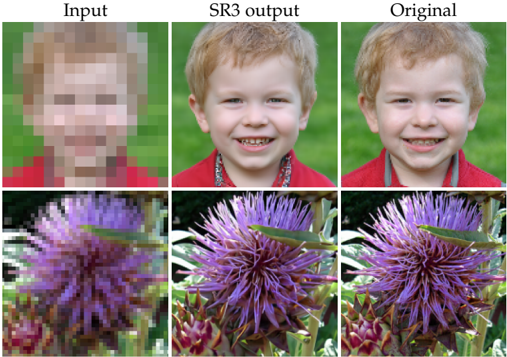
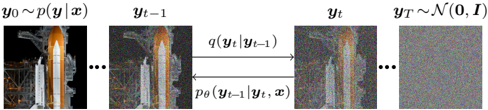
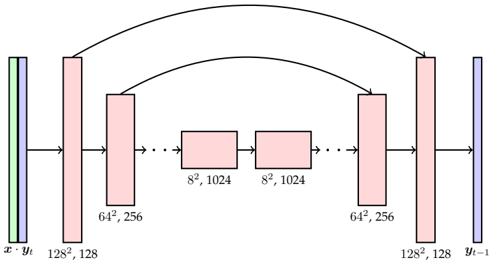
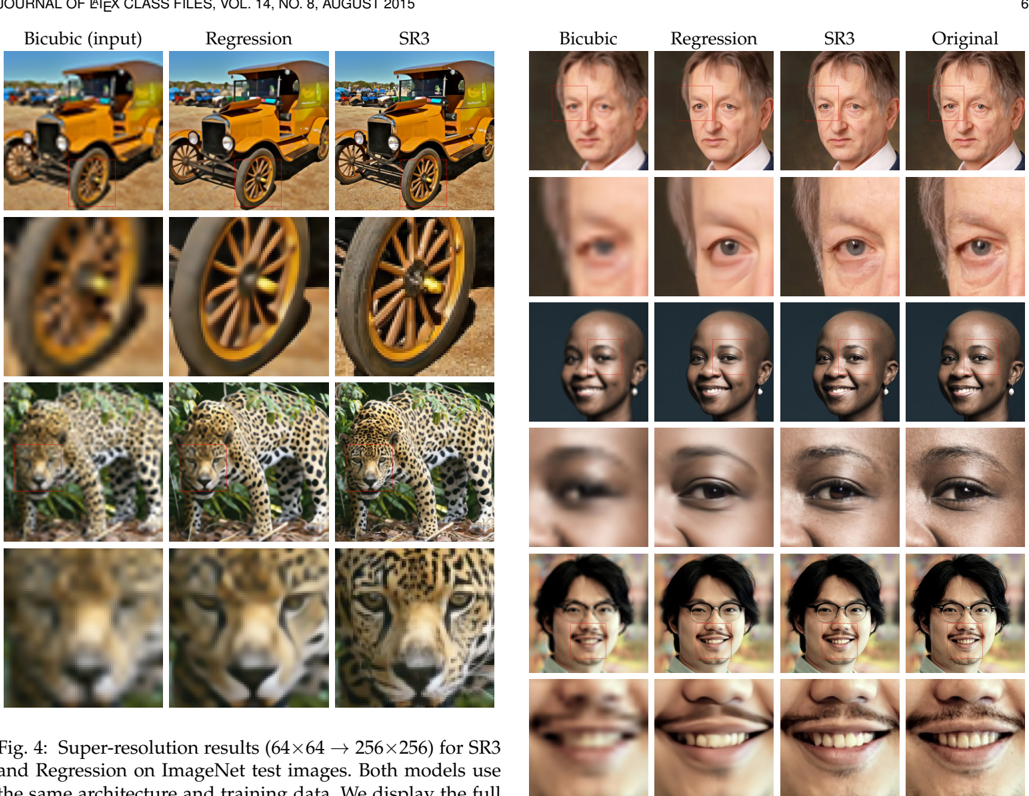
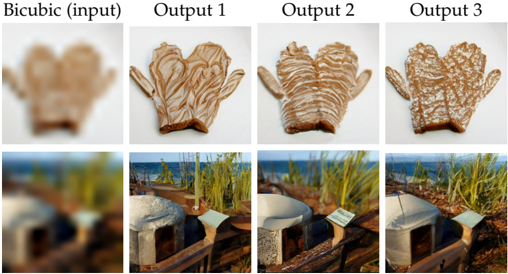
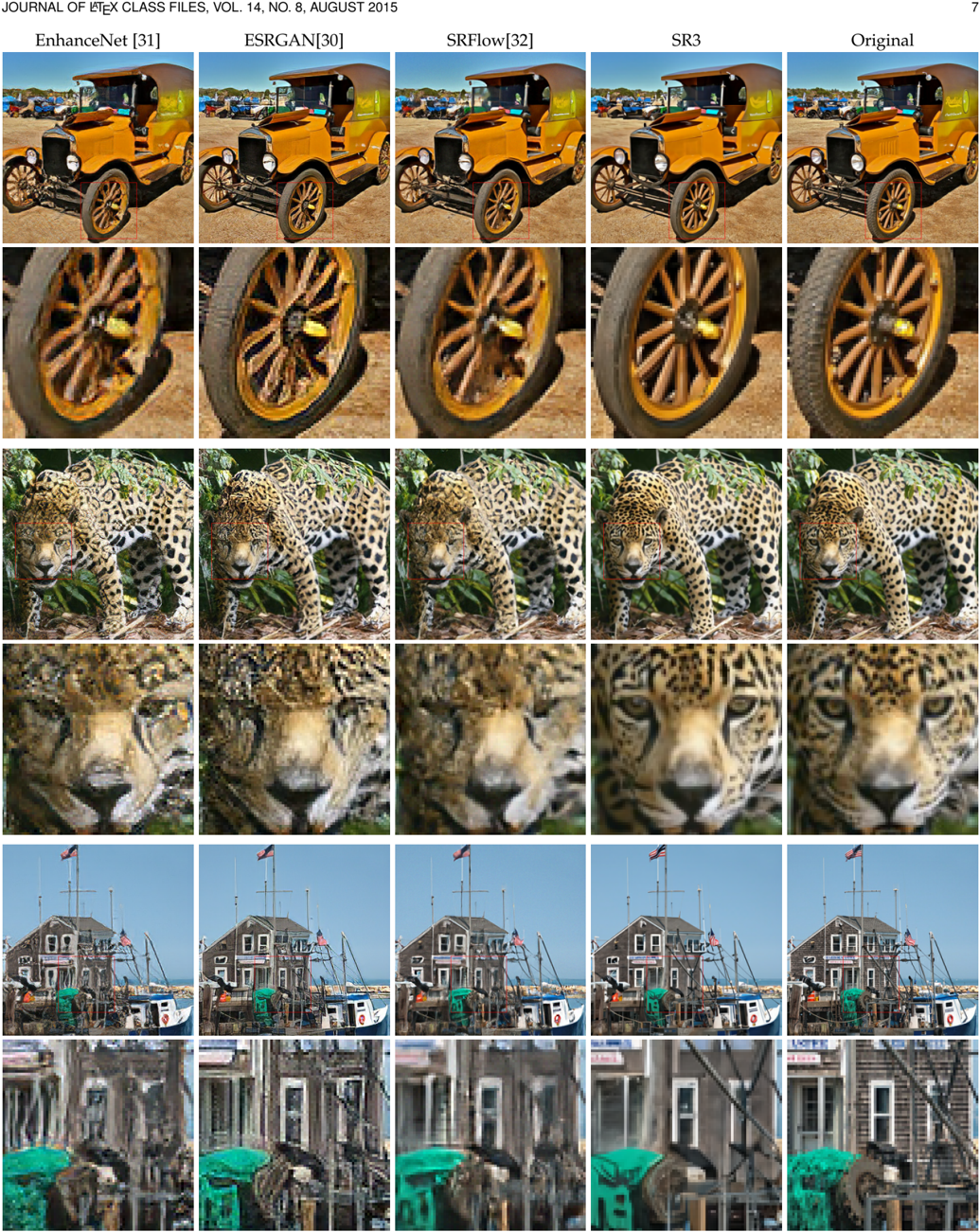
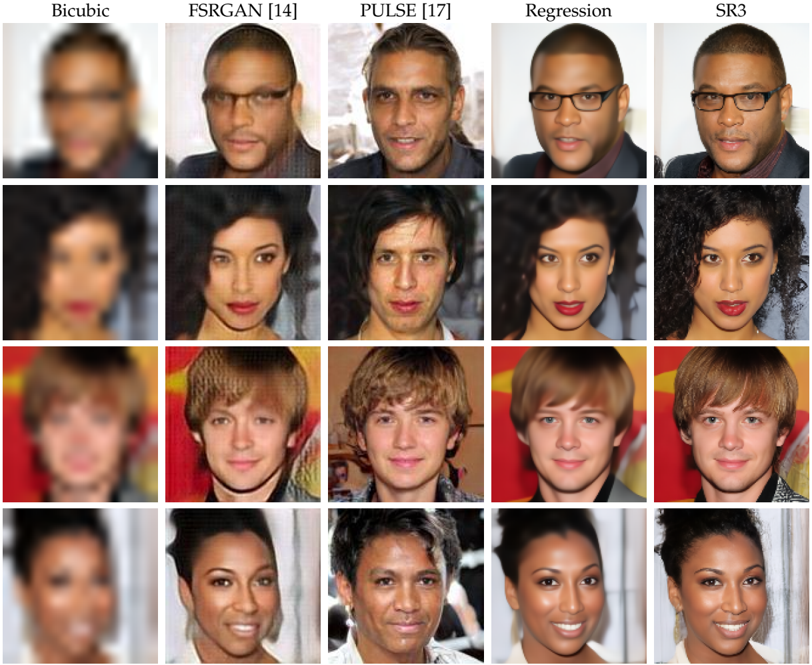
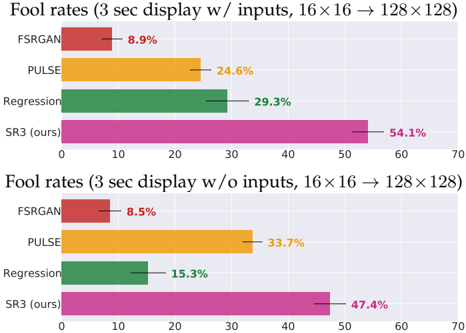
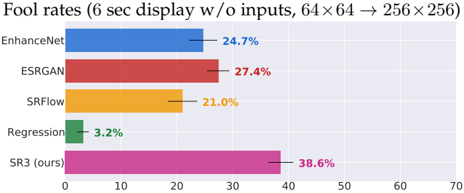
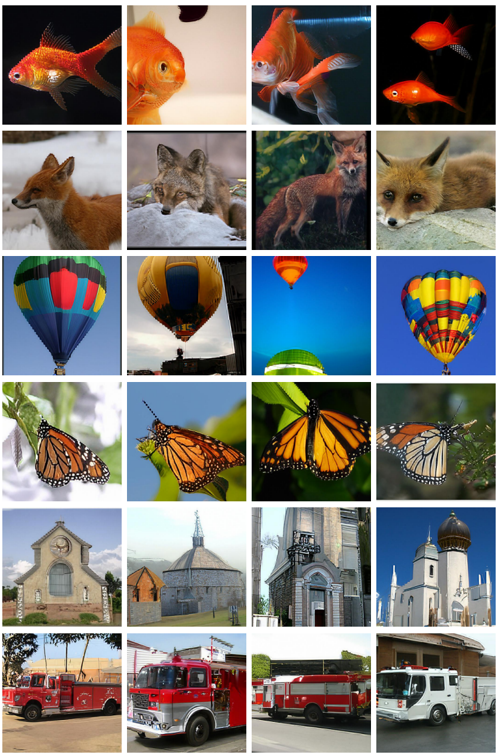
We present SR3, an approach to image Super-Resolution via Repeated Refinement. SR3 adapts denoising diffusion probabilistic models (Ho et al. 2020), (Sohl-Dickstein et al. 2015) to image-to-image translation, and performs super-resolution through a stochastic iterative denoising process. Output images are initialized with pure Gaussian noise and iteratively refined using a U-Net architecture that is trained on denoising at various noise levels, conditioned on a low-resolution input image. SR3 exhibits strong performance on super-resolution tasks at different magnification factors, on faces and natural images. We conduct human evaluation on a standard 8× face super-resolution task on CelebA-HQ for which SR3 achieves a fool rate close to 50%, suggesting photo-realistic outputs, while GAN baselines do not exceed a fool rate of 34%. We evaluate SR3 on a 4× super-resolution task on ImageNet, where SR3 outperforms baselines in human evaluation and classification accuracy of a ResNet-50 classifier trained on high-resolution images. We further show the effectiveness of SR3 in cascaded image generation, where a generative model is chained with super-resolution models to synthesize high-resolution images with competitive FID scores on the class-conditional 256×256 ImageNet generation challenge.
Overview
The claims and statistics of this paper haven’t been checked yet.
Free: it reads the open-access text and checks the first 5 claims that cite a source we can check. Create a free account to check every claim.
Integrity signals
Registry
Cites
Statistics
Figures




















Verification
Claims the paper makes
The claims and statistics of this paper haven’t been checked yet.
Free: it reads the open-access text and checks the first 5 claims that cite a source we can check. Create a free account to check every claim.
Claims other papers make about this one
Each is checked against this paper’s own text: does it say what the citing paper says it does?
The source backs part of the claim, not all of it — or backs it for a different population, condition or comparison.
In the citing paper
“Both the SR3 and CDM directly apply the diffusion process to input images, which leads to larger evaluation steps.”
From Diffusion Models: A Comprehensive Survey of Methods and Applications (2024) · cites this paper as [200]
Experimental — accuracy not yet measuredThe source backs part of the claim, not all of it — or backs it for a different population, condition or comparison.
In the citing paper
“Low-light face videos suffer from severe noise and detail loss, limiting their use in surveillance and photography applications.”
From Temporally consistent low-light face video enhancement via video-to-video conditional diffusion (2026) · cites this paper as [5]
Experimental — accuracy not yet measuredThe source backs part of the claim, not all of it — or backs it for a different population, condition or comparison.
In the citing paper
“This greatly improves FID on ImageNet 256×256, but does not reach the same performance as state-of-the-art models like BigGAN-deep [43, 53], as seen in Table 5.”
From Diffusion Models Beat GANs on Image Synthesis (2021) · cites this paper as [53]
Experimental — accuracy not yet measuredIn the citing paper
“Super-Resolution via Repeated Refinement (SR3) [200] uses DDPM to enable conditional image generation.”
From Diffusion Models: A Comprehensive Survey of Methods and Applications (2024) · cites this paper as [200]
In the citing paper
“SR3 conducts super-resolution through a stochastic, iterative denoising process.”
From Diffusion Models: A Comprehensive Survey of Methods and Applications (2024) · cites this paper as [200]
2 more claims about this paper
Create a free account to see every claim other papers make about this one.
Self-check
Percentages, sums and reported differences re-computed from the paper’s own numbers.
The self-check needs the paper’s full text.
Citations
Cites
Deep Residual Learning for Image Recognition
He, K., Zhang, X., Ren, S., & Sun, J. (2016) · 2016 IEEE Conference on Computer Vision and Pattern Recognition (CVPR) · doi:10.1109/cvpr.2016.90 · Cited by 235,474 · cited 1×
“Then, we report classification accuracy of a pre-trained ResNet50 [65] model.”
MethodVaswani, A., Shazeer, N., Parmar, N., Uszkoreit, J., Jones, L., Gomez, A. N., Kaiser, L., & Polosukhin, I. (2017) · arXiv · doi:10.48550/arxiv.1706.03762 · Cited by 120,404
U-Net: Convolutional Networks for Biomedical Image Segmentation
Ronneberger, O., Fischer, P., & Brox, T. (2015) · Lecture notes in computer science · doi:10.1007/978-3-319-24574-4_28 · Cited by 99,404
Exploiting Generative AI to Scale up Intelligent Tutoring Systems
Jakubův, J., Chvalovský, K., Goertzel, Z., Kaliszyk, C., Olšák, M., Piotrowski, B., Schulz, S., Suda, M., & Urban, J. (2023) · DROPS (Schloss Dagstuhl – Leibniz Center for Informatics) · doi:10.4230/lipics.itp.2023.19 · Cited by 76,658
Image quality assessment: from error visibility to structural similarity
Wang, Z., Bovik, A. C., Sheikh, H. R., & Simoncelli, E. P. (2004) · IEEE Transactions on Image Processing · doi:10.1109/tip.2003.819861 · Cited by 57,892 · cited 10×
“Table 2 shows the PSNR, SSIM [63] and Consistency scores for 16 16 !”
BackgroundInfluentialImageNet Large Scale Visual Recognition Challenge
Russakovsky, O., Deng, J., Su, H., Krause, J., Satheesh, S., Ma, S., Huang, Z., Karpathy, A., Khosla, A., Bernstein, M., et al. (2015) · International Journal of Computer Vision · doi:10.1007/s11263-015-0816-y · Cited by 39,380 · cited 2×
“on ImageNet 1K [62] and use the dev split for evaluation.”
BackgroundMethodAuto-Encoding Variational Bayes
Kingma, D. P., & Welling, M. (2013) · arXiv · doi:10.48550/arxiv.1312.6114 · Cited by 20,067 · cited 2×
“VAEs [7], [46] offer fast sampling, but tend to underperform GANs”
BackgroundGenerative adversarial networks
Goodfellow, I., Pouget-Abadie, J., Mirza, M., Xu, B., Warde-Farley, D., Ozair, S., Courville, A., & Bengio, Y. (2020) · Communications of the ACM · doi:10.1145/3422622 · Cited by 18,384
Sequence to Sequence Learning with Neural Networks
Sutskever, I., Vinyals, O., & Le, Q. V. (2014) · arXiv · doi:10.48550/arxiv.1409.3215 · Cited by 17,766
Photo-Realistic Single Image Super-Resolution Using a Generative Adversarial Network
Ledig, C., Theis, L., Huszar, F., Caballero, J., Cunningham, A., Acosta, A., Aitken, A., Tejani, A., Totz, J., Wang, Z., et al. (2017) · 2017 IEEE Conference on Computer Vision and Pattern Recognition (CVPR) · doi:10.1109/cvpr.2017.19 · Cited by 12,696
Research works printed but not linked: 2
- 11. I. J. Goodfellow, J. Pouget-Abadie, M. Mirza, B. Xu, D. Warde- Farley, S. Ozair, A. Courville, and Y. Bengio, "Generative Adver- sarial Networks," NIPS, 2014.
- 46. D. J. Rezende, S. Mohamed, and D. Wierstra, "Stochastic back- propagation and approximate inference in deep generative mod- els," in ICML, 2014, pp. 1278-1286.
Cited by
Items 901–1,000 of 1,005
DCGSD: Low-Light Image Enhancement With Dual-Conditional Guidance Sparse Diffusion Model
Jin, H., Wang, J., Zuo, F., Su, H., Xiao, Z., Wang, B., & Zhang, Y. (2025) · IEEE Transactions on Circuits and Systems for Video Technology · doi:10.1109/tcsvt.2025.3544771 · Cited by 9
“Inspired by previous work [10], [11], we propose a novel diffusion model for low-light image enhancement, which is called the Dual-Conditional Guidance Sparse Diffusion model, referred to as DCGSD. IV.”
InfluentialLocal feature enhancement transformer for image super-resolution
Weijie, H., & Detian, H. (2025) · Scientific Reports · doi:10.1038/s41598-025-07650-x · Cited by 9
“SR3 43 applied diffusion models to the SR task, formulating this task as an iterative denoising process that progressively refines LR inputs to high-quality outputs.”
Lyu, X., & Ren, X. (2025) · Materials Today Communications · doi:10.1016/j.mtcomm.2025.113087 · Cited by 18
DroneSR: Rethinking Few-Shot Thermal Image Super-Resolution From Drone-Based Perspective
Weng, Z., Liu, X., Liu, C., Guo, X., Shi, Y., & Lin, L. (2025) · IEEE Sensors Journal · doi:10.1109/jsen.2025.3605934 · Cited by 8
“For example, SR3 [24] uses diffusion models to address image restoration and SR issues, combining multiscale structures to enhance detailed reconstruction.”
Lu, J., He, G., Dou, H., Gao, Q. Z., Fang, L., & Deng, Y. C. (2023) · IEEE Journal of Selected Topics in Applied Earth Observations and Remote Sensing · doi:10.1109/jstars.2023.3314866 · Cited by 8
“For a detailed break-down of the pretraining process, including the UNet architecture and hyperparameters used, please refer either to SR3 or to our open-source code repository.”
MethodLi, B., Sun, Y., Dong, J., Zhu, Z. H., Liu, J., Jin, X., & Zeng, W. (2024) · Proceedings of the AAAI Conference on Artificial Intelligence · doi:10.1609/aaai.v38i4.28085 · Cited by 14
“Inspired by the powerful probability distribution modeling capabilities exhibited by generative diffusion models (Saharia et al. 2022; M ¨ uller et al. 2023), we propose a progressive optimization paradigm based on the diffusion process for reliable probability volume modeling.”
Super-Resolution Reconstruction for Cross-Modal Communications in Industrial Internet of Things
Liu, H., Wei, X., Gao, Y., Zhou, L., & Qian, Y. (2024) · IEEE Internet of Things Journal · doi:10.1109/jiot.2024.3388260 · Cited by 8
Paired conditional generative adversarial network for highly accelerated liver 4D MRI
Xu, D., Miao, X., Liu, H., Scholey, J., Yang, W., Feng, M. U.-S., Ohliger, M. A., Lin, H., Lao, Y., Yang, Y., et al. (2024) · Physics in Medicine and Biology · doi:10.1088/1361-6560/ad5489 · Cited by 8
“Model structures more robust to tiling artifacts, such as diffusion-based frameworks (Saharia et al 2021) or post-processing techniques, are worth exploring to D Xu et al combat such artifacts.”
DiffHarmony: Latent Diffusion Model Meets Image Harmonization
Zhou, P., Feng, F., & Wang, X. (2024) · International Conference on Multimedia Retrieval · doi:10.1145/3652583.3657616 · Cited by 13
“Referring to previous image conditioned diffusion models[20–22], we can extend dimension of the input channel by concatenating image conditions and noisy image input.”
MethodDiff-ReColor: Rethinking image colorization with a generative diffusion model
Li, G., Zhao, S., & Zhao, T. (2024) · Knowledge-Based Systems · doi:10.1016/j.knosys.2024.112133 · Cited by 11
Super-Resolution of Satellite Lidars for Forest Studies Using Diffusion Generative Models
Ramírez-Jaime, A., Arce, G. R., Stephen, M. A., & MacKinnon, J. (2024) · IEEE Conference on Computational Imaging Using Synthetic Apertures (CISA) · doi:10.1109/cisa60639.2024.10576270 · Cited by 8
“We tackle this problem by applying the denoising diffusion probabilistic (DDPM) model to conditional HHDC generation extending the work on [10] to lidar tensors.”
MethodConditional guided generative diffusion for particle accelerator beam diagnostics
Scheinker, A. (2024) · Scientific Reports · doi:10.1038/s41598-024-70302-z · Cited by 11
“…to be the state-of-the-art for generating higher resolution images, especially when the images are highly varying as is the case for complex accelerator beams over a wide range of accelerator parameters as shown above, for class-conditional image synthesis 56,57 , and super-resolution methods 58 .”
BackgroundDPHMs: Diffusion Parametric Head Models for Depth-Based Tracking
Tang, J., Dai, A., Nie, Y., Markhasin, L., Thies, J., & Nießner, M. (2024) · IEEE Computer Society Conference on Computer Vision and Pattern Recognition/Proceedings - IEEE Computer Society Conference on Computer Vision and Pattern Recognition/Proceedings · doi:10.1109/cvpr52733.2024.00112 · Cited by 13
Gao, X. Y., & Liu, J. (2024) · ACM International Conference on Multimedia (ACM MM) · doi:10.1145/3664647.3681380 · Cited by 8
“Up to now, diffusion model has been applied to a wide variety of vision fields such as image super-resolution [34], image inpainting [35], image colorization [36], semantic segmentation [37], point cloud generation [38], video synthesis [39], 3D reconstruction [40], etc, and is still making rapid…”
BackgroundPointRegGPT: Boosting 3D Point Cloud Registration Using Generative Point-Cloud Pairs for Training
Chen, S., Xu, H., Li, H., Luo, K., Liu, G., Fu, C., Tan, P., & Liu, S. (2024) · Lecture notes in computer science · doi:10.1007/978-3-031-72983-6_16 · Cited by 8
“Applications of diffusion models cover image super-resolution [44], restoration [27,34,60,67], human motion prediction [49], and medical imaging [48], extending to 3D generation [32] and reconstruction [26,55].”
Latent spectral-spatial diffusion model for single hyperspectral super-resolution
Cheng, Y., Ma, Y., Fan, F., Ma, J., Yao, Y., & Mei, X. (2025) · Geo-spatial Information Science · doi:10.1080/10095020.2024.2378917 · Cited by 11
High-Resolution Speech Restoration with Latent Diffusion Model
Dhyani, T., Lux, F., Mancusi, M., Fabbro, G., Hohl, F., & Vu, N. T. (2025) · IEEE International Conference on Acoustics Speech and Signal Processing · doi:10.1109/icassp49660.2025.10890277 · Cited by 12
“• We test restoration frameworks for iterative refinement, a popular technique in image restoration [20], and demonstrate that Hi-ResLDM returns consistent reconstructions across multiple refinements.”
Liu, X., Li, H., Qiao, Z., Huang, Y., Liu, X., Zhang, J., Qian, Z., Zhen, X., & Zhang, B. (2025) · International Journal of Computer Vision · doi:10.1007/s11263-025-02426-2 · Cited by 9
FrDiff: Framelet-Based Conditional Diffusion Model for Multispectral and Panchromatic Image Fusion
Zhang, J., Fang, F., Wang, T., Zhang, G., & Song, H. (2025) · IEEE Transactions on Multimedia · doi:10.1109/tmm.2025.3565985 · Cited by 13
LEGO: LLM-enhanced genetic optimization for underwater robot image restoration
Ma, Y., Xia, F., Lin, L., & Guan, X. (2025) · Pattern Recognition · doi:10.1016/j.patcog.2025.111782 · Cited by 12
Kong, D., Yang, H., Luo, Y., Chen, Z., Lei, B., Zhong, Y., Liu, M., Chen, Y., & Ma, C. (2025) · IEEE Transactions on Medical Imaging · doi:10.1109/tmi.2025.3574946 · Cited by 8
“In the first approach, inspired by the super-resolution works [34], we use a simple and effective method to modify the intermediate noisy image x t by channel-wise concatenating the 4-angle images.”
An exploration of deep learning for decision making: Methods, applications, and challenges
Wang, X., Zhang, B., Xu, Z., Qin, Y., & Chen, C. L. P. (2025) · Expert Systems with Applications · doi:10.1016/j.eswa.2025.128406 · Cited by 9
Warped Diffusion: Solving Video Inverse Problems with Image Diffusion Models
Daras, G., Nie, W., Kreis, K., Dimakis, A. G., Mardani, M., Kovachki, N., & Vahdat, A. (2024) · neural information processing systems · doi:10.52202/079017-3207 · Cited by 31
TMGAN: two-stage multi-domain generative adversarial network for landscape image translation
Lin, L., Zhang, S., Ji, S., Zhao, S., Wen, A., Yan, J., Zhou, Y., & Zhou, W. (2023) · The Visual Computer · doi:10.1007/s00371-023-03171-8 · Cited by 8
A joint learning method with consistency-aware for low-resolution facial expression recognition
Xie, Y., Tian, W., Song, L., Xue, R., Zha, Z., & Wen, B. (2023) · Expert Systems with Applications · doi:10.1016/j.eswa.2023.123022 · Cited by 9
Step Vulnerability Guided Mean Fluctuation Adversarial Attack against Conditional Diffusion Models
Yu, H., Chen, J., Ding, X., Zhang, Y., Tang, T., & Ma, H. (2024) · Proceedings of the AAAI Conference on Artificial Intelligence · doi:10.1609/aaai.v38i7.28503 · Cited by 26
“For LDM-Inpainting and LDM-SR we set T to 1000 , while for SR3 we set T to 2000 .”
Zhang, T., Lin, J., Jiao, J., & Li, H. (2024) · Knowledge-Based Systems · doi:10.1016/j.knosys.2024.112284 · Cited by 8
MCAD: Multi-modal Conditioned Adversarial Diffusion Model for High-Quality PET Image Reconstruction
Cui, J., Zeng, X., Zeng, P., Liu, B., Wu, X., Zhou, J., & Wang, Y. (2024) · Lecture notes in computer science · doi:10.1007/978-3-031-72104-5_45 · Cited by 8
CFDiffusion: Controllable Foreground Relighting in Image Compositing via Diffusion Model
Yu, Z., Zhou, J., Bao, Z., Fu, G., He, W., Liang, C., & Xiao, C. (2024) · ACM International Conference on Multimedia (ACM MM) · doi:10.1145/3664647.3681283 · Cited by 8
“Following [47], we use the Kaiming initialization technique [18] to initialize the weights of the proposed model and use a 0.9999 Exponetial Moving Average (EMA) for all our experiments.”
InfluentialLin, J., Wang, Y., Tao, Z., Wang, B., Zhao, Q., Wang, H., Tong, X., Mai, X., Lin, Y., Song, W., et al. (2024) · Lecture notes in computer science · doi:10.1007/978-3-031-72943-0_21 · Cited by 8
Image Super-Resolution using Generative Adversarial Networks with EfficientNetV2
Altakrouri, S., Noor, N. M., Ahmad, N. B., Justinia, T., & Usman, S. (2023) · International Journal of Advanced Computer Science and Applications · doi:10.14569/ijacsa.2023.01402100 · Cited by 8
“While considering artificial intelligence, the role of SR is crucial for performing various processes [5], like public security, remote sensing imaging, medical imaging, image compression, and so on using the single image SR criteria [6], [7].”
Geometric Neural Diffusion Processes
Mathieu, É., Dutordoir, V., Hutchinson, M., Bortoli, V. D., Teh, Y. W., & Turner, R. E. (2023) · neural information processing systems · doi:10.52202/075280-2327 · Cited by 15
Implementing and Experimenting with Diffusion Models for Text-to-Image GenerationPreprint
Zbinden, R. (2022) · arXiv (Cornell University) · doi:10.48550/arxiv.2209.10948 · Cited by 10
“Thus, we increase the resolution of our generated images to 256× 256, upsampling with a super-resolution model (Saharia et al., 2021b).”
MethodResultImage Harmonization with Diffusion ModelPreprint
Li, J.-J., Wang, J., Wang, C., & Xiong, J.-J. (2023) · arXiv.org · doi:10.48550/arxiv.2306.10441 · Cited by 9
“SR3 [18] presents a method for image super-resolution via repeated refinement.”
MethodSSIF: Learning Continuous Image Representation for Spatial-Spectral Super-ResolutionPreprint
Mai, G., Lao, N., Sun, W., Ma, Y., Song, J., Meng, C., Ma, H., Rao, J., Li, Z., & Ermon, S. (2023) · arXiv (Cornell University) · doi:10.48550/arxiv.2310.00413 · Cited by 12
“It has been widely used on natural images(Zhang et al., 2018a; Hu et al., 2019; Zhang et al., 2020b; Saharia et al., 2021; Chen et al., 2021), screen-shot images (Yang et al., 2021), omnidirectional images (Deng et al., 2021; Yoon et al., 2021) medical images (Isaac & Kulkarni, 2015), as well as…”
BackgroundMethodInfluentialPSC: Posterior Sampling-Based CompressionPreprint
Elata, N., Michaeli, T., & Elad, M. (2024) · arXiv (Cornell University) · doi:10.48550/arxiv.2407.09896 · Cited by 8
“As such, these models have been harnessed for solving a wide variety of tasks, including inverse problems (Saharia et al., 2021; 2022; Chung et al., 2023; Kawar et al., 2021; 2022a; Song et al., 2023), image editing (Meng et al., 2021; Brooks et al., 2023; Kawar et al., 2023; Huberman-Spiegelglas…”
Generative AI Systems: A Systems-based Perspective on Generative AIPreprint
Tomczak, J. M. (2024) · arXiv (Cornell University) · doi:10.48550/arxiv.2407.11001 · Cited by 12
Prognosis Prediction of Alzheimer's Disease Based on Multi-Modal Diffusion Model
Hwang, S., & Shin, J. (2024) · International Conference on Ubiquitous Information Management and Communication (IMCOM) · doi:10.1109/imcom60618.2024.10418423 · Cited by 7
“The network of our models uses U-Net architecture [9] with several modifications inspired by 256×256 class-conditional U-Net model [10][11][12].”
MethodABSR: Progressive Alternate Refinement for Blind Cardiac MRI Super-Resolution
Qiu, D., Song, Z., Zhang, W., Wong, K. K. L., & Zhang, Y. (2024) · IEEE Internet of Things Journal · doi:10.1109/jiot.2024.3418381 · Cited by 7
DDSR: Degradation-Aware Diffusion Model for Spectral Reconstruction from RGB Images
Chen, Y., & Zhang, X. (2024) · Remote Sensing · doi:10.3390/rs16152692 · Cited by 7
“Unlike conditional diffusion models [22,31], it is important to note that the neural network in the DDSR does not require an RGB image as input, which is only provided as prior information for the correction, so the model can adapt to various degradation processes flexibly.”
BackgroundMethodInfluentialChen, Y., Zhang, A., Gao, F., & Guo, J. (2025) · npj Heritage Science · doi:10.1038/s40494-025-01718-7 · Cited by 8
Diffusion-based low-light image enhancement with Kolmogorov-Arnold Networks (KANs)
Yeh, C., & Liou, C.-Y. (2025) · Array · doi:10.1016/j.array.2025.100431 · Cited by 7
Joint state-parameter estimation for the reduced fracture model via the united filter
Huynh, P. T., Hoang, T., Zhang, G., & Bao, F. (2025) · Journal of Computational Physics · doi:10.1016/j.jcp.2025.114159 · Cited by 9
Han, T., Ma, J., Wang, C., Luo, Y., Fan, H., Marcato, J., Zhang, X., & Chen, Y. (2025) · IEEE Transactions on Geoscience and Remote Sensing · doi:10.1109/tgrs.2025.3586187 · Cited by 7
“Their performance surpasses that of GANs in multiple domains [43], [44], especially in image semantic segmentation [10], [11].”
Ke, M. I. N., Fan, L. E. I., Zhang, J., Zhu, C., & You, Y. (2025) · Chinese Journal of Aeronautics · doi:10.1016/j.cja.2025.103741 · Cited by 7
Xia, C., Chen, H., Zhu, M., Lin, B., & Chen, X. (2025) · Automation in Construction · doi:10.1016/j.autcon.2025.106570 · Cited by 7
Bu, T., Liu, X., Zhu, J., Ma, T., & Huang, X. (2025) · Computer-Aided Civil and Infrastructure Engineering · doi:10.1111/mice.70099 · Cited by 7
“Specifically, the masked image 𝑥 ′ 0 is concatenated with each 𝑥 𝑡 along the channel dimension before being fed into the network, following the approach in (Saharia et al., 2022).”
Chain-of-Zoom: Extreme Super-Resolution via Scale Autoregression and Preference Alignment
Kim, B. S., Kim, J., & Ye, J. C. (2025) · neural information processing systems · doi:10.52202/085713-4181 · Cited by 10
DiffFuSR: Super-Resolution of All Sentinel-2 Multispectral Bands Using Diffusion Models
Sarmad, M., Kampffmeyer, M., & Salberg, A.-B. (2025) · IEEE Transactions on Geoscience and Remote Sensing · doi:10.1109/tgrs.2025.3638896 · Cited by 7
“Wu et al. [14] applied conditional di ff usion models for Sentinel-2 SR, enhancing only the RGB bands by leveraging paired SPOT 6 / 7 imagery.”
Babu, A., Sadam, A., & Lermusiaux, P. F. J. (2026) · Journal of Advances in Modeling Earth Systems · doi:10.1029/2025ms005324 · Cited by 9
Regression Is All You Need for Medical Image Translation
Rassmann, S., Kügler, D., Ewert, C., & Reuter, M. (2026) · IEEE Transactions on Medical Imaging · doi:10.1109/tmi.2025.3650412 · Cited by 11
“Whereas uncompressed 3D DMs are computationally costly and thus require e.g., down-sampling and / or patch-wise inference as in [62], a more e ffi cient 3D design choice is latent DMs (LDMs) [10], [63].”
InfluentialWang, C., & Sun, W. (2026) · IEEE Journal of Selected Topics in Applied Earth Observations and Remote Sensing · doi:10.1109/jstars.2026.3654927 · Cited by 7
Data-driven personalisation of television content: a survey
Nixon, L. J. B., Foss, J., Apostolidis, K., & Mezaris, V. (2022) · Multimedia Systems · doi:10.1007/s00530-022-00926-6 · Cited by 9
Diffused Fourier Network for Video Action Segmentation
Jiang, B., & Mu, Y. (2023) · ACM International Conference on Multimedia (ACM MM) · doi:10.1145/3581783.3611842 · Cited by 10
“Inspired by the iterative diffusion frameworks in image super-resolution [24, 52], we propose a cascaded diffusion network that combines both unconditional and conditional diffusion stages for action segmentation, which regards over-segmentation errors as undesired noises and accordingly…”
MethodA Database and Model for the Visual Quality Assessment of Super-Resolution Videos
Zhou, F., Wei, S., Lu, Z., & Qiu, G. (2024) · IEEE Transactions on Broadcasting · doi:10.1109/tbc.2024.3382949 · Cited by 10
CT‐based synthetic iodine map generation using conditional denoising diffusion probabilistic model
Gao, Y., Xie, H., Chang, C., Peng, J., Pan, S., Qiu, R. L. J., Wang, T., Ghavidel, B. B., Roper, J. R., Zhou, J., et al. (2024) · Medical Physics · doi:10.1002/mp.17258 · Cited by 8
No-Clean-Reference Image Super-Resolution: Application to Electron Microscopy
Khateri, M., Ghahremani, M., Sierra, A., & Tohka, J. (2024) · IEEE Transactions on Computational Imaging · doi:10.1109/tci.2024.3426349 · Cited by 9
“Several studies have also been conducted to incorporate the interpretability of model-based methods into end-to-end learning, e.g., deep unfolding [32], [33], [34], plug-and-play (PnP) [35], [36], [37], [38], and deep equilibrium learning [39], [40].”
BackgroundFusing infrared polarization images for road detection via denoising diffusion probabilistic models
Li, K., Qi, M., Liu, Y., & Zhuang, S. (2024) · Optics Letters · doi:10.1364/ol.538600 · Cited by 7
Application of Prompt Engineering in AIGC — Taking Stable Diffusion as an Example
Chen, T., Yuan, Y., & Yin, B. (2024) · International Conference on Machine Learning and Intelligent Systems Engineering (MLISE) · doi:10.1109/mlise62164.2024.10674412 · Cited by 7
“At present, diffusion based generative models, such as DALL · E2 and Imagen, have achieved image level surpassing GAN in multiple aspects [3-4] .”
MethodHein, D., Holmin, S., Szczykutowicz, T. P., Maltz, J. S., Danielsson, M. E., Wang, G., & Persson, M. (2024) · Visual Computing for Industry Biomedicine and Art · doi:10.1186/s42492-024-00175-6 · Cited by 7
“It is reasonable to surmise that the ‘trick’ of feeding the condition image as additional input to the network to directly learn a trajectory to the posterior distribution of interest, a technique successfully used for diffusion models [30, 33, 43] and PFGM ++ [19], will also work for CD.”
MethodToward Real-World Super Resolution With Adaptive Self-Similarity Mining
Fan, Z., Yang, W., Guo, Z., & Liu, J. (2024) · IEEE Transactions on Image Processing · doi:10.1109/tip.2024.3473320 · Cited by 9
“Saharia et al. [14] and Ma et al. [44] regard LR images as conditions of diffusion models [45] and achieve the goal of SR by LR-conditional generating.”
BackgroundMITD-Net: Multi-scale iterative tamper detection network for image manipulation localization
Deng, F., Yu, H., Liu, T., & Yang, R. (2024) · Digital Signal Processing · doi:10.1016/j.dsp.2024.104901 · Cited by 10
Liu, Y., & Zhang, J. (2024) · Optics & Laser Technology · doi:10.1016/j.optlastec.2024.112181 · Cited by 8
Zero-Shot Low-Dose CT Image Denoising via Patch-Based Content-Guided Diffusion Models
Su, B., Hu, X., Zha, Y., Wu, Z., Ma, Y., Xu, J., & Zhang, B. (2025) · IEEE Transactions on Instrumentation and Measurement · doi:10.1109/tim.2025.3547474 · Cited by 7
“Meanwhile, for REDCNN [21], EDCNN [46], CTformer [47], WGAN [48], and diffusion-based method SR3 [49], paired normal dose and 25% low dose images are used for training.”
Diffusion Model‐Based MRI Super‐Resolution Synthesis
Ma, J., Jian, G., & Chen, J. (2025) · International Journal of Imaging Systems and Technology · doi:10.1002/ima.70021 · Cited by 7
“As a result, DDPM has also been applied to image super-resolution tasks [8, 9].”
InfluentialCan Location Embeddings Enhance Super-Resolution of Satellite Imagery?
Panangian, D., & Bittner, K. (2025) · IEEE Winter Conference on Applications of Computer Vision · doi:10.1109/wacv61041.2025.00598 · Cited by 7
Han, Q., Jiang, X., Zhao, Y., & Wang, X. (2025) · Atmosphere · doi:10.3390/atmos16050570 · Cited by 7
Adaptive dual-domain-guided semantics diffusion model for image defogging
Jin, S., Zhang, Y., Xu, Z., Qin, Z., Jiang, X., Liu, H., & Xu, M. (2025) · Optics & Laser Technology · doi:10.1016/j.optlastec.2025.113081 · Cited by 7
Multi spectral visible-thermal IR image translation using improved u-net & conditional diffusion
Banday, M., & Lall, B. (2025) · Neurocomputing · doi:10.1016/j.neucom.2025.131006 · Cited by 8
WaveDiffUR: A Wavelet-Domain Diffusion Model for Ultraresolution in Remote Sensing
Shi, Y., Han, L., Han, L., Dancey, D., & Zhang, X. (2025) · IEEE Transactions on Geoscience and Remote Sensing · doi:10.1109/tgrs.2025.3614101 · Cited by 7
Yosef, E., & Giryes, R. (2025) · Scientific Reports · doi:10.1038/s41598-025-27127-1 · Cited by 8
“References 4,31,32 are generative models that have an impressive ability to learn natural image distributions and are used for image generation 3,33–35 , segmentation 36,37 , inpainting 38 , image super-resolution 39 , and image reconstruction 4,40–45 .”
Bidirectional Condition Diffusion Probabilistic Models for PET Image Denoising
Shen, C., Tie, C., Yang, Z., Zhang, N., & Zhang, Y. (2024) · IEEE Transactions on Radiation and Plasma Medical Sciences · doi:10.1109/trpms.2024.3355247 · Cited by 7
Indimath, S. S., Wifstad, S. V., Bryon, V., Bøklepp, B. R., Løvstakken, L., Avdal, J., Fiorentini, S., & Måsøy, S. (2024) · Geoenergy Science and Engineering · doi:10.1016/j.geoen.2024.212703 · Cited by 7
Zhou, F., Ling, H., Shi, Y., Chen, J., & Li, P. (2024) · IEEE International Conference on Acoustics Speech and Signal Processing · doi:10.1109/icassp48485.2024.10447402 · Cited by 7
Minutia reconstruction in sonar images with diffusion probabilistic models
Zhao, B., Zhou, Q., Huang, L., Zhang, Q., Zhu, Y., & Ma, J. (2024) · Engineering Applications of Artificial Intelligence · doi:10.1016/j.engappai.2024.108850 · Cited by 7
Sim-to-Real Robotic Sketching using Behavior Cloning and Reinforcement Learning
Jia, B., & Manocha, D. (2024) · Proceedings - IEEE International Conference on Robotics and Automation/Proceedings · doi:10.1109/icra57147.2024.10610286 · Cited by 7
“In the realm of generative image models conditioned on text, significant advancements have enabled high-fidelity, diverse, and controllable image synthesis [3], [4], [15], [16], [17], [18], [19].”
BackgroundCardiac Cine MRI Motion Correction Using Diffusion Models
Liu, Y., Diao, J., Zhou, Z., Qi, H., & Hu, P. (2024) · IEEE International Symposium on Biomedical Imaging (ISBI) · doi:10.1109/isbi56570.2024.10635444 · Cited by 7
“Generating data that closely mirrors the original training data makes diffusion models potentially applicable for various tasks, including image generation, super-resolution, and MR image reconstruction [12, 13, 14, 15, 16].”
BackgroundSpatial Diffusion for Cell Layout Generation
Li, C., Hu, X., Abousamra, S., Xu, M., & Chen, C. (2024) · Lecture notes in computer science · doi:10.1007/978-3-031-72083-3_45 · Cited by 7
Score-Based Image-to-Image Brownian Bridge
Wang, P., Xiao, B., He, Q., Glide‐Hurst, C. K., & Dong, M. (2024) · ACM International Conference on Multimedia (ACM MM) · doi:10.1145/3664647.3680999 · Cited by 15
SSL: A Self-similarity Loss for Improving Generative Image Super-resolution
Chen, D., Zhang, Z., Liang, J., & Zhang, L. (2024) · ACM International Conference on Multimedia (ACM MM) · doi:10.1145/3664647.3680874 · Cited by 13
Fan, Y., Liu, C., Yin, N., Gao, C., & Qian, X. (2024) · Lecture notes in computer science · doi:10.1007/978-3-031-73254-6_23 · Cited by 16
Multi-Modal Prior-Guided Diffusion Model for Blind Image Super-Resolution
Huang, D., Song, J., Huang, X., Hu, Z., & Zeng, H. (2024) · IEEE Signal Processing Letters · doi:10.1109/lsp.2024.3516699 · Cited by 7
Swin-Diff: a single defocus image deblurring network based on diffusion model
Liang, H., Chai, S., Zhao, X., & Kan, J. (2025) · Complex & Intelligent Systems · doi:10.1007/s40747-025-01789-w · Cited by 11
Meta-Learning for Zero-Shot Remote Sensing Image Super-Resolution
Cha, Z., Xu, D., Tang, Y., & Jiang, Z. (2023) · Mathematics · doi:10.3390/math11071653 · Cited by 7
Cheng, Y., Shao, M., Wan, Y., Qiao, Y., Zuo, W., & Meng, D. (2025) · Neural Networks · doi:10.1016/j.neunet.2025.107700 · Cited by 7
Generalizable medical image enhancement using structure-preserved diffusion models
Chen, L., Yu, X., Li, H., Lin, H., Niu, K., & Li, H. (2025) · Physics in Medicine and Biology · doi:10.1088/1361-6560/ade844 · Cited by 6
“Condition by low-resolution images, image super-resolution was implemented by SR3 (Saharia et al 2022) using diffusion models.”
InfluentialSuper-resolution reconstruction of side-scan sonar images based on texture consistency
Yang, Z., Zhao, J., Zhao, X., & Huang, C. (2025) · Expert Systems with Applications · doi:10.1016/j.eswa.2025.129033 · Cited by 9
CBCT-based synthetic CT image generation using a boosting conditional diffusion model
Hu, C., Xu, H., Li, X., Xing, F., Zhou, H., & Cao, N. (2025) · Biomedical Signal Processing and Control · doi:10.1016/j.bspc.2025.108409 · Cited by 6
Oh, H., Choi, S.-H., Baek, J., Kim, D.-J., & Joung, J. (2025) · Advanced Engineering Informatics · doi:10.1016/j.aei.2025.103704 · Cited by 7
CommunityDF: A Guided Denoising Diffusion Approach for Community Search
Chen, J., Xia, Y., Gao, J., Li, Z., & Chen, H. (2025) · IEEE International Conference on Data Engineering (ICDE) · doi:10.1109/icde65448.2025.00041 · Cited by 13
“One way to incorporate coarse community information as a feature in the denoising network is analogous to the super-resolution technique in image processing [30].”
Super-resolution reconstruction of the holographically reconstructed image based on improved ESRGAN
Yuan, C., Li, S., Ma, H., Li, P., Zhang, G., Guo, J., & Dong, M. (2025) · Optics Communications · doi:10.1016/j.optcom.2025.132451 · Cited by 6
Comprehensive Review of Deep Learning Approaches for Single-Image Super-Resolution
Liu, Z. Y., Jiang, S., Feng, S., Song, Q., & Zhang, J. (2025) · Sensors · doi:10.3390/s25185768 · Cited by 6
“Regarding SR3 [99], its uniqueness lies in its training method, which trains the model at different levels of noise, enabling the model to be optimized for Gaussian noise input.”
Accelerating Adaptive Diffusion and Uncertainty Modeling for Underwater Image Enhancement
Zeng, X., Peng, J., Fu, Z., Fan, L., Tu, X., Huang, Y., & Ding, X. (2025) · IEEE Transactions on Multimedia · doi:10.1109/tmm.2025.3632678 · Cited by 6
Bernasconi, M., Djelouah, A., Salehi, F., Groß, M. H., & Schroers, C. (2023) · IEEE Computer Society Conference on Computer Vision and Pattern Recognition/Proceedings - IEEE Computer Society Conference on Computer Vision and Pattern Recognition/Proceedings · doi:10.1109/cvpr52729.2023.02140 · Cited by 6
“We can note that any important progress in deep learning had an impact on model choices for super-resolution, as such recent works explored channel attention [20], transformer models [9, 19], diffusion models [13] and finally normalizing flows [10].”
BackgroundProstate MRI Super-Resolution using Discrete Residual Diffusion Model
Han, Z., & Huang, W. (2023) · IEEE International Conference on Bioinformatics and Biomedicine (BIBM) · doi:10.1109/bibm58861.2023.10385851 · Cited by 6
“Diffusion probabilistic models were initially introduced in [10] and have demonstrated compelling outcomes in image generation [11], [12] and image SR [13] recently.”
BackgroundLi, J., Fearnhead, P., Fryźlewicz, P., & Wang, T. (2024) · Journal of the Royal Statistical Society Series B (Statistical Methodology) · doi:10.1093/jrsssb/qkae008 · Cited by 6
Transferable adversarial sample purification by expanding the purification space of diffusion models
Ji, J., Gao, S., & Zhou, W. (2024) · The Visual Computer · doi:10.1007/s00371-023-03253-7 · Cited by 6
Zhang, X., Tan, M. C., Nabil, M., Shukla, R., Vasavada, S. R., Anandasabapathy, S., Anastasio, M. A., & Petrova, E. V. (2024) · Journal of Biomedical Optics · doi:10.1117/1.jbo.29.4.046001 · Cited by 6
“14,25 The SRCNN seeks to establish a mapping from the space of simulated LR images to the space of HR images EQ-TARGET;temp:intralink-;sec2.”
BackgroundXu, X., Da, S., Geng, G., Zhou, M., Liu, J., Li, K., & Cao, X. (2024) · Scientific Reports · doi:10.1038/s41598-024-58956-1 · Cited by 8
DIRformer: A Novel Image Restoration Approach Based on U-shaped Transformer and Diffusion Models
Hu, C., Wei, X.-Z., & Wu, X. (2024) · ACM Transactions on Multimedia Computing Communications and Applications · doi:10.1145/3703632 · Cited by 9
“The principal challenge encountered in the realm of supervised [10, 12, 40, 41] DMs-based IR resides in the effective integration of degraded images as conditioning factors for the generation of high-quality outputs.”
Metadata
- Authors
- Saharia, C., Ho, J., Chan, W., Salimans, T., Fleet, D. J., & Norouzi, M.
- Affiliations
- Google (United States) (US)
- Venue
- IEEE Transactions on Pattern Analysis and Machine Intelligence
- Published
- 2022
- Volume
- 45
- Issue
- 4
- Pages
- 1-14
- ISSN
- 0162-8828 (ISSN-L)
- 2160-9292
- 1939-3539
- OpenAlex
- W3155072588
- Cited by
- 1,829
- References
- 85
- Citations by year
- 2026: 234 · 2025: 580 · 2024: 662 · 2023: 301 · 2022: 40
- FWCI
- 129.48
- Type
- journal article
- Language
- en
- Open access
- hybrid
- doi.org
- Locations
- IEEE Transactions on Pattern Analysis and Machine Intelligence (publishedVersion, cc-by)
- PubMed (publishedVersion)
- arXiv (Cornell University) (submittedVersion)
- arXiv (Cornell University)
- Topics
- Physical Sciences › Computer Science › Computer Vision and Pattern Recognition › Advanced Image Processing Techniques
- Physical Sciences › Computer Science › Computer Vision and Pattern Recognition › Generative Adversarial Networks and Image Synthesis
- Physical Sciences › Computer Science › Computer Vision and Pattern Recognition › Image and Signal Denoising Methods
- Keywords
- image super-resolution, iterative refinement, denoising diffusion probabilistic models, image-to-image translation, U-Net, face super-resolution, high-resolution image generation, human evaluation, image classification accuracy
About these checks
Registry, retraction, Cites and statistics results are computed, not judged, with one exception: a printed reference that no index lists is read once by a model before it counts as a citation error. Claims are extracted by a model and kept only when their quote appears verbatim in the text; each cited source is then checked, with a model’s help, for whether it says what the claim relies on. Those verdicts can be wrong — read the claim’s quote and the cited source before relying on one.
Statistics and arithmetic are recomputed, not judged.
Confidence bands are shown only for fields calibrated on our annotated test set. None is calibrated yet, so no band is shown.
What counts as a claim ›How we measure confidence ›How we check this ›
Are you an author, or do you see a problem with this page? Request a review
Data sources
Bibliographic data: Semantic Scholar, OpenAlex, Crossref.
Contains information from the Semantic Scholar Academic Graph Datasets, made available under the ODC Attribution License (ODC-BY 1.0).
Semantic Scholar’s data is described in: Kinney, R., et al. (2023). The Semantic Scholar Open Data Platform. arXiv:2301.10140.
