

Image Super-Resolution Via Iterative Refinement
Open accessThe DOI matches its Crossref record; 81 of the 85 references it cites were found in a registry or an index.
Abstract
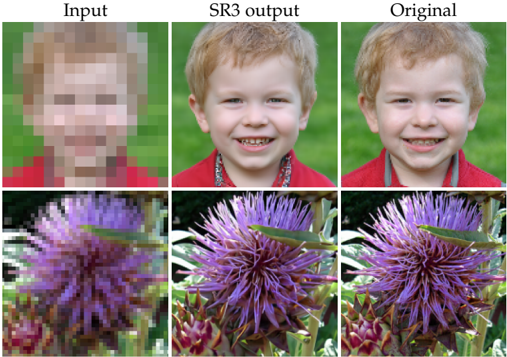
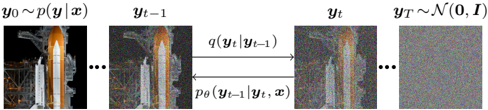
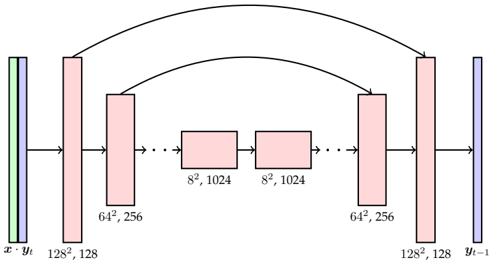
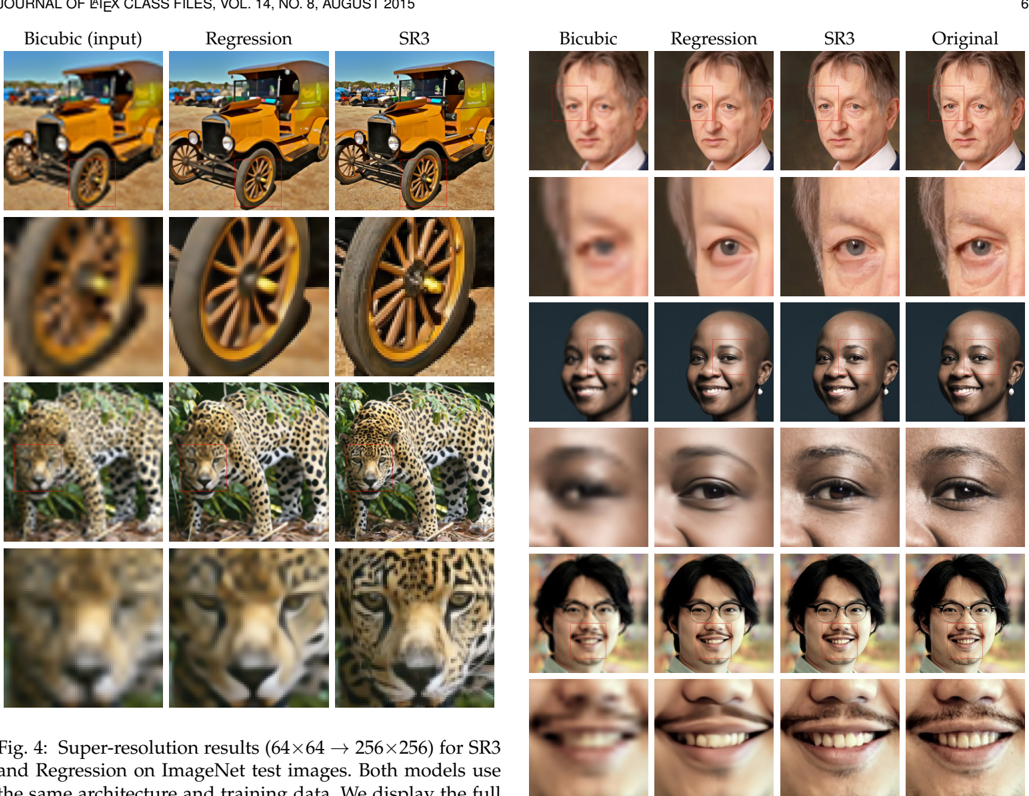
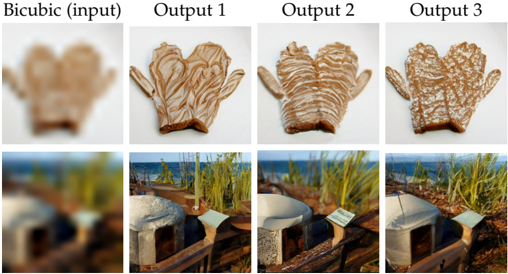
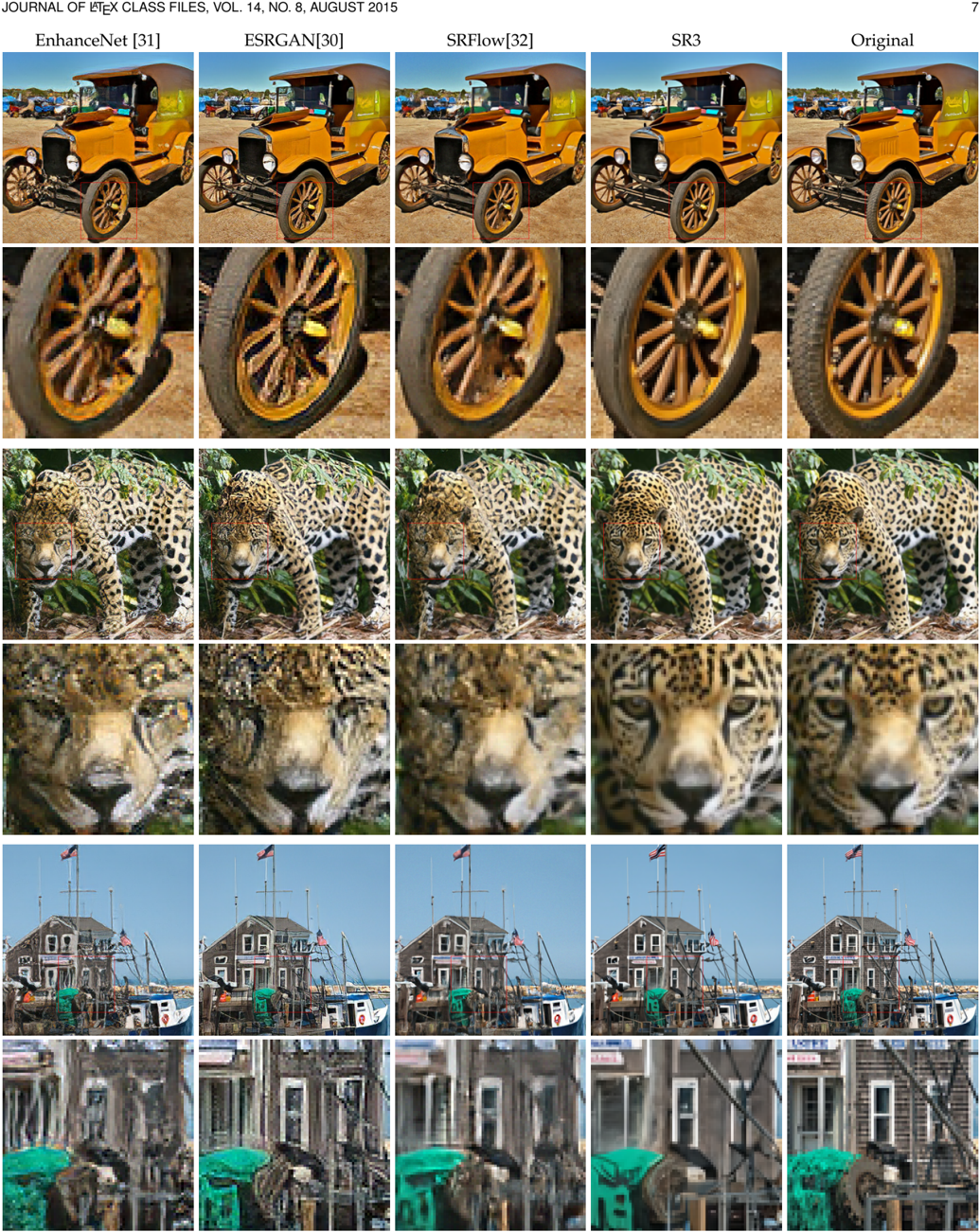
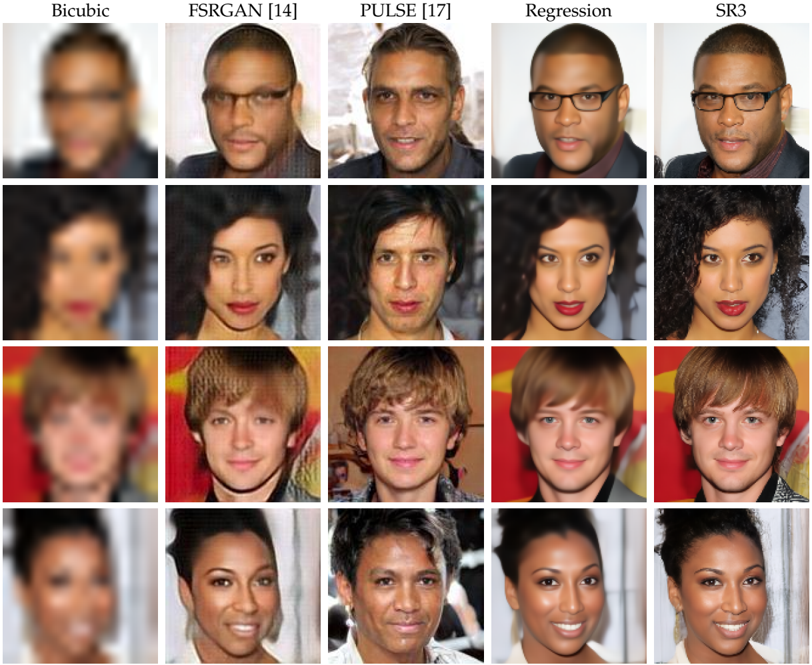
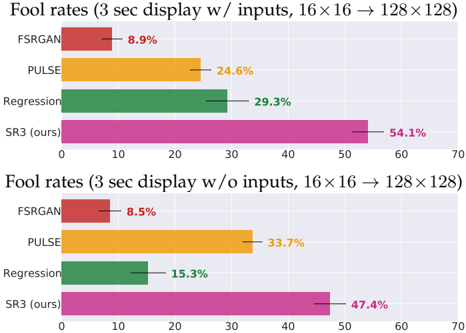
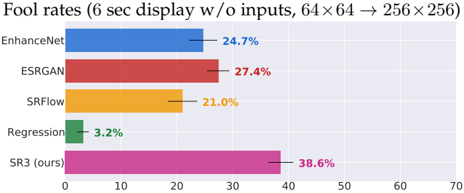
We present SR3, an approach to image Super-Resolution via Repeated Refinement. SR3 adapts denoising diffusion probabilistic models (Ho et al. 2020), (Sohl-Dickstein et al. 2015) to image-to-image translation, and performs super-resolution through a stochastic iterative denoising process. Output images are initialized with pure Gaussian noise and iteratively refined using a U-Net architecture that is trained on denoising at various noise levels, conditioned on a low-resolution input image. SR3 exhibits strong performance on super-resolution tasks at different magnification factors, on faces and natural images. We conduct human evaluation on a standard 8× face super-resolution task on CelebA-HQ for which SR3 achieves a fool rate close to 50%, suggesting photo-realistic outputs, while GAN baselines do not exceed a fool rate of 34%. We evaluate SR3 on a 4× super-resolution task on ImageNet, where SR3 outperforms baselines in human evaluation and classification accuracy of a ResNet-50 classifier trained on high-resolution images. We further show the effectiveness of SR3 in cascaded image generation, where a generative model is chained with super-resolution models to synthesize high-resolution images with competitive FID scores on the class-conditional 256×256 ImageNet generation challenge.
Overview
The claims and statistics of this paper haven’t been checked yet.
Free: it reads the open-access text and checks the first 5 claims that cite a source we can check. Create a free account to check every claim.
Integrity signals
Registry
Cites
Statistics
Figures


















Verification
Claims the paper makes
The claims and statistics of this paper haven’t been checked yet.
Free: it reads the open-access text and checks the first 5 claims that cite a source we can check. Create a free account to check every claim.
Claims other papers make about this one
Each is checked against this paper’s own text: does it say what the citing paper says it does?
The source backs part of the claim, not all of it — or backs it for a different population, condition or comparison.
In the citing paper
“Both the SR3 and CDM directly apply the diffusion process to input images, which leads to larger evaluation steps.”
From Diffusion Models: A Comprehensive Survey of Methods and Applications (2024) · cites this paper as [200]
Experimental — accuracy not yet measuredThe source backs part of the claim, not all of it — or backs it for a different population, condition or comparison.
In the citing paper
“Low-light face videos suffer from severe noise and detail loss, limiting their use in surveillance and photography applications.”
From Temporally consistent low-light face video enhancement via video-to-video conditional diffusion (2026) · cites this paper as [5]
Experimental — accuracy not yet measuredThe source backs part of the claim, not all of it — or backs it for a different population, condition or comparison.
In the citing paper
“This greatly improves FID on ImageNet 256×256, but does not reach the same performance as state-of-the-art models like BigGAN-deep [43, 53], as seen in Table 5.”
From Diffusion Models Beat GANs on Image Synthesis (2021) · cites this paper as [53]
Experimental — accuracy not yet measuredIn the citing paper
“Super-Resolution via Repeated Refinement (SR3) [200] uses DDPM to enable conditional image generation.”
From Diffusion Models: A Comprehensive Survey of Methods and Applications (2024) · cites this paper as [200]
In the citing paper
“SR3 conducts super-resolution through a stochastic, iterative denoising process.”
From Diffusion Models: A Comprehensive Survey of Methods and Applications (2024) · cites this paper as [200]
2 more claims about this paper
Create a free account to see every claim other papers make about this one.
Self-check
Percentages, sums and reported differences re-computed from the paper’s own numbers.
The self-check needs the paper’s full text.
Citations
Cites
Deep Residual Learning for Image Recognition
He, K., Zhang, X., Ren, S., & Sun, J. (2016) · 2016 IEEE Conference on Computer Vision and Pattern Recognition (CVPR) · doi:10.1109/cvpr.2016.90 · Cited by 235,474 · cited 1×
“Then, we report classification accuracy of a pre-trained ResNet50 [65] model.”
MethodVaswani, A., Shazeer, N., Parmar, N., Uszkoreit, J., Jones, L., Gomez, A. N., Kaiser, L., & Polosukhin, I. (2017) · arXiv · doi:10.48550/arxiv.1706.03762 · Cited by 120,404
U-Net: Convolutional Networks for Biomedical Image Segmentation
Ronneberger, O., Fischer, P., & Brox, T. (2015) · Lecture notes in computer science · doi:10.1007/978-3-319-24574-4_28 · Cited by 99,404
Exploiting Generative AI to Scale up Intelligent Tutoring Systems
Jakubův, J., Chvalovský, K., Goertzel, Z., Kaliszyk, C., Olšák, M., Piotrowski, B., Schulz, S., Suda, M., & Urban, J. (2023) · DROPS (Schloss Dagstuhl – Leibniz Center for Informatics) · doi:10.4230/lipics.itp.2023.19 · Cited by 76,658
Image quality assessment: from error visibility to structural similarity
Wang, Z., Bovik, A. C., Sheikh, H. R., & Simoncelli, E. P. (2004) · IEEE Transactions on Image Processing · doi:10.1109/tip.2003.819861 · Cited by 57,892 · cited 10×
“Table 2 shows the PSNR, SSIM [63] and Consistency scores for 16 16 !”
BackgroundInfluentialImageNet Large Scale Visual Recognition Challenge
Russakovsky, O., Deng, J., Su, H., Krause, J., Satheesh, S., Ma, S., Huang, Z., Karpathy, A., Khosla, A., Bernstein, M., et al. (2015) · International Journal of Computer Vision · doi:10.1007/s11263-015-0816-y · Cited by 39,380 · cited 2×
“on ImageNet 1K [62] and use the dev split for evaluation.”
BackgroundMethodAuto-Encoding Variational Bayes
Kingma, D. P., & Welling, M. (2013) · arXiv · doi:10.48550/arxiv.1312.6114 · Cited by 20,067 · cited 2×
“VAEs [7], [46] offer fast sampling, but tend to underperform GANs”
BackgroundGenerative adversarial networks
Goodfellow, I., Pouget-Abadie, J., Mirza, M., Xu, B., Warde-Farley, D., Ozair, S., Courville, A., & Bengio, Y. (2020) · Communications of the ACM · doi:10.1145/3422622 · Cited by 18,384
Sequence to Sequence Learning with Neural Networks
Sutskever, I., Vinyals, O., & Le, Q. V. (2014) · arXiv · doi:10.48550/arxiv.1409.3215 · Cited by 17,766
Photo-Realistic Single Image Super-Resolution Using a Generative Adversarial Network
Ledig, C., Theis, L., Huszar, F., Caballero, J., Cunningham, A., Acosta, A., Aitken, A., Tejani, A., Totz, J., Wang, Z., et al. (2017) · 2017 IEEE Conference on Computer Vision and Pattern Recognition (CVPR) · doi:10.1109/cvpr.2017.19 · Cited by 12,696
Research works printed but not linked: 2
- 11. I. J. Goodfellow, J. Pouget-Abadie, M. Mirza, B. Xu, D. Warde- Farley, S. Ozair, A. Courville, and Y. Bengio, "Generative Adver- sarial Networks," NIPS, 2014.
- 46. D. J. Rezende, S. Mohamed, and D. Wierstra, "Stochastic back- propagation and approximate inference in deep generative mod- els," in ICML, 2014, pp. 1278-1286.
Cited by
Items 301–400 of 1,005
SceneTex: High-Quality Texture Synthesis for Indoor Scenes via Diffusion Priors
Chen, D. Z., Li, H., Lee, H.-Y., Tulyakov, S., & Nießner, M. (2024) · IEEE Computer Society Conference on Computer Vision and Pattern Recognition/Proceedings - IEEE Computer Society Conference on Computer Vision and Pattern Recognition/Proceedings · doi:10.1109/cvpr52733.2024.01992 · Cited by 59
“…of vision-language integration [5–7, 13, 31, 48, 57, 66] The advancements in text-to-image generation, particularly diffusion models trained on large-scale image collections [19, 27, 28, 43, 52], have prompted the integration of pretrained 2D diffusion models as priors to facilitate 3D generation.”
BackgroundNTIRE 2023 Image Shadow Removal Challenge Report
Vasluianu, F.-A., Seizinger, T., Timofte, R., Cui, S., Huang, J., Tian, S., Fan, M., Zhang, J., Zhu, L., Wei, X., et al. (2023) · IEEE/CVF Conference on Computer Vision and Pattern Recognition Workshops (CVPRW) · doi:10.1109/cvprw59228.2023.00179 · Cited by 52
“Then the second stage adopts SR3 [52], a diffusion model for super-resolution, to generate a shadow-free image conditioned on the shadow-affected image and its shadow mask.”
MethodRGBD2: Generative Scene Synthesis via Incremental View Inpainting Using RGBD Diffusion Models
Lei, J., Tang, J., & Jia, K. (2023) · IEEE Computer Society Conference on Computer Vision and Pattern Recognition/Proceedings - IEEE Computer Society Conference on Computer Vision and Pattern Recognition/Proceedings · doi:10.1109/cvpr52729.2023.00814 · Cited by 61
“Most importantly, the reverse sampling process of diffusion models can be easily controlled and adjusted to achieve various downstream tasks such as image inpainting [2], image super-resolution [29] and image manipulation [2, 15, 20].”
BackgroundCDPMSR: Conditional Diffusion Probabilistic Models for Single Image Super-Resolution
Niu, A., Zhang, K., Pham, T. X., Sun, J., Zhu, Y., Kweon, I. S., & Zhang, Y. (2023) · Proceedings - International Conference on Image Processing · doi:10.1109/icip49359.2023.10222191 · Cited by 49
Xing, Y., Qu, L., Zhang, S., Zhang, K., Zhang, Y., & Bruzzone, L. (2024) · IEEE Transactions on Image Processing · doi:10.1109/tip.2024.3461476 · Cited by 46
“Like conditional DDPM [50], PAN and MS are taken as inputs of UNets for P2M and M2P respectively, to reconstruct each other.”
BackgroundMethodInfluentialDiff-Plugin: Revitalizing Details for Diffusion-Based Low-Level Tasks
Liu, Y., Ke, Z., Liu, F., Zhao, N., & Lau, R. W. H. (2024) · IEEE Computer Society Conference on Computer Vision and Pattern Recognition/Proceedings - IEEE Computer Society Conference on Computer Vision and Pattern Recognition/Proceedings · doi:10.1109/cvpr52733.2024.00402 · Cited by 79
“The latter usually train or fine-tune an individual model for different tasks via task-dependent designs, such as super-resolution [58, 74], JPEG compression [56], deblurring [52, 73], face restoration [71, 95], low-light enhancement [24, 83, 92], and shadow removal [16].”
BackgroundDiffusion-based Blind Text Image Super-Resolution
Zhang, Y., Zhang, J., Li, H., Wang, Z., Hou, L., Zou, D., & Bian, L. (2024) · IEEE Computer Society Conference on Computer Vision and Pattern Recognition/Proceedings - IEEE Computer Society Conference on Computer Vision and Pattern Recognition/Proceedings · doi:10.1109/cvpr52733.2024.02440 · Cited by 70
“Recently, diffusion models [15, 37] have exhibited great success in natural image synthesis [6, 31, 33, 38] and restoration [8, 21, 24, 36] due to their powerful data distribution modeling and data generation capabilities.”
TextDiff: Enhancing scene text image super-resolution with mask-guided residual diffusion models
Liu, B., Yang, Z., Chiu, C., & Xiong, Y. (2025) · Pattern Recognition · doi:10.1016/j.patcog.2025.111513 · Cited by 45
“Fortunately, diffusion-based methods in natural image super-resolution have shown impressive performance in recovering fine details and reconstructing global structure, without encountering issues like mode collapse or training instability that are commonly seen in Generative Adversarial Networks (GANs) (Saharia et al…”
BackgroundMethodDiffusion Model for Generative Image DenoisingPreprint
Xie, Y., Yuan, M., Dong, B., & Li, Q. (2023) · arXiv (Cornell University) · doi:10.48550/arxiv.2302.02398 · Cited by 59
SRGS: Super-Resolution 3D Gaussian SplattingPreprint
Feng, X. Z., He, Y., Chen, L., Yang, Y. T., Wang, C., Chen, Y., Zhong, Y., Kuang, Z., Ding, J., Yin, X., et al. (2024) · arXiv (Cornell University) · doi:10.48550/arxiv.2404.10318 · Cited by 59
“In addition, some methods use discriminative networks [16, 24, 42, 45] and diffusion models [11, 27, 39, 53] to improve the perceptual quality of image super-resolution.”
MethodTell2Design: A Dataset for Language-Guided Floor Plan Generation
Leng, S., Zhou, Y. M., Dupty, M. H., Lee, W. S., Joyce, S. C., & Lu, J. W. Z. (2023) · Proceedings of the conference - Association for Computational Linguistics. Meeting · doi:10.18653/v1/2023.acl-long.820 · Cited by 59
“Recently, text-conditional generative AI models (Nichol et al., 2022; Saharia et al., 2022b; Ramesh et al., 2022; Dhariwal and Nichol, 2021; Ho et al., 2022) have demonstrated impressive results in generating high-fidelity images.”
BackgroundInfluentialControlled graph neural networks with denoising diffusion for anomaly detection
Li, X., Xiao, C., Feng, Z., Pang, S., Tai, W., & Zhou, F. (2023) · Expert Systems with Applications · doi:10.1016/j.eswa.2023.121533 · Cited by 44
Physics-Driven Turbulence Image Restoration with Stochastic Refinement
Jaiswal, A. K., Zhang, X., Chan, S. H., & Wang, Z. (2023) · IEEE/CVF International Conference on Computer Vision (ICCV) · doi:10.1109/iccv51070.2023.01118 · Cited by 63
“The training of the diffusion network closely followed the optimal settings in [53].”
BackgroundMethodDiffusion in the Dark: A Diffusion Model for Low-Light Text Recognition
Nguyen, C. M., Chan, E. R., Bergman, A. W., & Wetzstein, G. (2024) · IEEE Winter Conference on Applications of Computer Vision · doi:10.1109/wacv57701.2024.00410 · Cited by 48
“Prior methods address this by using a cascading strategy, either training a single model in multiple phases [90] or training multiple models, each operating at a different resolution [29, 67].”
MethodMonoDiffusion: Self-Supervised Monocular Depth Estimation Using Diffusion Model
Shao, S., Pei, Z., Chen, W., Sun, D., Chen, P. C. Y., & Li, Z. G. (2024) · IEEE Transactions on Circuits and Systems for Video Technology · doi:10.1109/tcsvt.2024.3509619 · Cited by 56
“On the flip side, several studies [68], [69], [70] have shifted their focus towards enhancing image resolution.”
DiffUIE: Learning Latent Global Priors in Diffusion Models for Underwater Image Enhancement
Qing, Y., Liu, S., Wang, H., & Wang, Y. (2024) · IEEE Transactions on Multimedia · doi:10.1109/tmm.2024.3521710 · Cited by 55
Conditional diffusion models for downscaling and bias correction of Earth system model precipitation
Aich, M., Hess, P., Pan, B., Bathiany, S., Huang, Y., & Boers, N. (2026) · Geoscientific model development · doi:10.5194/gmd-19-1791-2026 · Cited by 49
Progressive Deblurring of Diffusion Models for Coarse-to-Fine Image SynthesisPreprint
Lee, S., Chung, H., Kim, J., & Ye, J. C. (2022) · arXiv (Cornell University) · doi:10.48550/arxiv.2207.11192 · Cited by 50
“…offer better mode coverage, they are widely used in various tasks such as image generation [Dhariwal and Nichol, 2021], super resolution [Li et al., 2022, Saharia et al., 2021], text-conditional image generation [Nichol et al., 2021, Ramesh et al., 2022], video generation [Ho et al., 2022b], etc.”
MethodWu, Q., Liu, Y., Zhao, H., Bui, T., Lin, Z., Zhang, Y., & Chang, S. (2023) · IEEE/CVF International Conference on Computer Vision (ICCV) · doi:10.1109/iccv51070.2023.00714 · Cited by 79
Stimulating Diffusion Model for Image Denoising via Adaptive Embedding and Ensembling
Li, T., Feng, H., Wang, L., Zhu, L., Xiong, Z., & Huang, H. (2024) · IEEE Transactions on Pattern Analysis and Machine Intelligence · doi:10.1109/tpami.2024.3432812 · Cited by 55
“After that, conditional diffusion models adapt to various tasks and have achieved brilliant performances in a series of image restoration tasks, such as image super-resolution [18], [19], image inpainting [20], [21], image deblurring [22].”
Towards Accurate Post-Training Quantization for Diffusion Models
Wang, C., Wang, Z., Xu, X., Tang, Y., Zhou, J., & Lu, J. (2024) · IEEE Computer Society Conference on Computer Vision and Pattern Recognition/Proceedings - IEEE Computer Society Conference on Computer Vision and Pattern Recognition/Proceedings · doi:10.1109/cvpr52733.2024.01517 · Cited by 70
“Denoising diffusion generative models [11, 32] have achieved outstanding performance in a wide variety of computer vision tasks such as image edition [2, 28], style transformation [34, 38], image super-resolution [18, 30] and many others.”
Text-to-Audio Generation Synchronized with VideosPreprint
Mo, S., Shi, J. C., & Tian, Y. (2024) · arXiv (Cornell University) · doi:10.48550/arxiv.2403.07938 · Cited by 42
NASDM: Nuclei-Aware Semantic Histopathology Image Generation Using Diffusion Models
Shrivastava, A., & Fletcher, P. T. (2023) · Lecture notes in computer science · doi:10.1007/978-3-031-43987-2_76 · Cited by 53
DoseDiff: Distance-Aware Diffusion Model for Dose Prediction in Radiotherapy
Zhang, Y., Li, C., Zhong, L., Chen, Z., Yang, W., & Wang, X. (2024) · IEEE Transactions on Medical Imaging · doi:10.1109/tmi.2024.3383423 · Cited by 54
“Researchers have applied conditional diffusion models to various image-to-image translation tasks, e.g., image inpainting [39], colorization [35], super-resolution [40], [41], and medical image synthesis [42], and achieved the SOTA results.”
BackgroundControl3Diff: Learning Controllable 3D Diffusion Models from Single-view Images
Gu, J., Gao, Q., Zhai, S., Chen, B., Liu, L., & Susskind, J. (2024) · International Conference on 3D Vision (3DV) · doi:10.1109/3dv62453.2024.00030 · Cited by 45
“Then, we pose the difficulties of applying similar methods to 3D scenario.”
MethodA Conditional Diffusion Model With Fast Sampling Strategy for Remote Sensing Image Super-Resolution
Meng, F., Chen, Y., Jing, H., Zhang, L., Yan, Y., Ren, Y., Wu, S., Feng, T., Liu, R., & Du, Z. (2024) · IEEE Transactions on Geoscience and Remote Sensing · doi:10.1109/tgrs.2024.3458009 · Cited by 54
“To verify the effectiveness of the proposed fast sampling module for diffusion-based methods, we employed DDPM [17], SR3 [19], SRDiff [43], and FastDiffSR methods for experimental analysis.”
BackgroundMethodInfluentialToward the unification of generative and discriminative visual foundation model: a survey
Liu, X., Zhou, T., Wang, C., Wang, Y., Wang, Y., Cao, Q., Du, W., Yang, Y., He, J., Qiao, Y., et al. (2024) · The Visual Computer · doi:10.1007/s00371-024-03608-8 · Cited by 55
PID: Physics-Informed Diffusion Model for Infrared Image Generation
Mao, F., Mei, J., Lu, S., Liu, F., Chen, L., Zhao, F., & Hu, Y. H. (2025) · Pattern Recognition · doi:10.1016/j.patcog.2025.111816 · Cited by 54
Zhang, H., Vallabh, C. K. P., & Zhao, X. (2023) · Precision Engineering · doi:10.1016/j.precisioneng.2023.06.015 · Cited by 43
Multi-depth branch network for efficient image super-resolution
Tian, H., Zhang, L., Li, S., Yao, M., & Pan, G. (2024) · Image and Vision Computing · doi:10.1016/j.imavis.2024.104949 · Cited by 41
Measurement Guidance in Diffusion Models: Insight from Medical Image Synthesis
Luo, Y., Yang, Q., Fan, Y., Qi, H., & Xia, M. (2024) · IEEE Transactions on Pattern Analysis and Machine Intelligence · doi:10.1109/tpami.2024.3399098 · Cited by 50
Kim, J., & Kim, T. (2024) · IEEE Computer Society Conference on Computer Vision and Pattern Recognition/Proceedings - IEEE Computer Society Conference on Computer Vision and Pattern Recognition/Proceedings · doi:10.1109/cvpr52733.2024.00879 · Cited by 64
“CDM [11] and SR3 [27] gradually upsampled LR images into HR images.”
MethodParagraph-to-Image Generation with Information-Enriched Diffusion Model
Wu, W., Li, Z., He, Y., Shou, M. Z., Shen, C., Cheng, L., Li, Y., Gao, T., & Zhang, D. (2025) · International Journal of Computer Vision · doi:10.1007/s11263-025-02435-1 · Cited by 50
“The majority of current T2I models focus on generating high-quality images based on processing relatively short textual inputs and simple descriptions.”
Gu, J., Zhai, S., Zhang, Y., Susskind, J., & Jaitly, N. (2023) · International Conference on Learning Representations · doi:10.48550/arxiv.2310.15111 · Cited by 47
FuXi-Extreme: Improving extreme rainfall and wind forecasts with diffusion model
Zhong, X., Chen, L., Liu, J., Lin, C., Qi, Y., & Li, H. (2024) · Science China Earth Sciences · doi:10.1007/s11430-023-1427-x · Cited by 37
SeisResoDiff: Seismic resolution enhancement based on a diffusion model
Zhang, H., Liu, Y., Sun, Y., & Chen, G. (2024) · Petroleum Science · doi:10.1016/j.petsci.2024.07.002 · Cited by 41
Denoising: a powerful building block for imaging, inverse problems and machine learning
Milanfar, P., & Delbracio, M. (2025) · Philosophical Transactions of the Royal Society A Mathematical Physical and Engineering Sciences · doi:10.1098/rsta.2024.0326 · Cited by 54
“A comparison between the MMSE and Maximum A Posteriori (MAP) estimators is presented in Figure 5.”
MRI Super-Resolution With Partial Diffusion Models
Zhao, K., Pang, K., Hung, A. L. Y., Zheng, H., Yan, R., & Sung, K. (2025) · IEEE Transactions on Medical Imaging · doi:10.1109/tmi.2024.3483109 · Cited by 36
“Recently, diffusion models [5], [6], [7] have shown remarkable performance on image generation tasks and have been applied to the super-resolution for both natural images [8], [9] and MRI [10], [11].”
InfluentialUnsupervised industrial anomaly detection with diffusion models
Xu, H., Xu, S., & Yang, W. (2023) · Journal of Visual Communication and Image Representation · doi:10.1016/j.jvcir.2023.103983 · Cited by 44
Conditional Diffusion Model With Spatial-Frequency Refinement for SAR-to-Optical Image Translation
Qin, J., Wang, K. W., Zou, B., Zhang, L., & van de Weijer, J. (2024) · IEEE Transactions on Geoscience and Remote Sensing · doi:10.1109/tgrs.2024.3491826 · Cited by 47
“Bai et al. [10], inspired by diffusion-based super-resolution [37], concatenate SAR images with noise and control diffusion models at the pixel level to generate optical Illustrating the motivation of joint spatial-frequency refinement.”
InfluentialTrustworthy Super-Resolution of Multispectral Sentinel-2 Imagery With Latent Diffusion
Donike, S., Aybar, C., Gómez‐Chova, L., & Kalaitzis, F. (2025) · IEEE Journal of Selected Topics in Applied Earth Observations and Remote Sensing · doi:10.1109/jstars.2025.3542220 · Cited by 49
DCD-UIE: Decoupled Chromatic Diffusion Model for Underwater Image Enhancement
Fan, G., Zhou, Y., Zhou, J., Ju, Y., Chen, G., Li, J., & Kot, A. C. (2026) · IEEE Transactions on Image Processing · doi:10.1109/tip.2025.3648875 · Cited by 42
Bangunharcana, A., Magd, A., & Kim, K.-S. (2023) · IEEE Computer Society Conference on Computer Vision and Pattern Recognition/Proceedings - IEEE Computer Society Conference on Computer Vision and Pattern Recognition/Proceedings · doi:10.1109/cvpr52729.2023.00077 · Cited by 49
“Iterative refinement has been used to improve prediction quality in various learning tasks, including object detection [7, 27], optical flow estimation [40, 81], semantic segmentation [71,106], and others [43,74].”
MethodDiffBFR: Bootstrapping Diffusion Model for Blind Face Restoration
Qiu, X., Han, C., Zhang, Z., Li, B., Guo, T., & Nie, X. (2023) · ACM International Conference on Multimedia (ACM MM) · doi:10.1145/3581783.3611731 · Cited by 46
FlowIE: Efficient Image Enhancement via Rectified Flow
Zhu, Y., Zhao, W., Li, A., Tang, Y., Zhou, J., & Lu, J. (2024) · IEEE Computer Society Conference on Computer Vision and Pattern Recognition/Proceedings - IEEE Computer Society Conference on Computer Vision and Pattern Recognition/Proceedings · doi:10.1109/cvpr52733.2024.00010 · Cited by 68
Conditional score-based diffusion models for solving inverse elasticity problems
Dasgupta, A., Ramaswamy, H., Murgoitio-Esandi, J., Foo, K. Y., Li, R., Zhou, Q., Kennedy, B. F., & Oberai, A. A. (2024) · Computer Methods in Applied Mechanics and Engineering · doi:10.1016/j.cma.2024.117425 · Cited by 46
“In contrast, we use the score network to directly approximate the score function, similar to [33].”
BackgroundMethodInfluentialQin, F., Shen, Z., Ge, R., Zhang, K., Lin, F., Wang, Y., Górriz, J. M., Elazab, A., & Wang, C. (2025) · Knowledge-Based Systems · doi:10.1016/j.knosys.2025.112960 · Cited by 39
A Survey of Defenses Against AI-Generated Visual Media: Detection, Disruption, and Authentication
Deng, J., Lin, C., Zhao, Z., Liu, S., Peng, Z., Wang, Q., & Shen, C. Q. (2025) · ACM Computing Surveys · doi:10.1145/3770916 · Cited by 46
Controllable Mind Visual Diffusion Model
Zeng, B., Li, S., Liu, X., Gao, S., Jiang, X., Tang, X., Hu, Y. B., Liu, J., & Zhang, B. (2024) · Proceedings of the AAAI Conference on Artificial Intelligence · doi:10.1609/aaai.v38i7.28519 · Cited by 53
Flows: Building Blocks of Reasoning and Collaborating AIPreprint
Josifoski, M., Klein, L., Peyrard, M., Baldwin, N., Li, Y., Geng, S., Schnitzler, J. P., Yao, Y., Wei, J., Paul, D., et al. (2023) · arXiv (Cornell University) · doi:10.48550/arxiv.2308.01285 · Cited by 41
“We focus the analysis on three canonical dimen-337 et al., 1999; Reid and Neubig, 2022; Schick et al., 2022; Saharia et al., 2021).”
Iterative α -(de)Blending: a Minimalist Deterministic Diffusion Model
Heitz, E., Belcour, L., & Chambon, T. (2023) · ACM SIGGRAPH Conference (SIGGRAPH) · doi:10.1145/3588432.3591540 · Cited by 72
“…al. 2021, 2020] and been applied to many applications, such as image generation [Dhariwal and Nichol 2021; Rombach et al. 2021], image processing [Kawar et al. 2022; Saharia et al. 2021; Whang et al. 2022], text-to-image [Sa-haria et al. 2022b], video [Ho et al. 2022] or audio [Kong et al. 2020].”
MethodMTDiff: Visual anomaly detection with multi-scale diffusion models
Wang, X., Li, W., & He, X. (2024) · Knowledge-Based Systems · doi:10.1016/j.knosys.2024.112364 · Cited by 34
Image Intrinsic Components Guided Conditional Diffusion Model for Low-Light Image Enhancement
Kang, S., Gao, S., Wu, W., Wang, X., Wang, S., & Qiu, G. (2024) · IEEE Transactions on Circuits and Systems for Video Technology · doi:10.1109/tcsvt.2024.3441713 · Cited by 35
Qin, J., Xu, D., Zhang, H., Xiong, Z., Yuan, Y., & He, K. (2025) · Computers in Biology and Medicine · doi:10.1016/j.compbiomed.2025.109694 · Cited by 44
MambaDiff: Mamba-Enhanced Diffusion Model for 3D Medical Image Segmentation
Liu, Y., Feng, Y., Cheng, J., Zhan, H., & Zhu, Z. (2025) · IEEE Transactions on Image Processing · doi:10.1109/tip.2025.3607615 · Cited by 44
From denoising diffusions to denoising Markov models
Benton, J., Shi, Y., Bortoli, V. D., Deligiannidis, G., & Arnaud Doucet, B. (2024) · Journal of the Royal Statistical Society Series B (Statistical Methodology) · doi:10.1093/jrsssb/qkae005 · Cited by 76
Unsupervised Representation Learning from Pre-Trained Diffusion Probabilistic Models
Zhang, Z., Zhao, Z., & Lin, Z. (2022) · neural information processing systems · doi:10.52202/068431-1607 · Cited by 80
Dancing in the Dark: A Benchmark towards General Low-light Video Enhancement
Fu, H., Zheng, W., Wang, X., Wang, J., Zhang, H., & Ma, H. (2023) · 2023 IEEE/CVF International Conference on Computer Vision (ICCV) · doi:10.1109/iccv51070.2023.01183 · Cited by 33
Xu, M., Ma, J., & Zhu, Y. (2023) · IEEE Geoscience and Remote Sensing Letters · doi:10.1109/lgrs.2023.3304418 · Cited by 39
“The flow-based models solve the ill-posed issue by adopting the invertible encoder to study the distribution instead of generating single result, but they endure architectural constraints and suboptimal sample quality [10].”
BackgroundDenoising Diffusion Probabilistic Model for Face Sketch-to-Photo Synthesis
Que, Y., Li, X., Wan, W., Xia, X., & Liu, Z. (2024) · IEEE Transactions on Circuits and Systems for Video Technology · doi:10.1109/tcsvt.2024.3409184 · Cited by 35
“Additionally, other models in this domain usually upscale low-resolution images first, which are then merged with generated images in a channel-wise manner at each iteration of the process, as noted in [44].”
BackgroundID-Blau: Image Deblurring by Implicit Diffusion-Based reBLurring AUgmentation
Wu, J., Tsai, F.-J., Peng, Y., Tsai, C.-C., Lin, C., & Lin, Y. (2024) · IEEE Computer Society Conference on Computer Vision and Pattern Recognition/Proceedings - IEEE Computer Society Conference on Computer Vision and Pattern Recognition/Proceedings · doi:10.1109/cvpr52733.2024.02442 · Cited by 49
“In the data augmentation scenario, we can use ID-Blau to produce additional training data before optimizing deblurring models, so we do not need to run ID-Blau when optimizing deblurring models.”
MethodFMBoost: Boosting Latent Diffusion with Flow Matching
Schusterbauer, J., Gui, M., Ma, P., Stracke, N., Baumann, S. A., Hu, V. T., & Ommer, B. (2024) · Lecture notes in computer science · doi:10.1007/978-3-031-73030-6_19 · Cited by 55
“Similar to [56], we compare simple one-step regression models with L 1 and L 2 loss, respectively.”
MethodInfluentialDiffusion model for medical image denoising, reconstruction and translation
Wang, W., Xia, J., Luo, G., Dong, S., Li, X., Wen, J., & Li, S. (2025) · Computerized Medical Imaging and Graphics · doi:10.1016/j.compmedimag.2025.102593 · Cited by 44
HDiff-HIR: Hierarchically Conditional Diffusion Model for Hyperspectral Image Reconstruction
Luo, F., Chen, X., Fu, C., Guo, T., & Du, B. (2025) · IEEE Transactions on Circuits and Systems for Video Technology · doi:10.1109/tcsvt.2025.3597548 · Cited by 37
Underwater image enhancement by diffusion model with customized CLIP-classifier
Liu, S., Li, K., Ding, Y., & Qi, Q. (2025) · Pattern Recognition · doi:10.1016/j.patcog.2025.112232 · Cited by 38
LTT-GAN: Looking Through Turbulence by Inverting GANs
Mei, K., & Patel, V. M. (2023) · IEEE Journal of Selected Topics in Signal Processing · doi:10.1109/jstsp.2023.3238552 · Cited by 40
“A similar way has been used in the recent generative models [24], [25] for increasing the diversity of results.”
MethodNeural Network-based Power Flow Model
Pham, T., & Li, X. (2022) · IEEE Green Technologies Conference (GreenTech) · doi:10.1109/greentech52845.2022.9772026 · Cited by 42
“In addition, super-resolution enhancement of pictures is an interesting subject for machine learning [15].”
BackgroundGeneralized Deep 3D Shape Prior via Part-Discretized Diffusion Process
Li, Y., Dou, Y., Chen, X., Ni, B., Sun, Y., Liu, Y., & Wang, F. (2023) · IEEE Computer Society Conference on Computer Vision and Pattern Recognition/Proceedings - IEEE Computer Society Conference on Computer Vision and Pattern Recognition/Proceedings · doi:10.1109/cvpr52729.2023.01610 · Cited by 54
Fast Diffusion EM: a diffusion model for blind inverse problems with application to deconvolution
Laroche, C., Almansa, A., & Coupeté, E. (2024) · IEEE Winter Conference on Applications of Computer Vision · doi:10.1109/wacv57701.2024.00519 · Cited by 58
“Those models include Generative Adversarial Networks [11, 26] , conditional or PnP Diffusion Models [19, 34, 35] or Langevin dynamics [21].”
BackgroundMethodEfficient multi-branch dynamic fusion network for super-resolution of industrial component image
Wang, G.-Q., Chen, M.-S., Lin, Y. C., Tan, X., Zhang, C., Yao, W., Gao, B., Li, K., Li, Z., & Zeng, W. (2023) · Displays · doi:10.1016/j.displa.2023.102633 · Cited by 33
Depth-aware guidance with self-estimated depth representations of diffusion models
Kim, G., Jang, W., Lee, G., Hong, S., Seo, J., & Kim, S. (2024) · Pattern Recognition · doi:10.1016/j.patcog.2024.110474 · Cited by 38
Wavelet Score-Based Generative ModelingPreprint
Guth, F., Coste, S., Bortoli, V. D., & Mallat, S. (2022) · arXiv (Cornell University) · doi:10.48550/arxiv.2208.05003 · Cited by 50
“WSGM is closely related to other cascading diffusion algorithms, such as the ones introduced in [12, 40, 6].”
BackgroundInfluentialDINAR: Diffusion Inpainting of Neural Textures for One-Shot Human Avatars
Svitov, D., Gudkov, D., Bashirov, R., & Lempitsky, V. (2023) · IEEE/CVF International Conference on Computer Vision (ICCV) · doi:10.1109/iccv51070.2023.00650 · Cited by 44
“As in other image domains [8, 44], we found that the use of diffusion alleviates problems with mode collapse and allows to obtain plausible samples from complex multi-modal distributions.”
BackgroundTTSR: A Transformer-Based Topography Neural Network for Digital Elevation Model Super-Resolution
Wang, Y., Jin, S., Yang, Z., Guan, H., Ren, Y., Cheng, K., Zhao, X., Liu, X., Chen, M., Liu, Y., et al. (2024) · IEEE Transactions on Geoscience and Remote Sensing · doi:10.1109/tgrs.2024.3360489 · Cited by 45
“The former usually have a high peak signal-to-noise ratio (SNR), such as SRCNN [19], EDSR [20], MSRN [21], and SwinIR [22], while the latter typically have high Frechet Inception Distance, such as SRGAN [23], ESRGAN [24], RealSR [25], and SR3 [26].”
BackgroundMethodQu, J., Xiao, L., Dong, W., & Li, Y. (2024) · Knowledge-Based Systems · doi:10.1016/j.knosys.2024.112415 · Cited by 36
HandDiff: 3D Hand Pose Estimation with Diffusion on Image-Point Cloud
Cheng, W., Tang, H., Gool, L. V., & Ko, J. H. (2024) · IEEE Computer Society Conference on Computer Vision and Pattern Recognition/Proceedings - IEEE Computer Society Conference on Computer Vision and Pattern Recognition/Proceedings · doi:10.1109/cvpr52733.2024.00221 · Cited by 47
“In recent years, they have seen remarkable success in a variety of computer vision tasks, such as object detection [4], image synthesis [20, 39–41], graph generation [22, 30, 51], semantic segmentation [1, 2], and pose estimation [10, 17, 21, 42, 42].”
BackgroundHuang, Y., Zeng, T., Jia, M., Yang, J., Xu, W., & Lu, S. (2024) · Building and Environment · doi:10.1016/j.buildenv.2024.112163 · Cited by 37
DiffI2I: Efficient Diffusion Model for Image-to-Image Translation
Xia, B., Zhang, Y., Wang, S., Wang, Y., Wu, X., Tian, Y., Yang, W., Timotfe, R., & Gool, L. V. (2024) · IEEE Transactions on Pattern Analysis and Machine Intelligence · doi:10.1109/tpami.2024.3498003 · Cited by 43
“For example, SR3 [14] and SRDiff [16] introduced a DM for image super-resolution and demonstrated superior performance compared to traditional GANbased methods.”
InfluentialH&E to IHC virtual staining methods in breast cancer: an overview and benchmarking
Klöckner, P., Teixeira, J. A., Montezuma, D., Fraga, J., Horlings, H. M., Cardoso, J. S., & Oliveira, S. P. (2025) · npj Digital Medicine · doi:10.1038/s41746-025-01741-9 · Cited by 42
T2V-DDPM: Thermal to Visible Face Translation using Denoising Diffusion Probabilistic Models
Nair, N. G., & Patel, V. M. (2023) · International Conference on Automatic Face and Gesture Recognition · doi:10.1109/fg57933.2023.10042661 · Cited by 45
“Multiple methods have proposed DDPMs for low-level vision tasks like image super resolution, colorization, deblurring, and denoising [22], [21], [10], [15].”
MethodScene Text Image Super-resolution based on Text-conditional Diffusion Models
Noguchi, C., Fukuda, S., & Yamanaka, M. (2024) · IEEE Winter Conference on Applications of Computer Vision · doi:10.1109/wacv57701.2024.00151 · Cited by 48
“The LR image is created by downsampling the HR image, concate-nating it with the input image, and feeding it to the model.”
MethodDreamSpace: Dreaming Your Room Space with Text-Driven Panoramic Texture Propagation
Yang, B., Dong, W., Ma, L., Hu, W., Liu, X., Cui, Z., & Ma, Y. (2024) · IEEE Conference on Virtual Reality and 3D User Interfaces (VR) · doi:10.1109/vr58804.2024.00085 · Cited by 49
Boundary-Aware Divide and Conquer: A Diffusion-based Solution for Unsupervised Shadow Removal
Guo, L., Wang, C., Yang, W., Wang, Y., & Wen, B. (2023) · IEEE/CVF International Conference on Computer Vision (ICCV) · doi:10.1109/iccv51070.2023.01199 · Cited by 49
“SIID consists of one encoder D and two decoders D r and D l for reconstructing reflectance and illumination, respectively.”
BackgroundArbitrary scale super-resolution diffusion model for brain MRI images
Han, Z., & Huang, W. (2024) · Computers in Biology and Medicine · doi:10.1016/j.compbiomed.2024.108003 · Cited by 33
CTE-Net: Contextual Texture Enhancement Network for Image Super-Resolution
Liu, D., Wang, X., Han, R., Bai, N., Hou, J., & Pang, S. (2024) · IEEE Transactions on Multimedia · doi:10.1109/tmm.2024.3374576 · Cited by 31
Counterfactual Data Augmentation With Denoising Diffusion for Graph Anomaly Detection
Xiao, C., Pang, S., Xu, X., Li, X., Trajcevski, G., & Zhou, F. (2024) · IEEE Transactions on Computational Social Systems · doi:10.1109/tcss.2024.3403503 · Cited by 36
“The experiments on four real-world datasets showed that CAGAD achieved state-of-the-art performance compared to many strong baselines, and the counterfactual graph augmentation strategy can be applied to other anomaly detection frameworks.”
A Survey on Surface Defect Inspection Based on Generative Models in Manufacturing
He, Y., Li, S., Wen, X., & Xu, J. (2024) · Applied Sciences · doi:10.3390/app14156774 · Cited by 35
Charkaoui, A., & Ben-Loghfyry, A. (2024) · Communications in Nonlinear Science and Numerical Simulation · doi:10.1016/j.cnsns.2024.108280 · Cited by 31
Han, S., Xu, Y., Wang, D., Morovati, B., Zhou, L. P., Maltz, J. S., Wang, G., & Yu, H. (2024) · IEEE Transactions on Medical Imaging · doi:10.1109/tmi.2024.3494271 · Cited by 44
“Diffusion models have demonstrated significant advancements in imaging tasks, for example: super-resolution [22], image in-painting [23], magnetic resonance image reconstruction [24], and CT reconstruction [25], [26].”
Harnessing Diffusion-Yielded Score Priors for Image Restoration
Lin, X., Yu, F., Hu, J., You, Z., Shi, W., Ren, J., Gu, J., & Dong, C. (2025) · ACM Transactions on Graphics · doi:10.1145/3763346 · Cited by 55
MR Image Super-Resolution Using Wavelet Diffusion for Predicting Alzheimer’s Disease
Huang, G., Chen, X., Shen, Y., & Wang, S. (2023) · Lecture notes in computer science · doi:10.1007/978-3-031-43075-6_13 · Cited by 37
Pyramidal Denoising Diffusion Probabilistic ModelsPreprint
Ryu, D., & Ye, J. C. (2022) · arXiv (Cornell University) · doi:10.48550/arxiv.2208.01864 · Cited by 36
“Additionally, the original work of SR3 [32] cascaded two ×4 upsampler for super-resolution, but in this case we reported on the result of super-resolution with one model for each SR factors.”
BackgroundMethodSigger, N., Vien, Q., Nguyen, S. V., Tozzi, G., & Nguyen, T. T. (2024) · Scientific Reports · doi:10.1038/s41598-024-58125-4 · Cited by 37
Beyond Image Super-Resolution for Image Recognition with Task-Driven Perceptual Loss
Kim, J., Oh, J., & Lee, K. M. (2024) · IEEE Computer Society Conference on Computer Vision and Pattern Recognition/Proceedings - IEEE Computer Society Conference on Computer Vision and Pattern Recognition/Proceedings · doi:10.1109/cvpr52733.2024.00256 · Cited by 52
“More recently, diffusion-based SR methods [8, 28, 43, 50, 61, 63, 65] have further pushed the boundaries by leveraging a diffusion-based model [21] to produce even more realistic SR results.”
Referring Image Editing: Object-Level Image Editing via Referring Expressions
Liu, C., Li, X., & Ding, H. (2024) · IEEE Computer Society Conference on Computer Vision and Pattern Recognition/Proceedings - IEEE Computer Society Conference on Computer Vision and Pattern Recognition/Proceedings · doi:10.1109/cvpr52733.2024.01247 · Cited by 53
“Therefore, the diffusion model has also gain huge attention in many industry fields such as image synthesis [44, 46], image inpainting [39], image segmentation [57, 58], video generation [52, 64], image super-resolution [1, 49], and deblurring [45, 60].”
BackgroundMCLL-Diff: Multiconditional Low-Light Image Enhancement Based on Diffusion Probabilistic Models
Chen, F., Yu, Y., Yi, J., Zhang, T., Ji, Z., Jia, W., & Yu, J. (2025) · IEEE Sensors Journal · doi:10.1109/jsen.2025.3534566 · Cited by 36
“We replace our MCNP with the U-Net architecture used in [57] and employ the DDPM [24] as the underlying generative model.”
Liu, Y., Li, W., Guan, J., Zhou, S., & Zhang, Y. (2025) · IEEE Computer Society Conference on Computer Vision and Pattern Recognition/Proceedings - IEEE Computer Society Conference on Computer Vision and Pattern Recognition/Proceedings · doi:10.1109/cvpr52734.2025.01663 · Cited by 51
“These methods can be categorized as supervised learning [1, 10, 38, 39, 41, 42, 49, 50, 61, 69] or zero-shot learning [8, 32, 40, 54, 60].”
Jeong, J., Kim, K., Nam, Y., Cho, C. E., Go, H., & Kim, N. (2022) · Computers in Biology and Medicine · doi:10.1016/j.compbiomed.2022.106335 · Cited by 33
Conditional Stochastic Normalizing Flows for Blind Super-Resolution of Remote Sensing Images
Wu, H., Ni, N., Wang, S., & Zhang, L. (2023) · IEEE Transactions on Geoscience and Remote Sensing · doi:10.1109/tgrs.2023.3304297 · Cited by 36
“SR via repeated refinement (SR3) [51] is a pioneering work based on diffusion models for natural scene images, but it did not consider the various degradations in real scenarios.”
InfluentialHyperspectral and Panchromatic Images Fusion Based on the Dual Conditional Diffusion Models
Li, S., Li, S., & Zhang, L. (2023) · IEEE Transactions on Geoscience and Remote Sensing · doi:10.1109/tgrs.2023.3321318 · Cited by 40
“This leads to the blurring effect in the fused HRHSI, which lacks the necessary details [22], [23], [24].”
BackgroundMethod
Metadata
- Authors
- Saharia, C., Ho, J., Chan, W., Salimans, T., Fleet, D. J., & Norouzi, M.
- Affiliations
- Google (United States) (US)
- Venue
- IEEE Transactions on Pattern Analysis and Machine Intelligence
- Published
- 2022
- Volume
- 45
- Issue
- 4
- Pages
- 1-14
- ISSN
- 0162-8828 (ISSN-L)
- 2160-9292
- 1939-3539
- OpenAlex
- W3155072588
- Cited by
- 1,829
- References
- 85
- Citations by year
- 2026: 234 · 2025: 580 · 2024: 662 · 2023: 301 · 2022: 40
- FWCI
- 129.48
- Type
- journal article
- Language
- en
- Open access
- hybrid
- doi.org
- Locations
- IEEE Transactions on Pattern Analysis and Machine Intelligence (publishedVersion, cc-by)
- PubMed (publishedVersion)
- arXiv (Cornell University) (submittedVersion)
- arXiv (Cornell University)
- Topics
- Physical Sciences › Computer Science › Computer Vision and Pattern Recognition › Advanced Image Processing Techniques
- Physical Sciences › Computer Science › Computer Vision and Pattern Recognition › Generative Adversarial Networks and Image Synthesis
- Physical Sciences › Computer Science › Computer Vision and Pattern Recognition › Image and Signal Denoising Methods
- Keywords
- image super-resolution, iterative refinement, denoising diffusion probabilistic models, image-to-image translation, U-Net, face super-resolution, high-resolution image generation, human evaluation, image classification accuracy
About these checks
Registry, retraction, Cites and statistics results are computed, not judged, with one exception: a printed reference that no index lists is read once by a model before it counts as a citation error. Claims are extracted by a model and kept only when their quote appears verbatim in the text; each cited source is then checked, with a model’s help, for whether it says what the claim relies on. Those verdicts can be wrong — read the claim’s quote and the cited source before relying on one.
Statistics and arithmetic are recomputed, not judged.
Confidence bands are shown only for fields calibrated on our annotated test set. None is calibrated yet, so no band is shown.
What counts as a claim ›How we measure confidence ›How we check this ›
Are you an author, or do you see a problem with this page? Request a review
Data sources
Bibliographic data: Semantic Scholar, OpenAlex, Crossref.
Contains information from the Semantic Scholar Academic Graph Datasets, made available under the ODC Attribution License (ODC-BY 1.0).
Semantic Scholar’s data is described in: Kinney, R., et al. (2023). The Semantic Scholar Open Data Platform. arXiv:2301.10140.
