

Image Super-Resolution Via Iterative Refinement
Open accessThe DOI matches its Crossref record; 81 of the 85 references it cites were found in a registry or an index.
Abstract
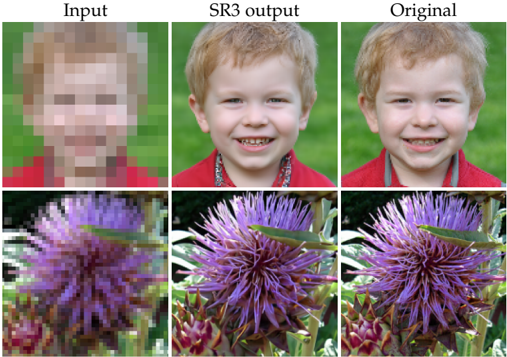
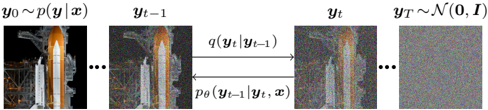
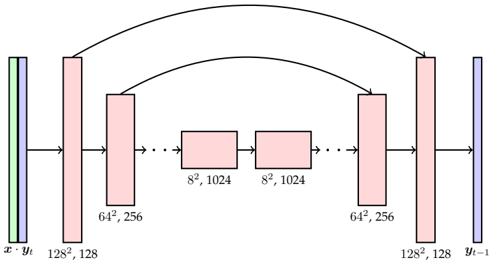
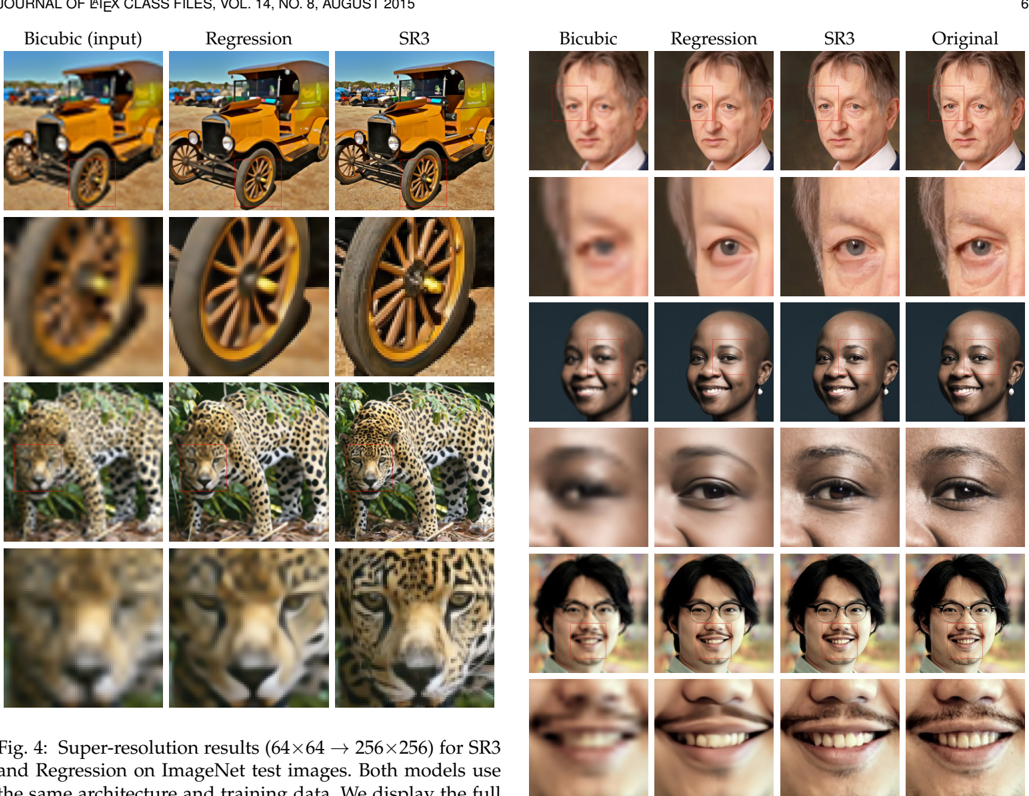
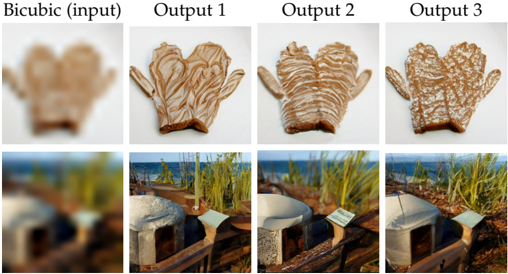
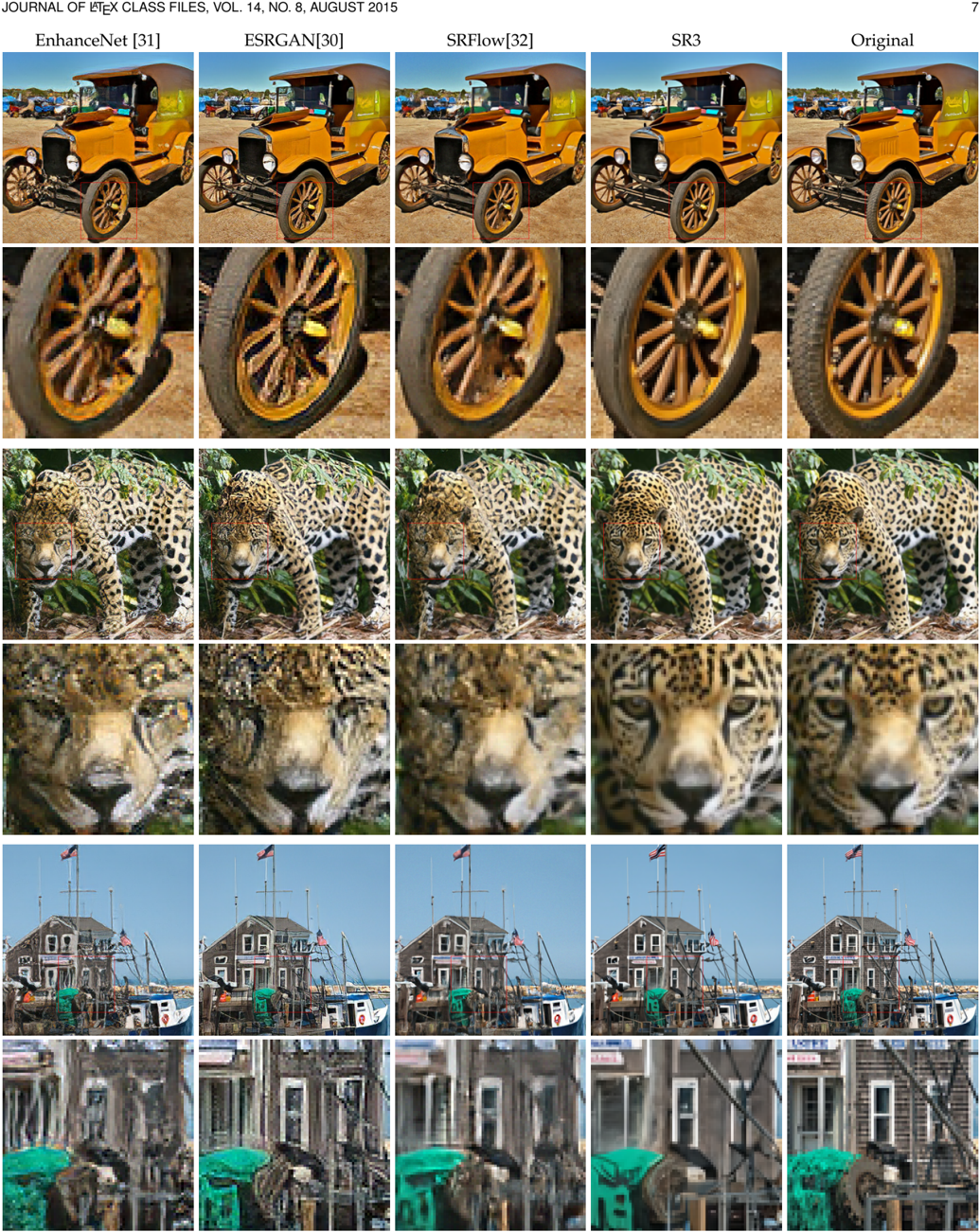
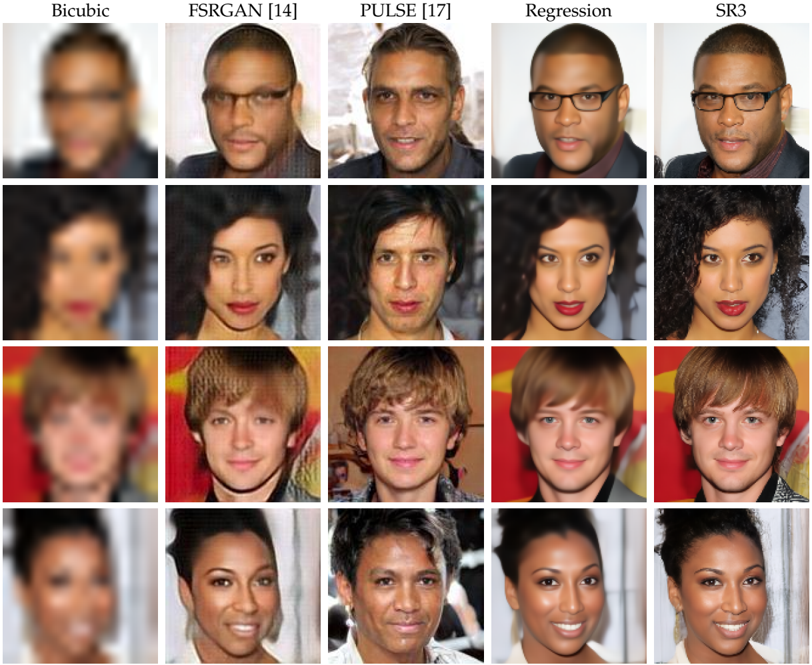
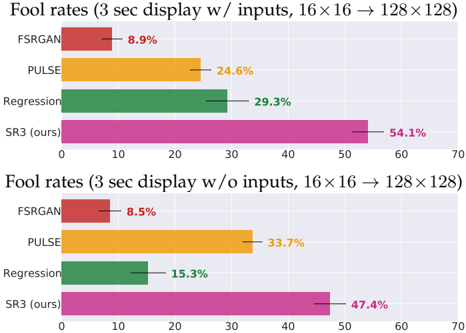
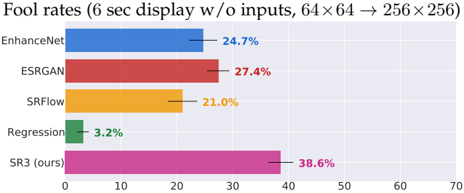
We present SR3, an approach to image Super-Resolution via Repeated Refinement. SR3 adapts denoising diffusion probabilistic models (Ho et al. 2020), (Sohl-Dickstein et al. 2015) to image-to-image translation, and performs super-resolution through a stochastic iterative denoising process. Output images are initialized with pure Gaussian noise and iteratively refined using a U-Net architecture that is trained on denoising at various noise levels, conditioned on a low-resolution input image. SR3 exhibits strong performance on super-resolution tasks at different magnification factors, on faces and natural images. We conduct human evaluation on a standard 8× face super-resolution task on CelebA-HQ for which SR3 achieves a fool rate close to 50%, suggesting photo-realistic outputs, while GAN baselines do not exceed a fool rate of 34%. We evaluate SR3 on a 4× super-resolution task on ImageNet, where SR3 outperforms baselines in human evaluation and classification accuracy of a ResNet-50 classifier trained on high-resolution images. We further show the effectiveness of SR3 in cascaded image generation, where a generative model is chained with super-resolution models to synthesize high-resolution images with competitive FID scores on the class-conditional 256×256 ImageNet generation challenge.
Overview
The claims and statistics of this paper haven’t been checked yet.
Free: it reads the open-access text and checks the first 5 claims that cite a source we can check. Create a free account to check every claim.
Integrity signals
Registry
Cites
Statistics
Figures

















Verification
Claims the paper makes
The claims and statistics of this paper haven’t been checked yet.
Free: it reads the open-access text and checks the first 5 claims that cite a source we can check. Create a free account to check every claim.
Claims other papers make about this one
Each is checked against this paper’s own text: does it say what the citing paper says it does?
The source backs part of the claim, not all of it — or backs it for a different population, condition or comparison.
In the citing paper
“Both the SR3 and CDM directly apply the diffusion process to input images, which leads to larger evaluation steps.”
From Diffusion Models: A Comprehensive Survey of Methods and Applications (2024) · cites this paper as [200]
Experimental — accuracy not yet measuredThe source backs part of the claim, not all of it — or backs it for a different population, condition or comparison.
In the citing paper
“Low-light face videos suffer from severe noise and detail loss, limiting their use in surveillance and photography applications.”
From Temporally consistent low-light face video enhancement via video-to-video conditional diffusion (2026) · cites this paper as [5]
Experimental — accuracy not yet measuredThe source backs part of the claim, not all of it — or backs it for a different population, condition or comparison.
In the citing paper
“This greatly improves FID on ImageNet 256×256, but does not reach the same performance as state-of-the-art models like BigGAN-deep [43, 53], as seen in Table 5.”
From Diffusion Models Beat GANs on Image Synthesis (2021) · cites this paper as [53]
Experimental — accuracy not yet measuredIn the citing paper
“Super-Resolution via Repeated Refinement (SR3) [200] uses DDPM to enable conditional image generation.”
From Diffusion Models: A Comprehensive Survey of Methods and Applications (2024) · cites this paper as [200]
In the citing paper
“SR3 conducts super-resolution through a stochastic, iterative denoising process.”
From Diffusion Models: A Comprehensive Survey of Methods and Applications (2024) · cites this paper as [200]
2 more claims about this paper
Create a free account to see every claim other papers make about this one.
Self-check
Percentages, sums and reported differences re-computed from the paper’s own numbers.
The self-check needs the paper’s full text.
Citations
Cites
Deep Residual Learning for Image Recognition
He, K., Zhang, X., Ren, S., & Sun, J. (2016) · 2016 IEEE Conference on Computer Vision and Pattern Recognition (CVPR) · doi:10.1109/cvpr.2016.90 · Cited by 235,474 · cited 1×
“Then, we report classification accuracy of a pre-trained ResNet50 [65] model.”
MethodVaswani, A., Shazeer, N., Parmar, N., Uszkoreit, J., Jones, L., Gomez, A. N., Kaiser, L., & Polosukhin, I. (2017) · arXiv · doi:10.48550/arxiv.1706.03762 · Cited by 120,404
U-Net: Convolutional Networks for Biomedical Image Segmentation
Ronneberger, O., Fischer, P., & Brox, T. (2015) · Lecture notes in computer science · doi:10.1007/978-3-319-24574-4_28 · Cited by 99,404
Exploiting Generative AI to Scale up Intelligent Tutoring Systems
Jakubův, J., Chvalovský, K., Goertzel, Z., Kaliszyk, C., Olšák, M., Piotrowski, B., Schulz, S., Suda, M., & Urban, J. (2023) · DROPS (Schloss Dagstuhl – Leibniz Center for Informatics) · doi:10.4230/lipics.itp.2023.19 · Cited by 76,658
Image quality assessment: from error visibility to structural similarity
Wang, Z., Bovik, A. C., Sheikh, H. R., & Simoncelli, E. P. (2004) · IEEE Transactions on Image Processing · doi:10.1109/tip.2003.819861 · Cited by 57,892 · cited 10×
“Table 2 shows the PSNR, SSIM [63] and Consistency scores for 16 16 !”
BackgroundInfluentialImageNet Large Scale Visual Recognition Challenge
Russakovsky, O., Deng, J., Su, H., Krause, J., Satheesh, S., Ma, S., Huang, Z., Karpathy, A., Khosla, A., Bernstein, M., et al. (2015) · International Journal of Computer Vision · doi:10.1007/s11263-015-0816-y · Cited by 39,380 · cited 2×
“on ImageNet 1K [62] and use the dev split for evaluation.”
BackgroundMethodAuto-Encoding Variational Bayes
Kingma, D. P., & Welling, M. (2013) · arXiv · doi:10.48550/arxiv.1312.6114 · Cited by 20,067 · cited 2×
“VAEs [7], [46] offer fast sampling, but tend to underperform GANs”
BackgroundGenerative adversarial networks
Goodfellow, I., Pouget-Abadie, J., Mirza, M., Xu, B., Warde-Farley, D., Ozair, S., Courville, A., & Bengio, Y. (2020) · Communications of the ACM · doi:10.1145/3422622 · Cited by 18,384
Sequence to Sequence Learning with Neural Networks
Sutskever, I., Vinyals, O., & Le, Q. V. (2014) · arXiv · doi:10.48550/arxiv.1409.3215 · Cited by 17,766
Photo-Realistic Single Image Super-Resolution Using a Generative Adversarial Network
Ledig, C., Theis, L., Huszar, F., Caballero, J., Cunningham, A., Acosta, A., Aitken, A., Tejani, A., Totz, J., Wang, Z., et al. (2017) · 2017 IEEE Conference on Computer Vision and Pattern Recognition (CVPR) · doi:10.1109/cvpr.2017.19 · Cited by 12,696
Research works printed but not linked: 2
- 11. I. J. Goodfellow, J. Pouget-Abadie, M. Mirza, B. Xu, D. Warde- Farley, S. Ozair, A. Courville, and Y. Bengio, "Generative Adver- sarial Networks," NIPS, 2014.
- 46. D. J. Rezende, S. Mohamed, and D. Wierstra, "Stochastic back- propagation and approximate inference in deep generative mod- els," in ICML, 2014, pp. 1278-1286.
Cited by
High-Resolution Image Synthesis with Latent Diffusion Models
Rombach, R., Blattmann, A., Lorenz, D., Esser, P., & Ommer, B. (2022) · 2022 IEEE/CVF Conference on Computer Vision and Pattern Recognition (CVPR) · doi:10.1109/cvpr52688.2022.01042 · Cited by 20,302
“In the context of image synthesis, however, combining the generative power of DMs with other types of conditionings beyond class-labels [15] or blurred variants of the input image [70] is so far an under-explored area of research.”
InfluentialDiffusion Models Beat GANs on Image Synthesis
Dhariwal, P., & Nichol, A. (2021) · arXiv · doi:10.48550/arxiv.2105.05233 · Cited by 3,362
“In this section, we demonstrate that we can achieve results better than StyleGAN2 and BigGAN-deep with the same or lower compute budget.”
BackgroundMethodInfluentialPhotorealistic Text-to-Image Diffusion Models with Deep Language Understanding
Saharia, C., Chan, W., Saxena, S., Li, L., Whang, J., Denton, E., Ghasemipour, S. K. S., Ayan, B. K., Mahdavi, S. S., Lopes, R. G., et al. (2022) · arXiv · doi:10.48550/arxiv.2205.11487 · Cited by 2,528
“Diffusion models have seen wide success in image generation [28, 42, 62, 16, 29, 61], outperforming GANs in fidelity and diversity, without training instability and mode collapse issues [6, 16, 29].”
BackgroundSelf-citationHierarchical Text-Conditional Image Generation with CLIP Latents
Ramesh, A., Dhariwal, P., Nichol, A., Chu, C., & Chen, M. (2022) · arXiv · doi:10.48550/arxiv.2204.06125 · Cited by 2,511
“For the first upsampling stage, we use gaussian blur [43], and for the second, we use a more diverse BSR degradation [42,”
MethodDreamBooth: Fine Tuning Text-to-Image Diffusion Models for Subject-Driven Generation
Ruiz, N., Li, Y., Jampani, V., Pritch, Y., Rubinstein, M., & Aberman, K. (2022) · arXiv · doi:10.48550/arxiv.2208.12242 · Cited by 2,442
“[62] Chitwan Saharia, Jonathan Ho, William Chan, Tim Salimans, David J Fleet, and Mohammad Norouzi.”
BackgroundDreamBooth: Fine Tuning Text-to-Image Diffusion Models for Subject-Driven Generation
Ruiz, N., Li, Y., Jampani, V., Pritch, Y., Rubinstein, M., & Aberman, K. (2023) · 2023 IEEE/CVF Conference on Computer Vision and Pattern Recognition (CVPR) · doi:10.1109/cvpr52729.2023.02155 · Cited by 2,295
“[62] Chitwan Saharia, Jonathan Ho, William Chan, Tim Salimans, David J Fleet, and Mohammad Norouzi.”
BackgroundDiffusion Models in Vision: A Survey
Croitoru, F.-A., Hondru, V., Ionescu, R. T., & Shah, M. (2023) · IEEE Transactions on Pattern Analysis and Machine Intelligence · doi:10.1109/tpami.2023.3261988 · Cited by 1,859
Palette: Image-to-Image Diffusion Models
Saharia, C., Chan, W., Chang, H., Lee, C., Ho, J., Salimans, T., Fleet, D., & Norouzi, M. (2022) · Special Interest Group on Computer Graphics and Interactive Techniques Conference Proceedings · doi:10.1145/3528233.3530757 · Cited by 1,717
“Conditional diffusion models [Chen et al. 2021a; Saharia et al. 2021] make the denoising process conditional on an input signal.”
BackgroundMethodInfluentialSelf-citationDiffusion Models: A Comprehensive Survey of Methods and Applications
Yang, L., Zhang, Z., Song, Y., Hong, S., Xu, R., Zhao, Y., Zhang, W., Cui, B., & Yang, M.-H. (2024) · ACM Computing Surveys · doi:10.1145/3626235 · Cited by 1,704
“For example, Super-Resolution via Repeated Refinement (SR3) [202] uses DDPM to enable conditional image generation.”
BackgroundMethodInfluentialInstructpix2pix: Learning to follow image editing instructions
Brooks, T., Holynski, A., & Efros, A. A. (2023) · 2023 IEEE/CVF Conference on Computer Vision and Pattern Recognition (CVPR) · doi:10.1109/cvpr52729.2023.01764 · Cited by 1,466
GLIDE: Towards Photorealistic Image Generation and Editing with Text-Guided Diffusion Models
Nichol, A., Dhariwal, P., Ramesh, A., Shyam, P., Mishkin, P., McGrew, B., Sutskever, I., & Chen, M. (2021) · arXiv · doi:10.48550/arxiv.2112.10741 · Cited by 1,357
“…x t ∼ q ( x t | x 0 ) by applying Gaussian noise (cid:15) to to x 0 , then train a model (cid:15) θ to predict the added noise using a standard mean-squared error loss: Diffusion models have also been successfully applied to image super-resolution (Nichol & Dhariwal, 2021; Saharia et al., 2021b).”
MethodDiffusion models in medical imaging: A comprehensive survey
Kazerouni, A., Aghdam, E. K., Heidari, M., Azad, R., Fayyaz, M., Hacihaliloglu, I., & Merhof, D. (2023) · Medical Image Analysis · doi:10.1016/j.media.2023.102846 · Cited by 765
“NCSNs focus on estimating the derivative of the log density function of the perturbed data distribution at different noise levels, while SDEs are a generalization of previous approaches and encompass both DDPMs and NCSNs characteristics.”
BackgroundInfluentialPoint-E: A System for Generating 3D Point Clouds from Complex Prompts
Nichol, A., Jun, H., Dhariwal, P., Mishkin, P., & Chen, M. I.-C. (2022) · arXiv (Cornell University) · doi:10.48550/arxiv.2212.08751 · Cited by 160
“For image diffusion models, the best quality is typically achieved by using some form of hierarchy, where a low-resolution base model produces output which is then upsam-pled by another model (Nichol & Dhariwal, 2021; Saharia et al., 2021; Ho et al., 2021; Rombach et al., 2021).”
MethodImagic: Text-Based Real Image Editing with Diffusion Models
Kawar, B., Zada, S., Lang, O., Tov, O., Chang, H., Dekel, T., Mosseri, I., & Irani, M. (2023) · 2023 IEEE/CVF Conference on Computer Vision and Pattern Recognition (CVPR) · doi:10.1109/cvpr52729.2023.00582 · Cited by 767
Denoising Diffusion Restoration Models
Kawar, B., Elad, M., Ermon, S., & Song, J. (2022) · neural information processing systems · doi:10.52202/068431-1714 · Cited by 349
Align Your Latents: High-Resolution Video Synthesis with Latent Diffusion Models
Blattmann, A., Rombach, R., Ling, H., Dockhorn, T., Kim, S. W., Fidler, S., & Kreis, K. (2023) · 2023 IEEE/CVF Conference on Computer Vision and Pattern Recognition (CVPR) · doi:10.1109/cvpr52729.2023.02161 · Cited by 724
“To further enhance the spatial resolution, we also temporally align pixel-space and latent DM upsamplers [29], which are widely used for image super resolution [43, 65, 68, 69], turning them into temporally consistent video super resolution models.”
MethodVector Quantized Diffusion Model for Text-to-Image Synthesis
Gu, S., Chen, D., Bao, J., Wen, F., Zhang, B., Chen, D., Yuan, L., & Guo, B. (2022) · 2022 IEEE/CVF Conference on Computer Vision and Pattern Recognition (CVPR) · doi:10.1109/cvpr52688.2022.01043 · Cited by 720
“Diffusion generative models were first proposed in [55] and achieved strong results on image generation [12,20,21,35] and image super super-resolution [48] recently.”
BackgroundILVR: Conditioning Method for Denoising Diffusion Probabilistic Models
Choi, J., Kim, S., Jeong, Y., Gwon, Y., & Yoon, S. (2021) · 2021 IEEE/CVF International Conference on Computer Vision (ICCV) · doi:10.1109/iccv48922.2021.01410 · Cited by 634
Exploiting Diffusion Prior for Real-World Image Super-Resolution
Wang, J., Yue, Z., Zhou, S., Chan, K. C. K., & Loy, C. C. (2024) · International Journal of Computer Vision · doi:10.1007/s11263-024-02168-7 · Cited by 439
“While they have achieved notable success, these approaches often demand significant computational resources to train the diffusion model.”
Cascaded Diffusion Models for High Fidelity Image Generation
Ho, J., Saharia, C., Chan, W., Fleet, D. J., Norouzi, M., & Salimans, T. (2021) · arXiv · doi:10.48550/arxiv.2106.15282 · Cited by 514
“4), and they use architectures similar to SR3 [21].”
BackgroundMethodInfluentialSelf-citationPseudo Numerical Methods for Diffusion Models on Manifolds
Liu, L., Ren, Y., Lin, Z., & Zhao, Z. L. (2022) · arXiv (Cornell University) · doi:10.48550/arxiv.2202.09778 · Cited by 123
“, 2020) and image super-resolution (Saharia et al., 2021).”
BackgroundScore-based diffusion models for accelerated MRI
Chung, H., & Ye, J. C. (2022) · Medical Image Analysis · doi:10.1016/j.media.2022.102479 · Cited by 421
Restoring Vision in Adverse Weather Conditions With Patch-Based Denoising Diffusion Models
Özdenizci, O., & Legenstein, R. (2023) · IEEE Transactions on Pattern Analysis and Machine Intelligence · doi:10.1109/tpami.2023.3238179 · Cited by 469
“Recently, diffusion-based conditional generative models have shown state-of-the-art performance in various tasks such as class-conditional data synthesis with classifier guidance [17], image super-resolution [19], [32], image deblurring [33], textbased image synthesis and editing [18], [20], and general image-”
BackgroundExecuting your Commands via Motion Diffusion in Latent Space
Chen, X., Jiang, B., Liu, W., Huang, Z., Fu, B., Chen, T., & Yu, G. (2023) · 2023 IEEE/CVF Conference on Computer Vision and Pattern Recognition (CVPR) · doi:10.1109/cvpr52729.2023.01726 · Cited by 356
“It leads to a significant influence in many research domains, such as the most famous image synthesis models [11, 23, 62, 56], the density estimation model [29] and the motion generation models [68, 74].”
BackgroundLaVie: High-Quality Video Generation with Cascaded Latent Diffusion Models
Wang, Y., Chen, X., Ma, X., Zhou, S., Huang, Z., Yang, C., Yang, C., He, Y., Yu, J., Yang, P., et al. (2024) · International Journal of Computer Vision · doi:10.1007/s11263-024-02295-1 · Cited by 647
Zero-Shot Image Restoration Using Denoising Diffusion Null-Space Model
Wang, Y., Yu, J., & Zhang, J. (2022) · arXiv (Cornell University) · doi:10.48550/arxiv.2212.00490 · Cited by 88
“Here we provide detailed comparison between DDNM and recent diffusion-based IR methods, including RePaint (Lugmayr et al., 2022), ILVR (Choi et al., 2021), DDRM (Kawar et al., 2022), SR3 (Saharia et al., 2021) and SDE (Song et al., 2020).”
MethodInfluentialDiffIR: Efficient Diffusion Model for Image Restoration
Xia, B., Zhang, Y., Wang, S., Wang, Y., Wu, X., Tian, Y., Yang, W., & Van Gool, L. (2023) · 2023 IEEE/CVF International Conference on Computer Vision (ICCV) · doi:10.1109/iccv51070.2023.01204 · Cited by 412
“Recently, DM has become increasingly influential in the field of image restoration tasks, such as superresolution [28, 52] and inpainting [40, 50, 10].”
BackgroundMethodHigh-resolution image reconstruction with latent diffusion models from human brain activity
Takagi, Y., & Nishimoto, S. (2023) · 2023 IEEE/CVF Conference on Computer Vision and Pattern Recognition (CVPR) · doi:10.1109/cvpr52729.2023.01389 · Cited by 297
“DMs have achieved state-of-the-art performance in several tasks involving conditional image generation [4,39,49], image super resolution [40], image colorization [38], and other related tasks [6, 16, 33, 41].”
BackgroundILVR: Conditioning Method for Denoising Diffusion Probabilistic ModelsPreprint
Choi, J., Kim, S., Jeong, Y., Gwon, Y., & Yoon, S. (2021) · arXiv (Cornell University) · doi:10.48550/arxiv.2108.02938 · Cited by 383
“Concurrent to our work, SR3 [34] trained conditional DDPM for super-resolution.”
MethodAudioLDM 2: Learning Holistic Audio Generation With Self-Supervised Pretraining
Liu, H., Yuan, Y., Liu, X., Mei, X., Kong, Q., Tian, Q., Wang, Y., Wang, W., Wang, Y., & Plumbley, M. D. (2024) · IEEE/ACM Transactions on Audio, Speech, and Language Processing · doi:10.1109/taslp.2024.3399607 · Cited by 180
“Diffusion models [35], [36] have demonstrated high sample quality in a variety of tasks including image generation [37]– [39], image restoration [40], speech generation [41]–[43], and video generation [44], [45].”
BackgroundRecent Advances in Stochastic Gradient Descent in Deep Learning
Tian, Y., Zhang, Y., & Zhang, H. (2023) · Mathematics · doi:10.3390/math11030682 · Cited by 277
Diffusion Autoencoders: Toward a Meaningful and Decodable Representation
Preechakul, K., Chatthee, N., Wizadwongsa, S., & Suwajanakorn, S. (2022) · 2022 IEEE/CVF Conference on Computer Vision and Pattern Recognition (CVPR) · doi:10.1109/cvpr52688.2022.01036 · Cited by 338
“Numerous applications have emerged notably in the image domain, such as image manipulation, translation, super-resolution [8,32,35,43], in speech and text domains [5,6], or 3D point cloud [34].”
BackgroundChung, H., Sim, B., & Ye, J. C. (2022) · 2022 IEEE/CVF Conference on Computer Vision and Pattern Recognition (CVPR) · doi:10.1109/cvpr52688.2022.01209 · Cited by 275
“Since it is well known that for high corruption factors, standard metrics such as PSNR/SSIM does not correlate well with the visual quality of the reconstruction [25, 40], we report on the FID score based on pytorch-fid1.”
BackgroundMethodInfluentialImplicit Diffusion Models for Continuous Super-Resolution
Gao, S., Liu, X., Zeng, B., Xu, S., Li, Y., Luo, X., Liu, J., Zhen, X., & Zhang, B. (2023) · 2023 IEEE/CVF Conference on Computer Vision and Pattern Recognition (CVPR) · doi:10.1109/cvpr52729.2023.00966 · Cited by 276
BBDM: Image-to-Image Translation with Brownian Bridge Diffusion Models
Li, B., Xue, K., Liu, B., & Lai, Y.-K. (2023) · 2023 IEEE/CVF Conference on Computer Vision and Pattern Recognition (CVPR) · doi:10.1109/cvpr52729.2023.00194 · Cited by 252
“Therefore, most of the conditional diffusion models suffer from poor model generalization, and can only be adapted to some specific applications where the conditional input has high similarity with the output, such as inpainting and super-resolution [2, 4, 30].”
BackgroundMethodInfluentialCold Diffusion: Inverting Arbitrary Image Transforms Without Noise
Bansal, A., Borgnia, E., Chu, H.-M., Li, J., Kazemi, H., Huang, F., Goldblum, M., Geiping, J., & Goldstein, T. (2023) · neural information processing systems · doi:10.52202/075280-1789 · Cited by 139
Diff-Retinex: Rethinking Low-light Image Enhancement with A Generative Diffusion Model
Yi, X., Xu, H., Zhang, H., Tang, L., & Ma, J. (2023) · 2023 IEEE/CVF International Conference on Computer Vision (ICCV) · doi:10.1109/iccv51070.2023.01130 · Cited by 305
Dif-Fusion: Toward High Color Fidelity in Infrared and Visible Image Fusion With Diffusion Models
Yue, J., Fang, L., Xia, S., Deng, Y., & Ma, J. (2023) · IEEE Transactions on Image Processing · doi:10.1109/tip.2023.3322046 · Cited by 304
“4) Structure of the Denoising Network: In order to predict the noise added in the forward diffusion process, the structure of the denoising network ϵ θ ( · , · ) adopts the U-Net structure used in SR3 [66].”
BackgroundMethodHo, J., Salimans, T., Gritsenko, A., Chan, W., Norouzi, M., & Fleet, D. J. (2022) · arXiv · doi:10.48550/arxiv.2204.03458 · Cited by 301
Self-citationDenoising Diffusion Models for Plug-and-Play Image Restoration
Zhu, Y., Zhang, K., Liang, J., Cao, J., Wen, B., Timofte, R., & Gool, L. V. (2023) · 2023 IEEE/CVF Conference on Computer Vision and Pattern Recognition Workshops (CVPRW) · doi:10.1109/cvprw59228.2023.00129 · Cited by 228
“[48, 49] trained image-conditional diffusion models for SR and image-to-image translation in concurrent work.”
Progressive Distillation for Fast Sampling of Diffusion Models
Salimans, T., & Ho, J. (2022) · arXiv · doi:10.48550/arxiv.2202.00512 · Cited by 287
Self-citationSeeSR: Towards Semantics-Aware Real-World Image Super-Resolution
Wu, R., Yang, T., Sun, L., Zhang, Z., Li, S., & Zhang, L. (2024) · 2024 IEEE/CVF Conference on Computer Vision and Pattern Recognition (CVPR) · doi:10.1109/cvpr52733.2024.02405 · Cited by 204
“We also provide the caption-style prompts predicted by PASD and the tag-style prompts predicted by SeeSR.”
EDiffSR: An Efficient Diffusion Probabilistic Model for Remote Sensing Image Super-Resolution
Xiao, Y., Yuan, Q., Jiang, K., He, J., Jin, X., & Zhang, L. (2024) · IEEE Transactions on Geoscience and Remote Sensing · doi:10.1109/tgrs.2023.3341437 · Cited by 280
“1, our EDiffSR achieves impressive performance while with significantly fewer parameters than previous DPM-based SR approaches (e.g., SR3 [8] and IRSDE [9]).”
BackgroundMethodResultInfluentialGenerative Diffusion Prior for Unified Image Restoration and Enhancement
Fei, B., Lyu, Z., Pan, L., Zhang, J., Yang, W., Luo, T., Zhang, B., & Dai, B. (2023) · 2023 IEEE/CVF Conference on Computer Vision and Pattern Recognition (CVPR) · doi:10.1109/cvpr52729.2023.00958 · Cited by 279
“The only exception is that DDRM achieves better PSNR and SSIM than GDP, but it requires higher Consistency and FID [11, 13, 15, 17, 27, 68].”
BackgroundMethodInfluentialDiffusion Model-Based Image Editing: A Survey
Huang, Y., Huang, J., Liu, Y., Yan, M., Lv, J., Liu, J., Xiong, W., Zhang, H., Cao, L., & Chen, S. (2025) · IEEE Transactions on Pattern Analysis and Machine Intelligence · doi:10.1109/tpami.2025.3541625 · Cited by 404
A physics-informed diffusion model for high-fidelity flow field reconstruction
Shu, D., Li, Z., & Barati Farimani, A. (2023) · Journal of Computational Physics · doi:10.1016/j.jcp.2023.111972 · Cited by 210
Diffusion Probabilistic Modeling for Video Generation
Yang, R., Srivastava, P., & Mandt, S. (2023) · Entropy · doi:10.3390/e25101469 · Cited by 161
“Subsequent work includes extensions of these models to image super-resolution (Saharia et al., 2021) or hybridizing these models with VAEs (Pandey et al.”
MethodDeblurring via Stochastic Refinement
Whang, J., Delbracio, M., Talebi, H., Saharia, C., Dimakis, A. G., & Milanfar, P. (2022) · 2022 IEEE/CVF Conference on Computer Vision and Pattern Recognition (CVPR) · doi:10.1109/cvpr52688.2022.01581 · Cited by 259
“For conditional models that must estimate p(x | y), we make fθ accept y as the conditioning input, as was done in [13, 56].”
MethodInfluentialSelf-citationAnalytic-DPM: an Analytic Estimate of the Optimal Reverse Variance in Diffusion Probabilistic Models
Bao, F., Li, C., Zhu, J. J., & Zhang, B. (2022) · arXiv (Cornell University) · doi:10.48550/arxiv.2201.06503 · Cited by 73
“, 2021), image super-resolution (Saharia et al., 2021; Li et al., 2021), image-to-image translation (Sasaki et al.”
BackgroundThe Stable Signature: Rooting Watermarks in Latent Diffusion Models
Fernandez, P., Couairon, G., Jégou, H., Douze, M., & Furon, T. (2023) · 2023 IEEE/CVF International Conference on Computer Vision (ICCV) · doi:10.1109/iccv51070.2023.02053 · Cited by 251
Gotta Go Fast When Generating Data with Score-Based Models
Jolicoeur‐Martineau, A., Li, K., Piché-Taillefer, R., Kachman, T., & Mitliagkas, I. (2021) · arXiv (Cornell University) · doi:10.48550/arxiv.2105.14080 · Cited by 19
“They have further been used effectively for super-resolution [Saharia et al., 2021, Kadkhodaie and Simoncelli, 2020], inpainting [Kadkhodaie and Simoncelli, 2020, Song and Ermon, 2020], source separation [Jayaram and Thickstun, 2020], and image-to-image translation [Sasaki et al., 2021].”
MethodSDFusion: Multimodal 3D Shape Completion, Reconstruction, and Generation
Cheng, Y.-C., Lee, H.-Y., Tulyakov, S., Schwing, A., & Gui, L. (2023) · 2023 IEEE/CVF Conference on Computer Vision and Pattern Recognition (CVPR) · doi:10.1109/cvpr52729.2023.00433 · Cited by 204
Text2Tex: Text-driven Texture Synthesis via Diffusion Models
Chen, D. Z., Siddiqui, Y., Lee, H.-Y., Tulyakov, S., & Nießner, M. (2023) · 2023 IEEE/CVF International Conference on Computer Vision (ICCV) · doi:10.1109/iccv51070.2023.01701 · Cited by 162
Semantic Image Synthesis via Diffusion Models
Zhou, W., Wang, W., Bao, J., Chen, D., Chen, D., Yuan, L., & Li, H. (2026) · IEEE Transactions on Multimedia · doi:10.1109/tmm.2026.3680594 · Cited by 248
“In this section, we briefly review the related topics, including denoising diffusion probabilistic models, image-to-image translation and semantic image synthesis.”
Perception Prioritized Training of Diffusion Models
Choi, J., Lee, J., Shin, C., Kim, S., Kim, H., & Yoon, S. (2022) · 2022 IEEE/CVF Conference on Computer Vision and Pattern Recognition (CVPR) · doi:10.1109/cvpr52688.2022.01118 · Cited by 198
“However, they rely on heavy architectures, long training and sampling steps [40], classifier guidance [8], and a cascade of multiple models [32].”
BackgroundInfluentialA Survey on Diffusion Models for Inverse ProblemsPreprint
Daras, G., Chung, H., Lai, C.-H., Mitsufuji, Y., Ye, J. C., Milanfar, P., Dimakis, A. G., & Delbracio, M. (2024) · arXiv (Cornell University) · doi:10.48550/arxiv.2410.00083 · Cited by 304
“Deconvolution appears in several applications such as super-resolution [106, 122] of images and removing reverberant corruption [101] in audio signals.”
Diff-IF: Multi-modality image fusion via diffusion model with fusion knowledge prior
Yi, X., Tang, L., Zhang, H., Xu, H., & Ma, J. (2024) · Information Fusion · doi:10.1016/j.inffus.2024.102450 · Cited by 214
A Survey on Video Diffusion Models
Xing, Z., Feng, Q., Chen, H., Dai, Q., Hu, H., Xu, H., Wu, Z., & Jiang, Y. (2024) · ACM Computing Surveys · doi:10.1145/3696415 · Cited by 390
“They have broken the long-held dominance of generative adversarial networks (GANs) [57] in a variety of challenging tasks such as image generation [58–63], image super-resolution [60, 64–66], and image editing [67, 68].”
Pretraining is All You Need for Image-to-Image TranslationPreprint
Wang, T., Zhang, T., Zhang, B., Ouyang, H., Chen, D., Chen, Q., & Wen, F. (2022) · arXiv (Cornell University) · doi:10.48550/arxiv.2205.12952 · Cited by 261
“The denoising model hence becomes θ(xt,y, t) where the condition is injected through input concatenation [43], denormalization [11] or cross-attention [32].”
Diffusion Models for Image Restoration and Enhancement: A Comprehensive Survey
Li, X., Ren, Y., Jin, X., Lan, C., Wang, X., Zeng, W., Wang, X., & Chen, Z. (2025) · International Journal of Computer Vision · doi:10.1007/s11263-025-02570-9 · Cited by 276
LayoutDiffusion: Controllable Diffusion Model for Layout-to-Image Generation
Zheng, G., Zhou, X., Li, X., Qi, Z., Shan, Y., & Li, X. (2023) · 2023 IEEE/CVF Conference on Computer Vision and Pattern Recognition (CVPR) · doi:10.1109/cvpr52729.2023.02154 · Cited by 179
“Diffusion models [3, 10, 25, 30, 34– 36, 44] are being recognized as a promising family of generative models that have proven to be state-of-the-art sample quality for a variety of image generation benchmarks [6,41,45], including class-conditional image generation [7,48], text-to-image generation [24,30,31], and image…”
BackgroundDiffuRec: A Diffusion Model for Sequential Recommendation
Li, Z., Sun, A., & Li, C. (2024) · ACM Transactions on Information Systems · doi:10.1145/3631116 · Cited by 163
Yang, X., Ye, T., Yuan, X., Zhu, W., Mei, X., & Zhou, F. (2024) · IEEE Transactions on Industrial Informatics · doi:10.1109/tii.2024.3366991 · Cited by 208
Novel View Synthesis with Diffusion Models
Watson, D., Chan, W., Martin-Brualla, R., Ho, J., Tagliasacchi, A., & Norouzi, M. (2022) · arXiv (Cornell University) · doi:10.48550/arxiv.2210.04628 · Cited by 62
“The use of diffusion models allows us to produce sharp samples, as opposed to regression models that are well-known to be prone to blurriness (Saharia et al., 2021b) in spite of high PSNR and SSIM scores.”
BackgroundMethodInfluentialSelf-citationGuided Motion Diffusion for Controllable Human Motion Synthesis
Karunratanakul, K., Preechakul, K., Suwajanakorn, S., & Tang, S. (2023) · 2023 IEEE/CVF International Conference on Computer Vision (ICCV) · doi:10.1109/iccv51070.2023.00205 · Cited by 161
“They have been used for tasks such as image generation [12], image super-resolution [30, 46], speech synthesis [26,26,39], video generation [19,22], 3D shape generation [38,55], and reinforcement learning [23].”
MethodQ-Diffusion: Quantizing Diffusion Models
Li, X., Liu, Y., Lian, L., Yang, H., Dong, Z., Kang, D. D., Zhang, S., & Keutzer, K. (2023) · IEEE/CVF International Conference on Computer Vision (ICCV) · doi:10.1109/iccv51070.2023.01608 · Cited by 432
“strate their power in various applications such as image super-resolution [37, 22], inpainting [44], shape generation [5], graph generation [32], image-to-image translation [40], and molecular conformation generation [47].”
BackgroundPyramid Diffusion Models for Low-light Image Enhancement
Zhou, D., Yang, Z., & Yang, Y. (2023) · Proceedings of the Thirty-Second International Joint Conference on Artificial Intelligence · doi:10.24963/ijcai.2023/199 · Cited by 160
Versatile Diffusion: Text, Images and Variations All in One Diffusion Model
Xu, X., Wang, Z., Zhang, E., Wang, K., & Shi, H. (2023) · IEEE/CVF International Conference on Computer Vision (ICCV) · doi:10.1109/iccv51070.2023.00713 · Cited by 339
“It has proved to be effective in bridging modalities and tasks, for instance, un-conditional generation [28, 78, 16], density estimation [39], super-resolution [71], and text-to-image generation [56, 63, 70, 67].”
BackgroundGenerative Novel View Synthesis with 3D-Aware Diffusion Models
Chan, E. R., Nagano, K., Chan, M. A., Bergman, A. W., Park, J. J., Levy, A., Aittala, M., De Mello, S., Karras, T., & Wetzstein, G. (2023) · 2023 IEEE/CVF International Conference on Computer Vision (ICCV) · doi:10.1109/iccv51070.2023.00389 · Cited by 162
“Specifically, conditional diffusion models [59, 57, 49, 55, 58] can be directly applied to the task of NVS.”
BackgroundMethodInfluentialImagen Editor and EditBench: Advancing and Evaluating Text-Guided Image Inpainting
Wang, S., Saharia, C., Montgomery, C., Pont-Tuset, J., Noy, S., Pellegrini, S., Onoe, Y., Laszlo, S., Fleet, D. J., Soricut, R., et al. (2023) · 2023 IEEE/CVF Conference on Computer Vision and Pattern Recognition (CVPR) · doi:10.1109/cvpr52729.2023.01761 · Cited by 159
Self-citationPET image denoising based on denoising diffusion probabilistic model
Gong, K., Johnson, K., El Fakhri, G., Li, Q., & Pan, T. (2024) · European Journal of Nuclear Medicine and Molecular Imaging · doi:10.1007/s00259-023-06417-8 · Cited by 163
DDP: Diffusion Model for Dense Visual Prediction
Ji, Y., Chen, Z., Xie, E., Hong, L., Liu, X., Liu, Z., Lü, T., Li, Z., & Luo, P. (2023) · IEEE/CVF International Conference on Computer Vision (ICCV) · doi:10.1109/iccv51070.2023.01987 · Cited by 289
“Diffusion [35, 70] and score-based generative models [72] have been particularly successful as generative models and achieve impressive results across various modalities, including images [59, 65, 27, 56, 25, 25], video [36, 37], audio [43], and biomedical [2, 76, 68, 22].”
BackgroundDiffusion models in bioinformatics and computational biology
Guo, Z., Liu, J., Wang, Y., Chen, M., Wang, D., Xu, D., & Cheng, J. (2023) · Nature Reviews Bioengineering · doi:10.1038/s44222-023-00114-9 · Cited by 139
SinSR: Diffusion-Based Image Super-Resolution in a Single Step
Wang, Y., Yang, W., Chen, X., Wang, Y., Guo, L., Chau, L.-P., Liu, Z., Qiao, Y., Kot, A. C., & Wen, B. (2024) · 2024 IEEE/CVF Conference on Computer Vision and Pattern Recognition (CVPR) · doi:10.1109/cvpr52733.2024.02437 · Cited by 196
“Specifically, current strategies for employing diffusion models can be broadly categorized into two streams: concatenating the LR image to the input of the denoiser in the diffusion models [32, 33], and adjusting the inverse process of a pre-trained diffusion model [4, 5, 14].”
BackgroundMethodInfluentialMM-Diffusion: Learning Multi-Modal Diffusion Models for Joint Audio and Video Generation
Ruan, L., Ma, Y., Yang, H., He, H., Liu, B., Fu, J., Yuan, N. J., Jin, Q., & Guo, B. (2023) · IEEE Computer Society Conference on Computer Vision and Pattern Recognition/Proceedings - IEEE Computer Society Conference on Computer Vision and Pattern Recognition/Proceedings · doi:10.1109/cvpr52729.2023.00985 · Cited by 389
Post-Training Quantization on Diffusion Models
Shang, Y., Yuan, Z., Xie, B., Wu, B., & Yan, Y. (2023) · IEEE Computer Society Conference on Computer Vision and Pattern Recognition/Proceedings - IEEE Computer Society Conference on Computer Vision and Pattern Recognition/Proceedings · doi:10.1109/cvpr52729.2023.00196 · Cited by 414
“, they are effectively introduced for super-resolution [28, 15], inpainting [40, 15], and image-to-image translation [30].”
Flow Matching for Generative Modeling
Lipman, Y., Chen, R. T. Q., Ben-Hamu, H., Nickel, M., & Le, M. (2022) · arXiv · doi:10.48550/arxiv.2210.02747 · Cited by 192
“FM-OT achieves similar PSNR and SSIM values to (Saharia et al., 2022) while considerably improving on FID and IS, which as argued by (Saharia et al.”
InfluentialResidual Denoising Diffusion Models
Liu, J., Wang, Q., Fan, H., Wang, Y., Tang, Y., & Qu, L. (2024) · IEEE Computer Society Conference on Computer Vision and Pattern Recognition/Proceedings - IEEE Computer Society Conference on Computer Vision and Pattern Recognition/Proceedings · doi:10.1109/cvpr52733.2024.00268 · Cited by 305
“, 2022), SR3 (Saharia et al., 2022), and WeatherDiffusion (Özdenizci & Legenstein, 2023), which typically require large sampling steps and batch sizes.”
BackgroundMethodInfluentialBreak-A-Scene: Extracting Multiple Concepts from a Single Image
Avrahami, O., Aberman, K., Fried, O., Cohen‐Or, D., & Lischinski, D. (2023) · SIGGRAPH Asia Conference Papers · doi:10.1145/3610548.3618154 · Cited by 286
I$^2$SB: Image-to-Image Schrödinger BridgePreprint
Liu, G.-H., Vahdat, A., Huang, D.-A., Theodorou, E. A., Nie, W., & Anandkumar, A. (2023) · arXiv (Cornell University) · doi:10.48550/arxiv.2302.05872 · Cited by 315
“Saharia et al. (2021; 2022) show that these generative processes can be adopted for image restoration by feeding degraded images as extra inputs to the score network so that the processes are biased toward the corresponding intact images.”
BackgroundZero-Reference Low-Light Enhancement via Physical Quadruple Priors
Wang, W., Yang, H., Fu, J., & Liu, J. (2024) · IEEE Computer Society Conference on Computer Vision and Pattern Recognition/Proceedings - IEEE Computer Society Conference on Computer Vision and Pattern Recognition/Proceedings · doi:10.1109/cvpr52733.2024.02462 · Cited by 284
“On the unpaired set, we report BRISQUE [36] and noise level (NL) estimated by [6].”
FreeDoM: Training-Free Energy-Guided Conditional Diffusion Model
Yu, J., Wang, Y., Zhao, C., Ghanem, B., & Zhang, J. (2023) · IEEE/CVF International Conference on Computer Vision (ICCV) · doi:10.1109/iccv51070.2023.02118 · Cited by 333
“Another branch of training-required CDMs directly trains a new score estimator s ( x t , t, c ) conditioned on c [28, 16, 33, 34, 36, 45, 49, 20, 1, 13, 32, 29].”
BackgroundDiffuScene: Denoising Diffusion Models for Generative Indoor Scene Synthesis
Tang, J., Nie, Y., Markhasin, L., Dai, A., Thies, J., & Nießner, M. (2024) · 2024 IEEE/CVF Conference on Computer Vision and Pattern Recognition (CVPR) · doi:10.1109/cvpr52733.2024.01938 · Cited by 106
“Recently, diffusion models [25, 55–58] have shown impressive visual quality in generative tasks, especially in various applications of 2D image synthesis [1, 9, 12, 25–27, 30, 34, 37, 41, 52, 53] and 3D shape generation [3, 28, 35, 45, 60, 62, 63, 81, 83, 84, 86].”
BackgroundSegDiff: Image Segmentation with Diffusion Probabilistic Models
Amit, T., Shaharbany, T., Nachmani, E., & Wolf, L. (2021) · arXiv · doi:10.48550/arxiv.2112.00390 · Cited by 179
“As far as we know, with the exception of super resolution [17, 25, 39], diffusion models were not applied to problems in which the ground truth result is unique.”
BackgroundMethodInfluentialDiffusion-Based 3D Human Pose Estimation with Multi-Hypothesis Aggregation
Shan, W., Liu, Z., Zhang, X., Wang, Z., Han, K., Wang, S., Ma, S., & Gao, W. (2023) · IEEE/CVF International Conference on Computer Vision (ICCV) · doi:10.1109/iccv51070.2023.01356 · Cited by 235
“DDPMs have shown remarkable progress in numerous areas, including image generation [21, 41, 3, 48, 49, 50], cross-modal generation [1, 16, 24, 29, 32], graph generation [59, 43, 28, 64], semantic segmentation [2, 5], object detection [8], etc.”
BackgroundRefusion: Enabling Large-Size Realistic Image Restoration with Latent-Space Diffusion Models
Luo, Z., Gustafsson, F., Zhao, Z., Sjölund, J., & Schön, T. B. (2023) · IEEE/CVF Conference on Computer Vision and Pattern Recognition Workshops (CVPRW) · doi:10.1109/cvprw59228.2023.00169 · Cited by 254
MR Image Denoising and Super-Resolution Using Regularized Reverse Diffusion
Chung, H., Lee, E. S., & Ye, J. C. (2023) · IEEE Transactions on Medical Imaging · doi:10.1109/tmi.2022.3220681 · Cited by 149
“including compressed sensing MRI [21], [22], [23], CT reconstruction [23], super-resolution [24], [25], [26], and much”
BackgroundA Survey on Diffusion Models for Time Series and Spatio-Temporal Data
Yang, Y., Jin, M., Wen, H., Zhang, C., Liang, Y., Ma, L., Wang, Y., Liu, C., Yang, B., Xu, Z., et al. (2025) · ACM Computing Surveys · doi:10.1145/3783986 · Cited by 195
“This challenges the long-time supremacy of generative adversarial networks (GANs) [64, 275].”
Generative-AI-Driven Human Digital Twin in IoT Healthcare: A Comprehensive Survey
Chen, J., Shi, Y., Yi, C., Du, H., Kang, J., & Niyato, D. T. (2024) · IEEE Internet of Things Journal · doi:10.1109/jiot.2024.3421918 · Cited by 200
“Based on these, the continual evaluation and refinement of the GAI-driven HDT can ultimately enhance the performance in IoT healthcare.”
BackgroundThe Role of ImageNet Classes in Fréchet Inception DistancePreprint
Kynkäänniemi, T., Karras, T., Aittala, M., Aila, T., & Lehtinen, J. (2022) · arXiv (Cornell University) · doi:10.48550/arxiv.2203.06026 · Cited by 308
“…domain translation (Zhu et al., 2017; Choi et al., 2020; Kim et al., 2020), image super resolution (Ledig et al., 2017; Bell-Kligler et al., 2019; Saharia et al., 2021), image editing (Park et al., 2019; 2020; Huang et al., 2022) and generating images based on a text prompt (Ramesh et al., 2021;…”
BackgroundMethodResDiff: Combining CNN and Diffusion Model for Image Super-resolution
Shang, S., Shan, Z., Liu, G., Wang, L., Wang, X., Zhang, Z., & Zhang, J. (2024) · Proceedings of the AAAI Conference on Artificial Intelligence · doi:10.1609/aaai.v38i8.28746 · Cited by 225
ShadowDiffusion: When Degradation Prior Meets Diffusion Model for Shadow Removal
Guo, L., Wang, C., Yang, W., Huang, S., Wang, Y., Pfister, H., & Wen, B. (2023) · IEEE Computer Society Conference on Computer Vision and Pattern Recognition/Proceedings - IEEE Computer Society Conference on Computer Vision and Pattern Recognition/Proceedings · doi:10.1109/cvpr52729.2023.01350 · Cited by 239
“We first revisit the previous conditional diffusion model [29], which learns a conditional reverse process pθ(x0:T |y) without modifying the diffusion process q(x1:T |x0) for x, such that the sampled image has high fidelity to the data distribution conditioned on y.”
BackgroundMethodInfluentialRenderDiffusion: Image Diffusion for 3D Reconstruction, Inpainting and Generation
Anciukevicius, T., Xu, Z., Fisher, M., Henderson, P., Bilen, H., Mitra, N. J., & Guerrero, P. (2023) · IEEE Computer Society Conference on Computer Vision and Pattern Recognition/Proceedings - IEEE Computer Society Conference on Computer Vision and Pattern Recognition/Proceedings · doi:10.1109/cvpr52729.2023.01213 · Cited by 260
WaveDM: Wavelet-Based Diffusion Models for Image Restoration
Huang, Y., Huang, J., Liu, J., Yan, M., Yu, D., Lv, J., Chen, C., & Chen, S. (2024) · IEEE Transactions on Multimedia · doi:10.1109/tmm.2024.3359769 · Cited by 204
“class-conditioned image synthesis with and without classifier guidance [11, 19, 23], image inpainting [40], superresolution [30, 61], deblurring [79], and image-to-image translation (e.”
BackgroundCollaborative Diffusion for Multi-Modal Face Generation and Editing
Huang, Z., Chan, K. C. K., Jiang, Y., & Liu, Z. (2023) · 2023 IEEE/CVF Conference on Computer Vision and Pattern Recognition (CVPR) · doi:10.1109/cvpr52729.2023.00589 · Cited by 147
Score-Based Generative Modeling with Critically-Damped Langevin DiffusionPreprint
Dockhorn, T., Vahdat, A., & Kreis, K. (2021) · arXiv (Cornell University) · doi:10.48550/arxiv.2112.07068 · Cited by 195
“…2021), and music synthesis (Mittal et al., 2021), image editing (Meng et al., 2021; Sinha et al., 2021; Furusawa et al., 2021), super-resolution (Saharia et al., 2021; Li et al., 2021), image-to-image translation (Sasaki et al., 2021), and 3D shape generation (Luo & Hu, 2021; Zhou et al., 2021).”
BackgroundTang, Y., Kawasaki, H., & Iwaguchi, T. (2023) · ACM International Conference on Multimedia (ACM MM) · doi:10.1145/3581783.3612378 · Cited by 215
“For example, SR3 [35] proposes a conditional diffusion model, so that we can feed a conditional image into the model, and then obtain a corresponding output.”
BackgroundMethodDiffusion Models for Imperceptible and Transferable Adversarial Attack
Chen, J., Chen, H., Chen, K., Zhang, Y., Zou, Z., & Shi, Z. (2024) · IEEE Transactions on Pattern Analysis and Machine Intelligence · doi:10.1109/tpami.2024.3480519 · Cited by 220
“Diffusion Models: Recently, diffusion models [39] have at-tracted extensive attention and shown their fabulous power.”
TryOnDiffusion: A Tale of Two UNets
Zhu, L., Yang, D., Zhu, T., Reda, F. A., Chan, W., Saharia, C., Norouzi, M., & Kemelmacher-Shlizerman, I. (2023) · IEEE Computer Society Conference on Computer Vision and Pattern Recognition/Proceedings - IEEE Computer Society Conference on Computer Vision and Pattern Recognition/Proceedings · doi:10.1109/cvpr52729.2023.00447 · Cited by 284
“Although being successful, state-of-the-art diffusion models utilize a traditional UNet architecture [17, 34] with channel-wise concatenation [36,38] for image conditioning.”
BackgroundSelf-citationPloennigs, J., & Berger, M. (2023) · AI in Civil Engineering · doi:10.1007/s43503-023-00018-y · Cited by 153
“Is another diffusion step applied to add more details to the image in a higher resolution then it is up-scaled (also called super-resolution [11]).”
Background
Metadata
- Authors
- Saharia, C., Ho, J., Chan, W., Salimans, T., Fleet, D. J., & Norouzi, M.
- Affiliations
- Google (United States) (US)
- Venue
- IEEE Transactions on Pattern Analysis and Machine Intelligence
- Published
- 2022
- Volume
- 45
- Issue
- 4
- Pages
- 1-14
- ISSN
- 0162-8828 (ISSN-L)
- 2160-9292
- 1939-3539
- OpenAlex
- W3155072588
- Cited by
- 1,829
- References
- 85
- Citations by year
- 2026: 234 · 2025: 580 · 2024: 662 · 2023: 301 · 2022: 40
- FWCI
- 129.48
- Type
- journal article
- Language
- en
- Open access
- hybrid
- doi.org
- Locations
- IEEE Transactions on Pattern Analysis and Machine Intelligence (publishedVersion, cc-by)
- PubMed (publishedVersion)
- arXiv (Cornell University) (submittedVersion)
- arXiv (Cornell University)
- Topics
- Physical Sciences › Computer Science › Computer Vision and Pattern Recognition › Advanced Image Processing Techniques
- Physical Sciences › Computer Science › Computer Vision and Pattern Recognition › Generative Adversarial Networks and Image Synthesis
- Physical Sciences › Computer Science › Computer Vision and Pattern Recognition › Image and Signal Denoising Methods
- Keywords
- image super-resolution, iterative refinement, denoising diffusion probabilistic models, image-to-image translation, U-Net, face super-resolution, high-resolution image generation, human evaluation, image classification accuracy
About these checks
Registry, retraction, Cites and statistics results are computed, not judged, with one exception: a printed reference that no index lists is read once by a model before it counts as a citation error. Claims are extracted by a model and kept only when their quote appears verbatim in the text; each cited source is then checked, with a model’s help, for whether it says what the claim relies on. Those verdicts can be wrong — read the claim’s quote and the cited source before relying on one.
Statistics and arithmetic are recomputed, not judged.
Confidence bands are shown only for fields calibrated on our annotated test set. None is calibrated yet, so no band is shown.
What counts as a claim ›How we measure confidence ›How we check this ›
Are you an author, or do you see a problem with this page? Request a review
Data sources
Bibliographic data: Semantic Scholar, OpenAlex, Crossref.
Contains information from the Semantic Scholar Academic Graph Datasets, made available under the ODC Attribution License (ODC-BY 1.0).
Semantic Scholar’s data is described in: Kinney, R., et al. (2023). The Semantic Scholar Open Data Platform. arXiv:2301.10140.
