

Image Super-Resolution Via Iterative Refinement
Open accessThe DOI matches its Crossref record; 81 of the 85 references it cites were found in a registry or an index.
Abstract
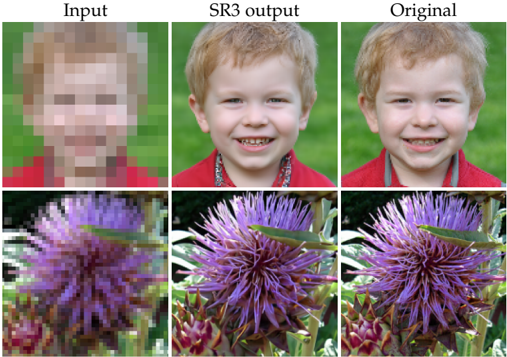
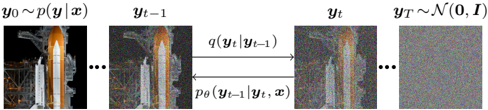
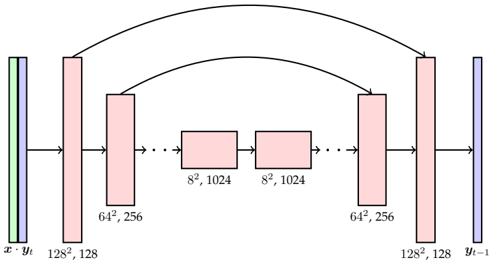
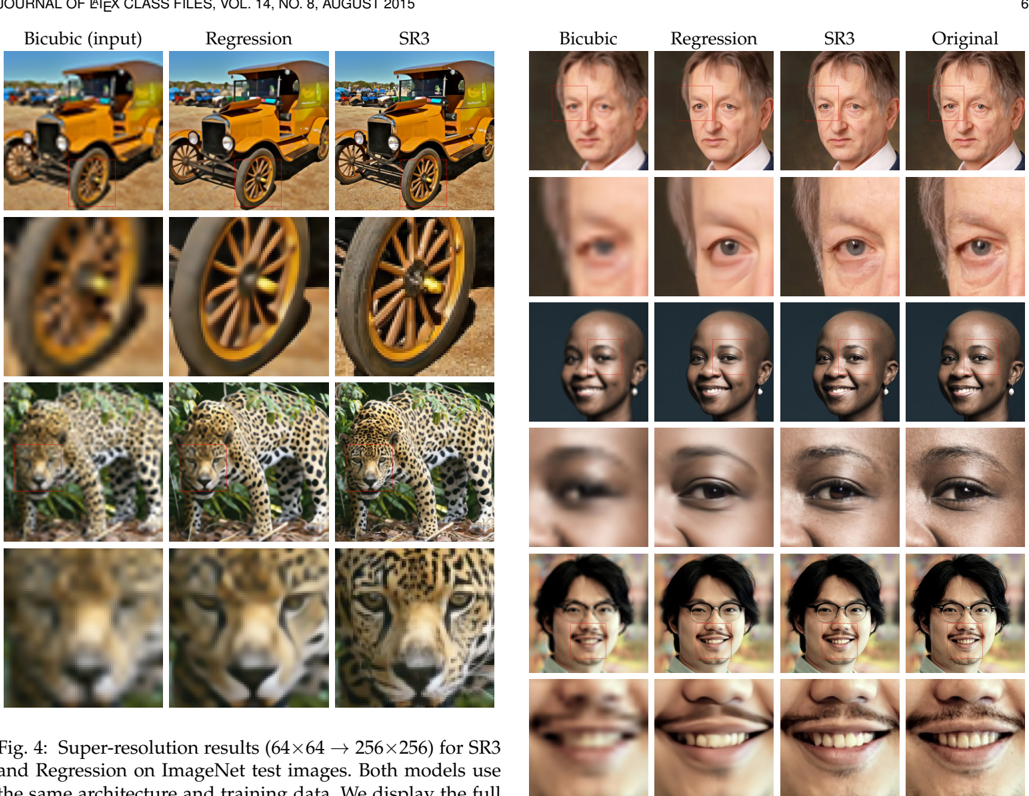
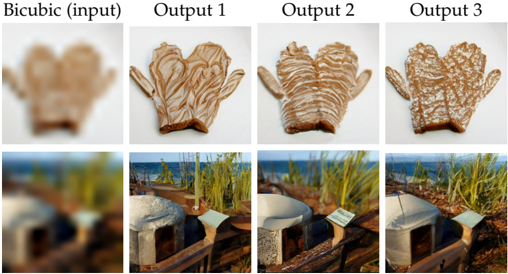
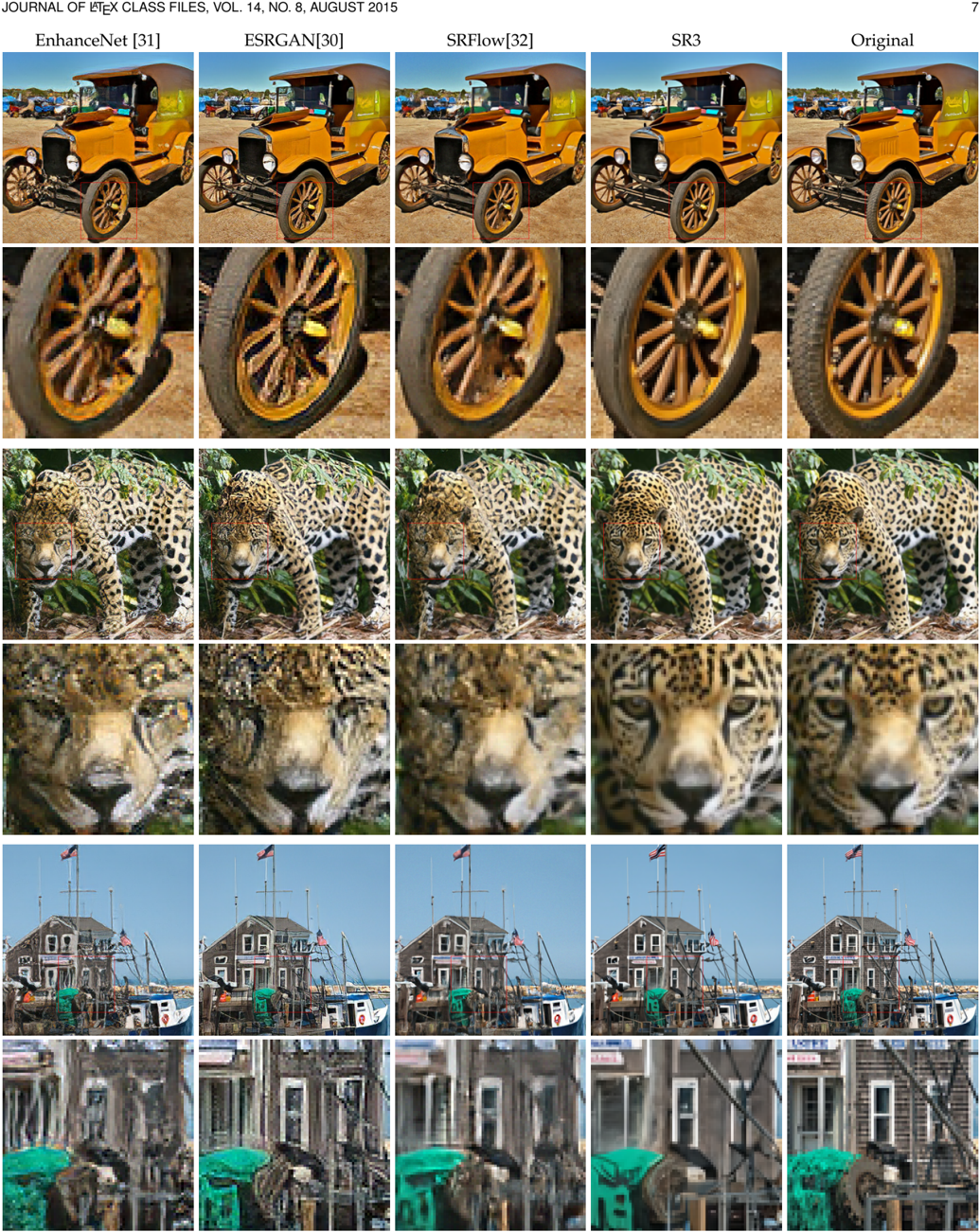
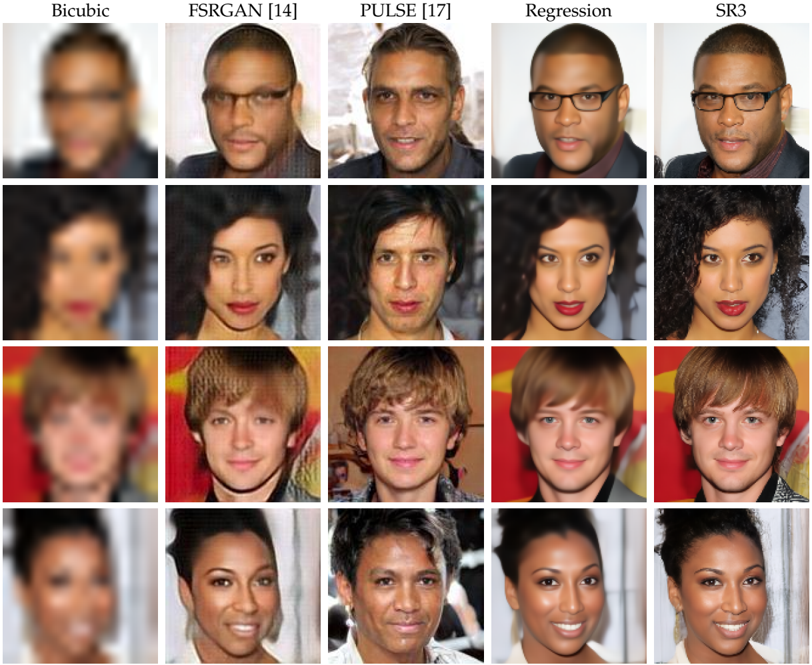
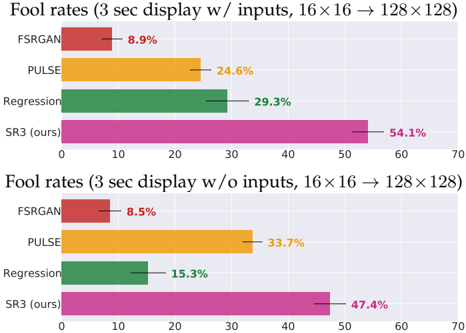
We present SR3, an approach to image Super-Resolution via Repeated Refinement. SR3 adapts denoising diffusion probabilistic models (Ho et al. 2020), (Sohl-Dickstein et al. 2015) to image-to-image translation, and performs super-resolution through a stochastic iterative denoising process. Output images are initialized with pure Gaussian noise and iteratively refined using a U-Net architecture that is trained on denoising at various noise levels, conditioned on a low-resolution input image. SR3 exhibits strong performance on super-resolution tasks at different magnification factors, on faces and natural images. We conduct human evaluation on a standard 8× face super-resolution task on CelebA-HQ for which SR3 achieves a fool rate close to 50%, suggesting photo-realistic outputs, while GAN baselines do not exceed a fool rate of 34%. We evaluate SR3 on a 4× super-resolution task on ImageNet, where SR3 outperforms baselines in human evaluation and classification accuracy of a ResNet-50 classifier trained on high-resolution images. We further show the effectiveness of SR3 in cascaded image generation, where a generative model is chained with super-resolution models to synthesize high-resolution images with competitive FID scores on the class-conditional 256×256 ImageNet generation challenge.
Overview
The claims and statistics of this paper haven’t been checked yet.
Free: it reads the open-access text and checks the first 5 claims that cite a source we can check. Create a free account to check every claim.
Integrity signals
Registry
Cites
Statistics
Figures



















Verification
Claims the paper makes
The claims and statistics of this paper haven’t been checked yet.
Free: it reads the open-access text and checks the first 5 claims that cite a source we can check. Create a free account to check every claim.
Claims other papers make about this one
Each is checked against this paper’s own text: does it say what the citing paper says it does?
The source backs part of the claim, not all of it — or backs it for a different population, condition or comparison.
In the citing paper
“Both the SR3 and CDM directly apply the diffusion process to input images, which leads to larger evaluation steps.”
From Diffusion Models: A Comprehensive Survey of Methods and Applications (2024) · cites this paper as [200]
Experimental — accuracy not yet measuredThe source backs part of the claim, not all of it — or backs it for a different population, condition or comparison.
In the citing paper
“Low-light face videos suffer from severe noise and detail loss, limiting their use in surveillance and photography applications.”
From Temporally consistent low-light face video enhancement via video-to-video conditional diffusion (2026) · cites this paper as [5]
Experimental — accuracy not yet measuredThe source backs part of the claim, not all of it — or backs it for a different population, condition or comparison.
In the citing paper
“This greatly improves FID on ImageNet 256×256, but does not reach the same performance as state-of-the-art models like BigGAN-deep [43, 53], as seen in Table 5.”
From Diffusion Models Beat GANs on Image Synthesis (2021) · cites this paper as [53]
Experimental — accuracy not yet measuredIn the citing paper
“Super-Resolution via Repeated Refinement (SR3) [200] uses DDPM to enable conditional image generation.”
From Diffusion Models: A Comprehensive Survey of Methods and Applications (2024) · cites this paper as [200]
In the citing paper
“SR3 conducts super-resolution through a stochastic, iterative denoising process.”
From Diffusion Models: A Comprehensive Survey of Methods and Applications (2024) · cites this paper as [200]
2 more claims about this paper
Create a free account to see every claim other papers make about this one.
Self-check
Percentages, sums and reported differences re-computed from the paper’s own numbers.
The self-check needs the paper’s full text.
Citations
Cites
Deep Residual Learning for Image Recognition
He, K., Zhang, X., Ren, S., & Sun, J. (2016) · 2016 IEEE Conference on Computer Vision and Pattern Recognition (CVPR) · doi:10.1109/cvpr.2016.90 · Cited by 235,474 · cited 1×
“Then, we report classification accuracy of a pre-trained ResNet50 [65] model.”
MethodVaswani, A., Shazeer, N., Parmar, N., Uszkoreit, J., Jones, L., Gomez, A. N., Kaiser, L., & Polosukhin, I. (2017) · arXiv · doi:10.48550/arxiv.1706.03762 · Cited by 120,404
U-Net: Convolutional Networks for Biomedical Image Segmentation
Ronneberger, O., Fischer, P., & Brox, T. (2015) · Lecture notes in computer science · doi:10.1007/978-3-319-24574-4_28 · Cited by 99,404
Exploiting Generative AI to Scale up Intelligent Tutoring Systems
Jakubův, J., Chvalovský, K., Goertzel, Z., Kaliszyk, C., Olšák, M., Piotrowski, B., Schulz, S., Suda, M., & Urban, J. (2023) · DROPS (Schloss Dagstuhl – Leibniz Center for Informatics) · doi:10.4230/lipics.itp.2023.19 · Cited by 76,658
Image quality assessment: from error visibility to structural similarity
Wang, Z., Bovik, A. C., Sheikh, H. R., & Simoncelli, E. P. (2004) · IEEE Transactions on Image Processing · doi:10.1109/tip.2003.819861 · Cited by 57,892 · cited 10×
“Table 2 shows the PSNR, SSIM [63] and Consistency scores for 16 16 !”
BackgroundInfluentialImageNet Large Scale Visual Recognition Challenge
Russakovsky, O., Deng, J., Su, H., Krause, J., Satheesh, S., Ma, S., Huang, Z., Karpathy, A., Khosla, A., Bernstein, M., et al. (2015) · International Journal of Computer Vision · doi:10.1007/s11263-015-0816-y · Cited by 39,380 · cited 2×
“on ImageNet 1K [62] and use the dev split for evaluation.”
BackgroundMethodAuto-Encoding Variational Bayes
Kingma, D. P., & Welling, M. (2013) · arXiv · doi:10.48550/arxiv.1312.6114 · Cited by 20,067 · cited 2×
“VAEs [7], [46] offer fast sampling, but tend to underperform GANs”
BackgroundGenerative adversarial networks
Goodfellow, I., Pouget-Abadie, J., Mirza, M., Xu, B., Warde-Farley, D., Ozair, S., Courville, A., & Bengio, Y. (2020) · Communications of the ACM · doi:10.1145/3422622 · Cited by 18,384
Sequence to Sequence Learning with Neural Networks
Sutskever, I., Vinyals, O., & Le, Q. V. (2014) · arXiv · doi:10.48550/arxiv.1409.3215 · Cited by 17,766
Photo-Realistic Single Image Super-Resolution Using a Generative Adversarial Network
Ledig, C., Theis, L., Huszar, F., Caballero, J., Cunningham, A., Acosta, A., Aitken, A., Tejani, A., Totz, J., Wang, Z., et al. (2017) · 2017 IEEE Conference on Computer Vision and Pattern Recognition (CVPR) · doi:10.1109/cvpr.2017.19 · Cited by 12,696
Research works printed but not linked: 2
- 11. I. J. Goodfellow, J. Pouget-Abadie, M. Mirza, B. Xu, D. Warde- Farley, S. Ozair, A. Courville, and Y. Bengio, "Generative Adver- sarial Networks," NIPS, 2014.
- 46. D. J. Rezende, S. Mohamed, and D. Wierstra, "Stochastic back- propagation and approximate inference in deep generative mod- els," in ICML, 2014, pp. 1278-1286.
Cited by
Items 401–500 of 1,005
Chupa: Carving 3D Clothed Humans from Skinned Shape Priors using 2D Diffusion Probabilistic Models
Kim, B.-J., Kwon, P., Lee, K. H., Lee, M., Han, S., Kim, D., & Joo, H. (2023) · IEEE/CVF International Conference on Computer Vision (ICCV) · doi:10.1109/iccv51070.2023.01463 · Cited by 38
“Diffusion Probabilistic Models [74] are a group of generative models that have achieved state-of-the-art results in perceptual image quality and mode coverage [13, 26, 44, 64, 66, 75].”
BackgroundRecasting Regional Lighting for Shadow Removal
Liu, Y., Ke, Z., Xu, K., Liu, F., Wang, Z., & Lau, R. W. H. (2024) · Proceedings of the AAAI Conference on Artificial Intelligence · doi:10.1609/aaai.v38i4.28172 · Cited by 47
Denoising Diffusion Error Correction CodesPreprint
Choukroun, Y., & Wolf, L. (2022) · arXiv (Cornell University) · doi:10.48550/arxiv.2209.13533 · Cited by 37
“…quality obtained by score-based models; Song et al. (2020a) and Nichol & Dhariwal (2021a) propose methods for improving sampling speed; Nichol & Dhariwal (2021a) and Saharia et al. (2021) demonstrated promising results on the difficult ImageNet generation task, using upsampling diffusion models.”
MethodLuo, Z., Pan, J., Hu, Y., Deng, L., Li, Y., Chen, Q., & Wang, X. (2024) · Scientific Reports · doi:10.1038/s41598-024-69022-1 · Cited by 31
DiSR-NeRF: Diffusion-Guided View-Consistent Super-Resolution NeRF
Lee, J. L., Li, C., & Lee, G. H. (2024) · IEEE Computer Society Conference on Computer Vision and Pattern Recognition/Proceedings - IEEE Computer Society Conference on Computer Vision and Pattern Recognition/Proceedings · doi:10.1109/cvpr52733.2024.01943 · Cited by 44
“Our contributions are as follows: [11, 18, 36, 37, 51] learn to generate SR images from pure Gaussian noise using a trained denoising network to iteratively restore structure and details while being conditioned on a text prompt and LR image.”
DiffLLE: Diffusion-based Domain Calibration for Weak Supervised Low-light Image Enhancement
Yang, S., Zhang, X., Wang, Y., Yu, J., Wang, Y., & Zhang, J. (2024) · International Journal of Computer Vision · doi:10.1007/s11263-024-02292-4 · Cited by 38
A comprehensive survey on diffusion models and their applications
Ahsan, M. M., Raman, S., Liu, Y., & Siddique, Z. (2025) · Applied Soft Computing · doi:10.1016/j.asoc.2025.113470 · Cited by 35
DiffFNO: Diffusion Fourier Neural Operator
Liu, X., & Tang, H. (2025) · IEEE Computer Society Conference on Computer Vision and Pattern Recognition/Proceedings - IEEE Computer Society Conference on Computer Vision and Pattern Recognition/Proceedings · doi:10.1109/cvpr52734.2025.00023 · Cited by 47
“However, the inherent differences be-tween physics simulations and real-world images introduce challenges from computational demands to the difficulty in restoring high-frequency details.”
One-Shot Generative Prior in Hankel-k-Space for Parallel Imaging Reconstruction
Peng, H., Jiang, C., Cheng, J., Zhang, M., Wang, S., Liang, D., & Liu, Q. (2023) · IEEE Transactions on Medical Imaging · doi:10.1109/tmi.2023.3288219 · Cited by 33
“They have further been used effectively for super-resolution [53], inpainting [54], source separation [55], and image-to-image translation [56].”
MethodPET Image Denoising with Score-Based Diffusion Probabilistic Models
Shen, C., Yang, Z., & Zhang, Y. (2023) · Lecture notes in computer science · doi:10.1007/978-3-031-43907-0_26 · Cited by 37
Scaling Diffusion Mamba with Bidirectional SSMs for Efficient Image and Video GenerationPreprint
Mo, S., & Tian, Y. (2024) · arXiv (Cornell University) · doi:10.48550/arxiv.2405.15881 · Cited by 32
“For instance, Photorealistic Image Generation by Saharia et al. [12] and Image Restoration by Saharia et al. [13] showcase the versatility of diffusion models in handling diverse and complex tasks.”
BackgroundUB-FineNet: Urban building fine-grained classification network for open-access satellite images
He, Z., Yao, W., Shao, J., & Wang, P. (2024) · ISPRS Journal of Photogrammetry and Remote Sensing · doi:10.1016/j.isprsjprs.2024.08.008 · Cited by 28
ChatTraffic: Text-to-Traffic Generation via Diffusion Model
Zhang, C., Zhang, Y., Shao, Q., Li, B., Lv, Y., Piao, X., & Yin, B. (2024) · IEEE Transactions on Intelligent Transportation Systems · doi:10.1109/tits.2024.3510402 · Cited by 35
“Additionally, the recent researches on text-based generative models are also reviewed.”
Flowing from Words to Pixels: A Noise-Free Framework for Cross-Modality Evolution
Liu, Q., Yin, X., Yuille, A., Brown, A., & Singh, M. (2025) · IEEE Computer Society Conference on Computer Vision and Pattern Recognition/Proceedings - IEEE Computer Society Conference on Computer Vision and Pattern Recognition/Proceedings · doi:10.1109/cvpr52734.2025.00263 · Cited by 51
“Following previous work [44, 67], we train and evaluate our model on ImageNet [13] for 64 × 64 → 256 × 256 super-resolution, and provide results in Tab.”
Addison, H., Kendon, E., Ravuri, S. V., Aitchison, L., & Watson, P. A. G. (2026) · Journal of Advances in Modeling Earth Systems · doi:10.1029/2025ms005140 · Cited by 33
Diffusart: Enhancing Line Art Colorization with Conditional Diffusion Models
Carrillo, H., Clément, M., Bugeau, A., & Simo‐Serra, E. (2023) · IEEE/CVF Conference on Computer Vision and Pattern Recognition Workshops (CVPRW) · doi:10.1109/cvprw59228.2023.00351 · Cited by 48
“These methods have been applied to various computer vision problems such as image synthesis [5], superresolution [16, 19], and automatic image colorization [18] achieving better qualitative and quantitative results than previous state-of-the-art GANs architectures.”
MethodDiffusion Model for DAS-VSP Data Denoising
Zhu, D., Fu, L., Kazei, V., & Li, W. (2023) · Sensors · doi:10.3390/s23208619 · Cited by 35
Learning multiple attention transformer super-resolution method for grape disease recognition
Jin, H., Chu, X., Qi, J., Feng, J., & Mu, W. (2023) · Expert Systems with Applications · doi:10.1016/j.eswa.2023.122717 · Cited by 28
4D Facial Expression Diffusion Model
Zou, K., Faisan, S., Yu, B., Valette, S., & Seo, H. (2024) · ACM Transactions on Multimedia Computing Communications and Applications · doi:10.1145/3653455 · Cited by 36
“In computer vision, diffusion models have demonstrated impressive capabilities for image generation[72, 75, 78], super-resolution [37, 48, 79], image inpainting [53], image translation [68, 77], and semantic segmentation [4, 9, 29].”
Wang, Y., Zhou, Z., Tan, X., Pan, Y., Yuan, J., Qiu, Z., & Liu, C. (2024) · Neurocomputing · doi:10.1016/j.neucom.2024.127837 · Cited by 32
Yoon, D., Myong, Y., Kim, Y. G., Sim, Y., Cho, M., Oh, B., & Kim, S. (2024) · NeuroImage · doi:10.1016/j.neuroimage.2024.120663 · Cited by 30
“Recently, diffusion-based generative AI models have emerged as a more powerful form of AI (Saharia et al., 2022; Croitoru et al., 2023; Yang et al., 2022).”
BackgroundGenerative Diffusion for Regional Surrogate Models From Sea‐Ice Simulations
Finn, T. S., Durand, C., Farchi, A., Bocquet, M., Rampal, P., & Carrassi, A. (2024) · Journal of Advances in Modeling Earth Systems · doi:10.1029/2024ms004395 · Cited by 37
“Although the target v τ is independent from the conditioning information, Equation 9 optimizes the ELBO of the conditional distribution p ( x t + 12 h ∣ x t , f t : t + 12 h ) , as we condition the neural network (Batzolis et al., 2021; Saharia et al., 2022).”
Wang, Z., Hu, B., Zhang, M., Li, J., Li, L., Gong, M., & Gao, X. (2025) · IEEE Transactions on Image Processing · doi:10.1109/tip.2024.3523800 · Cited by 34
Taming a Diffusion Model to Revitalize Remote Sensing Image Super-Resolution
Zhu, C. N., Liu, Y., Huang, S., & Wang, F. (2025) · Remote Sensing · doi:10.3390/rs17081348 · Cited by 30
Prompt-Guided Dual Latent Steering for Inversion Problems
Wu, Y., Liu, T., Zhao, C., & Wu, X. (2025) · International Conference on Digital Image Computing: Techniques and Applications (DICTA) · doi:10.1109/dicta68720.2025.11302481 · Cited by 33
Dynamic Dual-Output Diffusion Models
Benny, Y., & Wolf, L. (2022) · IEEE Computer Society Conference on Computer Vision and Pattern Recognition/Proceedings - IEEE Computer Society Conference on Computer Vision and Pattern Recognition/Proceedings · doi:10.1109/cvpr52688.2022.01119 · Cited by 47
“DDPMs have many computer vision applications, such as super-resolution [18, 30] and image translation [33], and are also extremely effective in non-visual domains [4, 21, 28].”
BackgroundGenerating Visual Scenes from Touch
Yang, F., Zhang, J., & Owens, A. (2023) · IEEE/CVF International Conference on Computer Vision (ICCV) · doi:10.1109/iccv51070.2023.02017 · Cited by 47
“These models have demonstrated remarkable success in tasks such as image synthesis [12, 20, 21, 44], super-resolution [53], and image editing [56, 43, 8].”
BackgroundSiamese Meets Diffusion Network: SMDNet for Enhanced Change Detection in High-Resolution RS Imagery
Jia, J., Lee, G.-H., Wang, Z., Lyu, Z., & He, Y. (2024) · IEEE Journal of Selected Topics in Applied Earth Observations and Remote Sensing · doi:10.1109/jstars.2024.3384545 · Cited by 30
“…feature differential encoder (SU-FDE) and the denoising diffusion implicit model (DDIM) to innovatively fuse discriminative learning and generation processes into the change detection (CD) task to improve edge detection accuracy in CD and robustness under different environmental conditions.”
MethodHaji-Ali, M., Balakrishnan, G., & Ordóñez, V. (2024) · IEEE Computer Society Conference on Computer Vision and Pattern Recognition/Proceedings - IEEE Computer Society Conference on Computer Vision and Pattern Recognition/Proceedings · doi:10.1109/cvpr52733.2024.00631 · Cited by 53
“Recent work addressed these issues by de-vising faster sampling strategies [26, 48], hierarchical models [19, 37, 43], progressive training at increasing resolutions [33, 35, 39], and two-stage models [35, 39, 42, 53].”
BackgroundDiffuVolume: Diffusion Model for Volume based Stereo Matching
Zheng, D., Wu, X.-M., Liu, Z., Meng, J., & Zheng, W. (2025) · International Journal of Computer Vision · doi:10.1007/s11263-025-02362-1 · Cited by 37
Diffusion-RSCC: Diffusion Probabilistic Model for Change Captioning in Remote Sensing Images
Yu, X., Li, Y., Ma, J., Li, C., & Wu, H. (2025) · IEEE Transactions on Geoscience and Remote Sensing · doi:10.1109/tgrs.2025.3554360 · Cited by 43
“Since DDPMs [14] first introduced diffusion into computer vision, diffusion models find diverse applications in visual tasks, such as video generation [23], [24], [25], image editing [26], [27], and image super-resolution [15], [28], [29].”
A Unified Conditional Framework for Diffusion-based Image Restoration
Zhang, Y., Shi, X., Li, D., Wang, X., Wang, J., & Li, H. (2023) · neural information processing systems · doi:10.52202/075280-2163 · Cited by 53
Exploring Chemical Space with Score-based Out-of-distribution GenerationPreprint
Lee, S., Jo, J., & Hwang, S. J. (2022) · arXiv (Cornell University) · doi:10.48550/arxiv.2206.07632 · Cited by 55
“Conditional score-based generative models Recently, score-based generative models have been applied to conditional generation tasks, such as image inpainting [49], super-resolution [2, 25, 40], MRI reconstruction [3, 15, 48], image translation [34, 41], image generation from low-density regions [44], and also for poin…”
BackgroundMethodContext Aware Edge-Enhanced GAN for Remote Sensing Image Super-Resolution
Ren, Z., He, L., & Lu, J. (2023) · IEEE Journal of Selected Topics in Applied Earth Observations and Remote Sensing · doi:10.1109/jstars.2023.3333271 · Cited by 31
Inexpensive high fidelity melt pool models in additive manufacturing using generative deep diffusion
Ogoke, F., Liu, Q., Ajenifujah, O., Myers, A., Quirarte, G., Malen, J. A., Beuth, J., & Farimani, A. B. (2024) · Materials & Design · doi:10.1016/j.matdes.2024.113181 · Cited by 32
Fan, J., Shi, Z., Ren, Z., Zhou, Y., & Ji, M. (2024) · International Journal of Applied Earth Observation and Geoinformation · doi:10.1016/j.jag.2024.104093 · Cited by 37
Video Anomaly Detection with Motion and Appearance Guided Patch Diffusion Model
Zhou, H., Cai, J., Ye, Y., Feng, Y., Gao, C., Yu, J., Song, Z., & Yang, W. (2025) · Proceedings of the AAAI Conference on Artificial Intelligence · doi:10.1609/aaai.v39i10.33169 · Cited by 48
Principal Uncertainty Quantification With Spatial Correlation for Image Restoration Problems
Belhasin, O., Romano, Y., Freedman, D., Rivlin, E., & Elad, M. (2023) · IEEE Transactions on Pattern Analysis and Machine Intelligence · doi:10.1109/tpami.2023.3343031 · Cited by 46
Any-Size-Diffusion: Toward Efficient Text-Driven Synthesis for Any-Size HD Images
Zheng, Q., Guo, Y., Deng, J., Han, J., Li, Y., Xu, S., & Xu, H. (2024) · Proceedings of the AAAI Conference on Artificial Intelligence · doi:10.1609/aaai.v38i7.28589 · Cited by 49
Multi-Scale Reconstruction of Turbulent Rotating Flows with Generative Diffusion Models
Li, T., Lanotte, A. S., Buzzicotti, M., Bonaccorso, F., & Biferale, L. (2023) · Atmosphere · doi:10.3390/atmos15010060 · Cited by 33
“The second strategy uses a supervised approach, training a DM conditioned on measurements, similar to the Palette method [53,54].”
MethodHu, C., Cao, N., Li, X., He, Y., & Zhou, H. (2025) · Scientific Reports · doi:10.1038/s41598-025-92094-6 · Cited by 30
“Diffusion models, a novel approach to generative methods, have demonstrated superior performance over GAN in image synthesis, denoising, and super-resolution tasks 46,47 .”
Degradation-Aware Residual-Conditioned Optimal Transport for Unified Image Restoration
Tang, X., Gu, X., He, X., Hu, X., & Sun, J. (2025) · IEEE Transactions on Pattern Analysis and Machine Intelligence · doi:10.1109/tpami.2025.3562211 · Cited by 44
“SR3 [53] conditions diffusion models on degraded images during training.”
BackgroundSeaDiff: Underwater Image Enhancement With Degradation-Aware Diffusion Model
Bi, H., Chen, L., Cao, J., Wang, J., Sun, J., Rao, Y., & Dong, J. (2025) · IEEE Transactions on Circuits and Systems for Video Technology · doi:10.1109/tcsvt.2025.3585429 · Cited by 31
Diffusion prior guided deep model driven network for infrared and visible image fusion
Wang, S., Cheng, D., & Li, J. (2025) · Expert Systems with Applications · doi:10.1016/j.eswa.2025.129161 · Cited by 27
SleeperMark: Towards Robust Watermark against Fine-Tuning Text-to-image Diffusion Models
Wang, Z., Guo, J., Zhu, J., Li, Y., Huang, H., Chen, M., & Tu, Z. (2025) · IEEE Computer Society Conference on Computer Vision and Pattern Recognition/Proceedings - IEEE Computer Society Conference on Computer Vision and Pattern Recognition/Proceedings · doi:10.1109/cvpr52734.2025.00769 · Cited by 62
“During this step, the model primarily learns the secret residual and facilitates the successful extraction of the watermark message.”
Modulating Pretrained Diffusion Models for Multimodal Image Synthesis
Ham, C., Hays, J. H., Lu, J., Singh, K. K., Zhang, Z., & Hinz, T. (2023) · ACM SIGGRAPH Conference (SIGGRAPH) · doi:10.1145/3588432.3591549 · Cited by 32
“…during the sampling process for image editing, Diff-AE [Preechakul et al. 2022] conducts attribute interpolation using a diffusion model, and SR3 [Saharia et al. 2022c], Palette [Saharia et al. 2022a], PITI [Wang et al. 2022], and Plug-and-Play [Tumanyan et al. 2022] propose various methods for…”
MethodFlexible Alignment Super-Resolution Network for Multi-Contrast Magnetic Resonance Imaging
Liu, Y., Zhang, M., Jiang, B., Hou, B., Liu, D., Chen, J., & Lian, H. (2023) · IEEE Transactions on Multimedia · doi:10.1109/tmm.2023.3330085 · Cited by 27
A Two-Stage Approach to Quality Restoration of Bone-Conducted Speech
Li, C., Yang, F., & Yang, J. J. (2023) · IEEE/ACM Transactions on Audio Speech and Language Processing · doi:10.1109/taslp.2023.3337988 · Cited by 27
Osório, P., Jiménez-Pérez, G., Montalt‐Tordera, J., Hooge, J., Ballester, G. D., Singh, S., Radbruch, M., Bach, U. C., Schroeder, S., Siudak, K., et al. (2024) · Diagnostics · doi:10.3390/diagnostics14131442 · Cited by 30
“They since have been successfully applied to a wide range of applications, such as image synthesis [18–23], image super-resolution [24], image-to-image translation [25], image editing [26], inpainting [27], video synthesis [28,29], and text-to-3D generation [30,31].”
BackgroundWaving Goodbye to Low-Res: A Diffusion-Wavelet Approach for Image Super-Resolution
Moser, B. B., Frolov, S., Raue, F., Palacio, S., & Dengel, A. (2024) · International Joint Conference on Neural Networks (IJCNN) · doi:10.1109/ijcnn60899.2024.10651227 · Cited by 38
“Our experiments aim to demonstrate our approach’s effectiveness and compare its performance to SR3 [41] for face SR and SRDiff [23] alongside other state-of-the-art generative approaches [27, 28, 24, 42, 22, 54, 47, 48] for general SR.”
BackgroundMethodInfluentialPRDP: Proximal Reward Difference Prediction for Large-Scale Reward Finetuning of Diffusion Models
Deng, F., Wang, Q., Wei, W., Hou, T., & Grundmann, M. (2024) · IEEE Computer Society Conference on Computer Vision and Pattern Recognition/Proceedings - IEEE Computer Society Conference on Computer Vision and Pattern Recognition/Proceedings · doi:10.1109/cvpr52733.2024.00709 · Cited by 49
“As a new class of generative models, diffusion models [15, 44, 46] have achieved remarkable success in a wide variety of data modalities, including images [7, 17, 30, 36, 37, 39–41], videos [16, 43], audios [25], 3D shapes [13, 32, 57, 60], and robotic trajectories [1, 5, 18].”
BackgroundDing, J., Du, Y., Li, W., Pei, L., & Cui, N. (2024) · Information Fusion · doi:10.1016/j.inffus.2024.102870 · Cited by 28
One Step Diffusion-Based Super-Resolution With Time-Aware Distillation
He, X., Tang, H., Tu, Z., Zhang, J., Cheng, K., Chen, H., Guo, Y., Zhu, M., Hu, J., Wang, N., et al. (2026) · IEEE Transactions on Image Processing · doi:10.1109/tip.2026.3672376 · Cited by 31
Boomerang: Local sampling on image manifolds using diffusion models
Luzi, L., Mayer, P. M., Casco-Rodriguez, J., Siahkoohi, A., & Baraniuk, R. G. (2022) · Transactions on machine learning research · doi:10.48550/arxiv.2210.12100 · Cited by 27
“A family of generative models known as diffusion models have recently gained attention in both the academic and public spotlights with the advent of Dall-E 2 (Ramesh et al., 2022), Imagen (Saharia et al., 2022a), and Stable Diffusion (Rombach et al., 2022).”
MethodA Survey of Multimodal Controllable Diffusion Models
Jiang, R., Zheng, G., Li, T., Yang, T., Wang, J., & Li, X. (2024) · Journal of Computer Science and Technology · doi:10.1007/s11390-024-3814-0 · Cited by 40
Zhang, Z., Yang, C., Qin, Y., Zheng, Z., Feng, J., & Li, H. (2024) · Optics Express · doi:10.1364/oe.537389 · Cited by 27
Diffusion models for image super-resolution: State-of-the-art and future directions
Gendy, G., He, G., & Sabor, N. (2024) · Neurocomputing · doi:10.1016/j.neucom.2024.128911 · Cited by 30
Ditto: Accelerating Diffusion Model via Temporal Value Similarity
Kim, S., Lee, H., Cho, W., Park, M., & Ro, W. W. (2025) · IEEE International Symposium on High-Performance Computer Architecture (HPCA) · doi:10.1109/hpca61900.2025.00035 · Cited by 45
Deep generative classification of blood cell morphology
Deltadahl, S., Gilbey, J., Laer, C. V., Boeckx, N., Leers, M. P. G., Freeman, T., Aiken, L., Farren, T., Smith, M., Zeina, M., et al. (2025) · Nature Machine Intelligence · doi:10.1038/s42256-025-01122-7 · Cited by 33
“Characterising the morphological appearances of individual blood cells as seen on light microscopy is often critical to managing haematological disorders.”
Meng, Y., Li, W., Lei, S., Zou, Z., & Shi, Z. (2022) · IEEE Transactions on Geoscience and Remote Sensing · doi:10.1109/tgrs.2022.3222360 · Cited by 26
“[38] propose SR3 and get photo-realistic outputs outperforming GAN-based methods.”
MethodDiff3DHPE: A Diffusion Model for 3D Human Pose Estimation
Zhou, J., Zhang, T., Hayder, Z., Petersson, L., & Harandi, M. T. (2023) · IEEE International Conference on Computer Vision Workshops · doi:10.1109/iccvw60793.2023.00223 · Cited by 35
RPG-Palm: Realistic Pseudo-data Generation for Palmprint Recognition
Shen, L., Jin, J., Zhang, R., Li, H., Zhao, K., Zhang, Y., Zhang, J., Ding, S., Zhao, Y., & Jia, W. (2023) · IEEE/CVF International Conference on Computer Vision (ICCV) · doi:10.1109/iccv51070.2023.01796 · Cited by 30
“However, many typical models, e.g., conditional generation model pix2pixHD [61], multi-domain transformation model StarGAN [12], dual-domain mapping model BicycleGAN [74] and recent conditional diffusion model [50, 60], rely on paired training data, which is unavailable in many applications.”
Enhancing EEG Signal-Based Emotion Recognition With Synthetic Data: Diffusion Model Approach
Siddhad, G., Iwamura, M., & Roy, P. P. (2025) · IEEE Transactions on Artificial Intelligence · doi:10.1109/tai.2025.3641576 · Cited by 27
Enhancing Hyperspectral Images via Diffusion Model and Group-Autoencoder Super-resolution Network
Wang, Z., Li, D., Zhang, M., Luo, H., & Gong, M. (2024) · Proceedings of the AAAI Conference on Artificial Intelligence · doi:10.1609/aaai.v38i6.28392 · Cited by 30
“In recent years, the diffusion model has demonstrated its remarkable generative capabilities in various domains, including natural image SR tasks (Ho, Jain, and Abbeel 2020; Nichol and Dhariwal 2021; Li et al. 2022; Saharia et al. 2022).”
BackgroundMethodLearning SAR-to-Optical Image Translation via Diffusion Models With Color Memory
Guo, Z., Liu, J., Cai, Q., Zhang, Z., & Mei, S. (2024) · IEEE Journal of Selected Topics in Applied Earth Observations and Remote Sensing · doi:10.1109/jstars.2024.3439516 · Cited by 32
CoDi: Conditional Diffusion Distillation for Higher-Fidelity and Faster Image Generation
Mei, K., Delbracio, M., Talebi, H., Tu, Z., Patel, V. M., & Milanfar, P. (2024) · IEEE Computer Society Conference on Computer Vision and Pattern Recognition/Proceedings - IEEE Computer Society Conference on Computer Vision and Pattern Recognition/Proceedings · doi:10.1109/cvpr52733.2024.00864 · Cited by 44
“However, diffusion models heavily rely on an iterative refinement process [4, 36, 38, 46, 52] that often demands a substantial number of iterations, which can be challenging to accomplish efficiently.”
BackgroundLatent Space Diffusion Models of Cryo-EM StructuresPreprint
Kreis, K., Dockhorn, T., Li, Z., & Zhong, E. D. (2022) · arXiv (Cornell University) · doi:10.48550/arxiv.2211.14169 · Cited by 27
“[32] Chitwan Saharia, Jonathan Ho, William Chan, Tim Salimans, David J Fleet, and Mohammad Norouzi.”
VQ-CAD: Computer-Aided Design model generation with vector quantized diffusion
Wang, H., Zhao, M., Wang, Y., Quan, W., & Yan, D.-M. (2024) · Computer Aided Geometric Design · doi:10.1016/j.cagd.2024.102327 · Cited by 35
Opinion-Unaware Blind Image Quality Assessment Using Multi-Scale Deep Feature Statistics
Ni, Z., Liu, Y., Ding, K., Yang, W., Wang, H., & Wang, S. (2024) · IEEE Transactions on Multimedia · doi:10.1109/tmm.2024.3405729 · Cited by 34
Zhao, L., Hu, Y., Yang, X., Dou, Z., & Wu, Q. (2024) · Expert Systems with Applications · doi:10.1016/j.eswa.2024.125370 · Cited by 23
SCEdit: Efficient and Controllable Image Diffusion Generation via Skip Connection Editing
Jiang, Z., Mao, C., Pan, Y., Han, Z., & Zhang, J. (2024) · IEEE Computer Society Conference on Computer Vision and Pattern Recognition/Proceedings - IEEE Computer Society Conference on Computer Vision and Pattern Recognition/Proceedings · doi:10.1109/cvpr52733.2024.00859 · Cited by 48
“Some works [19, 38, 44] have focused on exploring the efficacy of SCs in enhancing the training stability of the U-Net, as well as in improving the generation quality [42].”
BackgroundMethodWhen Aware Haze Density Meets Diffusion Model for Synthetic-to-Real Dehazing
Yin, S., Shi, Y., Wang, Y. N., & Yang, Y. (2025) · IEEE Transactions on Circuits and Systems for Video Technology · doi:10.1109/tcsvt.2024.3520816 · Cited by 26
“For example, Saharia et al. propose the Super-Resolution via Repeated Refinement (SR3), which iteratively refines a low-resolution image into a high-resolution version using the CDDM, with the input image as the condition [15].”
HIIF: Hierarchical Encoding based Implicit Image Function for Continuous Super-resolution
Jiang, Y., Kwan, H. M., Peng, T., Gao, G., Zhang, F., Zhu, X., Solé, J., & Bull, D. (2025) · IEEE Computer Society Conference on Computer Vision and Pattern Recognition/Proceedings - IEEE Computer Society Conference on Computer Vision and Pattern Recognition/Proceedings · doi:10.1109/cvpr52734.2025.00219 · Cited by 37
“These learning-based approaches can be categorized into four primary classes according to their architecture: CNN-based [15, 23, 27, 36, 53, 60]; transformer-based [14, 22, 34, 35, 54]; diffusion-based [17, 46]; and SSM-based methods [18, 45, 48].”
Du, S., Huang, H., He, F., Luo, H., Yin, Y., Li, X., Xie, L., Guo, R., & Tang, S. (2023) · International Journal of Applied Earth Observation and Geoinformation · doi:10.1016/j.jag.2023.103326 · Cited by 28
The application of deep generative models in urban form generation based on topology: a review
Lin, B., Jabi, W., Corcoran, P., & Lannon, S. (2023) · Architectural Science Review · doi:10.1080/00038628.2023.2209550 · Cited by 24
Efficient Remote Sensing Image Super-Resolution via Lightweight Diffusion Models
An, T., Xue, B., Huo, C., Xiang, S., & Pan, C. (2023) · IEEE Geoscience and Remote Sensing Letters · doi:10.1109/lgrs.2023.3335421 · Cited by 30
“To ensure fair comparisons with methods like SR3 [9], no hyperparameter search is conducted, and a consistent noise setting is adopted.”
BackgroundMethodResultInfluentialAnnealed Score-Based Diffusion Model for MR Motion Artifact Reduction
Oh, G., Jung, S., Lee, J. E., & Ye, J. C. (2023) · IEEE Transactions on Computational Imaging · doi:10.1109/tci.2023.3347917 · Cited by 29
“problems by adjusting sampling procedure using constraints [27]–[31].”
Seismic Data Strong Noise Attenuation Based on Diffusion Model and Principal Component Analysis
Peng, J., Li, Y., Liao, Z., Wang, X., & Yang, X. (2024) · IEEE Transactions on Geoscience and Remote Sensing · doi:10.1109/tgrs.2024.3355460 · Cited by 33
“At the same time, this theory has been proved to be effective by many works [36], [37], [38] in the field of image generation.”
BackgroundReconstruction of Sound Field Through Diffusion Models
Miotello, F., Comanducci, L., Pezzoli, M., Bernardini, A., Antonacci, F., & Sarti, A. (2024) · IEEE International Conference on Acoustics Speech and Signal Processing · doi:10.1109/icassp48485.2024.10446761 · Cited by 29
“However, for the purpose of the task we are addressing and following the approach proposed [32], the architecture we are employing does not present class-conditioning but rather an additional conditioning of the input data via concatenation [36].”
MethodDiffusion-based generation of Histopathological Whole Slide Images at a Gigapixel scale
Harb, R., Pock, T., & Müller, H. (2024) · IEEE Winter Conference on Applications of Computer Vision · doi:10.1109/wacv57701.2024.00505 · Cited by 36
Enhancing digital rock analysis through generative artificial intelligence: Diffusion models
Esmaeili, M. A. (2024) · Neurocomputing · doi:10.1016/j.neucom.2024.127676 · Cited by 24
Deep-Learning-Based Automatic Sinkhole Recognition: Application to the Eastern Dead Sea
AlRabayah, O., Caus, D., Watson, R. A., Schulten, H. Z., Weigel, T., Rüpke, L. H., & Al‐Halbouni, D. (2024) · Remote Sensing · doi:10.3390/rs16132264 · Cited by 25
“Given the potential for future integration of super-resolution techniques via latent di ff usion models such as SR3, which is a U-Net-based super-resolution di ff usion model [57], U-Net provides a robust foundation that can be expanded upon.”
MethodCoarse-to-fine mechanisms mitigate diffusion limitations on image restoration
Wang, L., Yang, Q., Wang, C., Wang, W. W., & Su, Z. (2024) · Computer Vision and Image Understanding · doi:10.1016/j.cviu.2024.104118 · Cited by 24
Photo-Realistic Image Restoration in the Wild with Controlled Vision-Language Models
Luo, Z., Gustafsson, F., Zhao, Z., Sjölund, J., & Schön, T. B. (2024) · IEEE/CVF Conference on Computer Vision and Pattern Recognition Workshops (CVPRW) · doi:10.1109/cvprw63382.2024.00658 · Cited by 38
“Recent works therefore introduce diffusion models in image restoration for realistic image generation [14, 18, 30, 31, 37, 48].”
BackgroundDiffAVA: Personalized Text-to-Audio Generation with Visual AlignmentPreprint
Mo, S., Shi, J., & Tian, Y. (2023) · arXiv (Cornell University) · doi:10.48550/arxiv.2305.12903 · Cited by 27
“Diffusion models have been demonstrated to be effective in many generative tasks, such as image generation [15], image restoration [16], speech generation [4], and video generation [1].”
BackgroundDiffusion models for multidimensional seismic noise attenuation and superresolution
Xiao, Y., Li, K., Dou, Y., Li, W., Yang, Z., & Zhu, X. (2024) · Geophysics · doi:10.1190/geo2023-0676.1 · Cited by 24
Effective variance attention-enhanced diffusion model for crop field aerial image super resolution
Lu, X., Zhang, J., Yang, R., Yang, Q., Chen, M., Xu, H., Wan, P., Guo, J., & Liu, F. (2024) · ISPRS Journal of Photogrammetry and Remote Sensing · doi:10.1016/j.isprsjprs.2024.08.017 · Cited by 26
Application of generative artificial intelligence in the aquacultural sector
Fini, C., Amato, S. G., Scutaru, D., Biancardi, S., Antonucci, F., Violino, S., Ortenzi, L., Nemmi, E. N., Mei, A., Pallottino, F., et al. (2025) · Aquacultural Engineering · doi:10.1016/j.aquaeng.2025.102568 · Cited by 26
Reconstruction of Cultural Heritage in Virtual Space Following Disasters
Chen, G., Tong, Y., Wu, Y., Wu, Y., Liu, Z., & Huang, J. (2025) · Buildings · doi:10.3390/buildings15122040 · Cited by 24
Tai, W., Zhou, F., Trajcevski, G., & Zhong, T. (2023) · Proceedings of the AAAI Conference on Artificial Intelligence · doi:10.1609/aaai.v37i11.26597 · Cited by 45
“Many works try to apply conditional information as an additional input of the model, hoping that the model will automatically pay attention to conditional information (Saharia et al. 2021; Li et al. 2022; Whang et al. 2022).”
BackgroundWang, Z., Wang, J., Liu, Z., & Qiu, Q. (2023) · IEEE Computer Society Conference on Computer Vision and Pattern Recognition/Proceedings - IEEE Computer Society Conference on Computer Vision and Pattern Recognition/Proceedings · doi:10.1109/cvpr52729.2023.02162 · Cited by 35
LLDE: Enhancing Low-Light Images with Diffusion Model
Ooi, X. P., & Chan, C. S. (2023) · Proceedings - International Conference on Image Processing · doi:10.1109/icip49359.2023.10222446 · Cited by 27
“Like other image-to-image translation diffusion models [14– 16], we choose to condition the input low-light image x in the reverse diffusion process by concatenating it with noisy enhanced output y t .”
BackgroundMethodInteractive Authoring of Terrain using Diffusion Models
Löchner, J., Gain, J. E., Perche, S., Peytavie, A., Galin, É., & Guérin, É. (2023) · Computer Graphics Forum · doi:10.1111/cgf.14941 · Cited by 27
Structure-aware multi-view image inpainting using dual consistency attention
Xiang, H., Min, W., Han, Q., Zha, C., Liu, Q., & Zhu, M. S. (2023) · Information Fusion · doi:10.1016/j.inffus.2023.102174 · Cited by 22
DISGAN: Wavelet-informed Discriminator Guides GAN to MRI Super-resolution with Noise Cleaning
Wang, Q., Mahler, L., Steiglechner, J., Birk, F., Scheffler, K., & Lohmann, G. (2023) · IEEE International Conference on Computer Vision Workshops · doi:10.1109/iccvw60793.2023.00259 · Cited by 35
“More recent approaches using transformers [4, 22] and diffusion models [30, 28] have achieved state-of-the-art quality in 2D SISR tasks.”
MethodClass-Guided Image-to-Image Diffusion: Cell Painting from Brightfield Images with Class Labels
Cross-Zamirski, J., Anand, P., Williams, G., Mouchet, E., Wang, Y., & Schönlieb, C. (2023) · IEEE International Conference on Computer Vision Workshops · doi:10.1109/iccvw60793.2023.00411 · Cited by 29
“These constructions typically fall into one of two categories: models conditional on an input image (image-to-image) [34] or models conditional on a class label [19, 36].”
BackgroundTowards Authentic Face Restoration with Iterative Diffusion Models and Beyond
Zhao, Y., Hou, T., Su, Y.-C., Jia, X., Li, Y., & Grundmann, M. (2023) · IEEE/CVF International Conference on Computer Vision (ICCV) · doi:10.1109/iccv51070.2023.00672 · Cited by 35
“(8) where αt is hyper-parameter related to γt = Πi=1αi [36].”
BackgroundMethodResultInfluentialDMHomo: Learning Homography with Diffusion Models
Li, H., Jiang, H., Luo, A., Tan, P., Fan, H., Zeng, B., & Liu, S. (2024) · ACM Transactions on Graphics · doi:10.1145/3652207 · Cited by 35
“However, the design of DGM follows DDIM [Song et al. 2020a] and the classifier-free method (CFG) [Ho and Salimans 2022].”
MethodInfluentialXu, T., Li, L., Mi, P., Zheng, X., Chao, F., Ji, R., Tian, Y., & Shen, Q. (2024) · IEEE Transactions on Pattern Analysis and Machine Intelligence · doi:10.1109/tpami.2024.3378704 · Cited by 25
“The second perspective is to model HR distributions, instead of minimizing the euclidean distance between generated images and ground truth HRs, that is, transforming SR from a regression problem into a conditional generation problem.”
BackgroundMethodUnpaired Downscaling of Fluid Flows with Diffusion Bridges
Bischoff, T., & Deck, K. M. (2024) · Artificial Intelligence for the Earth Systems · doi:10.1175/aies-d-23-0039.1 · Cited by 33
Metadata
- Authors
- Saharia, C., Ho, J., Chan, W., Salimans, T., Fleet, D. J., & Norouzi, M.
- Affiliations
- Google (United States) (US)
- Venue
- IEEE Transactions on Pattern Analysis and Machine Intelligence
- Published
- 2022
- Volume
- 45
- Issue
- 4
- Pages
- 1-14
- ISSN
- 0162-8828 (ISSN-L)
- 2160-9292
- 1939-3539
- OpenAlex
- W3155072588
- Cited by
- 1,829
- References
- 85
- Citations by year
- 2026: 234 · 2025: 580 · 2024: 662 · 2023: 301 · 2022: 40
- FWCI
- 129.48
- Type
- journal article
- Language
- en
- Open access
- hybrid
- doi.org
- Locations
- IEEE Transactions on Pattern Analysis and Machine Intelligence (publishedVersion, cc-by)
- PubMed (publishedVersion)
- arXiv (Cornell University) (submittedVersion)
- arXiv (Cornell University)
- Topics
- Physical Sciences › Computer Science › Computer Vision and Pattern Recognition › Advanced Image Processing Techniques
- Physical Sciences › Computer Science › Computer Vision and Pattern Recognition › Generative Adversarial Networks and Image Synthesis
- Physical Sciences › Computer Science › Computer Vision and Pattern Recognition › Image and Signal Denoising Methods
- Keywords
- image super-resolution, iterative refinement, denoising diffusion probabilistic models, image-to-image translation, U-Net, face super-resolution, high-resolution image generation, human evaluation, image classification accuracy
About these checks
Registry, retraction, Cites and statistics results are computed, not judged, with one exception: a printed reference that no index lists is read once by a model before it counts as a citation error. Claims are extracted by a model and kept only when their quote appears verbatim in the text; each cited source is then checked, with a model’s help, for whether it says what the claim relies on. Those verdicts can be wrong — read the claim’s quote and the cited source before relying on one.
Statistics and arithmetic are recomputed, not judged.
Confidence bands are shown only for fields calibrated on our annotated test set. None is calibrated yet, so no band is shown.
What counts as a claim ›How we measure confidence ›How we check this ›
Are you an author, or do you see a problem with this page? Request a review
Data sources
Bibliographic data: Semantic Scholar, OpenAlex, Crossref.
Contains information from the Semantic Scholar Academic Graph Datasets, made available under the ODC Attribution License (ODC-BY 1.0).
Semantic Scholar’s data is described in: Kinney, R., et al. (2023). The Semantic Scholar Open Data Platform. arXiv:2301.10140.
