

Machine learning unifies the modeling of materials and molecules
Open accessThe DOI matches its Crossref record; 70 of the 71 references it cites were found in a registry or an index.
Abstract
Statistical learning based on a local representation of atomic structures provides a universal model of chemical stability.
Overview
The claims and statistics of this paper haven’t been checked yet.
Free: it reads the open-access text and checks the first 5 claims that cite a source we can check. Create a free account to check every claim.
Integrity signals
Registry
Cites
Statistics
Figures
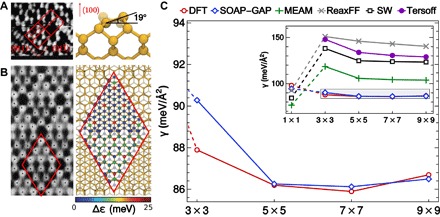
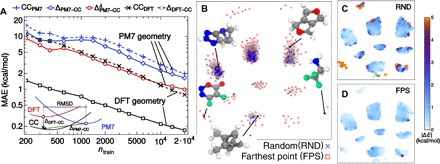
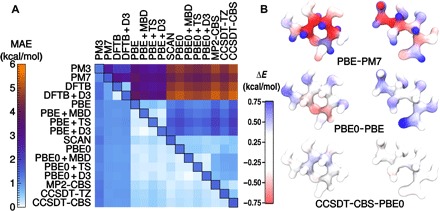
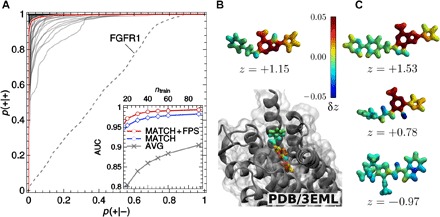
Verification
Claims the paper makes
The claims and statistics of this paper haven’t been checked yet.
Free: it reads the open-access text and checks the first 5 claims that cite a source we can check. Create a free account to check every claim.
Claims other papers make about this one
Each is checked against this paper’s own text: does it say what the citing paper says it does?
The cited source says what the claim attributes to it.
In the citing paper
“A critical assessment of the model performance as a function of the hyperparameters makes it possible to gauge the range of interactions 104 , or the locality of the physical phenomena underlying structure-property relations 105,106 for that system.”
From Unsupervised machine learning in atomistic simulations, between predictions and understanding (2019) · cites this paper as [104]
The cited source says what the claim attributes to it.
In the citing paper
“A low-dimensional representation of a dataset can help when it comes to identifying problematic regions, and understanding how a given representation 'sees' a set of structures 58,104,111 .”
From Unsupervised machine learning in atomistic simulations, between predictions and understanding (2019) · cites this paper as [104]
In the citing paper
“Gaussian process regression (GPR) was used to generate very accurate Gaussian atomic potentials (GAP) and then to train a SOAP–GAP model within a ML framework (GPR) that achieved a 99% accurate atomic-scale properties for Si surface reconstruction, stability of molecules, and protein ligands.209”
From QSAR without borders (2020) · cites this paper as [209]
In the citing paper
“To mitigate this limitation, read-across techniques are increasingly used to estimate the properties of nanomaterials.231”
From QSAR without borders (2020) · cites this paper as [231]
Self-check
Percentages, sums and reported differences re-computed from the paper’s own numbers.
The self-check needs the paper’s full text.
Citations
Cites
Density-functional thermochemistry. III. The role of exact exchange
Becke, A. D. (1993) · The Journal of Chemical Physics · doi:10.1063/1.464913 · Cited by 103,767
Self-Consistent Equations Including Exchange and Correlation Effects
Kohn, W., & Sham, L. J. (1965) · Physical Review · doi:10.1103/physrev.140.a1133 · Cited by 64,135
Hohenberg, P., & Kohn, W. (1964) · Physical Review · doi:10.1103/physrev.136.b864 · Cited by 53,541
Stephens, P. J., Devlin, F. J., Chabalowski, C. F., & Frisch, M. J. (1994) · The Journal of Physical Chemistry · doi:10.1021/j100096a001 · Cited by 23,248
Perdew, J. P., Chevary, J. A., Vosko, S. H., Jackson, K. A., Pederson, M. R., Singh, D. J., & Fiolhais, C. (1992) · Physical Review B · doi:10.1103/physrevb.46.6671 · Cited by 22,269
Development and testing of a general amber force field
Wang, J., Wolf, R. M., Caldwell, J. W., Kollman, P. A., & Case, D. A. (2004) · Journal of Computational Chemistry · doi:10.1002/jcc.20035 · Cited by 19,506
Self-consistent molecular orbital methods. XX. A basis set for correlated wave functions
Krishnan, R., Binkley, J. S., Seeger, R., & Pople, J. A. (1980) · The Journal of Chemical Physics · doi:10.1063/1.438955 · Cited by 17,772
Perdew, J. P., Chevary, J. A., Vosko, S. H., Jackson, K. A., Pederson, M. R., Singh, D. J., & Fiolhais, C. (1993) · Physical Review B · doi:10.1103/physrevb.48.4978.2 · Cited by 17,144
First principles methods using CASTEP
Clark, S. J., Segall, M. D., Pickard, C. J., Hasnip, P. J., Probert, M. I. J., Refson, K., & Payne, M. C. (2005) · Zeitschrift für Kristallographie - Crystalline Materials · doi:10.1524/zkri.220.5.567.65075 · Cited by 14,633
The Hungarian method for the assignment problem
Kuhn, H. W. (1955) · Naval Research Logistics Quarterly · doi:10.1002/nav.3800020109 · Cited by 13,120
Cited by
Items 101–200 of 846
Machine Learning Boosts the Design and Discovery of Nanomaterials
Jia, Y., Hou, X., Wang, Z., & Hu, X. (2021) · ACS Sustainable Chemistry & Engineering · doi:10.1021/acssuschemeng.1c00483 · Cited by 168
Townsend, J., Micucci, C. P., Hymel, J. H., Maroulas, V., & Vogiatzis, K. D. (2020) · Nature Communications · doi:10.1038/s41467-020-17035-5 · Cited by 167
Data‐Driven Machine Learning for Understanding Surface Structures of Heterogeneous Catalysts
Li, H., Jiao, Y., Davey, K. R., & Qiao, S. (2023) · Angewandte Chemie International Edition · doi:10.1002/anie.202216383 · Cited by 167
MOFormer: Self-Supervised Transformer Model for Metal–Organic Framework Property Prediction
Cao, Z., Magar, R., Wang, Y., & Barati Farimani, A. (2023) · Journal of the American Chemical Society · doi:10.1021/jacs.2c11420 · Cited by 163
Machine Learning in Materials Discovery: Confirmed Predictions and Their Underlying Approaches
Saal, J. E., Oliynyk, A. O., & Meredig, B. (2020) · Annual Review of Materials Research · doi:10.1146/annurev-matsci-090319-010954 · Cited by 161
Fast and Accurate Uncertainty Estimation in Chemical Machine Learning
Musil, F., Willatt, M. J., Langovoy, M. A., & Ceriotti, M. (2019) · Journal of Chemical Theory and Computation · doi:10.1021/acs.jctc.8b00959 · Cited by 160
Self-citationKorolev, V., Mitrofanov, A., Korotcov, A., & Tkachenko, V. (2019) · Journal of Chemical Information and Modeling · doi:10.1021/acs.jcim.9b00587 · Cited by 160
Teaching a neural network to attach and detach electrons from molecules
Zubatyuk, R. I., Smith, J. S., Nebgen, B. T., Tretiak, S., & Isayev, O. (2021) · Nature Communications · doi:10.1038/s41467-021-24904-0 · Cited by 157
Neural network potentials for chemistry: concepts, applications and prospects
Käser, S., Vazquez-Salazar, L. I., Meuwly, M., & Töpfer, K. (2023) · Digital Discovery · doi:10.1039/d2dd00102k · Cited by 156
Meli, R., Morris, G. M., & Biggin, P. C. (2022) · Frontiers in Bioinformatics · doi:10.3389/fbinf.2022.885983 · Cited by 155
Mapping Materials and Molecules
Cheng, B., Griffiths, R., Wengert, S., Künkel, C., Stenczel, T. K., Zhu, B., Deringer, V. L., Bernstein, N., Margraf, J. T., Reuter, K., et al. (2020) · Accounts of Chemical Research · doi:10.1021/acs.accounts.0c00403 · Cited by 154
Self-citationDataset’s chemical diversity limits the generalizability of machine learning predictions
Glavatskikh, M., Leguy, J., Hunault, G., Cauchy, T., & Mota, B. D. (2019) · Journal of Cheminformatics · doi:10.1186/s13321-019-0391-2 · Cited by 153
Hyperactive learning for data-driven interatomic potentials
van der Oord, C., Sachs, M., Kovács, D. P., Ortner, C., & Cśanyi, G. (2023) · npj Computational Materials · doi:10.1038/s41524-023-01104-6 · Cited by 152
End-to-end Symmetry Preserving Inter-atomic Potential Energy Model for Finite and Extended Systems
Zhang, L., Han, J., Wang, H., Saidi, W. A., Car, R., & Weinan, E. (2018) · arXiv (Cornell University) · doi:10.48550/arxiv.1805.09003 · Cited by 151
Predicting molecular dipole moments by combining atomic partial charges and atomic dipoles
Veit, M., Wilkins, D. M., Yang, Y., DiStasio, R. A., & Ceriotti, M. (2020) · The Journal of Chemical Physics · doi:10.1063/5.0009106 · Cited by 148
Self-citationAb initio vibrational free energies including anharmonicity for multicomponent alloys
Grabowski, B., Ikeda, Y., Srinivasan, P., Körmann, F., Freysoldt, C., Duff, A. I., Shapeev, A. V., & Neugebauer, J. (2019) · npj Computational Materials · doi:10.1038/s41524-019-0218-8 · Cited by 146
Raabe, D., Mianroodi, J. R., & Neugebauer, J. (2023) · Nature Computational Science · doi:10.1038/s43588-023-00412-7 · Cited by 146
tmQM Dataset─Quantum Geometries and Properties of 86k Transition Metal Complexes
Balcells, D., & Skjelstad, B. B. (2020) · Journal of Chemical Information and Modeling · doi:10.1021/acs.jcim.0c01041 · Cited by 143
Zaspel, P., Huang, B., Harbrecht, H., & von Lilienfeld, O. A. (2018) · Journal of Chemical Theory and Computation · doi:10.1021/acs.jctc.8b00832 · Cited by 142
Willatt, M. J., Musil, F., & Ceriotti, M. (2018) · Physical Chemistry Chemical Physics · doi:10.1039/c8cp05921g · Cited by 141
Self-citationDaru, J., Forbert, H., Behler, J., & Marx, D. (2022) · Physical Review Letters · doi:10.1103/physrevlett.129.226001 · Cited by 134
Matos, M. A. S., Pinho, S. T., & Tagarielli, V. L. (2019) · Carbon · doi:10.1016/j.carbon.2019.02.001 · Cited by 133
Schran, C., Behler, J., & Marx, D. (2019) · Journal of Chemical Theory and Computation · doi:10.1021/acs.jctc.9b00805 · Cited by 133
Hierarchical machine learning of potential energy surfaces
Dral, P. O., Owens, A., Dral, A., & Cśanyi, G. (2020) · The Journal of Chemical Physics · doi:10.1063/5.0006498 · Cited by 133
Uncertainty estimation for molecular dynamics and sampling
Imbalzano, G., Zhuang, Y., Kapil, V., Rossi, K., Engel, E. A., Grasselli, F., & Ceriotti, M. (2021) · The Journal of Chemical Physics · doi:10.1063/5.0036522 · Cited by 131
Self-citationDiscriminative Cooperative Networks for Detecting Phase Transitions
Liu, Y.-H., & van Nieuwenburg, E. (2018) · Physical Review Letters · doi:10.1103/physrevlett.120.176401 · Cited by 131
Li, F., Cheng, X., Lu, L., Yin, Y., Luo, J., Lu, G., Meng, Y., Mo, H., Tian, T., Yang, J.-T., et al. (2022) · Nano Letters · doi:10.1021/acs.nanolett.2c00187 · Cited by 128
Data-efficient machine learning for molecular crystal structure prediction
Wengert, S., Cśanyi, G., Reuter, K., & Margraf, J. T. (2021) · Chemical Science · doi:10.1039/d0sc05765g · Cited by 126
Mensa, S., Sahin, E., Tacchino, F., Barkoutsos, P. K., & Tavernelli, I. (2023) · Machine Learning Science and Technology · doi:10.1088/2632-2153/acb900 · Cited by 124
Molecular representations for machine learning applications in chemistry
Raghunathan, S., & Priyakumar, U. D. (2021) · International Journal of Quantum Chemistry · doi:10.1002/qua.26870 · Cited by 123
Zhang, Y., Xia, J., & Jiang, B. (2021) · Physical Review Letters · doi:10.1103/physrevlett.127.156002 · Cited by 122
Drug–Membrane Permeability across Chemical Space
Menichetti, R., Kanekal, K. H., & Bereau, T. (2019) · ACS Central Science · doi:10.1021/acscentsci.8b00718 · Cited by 119
Designing and understanding light-harvesting devices with machine learning
Häse, F., Roch, L. M., Friederich, P., & Aspuru‐Guzik, A. (2020) · Nature Communications · doi:10.1038/s41467-020-17995-8 · Cited by 119
Sauceda, H. E., Chmiela, S., Poltavsky, I., Müller, K.-R., & Tkatchenko, A. (2019) · The Journal of Chemical Physics · doi:10.1063/1.5078687 · Cited by 118
Eckhoff, M., & Behler, J. (2021) · npj Computational Materials · doi:10.1038/s41524-021-00636-z · Cited by 117
i-PI 3.0: A flexible and efficient framework for advanced atomistic simulations
Litman, Y. E., Kapil, V., Feldman, Y. M. Y., Tisi, D., Begušić, T., Fidanyan, K., Fraux, G., Higer, J., Kellner, M., Li, T. E., et al. (2024) · The Journal of Chemical Physics · doi:10.1063/5.0215869 · Cited by 115
Self-citationAtomic structures and orbital energies of 61,489 crystal-forming organic molecules
Stuke, A., Künkel, C., Golze, D., Todorović, M., Margraf, J. T., Reuter, K., Rinke, P., & Oberhofer, H. (2020) · Scientific Data · doi:10.1038/s41597-020-0385-y · Cited by 115
Read between the Molecules: Computational Insights into Organic Semiconductors
Gryn’ova, G., Lin, K., & Corminbœuf, C. (2018) · Journal of the American Chemical Society · doi:10.1021/jacs.8b07985 · Cited by 114
Optimizing molecules using efficient queries from property evaluations
Hoffman, S. C., Chenthamarakshan, V., Wadhawan, K., Chen, P., & Das, P. (2021) · Nature Machine Intelligence · doi:10.1038/s42256-021-00422-y · Cited by 114
Predicting the hydrogen release ability of LiBH 4 -based mixtures by ensemble machine learning
Ding, Z., Chen, Z., Ma, T., Lu, C., Ma, W., & Shaw, L. L. (2019) · Energy storage materials · doi:10.1016/j.ensm.2019.12.010 · Cited by 113
An artificial intelligence atomic force microscope enabled by machine learning
Huang, B., Li, Z., & Li, J. (2018) · Nanoscale · doi:10.1039/c8nr06734a · Cited by 112
Chemical diversity in molecular orbital energy predictions with kernel ridge regression
Stuke, A., Todorović, M., Rupp, M., Künkel, C., Ghosh, K., Himanen, L., & Rinke, P. (2019) · The Journal of Chemical Physics · doi:10.1063/1.5086105 · Cited by 111
In Silico Chemical Experiments in the Age of AI: From Quantum Chemistry to Machine Learning and Back
Aldossary, A., Campos-Gonzalez-Angulo, J. A., Pablo‐García, S., Leong, S. X., Rajaonson, E. M., Thiede, L., Tom, G., Wang, A., Avagliano, D., & Aspuru‐Guzik, A. (2024) · Advanced Materials · doi:10.1002/adma.202402369 · Cited by 109
The Rise of Neural Networks for Materials and Chemical Dynamics
Kulichenko, M., Smith, J. S., Nebgen, B. T., Li, Y. W., Fedik, N. S., Boldyrev, A. I., Lubbers, N., Barros, K. M., & Tretiak, S. (2021) · The Journal of Physical Chemistry Letters · doi:10.1021/acs.jpclett.1c01357 · Cited by 108
Artificial Intelligence Enhanced Molecular Simulations
Zhang, J., Chen, D., Xia, Y., Huang, Y., Lin, X., Han, X., Ni, N., Wang, Z., Fan, Y., Yang, L., et al. (2023) · Journal of Chemical Theory and Computation · doi:10.1021/acs.jctc.3c00214 · Cited by 107
Artificial Intelligence in Materials Modeling and Design
Huang, J., Liew, J. X., Ademiloye, A. S., & Liew, K. M. (2020) · Archives of Computational Methods in Engineering · doi:10.1007/s11831-020-09506-1 · Cited by 107
Miguel, A., Aarva, A., Deringer, V. L., Cśanyi, G., & Laurila, T. T. (2018) · Chemistry of Materials · doi:10.1021/acs.chemmater.8b03353 · Cited by 107
Transfer learning for materials informatics using crystal graph convolutional neural network
Lee, J., & Asahi, R. (2021) · Computational Materials Science · doi:10.1016/j.commatsci.2021.110314 · Cited by 105
Liu, Y., Yang, J., Xin, G., Liu, L., Cśanyi, G., & Cao, B. (2020) · The Journal of Chemical Physics · doi:10.1063/5.0027643 · Cited by 105
Deringer, V. L., Miguel, A., Jana, R., Aarva, A., Elliott, S. R., Laurila, T. T., Cśanyi, G., & Pastewka, L. (2018) · Chemistry of Materials · doi:10.1021/acs.chemmater.8b02410 · Cited by 105
Practical Deep-Learning Representation for Fast Heterogeneous Catalyst Screening
Gu, G. H., Noh, J., Kim, S., Back, S., Ulissi, Z. W., & Jung, Y. (2020) · The Journal of Physical Chemistry Letters · doi:10.1021/acs.jpclett.0c00634 · Cited by 104
Differentiable sampling of molecular geometries with uncertainty-based adversarial attacks
Schwalbe‐Koda, D., Tan, A. R., & Gómez‐Bombarelli, R. (2021) · Nature Communications · doi:10.1038/s41467-021-25342-8 · Cited by 104
Recursive evaluation and iterative contraction of N-body equivariant features
Nigam, J., Pozdnyakov, S. N., & Ceriotti, M. (2020) · The Journal of Chemical Physics · doi:10.1063/5.0021116 · Cited by 103
Self-citationNakata, M., Shimazaki, T., Hashimoto, M., & Maeda, T. (2020) · Journal of Chemical Information and Modeling · doi:10.1021/acs.jcim.0c00740 · Cited by 103
Relevance of Rotationally Equivariant Convolutions for Predicting Molecular PropertiesPreprint
Miller, B., Geiger, M., Smidt, T., & Noé, F. (2020) · arXiv (Cornell University) · doi:10.48550/arxiv.2008.08461 · Cited by 103
Davlatshoevich, N. D., & Hojamberdiev, M. (2025) · Computational Condensed Matter · doi:10.1016/j.cocom.2025.e01139 · Cited by 101
Perspectives on multiscale modelling and experiments to accelerate materials development for fusion
Gilbert, M. R., Arakawa, K., Bergstrom, Z., Caturla, M. J., Dudarev, S. L., Gao, F., Goryaeva, A. M., Hu, S., Hu, X., Kurtz, R. J., et al. (2021) · Journal of Nuclear Materials · doi:10.1016/j.jnucmat.2021.153113 · Cited by 101
Heterogeneous Molecular Graph Neural Networks for Predicting Molecule Properties
Shui, Z., & Karypis, G. (2020) · Proceedings · doi:10.1109/icdm50108.2020.00058 · Cited by 100
Lunghi, A., & Sanvito, S. (2022) · Nature Reviews Chemistry · doi:10.1038/s41570-022-00424-3 · Cited by 98
Amabilino, S., Bratholm, L. A., Bennie, S. J., Vaucher, A. C., Reiher, M., & Glowacki, D. R. (2019) · The Journal of Physical Chemistry A · doi:10.1021/acs.jpca.9b01006 · Cited by 97
Learning intermolecular forces at liquid–vapor interfaces
Niblett, S. P., Galib, M., & Limmer, D. T. (2021) · The Journal of Chemical Physics · doi:10.1063/5.0067565 · Cited by 97
Ma, C., Zhang, Z., Luce, B., Pusateri, S., Xie, B., Rafiei, M. H., & Hu, N. (2020) · npj Computational Materials · doi:10.1038/s41524-020-0309-6 · Cited by 97
How to train a neural network potential
Tokita, A. M., & Behler, J. (2023) · The Journal of Chemical Physics · doi:10.1063/5.0160326 · Cited by 96
Data-driven learning and prediction of inorganic crystal structures
Deringer, V. L., Proserpio, D. M., Cśanyi, G., & Pickard, C. J. (2018) · Faraday Discussions · doi:10.1039/c8fd00034d · Cited by 96
BIGDML—Towards accurate quantum machine learning force fields for materials
Sauceda, H. E., Gálvez-González, L. E., Chmiela, S., Paz‐Borbón, L. O., Müller, K., & Tkatchenko, A. (2022) · Nature Communications · doi:10.1038/s41467-022-31093-x · Cited by 96
Deep Learning: Current and Emerging Applications in Medicine and Technology
Akay, A., & Hess, H. (2019) · IEEE Journal of Biomedical and Health Informatics · doi:10.1109/jbhi.2019.2894713 · Cited by 95
Ranking the information content of distance measures
Glielmo, A., Zeni, C., Cheng, B., Cśanyi, G., & Laio, A. (2022) · PNAS Nexus · doi:10.1093/pnasnexus/pgac039 · Cited by 95
Speybroeck, V. V., Bocus, M., Cnudde, P., & Vanduyfhuys, L. (2023) · ACS Catalysis · doi:10.1021/acscatal.3c01945 · Cited by 95
MLatom: A program package for quantum chemical research assisted by machine learning
Dral, P. O. (2019) · Journal of Computational Chemistry · doi:10.1002/jcc.26004 · Cited by 93
Machine Learning Protocol for Surface-Enhanced Raman Spectroscopy
Hu, W., Ye, S., Zhang, Y., Li, T., Zhang, G., Luo, Y., Mukamel, S., & Jiang, J. (2019) · The Journal of Physical Chemistry Letters · doi:10.1021/acs.jpclett.9b02517 · Cited by 92
Pronobis, W., Tkatchenko, A., & Müller, K. (2018) · Journal of Chemical Theory and Computation · doi:10.1021/acs.jctc.8b00110 · Cited by 93
Wan, K., He, J., & Shi, X. (2023) · Advanced Materials · doi:10.1002/adma.202305758 · Cited by 92
Goryaeva, A. M., Dérès, J., Lapointe, C., Grigorev, P., Swinburne, T. D., Kermode, J. R., Ventelon, L., Baima, J., & Marinica, M. (2021) · Physical Review Materials · doi:10.1103/physrevmaterials.5.103803 · Cited by 92
Self-citationGyevi‐Nagy, L., Kállay, M., & Nagy, P. R. (2021) · Journal of Chemical Theory and Computation · doi:10.1021/acs.jctc.0c01077 · Cited by 91
Membrane-type acoustic metamaterial using cork sheets and attached masses based on reused materials
Ciaburro, G., & Iannace, G. (2022) · Applied Acoustics · doi:10.1016/j.apacoust.2021.108605 · Cited by 90
Machine learning and symbolic regression investigation on stability of MXene materials
He, M., & Zhang, L. (2021) · Computational Materials Science · doi:10.1016/j.commatsci.2021.110578 · Cited by 90
PiNN: A Python Library for Building Atomic Neural Networks of Molecules and Materials
Shao, Y., Hellström, M., Mitev, P. D., Knijff, L., & Zhang, C. (2020) · Journal of Chemical Information and Modeling · doi:10.1021/acs.jcim.9b00994 · Cited by 90
Ephemeral data derived potentials for random structure search
Pickard, C. J. (2022) · Physical review. B./Physical review. B · doi:10.1103/physrevb.106.014102 · Cited by 90
Machine-learning driven global optimization of surface adsorbate geometries
Jung, H., Sauerland, L., Stocker, S., Reuter, K., & Margraf, J. T. (2023) · npj Computational Materials · doi:10.1038/s41524-023-01065-w · Cited by 89
Graph neural networks accelerated molecular dynamics
Li, Z., Meidani, K., Yadav, P., & Farimani, A. B. (2022) · The Journal of Chemical Physics · doi:10.1063/5.0083060 · Cited by 89
Pure non-local machine-learned density functional theory for electron correlation
Margraf, J. T., & Reuter, K. (2021) · Nature Communications · doi:10.1038/s41467-020-20471-y · Cited by 88
Gyevi‐Nagy, L., Kállay, M., & Nagy, P. R. (2019) · Journal of Chemical Theory and Computation · doi:10.1021/acs.jctc.9b00957 · Cited by 88
Local Bayesian optimizer for atomic structures
del Río, E. G., Mortensen, J. J., & Jacobsen, K. W. (2019) · Physical review. B./Physical review. B · doi:10.1103/physrevb.100.104103 · Cited by 86
Janet, J. P., & Kulik, H. J. (2020) · ACS in focus · doi:10.1021/acs.infocus.7e4001 · Cited by 84
Learning protein-ligand binding affinity with atomic environment vectors
Meli, R., Anighoro, A., Bodkin, M. J., Morris, G. M., & Biggin, P. C. (2021) · Journal of Cheminformatics · doi:10.1186/s13321-021-00536-w · Cited by 84
Embedding domain knowledge for machine learning of complex material systems
Childs, C. M., & Washburn, N. R. (2019) · MRS Communications · doi:10.1557/mrc.2019.90 · Cited by 82
Error-Controlled Exploration of Chemical Reaction Networks with Gaussian Processes
Simm, G. N., & Reiher, M. (2018) · Journal of Chemical Theory and Computation · doi:10.1021/acs.jctc.8b00504 · Cited by 81
Winkler, D. A., Hughes, A. E., Özkan, C., Mol, J. M. C., Würger, T., Feiler, C., Zhang, D., & Lamaka, S. V. (2024) · Progress in Materials Science · doi:10.1016/j.pmatsci.2024.101392 · Cited by 81
Multi-scale approach for the prediction of atomic scale properties
Grisafi, A., Nigam, J., & Ceriotti, M. (2021) · Chemical Science · doi:10.1039/d0sc04934d · Cited by 79
Self-citationLiu, Y., Liang, H., Yang, L., Yang, G., Yang, H.-A., Song, S., Mei, Z., Cśanyi, G., & Cao, B. (2023) · Advanced Materials · doi:10.1002/adma.202210873 · Cited by 78
Using Dimensionality Reduction to Analyze Protein Trajectories
Tribello, G. A., & Gasparotto, P. (2019) · Frontiers in Molecular Biosciences · doi:10.3389/fmolb.2019.00046 · Cited by 77
Materials Informatics for Mechanical Deformation: A Review of Applications and Challenges
Frydrych, K., Karimi, K., Pecelerowicz, M., Alvarez, R., Dominguez-Gutiérrez, F. J., Rovaris, F., & Papanikolaou, S. (2021) · Materials · doi:10.3390/ma14195764 · Cited by 77
Compressing local atomic neighbourhood descriptors
Darby, J. P., Kermode, J. R., & Cśanyi, G. (2022) · npj Computational Materials · doi:10.1038/s41524-022-00847-y · Cited by 78
Self-citationSeko, A., Togo, A., & Tanaka, I. (2019) · Physical review. B./Physical review. B · doi:10.1103/physrevb.99.214108 · Cited by 76
Statistical and machine learning approaches to predicting protein–ligand interactions
Colwell, L. J. (2018) · Current Opinion in Structural Biology · doi:10.1016/j.sbi.2018.01.006 · Cited by 75
Capturing intensive and extensive DFT/TDDFT molecular properties with machine learning
Pronobis, W., Schütt, K. T., Tkatchenko, A., & Müller, K. (2018) · The European Physical Journal B · doi:10.1140/epjb/e2018-90148-y · Cited by 75
Machine Learning-Guided Approach for Studying Solvation Environments
Basdogan, Y., Groenenboom, M. C., Henderson, E., De, S., Rempe, S. B., & Keith, J. A. (2019) · Journal of Chemical Theory and Computation · doi:10.1021/acs.jctc.9b00605 · Cited by 74
Self-citationEquation of State of Fluid Methane from First Principles with Machine Learning Potentials
Veit, M., Jain, S. K., Bonakala, S., Rudra, I., Hohl, D., & Cśanyi, G. (2019) · Journal of Chemical Theory and Computation · doi:10.1021/acs.jctc.8b01242 · Cited by 74
Phase transitions of zirconia: Machine-learned force fields beyond density functional theory
Liu, P., Verdi, C., Karsai, F., & Kresse, G. (2022) · Physical review. B./Physical review. B · doi:10.1103/physrevb.105.l060102 · Cited by 73
Atomic Energies from a Convolutional Neural Network
Chen, X., Jo̷rgensen, M., Li, J., & Hammer, B. (2018) · Journal of Chemical Theory and Computation · doi:10.1021/acs.jctc.8b00149 · Cited by 73
Metadata
- Authors
- Bartók, A. P., De, S., Poelking, C., Bernstein, N., Kermode, J. R., Csányi, G., & Ceriotti, M.
- Affiliations
- Rutherford Appleton Laboratory (GB)
- École Polytechnique Fédérale de Lausanne (CH)
- University of Cambridge (GB)
- United States Naval Research Laboratory (US)
- University of Warwick (GB)
- Engineering Laboratory, University of Cambridge, Cambridge, UK.
- Corresponding author
- Ceriotti, Michele
- ORCID
- Venue
- Science Advances
- Published
- 2017-12
- Volume
- 3
- Issue
- 12
- Pages
- e1701816-e1701816
- ISSN
- 2375-2548 (ISSN-L)
- PMC
- PMC5729016
- OpenAlex
- W2620687153
- Cited by
- 764
- References
- 71
- Citations by year
- 2026: 43 · 2025: 79 · 2024: 67 · 2023: 91 · 2022: 96 · 2021: 114 · 2020: 130 · 2019: 90 · 2018: 52 · 2017: 2
- FWCI
- 31.56
- Type
- journal article
- Language
- en
- Open access
- gold
- doi.org
- Licence
- cc-by-nc
- Locations
- Science Advances (publishedVersion, cc-by-nc)
- PubMed Central (publishedVersion, cc-by-nc)
- PubMed (publishedVersion)
- Warwick Research Archive Portal (University of Warwick) (acceptedVersion)
- arXiv (Cornell University) (submittedVersion)
- Apollo (University of Cambridge) (submittedVersion, cc-by-nc)
- Cambridge University Engineering Department Publications Database (submittedVersion)
- Infoscience (Ecole Polytechnique Fédérale de Lausanne) (submittedVersion)
- Infoscience (Ecole Polytechnique Fédérale de Lausanne) (submittedVersion, cc-by-nc-nd)
- Science and Technology Facilities Council (submittedVersion)
- arXiv (Cornell University)
- Apollo
- Funders
- Office of Naval Research (award361580, U.S. Naval Research Laboratory, core basic research program)
- Engineering and Physical Sciences Research Council (award324327, EP/L014742/1, EP/J010847/1 and EP/J022012/1, award324329, EP/L014742/1, EP/P002188/1, award361574, EP/M022501/1, award361582, EP/K013564/1, EP/P022561/1)
- Swiss National Science Foundation (award324328, NCCR MARVEL)
- Leverhulme Trust (award361572, Leverhulme Early Career Fellowship)
- Isaac Newton Trust (award361573)
- European Research Council (award324326, 677013-HBMAP, award324330, 67658 - NOMAD)
- Topics
- Physical Sciences › Materials Science › Materials Chemistry › Machine Learning in Materials Science
- Physical Sciences › Physics and Astronomy › Atomic and Molecular Physics, and Optics › Advanced Chemical Physics Studies
- Life Sciences › Pharmacology, Toxicology and Pharmaceutics › Drug Discovery › Computational Drug Discovery Methods
- Keywords
- machine learning, molecular stability, atomistic modeling, local chemical environment, silicon surface reconstruction, protein-ligand binding, potential energy surface, quantum effects
About these checks
Registry, retraction, Cites and statistics results are computed, not judged, with one exception: a printed reference that no index lists is read once by a model before it counts as a citation error. Claims are extracted by a model and kept only when their quote appears verbatim in the text; each cited source is then checked, with a model’s help, for whether it says what the claim relies on. Those verdicts can be wrong — read the claim’s quote and the cited source before relying on one.
Statistics and arithmetic are recomputed, not judged.
Confidence bands are shown only for fields calibrated on our annotated test set. None is calibrated yet, so no band is shown.
What counts as a claim ›How we measure confidence ›How we check this ›
Are you an author, or do you see a problem with this page? Request a review
Data sources
Bibliographic data: Semantic Scholar, OpenAlex, Crossref.
Contains information from the Semantic Scholar Academic Graph Datasets, made available under the ODC Attribution License (ODC-BY 1.0).
Semantic Scholar’s data is described in: Kinney, R., et al. (2023). The Semantic Scholar Open Data Platform. arXiv:2301.10140.
