

Machine learning unifies the modeling of materials and molecules
Open accessThe DOI matches its Crossref record; 70 of the 71 references it cites were found in a registry or an index.
Abstract
Statistical learning based on a local representation of atomic structures provides a universal model of chemical stability.
Overview
The claims and statistics of this paper haven’t been checked yet.
Free: it reads the open-access text and checks the first 5 claims that cite a source we can check. Create a free account to check every claim.
Integrity signals
Registry
Cites
Statistics
Figures
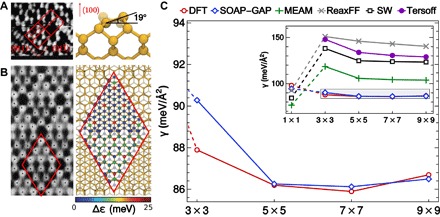
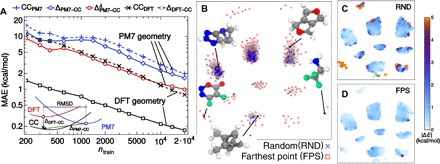
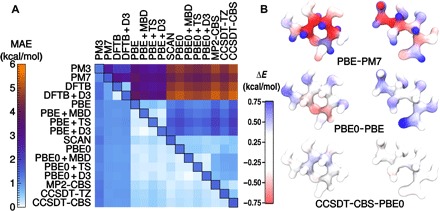
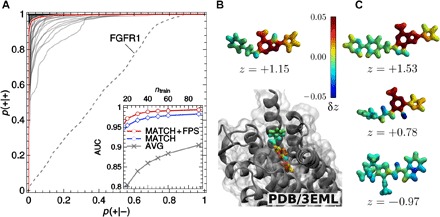
Verification
Claims the paper makes
The claims and statistics of this paper haven’t been checked yet.
Free: it reads the open-access text and checks the first 5 claims that cite a source we can check. Create a free account to check every claim.
Claims other papers make about this one
Each is checked against this paper’s own text: does it say what the citing paper says it does?
The cited source says what the claim attributes to it.
In the citing paper
“A critical assessment of the model performance as a function of the hyperparameters makes it possible to gauge the range of interactions 104 , or the locality of the physical phenomena underlying structure-property relations 105,106 for that system.”
From Unsupervised machine learning in atomistic simulations, between predictions and understanding (2019) · cites this paper as [104]
The cited source says what the claim attributes to it.
In the citing paper
“A low-dimensional representation of a dataset can help when it comes to identifying problematic regions, and understanding how a given representation 'sees' a set of structures 58,104,111 .”
From Unsupervised machine learning in atomistic simulations, between predictions and understanding (2019) · cites this paper as [104]
In the citing paper
“Gaussian process regression (GPR) was used to generate very accurate Gaussian atomic potentials (GAP) and then to train a SOAP–GAP model within a ML framework (GPR) that achieved a 99% accurate atomic-scale properties for Si surface reconstruction, stability of molecules, and protein ligands.209”
From QSAR without borders (2020) · cites this paper as [209]
In the citing paper
“To mitigate this limitation, read-across techniques are increasingly used to estimate the properties of nanomaterials.231”
From QSAR without borders (2020) · cites this paper as [231]
Self-check
Percentages, sums and reported differences re-computed from the paper’s own numbers.
The self-check needs the paper’s full text.
Citations
Cites
Density-functional thermochemistry. III. The role of exact exchange
Becke, A. D. (1993) · The Journal of Chemical Physics · doi:10.1063/1.464913 · Cited by 103,767
Self-Consistent Equations Including Exchange and Correlation Effects
Kohn, W., & Sham, L. J. (1965) · Physical Review · doi:10.1103/physrev.140.a1133 · Cited by 64,135
Hohenberg, P., & Kohn, W. (1964) · Physical Review · doi:10.1103/physrev.136.b864 · Cited by 53,541
Stephens, P. J., Devlin, F. J., Chabalowski, C. F., & Frisch, M. J. (1994) · The Journal of Physical Chemistry · doi:10.1021/j100096a001 · Cited by 23,248
Perdew, J. P., Chevary, J. A., Vosko, S. H., Jackson, K. A., Pederson, M. R., Singh, D. J., & Fiolhais, C. (1992) · Physical Review B · doi:10.1103/physrevb.46.6671 · Cited by 22,269
Development and testing of a general amber force field
Wang, J., Wolf, R. M., Caldwell, J. W., Kollman, P. A., & Case, D. A. (2004) · Journal of Computational Chemistry · doi:10.1002/jcc.20035 · Cited by 19,506
Self-consistent molecular orbital methods. XX. A basis set for correlated wave functions
Krishnan, R., Binkley, J. S., Seeger, R., & Pople, J. A. (1980) · The Journal of Chemical Physics · doi:10.1063/1.438955 · Cited by 17,772
Perdew, J. P., Chevary, J. A., Vosko, S. H., Jackson, K. A., Pederson, M. R., Singh, D. J., & Fiolhais, C. (1993) · Physical Review B · doi:10.1103/physrevb.48.4978.2 · Cited by 17,144
First principles methods using CASTEP
Clark, S. J., Segall, M. D., Pickard, C. J., Hasnip, P. J., Probert, M. I. J., Refson, K., & Payne, M. C. (2005) · Zeitschrift für Kristallographie - Crystalline Materials · doi:10.1524/zkri.220.5.567.65075 · Cited by 14,633
The Hungarian method for the assignment problem
Kuhn, H. W. (1955) · Naval Research Logistics Quarterly · doi:10.1002/nav.3800020109 · Cited by 13,120
Cited by
Items 201–300 of 846
Quantum Dynamics of Exciton Transport and Dissociation in Multichromophoric Systems
Popp, W., Brey, D., Binder, R., & Burghardt, I. (2021) · Annual Review of Physical Chemistry · doi:10.1146/annurev-physchem-090419-040306 · Cited by 71
Andraju, N., Curtzwiler, G. W., Ji, Y., Kozliak, E. I., & Ranganathan, P. (2022) · ACS Applied Materials & Interfaces · doi:10.1021/acsami.2c08301 · Cited by 79
Modelling Bulk Electrolytes and Electrolyte Interfaces with Atomistic Machine Learning
Shao, Y., Knijff, L., Dietrich, F. M., Hermansson, K., & Zhang, C. (2021) · Batteries & Supercaps · doi:10.1002/batt.202000262 · Cited by 70
Schade, R., Kenter, T., Elgabarty, H., Lass, M., Schütt, O., Lazzaro, A., Pabst, H., Mohr, S., Hutter, J., Kühne, T. D., et al. (2022) · Parallel Computing · doi:10.1016/j.parco.2022.102920 · Cited by 70
Machine learning for molecular thermodynamics
Ding, J., Xu, N., Nguyen, M. T., Qiao, Q., Shi, Y., He, Y., & Shao, Q. (2021) · Chinese Journal of Chemical Engineering · doi:10.1016/j.cjche.2020.10.044 · Cited by 69
Multi-body effects in a coarse-grained protein force field
Wang, J., Charron, N. E., Husic, B. E., Olsson, S., Noé, F., & Clementi, C. (2021) · The Journal of Chemical Physics · doi:10.1063/5.0041022 · Cited by 68
Electronic structure at coarse-grained resolutions from supervised machine learning
Jackson, N. E., Bowen, A., Antony, L. W., Webb, M. A., Vishwanath, V., & Pablo, J. (2019) · Science Advances · doi:10.1126/sciadv.aav1190 · Cited by 68
Tian, J. M., Tang, K., Chen, X., & Wang, X. (2022) · Nanoscale · doi:10.1039/d2nr02509d · Cited by 68
A deep neural network for molecular wave functions in quasi-atomic minimal basis representation
Gastegger, M., McSloy, A., Luya, M., Schütt, K. T., & Maurer, R. J. (2020) · The Journal of Chemical Physics · doi:10.1063/5.0012911 · Cited by 67
Predicting molecular properties with covariant compositional networks
Hy, T. S., Trivedi, S., Pan, H., Anderson, B. M., & Kondor, R. (2018) · The Journal of Chemical Physics · doi:10.1063/1.5024797 · Cited by 67
A Bayesian approach to NMR crystal structure determination
Engel, E. A., Anelli, A., Hofstetter, A., Paruzzo, F., Emsley, L., & Ceriotti, M. (2019) · Physical Chemistry Chemical Physics · doi:10.1039/c9cp04489b · Cited by 67
Self-citationTowards better efficiency of interatomic linear machine learning potentials
Goryaeva, A. M., Maillet, J., & Marinica, M. (2019) · Computational Materials Science · doi:10.1016/j.commatsci.2019.04.043 · Cited by 67
ACEpotentials.jl: A Julia implementation of the atomic cluster expansion
Witt, W. C., van der Oord, C., Gelžinytė, E., Järvinen, T., Ross, A., Darby, J. P., Ho, C. H., Baldwin, W. J., Sachs, M., Kermode, J. R., et al. (2023) · The Journal of Chemical Physics · doi:10.1063/5.0158783 · Cited by 67
Self-citationMuhli, H., Chen, X., Bartók, A. P., Hernández-León, P., Cśanyi, G., Ala-Nissilä, T., & Miguel, A. (2021) · Physical review. B./Physical review. B · doi:10.1103/physrevb.104.054106 · Cited by 66
Self-citationReal-space mapping of topological invariants using artificial neural networks
Carvalho, D., García-Martínez, N. A., Lado, J. L., & Fernández-Rossier, J. (2018) · Physical review. B./Physical review. B · doi:10.1103/physrevb.97.115453 · Cited by 65
Introduction to machine learning potentials for atomistic simulations
Thiemann, F. L., O’Neill, N., Kapil, V., Michaelides, A., & Schran, C. (2024) · Journal of Physics Condensed Matter · doi:10.1088/1361-648x/ad9657 · Cited by 65
Dynamic Local Structure in Caesium Lead Iodide: Spatial Correlation and Transient Domains
Baldwin, W. J., Liang, X., Klarbring, J., Dubajić, M., Dell’Angelo, D., Sutton, C., Caddeo, C., Stranks, S. D., Mattoni, A., Walsh, A., et al. (2023) · Small · doi:10.1002/smll.202303565 · Cited by 65
Wang, F., Wu, H., Dong, L., Pan, G., Zhou, X., Wang, S., Guo, R., Wu, G., Gao, J., Dai, F., et al. (2023) · Journal of Material Science and Technology · doi:10.1016/j.jmst.2023.05.010 · Cited by 65
Accelerated Simulations of Molecular Systems through Learning of Effective Dynamics
Vlachas, P. R., Zavadlav, J., Praprotnik, M., & Koumoutsakos, P. (2021) · Journal of Chemical Theory and Computation · doi:10.1021/acs.jctc.1c00809 · Cited by 64
Sauceda, H. E., Gastegger, M., Chmiela, S., Müller, K., & Tkatchenko, A. (2020) · The Journal of Chemical Physics · doi:10.1063/5.0023005 · Cited by 64
Understanding electrified interfaces
Steinmann, S. N., & Seh, Z. W. (2021) · Nature Reviews Materials · doi:10.1038/s41578-021-00303-1 · Cited by 64
Staacke, C. G., Heenen, H. H., Scheurer, C., Cśanyi, G., Reuter, K., & Margraf, J. T. (2021) · ACS Applied Energy Materials · doi:10.1021/acsaem.1c02363 · Cited by 64
Review: machine learning approaches for diverse alloy systems
Rahman, A., Hossain, M. S., & Siddique, A.-B. (2025) · Journal of Materials Science · doi:10.1007/s10853-025-11154-4 · Cited by 64
Generalized Density-Functional Tight-Binding Repulsive Potentials from Unsupervised Machine Learning
Kranz, J. J., Kubillus, M., Ramakrishnan, R., von Lilienfeld, O. A., & Elstner, M. (2018) · Journal of Chemical Theory and Computation · doi:10.1021/acs.jctc.7b00933 · Cited by 63
Improving sample and feature selection with principal covariates regression
Cersonsky, R. K., Helfrecht, B. A., Engel, E. A., Kliavinek, S., & Ceriotti, M. (2021) · Machine Learning Science and Technology · doi:10.1088/2632-2153/abfe7c · Cited by 63
Self-citationDeep Learning for Optoelectronic Properties of Organic Semiconductors
Lu, C., Liu, Q., Sun, Q., Hsieh, C., Zhang, S., Shi, L., & Lee, C. (2020) · The Journal of Physical Chemistry C · doi:10.1021/acs.jpcc.0c00329 · Cited by 63
Recent progress on surface chemistry II: Property and characterization
Li, X., Xu, Z., Bu, D., Cai, J., Chen, H., Chen, Q., Chen, T., Cheng, F., Chi, L., Dong, W., et al. (2024) · Chinese Chemical Letters · doi:10.1016/j.cclet.2024.110100 · Cited by 63
Atomic permutationally invariant polynomials for fitting molecular force fields
Allen, A. E. A., Dusson, G., Ortner, C., & Cśanyi, G. (2021) · Machine Learning Science and Technology · doi:10.1088/2632-2153/abd51e · Cited by 63
Staacke, C. G., Wengert, S., Künkel, C., Cśanyi, G., Reuter, K., & Margraf, J. T. (2022) · Machine Learning Science and Technology · doi:10.1088/2632-2153/ac568d · Cited by 63
Efficient implementation of atom-density representations
Musil, F., Veit, M., Goscinski, A., Fraux, G., Willatt, M. J., Stricker, M., Junge, T., & Ceriotti, M. (2021) · The Journal of Chemical Physics · doi:10.1063/5.0044689 · Cited by 62
Self-citationPhillips-Inspired Machine Learning for Band Gap and Exciton Binding Energy Prediction
Liang, J., & Zhu, X. (2019) · The Journal of Physical Chemistry Letters · doi:10.1021/acs.jpclett.9b02232 · Cited by 62
A Perspective on Deep Learning for Molecular Modeling and Simulations
Zhang, J., Lei, Y.-K., Zhang, Z., Chang, J., Li, M., Han, X., Yang, L., Yang, Y., & Gao, Y. Q. (2020) · The Journal of Physical Chemistry A · doi:10.1021/acs.jpca.0c04473 · Cited by 61
Thiemann, F. L., Rowe, P., Müller, E. A., & Michaelides, A. (2020) · The Journal of Physical Chemistry C · doi:10.1021/acs.jpcc.0c05831 · Cited by 61
Tian, C., Li, B., Rui, Y., Xiong, H., Zhao, Y. L., Han, X., Zhou, X., Qiu, Y. F., An, W., Li, K., et al. (2023) · Advanced Functional Materials · doi:10.1002/adfm.202302270 · Cited by 61
Li, W., Wang, Z., Xiao, X., Zhang, Z., Janotti, A., Rajasekaran, S., & Medasani, B. (2022) · Physical review. B./Physical review. B · doi:10.1103/physrevb.106.155156 · Cited by 61
Quantum computing and artificial intelligence: status and perspectivesPreprint
Acampora, G., Ambainis, A., Ares, N., Banchi, L., Bhardwaj, P., Binosi, D., Briggs, G. A. D., Calarco, T., Dunjko, V., Eisert, J., et al. (2025) · arXiv (Cornell University) · doi:10.48550/arxiv.2505.23860 · Cited by 60
Prediction of Intramolecular Reorganization Energy Using Machine Learning
Atahan-Evrenk, Ş., & Atalay, F. B. (2019) · The Journal of Physical Chemistry A · doi:10.1021/acs.jpca.9b02733 · Cited by 59
Stocker, S., Jung, H., Cśanyi, G., Goldsmith, C. F., Reuter, K., & Margraf, J. T. (2023) · Journal of Chemical Theory and Computation · doi:10.1021/acs.jctc.3c00541 · Cited by 59
Machine learning in computational NMR-aided structural elucidation
Cortés, I., Cuadrado, C., Daranas, A. H., & Sarotti, A. M. (2023) · Frontiers in Natural Products · doi:10.3389/fntpr.2023.1122426 · Cited by 58
The CP2K Program Package Made Simple
Iannuzzi, M., Wilhelm, J., Stein, F., Bussy, A., Elgabarty, H., Golze, D., Hehn, A.-S., Graml, M., Marek, Š., Gökmen, B. S., et al. (2026) · The Journal of Physical Chemistry B · doi:10.1021/acs.jpcb.5c05851 · Cited by 57
Quantifying Chemical Structure and Machine‐Learned Atomic Energies in Amorphous and Liquid Silicon
Bernstein, N., Bhattarai, B., Cśanyi, G., Drabold, D. A., Elliott, S. R., & Deringer, V. L. (2019) · Angewandte Chemie International Edition · doi:10.1002/anie.201902625 · Cited by 57
Self-citationLearning molecular potentials with neural networks
Gökcan, H., & Isayev, O. (2021) · Wiley Interdisciplinary Reviews Computational Molecular Science · doi:10.1002/wcms.1564 · Cited by 56
Double-Shock Compression Pathways from Diamond to BC8 Carbon
Shi, J., Liang, Z., Wang, J., Pan, S., Ding, C., Wang, Y., Wang, H., Xing, D., & Sun, J. (2023) · Physical Review Letters · doi:10.1103/physrevlett.131.146101 · Cited by 56
Ensemble learning of coarse-grained molecular dynamics force fields with a kernel approach
Wang, J., Chmiela, S., Müller, K.-R., Noé, F., & Clementi, C. (2020) · The Journal of Chemical Physics · doi:10.1063/5.0007276 · Cited by 55
Functional materials and devices by self-assembly
Talapin, D. V., Engel, M., & Braun, P. V. (2020) · MRS Bulletin · doi:10.1557/mrs.2020.252 · Cited by 55
Liu, P., Wang, J.-T., Avargues, N., Verdi, C., Singraber, A., Karsai, F., Chen, X., & Kresse, G. (2023) · Physical Review Letters · doi:10.1103/physrevlett.130.078001 · Cited by 55
Peivaste, I., Belouettar, S., Mercuri, F., Fantuzzi, N., Dehghani, H., Izadi, R., Ibrahim, H., Lengiewicz, J., Belouettar-Mathis, M., Bendine, K., et al. (2025) · Composite Structures · doi:10.1016/j.compstruct.2025.119419 · Cited by 54
Machine learning the computational cost of quantum chemistry
Heinen, S., Schwilk, M., von Rudorff, G. F., & von Lilienfeld, O. A. (2020) · Machine Learning Science and Technology · doi:10.1088/2632-2153/ab6ac4 · Cited by 54
Lifelong Machine Learning Potentials
Eckhoff, M., & Reiher, M. (2023) · Journal of Chemical Theory and Computation · doi:10.1021/acs.jctc.3c00279 · Cited by 54
Data-Driven Enhancement of ZT in SnSe-Based Thermoelectric Systems
Lee, Y., Lee, H., Kim, T., Byun, S., Lee, Y. K., Jang, S., Chung, I. J., Chang, H., & Im, J. (2022) · Journal of the American Chemical Society · doi:10.1021/jacs.2c04741 · Cited by 54
Theoretical Design Strategies for Area-Selective Atomic Layer Deposition
Kim, M., Kim, J., Kwon, S., Lee, S. H., Eom, H., & Shong, B. (2024) · Chemistry of Materials · doi:10.1021/acs.chemmater.3c03326 · Cited by 54
Machine-Learning Energy Gaps of Porphyrins with Molecular Graph Representations
Li, Z., Omidvar, N., Chin, W. S., Robb, E., Morris, A., Achenie, L., & Xin, H. (2018) · The Journal of Physical Chemistry A · doi:10.1021/acs.jpca.8b02842 · Cited by 53
Prediction of Thermal Properties of Zeolites through Machine Learning
Ducamp, M., & Coudert, F. (2022) · The Journal of Physical Chemistry C · doi:10.1021/acs.jpcc.1c09737 · Cited by 53
Orupattur, N. V., Mushrif, S. H., & Prasad, V. (2020) · Computational Materials Science · doi:10.1016/j.commatsci.2019.109474 · Cited by 52
Thürlemann, M., Böselt, L., & Riniker, S. (2022) · Journal of Chemical Theory and Computation · doi:10.1021/acs.jctc.1c01021 · Cited by 52
Insights into lithium manganese oxide–water interfaces using machine learning potentials
Eckhoff, M., & Behler, J. (2021) · The Journal of Chemical Physics · doi:10.1063/5.0073449 · Cited by 52
Vassilev-Galindo, V., Fonseca, G., Poltavsky, I., & Tkatchenko, A. (2021) · The Journal of Chemical Physics · doi:10.1063/5.0038516 · Cited by 52
David, R., de la Puente, M., Gomez, A., Anton, O., Stirnemann, G., & Laage, D. (2025) · Digital Discovery · doi:10.1039/d4dd00209a · Cited by 51
Mai, H., Le, T. C., Chen, D., Winkler, D. A., & Caruso, R. A. (2022) · Advanced Science · doi:10.1002/advs.202203899 · Cited by 51
Machine-learned interatomic potentials: Recent developments and prospective applications
Eyert, V., Wormald, J. L., Curtin, W. A., & Wimmer, E. (2023) · Journal of materials research/Pratt's guide to venture capital sources · doi:10.1557/s43578-023-01239-8 · Cited by 51
Drawing Phase Diagrams of Random Quantum Systems by Deep Learning the Wave Functions
Ohtsuki, T., & Mano, T. (2019) · Journal of the Physical Society of Japan · doi:10.7566/jpsj.89.022001 · Cited by 51
S pai NN: equivariant message passing for excited-state nonadiabatic molecular dynamics
Mausenberger, S., Müller, C., Tkatchenko, A., Marquetand, P., González, L., & Westermayr, J. (2024) · Chemical Science · doi:10.1039/d4sc04164j · Cited by 50
Bučko, T., Gešvandtnerová, M., & Rocca, D. (2020) · Journal of Chemical Theory and Computation · doi:10.1021/acs.jctc.0c00486 · Cited by 50
Panosetti, C., Engelmann, A., Nemec, L., Reuter, K., & Margraf, J. T. (2020) · Journal of Chemical Theory and Computation · doi:10.1021/acs.jctc.9b00975 · Cited by 50
Wohlfahrt, O., Dellago, C., & Sega, M. (2020) · The Journal of Chemical Physics · doi:10.1063/5.0021852 · Cited by 50
Experimentally Driven Automated Machine-Learned Interatomic Potential for a Refractory Oxide
Sivaraman, G., Gallington, L. C., Krishnamoorthy, A. N., Stan, M., Cśanyi, G., Vázquez‐Mayagoitia, Á., & Benmore, C. J. (2021) · Physical Review Letters · doi:10.1103/physrevlett.126.156002 · Cited by 49
Towards modeling spatiotemporal processes in metal–organic frameworks
Speybroeck, V. V., Vandenhaute, S., Hoffman, A. E. J., & Rogge, S. M. J. (2021) · Trends in Chemistry · doi:10.1016/j.trechm.2021.04.003 · Cited by 49
Generalized convex hull construction for materials discovery
Anelli, A., Engel, E. A., Pickard, C. J., & Ceriotti, M. (2018) · Physical Review Materials · doi:10.1103/physrevmaterials.2.103804 · Cited by 48
Self-citationTowards the quantum-enabled technologies for development of drugs or delivery systems
Hassanzadeh, P. (2020) · Journal of Controlled Release · doi:10.1016/j.jconrel.2020.04.050 · Cited by 48
Ahmad, F., & Muhmood, T. (2024) · Colloids and Surfaces B Biointerfaces · doi:10.1016/j.colsurfb.2024.114041 · Cited by 49
Outsmarting Quantum Chemistry Through Transfer Learning
S Smith, J., Nebgen, B. T., Zubatyuk, R., Lubbers, N., Devereux, C., Barros, K., Tretiak, S., Isayev, O., & Roitberg, A. (2018) · ChemRxiv · doi:10.26434/chemrxiv.6744440.v1 · Cited by 48
Onat, B., Ortner, C., & Kermode, J. R. (2020) · The Journal of Chemical Physics · doi:10.1063/5.0016005 · Cited by 48
Self-citationOn machine learning force fields for metallic nanoparticles
Zeni, C., Rossi, K., Glielmo, A., & Baletto, F. (2019) · Advances in Physics X · doi:10.1080/23746149.2019.1654919 · Cited by 48
Pushing property limits in materials discovery via boundless objective-free exploration
Terayama, K., Sumita, M., Tamura, R., Payne, D. T., Chahal, M. K., Ishihara, S., & Tsuda, K. (2020) · Chemical Science · doi:10.1039/d0sc00982b · Cited by 48
Chen, C., Li, Y., Zhao, R., Liu, Z., Fan, Z., Tang, G., & Wang, Z. (2025) · Computer Physics Communications · doi:10.1016/j.cpc.2025.109859 · Cited by 48
Moradzadeh, A., & Aluru, N. R. (2019) · The Journal of Physical Chemistry Letters · doi:10.1021/acs.jpclett.8b03872 · Cited by 47
Kwak, H. S., An, Y., Giesen, D. J., Hughes, T. F., Brown, C. T., Leswing, K., Abroshan, H., & Halls, M. D. (2022) · Frontiers in Chemistry · doi:10.3389/fchem.2021.800370 · Cited by 46
Focassio, B., Domina, M., Patil, U., Fazzio, A., & Sanvito, S. (2023) · npj Computational Materials · doi:10.1038/s41524-023-01053-0 · Cited by 46
Ying, P., Natan, A., Hod, O., & Urbakh, M. (2024) · ACS Nano · doi:10.1021/acsnano.3c13099 · Cited by 46
Recent advances in machine learning and coarse-grained potentials for biomolecular simulations
Poma, A. B., Caldas, A. H., Cofas-Vargas, L. F., Jones, M. S., Ferguson, A. L., & Sandonas, L. M. (2025) · Biophysical Journal · doi:10.1016/j.bpj.2025.06.019 · Cited by 33
A new kind of atlas of zeolite building blocks
Helfrecht, B. A., Semino, R., Pireddu, G., Auerbach, S. M., & Ceriotti, M. (2019) · The Journal of Chemical Physics · doi:10.1063/1.5119751 · Cited by 45
Self-citationVargo, E., Dahl, J. C., Evans, K. M., Khan, T., Alivisatos, A. P., & Xu, T. (2022) · Advanced Materials · doi:10.1002/adma.202203168 · Cited by 44
Lunghi, A., & Sanvito, S. (2019) · Science Advances · doi:10.1126/sciadv.aaw2210 · Cited by 44
Multiscale Modeling in Chemical Vapor Deposition Processes: Models and Methodologies
Cheimarios, N., Kokkoris, G., & Boudouvis, A. G. (2020) · Archives of Computational Methods in Engineering · doi:10.1007/s11831-019-09398-w · Cited by 44
Beyond potentials: Integrated machine learning models for materials
Ceriotti, M. (2022) · MRS Bulletin · doi:10.1557/s43577-022-00440-0 · Cited by 44
Self-citationMachine Learning Force Fields in Electrochemistry: From Fundamentals to Applications
Jinnouchi, R., & Minami, S. (2025) · ACS Nano · doi:10.1021/acsnano.5c05553 · Cited by 44
Sacchi, M., & Tamtögl, A. (2022) · Advances in Physics X · doi:10.1080/23746149.2022.2134051 · Cited by 43
The role of feature space in atomistic learning
Goscinski, A., Fraux, G., Imbalzano, G., & Ceriotti, M. (2021) · Machine Learning Science and Technology · doi:10.1088/2632-2153/abdaf7 · Cited by 43
Self-citationWatanabe, S., Li, W., Jeong, W., Lee, D., Shimizu, K., Minamitani, E., Ando, Y., & Han, S. (2020) · Journal of Physics Energy · doi:10.1088/2515-7655/abc7f3 · Cited by 43
Lambros, E., Dasgupta, S., Palos, E., Swee, S., Hu, J., Paesani, F., & Lab, P. (2021) · Journal of Chemical Theory and Computation · doi:10.1021/acs.jctc.1c00541 · Cited by 43
Baskaran, A., Kautz, E. J., Chowdhary, A., Ma, W., Yener, B., & Lewis, D. (2021) · JOM · doi:10.1007/s11837-021-04805-9 · Cited by 43
Predicting gas–particle partitioning coefficients of atmospheric molecules with machine learning
Lumiaro, E., Todorović, M., Kurtén, T., Vehkamäki, H., & Rinke, P. (2021) · Atmospheric chemistry and physics · doi:10.5194/acp-21-13227-2021 · Cited by 43
Efficient Machine-Learning-Aided Screening of Hydrogen Adsorption on Bimetallic Nanoclusters
Jäger, M. O. J., Ranawat, Y. S., Canova, F. F., Morooka, E. V., & Foster, A. S. (2020) · ACS Combinatorial Science · doi:10.1021/acscombsci.0c00102 · Cited by 43
Graph-based deep learning frameworks for molecules and solid-state materials
Gong, W., & Yan, Q. (2021) · Computational Materials Science · doi:10.1016/j.commatsci.2021.110332 · Cited by 43
Belviso, F., Claerbout, V. E. P., Comas‐Vives, A., Dalal, N. S., Fan, F.-R., Filippetti, A., Fiorentini, V., Foppa, L., Franchini, C., Geisler, B., et al. (2019) · Inorganic Chemistry · doi:10.1021/acs.inorgchem.9b01785 · Cited by 42
Praveen, C. S., & Comas‐Vives, A. (2020) · ChemCatChem · doi:10.1002/cctc.202000517 · Cited by 42
ænet-PyTorch: A GPU-supported implementation for machine learning atomic potentials training
López-Zorrilla, J., Aretxabaleta, X. M., Yeu, I. W., Etxebarria, I., Manzano, H., & Artrith, N. (2023) · The Journal of Chemical Physics · doi:10.1063/5.0146803 · Cited by 41
Machine learning for molecular dynamics with strongly correlated electrons
Suwa, H., Smith, J. S., Lubbers, N., Batista, C. D., Chern, G.-W., & Barros, K. M. (2019) · Physical review. B./Physical review. B · doi:10.1103/physrevb.99.161107 · Cited by 41
Poltavsky, I., Charkin-Gorbulin, A., Puleva, M., Fonseca, G., Batatia, I., Browning, N. J., Chmiela, S., Cui, M., Frank, J. T., Heinen, S., et al. (2025) · Chemical Science · doi:10.1039/d4sc06529h · Cited by 41
Size‐Extensive Molecular Machine Learning with Global Representations
Jung, H., Stocker, S., Künkel, C., Oberhofer, H., Han, B., Reuter, K., & Margraf, J. T. (2020) · ChemSystemsChem · doi:10.1002/syst.201900052 · Cited by 41
Metadata
- Authors
- Bartók, A. P., De, S., Poelking, C., Bernstein, N., Kermode, J. R., Csányi, G., & Ceriotti, M.
- Affiliations
- Rutherford Appleton Laboratory (GB)
- École Polytechnique Fédérale de Lausanne (CH)
- University of Cambridge (GB)
- United States Naval Research Laboratory (US)
- University of Warwick (GB)
- Engineering Laboratory, University of Cambridge, Cambridge, UK.
- Corresponding author
- Ceriotti, Michele
- ORCID
- Venue
- Science Advances
- Published
- 2017-12
- Volume
- 3
- Issue
- 12
- Pages
- e1701816-e1701816
- ISSN
- 2375-2548 (ISSN-L)
- PMC
- PMC5729016
- OpenAlex
- W2620687153
- Cited by
- 764
- References
- 71
- Citations by year
- 2026: 43 · 2025: 79 · 2024: 67 · 2023: 91 · 2022: 96 · 2021: 114 · 2020: 130 · 2019: 90 · 2018: 52 · 2017: 2
- FWCI
- 31.56
- Type
- journal article
- Language
- en
- Open access
- gold
- doi.org
- Licence
- cc-by-nc
- Locations
- Science Advances (publishedVersion, cc-by-nc)
- PubMed Central (publishedVersion, cc-by-nc)
- PubMed (publishedVersion)
- Warwick Research Archive Portal (University of Warwick) (acceptedVersion)
- arXiv (Cornell University) (submittedVersion)
- Apollo (University of Cambridge) (submittedVersion, cc-by-nc)
- Cambridge University Engineering Department Publications Database (submittedVersion)
- Infoscience (Ecole Polytechnique Fédérale de Lausanne) (submittedVersion)
- Infoscience (Ecole Polytechnique Fédérale de Lausanne) (submittedVersion, cc-by-nc-nd)
- Science and Technology Facilities Council (submittedVersion)
- arXiv (Cornell University)
- Apollo
- Funders
- Office of Naval Research (award361580, U.S. Naval Research Laboratory, core basic research program)
- Engineering and Physical Sciences Research Council (award324327, EP/L014742/1, EP/J010847/1 and EP/J022012/1, award324329, EP/L014742/1, EP/P002188/1, award361574, EP/M022501/1, award361582, EP/K013564/1, EP/P022561/1)
- Swiss National Science Foundation (award324328, NCCR MARVEL)
- Leverhulme Trust (award361572, Leverhulme Early Career Fellowship)
- Isaac Newton Trust (award361573)
- European Research Council (award324326, 677013-HBMAP, award324330, 67658 - NOMAD)
- Topics
- Physical Sciences › Materials Science › Materials Chemistry › Machine Learning in Materials Science
- Physical Sciences › Physics and Astronomy › Atomic and Molecular Physics, and Optics › Advanced Chemical Physics Studies
- Life Sciences › Pharmacology, Toxicology and Pharmaceutics › Drug Discovery › Computational Drug Discovery Methods
- Keywords
- machine learning, molecular stability, atomistic modeling, local chemical environment, silicon surface reconstruction, protein-ligand binding, potential energy surface, quantum effects
About these checks
Registry, retraction, Cites and statistics results are computed, not judged, with one exception: a printed reference that no index lists is read once by a model before it counts as a citation error. Claims are extracted by a model and kept only when their quote appears verbatim in the text; each cited source is then checked, with a model’s help, for whether it says what the claim relies on. Those verdicts can be wrong — read the claim’s quote and the cited source before relying on one.
Statistics and arithmetic are recomputed, not judged.
Confidence bands are shown only for fields calibrated on our annotated test set. None is calibrated yet, so no band is shown.
What counts as a claim ›How we measure confidence ›How we check this ›
Are you an author, or do you see a problem with this page? Request a review
Data sources
Bibliographic data: Semantic Scholar, OpenAlex, Crossref.
Contains information from the Semantic Scholar Academic Graph Datasets, made available under the ODC Attribution License (ODC-BY 1.0).
Semantic Scholar’s data is described in: Kinney, R., et al. (2023). The Semantic Scholar Open Data Platform. arXiv:2301.10140.
