

Machine learning unifies the modeling of materials and molecules
Open accessThe DOI matches its Crossref record; 70 of the 71 references it cites were found in a registry or an index.
Abstract
Statistical learning based on a local representation of atomic structures provides a universal model of chemical stability.
Overview
The claims and statistics of this paper haven’t been checked yet.
Free: it reads the open-access text and checks the first 5 claims that cite a source we can check. Create a free account to check every claim.
Integrity signals
Registry
Cites
Statistics
Figures
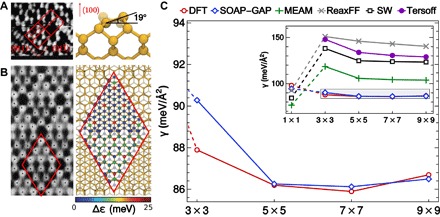
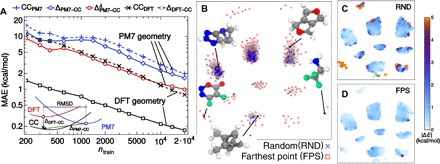
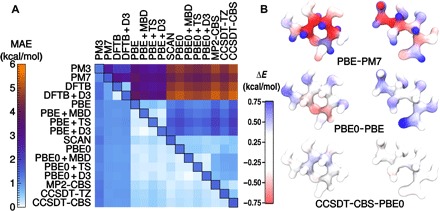
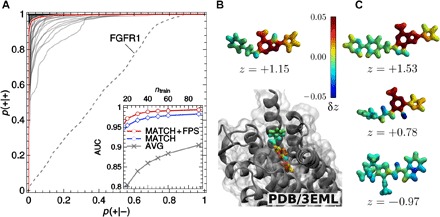
Verification
Claims the paper makes
The claims and statistics of this paper haven’t been checked yet.
Free: it reads the open-access text and checks the first 5 claims that cite a source we can check. Create a free account to check every claim.
Claims other papers make about this one
Each is checked against this paper’s own text: does it say what the citing paper says it does?
The cited source says what the claim attributes to it.
In the citing paper
“A critical assessment of the model performance as a function of the hyperparameters makes it possible to gauge the range of interactions 104 , or the locality of the physical phenomena underlying structure-property relations 105,106 for that system.”
From Unsupervised machine learning in atomistic simulations, between predictions and understanding (2019) · cites this paper as [104]
The cited source says what the claim attributes to it.
In the citing paper
“A low-dimensional representation of a dataset can help when it comes to identifying problematic regions, and understanding how a given representation 'sees' a set of structures 58,104,111 .”
From Unsupervised machine learning in atomistic simulations, between predictions and understanding (2019) · cites this paper as [104]
In the citing paper
“Gaussian process regression (GPR) was used to generate very accurate Gaussian atomic potentials (GAP) and then to train a SOAP–GAP model within a ML framework (GPR) that achieved a 99% accurate atomic-scale properties for Si surface reconstruction, stability of molecules, and protein ligands.209”
From QSAR without borders (2020) · cites this paper as [209]
In the citing paper
“To mitigate this limitation, read-across techniques are increasingly used to estimate the properties of nanomaterials.231”
From QSAR without borders (2020) · cites this paper as [231]
Self-check
Percentages, sums and reported differences re-computed from the paper’s own numbers.
The self-check needs the paper’s full text.
Citations
Cites
Density-functional thermochemistry. III. The role of exact exchange
Becke, A. D. (1993) · The Journal of Chemical Physics · doi:10.1063/1.464913 · Cited by 103,767
Self-Consistent Equations Including Exchange and Correlation Effects
Kohn, W., & Sham, L. J. (1965) · Physical Review · doi:10.1103/physrev.140.a1133 · Cited by 64,135
Hohenberg, P., & Kohn, W. (1964) · Physical Review · doi:10.1103/physrev.136.b864 · Cited by 53,541
Stephens, P. J., Devlin, F. J., Chabalowski, C. F., & Frisch, M. J. (1994) · The Journal of Physical Chemistry · doi:10.1021/j100096a001 · Cited by 23,248
Perdew, J. P., Chevary, J. A., Vosko, S. H., Jackson, K. A., Pederson, M. R., Singh, D. J., & Fiolhais, C. (1992) · Physical Review B · doi:10.1103/physrevb.46.6671 · Cited by 22,269
Development and testing of a general amber force field
Wang, J., Wolf, R. M., Caldwell, J. W., Kollman, P. A., & Case, D. A. (2004) · Journal of Computational Chemistry · doi:10.1002/jcc.20035 · Cited by 19,506
Self-consistent molecular orbital methods. XX. A basis set for correlated wave functions
Krishnan, R., Binkley, J. S., Seeger, R., & Pople, J. A. (1980) · The Journal of Chemical Physics · doi:10.1063/1.438955 · Cited by 17,772
Perdew, J. P., Chevary, J. A., Vosko, S. H., Jackson, K. A., Pederson, M. R., Singh, D. J., & Fiolhais, C. (1993) · Physical Review B · doi:10.1103/physrevb.48.4978.2 · Cited by 17,144
First principles methods using CASTEP
Clark, S. J., Segall, M. D., Pickard, C. J., Hasnip, P. J., Probert, M. I. J., Refson, K., & Payne, M. C. (2005) · Zeitschrift für Kristallographie - Crystalline Materials · doi:10.1524/zkri.220.5.567.65075 · Cited by 14,633
The Hungarian method for the assignment problem
Kuhn, H. W. (1955) · Naval Research Logistics Quarterly · doi:10.1002/nav.3800020109 · Cited by 13,120
Cited by
Items 601–700 of 846
Brus, L. E. (2020) · Nano Letters · doi:10.1021/acs.nanolett.0c00213 · Cited by 5
Accelerating structure search using atomistic graph-based classifiers
Slavensky, A. M., & Hammer, B. (2024) · The Journal of Chemical Physics · doi:10.1063/5.0207801 · Cited by 5
Investigating 3D Atomic Environments for Enhanced QSARPreprint
McCorkindale, W., Poelking, C. R., & Lee, A. A. (2020) · arXiv (Cornell University) · doi:10.48550/arxiv.2010.12857 · Cited by 5
Self-citationImproving semiempirical quantum mechanical methods with machine learning
Dral, P. O., & Zubatiuk, T. A. (2022) · Elsevier eBooks · doi:10.1016/b978-0-323-90049-2.00014-7 · Cited by 5
Zeledon, J. A. H., Romero, A. H., Ren, P., Wen, X., Li, Y., & Lewis, J. P. (2020) · Journal of Applied Physics · doi:10.1063/5.0002252 · Cited by 5
Okamoto, Y. (2019) · The Journal of Chemical Physics · doi:10.1063/1.5078394 · Cited by 5
Pretrained Model Representations as Acquisition Signals for Active Learning of MLIPsPreprint
Varga-Umbrich, E., Surana, S., Duckworth, P., Tilly, J., Peltre, O., & Weller-Davies, Z. (2026) · arXiv (Cornell University) · doi:10.48550/arxiv.2605.03964 · Cited by 5
Atomic cluster expansion potential for the Si-H system
Rosset, L. A. M., & Deringer, V. L. (2026) · Physical Review Materials · doi:10.1103/891y-wm1f · Cited by 5
Efficiency of neural-network state representations of one-dimensional quantum spin systems
Pan, R., & Clark, C. W. (2024) · Physical Review Research · doi:10.1103/physrevresearch.6.023193 · Cited by 5
A strategic roadmap for an atomistic machine-learning ecosystemPreprint
Behler, J., Ceriotti, M., Clementi, C., Cśanyi, G., Elena, A. M., Krishnapriyan, A. S., Abbott, J. W., Affinito, F., Bartók, A. P., Batatia, I., et al. (2026) · arXiv (Cornell University) · doi:10.48550/arxiv.2609.39090 · Cited by 5
Self-citationAccelerated Structural Prediction of Flexible Protein–Ligand Complexes: The SLICE Method
McFarlane, J. M. B., Krause, K. D., & Paci, I. (2019) · Journal of Chemical Information and Modeling · doi:10.1021/acs.jcim.9b00688 · Cited by 4
Machine Learning and AI in Nanotechnology with Ionic Liquids, Nanofluids and Bio-Nanofluids
Singh, S., Sangolgi, S., & Das, T. R. (2026) · Lecture notes in nanoscale science and technology · doi:10.1007/978-3-032-04008-4_21 · Cited by 4
Diao, Z., Katsube, D., Yamashita, H., Sugimoto, Y., Custance, Ó., & Abe, M. (2020) · Applied Physics Letters · doi:10.1063/5.0007754 · Cited by 4
Mitran, T. L., & Nemneş, G. A. (2020) · Springer series in materials science · doi:10.1007/978-3-030-37790-8_11 · Cited by 4
Machine Learning for Nonadiabatic Molecular Dynamics
Westermayr, J., & Marquetand, P. (2020) · Royal Society of Chemistry eBooks · doi:10.1039/9781839160233-00076 · Cited by 4
Quantum Machine Learning im chemischen Raum
von Lilienfeld, O. A. (2018) · Angewandte Chemie · doi:10.1002/ange.201709686 · Cited by 4
Larsen, C., Kaappa, S., Vishart, A. L., Bligaard, T., & Jacobsen, K. W. (2025) · npj Computational Materials · doi:10.1038/s41524-025-01656-9 · Cited by 4
Gradient guided furthest point sampling for robust training set selection
Trestman, M. M., Gugler, S., Faber, F. A., & von Lilienfeld, O. A. (2026) · Machine Learning Science and Technology · doi:10.1088/2632-2153/ae68b8 · Cited by 4
Automated Molecule Generation using Deep Q-Learning and Graph Neural Networks
Işık, R., & Tan, M. (2021) · IEEE International Conference on Bioinformatics and Biomedicine (BIBM) · doi:10.1109/bibm52615.2021.9669667 · Cited by 4
Nuclear Quantum Dynamics : exploration and comparison of trajectory-based methods
Plé, T. (2020) · theses.fr (ABES) · doi:10.70675/d9203904z0e95z4b9ezb43bz2a817e3c9106 · Cited by 4
Elmanova, A., & Presselt, M. (2026) · Journal of Chemical Information and Modeling · doi:10.1021/acs.jcim.6c00490 · Cited by 4
Applications of Artificial Intelligence to Computational Chemistry
Browning, N. J. (2019) · Infoscience (Ecole Polytechnique Fédérale de Lausanne) · doi:10.5075/epfl-thesis-9645 · Cited by 4
Cioni, M. (2024) · PORTO@Iris · Cited by 4
Haseen, S., & Kroll, P. (2025) · Journal of the American Ceramic Society · doi:10.1111/jace.70392 · Cited by 4
Lei, X., & Montoya, J. H. (2023) · The Journal of Open Source Software · doi:10.21105/joss.05476 · Cited by 4
Orbital-interaction-aware deep learning model for efficient surface chemistry simulationsPreprint
Zhang, Z., & Cao, X. (2025) · arXiv (Cornell University) · doi:10.48550/arxiv.2507.20496 · Cited by 4
Machine-learning-assisted density functional theory for predicting transparent conducting materials
Huang, Y., Wang, G., Xu, S., Xu, Y., Li, D., Huang, M., Samuelson, L., & Sun, X. W. (2026) · Physical Review Applied · doi:10.1103/br17-vmg2 · Cited by 3
Physically optimizing inferencePreprint
Huang, A., Sheldan, B., Sivak, D. A., & Thomson, M. W. (2018) · arXiv (Cornell University) · doi:10.48550/arxiv.1805.07512 · Cited by 3
Computational Material Database of Free-Standing 2D PerovskitesPreprint
Yang, J., & Li, S. (2022) · ChemRxiv · doi:10.26434/chemrxiv-2022-7wqj3 · Cited by 3
Tirimbó, G., Çaylak, O., & Baumeier, B. (2020) · arXiv (Cornell University) · doi:10.48550/arxiv.2012.01787 · Cited by 3
Data Augmentation in Medical Materials Science: A Review
Lin, W., Lin, Y., & Yang, Y. (2024) · International Conference on Pattern Recognition and Artificial Intelligence (PRAI) · doi:10.1109/prai62207.2024.10826735 · Cited by 3
Sun, H., Vita, J. A., Samanta, A., & Lordi, V. (2026) · Machine Learning Science and Technology · doi:10.1088/2632-2153/ae39a1 · Cited by 3
Hou, W., Huang, X., Wu, X., Jin, Q., Huang, X., & Zhang, Z. (2025) · The Journal of Physical Chemistry C · doi:10.1021/acs.jpcc.5c06165 · Cited by 3
Zhou, C., Huo, R., Situ, B., Yan, Z., Tu, Y., & Zhang, Z. (2025) · Physical Chemistry Chemical Physics · doi:10.1039/d5cp00993f · Cited by 3
Discovery of Ag+ superionic state in delafossite AgAlO2
Zhang, Z., Li, J., Lv, Y., Liu, Y., Yuan, J., Lin, J., & Wang, X. (2025) · Physica B Condensed Matter · doi:10.1016/j.physb.2025.417830 · Cited by 3
On-the-fly machine learning force fields for alkali silicate glasses
Ganisetti, S., Du, T., Krishnan, N. M. A., & Smedskjær, M. M. (2025) · Physical Review Materials · doi:10.1103/qrgw-zxhf · Cited by 3
Scalable training of neural network potentials for complex interfaces through data augmentation
Yeu, I. W., Stuke, A., López-Zorrilla, J., Stevenson, J., Reichman, D. R., Friesner, R. A., Urban, A., & Artrith, N. (2025) · npj Computational Materials · doi:10.1038/s41524-025-01651-0 · Cited by 3
Disorder in energy materials and strategies to model it
Madrid, J. C. M., & Ghuman, K. K. (2020) · Advances in Physics X · doi:10.1080/23746149.2020.1848458 · Cited by 3
Mathematical Optimization in Machine Learning for Computational Chemistry
Zeković, A. (2025) · Computation · doi:10.3390/computation13070169 · Cited by 3
Machine learning-enhanced multiple time-step ab initio molecular dynamics
Mouvet, F., Browning, N. J., Baudin, P., Liberatore, E., & Röthlisberger, U. (2025) · The Journal of Chemical Physics · doi:10.1063/5.0288262 · Cited by 3
Learning Regularized Positional Encoding for Molecular PredictionPreprint
Gao, X. Y., Gao, W., Xiao, W., Wang, Z., Wang, C., & Xiang, L. (2022) · arXiv (Cornell University) · doi:10.48550/arxiv.2211.12773 · Cited by 3
Modélisation multi-échelles des défauts d'irradiation dans les métaux cubiques centrés
Lapointe, C. (2022) · theses.fr (ABES) · doi:10.70675/d1beb33dz7a51z4603z9449z1fa8622e010e · Cited by 3
Ramanathan, E. S., & Chowdhury, C. (2023) · ChemPhysChem · doi:10.1002/cphc.202300308 · Cited by 3
Accelerating Black-Box Molecular Property Optimization by Adaptively Learning Sparse SubspacesPreprint
Sorourifar, F., Banker, T., & Paulson, J. A. (2024) · arXiv (Cornell University) · doi:10.48550/arxiv.2401.01398 · Cited by 3
A machine learning approach using frequency descriptor for molecular property predictions
Chen, J., Xu, W., & Zhang, R. Q. (2021) · New Journal of Chemistry · doi:10.1039/d1nj04739f · Cited by 3
Raghunathan, S., & Nakirikanti, S. A. K. (2023) · Machine Learning Science and Technology · doi:10.1088/2632-2153/acdbbc · Cited by 3
Force-Aware Neural Tangent Kernels for Scalable and Robust Active Learning of MLIPsPreprint
Varga-Umbrich, E., Weller-Davies, Z., Duckworth, P., Tilly, J., Peltre, O., & Surana, S. (2026) · arXiv (Cornell University) · doi:10.48550/arxiv.2605.13788 · Cited by 3
Dominguez, J. E. Q., Christiansen, M.-P. V., Neyman, K. M., Hammer, B., & Bruix, A. (2026) · The Journal of Chemical Physics · doi:10.1063/5.0302876 · Cited by 3
On the Convergence of Structure and Geometry in Graph Neural Networks
Gasteiger, J., Günnemann, S., & München, T. U. (2022) · mediaTUM (Technical University of Munich) · Cited by 3
Generative pseudo-force fields for molecular generation
Hessmann, S. S. P., Kahouli, K., Gugler, S., Plainer, M., Noé, F., Müller, K. R., & Gebauer, N. W. A. (2026) · Machine Learning Science and Technology · doi:10.1088/2632-2153/aec2a2 · Cited by 3
A multitask dynamically interconnected learning approach for physics-informed neural networks
Zhang, X., & Hu, S. (2025) · Materials Today Communications · doi:10.1016/j.mtcomm.2025.113054 · Cited by 3
Quantum vibrational spectroscopy with classical trajectories
Conte, R., Aieta, C., & Ceotto, M. (2026) · Chemical Science · doi:10.1039/d5sc09965j · Cited by 3
Machine Learning to Predict the L-Point Direct Bandgap of Bi1-xSbx Nanomaterials
Tang, S., Jean-Baptiste, J., Vecchiano, S., Lukasiewicz, A., & Burger, A. (2022) · Engineered Science · doi:10.30919/es8d690 · Cited by 3
Linear Atomic Cluster Expansion Force Fields for Organic Molecules: beyond RMSEPreprint
Kovács, D. P., van der Oord, C., Kucera, J., Allen, A. E. A., Cole, D. J., Ortner, C., & Cśanyi, G. (2021) · doi:10.33774/chemrxiv-2021-7qlf5-v3 · Cited by 3
MolX: A Geometric Foundation Model for Protein-Ligand ModellingPreprint
Liu, J., Pan, T., Guo, X., Ran, Z., Hao, Y., Yang, Y., Ng, A. P., Pan, S., Song, J., & Li, F. (2026) · bioRxiv (Cold Spring Harbor Laboratory) · doi:10.64898/2026.02.26.708362 · Cited by 3
Tchagang, A., Tewfik, A. H., & Valdés, J. J. (2021) · Research Square · doi:10.21203/rs.3.rs-229094/v1 · Cited by 2
Masked pretraining strategy for neural potentials
Zhang, Z., Li, Z., & Farimani, A. B. (2024) · AIP Advances · doi:10.1063/5.0202647 · Cited by 2
Anharmonic infrared spectra of cationic pyrene and superhydrogenated derivatives
Tang, Z., Simonsen, F. D. S., Jaganathan, R., Palotás, J., Oomens, J., Hornekær, L., & Hammer, B. (2025) · The Journal of Chemical Physics · doi:10.1063/5.0276133 · Cited by 2
Zhong, A. (2024) · theses.fr (ABES) · doi:10.70675/bdc13f96z2dc5z47a7z9373zb8ff019acc4a · Cited by 2
Entangled hydrogels: physicochemical properties, synthesis and applications
Cheng, Z., Yuan, L., Zhang, M., Wang, H., Xie, Y., Sha, Q., & Gao, Q. (2025) · Pure and Applied Chemistry · doi:10.1515/pac-2025-0582 · Cited by 2
Hydroxyl-assisted globally spontaneous dynamic oxygen migration on biphenylene
Huo, R., Zhou, C., Situ, B., Yan, Z., Yang, H., Fei, Z., Jin, Q., Zhao, L. R., Zhang, Z., & Tu, Y. (2024) · Physica E Low-dimensional Systems and Nanostructures · doi:10.1016/j.physe.2024.115984 · Cited by 2
Noise-resilient training of machine learning interatomic potentials
Lam, T. C. W., O’Neill, N., Schran, C., & Schaaf, L. L. (2026) · The Journal of Chemical Physics · doi:10.1063/5.0327092 · Cited by 2
Nonequilibrium molecular dynamics of ion conduction with equivariant neural network models
Minami, S., Kutana, A., Jinnouchi, R., & Asahi, R. (2025) · Physical Review Materials · doi:10.1103/fll6-v5fx · Cited by 2
Large-scale first-principles electronic structure methods
Zhou, W., Fu, Z., & Yuan, S. (2026) · Chemical Society Reviews · doi:10.1039/d6cs00665e · Cited by 2
Mitra, P., & Banerjee, H. (2026) · npj Computational Materials · doi:10.1038/s41524-026-02277-6 · Cited by 2
Artificial Intelligence Methods in Quantum Chemistry
Tuzhykov, A., Kiv, A. E., Soloviev, V., Бєлінський, А. О., Kavetskyy, T. S., Sliusarenko, M., & Korotysh, V. (2025) · NATO science for peace and security series. B, Physics and biophysics · doi:10.1007/978-94-024-2316-7_4 · Cited by 2
Invertible Coarse Graining with Physics-Informed Generative Artificial IntelligencePreprint
Zhang, J., Lin, X., Weinan, E., & Gao, Y. Q. (2023) · arXiv (Cornell University) · doi:10.48550/arxiv.2305.01243 · Cited by 2
Noisy, sparse, nonlinear: Navigating the Bermuda Triangle of physical inference with deep filteringPreprint
Poelking, C. R., Amar, Y., Lapkin, A. A., & Colwell, L. J. (2019) · arXiv (Cornell University) · doi:10.48550/arxiv.1912.04345 · Cited by 2
Self-citationUncertainty-Aware Molecular Property Prediction Using Heterogeneous Molecular Graph Neural Networks
Momidi, M., Chauhan, P. S., Komaraneni, A., Ghattamaneni, S. P., Upreti, K., & Kumar, N. (2025) · Springer eBooks · doi:10.1007/978-981-97-9132-3_16 · Cited by 2
Hierarchical universal open structure dataset for atomistic modelingPreprint
Chorna, S., Malosso, C., Schmidt, J., & Ceriotti, M. (2026) · arXiv (Cornell University) · doi:10.48550/arxiv.2610.21771 · Cited by 2
Self-citationArtificial Intelligence and Machine Learning Algorithms in Quantum Computing Domain
Moeed, S. A., Niranjan, P., & Ashmitha, G. (2023) · Wiley eBooks · doi:10.1002/9781119905172.ch4 · Cited by 2
Can machine learning predict the liquidus temperature of binary alloys?
He, Y., Katsman, I., Liu, G., Sohn, S., Shattuck, M. D., O’Hern, C. S., Gilbert, A. C., & Schroers, J. (2026) · Acta Materialia · doi:10.1016/j.actamat.2026.122220 · Cited by 2
Schade, R., Kenter, T., Elgabarty, H., Lass, M., Schütt, O., Lazzaro, A., Pabst, H., Mohr, S., Hutter, J., Kühne, T. D., et al. (2021) · Zenodo (CERN European Organization for Nuclear Research) · doi:10.5281/zenodo.4692507 · Cited by 2
Pattern Recognition for the Electronic Phase of Bismuth Antimony Thin Films
Tang, S., Dow, L., & Ojukwu, E. (2022) · ES Materials & Manufacturing · doi:10.30919/esmm5f661 · Cited by 2
Schäfer, M. R., & Kästner, J. (2026) · Journal of Chemical Theory and Computation · doi:10.1021/acs.jctc.5c01767 · Cited by 2
Domain-agnostic and Multi-level Evaluation of Generative ModelsPreprint
Tadesse, G. A., Born, J., Cintas, C., Ogallo, W., Zubarev, D. Y., Manica, M., & Weldemariam, K. (2023) · arXiv (Cornell University) · doi:10.48550/arxiv.2301.08750 · Cited by 2
Singh, D., & Singh, L. (2024) · Journal of Macromolecular Science Part B · doi:10.1080/00222348.2024.2371245 · Cited by 2
Gao, H., Zhu, M., Ma, J., Honecker, M., & Li, K. (2025) · Journal of Chemical Theory and Computation · doi:10.1021/acs.jctc.5c00293 · Cited by 2
Buckyball sandwiches under high temperatures and pressures
Chen, X., Wang, Y., Mahmoud, C. B., Ala-Nissilä, T., & Caro, M. A. (2026) · Physical Review Materials · doi:10.1103/8sdz-2s7k · Cited by 2
Accelerating Eigenvalue Dataset Generation via Chebyshev Subspace Filter
Wang, H., Wang, J., Luo, J., Dong, H., Chen, Y., Jiang, R., & huang, Z. (2026) · International Conference on Learning Representations · doi:10.48550/arxiv.2510.23215 · Cited by 2
Kandy, A. K. A., Raulin-Foissac, A., Laurens, G. ́., & Lam, J. (2022) · ChemRxiv · doi:10.26434/chemrxiv-2022-r9n57 · Cited by 2
Chen, X., Ouyang, Y., Chen, X., Chen, Z., Lin, R., Gao, X., Wang, L., Li, F., Liu, Y., Shang, H., et al. (2023) · arXiv (Cornell University) · doi:10.48550/arxiv.2310.08439 · Cited by 2
Machine Learning in Quantum Density Functional Theory
Deilmann, T. (2026) · Machine intelligence for materials science · doi:10.1007/978-3-032-04129-6_7 · Cited by 1
Analysis of Atomistic Representations Using Weighted Skip-ConnectionsPreprint
Nicoli, K. A., Kessel, P., Gastegger, M., & Schütt, K. T. (2018) · arXiv (Cornell University) · doi:10.48550/arxiv.1810.09751 · Cited by 1
Automating the Analysis of Substrate Reactivity through Environment Interaction Mapping
da Silva, T. H., Lu, J., Cortright, Z., Mulumba, D., Khan, M. S., & Andreussi, O. (2025) · Journal of Chemical Information and Modeling · doi:10.1021/acs.jcim.5c00474 · Cited by 1
Neyyathala, A., Fako, E., De, S., Gashnikova, D., Maurer, F., Grunwaldt, J., Schunk, S. A., & Hanf, S. (2024) · ChemRxiv · doi:10.26434/chemrxiv-2024-8cxlz-v2 · Cited by 1
Self-citationMaterials informatics across the length scales
Nasir, J. A., Kavak, H., Der, O., Erçetin, A., Akagić, A., Friis, J., Bleken, F. L., Lorenzoni, A., Mercuri, F., Woodley, S. M., et al. (2026) · Machine Learning Engineering · doi:10.1088/3049-4761/ae850a · Cited by 1
Effect of Flattened Structures of Molecules and Materials on Machine Learning Model Training
de Azevedo, L. C., & Prati, R. C. (2023) · Journal of Chemical Information and Modeling · doi:10.1021/acs.jcim.3c00242 · Cited by 1
Defect-strain synergy tunes Au d-band center and triggers spontaneous O2 activation on goldene
Huang, X., Hou, W., Zhang, J., Gu, J., Jin, Q., Wu, H., & Zhang, Z. (2025) · Physica E Low-dimensional Systems and Nanostructures · doi:10.1016/j.physe.2025.116417 · Cited by 1
Chemical machine learning with kernels: The impact of loss functions
Nguyen, Q. V., De, S., Lin, J., & Cevher, V. (2019) · International Journal of Quantum Chemistry · doi:10.1002/qua.25872 · Cited by 1
Self-citationWater evaporation with machine learning interatomic potentials trained on MB-pol
Luo, W. D., Zhang, L., Chen, K., & Cao, K. (2026) · AIP Advances · doi:10.1063/5.0311226 · Cited by 1
Emergence of a frustrated configuration in Li3YCl6 solid electrolyte: An Active Learning approach
Boral, R., Das, G. P., & Paul, T. (2026) · Materials Today Physics · doi:10.1016/j.mtphys.2026.102154 · Cited by 1
Physics-enhanced machine learning with symmetry-adapted and long-range representations
Grisafi, A. (2021) · Infoscience (Ecole Polytechnique Fédérale de Lausanne) · doi:10.5075/epfl-thesis-8247 · Cited by 1
Soft Computing Approaches toward Density-Based Analysis of Many-Electron Systems
Poddar, A., Chakraborty, B., & Chattaraj, P. K. (2026) · ACS Physical Chemistry Au · doi:10.1021/acsphyschemau.6c00002 · Cited by 1
Staub, R., & Steinmann, S. N. (2021) · ChemRxiv · doi:10.26434/chemrxiv-2021-6v4n0 · Cited by 1
A Retrieval-Based Molecular Style Transformation Optimization Model
Wang, C., Zhang, Y., Xia, X. T., Su, Y., Zheng, C.-H., & Wu, Q.-W. (2024) · Lecture notes in computer science · doi:10.1007/978-981-97-5689-6_17 · Cited by 1
Quantifying Gibbs measures of disordered crystals up to the solid–liquid phase transition
Efremkin, V., Heske, J., Kühne, T. D., & Prodan, E. (2026) · PNAS Nexus · doi:10.1093/pnasnexus/pgag136 · Cited by 1
Franceschi, G., & Diebold, U. (2022) · Elsevier eBooks · doi:10.1016/b978-0-12-819728-8.00059-0 · Cited by 1
Alherz, A. W., Tezak, C. R., & Alhajeri, M. S. (2026) · Industrial & Engineering Chemistry Research · doi:10.1021/acs.iecr.6c01601 · Cited by 1
Machine Learning Towards Large-scale Atomistic Simulation and Materials Discovery
Zuo, Y. (2021) · eScholarship (California Digital Library) · Cited by 1
Metadata
- Authors
- Bartók, A. P., De, S., Poelking, C., Bernstein, N., Kermode, J. R., Csányi, G., & Ceriotti, M.
- Affiliations
- Rutherford Appleton Laboratory (GB)
- École Polytechnique Fédérale de Lausanne (CH)
- University of Cambridge (GB)
- United States Naval Research Laboratory (US)
- University of Warwick (GB)
- Engineering Laboratory, University of Cambridge, Cambridge, UK.
- Corresponding author
- Ceriotti, Michele
- ORCID
- Venue
- Science Advances
- Published
- 2017-12
- Volume
- 3
- Issue
- 12
- Pages
- e1701816-e1701816
- ISSN
- 2375-2548 (ISSN-L)
- PMC
- PMC5729016
- OpenAlex
- W2620687153
- Cited by
- 764
- References
- 71
- Citations by year
- 2026: 43 · 2025: 79 · 2024: 67 · 2023: 91 · 2022: 96 · 2021: 114 · 2020: 130 · 2019: 90 · 2018: 52 · 2017: 2
- FWCI
- 31.56
- Type
- journal article
- Language
- en
- Open access
- gold
- doi.org
- Licence
- cc-by-nc
- Locations
- Science Advances (publishedVersion, cc-by-nc)
- PubMed Central (publishedVersion, cc-by-nc)
- PubMed (publishedVersion)
- Warwick Research Archive Portal (University of Warwick) (acceptedVersion)
- arXiv (Cornell University) (submittedVersion)
- Apollo (University of Cambridge) (submittedVersion, cc-by-nc)
- Cambridge University Engineering Department Publications Database (submittedVersion)
- Infoscience (Ecole Polytechnique Fédérale de Lausanne) (submittedVersion)
- Infoscience (Ecole Polytechnique Fédérale de Lausanne) (submittedVersion, cc-by-nc-nd)
- Science and Technology Facilities Council (submittedVersion)
- arXiv (Cornell University)
- Apollo
- Funders
- Office of Naval Research (award361580, U.S. Naval Research Laboratory, core basic research program)
- Engineering and Physical Sciences Research Council (award324327, EP/L014742/1, EP/J010847/1 and EP/J022012/1, award324329, EP/L014742/1, EP/P002188/1, award361574, EP/M022501/1, award361582, EP/K013564/1, EP/P022561/1)
- Swiss National Science Foundation (award324328, NCCR MARVEL)
- Leverhulme Trust (award361572, Leverhulme Early Career Fellowship)
- Isaac Newton Trust (award361573)
- European Research Council (award324326, 677013-HBMAP, award324330, 67658 - NOMAD)
- Topics
- Physical Sciences › Materials Science › Materials Chemistry › Machine Learning in Materials Science
- Physical Sciences › Physics and Astronomy › Atomic and Molecular Physics, and Optics › Advanced Chemical Physics Studies
- Life Sciences › Pharmacology, Toxicology and Pharmaceutics › Drug Discovery › Computational Drug Discovery Methods
- Keywords
- machine learning, molecular stability, atomistic modeling, local chemical environment, silicon surface reconstruction, protein-ligand binding, potential energy surface, quantum effects
About these checks
Registry, retraction, Cites and statistics results are computed, not judged, with one exception: a printed reference that no index lists is read once by a model before it counts as a citation error. Claims are extracted by a model and kept only when their quote appears verbatim in the text; each cited source is then checked, with a model’s help, for whether it says what the claim relies on. Those verdicts can be wrong — read the claim’s quote and the cited source before relying on one.
Statistics and arithmetic are recomputed, not judged.
Confidence bands are shown only for fields calibrated on our annotated test set. None is calibrated yet, so no band is shown.
What counts as a claim ›How we measure confidence ›How we check this ›
Are you an author, or do you see a problem with this page? Request a review
Data sources
Bibliographic data: Semantic Scholar, OpenAlex, Crossref.
Contains information from the Semantic Scholar Academic Graph Datasets, made available under the ODC Attribution License (ODC-BY 1.0).
Semantic Scholar’s data is described in: Kinney, R., et al. (2023). The Semantic Scholar Open Data Platform. arXiv:2301.10140.
