

Machine learning unifies the modeling of materials and molecules
Open accessThe DOI matches its Crossref record; 70 of the 71 references it cites were found in a registry or an index.
Abstract
Statistical learning based on a local representation of atomic structures provides a universal model of chemical stability.
Overview
The claims and statistics of this paper haven’t been checked yet.
Free: it reads the open-access text and checks the first 5 claims that cite a source we can check. Create a free account to check every claim.
Integrity signals
Registry
Cites
Statistics
Figures
Verification
Claims the paper makes
The claims and statistics of this paper haven’t been checked yet.
Free: it reads the open-access text and checks the first 5 claims that cite a source we can check. Create a free account to check every claim.
Claims other papers make about this one
Each is checked against this paper’s own text: does it say what the citing paper says it does?
The cited source says what the claim attributes to it.
In the citing paper
“A critical assessment of the model performance as a function of the hyperparameters makes it possible to gauge the range of interactions 104 , or the locality of the physical phenomena underlying structure-property relations 105,106 for that system.”
From Unsupervised machine learning in atomistic simulations, between predictions and understanding (2019) · cites this paper as [104]
The cited source says what the claim attributes to it.
In the citing paper
“A low-dimensional representation of a dataset can help when it comes to identifying problematic regions, and understanding how a given representation 'sees' a set of structures 58,104,111 .”
From Unsupervised machine learning in atomistic simulations, between predictions and understanding (2019) · cites this paper as [104]
In the citing paper
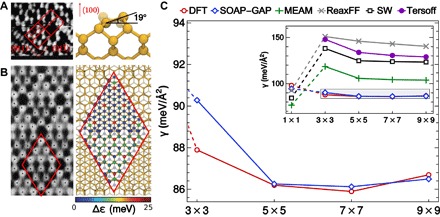
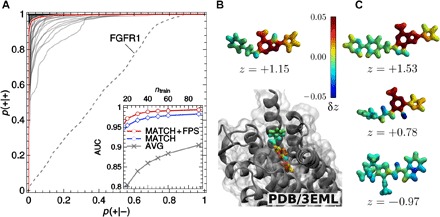
“Gaussian process regression (GPR) was used to generate very accurate Gaussian atomic potentials (GAP) and then to train a SOAP–GAP model within a ML framework (GPR) that achieved a 99% accurate atomic-scale properties for Si surface reconstruction, stability of molecules, and protein ligands.209”
From QSAR without borders (2020) · cites this paper as [209]
In the citing paper
“To mitigate this limitation, read-across techniques are increasingly used to estimate the properties of nanomaterials.231”
From QSAR without borders (2020) · cites this paper as [231]
Self-check
Percentages, sums and reported differences re-computed from the paper’s own numbers.
The self-check needs the paper’s full text.
Citations
Cites
Density-functional thermochemistry. III. The role of exact exchange
Becke, A. D. (1993) · The Journal of Chemical Physics · doi:10.1063/1.464913 · Cited by 103,767
Self-Consistent Equations Including Exchange and Correlation Effects
Kohn, W., & Sham, L. J. (1965) · Physical Review · doi:10.1103/physrev.140.a1133 · Cited by 64,135
Hohenberg, P., & Kohn, W. (1964) · Physical Review · doi:10.1103/physrev.136.b864 · Cited by 53,541
Stephens, P. J., Devlin, F. J., Chabalowski, C. F., & Frisch, M. J. (1994) · The Journal of Physical Chemistry · doi:10.1021/j100096a001 · Cited by 23,248
Perdew, J. P., Chevary, J. A., Vosko, S. H., Jackson, K. A., Pederson, M. R., Singh, D. J., & Fiolhais, C. (1992) · Physical Review B · doi:10.1103/physrevb.46.6671 · Cited by 22,269
Development and testing of a general amber force field
Wang, J., Wolf, R. M., Caldwell, J. W., Kollman, P. A., & Case, D. A. (2004) · Journal of Computational Chemistry · doi:10.1002/jcc.20035 · Cited by 19,506
Self-consistent molecular orbital methods. XX. A basis set for correlated wave functions
Krishnan, R., Binkley, J. S., Seeger, R., & Pople, J. A. (1980) · The Journal of Chemical Physics · doi:10.1063/1.438955 · Cited by 17,772
Perdew, J. P., Chevary, J. A., Vosko, S. H., Jackson, K. A., Pederson, M. R., Singh, D. J., & Fiolhais, C. (1993) · Physical Review B · doi:10.1103/physrevb.48.4978.2 · Cited by 17,144
First principles methods using CASTEP
Clark, S. J., Segall, M. D., Pickard, C. J., Hasnip, P. J., Probert, M. I. J., Refson, K., & Payne, M. C. (2005) · Zeitschrift für Kristallographie - Crystalline Materials · doi:10.1524/zkri.220.5.567.65075 · Cited by 14,633
The Hungarian method for the assignment problem
Kuhn, H. W. (1955) · Naval Research Logistics Quarterly · doi:10.1002/nav.3800020109 · Cited by 13,120
Cited by
Items 701–800 of 846
Approximation of Atomic Interactions with Spherical HarmonicsPreprint
Dusson, G., Bachmayr, M., Cśanyi, G., Drautz, R., Etter, S., van der Oord, C., & Ortner, C. (2020) · arXiv (Cornell University) · Cited by 1
Efficient Conformer Identification with OpenBabel: A Benchmark Workflow Using Oligothiophenes and Y6Preprint
Elmanova, A., & Presselt, M. (2025) · ChemRxiv · doi:10.26434/chemrxiv-2025-5rf05 · Cited by 1
He, H., Chen, X., & Li, R. (2026) · AIP Advances · doi:10.1063/5.0316457 · Cited by 1
Interconnected Closed Pores Enable Dense and Facile Sodium Storage in Hard Carbon
Jin, G., Wang, C., Jin, F., Liu, R., Shi, X., Liu, H., Jia, J., Du, P., Lou, Z., & Pan, F. (2026) · Advanced Materials · doi:10.1002/adma.74503 · Cited by 1
Okamoto, Y. (2019) · ACS Omega · doi:10.1021/acsomega.9b00670 · Cited by 1
LCAONet: Message-passing with physically optimized atomic basis functionsPreprint
Nishio, K., Shibata, K., & Mizoguchi, T. (2024) · arXiv (Cornell University) · doi:10.48550/arxiv.2402.05634 · Cited by 1
On the Expressive Power of Behavior StructurePreprint
Wang, C., Zhu, H., Lin, Y., & Jiang, C. (2023) · arXiv (Cornell University) · doi:10.48550/arxiv.2312.01652 · Cited by 1
Machine learning valence force field modelPreprint
Wan, J. J., Tan, Y., Jiang, J.-W., Chang, T., & Guo, X. (2018) · arXiv (Cornell University) · doi:10.48550/arxiv.1808.01714 · Cited by 1
Helfrecht, B. A. (2021) · Infoscience (Ecole Polytechnique Fédérale de Lausanne) · doi:10.5075/epfl-thesis-9032 · Cited by 1
Sun, Z., Yang, J., Han, Y., & Li, M. (2024) · Chemistry of Materials · doi:10.1021/acs.chemmater.4c00300 · Cited by 1
Improving structure search with hyperspatial optimization and TETRIS seeding
Gochitashvili, D., Meyers, M., Wang, C., & Kolmogorov, A. N. (2025) · Physical Chemistry Chemical Physics · doi:10.1039/d5cp02412a · Cited by 1
Tracking the lithiation state of LixSi from machine-learned XPS binding energies
Bertran, M. A. H., Tisi, D., Grasselli, F., Ceriotti, M., Molinari, E., & Prezzi, D. (2026) · npj Computational Materials · doi:10.1038/s41524-026-02302-8 · Cited by 1
Self-citationPhysically informed neural network potential for a multi-element system
Araidai, M., Kuwahata, K., Tachikawa, M., & (1674688), T. T. (2026) · Science and Technology of Advanced Materials Methods · doi:10.1080/27660400.2026.2637919 · Cited by 1
Hot-carrier generation and strong coupling in metal nanoparticles
Fojt, J. (2023) · Chalmers Research (Chalmers University of Technology) · Cited by 1
Towards more efficient and performant computations in quantum chemistry with machine learning
Pronobis, W. (2020) · DepositOnce · doi:10.14279/depositonce-9866 · Cited by 1
Data-driven models of water and methane
Székely, E. (2021) · Apollo (University of Cambridge) · doi:10.17863/cam.76733 · Cited by 1
Synergistic coupling in ab initio-machine learning simulations of dislocationsPreprint
Grigorev, P., Goryaeva, A. M., Marinica, M., Kermode, J. R., & Swinburne, T. D. (2021) · arXiv (Cornell University) · doi:10.48550/arxiv.2111.11262 · Cited by 1
Self-citationKandy, A. K. A., Rossi, K., Raulin-Foissac, A., Laurens, G. ́., & Lam, J. (2023) · ChemRxiv · doi:10.26434/chemrxiv-2022-r9n57-v2 · Cited by 1
Hill, C., & Heinola, K. (2022) · doi:10.61092/iaea.y2v5-2nvm · Cited by 1
Machine Learning Methods for Molecular Dynamic Simulations
Belkacemi, Z. (2022) · theses.fr (ABES) · doi:10.70675/df72a073z4c4az496czad04z5eb4bd2c58c4
Simulations of colloidal systems
Campos-Villalobos, G., Giunta, G., & Dijkstra, M. (2025) · Elsevier eBooks · doi:10.1016/b978-0-44-327314-8.00012-9
Harnessing Artificial Intelligence to Revolutionise Molecular Modelling and Simulations
Lin, X., Li, Y. G., Yu, X., Liu, X., Lei, Y.-K., & Yang, Y. (2026) · Springer eBooks · doi:10.1007/978-3-031-98022-0_9
Overview of Computational Structural Behavior
Wang, C. (2025) · Springer eBooks · doi:10.1007/978-981-95-1013-9_1
Enabling knowledge discovery from data
Rajan, K. (2026) · Elsevier eBooks · doi:10.1016/b978-0-443-22256-6.00003-8
Mujal, P., Miguel, À. M., Polls, A., et al. (2021) · SciPost Physics · doi:10.21468/scipost.report.2468
Mujal, P., Miguel, À. M., Polls, A., et al. (2020) · SciPost Physics · doi:10.21468/scipost.report.2276
Mujal, P., Miguel, À. M., Polls, A., et al. (2021) · SciPost Physics · doi:10.21468/scipost.report.2558
Mujal, P., Miguel, À. M., Polls, A., et al. (2020) · SciPost Physics · doi:10.21468/scipost.report.2142
Additional file 1 of Learning protein-ligand binding affinity with atomic environment vectors
Meli, R., Anighoro, A., Bodkin, M. J., Morris, G. M., & Biggin, P. C. (2021) · Figshare · doi:10.6084/m9.figshare.15178929
Integer linear programming for unsupervised training set selection in molecular machine learning
Haeberle, M., van Gerwen, P., Laplaza, R., Briling, K. R., Weinreich, J., Eisenbrand, F., & Corminbœuf, C. (2025) · Machine Learning Science and Technology · doi:10.1088/2632-2153/adcd38
Bari, A., Huang, J., Ishfaq, M., Dong, C., Yan, S., & Karim, A. (2026) · Computational Materials Science · doi:10.1016/j.commatsci.2026.115016
Nanotechnology in Materials Science: A Decade of Progress (2014-2024)
Kumar, R. (2025) · Journal for Research in Applied Sciences and Biotechnology · doi:10.55544/jrasb.4.5.18
Optimization without Causality: Limits of Correlation-Driven Materials Design
Kumar, R., Sharma, N., & Nair, A. (2023) · Journal of Computational and Data-Driven Materials Engineering · doi:10.68159/g629428716
Prediction without Transferability: Domain Shift in Cross-Material AI Inference
Gonzalez, M., Ruiz, J., & Torres, L. (2022) · Journal of Computational and Data-Driven Materials Engineering · doi:10.68159/a908576617
Popp, W. (2024) · Publication Server of Goethe University Frankfurt am Main (Goethe University Frankfurt) · doi:10.21248/gups.88335
Combining DFT with ML to study size specific interactions between metal clusters and adsorbatesPreprint
Mehta, S., Agarwal, S., & Joshi, K. (2018) · arXiv (Cornell University) · doi:10.48550/arxiv.1812.04932
Predicting Interatomic Distances of Molecular Quantum Chemistry Calculations
Leguy, J., Cauchy, T., Duval, B., & Mota, B. D. (2022) · Studies in computational intelligence · doi:10.1007/978-3-030-90287-2_8
Cross-Property Entanglement in Multi-Task Materials Learning Systems
Fischer, D., Meier, L., Braun, T., & Koch, S. (2023) · Journal of Computational and Data-Driven Materials Engineering · doi:10.68159/z452794332
Discovery Pipelines as Epistemic Filters: What Computational Workflows Exclude
Tanaka, H., Sato, Y., & Mori, K. (2023) · Journal of Computational and Data-Driven Materials Engineering · doi:10.68159/a645078092
Constructing machine learning interatomic potentials for two-dimensional materials
Yuanliang, L. I., Gangcheng, W. A. N. G., Meng, J., Shulin, L. U. O., Muhammad, F., & Guixuan, W. U. (2026) · Journal of Fuel Chemistry and Technology · doi:10.1016/s1872-5813(26)60713-x
Benchmarking Without Reality: Dataset Construction Bias in Materials Evaluation
Liu, W., & Min, Z. (2023) · Journal of Computational and Data-Driven Materials Engineering · doi:10.68159/e905839214
Information content is a general-purpose collective variable for enhanced sampling
Li, X., & Schwalbe‐Koda, D. (2026) · The Journal of Chemical Physics · doi:10.1063/5.0355418
Zhang, P., Qi, R., Ma, H., Qin, Y., & Wang, X. (2025) · SSRN Electronic Journal · doi:10.2139/ssrn.5498985
(2021) · Atmospheric chemistry and physics · doi:10.5194/acp-2020-1258-rc1
Lumiaro, E. (2021) · Atmospheric chemistry and physics · doi:10.5194/acp-2020-1258-ac1
(2021) · Atmospheric chemistry and physics · doi:10.5194/acp-2020-1258-rc3
Lumiaro, E. (2021) · Atmospheric chemistry and physics · doi:10.5194/acp-2020-1258-ac3
Lumiaro, E. (2021) · Atmospheric chemistry and physics · doi:10.5194/acp-2020-1258-ac2
(2021) · Atmospheric chemistry and physics · doi:10.5194/acp-2020-1258-rc2
Cañete‐Arché, A., McGinley, A., Castro-Latorre, P., Watson, G. W., & Melchor, M. G. (2026) · Research Square · doi:10.21203/rs.3.rs-11013614/v1
Neyyathala, A., Fako, E., De, S., Gashnikova, D., Maurer, F., Grunwaldt, J., Schunk, S. A., & Hanf, S. (2024) · ChemRxiv · doi:10.26434/chemrxiv-2024-8cxlz
Self-citationDeep Learning for Materials Recognition from FTIR Images
(2022) · Journal of Research in Science and Engineering · doi:10.53469/jrse.2022.04(07).12
Chemically accurate simulations by machine learning correlated approximations
Herzog, B. (2023) · theses.fr (ABES) · doi:10.70675/538b5495z9236z47ceza5f3z59439407b41c
Towards web-assisted modelling at the nanoscale
Woodley, S. M. (2022) · Frontiers of nanoscience · doi:10.1016/b978-0-12-824406-7.00018-x
Pressure-driven dimensional evolution and two-dimensional superionic state in AlI3
Geng, Y., Li, J., Liu, Y.-R., Liu, Y., Yuan, J., Kawaguchi, S. I., Hu, Q., & Wang, X. (2026) · Matter and Radiation at Extremes · doi:10.1063/5.0320987
High-throughput screening of sulfur-based silver superionic conductors
Zhang, Z., Li, J., Lv, Y., Liu, Y., Yuan, J., Lin, J., & Wang, X. (2026) · Frontiers of Physics · doi:10.15302/frontphys.2027.025205
59th Annual Rocky Mountain Conference on Magnetic Resonance
(2018) · Digital Commons - DU (University of Denver) · doi:10.56902/rmcmr.2018.60.1
Haidari, G., & Mosleh, Z. (2026) · Results in Physics · doi:10.1016/j.rinp.2026.108722
Formation of Twisted Copper Phosphide on Cu(111) Surface Predicted by Machine Learning Simulations
Dou, W., Niu, T., Ma, L., Ding, F., & Wang, X. (2026) · Advanced Functional Materials · doi:10.1002/adfm.79093
Periodic Electron Density Overlap Descriptors for Crystal Band Gap Prediction
Zhang, Z., Xi, Y., Liu, J., & Liu, Y. (2026) · Journal of Chemical Theory and Computation · doi:10.1021/acs.jctc.6c02070
Rahman, S., Zaki, A., Huda, N., Faisal, A., & Wei, L. (2024) · Journal of Computational and Data-Driven Materials Engineering · doi:10.68159/u559390915
A Bayesian Committee Machine-Based Force Field for Organic Nitrogen Compounds
Park, H. G., Sim, G. B., Yang, J. W., Willow, S. Y., Yang, D. C., & Myung, C. W. (2025) · The Journal of Physical Chemistry A · doi:10.1021/acs.jpca.5c02649
Zhong, Y., Li, H., & Guo, Y. (2025) · Acta Mechanica Solida Sinica · doi:10.1007/s10338-025-00628-2
Sawatlon, B. (2021) · Infoscience (Ecole Polytechnique Fédérale de Lausanne) · doi:10.5075/epfl-thesis-8639
Mansour, A., & Saeed, O. (2022) · Journal of Computational and Data-Driven Materials Engineering · doi:10.68159/b036858731
Photodynamics With Neural Networks and Kernel Ridge Regression
Marquetand, P. (2023) · Elsevier eBooks · doi:10.1016/b978-0-12-821978-2.00071-4
Investigation of Interfacial Property with Imperfection: A Machine Learning Approach
Ferdousi, S. (2023) · University of North Texas Digital Library (University of North Texas) · doi:10.12794/metadc2179306
Runaway Discovery Trajectories: Intervention Thresholds in Self-Reinforcing Materials AI Systems
Martin, C., Robert, J., & Bernard, S. (2025) · Journal of Computational and Data-Driven Materials Engineering · doi:10.68159/a122684570
Development of machine learning enhanced density functional tight binding parametrization
Fan, G. (2023) · Media (https://www.suub.uni-bremen.de/) · doi:10.26092/elib/2670
Al-Qahtani, Y., Al-Salem, F., & Al-Harbi, A. (2024) · Journal of Computational and Data-Driven Materials Engineering · doi:10.68159/d076514646
How Noise Propagates in Multi-Fidelity Materials Models: From DFT Error to ML Prediction Variance
Papadopoulos, G., & Georgiou, E. (2024) · Journal of Computational and Data-Driven Materials Engineering · doi:10.68159/r675852617
Recherche combinatoire guidée par apprentissage artificiel en chimie moléculaire
Leguy, J. (2022) · theses.fr (ABES) · doi:10.70675/0045a486za362z49e8zb1d3zdd47a86572c5
Moradzadeh, A. (2021) · Illinois Digital Environment for Access to Learning and Scholarship (University of Illinois at Urbana-Champaign)
Electron dynamics mediate the water-carbon π bondPreprint
LeMessurier, N., Katz, E., Pant, R., Ganley, S., Salzmann, H., McCaslin, L. M., Weber, J. M., & Eaves, J. D. (2026) · arXiv (Cornell University) · doi:10.48550/arxiv.2604.03464
Representation Drift in Iterative Materials Learning Systems
Huy, N. T., Minh, P. Q., & Bich, L. T. (2024) · Journal of Computational and Data-Driven Materials Engineering · doi:10.68159/d886630673
Zeledon, J. A. H. (2019) · The Research Repository @ WVU (West Virginia University) · doi:10.33915/etd.3790
Tsujikawa, K. (2023) · Institutional Repositories DataBase (IRDB)
Isaev, V. V., & Minenkov, Y. V. (2024) · Journal of Molecular Graphics and Modelling · doi:10.1016/j.jmgm.2024.108901
Abedi, S., Hashemifar, S. J., Baninajarian, S., Levchenko, S. V., & Alaei, M. (2026) · Materials Today Physics · doi:10.1016/j.mtphys.2026.102226
Advanced Deep Learning Methods for Chemistry and Material Science
Shui, Z. (2024) · University of Minnesota Digital Conservancy (University of Minnesota)
CONSTRUCTION OF AUTOMATIC TEST CASES USING ENGINEERING ADDRESSED BY MODEL
SOUSA, H. C. S. (2009) · LA Referencia (Red Federada de Repositorios Institucionales de Publicaciones Científicas)
Kulkarni, S., Joshi, M., Patil, R., & Deshmukh, A. (2023) · Journal of Computational and Data-Driven Materials Engineering · doi:10.68159/y707593740
Tanaka, H., Sato, Y., Mori, K., Okabe, R., & Ito, T. (2022) · Journal of Computational and Data-Driven Materials Engineering · doi:10.68159/h512293660
Hernandez, M., & Vega, C. (2022) · Journal of Computational and Data-Driven Materials Engineering · doi:10.68159/d688168758
Advancing understanding and practical performance of machine learning interatomic potentials
Pozdnyakov, S. N. (2025) · Infoscience (Ecole Polytechnique Fédérale de Lausanne) · doi:10.5075/epfl-thesis-10703
Jensen, K. W., Andersen, M., & Cheula, R. (2026) · arXiv (Cornell University) · doi:10.48550/arxiv.2610.13795
Enhancing high-dimensional neural network potential accuracy in OLED systems via element relabeling
Yun, Y., Park, D., Choi, J., Choi, D. S., & Jung, Y. (2026) · Digital Discovery · doi:10.1039/d5dd00579e
Cao, W., Viñes, F., & Illas, F. (2026) · Nanoscale · doi:10.1039/d6nr01548d
Ricci, P., Luca, M. D., Ferraro, G., & Russo, A. (2024) · Journal of Computational and Data-Driven Materials Engineering · doi:10.68159/l189247610
Feature Engineering as Scientific Framing: Encoding Choices in Materials Informatics
Hernandez, M., & Vega, C. (2023) · Journal of Computational and Data-Driven Materials Engineering · doi:10.68159/o960920339
Systematic Collapse of Transfer Learning in Small-Data Materials Regimes: Why Fine-Tuning Fails
Hao, C., Fang, L., & Lin, Z. (2023) · Journal of Computational and Data-Driven Materials Engineering · doi:10.68159/q803140033
Geometries are forgiving, basins are not: a practical guide to optimizing chemical structuresPreprint
Mohammadi, M. D. (2026) · ChemRxiv · doi:10.26434/chemrxiv.15011046/v1
Error-Controlled Quantum Chemical Exploration of Reaction Networks
Simm, G. N. C. (2018) · Repository for Publications and Research Data (ETH Zurich) · doi:10.3929/ethz-b-000299881
Li, H., Chen, J., Cheng, C., Li, L., Rong, J., Sui, Y., He, Z., Ye, J., Fu, X., Yu, X., et al. (2025) · JOM · doi:10.1007/s11837-025-07515-8
Encoding quantum-chemical knowledge into machine-learning models of complex molecular properties
Briling, K. (2024) · Infoscience (Ecole Polytechnique Fédérale de Lausanne) · doi:10.5075/epfl-thesis-10561
(1990) · Annual Review of Materials Science · doi:10.1146/annurev.mr.20.072806.100001
Towards machine learning assisted discovery of organic topological materials
Usman, M. (2025) · Nano Futures · doi:10.1088/2399-1984/ae19b1
Automated Construction of System-Focused Atomistic Models
Brunken, C. (2021) · Repository for Publications and Research Data (ETH Zurich) · doi:10.3929/ethz-b-000484164
Metadata
- Authors
- Bartók, A. P., De, S., Poelking, C., Bernstein, N., Kermode, J. R., Csányi, G., & Ceriotti, M.
- Affiliations
- Rutherford Appleton Laboratory (GB)
- École Polytechnique Fédérale de Lausanne (CH)
- University of Cambridge (GB)
- United States Naval Research Laboratory (US)
- University of Warwick (GB)
- Engineering Laboratory, University of Cambridge, Cambridge, UK.
- Corresponding author
- Ceriotti, Michele
- ORCID
- Venue
- Science Advances
- Published
- 2017-12
- Volume
- 3
- Issue
- 12
- Pages
- e1701816-e1701816
- ISSN
- 2375-2548 (ISSN-L)
- PMC
- PMC5729016
- OpenAlex
- W2620687153
- Cited by
- 764
- References
- 71
- Citations by year
- 2026: 43 · 2025: 79 · 2024: 67 · 2023: 91 · 2022: 96 · 2021: 114 · 2020: 130 · 2019: 90 · 2018: 52 · 2017: 2
- FWCI
- 31.56
- Type
- journal article
- Language
- en
- Open access
- gold
- doi.org
- Licence
- cc-by-nc
- Locations
- Science Advances (publishedVersion, cc-by-nc)
- PubMed Central (publishedVersion, cc-by-nc)
- PubMed (publishedVersion)
- Warwick Research Archive Portal (University of Warwick) (acceptedVersion)
- arXiv (Cornell University) (submittedVersion)
- Apollo (University of Cambridge) (submittedVersion, cc-by-nc)
- Cambridge University Engineering Department Publications Database (submittedVersion)
- Infoscience (Ecole Polytechnique Fédérale de Lausanne) (submittedVersion)
- Infoscience (Ecole Polytechnique Fédérale de Lausanne) (submittedVersion, cc-by-nc-nd)
- Science and Technology Facilities Council (submittedVersion)
- arXiv (Cornell University)
- Apollo
- Funders
- Office of Naval Research (award361580, U.S. Naval Research Laboratory, core basic research program)
- Engineering and Physical Sciences Research Council (award324327, EP/L014742/1, EP/J010847/1 and EP/J022012/1, award324329, EP/L014742/1, EP/P002188/1, award361574, EP/M022501/1, award361582, EP/K013564/1, EP/P022561/1)
- Swiss National Science Foundation (award324328, NCCR MARVEL)
- Leverhulme Trust (award361572, Leverhulme Early Career Fellowship)
- Isaac Newton Trust (award361573)
- European Research Council (award324326, 677013-HBMAP, award324330, 67658 - NOMAD)
- Topics
- Physical Sciences › Materials Science › Materials Chemistry › Machine Learning in Materials Science
- Physical Sciences › Physics and Astronomy › Atomic and Molecular Physics, and Optics › Advanced Chemical Physics Studies
- Life Sciences › Pharmacology, Toxicology and Pharmaceutics › Drug Discovery › Computational Drug Discovery Methods
- Keywords
- machine learning, molecular stability, atomistic modeling, local chemical environment, silicon surface reconstruction, protein-ligand binding, potential energy surface, quantum effects
About these checks
Registry, retraction, Cites and statistics results are computed, not judged, with one exception: a printed reference that no index lists is read once by a model before it counts as a citation error. Claims are extracted by a model and kept only when their quote appears verbatim in the text; each cited source is then checked, with a model’s help, for whether it says what the claim relies on. Those verdicts can be wrong — read the claim’s quote and the cited source before relying on one.
Statistics and arithmetic are recomputed, not judged.
Confidence bands are shown only for fields calibrated on our annotated test set. None is calibrated yet, so no band is shown.
What counts as a claim ›How we measure confidence ›How we check this ›
Are you an author, or do you see a problem with this page? Request a review
Data sources
Bibliographic data: Semantic Scholar, OpenAlex, Crossref.
Contains information from the Semantic Scholar Academic Graph Datasets, made available under the ODC Attribution License (ODC-BY 1.0).
Semantic Scholar’s data is described in: Kinney, R., et al. (2023). The Semantic Scholar Open Data Platform. arXiv:2301.10140.
