

Machine learning unifies the modeling of materials and molecules
Open accessThe DOI matches its Crossref record; 70 of the 71 references it cites were found in a registry or an index.
Abstract
Statistical learning based on a local representation of atomic structures provides a universal model of chemical stability.
Overview
The claims and statistics of this paper haven’t been checked yet.
Free: it reads the open-access text and checks the first 5 claims that cite a source we can check. Create a free account to check every claim.
Integrity signals
Registry
Cites
Statistics
Figures
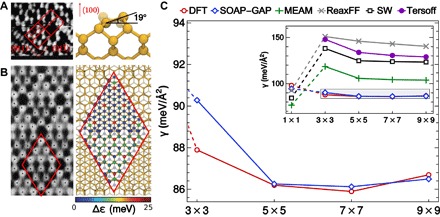
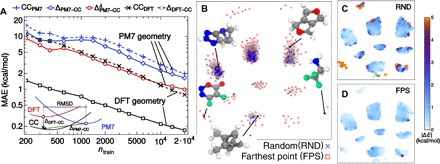
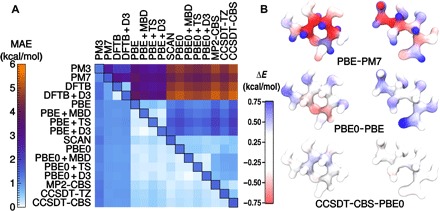
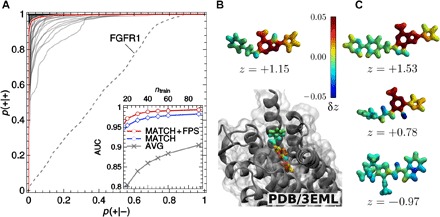
Verification
Claims the paper makes
The claims and statistics of this paper haven’t been checked yet.
Free: it reads the open-access text and checks the first 5 claims that cite a source we can check. Create a free account to check every claim.
Claims other papers make about this one
Each is checked against this paper’s own text: does it say what the citing paper says it does?
The cited source says what the claim attributes to it.
In the citing paper
“A critical assessment of the model performance as a function of the hyperparameters makes it possible to gauge the range of interactions 104 , or the locality of the physical phenomena underlying structure-property relations 105,106 for that system.”
From Unsupervised machine learning in atomistic simulations, between predictions and understanding (2019) · cites this paper as [104]
The cited source says what the claim attributes to it.
In the citing paper
“A low-dimensional representation of a dataset can help when it comes to identifying problematic regions, and understanding how a given representation 'sees' a set of structures 58,104,111 .”
From Unsupervised machine learning in atomistic simulations, between predictions and understanding (2019) · cites this paper as [104]
In the citing paper
“Gaussian process regression (GPR) was used to generate very accurate Gaussian atomic potentials (GAP) and then to train a SOAP–GAP model within a ML framework (GPR) that achieved a 99% accurate atomic-scale properties for Si surface reconstruction, stability of molecules, and protein ligands.209”
From QSAR without borders (2020) · cites this paper as [209]
In the citing paper
“To mitigate this limitation, read-across techniques are increasingly used to estimate the properties of nanomaterials.231”
From QSAR without borders (2020) · cites this paper as [231]
Self-check
Percentages, sums and reported differences re-computed from the paper’s own numbers.
The self-check needs the paper’s full text.
Citations
Cites
Density-functional thermochemistry. III. The role of exact exchange
Becke, A. D. (1993) · The Journal of Chemical Physics · doi:10.1063/1.464913 · Cited by 103,767
Self-Consistent Equations Including Exchange and Correlation Effects
Kohn, W., & Sham, L. J. (1965) · Physical Review · doi:10.1103/physrev.140.a1133 · Cited by 64,135
Hohenberg, P., & Kohn, W. (1964) · Physical Review · doi:10.1103/physrev.136.b864 · Cited by 53,541
Stephens, P. J., Devlin, F. J., Chabalowski, C. F., & Frisch, M. J. (1994) · The Journal of Physical Chemistry · doi:10.1021/j100096a001 · Cited by 23,248
Perdew, J. P., Chevary, J. A., Vosko, S. H., Jackson, K. A., Pederson, M. R., Singh, D. J., & Fiolhais, C. (1992) · Physical Review B · doi:10.1103/physrevb.46.6671 · Cited by 22,269
Development and testing of a general amber force field
Wang, J., Wolf, R. M., Caldwell, J. W., Kollman, P. A., & Case, D. A. (2004) · Journal of Computational Chemistry · doi:10.1002/jcc.20035 · Cited by 19,506
Self-consistent molecular orbital methods. XX. A basis set for correlated wave functions
Krishnan, R., Binkley, J. S., Seeger, R., & Pople, J. A. (1980) · The Journal of Chemical Physics · doi:10.1063/1.438955 · Cited by 17,772
Perdew, J. P., Chevary, J. A., Vosko, S. H., Jackson, K. A., Pederson, M. R., Singh, D. J., & Fiolhais, C. (1993) · Physical Review B · doi:10.1103/physrevb.48.4978.2 · Cited by 17,144
First principles methods using CASTEP
Clark, S. J., Segall, M. D., Pickard, C. J., Hasnip, P. J., Probert, M. I. J., Refson, K., & Payne, M. C. (2005) · Zeitschrift für Kristallographie - Crystalline Materials · doi:10.1524/zkri.220.5.567.65075 · Cited by 14,633
The Hungarian method for the assignment problem
Kuhn, H. W. (1955) · Naval Research Logistics Quarterly · doi:10.1002/nav.3800020109 · Cited by 13,120
Cited by
Items 401–500 of 846
Kadupitiya, J., Fox, G., & Jadhao, V. (2020) · The International Journal of High Performance Computing Applications · doi:10.1177/1094342019899457 · Cited by 24
Sauceda, H. E., Chmiela, S., Poltavsky, I., Müller, K.-R., & Tkatchenko, A. (2020) · Lecture notes in physics · doi:10.1007/978-3-030-40245-7_14 · Cited by 23
Park, I. K., Pourasad, S., Mun, J., Rajan, A. C., Park, T., Rohit, A., Zafari, M., Pham, T.-L., Jung, E., Koo, B., et al. (2026) · Advanced Energy Materials · doi:10.1002/aenm.71046 · Cited by 23
Controlled exploration of chemical space by machine learning of coarse-grained representations
Hoffmann, C., Menichetti, R., Kanekal, K. H., & Bereau, T. (2019) · Physical review. E · doi:10.1103/physreve.100.033302 · Cited by 23
A Machine Learning Approach for MP2 Correlation Energies and Its Application to Organic Compounds
Han, R., Rodríguez‐Mayorga, M., & Luber, S. (2021) · Journal of Chemical Theory and Computation · doi:10.1021/acs.jctc.0c00898 · Cited by 23
Thürlemann, M., & Riniker, S. (2023) · Chemical Science · doi:10.1039/d3sc04317g · Cited by 23
Fan, T., & Оганов, А. Р. (2025) · Journal of Materials Chemistry C · doi:10.1039/d4tc03403a · Cited by 22
Dobbelaere, M. R., Plehiers, P. P., de Vijver, R. V., Stevens, C. V., & Geem, K. M. V. (2021) · The Journal of Physical Chemistry A · doi:10.1021/acs.jpca.1c01956 · Cited by 22
Accurately Predicting Barrier Heights for Radical Reactions in Solution Using Deep Graph Networks
Spiekermann, K., Dong, X., Menon, A., Green, W. H., Pfeifle, M., Sandfort, F., Welz, O., & Bergeler, M. (2024) · The Journal of Physical Chemistry A · doi:10.1021/acs.jpca.4c04121 · Cited by 22
Unsupervised machine learning for solar cell materials from the literature
Zhang, L., & He, M. (2022) · Journal of Applied Physics · doi:10.1063/5.0064875 · Cited by 22
A machine-learning framework for accelerating spin-lattice relaxation simulations
Briganti, V., & Lunghi, A. (2025) · npj Computational Materials · doi:10.1038/s41524-025-01547-z · Cited by 22
Sandonas, L. M., Hoja, J., Ernst, B. G., Vázquez‐Mayagoitia, Á., DiStasio, R. A., & Tkatchenko, A. (2023) · Chemical Science · doi:10.1039/d3sc03598k · Cited by 22
Atomic Structure Optimization with Machine-Learning Enabled Interpolation between Chemical Elements
Kaappa, S., Larsen, C., & Jacobsen, K. W. (2021) · Physical Review Letters · doi:10.1103/physrevlett.127.166001 · Cited by 22
Neighbors Map: An efficient atomic descriptor for structural analysis
Allera, A., Goryaeva, A. M., Lafourcade, P., Maillet, J., & Marinica, M. (2023) · Computational Materials Science · doi:10.1016/j.commatsci.2023.112535 · Cited by 21
Learning Representations of Molecules and Materials with Atomistic Neural Networks
Schütt, K. T., Tkatchenko, A., & Müller, K. (2020) · Lecture notes in physics · doi:10.1007/978-3-030-40245-7_11 · Cited by 21
A Comprehensive Review of Machine-Learning Approaches for Crystal Structure/Property Prediction
Sadeghian, M., Palevičius, A., & Janušas, G. (2025) · Crystals · doi:10.3390/cryst15110925 · Cited by 21
Accurate Molecular Dynamics Enabled by Efficient Physically Constrained Machine Learning Approaches
Chmiela, S., Sauceda, H. E., Tkatchenko, A., & Müller, K.-R. (2020) · Lecture notes in physics · doi:10.1007/978-3-030-40245-7_7 · Cited by 21
Shang, H., Chen, X., Gao, X., Lin, R., Wang, L., Li, F., Xiao, Q., Xu, L., Sun, Q., Zhu, L., et al. (2021) · International Conference for High Performance Computing, Networking, Storage and Analysis (SC) · doi:10.1145/3458817.3476174 · Cited by 21
Integrating computational and experimental advances in bone multiscale mechanics
Rowe, J., Shen, S. C.-Y., de Alcântara, A. C. S., Skaf, M. S., Dini, D., Harrison, N. M., Hansen, U. N., Buehler, M. J., & Abel, R. L. (2025) · Progress in Materials Science · doi:10.1016/j.pmatsci.2025.101474 · Cited by 21
Wu, X., Che, Y., Chen, L., Amigues, E. J., Wang, R., He, J., Dong, H., & Ding, L. (2022) · ACS Applied Materials & Interfaces · doi:10.1021/acsami.2c10861 · Cited by 21
Wan, Z., & Wang, Q. (2021) · The Journal of Physical Chemistry Letters · doi:10.1021/acs.jpclett.1c03335 · Cited by 21
Kondratyev, V., Dryzhakov, M., Gimadiev, T. R., & Slutskiy, D. (2023) · Journal of Cheminformatics · doi:10.1186/s13321-023-00681-4 · Cited by 21
Sampling the thermal Wigner density via a generalized Langevin dynamics
Plé, T., Huppert, S., Finocchi, F., Depondt, P., & Bonella, S. (2019) · The Journal of Chemical Physics · doi:10.1063/1.5099246 · Cited by 21
Improve the performance of machine-learning potentials by optimizing descriptors
Gao, H., Wang, J., & Sun, J. (2019) · The Journal of Chemical Physics · doi:10.1063/1.5097293 · Cited by 20
The tmQM Dataset - Quantum Geometries and Properties of 86k Transition Metal ComplexesPreprint
Balcells, D., & Skjelstad, B. B. (2020) · ChemRxiv · doi:10.26434/chemrxiv.12894818 · Cited by 20
Chemical bonding in metallic glasses from machine learning and crystal orbital Hamilton population
Ferreira, A. R. (2020) · Physical Review Materials · doi:10.1103/physrevmaterials.4.113603 · Cited by 20
Laurens, G., Rabary, M., Lam, J., Peláez, D., & Allouche, A.-R. (2021) · Theoretical Chemistry Accounts · doi:10.1007/s00214-021-02773-6 · Cited by 20
Wagih, M., Naunheim, Y., Lei, T., & Schuh, C. A. (2024) · Acta Materialia · doi:10.1016/j.actamat.2024.119674 · Cited by 20
Prediction of solar‐chargeable battery materials: A text‐mining and first‐principles investigation
He, M., & Zhang, L. (2021) · International Journal of Energy Research · doi:10.1002/er.6776 · Cited by 19
Extending the reach of quantum computing for materials science with machine learning potentials
Schuhmacher, J., Mazzola, G., Tacchino, F., Dmitriyeva, O., Bui, T., Huang, S., & Tavernelli, I. (2022) · AIP Advances · doi:10.1063/5.0099469 · Cited by 19
Beyond theory-driven discovery: introducing hot random search and datum-derived structures
Pickard, C. J. (2025) · Faraday Discussions · doi:10.1039/d4fd00134f · Cited by 19
Mean-field density matrix decompositions
Eriksen, J. J. (2020) · The Journal of Chemical Physics · doi:10.1063/5.0030764 · Cited by 19
Quantum Chemical Roots of Machine-Learning Molecular Similarity Descriptors
Gugler, S., & Reiher, M. (2022) · Journal of Chemical Theory and Computation · doi:10.1021/acs.jctc.2c00718 · Cited by 19
Pablo‐García, S., Sabadell‐Rendón, A., Saadun, A. J., Morandi, S., Pérez‐Ramírez, J., & López, N. (2022) · ACS Catalysis · doi:10.1021/acscatal.1c04345 · Cited by 19
Seiner, H. S., Zelený, M., Sedlák, P., Straka, L., & Heczko, O. (2022) · physica status solidi (RRL) - Rapid Research Letters · doi:10.1002/pssr.202100632 · Cited by 19
Machine-Learning of Atomic-Scale Properties Based on Physical Principles
Cśanyi, G., Willatt, M. J., & Ceriotti, M. (2020) · Lecture notes in physics · doi:10.1007/978-3-030-40245-7_6 · Cited by 18
Self-citationLearning from the Machine: Uncovering Sustainable Nanoparticle Design Rules
Daly, C. A., & Hernandez, R. (2020) · The Journal of Physical Chemistry C · doi:10.1021/acs.jpcc.0c01195 · Cited by 18
A machine learning potential for simulating infrared spectra of nanosilicate clusters
Tang, Z., Bromley, S. T., & Hammer, B. (2023) · The Journal of Chemical Physics · doi:10.1063/5.0150379 · Cited by 18
Nonclassical Nucleation of Zinc Oxide from a Physically Motivated Machine-Learning Approach
Goniakowski, J., Menon, S. K., Laurens, G., & Lam, J. (2022) · The Journal of Physical Chemistry C · doi:10.1021/acs.jpcc.2c06341 · Cited by 18
Deep-learning approach to the structure of amorphous silicon
Comin, M., & Lewis, L. J. (2019) · Physical review. B./Physical review. B · doi:10.1103/physrevb.100.094107 · Cited by 18
Wasserstein metric for improved quantum machine learning with adjacency matrix representations
Çaylak, O., von Lilienfeld, O. A., & Baumeier, B. (2020) · Machine Learning Science and Technology · doi:10.1088/2632-2153/aba048 · Cited by 18
Machine learning a molecular Hamiltonian for predicting electron dynamics
Bhat, H. S., Ranka, K., & Isborn, C. M. (2020) · International Journal of Dynamics and Control · doi:10.1007/s40435-020-00699-8 · Cited by 18
The conformational space of a flexible amino acid at metallic surfaces
Maksimov, D., Baldauf, C., & Rossi, M. (2020) · International Journal of Quantum Chemistry · doi:10.1002/qua.26369 · Cited by 18
Chemical transformations and transport phenomena at interfaces
Hao, H., Pestana, L. R., Qian, J., Liu, M., Xu, Q., & Head-Gordon, T. L. (2022) · Wiley Interdisciplinary Reviews Computational Molecular Science · doi:10.1002/wcms.1639 · Cited by 18
Excited-state dynamics with machine learning
Zhang, L., Ullah, A., Pinheiro, M., Dral, P. O., & Barbatti, M. (2022) · Elsevier eBooks · doi:10.1016/b978-0-323-90049-2.00008-1 · Cited by 18
Morado, J., Mortenson, P. N., Nissink, J. W. M., Essex, J. W., & Skylaris, C. (2023) · Journal of Chemical Information and Modeling · doi:10.1021/acs.jcim.2c01510 · Cited by 18
Röckert, A., Kullgren, J., & Hermansson, K. (2022) · Journal of Chemical Theory and Computation · doi:10.1021/acs.jctc.2c00135 · Cited by 18
Efficient exploration of reaction pathways using reaction databases and active learning
Kuryla, D., Cśanyi, G., van Duin, A. C. T., & Michaelides, A. (2025) · The Journal of Chemical Physics · doi:10.1063/5.0235715 · Cited by 18
Fabrizio, A., Briling, K. R., Girardier, D. D., & Corminbœuf, C. (2020) · The Journal of Chemical Physics · doi:10.1063/5.0033326 · Cited by 18
Evaluating diffusion and the thermodynamic factor for binary ionic mixtures
Rosenberger, D., Lubbers, N., & Germann, T. C. (2020) · Physics of Plasmas · doi:10.1063/5.0017788 · Cited by 18
Cheng, L., Sun, J., Deustua, J. E., Bhethanabotla, V. C., & Miller, T. F. (2022) · The Journal of Chemical Physics · doi:10.1063/5.0110886 · Cited by 18
Lunghi, A. (2020) · Applied Magnetic Resonance · doi:10.1007/s00723-020-01255-5 · Cited by 18
Snyder, R., Kim, B., Pan, X., Shao, Y., & Pu, J. (2022) · Physical Chemistry Chemical Physics · doi:10.1039/d2cp02820d · Cited by 18
Nayak, G. K., Srinivasan, P., Todt, J., Daniel, R., Nicolini, P., & Holec, D. (2025) · Computational Materials Science · doi:10.1016/j.commatsci.2024.113629 · Cited by 18
CoRe optimizer: an all-in-one solution for machine learning
Eckhoff, M., & Reiher, M. (2024) · Machine Learning Science and Technology · doi:10.1088/2632-2153/ad1f76 · Cited by 17
Li, R., Zhou, C. H., Singh, A., Pei, Y., Henkelman, G., & Li, L. (2024) · The Journal of Chemical Physics · doi:10.1063/5.0187892 · Cited by 17
Spotting Local Environments in Self-Assembled Monolayer-Protected Gold Nanoparticles
Gabellini, C., Şologan, M., Pellizzoni, E., Marson, D., Daka, M., Franchi, P., Bignardi, L., Franchi, S., Posel, Z., Baraldi, A., et al. (2022) · ACS Nano · doi:10.1021/acsnano.2c08467 · Cited by 17
Proper orthogonal descriptors for efficient and accurate interatomic potentials
Nguyen, N. C., & Rohskopf, A. (2023) · Journal of Computational Physics · doi:10.1016/j.jcp.2023.112030 · Cited by 18
Molecular Simulation Meets Machine Learning
Sadus, R. J. (2023) · Journal of Chemical & Engineering Data · doi:10.1021/acs.jced.3c00553 · Cited by 16
Bioinspired multifunctional antifogging surfaces: Progress, AI design and challenges
Gao, H., Xing, Z., Chang, S., Zhao, F., Zhang, H., Meng, Z., Han, Z., & Liu, Y. (2025) · Progress in Materials Science · doi:10.1016/j.pmatsci.2025.101530 · Cited by 16
Yang, Z., Xie, X.-T., Kang, P., Wang, Z.-X., Shang, C., & Liu, Z. (2024) · Journal of Chemical Theory and Computation · doi:10.1021/acs.jctc.4c00660 · Cited by 16
Interactive human–machine learning framework for modelling of ferroelectric–dielectric composites
Liu, N., Ihalage, A. A., Zhang, H., Giddens, H., Yan, H., & Hao, Y. (2020) · Journal of Materials Chemistry C · doi:10.1039/c9tc06073a · Cited by 16
Zhong, A., Lapointe, C., Goryaeva, A. M., Baima, J., Athènes, M., & Marinica, M. (2023) · Physical Review Materials · doi:10.1103/physrevmaterials.7.023802 · Cited by 16
Zhu, Y., Huang, R., Zhu, R., Xu, W., Zhu, R., & Cheng, L. (2018) · Advanced Science · doi:10.1002/advs.201800909 · Cited by 16
Archibald, R. K., Krogel, J. T., & Kent, P. R. C. (2018) · The Journal of Chemical Physics · doi:10.1063/1.5040584 · Cited by 16
Quantum Chemistry Meets Machine Learning
Fabrizio, A., Meyer, B., Fabregat, R., & Corminbœuf, C. (2019) · CHIMIA International Journal for Chemistry · doi:10.2533/chimia.2019.983 · Cited by 15
Fabrizio, A., Meyer, B., & Corminbœuf, C. (2020) · The Journal of Chemical Physics · doi:10.1063/5.0005039 · Cited by 15
Chen, J., Gao, Q., Huang, M., & Yu, K. (2025) · Physical Chemistry Chemical Physics · doi:10.1039/d4cp02989e · Cited by 14
Efficient Parametrization of Transferable Atomic Cluster Expansion for Water
Ibrahim, E., Lysogorskiy, Y. V., & Drautz, R. (2024) · Journal of Chemical Theory and Computation · doi:10.1021/acs.jctc.4c00802 · Cited by 14
Learning Everywhere: A Taxonomy for the Integration of Machine Learning and Simulations
Fox, G., & Jha, S. (2019) · International Conference on e-Science · doi:10.1109/escience.2019.00057 · Cited by 14
Exploring the energy landscape of aluminas through machine learning interatomic potential
Zhang, L., Luo, W. D., Liu, R., Chen, M., Yan, Z., & Cao, K. (2025) · Physical Review Materials · doi:10.1103/physrevmaterials.9.023801 · Cited by 14
Active deep kernel learning of molecular properties from structural embeddings
Ghosh, A., Ziatdinov, M. A., & Kalinin, S. V. (2025) · APL Machine Learning · doi:10.1063/5.0282700 · Cited by 14
Tamura, R., Matsuda, M., Lin, J., Futamura, Y., Sakurai, T., & Miyazaki, T. (2022) · Physical review. B./Physical review. B · doi:10.1103/physrevb.105.075107 · Cited by 14
Wan, Z., Wang, Q., Liu, D., & Liang, J. (2021) · International Journal of Quantum Chemistry · doi:10.1002/qua.26752 · Cited by 14
Transferable Gaussian Attractive Potentials for Organic/Oxide Interfaces
Rey, J., Blanck, S., Clabaut, P., Loehlé, S., Steinmann, S. N., & Michel, C. (2021) · The Journal of Physical Chemistry B · doi:10.1021/acs.jpcb.1c05156 · Cited by 14
Lu, Y., Huang, X., Ren, Z., Sun, D., Guo, Y., Liu, X., & Wang, C. (2023) · Journal of Nuclear Materials · doi:10.1016/j.jnucmat.2023.154553 · Cited by 14
Machine learning inference of molecular dipole moment in liquid water
Knijff, L., & Zhang, C. (2021) · Machine Learning Science and Technology · doi:10.1088/2632-2153/ac0123 · Cited by 14
Self-consistent Coulomb interactions for machine learning interatomic potentials
Thomas, J., Baldwin, W., Cśanyi, G., & Ortner, C. (2025) · Nonlinearity · doi:10.1088/1361-6544/ae0402 · Cited by 14
The rule of four: anomalous distributions in the stoichiometries of inorganic compounds
Gazzarrini, E., Cersonsky, R. K., Bercx, M., Adorf, C. S., & Marzari, N. (2024) · npj Computational Materials · doi:10.1038/s41524-024-01248-z · Cited by 13
Assessing the persistence of chalcogen bonds in solution with neural network potentials
Jurásková, V., Célerse, F., Laplaza, R., & Corminbœuf, C. (2022) · The Journal of Chemical Physics · doi:10.1063/5.0085153 · Cited by 13
Comment on ‘Physics-based representations for machine learning properties of chemical reactions’
Spiekermann, K., Stuyver, T., Pattanaik, L., & Green, W. H. (2023) · Machine Learning Science and Technology · doi:10.1088/2632-2153/acee42 · Cited by 13
Agarwal, S., Mehta, S., & Joshi, K. (2020) · New Journal of Chemistry · doi:10.1039/d0nj00633e · Cited by 13
Tamura, R., Lin, J., & Miyazaki, T. (2019) · Journal of the Physical Society of Japan · doi:10.7566/jpsj.88.044601 · Cited by 13
Biosurfactants: Current Application Trends
Rudakova, M., Galitskaya, P., & Selivanovskaya, S. Y. (2021) · Učënye zapiski Kazanskogo universiteta. Seriâ Estestvennye nauki/Učënye zapiski Kazanskogo universiteta. Seriâ Estestvennye nauki/Učenye zapiski Kazanskogo gosudarstvennogo universiteta. Seriâ Estestvennye nauki · doi:10.26907/2542-064x.2021.2.177-208 · Cited by 13
Thürlemann, M., Pultar, F., Gordiy, I., Ruijsenaars, E., & Riniker, S. (2026) · Journal of the American Chemical Society · doi:10.1021/jacs.6c00217 · Cited by 13
Predicting scalar coupling constants by graph angle-attention neural network
Fang, J. F., Hu, L., Dong, J., Li, H., Wang, H., Zhao, H., Zhang, Y., & Liu, M. (2021) · Scientific Reports · doi:10.1038/s41598-021-97146-1 · Cited by 13
Nikhitha, R., & Mondal, A. (2025) · The Journal of Chemical Physics · doi:10.1063/5.0263384 · Cited by 13
Linear Atomic Cluster Expansion Force Fields for Organic Molecules: beyond RMSEPreprint
Kovács, D. P., van der Oord, C., Kucera, J., Allen, A. E. A., Cole, D. J., Ortner, C., & Cśanyi, G. (2021) · doi:10.33774/chemrxiv-2021-7qlf5-v4 · Cited by 13
Automated calculation and convergence of defect transport tensors
Swinburne, T. D., & Pérez, D. (2020) · npj Computational Materials · doi:10.1038/s41524-020-00463-8 · Cited by 13
Machine learning-driven molecular dynamics decodes thermal tuning in graphene foam composites
Zhang, P., Zhang, S., Qin, Y., Du, T., Wei, L., & Li, X. (2025) · npj Computational Materials · doi:10.1038/s41524-025-01710-6 · Cited by 13
Machine learning enhanced empirical potentials for metals and alloys
Chen, X., Wang, L., Gao, X., Zhao, Y., Lin, D.-Y., Chu, W., & Song, H. (2021) · Computer Physics Communications · doi:10.1016/j.cpc.2021.108132 · Cited by 12
Transition state structure detection with machine learningś
Si, Y., Ma, Y., Yu, T., Wu, Y., Liu, Y., Lai, W., Zhang, Z., Shi, J., Guo, L., Prezhdo, O. V., et al. (2025) · npj Computational Materials · doi:10.1038/s41524-025-01693-4 · Cited by 12
Machine Learning of Atomic-Scale Properties Based on Physical Principles
Ceriotti, M., Willatt, M. J., & Cśanyi, G. (2020) · Springer eBooks · doi:10.1007/978-3-319-44677-6_68 · Cited by 12
Self-citationHierarchical Quantum Embedding by Machine Learning for Large Molecular Assemblies
Bensberg, M., Eckhoff, M., Husistein, R. T., Teynor, M. S., Sora, V., Bro‐Jørgensen, W., Thomasen, F. E., Krogh, A., Lindorff‐Larsen, K., Solomon, G. C., et al. (2025) · Journal of Chemical Theory and Computation · doi:10.1021/acs.jctc.5c00389 · Cited by 12
Lüder, J. (2025) · Physical review. B./Physical review. B · doi:10.1103/physrevb.111.085110 · Cited by 12
de Azevedo, L. C., Pinheiro, G. A., Quiles, M. G., Silva, J. L. F. D., & Prati, R. C. (2021) · Journal of Chemical Information and Modeling · doi:10.1021/acs.jcim.1c00503 · Cited by 12
Briganti, V., & Lunghi, A. (2023) · Machine Learning Science and Technology · doi:10.1088/2632-2153/ace418 · Cited by 12
Uncertainty and anharmonicity in thermally activated dynamics
Swinburne, T. D. (2021) · Computational Materials Science · doi:10.1016/j.commatsci.2020.110256 · Cited by 12
When is nanoconfined water different from interfacial water?
Advincula, X. R., Schran, C., & Michaelides, A. (2026) · Faraday Discussions · doi:10.1039/d5fd00165j · Cited by 12
Ghosh, A., Kalinin, S. V., & Ziatdinov, M. A. (2023) · APL Machine Learning · doi:10.1063/5.0157644 · Cited by 11
Metadata
- Authors
- Bartók, A. P., De, S., Poelking, C., Bernstein, N., Kermode, J. R., Csányi, G., & Ceriotti, M.
- Affiliations
- Rutherford Appleton Laboratory (GB)
- École Polytechnique Fédérale de Lausanne (CH)
- University of Cambridge (GB)
- United States Naval Research Laboratory (US)
- University of Warwick (GB)
- Engineering Laboratory, University of Cambridge, Cambridge, UK.
- Corresponding author
- Ceriotti, Michele
- ORCID
- Venue
- Science Advances
- Published
- 2017-12
- Volume
- 3
- Issue
- 12
- Pages
- e1701816-e1701816
- ISSN
- 2375-2548 (ISSN-L)
- PMC
- PMC5729016
- OpenAlex
- W2620687153
- Cited by
- 764
- References
- 71
- Citations by year
- 2026: 43 · 2025: 79 · 2024: 67 · 2023: 91 · 2022: 96 · 2021: 114 · 2020: 130 · 2019: 90 · 2018: 52 · 2017: 2
- FWCI
- 31.56
- Type
- journal article
- Language
- en
- Open access
- gold
- doi.org
- Licence
- cc-by-nc
- Locations
- Science Advances (publishedVersion, cc-by-nc)
- PubMed Central (publishedVersion, cc-by-nc)
- PubMed (publishedVersion)
- Warwick Research Archive Portal (University of Warwick) (acceptedVersion)
- arXiv (Cornell University) (submittedVersion)
- Apollo (University of Cambridge) (submittedVersion, cc-by-nc)
- Cambridge University Engineering Department Publications Database (submittedVersion)
- Infoscience (Ecole Polytechnique Fédérale de Lausanne) (submittedVersion)
- Infoscience (Ecole Polytechnique Fédérale de Lausanne) (submittedVersion, cc-by-nc-nd)
- Science and Technology Facilities Council (submittedVersion)
- arXiv (Cornell University)
- Apollo
- Funders
- Office of Naval Research (award361580, U.S. Naval Research Laboratory, core basic research program)
- Engineering and Physical Sciences Research Council (award324327, EP/L014742/1, EP/J010847/1 and EP/J022012/1, award324329, EP/L014742/1, EP/P002188/1, award361574, EP/M022501/1, award361582, EP/K013564/1, EP/P022561/1)
- Swiss National Science Foundation (award324328, NCCR MARVEL)
- Leverhulme Trust (award361572, Leverhulme Early Career Fellowship)
- Isaac Newton Trust (award361573)
- European Research Council (award324326, 677013-HBMAP, award324330, 67658 - NOMAD)
- Topics
- Physical Sciences › Materials Science › Materials Chemistry › Machine Learning in Materials Science
- Physical Sciences › Physics and Astronomy › Atomic and Molecular Physics, and Optics › Advanced Chemical Physics Studies
- Life Sciences › Pharmacology, Toxicology and Pharmaceutics › Drug Discovery › Computational Drug Discovery Methods
- Keywords
- machine learning, molecular stability, atomistic modeling, local chemical environment, silicon surface reconstruction, protein-ligand binding, potential energy surface, quantum effects
About these checks
Registry, retraction, Cites and statistics results are computed, not judged, with one exception: a printed reference that no index lists is read once by a model before it counts as a citation error. Claims are extracted by a model and kept only when their quote appears verbatim in the text; each cited source is then checked, with a model’s help, for whether it says what the claim relies on. Those verdicts can be wrong — read the claim’s quote and the cited source before relying on one.
Statistics and arithmetic are recomputed, not judged.
Confidence bands are shown only for fields calibrated on our annotated test set. None is calibrated yet, so no band is shown.
What counts as a claim ›How we measure confidence ›How we check this ›
Are you an author, or do you see a problem with this page? Request a review
Data sources
Bibliographic data: Semantic Scholar, OpenAlex, Crossref.
Contains information from the Semantic Scholar Academic Graph Datasets, made available under the ODC Attribution License (ODC-BY 1.0).
Semantic Scholar’s data is described in: Kinney, R., et al. (2023). The Semantic Scholar Open Data Platform. arXiv:2301.10140.
