

Machine learning unifies the modeling of materials and molecules
Open accessThe DOI matches its Crossref record; 70 of the 71 references it cites were found in a registry or an index.
Abstract
Statistical learning based on a local representation of atomic structures provides a universal model of chemical stability.
Overview
The claims and statistics of this paper haven’t been checked yet.
Free: it reads the open-access text and checks the first 5 claims that cite a source we can check. Create a free account to check every claim.
Integrity signals
Registry
Cites
Statistics
Figures
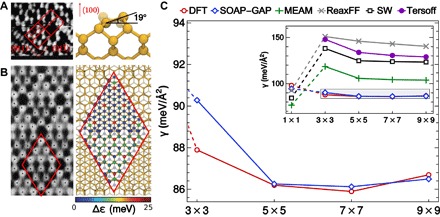
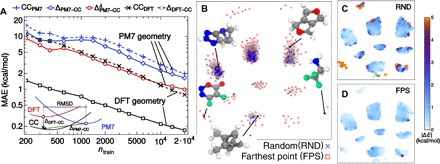
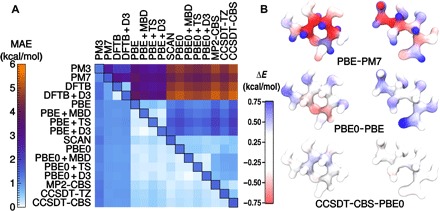
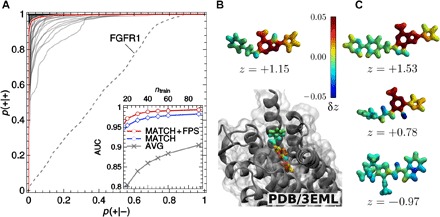
Verification
Claims the paper makes
The claims and statistics of this paper haven’t been checked yet.
Free: it reads the open-access text and checks the first 5 claims that cite a source we can check. Create a free account to check every claim.
Claims other papers make about this one
Each is checked against this paper’s own text: does it say what the citing paper says it does?
The cited source says what the claim attributes to it.
In the citing paper
“A critical assessment of the model performance as a function of the hyperparameters makes it possible to gauge the range of interactions 104 , or the locality of the physical phenomena underlying structure-property relations 105,106 for that system.”
From Unsupervised machine learning in atomistic simulations, between predictions and understanding (2019) · cites this paper as [104]
The cited source says what the claim attributes to it.
In the citing paper
“A low-dimensional representation of a dataset can help when it comes to identifying problematic regions, and understanding how a given representation 'sees' a set of structures 58,104,111 .”
From Unsupervised machine learning in atomistic simulations, between predictions and understanding (2019) · cites this paper as [104]
In the citing paper
“Gaussian process regression (GPR) was used to generate very accurate Gaussian atomic potentials (GAP) and then to train a SOAP–GAP model within a ML framework (GPR) that achieved a 99% accurate atomic-scale properties for Si surface reconstruction, stability of molecules, and protein ligands.209”
From QSAR without borders (2020) · cites this paper as [209]
In the citing paper
“To mitigate this limitation, read-across techniques are increasingly used to estimate the properties of nanomaterials.231”
From QSAR without borders (2020) · cites this paper as [231]
Self-check
Percentages, sums and reported differences re-computed from the paper’s own numbers.
The self-check needs the paper’s full text.
Citations
Cites
Density-functional thermochemistry. III. The role of exact exchange
Becke, A. D. (1993) · The Journal of Chemical Physics · doi:10.1063/1.464913 · Cited by 103,767
Self-Consistent Equations Including Exchange and Correlation Effects
Kohn, W., & Sham, L. J. (1965) · Physical Review · doi:10.1103/physrev.140.a1133 · Cited by 64,135
Hohenberg, P., & Kohn, W. (1964) · Physical Review · doi:10.1103/physrev.136.b864 · Cited by 53,541
Stephens, P. J., Devlin, F. J., Chabalowski, C. F., & Frisch, M. J. (1994) · The Journal of Physical Chemistry · doi:10.1021/j100096a001 · Cited by 23,248
Perdew, J. P., Chevary, J. A., Vosko, S. H., Jackson, K. A., Pederson, M. R., Singh, D. J., & Fiolhais, C. (1992) · Physical Review B · doi:10.1103/physrevb.46.6671 · Cited by 22,269
Development and testing of a general amber force field
Wang, J., Wolf, R. M., Caldwell, J. W., Kollman, P. A., & Case, D. A. (2004) · Journal of Computational Chemistry · doi:10.1002/jcc.20035 · Cited by 19,506
Self-consistent molecular orbital methods. XX. A basis set for correlated wave functions
Krishnan, R., Binkley, J. S., Seeger, R., & Pople, J. A. (1980) · The Journal of Chemical Physics · doi:10.1063/1.438955 · Cited by 17,772
Perdew, J. P., Chevary, J. A., Vosko, S. H., Jackson, K. A., Pederson, M. R., Singh, D. J., & Fiolhais, C. (1993) · Physical Review B · doi:10.1103/physrevb.48.4978.2 · Cited by 17,144
First principles methods using CASTEP
Clark, S. J., Segall, M. D., Pickard, C. J., Hasnip, P. J., Probert, M. I. J., Refson, K., & Payne, M. C. (2005) · Zeitschrift für Kristallographie - Crystalline Materials · doi:10.1524/zkri.220.5.567.65075 · Cited by 14,633
The Hungarian method for the assignment problem
Kuhn, H. W. (1955) · Naval Research Logistics Quarterly · doi:10.1002/nav.3800020109 · Cited by 13,120
Cited by
Items 301–400 of 846
Liu, Q., Lu, D., & Chen, M. (2020) · Journal of Physics Condensed Matter · doi:10.1088/1361-648x/ab5890 · Cited by 41
Free energy calculation of crystalline solids using normalizing flows
Ahmad, R., & Cai, W. (2022) · Modelling and Simulation in Materials Science and Engineering · doi:10.1088/1361-651x/ac7f4b · Cited by 41
A machine learning based intramolecular potential for a flexible organic molecule
Cole, D. J., Mones, L., & Cśanyi, G. (2020) · Faraday Discussions · doi:10.1039/d0fd00028k · Cited by 41
Ultralow thermal conductance of the van der Waals interface between organic nanoribbons
Xiong, Y., Yu, X., Huang, Y., Yang, J., Li, L., Yang, N., & Xu, D. (2019) · Materials Today Physics · doi:10.1016/j.mtphys.2019.100139 · Cited by 40
Converged quantum simulations of reactive solutes in superfluid helium: The Bochum perspective
Brieuc, F., Schran, C., Uhl, F., Forbert, H., & Marx, D. (2020) · The Journal of Chemical Physics · doi:10.1063/5.0008309 · Cited by 40
Machine-Learning Informed Representations for Grain Boundary Structures
Homer, E. R., Hensley, D. M., Rosenbrock, C. W., Nguyen, A. H., & Hart, G. L. W. (2019) · Frontiers in Materials · doi:10.3389/fmats.2019.00168 · Cited by 39
Quantum chemistry assisted by machine learning
Dral, P. O. (2020) · Advances in quantum chemistry · doi:10.1016/bs.aiq.2020.05.002 · Cited by 39
Kautz, E. J., Hagen, A. R., Johns, J., & Burkes, D. E. (2019) · Computational Materials Science · doi:10.1016/j.commatsci.2019.01.044 · Cited by 38
AI in computational chemistry through the lens of a decade-long journey
Dral, P. O. (2024) · Chemical Communications · doi:10.1039/d4cc00010b · Cited by 38
Active learning-based exploration of the catalytic pyrolysis of plastic waste
Ureel, Y., Dobbelaere, M. R., Akin, O., Varghese, R. J., Pernalete, C., Thybaut, J. W., & Geem, K. M. V. (2022) · Fuel · doi:10.1016/j.fuel.2022.125340 · Cited by 38
Grigorev, P., Goryaeva, A. M., Marinica, M., Kermode, J. R., & Swinburne, T. D. (2023) · Acta Materialia · doi:10.1016/j.actamat.2023.118734 · Cited by 38
Self-citationData‐Driven Machine Learning for Understanding Surface Structures of Heterogeneous Catalysts
Li, H., Jiao, Y., Davey, K. R., & Qiao, S. (2023) · Angewandte Chemie · doi:10.1002/ange.202216383 · Cited by 38
Self-Parametrizing System-Focused Atomistic Models
Brunken, C., & Reiher, M. (2020) · Journal of Chemical Theory and Computation · doi:10.1021/acs.jctc.9b00855 · Cited by 37
Predicting the phase diagram of titanium dioxide with random search and pattern recognition
Reinhardt, A., Pickard, C. J., & Cheng, B. (2020) · Physical Chemistry Chemical Physics · doi:10.1039/d0cp02513e · Cited by 37
Jalem, R., Nakayama, M., Noda, Y., Le, T., Takeuchi, I., Tateyama, Y., & Yamazaki, H. (2018) · Science and Technology of Advanced Materials · doi:10.1080/14686996.2018.1439253 · Cited by 37
Accurate Crystal Structure Prediction of New 2D Hybrid Organic–Inorganic Perovskites
Karimitari, N., Baldwin, W. J., Muller, E. W., Bare, Z. J. L., Kennedy, W. J., Cśanyi, G., & Sutton, C. A. (2024) · Journal of the American Chemical Society · doi:10.1021/jacs.4c06549 · Cited by 37
Abriata, L. A. (2020) · PeerJ Computer Science · doi:10.7717/peerj-cs.260 · Cited by 37
Exploring the robust extrapolation of high-dimensional machine learning potentials
Zeni, C., Anelli, A., Glielmo, A., & Rossi, K. (2022) · Physical review. B./Physical review. B · doi:10.1103/physrevb.105.165141 · Cited by 36
Jung, H., Covino, R., & Hummer, G. (2019) · arXiv (Cornell University) · doi:10.48550/arxiv.1901.04595 · Cited by 36
Wenga, T., Macdonald, D. D., & Ma, W. (2024) · Progress in Materials Science · doi:10.1016/j.pmatsci.2024.101359 · Cited by 36
Wang, T., Wu, Q., Han, Y., Guo, Z., Chen, J., & Liu, C. (2025) · Applied Physics Reviews · doi:10.1063/5.0235572 · Cited by 36
Pultar, F., Thürlemann, M., Gordiy, I., Doloszeski, E., & Riniker, S. (2025) · Journal of the American Chemical Society · doi:10.1021/jacs.4c17015 · Cited by 36
Speybroeck, V. V. (2023) · Philosophical Transactions of the Royal Society A Mathematical Physical and Engineering Sciences · doi:10.1098/rsta.2022.0239 · Cited by 36
Lama, B., Smirnova, A. W., & Paudel, T. R. (2023) · ACS Applied Energy Materials · doi:10.1021/acsaem.3c01429 · Cited by 36
Schran, C., Brieuc, F., & Marx, D. (2021) · The Journal of Chemical Physics · doi:10.1063/5.0035438 · Cited by 36
A Universal Framework for Featurization of Atomistic Systems
Lei, X., & Medford, A. J. (2022) · The Journal of Physical Chemistry Letters · doi:10.1021/acs.jpclett.2c02100 · Cited by 36
O’Neill, N., Shi, B. X., Baldwin, W. J., Witt, W. C., Cśanyi, G., Gale, J. D., Michaelides, A., & Schran, C. (2025) · Journal of Chemical Theory and Computation · doi:10.1021/acs.jctc.5c01377 · Cited by 36
Applications of machine learning in surfaces and interfaces
Xu, S., Wu, J., Guo, Y., Zhang, Q., Zhong, X., Li, J., & Ren, W. (2025) · Chemical Physics Reviews · doi:10.1063/5.0244175 · Cited by 35
Data efficiency and extrapolation trends in neural network interatomic potentials
Vita, J. A., & Schwalbe‐Koda, D. (2023) · Machine Learning Science and Technology · doi:10.1088/2632-2153/acf115 · Cited by 35
Pathrudkar, S., Thiagarajan, P., Agarwal, S., Banerjee, A., & Ghosh, S. (2024) · npj Computational Materials · doi:10.1038/s41524-024-01305-7 · Cited by 35
Transferable MP2-Based Machine Learning for Accurate Coupled-Cluster Energies
Townsend, J., & Vogiatzis, K. D. (2020) · Journal of Chemical Theory and Computation · doi:10.1021/acs.jctc.0c00927 · Cited by 35
Machine Learning of Analytical Electron Density in Large Molecules Through Message-Passing
Cuevas-Zuviría, B., & Pacios, L. F. (2021) · Journal of Chemical Information and Modeling · doi:10.1021/acs.jcim.1c00227 · Cited by 35
Wigner kernels: Body-ordered equivariant machine learning without a basis
Bigi, F., Pozdnyakov, S. N., & Ceriotti, M. (2024) · The Journal of Chemical Physics · doi:10.1063/5.0208746 · Cited by 35
Self-citationΔ-Machine learning-driven discovery of double hybrid organic–inorganic perovskites
Chen, J., Xu, W., & Zhang, R.-Q. (2022) · Journal of Materials Chemistry A · doi:10.1039/d1ta09911f · Cited by 34
Natural Fiber Composites: A Comprehensive Review on Machine Learning Methods
Mulenga, T. K., Rangappa, S. M., & Siengchin, S. (2025) · Archives of Computational Methods in Engineering · doi:10.1007/s11831-025-10273-0 · Cited by 34
Sutar, S. S., Patil, S. M., Kadam, S. J., Kamat, R. K., Kim, D., & Dongale, T. D. (2021) · ACS Omega · doi:10.1021/acsomega.1c04521 · Cited by 34
Predicting phosphorescence energies and inferring wavefunction localization with machine learning
Sifain, A. E., Lystrom, L., Messerly, R. A., Smith, J. S., Nebgen, B. T., Barros, K. M., Tretiak, S., Lubbers, N., & Gifford, B. J. (2021) · Chemical Science · doi:10.1039/d1sc02136b · Cited by 34
Computational screening of electrolyte materials: status quo and open problems
Makeev, M. A., & Rajput, N. N. (2019) · Current Opinion in Chemical Engineering · doi:10.1016/j.coche.2019.02.008 · Cited by 33
Thürlemann, M., Böselt, L., & Riniker, S. (2023) · Journal of Chemical Theory and Computation · doi:10.1021/acs.jctc.2c00661 · Cited by 33
Ferdousi, S., Chen, Q., Soltani, M., Zhu, J., Cao, P., Choi, W., Advíncula, R. C., & Jiang, Y. (2021) · Scientific Reports · doi:10.1038/s41598-021-93852-y · Cited by 33
Computational compound screening of biomolecules and soft materials by molecular simulations
Bereau, T. (2021) · Modelling and Simulation in Materials Science and Engineering · doi:10.1088/1361-651x/abd042 · Cited by 32
Herr, J. E., Koh, K. J., Yao, K., & Parkhill, J. (2019) · The Journal of Chemical Physics · doi:10.1063/1.5108803 · Cited by 32
Chen, K., Künkel, C., Reuter, K., & Margraf, J. T. (2022) · Digital Discovery · doi:10.1039/d1dd00038a · Cited by 32
Nagy, P. R., Gyevi‐Nagy, L., Lőrincz, B. D., & Kállay, M. (2022) · Molecular Physics · doi:10.1080/00268976.2022.2109526 · Cited by 32
Benoit, M., Amodeo, J., Combettes, S., Khaled, I., Roux, A., & Lam, J. (2020) · Machine Learning Science and Technology · doi:10.1088/2632-2153/abc9fd · Cited by 32
Denoise Pretraining on Nonequilibrium Molecules for Accurate and Transferable Neural Potentials
Wang, Y., Xu, C., Li, Z., & Farimani, A. B. (2023) · Journal of Chemical Theory and Computation · doi:10.1021/acs.jctc.3c00289 · Cited by 32
Fonseca, G., Poltavsky, I., Vassilev-Galindo, V., & Tkatchenko, A. (2021) · The Journal of Chemical Physics · doi:10.1063/5.0035530 · Cited by 32
Machine learning assisted crystal structure prediction made simple
Li, C.-N., Liang, H., Bai-Qing, Z., Wei, S., & Zhang, X. (2024) · Journal of Materials Informatics · doi:10.20517/jmi.2024.18 · Cited by 32
Green, J. D., Fuemmeler, E. G., & Hele, T. J. H. (2022) · The Journal of Chemical Physics · doi:10.1063/5.0082311 · Cited by 32
Sosso, G. C., & Bernasconi, M. (2019) · MRS Bulletin · doi:10.1557/mrs.2019.202 · Cited by 32
AlphaNet: scaling up local-frame-based neural network interatomic potentials
Yin, B., Wang, J., Du, W., Wang, P., Ying, P., Jia, H., Zhang, Z., Du, Y., Gomes, C. P., Duan, C., et al. (2025) · npj Computational Materials · doi:10.1038/s41524-025-01817-w · Cited by 31
Optimal radial basis for density-based atomic representations
Goscinski, A., Musil, F., Pozdnyakov, S. N., Nigam, J., & Ceriotti, M. (2021) · The Journal of Chemical Physics · doi:10.1063/5.0057229 · Cited by 31
Self-citationMachine learning of double-valued nonadiabatic coupling vectors around conical intersections
Richardson, J. O. (2023) · The Journal of Chemical Physics · doi:10.1063/5.0133191 · Cited by 31
Spontaneously Forming Dendritic Voids in Liquid Water Can Host Small Polymers
Ansari, N., Laio, A., & Hassanali, A. A. (2019) · The Journal of Physical Chemistry Letters · doi:10.1021/acs.jpclett.9b02052 · Cited by 31
Machine learning for discrimination of phase‐change chalcogenide glasses
Xu, Q., Xu, M. K., Tang, S., Yuan, S., Xu, M., Zhang, W., Li, X., Wang, Z., Miao, X., Wang, C., et al. (2025) · InfoMat · doi:10.1002/inf2.70006 · Cited by 30
Kautz, E. J., Ma, W., Jana, S., Devaraj, A., Joshi, V. V., Yener, B., & Lewis, D. (2020) · Materials Characterization · doi:10.1016/j.matchar.2020.110379 · Cited by 30
Crippa, M., Cardellini, A., Caruso, C., & Pavan, G. M. (2023) · Proceedings of the National Academy of Sciences · doi:10.1073/pnas.2300565120 · Cited by 30
Kandy, A. K. A., Rossi, K., Raulin-Foissac, A., Laurens, G., & Lam, J. (2023) · Physical review. B./Physical review. B · doi:10.1103/physrevb.107.174106 · Cited by 29
Extrapolating Unconverged GW Energies up to the Complete Basis Set Limit with Linear Regression
Bruneval, F., Maliyov, I., Lapointe, C., & Marinica, M. (2020) · Journal of Chemical Theory and Computation · doi:10.1021/acs.jctc.0c00433 · Cited by 29
Quantifying Chemical Structure and Machine‐Learned Atomic Energies in Amorphous and Liquid Silicon
Bernstein, N., Bhattarai, B., Cśanyi, G., Drabold, D. A., Elliott, S. R., & Deringer, V. L. (2019) · Angewandte Chemie · doi:10.1002/ange.201902625 · Cited by 29
Self-citationAtomistic structure search using local surrogate model
Rønne, N., Christiansen, M.-P. V., Slavensky, A. M., Tang, Z., Brix, F., Pedersen, M. E., Bisbo, M. K., & Hammer, B. (2022) · The Journal of Chemical Physics · doi:10.1063/5.0121748 · Cited by 29
Synergistic approaches of AI and NMR in enhancing food component analysis: A comprehensive review
Cao, R., Li, J., Ding, H., Zhao, T., Guo, Z., Li, Y., Sun, X., Wang, F., & Ju, Q. (2024) · Trends in Food Science & Technology · doi:10.1016/j.tifs.2024.104852 · Cited by 29
Thomas, J. C., Bechtel, J. S., Natarajan, A. R., & der Ven, A. V. (2019) · Physical review. B./Physical review. B · doi:10.1103/physrevb.100.134101 · Cited by 29
Hoffmann, R., & Malrieu, J. (2020) · Angewandte Chemie International Edition · doi:10.1002/anie.201910283 · Cited by 28
UV–Visible Absorption Spectra of Solvated Molecules by Quantum Chemical Machine Learning
Chen, Z., Bononi, F. C., Sievers, C. A., Kong, W., & Donadio, D. (2022) · Journal of Chemical Theory and Computation · doi:10.1021/acs.jctc.1c01181 · Cited by 28
Goscinski, A., Jorgensen, C. A., Principe, V. P., Fraux, G., Kliavinek, S., Helfrecht, B. A., Vasavada, R., Loche, P., Ceriotti, M., & Cersonsky, R. K. (2023) · Open Research Europe · doi:10.12688/openreseurope.15789.1 · Cited by 28
Self-citationAtomic-Scale Representation and Statistical Learning of Tensorial Properties
Grisafi, A., Wilkins, D. M., Willatt, M. J., & Ceriotti, M. (2019) · ACS symposium series · doi:10.1021/bk-2019-1326.ch001 · Cited by 28
Self-citationYu, Y., Hossain, M. M., Sikder, R., Qi, Z., Huo, L., Chen, R., Dou, W., Shi, B., & Ye, T. (2024) · The Science of The Total Environment · doi:10.1016/j.scitotenv.2024.175573 · Cited by 28
Improved Representations of Heterogeneous Carbon Reforming Catalysis Using Machine Learning
Li, X., Chiong, R., Hu, Z., Cornforth, D. J., & Page, A. J. (2019) · Journal of Chemical Theory and Computation · doi:10.1021/acs.jctc.9b00420 · Cited by 28
Improved decision making with similarity based machine learning: applications in chemistry
Lemm, D., von Rudorff, G. F., & von Lilienfeld, O. A. (2023) · Machine Learning Science and Technology · doi:10.1088/2632-2153/ad0fa3 · Cited by 28
Kekez, S., & Kubica, J. (2020) · RSC Advances · doi:10.1039/d0ra03450a · Cited by 28
Multi-fidelity Gaussian process modeling for chemical energy surfaces
Wiens, A. E., Copan, A. V., & Schaefer, H. F. (2019) · Chemical Physics Letters · doi:10.1016/j.cpletx.2019.100022 · Cited by 28
Yang, J., Wang, Y., Wu, T., & Li, S. (2020) · Chemistry of Materials · doi:10.1021/acs.chemmater.9b04995 · Cited by 27
Efficient Multiscale Optoelectronic Prediction for Conjugated Polymers
Jackson, N. E., Bowen, A., & Pablo, J. (2019) · Macromolecules · doi:10.1021/acs.macromol.9b02020 · Cited by 27
Maier, J. C., & Jackson, N. E. (2022) · The Journal of Chemical Physics · doi:10.1063/5.0101038 · Cited by 27
Efficient modelling of anharmonicity and quantum effects in PdCuH2 with machine learning potentials
Belli, F., & Zurek, E. (2025) · npj Computational Materials · doi:10.1038/s41524-025-01553-1 · Cited by 27
Lange, J. J., Anelli, A., Alsenz, J., Kuentz, M., O’Dwyer, P. J., Saal, W., Wyttenbach, N., & Griffin, B. T. (2024) · Molecular Pharmaceutics · doi:10.1021/acs.molpharmaceut.4c00080 · Cited by 27
Quantum Machine Learning in Chemistry and Materials
Huang, B., Symonds, N. O., & von Lilienfeld, O. A. (2018) · Springer eBooks · doi:10.1007/978-3-319-42913-7_67-1 · Cited by 26
Data-driven many-body potentials from density functional theory for aqueous phase chemistry
Palos, E., Dasgupta, S., Lambros, E., & Paesani, F. (2023) · Chemical Physics Reviews · doi:10.1063/5.0129613 · Cited by 26
Kayode, G. O., & Montemore, M. M. (2023) · JACS Au · doi:10.1021/jacsau.3c00419 · Cited by 26
Machine Learning of Atomic-Scale Properties Based on Physical Principles
Ceriotti, M., Willatt, M. J., & Cśanyi, G. (2018) · Springer eBooks · doi:10.1007/978-3-319-42913-7_68-1 · Cited by 26
Self-citationScalable neural networks for the efficient learning of disordered quantum systems
Saraceni, N., Cantori, S., & Pilati, S. (2020) · Physical review. E · doi:10.1103/physreve.102.033301 · Cited by 26
“Lubrication Brain” ― A machine learning framework of lubrication oil molecule design
Zhou, R., Ma, R., Bao, L., Cai, M., Zhou, F., Li, W., & Wang, X. (2023) · Tribology International · doi:10.1016/j.triboint.2023.108381 · Cited by 26
Quantum Machine Learning in Chemistry and Materials
Huang, B., Symonds, N. O., & von Lilienfeld, O. A. (2020) · Springer eBooks · doi:10.1007/978-3-319-44677-6_67 · Cited by 26
Botti, G., Ceotto, M., & Conte, R. (2021) · The Journal of Chemical Physics · doi:10.1063/5.0075220 · Cited by 26
Thoppil, G. S., Nie, J., & Alankar, A. (2023) · Journal of Alloys and Compounds · doi:10.1016/j.jallcom.2023.171595 · Cited by 26
Prediction of stable Li-Sn compounds: boosting ab initio searches with neural network potentials
Kharabadze, S., Thorn, A., Koulakova, E. A., & Kolmogorov, A. N. (2022) · npj Computational Materials · doi:10.1038/s41524-022-00825-4 · Cited by 26
Understanding magnesium dissolution through Machine learning molecular dynamics
Liu, Z., Sha, J., Song, G., Wang, Z., & Zhang, Y. (2025) · Chemical Engineering Journal · doi:10.1016/j.cej.2025.163578 · Cited by 26
Thermodynamic and kinetic modeling of electrocatalytic reactions using a first-principles approach
Mari, V., Singh, S., Bononi, F. C., Andreussi, O., & Karmodak, N. (2023) · The Journal of Chemical Physics · doi:10.1063/5.0165835 · Cited by 25
Xie, J., & Zhang, L. (2022) · Applied Surface Science · doi:10.1016/j.apsusc.2022.153728 · Cited by 25
Directed graph attention neural network utilizing 3D coordinates for molecular property prediction
Qian, C., Xiong, Y., & Chen, X. (2021) · Computational Materials Science · doi:10.1016/j.commatsci.2021.110761 · Cited by 25
A conceptual study of transfer learning with linear models for data-driven property prediction
Li, B., & Rangarajan, S. (2021) · Computers & Chemical Engineering · doi:10.1016/j.compchemeng.2021.107599 · Cited by 25
Han, Y., Wu, M., Gui, C., Zhu, C., Sun, Z., Zhao, M.-H., Savina, A. A., Abakumov, A. M., Wang, B., Huang, F., et al. (2020) · npj Quantum Materials · doi:10.1038/s41535-020-00294-2 · Cited by 25
Shiota, T., Ishihara, K., & Mizukami, W. (2024) · Digital Discovery · doi:10.1039/d4dd00098f · Cited by 25
Harper, D. R., Nandy, A., Arunachalam, N., Duan, C., Janet, J. P., & Kulik, H. J. (2022) · The Journal of Chemical Physics · doi:10.1063/5.0082964 · Cited by 24
Homer, E. R. (2019) · Computational Materials Science · doi:10.1016/j.commatsci.2019.01.041 · Cited by 24
Ibragimova, R., Kuklin, M. S., Zarrouk, T., & Miguel, A. (2025) · Chemistry of Materials · doi:10.1021/acs.chemmater.4c02905 · Cited by 24
A moment tensor potential for lattice thermal conductivity calculations of α and β phases of Ga2O3
Rybin, N., & Shapeev, A. V. (2024) · Journal of Applied Physics · doi:10.1063/5.0206215 · Cited by 24
Fabregat, R., Fabrizio, A., Meyer, B., Hollas, D., & Corminbœuf, C. (2020) · Journal of Chemical Theory and Computation · doi:10.1021/acs.jctc.0c00100 · Cited by 24
Spiers Memorial Lecture: NMR crystallography
Emsley, L. (2025) · Faraday Discussions · doi:10.1039/d4fd00151f · Cited by 24
Metadata
- Authors
- Bartók, A. P., De, S., Poelking, C., Bernstein, N., Kermode, J. R., Csányi, G., & Ceriotti, M.
- Affiliations
- Rutherford Appleton Laboratory (GB)
- École Polytechnique Fédérale de Lausanne (CH)
- University of Cambridge (GB)
- United States Naval Research Laboratory (US)
- University of Warwick (GB)
- Engineering Laboratory, University of Cambridge, Cambridge, UK.
- Corresponding author
- Ceriotti, Michele
- ORCID
- Venue
- Science Advances
- Published
- 2017-12
- Volume
- 3
- Issue
- 12
- Pages
- e1701816-e1701816
- ISSN
- 2375-2548 (ISSN-L)
- PMC
- PMC5729016
- OpenAlex
- W2620687153
- Cited by
- 764
- References
- 71
- Citations by year
- 2026: 43 · 2025: 79 · 2024: 67 · 2023: 91 · 2022: 96 · 2021: 114 · 2020: 130 · 2019: 90 · 2018: 52 · 2017: 2
- FWCI
- 31.56
- Type
- journal article
- Language
- en
- Open access
- gold
- doi.org
- Licence
- cc-by-nc
- Locations
- Science Advances (publishedVersion, cc-by-nc)
- PubMed Central (publishedVersion, cc-by-nc)
- PubMed (publishedVersion)
- Warwick Research Archive Portal (University of Warwick) (acceptedVersion)
- arXiv (Cornell University) (submittedVersion)
- Apollo (University of Cambridge) (submittedVersion, cc-by-nc)
- Cambridge University Engineering Department Publications Database (submittedVersion)
- Infoscience (Ecole Polytechnique Fédérale de Lausanne) (submittedVersion)
- Infoscience (Ecole Polytechnique Fédérale de Lausanne) (submittedVersion, cc-by-nc-nd)
- Science and Technology Facilities Council (submittedVersion)
- arXiv (Cornell University)
- Apollo
- Funders
- Office of Naval Research (award361580, U.S. Naval Research Laboratory, core basic research program)
- Engineering and Physical Sciences Research Council (award324327, EP/L014742/1, EP/J010847/1 and EP/J022012/1, award324329, EP/L014742/1, EP/P002188/1, award361574, EP/M022501/1, award361582, EP/K013564/1, EP/P022561/1)
- Swiss National Science Foundation (award324328, NCCR MARVEL)
- Leverhulme Trust (award361572, Leverhulme Early Career Fellowship)
- Isaac Newton Trust (award361573)
- European Research Council (award324326, 677013-HBMAP, award324330, 67658 - NOMAD)
- Topics
- Physical Sciences › Materials Science › Materials Chemistry › Machine Learning in Materials Science
- Physical Sciences › Physics and Astronomy › Atomic and Molecular Physics, and Optics › Advanced Chemical Physics Studies
- Life Sciences › Pharmacology, Toxicology and Pharmaceutics › Drug Discovery › Computational Drug Discovery Methods
- Keywords
- machine learning, molecular stability, atomistic modeling, local chemical environment, silicon surface reconstruction, protein-ligand binding, potential energy surface, quantum effects
About these checks
Registry, retraction, Cites and statistics results are computed, not judged, with one exception: a printed reference that no index lists is read once by a model before it counts as a citation error. Claims are extracted by a model and kept only when their quote appears verbatim in the text; each cited source is then checked, with a model’s help, for whether it says what the claim relies on. Those verdicts can be wrong — read the claim’s quote and the cited source before relying on one.
Statistics and arithmetic are recomputed, not judged.
Confidence bands are shown only for fields calibrated on our annotated test set. None is calibrated yet, so no band is shown.
What counts as a claim ›How we measure confidence ›How we check this ›
Are you an author, or do you see a problem with this page? Request a review
Data sources
Bibliographic data: Semantic Scholar, OpenAlex, Crossref.
Contains information from the Semantic Scholar Academic Graph Datasets, made available under the ODC Attribution License (ODC-BY 1.0).
Semantic Scholar’s data is described in: Kinney, R., et al. (2023). The Semantic Scholar Open Data Platform. arXiv:2301.10140.
