

Waterproof, electronics-enabled, epidermal microfluidic devices for sweat collection, biomarker analysis, and thermography in aquatic settings
Open accessThe DOI matches its Crossref record; 51 of the 51 references it cites were found in a registry or an index.
Abstract
Waterproof epidermal microfluidics enable collection and analysis of sweat during aquatic exercise.
Overview
The claims and statistics of this paper haven’t been checked yet.
Free: it reads the open-access text and checks the first 5 claims that cite a source we can check. Create a free account to check every claim.
Integrity signals
Registry
Cites
Statistics
Figures



Verification
Claims the paper makes
The claims and statistics of this paper haven’t been checked yet.
Free: it reads the open-access text and checks the first 5 claims that cite a source we can check. Create a free account to check every claim.
Claims other papers make about this one
Each is checked against this paper’s own text: does it say what the citing paper says it does?
The source backs part of the claim, not all of it — or backs it for a different population, condition or comparison.
In the citing paper
“Sweat detection can respond in real-time to changes in the volume and rate of sweat loss,[241,242] as well as the concentration of various ions and metabolites in the body.[45,243–245]”
From Flexible Electronics and Devices as Human–Machine Interfaces for Medical Robotics (2022) · cites this paper as [241]
Experimental — accuracy not yet measuredIn the citing paper
“Clinical studies demonstrated the ability of the device to measure local sweat chloride concentrations, local sweat loss, sweat rate, and skin temperature during intense physical activity in controlled, indoor conditions and in open-ocean swimming during the IRONMAN triathlon.”
From Wearable sensors for monitoring the physiological and biochemical profile of the athlete (2019) · cites this paper as [69]
In the citing paper
“The robust and water-tight bonding to the skin, under extreme conditions, enabled the device to adhere to the swimmer’s body for greater than two hours.”
From Wearable sensors for monitoring the physiological and biochemical profile of the athlete (2019) · cites this paper as [69]
Self-check
Percentages, sums and reported differences re-computed from the paper’s own numbers.
The self-check needs the paper’s full text.
Citations
Cites
Fully integrated wearable sensor arrays for multiplexed in situ perspiration analysis
Gao, W., Emaminejad, S., Nyein, H. Y. Y., Challa, S., Chen, K., Peck, A., Fahad, H. M., Ota, H., Shiraki, H., Kiriya, D., et al. (2016) · Nature · doi:10.1038/nature16521 · Cited by 5,087
Kim, D.-H., Lu, N., Ma, R., Kim, Y.-S., Kim, R.-H., Wang, S., Wu, J., Won, S. M., Tao, H., Islam, A., et al. (2011) · Science · doi:10.1126/science.1206157 · Cited by 4,836 · cited 1×
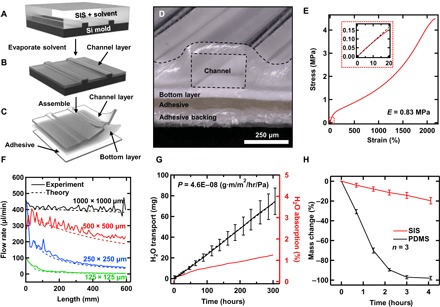
“…robust bonding and reliable sweat collection while underwater; and (v) approaches for integrating waterproof flexible/stretchable electronic devices that allow interrogation of the underlying tissue for additional, complementary sensing modalities ( 36 , 37 ).”
Self-citationAn ultra-lightweight design for imperceptible plastic electronics
Kaltenbrunner, M., Sekitani, T., Reeder, J., Yokota, T., Kuribara, K., Tokuhara, T., Drack, M., Schwödiauer, R., Graz, I., Bauer-Gogonea, S., et al. (2013) · Nature · doi:10.1038/nature12314 · Cited by 2,485
Self-citationA review of wearable sensors and systems with application in rehabilitation
Patel, S., Park, H., Bonato, P., Chan, L., & Rodgers, M. (2012) · Journal of NeuroEngineering and Rehabilitation · doi:10.1186/1743-0003-9-21 · Cited by 2,396
A Survey on Wearable Sensor-Based Systems for Health Monitoring and Prognosis
Pantelopoulos, A., & Bourbakis, N. G. (2010) · IEEE Transactions on Systems Man and Cybernetics Part C (Applications and Reviews) · doi:10.1109/tsmcc.2009.2032660 · Cited by 2,296
ACSM Position Stand: Exercise and Fluid Replacement
Convertino, V. A., Armstrong, L. E., Coyle, E. F., Mack, G. W., Sawka, M. N., Senay, L. C., & Sherman, W. M. (1996) · Medicine & Science in Sports & Exercise · doi:10.1097/00005768-199610000-00045 · Cited by 1,965
Paper-based microfluidic point-of-care diagnostic devices
Yetisen, A. K., Akram, M. S., & Lowe, C. R. (2013) · Lab on a Chip · doi:10.1039/c3lc50169h · Cited by 1,943
Bariya, M., Nyein, H. Y. Y., & Javey, A. (2018) · Nature Electronics · doi:10.1038/s41928-018-0043-y · Cited by 1,486
A soft, wearable microfluidic device for the capture, storage, and colorimetric sensing of sweat
Koh, A., Kang, D., Xue, Y., Lee, S., Pielak, R. M., Kim, J., Hwang, T., Min, S., Banks, A., Bastien, P., et al. (2016) · Science Translational Medicine · doi:10.1126/scitranslmed.aaf2593 · Cited by 1,308
Self-citationGas sorption, diffusion, and permeation in poly(dimethylsiloxane)
Merkel, T. C., Bondar, V. I., Nagai, K., Freeman, B. D., & Pinnau, I. (2000) · Journal of Polymer Science Part B: Polymer Physics · doi:10.1002/(sici)1099-0488(20000201)38:3<415::aid-polb8>3.0.co;2-z · Cited by 1,178
Research works printed but not linked: 2
- R. Soler, M. Echegaray, M. A. Rivera, Thermal responses and body fluid balance of competitive male swimmers during a training session. J. Strength Cond. Res. 17, 362–367 (2003).
- F. M. White Fluid Mechanics (WCB McGraw-Hill Boston ed. 4 1999).
Cited by
A laser-engraved wearable sensor for sensitive detection of uric acid and tyrosine in sweat
Yang, Y., Song, Y., Bo, X., Min, J., Pak, O. S., Zhu, L., Wang, M., Tu, J., Kogan, A., Zhang, H., et al. (2020) · Nature Biotechnology · doi:10.1038/s41587-019-0321-x · Cited by 1,270
Lim, H., Kim, H. S., Qazi, R., Kwon, Y., Jeong, J., & Yeo, W. (2020) · Advanced Materials · doi:10.1002/adma.201901924 · Cited by 1,002
Wearable and flexible electrochemical sensors for sweat analysis: a review
Gao, F., Liu, C., Zhang, L., Liu, T., Wang, Z., Song, Z., Cai, H., Fang, Z., Chen, J., Wang, J., et al. (2023) · Microsystems & Nanoengineering · doi:10.1038/s41378-022-00443-6 · Cited by 764
Skin-Interfaced Wearable Sweat Sensors for Precision Medicine
Min, J., Tu, J., Xu, C., Lukas, H., Shin, S., Yang, Y., Solomon, S. A., Mukasa, D., & Gao, W. (2023) · Chemical Reviews · doi:10.1021/acs.chemrev.2c00823 · Cited by 712
Wireless battery-free wearable sweat sensor powered by human motion
Song, Y., Min, J., Yu, Y., Wang, H., Yang, Y., Zhang, H., & Gao, W. (2020) · Science Advances · doi:10.1126/sciadv.aay9842 · Cited by 652
Metadata
- Authors
- Reeder, J. T., Choi, J., Xue, Y., Gutruf, P., Hanson, J., Liu, M., Ray, T., Bandodkar, A. J., Avila, R., Xia, W., Krishnan, S., Xu, S., Barnes, K., Pahnke, M., Ghaffari, R., Huang, Y., & Rogers, J. A.
- Affiliations
- Northwestern University (US)
- University of Illinois Urbana-Champaign (US)
- Gatorade Sports Science Institute (US)
- Corresponding author
- Rogers, John A.
- ORCID
- Venue
- Science Advances
- Published
- 2019-01-04
- Volume
- 5
- Issue
- 1
- Pages
- eaau6356-eaau6356
- ISSN
- 2375-2548 (ISSN-L)
- PMC
- PMC6357724
- OpenAlex
- W2911835428
- Cited by
- 308
- References
- 50
- Citations by year
- 2026: 31 · 2025: 37 · 2024: 36 · 2023: 36 · 2022: 45 · 2021: 60 · 2020: 39 · 2019: 24
- FWCI
- 14.79
- Type
- journal article
- Language
- en
- Open access
- gold
- doi.org
- Licence
- cc-by-nc
- Locations
- Science Advances (publishedVersion, cc-by-nc)
- Europe PMC (PubMed Central) (publishedVersion, cc-by-nc)
- PubMed Central (publishedVersion, cc-by-nc)
- PubMed (publishedVersion)
- Funders
- Simpson Querrey Institute for BioNanotechnology
- Gatorade Sports Science Institute
- Topics
- Physical Sciences › Engineering › Biomedical Engineering › Advanced Sensor and Energy Harvesting Materials
- Physical Sciences › Engineering › Biomedical Engineering › Microfluidic and Capillary Electrophoresis Applications
- Physical Sciences › Engineering › Biomedical Engineering › Biosensors and Analytical Detection
- Keywords
- sweat collection, sweat biomarkers, sweat chloride, sweat rate, skin temperature monitoring, infrared thermography, aquatic environment, hydration monitoring, skin adhesion, evaporation reduction
- MeSH terms
- Wearable Electronic Devices, Chlorides, Epidermis, Equipment Design, Humans, Seawater, Skin, Sweat, Swimming, Temperature, Thermography, Biosensing Techniques, Biomarkers, Microfluidics, Lab-On-A-Chip Devices
About these checks
Registry, retraction, Cites and statistics results are computed, not judged, with one exception: a printed reference that no index lists is read once by a model before it counts as a citation error. Claims are extracted by a model and kept only when their quote appears verbatim in the text; each cited source is then checked, with a model’s help, for whether it says what the claim relies on. Those verdicts can be wrong — read the claim’s quote and the cited source before relying on one.
Statistics and arithmetic are recomputed, not judged.
Confidence bands are shown only for fields calibrated on our annotated test set. None is calibrated yet, so no band is shown.
What counts as a claim ›How we measure confidence ›How we check this ›
Are you an author, or do you see a problem with this page? Request a review
Data sources
Bibliographic data: Semantic Scholar, OpenAlex, Crossref.
Contains information from the Semantic Scholar Academic Graph Datasets, made available under the ODC Attribution License (ODC-BY 1.0).
Semantic Scholar’s data is described in: Kinney, R., et al. (2023). The Semantic Scholar Open Data Platform. arXiv:2301.10140.
