

The Archean atmosphere
Open accessThe DOI matches its Crossref record; 286 of the 286 references it cites were found in a registry or an index; 98 of the 330 sources its claims cite were checked for support.
Abstract
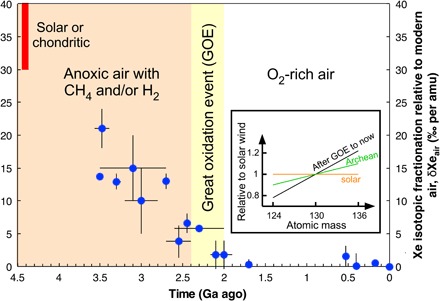
times modern amounts, respectively. The greenhouse gas concentrations were sufficient to offset a fainter Sun. Climate moderation by the carbon cycle suggests average surface temperatures between 0° and 40°C, consistent with occasional glaciations. Isotopic mass fractionation of atmospheric xenon through the Archean until atmospheric oxygenation is best explained by drag of xenon ions by hydrogen escaping rapidly into space. These data imply that substantial loss of hydrogen oxidized the Earth. Despite these advances, detailed understanding of the coevolving solid Earth, biosphere, and atmosphere remains elusive, however.
Overview
CoChat Summary
TL;DR
This review synthesizes proxies and models for the Archean atmosphere (4–2.5 Ga), concluding it was anoxic with negligible O2 and likely enriched in CO2 and CH4, with N2 as a bulk gas and a mostly moderate climate. It highlights major uncertainties in gas levels and the role of life, especially oxygenic photosynthesis and the later Great Oxidation Event.
Key findings
- O2 was extremely low: sulfur mass-independent fractionation indicates ground-level O2 <10−6 PAL (<0.2 ppmv for 1-bar air) before 2.4 Ga, while local “oxygen oases” are estimated at 0.001–0.017 mM O2 (0.4–7% of present).
- N2 and pressure were likely not much higher than today: fluid inclusions give pN2 <1.0 bar at 3.3 Ga and <1.1 bar at 3.5–3.0 Ga; vesicles imply 0.23 ± 0.23 bar at 2.7 Ga; raindrop imprints give a probable limit of <0.52–1.2 bar.
- CO2 and CH4 were important greenhouse gases: paleosol estimates include 0.03–0.15 bar CO2 at 2.77 Ga, 0.02–0.75 bar at 2.75 Ga, and 0.05–0.15 bar at 2.46 Ga; CH4 >20 ppmv is required for S-MIF, and xenon isotopes suggest >~5000 ppmv at ~3.5 Ga.
- Climate was probably mostly moderate: with a Sun 25–30% fainter at 4 Ga, carbonate-silicate models give 0–40°C and seawater pH 6.4–7.4; glacial rocks at 3.5, 2.9, and 2.7 Ga argue against a persistently hot Archean.
Methods
- This is a review/synthesis, not a primary study; it covers the Archean eon from 4 to 2.5 Ga and draws on proxies from rocks, minerals, fluid inclusions, paleosols, raindrop imprints, vesicles, and isotopic records including S-MIF, Xe, N, and C.
- The paper compiles constraints in Table 1 and figures, compares proxy estimates with photochemical, climate, and carbon-cycle models, and discusses the Hadean context and the Great Oxidation Event.
Limitations
- The paper states that limited proxy data leave major uncertainties about exact atmospheric gas levels over time; direct evidence for Archean CO2 remains scanty; when and whether an organic haze formed is uncertain; and knowledge of Archean climatic variability is meager.
- Several proxies are debated: raindrop paleopressure has been criticized but defended; putative Archean biomarkers suffer contamination; some O2 “whiffs” are disputed as post-GOE alteration; siderite is omitted as a pCO2 proxy because it appears diagenetic; and an alternative Xe explanation via organic hazes is considered problematic.
- Evident from the text: as a review, its conclusions depend on cited studies and models, and many constraints are indirect, model-dependent, or permissive rather than definitive.
Model-written summary. Check it against the paper before relying on it.
Integrity signals
Registry
Cites
Statistics
Figures



Verification
Claims the paper makes
78 Valid · 10 Not valid · 121 Not checked · 87 Own results and interpretations
Some cited sources support this claim and some don’t — read each source’s verdict below.
In the paper
“However, observations are unsupportive: Fast mass loss only happens in the first ~200 Ma after Sun-like stars form (207, 208).”
§ The Archean atmosphere > THE ARCHEAN CLIMATE > The Faint Young Sun problem
What the sources say
- Disputedcites [207] Wood B. E., Muller H. R., Zank G. P., Linsky J. L., Redfield S., New mass-loss measurements from astrospheric Lyman-alpha absorption. Astrophys. J. 628, L143– L146 (2005). sourceExperimental — accuracy not yet measured
Figure 3(b) and its accompanying discussion (page not provided) place the inferred weakening of the solar wind at about 0.7 Gyr when looking back toward younger ages. The paper therefore does not confine strong mass loss to the first ~200 million years; it suggests a different age pattern, with especially active, younger stars having weaker winds than the trend would predict. (LLM, conf=0.86)
Checked by a reasoning model — may be wrong.
- Partly supportedcites [208] Minton D. A., Malhotra R., Assessing the massive young sun hypothesis to solve the warm young Earth puzzle. Astrophys. J. 660, 1700– 1706 (2007). sourceExperimental — accuracy not yet measured
Section 3 (Stellar Winds of Sun-like Stars; page unavailable) says observations indicate that stellar-wind flux decreases on a timescale of order 10^8 years and do not support the prolonged mass loss required by the hypothesis. It does not establish a cutoff at approximately 200 million years or say that fast mass loss happens only before then; the Introduction also cautions that the observations cannot rule out a different history for the Sun. (LLM, conf=0.86)
plain- Asserted: passes — The authors put it forward as true.
- Checkable: passes — It can be checked against evidence.
- Load-bearing: passes — The paper’s conclusions depend on it.
- Based: passes — The paper gives a reason why it holds.
- Disputed
The sources with a verdict support this claim; the rest weren’t checked yet, have no full text we could read, or their verdicts aren’t rated yet.
In the paper
“At 4 Ga ago, solar luminosity was 25 to 30% lower than today (12, 13)”
§ The Archean atmosphere > INTRODUCTION: BACKGROUND TO ARCHEAN EARTH
What the sources say
- Not checked — no full text of the sourcecites [12] Gough D. O., Solar interior structure and luminosity variations. Sol. Phys. 74, 21– 34 (1981). source
- Supportedcites [13] Bahcall J. N., Pinsonneault M. H., Basu S., Solar models: Current epoch and time dependences, neutrinos, and helioseismological properties. Astrophys. J. 555, 990– 1012 (2001). source
Table 2 (§3.1) gives the Sun’s present age as 4.57 billion years and its luminosity at solar age 0.6 billion years as 0.744 of today’s. Four billion years ago corresponds to solar age about 0.57 billion years, when luminosity was therefore about 26% lower than today. (LLM, conf=0.94)
plain- Asserted: passes — The authors put it forward as true.
- Checkable: passes — It can be checked against evidence.
- Load-bearing: passes — The paper’s conclusions depend on it.
- Based: passes — The paper gives a reason why it holds.
The sources with a verdict support this claim; the rest weren’t checked yet, have no full text we could read, or their verdicts aren’t rated yet.
In the paper
“Liquid water under a fainter Sun likely implies more abundant greenhouse gases than today (14, 15).”
§ The Archean atmosphere > INTRODUCTION: BACKGROUND TO ARCHEAN EARTH
What the sources say
- Not checked — no full text of the sourcecites [14] Sagan C., Mullen G., Earth and Mars: Evolution of atmospheres and surface temperatures. Science 177, 52– 56 (1972). 17756316 source
- Supportedcites [15] Feulner G., The faint young Sun problem. Rev. Geophys. 50, RG2006 (2012). source
Section 5.5, paragraph 102 (page unavailable), calls an enhanced greenhouse effect the most likely solution to the faint young Sun problem, while acknowledging uncertainty about the gases involved. Section 2.2 discusses the cooling expected under a fainter Sun. Together, these support the claim’s qualified inference that liquid water on early Earth likely required more greenhouse warming than today. (LLM, conf=0.90)
hedgedstates a possible cause- Asserted: passes — The authors put it forward as true.
- Checkable: passes — It can be checked against evidence.
- Load-bearing: passes — The paper’s conclusions depend on it.
- Based: passes — The paper gives a reason why it holds.
Every source the paper cites for this claim was checked and supports it.
In the paper
“Iron formations (IFs), which are marine chemical sedimentary rocks rich in iron and silica [15 to 40 weight % (wt %) Fe and 40 to 60 wt % SiO2], indicate that the deep Archean ocean contained Fe2+(aq) and so was anoxic [e.g., (72)].”
§ The Archean atmosphere > WHAT WAS THE ARCHEAN ATMOSPHERE MADE OF? > Negligible Archean O2 but oxygen oases after oxygenic photosynthesis evolved
What the sources say
- Supportedcites [72] Konhauser K. O., Planavsky N. J., Hardisty D. S., Robbins L. J., Warchola T. J., Haugaard R., Lalonde S. V., Partin C. A., Oonk P. B. H., Tsikos H., Lyons T. W., Bekker A., Johnson C. M., Iron formations: A global record of neoarchaean to palaeoproterozoic environmental history. Earth Sci. Rev. 172, 140– 177 (2017). source
Section 2.1 links Archaean iron-formation deposition to the transport of dissolved Fe(II) under less oxidising conditions. Section 2.6 states that deep waters remained anoxic during iron-formation deposition, and Section 4 calls the Archaean deep-ocean state ferruginous (anoxic). Page numbers are unavailable in our copy. (LLM, conf=0.92)
hedgedstates a cause- Asserted: passes — The authors put it forward as true.
- Checkable: passes — It can be checked against evidence.
- Load-bearing: passes — The paper’s conclusions depend on it.
- Based: passes — The paper gives a reason why it holds.
- Supported
The cited sources support only part of this claim — read each source’s verdict below.
In the paper
“However, consumption of CO2 in the weathering of impact ejecta by carbonic acid suggests a cool early Hadean surface near 0°C under the faint Sun (35, 36).”
§ The Archean atmosphere > A BRIEF OVERVIEW OF THE ENVIRONMENT BEFORE THE ARCHEAN
What the sources say
- Not checked — no full text of the sourcecites [35] Sleep N. H., Zahnle K., Carbon dioxide cycling and implications for climate on ancient Earth. J. Geophys. Res. 106, 1373– 1399 (2001). source
- Partly supportedcites [36] Kadoya S., Krissansen-Totton J., Catling D. C., Probable cold and alkaline surface environment of the Hadean earth caused by impact ejecta weathering. Geochem. Geophys. Geosyst. 21, e2019GC008734 (2019). sourceExperimental — accuracy not yet measured
The Introduction says carbonic-acid weathering of impact ejecta lowers atmospheric CO₂, and Results §4.1 links that consumption to a probably cold climate at 4.3 Ga. The specific temperature is less well supported: the Conclusions give a modeled value of 259.2 K (about −14°C), with substantial uncertainty, rather than a temperature near 0°C. No page numbers are available in our copy. (LLM, conf=0.83)
hedgedstates a cause- Asserted: passes — The authors put it forward as true.
- Checkable: passes — It can be checked against evidence.
- Load-bearing: unclear — It is unclear whether the paper’s conclusions depend on it.
- Based: passes — The paper gives a reason why it holds.
182 more claims · 47 with their cited sources checked
Create a free account to see all 296 claims and to verify the 3 references still open.
- It may state two separate claims as one. 65
- Probably not a substantial claim. 62
- The quote only partly states this claim. 1
Claims other papers make about this one
Each is checked against this paper’s own text: does it say what the citing paper says it does?
The cited source says what the claim attributes to it.
In the citing paper
“liquid water was already present at the surface during the Hadean (4.56 Ga to ≈ 4.0 Ga 1 ) and Archean eons ( ≈ 4.0 Ga to 2.4 Ga)”
From The young Sun's XUV-activity as a constraint for lower CO2-limits in the Earth's Archean atmosphere (2021) · cites this paper as Catling and Zahnle, 2020
Self-check
Percentages, sums and reported differences re-computed from the paper’s own numbers.
Each contradiction between two passages listed here was confirmed by an independent check.
Rated minor: it would not touch a result — a value no result rests on, a p-value that stays on the same side of the significance level, or a conflict that is clerical, resolved elsewhere in the paper, or outside its own findings.
In the paper
§ The Archean atmosphere > CONCLUSIONS AND OUTLOOK
“The secular decline of CO2 is a feedback effect in the geological carbon cycle induced by decreasing solar luminosity.”
§ The Archean atmosphere > INTRODUCTION: BACKGROUND TO ARCHEAN EARTH
“In addition to a gradual increase in solar luminosity, slow changes in the solid Earth over time provided boundary conditions for atmospheric evolution.”
Rated minor: it would not touch a result — a value no result rests on, a p-value that stays on the same side of the significance level, or a conflict that is clerical, resolved elsewhere in the paper, or outside its own findings.
In the paper
§ The Archean atmosphere > WHAT WAS THE ARCHEAN ATMOSPHERE MADE OF?
“Surface barometric pressure | <0.52–1.1 bar | 2.7 Ga | Maximum fossil raindrop imprint size (57)”
§ The Archean atmosphere > WHAT WAS THE ARCHEAN ATMOSPHERE MADE OF? > Nitrogen gases in the Archean
“the largest size of 2.7-Ga-old fossil raindrop imprints provides a conservative limit of paleopressure of <2.1 bar and a probable limit of <0.52 to 1.2 bar (57).”
Citations
Cites
An early Cenozoic perspective on greenhouse warming and carbon-cycle dynamics
Zachos, J. C., Dickens, G. R., & Zeebe, R. E. (2008) · Nature · doi:10.1038/nature06588 · Cited by 3,550 · cited 1×
“In the Archean, any indication of polar environments from glacial rocks would suggest a relatively cool world given that since ~34Ma, a climate with poles covered in ice has required average global temperatures below ~20°C (223).”
BackgroundThe rise of oxygen in Earth's early ocean and atmosphere
Lyons, T. W., Reinhard, C. T., & Planavsky, N. J. (2014) · Nature · doi:10.1038/nature13068 · Cited by 2,810
A negative feedback mechanism for the long‐term stabilization of Earth's surface temperature
Walker, J. C. G., Hays, P. B., & Kasting, J. F. (1981) · Journal of Geophysical Research: Oceans · doi:10.1029/jc086ic10p09776 · Cited by 2,310
The Chemical Evolution of the Atmosphere and Oceans
Holland, H. D. (1984) · doi:10.1515/9780691220239 · Cited by 1,836
Atmospheric Influence of Earth's Earliest Sulfur Cycle
Farquhar, J., Bao, H., & Thiemens, M. (2000) · Science · doi:10.1126/science.289.5480.756 · Cited by 1,805
Wilde, S. A., Valley, J. W., Peck, W. H., & Graham, C. M. (2001) · Nature · doi:10.1038/35051550 · Cited by 1,744 · cited 1×
“3-Ga-old zircons was possibly inherited from (18)O-enriched, weathered surface rocks thatwere later buried and melted, which implies the presence of surficial liquid water and even land (17, 18).”
BackgroundThe Redox State of Earth's Mantle
Frost, D. J., & McCammon, C. A. (2008) · Annual Review of Earth and Planetary Sciences · doi:10.1146/annurev.earth.36.031207.124322 · Cited by 1,134 · cited 1×
“Therefore, the Hadean atmosphere and mantle were probably initially highly reducing, before subsequent oxidation either by hydrogen escape (29) or disproportionation of mantle FeO accompanied by Fe loss to the core (30, 31).”
BackgroundGEOCARBSULF: A combined model for Phanerozoic atmospheric O2 and CO2
Berner, R. A. (2006) · Geochimica et Cosmochimica Acta · doi:10.1016/j.gca.2005.11.032 · Cited by 1,120 · cited 1×
“The post-Devonian black line for O2 evolution approximately represents curves from calculations of C and S isotopic mass balance (254, 255).”
BackgroundTracing the stepwise oxygenation of the Proterozoic ocean
Scott, C., Lyons, T. W., Bekker, A., Shen, Y., Poulton, S. W., Chu, X., & Anbar, A. D. (2008) · Nature · doi:10.1038/nature06811 · Cited by 1,098
A Whiff of Oxygen Before the Great Oxidation Event?
Anbar, A. D., Duan, Y., Lyons, T. W., Arnold, G. L., Kendall, B., Creaser, R. A., Kaufman, A. J., Gordon, G. W., Scott, C., Garvin, J., et al. (2007) · Science · doi:10.1126/science.1140325 · Cited by 1,024
Research works printed but not linked: 8
- D. C. Catling in Treatise on Geochemistry H. D. Holland K. K. Turekian Eds. (Elsevier 2014) vol. 8 pp. 191–233.
- K. J. Zahnle D. C. Catling in Special Paper 504: Early Earth's Atmosphere and Surface Environment G. H. Shaw Ed. (Geological Soc. of America 2014) pp. 37–48.
- J. F. Kasting in Special Paper 504: Early Earth’s Atmosphere and Surface Environment G. H. Shaw Ed. (Geological Society of America 2014) pp. 19–28.
- N. J. Page in Earth’s Pre-Pleistocene Glacial Record M. J. Hambrey N. B. Harland Eds. (Cambridge Univ. Press 1981) pp. 821–823.
- R. T. Gregory in Stable Isotope Geochemistry: A Tribute to Samuel Epstein H. P. Taylor J. R. O'Neil I. R. Kaplan Eds. (Min. Soc. America 1991) pp. 65–76.
- A. Knoll in The Cyanobacteria: Molecular Biology Genetics and Evolution A. Herrero E. Flores Eds. (Caister Academic Press 2008) pp. 1–19.
- D. C. Catling, K. J. Zahnle, C. P. McKay, What caused the second rise of O2 in the late Proterozoic? Methane, sulfate. and irreversible oxidation. Astrobiology 2, 569 (2002).
- J. W. Murray K. Stewart S. Kassakian M. Krynytzky D. DiJulio in The Black Sea Flood Question: Changes in Coastline Climate and Human Settlement V. Yanko-Hombach A. S. Gilbert N. Panin P. M. Dolukhanov Eds. (Springer Netherlands 2007) pp. 1–21.
Cited by
Items 301–400 of 571
Fisher, T. M., Janin, E., & Walker, S. I. (2025) · The Planetary Science Journal · doi:10.3847/psj/adcc27 · Cited by 8
“Our work shows how network metrics may be valuable as “ antibiosigna-tures ” ( E. W. Schwieterman et al. 2018; N. F. Wogan & D. C. Catling 2020 ) , with, for example, log < k > or log < l > smaller than 13 being strongly indicative of the absence of methanogenesis as found in life as we know it.”
Reproduction of I‐type cosmic spherules and characterization in an Fe‐Ni‐O system
Shao, H., Isobe, H., & Miao, B. (2020) · Meteoritics and Planetary Science · doi:10.1111/maps.13563 · Cited by 4
“(Catling and Zahnle 2020; Payne et al. 2020).”
Introduction—First Billion Years: Habitability
Valentín, E. G. R., Filiberto, J. R., Lynch, K. L., Mamajanov, I., Lyons, T. W., Schulte, M. D., & Méndez, A. (2021) · Astrobiology · doi:10.1089/ast.2020.2314 · Cited by 4
“…oceans *4.3 billion years ago (Ga) (Mojzsis et al., 2001; Wilde et al., 2001), the single most important environmental transformation in history may have been the first permanent rise of atmospheric oxygen (O2) around 2.3 to 2.4 Ga [as reviewed in Lyons et al. (2014) and Catling and Zahnle (2020)].”
BackgroundInfluentialPast and present dynamics of the iron biogeochemical cycle
Dauphas, N., Heard, A. W., Rêgo, E. S., Rouxel, O. J., Marin‐Carbonne, J., Pasquier, V., Bekker, A., & Rowley, D. B. (2024) · Elsevier eBooks · doi:10.1016/b978-0-323-99762-1.00059-0 · Cited by 10
Controls of Atmospheric Methane on Early Earth and Inhabited Earth-like Terrestrial Exoplanets
Akahori, A., Watanabe, Y., & Tajika, E. (2024) · The Astrophysical Journal · doi:10.3847/1538-4357/ad47f3 · Cited by 6
Resurrected Rubisco suggests uniform carbon isotope signatures over geologic time
Kędzior, M., Garcia, A. K., Li, M., Taton, A., Adam, Z., Young, J. N., & Kacar, B. (2021) · bioRxiv · doi:10.1101/2021.05.31.446354 · Cited by 19
Synergies between Venus & Exoplanetary ObservationsPreprint
Way, M. J., Ostberg, C. M., Foley, B. J., et al. (2022) · doi:10.1002/essoar.10512576.1 · Cited by 4
On the nature of the earliest known lifeformsPreprint
Kanaparthi, D., Westall, F., Lampe, M., Zhu, B., Boesen, T. P., Scheu, B., Klingl, A., Schwille, P., & Lueders, T. (2021) · bioRxiv (Cold Spring Harbor Laboratory) · doi:10.1101/2021.08.16.456462 · Cited by 4
“While the precise environmental conditions of early Earth remain uncertain, a growing consensus within the scientific community suggests that surface temperatures on Archaean Earth ranged between 26° and 35°C (30–32).”
BackgroundDwivedi, S., & Ahmad, I. Z. (2023) · Springer eBooks · doi:10.1007/978-981-99-5022-5_4 · Cited by 3
Jiang, W., Wu, X. G., Yang, H., Fu, J., Zeng, Q., Li, S., Luo, R., Yang, Y., Lin, X., & Zhu, J. (2025) · Minerals · doi:10.3390/min15111123 · Cited by 3
Implausibility of hypophosphate on the early Earth and today
Gull, M., Centlivre, J. P., Feng, T., Smith, B., Johnson-Finn, K. N., Rogers, K. L., McCallum, S. A., & Pasek, M. A. (2025) · Discover Chemistry. · doi:10.1007/s44371-025-00340-7 · Cited by 3
“Furthermore, the highly reduced phosphorus species phosphine (PH₃), if present on the early Earth, would have undergone rapid oxidation, even under the comparatively less oxidizing conditions of the early atmosphere [37, 38].”
Onset of persistent surface ocean oxygenation during the Great Oxidation Event
Heard, A. W., Ostrander, C. M., Shu, Y., Bekker, A., Poulton, S. W., & Nielsen, S. G. (2025) · Nature Communications · doi:10.1038/s41467-025-66323-5 · Cited by 4
“After the GOE, there was a suf fi cient p O 2 , above a threshold of >10 – 6 of the present atmospheric level (PAL), to prevent preservation of S-MIF signatures 9 .”
Chemical Routes to Primitive Membranes: Prebiotic Lipid Formation at the Origin of Life
Shvetsova, A., & Fiore, M. (2026) · Life · doi:10.3390/life16030497 · Cited by 3
“H 2 is a very volatile gas and was slowly escaping from the atmosphere [58].”
Kobayashi, K., Airapetian, V., Udo, T., Mouri, S., Kebukawa, Y., Fukuda, H., Oguri, Y., Hagura, N., Way, M. J., Gronoff, G., et al. (2026) · The Astrophysical Journal Letters · doi:10.3847/2041-8213/ae5491 · Cited by 5
Sulfur in the Earth’s Atmosphere
Brimblecombe, P., & Norman, A. (2026) · Springer geochemistry · doi:10.1007/978-3-032-07705-9_7 · Cited by 6
Рудольфовна, Л. Е., & Semin, B. К. (2022) · Origins of Life and Evolution of Biospheres · doi:10.1007/s11084-022-09625-8 · Cited by 4
“It was suggested that the origin of oxygenic photosynthesis ranges from 3.7 Ga to the Great Oxidation Event at ~ 2.4 Ga (Bekker et al. 2004; Hohmann-Marriott and Blankenship 2011; Johnson et al. 2013; Frei et al. 2016; Cardona et al. 2019; Catling and Zahnle 2020; Planavsky et al. 2021).”
BackgroundInfluentialHadean and Archean (4600–2500 Ma)
Davies, H. S., Duarte, J. C., & Green, M. (2022) · Elsevier eBooks · doi:10.1016/b978-0-323-90851-1.00020-0 · Cited by 3
Fox, D., McGee, L., Farkaš, J., Payne, J. L., Spinks, S., Barham, M., & Aspandiar, M. F. (2023) · Geochemistry Geophysics Geosystems · doi:10.1029/2023gc011019 · Cited by 3
Multiple Habitable Phases on Outer Exosolar Worlds
Sparrman, V., Bladh, S., & Way, M. J. (2024) · The Astrophysical Journal · doi:10.3847/1538-4357/ad1685 · Cited by 4
Bakaeva, A., Chazhengina, S. Y., & Светов, С. А. (2024) · Palaeogeography Palaeoclimatology Palaeoecology · doi:10.1016/j.palaeo.2024.112319 · Cited by 4
Agangi, A., Hofmann, A., Echigo, T., Bolhar, R., Araoka, D., Mashoene, V., Ndhlovu, L. T., Takahashi, R., & Manalo, P. C. (2024) · Chemical Geology · doi:10.1016/j.chemgeo.2024.122442 · Cited by 5
Temporal variation in oxygen isotopes of peraluminous granites derived from sedimentary sources
Bucholz, C. E., & Hernández‐Montenegro, J. D. (2024) · Lithos · doi:10.1016/j.lithos.2024.107864 · Cited by 4
Tamanna, S. S., Boden, J. S., Kaiser, K. M., Wannicke, N., Hoering, J., Sánchez‐Baracaldo, P., Deponte, M., Frankenberg‐Dinkel, N., & Gehringer, M. M. (2024) · Geobiology · doi:10.1111/gbi.70005 · Cited by 5
Glass, J. B., & Hörst, S. M. (2025) · Annual Review of Earth and Planetary Sciences · doi:10.1146/annurev-earth-040523-124821 · Cited by 5
Memories of the deep past: The importance of the soil memory concept for paleopedology studies
Nascimento, D. L., & Ladeira, F. S. B. (2025) · CATENA · doi:10.1016/j.catena.2025.108945 · Cited by 3
Jiang, W. Q., Yan, X., Tan, X., Garzanti, E., Li, W., Liu, J., & Luo, L. (2025) · International Journal of Earth Sciences · doi:10.1007/s00531-025-02503-4 · Cited by 3
“Palaeo-climate has experienced warm and cold fluctuations at various timescales throughout the Earth’s history (Robert and Chaussidon 2006; Catling and Zahnle 2020; Scotese et al. 2021).”
The diversity of exoplanetary environments and the search for signs of life beyond Earth
Seager, S., Petkowski, J. J., & Bains, W. (2025) · Philosophical Transactions of the Royal Society B Biological Sciences · doi:10.1098/rstb.2024.0101 · Cited by 3
“This includes the Archean eon when the atmosphere of Earth had a reducing character, possibly containing significant amounts of CH 4 , (Catling and Zahnle, 2020), as well as the oxidized atmosphere after the Great Oxygenation Event.”
Luo, G., 朱, 祥., Wang, S., 张, 世., & 焦, 超. (2022) · SCIENTIA SINICA Terrae · doi:10.1360/sste-2021-0297 · Cited by 3
A New Ecological and Evolutionary Perspective on the Emergence of Oxygenic Photosynthesis
Stevenson, D. S. (2022) · Astrobiology · doi:10.1089/ast.2021.0165 · Cited by 3
“Steady expansion of the crown cyanobacteria is coincidental with emergence of continental crust, while rapid expansion coincides with GOE.”
InfluentialHu, Q., Luo, G., & Li, Y. (2023) · Chinese Science Bulletin (Chinese Version) · doi:10.1360/tb-2023-0109 · Cited by 4
On a Scientific Approach for Deep Time Investigations
Harrison, T. M. (2023) · Perspectives of Earth and Space Scientists · doi:10.1029/2022cn000193 · Cited by 4
“While the plate boundary interpretation remains controversial, the former—clearly antithetic to the old paradigm (e.g., Cloud, 1972)—is now widely accepted (e.g., Catling & Zahnle, 2020; Javaux, 2019; Rollinson, 2008; Shirey et al., 2008).”
BackgroundOxygen bounty for Earth-like exoplanets: spectra of Earth through the Phanerozoic
Payne, R. C., & Kaltenegger, L. (2023) · Monthly Notices of the Royal Astronomical Society Letters · doi:10.1093/mnrasl/slad147 · Cited by 3
Hu, T., Liu, L., Chi, G., Robbins, L. J., Liu, H., Zhou, W., Santosh, M., Yu, Z., Kang, S., Hou, Q., et al. (2023) · International Geology Review · doi:10.1080/00206814.2023.2272178 · Cited by 3
“2016); (3) a rise of atmospheric oxygen levels from 10 −5 to 10 −2 times present atmospheric level, a period known as the Great Oxidation Event (GOE) (Lyons et al. 2014, 2021; Catling and Zahnle 2020); and (4) a decrease in mantle potential temperatures (Zhou and Zhai 2022).”
BackgroundModern analogs for ammonia flux from terrestrial hydrothermal features to the Archean atmosphere
Felix, J. D. (2024) · Scientific Reports · doi:10.1038/s41598-024-51537-2 · Cited by 3
“This is a scenario which is still debated in the literature 2,7,32 .”
BackgroundInfluentialThe evolutionary divergence of Mars, Venus, and Earth
Hamano, K., Gillmann, C., Golabek, G., Lourenço, D. L., & Westall, F. (2024) · Elsevier eBooks · doi:10.1016/b978-0-323-99762-1.00104-2 · Cited by 7
Katz, J. I., & Wang, S. (2021) · Monthly Notices of the Royal Astronomical Society · doi:10.1093/mnras/stab718 · Cited by 3
Hypercapnia-inducible factor: a hypothesis
Muradian, K. K., & Fraifeld, V. E. (2021) · Ageing & Longevity · doi:10.47855/jal9020-2021-3-4 · Cited by 3
Enzingmüller‐Bleyl, T. C., Boden, J. S., Herrmann, A. J., Ebel, K. W., Sánchez‐Baracaldo, P., Frankenberg‐Dinkel, N., & Gehringer, M. M. (2021) · bioRxiv (Cold Spring Harbor Laboratory) · doi:10.1101/2021.11.08.467730 · Cited by 3
Simkovsky, R., & Carcellar, F. (2023) · Elsevier eBooks · doi:10.1016/b978-0-323-99982-3.00002-x · Cited by 3
Lyons, J. R. (2025) · Life · doi:10.3390/life15030398 · Cited by 3
“For Archean CH 4 ~1000 ppm, photochemical models predict HCN concentrations of ~100 ppm [2].”
InfluentialConstraining the survival of HCN during cometary impacts
McDonald, C. H., Bonsor, A., Rae, A. S. P., Rimmer, P. B., Anslow, R. J., & Todd, Z. R. (2025) · Icarus · doi:10.1016/j.icarus.2025.116704 · Cited by 10
“There are numerous processes which can synthesise prebiotic molecules within the reducing atmosphere of the early Earth (Catling and Zahnle, 2020), including atmospheric interactions with energetic solar particles (Kobayashi et al., 2023), atmospheric photochemical networks (e.g. Zahnle, 1986; Tian…”
Biogeochemical impact of nickel and urea in the great oxidation event
Ratnayake, D. M., Tanaka, R., & Nakamura, E. (2025) · Communications Earth & Environment · doi:10.1038/s43247-025-02576-8 · Cited by 1
“Based onthese results, itcanbeexpected thatHCN, the source of CN − , would acquire a similar isotopic composition to atmospheric N 2 due to the proposed high CH 4 levels (>5000 ppmv 32 ) in the Archean.”
InfluentialShvetsova, A., Merzoud, L., Lopez, A., Fromentin, É., Baudouin, A., Chermette, H., Daniel, I., Fiore, M., & Strazewski, P. (2025) · Nature Communications · doi:10.1038/s41467-025-63307-3 · Cited by 4
Gordon, K. E. G., Karalidi, T., Bott, K., et al. (2025) · The Astrophysical Journal · doi:10.3847/1538-4357/ae07df · Cited by 2
“The atmosphere is N 2 -dominated with ∼ 0.1% CO 2 and ∼ 0.2% O 2 , following Figure 5 of Catling & Zahnle (2020) for 700 million years ago.”
InfluentialOxygen reductase origin followed the great oxidation event and terminated the Lomagundi excursion
Trost, K., Gennis, R. B., Allen, J. F., Mills, D. B., & Martin, W. F. (2025) · Biochimica et Biophysica Acta (BBA) - Bioenergetics · doi:10.1016/j.bbabio.2025.149575 · Cited by 2
“…mechanisms vary, but tend to emphasize either enhanced O 2 sinks, such as O 2 -consuming reactions with marine and atmospheric reductants [2,36], or diminished O 2 sources, namely extrinsic or intrinsic caps on cyanobacterial primary production, from phosphorus limitation [111], Fe 2+…”
InfluentialAn Archean atmosphere rich in sulfur biomolecules
Reed, N. W., Christensen, C. M., Surratt, J. D., McGlynn, S. E., Wing, B. A., Neubauer, C., Tolbert, M. A., & Browne, E. C. (2025) · Proceedings of the National Academy of Sciences · doi:10.1073/pnas.2516779122 · Cited by 4
Planetary Impacts: Friend or Foe?
Black, B. A., & Bermingham, K. R. (2025) · Astrobiology · doi:10.1177/15311074251399212 · Cited by 3
“Given the tectonic erasure of much of Earth ’ s impact record, the absence of a fossil record of biodiversity prior to the Ediacaran, and the challenges of piecing together ancient climate records, well-preserved Phanerozoic impacts such as the * 66 Ma Chicxulub impact provide useful examples of how isolated large imp…”
InfluentialExtremely cold ocean temperatures in iron formation brine pools of snowball Earth
Lu, K., Feng, L., Mitchell, R. N., Lechte, M. A., & Hoffman, P. F. (2025) · Nature Communications · doi:10.1038/s41467-025-67155-z · Cited by 2
“Also, the repeated occurrence of glacial deposits at 3.5, 2.9, and 2.7 Ga are at odds with claims of a hot Archaean ocean and are more in line with the more temperature estimates 66 , leading to the range of 25°C (±10°C; ref.”
InfluentialParamanick, S., Blackman, E. G., Tarduno, J. A., & Carroll-Nellenback, J. (2025) · Communications Earth & Environment · doi:10.1038/s43247-025-02960-4 · Cited by 4
“We now summarize this in the manuscript in Subsection 4.1.5.”
InfluentialSun, L., Zhang, Y., Li, K., Sun, Z., Huang, R., & Li, L. (2025) · Geochimica et Cosmochimica Acta · doi:10.1016/j.gca.2025.12.038 · Cited by 4
Hohl, S. V., Viehmann, S., Gleißner, P., Martin, A., & Kranendonk, M. J. V. (2026) · Communications Earth & Environment · doi:10.1038/s43247-026-03291-8 · Cited by 3
Hagee, C., Latouf, N., Mandell, A. M., Himes, M. D., Moore, M. D., & Villanueva, G. L. (2026) · The Astronomical Journal · doi:10.3847/1538-3881/ae3c81 · Cited by 2
Yang, Z., Li, Y., Kitadai, N., Yamamoto, M., Ueno, Y., Lu, Y., Li, A., Adachi, K., Yamaguchi, A., Hashizume, D., et al. (2026) · Proceedings of the National Academy of Sciences · doi:10.1073/pnas.2515805123 · Cited by 2
Revisiting the greatness of Earth’s great oxidation
Crockford, P. W., Sugiyama, I., Kipp, M. A., Hao, J., Nelson, L. L., Hemingway, J., Wimmer, S., & Fakhraee, M. (2026) · Communications Earth & Environment · doi:10.1038/s43247-026-03518-8 · Cited by 5
“The fi rmestgeochemicalconstrainttoemergesincetherecognitionof the GOE derives from sedimentary sulfates and sul fi des with a lack of mass independently fractionated sulfur isotope signatures that impose a lower limit on post-GOE p O 2 of ~10 − 7 to 10 − 5 present atmospheric level (PAL) 28 – 31 .”
Progress and prospects in paleoclimate modeling
Zhang, Z., Hu, Y. M., Jiang, D., Tian, J., Zhou, T., Liu, J., & Liu, X. H. (2026) · Science China Earth Sciences · doi:10.1007/s11430-025-1919-6 · Cited by 2
“…of stochastic or long-term processes such as meteorite impacts, volcanic degassing, silicate weathering, plate tectonics, planetary magnetic fields, Earth-Moon system evolution, and Snowball Earth events (Chamber-lain and Hunten, 1989; Sanchez-Lavega, 2011; Catling, 2015; Catling and Zahnle, 2020).”
Progress and persistent questions in understanding the origin of life on Earth
Ansari, A. H. (2026) · Discover Life · doi:10.1007/s11084-026-09753-5 · Cited by 2
Plant fingerprints in the deep Earth
Greber, N. D. (2022) · Nature Geoscience · doi:10.1038/s41561-022-01022-0 · Cited by 2
Geological timeline of significant events on Earth
Joseph, A. (2023) · Elsevier eBooks · doi:10.1016/b978-0-323-95717-5.00020-7 · Cited by 3
Linking impact melt redox with crustal weathering regime
Black, B. A., & Brounce, M. (2023) · Geology · doi:10.1130/g51405.1 · Cited by 2
Bassez, M.-P. (2023) · Origins of Life and Evolution of Biospheres · doi:10.1007/s11084-023-09638-x · Cited by 3
“Indeed, Archean Earth was anoxic, with surface O2 levels that are proposed to be < 10–6 PAL, present atmospheric level (Catling and Zahnle 2020).”
BackgroundOxygenation of the Proterozoic Earth's surface: An evolving story
Kendall, B., & Ostrander, C. M. (2024) · Elsevier eBooks · doi:10.1016/b978-0-323-99762-1.00058-9 · Cited by 6
Eriksson, K. A., & McClung, W. S. (2024) · South African Journal of Geology · doi:10.25131/sajg.127.0001 · Cited by 2
McDonald, B. S., & Partin, C. A. (2024) · Geoscience Canada · doi:10.12789/geocanj.2024.51.207 · Cited by 2
Marine Phosphate Level During the Archean Constrained by the Global Redox Budget
Watanabe, Y., Ozaki, K., & Tajika, E. (2024) · Geophysical Research Letters · doi:10.1029/2023gl108077 · Cited by 8
“…anoxic atmosphere with an oxygen partial pressure ( p O 2 ) 10 6 times smaller than the present atmospheric level until the first rise of atmospheric p O 2 —the Great Oxidation Event (GOE)—at ∼ 2.5– 2.2 Ga (Catling & Zahnle, 2020; Farquhar et al., 2000; Lyons et al., 2014; Pavlov & Kasting, 2002).”
BackgroundInfluentialThe plausibility of origins scenarios requiring two impactors
Anslow, R. J., Bonsor, A., Rimmer, P. B., Rae, A. S. P., McDonald, C. H., & Walton, C. R. (2025) · Proceedings of the Royal Society A Mathematical Physical and Engineering Sciences · doi:10.1098/rspa.2024.0327 · Cited by 5
“There are however a lack of well-preserved rocks, and so the atmospheric surface pressure, and extent of oceanic coverage during the Hadean Earth remain subject to debate [117, 118, 97].”
Transforming a Customized Drone into an Advanced Forensic Investigation Platform
Özer, M. M. (2024) · Lecture notes in networks and systems · doi:10.1007/978-3-031-70924-1_64 · Cited by 3
Deitrick, R., Goldblatt, C., Wolf, E. T., & Robinson, T. D. (2025) · The Planetary Science Journal · doi:10.3847/psj/ad9900 · Cited by 2
Zeng, Z., Li, L., Wang, H., Tao, Y., Lv, Z., Wang, F., & Wang, Y. (2025) · PNAS Nexus · doi:10.1093/pnasnexus/pgaf035 · Cited by 4
“The oxygen-deficient atmosphere of early Earth, with the estimated partial pressures of oxygen ranging from 10 – 5 to 10 – 7 atm (53, 77 – 81), impeded not only the accumulation of oxygen/oxidants but also the development of aerobic metabolic pathways.”
Expansion of the aerobic iron biogeochemical cycle during the Paleoproterozoic Lomagundi event
Ajagunjeun, A. A., Ossa, F. O., Kleinhanns, I. C., Marin‐Carbonne, J., Hofmann, A., Suwaidi, A. A., & Schoenberg, R. (2025) · Communications Earth & Environment · doi:10.1038/s43247-025-02106-6 · Cited by 2
Tectonics and Surface Environments on Early Earth
Korenaga, J. (2025) · Astrobiology · doi:10.1089/ast.2024.0093 · Cited by 4
“Because the geological record suggests that the partial pressure of carbon dioxide ( p CO 2 ) was likely to be lower than 1 bar by * 3.8 Ga (Catling and Zahnle, 2020; Sleep et al., 2014), the operation of plate tectonics in early Earth is required to reduce p CO 2 by two orders of magnitude.”
InfluentialThe atmospheric entry of cometary impactors
Anslow, R. J., Bonsor, A., Todd, Z. R., Wordsworth, R., Rae, A. S. P., McDonald, C. H., & Rimmer, P. B. (2025) · Monthly Notices of the Royal Astronomical Society · doi:10.1093/mnras/staf507 · Cited by 8
The global deep carbon cycle started in the Paleoproterozoic Era
Liu, Z., Zhang, L., Jin, A., Lan, C., Hu, H., & Xu, C. (2025) · Lithos · doi:10.1016/j.lithos.2025.108113 · Cited by 2
Future directions for understanding the coevolution of life and oxygen
Alcott, L., Bowyer, F. T., & Agić, H. (2025) · Communications Earth & Environment · doi:10.1038/s43247-025-02689-0 · Cited by 2
“Asnotedabove,thelossofMIF-Shasbeenusedasametricforde fi ning the timing of the GOE for over two decades 7 and constrains the point at whichatmosphericoxygenroseacrossthe10 − 6 PALthreshold 10,11 .”
InfluentialArchean Biogeochemical Cognizance from Dharwar Craton, India – A Review
Manikyamba, C., Sindhuja, C. S., Khelen, A. C., & Pahari, A. (2022) · Journal of the Geological Society of India · doi:10.1007/s12594-022-1931-3 · Cited by 4
A tectonic context for fluctuations in late Paleoproterozoic oxygen content
Partin, C. A. (2022) · Geological Society of America eBooks · doi:10.1130/2022.1220(07 · Cited by 2
The Paleoproterozoic and Neoproterozoic Carbon Cycle Promoted the Evolution of a Habitable Earth
Zhicheng, L. I. U., & Zhang, L. (2023) · Acta Geologica Sinica - English Edition · doi:10.1111/1755-6724.15046 · Cited by 2
“In the Paleoproterozoic, when Earth's solar brightness was only 70% –75% compared to now (Feulner, 2012), the CO2 atmospheric partial pressure might have been between 0.05–0.15 bar or even higher (Catling and Zahnle, 2020).”
BackgroundInfluentialLinks between deep Earth processes and hyperthermal and extreme cooling events
Wang, Y., Yang, S., Shen, B., Zhu, M., Chen, Z., Ji, W., Huang, X., Sun, M., & Zhang, S. (2023) · Chinese Science Bulletin (Chinese Version) · doi:10.1360/tb-2023-0187 · Cited by 3
Sharma, A. (2023) · Origins of Life and Evolution of Biospheres · doi:10.1007/s11084-023-09637-y · Cited by 2
Wu, X. G., Zhu, J., He, H., Konhauser, K. O., & Li, Y. (2024) · Redox Biology · doi:10.1016/j.redox.2024.103111 · Cited by 2
“However, geochemical evidence now indicates that Archean terrestrial and some coastal environments had more redox heterogeneity than the oceans [2,3], and that transient oxidation events occurred under a globally anoxic atmosphere [3,23].”
BackgroundGeobiological cycling of nitrogen: coupled evolution of biology and geology
Luo, G. (2024) · Bulletin of Mineralogy Petrology and Geochemistry · doi:10.3724/j.issn.1007-2802.20240028 · Cited by 3
Kanaparthi, D., Lampe, M., Krohn, J.-H., et al. (2021) · bioRxiv (Cold Spring Harbor Laboratory) · doi:10.1101/2021.11.25.470037 · Cited by 2
The reproduction process of Gram-positive protocellsPreprint
Kanaparthi, D., Lampe, M., Krohn, J.-H., Zhu, B.-L., Hildebrand, F., Boesen, T., Klingl, A., Phapale, P., & Lueders, T. (2021) · bioRxiv · doi:10.1101/2021.11.25.470039
“8 billion years ago, surface temperatures likely ranged between 26° and 35°C (16,17).”
The Habitability of Venus and a Comparison to Early EarthPreprint
Westall, F., Höning, D., Avice, G., Gentry, D. M., Gerya, T., Gillmann, C., Izenberg, N. R., Way, M. J., & Wilson, C. (2022) · doi:10.1002/essoar.10512790.1 · Cited by 2
Origin and Evolution of Pseudomurein Biosynthetic Gene ClustersPreprint
Lupo, V., Roomans, C., Royen, E., Ongena, L., Jacquemin, O., Kerff, F., & Baurain, D. (2022) · bioRxiv · doi:10.1101/2022.11.30.518518 · Cited by 1
Methanol on the rocks: Green rust transformation promotes the oxidation of methanePreprint
Farr, O., Gaudu, N., Danger, G., et al. (2023) · ChemRxiv · doi:10.26434/chemrxiv-2023-4z4n0 · Cited by 2
He, Z., Xian, H., Zhu, J., Liang, X., & He, H. (2025) · Geochimica et Cosmochimica Acta · doi:10.1016/j.gca.2025.11.018 · Cited by 4
Physiology of nitrogen: A life or death matter
Bailey, D. M., Macefield, V. G., & Poole, D. C. (2025) · Experimental Physiology · doi:10.1113/ep092946 · Cited by 2
“…before the Great Oxidation Event (GOE, ∼ 2.4–2.1 billion years ago [Gya]), the anoxic Archean (spanning 4–2.5 Gya) atmosphere was dominated by the non-condensable greenhousegases,CO 2 andmethane,whichcounteredtheFaintYoung Sun’s ∼ 25–30%lowersolarluminosity ∼ 4Gya(Catling&Zahnle,2020) (Figure 2a).”
InfluentialThe Habitat and Nature of Archean Life
Chatterjee, S. (2023) · Springer eBooks · doi:10.1007/978-3-031-23397-5_18 · Cited by 1
Swain, A., Kaufman, A. J., Kalinowski, M., Yarwood, S. A., & Fagan, W. F. (2020) · Earth and Planetary Science Letters · doi:10.1016/j.epsl.2024.118900 · Cited by 1
Wang, Y., Wang, H., Wang, S., & Fang, Y. (2024) · Angewandte Chemie · doi:10.1002/ange.202413768 · Cited by 1
Li-Hau, F., Nakagawa, M., Kakegawa, T., Ward, L. M., Ueno, Y., & McGlynn, S. E. (2025) · Microbes and Environments · doi:10.1264/jsme2.me24067 · Cited by 3
“…lines of evidence suggest that O 2 was on the order of 1,000,000 times lower than present levels until the great oxygenation event (GOE) at around 2.4 Gya (Holland, 1986; Lyons et al. , 2014; Catling and Zahnle, 2020), which marks the transition from the Archean Eon to the Protero‐ zoic Eon.”
InfluentialImpacts of Atmospheric Carbon Species and Stellar Type on Climates of Terrestrial Planets
Landry, J., Kurokawa, H., Taki, T., Fujii, Y., Aoki, K., & Genda, H. (2025) · The Planetary Science Journal · doi:10.3847/psj/adf7a1 · Cited by 1
“Catling & Zahnle (2020) compiled geochemical constraints (Zahnle et al. 2006, 2019) and model predictions (Claire et al. 2006) for the CH 4 level and estimated p CH 4 ∼ 10 − 5 –10 − 2 bar or even higher.”
InfluentialEvolution of Earth's Atmosphere
Jones, C. K., Leung, M., Ebadirad, S., Sneed, E. L., & Lyons, T. W. (2025) · Elsevier eBooks · doi:10.1016/b978-0-323-96026-7.00226-5 · Cited by 2
Potential strategic ore deposits on Mars: Implications for in situ resource utilization
Palin, R. M., Robb, L. J., Gardiner, N. J., Koopmans, L., Sihombing, F. M. H., Sayab, M., Wade, J., & Elardo, S. M. (2025) · Earth-Science Reviews · doi:10.1016/j.earscirev.2025.105290 · Cited by 4
Archean dome-and-keel structures indicate local thermal anomalies
Gou, Y., & Liu, M. (2025) · Geological Society of America Bulletin · doi:10.1130/b38442.1 · Cited by 1
Paquis, P., Pardo-Esté, C., Tapia, J. S., Florez, J. Z., Pérez, V., Molina, V., Cornejo, M., Pérez, P. A., Harrod, C., Jeffrey, W. H., et al. (2025) · Communications Earth & Environment · doi:10.1038/s43247-025-02817-w · Cited by 1
“…including (wG) and not including (woG) the measured CO 2 and CH 4 gases used as input, reveals signi fi cant variations in pH, reduction potential (pe) and individual species activities (Supplementary Tables 4, 5), highlighting the importance of gas measurements for accurate speciation 49 .”
Kane, S. R., Ernst, R. E., Gillmann, C., Jones, C. K., Lyons, T. W., & Tino, C. (2025) · Elsevier eBooks · doi:10.1016/b978-0-323-95547-8.00005-7 · Cited by 1
Origins of Archean organic matter
Alléon, J., & Summons, R. E. (2025) · Elsevier eBooks · doi:10.1016/b978-0-323-95547-8.00033-1 · Cited by 1
Ebadirad, S., Lyons, T. W., & Fournier, G. P. (2025) · Elsevier eBooks · doi:10.1016/b978-0-323-95547-8.00030-6 · Cited by 3
Biasiotti, L., Simonetti, P., Locci, D., Cecchi-Pestellini, C., Vladilo, G., Calderone, L., Dogo, F., Monai, S., & Ivanovski, S. L. (2025) · The Astrophysical Journal · doi:10.3847/1538-4357/ae200a · Cited by 2
Metadata
- Authors
- Catling, D. C., & Zahnle, K. J.
- Affiliations
- University of Washington (US)
- Ames Research Center (US)
- Corresponding author
- Catling, David C.
- Venue
- Science Advances
- Published
- 2020-02-28
- Volume
- 6
- Issue
- 9
- Pages
- eaax1420-eaax1420
- ISSN
- 2375-2548 (ISSN-L)
- PMC
- PMC7043912
- OpenAlex
- W3007909729
- Cited by
- 568
- References
- 278
- Citations by year
- 2026: 98 · 2025: 104 · 2024: 95 · 2023: 96 · 2022: 84 · 2021: 59 · 2020: 32
- FWCI
- 8.70
- Type
- journal article
- Language
- en
- Open access
- gold
- doi.org
- Licence
- cc-by
- Locations
- Science Advances (publishedVersion, cc-by)
- Europe PMC (PubMed Central) (publishedVersion, cc-by)
- PubMed Central (publishedVersion, cc-by)
- PubMed (publishedVersion)
- Funders
- National Science Foundation (1338810)
- Simons Foundation (511570)
- NASA Astrobiology Institute (NNA13AA93A, 80NSSC18K0829)
- Leverhulme Trust (VP2-2016-041)
- NASA Exobiology (NNX15AL23G)
- Topics
- Physical Sciences › Earth and Planetary Sciences › Paleontology › Paleontology and Stratigraphy of Fossils
- Physical Sciences › Earth and Planetary Sciences › Geochemistry and Petrology › Geological and Geochemical Analysis
- Physical Sciences › Earth and Planetary Sciences › Space and Planetary Science › Astro and Planetary Science
- Keywords
- Archean atmosphere, greenhouse gases, carbon cycle, surface temperature, glaciation, atmospheric xenon, hydrogen escape, atmospheric oxygenation, early Earth climate
About these checks
Registry, retraction, Cites and statistics results are computed, not judged, with one exception: a printed reference that no index lists is read once by a model before it counts as a citation error. Claims are extracted by a model and kept only when their quote appears verbatim in the text; each cited source is then checked, with a model’s help, for whether it says what the claim relies on. Those verdicts can be wrong — read the claim’s quote and the cited source before relying on one.
The claim verdicts this report counts are experimental: their accuracy is not yet measured.
A language model drew the claims from the paper on 2026-10-10, under version 3 of the claim definition (model deepseek-v4.1-flash, prompt extract-v3).
A second model labelled each claim on 2026-10-10 (model jev-1.13-20260917, definition revision gold-guideline-v0.2).
Cited sources are checked with a language model’s help (gpt-6-sol).
Statistics and arithmetic are recomputed, not judged.
Confidence bands are shown only for fields calibrated on our annotated test set. None is calibrated yet, so no band is shown.
What counts as a claim ›How we measure confidence ›How we check this ›
Are you an author, or do you see a problem with this page? Request a review
Data sources
Bibliographic data: Semantic Scholar, OpenAlex, Crossref.
Contains information from the Semantic Scholar Academic Graph Datasets, made available under the ODC Attribution License (ODC-BY 1.0).
Semantic Scholar’s data is described in: Kinney, R., et al. (2023). The Semantic Scholar Open Data Platform. arXiv:2301.10140.
