

The Archean atmosphere
Open accessThe DOI matches its Crossref record; 286 of the 286 references it cites were found in a registry or an index; 98 of the 330 sources its claims cite were checked for support.
Abstract
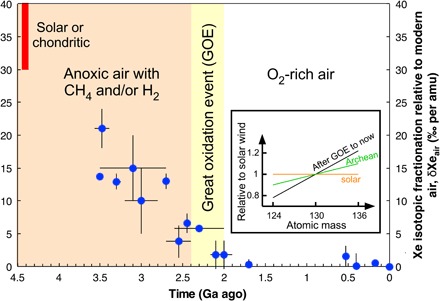
times modern amounts, respectively. The greenhouse gas concentrations were sufficient to offset a fainter Sun. Climate moderation by the carbon cycle suggests average surface temperatures between 0° and 40°C, consistent with occasional glaciations. Isotopic mass fractionation of atmospheric xenon through the Archean until atmospheric oxygenation is best explained by drag of xenon ions by hydrogen escaping rapidly into space. These data imply that substantial loss of hydrogen oxidized the Earth. Despite these advances, detailed understanding of the coevolving solid Earth, biosphere, and atmosphere remains elusive, however.
Overview
CoChat Summary
TL;DR
This review synthesizes proxies and models for the Archean atmosphere (4–2.5 Ga), concluding it was anoxic with negligible O2 and likely enriched in CO2 and CH4, with N2 as a bulk gas and a mostly moderate climate. It highlights major uncertainties in gas levels and the role of life, especially oxygenic photosynthesis and the later Great Oxidation Event.
Key findings
- O2 was extremely low: sulfur mass-independent fractionation indicates ground-level O2 <10−6 PAL (<0.2 ppmv for 1-bar air) before 2.4 Ga, while local “oxygen oases” are estimated at 0.001–0.017 mM O2 (0.4–7% of present).
- N2 and pressure were likely not much higher than today: fluid inclusions give pN2 <1.0 bar at 3.3 Ga and <1.1 bar at 3.5–3.0 Ga; vesicles imply 0.23 ± 0.23 bar at 2.7 Ga; raindrop imprints give a probable limit of <0.52–1.2 bar.
- CO2 and CH4 were important greenhouse gases: paleosol estimates include 0.03–0.15 bar CO2 at 2.77 Ga, 0.02–0.75 bar at 2.75 Ga, and 0.05–0.15 bar at 2.46 Ga; CH4 >20 ppmv is required for S-MIF, and xenon isotopes suggest >~5000 ppmv at ~3.5 Ga.
- Climate was probably mostly moderate: with a Sun 25–30% fainter at 4 Ga, carbonate-silicate models give 0–40°C and seawater pH 6.4–7.4; glacial rocks at 3.5, 2.9, and 2.7 Ga argue against a persistently hot Archean.
Methods
- This is a review/synthesis, not a primary study; it covers the Archean eon from 4 to 2.5 Ga and draws on proxies from rocks, minerals, fluid inclusions, paleosols, raindrop imprints, vesicles, and isotopic records including S-MIF, Xe, N, and C.
- The paper compiles constraints in Table 1 and figures, compares proxy estimates with photochemical, climate, and carbon-cycle models, and discusses the Hadean context and the Great Oxidation Event.
Limitations
- The paper states that limited proxy data leave major uncertainties about exact atmospheric gas levels over time; direct evidence for Archean CO2 remains scanty; when and whether an organic haze formed is uncertain; and knowledge of Archean climatic variability is meager.
- Several proxies are debated: raindrop paleopressure has been criticized but defended; putative Archean biomarkers suffer contamination; some O2 “whiffs” are disputed as post-GOE alteration; siderite is omitted as a pCO2 proxy because it appears diagenetic; and an alternative Xe explanation via organic hazes is considered problematic.
- Evident from the text: as a review, its conclusions depend on cited studies and models, and many constraints are indirect, model-dependent, or permissive rather than definitive.
Model-written summary. Check it against the paper before relying on it.
Integrity signals
Registry
Cites
Statistics
Figures



Verification
Claims the paper makes
78 Valid · 10 Not valid · 121 Not checked · 87 Own results and interpretations
Some cited sources support this claim and some don’t — read each source’s verdict below.
In the paper
“However, observations are unsupportive: Fast mass loss only happens in the first ~200 Ma after Sun-like stars form (207, 208).”
§ The Archean atmosphere > THE ARCHEAN CLIMATE > The Faint Young Sun problem
What the sources say
- Disputedcites [207] Wood B. E., Muller H. R., Zank G. P., Linsky J. L., Redfield S., New mass-loss measurements from astrospheric Lyman-alpha absorption. Astrophys. J. 628, L143– L146 (2005). sourceExperimental — accuracy not yet measured
Figure 3(b) and its accompanying discussion (page not provided) place the inferred weakening of the solar wind at about 0.7 Gyr when looking back toward younger ages. The paper therefore does not confine strong mass loss to the first ~200 million years; it suggests a different age pattern, with especially active, younger stars having weaker winds than the trend would predict. (LLM, conf=0.86)
Checked by a reasoning model — may be wrong.
- Partly supportedcites [208] Minton D. A., Malhotra R., Assessing the massive young sun hypothesis to solve the warm young Earth puzzle. Astrophys. J. 660, 1700– 1706 (2007). sourceExperimental — accuracy not yet measured
Section 3 (Stellar Winds of Sun-like Stars; page unavailable) says observations indicate that stellar-wind flux decreases on a timescale of order 10^8 years and do not support the prolonged mass loss required by the hypothesis. It does not establish a cutoff at approximately 200 million years or say that fast mass loss happens only before then; the Introduction also cautions that the observations cannot rule out a different history for the Sun. (LLM, conf=0.86)
plain- Asserted: passes — The authors put it forward as true.
- Checkable: passes — It can be checked against evidence.
- Load-bearing: passes — The paper’s conclusions depend on it.
- Based: passes — The paper gives a reason why it holds.
- Disputed
The sources with a verdict support this claim; the rest weren’t checked yet, have no full text we could read, or their verdicts aren’t rated yet.
In the paper
“At 4 Ga ago, solar luminosity was 25 to 30% lower than today (12, 13)”
§ The Archean atmosphere > INTRODUCTION: BACKGROUND TO ARCHEAN EARTH
What the sources say
- Not checked — no full text of the sourcecites [12] Gough D. O., Solar interior structure and luminosity variations. Sol. Phys. 74, 21– 34 (1981). source
- Supportedcites [13] Bahcall J. N., Pinsonneault M. H., Basu S., Solar models: Current epoch and time dependences, neutrinos, and helioseismological properties. Astrophys. J. 555, 990– 1012 (2001). source
Table 2 (§3.1) gives the Sun’s present age as 4.57 billion years and its luminosity at solar age 0.6 billion years as 0.744 of today’s. Four billion years ago corresponds to solar age about 0.57 billion years, when luminosity was therefore about 26% lower than today. (LLM, conf=0.94)
plain- Asserted: passes — The authors put it forward as true.
- Checkable: passes — It can be checked against evidence.
- Load-bearing: passes — The paper’s conclusions depend on it.
- Based: passes — The paper gives a reason why it holds.
The sources with a verdict support this claim; the rest weren’t checked yet, have no full text we could read, or their verdicts aren’t rated yet.
In the paper
“Liquid water under a fainter Sun likely implies more abundant greenhouse gases than today (14, 15).”
§ The Archean atmosphere > INTRODUCTION: BACKGROUND TO ARCHEAN EARTH
What the sources say
- Not checked — no full text of the sourcecites [14] Sagan C., Mullen G., Earth and Mars: Evolution of atmospheres and surface temperatures. Science 177, 52– 56 (1972). 17756316 source
- Supportedcites [15] Feulner G., The faint young Sun problem. Rev. Geophys. 50, RG2006 (2012). source
Section 5.5, paragraph 102 (page unavailable), calls an enhanced greenhouse effect the most likely solution to the faint young Sun problem, while acknowledging uncertainty about the gases involved. Section 2.2 discusses the cooling expected under a fainter Sun. Together, these support the claim’s qualified inference that liquid water on early Earth likely required more greenhouse warming than today. (LLM, conf=0.90)
hedgedstates a possible cause- Asserted: passes — The authors put it forward as true.
- Checkable: passes — It can be checked against evidence.
- Load-bearing: passes — The paper’s conclusions depend on it.
- Based: passes — The paper gives a reason why it holds.
Every source the paper cites for this claim was checked and supports it.
In the paper
“Iron formations (IFs), which are marine chemical sedimentary rocks rich in iron and silica [15 to 40 weight % (wt %) Fe and 40 to 60 wt % SiO2], indicate that the deep Archean ocean contained Fe2+(aq) and so was anoxic [e.g., (72)].”
§ The Archean atmosphere > WHAT WAS THE ARCHEAN ATMOSPHERE MADE OF? > Negligible Archean O2 but oxygen oases after oxygenic photosynthesis evolved
What the sources say
- Supportedcites [72] Konhauser K. O., Planavsky N. J., Hardisty D. S., Robbins L. J., Warchola T. J., Haugaard R., Lalonde S. V., Partin C. A., Oonk P. B. H., Tsikos H., Lyons T. W., Bekker A., Johnson C. M., Iron formations: A global record of neoarchaean to palaeoproterozoic environmental history. Earth Sci. Rev. 172, 140– 177 (2017). source
Section 2.1 links Archaean iron-formation deposition to the transport of dissolved Fe(II) under less oxidising conditions. Section 2.6 states that deep waters remained anoxic during iron-formation deposition, and Section 4 calls the Archaean deep-ocean state ferruginous (anoxic). Page numbers are unavailable in our copy. (LLM, conf=0.92)
hedgedstates a cause- Asserted: passes — The authors put it forward as true.
- Checkable: passes — It can be checked against evidence.
- Load-bearing: passes — The paper’s conclusions depend on it.
- Based: passes — The paper gives a reason why it holds.
- Supported
The cited sources support only part of this claim — read each source’s verdict below.
In the paper
“However, consumption of CO2 in the weathering of impact ejecta by carbonic acid suggests a cool early Hadean surface near 0°C under the faint Sun (35, 36).”
§ The Archean atmosphere > A BRIEF OVERVIEW OF THE ENVIRONMENT BEFORE THE ARCHEAN
What the sources say
- Not checked — no full text of the sourcecites [35] Sleep N. H., Zahnle K., Carbon dioxide cycling and implications for climate on ancient Earth. J. Geophys. Res. 106, 1373– 1399 (2001). source
- Partly supportedcites [36] Kadoya S., Krissansen-Totton J., Catling D. C., Probable cold and alkaline surface environment of the Hadean earth caused by impact ejecta weathering. Geochem. Geophys. Geosyst. 21, e2019GC008734 (2019). sourceExperimental — accuracy not yet measured
The Introduction says carbonic-acid weathering of impact ejecta lowers atmospheric CO₂, and Results §4.1 links that consumption to a probably cold climate at 4.3 Ga. The specific temperature is less well supported: the Conclusions give a modeled value of 259.2 K (about −14°C), with substantial uncertainty, rather than a temperature near 0°C. No page numbers are available in our copy. (LLM, conf=0.83)
hedgedstates a cause- Asserted: passes — The authors put it forward as true.
- Checkable: passes — It can be checked against evidence.
- Load-bearing: unclear — It is unclear whether the paper’s conclusions depend on it.
- Based: passes — The paper gives a reason why it holds.
182 more claims · 47 with their cited sources checked
Create a free account to see all 296 claims and to verify the 3 references still open.
- It may state two separate claims as one. 65
- Probably not a substantial claim. 62
- The quote only partly states this claim. 1
Claims other papers make about this one
Each is checked against this paper’s own text: does it say what the citing paper says it does?
The cited source says what the claim attributes to it.
In the citing paper
“liquid water was already present at the surface during the Hadean (4.56 Ga to ≈ 4.0 Ga 1 ) and Archean eons ( ≈ 4.0 Ga to 2.4 Ga)”
From The young Sun's XUV-activity as a constraint for lower CO2-limits in the Earth's Archean atmosphere (2021) · cites this paper as Catling and Zahnle, 2020
Self-check
Percentages, sums and reported differences re-computed from the paper’s own numbers.
Each contradiction between two passages listed here was confirmed by an independent check.
Rated minor: it would not touch a result — a value no result rests on, a p-value that stays on the same side of the significance level, or a conflict that is clerical, resolved elsewhere in the paper, or outside its own findings.
In the paper
§ The Archean atmosphere > CONCLUSIONS AND OUTLOOK
“The secular decline of CO2 is a feedback effect in the geological carbon cycle induced by decreasing solar luminosity.”
§ The Archean atmosphere > INTRODUCTION: BACKGROUND TO ARCHEAN EARTH
“In addition to a gradual increase in solar luminosity, slow changes in the solid Earth over time provided boundary conditions for atmospheric evolution.”
Rated minor: it would not touch a result — a value no result rests on, a p-value that stays on the same side of the significance level, or a conflict that is clerical, resolved elsewhere in the paper, or outside its own findings.
In the paper
§ The Archean atmosphere > WHAT WAS THE ARCHEAN ATMOSPHERE MADE OF?
“Surface barometric pressure | <0.52–1.1 bar | 2.7 Ga | Maximum fossil raindrop imprint size (57)”
§ The Archean atmosphere > WHAT WAS THE ARCHEAN ATMOSPHERE MADE OF? > Nitrogen gases in the Archean
“the largest size of 2.7-Ga-old fossil raindrop imprints provides a conservative limit of paleopressure of <2.1 bar and a probable limit of <0.52 to 1.2 bar (57).”
Citations
Cites
An early Cenozoic perspective on greenhouse warming and carbon-cycle dynamics
Zachos, J. C., Dickens, G. R., & Zeebe, R. E. (2008) · Nature · doi:10.1038/nature06588 · Cited by 3,550 · cited 1×
“In the Archean, any indication of polar environments from glacial rocks would suggest a relatively cool world given that since ~34Ma, a climate with poles covered in ice has required average global temperatures below ~20°C (223).”
BackgroundThe rise of oxygen in Earth's early ocean and atmosphere
Lyons, T. W., Reinhard, C. T., & Planavsky, N. J. (2014) · Nature · doi:10.1038/nature13068 · Cited by 2,810
A negative feedback mechanism for the long‐term stabilization of Earth's surface temperature
Walker, J. C. G., Hays, P. B., & Kasting, J. F. (1981) · Journal of Geophysical Research: Oceans · doi:10.1029/jc086ic10p09776 · Cited by 2,310
The Chemical Evolution of the Atmosphere and Oceans
Holland, H. D. (1984) · doi:10.1515/9780691220239 · Cited by 1,836
Atmospheric Influence of Earth's Earliest Sulfur Cycle
Farquhar, J., Bao, H., & Thiemens, M. (2000) · Science · doi:10.1126/science.289.5480.756 · Cited by 1,805
Wilde, S. A., Valley, J. W., Peck, W. H., & Graham, C. M. (2001) · Nature · doi:10.1038/35051550 · Cited by 1,744 · cited 1×
“3-Ga-old zircons was possibly inherited from (18)O-enriched, weathered surface rocks thatwere later buried and melted, which implies the presence of surficial liquid water and even land (17, 18).”
BackgroundThe Redox State of Earth's Mantle
Frost, D. J., & McCammon, C. A. (2008) · Annual Review of Earth and Planetary Sciences · doi:10.1146/annurev.earth.36.031207.124322 · Cited by 1,134 · cited 1×
“Therefore, the Hadean atmosphere and mantle were probably initially highly reducing, before subsequent oxidation either by hydrogen escape (29) or disproportionation of mantle FeO accompanied by Fe loss to the core (30, 31).”
BackgroundGEOCARBSULF: A combined model for Phanerozoic atmospheric O2 and CO2
Berner, R. A. (2006) · Geochimica et Cosmochimica Acta · doi:10.1016/j.gca.2005.11.032 · Cited by 1,120 · cited 1×
“The post-Devonian black line for O2 evolution approximately represents curves from calculations of C and S isotopic mass balance (254, 255).”
BackgroundTracing the stepwise oxygenation of the Proterozoic ocean
Scott, C., Lyons, T. W., Bekker, A., Shen, Y., Poulton, S. W., Chu, X., & Anbar, A. D. (2008) · Nature · doi:10.1038/nature06811 · Cited by 1,098
A Whiff of Oxygen Before the Great Oxidation Event?
Anbar, A. D., Duan, Y., Lyons, T. W., Arnold, G. L., Kendall, B., Creaser, R. A., Kaufman, A. J., Gordon, G. W., Scott, C., Garvin, J., et al. (2007) · Science · doi:10.1126/science.1140325 · Cited by 1,024
Research works printed but not linked: 8
- D. C. Catling in Treatise on Geochemistry H. D. Holland K. K. Turekian Eds. (Elsevier 2014) vol. 8 pp. 191–233.
- K. J. Zahnle D. C. Catling in Special Paper 504: Early Earth's Atmosphere and Surface Environment G. H. Shaw Ed. (Geological Soc. of America 2014) pp. 37–48.
- J. F. Kasting in Special Paper 504: Early Earth’s Atmosphere and Surface Environment G. H. Shaw Ed. (Geological Society of America 2014) pp. 19–28.
- N. J. Page in Earth’s Pre-Pleistocene Glacial Record M. J. Hambrey N. B. Harland Eds. (Cambridge Univ. Press 1981) pp. 821–823.
- R. T. Gregory in Stable Isotope Geochemistry: A Tribute to Samuel Epstein H. P. Taylor J. R. O'Neil I. R. Kaplan Eds. (Min. Soc. America 1991) pp. 65–76.
- A. Knoll in The Cyanobacteria: Molecular Biology Genetics and Evolution A. Herrero E. Flores Eds. (Caister Academic Press 2008) pp. 1–19.
- D. C. Catling, K. J. Zahnle, C. P. McKay, What caused the second rise of O2 in the late Proterozoic? Methane, sulfate. and irreversible oxidation. Astrobiology 2, 569 (2002).
- J. W. Murray K. Stewart S. Kassakian M. Krynytzky D. DiJulio in The Black Sea Flood Question: Changes in Coastline Climate and Human Settlement V. Yanko-Hombach A. S. Gilbert N. Panin P. M. Dolukhanov Eds. (Springer Netherlands 2007) pp. 1–21.
Cited by
Items 101–200 of 571
Characterization of ancestral Fe/Mn superoxide dismutases indicates their cambialistic origin
Valenti, R., Jabłońska, J., & Tawfik, D. S. (2022) · Protein Science · doi:10.1002/pro.4423 · Cited by 26
“For example, the emergence of oxygenic photosynthesis in the ancestors of cyanobacteria introduced molecular oxygen (oxygen hereafter) to the anoxic Archean atmosphere.(13,14) It is hypothesized that the first whiffs of biologicallyproduced oxygen reacted with the reducing Archaean environment to finally accumulate an…”
BackgroundMiyazaki, Y., & Korenaga, J. (2022) · Astrobiology · doi:10.1089/ast.2021.0126 · Cited by 35
“%) may be ruled out if water oceans indeed existed on the surface of the Hadean Earth.”
InfluentialSchreiber, M., Rensing, S. A., & Gould, S. B. (2022) · Trends in Plant Science · doi:10.1016/j.tplants.2022.05.005 · Cited by 27
Moderate levels of oxygenation during the late stage of Earth's Great Oxidation Event
Ossa, F. O., Spangenberg, J. E., Bekker, A., König, S., Stüeken, E. E., Hofmann, A., Poulton, S. W., Yierpan, A., Varas‐Reus, M. I., Eickmann, B., et al. (2022) · Earth and Planetary Science Letters · doi:10.1016/j.epsl.2022.117716 · Cited by 34
The origin and evolution of Earth's nitrogen
Li, Y. (2024) · National Science Review · doi:10.1093/nsr/nwae201 · Cited by 33
Anoxic photochemical weathering of pyrite on Archean continents
Hao, J., Liu, W., Goff, J. L., Steadman, J. A., Large, R. R., Falkowski, P. G., & Yee, N. (2022) · Science Advances · doi:10.1126/sciadv.abn2226 · Cited by 28
Variability due to climate and chemistry in observations of oxygenated Earth-analogue exoplanets
Cooke, G. J., Marsh, D. R., Walsh, C. M., Rugheimer, S., & Villanueva, G. L. (2022) · Monthly Notices of the Royal Astronomical Society · doi:10.1093/mnras/stac2604 · Cited by 32
Evans, G. N., Coogan, L. A., Kaçar, B., & Seyfried, W. E. (2023) · Geochimica et Cosmochimica Acta · doi:10.1016/j.gca.2023.05.018 · Cited by 28
Shevela, D., Kern, J. F., Govindjee, G., Whitmarsh, J., & Messinger, J. (2021) · Wiley eBooks · doi:10.1002/9780470015902.a0029372 · Cited by 32
Two-billion-year transitional oxygenation of the Earth's surface
Wang, H., Li, C., Peng, Y., Zhang, J., Cheng, M., Cao, X., Qie, W., Zhang, Z., Dodd, M. S., Hou, M., et al. (2025) · Nature · doi:10.1038/s41586-025-09471-4 · Cited by 27
“Sedimentary charcoal records suggest that p O 2 ranged between 62% PAL and 167% PAL from about 420 Ma (ref.”
InfluentialMineral-catalysed formation of marine NO and N2O on the anoxic early Earth
Buessecker, S., Imanaka, H., Ely, T., Hu, R., Romaniello, S. J., & Cadillo‐Quiroz, H. (2022) · Nature Geoscience · doi:10.1038/s41561-022-01089-9 · Cited by 29
Beyond planetary-scale feedback self-regulation: Gaia as an autopoietic system
Rubin, S., Veloz, T., & Maldonado, P. (2020) · Biosystems · doi:10.1016/j.biosystems.2020.104314 · Cited by 30
Roué, L., Kurzweil, F., Wille, M., Wegwerth, A., Dellwig, O., Münker, C., & Schoenberg, R. (2021) · Geochimica et Cosmochimica Acta · doi:10.1016/j.gca.2021.05.013 · Cited by 27
Zavarzina, D. G., Merkel, A. Y., Klyukina, A. A., Elizarov, I. M., Pikhtereva, V. A., Rusakov, V. S., Chistyakova, N. I., Ziganshin, R., Maslov, А. А., & Gavrilov, S. N. (2023) · Frontiers in Microbiology · doi:10.3389/fmicb.2023.1108245 · Cited by 25
“Such an example of intraspecific microevolution within D. alkaliphilus shows a possible way of a global adaptive response of prokaryotes to the activation of the sulfur cycle after the appearance of sulfates in the oceanic water and free oxygen in the atmosphere during GOE (Catling and Zahnle, 2020).”
BackgroundSchlecker, M., Apai, D., Lichtenberg, T., Bergsten, G. J., Salvador, A., & Hardegree-Ullman, K. K. (2024) · The Planetary Science Journal · doi:10.3847/psj/acf57f · Cited by 49
“Due to these similar formation sequences, it was commonly assumed that the divergence of Venus and Earth – in particular Venus’ water loss – occurred late in their evolution (e.g., Way & Del Genio 2020).”
BackgroundInfluentialReconstructing Early Microbial Life
Kaçar, B. (2024) · Annual Review of Microbiology · doi:10.1146/annurev-micro-041522-103400 · Cited by 27
Exposure of cyanobacterium Nostoc sp. to the Mars-like stratosphere environment
Ye, T., Wang, B., Li, C., Bian, P., Chen, L., & Wang, G. (2021) · Journal of Photochemistry and Photobiology B Biology · doi:10.1016/j.jphotobiol.2021.112307 · Cited by 22
Subaerial Emergence of Continents on Archean Earth
Chowdhury, P., Cawood, P. A., & Mulder, J. A. (2025) · Annual Review of Earth and Planetary Sciences · doi:10.1146/annurev-earth-040722-093345 · Cited by 24
Heller, R., Duda, J., Winkler, M., Reitner, J., & Gizon, L. (2021) · Paläontologische Zeitschrift · doi:10.1007/s12542-021-00582-7 · Cited by 32
“The solar luminosity describes the electromagnetic energy output across all wavelengths and it currently amounts to 3.85 × 10 26 W (Chapman 1997) with decadal fluctuations of the order of 0.1% (Solanki et al. 2013).”
InfluentialHigh Organic Burial Efficiency Is Required to Explain Mass Balance in Earth's Early Carbon Cycle
Kipp, M. A., Krissansen‐Totton, J., & Catling, D. C. (2020) · Global Biogeochemical Cycles · doi:10.1029/2020gb006707 · Cited by 28
“It is well established that pO2 remained vanishingly low (<10−6 times the present atmospheric value; Catling & Zahnle, 2020; Farquhar et al., 2000; Pavlov & Kasting, 2002; Zahnle et al., 2006) prior to the GOE at ∼2.4 Ga (Gumsley et al., 2017; Warke et al., 2020).”
BackgroundInfluentialSelf-citationReduced Late Bombardment on Rocky Exoplanets around M Dwarfs
Lichtenberg, T., & Clement, M. S. (2022) · The Astrophysical Journal Letters · doi:10.3847/2041-8213/ac9521 · Cited by 36
“…2017) suggest similar conditions on the earliest Earth; potentially the result of disproportionate ferrous and ferric iron in the mantle (Armstrong et al. 2019; Hirschmann 2022), as well as hydrogen loss from the early atmosphere (Lammer et al. 2018; Catling & Zahnle 2020; Yoshida & Kuramoto 2021).”
BackgroundRegulation and Functional Complexity of the Chlorophyll-Binding Protein IsiA
Jia, A., Zheng, Y., Chen, H., & Wang, Q. (2021) · Frontiers in Microbiology · doi:10.3389/fmicb.2021.774107 · Cited by 23
Ancient nitrogenases are ATP dependent
Harris, D. F., Rucker, H. R., Garcia, A. K., Yang, Z., Chang, S. D., Feinsilber, H., Kaçar, B., & Seefeldt, L. C. (2024) · mBio · doi:10.1128/mbio.01271-24 · Cited by 23
“However, throughout Earth’s history, it is thought that surface N has existed primarily in the form of atmospheric dinitrogen (N 2 ) (19), which is not directly usable for incorporation into biomolecules.”
Chang, Y., Fu, Y., Chen, Z., Luo, Z., Zhao, Y., Li, Z. H., Zhang, W., Wu, G., Fu, B., Zhang, D. H., et al. (2023) · Chemical Science · doi:10.1039/d3sc03328g · Cited by 25
Considerations for Photochemical Modeling of Possible Hycean Worlds
Cooke, G. J., & Madhusudhan, N. (2024) · The Astrophysical Journal · doi:10.3847/1538-4357/ad8cda · Cited by 35
“H 2 ), similar to the weakly reducing conditions expected during the Archean eon (4 - 2.4 Gyr ago) on Earth (Catling et al. 2001; Kasting 2005; Catling & Zahnle 2020), methanogenesis could add significant quantities of CH 4 to the atmosphere.”
InfluentialUpdating the carbon dioxide line list in HITEMP
Hargreaves, R. J., Gordon, I. E., Huang, X., et al. (2024) · Journal of Quantitative Spectroscopy and Radiative Transfer · doi:10.1016/j.jqsrt.2024.109324 · Cited by 21
Strict Limits on Potential Secondary Atmospheres on the Temperate Rocky Exo-Earth TRAPPIST-1 d
Piaulet, C., Benneke, B., Turbet, M., Moore, K., Roy, P.-A., Lim, O., Doyon, R., Fauchez, T. J., Albert, L., Radica, M., et al. (2025) · The Astrophysical Journal · doi:10.3847/1538-4357/adf207 · Cited by 43
“This result holds even when considering the entire range of methane partial pressures from other models of Earth’s atmosphere during this eon (approximately 10 − 5 to 10 − 2 bar; Catling & Zahnle 2020).”
Siderite-based anaerobic iron cycle driven by autotrophic thermophilic microbial consortium
Zavarzina, D. G., Kochetkova, T. V., Chistyakova, N. I., Gracheva, M., Antonova, A. V., Merkel, A. Y., Perevalova, A. A., Чернов, М. С., Koksharov, Y. A., Bonch-Osmolovskaya, E. A., et al. (2020) · Scientific Reports · doi:10.1038/s41598-020-78605-7 · Cited by 26
Finenko, A. A., Bézard, B., Gordon, I. E., Chistikov, D. N., Lokshtanov, S. E., Petrov, S. V., & Vigasin, A. A. (2022) · The Astrophysical Journal Supplement Series · doi:10.3847/1538-4365/ac36d3 · Cited by 22
“Understanding the environmental conditions in the terrestrial atmosphere during the Archean eon—from 4 to 2.5 billion years ago—may shed light on the biological and geological evolution of our planet and Earthlike exoplanets (KrissansenTotton et al. 2018b; Catling & Zahnle 2020).”
BackgroundInfluentialKoppenol, W. H., & Sies, H. (2023) · Redox Biology · doi:10.1016/j.redox.2023.103012 · Cited by 28
“During the Archean eon, one-third of Earth ’ s history, the atmospheric O 2 concentration was about 10 (cid:0) 6 times that of the current level, which is essentially an anoxic environment [16,17].”
BackgroundNan, J., Luo, S., Tran, Q. P., Fahrenbach, A. C., Lu, W., Hu, Y., Yin, Z., Ye, J., & Kranendonk, M. J. V. (2024) · Nature Communications · doi:10.1038/s41467-024-54062-y · Cited by 34
“Theseironsul fi dedepositsarethenexposedtoH 2 gasemitted from the ground 31 (e.g., via serpentinization, magma degassing, or other processes), as well as CO 2 26 – 28 .”
An Overview of Exoplanet Biosignatures
Schwieterman, E. W., & Leung, M. (2024) · Reviews in Mineralogy and Geochemistry · doi:10.2138/rmg.2024.90.13 · Cited by 42
Evolution of the Earth's polar outflow from mid-Archean to present
Kislyakova, K. G., Johnstone, C. P., Scherf, M., Holmström, M., Alexeev, I. I., Lammer, H., Khodachenko, M. L., & Güdel, M. (2020) · Journal of Geophysical Research Space Physics · doi:10.1029/2020ja027837 · Cited by 20
“This result is in agreement with climate studies (Feulner, 2012), studies of the thermal escape and on isotope fractionation (Lammer et al., 2020), and with geological evidences (Catling & Zahnle, 2020).”
BackgroundResultMechanisms and climatic-ecological effects of the Great Oxidation Event in the early Proterozoic
Luo, G., Zhu, X., Wang, S., Zhang, S., & Jiao, C. (2022) · Science China Earth Sciences · doi:10.1007/s11430-021-9934-y · Cited by 21
“Since CH4 is reactive to O2, increasing pO2 during the GOE would substantially decrease the pCH4 to about 10 ppm and trigger the glacial climate (Kopp et al., 2005; Catling and Zahnle, 2020).”
BackgroundAn Experimental and Theoretical Investigation of HCN Production in the Hadean Earth Atmosphere
Pearce, B. K. D., He, C., & Hörst, S. M. (2022) · ACS Earth and Space Chemistry · doi:10.1021/acsearthspacechem.2c00138 · Cited by 28
Earth’s habitability driven by deep processes
Xu, Y.-G., Huang, X., Wang, Q., Wang, Y., Li, G., Liu, Y., Mao, H., Ni, H., & Maoyan, Z. (2023) · Chinese Science Bulletin (Chinese Version) · doi:10.1360/tb-2023-0816 · Cited by 22
Zhou, X., Sheng, Y., Zheng, Y., Jiang, M., Wang, M. E., Zhu, Z., Li, G., Baars, O., & Dong, H. (2024) · Earth and Planetary Science Letters · doi:10.1016/j.epsl.2024.119056 · Cited by 22
Identification and characterization of a noncanonical menaquinone-linked formate dehydrogenase
Arias-Cartín, R., Uzel, A., Seduk, F., Gerbaud, G., Pierrel, F., Broc, M., Lebrun, R., Guigliarelli, B., Magalon, A., Grimaldi, S., et al. (2021) · Journal of Biological Chemistry · doi:10.1016/j.jbc.2021.101384 · Cited by 20
Wu, H., Murray, N., Menou, K., Lee, C., & Leconte, J. (2023) · Science Advances · doi:10.1126/sciadv.add2499 · Cited by 22
“Recent work does suggest high P CO 2 at earlier epochs ( 54 , 55 ), although the estimates are below P CO 2 ≈ 100 mbar at an age of 1500 Ma.”
Diurnal Fe(II)/Fe(III) cycling and enhanced O2 production in a simulated Archean marine oxygen oasis
Herrmann, A. J., Sorwat, J., Byrne, J. M., Frankenberg‐Dinkel, N., & Gehringer, M. M. (2021) · Nature Communications · doi:10.1038/s41467-021-22258-1 · Cited by 19
Interior Controls on the Habitability of Rocky Planets
Gillmann, C., Hakim, K., Lourenço, D. L., Quanz, S. P., & Sossi, P. A. (2023) · Space Science & Technology · doi:10.34133/space.0075 · Cited by 28
Crustal carbonate build-up as a driver for Earth’s oxygenation
Alcott, L., Walton, C. R., Planavsky, N. J., Shorttle, O., & Mills, B. J. W. (2024) · Nature Geoscience · doi:10.1038/s41561-024-01417-1 · Cited by 25
“A very high Archean reductant flux could potentially make this model consistent with the oxygenation record 7 , but such high fluxes are contentious 29 .”
InfluentialCaruso, S., Kranendonk, M. J. V., Baumgartner, R. J., Fiorentini, M. L., & Forster, M. A. (2021) · Precambrian Research · doi:10.1016/j.precamres.2021.106299 · Cited by 21
Mansor, M., Duverger, A., Pasquier, V., Gorlas, A., Guyot, F., Berg, J. S., Marin‐Carbonne, J., Cosmidis, J., & Picard, A. (2025) · Geo-Bio Interfaces · doi:10.1180/gbi.2024.9 · Cited by 26
“Based on experimental SO 2 photolysis and an atmospheric chemistry model, the conservation of substantial and variable S-MIF signals in Archean and early Paleoproterozoic sedimentary rocks necessitates an extremely low partial pressure of O 2 (Farquhar et al. , 2001; Catling and Zahnle, 2020).”
Herbort, O., Woitke, P., Helling, C., & Zerkle, A. L. (2021) · Astronomy and Astrophysics · doi:10.1051/0004-6361/202141636 · Cited by 22
Pang, B., Zheng, H., Ma, S., Tian, J., & Wen, Y. (2024) · Nucleic Acids Research · doi:10.1093/nar/gkad1230 · Cited by 22
“Because nitrogen was present mainly in the atmosphere ( 77 ), it was necessary for Archean organisms to move near the ocean surface to perform nitrogen fixation for nutritional purposes.”
BackgroundEffects of ozone levels on climate through Earth history
Deitrick, R., & Goldblatt, C. (2023) · Climate of the past · doi:10.5194/cp-19-1201-2023 · Cited by 22
“4 Ga) means that we must use a much smaller greenhouse gas abundance than appropriate for the time of the GOE (Catling and Zahnle, 2020; Charnay et al., 2020).”
BackgroundMethodInfluentialClimate diversity in the solar-like habitable zone due to varying background gas pressure
Paradise, A., Fan, B. L., Menou, K., & Lee, C. (2021) · Icarus · doi:10.1016/j.icarus.2020.114301 · Cited by 23
Triaud, A. H. M. J., de Wit, J., Klein, F., Turbet, M., Rackham, B. V., Niraula, P., Glidden, A., Jagoutz, O., Peč, M., Petkowski, J. J., et al. (2023) · Nature Astronomy · doi:10.1038/s41550-023-02157-9 · Cited by 27
“Indeed, it is thought that most of Earth’s primordial atmospheric CO 2 was dissolved by the time biological processes emerged on Earth about 0.5 Gyr after formation 35,37 .”
InfluentialBixel, A., & Apai, D. (2020) · The Astrophysical Journal · doi:10.3847/1538-4357/ab8fad · Cited by 27
“During the Hadean and Archean eras, the abundance of O2 was no more than 10 −6 times its present atmospheric level (PAL) (Zahnle et al. 2006; Catling & Zahnle 2020).”
BackgroundChapter 4: A Geological and Chemical Context for the Origins of Life on Early Earth
Rodriguez, L. E., Altair, T., Hermis, N. Y., Jia, T. Z., Roche, T. P., Steller, L. H., & Weber, J. M. (2024) · Astrobiology · doi:10.1089/ast.2021.0139 · Cited by 24
Shale Heavy Metal Isotope Records of Low Environmental O2 Between Two Archean Oxidation Events
Ostrander, C. M., Kendall, B., Gordon, G. W., Nielsen, S. G., Zheng, W., & Anbar, A. D. (2022) · Frontiers in Earth Science · doi:10.3389/feart.2022.833609 · Cited by 16
“Paired together with available MIF-S pO2 upper limits across the same timeframe (10 PAL; Catling and Zahnle, 2020), this could suggest a narrow window of pO2 between 10 −6.”
MethodGeodynamic oxidation of Archean terrestrial surfaces
Wu, X. G., Zhu, J., He, H., Xian, H., Yang, Y., Ma, L., Liang, X., Lin, X., Li, S., Konhauser, K. O., et al. (2023) · Communications Earth & Environment · doi:10.1038/s43247-023-00789-3 · Cited by 22
Farhat, M. A., Auclair-Desrotour, P., Boué, G., Deitrick, R., & Laskar, J. (2024) · Astronomy and Astrophysics · doi:10.1051/0004-6361/202348625 · Cited by 19
“As this was proven to be untrue for present Earth (Chapman and Lindzen, 1970), Zahnle and Walker (1987) revived Holmberg’s hypothesis by applying the resonance scenario of thermal tides to the distant past. Their suggestion relied on two factors needed to close the gap between the Figure 1: Modeled histories of the ro…”
Backgroundvan Rensburg, D. J. J., Heubeck, C., & Reimann, S. (2021) · Precambrian Research · doi:10.1016/j.precamres.2021.106325 · Cited by 16
Symmetry Breaking of Phospholipids
Buchet, R., & Fiore, M. (2020) · Symmetry · doi:10.3390/sym12091488 · Cited by 17
Eta-Earth Revisited II: Deriving a Maximum Number of Earth-Like Habitats in the Galactic Disk
Scherf, M., Lammer, H., & Sproß, L. (2024) · Astrobiology · doi:10.1089/ast.2023.0076 · Cited by 19
Dynamics of the Great Oxidation Event from a 3D photochemical–climate model
Jaziri, Y., Charnay, B., Selsis, F., Leconte, J., & Lefèvre, F. (2022) · Climate of the past · doi:10.5194/cp-18-2421-2022 · Cited by 22
“8 ppm), with levels as high as 104 pmm according to Catling and Zahnle (2020). Such high methane concentrations would have produced a significant greenhouse effect. A variation of 10 times the abundance of methane changes the mean surface temperature by about 4 K according to Charnay et al. (2020). Furthermore, Sauter…”
BackgroundInfluentialReflected Spectroscopy of Small Exoplanets. III. Probing the UV Band to Measure Biosignature Gases
Damiano, M., Hu, R., & Mennesson, B. P. (2023) · The Astronomical Journal · doi:10.3847/1538-3881/acefd3 · Cited by 33
Wang, Y., Wang, H., Wang, S., & Fang, Y. (2024) · Angewandte Chemie International Edition · doi:10.1002/anie.202413768 · Cited by 17
Precambrian Earth: Co-evolution of life and geodynamics
Westall, F., & Xiao, S. (2024) · Precambrian Research · doi:10.1016/j.precamres.2024.107589 · Cited by 23
Rapid rise of early ocean pH under elevated weathering rates
Guo, M., & Korenaga, J. (2025) · Nature Geoscience · doi:10.1038/s41561-025-01649-9 · Cited by 24
“…degassing, crustal formation, subduction and weathering, we map the history of carbon storages and assess the physical mechanisms that lead to the transformation of an initial CO 2 -rich atmosphere, expected after magma ocean solidification 32–34 , to a habitable one during the early Earth 35 .”
UV-Induced Nanoparticles-Formation, Properties and Their Potential Role in Origin of Life
Nejdl, L., Zemánková, K., Havlíková, M., Buresova, M., Hynek, D., Xhaxhiu, K., Mravec, F., Matoušková, M., Adam, V., Ferus, M., et al. (2020) · Nanomaterials · doi:10.3390/nano10081529 · Cited by 16
The Earth's atmosphere – A stable isotope perspective and review
Hoefs, J., & Harmon, R. S. (2022) · Applied Geochemistry · doi:10.1016/j.apgeochem.2022.105355 · Cited by 15
Plate Tectonics: The Stabilizer of Earth’s Habitability
Wang, Z., Zhang, J., Zong, K., Kusky, T., & Wang, Y. (2023) · Journal of Earth Science · doi:10.1007/s12583-023-1864-9 · Cited by 17
“…of the early atmosphere, the progress of photochemical reactions, and the interaction between the spheres (protected by the ionosphere and magnetosphere), the early atmosphere gradually evolved into the modern atmosphere (Catling and Zahnle, 2020; Luo et al., 2016; Shaw, 2016; Lyons et al., 2014).”
BackgroundMethanol on the rocks: green rust transformation promotes the oxidation of methane
Farr, O., Gaudu, N., Danger, G., Russell, M. J., Ferry, D., Nitschke, W., & Duval, S. (2023) · Journal of The Royal Society Interface · doi:10.1098/rsif.2023.0386 · Cited by 16
“2 Ga, where the estimated atmospheric abundances of greenhouse gases like CH4, CO2 and N2O were orders of magnitude greater than modern, supplying ample CH4 for the proliferation of primitive methanotrophs [9,10].”
BackgroundInfluentialBaumgartner, R. J., Kranendonk, M. J. V., Caruso, S., Campbell, K. A., Dobson, M., Teece, B. L., Verrall, M., Homann, M., Lalonde, S. V., & Visscher, P. T. (2024) · Geobiology · doi:10.1111/gbi.12610 · Cited by 20
Watanabe, Y., Tajika, E., & Ozaki, K. (2023) · Geobiology · doi:10.1111/gbi.12554 · Cited by 16
Climate shapes the oxygenation of Earth's atmosphere across the Great Oxidation Event
Ruíz, D. I. G., Goldblatt, C., & Ahm, A. C. (2023) · Earth and Planetary Science Letters · doi:10.1016/j.epsl.2023.118071 · Cited by 16
Laskar, J., Farhat, M., Lantink, M. L., Auclair-Desrotour, P., Boué, G., & Sinnesael, M. (2024) · Sedimentologika · doi:10.57035/journals/sdk.2024.e21.1271 · Cited by 14
“…the more abundant the greenhouse gases are in the atmosphere, which is predicted for the Precam-brian from various geological proxies (see e.g., Catling and Zahnle, 2020), the more the atmosphere would be prone to infrared thermotidal heating, and consequently the more the accelerating…”
BackgroundA Model Earth-sized Planet in the Habitable Zone of α Centauri A/B
Wang, H. S., Lineweaver, C. H., Quanz, S. P., Mojzsis, S. J., Ireland, T. R., Sossi, P. A., Seidler, F. L., & Morel, T. (2022) · The Astrophysical Journal · doi:10.3847/1538-4357/ac4e8c · Cited by 16
“Such a planet may also have a CO2–CH4–H2O-dominated early atmosphere that resembles that of Archean Earth; observationally, this may be tested with a dry, CO2-dominated atmosphere considering the preferable photolytic destruction to CH4 and H2O and the possibility that 5. the planet may be in a Venus-like stagnant-lid…”
BackgroundInfluentialEarth’s Climate History from 4.5 Billion Years to One Minute
Lin, J., & Qian, T. (2022) · ATMOSPHERE-OCEAN · doi:10.1080/07055900.2022.2082914 · Cited by 18
Varela, J., Brun, A. S., Strugarek, A., Réville, V., Zarka, P., & Pantellini, F. G. E. (2023) · Monthly Notices of the Royal Astronomical Society · doi:10.1093/mnras/stad2519 · Cited by 18
3D Simulations of the Archean Earth Including Photochemical Haze Profiles
Mak, M. T., Mayne, N. J., Sergeev, D. E., Manners, J. C., Eager-Nash, J. K., Arney, G., Hébrard, É., & Kohary, K. I. (2023) · Journal of Geophysical Research Atmospheres · doi:10.1029/2023jd039343 · Cited by 15
“…(S-MIF) in Archean sedimentary minerals which indicates the production of elemental sulfur S 8 due to photochemistry in an anoxic environment (S-MIF would be nearly absent in an oxidising environment) (Catling & Zahnle, 2020; Claire et al., 2014; Farquhar et al., 2000; Zahnle et al., 2006).”
BackgroundEarth’s oldest terrestrial red beds as direct evidence for the Great Oxidation Event ca. 2.3 Ga
Shawwa, N. A., McLoughlin-Coleman, T. R., Babechuk, M. G., Far, M. S., Mungall, J. E., & Rainbird, R. H. (2024) · Precambrian Research · doi:10.1016/j.precamres.2024.107423 · Cited by 18
Wang, Z., Liu, Y., Zong, K., Lin, J., & Kusky, T. (2020) · Precambrian Research · doi:10.1016/j.precamres.2020.105895 · Cited by 14
Possible discontinuous evolution of atmospheric xenon suggested by Archean barites
Almayrac, M. G., Broadley, M. W., Bekaert, D. V., Hofmann, A., & Marty, B. M. (2021) · Chemical Geology · doi:10.1016/j.chemgeo.2021.120405 · Cited by 17
Nicoli, G., Borghini, A., & Ferrero, S. (2022) · Chemical Geology · doi:10.1016/j.chemgeo.2022.121025 · Cited by 16
Watanabe, Y., & Tajika, E. (2021) · Earth Planets and Space · doi:10.1186/s40623-021-01527-9 · Cited by 14
Xi, S., Huang, R., Zhendong, L., Du, Z., Li, L., Xie, G., Sun, W., & Zhang, X. (2024) · 中国科学通报:英文版 · doi:10.1016/j.scib.2024.10.016 · Cited by 14
Transient marine bottom water oxygenation on continental shelves by 2.65 billion years ago
Chen, X., Ostrander, C. M., Holdaway, B. J., Kendall, B., Anbar, A. D., Nielsen, S. G., & Owens, J. D. (2025) · Nature Geoscience · doi:10.1038/s41561-025-01681-9 · Cited by 18
Mège, D., Gurgurewicz, J., Massironi, M., Pozzobon, R., Tognon, G., Pajola, M., Tornabene, L. L., Lucchetti, A., Baschetti, B., Davis, J. M., et al. (2023) · Journal of Geophysical Research Planets · doi:10.1029/2022je007223 · Cited by 16
Brachmann, C., Noack, L., Baumeister, P., & Sohl, F. (2025) · Icarus · doi:10.1016/j.icarus.2024.116450 · Cited by 17
Bioavailable phosphite in the surface ocean during the Great Oxidation Event
Baidya, A. S., Boden, J. S., Li, Y., Smith, A. J. B., Konhauser, K. O., & Stüeken, E. E. (2025) · Nature Communications · doi:10.1038/s41467-025-59963-0 · Cited by 14
A small S-MIF signal in Martian regolith pyrite: Implications for the atmosphere
Tomkins, A. G., Alkemade, S. L., Nutku, S. E., Stephen, N. R., Finch, M. A., & Jeon, H. (2020) · Geochimica et Cosmochimica Acta · doi:10.1016/j.gca.2020.07.022 · Cited by 13
Graham, R. J. (2021) · Astrobiology · doi:10.1089/ast.2020.2411 · Cited by 19
“…leading from the Archean into the Prote-rozoic, which may have marked the transition from an oxygen-poor atmosphere with strong greenhouse warming from both CO 2 and CH 4 to an oxidized atmosphere with limited CH 4 warming (Daines and Lenton, 2016; Olson et al. , 2016; Catling and Zahnle, 2020).”
InfluentialClimate change through Earth history
Zalasiewicz, J., & Williams, M. (2021) · Elsevier eBooks · doi:10.1016/b978-0-12-821575-3.00003-7 · Cited by 24
Tsikos, H., Siahi, M., Rafuza, S., Mhlanga, X., Oonk, P. B. H., Papadopoulos, V., Boyce, A. J., Mason, P. R. D., Harris, C., Gröcke, D. R., et al. (2022) · Gondwana Research · doi:10.1016/j.gr.2022.05.007 · Cited by 13
Predicting biosignatures for nutrient-limited biospheres
Nicholson, A., Daines, S. J., Mayne, N. J., Eager-Nash, J. K., Lenton, T. M., & Kohary, K. I. (2022) · Monthly Notices of the Royal Astronomical Society · doi:10.1093/mnras/stac2086 · Cited by 11
Ozaki, K., Cole, D. B., Reinhard, C. T., & Tajika, E. (2022) · Geoscientific model development · doi:10.5194/gmd-15-7593-2022 · Cited by 15
“Indeed, the abundances of biosignature gases such as molecular oxygen (O2) and methane (CH4) in Earth’s atmosphere have evolved dramatically through coevolutionary interaction with Earth’s biosphere for nearly 4 billion years – through remarkable fluctuations in atmospheric chemistry and climate (Catling and Kasting,…”
BackgroundNatural ocean iron fertilization and climate variability over geological periods
Jiang, H., Hutchins, D. A., Ma, W., Zhang, R., Wells, M. L., Jiao, N., Wang, Y., & Chai, F. (2023) · Global Change Biology · doi:10.1111/gcb.16990 · Cited by 11
“This consumption was maintained for millions of years, and thus, the bioavailability of iron in the surface ocean decreased dramatically during the GOE (Catling & Kasting, 2007; Catling & Zahnle, 2020 ).”
BackgroundGaylor, M. O., Miró, P., Vlaisavljevich, B., Kondage, A. A. S., Barge, L. M., Omran, A. P., Videau, P., Swenson, V. A., Leinen, L. J., Fitch, N. W., et al. (2021) · Origins of Life and Evolution of Biospheres · doi:10.1007/s11084-021-09613-4 · Cited by 12
“CO2 derived from magmatic intrusions into the lower water column could also be reduced to CO and CH4 under the higher temperature and more diverse mineralogical regimes of the water–sediment/water–rock boundaries 1 3 (Catling and Zahnle 2020; Zahnle et al.”
BackgroundFinenko, A. A., Chistikov, D. N., Kalugina, Y. N., Conway, E. K., & Gordon, I. E. (2021) · Physical Chemistry Chemical Physics · doi:10.1039/d1cp02161c · Cited by 12
Zakharov, D., Marin‐Carbonne, J., Pack, A., Rocco, T. D., Robyr, M., & Vennemann, T. W. (2023) · Geochemistry Geophysics Geosystems · doi:10.1029/2022gc010741 · Cited by 11
“10.1029/2022GC010741 2 of 26 potential to reveal the state of climate during the early geological history, that is, the Archean eon (>2,500 Ma) for which surface temperatures remain poorly constrained and are most controversial (see Catling & Zahnle, 2020).”
BackgroundInfluentialEager-Nash, J. K., Mayne, N. J., Nicholson, A., Prins, J. E., Young, O. C. F., Daines, S. J., Sergeev, D. E., Lambert, F. H., Manners, J. C., Boutle, I., et al. (2023) · Journal of Geophysical Research Atmospheres · doi:10.1029/2022jd037544 · Cited by 12
“Mass balance calculations from CO2 dissolved in rainwater give estimates of CO2 10–50 PAL (340–1,700 Pa) at 2.7 Ga (Driese et al., 2011; Sheldon, 2006), although this may be a lower limit (Catling & Zahnle, 2020).”
BackgroundInfluentialThe oxygen bottleneck for technospheres
Balbi, A., & Frank, A. (2023) · Nature Astronomy · doi:10.1038/s41550-023-02112-8 · Cited by 11
“This is consistent with the timing for the appearance of the first photosynthetic organisms, which is estimated around 2.7 Gyr ago and possibly earlier [10, 11].”
InfluentialNichols, C. I. O., Weiss, B. P., Eyster, A. E., Martin, C. R., Maloof, A. C., Kelly, N. M., Zawaski, M. J., Mojzsis, S. J., Watson, E. B., & Cherniak, D. J. (2024) · Journal of Geophysical Research Solid Earth · doi:10.1029/2023jb027706 · Cited by 14
“The evolution of Earth's atmosphere played a pivotal role in developing life as we know it; initially the atmosphere was depleted in oxygen (i.e., reduced), creating conditions favorable for the origins of life (Catling & Zahnle, 2020; Sasselov et al., 2020).”
BackgroundSumner, D. Y. (2024) · Applied and Environmental Microbiology · doi:10.1128/aem.00093-24 · Cited by 13
“Several models suggest that prior to about 2.45 Ga, the partial pressure of CH 4 was orders of magnitude higher than after atmospheric oxygenation (58–60).”
BackgroundInfluentialUser-friendly carbon-cycle modelling and aspects of Phanerozoic climate change
Torsvik, T. H., Royer, D. L., Marcilly, C. M., & Werner, S. C. (2024) · Applied Computing and Geosciences · doi:10.1016/j.acags.2024.100180 · Cited by 12
Challenging the Chemistry of Climate Change
Peachey, B. R., & Maeda, N. (2024) · Chemistry · doi:10.3390/chemistry6060086 · Cited by 11
Metadata
- Authors
- Catling, D. C., & Zahnle, K. J.
- Affiliations
- University of Washington (US)
- Ames Research Center (US)
- Corresponding author
- Catling, David C.
- Venue
- Science Advances
- Published
- 2020-02-28
- Volume
- 6
- Issue
- 9
- Pages
- eaax1420-eaax1420
- ISSN
- 2375-2548 (ISSN-L)
- PMC
- PMC7043912
- OpenAlex
- W3007909729
- Cited by
- 568
- References
- 278
- Citations by year
- 2026: 98 · 2025: 104 · 2024: 95 · 2023: 96 · 2022: 84 · 2021: 59 · 2020: 32
- FWCI
- 8.70
- Type
- journal article
- Language
- en
- Open access
- gold
- doi.org
- Licence
- cc-by
- Locations
- Science Advances (publishedVersion, cc-by)
- Europe PMC (PubMed Central) (publishedVersion, cc-by)
- PubMed Central (publishedVersion, cc-by)
- PubMed (publishedVersion)
- Funders
- National Science Foundation (1338810)
- Simons Foundation (511570)
- NASA Astrobiology Institute (NNA13AA93A, 80NSSC18K0829)
- Leverhulme Trust (VP2-2016-041)
- NASA Exobiology (NNX15AL23G)
- Topics
- Physical Sciences › Earth and Planetary Sciences › Paleontology › Paleontology and Stratigraphy of Fossils
- Physical Sciences › Earth and Planetary Sciences › Geochemistry and Petrology › Geological and Geochemical Analysis
- Physical Sciences › Earth and Planetary Sciences › Space and Planetary Science › Astro and Planetary Science
- Keywords
- Archean atmosphere, greenhouse gases, carbon cycle, surface temperature, glaciation, atmospheric xenon, hydrogen escape, atmospheric oxygenation, early Earth climate
About these checks
Registry, retraction, Cites and statistics results are computed, not judged, with one exception: a printed reference that no index lists is read once by a model before it counts as a citation error. Claims are extracted by a model and kept only when their quote appears verbatim in the text; each cited source is then checked, with a model’s help, for whether it says what the claim relies on. Those verdicts can be wrong — read the claim’s quote and the cited source before relying on one.
The claim verdicts this report counts are experimental: their accuracy is not yet measured.
A language model drew the claims from the paper on 2026-10-10, under version 3 of the claim definition (model deepseek-v4.1-flash, prompt extract-v3).
A second model labelled each claim on 2026-10-10 (model jev-1.13-20260917, definition revision gold-guideline-v0.2).
Cited sources are checked with a language model’s help (gpt-6-sol).
Statistics and arithmetic are recomputed, not judged.
Confidence bands are shown only for fields calibrated on our annotated test set. None is calibrated yet, so no band is shown.
What counts as a claim ›How we measure confidence ›How we check this ›
Are you an author, or do you see a problem with this page? Request a review
Data sources
Bibliographic data: Semantic Scholar, OpenAlex, Crossref.
Contains information from the Semantic Scholar Academic Graph Datasets, made available under the ODC Attribution License (ODC-BY 1.0).
Semantic Scholar’s data is described in: Kinney, R., et al. (2023). The Semantic Scholar Open Data Platform. arXiv:2301.10140.
