

Verification of extreme event attribution: Using out-of-sample observations to assess changes in probabilities of unprecedented events
Open accessThe DOI matches its Crossref record; 60 of the 60 references it cites were found in a registry or an index.
Abstract
Using out-of-sample observations to verify extreme event attribution results.
Overview
The claims and statistics of this paper haven’t been checked yet.
Free: it reads the open-access text and checks the first 5 claims that cite a source we can check. Create a free account to check every claim.
Integrity signals
Registry
Cites
Statistics
Figures
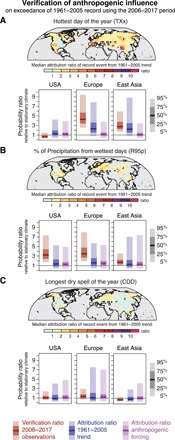
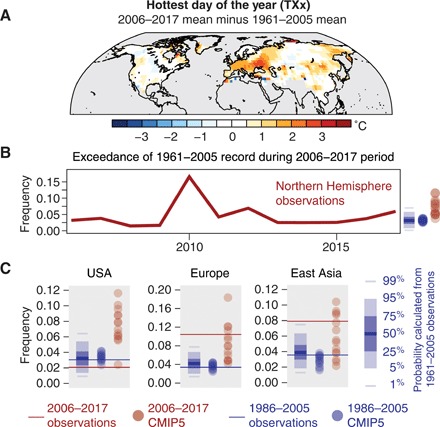
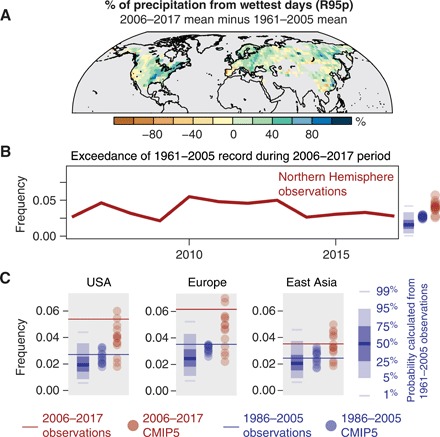
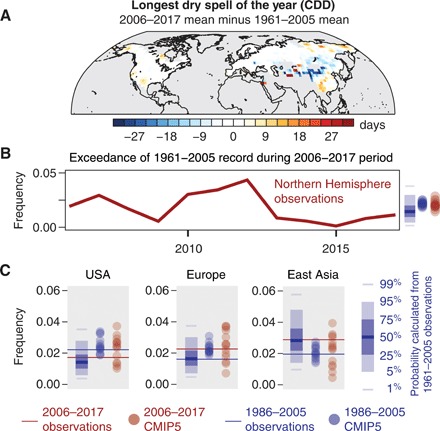
Verification
Claims the paper makes
The claims and statistics of this paper haven’t been checked yet.
Free: it reads the open-access text and checks the first 5 claims that cite a source we can check. Create a free account to check every claim.
Claims other papers make about this one
Each is checked against this paper’s own text: does it say what the citing paper says it does?
The source backs part of the claim, not all of it — or backs it for a different population, condition or comparison.
In the citing paper
“Studies based on an older attribution period frequently underestimate the effect of global warming on the probability of unprecedented recent extremes, reflecting the difference between frequencies during the attribution period and out-of-sample verification period (Diffenbaugh, 2020).”
From Artificial intelligence for climate prediction of extremes: State of the art, challenges, and future perspectives (2024) · cites this paper as Diffenbaugh, 2020
Experimental — accuracy not yet measured
Self-check
Percentages, sums and reported differences re-computed from the paper’s own numbers.
The self-check needs the paper’s full text.
Citations
Cites
An Overview of CMIP5 and the Experiment Design
Taylor, K. E., Stouffer, R. J., & Meehl, G. A. (2012) · Bulletin of the American Meteorological Society · doi:10.1175/bams-d-11-00094.1 · Cited by 14,052
Stationarity Is Dead: Whither Water Management?
Milly, P. C. D., Betancourt, J., Falkenmark, M., Hirsch, R. M., Kundzewicz, Z. W., Lettenmaier, D. P., & Stouffer, R. J. (2008) · Science · doi:10.1126/science.1151915 · Cited by 4,537
Human contribution to the European heatwave of 2003
Stott, P. A., Stone, D. A., & Allen, M. R. (2004) · Nature · doi:10.1038/nature03089 · Cited by 1,735
Sillmann, J., Kharin, V. V., Zhang, X., Zwiers, F. W., & Bronaugh, D. (2013) · Journal of Geophysical Research: Atmospheres · doi:10.1002/jgrd.50203 · Cited by 1,461
Anthropogenic contribution to global occurrence of heavy-precipitation and high-temperature extremes
Fischer, E. M., & Knutti, R. (2015) · Nature Climate Change · doi:10.1038/nclimate2617 · Cited by 1,427
Anthropogenic warming has increased drought risk in California
Diffenbaugh, N. S., Swain, D. L., & Touma, D. (2015) · Proceedings of the National Academy of Sciences · doi:10.1073/pnas.1422385112 · Cited by 1,386 · cited 1×
“, (12)], tropical cyclone precipitation [e.”
Self-citationAttribution of climate extreme events
Trenberth, K. E., Fasullo, J. T., & Shepherd, T. G. (2015) · Nature Climate Change · doi:10.1038/nclimate2657 · Cited by 982
Global climate changes as forecast by Goddard Institute for Space Studies three‐dimensional model
Hansen, J., Fung, I., Lacis, A., Rind, D., Lebedeff, S., Ruedy, R., Russell, G., & Stone, P. (1988) · Journal of Geophysical Research: Atmospheres · doi:10.1029/jd093id08p09341 · Cited by 980
Anthropogenic greenhouse gas contribution to flood risk in England and Wales in autumn 2000
Pall, P., Aina, T., Stone, D. A., Stott, P. A., Nozawa, T., Hilberts, A. G. J., Lohmann, D., & Allen, M. R. (2011) · Nature · doi:10.1038/nature09762 · Cited by 871
Research works printed but not linked: 2
- The National Academies Press, Attribution of Extreme Weather Events in the Context of Climate Change (The National Academies Press, 2016).
- IPCC, Managing the Risks of Extreme Events and Disasters to Advance Climate Change Adaptation (Cambridge Univ. Press, 2012). 22766781
Cited by
Climate change impacts on plant pathogens, food security and paths forward
Singh, B. K., Delgado-Baquerizo, M., Egidi, E., Guirado, E., Leach, J. E., Liu, H., & Trivedi, P. (2023) · Nature Reviews Microbiology · doi:10.1038/s41579-023-00900-7 · Cited by 1,334
Our future in the Anthropocene biosphere
Folke, C., Polasky, S., Rockström, J., Galaz, V., Westley, F., Lamont, M., Scheffer, M., Österblom, H., Carpenter, S. R., Chapin, F. S., et al. (2021) · Ambio · doi:10.1007/s13280-021-01544-8 · Cited by 696
“Climate change impacts are hitting people harder and sooner than envisioned a decade ago (Diffenbaugh 2020).”
Khan, Z., Ali, S., Umar, M., Kirikkaleli, D., & Jiao, Z. (2020) · Science of The Total Environment · doi:10.1016/j.scitotenv.2020.138945 · Cited by 694
Guo, J., Zhou, Y., Ali, S., Shahzad, U., & Cui, L. (2021) · Journal of Environmental Management · doi:10.1016/j.jenvman.2021.112779 · Cited by 334
Contribution of historical precipitation change to US flood damages
Davenport, F. V., Burke, M., & Diffenbaugh, N. S. (2021) · Proceedings of the National Academy of Sciences · doi:10.1073/pnas.2017524118 · Cited by 293
“Prior studies have attributed increases in short-duration precipitation extremes over the United States to anthropogenic climate forcing by comparing historical trends with climate model simulations (10, 30), isolating forced changes from those driven by modes of natural climate variability (31–34), or calculating the…”
BackgroundSelf-citationIncreased Flood Exposure Due to Climate Change and Population Growth in the United States
Swain, D. L., Wing, O. E. J., Bates, P. D., Done, J. M., Johnson, K. A., & Cameron, D. R. (2020) · Earth's Future · doi:10.1029/2020ef001778 · Cited by 294
“Using newly developed climate attribution frameworks (e.g., Diffenbaugh, 2020), the detected regional and global increases in precipitation extremes have been directly linked to anthropogenic climate change (CC).”
MethodCurrent and projected regional economic impacts of heatwaves in Europe
García-León, D., Casanueva, A., Standardi, G., Burgstall, A., Flouris, A. D., & Nybo, L. (2021) · Nature Communications · doi:10.1038/s41467-021-26050-z · Cited by 279
Machine-learning-based evidence and attribution mapping of 100,000 climate impact studies
Callaghan, M., Schleussner, C.-F., Nath, S., Lejeune, Q., Knutson, T. R., Reichstein, M., Hansen, G., Theokritoff, E., Andrijevic, M., Brecha, R. J., et al. (2021) · Nature Climate Change · doi:10.1038/s41558-021-01168-6 · Cited by 251
Safi, A., Chen, Y., Wahab, S., Zheng, L., & Rjoub, H. (2021) · Journal of Environmental Management · doi:10.1016/j.jenvman.2021.112908 · Cited by 214
Attributing Extreme Events to Climate Change: A New Frontier in a Warming World
Swain, D. L., Singh, D., Touma, D., & Diffenbaugh, N. S. (2020) · One Earth · doi:10.1016/j.oneear.2020.05.011 · Cited by 199
Self-citationThe COVID-19 lockdowns: a window into the Earth System
Diffenbaugh, N. S., Field, C. B., Appel, E. A., Azevedo, I. L., Baldocchi, D. D., Burke, M., Burney, J. A., Ciais, P., Davis, S. J., Fiore, A. M., et al. (2020) · Nature Reviews Earth & Environment · doi:10.1038/s43017-020-0079-1 · Cited by 212
Self-citationXie, P., & Jamaani, F. (2022) · Structural Change and Economic Dynamics · doi:10.1016/j.strueco.2022.09.002 · Cited by 179
Towards reliable extreme weather and climate event attribution
Bellprat, O., Guemas, V., Doblas-Reyes, F., & Donat, M. G. (2019) · Nature Communications · doi:10.1038/s41467-019-09729-2 · Cited by 176
Vecellio, D. J., Kong, Q., Kenney, W. L., & Huber, M. S. (2023) · Proceedings of the National Academy of Sciences · doi:10.1073/pnas.2305427120 · Cited by 176
Materia, S., García, L. P., van Straaten, C., O, S., Mamalakis, A., Cavicchia, L., Coumou, D., de Luca, P., Kretschmer, M., & Donat, M. (2024) · WIREs Climate Change · doi:10.1002/wcc.914 · Cited by 130
“Studies based on an older attribution period frequently underestimate the effect of global warming on the probability of unprecedented recent extremes, reflecting the difference between frequencies during the attribution period and out-of-sample verification period (Diffenbaugh, 2020).”
Attribution of Extreme Events to Climate Change
Otto, F. E. L. (2023) · Annual Review of Environment and Resources · doi:10.1146/annurev-environ-112621-083538 · Cited by 165
Wahab, S., Imran, M., Safi, A., Wahab, Z., & Kırıkkaleli, D. (2022) · Environmental Science and Pollution Research · doi:10.1007/s11356-022-18810-1 · Cited by 122
“Because of this increase in global warming, researchers and policymakers are paying more attention to the causes of global warming and carbon emission (Diffenbaugh, 2020).”
BackgroundHow Does Digital Finance Affect Carbon Emissions? Evidence from an Emerging Market
Zhao, H., Yang, Y., Li, N., Liu, D., & Li, H. (2021) · Sustainability · doi:10.3390/su132112303 · Cited by 122
“Melting ice sheets, extreme weather [4], and the accelerated spread of infectious diseases”
BackgroundJackson, N. D., & Gunda, T. (2021) · Applied Energy · doi:10.1016/j.apenergy.2021.117508 · Cited by 115
Razzaq, A., Sharif, A., Afshan, S., & Li, J. (2022) · Technological Forecasting and Social Change · doi:10.1016/j.techfore.2022.122138 · Cited by 106
Sustainable irrigation and climate feedbacks
Yang, Y., Jin, Z., Mueller, N. D., Driscoll, A. W., Hernandez, R. R., Grodsky, S. M., Sloat, L., Chester, M., Zhu, Y., & Lobell, D. B. (2023) · Nature Food · doi:10.1038/s43016-023-00821-x · Cited by 109
Gu, X., Shen, X., Zhong, X., Wu, T., & Rahim, S. (2023) · Resources Policy · doi:10.1016/j.resourpol.2023.103552 · Cited by 99
Ibrahim, R. L., & Ajide, K. B. (2021) · Environmental Science and Pollution Research · doi:10.1007/s11356-021-15322-2 · Cited by 97
“First, researchers have come to realize that the sustenance of nearly billions of lives is strongly connected to environmental sustainability (Diffenbaugh 2020; Destek and Sarkodie 2019).”
BackgroundRecent changes in global dryland temperature and precipitation
Daramola, M. T., & Xu, M. (2022) · International Journal of Climatology · doi:10.1002/joc.7301 · Cited by 73
“The changing nature of the earth's climate is manifested in several ways, such as global precipitation changes, increased climate extremes, including droughts and heat waves (Diffenbaugh, 2020).”
BackgroundSafi, A., Wahab, S., Zeb, F., Amin, M., & Chen, Y. (2021) · Environmental Science and Pollution Research · doi:10.1007/s11356-021-13991-7 · Cited by 76
“Previously conducted research studies have shown energy consumption and economic growth as key determinants of environmental pollution (Fan et al. 2017; Homma et al. 2019; Dogan et al. 2020).”
BackgroundFirm-level risk of climate change: Evidence from climate disasters
Ai, L., & Gao, L. S. (2022) · Global Finance Journal · doi:10.1016/j.gfj.2022.100805 · Cited by 82
Safi, A., Chen, Y., & Zheng, L. (2022) · Frontiers in Public Health · doi:10.3389/fpubh.2022.878243 · Cited by 75
“The results in model (3) for energy productivity (EnPd) also show a significant linkage with CCO2 emissions both in the long and short-run estimation.”
BackgroundInfluentialChegwidden, O., Rupp, D. E., & Nijssen, B. (2020) · Environmental Research Letters · doi:10.1088/1748-9326/ab986f · Cited by 67
Jain, P., Sharma, A. R., Castellanos‐Acuña, D., Abatzoglou, J. T., & Flannigan, M. (2024) · Communications Earth & Environment · doi:10.1038/s43247-024-01346-2 · Cited by 72
A systematic review of the effects of chronic, slow-onset climate change on mental health
Burrows, K., Denckla, C. A., Hahn, J., Schiff, J. E., Okuzono, S. S., Randriamady, H., Mita, C., Kubzansky, L. D., Koenen, K. C., & Lowe, S. R. (2024) · Nature Mental Health · doi:10.1038/s44220-023-00170-5 · Cited by 58
“…and well-being) and exposure to specific chronic, slow-onset climatic and/or meteorological hazards known to be associated with global warming or human-induced climate change, as defined following previous work 38,39 (see Table 4 for further details of the inclusion and exclusion criteria).”
Safi, A., Wang, Q.-S., & Wahab, S. (2022) · Environmental Science and Pollution Research · doi:10.1007/s11356-022-19860-1 · Cited by 57
“Climate change is an important issue and concerns countries worldwide (Diffenbaugh 2020).”
BackgroundDiakakis, M., Skordoulis, M., & Savvidou, E. (2021) · Water · doi:10.3390/w13202842 · Cited by 59
“In the last few decades, extreme weather phenomena and hydrometeorological disasters have led the media and members of society to refer frequently to climate change and attribute such events to it [6–9], sometimes even before science determines their causality or links them to it [10].”
BackgroundFuschi, C., Pu, H., MacDonell, M. M., Picel, K., Negri, M., & Chen, J. (2022) · ACS Sustainable Chemistry & Engineering · doi:10.1021/acssuschemeng.2c02896 · Cited by 57
Vitenu‐Sackey, P. A., & Acheampong, T. (2022) · Environmental Science and Pollution Research · doi:10.1007/s11356-022-21729-2 · Cited by 56
“These rising surface temperatures have resulted in extreme weather conditions such as droughts, heavy rainfalls, floods and heatwaves — causing severe havoc to ecosystems and humanity (Diffenbaugh 2020).”
BackgroundKellner, E., Petrovics, D., & Huitema, D. (2024) · Global Environmental Politics · doi:10.1162/glep_a_00753 · Cited by 52
“The impacts of climate change affect people more severely and with greater immediacy than envisioned a decade ago (Diffenbaugh 2020).”
BackgroundWater quality: the missing dimension of water in the water–energy–food nexus
Heal, K. V., Bartošová, A., Hipsey, M. R., Chen, X., Buytaert, W., Li, H., McGrane, S. J., Gupta, A. B., & Cudennec, C. (2021) · Hydrological Sciences Journal · doi:10.1080/02626667.2020.1859114 · Cited by 48
“It will also become increasingly urgent under global change, including climate change, accelerated extreme events (Diffenbaugh 2020) and increased demands for water, energy and food (Ceola et al.”
BackgroundIntensified Likelihood of Concurrent Warm and Dry Months Attributed to Anthropogenic Climate Change
Chiang, F., Greve, P., Mazdiyasni, O., Wada, Y., & AghaKouchak, A. (2022) · Water Resources Research · doi:10.1029/2021wr030411 · Cited by 43
“However, some extreme events are interdependent and can co-occur simultaneously or successively, leading to significant societal impacts (Diffenbaugh, 2020; Diffenbaugh et al., 2017).”
BackgroundMahpour, A., & El-Diraby, T. E. (2021) · Sustainable Cities and Society · doi:10.1016/j.scs.2021.102960 · Cited by 37
Klauber, J., Wasem, J., Beivers, A., Mostert, C., & Scheller‐Kreinsen, D. (2024) · Springer eBooks · doi:10.1007/978-3-662-68792-5 · Cited by 39
Liang, Y., Rahman, S. U., Shafaqat, A., Ali, A., Ali, M. S. E., & Khan, H. (2024) · Scientific Reports · doi:10.1038/s41598-024-79908-9 · Cited by 82
Spruce Bark Beetle Outbreak Prediction through Automatic Classification of Sentinel-2 Imagery
Bozzini, A., Francini, S., Chirici, G., Battisti, A., & Faccoli, M. (2023) · Forests · doi:10.3390/f14061116 · Cited by 34
History, causes, and trend of floods in the U.S.: a review
Abegaz, R. A., Wang, F., & Xu, J. (2024) · Natural Hazards · doi:10.1007/s11069-024-06791-y · Cited by 40
“While climate change significantly influences heavy precipitation, it is part of a complex interplay of factors contributing to variations in precipitation (Arnell and Gosling 2016; Wright et al. 2019; Diffenbaugh 2020; Kirezci et al. 2020; Kimutai et al. 2022; Meresa et al. 2022; Otto 2022, 2023).”
Sohail, A., Du, J., & Abbasi, B. N. (2023) · Air Quality Atmosphere & Health · doi:10.1007/s11869-023-01350-z · Cited by 29
“CO2e contributes approximately 75% of total worldwide GHGs emissions (Diffenbaugh, 2020); as a result, the global average surface temperature increased by 1.5 °C2 as compared to the mid-1800s, causing a certain change in the climate and becoming an adverse effect on human lives, ecosystems, and…”
BackgroundInfluentialDuan, R., Huang, G., Zhou, X., Lu, C., & Tian, C. (2023) · Journal of Hydrology · doi:10.1016/j.jhydrol.2023.130102 · Cited by 30
Integrated modeling of global change impacts on land and water resources
Wagner, P. D., Kumar, S., & Fohrer, N. (2023) · The Science of The Total Environment · doi:10.1016/j.scitotenv.2023.164673 · Cited by 31
Naz, A., & Aslam, M. (2023) · Environmental Science and Pollution Research · doi:10.1007/s11356-023-26527-y · Cited by 32
“The lives of people and ecosystems are significantly being impacted by these severe catastrophes (Diffenbaugh 2020).”
BackgroundImpact of flooding events on buried infrastructures: a review
Abegaz, R. A., Xu, J., Wang, F., & Huang, J. (2024) · Frontiers in Built Environment · doi:10.3389/fbuil.2024.1357741 · Cited by 27
When don’t we need a new extreme event attribution study?
Clarke, B. J., Otto, F. E. L., & Jones, R. (2023) · Climatic Change · doi:10.1007/s10584-023-03521-4 · Cited by 44
“2015; Diffenbaugh 2020).”
BackgroundUllah, A., Pinglu, C., Khan, S., & Qian, N. (2025) · Sustainable Development · doi:10.1002/sd.3409 · Cited by 25
Otto, F. E. L., Kew, S., Philip, S. Y., Stott, P. A., & van Oldenborgh, G. J. (2022) · Bulletin of the American Meteorological Society · doi:10.1175/bams-d-21-0267.1 · Cited by 25
Ma, Z.-Y., Zhao, Z.-J., Changyi, L. I. U., Yang, F., & Mou, W. A. N. G. (2022) · Chinese Journal of Urban and Environmental Studies · doi:10.1142/s234574812250004x · Cited by 22
Quantifying the Occurrence of Record Hot Years Through Normalized Warming Trends
Zeng, X., Eyre, J. E. J. R., Dixon, R. D., & Arévalo, J. (2021) · Geophysical Research Letters · doi:10.1029/2020gl091626 · Cited by 22
“Numerous global warming papers have studied surface air temperature (T) trends (e.g., Hansen et al., 2010; Zeng & Geil, 2016) and the occurrence of extreme hot events (e.g., Schar et al., 2004; Diffenbaugh, 2020).”
BackgroundStudying extreme events: An interdisciplinary review of recent research
Alvre, J., Broska, L. H., Rübbelke, D., & Vögele, S. (2024) · Heliyon · doi:10.1016/j.heliyon.2024.e41024 · Cited by 19
Lal, A., Patel, M. S., Hunter, A., & Phillips, C. B. (2020) · International Journal of Wildland Fire · doi:10.1071/wf20083 · Cited by 19
“The frequency and severity of extreme climate events have increased globally and will continue to escalate in the decades ahead (Diffenbaugh 2020; Swain et al. 2020).”
BackgroundSimmons, R., Culkin, N., & Davies, V. (2022) · SSRN Electronic Journal · doi:10.2139/ssrn.4099642 · Cited by 17
Equalising the evidence base for adaptation and loss and damages
Otto, F. E. L., & Fabian, F. (2023) · Global Policy · doi:10.1111/1758-5899.13269 · Cited by 18
“Given the challenges of modelling specific weather events, attribution analyses might yield estimates of the influence of climate change that are too conservative (Diffenbaugh, 2020; Lloyd & Oreskes, 2018; Lloyd & Shepherd, 2020; Mann et al., 2017).”
BackgroundTowards a future-oriented accountability: accounting for the future through Earth Observation data
Granà, F., Achilli, G., Giovannoni, E., & Busco, C. (2024) · Accounting Auditing & Accountability Journal · doi:10.1108/aaaj-12-2022-6175 · Cited by 18
Sung, K., & Stagge, J. H. (2022) · Journal of Climate · doi:10.1175/jcli-d-22-0045.1 · Cited by 16
A large ensemble illustration of how record-shattering heat records can endure
Risbey, J. S., Irving, D., Squire, D. T., Matear, R. J., Monselesan, D. P., Pook, M. J., Ramesh, N., Richardson, D., & Tozer, C. R. (2023) · Environmental Research Climate · doi:10.1088/2752-5295/acd714 · Cited by 18
“…maximum temperature for a given location (or grid cell for a model), denoted by TXx (Kharin and Zwiers 2005, Kharin et al 2013, Naveau et al 2018, Diffenbaugh 2020, Seneviratne and Hauser 2020, Ajjur and Al-Ghamdi 2021, Almazroui et al 2021, Philip et al 2022, Seneviratne et al 2021, Pitman et…”
BackgroundLatent resistance mechanisms of steel truss bridges after critical failures
Reyes-Suárez, J. C., Buitrago, M., Barros, B., Mammeri, S., Makoond, N., Lázaro, C., Riveiro, B., & Adam, J. M. (2025) · Nature · doi:10.1038/s41586-025-09300-8 · Cited by 12
“As we face increasingly intense and erratic natural hazards that are able to cause severe damage 14–17 , as well as environmental changes that accelerate deterioration processes 18–20 , it is arguably more important than ever to ensure that these structures are sufficiently robust to withstand the…”
Kan, W. S., & Lejano, R. P. (2021) · Land · doi:10.3390/land10040391 · Cited by 12
“, within one’s lifetime) of weather events to gauge the probabilities of future extreme events is prone to underestimate such probabilities in the light of climate change [26].”
BackgroundZhao, W., Zhang, X., Jiao, J., Yang, B., Ma, X., Xu, Q., Yan, X., Ling, Q., & Jian, J. (2024) · Journal of Hydrology · doi:10.1016/j.jhydrol.2024.132475 · Cited by 11
Climate Policy Uncertainty and Corporate Green Governance: Evidence from China
Sun, H., Lu, H., & Hunt, A. S. P. (2025) · Systems · doi:10.3390/systems13080635 · Cited by 12
Ahmad, A., Covatariu, A., & Ramana, M. V. (2023) · Utilities Policy · doi:10.1016/j.jup.2022.101484 · Cited by 11
Ice storm damage to oak forests in subtropical China
Guo, J., Cui, J., Wu, N., Zhang, Y., Wang, J., Xiang, H., Hu, B., & Zhou, Y. (2023) · Forest Ecosystems · doi:10.1016/j.fecs.2023.100119 · Cited by 11
Hecht, J. S., Barth, N. A., Ryberg, K. R., & Gregory, A. (2021) · Journal of Hydrology X · doi:10.1016/j.hydroa.2021.100115 · Cited by 14
Chen, S., Liu, D., Kang, Z., Shi, Y., & Liu, M. (2021) · Atmosphere · doi:10.3390/atmos12010111 · Cited by 10
Resende, N. C., de Miranda, J. H., & Cooke, R. A. (2021) · International Journal of Biometeorology · doi:10.1007/s00484-021-02081-5 · Cited by 10
“Diffenbaugh (2020) showed that previously, results based on 1961–2005 underestimated the influence of global warming on the probability of unprecedented extremes during the 2006–2017 period.”
BackgroundEstimating building occupancy: a machine learning system for day, night, and episodic events
Urban, M., Stewart, R., Basford, S., Palmer, Z., & Kaufman, J. (2023) · Natural Hazards · doi:10.1007/s11069-022-05772-3 · Cited by 14
“As migration into urban areas continues unabated (United Nations 2019), policy makers are forced to navigate new challenges of sustainability and risk management in the midst of increased emissions and erratic climatic events (Barbour et al. 2019; Reinhart and Cerezo Davila 2016; Diffenbaugh 2020).”
BackgroundThe severe drought of 1876–1878 in North China and possible causes
Hao, Z., Bai, M., Xiong, D., Liu, Y., & Zheng, J. (2021) · Climatic Change · doi:10.1007/s10584-021-03127-8 · Cited by 11
“According to the analysis of Ding and Wang (2005); Ding et al. (2011), there are two potential causes for CGT development.”
The scorching temperatures shock effect on firms’ performance: a global perspective
Huang, C. L., & Sugianto, L. F. (2024) · Review of Quantitative Finance and Accounting · doi:10.1007/s11156-024-01247-7 · Cited by 10
Mühlbauer, A., Fan, Y. F., Sambor, D. J., & Jacobson, M. Z. (2025) · Smart Energy · doi:10.1016/j.segy.2025.100208 · Cited by 7
“While the model considers multiple weather years, it may not fully capture the impacts of extreme weather events or long-term climate change [42,43].”
Ottenburger, S. S., Möhrle, S., Müller, T. O., & Raskob, W. (2022) · Algorithms · doi:10.3390/a15020047 · Cited by 8
“The distance between energy sources and storage facilities and critical infrastructure should be kept as short as possible in order to minimize transmission losses and reduce the probability of failure due to external influences, such as extreme weather conditions; (ii) The capability to manage unpredictable impacts o…”
BackgroundWei, T., Zhao, S., Noel, B. P. Y., Yan, Q. Y., & Qi, W. D. (2023) · Journal of Climate · doi:10.1175/jcli-d-22-0488.1 · Cited by 9
On the impossibility of extreme event thresholds in the absence of global warming
Diffenbaugh, N. S., & Davenport, F. V. (2021) · Environmental Research Letters · doi:10.1088/1748-9326/ac2f1a · Cited by 8
Self-citationKouser-Asif, S. (2021) · Natural Hazards Review · doi:10.1061/(asce)nh.1527-6996.0000527 · Cited by 6
Paíz, R., Thomas, R. Q., Carey, C. C., de Eyto, E., Jones, I. D., Delany, A. D., Poole, R., Nixon, P., Dillane, M., McCarthy, V., et al. (2025) · Ecosphere · doi:10.1002/ecs2.70335 · Cited by 5
Rahman, M. A., & Lu, Y. (2023) · Infrastructures · doi:10.3390/infrastructures8080120 · Cited by 5
Do Two Climate Wrongs Make a Right?
SCHIMEL, D. S., & Miller, C. E. (2023) · AGU Advances · doi:10.1029/2023av001020 · Cited by 7
“This view is changing, due to both the rapid pace 121 of climate-related disasters and improvements in both models and attribution techniques 122 (Diffenbaugh 2020).”
BackgroundAnticipating climate risk in Norwegian municipalities
Lie, L. B., Lysgaard, V., & Sydnes, A. K. (2024) · Climate Risk Management · doi:10.1016/j.crm.2024.100658 · Cited by 10
An effective clean energy transition must anticipate growing climate disruptions
Lesk, C. S., & Kornhuber, K. (2022) · Environmental Research Climate · doi:10.1088/2752-5295/ac76db · Cited by 5
“And climate [26] and sectoral impacts [5] models still tend to underestimate risks of climate extremes and their consequences.”
BackgroundRehman, M. A., Quddoos, M. U., Amin, M. S., & Ghouse, G. (2023) · Environmental Science and Pollution Research · doi:10.1007/s11356-023-26339-0 · Cited by 6
“The carbon dioxide (CO2) emissions contribute around 75% to the GHGs emissions’ effect further causing a variety of environmental issues including extreme global weather3 and climate changes such as heavy rainfall, heatwaves, droughts, and floods over the last decade (Ameer et al. 2022; Amin et al. 2022; Amin and Doga…”
BackgroundMeasho, S., Hirwa, H., Chen, G., & Dubache, G. (2025) · Journal of Arid Environments · doi:10.1016/j.jaridenv.2025.105412 · Cited by 4
Global Land Temperature Forecasting Using Long Short-Term Memory Network
Maktala, P., & Hashemi, M. (2020) · IEEE International Conference on Information Reuse and Integration (IRI) · doi:10.1109/iri49571.2020.00038 · Cited by 4
“Earth is experiencing frequent extreme weather events, including sea level rise, heat waves, floods, dust storms, and other kinds of weather disasters [1].”
BackgroundClimate change and variability overview
Liu, Y., Goodrick, S. L., Williams, M., & Zhang, A. (2023) · Elsevier eBooks · doi:10.1016/b978-0-323-90430-8.00010-1 · Cited by 4
Paulino, D., Correia, A., Yagui, M. M. M., Barroso, J., Liberato, M. L. R., Vivacqua, A. S., Grover, A., Bigham, J. P., & Paredes, H. (2023) · IEEE Access · doi:10.1109/access.2023.3319597 · Cited by 3
“This is accentuated by the recent evidence that making predictions about the future occurrence of extreme event phenomena based on historical data (i.e., the frequency of extreme events occurred in the past) fall short in supporting desired levels of effectiveness [18].”
BackgroundNoyelle, R., Robin, Y., Naveau, P., Yiou, P., & Faranda, D. (2026) · Journal of Climate · doi:10.1175/jcli-d-25-0112.1 · Cited by 4
The presence of the past: temporality, ontology, and the prehistory of performance
Brisini, T. (2024) · Text and Performance Quarterly · doi:10.1080/10462937.2024.2399024 · Cited by 2
Cheng, W. Y. Y., Knievel, J. C., Kumar, R., & Roux, G. (2025) · Discover Applied Sciences · doi:10.1007/s42452-025-08168-7 · Cited by 2
“Since climate change is making heat waves more frequent in many locations [16], it is imperative to develop methods to predict WBGT, not just observe it in limited locations, so that vulnerable communities and individuals can take appropriate actions in advance to protect themselves from…”
Robin, Y., Vrac, M., Ribes, A., Barbaux, O., & Naveau, P. (2026) · Geoscientific model development · doi:10.5194/gmd-19-2349-2026 · Cited by 2
“For example, the GEV model tends to overestimate return times (see, e.g., Diffenbaugh, 2020; Zeder et al., 2023), and recent work by Noyelle et al. (2025) proposed a new GEV model where the upper bound on temperatures is imposed by physics (Zhang and Boos, 2023; Noyelle et al., 2023).”
Adaption of rice-wheat cropping system to climate warming in Jianghuai area
Chang-Qing, C. H. E. N., Li, W., Zhu, X., Liu, J., Gang-Hua, L. I., Xu, K., Jiang, Y., & Yan-Feng, D. I. N. G. (2021) · ACTA AGRONOMICA SINICA · doi:10.3724/sp.j.1006.2021.02078 · Cited by 2
Rahman, M. A. (2020) · ScholarWorks (Boise State University) · doi:10.18122/td/1777/boisestate · Cited by 2
Vautier, M. (2021) · Open Access Victoria University of Wellington | Te Herenga Waka (Figshare) · doi:10.26686/wgtn.14571300.v1 · Cited by 3
Antifragility: a useful concept for ecology and restoration?Preprint
Litchman, E., Wickman, J., Brudvig, L. A., & Klausmeier, C. A. (2024) · doi:10.22541/au.172114573.37155000/v1 · Cited by 2
Attribution methods related to past and projected changes, and to extreme events
Hay, J. E., & Williams, P. D. (2023) · Elsevier eBooks · doi:10.1016/b978-0-323-85541-9.00001-8 · Cited by 2
Hye, Q. M. A., Abbas, S., & Oad, S. (2023) · Energy Economics Letters · doi:10.55493/5049.v10i2.4916 · Cited by 1
“…possesses the capacity to engender favorable transformations through the facilitation of knowledge, technology, and best practices exchange pertaining to the conservation of the natural environment (Ali & Malik, 2021; Diffenbaugh, 2020; Dong, Wang, & Guo, 2016; Hasanov, Liddle, & Mikayilov, 2018).”
BackgroundChérif, M. (2025) · Science Discovery Agriculture · doi:10.11648/j.sda.20260101.13 · Cited by 1
AI-Driven Approaches to Understanding and Predicting Extreme Climate Events
Kumar, S., Gokhale, R., Boudh, A., Poonia, V., & Kulshrestha, M. (2026) · Springer eBooks · doi:10.1007/978-3-032-14457-7_11 · Cited by 1
Assessing the Impact of Climate Change on Global Economies
Teeli, A. A., Koshy, A. E., & Francis, M. R. (2026) · Sustainable development goals series · doi:10.1007/978-3-032-00343-0_1 · Cited by 1
Orienteering with flood maps: The potential impact of riverine floods on corporate credit risk
Klacso, J., Gogová, L., & Hledík, J. (2026) · International Review of Financial Analysis · doi:10.1016/j.irfa.2026.105223 · Cited by 1
Metadata
- Authors
- Diffenbaugh, N. S.
- Affiliations
- Stanford University (US)
- Corresponding author
- Diffenbaugh, Noah S.
- ORCID
- Diffenbaugh, Noah S.
- Venue
- Science Advances
- Published
- 2020-03-20
- Volume
- 6
- Issue
- 12
- Pages
- eaay2368-eaay2368
- ISSN
- 2375-2548 (ISSN-L)
- PMC
- PMC7080452
- OpenAlex
- W3011110771
- Cited by
- 120
- References
- 60
- Citations by year
- 2026: 9 · 2025: 11 · 2024: 19 · 2023: 27 · 2022: 18 · 2021: 25 · 2020: 9
- FWCI
- 7.35
- Type
- journal article
- Language
- en
- Open access
- gold
- doi.org
- Licence
- cc-by-nc
- Locations
- Science Advances (publishedVersion, cc-by-nc)
- PubMed Central (publishedVersion, cc-by-nc)
- PubMed (publishedVersion)
- Funders
- Stanford University
- Topics
- Physical Sciences › Environmental Science › Global and Planetary Change › Climate variability and models
- Physical Sciences › Environmental Science › Global and Planetary Change › Climate Change and Environmental Impact
- Physical Sciences › Earth and Planetary Sciences › Atmospheric Science › Meteorological Phenomena and Simulations
- Keywords
- extreme event attribution, verification, anthropogenic climate change, global warming, radiative forcing, extreme event probability
About these checks
Registry, retraction, Cites and statistics results are computed, not judged, with one exception: a printed reference that no index lists is read once by a model before it counts as a citation error. Claims are extracted by a model and kept only when their quote appears verbatim in the text; each cited source is then checked, with a model’s help, for whether it says what the claim relies on. Those verdicts can be wrong — read the claim’s quote and the cited source before relying on one.
Statistics and arithmetic are recomputed, not judged.
Confidence bands are shown only for fields calibrated on our annotated test set. None is calibrated yet, so no band is shown.
What counts as a claim ›How we measure confidence ›How we check this ›
Are you an author, or do you see a problem with this page? Request a review
Data sources
Bibliographic data: Semantic Scholar, OpenAlex, Crossref.
Contains information from the Semantic Scholar Academic Graph Datasets, made available under the ODC Attribution License (ODC-BY 1.0).
Semantic Scholar’s data is described in: Kinney, R., et al. (2023). The Semantic Scholar Open Data Platform. arXiv:2301.10140.
