

Analysis of the Upper Respiratory Tract Microbiotas as the Source of the Lung and Gastric Microbiotas in Healthy Individuals
Open accessThe DOI matches its Crossref record; 45 of the 46 references it cites were found in a registry or an index.
Abstract
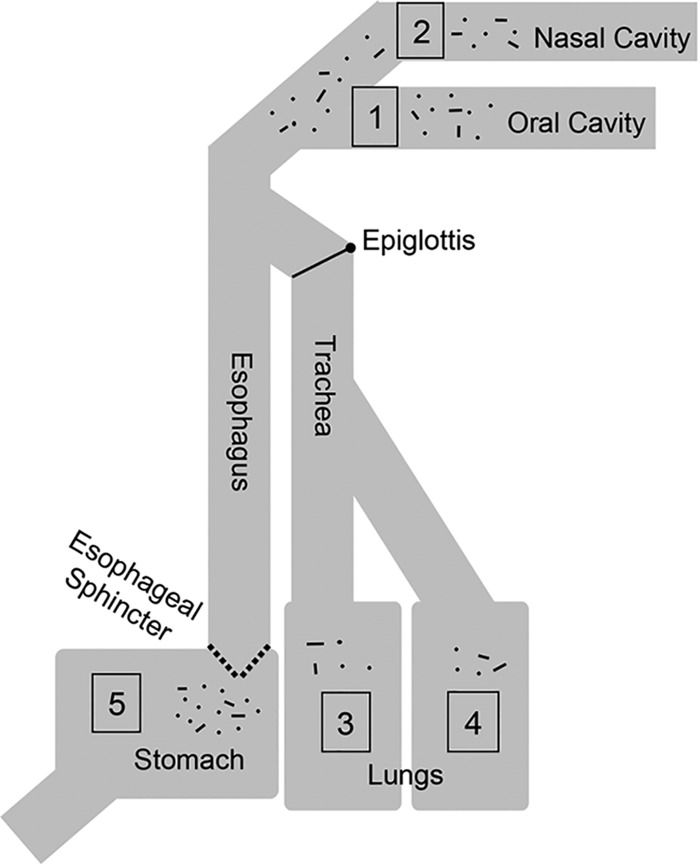
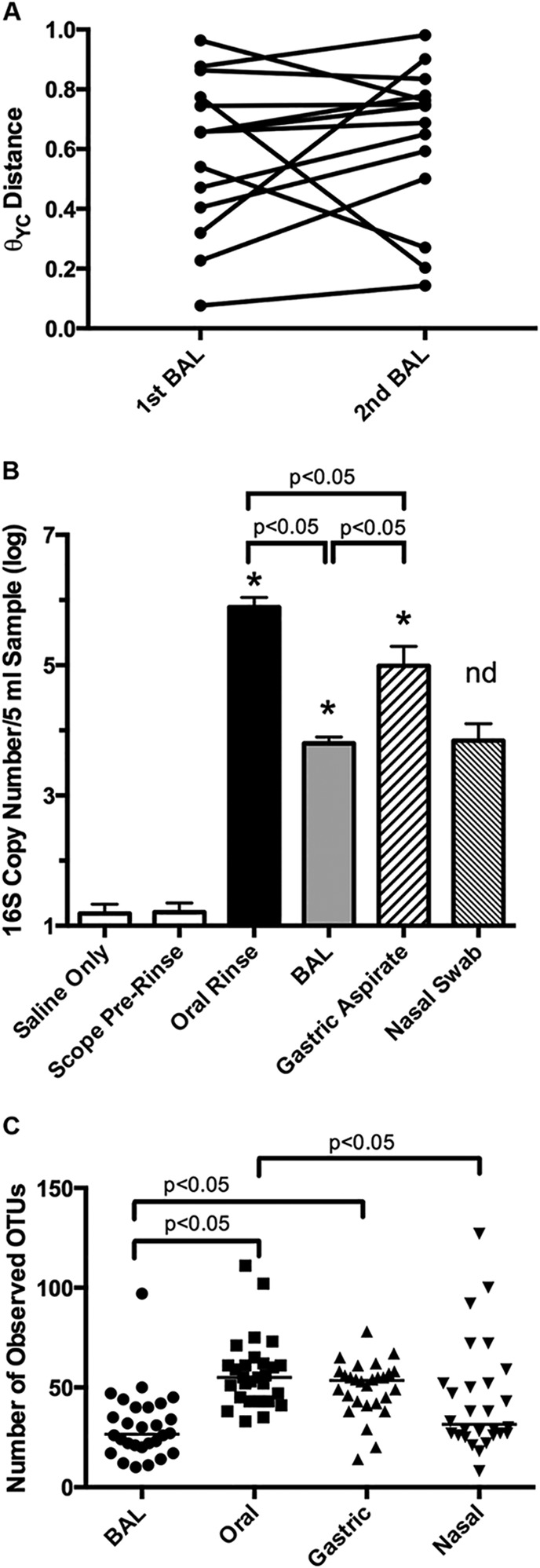
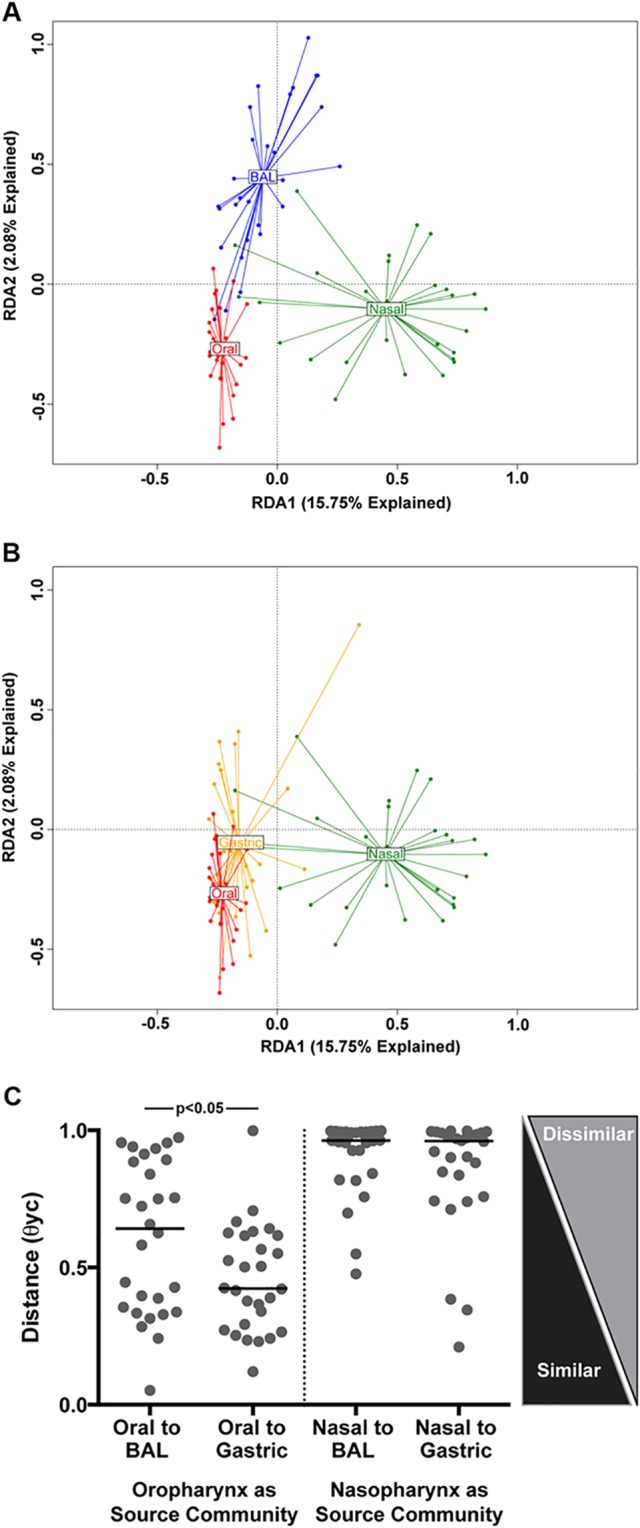
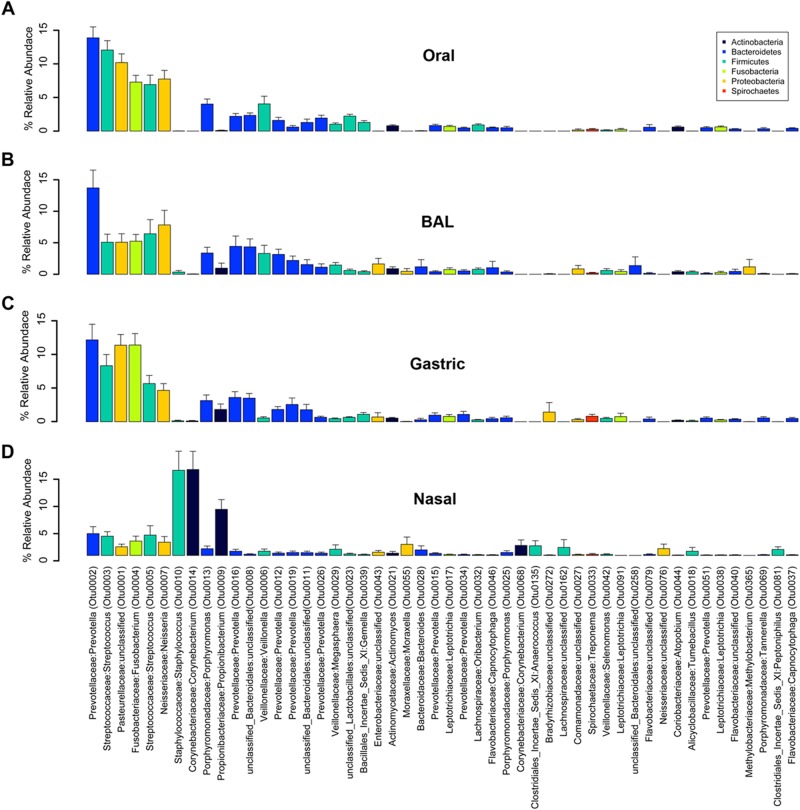
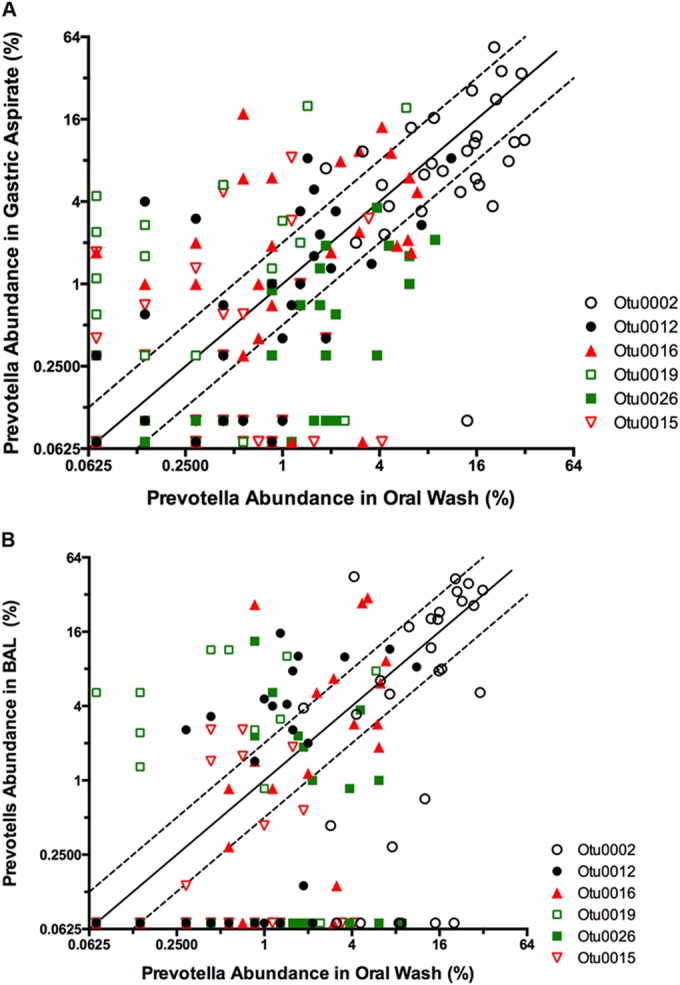
No studies have examined the relationships between bacterial communities along sites of the upper aerodigestive tract of an individual subject. Our objective was to perform an intrasubject and intersite analysis to determine the contributions of two upper mucosal sites (mouth and nose) as source communities for the bacterial microbiome of lower sites (lungs and stomach). Oral wash, bronchoalveolar lavage (BAL) fluid, nasal swab, and gastric aspirate samples were collected from 28 healthy subjects. Extensive analysis of controls and serial intrasubject BAL fluid samples demonstrated that sampling of the lungs by bronchoscopy was not confounded by oral microbiome contamination. By quantitative PCR, the oral cavity and stomach contained the highest bacterial signal levels and the nasal cavity and lungs contained much lower levels. Pyrosequencing of 16S rRNA gene amplicon libraries generated from these samples showed that the oral and gastric compartments had the greatest species richness, which was significantly greater in both than the richness measured in the lungs and nasal cavity. The bacterial communities of the lungs were significantly different from those of the mouth, nose, and stomach, while the greatest similarity was between the oral and gastric communities. However, the bacterial communities of healthy lungs shared significant membership with the mouth, but not the nose, and marked subject-subject variation was noted. In summary, microbial immigration from the oral cavity appears to be the significant source of the lung microbiome during health, but unlike the stomach, the lungs exhibit evidence of selective elimination of Prevotella bacteria derived from the upper airways. IMPORTANCE We have demonstrated that the bacterial communities of the healthy lung overlapped those found in the mouth but were found at lower concentrations, with lower membership and a different community composition. The nasal microbiome, which was distinct from the oral microbiome, appeared to contribute little to the composition of the lung microbiome in healthy subjects. Our studies of the nasal, oral, lung, and stomach microbiomes within an individual illustrate the microbiological continuity of the aerodigestive tract in healthy adults and provide culture-independent microbiological support for the concept that microaspiration is common in healthy individuals.
Overview
The claims and statistics of this paper haven’t been checked yet.
Free: it reads the open-access text and checks the first 5 claims that cite a source we can check. Create a free account to check every claim.
Integrity signals
Registry
Cites
Statistics
Figures
Verification
Claims the paper makes
The claims and statistics of this paper haven’t been checked yet.
Free: it reads the open-access text and checks the first 5 claims that cite a source we can check. Create a free account to check every claim.
Claims other papers make about this one
Each is checked against this paper’s own text: does it say what the citing paper says it does?
The source backs part of the claim, not all of it — or backs it for a different population, condition or comparison.
In the citing paper
“Culture-independent microbiota studies have confirmed that the lung microbiota largely resembles the URT microbiota when studied in healthy individuals74,75,76.”
From The microbiota of the respiratory tract: gatekeeper to respiratory health (2017) · cites this paper as [74]
Experimental — accuracy not yet measuredThe source backs part of the claim, not all of it — or backs it for a different population, condition or comparison.
In the citing paper
“The oropharynx seems to be the main source of the lung microbiota in adults74, whereas in children the source is more likely to be both the nasopharynx and oropharynx76.”
From The microbiota of the respiratory tract: gatekeeper to respiratory health (2017) · cites this paper as [74]
Experimental — accuracy not yet measuredThe source backs part of the claim, not all of it — or backs it for a different population, condition or comparison.
In the citing paper
“A specific challenge in microbiota surveys of the respiratory tract is the low density of bacterial communities that are found there, particularly in healthy individuals; densities as low as 102–103 bacteria ml−1 have been reported in bronchoalveolar lavages (BALs) of healthy individuals74,153.”
From The microbiota of the respiratory tract: gatekeeper to respiratory health (2017) · cites this paper as [74]
Experimental — accuracy not yet measuredThe source backs part of the claim, not all of it — or backs it for a different population, condition or comparison.
In the citing paper
“In healthy individuals, the microbial community richness (i.e., the total number of bacterial taxa) is lower in the LRT than that in the URT”
From Respiratory viral infection-induced microbiome alterations and secondary bacterial pneumonia. (2018) · cites this paper as [76]
Experimental — accuracy not yet measuredIn the citing paper
“The contribution of the gastric microbiota to the microbial community in the LRT through gastric–oesophageal reflux has, until now, been suggested to be negligible74.”
From The microbiota of the respiratory tract: gatekeeper to respiratory health (2017) · cites this paper as [74]
2 more claims about this paper
Create a free account to see every claim other papers make about this one.
Self-check
Percentages, sums and reported differences re-computed from the paper’s own numbers.
The self-check needs the paper’s full text.
Citations
Cites
Schloss, P. D., Westcott, S. L., Ryabin, T., Hall, J. R., Hartmann, M., Hollister, E. B., Lesniewski, R. A., Oakley, B. B., Parks, D. H., Robinson, C. J., et al. (2009) · Applied and Environmental Microbiology · doi:10.1128/aem.01541-09 · Cited by 19,549 · cited 1×
“0 (39, 40) as described previously (37, 38,”
A new method for non-parametric multivariate analysis of variance
Anderson, M. J. (2001) · Austral Ecology · doi:10.1111/j.1442-9993.2001.01070.pp.x · Cited by 13,828 · cited 4×
“The same relationships of the four sites were confirmed when tested by AMOVA or PERMANOVA (Table 1).”
MethodInfluentialStructure, function and diversity of the healthy human microbiome
The Human Microbiome Project Consortium (2012) · Nature · doi:10.1038/nature11234 · Cited by 11,726
Topographical and Temporal Diversity of the Human Skin Microbiome
Grice, E. A., Kong, H. H., Conlan, S., Deming, C. B., Davis, J., Young, A. C., Program, N. C. S., Bouffard, G. G., Blakesley, R. W., Murray, P. R., et al. (2009) · Science · doi:10.1126/science.1171700 · Cited by 2,953
Reducing the Effects of PCR Amplification and Sequencing Artifacts on 16S rRNA-Based Studies
Schloss, P. D., Gevers, D., & Westcott, S. L. (2011) · PLoS ONE · doi:10.1371/journal.pone.0027310 · Cited by 2,112 · cited 2×
“The YC distance (1 YC) between bacterial communities measures differences in community structure (44) and was selected because it weighs rare and abundant OTUs more evenly than other metrics such as Bray-Curtis or Morisita-Horn (39).”
BackgroundQuantifying the roles of immigration and chance in shaping prokaryote community structure
Sloan, W. T., Lunn, M., Woodcock, S., Head, I. M., Nee, S., & Curtis, T. P. (2006) · Environmental Microbiology · doi:10.1111/j.1462-2920.2005.00956.x · Cited by 1,887 · cited 1×
“tomized R script based on the neutral model (42) was then used to identify”
MethodDisordered Microbial Communities in Asthmatic Airways
Hilty, M., Burke, C., Pedro, H., Cardenas, P., Bush, A., Bossley, C., Davies, J., Ervine, A., Poulter, L., Pachter, L., et al. (2010) · PLoS ONE · doi:10.1371/journal.pone.0008578 · Cited by 1,824 · cited 1×
“During states of ill health, such as viral upper respiratory tract infections, allergies, or sinus infections, the liquid flow from the nasal cavity increases, and this clearly has the potential to affect the lung microbiome, consistent with studies of rhinovirus infection and asthmatics that highlighted changes in th…”
BackgroundMolecular analysis of the bacterial microbiota in the human stomach
Bik, E. M., Eckburg, P. B., Gill, S. R., Nelson, K. E., Purdom, E. A., Francois, F., Perez-Perez, G., Blaser, M. J., & Relman, D. A. (2006) · Proceedings of the National Academy of Sciences · doi:10.1073/pnas.0506655103 · Cited by 1,158
Topographical Continuity of Bacterial Populations in the Healthy Human Respiratory Tract
Charlson, E. S., Bittinger, K., Haas, A. R., Fitzgerald, A. S., Frank, I., Yadav, A., Bushman, F. D., & Collman, R. G. (2011) · American Journal of Respiratory and Critical Care Medicine · doi:10.1164/rccm.201104-0655oc · Cited by 1,144 · cited 1×
“Within an individual, the similarity between the oral and lung microbiomes varied widely, with some individuals having a lung microbiome that was almost identical to their oral microbiome, similar to a previous report (9), while in others the two sites were markedly different.”
ResultAnalysis of the lung microbiome in the “healthy” smoker and in COPD.
Erb-Downward, J. R., Thompson, D. L., Han, M. K., Freeman, C. M., McCloskey, L., Schmidt, L. A., Young, V. B., Toews, G. B., Curtis, J. L., Sundaram, B., et al. (2011) · PLoS ONE · doi:10.1371/journal.pone.0016384 · Cited by 973
Self-citationComparison of the Respiratory Microbiome in Healthy Nonsmokers and Smokers
Morris, A., Beck, J. M., Schloss, P. D., Campbell, T. B., Crothers, K., Curtis, J. L., Flores, S. C., Fontenot, A. P., Ghedin, E., Huang, L., et al. (2013) · American Journal of Respiratory and Critical Care Medicine · doi:10.1164/rccm.201210-1913oc · Cited by 822 · cited 2×
“that demonstrated a significant difference between oral and BAL fluid microbiota communities in healthy subjects (17).”
BackgroundSelf-citationPharyngeal aspiration in normal adults and patients with depressed consciousness
Huxley, E. J., Viroslav, J., Gray, W. R., & Pierce, A. K. (1978) · The American Journal of Medicine · doi:10.1016/0002-9343(78)90574-0 · Cited by 739 · cited 1×
“Those normal subjects who did not aspirate were noted to sleep poorly (7).”
BackgroundAirway microbiota and bronchial hyperresponsiveness in patients with suboptimally controlled asthma
Huang, Y. J., Nelson, C. E., Brodie, E. L., DeSantis, T. Z., Baek, M. S., Liu, J., Woyke, T., Allgaier, M., Bristow, J., Wiener-Kronish, J. P., et al. (2011) · Journal of Allergy and Clinical Immunology · doi:10.1016/j.jaci.2010.10.048 · Cited by 696 · cited 1×
“During states of ill health, such as viral upper respiratory tract infections, allergies, or sinus infections, the liquid flow from the nasal cavity increases, and this clearly has the potential to affect the lung microbiome, consistent with studies of rhinovirus infection and asthmatics that highlighted changes in th…”
BackgroundPharyngeal aspiration in normal adults and patients with depressed consciousness
(1978) · The American Journal of Medicine · doi:10.1016/0002-9343(78)90607-1 · Cited by 604
The Lung Tissue Microbiome in Chronic Obstructive Pulmonary Disease
Sze, M. A., Dimitriu, P. A., Hayashi, S., Elliott, W. M., McDonough, J. E., Gosselink, J. V., Cooper, J., Sin, D. D., Mohn, W. W., & Hogg, J. C. (2012) · American Journal of Respiratory and Critical Care Medicine · doi:10.1164/rccm.201111-2075oc · Cited by 552
The role of the microbiome in exacerbations of chronic lung diseases
Dickson, R. P., Martinez, F. J., & Huffnagle, G. B. (2014) · The Lancet · doi:10.1016/s0140-6736(14)61136-3 · Cited by 495 · cited 1×
“On the basis of accumulating data from many laboratories, we have recently proposed the concept that the entire respiratory tract should be considered a single ecosystem extending from the nasal and oral cavities to the alveoli, which includes gradients and niches that modulate microbiome dispersion, retention, surviv…”
BackgroundSelf-citationSegal, L. N., Alekseyenko, A. V., Clemente, J. C., Kulkarni, R., Wu, B., Chen, H., Berger, K. I., Goldring, R. M., Rom, W. N., Blaser, M. J., et al. (2013) · Microbiome · doi:10.1186/2049-2618-1-19 · Cited by 482
A Similarity Measure Based on Species Proportions
Yue, J. C., & Clayton, M. K. (2005) · Communications in Statistics - Theory and Methods · doi:10.1080/sta-200066418 · Cited by 482 · cited 1×
“The YC distance (1 YC) between bacterial communities measures differences in community structure (44) and was selected because it weighs rare and abundant OTUs more evenly than other metrics such as Bray-Curtis or Morisita-Horn (39).”
BackgroundBowers, R. M., McLetchie, S., Knight, R., & Fierer, N. (2011) · The ISME Journal · doi:10.1038/ismej.2010.167 · Cited by 461
Quantitative Aspiration During Sleep in Normal Subjects
Gleeson, K., Maxwell, S. L., & Eggli, D. F. (1997) · Chest · doi:10.1378/chest.111.5.1266 · Cited by 448
Disordered Microbial Communities in the Upper Respiratory Tract of Cigarette Smokers
Charlson, E. S., Chen, J., Custers-Allen, R., Bittinger, K., Li, H., Sinha, R., Hwang, J., Bushman, F. D., & Collman, R. G. (2010) · PLoS ONE · doi:10.1371/journal.pone.0015216 · Cited by 437
The lung microbiome in moderate and severe chronic obstructive pulmonary disease
Pragman, A. A., Kim, H. B., Reilly, C. S., Wendt, C., & Isaacson, R. E. (2012) · PLoS ONE · doi:10.1371/journal.pone.0047305 · Cited by 437
Hill, D. A., Hoffmann, C., Abt, M. C., Du, Y., Kobuley, D., Kirn, T. J., Bushman, F. D., & Artis, D. (2010) · Mucosal Immunology · doi:10.1038/mi.2009.132 · Cited by 431
The role of the bacterial microbiome in lung disease
Dickson, R. P., Erb-Downward, J. R., & Huffnagle, G. B. (2013) · Expert Review of Respiratory Medicine · doi:10.1586/ers.13.24 · Cited by 419
Self-citationWu, H., Kuzmenko, A., Wan, S., Schaffer, L., Weiss, A., Fisher, J. H., Kim, K. S., & McCormack, F. X. (2003) · Journal of Clinical Investigation · doi:10.1172/jci16889 · Cited by 412 · cited 1×
“The distal alveoli are bathed in pulmonary surfactant, which also has bacteriostatic activity against some bacterial strains, further creating selective pressure on reproducing communities (33).”
BackgroundMolyneaux, P. L., Mallia, P., Cox, M. J., Footitt, J., Willis-Owen, S. A. G., Homola, D., Trujillo-Torralbo, M.-B., Elkin, S., Kon, O. M., Cookson, W. O. C., et al. (2013) · American Journal of Respiratory and Critical Care Medicine · doi:10.1164/rccm.201302-0341oc · Cited by 390 · cited 1×
“During states of ill health, such as viral upper respiratory tract infections, allergies, or sinus infections, the liquid flow from the nasal cavity increases, and this clearly has the potential to affect the lung microbiome, consistent with studies of rhinovirus infection and asthmatics that highlighted changes in th…”
BackgroundDickson, R. P., Erb-Downward, J. R., & Huffnagle, G. B. (2014) · The Lancet Respiratory Medicine · doi:10.1016/s2213-2600(14)70028-1 · Cited by 371 · cited 1×
“On the basis of accumulating data from many laboratories, we have recently proposed the concept that the entire respiratory tract should be considered a single ecosystem extending from the nasal and oral cavities to the alveoli, which includes gradients and niches that modulate microbiome dispersion, retention, surviv…”
BackgroundShort-Term Temporal Variability in Airborne Bacterial and Fungal Populations
Fierer, N., Liu, Z., Rodríguez-Hernández, M., Knight, R., Henn, M., & Hernandez, M. T. (2008) · Applied and Environmental Microbiology · doi:10.1128/aem.01467-07 · Cited by 268
Sources of Bacteria in Outdoor Air across Cities in the Midwestern United States
Bowers, R. M., Sullivan, A. P., Costello, E. K., Collett, J. L., Knight, R., & Fierer, N. (2011) · Applied and Environmental Microbiology · doi:10.1128/aem.05498-11 · Cited by 266
Huang, Y. J., Kim, E., Cox, M. J., Brodie, E. L., Brown, R., Wiener-Kronish, J. P., & Lynch, S. V. (2010) · OMICS: A Journal of Integrative Biology · doi:10.1089/omi.2009.0100 · Cited by 240
Microbiological Survey of the Human Gastric Ecosystem Using Culturing and Pyrosequencing Methods
Delgado, S., Cabrera-Rubio, R., Mira, A., Suárez, A., & Mayo, B. (2013) · Microbial Ecology · doi:10.1007/s00248-013-0192-5 · Cited by 227
The nasal cavity microbiota of healthy adults
Bassis, C. M., Tang, A. L., Young, V. B., & Pynnonen, M. A. (2014) · Microbiome · doi:10.1186/2049-2618-2-27 · Cited by 209
Self-citationDickson, R. P., Erb-Downward, J. R., Freeman, C. M., Walker, N., Scales, B. S., Beck, J. M., Martinez, F. J., Curtis, J. L., Lama, V. N., & Huffnagle, G. B. (2014) · PLoS ONE · doi:10.1371/journal.pone.0097214 · Cited by 206
Self-citationLarsen, J. M., Musavian, H. S., Butt, T. M., Ingvorsen, C., Thysen, A. H., & Brix, S. (2015) · Immunology · doi:10.1111/imm.12376 · Cited by 200
Bertolini, V., Gandolfi, I., Ambrosini, R., Bestetti, G., Innocente, E., Rampazzo, G., & Franzetti, A. (2013) · Applied Microbiology and Biotechnology · doi:10.1007/s00253-012-4450-0 · Cited by 191
Dickson, R. P., Erb-Downward, J. R., Prescott, H. C., Martinez, F. J., Curtis, J. L., Lama, V. N., & Huffnagle, G. B. (2014) · Journal of Clinical Microbiology · doi:10.1128/jcm.01028-14 · Cited by 176 · cited 1×
“Identifying the reasons for this discrepancy between culture-based and culture-independent studies is an active area of investigation (27) and very likely involves the adaptation of immigrant bacteria to the metabolically restricted and harsh environments of the stomach and lower airways.”
BackgroundSelf-citationSurvival in hostile territory: the microbiota of the stomach
Yang, I., Nell, S., & Suerbaum, S. (2013) · FEMS Microbiology Reviews · doi:10.1111/1574-6976.12027 · Cited by 163 · cited 1×
“Helicobacter and Lactobacillus are two bacterial genera that are well adapted for growth at low pH and have routinely been reported by culture from healthy human stomachs (18).”
BackgroundMunyard, P., & Bush, A. (1996) · Archives of Disease in Childhood · doi:10.1136/adc.74.6.531 · Cited by 147 · cited 1×
“Microbes are cleared from the respiratory tract via mucociliary clearance, coughing (frequent even among healthy subjects [32]), and innate and adaptive immunity.”
BackgroundLarsen, J. M., Steen-Jensen, D. B., Laursen, J. M., Søndergaard, J. N., Musavian, H. S., Butt, T. M., & Brix, S. (2012) · PLoS ONE · doi:10.1371/journal.pone.0031976 · Cited by 135 · cited 2×
“Interestingly, coculture experiments found that Prevotella species were able to reduce Haemophilus influenzae-induced IL12p70 but not IL-10 in DCs (35).”
BackgroundHuang, Y. J., & Lynch, S. V. (2011) · Expert Review of Respiratory Medicine · doi:10.1586/ers.11.76 · Cited by 100
Resident aerobic microbiota of the adult human nasal cavity
Rasmussen, T. T., Kirkeby, L. P., Poulsen, K., Reinholdt, J., & Kilian, M. (2000) · APMIS · doi:10.1034/j.1600-0463.2000.d01-13.x · Cited by 100
THE RELATIONSHIP OF SINUSITIS AND BRONCHIECTASIS
QUINN, L. H., & MEYER, O. O. (1929) · Archives of Otolaryngology - Head and Neck Surgery · doi:10.1001/archotol.1929.00620050048003 · Cited by 95 · cited 1×
“Furthermore, as discussed by Quinn and Meyer, healthy human subjects, as well as other mammals, aspirate small amounts of liquids from the upper airways into the lower airways (8).”
BackgroundBassis, C. M., Theriot, C. M., & Young, V. B. (2014) · Antimicrobial Agents and Chemotherapy · doi:10.1128/aac.02262-13 · Cited by 67 · cited 1×
“scribed previously (37, 38), except under the following PCR conditions.”
BackgroundSelf-citationAkha, A. A. S., Theriot, C. M., Erb‐Downward, J. R., McDermott, A. J., Falkowski, N. R., Tyra, H. M., Rutkowski, D. T., Young, V. B., & Huffnagle, G. B. (2013) · Immunology · doi:10.1111/imm.12122 · Cited by 47
Self-citationHashway, S. A., Bergin, I. L., Bassis, C. M., Uchihashi, M., Schmidt, K. C., Young, V. B., Aronoff, D. M., Patton, D. L., & Bell, J. D. (2013) · Journal of Medical Primatology · doi:10.1111/jmp.12090 · Cited by 25
Self-citation
Cited by
Microbiota in health and diseases
Hou, K., Wu, Z.-X., Chen, X.-Y., Wang, J.-Q., Zhang, D., Xiao, C., Zhu, D., Koya, J. B., Wei, L., Li, J., et al. (2022) · Signal Transduction and Targeted Therapy · doi:10.1038/s41392-022-00974-4 · Cited by 3,171
“Early studies found significant similarity between the oral and lung microbiota, while the nasal microbiota shares less similarities with lung microbiota.(215) It is hypothesized that the oral microbiota may contribute to chronic respiratory diseases through aspiration and systemic inflammation.”
BackgroundEmerging Pathogenic Links Between Microbiota and the Gut-Lung Axis
Budden, K. F., Gellatly, S. L., Wood, D. L. A., Cooper, M. A., Morrison, M., Hugenholtz, P., & Hansbro, P. M. (2017) · Nature Reviews Microbiology · doi:10.1038/nrmicro.2016.142 · Cited by 1,606
Management of Helicobacter pylori infection: the Maastricht VI/Florence consensus report
Malfertheiner, P., Megraud, F., Rokkas, T., Gisbert, J. P., Liou, J.-M., Schulz, C., Gasbarrini, A., Hunt, R. H., Leja, M., O'Morain, C., et al. (2022) · Gut · doi:10.1136/gutjnl-2022-327745 · Cited by 1,533
The microbiota of the respiratory tract: gatekeeper to respiratory health
Man, W. H., de Steenhuijsen Piters, W. A. A., & Bogaert, D. (2017) · Nature Reviews Microbiology · doi:10.1038/nrmicro.2017.14 · Cited by 1,384
“The oropharynx seems to be the main source of the lung microbiota in adults 74 , whereas in children the source is more likely to be both the nasopharynx and oropharynx 76 .”
BackgroundInfluentialThe immune response to Prevotella bacteria in chronic inflammatory disease
Larsen, J. M. (2017) · Immunology · doi:10.1111/imm.12760 · Cited by 1,343
Metadata
- Authors
- Bassis, C. M., Erb-Downward, J. R., Dickson, R. P., Freeman, C. M., Schmidt, T. M., Young, V. B., Beck, J. M., Curtis, J. L., & Huffnagle, G. B.
- Affiliations
- University of Michigan (US)
- Division of Pulmonary and Critical Care Medicine, Department of Internal Medicine, University of Michigan Medical School, Ann Arbor, Michigan, USA
- VA Eastern Colorado Health Care System (US)
- Corresponding author
- Huffnagle, Gary B.
- ORCID
- Venue
- mBio
- Publisher
- American Society for Microbiology
- Published
- 2015-05
- Volume
- 6
- Issue
- 2
- Pages
- e00037-e00037
- ISSN
- 2150-7511 (ISSN-L)
- 2161-2129
- PMC
- PMC4358017
- OpenAlex
- W2166358290
- Cited by
- 839
- References
- 46
- Citations by year
- 2026: 51 · 2025: 70 · 2024: 83 · 2023: 74 · 2022: 106 · 2021: 89 · 2020: 84 · 2019: 63 · 2018: 80 · 2017: 71 · 2016: 50 · 2015: 18
- FWCI
- 98.72
- Type
- journal article
- Language
- en
- Open access
- gold
- doi.org
- Licence
- cc-by-nc-sa
- creativecommons.org/licenses/by-nc-sa/3.0/ (vor)
- journals.asm.org/non-commercial-tdm-license (tdm)
- Locations
- mBio (publishedVersion, cc-by-nc-sa)
- PubMed Central (publishedVersion, cc-by-nc-sa)
- PubMed (publishedVersion)
- DOAJ (DOAJ: Directory of Open Access Journals) (submittedVersion, cc-by-sa)
- Funders
- National Heart, Lung, and Blood Institute (U01HL098961, L30 HL120241, T32HL00774921, R01HL114447, T32HL007749)
- National Institute of Diabetes and Digestive and Kidney Diseases (P30DK034933)
- Topics
- Health Sciences › Dentistry › Periodontics › Oral microbiology and periodontitis research
- Life Sciences › Biochemistry, Genetics and Molecular Biology › Molecular Biology › Gut microbiota and health
- Physical Sciences › Environmental Science › Ecology › Microbial Community Ecology and Physiology
- Keywords
- lung microbiome, gastric microbiota, oral microbiota, nasal microbiota, upper respiratory tract, aerodigestive tract, microaspiration, Prevotella, bronchoalveolar lavage
- MeSH terms
- Bacteria, DNA, Bacterial, DNA, Ribosomal, Humans, Lung, Molecular Sequence Data, Mouth, Nasal Cavity, RNA, Ribosomal, 16S, Stomach, Sequence Analysis, DNA, Real-Time Polymerase Chain Reaction, Microbiota, Healthy Volunteers
About these checks
Registry, retraction, Cites and statistics results are computed, not judged, with one exception: a printed reference that no index lists is read once by a model before it counts as a citation error. Claims are extracted by a model and kept only when their quote appears verbatim in the text; each cited source is then checked, with a model’s help, for whether it says what the claim relies on. Those verdicts can be wrong — read the claim’s quote and the cited source before relying on one.
Statistics and arithmetic are recomputed, not judged.
Confidence bands are shown only for fields calibrated on our annotated test set. None is calibrated yet, so no band is shown.
What counts as a claim ›How we measure confidence ›How we check this ›
Are you an author, or do you see a problem with this page? Request a review
Data sources
Bibliographic data: Semantic Scholar, OpenAlex, Crossref.
Contains information from the Semantic Scholar Academic Graph Datasets, made available under the ODC Attribution License (ODC-BY 1.0).
Semantic Scholar’s data is described in: Kinney, R., et al. (2023). The Semantic Scholar Open Data Platform. arXiv:2301.10140.
