

Analysis of the Upper Respiratory Tract Microbiotas as the Source of the Lung and Gastric Microbiotas in Healthy Individuals
Open accessThe DOI matches its Crossref record; 45 of the 46 references it cites were found in a registry or an index.
Abstract
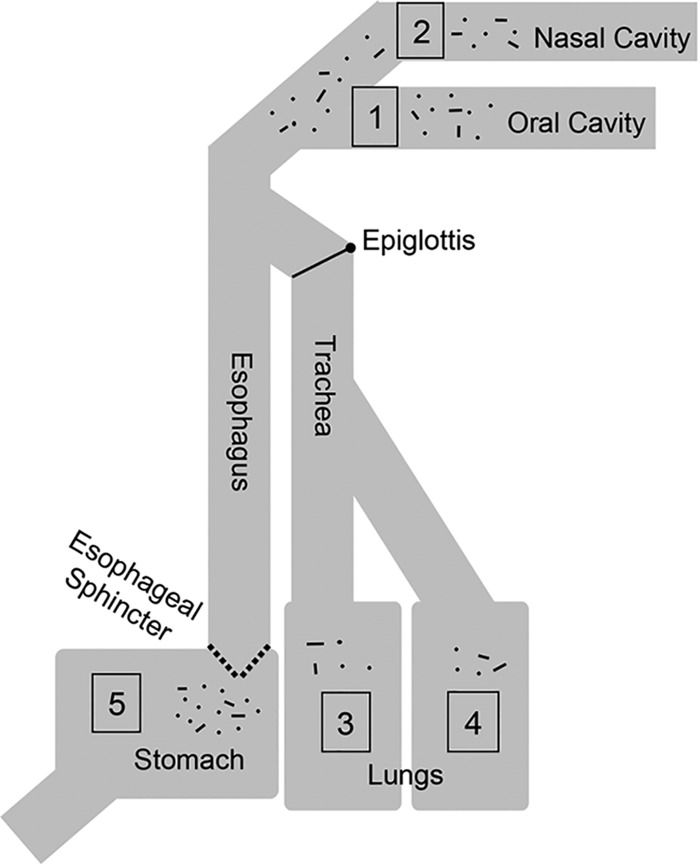
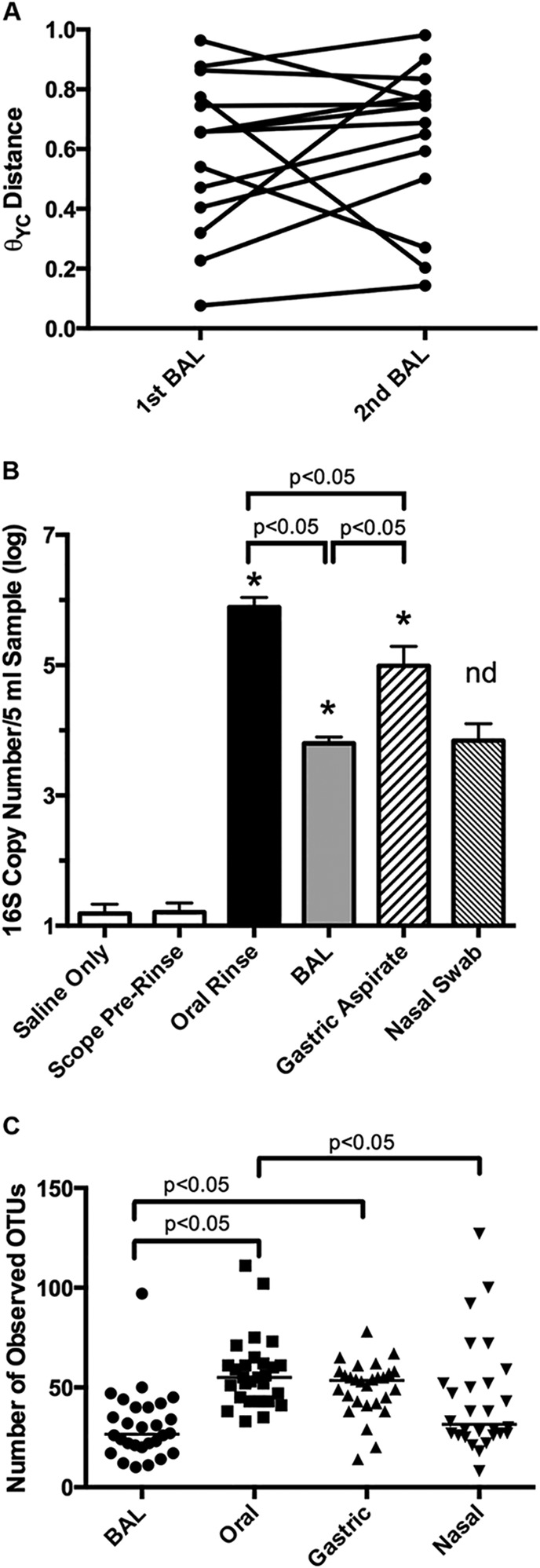
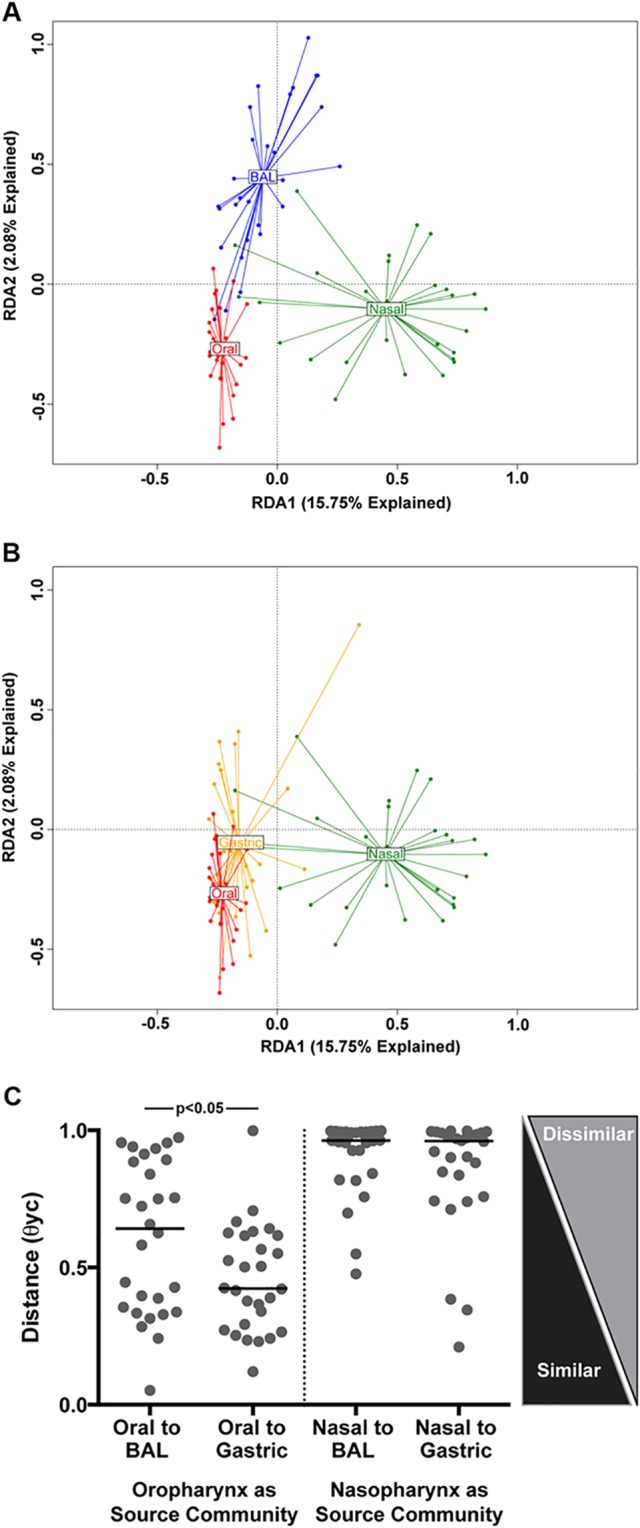
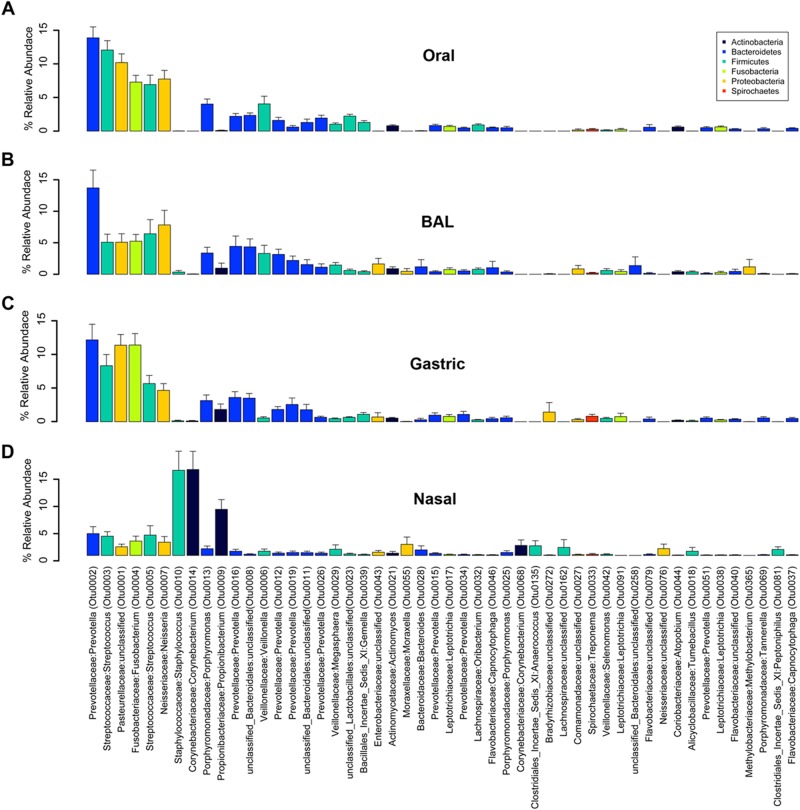
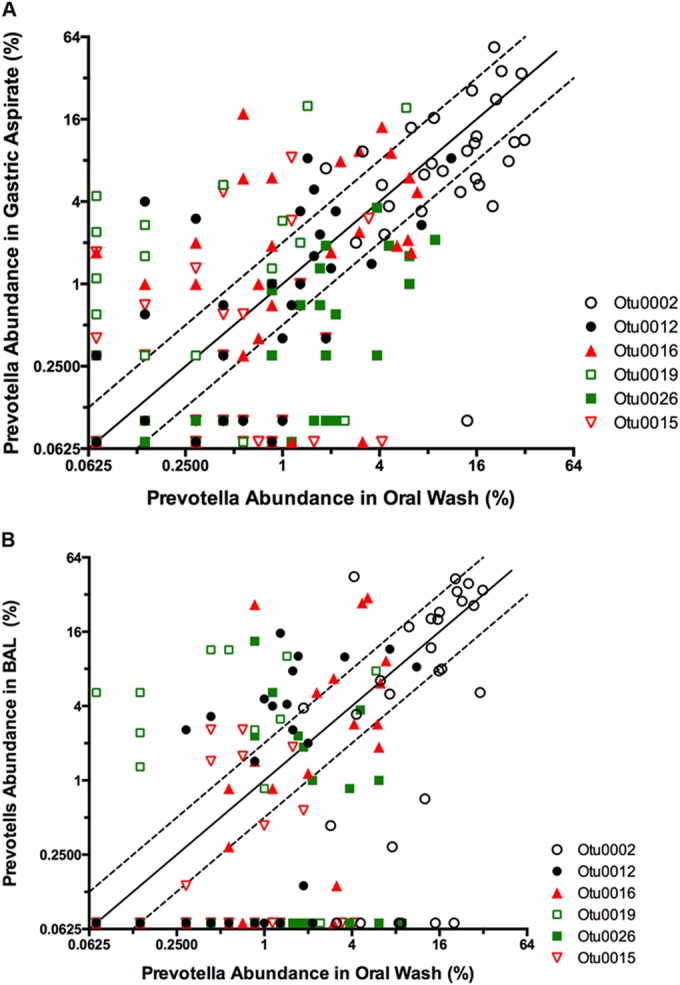
No studies have examined the relationships between bacterial communities along sites of the upper aerodigestive tract of an individual subject. Our objective was to perform an intrasubject and intersite analysis to determine the contributions of two upper mucosal sites (mouth and nose) as source communities for the bacterial microbiome of lower sites (lungs and stomach). Oral wash, bronchoalveolar lavage (BAL) fluid, nasal swab, and gastric aspirate samples were collected from 28 healthy subjects. Extensive analysis of controls and serial intrasubject BAL fluid samples demonstrated that sampling of the lungs by bronchoscopy was not confounded by oral microbiome contamination. By quantitative PCR, the oral cavity and stomach contained the highest bacterial signal levels and the nasal cavity and lungs contained much lower levels. Pyrosequencing of 16S rRNA gene amplicon libraries generated from these samples showed that the oral and gastric compartments had the greatest species richness, which was significantly greater in both than the richness measured in the lungs and nasal cavity. The bacterial communities of the lungs were significantly different from those of the mouth, nose, and stomach, while the greatest similarity was between the oral and gastric communities. However, the bacterial communities of healthy lungs shared significant membership with the mouth, but not the nose, and marked subject-subject variation was noted. In summary, microbial immigration from the oral cavity appears to be the significant source of the lung microbiome during health, but unlike the stomach, the lungs exhibit evidence of selective elimination of Prevotella bacteria derived from the upper airways. IMPORTANCE We have demonstrated that the bacterial communities of the healthy lung overlapped those found in the mouth but were found at lower concentrations, with lower membership and a different community composition. The nasal microbiome, which was distinct from the oral microbiome, appeared to contribute little to the composition of the lung microbiome in healthy subjects. Our studies of the nasal, oral, lung, and stomach microbiomes within an individual illustrate the microbiological continuity of the aerodigestive tract in healthy adults and provide culture-independent microbiological support for the concept that microaspiration is common in healthy individuals.
Overview
The claims and statistics of this paper haven’t been checked yet.
Free: it reads the open-access text and checks the first 5 claims that cite a source we can check. Create a free account to check every claim.
Integrity signals
Registry
Cites
Statistics
Figures
Verification
Claims the paper makes
The claims and statistics of this paper haven’t been checked yet.
Free: it reads the open-access text and checks the first 5 claims that cite a source we can check. Create a free account to check every claim.
Claims other papers make about this one
Each is checked against this paper’s own text: does it say what the citing paper says it does?
The source backs part of the claim, not all of it — or backs it for a different population, condition or comparison.
In the citing paper
“Culture-independent microbiota studies have confirmed that the lung microbiota largely resembles the URT microbiota when studied in healthy individuals74,75,76.”
From The microbiota of the respiratory tract: gatekeeper to respiratory health (2017) · cites this paper as [74]
Experimental — accuracy not yet measuredThe source backs part of the claim, not all of it — or backs it for a different population, condition or comparison.
In the citing paper
“The oropharynx seems to be the main source of the lung microbiota in adults74, whereas in children the source is more likely to be both the nasopharynx and oropharynx76.”
From The microbiota of the respiratory tract: gatekeeper to respiratory health (2017) · cites this paper as [74]
Experimental — accuracy not yet measuredThe source backs part of the claim, not all of it — or backs it for a different population, condition or comparison.
In the citing paper
“A specific challenge in microbiota surveys of the respiratory tract is the low density of bacterial communities that are found there, particularly in healthy individuals; densities as low as 102–103 bacteria ml−1 have been reported in bronchoalveolar lavages (BALs) of healthy individuals74,153.”
From The microbiota of the respiratory tract: gatekeeper to respiratory health (2017) · cites this paper as [74]
Experimental — accuracy not yet measuredThe source backs part of the claim, not all of it — or backs it for a different population, condition or comparison.
In the citing paper
“In healthy individuals, the microbial community richness (i.e., the total number of bacterial taxa) is lower in the LRT than that in the URT”
From Respiratory viral infection-induced microbiome alterations and secondary bacterial pneumonia. (2018) · cites this paper as [76]
Experimental — accuracy not yet measuredIn the citing paper
“The contribution of the gastric microbiota to the microbial community in the LRT through gastric–oesophageal reflux has, until now, been suggested to be negligible74.”
From The microbiota of the respiratory tract: gatekeeper to respiratory health (2017) · cites this paper as [74]
2 more claims about this paper
Create a free account to see every claim other papers make about this one.
Self-check
Percentages, sums and reported differences re-computed from the paper’s own numbers.
The self-check needs the paper’s full text.
Citations
Cites
Schloss, P. D., Westcott, S. L., Ryabin, T., Hall, J. R., Hartmann, M., Hollister, E. B., Lesniewski, R. A., Oakley, B. B., Parks, D. H., Robinson, C. J., et al. (2009) · Applied and Environmental Microbiology · doi:10.1128/aem.01541-09 · Cited by 19,549 · cited 1×
“0 (39, 40) as described previously (37, 38,”
A new method for non-parametric multivariate analysis of variance
Anderson, M. J. (2001) · Austral Ecology · doi:10.1111/j.1442-9993.2001.01070.pp.x · Cited by 13,828 · cited 4×
“The same relationships of the four sites were confirmed when tested by AMOVA or PERMANOVA (Table 1).”
MethodInfluentialStructure, function and diversity of the healthy human microbiome
The Human Microbiome Project Consortium (2012) · Nature · doi:10.1038/nature11234 · Cited by 11,726
Topographical and Temporal Diversity of the Human Skin Microbiome
Grice, E. A., Kong, H. H., Conlan, S., Deming, C. B., Davis, J., Young, A. C., Program, N. C. S., Bouffard, G. G., Blakesley, R. W., Murray, P. R., et al. (2009) · Science · doi:10.1126/science.1171700 · Cited by 2,953
Reducing the Effects of PCR Amplification and Sequencing Artifacts on 16S rRNA-Based Studies
Schloss, P. D., Gevers, D., & Westcott, S. L. (2011) · PLoS ONE · doi:10.1371/journal.pone.0027310 · Cited by 2,112 · cited 2×
“The YC distance (1 YC) between bacterial communities measures differences in community structure (44) and was selected because it weighs rare and abundant OTUs more evenly than other metrics such as Bray-Curtis or Morisita-Horn (39).”
BackgroundQuantifying the roles of immigration and chance in shaping prokaryote community structure
Sloan, W. T., Lunn, M., Woodcock, S., Head, I. M., Nee, S., & Curtis, T. P. (2006) · Environmental Microbiology · doi:10.1111/j.1462-2920.2005.00956.x · Cited by 1,887 · cited 1×
“tomized R script based on the neutral model (42) was then used to identify”
MethodDisordered Microbial Communities in Asthmatic Airways
Hilty, M., Burke, C., Pedro, H., Cardenas, P., Bush, A., Bossley, C., Davies, J., Ervine, A., Poulter, L., Pachter, L., et al. (2010) · PLoS ONE · doi:10.1371/journal.pone.0008578 · Cited by 1,824 · cited 1×
“During states of ill health, such as viral upper respiratory tract infections, allergies, or sinus infections, the liquid flow from the nasal cavity increases, and this clearly has the potential to affect the lung microbiome, consistent with studies of rhinovirus infection and asthmatics that highlighted changes in th…”
BackgroundMolecular analysis of the bacterial microbiota in the human stomach
Bik, E. M., Eckburg, P. B., Gill, S. R., Nelson, K. E., Purdom, E. A., Francois, F., Perez-Perez, G., Blaser, M. J., & Relman, D. A. (2006) · Proceedings of the National Academy of Sciences · doi:10.1073/pnas.0506655103 · Cited by 1,158
Topographical Continuity of Bacterial Populations in the Healthy Human Respiratory Tract
Charlson, E. S., Bittinger, K., Haas, A. R., Fitzgerald, A. S., Frank, I., Yadav, A., Bushman, F. D., & Collman, R. G. (2011) · American Journal of Respiratory and Critical Care Medicine · doi:10.1164/rccm.201104-0655oc · Cited by 1,144 · cited 1×
“Within an individual, the similarity between the oral and lung microbiomes varied widely, with some individuals having a lung microbiome that was almost identical to their oral microbiome, similar to a previous report (9), while in others the two sites were markedly different.”
ResultAnalysis of the lung microbiome in the “healthy” smoker and in COPD.
Erb-Downward, J. R., Thompson, D. L., Han, M. K., Freeman, C. M., McCloskey, L., Schmidt, L. A., Young, V. B., Toews, G. B., Curtis, J. L., Sundaram, B., et al. (2011) · PLoS ONE · doi:10.1371/journal.pone.0016384 · Cited by 973
Self-citation
Cited by
Microbiota in health and diseases
Hou, K., Wu, Z.-X., Chen, X.-Y., Wang, J.-Q., Zhang, D., Xiao, C., Zhu, D., Koya, J. B., Wei, L., Li, J., et al. (2022) · Signal Transduction and Targeted Therapy · doi:10.1038/s41392-022-00974-4 · Cited by 3,171
“Early studies found significant similarity between the oral and lung microbiota, while the nasal microbiota shares less similarities with lung microbiota.(215) It is hypothesized that the oral microbiota may contribute to chronic respiratory diseases through aspiration and systemic inflammation.”
BackgroundEmerging Pathogenic Links Between Microbiota and the Gut-Lung Axis
Budden, K. F., Gellatly, S. L., Wood, D. L. A., Cooper, M. A., Morrison, M., Hugenholtz, P., & Hansbro, P. M. (2017) · Nature Reviews Microbiology · doi:10.1038/nrmicro.2016.142 · Cited by 1,606
Management of Helicobacter pylori infection: the Maastricht VI/Florence consensus report
Malfertheiner, P., Megraud, F., Rokkas, T., Gisbert, J. P., Liou, J.-M., Schulz, C., Gasbarrini, A., Hunt, R. H., Leja, M., O'Morain, C., et al. (2022) · Gut · doi:10.1136/gutjnl-2022-327745 · Cited by 1,533
The microbiota of the respiratory tract: gatekeeper to respiratory health
Man, W. H., de Steenhuijsen Piters, W. A. A., & Bogaert, D. (2017) · Nature Reviews Microbiology · doi:10.1038/nrmicro.2017.14 · Cited by 1,384
“The oropharynx seems to be the main source of the lung microbiota in adults 74 , whereas in children the source is more likely to be both the nasopharynx and oropharynx 76 .”
BackgroundInfluentialThe immune response to Prevotella bacteria in chronic inflammatory disease
Larsen, J. M. (2017) · Immunology · doi:10.1111/imm.12760 · Cited by 1,343
Microbes, Metabolites, and the Gut-Lung Axis
Dang, A. T., & Marsland, B. J. (2019) · Mucosal Immunology · doi:10.1038/s41385-019-0160-6 · Cited by 1,028
Gupta, V. K., Paul, S., & Dutta, C. (2017) · Frontiers in Microbiology · doi:10.3389/fmicb.2017.01162 · Cited by 1,019
“URT microbiota is usually dominated by Firmicutes, Actinobacteria, Proteobacteria, Bacteroidetes, and Fusobacteria phyla, which contain species from Streptococcus, Neisseria, Gemella, Corynebacterium, Alloiococcus, and Haemophilus genera.”
BackgroundInfluentialThe Microbiome and the Respiratory Tract
Dickson, R. P., Erb-Downward, J. R., Martinez, F. J., & Huffnagle, G. B. (2016) · Annual Review of Physiology · doi:10.1146/annurev-physiol-021115-105238 · Cited by 953
“The microbial communities of the stomach more closely resemble those of the upper respiratory tract than do those of the lung (15), yet microbiota of the upper gastrointestinal tract are never dismissed as reflecting contamination.”
BackgroundInfluentialSelf-citationThe oral microbiota in colorectal cancer is distinctive and predictive
Flemer, B., Warren, R. D., Barrett, M. P., Cisek, K., Das, A., Jeffery, I. B., Hurley, E., O‘Riordain, M., Shanahan, F., & O‘Toole, P. W. (2018) · Gut · doi:10.1136/gutjnl-2017-314814 · Cited by 646
The Role of Lung and Gut Microbiota in the Pathology of Asthma
Barcik, W., Boutin, R. C. T., Sokolowska, M., & Finlay, B. B. (2020) · Immunity · doi:10.1016/j.immuni.2020.01.007 · Cited by 613
The influence of the microbiome on respiratory health
Wypych, T. P., Wickramasinghe, L. C., & Marsland, B. J. (2019) · Nature Immunology · doi:10.1038/s41590-019-0451-9 · Cited by 611
The Lung Microbiome: New Principles for Respiratory Bacteriology in Health and Disease
Dickson, R. P., & Huffnagle, G. B. (2015) · PLOS Pathogens · doi:10.1371/journal.ppat.1004923 · Cited by 563
Self-citationDickson, R. P., Erb-Downward, J. R., Freeman, C. M., McCloskey, L., Beck, J. M., Huffnagle, G. B., & Curtis, J. L. (2015) · Annals of the American Thoracic Society · doi:10.1513/annalsats.201501-029oc · Cited by 567
Self-citationHeintz‐Buschart, A., Pandey, U., Wicke, T., Sixel‐Döring, F., Janzen, A., Sittig‐Wiegand, E., Trenkwalder, C., Oertel, W. H., Mollenhauer, B., & Wilmes, P. (2018) · Movement Disorders · doi:10.1002/mds.27105 · Cited by 554
“OTUs common to the nasal and gastrointestinal microbiota were found, likely attributed to nasal discharge being swallowed.(62) However, none of these OTUs were found to differ significantly between PD patients and HCs, indicating that distinct signatures of PD are potentially present in the gut and nasal microbiota.”
BackgroundBacterial topography of the healthy human lower respiratory tract
Dickson, R. P., Erb-Downward, J. R., Freeman, C. M., McCloskey, L., Falkowski, N. R., Huffnagle, G. B., & Curtis, J. L. (2017) · mBio · doi:10.1128/mbio.02287-16 · Cited by 548
“All statistical analyses were performed in R and GraphPad Prism 6.”
InfluentialSelf-citationThe respiratory tract microbiome and lung inflammation: a two-way street.
Huffnagle, G. B., Dickson, R. P., & Lukacs, N. W. (2017) · Mucosal Immunology · doi:10.1038/mi.2016.108 · Cited by 535
“While the oral microbiome is the primary source of the bacterial microbiota in human lungs during health, it remains to be determined what are the factors that additionally shape the lung microbiome in those healthy individuals with enhanced similarity between their nasal and lung microbiomes.(14)”
BackgroundInfluentialSelf-citationMicrobiome and Human Health: Current Understanding, Engineering, and Enabling Technologies
Aggarwal, N., Kitano, S., Puah, G. R. Y., Kittelmann, S., Hwang, I. Y., & Chang, M. W. (2023) · Chemical Reviews · doi:10.1021/acs.chemrev.2c00431 · Cited by 508
Respiratory viral infection-induced microbiome alterations and secondary bacterial pneumonia.
Hanada, S., Pirzadeh, M., Carver, K. Y., & Deng, J. C. (2018) · Frontiers in Immunology · doi:10.3389/fimmu.2018.02640 · Cited by 495
“Respiratory Viral Infection Compared to studies of the URT microbiome, studies of the LRT microbiome following viral infections are relatively scarce due to the difficulty of obtaining uncontaminated samples from the lung.”
BackgroundInfluentialThe microbiome and critical illness
Dickson, R. P. (2016) · The Lancet Respiratory Medicine · doi:10.1016/s2213-2600(15)00427-0 · Cited by 460
Self-citationLung microbiome: new insights into the pathogenesis of respiratory diseases
Li, R., Li, J., & Zhou, X. (2024) · Signal Transduction and Targeted Therapy · doi:10.1038/s41392-023-01722-y · Cited by 434
“107 The lungs may select suitable colonies for survival through various rejection mechanisms.”
BackgroundDiet, Microbiota and Gut-Lung Connection
Anand, S., & Mande, S. S. (2018) · Frontiers in Microbiology · doi:10.3389/fmicb.2018.02147 · Cited by 409
“Studies have shown that the lung microbiota is formed by the micro-aspiration of microbiota from oropharynx part of the upper respiratory tract (URT) to the lung (Bassis et al., 2015; Dickson et al., 2015, 2017).”
BackgroundYu, G., Gail, M. H., Consonni, D., Carugno, M., Humphrys, M., Pesatori, A. C., Caporaso, N. E., Goedert, J. J., Ravel, J., & Landi, M. T. (2016) · Genome Biology · doi:10.1186/s13059-016-1021-1 · Cited by 405
Pathogenesis of pneumonia and acute lung injury
Long, M. E., Mallampalli, R. K., & Horowitz, J. C. (2022) · Clinical Science · doi:10.1042/cs20210879 · Cited by 390
The Lung Microbiome, Immunity, and the Pathogenesis of Chronic Lung Disease
O’Dwyer, D. N., Dickson, R. P., & Moore, B. B. (2016) · The Journal of Immunology · doi:10.4049/jimmunol.1600279 · Cited by 362
“Importantly, the mouth and nose microbiota are markedly different and studies have not identified any detectable influence on the reported microbiota based on scope insertion site (22, 23).”
BackgroundSelf-citationCystic fibrosis lung environment and Pseudomonas aeruginosa infection
Bhagirath, A. Y., Li, Y., Somayajula, D., Dadashi, M., Badr, S., & Duan, K. (2016) · BMC Pulmonary Medicine · doi:10.1186/s12890-016-0339-5 · Cited by 378
“The microbiome of the lungs more closely resembles that of the oropharynx than the nasopharynx, and the gastrointestinal tract probably through hematogenous spread [137, 138].”
BackgroundDysbiosis of the gut and lung microbiome has a role in asthma
Hufnagl, K., Pali-Schöll, I., Roth-Walter, F., & Jensen-Jarolim, E. (2020) · Seminars in Immunopathology · doi:10.1007/s00281-019-00775-y · Cited by 364
The role of the microbiota in infectious diseases
Libertucci, J., & Young, V. B. (2018) · Nature Microbiology · doi:10.1038/s41564-018-0278-4 · Cited by 357
Self-citationLower Airway Dysbiosis Affects Lung Cancer Progression
Tsay, J.-C. J., Wu, B. G., Sulaiman, I., Gershner, K., Schluger, R., Li, Y., Yie, T.-A., Meyn, P., Olsen, E., Perez, L., et al. (2021) · Cancer Discovery · doi:10.1158/2159-8290.cd-20-0263 · Cited by 322
The Oral Microbiome in Health and Its Implication in Oral and Systemic Diseases
(2016) · Advances in Applied Microbiology · doi:10.1016/bs.aambs.2016.08.002 · Cited by 306
Integrative Physiology of Pneumonia
Quinton, L. J., Walkey, A. J., & Mizgerd, J. P. (2018) · Physiological Reviews · doi:10.1152/physrev.00032.2017 · Cited by 295
Microbiome effects on immunity, health and disease in the lung
Shukla, S. D., Budden, K. F., Neal, R., & Hansbro, P. M. (2017) · Clinical & Translational Immunology · doi:10.1038/cti.2017.6 · Cited by 287
The role of the local microbial ecosystem in respiratory health and disease
de Steenhuijsen Piters, W. A. A., Sanders, E. A. M., & Bogaert, D. (2015) · Philosophical Transactions of the Royal Society B: Biological Sciences · doi:10.1098/rstb.2014.0294 · Cited by 283
At the Root: Defining and Halting Progression of Early Chronic Obstructive Pulmonary Disease
Martinez, F. J., Han, M. K., Allinson, J. P., Barr, R. G., Boucher, R. C., Calverley, P. M. A., Celli, B. R., Christenson, S. A., Crystal, R. G., Fagerås, M., et al. (2018) · American Journal of Respiratory and Critical Care Medicine · doi:10.1164/rccm.201710-2028pp · Cited by 282
Self-citationHuang, Y. J., & Boushey, H. A. (2015) · Journal of Allergy and Clinical Immunology · doi:10.1016/j.jaci.2014.11.011 · Cited by 271
Theis, K. R., Romero, R., Winters, A. D., Greenberg, J. M., Gomez-Lopez, N., Alhousseini, A., Bieda, J., Maymon, E., Pacora, P., Fettweis, J. M., et al. (2019) · American Journal of Obstetrics and Gynecology · doi:10.1016/j.ajog.2018.10.018 · Cited by 258
Interplay between the lung microbiome and lung cancer
Mao, Q., Jiang, F., Yin, R., Wang, J., Xia, W., Dong, G., Ma, W., Yang, Y., Xu, L., & Hu, J. (2018) · Cancer Letters · doi:10.1016/j.canlet.2017.11.036 · Cited by 254
The microbiome in respiratory medicine: current challenges and future perspectives
Faner, R., Sibila, O., Agustí, A., Bernasconi, E., Chalmers, J. D., Huffnagle, G. B., Manichanh, C., Molyneaux, P. L., Paredes, R., Pérez Brocal, V., et al. (2017) · European Respiratory Journal · doi:10.1183/13993003.02086-2016 · Cited by 247
Self-citationEvidence and Role for Bacterial Mucin Degradation in Cystic Fibrosis Airway Disease
Flynn, J. M., Niccum, D., Dunitz, J. M., & Hunter, R. C. (2016) · PLOS Pathogens · doi:10.1371/journal.ppat.1005846 · Cited by 235
Microbiome Dependent Regulation of Tregs and Th17 Cells in Mucosa
Pandiyan, P., Bhaskaran, N., Zou, M., Schneider, E., Jayaraman, S., & Huehn, J. (2019) · Frontiers in Immunology · doi:10.3389/fimmu.2019.00426 · Cited by 236
“Lung, previously thought to be sterile, is now known to harbor a complex and dynamic microbial community of ∼500 species, with a high resemblance to oral microbiome (188, 189).”
BackgroundLiu, H., Tao, L., Zhang, J., Zhu, Y., Zheng, Y., Liu, D., Zhou, M., Ke, H., Shi, M., & Qu, J. (2018) · International Journal of Cancer · doi:10.1002/ijc.31098 · Cited by 235
Schulz, C., Schütte, K., Koch, N., Vilchez-Vargas, R., Wos-Oxley, M. L., Oxley, A. P. A., Vital, M., Malfertheiner, P., & Pieper, D. H. (2018) · Gut · doi:10.1136/gutjnl-2016-312904 · Cited by 219
Man, W. H., van Houten, M. A., Mérelle, M. E., Vlieger, A. M., Chu, M. L. J. N., Jansen, N. J. G., Sanders, E. A. M., & Bogaert, D. (2019) · The Lancet Respiratory Medicine · doi:10.1016/s2213-2600(18)30449-1 · Cited by 214
The potential application of probiotics and prebiotics for the prevention and treatment of COVID-19
Olaimat, A. N., Aolymat, I., Al-Holy, M., Ayyash, M., Abu Ghoush, M., Al-Nabulsi, A. A., Osaili, T., Apostolopoulos, V., Liu, S.-Q., & Shah, N. P. (2020) · npj Science of Food · doi:10.1038/s41538-020-00078-9 · Cited by 214
The lung microbiota in early rheumatoid arthritis and autoimmunity
Scher, J. U., Joshua, V., Artacho, A., Abdollahi-Roodsaz, S., Öckinger, J., Kullberg, S., Sköld, M., Eklund, A., Grunewald, J., Clemente, J. C., et al. (2016) · Microbiome · doi:10.1186/s40168-016-0206-x · Cited by 208
“However, contamination with oropharyngeal microbiota, once a matter of great debate, has not been shown to be a major and frequent event that would preclude utilization of bronchoscopy to sample the lower airways [14, 15, 23, 35].”
The interplay between Helicobacter pylori and gastrointestinal microbiota
Chen, C.-C., Liou, J.-M., Lee, Y.-C., Hong, T.-C., El-Omar, E. M., & Wu, M.-S. (2021) · Gut Microbes · doi:10.1080/19490976.2021.1909459 · Cited by 208
Oral Microbiome and SARS-CoV-2: Beware of Lung Co-infection
Bao, L., Zhang, C., Dong, J., Zhao, L., Li, Y., & Sun, J. (2020) · Frontiers in Microbiology · doi:10.3389/fmicb.2020.01840 · Cited by 207
The Landscape Ecology and Microbiota of the Human Nose, Mouth, and Throat
Proctor, D. M., & Relman, D. A. (2017) · Cell Host & Microbe · doi:10.1016/j.chom.2017.03.011 · Cited by 199
Esther, C. R., Muhlebach, M. S., Ehre, C., Hill, D. B., Wolfgang, M. C., Kesimer, M., Ramsey, K. A., Markovetz, M. R., Garbarine, I. C., Forest, M. G., et al. (2019) · Science Translational Medicine · doi:10.1126/scitranslmed.aav3488 · Cited by 197
Li, P.-E., Lo, C.-C., Anderson, J. J., Davenport, K. W., Bishop-Lilly, K. A., Xu, Y., Ahmed, S., Feng, S., Mokashi, V. P., & Chain, P. S. G. (2017) · Nucleic Acids Research · doi:10.1093/nar/gkw1027 · Cited by 194
The lung microbiome: progress and promise
Whiteside, S. A., McGinniss, J. E., & Collman, R. G. (2021) · Journal of Clinical Investigation · doi:10.1172/jci150473 · Cited by 183
“Traditional teaching was that healthy lungs were sterile, meaning the airways below the vocal cords (glottis) and distal to the alveoli, but studies using rigorous sampling revealed that bacterial sequences are usually detectable in the lung (3, 37, 50).”
BackgroundProtective Microbiota: From Localized to Long-Reaching Co-Immunity
Chiu, L., Bazin, T., Truchetet, M.-E., Schaeverbeke, T., Delhaes, L., & Pradeu, T. (2017) · Frontiers in Immunology · doi:10.3389/fimmu.2017.01678 · Cited by 190
“It is worth investigating whether migrations between other sites, for instance, the upper respiratory tract and the stomach (218), or direct dispersal between oral and vaginal microbiota via sexual behavior, also exhibit upstreamtodownstream colonization resistance against infections.”
BackgroundDoes the endometrial cavity have a molecular microbial signature?
Winters, A. D., Romero, R., Gervasi, M. T., Gomez-Lopez, N., Tran, M. R., Garcia-Flores, V., Pacora, P., Jung, E., Hassan, S. S., Hsu, C.-D., et al. (2019) · Scientific Reports · doi:10.1038/s41598-019-46173-0 · Cited by 188
Methods in Lung Microbiome Research
Carney, S. M., Clemente, J. C., Cox, M. J., Dickson, R. P., Huang, Y. J., Kitsios, G. D., Kloepfer, K. M., Leung, J. M., LeVan, T. D., Molyneaux, P. L., et al. (2020) · American Journal of Respiratory Cell and Molecular Biology · doi:10.1165/rcmb.2019-0273tr · Cited by 184
“Sampling of the lower airway microbiome (excluding surgically excised tissue) requires the passage of the specimen or sampling instrument through the pharynx, which contains several-fold-more bacteria than the distal airway (23).”
BackgroundSelf-citationThe Human Respiratory System and its Microbiome at a Glimpse
Santacroce, L., Charitos, I. A., Ballini, A., Inchingolo, F., Luperto, P., De Nitto, E., & Topi, S. (2020) · Biology · doi:10.3390/biology9100318 · Cited by 183
Microbiota Promotes Chronic Pulmonary Inflammation by Enhancing IL-17A and Autoantibodies
Yadava, K., Pattaroni, C., Sichelstiel, A. K., Trompette, A., Gollwitzer, E. S., Salami, O., von Garnier, C., Nicod, L. P., & Marsland, B. J. (2016) · American Journal of Respiratory and Critical Care Medicine · doi:10.1164/rccm.201504-0779oc · Cited by 184
“Recent studies suggest the pulmonary microbiome originates from the dispersal of microbes from the nasal and oral cavities (58, 59).”
BackgroundWang, B., Zhang, L., Wang, Y., Dai, T., Qin, Z., Zhou, F., & Zhang, L. (2022) · Signal Transduction and Targeted Therapy · doi:10.1038/s41392-022-00986-0 · Cited by 184
Early-Life Formation of the Microbial and Immunological Environment of the Human Airways
Pattaroni, C., Watzenboeck, M. L., Schneidegger, S., Kieser, S., Wong, N. C., Bernasconi, E., Pernot, J., Mercier, L., Knapp, S., Nicod, L. P., et al. (2018) · Cell Host & Microbe · doi:10.1016/j.chom.2018.10.019 · Cited by 183
Zakharkina, T., Martin-Loeches, I., Matamoros, S., Povoa, P., Torres, A., Kastelijn, J. B., Hofstra, J. J., de Wever, B., de Jong, M., Schultz, M. J., et al. (2017) · Thorax · doi:10.1136/thoraxjnl-2016-209158 · Cited by 180
The Lung Microbiome during Health and Disease
Yagi, K., Huffnagle, G. B., Lukacs, N. W., & Asai, N. (2021) · International Journal of Molecular Sciences · doi:10.3390/ijms221910872 · Cited by 179
Self-citationOral-lung microbiome interactions in lung diseases.
Mammen, M. J., Scannapieco, F. A., & Sethi, S. (2020) · Periodontology 2000 · doi:10.1111/prd.12301 · Cited by 179
Segal, L. N., Clemente, J. C., Wu, B. G., Wikoff, W. R., Gao, Z., Li, Y., Ko, J. P., Rom, W. N., Blaser, M. J., & Weiden, M. D. (2017) · Thorax · doi:10.1136/thoraxjnl-2016-208599 · Cited by 176
Systematic review: gastric microbiota in health and disease
Rajilic‐Stojanovic, M., Figueiredo, C., Smet, A., Hansen, R., Kupcinskas, J., Rokkas, T., Andersen, L., Machado, J. C., Ianiro, G., Gasbarrini, A., et al. (2020) · Alimentary Pharmacology & Therapeutics · doi:10.1111/apt.15650 · Cited by 176
Marsh, R. L., Kaestli, M., Chang, A. B., Binks, M. J., Pope, C. E., Hoffman, L. R., & Smith-Vaughan, H. C. (2016) · Microbiome · doi:10.1186/s40168-016-0182-1 · Cited by 171
“In recent years, studies comparing upper and lower airway specimens have reported that the lower airway microbiota is more similar to that of the oropharynx than that in the nose or nasopharynx [1, 12, 13]; however, these studies have been limited to adults [1, 12]”
BackgroundResultInfluentialMycobacterium tuberculosis: An Adaptable Pathogen Associated With Multiple Human Diseases
Chai, Q., Zhang, Y., & Liu, C. H. (2018) · Frontiers in Cellular and Infection Microbiology · doi:10.3389/fcimb.2018.00158 · Cited by 170
Muhlebach, M. S., Zorn, B. T., Esther, C. R., Hatch, J. E., Murray, C. P., Turkovic, L., Ranganathan, S. C., Boucher, R. C., Stick, S. M., & Wolfgang, M. C. (2018) · PLOS Pathogens · doi:10.1371/journal.ppat.1006798 · Cited by 165
Airway microbial dysbiosis in asthmatic patients: A target for prevention and treatment?
Chung, K. F. (2017) · Journal of Allergy and Clinical Immunology · doi:10.1016/j.jaci.2017.02.004 · Cited by 164
Homeostasis and its disruption in the lung microbiome
Dickson, R. P., Erb-Downward, J. R., & Huffnagle, G. B. (2015) · American Journal of Physiology-Lung Cellular and Molecular Physiology · doi:10.1152/ajplung.00279.2015 · Cited by 163
“In the first experiment, a study of 28 healthy volunteers, we applied the model to the aerodigestive tract by comparing the microbiota of the mouth with two sites: the lungs and the stomach (3).”
BackgroundMethodInfluentialSelf-citationBernasconi, E., Pattaroni, C., Koutsokera, A., Pison, C., Kessler, R., Benden, C., Soccal, P. M., Magnan, A., Aubert, J.-D., Marsland, B. J., et al. (2016) · American Journal of Respiratory and Critical Care Medicine · doi:10.1164/rccm.201512-2424oc · Cited by 156
Mammen, M. J., & Sethi, S. (2016) · Respirology · doi:10.1111/resp.12732 · Cited by 151
Panzer, A. R., Lynch, S. V., Langelier, C., Christie, J. D., McCauley, K., Nelson, M., Cheung, C. K., Benowitz, N. L., Cohen, M. J., & Calfee, C. S. (2018) · American Journal of Respiratory and Critical Care Medicine · doi:10.1164/rccm.201702-0441oc · Cited by 152
Relationships Between Oral Microecosystem and Respiratory Diseases
Dong, J., Li, W., Wang, Q., Chen, J., Zu, Y., Zhou, X., & Guo, Q. (2022) · Frontiers in Molecular Biosciences · doi:10.3389/fmolb.2021.718222 · Cited by 186
The lung tissue microbiota of mild and moderate chronic obstructive pulmonary disease
Pragman, A. A., Lyu, T., Baller, J. A., Gould, T. J., Kelly, R. F., Reilly, C. S., Isaacson, R. E., & Wendt, C. H. (2018) · Microbiome · doi:10.1186/s40168-017-0381-4 · Cited by 150
“, in their study of healthy lung using BAL samples, concluded that the healthy lung is able to selectively eliminate Prevotella aspirated from the oropharynx [14].”
BackgroundSokolowska, M., Frei, R., Lunjani, N., Akdis, C. A., & O’Mahony, L. (2018) · Asthma Research and Practice · doi:10.1186/s40733-017-0037-y · Cited by 148
The gut–airway microbiome axis in health and respiratory diseases
Özçam, M., & Lynch, S. V. (2024) · Nature Reviews Microbiology · doi:10.1038/s41579-024-01048-8 · Cited by 172
“…the density measures in the nasal cavity and nasopharynx are shown as an estimated number of bacteria per nasal swab 131 , and the densities in the oropharynx and the lungs represent the estimated number of bacteria per millilitre of oral wash 132 or bronchoalveolar lavage 132,133 , respectively.”
Microbiome dysbiosis in lung cancer: from composition to therapy
Liu, N., Ma, Q., Ge, Y., Yi, C., Wei, L., Tan, J.-C., Chu, Q., Li, J., Zhang, P., & Wang, H. (2020) · npj Precision Oncology · doi:10.1038/s41698-020-00138-z · Cited by 159
Chen, Y., Feng, W., Ye, K., Guo, L., Xia, H., Guan, Y., Chai, L., Shi, W., Zhai, C., Wang, J., et al. (2021) · Frontiers in Cellular and Infection Microbiology · doi:10.3389/fcimb.2021.541092 · Cited by 164
“Also, several studies advised that the lungs were not sterile (Charlson et al., 2011; Bassis et al., 2015; Dickson and Huffnagle, 2015), and the sampling process could not guarantee sterility, which might lead to numerous challenges for the reasonable explanation of mNGS for broad-spectrum pathogen detection in the cl…”
BackgroundDysbiosis, malnutrition and enhanced gut-lung axis contribute to age-related respiratory diseases
Saint‐Criq, V., Lugo‐Villarino, G., & Thomas, M. (2020) · Ageing Research Reviews · doi:10.1016/j.arr.2020.101235 · Cited by 166
“Moreover, specific microbial profiles have been identified as longevity signatures in centenarians (Biagi et al., 2017; Cӑtoi et al., 2020; Kong et al., 2016; Naito et al., 2019; Rampelli et al., 2020; Santoro et al., 2018; Wang et al., 2019a; Wu et al., 2020).”
BackgroundSoffritti, I., D’Accolti, M., Fabbri, C., Passaro, A., Manfredini, R., Zuliani, G., Libanore, M., Franchi, M., Contini, C., & Caselli, E. (2021) · Frontiers in Microbiology · doi:10.3389/fmicb.2021.687513 · Cited by 186
Green Tea Liquid Consumption Alters the Human Intestinal and Oral Microbiome
Yuan, X., Long, Y., Ji, Z., Gao, J., Fu, T., Yan, M., Zhang, L., Su, H., Zhang, W., Wen, X., et al. (2018) · Molecular Nutrition & Food Research · doi:10.1002/mnfr.201800178 · Cited by 141
The nasal microbiome in asthma
Fazlollahi, M., Lee, T. D., Andrade, J., Oguntuyo, K., Chun, Y., Grishina, G., Grishin, A., & Bunyavanich, S. (2018) · Journal of Allergy and Clinical Immunology · doi:10.1016/j.jaci.2018.02.020 · Cited by 132
“Interestingly, although we found that Prevotella in the nasal passages was associated with asthma activity, a group that studied airway and upper gastrointestinal sites in healthy subjects concluded that the lower airway selectively eliminates Prevotella derived from the upper airways in healthy subjects.(58) We recog…”
Wu, B. G., Sulaiman, I., Tsay, J.-C. J., Perez, L., Franca, B., Li, Y., Wang, J., Gonzalez, A. N., El-Ashmawy, M., Carpenito, J., et al. (2021) · American Journal of Respiratory and Critical Care Medicine · doi:10.1164/rccm.202005-1596oc · Cited by 146
Ramsheh, M. Y., Haldar, K., Esteve‐Codina, A., Purser, L., Richardson, M., Müller–Quernheim, J., Greulich, T., Nowiński, A., Barta, I., Stendardo, M., et al. (2021) · The Lancet Microbe · doi:10.1016/s2666-5247(21)00035-5 · Cited by 154
Wiśniewski, J., Muehling, L. M., Eccles, J. D., Capaldo, B. J., Agrawal, R., Shirley, D.-A. T., Patrie, J. T., Workman, L. J., Schuyler, A. J., Lawrence, M. G., et al. (2017) · Journal of Allergy and Clinical Immunology · doi:10.1016/j.jaci.2017.08.020 · Cited by 138
Naidoo, C., Nyawo, G. R., Wu, B. G., Walzl, G., Warren, R. M., Segal, L. N., & Theron, G. (2019) · The Lancet Respiratory Medicine · doi:10.1016/s2213-2600(18)30501-0 · Cited by 155
Sequeira, R. P., McDonald, J. A. K., Marchesi, J. R., & Clarke, T. B. (2020) · Nature Microbiology · doi:10.1038/s41564-019-0640-1 · Cited by 130
The Gastric and Intestinal Microbiome: Role of Proton Pump Inhibitors
Minalyan, A., Gabrielyan, L., Scott, D., Jacobs, J., & Pisegna, J. R. (2017) · Current Gastroenterology Reports · doi:10.1007/s11894-017-0577-6 · Cited by 127
Feigelman, R., Kahlert, C. R., Baty, F., Rassouli, F., Kleiner, R. L., Kohler, P. P., Brutsche, M. H., & von Mering, C. (2017) · Microbiome · doi:10.1186/s40168-017-0234-1 · Cited by 132
Bacterial Community Interactions During Chronic Respiratory Disease
Welp, A. L., & Bomberger, J. M. (2020) · Frontiers in Cellular and Infection Microbiology · doi:10.3389/fcimb.2020.00213 · Cited by 140
Age-related changes in intestinal immunity and the microbiome
Walrath, T., Dyamenahalli, K. U., Hulsebus, H. J., McCullough, R. L., Idrovo, J., Boe, D. M., McMahan, R. H., & Kovacs, E. J. (2020) · Journal of Leukocyte Biology · doi:10.1002/jlb.3ri0620-405rr · Cited by 141
Microbiomes in respiratory health and disease: An Asia‐Pacific perspective
Chotirmall, S. H., Gellatly, S. L., Budden, K. F., Aogáin, M. M., Shukla, S. D., Wood, D., Hugenholtz, P., Pethe, K., & Hansbro, P. M. (2017) · Respirology · doi:10.1111/resp.12971 · Cited by 127
Könönen, E., & Gürsoy, U. K. (2022) · Frontiers in Microbiology · doi:10.3389/fmicb.2021.798763 · Cited by 157
Bacterial biogeography of adult airways in atopic asthma
Durack, J., Huang, Y. J., Nariya, S., Christian, L. S., Ansel, K. M., Beigelman, A., Castro, M., Dyer, A., Israel, E., Kraft, M., et al. (2018) · Microbiome · doi:10.1186/s40168-018-0487-3 · Cited by 130
“Our findings confirm that different compartments of the airways harbor compositionally distinct microbiota in patients with asthma, as they do in healthy adults [17].”
BackgroundResultEvaluation of the airway microbiome in nontuberculous mycobacteria disease
Sulaiman, I., Wu, B. G., Li, Y., Scott, A. S., Malecha, P. W., Scaglione, B. D., Wang, J., Basavaraj, A., Chung, S., Bantis, K., et al. (2018) · European Respiratory Journal · doi:10.1183/13993003.00810-2018 · Cited by 121
Verma, A., Bhagchandani, T., Rai, A., Nikita, N., Sardarni, U. K., Bhavesh, N. S., Gulati, S., Malik, R., & Tandon, R. (2024) · ACS Omega · doi:10.1021/acsomega.3c05846 · Cited by 136
Bronchiectasis: Current Concepts in Pathogenesis, Immunology, and Microbiology
Boyton, R. J., & Altmann, D. M. (2016) · Annual Review of Pathology Mechanisms of Disease · doi:10.1146/annurev-pathol-012615-044344 · Cited by 134
Oral Microbiota: A Major Player in the Diagnosis of Systemic Diseases
Thomas, C., Minty, M., Vinel, A., Canceill, T., Loubières, P., Burcelin, R., Kaddech, M., Blasco‐Baqué, V., & Laurencin‐Dalicieux, S. (2021) · Diagnostics · doi:10.3390/diagnostics11081376 · Cited by 149
“In healthy subjects, there are important similarities between oral and lung microbiota [113,114], and a microbiome dominated by Streptococcus, Prevotella, Veillonella, Pseudomonas, Haemophilus, and Fusobacterium has been described in the respiratory tract [115].”
BackgroundKell, D. B., & Pretorius, E. (2018) · Biological Reviews · doi:10.1111/brv.12407 · Cited by 110
“As well as blood, which we also discuss in detail herein, these include the respiratory system (e.g. Bassis et al., 2015; Budden et al., 2017; Dickson et al., 2017, 2016, b; Dickson & Huffnagle, 2015; Huffnagle, Dickson & Lukacs, 2017; O’Dwyer, Dickson & Moore, 2016; Samuelson, Welsh & Shellito,…”
BackgroundMechanistic insight into the function of the microbiome in lung diseases
Ubags, N. D. J., & Marsland, B. J. (2017) · European Respiratory Journal · doi:10.1183/13993003.02467-2016 · Cited by 109
Bacteria isolated from lung modulate asthma susceptibility in mice
Remot, A., Descamps, D., Noordine, M.-L., Boukadiri, A., Mathieu, E., Robert, V., Riffault, S., Lambrecht, B., Langella, P., Hammad, H., et al. (2017) · The ISME Journal · doi:10.1038/ismej.2016.181 · Cited by 107
“Lung bacteria originate from the upper respiratory tract and the mouth (Bassis et al., 2015; Venkataraman et al., 2015).”
BackgroundThe oral cavity microbiota: between health, oral disease, and cancers of the aerodigestive tract
Bars, P. L., Matamoros, S., Montassier, E., Vacon, F. L., Potel, G., Soueidan, A., Jordana, F., & de la Cochetière, M.-F. (2017) · Canadian Journal of Microbiology · doi:10.1139/cjm-2016-0603 · Cited by 120
“The passageways between the oral and nasal cavities and between the oropharynx and nasopharynx are apparent (Bassis et al. 2015).”
Background
Metadata
- Authors
- Bassis, C. M., Erb-Downward, J. R., Dickson, R. P., Freeman, C. M., Schmidt, T. M., Young, V. B., Beck, J. M., Curtis, J. L., & Huffnagle, G. B.
- Affiliations
- University of Michigan (US)
- Division of Pulmonary and Critical Care Medicine, Department of Internal Medicine, University of Michigan Medical School, Ann Arbor, Michigan, USA
- VA Eastern Colorado Health Care System (US)
- Corresponding author
- Huffnagle, Gary B.
- ORCID
- Venue
- mBio
- Publisher
- American Society for Microbiology
- Published
- 2015-05
- Volume
- 6
- Issue
- 2
- Pages
- e00037-e00037
- ISSN
- 2150-7511 (ISSN-L)
- 2161-2129
- PMC
- PMC4358017
- OpenAlex
- W2166358290
- Cited by
- 839
- References
- 46
- Citations by year
- 2026: 51 · 2025: 70 · 2024: 83 · 2023: 74 · 2022: 106 · 2021: 89 · 2020: 84 · 2019: 63 · 2018: 80 · 2017: 71 · 2016: 50 · 2015: 18
- FWCI
- 98.72
- Type
- journal article
- Language
- en
- Open access
- gold
- doi.org
- Licence
- cc-by-nc-sa
- creativecommons.org/licenses/by-nc-sa/3.0/ (vor)
- journals.asm.org/non-commercial-tdm-license (tdm)
- Locations
- mBio (publishedVersion, cc-by-nc-sa)
- PubMed Central (publishedVersion, cc-by-nc-sa)
- PubMed (publishedVersion)
- DOAJ (DOAJ: Directory of Open Access Journals) (submittedVersion, cc-by-sa)
- Funders
- National Heart, Lung, and Blood Institute (U01HL098961, L30 HL120241, T32HL00774921, R01HL114447, T32HL007749)
- National Institute of Diabetes and Digestive and Kidney Diseases (P30DK034933)
- Topics
- Health Sciences › Dentistry › Periodontics › Oral microbiology and periodontitis research
- Life Sciences › Biochemistry, Genetics and Molecular Biology › Molecular Biology › Gut microbiota and health
- Physical Sciences › Environmental Science › Ecology › Microbial Community Ecology and Physiology
- Keywords
- lung microbiome, gastric microbiota, oral microbiota, nasal microbiota, upper respiratory tract, aerodigestive tract, microaspiration, Prevotella, bronchoalveolar lavage
- MeSH terms
- Bacteria, DNA, Bacterial, DNA, Ribosomal, Humans, Lung, Molecular Sequence Data, Mouth, Nasal Cavity, RNA, Ribosomal, 16S, Stomach, Sequence Analysis, DNA, Real-Time Polymerase Chain Reaction, Microbiota, Healthy Volunteers
About these checks
Registry, retraction, Cites and statistics results are computed, not judged, with one exception: a printed reference that no index lists is read once by a model before it counts as a citation error. Claims are extracted by a model and kept only when their quote appears verbatim in the text; each cited source is then checked, with a model’s help, for whether it says what the claim relies on. Those verdicts can be wrong — read the claim’s quote and the cited source before relying on one.
Statistics and arithmetic are recomputed, not judged.
Confidence bands are shown only for fields calibrated on our annotated test set. None is calibrated yet, so no band is shown.
What counts as a claim ›How we measure confidence ›How we check this ›
Are you an author, or do you see a problem with this page? Request a review
Data sources
Bibliographic data: Semantic Scholar, OpenAlex, Crossref.
Contains information from the Semantic Scholar Academic Graph Datasets, made available under the ODC Attribution License (ODC-BY 1.0).
Semantic Scholar’s data is described in: Kinney, R., et al. (2023). The Semantic Scholar Open Data Platform. arXiv:2301.10140.
