

The DOI matches its Crossref record; 38 of the 38 references it cites were found in a registry or an index.
S Protein-Reactive IgG and Memory B Cell Production after Human SARS-CoV-2 Infection Includes Broad Reactivity to the S2 Subunit
Open accessPublished version of a preprint
Abstract
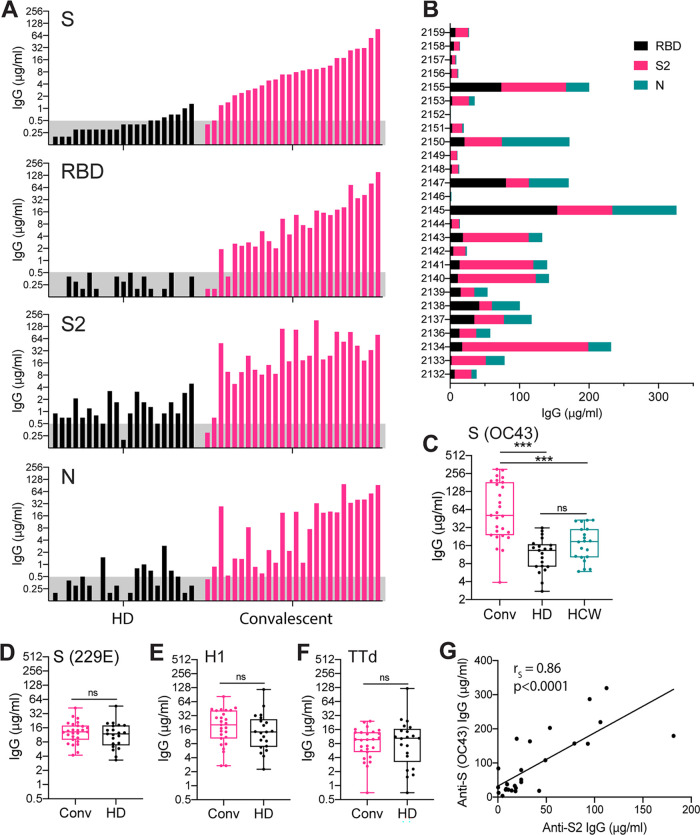
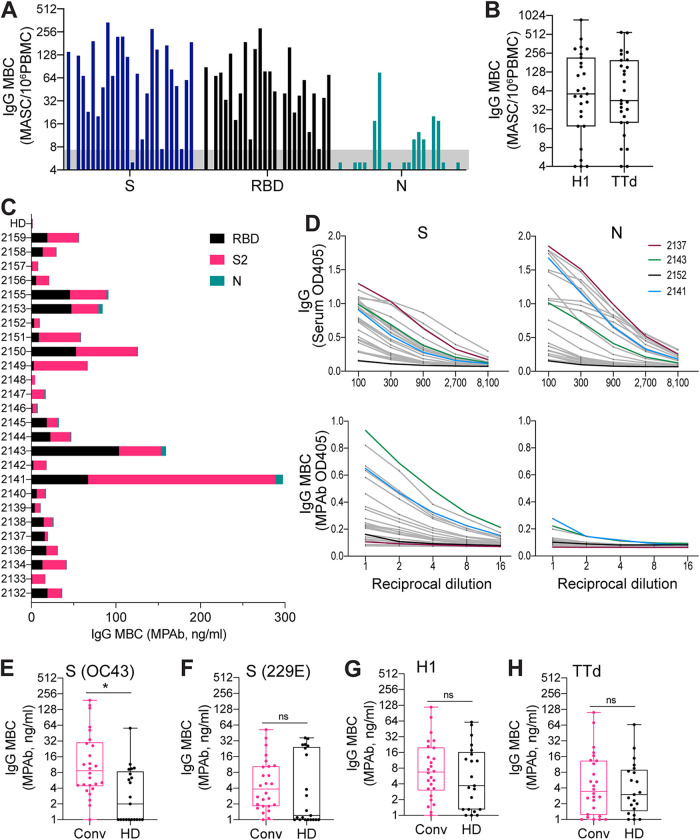
The recent rapid worldwide spread of SARS-CoV-2 has established a pandemic of potentially serious disease in the highly susceptible human population. Key issues are whether humans have preexisting immune memory that provides some protection against SARS-CoV-2 and whether SARS-CoV-2 infection generates lasting immune protection against reinfection. Our analysis focused on pre- and postinfection IgG and IgG memory B cells (MBCs) reactive to SARS-CoV-2 proteins. Most importantly, we demonstrate that infection generates both IgG and IgG MBCs against the novel receptor binding domain and the conserved S2 subunit of the SARS-CoV-2 spike protein. Thus, even if antibody levels wane, long-lived MBCs remain to mediate rapid antibody production. Our study results also suggest that SARS-CoV-2 infection strengthens preexisting broad coronavirus protection through S2-reactive antibody and MBC formation.
Overview
The claims and statistics of this paper haven’t been checked yet.
Run the check — free, no account needed. It reads the open-access text and checks the sources it cites.
Integrity signals
Registry
Cites
Statistics
Figures
Verification
Claims the paper makes
The claims and statistics of this paper haven’t been checked yet.
Run the check — free, no account needed. It reads the open-access text and checks the sources it cites.
Claims other papers make about this one
Each is checked against this paper’s own text: does it say what the citing paper says it does?
In the citing paper
“the S2 domain of SARS-CoV-2 spike is more conserved with other coronaviruses”
From mRNA vaccines induce durable immune memory to SARS-CoV-2 and variants of concern (2021) · cites this paper as [42]
In the citing paper
“The data also indicate that SARS-CoV-2 neutralizing antibody responses generally develop from naive B cells, not from pre-existing cross-reactive memory B cells (Anderson et al., 2020; Ng et al., 2020; Nguyen-Contant et al., 2020; Shrock et al., 2020; Song et al., 2020).”
From Adaptive immunity to SARS-CoV-2 and COVID-19 (2021) · cites this paper as Nguyen-Contant et al., 2020
Self-check
Percentages, sums and reported differences re-computed from the paper’s own numbers.
The self-check needs the paper’s full text.
Citations
Cites
Clinical features of patients infected with 2019 novel coronavirus in Wuhan, China
Huang, C., Wang, Y., Li, X., Ren, L., Zhao, J., Hu, Y., Zhang, L., Fan, G., Xu, J., Gu, X., et al. (2020) · The Lancet · doi:10.1016/s0140-6736(20)30183-5 · Cited by 48,884
A pneumonia outbreak associated with a new coronavirus of probable bat origin
Zhou, P., Yang, X.-L., Wang, X.-G., Hu, B., Zhang, L., Zhang, W., Si, H.-R., Zhu, Y., Li, B., Huang, C.-L., et al. (2020) · Nature · doi:10.1038/s41586-020-2012-7 · Cited by 21,969
Virological assessment of hospitalized patients with COVID-2019
Wölfel, R., Corman, V. M., Guggemos, W., Seilmaier, M., Zange, S., Müller, M. A., Niemeyer, D., Jones, T. C., Vollmar, P., Rothe, C., et al. (2020) · Nature · doi:10.1038/s41586-020-2196-x · Cited by 6,661
Grifoni, A., Weiskopf, D., Ramirez, S. I., Mateus, J., Dan, J. M., Moderbacher, C. R., Rawlings, S. A., Sutherland, A., Premkumar, L., Jadi, R. S., et al. (2020) · Cell · doi:10.1016/j.cell.2020.05.015 · Cited by 3,595
Antibody responses to SARS-CoV-2 in patients with COVID-19
Long, Q.-X., Liu, B.-Z., Deng, H.-J., Wu, G.-C., Deng, K., Chen, Y.-K., Liao, P., Qiu, J.-F., Lin, Y., Cai, X.-F., et al. (2020) · Nature Medicine · doi:10.1038/s41591-020-0897-1 · Cited by 2,876
Clinical and immunological assessment of asymptomatic SARS-CoV-2 infections
Long, Q.-X., Tang, X.-J., Shi, Q.-L., Li, Q., Deng, H.-J., Yuan, J., Hu, J.-L., Xu, W., Zhang, Y., Lv, F.-J., et al. (2020) · Nature Medicine · doi:10.1038/s41591-020-0965-6 · Cited by 2,686
Characterization of a Novel Coronavirus Associated with Severe Acute Respiratory Syndrome
Rota, P. A., Oberste, M. S., Monroe, S. S., Nix, W. A., Campagnoli, R. P., Icenogle, J. P., Peñaranda, S., Bankamp, B., Maher, K., Chen, M., et al. (2003) · Science · doi:10.1126/science.1085952 · Cited by 2,477
Genome Composition and Divergence of the Novel Coronavirus (2019-nCoV) Originating in China
Wu, A., Peng, Y., Huang, B., Ding, X. L., Wang, X., Niu, P., Meng, J., Zhu, Z., Zhang, Z., Wang, J., et al. (2020) · Cell Host & Microbe · doi:10.1016/j.chom.2020.02.001 · Cited by 2,386
Convergent Antibody Responses to SARS-CoV-2 in Convalescent Individuals
Robbiani, D. F., Gaebler, C., Muecksch, F., Lorenzi, J. C. C., Wang, Z., Cho, A., Agudelo, M., Barnes, C. O., Gazumyan, A., Finkin, S., et al. (2020) · Nature · doi:10.1038/s41586-020-2456-9 · Cited by 1,853
A serological assay to detect SARS-CoV-2 seroconversion in humans
Amanat, F., Stadlbauer, D., Strohmeier, S., Nguyen, T. H. O., Chromikova, V., McMahon, M., Jiang, K., Arunkumar, G. A., Jurczyszak, D., Polanco, J., et al. (2020) · Nature Medicine · doi:10.1038/s41591-020-0913-5 · Cited by 1,769
Cited by
Sorted by citations
Adaptive immunity to SARS-CoV-2 and COVID-19
Sette, A., & Crotty, S. (2021) · Cell · doi:10.1016/j.cell.2021.01.007 · Cited by 1,860
Preexisting and de novo humoral immunity to SARS-CoV-2 in humans
Ng, K. W., Faulkner, N., Cornish, G. H., Rosa, A., Harvey, R., Hussain, S., Ulferts, R., Earl, C., Wrobel, A. G., Benton, D. J., et al. (2020) · Science · doi:10.1126/science.abe1107 · Cited by 886
mRNA vaccines induce durable immune memory to SARS-CoV-2 and variants of concern
Goel, R. R., Painter, M. M., Apostolidis, S. A., Mathew, D., Meng, W., Rosenfeld, A. M., Lundgreen, K. A., Reynaldi, A., Khoury, D. S., Pattekar, A., et al. (2021) · Science · doi:10.1126/science.abm0829 · Cited by 873
COVID-19 vaccine development: milestones, lessons and prospects
Li, M., Wang, H., Tian, L., Pang, Z., Yang, Q., Huang, T., Fan, J., Song, L., Tong, Y., & Fan, H. (2022) · Signal Transduction and Targeted Therapy · doi:10.1038/s41392-022-00996-y · Cited by 478
Anderson, E. M., Goodwin, E. C., Verma, A., Arevalo, C. P., Bolton, M. J., Weirick, M. E., Gouma, S., McAllister, C. M., Christensen, S. R., Weaver, J., et al. (2021) · Cell · doi:10.1016/j.cell.2021.02.010 · Cited by 381
Maturation and persistence of the anti-SARS-CoV-2 memory B cell response
Sokal, A., Chappert, P., Barba-Spaeth, G., Roeser, A., Fourati, S., Azzaoui, I., Vandenberghe, A., Fernandez, I., Meola, A., Bouvier-Alias, M., et al. (2021) · Cell · doi:10.1016/j.cell.2021.01.050 · Cited by 340
Pace, R. M., Williams, J. E., Järvinen, K. M., Belfort, M. B., Pace, C. D. W., Lackey, K. A., Gogel, A. C., Nguyen-Contant, P., Kanagaiah, P., Fitzgerald, T., et al. (2021) · mBio · doi:10.1128/mbio.03192-20 · Cited by 315
Self-citationHartley, G. E., Edwards, E. S. J., Aui, P. M., Varese, N., Stojanovic, S., McMahon, J., Peleg, A. Y., Boo, I., Drummer, H. E., Hogarth, P. M., et al. (2020) · Science Immunology · doi:10.1126/sciimmunol.abf8891 · Cited by 296
Humoral Responses and Serological Assays in SARS-CoV-2 Infections
Galipeau, Y., Greig, M., Liu, C., Driedger, M., & Langlois, M. (2020) · Frontiers in Immunology · doi:10.3389/fimmu.2020.610688 · Cited by 247
Immune responses to two and three doses of the BNT162b2 mRNA vaccine in adults with solid tumors
Shroff, R. T., Chalasani, P., Wei, R., Pennington, D., Quirk, G., Schoenle, M. V., Peyton, K. L., Uhrlaub, J. L., Ripperger, T. J., Jergović, M., et al. (2021) · Nature Medicine · doi:10.1038/s41591-021-01542-z · Cited by 237
Immunological imprinting of the antibody response in COVID-19 patients
Aydillo, T., Rombauts, A., Stadlbauer, D., Aslam, S., Abelenda-Alonso, G., Escalera, A., Amanat, F., Jiang, K., Krammer, F., Carratala, J., et al. (2021) · Nature Communications · doi:10.1038/s41467-021-23977-1 · Cited by 223
The impact of pre-existing cross-reactive immunity on SARS-CoV-2 infection and vaccine responses
Murray, S. M., Ansari, M. A., Frater, J., Klenerman, P., Dunachie, S. J., Barnes, E. J., & Ogbe, A. (2022) · Nature reviews. Immunology · doi:10.1038/s41577-022-00809-x · Cited by 173
COVID ‐19: immunopathology, pathophysiological mechanisms, and treatment options
van Eijk, L. E., Binkhorst, M., Bourgonje, A. R., Offringa, A. K., Mulder, D. J., Bos, E. M., Kolundžić, N., Abdulle, A. E., van der Voort, P. H. J., Rikkert, M. G. M. O., et al. (2021) · The Journal of Pathology · doi:10.1002/path.5642 · Cited by 156
Antibody and B cell responses to SARS-CoV-2 infection and vaccination
Röltgen, K., & Boyd, S. D. (2021) · Cell Host & Microbe · doi:10.1016/j.chom.2021.06.009 · Cited by 143
Shah, P., Canziani, G., Carter, E. P., & CHAIKEN, I. M. (2021) · Frontiers in Immunology · doi:10.3389/fimmu.2021.637651 · Cited by 111
Dobaño, C., Santano, R., Jiménez, A., Vidal, M., Chi, J., Melero, N. R., Popovic, M., López-Aladid, R., Fernández‐Barat, L., Tortajada, M., et al. (2021) · Translational research · doi:10.1016/j.trsl.2021.02.006 · Cited by 110
Risk Factors of Severe COVID-19: A Review of Host, Viral and Environmental Factors
Zsichla, L., & Müller, V. (2023) · Viruses · doi:10.3390/v15010175 · Cited by 121
Lin, C.-Y., Wolf, J., Brice, D. C., Sun, Y., Locke, M., Cherry, S., Castellaw, A. H., Wehenkel, M., Crawford, J. C., Zarnitsyna, V. I., et al. (2021) · Cell Host & Microbe · doi:10.1016/j.chom.2021.12.005 · Cited by 103
Cross-reactive antibodies after SARS-CoV-2 infection and vaccination
Grobben, M., van der Straten, K., Brouwer, P. J. M., Brinkkemper, M., Maisonnasse, P., Dereuddre‐Bosquet, N., Appelman, B., Lavell, A. H. A., van Vught, L. A., Burger, J. A., et al. (2021) · eLife · doi:10.7554/elife.70330 · Cited by 103
RETRACTED: SARS-CoV-2 S2–targeted vaccination elicits broadly neutralizing antibodies
Ng, K. W., Faulkner, N., Finsterbusch, K., Wu, M., Harvey, R., Hussain, S., Greco, M., Liu, Y., Kjær, S., Swanton, C., et al. (2022) · Science Translational Medicine · doi:10.1126/scitranslmed.abn3715 · Cited by 100
RetractedStabilized coronavirus spike stem elicits a broadly protective antibody
Hsieh, C., Werner, A. P., Leist, S. R., Stevens, L. J., Falconer, E., Goldsmith, J. A., Chou, C., Abiona, O. M., West, A., Westendorf, K., et al. (2021) · Cell Reports · doi:10.1016/j.celrep.2021.109929 · Cited by 93
Secchi, M., Bazzigaluppi, E., Brigatti, C., Marzinotto, I., Tresoldi, C., Rovere, P. Q., Poli, A., Castagna, A., Scarlatti, G., Zangrillo, A., et al. (2020) · Journal of Clinical Investigation · doi:10.1172/jci142804 · Cited by 94
Why Does the Severity of COVID-19 Differ With Age?
Zimmermann, P., & Curtis, N. C. (2021) · The Pediatric Infectious Disease Journal · doi:10.1097/inf.0000000000003413 · Cited by 89
Early cross-coronavirus reactive signatures of humoral immunity against COVID-19
Kapłonek, P., Wang, C., Bartsch, Y. C., Fischinger, S., Gorman, M. J., Bowman, K. A., Kang, J., Dayal, D., Martin, P., Nowak, R. P., et al. (2021) · Science Immunology · doi:10.1126/sciimmunol.abj2901 · Cited by 77
The role of B cells in COVID-19 infection and vaccination
Chen, S., Guan, F., Candotti, F., Benlagha, K., Câmara, N. O. S., Herrada, A. A., James, L. K., Lei, J., Miller, H., Kubo, M., et al. (2022) · Frontiers in Immunology · doi:10.3389/fimmu.2022.988536 · Cited by 75
Breadth and function of antibody response to acute SARS-CoV-2 infection in humans
Huang, K.-Y. A., Tan, T. K., Chen, T.-H., Huang, C., Harvey, R., Hussain, S., Chen, C., Harding, A. C., Gilbert‐Jaramillo, J., Liu, X., et al. (2021) · PLoS Pathogens · doi:10.1371/journal.ppat.1009352 · Cited by 67
Waning antibody responses in COVID-19: what can we learn from the analysis of other coronaviruses?
Hamady, A., Lee, J., & Loboda, Z. (2021) · Infection · doi:10.1007/s15010-021-01664-z · Cited by 66
Pathophysiological, immunological, and inflammatory features of long COVID
Böhmwald, K., Diethelm‐Varela, B., Rodríguez‐Guilarte, L., Rivera, T., Riedel, C. A., González, P. A., & Kalergis, A. M. (2024) · Frontiers in Immunology · doi:10.3389/fimmu.2024.1341600 · Cited by 80
Assessment of avidity related to IgG subclasses in SARS-CoV-2 Brazilian infected patients
Moura, A. D., da Costa, H. H. M., Correa, V. A., Lima, A. K. D. S., Lindoso, J. Â. L., Gaspari, E. D., Hong, M. A., Cunha-Junior, J. P., & Prudêncio, C. R. (2021) · Scientific Reports · doi:10.1038/s41598-021-95045-z · Cited by 75
Woudenberg, T., Pelleau, S., Anna, F., Attia, M., Donnadieu, F., Gravet, A., Lohmann, C., Séraphin, H., Guihéneuf, R., Delamare, C., et al. (2021) · EBioMedicine · doi:10.1016/j.ebiom.2021.103495 · Cited by 64
Wildner, N. H., Ahmadi, P., Schulte, S., Brauneck, F., Kohsar, M., Lütgehetmann, M., Beisel, C., Addo, M. M., Haag, F., & Wiesch, J. S. Z. (2020) · Journal of Leukocyte Biology · doi:10.1002/jlb.5cova0620-370rr · Cited by 64
Durability of Immunity to SARS-CoV-2 and Other Respiratory Viruses
Siggins, M. K., Thwaites, R. S., & Openshaw, P. (2021) · Trends in Microbiology · doi:10.1016/j.tim.2021.03.016 · Cited by 61
Bellusci, L., Grubbs, G., Zahra, F. T., Forgacs, D., Golding, H., Ross, T. M., & Khurana, S. (2022) · Nature Communications · doi:10.1038/s41467-022-32298-w · Cited by 56
Ruggiero, A., Piubelli, C., Calciano, L., Accordini, S., Valenti, M. T., Carbonare, L. D., Siracusano, G., Lopalco, L., Temperton, N. J., Tiberti, N., et al. (2022) · EBioMedicine · doi:10.1016/j.ebiom.2022.103888 · Cited by 62
Goel, R. R., Painter, M. M., Apostolidis, S. A., Mathew, D., Meng, W., Rosenfeld, A. M., Lundgreen, K. A., Reynaldi, A., Khoury, D. S., Pattekar, A., et al. (2021) · bioRxiv (Cold Spring Harbor Laboratory) · doi:10.1101/2021.08.23.457229 · Cited by 59
Feldman, J. E., Bals, J., Altomare, C. G., Denis, K. S., Lam, E. C., Hauser, B. M., Ronsard, L., Sangesland, M., Moreno, T. B., Okonkwo, V., et al. (2021) · Science Immunology · doi:10.1126/sciimmunol.abl5842 · Cited by 60
Halfmann, P., Frey, S. J., Loeffler, K., Kuroda, M., Maemura, T., Armbrust, T., Yang, J. E., Hou, Y. J., Baric, R. S., Wright, E., et al. (2022) · EBioMedicine · doi:10.1016/j.ebiom.2022.104341 · Cited by 54
Tang, J., Novak, T., Hecker, J., Grubbs, G., Zahra, F. T., Bellusci, L., Pourhashemi, S., Chou, J. S., Moffitt, K. L., Halasa, N., et al. (2022) · Nature Communications · doi:10.1038/s41467-022-30649-1 · Cited by 55
Is Cross-Reactive Immunity Triggering COVID-19 Immunopathogenesis?
Beretta, A., Cranage, M. P., & Zipeto, D. (2020) · Frontiers in Immunology · doi:10.3389/fimmu.2020.567710 · Cited by 56
Brown, B., Ojha, V., Fricke, I., Al-Sheboul, S. A., Imarogbe, C., Gravier, T., Green, M., Peterson, L., Koutsaroff, I. P., Demir, A. N., et al. (2023) · Vaccines · doi:10.3390/vaccines11020408 · Cited by 55
The Robustness of Cellular Immunity Determines the Fate of SARS-CoV-2 Infection
Moga, E., Lynton‐Pons, E., & Domingo, P. (2022) · Frontiers in Immunology · doi:10.3389/fimmu.2022.904686 · Cited by 48
Sandberg, J. T., Varnaitė, R., Christ, W., Chen, P., Muvva, J. R., Maleki, K. T., García, M., Dzidic, M., Folkesson, E., Skagerberg, M., et al. (2021) · Clinical & Translational Immunology · doi:10.1002/cti2.1306 · Cited by 45
SARS-CoV-2—The Role of Natural Immunity: A Narrative Review
Diani, S., Leonardi, E. A., Cavezzi, A., Ferrari, S., Iacono, O., Limoli, A., Bouslenko, Z., Natalini, D., Conti, S., Mantovani, M., et al. (2022) · Journal of Clinical Medicine · doi:10.3390/jcm11216272 · Cited by 44
Olukitibi, T. A., Ao, Z., Warner, B. M., Unat, R., Kobasa, D., & Yao, X. (2023) · Vaccines · doi:10.3390/vaccines11030545 · Cited by 38
Remembering seasonal coronaviruses
Guthmiller, J. J., & Wilson, P. C. (2020) · Science · doi:10.1126/science.abf4860 · Cited by 39
Ferretti, F., Cannatelli, R., Benucci, M., Carmagnola, S., Clementi, E., Danelli, P., Dilillo, D., Fiorina, P., Galli, M., Gallieni, M., et al. (2021) · Frontiers in Immunology · doi:10.3389/fimmu.2021.656362 · Cited by 39
Anderson, E. M., Li, S. H., Awofolaju, M., Eilola, T., Goodwin, E. C., Bolton, M. J., Gouma, S., Manzoni, T. B., Hicks, P. D., Goel, R. R., et al. (2022) · Cell Reports · doi:10.1016/j.celrep.2022.111496 · Cited by 37
Demers‐Mathieu, V., DaPra, C., Mathijssen, G. B., Sela, D. A., Järvinen, K. M., Seppo, A., Fels, S., & Medo, E. T. (2021) · International Journal of Molecular Sciences · doi:10.3390/ijms22041749 · Cited by 32
Kapoor, K., Chen, T., & Tajkhorshid, E. (2022) · Proceedings of the National Academy of Sciences · doi:10.1073/pnas.2119761119 · Cited by 33
Reyes, R. A., Clarke, K., Gonzales, S. J., Cantwell, A. M., Garza, R., Catano, G., Tragus, R. E., Patterson, T. F., Bol, S. M., & Bunnik, E. M. (2021) · PLoS ONE · doi:10.1371/journal.pone.0261656 · Cited by 33
Rapid decline of anti-SARS-CoV-2 antibodies in patients on haemodialysis: the COVID-FRIAT study
Arroyo, R. A., Portolés, J. M., Sánchez, P. L., Zalamea, F., Furaz, K., Méndez, Á., Nieto, L., Sánchez-Hernández, R., Pizarro, S. O., García, A., et al. (2021) · Clinical Kidney Journal · doi:10.1093/ckj/sfab048 · Cited by 31
Harapan, H., Fajar, J. K., Supriono, S., Soegiarto, G., Wulandari, L., Seratin, F., Prayudi, N. G., Dewi, D. P., Elsina, M. T. M., Atamou, L., et al. (2021) · Reviews in Medical Virology · doi:10.1002/rmv.2304 · Cited by 30
Winklmeier, S., Eisenhut, K., Taskin, D., Rübsamen, H., Gerhards, R., Schneider, C., Wratil, P. R., Stern, M., Eichhorn, P., Keppler, O. T., et al. (2021) · iScience · doi:10.1016/j.isci.2021.103659 · Cited by 31
Cohen, J. I., Dropulic, L. K., Wang, K., Gangler, K., Morgan, K., Liepshutz, K., Krogmann, T. A., Ali, M. A., Qin, J., Wang, J., et al. (2022) · Clinical Infectious Diseases · doi:10.1093/cid/ciac934 · Cited by 28
Humoral Immunity against SARS-CoV-2 and the Impact on COVID-19 Pathogenesis
Lee, E.-J., & Oh, J. E. (2021) · Molecules and Cells · doi:10.14348/molcells.2021.0075 · Cited by 30
Sealy, R. E., & Hurwitz, J. L. (2021) · Microorganisms · doi:10.3390/microorganisms9081643 · Cited by 30
Seasonal respiratory virus circulation was diminished during the COVID‐19 pandemic
Heiskanen, A., Galipeau, Y., Little, J., Mortimer, L., Ramotar, K., Langlois, M., & Cooper, C. (2022) · Influenza and Other Respiratory Viruses · doi:10.1111/irv.13065 · Cited by 30
Nayak, K., Gottimukkala, K. P., Kumar, S., Reddy, E. S., Edara, V. V., Kauffman, R. C., Floyd, K. A., Mantus, G. E., Savargaonkar, D., Goel, P. K., et al. (2021) · Virology · doi:10.1016/j.virol.2021.02.002 · Cited by 28
Siracusano, G., Brombin, C., Pastori, C., Cugnata, F., Noviello, M., Tassi, E., Princi, D., Cantoni, D. M., Malnati, M., Maugeri, N., et al. (2021) · Frontiers in Immunology · doi:10.3389/fimmu.2021.772239 · Cited by 29
Weskamm, L. M., Fathi, A., Raadsen, M. P., Mykytyn, A. Z., Koch, T., Spohn, M., Friedrich, M., Bartels, E., Gundlach, S., Hesterkamp, T., et al. (2022) · Cell Reports Medicine · doi:10.1016/j.xcrm.2022.100685 · Cited by 27
Ng, K. T., Mohd-Ismail, N. K., & Tan, Y. (2021) · Vaccines · doi:10.3390/vaccines9020178 · Cited by 28
Infection and Immune Memory: Variables in Robust Protection by Vaccines Against SARS-CoV-2
Ahluwalia, P. K., Vaibhav, K., Ahluwalia, M., Mondal, A. K., Sahajpal, N., Rojiani, A. M., & Kolhe, R. B. (2021) · Frontiers in Immunology · doi:10.3389/fimmu.2021.660019 · Cited by 25
Hennings, V., Thörn, K., Albinsson, S., Lingblom, C., Andersson, K. M., Andersson, C., Järbur, K., Pullerits, R., Idorn, M., Paludan, S. R., et al. (2022) · European Journal of Immunology · doi:10.1002/eji.202149655 · Cited by 27
Jia, L., Weng, S., Wu, J., Tian, X., Zhang, Y., Wang, X., Wang, J., Yan, D., Wang, W., Fang, F., et al. (2022) · Gut Microbes · doi:10.1080/19490976.2022.2117503 · Cited by 28
Vitamin D and immuno-pathology of COVID-19: many interactions but uncertain therapeutic benefits
Banerjee, A., Ganguly, U., Saha, S., Chakrabarti, S., Saini, R. V., Rawal, R. K., Saso, L., & Chakrabarti, S. (2021) · Expert Review of Anti-infective Therapy · doi:10.1080/14787210.2021.1905519 · Cited by 27
SARS-CoV-2: Immunity, Challenges with Current Vaccines, and a Novel Perspective on Mucosal Vaccines
Sunagar, R., Singh, A., & Kumar, S. (2023) · Vaccines · doi:10.3390/vaccines11040849 · Cited by 31
Carbonare, L. D., Valenti, M. T., Bisoffi, Z., Piubelli, C., Pizzato, M., Accordini, S., Mariotto, S., Ferrari, S., Minoia, A., Bertacco, J., et al. (2021) · Communications Medicine · doi:10.1038/s43856-021-00039-7 · Cited by 25
Li, F. F., Liu, A. C., Gibbs, E., Tanunliong, G., Marquez, A. C., Gantt, S. M., Frykman, H., Krajden, M., Morshed, M. G., Prystajecky, N., et al. (2021) · Journal of Clinical Virology · doi:10.1016/j.jcv.2021.105050 · Cited by 24
Yuen, R. R., Steiner, D., Pihl, R. M. F., Chavez, E. C., Olson, A., Smith-Mahoney, E. L., Baird, L. A., Korkmaz, F. T., Urick, P., Sagar, M., et al. (2021) · Frontiers in Immunology · doi:10.3389/fimmu.2021.614676 · Cited by 22
Lawrenz, J., Xie, Q., Zech, F., Weil, T., Seidel, A., Krnavek, D., van der Hoek, L., Münch, J., Müller, J. A., & Kirchhoff, F. (2022) · Clinical Infectious Diseases · doi:10.1093/cid/ciac057 · Cited by 25
The S2 subunit of spike encodes diverse targets for functional antibody responses to SARS-CoV-2
Guenthoer, J., Garrett, M. E., Lilly, M., Depierreux, D., Ruiz, F., Chi, M., Stoddard, C. I., Chohan, V., Yaffe, Z. A., Sung, K., et al. (2024) · PLoS Pathogens · doi:10.1371/journal.ppat.1012383 · Cited by 27
Eryılmaz, M., Goncharov, A., Han, G., Joung, H., Ballard, Z. S., Ghosh, R., Zhang, Y., Carlo, D. D., & Özcan, A. (2024) · ACS Nano · doi:10.1021/acsnano.4c02434 · Cited by 25
Moody, R., Sonda, S., Johnston, F. H., Smith, K. J., Stephens, N., McPherson, M., Flanagan, K. L., & Plebanski, M. (2022) · Frontiers in Immunology · doi:10.3389/fimmu.2022.945021 · Cited by 23
Song, S., Kim, H., Jang, E. Y., Jeon, H.-M., Diao, H., Khan, M. R. I., Lee, M., Lee, Y. J., Nam, J., Kim, S., et al. (2022) · Plant Biotechnology Journal · doi:10.1111/pbi.13908 · Cited by 24
Lai, G., Liu, H., Deng, J., Li, K., & Xie, B. (2022) · Genes · doi:10.3390/genes13091602 · Cited by 22
Wu, X., Li, W., Rong, H., Pan, J., Zhang, X., Hu, Q., Shi, Z., Zhang, X., & Cui, Z. (2024) · ACS Nano · doi:10.1021/acsnano.4c03075 · Cited by 22
Of Cross-immunity, Herd Immunity and Country-specific Plans: Experiences from COVID-19 in India
Chakrabarti, S. S., Kaur, U., Singh, A. K., Chakrabarti, S., Krishnatreya, M., Agrawal, B. K., Mittal, A., Singh, A. K., Khanna, R., Gambhir, I. S., et al. (2020) · Aging and Disease · doi:10.14336/ad.2020.1104 · Cited by 21
Pinotti, F., Wikramaratna, P. S., Obolski, U., Paton, R. S., Damineli, D. S. C., Alcântara, L. C. J., Giovanetti, M., Gupta, S., & Lourenço, J. (2021) · BMC Medicine · doi:10.1186/s12916-020-01887-1 · Cited by 19
Affinity Tag Coating Enables Reliable Detection of Antigen-Specific B Cells in Immunospot Assays
Köppert, S., Wolf, C., Becza, N., Sautto, G. A., Franke, F., Küerten, S., Ross, T. M., Lehmann, P., & Kirchenbaum, G. A. (2021) · Cells · doi:10.3390/cells10081843 · Cited by 19
Kyei-Barffour, I., Akwetey, S. A., Aninagyei, E., Ghartey‐Kwansah, G., & Acheampong, D. O. (2021) · Biomedicine & Pharmacotherapy · doi:10.1016/j.biopha.2021.112282 · Cited by 21
Heterologous humoral immunity to human and zoonotic coronaviruses: Aiming for the achilles heel
Ng, K. W., Faulkner, N., Wrobel, A. G., Gamblin, S. J., & Kassiotis, G. (2021) · Seminars in Immunology · doi:10.1016/j.smim.2021.101507 · Cited by 19
Fathi, A., Dahlke, C., Krähling, V., Kupke, A., Okba, N. M. A., Raadsen, M. P., Heidepriem, J., Müller, M. A., Paris, G., Lassen, S., et al. (2022) · Nature Communications · doi:10.1038/s41467-022-31557-0 · Cited by 19
Bovine Coronavirus Immune Milk Against COVID-19
Arenas, A. J., Borge, C., Carbonero, A., García‐Bocanegra, I., Cano‐Terriza, D., Caballero‐Gómez, J., & Arenas‐Montes, A. (2021) · Frontiers in Immunology · doi:10.3389/fimmu.2021.637152 · Cited by 20
Structure of a SARS-CoV-2 spike S2 subunit in a pre-fusion, open conformation
Olmedillas, E., Rajamanickam, R. R., Avalos, R. D., Ana-Sosa-Batiz, F., Zyla, D., Zandonatti, M. A., Harkins, S. S., Shresta, S., Hastie, K. M., & Saphire, E. O. (2025) · Cell Reports · doi:10.1016/j.celrep.2025.116052 · Cited by 19
Herman, J. D., Atyeo, C. G., Zur, Y., Cook, C., Patel, N. J., Vanni, K. M. M., Kowalski, E., Qian, G., Srivatsan, S., Shadick, N. A., et al. (2023) · Science Translational Medicine · doi:10.1126/scitranslmed.adf6598 · Cited by 27
Approach to SARS-CoV-2 Vaccination in Patients With Multiple Sclerosis
Woopen, C., Schleußner, K., Akgün, K., & Ziemssen, T. (2021) · Frontiers in Immunology · doi:10.3389/fimmu.2021.701752 · Cited by 20
Long-Lasting Immunity Against SARS-CoV-2: Dream or Reality?
Gussarow, D., Bonifacius, A., Cossmann, A., Stankov, M. V., Mausberg, P., Tischer‐Zimmermann, S., Gödecke, N., Kalinke, U., Behrens, G. M. N., Blasczyk, R., et al. (2021) · Frontiers in Medicine · doi:10.3389/fmed.2021.770381 · Cited by 18
Williams, J. A., Biancucci, M., Lessen, L. N., Tian, S., Balsaraf, A., Chen, L., Chesterman, C. C., Maruggi, G., Vandepaer, S., Huang, Y., et al. (2023) · Science Advances · doi:10.1126/sciadv.adg0330 · Cited by 18
Nguyen, T. T. N., Choo, E. M., Nakamura, Y., Suzuki, R., Shiina, T., Shin‐I, T., Fukuta, M., Nguyen, C. T., Nguyen, T. T. T., Nguyen, L. K. H., et al. (2023) · International Journal of Infectious Diseases · doi:10.1016/j.ijid.2023.11.008 · Cited by 17
Wang, J., Li, D., Zhou, Q., Wiltse, A., & Zand, M. S. (2021) · Frontiers in Immunology · doi:10.3389/fimmu.2021.696370 · Cited by 17
Tanunliong, G., Liu, A. C., Kaweski, S. E., Irvine, M. A., Reyes, R. C., Purych, D., Krajden, M., Morshed, M. G., Sekirov, I., Gantt, S. M., et al. (2022) · Frontiers in Immunology · doi:10.3389/fimmu.2022.836449 · Cited by 17
Mayer, L., Weskamm, L. M., Fathi, A., Kono, M., Heidepriem, J., Krähling, V., Mellinghoff, S. C., Ly, M. L., Friedrich, M., Hardtke, S., et al. (2024) · npj Vaccines · doi:10.1038/s41541-023-00801-z · Cited by 16
SARS-CoV-2 infection induces robust mucosal antibody responses in the upper respiratory tract
Escalera, A., Rojo-Fernandez, A., Rombauts, A., Abelenda-Alonso, G., Carratalà, J., García‐Sastre, A., & Aydillo, T. (2024) · iScience · doi:10.1016/j.isci.2024.109210 · Cited by 17
Nagappan, R., Flegel, W. A., Srivastava, K., Williams, E. C., Ryzhov, I. M., Tuzikov, A. B., Galanina, O. E., Shilova, N. V., Sukhikh, G. T., Perry, H. E., et al. (2021) · Transfusion · doi:10.1111/trf.16327 · Cited by 17
Trivedi, V. S., Magnusen, A. F., Rani, R., Marsili, L., Slavotinek, A. M., Prows, D. R., Hopkin, R. J., McKay, M. A., & Pandey, M. K. (2022) · International Journal of Molecular Sciences · doi:10.3390/ijms232214340 · Cited by 15
Vanderheijden, N., Stevaert, A., Xie, J., Ren, X., Barbezange, C., Noppen, S., Desombere, I., Verhasselt, B., Geldhof, P., Vereecke, N., et al. (2022) · Frontiers in Immunology · doi:10.3389/fimmu.2021.790415 · Cited by 12
Wang, J., Li, D., Cameron, A., Zhou, Q., Wiltse, A., Nayak, J. L., Pecora, N., & Zand, M. S. (2022) · The Journal of Infectious Diseases · doi:10.1093/infdis/jiac022 · Cited by 17
Neagu, M. T., Constantin, C., & Surcel, M. (2021) · International Journal of Environmental Research and Public Health · doi:10.3390/ijerph182413173 · Cited by 12
Egwang, T. G., Owalla, T. J., Okurut, E., Apungia, G., Fox, A., Carlo, C. D., & Powell, R. L. R. (2021) · International Journal of Infectious Diseases · doi:10.1016/j.ijid.2021.09.039 · Cited by 12
Novel chimeric proteins mimicking SARS-CoV-2 spike epitopes with broad inhibitory activity
Cano‐Muñoz, M., Polo-Megías, D., Cámara-Artigas, A., Gavira, J. A., López-Rodríguez, M. J., Laumond, G., Schmidt, S., Demiselle, J., Bahram, S., Moog, C., et al. (2022) · International Journal of Biological Macromolecules · doi:10.1016/j.ijbiomac.2022.10.031 · Cited by 14
Metadata
- Authors
- Nguyen-Contant, P., Embong, A. K., Kanagaiah, P., Chaves, F. A., Yang, H., Branche, A. R., Topham, D. J., & Sangster, M. Y.
- Affiliations
- David H. Smith Center for Vaccine Biology and Immunology, Department of Microbiology and Immunology, University of Rochester Medical Center, Rochester, New York, USA
- University of Rochester Medicine (US)
- Corresponding author
- Sangster, Mark Y.
- ORCID
- Venue
- mBio
- Publisher
- American Society for Microbiology
- Published
- 2020-10-27
- Volume
- 11
- Issue
- 5
- ISSN
- 2150-7511 (ISSN-L)
- 2161-2129
- PMC
- PMC7520599
- OpenAlex
- W3087903445
- Cited by
- 204
- References
- 35
- Citations by year
- 2026: 3 · 2025: 13 · 2024: 16 · 2023: 29 · 2022: 60 · 2021: 75 · 2020: 8
- FWCI
- 5.64
- Type
- journal article
- Language
- en
- Open access
- gold
- doi.org
- Licence
- Locations
- mBio (publishedVersion, cc-by)
- bioRxiv (Cold Spring Harbor Laboratory) (acceptedVersion)
- PubMed (publishedVersion)
- DOAJ (DOAJ: Directory of Open Access Journals) (submittedVersion, cc-by-sa)
- DOAJ (DOAJ: Directory of Open Access Journals) (submittedVersion)
- Funders
- HHS | NIH | National Institute of Allergy and Infectious Diseases (HHSN272201400005C)
- Topics
- Health Sciences › Medicine › Infectious Diseases › SARS-CoV-2 and COVID-19 Research
- Life Sciences › Immunology and Microbiology › Immunology › Immune responses and vaccinations
- Life Sciences › Biochemistry, Genetics and Molecular Biology › Molecular Biology › vaccines and immunoinformatics approaches
- Keywords
- SARS-CoV-2, COVID-19 pandemic, S protein, S2 subunit, receptor binding domain, memory B cells, IgG, antibody response, pre-existing immunity, reinfection, cross-reactive antibodies, coronavirus
- MeSH terms
- Betacoronavirus, COVID-19, SARS-CoV-2, Coronavirus Nucleocapsid Proteins, Adult, Antibodies, Viral, B-Lymphocytes, Convalescence, Cross Reactions, Female, Humans, Immunoglobulin G, Immunologic Memory, Male, Middle Aged, Phosphoproteins, Pneumonia, Viral, Coronavirus Infections, Nucleocapsid Proteins, Protein Subunits, Protein Interaction Domains and Motifs, Pandemics, Healthy Volunteers, Spike Glycoprotein, Coronavirus
About these checks
Registry, retraction, Cites and statistics results are computed, not judged, with one exception: a printed reference that no index lists is read once by a model before it counts as a citation error. Claims are extracted by a model and kept only when their quote appears verbatim in the text; each cited source is then checked, with a model’s help, for whether it says what the claim relies on. Those verdicts can be wrong — read the claim’s quote and the cited source before relying on one.
Statistics and arithmetic are recomputed, not judged.
Confidence bands are shown only for fields calibrated on our annotated test set. None is calibrated yet, so no band is shown.
What counts as a claim ›How we measure confidence ›How we check this ›
Are you an author, or do you see a problem with this page? Request a review
