

Genome-Wide Analysis of Experimentally Evolved Candida auris Reveals Multiple Novel Mechanisms of Multidrug Resistance
Open accessPublished version of a preprint
The DOI matches its Crossref record; 101 of the 101 references it cites were found in a registry or an index.
Abstract
Candida auris is a recently discovered human fungal pathogen and has shown an alarming potential for developing multi- and pan-resistance toward all classes of antifungals most commonly used in the clinic. Currently, C. auris has been globally recognized as a nosocomial pathogen of high concern due to this evolutionary potential.
Overview
The claims and statistics of this paper haven’t been checked yet.
Free: it reads the open-access text and checks the first 5 claims that cite a source we can check. Create a free account to check every claim.
Integrity signals
Registry
Cites
Statistics
Figures
Verification
Claims the paper makes
The claims and statistics of this paper haven’t been checked yet.
Free: it reads the open-access text and checks the first 5 claims that cite a source we can check. Create a free account to check every claim.
Claims other papers make about this one
Each is checked against this paper’s own text: does it say what the citing paper says it does?
The source backs part of the claim, not all of it — or backs it for a different population, condition or comparison.
In the citing paper
“Furthermore, C. auris can rapidly acquire resistance under the selective pressure of antifungal treatments or other specific conditions16–19.”
From Targeting epigenetic regulators to overcome drug resistance in the emerging human fungal pathogen Candida auris (2025) · cites this paper as [18]
Experimental — accuracy not yet measuredThe cited source says what the claim attributes to it.
In the citing paper
“Several amino acid substitutions in FKS1 have also been associated with decreased echinocandin susceptibility in C. auris12,37–42.”
From Molecular mechanisms governing antifungal drug resistance (2023) · cites this paper as [42]
The cited source says what the claim attributes to it.
In the citing paper
“Likewise, experimental evolution studies in C. auris suggest that an extra copy of chromosome 5 (which harbours several drug resistance-related genes) contributes to the development of fluconazole resistance in this pathogen42,64.”
From Molecular mechanisms governing antifungal drug resistance (2023) · cites this paper as [42]
In the citing paper
“In Candida species, amphotericin B resistance has been associated with mutations in several ergosterol biosynthesis genes, including ERG2, ERG3, ERG6, and ERG1142,45–47.”
From Molecular mechanisms governing antifungal drug resistance (2023) · cites this paper as [42]
In the citing paper
“Further, ERG3 mutations have also been identified in C. auris following echinocandin exposure42.”
From Molecular mechanisms governing antifungal drug resistance (2023) · cites this paper as [42]
1 more claim about this paper
Create a free account to see every claim other papers make about this one.
Self-check
Percentages, sums and reported differences re-computed from the paper’s own numbers.
The self-check needs the paper’s full text.
Citations
Cites
The Genome Analysis Toolkit: A MapReduce framework for analyzing next-generation DNA sequencing data
McKenna, A., Hanna, M., Banks, E., Sivachenko, A., Cibulskis, K., Kernytsky, A., Garimella, K., Altshuler, D., Gabriel, S., Daly, M., et al. (2010) · Genome Research · doi:10.1101/gr.107524.110 · Cited by 27,895
A framework for variation discovery and genotyping using next-generation DNA sequencing data
DePristo, M. A., Banks, E., Poplin, R., Garimella, K. V., Maguire, J. R., Hartl, C., Philippakis, A. A., del Angel, G., Rivas, M. A., Hanna, M., et al. (2011) · Nature Genetics · doi:10.1038/ng.806 · Cited by 11,456
Aligning sequence reads, clone sequences and assembly contigs with BWA-MEM
Li, H. (2013) · DROPS (Schloss Dagstuhl – Leibniz Center for Informatics) · doi:10.48550/arxiv.1303.3997 · Cited by 5,159
Aligning sequence reads, clone sequences and assembly con*gs with BWA-MEM
Li, H. (2014) · arXiv (Cornell University) · doi:10.6084/m9.figshare.963153.v1 · Cited by 4,932
Feiner, N., Motone, F., Meyer, A., & Kuraku, S. (2019) · Scientific Reports · doi:10.1038/s41598-019-40055-1 · Cited by 1,987
Lockhart, S. R., Etienne, K. A., Vallabhaneni, S., Farooqi, J., Chowdhary, A., Govender, N. P., Colombo, A. L., Calvo, B., Cuomo, C. A., Desjardins, C. A., et al. (2017) · Clinical Infectious Diseases · doi:10.1093/cid/ciw691 · Cited by 1,662
Self-citationAbyzov, A., Urban, A. E., Snyder, M., & Gerstein, M. (2011) · Genome Research · doi:10.1101/gr.114876.110 · Cited by 1,658 · cited 1×
“3 (74), selecting for 1kb genomic windows of significant (p<0.”
BackgroundSatoh, K., Makimura, K., Hasumi, Y., Nishiyama, Y., Uchida, K., & Yamaguchi, H. (2009) · Microbiology and Immunology · doi:10.1111/j.1348-0421.2008.00083.x · Cited by 1,381
Off-target Effects in CRISPR/Cas9-mediated Genome Engineering
Zhang, X.-H., Tee, L. Y., Wang, X.-G., Huang, Q.-S., & Yang, S.-H. (2015) · Molecular Therapy - Nucleic Acids · doi:10.1038/mtna.2015.37 · Cited by 1,273 · cited 1×
“Moreover, constitutive cas9 expression can have off-target effects (83), including an effect on the fitness of the transformed cells, as reported for C.”
BackgroundReference method for broth dilution antifungal susceptibility testing of yeasts : Approved standard
Rex, J. H., & Clinical (2008) · Clinical and Laboratory Standards Institute eBooks · Cited by 1,052
Cited by
Amphotericin B and Other Polyenes—Discovery, Clinical Use, Mode of Action and Drug Resistance
Carolus, H., Pierson, S., Lagrou, K., & Van Dijck, P. (2020) · Journal of Fungi · doi:10.3390/jof6040321 · Cited by 349
“Additionally, a mutation was found in a gene predicted to encode the DNA damage checkpoint protein Mec3 [86], part of the Rad17p-Mec3p-Ddc1p sliding clamp [87].”
BackgroundSelf-citationMolecular mechanisms governing antifungal drug resistance
Lee, Y., Robbins, N., & Cowen, L. E. (2023) · npj Antimicrobials and Resistance · doi:10.1038/s44259-023-00007-2 · Cited by 304
“Further, ERG3 mutations have also been identi fi ed in C. auris following echinocandin exposure 42 .”
InfluentialStructural and mechanistic insights into fungal β-1,3-glucan synthase FKS1
Hu, X., Yang, P., Chai, C., Liu, J., Sun, H., Wu, Y., Zhang, M., Zhang, M., Liu, X., & Yu, H. (2023) · Nature · doi:10.1038/s41586-023-05856-5 · Cited by 213
Rybak, J. M., Cuomo, C. A., & David Rogers, P. (2022) · Current Opinion in Microbiology · doi:10.1016/j.mib.2022.102208 · Cited by 113
“Similar mutations in TAC1B and TAC1B copy number variations were also observed to arise during in vitro evolution experiments conducted with clinical isolates of both Clade I and II ([28], X).”
BackgroundSelf-citationKsiezopolska, E., Schikora-Tamarit, M. À., Beyer, R., Nunez-Rodriguez, J. C., Schüller, C., & Gabaldón, T. (2021) · Current Biology · doi:10.1016/j.cub.2021.09.084 · Cited by 107
“auris.(46) Why ERG3mutations are often acquired under exposure to ani and how they contribute to resistance to flz remain unclear and need further attention.”
Di Pilato, V., Codda, G., Ball, L., Giacobbe, D. R., Willison, E., Mikulska, M., Magnasco, L., Crea, F., Vena, A., Pelosi, P., et al. (2021) · Journal of Fungi · doi:10.3390/jof7020140 · Cited by 107
Emerging Antifungal Resistance in Fungal Pathogens
Hui, S. T., Gifford, H., & Rhodes, J. L. (2024) · Current Clinical Microbiology Reports · doi:10.1007/s40588-024-00219-8 · Cited by 119
“…to tolerance of echinocandins ( FKS1 codon deletion and mutations in FKS1, ERG3 and CIS3 ), azoles (chromosome 5 aneuploidy, containing TAC1b , ERG11 contig duplication, mutations in TAC1b ), polyenes ( MEC3 mutations) and concurrently azoles and polyenes ( ERG3/ERG11 nonsense mutations) [51].”
BackgroundLu, H., Hong, T., Jiang, Y., Whiteway, M., & Zhang, S. (2023) · Advanced Drug Delivery Reviews · doi:10.1016/j.addr.2023.114960 · Cited by 89
Drug Resistance and Novel Therapeutic Approaches in Invasive Candidiasis
Murphy, S. E., & Bicanic, T. (2021) · Frontiers in Cellular and Infection Microbiology · doi:10.3389/fcimb.2021.759408 · Cited by 83
Rogers, T. R., Verweij, P. E., Castanheira, M., Dannaoui, E., White, P. L., Arendrup, M. C., Subcommittee on Antifungal Susceptibility Testing (AFST) of the ESCMID European Committee for Antimicrobial Susceptibility Testing (EUCAST), Arendrup, M. C., Arikan-Akdagli, S., Barchiesi, F., et al. (2022) · Journal of Antimicrobial Chemotherapy · doi:10.1093/jac/dkac161 · Cited by 82
Burrack, L. S., Todd, R. T., Soisangwan, N., Wiederhold, N. P., & Selmecki, A. (2022) · mBio · doi:10.1128/mbio.00842-22 · Cited by 82
Molecular Epidemiology of Candida Auris Outbreak in a Major Secondary-Care Hospital in Kuwait
Alfouzan, W., Ahmad, S., Dhar, R., Asadzadeh, M., Almerdasi, N., Abdo, N. M., Joseph, L., de Groot, T., Alali, W. Q., Khan, Z., et al. (2020) · Journal of Fungi · doi:10.3390/jof6040307 · Cited by 74
Carolus, H., Sofras, D., Boccarella, G., Sephton-Clark, P., Biriukov, V., Cauldron, N. C., Lobo Romero, C., Vergauwen, R., Yazdani, S., Pierson, S., et al. (2024) · Nature Microbiology · doi:10.1038/s41564-024-01854-z · Cited by 72
“Such fitness trade-offs have been observed in AMB-resistant Candida albicans 24 , Candida glabrata 25 and C. auris 21,22 .”
Self-citationErgosterol Biosynthesis and Regulation Impact the Antifungal Resistance and Virulence of Candida spp
Eliaš, D., Tóth Hervay, N., & Gbelská, Y. (2024) · Stresses · doi:10.3390/stresses4040041 · Cited by 63
“Overexpression of the CauERG11 gene, as a consequence of chromosome duplication or increased copy number variations also corresponds to antifungal azole resistance in C. auris [132,136–138].”
The many faces of Candida auris: Phenotypic and strain variation in an emerging pathogen
Santana, D. J., Zhao, G., & O’Meara, T. R. (2024) · PLOS Pathogens · doi:10.1371/journal.ppat.1012011 · Cited by 62
Spruijtenburg, B., Ahmad, S., Asadzadeh, M., Alfouzan, W., Al‐Obaid, I., Mokaddas, E., Meijer, E. F. J., Meis, J. F., & de Groot, T. (2023) · Mycoses · doi:10.1111/myc.13655 · Cited by 61
“11,31,32 The novel FKS1 M690V substitution is also likely to confer resistance since the FKS1 M690I substitution also causes resistance in C . auris, with valine and isoleucine being similar amino acids.”
BackgroundResultInfluentialSharma, D., Paul, R. A., Rudramurthy, S. M., Kashyap, N., Bhattacharya, S., Soman, R., Shankarnarayan, S. A., Chavan, D., Singh, S., Das, P., et al. (2022) · Antimicrobial Agents and Chemotherapy · doi:10.1128/aac.01652-21 · Cited by 60
“, (30) recently reported D635 in one of their experimentally evolved lineages of caspofungin-resistant C.”
BackgroundSharma, C., & Kadosh, D. (2023) · PLoS Pathogens · doi:10.1371/journal.ppat.1011190 · Cited by 64
“Aneuploidy/copy number variations Increased ERG11 copy number (2–3 copies) Y132F K143R VF125AL K143R, Y132F I II III IV [37,44,45,47] [46,47] [43,47] [46,47] Echinocandin resistance FKS1 mutations Hot spot 1 S639F/Y I, III decreases the sensitivity of β-(1,3)-D-glucan synthase to drug [39,48–51] S639P IV [52] F635del,…”
BackgroundInfluentialFan, X., Dai, R.-C., Zhang, S., Geng, Y.-Y., Kang, M., Guo, D.-W., Mei, Y.-N., Pan, Y.-H., Sun, Z.-Y., Xu, Y.-C., et al. (2023) · Nature Communications · doi:10.1038/s41467-023-43380-2 · Cited by 55
“More recently, several studies have illustrated that in the emerging multi-drug-resistant species of global concern, C. auris , there are also strains with ERG11 CNVs that are associated with increased gene expression and consequently high-level azole resistance 40,41 .”
The effect of antifungal resistance development on the virulence of Candida species
Bohner, F., Papp, C., & Gácser, A. (2022) · FEMS Yeast Research · doi:10.1093/femsyr/foac019 · Cited by 84
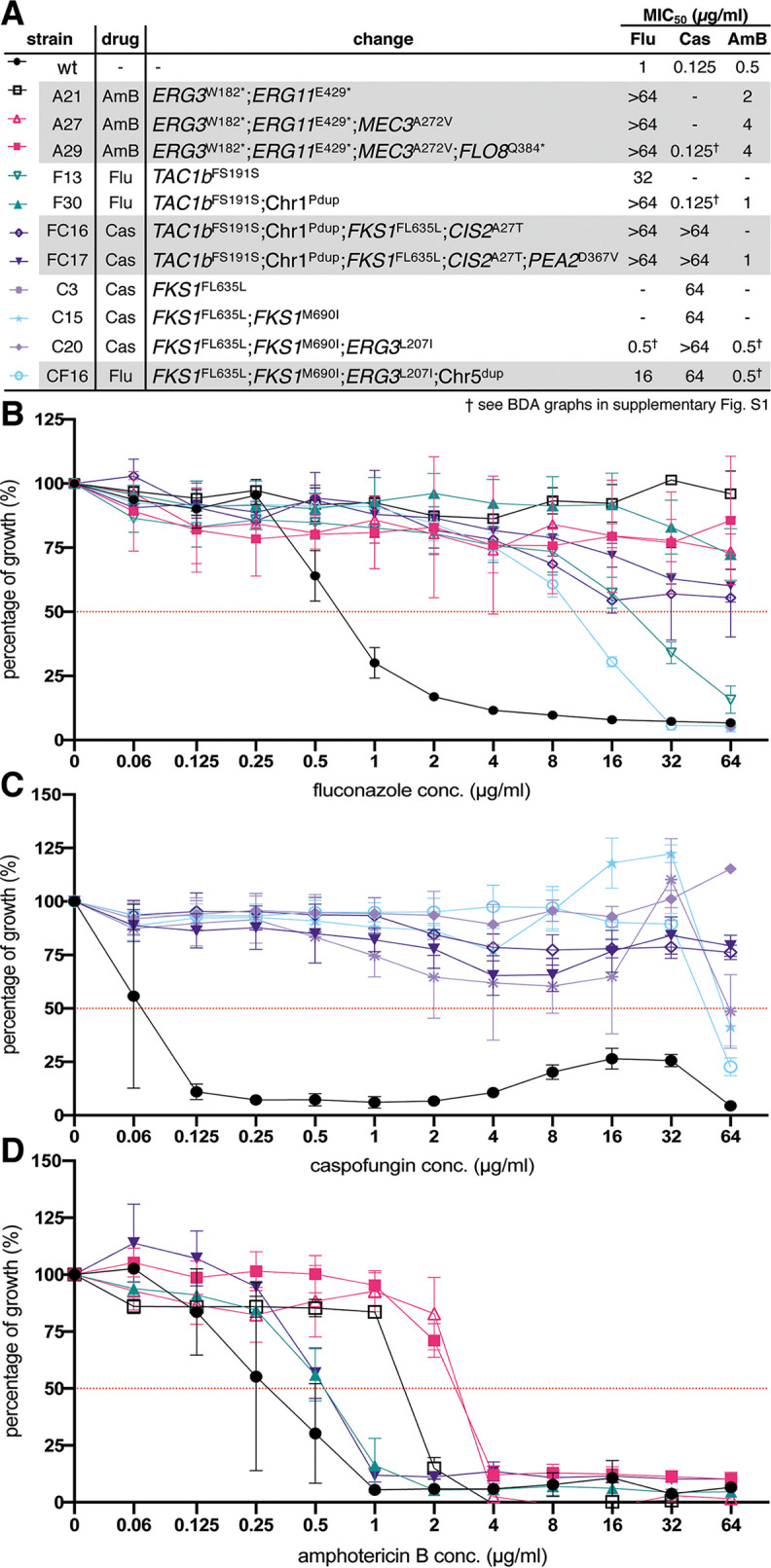
“Although no direct correlation was found between amphotericin B MICs and altered FLO8, the appearance of these mutations suggests a key role for this gene in polyene resistance development in C. auris (Carolus et al. 2020, 2021).”
Abid, F. B., Salah, H., Sundararaju, S., Dalil, L., Abdelwahab, A. H., Salameh, S., Ibrahim, E. B., Almaslmani, M. A., Tang, P., Pérez‐López, A., et al. (2023) · Clinical Microbiology and Infection · doi:10.1016/j.cmi.2023.04.025 · Cited by 59
Potential Strategies to Control the Risk of Antifungal Resistance in Humans: A Comprehensive Review
Rabaan, A. A., Sulaiman, T., Al-Ahmed, S. H., Buhaliqah, Z. A., Buhaliqah, A. A., AlYuosof, B., Alfaresi, M. S., Fares, M. A. A., Alwarthan, S. M., Alkathlan, M. S., et al. (2023) · Antibiotics · doi:10.3390/antibiotics12030608 · Cited by 67
Azole resistance in Candida auris: mechanisms and combinatorial therapy
Jangir, P., Kalra, S., Tanwar, S., & Bari, V. K. (2023) · Apmis · doi:10.1111/apm.13336 · Cited by 62
Recent gene selection and drug resistance underscore clinical adaptation across Candida species
Schikora-Tamarit, M. À., & Gabaldón, T. (2024) · Nature Microbiology · doi:10.1038/s41564-023-01547-z · Cited by 60
Raza, S., Wdowiak, M., Grotek, M., Adamkiewicz, W., Nikiforow, K., Mente, P., & Paczesny, J. (2023) · Nanoscale Advances · doi:10.1039/d3na00220a · Cited by 56
Wang, T. W., Sofras, D., Montelongo-Jauregui, D., Paiva, T. O., Carolus, H., Dufrêne, Y. F., Alfaifi, A. A., McCracken, C., Bruno, V. M., Van Dijck, P., et al. (2024) · Nature Communications · doi:10.1038/s41467-024-53588-5 · Cited by 47
Self-citationComparative Transcriptomics Reveal Possible Mechanisms of Amphotericin B Resistance in Candida auris
Shivarathri, R., Jenull, S., Chauhan, M., Singh, A., Mazumdar, R., Chowdhary, A., Kuchler, K., & Chauhan, N. (2022) · Antimicrobial Agents and Chemotherapy · doi:10.1128/aac.02276-21 · Cited by 41
Ceballos-Garzón, A., Peñuela, A., Valderrama, S., Vargas‐Casanova, Y., Ariza, B., & Parra‐Giraldo, C. M. (2023) · Frontiers in Cellular and Infection Microbiology · doi:10.3389/fcimb.2023.1136217 · Cited by 49
“In the case of Candida spp, the molecular mechanisms behind FLCresistance have been relatively well characterized (Morio et al., 2017; Carolus et al., 2021).”
BackgroundInsights into the role of sterol metabolism in antifungal drug resistance: a mini-review
Tanwar, S., Kalra, S., & Bari, V. K. (2024) · Frontiers in Microbiology · doi:10.3389/fmicb.2024.1409085 · Cited by 47
Molecular Diagnostics for Invasive Fungal Diseases: Current and Future Approaches
Pham, D., Sivalingam, V., Tang, H. M., Montgomery, J. M., Chen, S. C. ‐., & Halliday, C. L. (2024) · Journal of Fungi · doi:10.3390/jof10070447 · Cited by 60
Castanheira, M., Deshpande, L. M., Rhomberg, P. R., & Carvalhaes, C. G. (2024) · Antimicrobial Agents and Chemotherapy · doi:10.1128/aac.00570-24 · Cited by 44
Overview about Candida auris: What's up 12 years after its first description?
Désoubeaux, G., Coste, A. T., Imbert, C., & Hennequin, C. (2022) · Journal de Mycologie Médicale · doi:10.1016/j.mycmed.2022.101248 · Cited by 43
Yamada, T., Maeda, M., Nagai, H., Salamin, K., Chang, Y., Guenova, E., Feuermann, M., & Monod, M. (2023) · Antimicrobial Agents and Chemotherapy · doi:10.1128/aac.00933-23 · Cited by 41
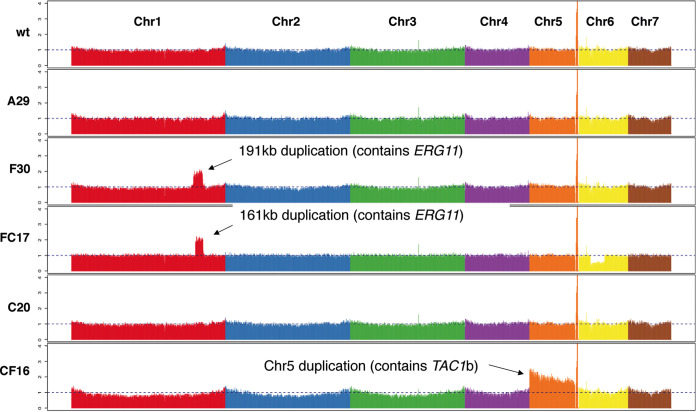
“For example, the segmental duplication of chromosome 1 containing ERG11, the CYP51 ortholog, and a whole chromosome 5 duplication, which contains TAC1b associated with an increased expression of ERG11, TAC1b, and CDR2, have been observed (26, 27).”
BackgroundNarayanan, A., Kumar, P., Chauhan, A., Kumar, M., Yadav, K., Banerjee, A., Sharma, R. D., Rudramurthy, S. M., Chakrabarti, A., Sanyal, K., et al. (2022) · mBio · doi:10.1128/mbio.03052-22 · Cited by 35
“Aneuploidyindependent mechanisms involve mutations in known drug resistance (DR)-associated genes (8, 11, 19, 41), mutations in novel genes (11), and overexpression of drug efflux pumps (19, 55).”
BackgroundInfluentialHigh-Throughput Profiling of Candida auris Isolates Reveals Clade-Specific Metabolic Differences
Brandt, P., Mirhakkak, M. H., Wagner, L., Driesch, D., Möslinger, A., Fänder, P., Schäuble, S., Panagiotou, G., & Vylkova, S. (2023) · Microbiology Spectrum · doi:10.1128/spectrum.00498-23 · Cited by 39
“auris to azoles, polyenes, and echinocandins resulted in the emergence of 10 nonsynonymous mutations in 8 genes, that evolved in 5 separate evolutionary lineages, including novel mutations (9).”
BackgroundZhang, Y., Zeng, L., Huang, X., Wang, Y., Chen, G., Moses, M., Zou, Y., Xiong, S., Xue, W., Dong, Y., et al. (2025) · Nature Communications · doi:10.1038/s41467-025-59898-6 · Cited by 33
Bioactive Plant Compounds as Alternatives Against Antifungal Resistance in the Candida Strains
Dantas, T. D. S., Machado, J. C. B., Ferreira, M. R. A., & Soares, L. A. L. (2025) · Pharmaceutics · doi:10.3390/pharmaceutics17060687 · Cited by 51
Diagnostic Allele-Specific PCR for the Identification of Candida auris Clades
Carolus, H., Jacobs, S., Lobo Romero, C., Deparis, Q., Cuomo, C. A., Meis, J. F., & Van Dijck, P. (2021) · Journal of Fungi · doi:10.3390/jof7090754 · Cited by 29
“AS-PCR can be used to identify mutations in research [35,36], or as a diagnostic tool [37–40].”
MethodSelf-citationUsing genomics to understand the mechanisms of virulence and drug resistance in fungal pathogens
Schikora-Tamarit, M. À., & Gabaldón, T. (2022) · Biochemical Society Transactions · doi:10.1042/bst20211123 · Cited by 35
Wang, H., Ji, Z., Feng, Y., Yan, T., Cao, Y., Lu, H., & Jiang, Y. (2022) · Frontiers in Pharmacology · doi:10.3389/fphar.2022.1101553 · Cited by 30
“auris (Carolus et al., 2021), Candida lusitaniae (Borgeat et al.”
Novel Non-Hot Spot Modification in Fks1 of Candida auris Confers Echinocandin Resistance
Kordalewska, M., Cancino-Prado, G., de Almeida, J. N., Brandão, I. B., Peral, R. T. D. S., Colombo, A. L., & Perlin, D. S. (2023) · Antimicrobial Agents and Chemotherapy · doi:10.1128/aac.00423-23 · Cited by 33
“caspofungin exposure of the strain B112020 (clade II, Japan, type strain) (3).”
BackgroundEvolutionary accumulation of FKS 1 mutations from clinical echinocandin-resistant Candida auris
Tian, S., Wu, Y., Li, H., Chen, R., Wu, N., Chu, Y., Jiang, N., Zhang, J., & Shang, H. (2024) · Emerging Microbes & Infections · doi:10.1080/22221751.2024.2377584 · Cited by 34
“FKS 1 [35].”
Collateral sensitivity counteracts the evolution of antifungal drug resistance in Candida auris
Carolus, H., Sofras, D., Boccarella, G., Jacobs, S., Biriukov, V. V., Goossens, L., Chen, A., Vantyghem, I., Verbeeck, T., Pierson, S., et al. (2024) · Nature Microbiology · doi:10.1038/s41564-024-01811-w · Cited by 31
“The adaptors were selected to represent each of the four major mechanisms of acquired resistance to amphotericin B known for C. auris 50,52,55,56 in the four major clades of C. auris 57 .”
InfluentialSelf-citationGutierrez-Perez, C., & Cramer, R. A. (2025) · npj Antimicrobials and Resistance · doi:10.1038/s44259-025-00093-4 · Cited by 44
“Dual mutations in ERG3 and ERG11 and single mutations in ERG2, ERG3, ERG5, ERG6 result in AmpB resistance in C. auris in vitro 113 – 115 .”
Burch, T. R., Newton, R. J., Kimbell, L. K., LaMartina, E. L., O'Malley, K., Thomson, S. M., Marshall, C. W., & McNamara, P. J. (2022) · Environmental Science: Water Research & Technology · doi:10.1039/d2ew00087c · Cited by 26
Robbins, N., & Cowen, L. E. (2021) · Current Biology · doi:10.1016/j.cub.2021.09.071 · Cited by 24
The Microevolution of Antifungal Drug Resistance in Pathogenic Fungi
Boyce, K. J. (2023) · Microorganisms · doi:10.3390/microorganisms11112757 · Cited by 29
“…5 (which contains the regulator TAC1B ) or 3, segmental aneuploidy of chromosome 1 (contains ERG11 ), loss of subtelomeric regions, karyotype alterations and the generation of supernumerary chromosomes (centromere-inclusive chromosomal duplications of segments of chromosome 5) [77,108,123,155].”
Satała, D., Juszczak, M., Wronowska, E., Surowiec, M., Kulig, K., Kozik, A., Rąpała‐Kozik, M., & Karkowska‐Kuleta, J. (2022) · Cellular Microbiology · doi:10.1155/2022/2599136 · Cited by 28
White-Brown switching controls phenotypic plasticity and virulence of Candida auris
Phan-Canh, T., Jenull, S., Bitencourt, T. A., Seiser, S., Moser, D., Motamedi, M., Chowdhary, A., Elbe‐Bürger, A., & Kuchler, K. (2025) · Cell Reports · doi:10.1016/j.celrep.2025.115976 · Cited by 24
Caspofungin Affects Extracellular Vesicle Production and Cargo in Candida auris
Amatuzzi, R. F., Zamith‐Miranda, D., da Rocha, I. F. M., Lucena, A. C. R., Martins, S. D. T., Streit, R. S. A., Staats, C. C., Trentin, G., Almeida, F. B. D. R., Rodrigues, M. L., et al. (2022) · Journal of Fungi · doi:10.3390/jof8100990 · Cited by 25
Salama, E. A., Eldesouky, H. E., Elgammal, Y., Abutaleb, N. S., & Seleem, M. N. (2023) · International Journal of Antimicrobial Agents · doi:10.1016/j.ijantimicag.2023.106906 · Cited by 27
Arendrup, M. C., Lockhart, S. R., & Wiederhold, N. P. (2024) · Clinical Microbiology and Infection · doi:10.1016/j.cmi.2024.10.010 · Cited by 22
“In C. auris, Carolus et al. [23] found that simultaneous emergence of nonsense mutations in erg3 and erg11 in experimentally evolved multidrug resistant C. auris led to decreased amphotericin B susceptibility (MIC 2 mg/L) and that a mutation in mec3, a gene involved in DNA damage homeostasis,…”
Discovery of a Novel Potent Tetrazole Antifungal Candidate with High Selectivity and Broad Spectrum
Ni, T., Hao, Y., Ding, Z., Chi, X., Xie, F., Wang, R., Bao, J., Yan, L., Li, L., Wang, T., et al. (2024) · Journal of Medicinal Chemistry · doi:10.1021/acs.jmedchem.3c02188 · Cited by 25
Ramos, L. S., Barbosa, P. F., Lorentino, C. M. A., Lima, J. C., Braga, A. L., Lima, R., Giovanini, L., Casemiro, A. L., Siqueira, N. L. M., da Costa, S. C., et al. (2025) · Current Research in Microbial Sciences · doi:10.1016/j.crmicr.2025.100354 · Cited by 33
“The TAC1 genes encode transcription factors that regulate the expression of CDR1 and CDR2 genes, which control efflux pumps associated with azole resistance in the Candida genus (Rybak et al., 2020; Carolus et al., 2021; Ben et al., 2023).”
Misas, E., Escandón, P., Gade, L., Cáceres, D. H., Hurst, S., Le, N., Min, B., Lyman, M., Duarte, C., & Chow, N. A. (2024) · mSphere · doi:10.1128/msphere.00577-23 · Cited by 23
“…et al., 2019 identified two non-synonymous substitutions associated with high MIC values of amphotericin B. Specifically, substitution S108N in the FLO8 gene (PSK76257) was observed [7, 15], and a hypothetical protein that encodes a membrane transporter (PSK74852) showed the substitution I139T [7].”
BackgroundCandida auris in Austria—What Is New and What Is Different
Spettel, K., Kriz, R., Wu, C. C., Achter, L., Schmid, S., Galazka, S., Selitsch, B., Camp, I., Makristathis, A., Lagler, H., et al. (2023) · Journal of Fungi · doi:10.3390/jof9020129 · Cited by 21
“In the isolates Cau3 and Cau5 showing high fluconazole MICs, the missense mutation p.Y132F in ERG11, which encodes 14-alpha-demethylase, was detected.”
BackgroundInfluentialAkinbobola, A., Kean, R., & Quilliam, R. S. (2023) · Marine Pollution Bulletin · doi:10.1016/j.marpolbul.2023.115841 · Cited by 25
Bergin, S. A., Doorley, L. A., Rybak, J. M., Wolfe, K. H., Butler, G., Cuomo, C. A., & Rogers, P. D. (2024) · Antimicrobial Agents and Chemotherapy · doi:10.1128/aac.01619-23 · Cited by 24
“One evolved strain had a 191 kb long CNV with 75 protein-encoding genes including ERG11 amplified, while another had a 161 kb long CNV containing 67 protein-encoding genes including ERG11 (64).”
Self-citationPerrine-Walker, F. M. (2022) · Brazilian Journal of Microbiology · doi:10.1007/s42770-022-00739-9 · Cited by 23
Wu, H., Ji, Z., Huang, X., Li, L., Hang, S., Yu, J., Lu, H., & Jiang, Y. (2024) · ACS Infectious Diseases · doi:10.1021/acsinfecdis.4c00399 · Cited by 16
Barbian, H. J., Lie, L., Kittner, A., Harrington, A., Carson, J. S., Frias, M., Slade, D. H., Kim, D. Y., Black, S. R., Parada, J. P., et al. (2025) · Emerging infectious diseases · doi:10.3201/eid3103.241195 · Cited by 19
Ni, T., Xie, F., Hao, Y., Li, L., Zhu, S., Wu, H., Chi, X., Yan, L., Jiang, Y., & Zhang, D. (2022) · Journal of Medicinal Chemistry · doi:10.1021/acs.jmedchem.2c01497 · Cited by 18
Ettadili, H., & Vural, C. (2024) · Brazilian Journal of Microbiology · doi:10.1007/s42770-023-01239-0 · Cited by 20
“Indeed, 90% of isolates exhibit resistance to fluconazole, and a significant number of isolates show cross-resistance to more than one of the three major classes of antifungals, including azoles (e.g., fluconazole), echinocandins (e.g., caspofungin), and polyenes (e.g., amphotericin B) [30, 31].”
Genome-wide analysis of in vivo-evolved Candida auris reveals multidrug-resistance mechanisms
Chen, X.-F., Zhang, H., Liu, L.-L., Guo, L., Liu, W., Liu, Y., Li, D. S., Zhao, Y., Zhu, R.-Y., Li, Y., et al. (2024) · Mycopathologia · doi:10.1007/s11046-024-00832-7 · Cited by 19
Zhen, C., Wang, L., Feng, Y., Whiteway, M., Hang, S., Yu, J., Lu, H., & Jiang, Y. (2024) · Advanced Science · doi:10.1002/advs.202406473 · Cited by 16
Chauhan, A., Carolus, H., Sofras, D., Kumar, M., Kumar, P., Nair, R., Narayanan, A., Yadav, K., Ali, B., Biriukov, V., et al. (2025) · Molecular Microbiology · doi:10.1111/mmi.15379 · Cited by 16
“Beyond sterol biosynthesis, DNA damage checkpoint proteins, such as Mec3, and the transcription factor Flo8, which positively regulates ERG11 expression, have also been suggested to play a role in AmB resistance in C. auris (Escandón et al. 2019; Carolus, Pierson, Muñoz, et al. 2021).”
Self-citationde Jong, A. W., Francisco, E. C., de Almeida, J. N., Brandão, I. B., Pereira, F. M., Dias, P. H. P., Costa, M. M. D. M., Jordão, R. T. D. S., Vu, D., Colombo, A. L., et al. (2021) · Mycopathologia · doi:10.1007/s11046-021-00593-7 · Cited by 15
Tetraploidy accelerates adaptation under drug selection in a fungal pathogen
Avramovska, O., Smith, A. C., Rego, E., & Hickman, M. A. (2022) · Frontiers in Fungal Biology · doi:10.3389/ffunb.2022.984377 · Cited by 18
Exploration of novel mechanisms of azole resistance in Candida auris
Li, J., Brandalise, D., Coste, A. T., Sanglard, D., & Lamoth, F. (2024) · Antimicrobial Agents and Chemotherapy · doi:10.1128/aac.01265-24 · Cited by 19
“However, no increase of CDR1 expression was observed in these strains (27, 29, 30).”
Molecular characterization of some multidrug resistant Candida Auris in egypt
Ahmed, S. H., El-Kholy, I. M. A., El-Mehalawy, A. A., Mahmoud, E. M., & Elkady, N. A. (2025) · Scientific Reports · doi:10.1038/s41598-025-88656-3 · Cited by 18
Chow, E. W. L., Song, Y., Chen, J., Xu, X., Wang, J., Chen, K., Gao, J., & Wang, Y. (2023) · mBio · doi:10.1128/mbio.02688-23 · Cited by 22
“We reasoned that this structural change might alter the interaction between Rpn4 and the Mub1/Ubr2 ubiquitin-ligase and affect Rpn4 degradation, therefore increasing the cellular level of Rpn4, efflux pump gene expression, and fluconazole resistance.”
BackgroundZhou, Y., & Reynolds, T. B. (2024) · Journal of Fungi · doi:10.3390/jof10030171 · Cited by 19
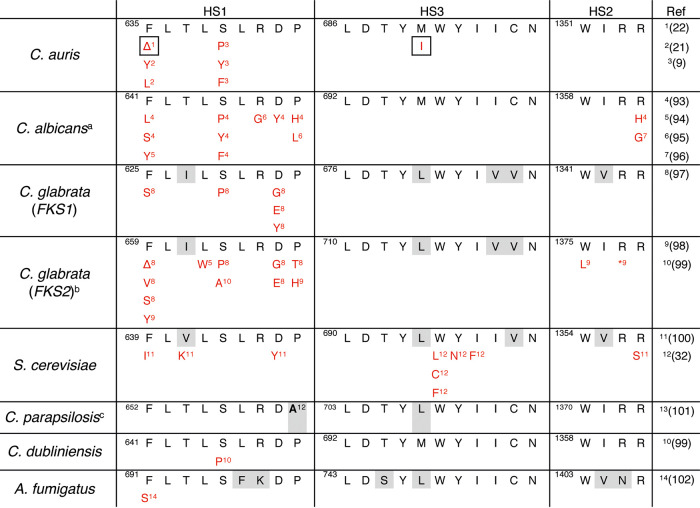
“…was hypothesized to disrupt the membrane and thus inhibit glucan synthase activity [9,82], and the resistance mutations of echinocandins often occur at the highly conserved hot spot 1 (HS1, residue 641–649, TM5), hot spot 2 (HS2, residue 1345–1365, TM8), and hot spot 3 (HS3, 690–700, TM6) [84–86].”
BackgroundTranscriptomic meta-analysis to identify potential antifungal targets in Candida albicans
Hefny, Z. A., Ji, B., Elsemman, I. E., Nielsen, J., & Dijck, P. V. (2024) · BMC Microbiology · doi:10.1186/s12866-024-03213-8 · Cited by 18
“A major problem with this species is that most isolates are resistant to fluconazole and a large percentage of the isolates is also resistant towards echinocandins and polyenes [6, 7].”
BackgroundTaylor, M. B., Skophammer, R. G., Warwick, A. R., Geck, R. C., Boyer, J. M., Students, Y., Walson, M., Large, C. R. L., Hickey, A. S.-M., Rowley, P. A., et al. (2022) · G3 Genes Genomes Genetics · doi:10.1093/g3journal/jkac246 · Cited by 15
Acquired amphotericin B resistance attributed to a mutated ERG3 in Candidozyma auris
Massic, L., Doorley, L. A., Jones, S. J., Richardson, I., Siao, D. D., Siao, L., Dykema, P., Hua, C. N., Schneider, E., Cuomo, C. A., et al. (2025) · Antimicrobial Agents and Chemotherapy · doi:10.1128/aac.00601-25 · Cited by 15
“Amphotericin B resistance can be induced by culturing C. auris in the presence of sub-lethal doses of amphotericin B (18).”
Self-citationCandida albicans’ inorganic phosphate transport and evolutionary adaptation to phosphate scarcity
Acosta-Zaldívar, M., Qi, W., Mishra, A., Roy, U., King, W. R., Li, Y., Patton-Vogt, J., Anderson, M. Z., & Köhler, J. R. (2024) · PLOS Genetics · doi:10.1371/journal.pgen.1011156 · Cited by 14
Saliba, J. G., Zheng, W., Shu, Q., Li, L., Wu, C., Xie, Y., Lyon, C. J., Qu, J., Huang, H., Ying, B., et al. (2025) · Nature Communications · doi:10.1038/s41467-025-58214-6 · Cited by 17
“GAM analyses could predict speci fi c drug-gene associations in multidrug-resistant Candida auris 48 , Escherichia coli 49 , and other infectious diseases with a complex spectrum of drug resistance.”
Unlocking the potential of experimental evolution to study drug resistance in pathogenic fungi
Jacobs, S., Boccarella, G., van den Berg, P., Dijck, P. V., & Carolus, H. (2024) · npj Antimicrobials and Resistance · doi:10.1038/s44259-024-00064-1 · Cited by 18
“This method was used to introduce FKS1 mutations in S. cerevisiae and allowed to identify a third ‘ hot spot ’ region in the gene, important for resistance against echinocandins 67,125 .”
Self-citationResearch advances and public health strategies in China on WHO priority fungal pathogens
Wang, Y., Han, L., Gong, J., Liu, L., Miao, B., & Xu, J. (2025) · Mycology: An International Journal on Fungal Biology · doi:10.1080/21501203.2025.2561612 · Cited by 15
“A separate analysis by Yang et al. (2024) identified the A395T mutation in ERG11 as the cause of reduced fluconazole susceptibility in strain CA01 through molecular docking.”
InfluentialExperimental and in-host evolution of triazole resistance in human pathogenic fungi
Handelman, M., & Osherov, N. (2022) · Frontiers in Fungal Biology · doi:10.3389/ffunb.2022.957577 · Cited by 16
“encoded on Chr5) and CDR2, but not CDR1 (Carolus et al., 2021).”
BackgroundHirayama, T., Miyazaki, T., Tanaka, R., Kitahori, N., Yoshida, M., Takeda, K., Ide, S., Iwanaga, N., Tashiro, M., Takazono, T., et al. (2024) · Antimicrobial Agents and Chemotherapy · doi:10.1128/aac.01508-24 · Cited by 15
Candida auris : host interactions, antifungal drug resistance, and diagnostics
Chowdhary, A., Lionakis, M. S., & Chauhan, N. (2025) · Microbiology and Molecular Biology Reviews · doi:10.1128/mmbr.00187-22 · Cited by 22
Candida auris Resistance Mechanisms to Amphotericin B Alternative Treatments Development
Fenton, A., & John, G. K. (2024) · Current Clinical Microbiology Reports · doi:10.1007/s40588-024-00233-w · Cited by 14
Asadzadeh, M., Ahmad, S., Alfouzan, W. A., Al‐Obaid, I., Spruijtenburg, B., Meijer, E. F. J., Meis, J. F. G. M., & Mokaddas, E. M. (2024) · Antibiotics · doi:10.3390/antibiotics13090840 · Cited by 13
“Other possible mechanisms for AMB resistance in C. auris include mutations in genes such as MEC3 which is involved in DNA damage homeostasis [47].”
BackgroundZhang, W., Zhang, H., Gao, Y., Lei, J., & Suo, C. (2025) · Frontiers in Cellular and Infection Microbiology · doi:10.3389/fcimb.2025.1596688 · Cited by 17
Tools and techniques to identify, study, and control Candida auris
Carty, J., Chowdhary, A., Bernstein, D. A., & Thangamani, S. (2023) · PLoS Pathogens · doi:10.1371/journal.ppat.1011698 · Cited by 16
The hidden threat: Unveiling the rise of antifungal drug resistance
Chaudhary, R., & Thakur, Z. (2025) · Microbial Pathogenesis · doi:10.1016/j.micpath.2025.108068 · Cited by 12
Broad susceptibility of Candida auris strains to 8-hydroxyquinolines and mechanisms of resistance
Lohse, M. B., Laurie, M. T., Levan, S., Ziv, N., Ennis, C. L., Nobile, C. J., DeRisi, J. L., & Johnson, A. D. (2023) · mBio · doi:10.1128/mbio.01376-23 · Cited by 16
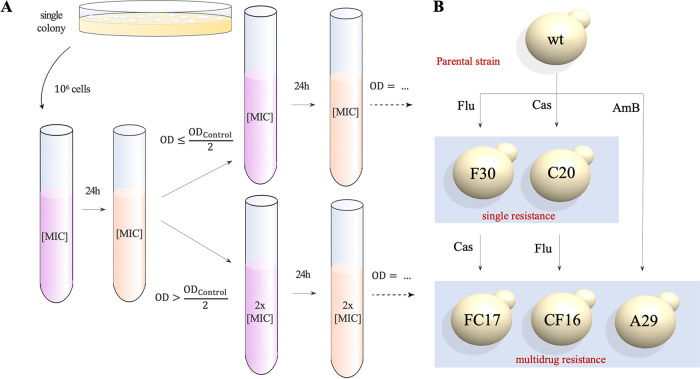
“Indeed, experimental evolution studies have produced 30-fold to more than 500-fold increases in resistance to fluconazole or caspofungin in as few as two or three 24-or 48-h passages (55–57).”
TheiaEuk: a species-agnostic bioinformatics workflow for fungal genomic characterization
Ambrosio, F. J., Scribner, M. R., Wright, S. M., Otieno, J. R., Doughty, E. L., Gorzalski, A. J., Siao, D. D., Killian, S., Hua, C. N., Schneider, E., et al. (2023) · Frontiers in Public Health · doi:10.3389/fpubh.2023.1198213 · Cited by 15
Antifungal resistance: why are we losing this battle?
Macedo, J. D. P., & Dias, V. C. (2024) · Future Microbiology · doi:10.1080/17460913.2024.2342150 · Cited by 19
Navigating the fungal battlefield: cysteine-rich antifungal proteins and peptides from Eurotiales
Holzknecht, J., & Marx, F. (2024) · Frontiers in Fungal Biology · doi:10.3389/ffunb.2024.1451455 · Cited by 15
Massic, L., Gorzalski, A. J., Siao, D. D., Dykema, P., Hua, C. N., Schneider, E., Hooser, S. V., Pandori, M., & Hess, D. C. (2023) · The Lancet Infectious Diseases · doi:10.1016/s1473-3099(23)00434-6 · Cited by 12
Şengel, B. E., Ekren, B. Y., Sayın, E., Çerikçioğlu, N., Sezerman, O. U., & Odabaşı, Z. (2023) · Mycopathologia · doi:10.1007/s11046-023-00787-1 · Cited by 15
“Since TAC1b positively regulates the expression of ABC transporter CDR1 , in the case of mutation in TAC1b , CDR1 expression significantly increases [19, 20].”
BackgroundCasimiro-Ramos, A., Bautista-Crescencio, C., Vidal-Montiel, A., González, G. M., Hernández-García, J. A., Hernández-Rodríguez, C., & Villa‐Tanaca, L. (2024) · Journal of Fungi · doi:10.3390/jof10060392 · Cited by 12
“Studies on evolved strains of C. auris have revealed multiple novel mechanisms of multidrug resistance [35].”
BackgroundCandida auris and other phylogenetically related species – a mini-review of the literature
Ciurea, C. N., Mare, A. D., Kosovski, I.-B., Toma, F., Vintilă, C., & Man, A. (2021) · GERMS · doi:10.18683/germs.2021.1281 · Cited by 13
Genetic microevolution of clinical Candida auris with reduced Amphotericin B sensitivity in China
Tian, S., Chen, R., Li, H., Wu, Y., Wu, N., Yunzhuo, C., Jiang, N., Zhang, J., & Shang, H. (2024) · Emerging Microbes & Infections · doi:10.1080/22221751.2024.2398596 · Cited by 9
“Studies have indicated that the molecular mechanisms by which Candida spp. develops resistance to AmB are related to specific target genes, mainly ERG2, ERG3, ERG6, and ERG11 [5–11].”
Should all hospitalised patients colonised with Candida auris be considered for isolation?
Meijer, E. F. J., & Voß, A. (2024) · Eurosurveillance · doi:10.2807/1560-7917.es.2024.29.45.2400729 · Cited by 9
“For azoles and other antifungal drugs, resistance can arise via multiple mechanisms, including acquired (point) mutations and the upregulation of resistance genes [13,14].”
BackgroundFungAMR: A comprehensive portrait of antimicrobial resistance mutations in fungiPreprint
Bédard, C., Pageau, A., Fijarczyk, A., Mendoza-Salido, D., Alcañiz, A. J., Després, P. C., Durand, R., Plante, S., Alexander, E. M. M., Rouleau, F. D., et al. (2024) · bioRxiv (Cold Spring Harbor Laboratory) · doi:10.1101/2024.10.07.617009 · Cited by 9
“Experimental evolution studies have shown that the diversity of mutated genes to adapt to antifungals was narrow within a species and often overlapped with mechanisms described in other fungi 72,90,91 .”
BackgroundThe riboflavin biosynthetic pathway as a novel target for antifungal drugs against Candida species
(2024) · doi:10.1128/mbio.02502-24 · Cited by 8
Short-term evolution and dispersal patterns of fluconazole-resistance in Candida auris clade III
Cancino‐Muñoz, I., Bayona, J. V. M., García, C. S., Tormo, N., Guna, R., Cardona, C. G., & Gónzález‐Candelas, F. (2024) · mBio · doi:10.1128/mbio.03164-24 · Cited by 10
Metadata
- Authors
- Carolus, H., Pierson, S., Muñoz, J. F., Subotić, A., Cruz, R. B., Cuomo, C. A., & Van Dijck, P.
- Affiliations
- VIB-KU Leuven Center for Microbiology (BE)
- KU Leuven (BE)
- Broad Institute (US)
- VIB Center for Microbiology, Leuven, Belgium
- Venue
- mBio
- Publisher
- American Society for Microbiology
- Published
- 2021-04-27
- Volume
- 12
- Issue
- 2
- ISSN
- 2150-7511 (ISSN-L)
- PMC
- PMC8092288
- OpenAlex
- W3145703097
- Cited by
- 211
- References
- 99
- Citations by year
- 2026: 49 · 2025: 47 · 2024: 42 · 2023: 36 · 2022: 26 · 2021: 9
- FWCI
- 9.02
- Type
- journal article
- Language
- en
- Open access
- gold
- doi.org
- Licence
- cc-by
- creativecommons.org/licenses/by/4.0/ (vor)
- journals.asm.org/non-commercial-tdm-license (tdm)
- Locations
- mBio (publishedVersion, cc-by)
- bioRxiv (Cold Spring Harbor Laboratory) (acceptedVersion, cc-by-nc-nd)
- PubMed Central (publishedVersion, cc-by)
- PubMed (publishedVersion)
- Lirias (acceptedVersion, cc-by)
- Lirias (KU Leuven) (submittedVersion, other-oa)
- DOAJ (DOAJ: Directory of Open Access Journals) (submittedVersion, cc-by-sa)
- Funders
- Fonds Wetenschappelijk Onderzoek (11D7620N)
- Division of Microbiology and Infectious Diseases, National Institute of Allergy and Infectious Diseases (U19AI110818)
- HHS | NIH | NIAID | Division of Microbiology and Infectious Diseases, National Institute of Allergy and Infectious Diseases (U19AI110818)
- Topics
- Health Sciences › Medicine › Infectious Diseases › Antifungal resistance and susceptibility
- Life Sciences › Biochemistry, Genetics and Molecular Biology › Molecular Biology › Fungal and yeast genetics research
- Life Sciences › Agricultural and Biological Sciences › Plant Science › Fungal Plant Pathogen Control
- Keywords
- Candida auris, multidrug resistance, antifungal resistance, experimental evolution, genome-wide analysis, nosocomial fungal infections, fungal pathogen evolution
- MeSH terms
- Antifungal Agents, Candida, Candidiasis, Fungal Proteins, Humans, Microbial Sensitivity Tests, Mutation, Genome, Fungal, Directed Molecular Evolution, Drug Resistance, Multiple, Fungal
About these checks
Registry, retraction, Cites and statistics results are computed, not judged, with one exception: a printed reference that no index lists is read once by a model before it counts as a citation error. Claims are extracted by a model and kept only when their quote appears verbatim in the text; each cited source is then checked, with a model’s help, for whether it says what the claim relies on. Those verdicts can be wrong — read the claim’s quote and the cited source before relying on one.
Statistics and arithmetic are recomputed, not judged.
Confidence bands are shown only for fields calibrated on our annotated test set. None is calibrated yet, so no band is shown.
What counts as a claim ›How we measure confidence ›How we check this ›
Are you an author, or do you see a problem with this page? Request a review
Data sources
Bibliographic data: Semantic Scholar, OpenAlex, Crossref.
Contains information from the Semantic Scholar Academic Graph Datasets, made available under the ODC Attribution License (ODC-BY 1.0).
Semantic Scholar’s data is described in: Kinney, R., et al. (2023). The Semantic Scholar Open Data Platform. arXiv:2301.10140.
