

The DOI matches its Crossref record; 86 of the 87 references it cites were found in a registry or an index.
The prevalence of loneliness across 113 countries: systematic review and meta-analysis
Open accessAbstract
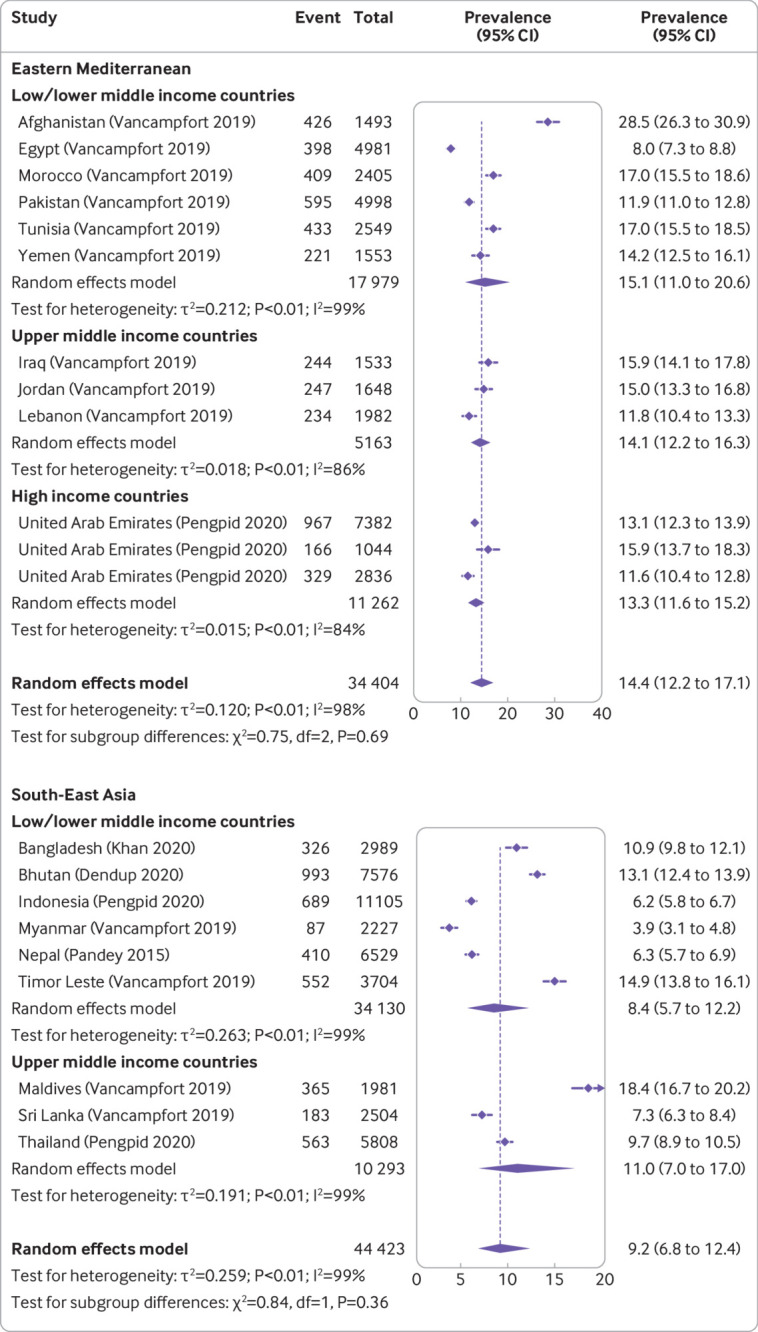
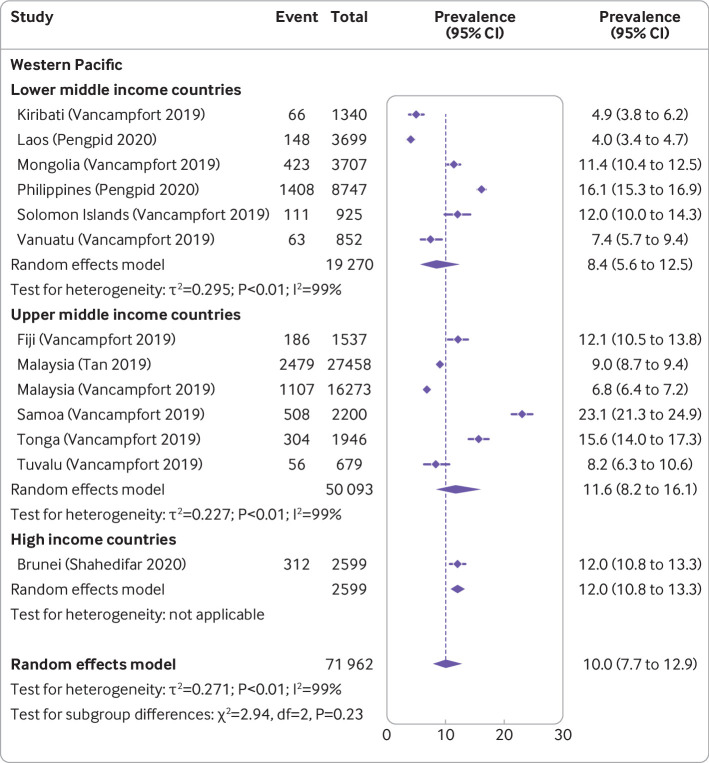
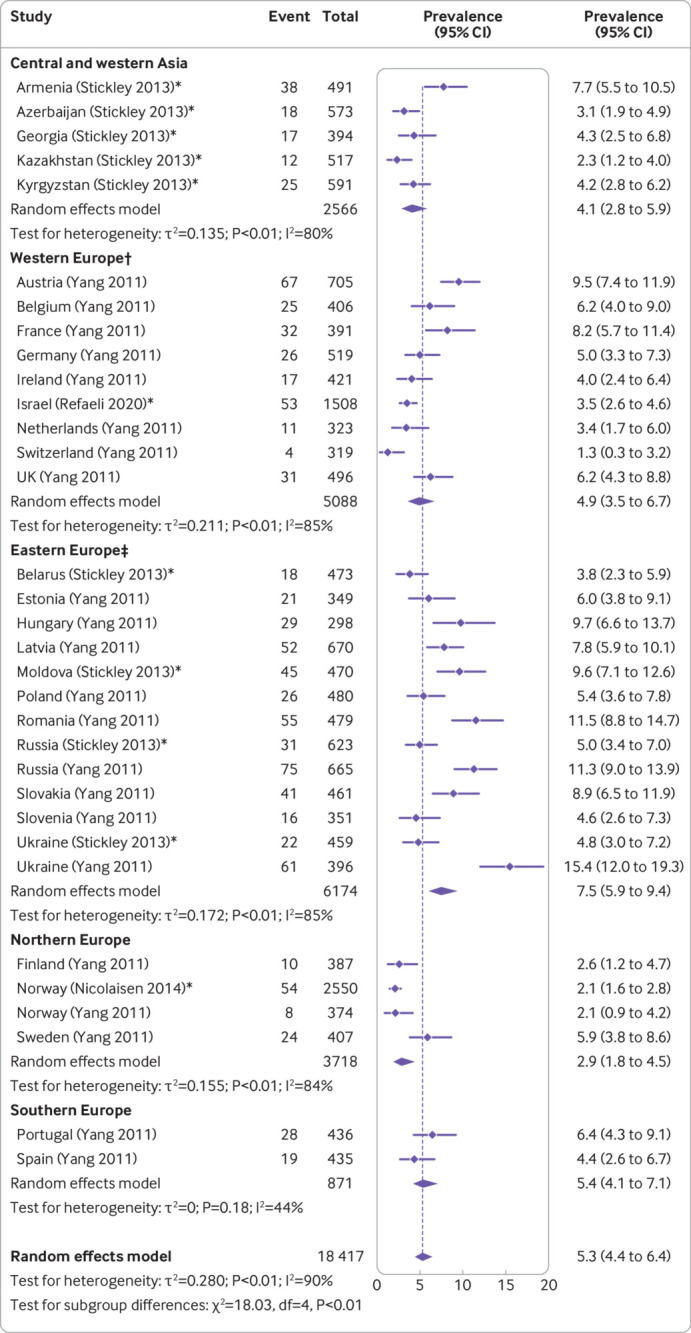
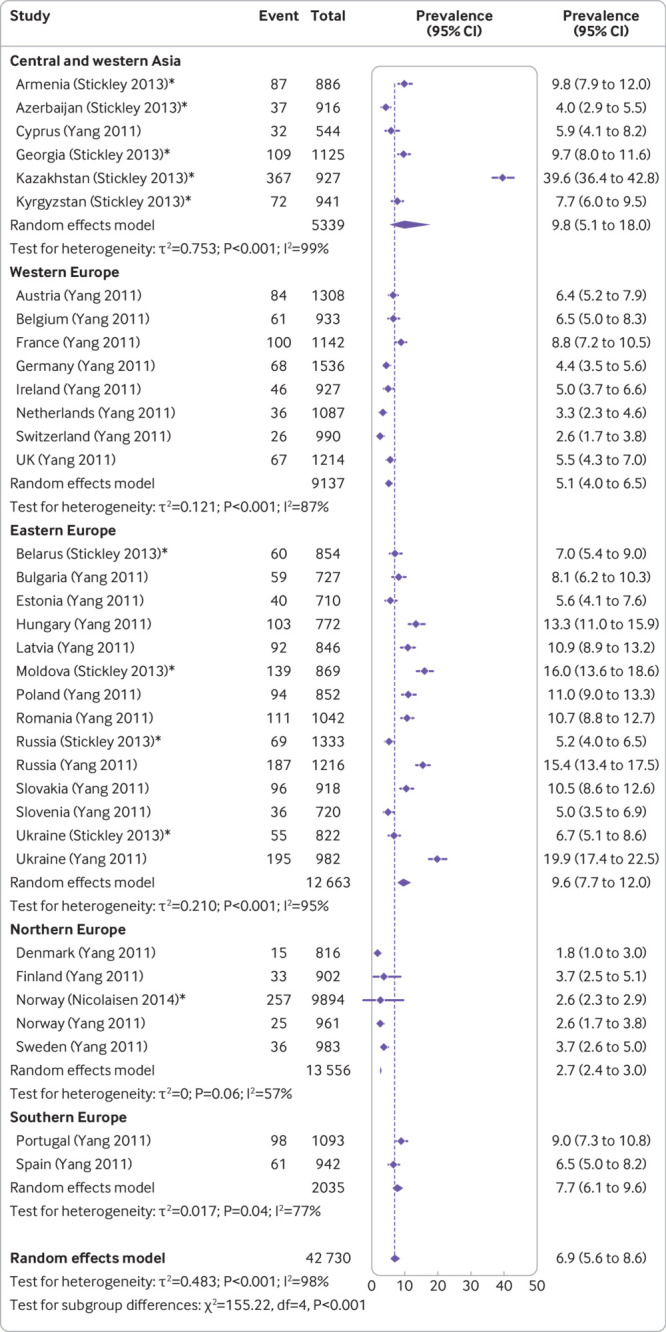
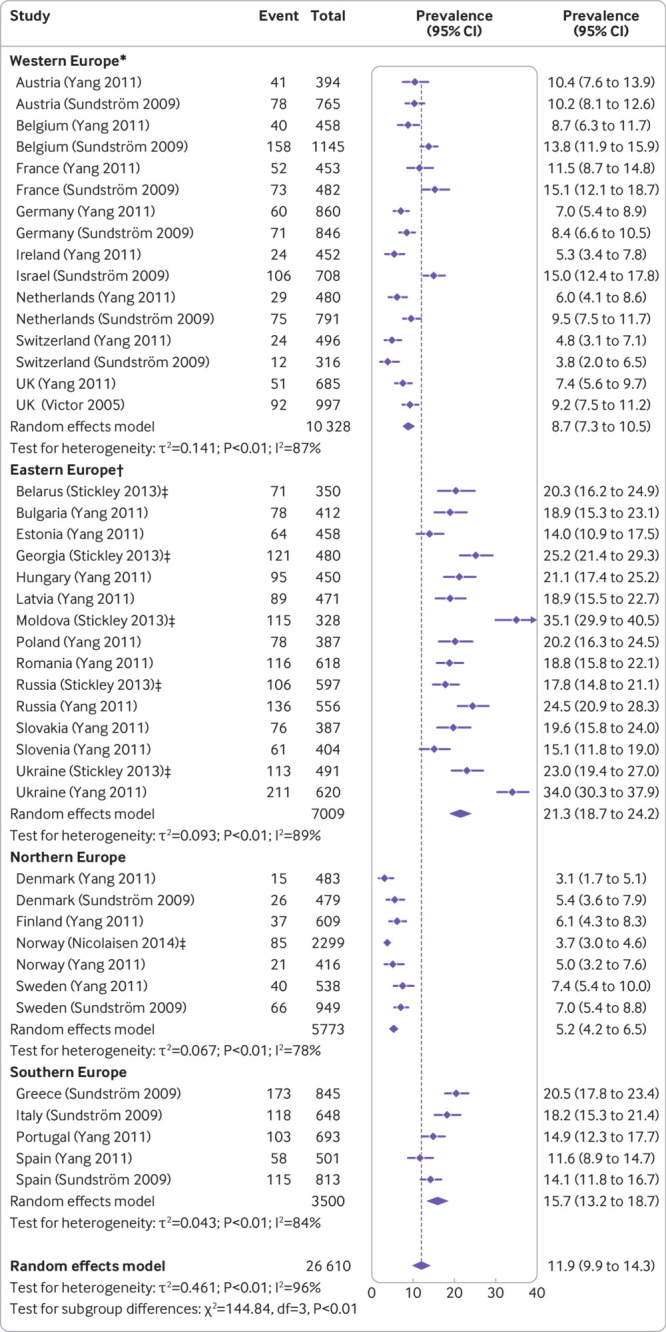
Objectives: To identify data availability, gaps, and patterns for population level prevalence of loneliness globally, to summarise prevalence estimates within World Health Organization regions when feasible through meta-analysis, and to examine temporal trends of loneliness in countries where data exist. Design: Systematic review and meta-analysis. Data sources: Embase, Medline, PsycINFO, and Scopus for peer reviewed literature, and Google Scholar and Open Grey for grey literature, supplemented by backward reference searching (to 1 September 2021) Eligibility criteria for selecting studies: Observational studies based on nationally representative samples (n≥292), validated instruments, and prevalence data for 2000-19. Two researchers independently extracted data and assessed the risk of bias using the Joanna Briggs Institute checklist. Random effects meta-analysis was conducted in the subset of studies with relatively homogeneous research methods by measurement instrument, age group, and WHO region. Results: Prevalence data were available for 113 countries or territories, according to official WHO nomenclature for regions, from 57 studies. Data were available for adolescents (12-17 years) in 77 countries or territories, young adults (18-29 years) in 30 countries, middle aged adults (30-59 years) in 32 countries, and older adults (≥60 years) in 40 countries. Data for all age groups except adolescents were lacking outside of Europe. Overall, 212 estimates for 106 countries from 24 studies were included in meta-analyses. The pooled prevalence of loneliness for adolescents ranged from 9.2% (95% confidence interval 6.8% to 12.4%) in South-East Asia to 14.4% (12.2% to 17.1%) in the Eastern Mediterranean region. For adults, meta-analysis was conducted for the European region only, and a consistent geographical pattern was shown for all adult age groups. The lowest prevalence of loneliness was consistently observed in northern European countries (2.9%, 1.8% to 4.5% for young adults; 2.7%, 2.4% to 3.0% for middle aged adults; and 5.2%, 4.2% to 6.5% for older adults) and the highest in eastern European countries (7.5%, 5.9% to 9.4% for young adults; 9.6%, 7.7% to 12.0% for middle aged adults; and 21.3%, 18.7% to 24.2% for older adults). Conclusion: Problematic levels of loneliness are experienced by a substantial proportion of the population in many countries. The substantial difference in data coverage between high income countries (particularly Europe) and low and middle income countries raised an important equity issue. Evidence on the temporal trends of loneliness is insufficient. The findings of this meta-analysis are limited by data scarcity and methodological heterogeneity. Loneliness should be incorporated into general health surveillance with broader geographical and age coverage, using standardised and validated measurement tools. Systematic review registration: PROSPERO CRD42019131448.
Overview
The claims and statistics of this paper haven’t been checked yet.
Run the check — free, no account needed. It reads the open-access text and checks the sources it cites.
Integrity signals
Registry
Cites
Statistics
Figures
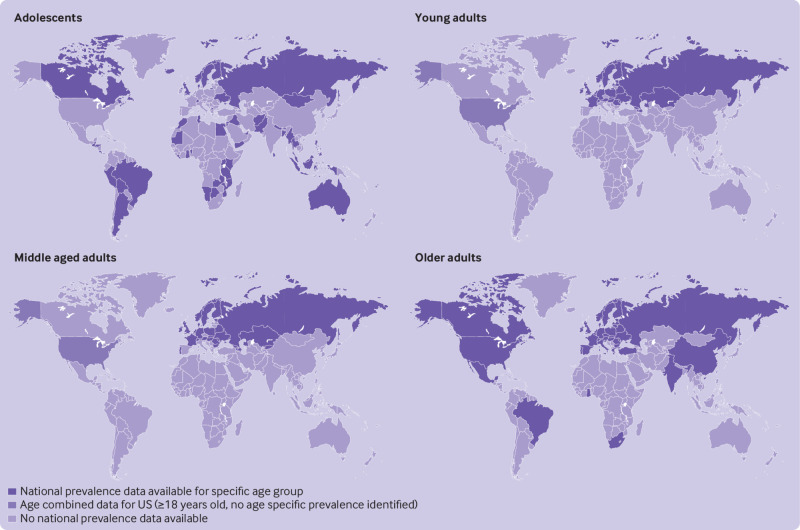
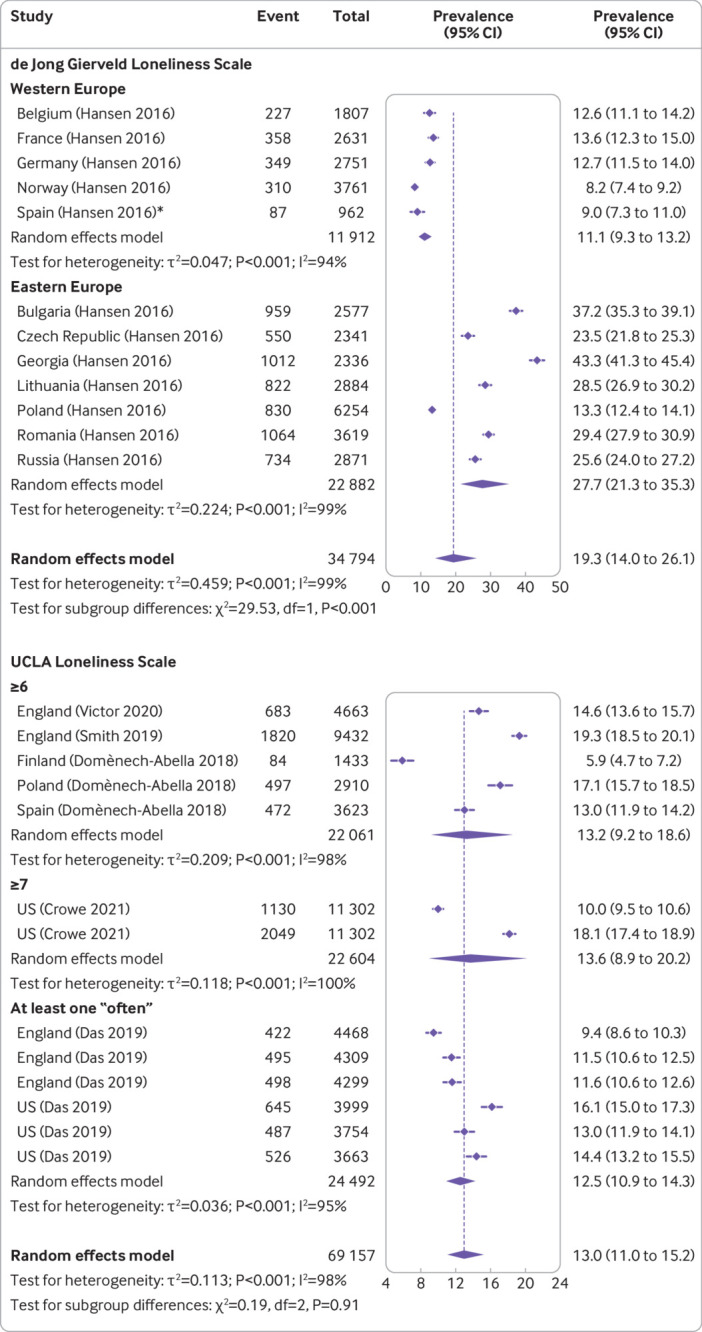
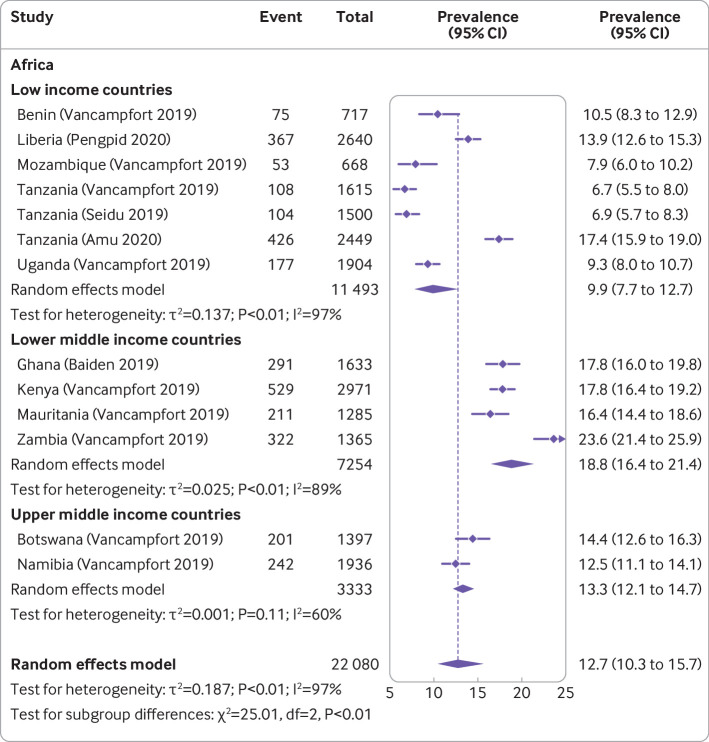
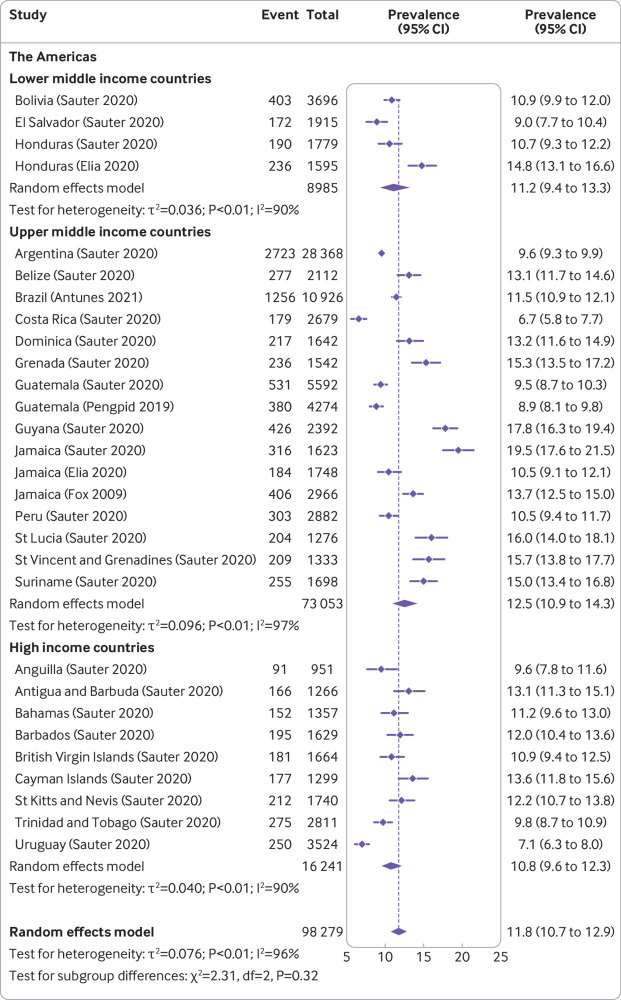
Verification
Claims the paper makes
The claims and statistics of this paper haven’t been checked yet.
Run the check — free, no account needed. It reads the open-access text and checks the sources it cites.
Claims other papers make about this one
Each is checked against this paper’s own text: does it say what the citing paper says it does?
The cited source says what the claim attributes to it.
In the citing paper
“Data based on nationally representative samples within World Health Organization regions pre-COVID-19 suggest that only 9.2% to 14.4% of adolescents experienced loneliness.16”
From A Longitudinal Study of Loneliness Before the End of the COVID-19 Pandemic: Trajectories, Predictors, and Impact on Chinese Adolescent Mental Health (2024) · cites this paper as [16]
Self-check
Percentages, sums and reported differences re-computed from the paper’s own numbers.
The self-check needs the paper’s full text.
Citations
Cites
Preferred Reporting Items for Systematic Reviews and Meta-Analyses: the PRISMA statement
Moher, D., Liberati, A., Tetzlaff, J., Altman, D. G., & for the PRISMA Group (2009) · BMJ · doi:10.1136/bmj.b2535 · Cited by 83,823
Measuring inconsistency in meta-analyses
Higgins, J. P. T., Thompson, S. G., Deeks, J. J., & Altman, D. G. (2003) · BMJ · doi:10.1136/bmj.327.7414.557 · Cited by 63,139
Preferred reporting items for systematic reviews and meta-analyses: the PRISMA Statement.
(2009) · PubMed Central · Cited by 44,859
The need to belong: Desire for interpersonal attachments as a fundamental human motivation.
Baumeister, R. F., & Leary, M. R. (1995) · Psychological Bulletin · doi:10.1037//0033-2909.117.3.497 · Cited by 23,245
The metabolic phenotype in obesity: Fat mass, body fat distribution, and adipose tissue function
Goossens, G. H. (2017) · Obesity Facts · doi:10.1159/000471488 · Cited by 8,481
Lee, I.-M., Shiroma, E. J., Lobelo, F., Puska, P., Blair, S. N., & Katzmarzyk, P. T. (2012) · The Lancet · doi:10.1016/s0140-6736(12)61031-9 · Cited by 8,215
Loneliness and Social Isolation as Risk Factors for Mortality: A Meta-Analytic Review
Holt-Lunstad, J., Smith, T. B., Baker, M., Harris, T., & Stephenson, D. (2015) · Perspectives on Psychological Science · doi:10.1177/1745691614568352 · Cited by 6,043
UCLA loneliness scale (version 3): reliability, validity, and factor structure
Russell, D. W. (1996) · Journal of Personality Assessment · doi:10.1207/s15327752jpa6601_2 · Cited by 5,800
A Short Scale for Measuring Loneliness in Large Surveys: Results From Two Population-Based Studies
Hughes, M. E., Waite, L. J., Hawkley, L. C., & Cacioppo, J. T. (2004) · Research on Aging · doi:10.1177/0164027504268574 · Cited by 4,781
Munn, Z., Moola, S., Lisy, K., Riitano, D., & Tufanaru, C. (2015) · International Journal of Evidence-Based Healthcare · doi:10.1097/xeb.0000000000000054 · Cited by 3,131
Research works printed but not linked: 4
- Peplau LA Perlman D . Perspective on loneliness. Loneliness: A sourcebook of current theory, research and therapy. John Wiley and Sons, 1982: 1-18.
- 10.1037/0033-2909.117.3.497 · DOI · Paper page
- 10.1097/XEB.0000000000000054 · DOI · Paper page
- Russell D . The measurement of loneliness. In: Peplau L Perlman D , eds. Loneliness: A Sourcebook of Current Theory, Research and Theory. John Wiley & Sons, 1982: 81-104.
Cited by
Sorted by citations
Items 501–600 of 819
Korean Translation and Validation of the Loneliness at Work Scale
Lee, G., Suh, C., Kim, J., Kawakami, N., & Wright, S. (2026) · Safety and Health at Work · doi:10.1016/j.shaw.2025.12.006 · Cited by 1
“Loneliness has emerged as a critical global public health issue experienced by populations in over 100 countries, particularly high-income ones [1].”
Meier, Z., Helvich, J., Novak, L., Fürstová, J., Machů, V., Vágner, L., & Tavel, P. (2026) · Child and Adolescent Psychiatry and Mental Health · doi:10.1186/s13034-026-01026-3 · Cited by 1
“Loneliness has become a growing public health concern [42, 43] due to its widespread and profound impact on both mental and physical well-being [44, 45], with over 80% of individuals under 18 reporting ever feeling lonely at school [42].”
Challenging Negative Expectations to Combat Loneliness in Bereavement: A Randomized Controlled Trial
Wanza, C., Rief, W., & Doering, B. K. (2026) · Cognitive Therapy and Research · doi:10.1007/s10608-025-10712-z · Cited by 1
Social connection and loneliness in the era of extreme weather and climate change
Akhter‐Khan, S. C., Holt‐Lunstad, J., & Liu, S. (2026) · Nature Health · doi:10.1038/s44360-025-00041-6 · Cited by 2
“Although loneliness and social isolation can be experienced by anyone 32,33 , assessments of social vulnerability and community resilience (for example, percentages of retirees or singles) are often not included in measures of disaster risk management 34 .”
Infurna, F. J., Dey, N. E. Y., Cruz–Carrillo, Y., Wettstein, M., Grimm, K. J., Lachman, M. E., & Gerstorf, D. (2026) · Social Science & Medicine · doi:10.1016/j.socscimed.2026.119048 · Cited by 3
Soga, K., Uno, A., Kawamura, T., Kamijo, K., & Taki, Y. (2026) · BMC Public Health · doi:10.1186/s12889-026-26232-8 · Cited by 1
“Loneliness in older adults is a growing concern world-wide [1], with an increasing number of adults aged 50 years and older reporting loneliness (defined as feeling lonely more frequently than ‘never’ or ‘rarely’) [2].”
Perizonius, S., Wesseldijk, L. W., Ullén, F., & Mosing, M. A. (2026) · European Journal of Personality · doi:10.1177/08902070261423583 · Cited by 1
Zheng, Y., Bagnall, C. L., Bond, C., Birchinall, E., & Qualter, P. (2026) · Frontiers in Psychology · doi:10.3389/fpsyg.2026.1766329 · Cited by 2
Genie, M. G., Boyes, A., & Paolucci, F. (2026) · Health Policy · doi:10.1016/j.healthpol.2026.105587 · Cited by 1
Marttila, E., Koivula, A., Savolainen, I., Sirola, A., & Oksanen, A. (2026) · Media Psychology · doi:10.1080/15213269.2026.2633579 · Cited by 1
Wang, R., Zhai, S., Shen, C., Liu, J., Zhang, P., Zhang, T., Yang, Q., Ding, X., Wang, A., & Wu, X. (2026) · BMC Psychology · doi:10.1186/s40359-026-04258-2 · Cited by 1
“Previous studies have shown that adolescents are vulnerable to low self-esteem and various mental health issues such as loneliness, stress, anxiety and depression [1, 2].”
Schütz, R., Dadaczynski, K., Rathmann, K., Bilz, L., HBSC Study Group Germany, Anghel, J., Bargholz, K., Böhm, M., Braun, N., Dernbach, M., et al. (2026) · Journal of Technology in Behavioral Science · doi:10.1007/s41347-026-00605-7 · Cited by 1
Meehan, D. E., Grunseit, A. C., HaGani, N., & Merom, D. (2026) · Epidemiologic Reviews · doi:10.1093/epirev/mxag007 · Cited by 1
“10 Despite this, research and intervention efforts have typically focused disproportionately on older populations 11 with comparatively limited attention to younger adults.”
Loneliness among adults at the end of life: A systematic review of prevalence and correlates
Maun, E., Gardiner, C., McConnell, T., Seddon, K., Woodhead, A., & Hudson, B. F. (2026) · Palliative Medicine · doi:10.1177/02692163261428936 · Cited by 1
Mansour, K. A., Greenwood, C. J., Francis, L. M., Wilson, M. J., Biden, E. J., Misuraca, G. O., Olsson, C. A., & Macdonald, J. A. (2026) · Current Psychology · doi:10.1007/s12144-025-08531-2 · Cited by 2
Is loneliness being medicalized? Trends from articles in the Web of Science database
Homma, M. (2026) · Health An Interdisciplinary Journal for the Social Study of Health Illness and Medicine · doi:10.1177/13634593261435151 · Cited by 2
Zheng, D., Zhu, Y., Hailati, Y., & Zeng, C. (2026) · Asia Pacific Journal of Tourism Research · doi:10.1080/10941665.2026.2662261 · Cited by 1
Ulqinaku, A., Sarial‐Abi, G., & Kadić‐Maglajlić, S. (2026) · Psychology and Marketing · doi:10.1002/mar.70150 · Cited by 1
“Recent data indicate that more than half of Americans, approximately 52%, regularly report feeling lonely (The Roots of Loneliness Project 2024), and a global meta‐analysis confirms that loneliness is at problematic levels worldwide (Surkalim et al. 2022).”
Reeves-Doyle, B., Gregory, K. A., & Sanyaolu, O. (2026) · Journal of American College Health · doi:10.1080/07448481.2026.2654690 · Cited by 1
Zhou, Y., Liu, S., Zhang, Q., Zhang, S., & Wu, S. (2026) · Therapeutic Advances in Gastroenterology · doi:10.1177/17562848261446458 · Cited by 1
“5,6 9 A Norwegian twin study revealed a positive correlation between IBS risk and low social support (e.g., a lack of comfort, help, or understanding), with shared genetic factors largely accounting for this relationship.”
Samanta, P., Biswas, A., & Chattopadhyay, S. (2026) · Health & Place · doi:10.1016/j.healthplace.2026.103679 · Cited by 1
Nurrahma, H. A., Arifin, H., Pradana, A. A., Susanto, H., Yeh, C., Chen, Y., Shirakawa, H., Chou, K., & Yang, S. (2026) · Journal of Global Health · doi:10.7189/jogh.16.04154 · Cited by 1
“Length of stay was not a significant moderator for either outcome, suggesting that duration alone may not adequately capture the broader structural and living conditions relevant to malnutrition risk [ 67 ].”
Yao, M., Zhang, X., Lei, F., Yan, T., Jin, B., Wang, J. Z., & Xv, D. (2026) · Annals of General Psychiatry · doi:10.1186/s12991-026-00649-2 · Cited by 1
“Another meta-analysis estimated that loneliness affects 1.8% to 12.0% of young and middle-aged adults in Europe, with prevalence rates ranging from 4.2% to 24.2% among older adults [14].”
InfluentialSjöblom, J., Schulman, S., Walldén, C., Jern, P., & Antfolk, J. (2026) · Journal of Social and Personal Relationships · doi:10.1177/02654075261451291 · Cited by 1
Tiunn, I.-T., Tsai, K., Lin, Y.-J., & Ho, C. (2026) · Clinical Interventions in Aging · doi:10.2147/cia.s604568 · Cited by 1
“9 This measure directly asks individuals about the degree of loneliness they experience from their own perspective, commonly using wording such as “How often do you feel lonely?””
贺友银, Hu, Y., Song, S., Li, C., & You, J. (2026) · Journal of Youth and Adolescence · doi:10.1007/s10964-026-02377-y · Cited by 2
“4% (Igami et al., 2023; Surkalim et al., 2022).”
Hu, C., Liu, W., Wang, X., Li, X., & Xu, K. (2026) · Frontiers in Psychology · doi:10.3389/fpsyg.2026.1805256 · Cited by 1
“A large-scale systematic review across 113 countries estimated that approximately 9.2– 14.4% of adolescents experience frequent loneliness (Surkalim et al., 2022).”
InfluentialLiu, Q., Peng, S., Guo, Y., Jiang, G., Lu, X., Li, L., & Guo, L. (2026) · Psychoneuroendocrinology · doi:10.1016/j.psyneuen.2026.107977 · Cited by 1
Challenges of Older Adults: The Role of Loneliness Types on Mental Health
Bulut, B. P., Bozo, Ö., & Gülaçtı, H. G. B. (2026) · Clinical Gerontologist · doi:10.1080/07317115.2026.2716157 · Cited by 1
“In a comprehensive meta-analysis (Surkalim et al., 2022), the pooled prevalence of loneliness was 5.3% for young adults (18– 29 years old), and 6.9% for middle-aged adults (30–59 years); there was wide variation for older adults, ranging from 4.2% to 24.2%.”
InfluentialColl‐Planas, L., Masó-Aguado, M., Briones‐Buixassa, L., Morató, A., Méndez, S., Carbó, A., Fuente-Vidal, A., Olivella-Cirici, M., Casajuana, C., Bártová, A., et al. (2026) · The Lancet Regional Health - Europe · doi:10.1016/j.lanepe.2026.101821 · Cited by 1
Taylor, H. O., Nguyen, A. W., & Tsuchiya, K. (2026) · Sociological Focus · doi:10.1080/00380237.2026.2627653 · Cited by 1
“…developed to address social isolation (Campaign to End Loneliness n.d.; Foundation for Social Connection n.d.; Elder and Retrum 2012; Keefe et al. 2006; National Academies 2020; ESDC 2018; Office of the U.S. Surgeon General 2023; Surkalim et al. 2022; H. Taylor, Thomas, et al., 2023; WHO 2021).”
A systematic review of state loneliness in daily life using intensive longitudinal methods
Xiao, Z., Ozdemir, E., Long, E., Kwong, A. S. F., Robertson, S., Murray, A., & Whalley, H. C. (2026) · Clinical Psychology Review · doi:10.1016/j.cpr.2026.102799 · Cited by 1
Kang, C., Zhang, M., Wu, C., Li, Y., Luo, W., Hou, C., & Gao, J. (2026) · International Journal of Social Psychiatry · doi:10.1177/00207640261478544 · Cited by 1
HaGani, N., Clare, P. J., Owen, K., Luo, M., Surkalim, D. L., Manera, K., Lim, M. H., Smith, B. J., Phongsavan, P., & Ding, D. (2026) · International Journal of Epidemiology · doi:10.1093/ije/dyag143 · Cited by 1
“In addition, to date, most population-level loneliness and social isolation data come from Europe and North America, leaving an extensive data gap for the other regions of the world, including Australia [11].”
Self-citationGive Africa what Africa really wants
Abbasi, K. A. (2022) · BMJ · doi:10.1136/bmj.o345 · Cited by 1
Song, I. (2022) · Journal of Health Informatics and Statistics · doi:10.21032/jhis.2022.47.4.331 · Cited by 1
“Moreover, the prevalence estimated in this present study are, in general, higher than in other developed countries [13].”
BackgroundMethodResultInfluentialConsidering a more complex view of loneliness
Shiovitz‐Ezra, S. (2023) · International Psychogeriatrics · doi:10.1017/s1041610223000364 · Cited by 2
Perceived Effects of the COVID-19 Pandemic on Loneliness: The Most Vulnerable Population Groups
Gedvilaitė-Kordušienė, M., & Mikulionienė, S. (2023) · Emerging Science Journal · doi:10.28991/esj-2023-sper-020 · Cited by 2
Association of Physical Activity with Loneliness among Middle Aged and Older Adults
Afaq, M. Y. M. (2023) · PAKISTAN LANGUAGES AND HUMANITIES REVIEW · doi:10.47205/plhr.2023(7-ii)72 · Cited by 1
Social Anxiety As A Predictor Of Loneliness In Teacher Candidates
SAĞAR, M. E. (2023) · Sinop Üniversitesi Sosyal Bilimler Dergisi · doi:10.30561/sinopusd.1270356 · Cited by 1
Volkos, P., Linardakis, M. K., Stamati, M., & Symvoulakis, E. K. (2024) · Cureus · doi:10.7759/cureus.61019 · Cited by 2
“Due to the fact that income has been noted in the literature to play a key role in the sense of loneliness [54,55], researchers find extremely important the study of health and social determinants and the ideal environment, perhaps, is primary care since consultations cover a range of issues in…”
BackgroundToshimitsu, Y., Ando, M., Otsu, K., & Izumi, T. (2024) · Lecture notes in computer science · doi:10.1007/978-3-031-61312-8_14 · Cited by 1
Australian Higher Education in Perpetual Crisis? A Narrative of Crisis Leadership in Universities
Crawford, J., Allen, K., & Cowling, M. (2024) · Springer eBooks · doi:10.1007/978-3-031-54509-2_11 · Cited by 2
Murayama, H., Suda, T., & Nakamoto, I. (2024) · Iryo To Shakai · doi:10.4091/iken.34-37 · Cited by 2
Warwick-Booth, L., & Woodcock, D. (2024) · Educational Action Research · doi:10.1080/09650792.2024.2381707 · Cited by 2
“Loneliness and social isolation are assumed to be increasing (Surkalim et al. 2022) especially amongst older populations.”
López, A. B. R., Rodríguez‐Agudelo, Y., Paz-Rodríguez, F., Tafoya, S. A., Guerrero-López, B., & Dı́az-Olavarrieta, C. (2024) · International Journal of Environmental Research and Public Health · doi:10.3390/ijerph21080977 · Cited by 4
“…between 4.2% and 24.2%, with lower levels of loneliness found among those with higher socioeconomic status, improved health status, greater welfare generosity, and high social participation [45]; challenging conditions that are often not met in low-or middle-income countries such as Mexico.”
BackgroundResultInfluentialPersonas of Older Adults in Social and Health Context
Meier, Z., Gábová, K., Žídková, R., & Tavel, P. (2024) · Signals and communication technology · doi:10.1007/978-3-031-58527-2_7 · Cited by 1
Loneliness in the Republic of Srpska: advocating for social prescribing
Stančić, S., Dimitrijević, S., Vidović, D., & Radić, A. (2024) · European Journal of Public Health · doi:10.1093/eurpub/ckae148 · Cited by 1
“[34].”
Trost, S., & Hast, M. (2024) · Journal of Sleep And Sleep Disorder Research · doi:10.14302/issn.2574-4518.jsdr-24-5287 · Cited by 2
Camacho, D., Morgan, M., Moxley, J. H., & Burnette, D. (2024) · Hispanic Journal of Behavioral Sciences · doi:10.1177/07399863241292097 · Cited by 1
“Loneliness increased during COVID-19 (Ernst et al., 2022), yet few studies have focused on older adults in Puerto Rico either before (Surkalim et al., 2022) or during the pandemic (Ernst et al., 2022).”
Díaz, B. C., Gallardo-Peralta, L. P., Araya, A.-X., Herrera, M. S., Pedrero, V., & Daza, D. S. (2025) · Geriatric Nursing · doi:10.1016/j.gerinurse.2025.01.040 · Cited by 1
Floyd, K., Ray, C. D., & Hesse, C. (2025) · Cognitive Behaviour Therapy · doi:10.1080/16506073.2025.2465760 · Cited by 2
“A recent meta-analysis found that worldwide prevalence rates for loneliness range from 9.2% to 14.4% for adolescents and reach up to 24.2% for adults (Surkalim et al., 2022).”
InfluentialKarababa, A. (2025) · International Journal of Psychology · doi:10.1002/ijop.70034 · Cited by 1
Network analysis of loneliness, mental, and physical health in Czech adolescents
Meier, Z., Helvich, J., Fürstová, J., Novák, L., Purova, D., Žídková, R., & Tavel, P. (2025) · Child and Adolescent Psychiatry and Mental Health · doi:10.1186/s13034-025-00884-7 · Cited by 1
Razak, M. A. A., Hamid, H. A. A., Sahril, N., & Rahim, F. A. A. (2025) · Psychology in the Schools · doi:10.1002/pits.70017 · Cited by 1
“Pooled prevalence estimates ranged from 9.2% in Southeast Asia to 14.4% in the Eastern Mediterranean (Surkalim et al. 2022).”
InfluentialZhou, J., West, T. N., Berman, C. J., & Fredrickson, B. L. (2025) · Journal of Social and Personal Relationships · doi:10.1177/02654075251359408 · Cited by 1
“With loneliness becoming an increasing health concern worldwide (Surkalim et al., 2022), researchers need valid and robust tools to advance scienti fi c understanding of the causes, correlates, and consequences of high-quality social interaction, which stands to ameliorate the pain of loneliness and…”
Kang, J. E., Jones, D. R., Smyth, J. M., & Sliwinski, M. J. (2025) · Cognition & Emotion · doi:10.1080/02699931.2025.2527854 · Cited by 1
“A meta-analysis based on 113 countries found that 2.9% to 7.5% of young adults, 2.7% to 9.6% of middle adults, and 5.2% to 21.3% of older adults reported problematic loneliness (Surkalim et al., 2022).”
InfluentialHuman beings are not toasters: why basic needs fulfillment needs more than energy
Petz, D. (2025) · Critical Review of International Social and Political Philosophy · doi:10.1080/13698230.2025.2535861 · Cited by 1
Loneliness Prevalence in Different Age Groups in Europe
Vasile, M., & Aartsen, M. (2025) · International perspectives on aging · doi:10.1007/978-3-031-94565-6_5 · Cited by 2
Fan, H., Zheng, M., Zhang, Q., Sha, S., Feng, Y., Su, Z., Cheung, T. C. C., Ungvari, G. S., Balbuena, L., & Xiang, Y. (2025) · Epidemiology and Psychiatric Sciences · doi:10.1017/s2045796025100188 · Cited by 1
Alessandro Liberati understood the loneliness of uncertainty
Alderighi, C., & Rasoini, R. (2022) · BMJ · doi:10.1136/bmj.o668 · Cited by 1
Revisiting dimensions of friendship standardsPreprint
Langkamp, C. (2022) · doi:10.31234/osf.io/z6cu2 · Cited by 1
Li, X., Li, H., Xiong, Y., Lü, C., Long, J., Shu, C., Yin, H., & Dong, W. (2022) · Research Square · doi:10.21203/rs.3.rs-2300387/v1 · Cited by 1
Mohr, C. D., Hammer, L. B., Dimoff, J. K., Allen, S. J., Lee, J. D., Arpin, S. N., Umemoto, S. K., Brockwood, K. J., Bodner, T., Mahoney, L., et al. (2023) · doi:10.31234/osf.io/8g4sp · Cited by 1
Mahadevan, S. K., Shamli, S. A., Kharusi, N. A., Sumri, H. H. A., Ajmi, T., Chan, M. F., Al-Abdali, H., Al-Busaidi, S., Al‐Sibani, N., & Al‐Adawi, S. (2023) · Research Square · doi:10.21203/rs.3.rs-3056170/v1 · Cited by 1
Zubiaur, E. D., González-Espejito, F., Sevilla-Martínez, J., León, A. H., Pérez, E. J. P., Calatrava-Sánchez, J., Rodríguez, L. E., López, E. L., & Blasco-Novalbos, G. (2023) · doi:10.31234/osf.io/mpy32 · Cited by 1
Social Media Use, Loneliness and Emotional Distress Among Young People in EuropePreprint
Martínez, B. C., d’Hombres, B., & Kovačič, M. (2025) · SSRN Electronic Journal · doi:10.2139/ssrn.5089729 · Cited by 3
Wu, E., Killaspy, H. T., Eager, S., O’Connor, A. S., & Lloyd‐Evans, B. (2025) · medRxiv · doi:10.1101/2025.04.01.25325034 · Cited by 1
Stojkovski, L. (2025) · Oxford University Press eBooks · doi:10.1093/9780198945215.003.0064 · Cited by 2
Stefanidou, T., Evlat, G., Gray, H., Lagan, K. M., Harju‐Seppänen, J., O’Sullivan, M., Talwar, S., Lewis, G., Buckman, J. E. J., Pitman, A., et al. (2025) · medRxiv · doi:10.1101/2025.08.06.25333144 · Cited by 1
Social isolation and loneliness in adults over 50 with high autistic traits
Medeisyte, R., Nuzum, E., Eshetu, A., Hoare, S., Corbett, A., Ballard, C., Hampshire, P. A., Onions, E., John, A., Stott, J., et al. (2026) · Research in Neurodiversity · doi:10.21203/rs.3.rs-6838818/v1 · Cited by 1
Ventura, A. (2022) · Medico e Bambino · doi:10.53126/meb41147
Eine Meta-Analyse zur Einsamkeit
(2022) · DMW - Deutsche Medizinische Wochenschrift · doi:10.1055/a-1755-2268
Li, X., Zhou, Z., Peng, D., Lü, C., Long, J., Xiong, Y., & Dong, W. (2022) · Research Square · doi:10.21203/rs.3.rs-2397497/v1
Sierralaya, J., Lara, E., Castelletti, C., Dolz-del-Castellar, B., Miret, M., Domènech‐Abella, J., Gabarrell‐Pascuet, A., Haro, J. M., Ayuso‐Mateos, J. L., & Morillo, D. (2023) · Research Square · doi:10.21203/rs.3.rs-2975838/v1
Seewer, N., Skoko, A., Käll, A., Andersson, G., Luhmann, M., Berger, T., & Krieger, T. (2023) · Research Square · doi:10.21203/rs.3.rs-3005279/v1
Damm, J. (2023) · PsyArXiv (OSF Preprints) · doi:10.31234/osf.io/xya7r
Bishop, G. M., Llewellyn, G. M., Kavanagh, A. M., Badland, H. M., Bailie, J., Stancliffe, R. J., Emerson, E., Fortune, N., & Aitken, Z. (2023) · Research Square · doi:10.21203/rs.3.rs-3201287/v1
The loneliness caused by globalization after the COVID‑19 pandemic needs to be redefined
Mohammadi, M. (2023) · Journal of Public Health in Africa · doi:10.4081/jphia.2023.2378
Association of Physical Activity with Loneliness among Middle Aged and Older Adults
Afaq, M. (2023) · Journal of Development and Social Sciences · doi:10.47205/jdss.2023(4-iii)38
Hickie, I. B., Occhipinti, J., Skinner, A., & Ospina‐Pinillos, L. (2023) · Research Directions Depression · doi:10.1017/dep.2023.17
Deslauriers, V., Bignami, S., Delaunay, V., & Sandberg, J. (2023) · Santé Publique · doi:10.3917/spub.234.0423
Editorial: Break the mental health stigma: loneliness
Martín‐María, N. (2024) · Frontiers in Psychiatry · doi:10.3389/fpsyt.2024.1373524
Mental illness among young adults in primary care and community context
Wickman, U. L., & Coetzee, C. (2024) · IntechOpen eBooks · doi:10.5772/intechopen.1004206
Mental Well-being and Perception of Loneliness Among Men in PolandPreprint
Dziedzic, B., Kobos, E., Przylepa, K., & Idzik, A. (2024) · Research Square · doi:10.21203/rs.3.rs-4018102/v1
The role of loneliness and general health in predicting life satisfaction
Mirshekar, M., & Tahvilian, M. (2024) · Mental Wellness · doi:10.4081/mw.2024.9
“14 Loneliness is defined as a subjective feeling of deficiencies in a network of social relationships.”
BackgroundWang, J., Zhang, W., Wang, T., Yao, Y., Lin, H., Yang, X., Song, P., Chen, X., & Fu, C. (2024) · Research Square · doi:10.21203/rs.3.rs-4210447/v1
Social Capital: A Remedy for Deaths of Despair in the Rust Belt US Counties?Preprint
Bayraktar, M. (2024) · Research Square · doi:10.21203/rs.3.rs-4532220/v1
Perceived discrimination and relative deprivation as predictors for age differences in loneliness
Paat, Y., & Morales, D. X. (2024) · Social Work in Mental Health · doi:10.1080/15332985.2024.2357352
“A meta-analysis based on 113 countries or territories conducted by Surkalim et al. (2022) indicated that loneliness is a noteworthy concern faced by a substantial proportion of the population in many countries.”
Lee, J., & Joo, C. (2024) · SSRN Electronic Journal · doi:10.2139/ssrn.4867062
Loneliness and Emotional Blunting in Elite Sport
Gorczynski, P. F., Aron, C. M., & Reardon, C. L. (2024) · Advances in Psychiatry and Behavioral Health · doi:10.1016/j.ypsc.2024.05.007 · Cited by 1
Velez, G. (2024) · Journal of the American Academy of Child & Adolescent Psychiatry · doi:10.1016/j.jaac.2024.07.001
Loneliness and Psychiatric Disorders in Older Adults
Triolo, F., Sjöberg, L., Calderón‐Larrañaga, A., & Dahlberg, L. (2024) · Practical issues in geriatrics · doi:10.1007/978-3-031-58488-6_6
Huang, S., Zhang, W.-J., Xie, Y., Gao, B., & Zhou, H. (2024) · Research Square · doi:10.21203/rs.3.rs-4905829/v1
Sachs, A. L., Corigrato, E., Sprague, N. L., Turbyfill, A., Tillema, S., & Litt, J. (2024) · Journal of Advanced Nursing · doi:10.1111/jan.16540
Reducing the Effects of Loneliness in the Elderly: Enacting the “Principle of Linguistic Gratuity”
Stickle, T. (2024) · Springer eBooks · doi:10.1007/978-3-031-68789-1_10
Toral, M. V., Álvarez-Dardet, S. M., & Cáceres, C. (2024) · Australian Psychologist · doi:10.1080/00050067.2024.2428284
“…cultural differences exist the prevalence of loneliness, with higher levels in Mediterranean and Eastern European cultures than in Nordic countries (Del Barrio et al., 2010; López Doblas et al., 2020; Lykes & Kemmelmeier, 2014; Nyqvist et al., 2019; Surkalim et al., 2022; Yang & Victor, 2011).”
Loneliness in Bereaved Children and Adolescents
Soetioso, V. B., & Fithriyah, I. (2024) · Jurnal Psikiatri Surabaya · doi:10.20473/jps.v13is1.62655 · Cited by 1
Kulari, G. (2024) · Education + Training · doi:10.1108/et-12-2023-0525 · Cited by 3
Echegut, M. L., Shoham, N., & Mukadam, N. (2024) · The European Journal of Psychiatry · doi:10.1016/j.ejpsy.2024.100284 · Cited by 1
Metadata
- Authors
- Surkalim, D. L., Luo, M., Eres, R., Gebel, K., van Buskirk, J., Bauman, A., & Ding, D.
- Affiliations
- The University of Sydney (AU)
- Royal Children's Hospital (AU)
- University of Technology Sydney (AU)
- Sydney School of Public Health, Faculty of Medicine and Health, The University of Sydney, Camperdown, NSW, Australia
- Corresponding author
- Ding, Ding
- ORCID
- Venue
- BMJ
- Publisher
- BMJ
- Published
- 2022-02-09
- Volume
- 376
- Pages
- e067068
- ISSN
- 1756-1833 (ISSN-L)
- PMC
- PMC8826180
- OpenAlex
- W4211106541
- Cited by
- 821
- References
- 87
- Citations by year
- 2026: 220 · 2025: 236 · 2024: 183 · 2023: 138 · 2022: 44
- FWCI
- 20.76
- Type
- journal article
- Language
- en
- Open access
- hybrid
- doi.org
- Licence
- Locations
- BMJ (publishedVersion, cc-by-nc)
- PubMed Central (publishedVersion, cc-by-nc)
- PubMed (publishedVersion)
- RMIT Research Repository (RMIT University Library) (acceptedVersion, other-oa)
- Figshare (submittedVersion, cc-by-nc)
- Minerva Access (University of Melbourne) (submittedVersion, cc-by-nc)
- Topics
- Social Sciences › Health › Health disparities and outcomes
- Health Sciences › Medicine › Psychiatry and Mental health › Mental Health Treatment and Access
- Social Sciences › Psychology › Clinical Psychology › COVID-19 and Mental Health
- Keywords
- loneliness, prevalence of loneliness, cross-national comparison, adolescents, young adults, middle-aged adults, older adults, temporal trends, WHO regions, loneliness and isolation
- MeSH terms
- Demography, Humans, Loneliness, Global Health, Prevalence
About these checks
Registry, retraction, Cites and statistics results are computed, not judged, with one exception: a printed reference that no index lists is read once by a model before it counts as a citation error. Claims are extracted by a model and kept only when their quote appears verbatim in the text; each cited source is then checked, with a model’s help, for whether it says what the claim relies on. Those verdicts can be wrong — read the claim’s quote and the cited source before relying on one.
Statistics and arithmetic are recomputed, not judged.
Confidence bands are shown only for fields calibrated on our annotated test set. None is calibrated yet, so no band is shown.
What counts as a claim ›How we measure confidence ›How we check this ›
Are you an author, or do you see a problem with this page? Request a review
