

Exercise training improves adipose tissue metabolism and vasculature regardless of baseline glucose tolerance and sex.
Open accessThe DOI matches its Crossref record; 72 of the 72 references it cites were found in a registry or an index.
Abstract
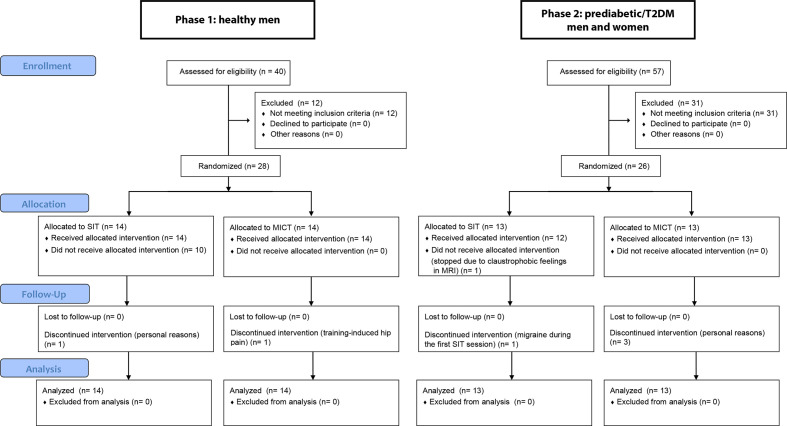
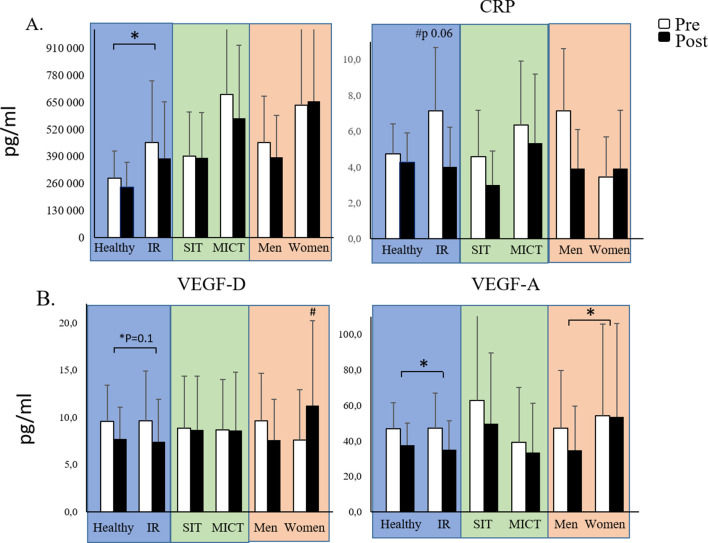
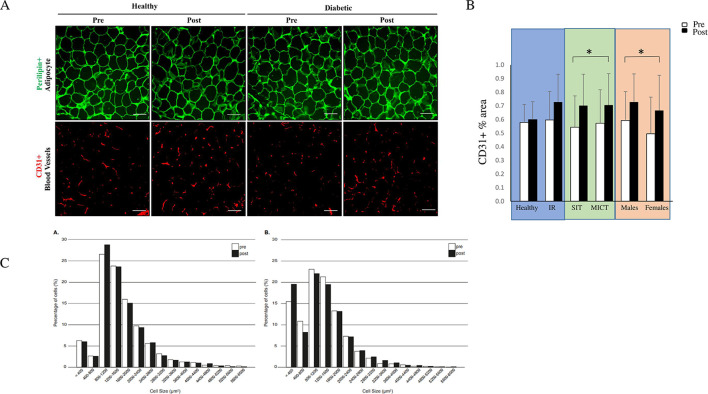
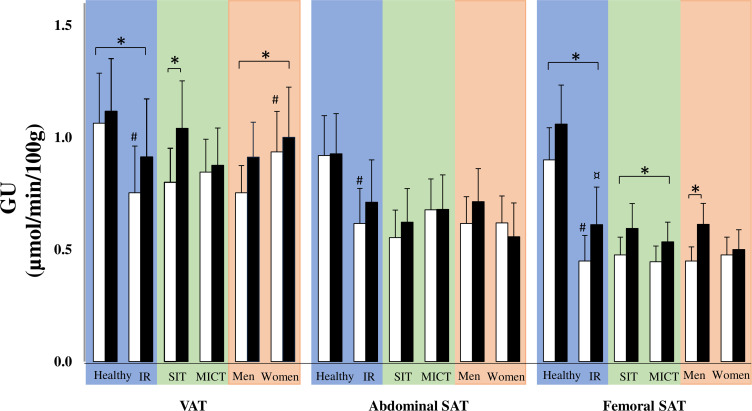
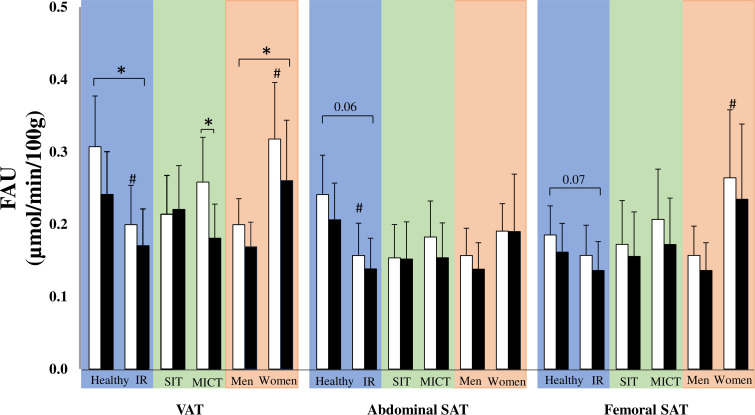
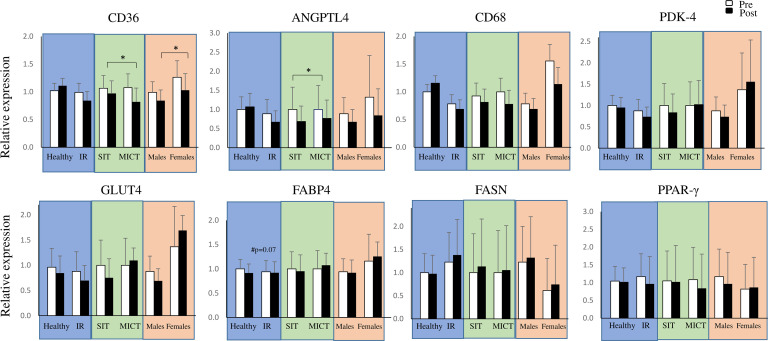
Introduction: We investigated the effects of a supervised progressive sprint interval training (SIT) and moderate-intensity continuous training (MICT) on adipocyte morphology and adipose tissue metabolism and function; we also tested whether the responses were similar regardless of baseline glucose tolerance and sex. Research design and methods: 26 insulin-resistant (IR) and 28 healthy participants were randomized into 2-week-long SIT (4–6×30 s at maximum effort) and MICT (40–60 min at 60% of maximal aerobic capacity (VO 2peak )). Insulin-stimulated glucose uptake and fasting-free fatty acid uptake in visceral adipose tissue (VAT), abdominal and femoral subcutaneous adipose tissues (SATs) were quantified with positron emission tomography. Abdominal SAT biopsies were collected to determine adipocyte morphology, gene expression markers of lipolysis, glucose and lipid metabolism and inflammation. Results: Training increased glucose uptake in VAT (p<0.001) and femoral SAT (p<0.001) and decreased fatty acid uptake in VAT (p=0.01) irrespective of baseline glucose tolerance and sex. In IR participants, training increased adipose tissue vasculature and decreased CD36 and ANGPTL4 gene expression in abdominal SAT. SIT was superior in increasing VO 2peak and VAT glucose uptake in the IR group, whereas MICT reduced VAT fatty acid uptake more than SIT. Conclusions: Short-term training improves adipose tissue metabolism both in healthy and IR participants independently of the sex. Adipose tissue angiogenesis and gene expression was only significantly affected in IR participants.
Overview
The claims and statistics of this paper haven’t been checked yet.
Free: it reads the open-access text and checks the first 5 claims that cite a source we can check. Create a free account to check every claim.
Integrity signals
Registry
Cites
Statistics
Figures

Verification
Claims the paper makes
The claims and statistics of this paper haven’t been checked yet.
Free: it reads the open-access text and checks the first 5 claims that cite a source we can check. Create a free account to check every claim.
Claims other papers make about this one
Each is checked against this paper’s own text: does it say what the citing paper says it does?
The source backs part of the claim, not all of it — or backs it for a different population, condition or comparison.
In the citing paper
“a study has shown that insulin sensitivity, measured as increased glucose uptake using PET–CT combined with hyperinsulinemic clamp, increases in VAT in response to HIIT, but not moderate-intensity training”
From Effect of Exercise Training on Fat Loss—Energetic Perspectives and the Role of Improved Adipose Tissue Function and Body Fat Distribution (2021) · cites this paper as Honkala et al., 2020
Experimental — accuracy not yet measured
Self-check
Percentages, sums and reported differences re-computed from the paper’s own numbers.
The self-check needs the paper’s full text.
Citations
Cites
Glucose clamp technique: a method for quantifying insulin secretion and resistance.
DeFronzo, R. A., Tobin, J. D., & Andres, R. (1979) · American Journal of Physiology-Endocrinology and Metabolism · doi:10.1152/ajpendo.1979.237.3.e214 · Cited by 7,425
CellProfiler: image analysis software for identifying and quantifying cell phenotypes
Carpenter, A. E., Jones, T. R., Lamprecht, M. R., Clarke, C., Kang, I. H., Friman, O., Guertin, D. A., Chang, J. H., Lindquist, R. A., Moffat, J., et al. (2006) · Genome Biology · doi:10.1186/gb-2006-7-10-r100 · Cited by 5,157
A PGC1-α-dependent myokine that drives brown-fat-like development of white fat and thermogenesis
Boström, P., Wu, J., Jedrychowski, M. P., Korde, A., Ye, L., Lo, J. C., Rasbach, K. A., Boström, E. A., Choi, J. H., Long, J. Z., et al. (2012) · Nature · doi:10.1038/nature10777 · Cited by 4,810
Mechanisms of fatty acid-induced inhibition of glucose uptake.
Boden, G., Chen, X., Ruiz, J., White, J. V., & Rossetti, L. (1994) · Journal of Clinical Investigation · doi:10.1172/jci117252 · Cited by 3,705
Subcutaneous and visceral adipose tissue: their relation to the metabolic syndrome
Wajchenberg, B. L. (2000) · Endocrine Reviews · doi:10.1210/edrv.21.6.0415 · Cited by 2,961
Classification and Diagnosis of Diabetes
Fajans, S. S. (1990) · Medical Entomology and Zoology · Cited by 2,359
Romijn, J. A., Coyle, E. F., Sidossis, L. S., Gastaldelli, A., Horowitz, J. F., Endert, E., & Wolfe, R. R. (1993) · American Journal of Physiology-Endocrinology and Metabolism · doi:10.1152/ajpendo.1993.265.3.e380 · Cited by 1,747 · cited 1×
“15 Sprint interval training (SIT) has been the focus of research as a time-saving training method and it has been suggested to be superior compared with moderate-intensity continuous training (MICT) in improving whole-body glucose metabolism and maximal aerobic capacity (VO 2peak ).”
2. Classification and Diagnosis of Diabetes
American Diabetes Association (2017) · Diabetes Care · doi:10.2337/dc17-s005 · Cited by 1,603
Adipose tissue dysfunction as determinant of obesity-associated metabolic complications
Longo, M., Zatterale, F., Naderi, J., Parrillo, L., Formisano, P., Raciti, G. A., Beguinot, F., & Miele, C. (2019) · International Journal of Molecular Sciences · doi:10.3390/ijms20092358 · Cited by 1,575
Angiogenesis and Inflammation in Peritoneal Dialysis: The Role of Adipocytes
Shi, J., Yu, M., & Sheng, M. (2017) · Kidney and Blood Pressure Research · doi:10.1159/000476017 · Cited by 1,403
Adipose Tissue Hypoxia in Obesity and Its Impact on Adipocytokine Dysregulation
Hosogai, N., Fukuhara, A., Oshima, K., Miyata, Y., Tanaka, S., Segawa, K., Furukawa, S., Tochino, Y., Komuro, R., Matsuda, M., et al. (2007) · Diabetes · doi:10.2337/db06-0911 · Cited by 1,257 · cited 1×
“This finding might be explained by higher muscle mass and pain tolerance in men, which allows men to push their limits further, especially during maximal effort in SIT training.”
Regional adiposity and morbidity.
Kissebah, A. H., & Krakower, G. R. (1994) · Physiological Reviews · doi:10.1152/physrev.1994.74.4.761 · Cited by 1,130
Gibala, M. J., Little, J. P., Van Essen, M., Wilkin, G. P., Burgomaster, K. A., Safdar, A., Raha, S., & Tarnopolsky, M. A. (2006) · The Journal of Physiology · doi:10.1113/jphysiol.2006.112094 · Cited by 1,082 · cited 1×
“The statistical significance level was set to 0.05, indicating that there is a 5% risk of finding a false positive result for a given variable.”
InfluentialBurgomaster, K. A., Hughes, S. C., Heigenhauser, G. J. F., Bradwell, S. N., & Gibala, M. J. (2005) · Journal of Applied Physiology · doi:10.1152/japplphysiol.01095.2004 · Cited by 856
Weyer, C., Foley, J. E., Bogardus, C., Tataranni, P. A., & Pratley, R. E. (2000) · Diabetologia · doi:10.1007/s001250051560 · Cited by 799 · cited 1×
“This finding might be explained by higher muscle mass and pain tolerance in men, which allows men to push their limits further, especially during maximal effort in SIT training.”
Little, J. P., Gillen, J. B., Percival, M. E., Safdar, A., Tarnopolsky, M. A., Punthakee, Z., Jung, M. E., & Gibala, M. J. (2011) · Journal of Applied Physiology · doi:10.1152/japplphysiol.00921.2011 · Cited by 787
Little, J. P., Safdar, A., Wilkin, G. P., Tarnopolsky, M. A., & Gibala, M. J. (2010) · The Journal of Physiology · doi:10.1113/jphysiol.2009.181743 · Cited by 667
Gregor, M. F., & Hotamisligil, G. S. (2007) · Journal of Lipid Research · doi:10.1194/jlr.r700007-jlr200 · Cited by 586
Immunology of Prion Protein and Prions
Mabbott, N. A. (2017) · Progress in molecular biology and translational science · doi:10.1016/bs.pmbts.2017.06.004 · Cited by 541
Progress in Molecular Biology and Translational Science
Mabbott, N. A. (2017) · Progress in molecular biology and translational science · Cited by 534
Gillen, J. B., & Gibala, M. J. (2014) · Applied Physiology, Nutrition, and Metabolism · doi:10.1139/apnm-2013-0187 · Cited by 493
Preis, S. R., Massaro, J. M., Robins, S. J., Hoffmann, U., Vasan, R. S., Irlbeck, T., Meigs, J. B., Sutherland, P., D'Agostino Sr, R. B., O'Donnell, C. J., et al. (2010) · Obesity · doi:10.1038/oby.2010.59 · Cited by 412
Physical Activity and Exercise in the Regulation of Human Adipose Tissue Physiology
Thompson, D., Karpe, F., Lafontan, M., & Frayn, K. (2012) · Physiological Reviews · doi:10.1152/physrev.00012.2011 · Cited by 402
Sex and depot differences in adipocyte insulin sensitivity and glucose metabolism
Macotela, Y., Boucher, J., Tran, T. T., & Kahn, C. R. (2009) · Diabetes · doi:10.2337/db08-1054 · Cited by 401 · cited 1×
“20 Thus, the present study examined in middle-aged, sedentary participants whether training responses are similar in different adipose tissues: 1.”
Bjørndal, B., Burri, L., Staalesen, V., Skorve, J., & Berge, R. K. (2011) · Journal of Obesity · doi:10.1155/2011/490650 · Cited by 369
McLaughlin, T., Sherman, A., Tsao, P., Gonzalez, O., Yee, G., Lamendola, C., Reaven, G. M., & Cushman, S. W. (2007) · Diabetologia · doi:10.1007/s00125-007-0708-y · Cited by 364
Exercise Effects on White Adipose Tissue: Beiging and Metabolic Adaptations
Stanford, K. I., Middelbeek, R. J. W., & Goodyear, L. J. (2015) · Diabetes · doi:10.2337/db15-0227 · Cited by 341
Virtanen, K. A., Lönnroth, P., Parkkola, R., Peltoniemi, P., Asola, M., Viljanen, T., Tolvanen, T., Knuuti, J., Rönnemaa, T., Huupponen, R., et al. (2002) · The Journal of Clinical Endocrinology & Metabolism · doi:10.1210/jc.87.8.3902 · Cited by 315 · cited 1×
“7 In addition, our previous clinical studies using positron emission tomography (PET) have shown that VAT is metabolically more active than SAT with both a higher glucose uptake 11 and fatty acid uptake.”
Self-citationRondinone, C. M., Wang, L.-M., Lonnroth, P., Wesslau, C., Pierce, J. H., & Smith, U. (1997) · Proceedings of the National Academy of Sciences · doi:10.1073/pnas.94.8.4171 · Cited by 298
Loss of abdominal fat and metabolic response to exercise training in obese women
Despres, J. P., Pouliot, M. C., Moorjani, S., Nadeau, A., Tremblay, A., Lupien, P. J., Theriault, G., & Bouchard, C. (1991) · American Journal of Physiology-Endocrinology and Metabolism · doi:10.1152/ajpendo.1991.261.2.e159 · Cited by 292
The effect of intensive endurance exercise training on body fat distribution in young and older men
Schwartz, R. S., Shuman, W. P., Larson, V., Cain, K. C., Fellingham, G. W., Beard, J. C., Kahn, S. E., Stratton, J. R., Cerqueira, M. D., & Abrass, I. B. (1991) · Metabolism · doi:10.1016/0026-0495(91)90239-s · Cited by 275
Galaup, A., Cazes, A., Le Jan, S., Philippe, J., Connault, E., Le Coz, E., Mekid, H., Mir, L. M., Opolon, P., Corvol, P., et al. (2006) · Proceedings of the National Academy of Sciences · doi:10.1073/pnas.0609025103 · Cited by 252
Dysfunctional fat cells, lipotoxicity and type 2 diabetes
Defronzo, R. A. (2004) · International Journal of Clinical Practice · doi:10.1111/j.1368-504x.2004.00389.x · Cited by 236 · cited 1×
“This finding might be explained by higher muscle mass and pain tolerance in men, which allows men to push their limits further, especially during maximal effort in SIT training.”
Substrate utilization during exercise in active people
Coyle, E. (1995) · The American Journal of Clinical Nutrition · doi:10.1093/ajcn/61.4.968s · Cited by 236
Adipocyte size as a determinant of metabolic disease and adipose tissue dysfunction
Laforest, S., Labrecque, J., Michaud, A., Cianflone, K., & Tchernof, A. (2015) · Critical Reviews in Clinical Laboratory Sciences · doi:10.3109/10408363.2015.1041582 · Cited by 214
Adipocyte size predicts incidence of type 2 diabetes in women
Lönn, M., Mehlig, K., Bengtsson, C., & Lissner, L. (2010) · The FASEB Journal · doi:10.1096/fj.09-133058 · Cited by 207
Vitamin A Deficiency after Gastric Bypass Surgery: An Underreported Postoperative Complication
Zalesin, K. C., Miller, W. M., Franklin, B., Mudugal, D., Rao Buragadda, A., Boura, J., Nori-Janosz, K., Chengelis, D. L., Krause, K. R., & McCullough, P. A. (2011) · Journal of Obesity · doi:10.1155/2011/760695 · Cited by 199
The effect of insulin upon glucose metabolism by adipose cells of different size
Salans, L. B., & Dougherty, J. W. (1971) · Journal of Clinical Investigation · doi:10.1172/jci106623 · Cited by 182
Trevellin, E., Scorzeto, M., Olivieri, M., Granzotto, M., Valerio, A., Tedesco, L., Fabris, R., Serra, R., Quarta, M., Reggiani, C., et al. (2014) · Diabetes · doi:10.2337/db13-1234 · Cited by 177
Després, J. P., Bouchard, C., Savard, R., Tremblay, A., Marcotte, M., & Thériault, G. (1984) · Metabolism · doi:10.1016/0026-0495(84)90043-x · Cited by 167
Bonen, A., Tandon, N. N., Glatz, J. F. C., Luiken, J. J. F. P., & Heigenhauser, G. J. F. (2006) · International Journal of Obesity · doi:10.1038/sj.ijo.0803212 · Cited by 167
Effects of exercise training on in vivo insulin action in individual tissues of the rat.
James, D. E., Kraegen, E. W., & Chisholm, D. J. (1985) · Journal of Clinical Investigation · doi:10.1172/jci112019 · Cited by 146
Heiskanen, M. A., Motiani, K. K., Mari, A., Saunavaara, V., Eskelinen, J.-J., Virtanen, K. A., Koivumäki, M., Löyttyniemi, E., Nuutila, P., Kalliokoski, K. K., et al. (2018) · Diabetologia · doi:10.1007/s00125-018-4627-x · Cited by 142
Self-citationExercise and the Regulation of Adipose Tissue Metabolism
Tsiloulis, T., & Watt, M. J. (2015) · Progress in molecular biology and translational science · doi:10.1016/bs.pmbts.2015.06.016 · Cited by 117
Improved insulin action in muscle, liver, and adipose tissue in physically trained human subjects
Rodnick, K. J., Haskell, W. L., Swislocki, A. L., Foley, J. E., & Reaven, G. M. (1987) · American Journal of Physiology-Endocrinology and Metabolism · doi:10.1152/ajpendo.1987.253.5.e489 · Cited by 107
Effect of training on insulin sensitivity of glucose uptake and lipolysis in human adipose tissue
Stallknecht, B., Larsen, J. J., Mikines, K. J., Simonsen, L., Bülow, J., & Galbo, H. (2000) · American Journal of Physiology-Endocrinology and Metabolism · doi:10.1152/ajpendo.2000.279.2.e376 · Cited by 90
Adaptation of fat cells to exercise: response of glucose uptake and oxidation to insulin
Craig, B. W., Hammons, G. T., Garthwaite, S. M., Jarett, L., & Holloszy, J. O. (1981) · Journal of Applied Physiology · doi:10.1152/jappl.1981.51.6.1500 · Cited by 89
Schenau, G. J. V. I. (1988) · Human Movement Science · doi:10.1016/0167-9457(88)90006-1 · Cited by 88
Cardiac Autonomic Function and High-Intensity Interval Training in Middle-Age Men
KIVINIEMI, A. M., TULPPO, M. P., ESKELINEN, J. J., SAVOLAINEN, A. M., KAPANEN, J., HEINONEN, I. H. A., HUIKURI, H. V., HANNUKAINEN, J. C., & KALLIOKOSKI, K. K. (2014) · Medicine & Science in Sports & Exercise · doi:10.1249/mss.0000000000000307 · Cited by 84
Self-citationRole of the sympathoadrenergic system in adipose tissue metabolism during exercise in humans
Stallknecht, B., Lorentsen, J., Enevoldsen, L. H., Bülow, J., Biering‐Sørensen, F., Galbo, H., & Kjær, M. (2001) · The Journal of Physiology · doi:10.1111/j.1469-7793.2001.00283.x · Cited by 82
Stinkens, R., Brouwers, B., Jocken, J. W., Blaak, E. E., Teunissen-Beekman, K. F., Hesselink, M. K., van Baak, M. A., Schrauwen, P., & Goossens, G. H. (2018) · Journal of Applied Physiology · doi:10.1152/japplphysiol.00496.2018 · Cited by 69
Adipose tissue blood flow during prolonged, heavy exercise
B�low, J., & Madsen, J. (1976) · Pflügers Archiv - European Journal of Physiology · doi:10.1007/bf00594606 · Cited by 67
The Effect of Exercise on Obesity, Body Fat Distribution and Risk for Type 2 Diabetes
Goedecke, J. H., & Micklesfield, L. K. (2014) · Medicine and Sport Science · doi:10.1159/000357338 · Cited by 60
Eskelinen, J., HEINONEN, I. H. A., Löyttyniemi, E., Saunavaara, V., Kirjavainen, A. K., Virtanen, K. A., Hannukainen, J. C., & Kalliokoski, K. K. (2015) · Journal of Applied Physiology · doi:10.1152/japplphysiol.01122.2014 · Cited by 59
Self-citationReichkendler, M. H., Auerbach, P., Rosenkilde, M., Christensen, A. N., Holm, S., Petersen, M. B., Lagerberg, A., Larsson, H. B. W., Rostrup, E., Mosbech, T. H., et al. (2013) · American Journal of Physiology-Endocrinology and Metabolism · doi:10.1152/ajpendo.00128.2013 · Cited by 59
Cullberg, K., Christiansen, T., Paulsen, S., Bruun, J., Pedersen, S., & Richelsen, B. (2013) · Obesity · doi:10.1002/oby.20060 · Cited by 58 · cited 1×
“This finding might be explained by higher muscle mass and pain tolerance in men, which allows men to push their limits further, especially during maximal effort in SIT training.”
Higher Free Fatty Acid Uptake in Visceral Than in Abdominal Subcutaneous Fat Tissue in Men
Hannukainen, J. C., Kalliokoski, K. K., Borra, R. J. M., Viljanen, A. P. M., Janatuinen, T., Kujala, U. M., Kaprio, J., Heinonen, O. J., Viljanen, T., Haaparanta, M., et al. (2010) · Obesity · doi:10.1038/oby.2009.267 · Cited by 57
Self-citationJust HIT it! A time-efficient exercise strategy to improve muscle insulin sensitivity: Perspectives
Gibala, M. J., & Little, J. P. (2010) · The Journal of Physiology · doi:10.1113/jphysiol.2010.196303 · Cited by 54
Nuutila, P., Peltoniemi, P., Oikonen, V, Larmola, K., Kemppainen, J., Takala, T., Sipilä, H., Oksanen, A., Ruotsalainen, U., Bolli, G. B., et al. (2000) · Diabetes · doi:10.2337/diabetes.49.7.1084 · Cited by 53
Self-citationLee-Ødegård, S., Norheim, F., Langleite, T. M., Gulseth, H. L., Birkeland, K. I., & Drevon, C. A. (2019) · Diabetologia · doi:10.1007/s00125-019-4866-5 · Cited by 53
Dadson, P., Ferrannini, E., Landini, L., Hannukainen, J. C., Kalliokoski, K. K., Vaittinen, M., Honka, H., Karlsson, H. K., Tuulari, J. J., Soinio, M., et al. (2017) · American Journal of Physiology-Endocrinology and Metabolism · doi:10.1152/ajpendo.00044.2017 · Cited by 50
Self-citationSjöros, T. J., Heiskanen, M. A., Motiani, K. K., Löyttyniemi, E., Eskelinen, J., Virtanen, K. A., Savisto, N. J., Solin, O., Hannukainen, J. C., & Kalliokoski, K. K. (2018) · Scandinavian Journal of Medicine & Science in Sports · doi:10.1111/sms.12875 · Cited by 46
Self-citationKahn, B. B. (1992) · Journal of Cellular Biochemistry · doi:10.1002/jcb.240480203 · Cited by 39
Exercise Training Reduces Intrathoracic Fat Regardless of Defective Glucose Tolerance
HONKALA, S. M., MOTIANI, K. K., ESKELINEN, J.-J., SAVOLAINEN, A., SAUNAVAARA, V., VIRTANEN, K. A., LÖYTTYNIEMI, E., KAPANEN, J., KNUUTI, J., KALLIOKOSKI, K. K., et al. (2017) · Medicine & Science in Sports & Exercise · doi:10.1249/mss.0000000000001232 · Cited by 35
Self-citationEffect of physical training on glucose transporter protein and mRNA levels in rat adipocytes
Stallknecht, B., Andersen, P. H., Vinten, J., Bendtsen, L. L., Sibbersen, J., Pedersen, O., & Galbo, H. (1993) · American Journal of Physiology-Endocrinology and Metabolism · doi:10.1152/ajpendo.1993.265.1.e128 · Cited by 33
Motiani, K. K., Savolainen, A., Toivanen, J., Eskelinen, J., Yli-Karjanmaa, M., Virtanen, K. A., Saunavaara, V., Heiskanen, M. A., Parkkola, R., Haaparanta‐Solin, M., et al. (2019) · Journal of Applied Physiology · doi:10.1152/japplphysiol.00900.2018 · Cited by 30
Self-citationEskelinen, J., Heinonen, I., Löyttyniemi, E., Hakala, J., Heiskanen, M. A., Motiani, K. K., Virtanen, K., Pärkkä, J. P., Knuuti, J., Hannukainen, J. C., et al. (2016) · The Journal of Physiology · doi:10.1113/jp273089 · Cited by 29
Self-citationBucci, M., Karmi, A., Iozzo, P., Fielding, B. A., Viljanen, A. P. M., Badeau, R. M., Borra, R., Saunavaara, V., Pham, T. T., Hannukainen, J. C., et al. (2014) · Diabetologia · doi:10.1007/s00125-014-3402-x · Cited by 27
Self-citationAutonomic Function Predicts Fitness Response to Short-Term High-Intensity Interval Training
Kiviniemi, A. M., Tulppo, M. P., Eskelinen, J., Savolainen, A., Kapanen, J., HEINONEN, I. H. A., Hautala, A. J., Hannukainen, J. C., & Kalliokoski, K. K. (2015) · International Journal of Sports Medicine · doi:10.1055/s-0035-1549854 · Cited by 27
Self-citationHeiskanen, M. A., Leskinen, T., HEINONEN, I. H. A., Löyttyniemi, E., Eskelinen, J., Virtanen, K. A., Hannukainen, J. C., & Kalliokoski, K. K. (2016) · American Journal of Physiology-Heart and Circulatory Physiology · doi:10.1152/ajpheart.00399.2016 · Cited by 27
Self-citationMacronutrient metabolism of adipose tissue at rest and during exercise: a methodological viewpoint
Frayn, K. N. (1999) · Proceedings of The Nutrition Society · doi:10.1017/s0029665199001184 · Cited by 19
Stanford, K. I., Middelbeek, R. J. W., & Goodyear, L. J. (2015) · Diabetes · doi:10.2337/db15-er09 · Cited by 6
Research works printed but not linked: 1
- Sjöros TJ, Heiskanen MA, Motiani KK, et al. Increased insulin- stimulated glucose uptake in both leg and arm muscles after sprint interval and moderate-intensity training in subjects with type 2 diabetes or prediabetes. Scand J Med Sci Sports 2018;28:77-87. · DOI · Paper page
Cited by
Exercise Induces Tissue-Specific Adaptations to Enhance Cardiometabolic Health
Ashcroft, S. P., Stocks, B., Egan, B., & Zierath, J. R. (2024) · Cell Metabolism · doi:10.1016/j.cmet.2023.12.008 · Cited by 149
Kolnes, K. J., Petersen, M. H., Lien-Iversen, T., Højlund, K., & Jensen, J. (2021) · Frontiers in Physiology · doi:10.3389/fphys.2021.737709 · Cited by 112
Interactions between insulin and exercise
Richter, E. A., Sylow, L., & Hargreaves, M. (2021) · Biochemical Journal · doi:10.1042/bcj20210185 · Cited by 99
The Role of Exercise, Diet, and Cytokines in Preventing Obesity and Improving Adipose Tissue
Atakan, M. M., Koşar, Ş. N., Güzel, Y., Tin, H. T., & Yan, X. (2021) · Nutrients · doi:10.3390/nu13051459 · Cited by 87
Capillary Rarefaction in Obesity and Metabolic Diseases—Organ-Specificity and Possible Mechanisms
Paavonsalo, S., Hariharan, S., Lackman, M. H., & Karaman, S. (2020) · Cells · doi:10.3390/cells9122683 · Cited by 78
Metadata
- Authors
- Honkala, S. M., Motiani, P., Kivelä, R., Hemanthakumar, K. A., Tolvanen, E., Motiani, K. K., Eskelinen, J.-J., Virtanen, K. A., Kemppainen, J., Heiskanen, M. A., Löyttyniemi, E., Nuutila, P., Kalliokoski, K. K., & Hannukainen, J. C.
- Affiliations
- University of Turku (FI)
- University of Helsinki (FI)
- Corresponding author
- Hannukainen, Jarna Christina
- ORCID
- Venue
- BMJ Open Diabetes Research & Care
- Publisher
- BMJ
- Published
- 2020-08
- Volume
- 8
- Issue
- 1
- Pages
- e000830
- ISSN
- 2052-4897 (ISSN-L)
- PMC
- PMC7437884
- OpenAlex
- W3072653957
- Cited by
- 37
- References
- 71
- Citations by year
- 2026: 5 · 2025: 4 · 2024: 7 · 2023: 10 · 2022: 4 · 2021: 6 · 2020: 1
- FWCI
- 3.16
- Type
- journal article
- Language
- en
- Open access
- gold
- doi.org
- Licence
- Locations
- BMJ Open Diabetes Research & Care (publishedVersion, cc-by-nc)
- PubMed Central (publishedVersion, cc-by-nc)
- PubMed (publishedVersion)
- UTUPub (University of Turku) (submittedVersion)
- Työväentutkimus Vuosikirja (submittedVersion)
- Funders
- Sigrid Juséliuksen Säätiö
- Jenny ja Antti Wihurin Rahasto
- Orionin Tutkimussäätiö
- Hospital district of Southwest Finland
- Turku University Foundation
- Paulon Säätiö
- Suomen Kulttuurirahasto
- Suomen Lääketieteen Säätiö
- Novo Nordisk
- Ministry of Education of the State of Finland
- Academy of Finland (251399, 251572, 256470, 281440, 283319, 297245)
- Finnish Diabetes Foundation
- Paavo Nurmen Säätiö
- Emil Aaltosen Säätiö
- European Foundation for the Study of Diabetes
- Topics
- Health Sciences › Medicine › Physiology (medical) › Adipose Tissue and Metabolism
- Health Sciences › Medicine › Endocrinology, Diabetes and Metabolism › Adipokines, Inflammation, and Metabolic Diseases
- Health Sciences › Medicine › Physiology (medical) › Cardiovascular and exercise physiology
- Keywords
- sprint interval training, moderate-intensity continuous training, adipose tissue metabolism, insulin resistance, glucose uptake, fatty acid uptake, adipose tissue angiogenesis, adipocyte morphology, visceral adipose tissue, subcutaneous adipose tissue, lipolysis, CD36, ANGPTL4, sex differences, exercise training
- MeSH terms
- Adipose Tissue, Glucose, Humans, Insulin, Insulin Resistance, Exercise
About these checks
Registry, retraction, Cites and statistics results are computed, not judged, with one exception: a printed reference that no index lists is read once by a model before it counts as a citation error. Claims are extracted by a model and kept only when their quote appears verbatim in the text; each cited source is then checked, with a model’s help, for whether it says what the claim relies on. Those verdicts can be wrong — read the claim’s quote and the cited source before relying on one.
Statistics and arithmetic are recomputed, not judged.
Confidence bands are shown only for fields calibrated on our annotated test set. None is calibrated yet, so no band is shown.
What counts as a claim ›How we measure confidence ›How we check this ›
Are you an author, or do you see a problem with this page? Request a review
Data sources
Bibliographic data: Semantic Scholar, OpenAlex, Crossref.
Contains information from the Semantic Scholar Academic Graph Datasets, made available under the ODC Attribution License (ODC-BY 1.0).
Semantic Scholar’s data is described in: Kinney, R., et al. (2023). The Semantic Scholar Open Data Platform. arXiv:2301.10140.
