

Demystifying theory and its use in improvement
Open accessThe DOI matches its Crossref record; 77 of the 81 references it cites were found in a registry or an index; 18 of the 87 sources its claims cite were checked for support.
Abstract
The role and value of theory in improvement work in healthcare has been seriously underrecognised. We join others in proposing that more informed use of theory can strengthen improvement programmes and facilitate the evaluation of their effectiveness. Many professionals, including improvement practitioners, are unfortunately mystified—and alienated—by theory, which discourages them from using it in their work. In an effort to demystify theory we make the point in this paper that, far from being discretionary or superfluous, theory (‘reason-giving’), both informal and formal, is intimately woven into virtually all human endeavour. We explore the special characteristics of grand, mid-range and programme theory; consider the consequences of misusing theory or failing to use it; review the process of developing and applying programme theory; examine some emerging criteria of ‘good’ theory; and emphasise the value, as well as the challenge, of combining informal experience-based theory with formal, publicly developed theory. We conclude that although informal theory is always at work in improvement, practitioners are often not aware of it or do not make it explicit. The germane issue for improvement practitioners, therefore, is not whether they use theory but whether they make explicit the particular theory or theories, informal and formal, they actually use.
Overview
CoChat Summary
## TL;DR
The paper argues that theory is not optional in healthcare improvement: practitioners always use some theory, but it is often implicit, so the key is making it explicit and combining informal experience-based theory with formal theory. It contends that doing so strengthens intervention design, evaluation, learning, and replication.
## Key findings
- Improvement efforts often “move straight to implementation,” skipping programme theory, and are commonly launched without a good outcome measurement plan or baseline data for meaningful time-series analyses.
- A well-formulated programme theory clarifies programme components, mechanisms, intended outcomes, measurement tools, analytical approaches, and data collection standards.
- The paper reports that in one DVT prophylaxis project, the intervention increased performance to the Veterans Administration External Peer Review Programme national target; in the example of corticosteroid adoption, use rose 68% in hospitals receiving usual word-of-mouth dissemination and 113% in hospitals receiving an active dissemination intervention.
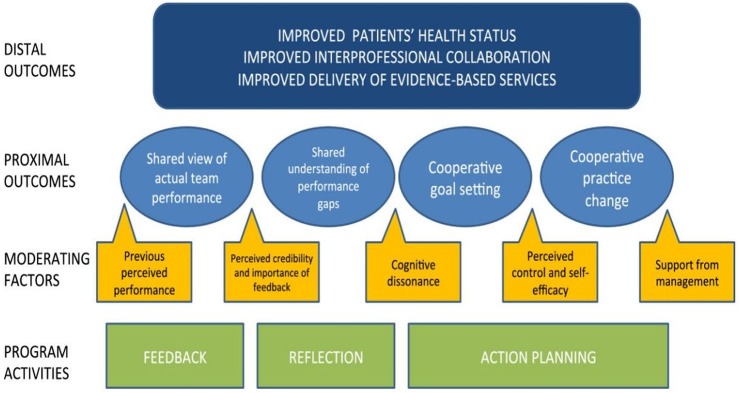
- The authors note that an updated review of audit-and-feedback interventions found they were demonstrably effective when explicit targets and action plans were included.
## Methods
- Conceptual, argumentative paper rather than an empirical study; it synthesizes and discusses theory types, theory use, and programme theory in improvement work.
- Uses illustrative examples and prior studies/reviews, including DVT prophylaxis, antenatal corticosteroid adoption, rapid response teams, audit and feedback, and behaviour change theory.
- Discusses theory development and application through narrative examples, logic models, and cited consensus criteria for theory quality.
## Limitations
- The paper itself does not report original data or a formal systematic review, so its claims are interpretive and illustrated rather than newly tested here.
- It states that criteria for “good” theory in improvement are “still very much a work in progress.”
- Evident from the text: many examples are drawn from other studies and reviews, so conclusions depend on the quality and context of those cited sources.
Model-written summary. Check it against the paper before relying on it.
Integrity signals
Registry
Cites
Statistics
Figures
Verification
Claims the paper makes
8 Valid · 1 Not valid · 41 Not checked · 16 Own results and interpretations
The sources with a verdict support this claim; the rest weren’t checked yet, have no full text we could read, or their verdicts aren’t rated yet.
In the paper
“In this article, we join others in arguing that the explicit application of theory could shorten the time needed to develop improvement interventions, optimise their design, identify conditions of context necessary for their success, and enhance learning from those efforts.4–9”
§ Demystifying theory and its use in improvement > Introduction Initiatives to improve quality and safety in healthcare all too frequently result in limited changes for the better or no meaningful changes at all, and the few that are successful are often hard to sustain or replicate in new contexts.1 Many of the difficulties of securing improvement lie in the enormous complexity of healthcare delivery systems, including their challenging technical, social, institutional and political contexts.2 But some challenges can be attributed to the persistent failure to take full advantage of informal and formal theory in planning and executing improvement efforts.3 It is of course possible to achieve high levels of quality and safety on the basis of intuition derived from experience alone, with little evident help from formal theory. The few successful examples that exist do not, however, help to build a science. In this article, we join others in arguing that the explicit application of theory could shorten the time needed to develop improvement interventions, optimise their design, identify conditions of context necessary for their success, and enhance learning from those efforts.4–9 The need for more effective use of formal theory in improvement is increasingly pressing, because personal intuition is often biased, distorted and limited in scope10 and the application of formal theory enables the maximum exploitation of learning and accumulation of knowledge, and promotes the transfer of learning from one project, one context, one challenge, to the next. We are concerned in this article with demystifying the nature of theory and making clear its many and various roles in carrying out and evaluating improvement, not with the place of theory in the vast (and often contentious) body of literature on the philosophy of science.
What the sources say
- Not checked yetcites [4] Foy R, Ovretveit J, Shekelle PG, et al The role of theory in research to develop and evaluate the implementation of patient safety practices. Qual Saf Health Care 2011; 20: 453– 9. 10.1136/bmjqs.2010.047993 21317181 source
- Supportedcites [5] Improved Clinical Effectiveness through Behavioural Research Group (ICEBeRG). Designing theoretically-informed implementation interventions. Implement Sci 2006; 1: 4 10.1186/1748-5908-1-4 16722571 PMC1436012 source
The Introduction says a theoretical approach informs the development and delivery of interventions. Its discussion of using theory to develop implementation interventions also contrasts theory-informed design with choosing interventions merely because they have been used before or seem feasible. This supports the qualified claim that explicit theory could optimise intervention design. (LLM, conf=0.91)
- Supportedcites [6] Grol RPTM, Bosch MC, Hulscher MEJL, et al Planning and studying improvement in patient care: the use of theoretical perspectives. Milbank Q 2007; 85: 93– 138. 10.1111/j.1468-0009.2007.00478.x 17319808 PMC2690312 source
In Conclusions and Discussion, the authors say that using theoretical assumptions should enable researchers and change agents to design better programs to improve patient care. This supports the claim that explicit use of theory could optimise intervention design. (LLM, conf=0.93)
- Not checked yetcites [7] Grol R, Wensing M, Eccles M, et al eds. Improving patient care: the implementation of change in health care. Hoboken, NJ: John Wiley & Sons, 2013. source
- Supportedcites [8] French SD, Green SE, O'Connor DA, et al Developing theory-informed behaviour change interventions to implement evidence into practice: a systematic approach using the theoretical domains framework. Implement Sci 2012; 7: 38 10.1186/1748-5908-7-38 22531013 PMC3443064 source
The Background recommends using theory to inform the design of implementation interventions, particularly where intervention choice lacks an explicit rationale. The Discussion says the authors’ theory-based method helps select intervention components using theory and empirical research. Together, these support the hedged claim that explicit use of theory could optimise intervention design. (LLM, conf=0.90)
- Supportedcites [9] Marshall M, Pronovost P, Dixon-Woods M Promotion of improvement as a science. Lancet 2013; 381: 419– 21. 10.1016/S0140-6736(12)61850-9 23374480 source
In “The science of improvement,” the paper says improvement efforts should be based on good theory and criticises interventions designed without prior learning or explicit assumptions about how change will occur. This supports the attributed point that applying theory could improve intervention design. (LLM, conf=0.92)
hedgedstates a possible cause- Asserted: passes — The authors put it forward as true.
- Checkable: unclear — It is unclear whether it could be checked against evidence.
- Load-bearing: passes — The paper’s conclusions depend on it.
- Based: passes — The paper gives a reason why it holds.
The sources with a verdict support this claim; the rest weren’t checked yet, have no full text we could read, or their verdicts aren’t rated yet.
In the paper
“In this article, we join others in arguing that the explicit application of theory could shorten the time needed to develop improvement interventions, optimise their design, identify conditions of context necessary for their success, and enhance learning from those efforts.4–9”
§ Demystifying theory and its use in improvement > Introduction Initiatives to improve quality and safety in healthcare all too frequently result in limited changes for the better or no meaningful changes at all, and the few that are successful are often hard to sustain or replicate in new contexts.1 Many of the difficulties of securing improvement lie in the enormous complexity of healthcare delivery systems, including their challenging technical, social, institutional and political contexts.2 But some challenges can be attributed to the persistent failure to take full advantage of informal and formal theory in planning and executing improvement efforts.3 It is of course possible to achieve high levels of quality and safety on the basis of intuition derived from experience alone, with little evident help from formal theory. The few successful examples that exist do not, however, help to build a science. In this article, we join others in arguing that the explicit application of theory could shorten the time needed to develop improvement interventions, optimise their design, identify conditions of context necessary for their success, and enhance learning from those efforts.4–9 The need for more effective use of formal theory in improvement is increasingly pressing, because personal intuition is often biased, distorted and limited in scope10 and the application of formal theory enables the maximum exploitation of learning and accumulation of knowledge, and promotes the transfer of learning from one project, one context, one challenge, to the next. We are concerned in this article with demystifying the nature of theory and making clear its many and various roles in carrying out and evaluating improvement, not with the place of theory in the vast (and often contentious) body of literature on the philosophy of science.
What the sources say
- Not checked yetcites [4] Foy R, Ovretveit J, Shekelle PG, et al The role of theory in research to develop and evaluate the implementation of patient safety practices. Qual Saf Health Care 2011; 20: 453– 9. 10.1136/bmjqs.2010.047993 21317181 source
- Supportedcites [5] Improved Clinical Effectiveness through Behavioural Research Group (ICEBeRG). Designing theoretically-informed implementation interventions. Implement Sci 2006; 1: 4 10.1186/1748-5908-1-4 16722571 PMC1436012 source
The Introduction says explicit use of theoretically informed interventions should improve evaluations of what does and does not work. The Conclusion adds that theory can help accumulate generalizable knowledge about why interventions succeed or fail, supporting the claim that it could enhance learning from improvement efforts. (LLM, conf=0.92)
- Supportedcites [6] Grol RPTM, Bosch MC, Hulscher MEJL, et al Planning and studying improvement in patient care: the use of theoretical perspectives. Milbank Q 2007; 85: 93– 138. 10.1111/j.1468-0009.2007.00478.x 17319808 PMC2690312 source
In “The Need for Theory-Informed Research” (page not specified), the paper says that making theoretical assumptions explicit offers a generalizable way to assess effectiveness and that more theory-driven research should help identify the best approaches. It also says such research should improve understanding of how change in health care works, supporting the claim that theory could enhance learning from improvement efforts. (LLM, conf=0.91)
- Not checked yetcites [7] Grol R, Wensing M, Eccles M, et al eds. Improving patient care: the implementation of change in health care. Hoboken, NJ: John Wiley & Sons, 2013. source
- Supportedcites [8] French SD, Green SE, O'Connor DA, et al Developing theory-informed behaviour change interventions to implement evidence into practice: a systematic approach using the theoretical domains framework. Implement Sci 2012; 7: 38 10.1186/1748-5908-7-38 22531013 PMC3443064 source
The Discussion says theory-informed intervention design enables further exploration of how intervention components relate to effects. The Conclusions add that making hypothesised mechanisms of change explicit allows researchers to investigate them, supporting the claim that theory could enhance learning from improvement efforts. (LLM, conf=0.88)
- Supportedcites [9] Marshall M, Pronovost P, Dixon-Woods M Promotion of improvement as a science. Lancet 2013; 381: 419– 21. 10.1016/S0140-6736(12)61850-9 23374480 source
In the section discussing theory in improvement science (page not available), the paper says improvement efforts should be based on good theory and that their hypothesised mechanisms of change should be made explicit. Box 2 (page not available) links revealing those mechanisms to theoretical development and learning, supporting the claim that explicit use of theory could enhance learning from improvement efforts. (LLM, conf=0.90)
hedgedstates a possible cause- Asserted: passes — The authors put it forward as true.
- Checkable: unclear — It is unclear whether it could be checked against evidence.
- Load-bearing: passes — The paper’s conclusions depend on it.
- Based: passes — The paper gives a reason why it holds.
The cited sources support only part of this claim — read each source’s verdict below.
In the paper
“In this article, we join others in arguing that the explicit application of theory could shorten the time needed to develop improvement interventions, optimise their design, identify conditions of context necessary for their success, and enhance learning from those efforts.4–9”
§ Demystifying theory and its use in improvement > Introduction Initiatives to improve quality and safety in healthcare all too frequently result in limited changes for the better or no meaningful changes at all, and the few that are successful are often hard to sustain or replicate in new contexts.1 Many of the difficulties of securing improvement lie in the enormous complexity of healthcare delivery systems, including their challenging technical, social, institutional and political contexts.2 But some challenges can be attributed to the persistent failure to take full advantage of informal and formal theory in planning and executing improvement efforts.3 It is of course possible to achieve high levels of quality and safety on the basis of intuition derived from experience alone, with little evident help from formal theory. The few successful examples that exist do not, however, help to build a science. In this article, we join others in arguing that the explicit application of theory could shorten the time needed to develop improvement interventions, optimise their design, identify conditions of context necessary for their success, and enhance learning from those efforts.4–9 The need for more effective use of formal theory in improvement is increasingly pressing, because personal intuition is often biased, distorted and limited in scope10 and the application of formal theory enables the maximum exploitation of learning and accumulation of knowledge, and promotes the transfer of learning from one project, one context, one challenge, to the next. We are concerned in this article with demystifying the nature of theory and making clear its many and various roles in carrying out and evaluating improvement, not with the place of theory in the vast (and often contentious) body of literature on the philosophy of science.
What the sources say
- Not checked yetcites [4] Foy R, Ovretveit J, Shekelle PG, et al The role of theory in research to develop and evaluate the implementation of patient safety practices. Qual Saf Health Care 2011; 20: 453– 9. 10.1136/bmjqs.2010.047993 21317181 source
- Supportedcites [5] Improved Clinical Effectiveness through Behavioural Research Group (ICEBeRG). Designing theoretically-informed implementation interventions. Implement Sci 2006; 1: 4 10.1186/1748-5908-1-4 16722571 PMC1436012 source
The Conclusion (page not supplied) says that applying a small number of theories and building expertise in their use could streamline intervention development. It also describes drawing on expertise from other disciplines as a way to fast-track the process, supporting the citing sentence’s qualified claim that theory could shorten development time. (LLM, conf=0.91)
- Could not verifycites [6] Grol RPTM, Bosch MC, Hulscher MEJL, et al Planning and studying improvement in patient care: the use of theoretical perspectives. Milbank Q 2007; 85: 93– 138. 10.1111/j.1468-0009.2007.00478.x 17319808 PMC2690312 sourceExperimental — accuracy not yet measured
The Need for Theory-Informed Research (page unavailable) says explicit theoretical assumptions can help researchers choose effective approaches. Conclusions and Discussion (page unavailable) says theories can help design better improvement programs. Neither section addresses whether using theory shortens the time needed to develop interventions; searches for shorter or faster development found no supporting passage. (LLM, conf=0.72)
- Not checked yetcites [7] Grol R, Wensing M, Eccles M, et al eds. Improving patient care: the implementation of change in health care. Hoboken, NJ: John Wiley & Sons, 2013. source
- Partly supportedcites [8] French SD, Green SE, O'Connor DA, et al Developing theory-informed behaviour change interventions to implement evidence into practice: a systematic approach using the theoretical domains framework. Implement Sci 2012; 7: 38 10.1186/1748-5908-7-38 22531013 PMC3443064 sourceExperimental — accuracy not yet measured
The Conclusions propose a streamlined, theory-informed approach to intervention development, which supports the general idea of simplifying the process. But the paper does not say that applying theory shortens development time; the Discussion’s “Potential limitations of this method” instead says the method requires considerable time and reports a 12-month development process. No page numbers are available in our copy. (LLM, conf=0.77)
- Partly supportedcites [9] Marshall M, Pronovost P, Dixon-Woods M Promotion of improvement as a science. Lancet 2013; 381: 419– 21. 10.1016/S0140-6736(12)61850-9 23374480 sourceExperimental — accuracy not yet measured
In the section on the science of improvement (page unavailable), the paper says interventions should be based on good theory and prior learning, supporting the value of theory in their design. It does not say that explicitly applying theory could shorten the time needed to develop them. (LLM, conf=0.78)
hedgedstates a possible cause- Asserted: passes — The authors put it forward as true.
- Checkable: passes — It can be checked against evidence.
- Load-bearing: passes — The paper’s conclusions depend on it.
- Based: passes — The paper gives a reason why it holds.
The cited sources support only part of this claim — read each source’s verdict below.
In the paper
“Improvement interventions are also commonly launched without either a good outcome measurement plan or the baseline data required for meaningful time-series analyses.34–36”
§ Demystifying theory and its use in improvement > The consequences of failing to use theory or misusing it
What the sources say
- Not checked yetcites [34] Pronovost PJ, Miller M, Wachter RM The GAAP in quality measurement and reporting. JAMA 2007; 298: 1800– 2. 10.1001/jama.298.15.1800 17940238 source
- Partly supportedcites [35] Provost LP Analytical studies: a framework for quality improvement design and analysis. BMJ Qual Saf 2011; 20 (Suppl 1): i92– 6. 10.1136/bmjqs.2011.051557 PMC3066849 21450782 sourceExperimental — accuracy not yet measured
The Discussion recommends repeated measurements over time, and Scenario 5 illustrates analysis using baseline and postintervention data. These passages support the importance of measurement and baseline data, but they do not say that interventions are commonly launched without a measurement plan or baseline data. No page numbers are available in our copy. (LLM, conf=0.78)
- Not checked yetcites [36] Provost L, Murray S The health care data guide: learning from data for improvement. San Francisco, CA: Jossey-Bass Publisher, 2011.
plain- Asserted: passes — The authors put it forward as true.
- Checkable: passes — It can be checked against evidence.
- Load-bearing: passes — The paper’s conclusions depend on it.
- Based: passes — The paper gives a reason why it holds.
None of the sources cited for this claim have been checked yet.
In the paper
“a recent consensus exercise of psychologists, sociologists, anthropologists and economists identified nine criteria for theories relevant to the area of behaviour change (box 4).69 70”
§ Demystifying theory and its use in improvement > Theory, good and bad Different disciplines sometimes have diverging views of ‘goodness’ (or quality) as it applies to theory, or indeed what constitutes theory at all. Some criteria for ‘good’ theory in improvement have begun to emerge, but their development is still very much a work in progress. Some criteria apply to virtually all theories in a given area of interest, while others are specific to the purposes for which particular theories will be used, or to their disciplinary origins. Emerging cross-disciplinary criteria might help users evaluate which theories are likely to be most useful for their purpose. For example, a recent consensus exercise of psychologists, sociologists, anthropologists and economists identified nine criteria for theories relevant to the area of behaviour change (box 4).69 70 Similarly, Grol et al7 have identified four important domains of theory related to the multiple layers of social and economic context required for success in changing the behaviour of providers and patients (actions of individual stakeholders; interpersonal interaction and social context; organisational context; and fiscal incentives, supports and constraints). Although uninhibited proliferation of theories of social change can be seen as problematical, the emergence of other such examples of ‘good’ theory is likely to be helpful as the field of improvement studies evolves. Box 4Suggested criteria for ‘good’ theory in the area of behaviour change70Clarity of theoretical concepts: ‘Has the case been made for the independence of constructs from each other?’Clarity of relationships between constructs: ‘Are the relationships between constructs clearly specified?’Measurability: ‘Is an explicit methodology for measuring the constructs given?’Testability: ‘Has the theory been specified in such a way that it can be tested?’Being explanatory: ‘Has the theory been used to explain/account for a set of observations?’ Statistically or logically?;Describing causality: ‘Has the theory been used to describe mechanisms of change?’Achieving parsimony: ‘Has the case for parsimony been made?’Generalisability: ‘Have generalisations been investigated across behaviours, populations and contexts?’Having an evidence base: ‘Is there empirical support for the propositions?’ Perhaps as important as the criteria for ‘good’ theory are the criteria for ‘bad’ theory; practitioners need to be alert to the possibility of being led astray by apparently attractive theories that may be partial, inappropriate for the context or flawed. A compelling recent example is the Stages of Change Theory, also known as the Trans-Theoretical Model. Although it has been widely used, evidence of its effectiveness is not supported by the results of careful systematic reviews. Indeed, in summarising these reviews, West notes that “…the problems with the model are so serious that it has held back advances in the field of health promotion and, despite its intuitive appeal to many practitioners, it should be discarded.”71
What the sources say
- Could not verifycites [69] matched to “Time to retire the theory of planned behaviour” (2014) sourceExperimental — accuracy not yet measured
The Concerns about validity section discusses a debate on improving theory development, but does not describe a multidisciplinary consensus exercise or identify nine criteria. Searches of our copy for those terms found no passage addressing the claim; page numbers were not available. (LLM, conf=0.72)
- Not checked yetcites [70] Michie S, West R, Campbell R, et al An ABC of behaviour change theories. London: Silverback Publishing, 2014.
plain- Asserted: passes — The authors put it forward as true.
- Checkable: passes — It can be checked against evidence.
- Load-bearing: unclear — It is unclear whether the paper’s conclusions depend on it.
- Based: passes — The paper gives a reason why it holds.
- Could not verify
28 more claims · 1 with their cited sources checked
Create a free account to see all 66 claims and to verify the 69 references still open.
- It may state two separate claims as one. 16
- Probably not a substantial claim. 22
Claims other papers make about this one
Each is checked against this paper’s own text: does it say what the citing paper says it does?
The source backs part of the claim, not all of it — or backs it for a different population, condition or comparison.
In the citing paper
“These explanations are generalizable and facilitate comparative studies.”
From Using Normalization Process Theory in feasibility studies and process evaluations of complex healthcare interventions: a systematic review (2018) · cites this paper as [1]
Experimental — accuracy not yet measuredThe cited source says what the claim attributes to it.
In the citing paper
“They provide explanations for relevant phenomena, propose important research questions and frame the collection and analysis of data [1].”
From Using Normalization Process Theory in feasibility studies and process evaluations of complex healthcare interventions: a systematic review (2018) · cites this paper as [1]
The cited source says what the claim attributes to it.
In the citing paper
“The rationale for drawing on existing theories is that they can help to identify what is important, relevant and feasible to inform the intended goals of the intervention13 and inform the content and delivery of any intervention.”
From Guidance on how to develop complex interventions to improve health and healthcare (2019) · cites this paper as [13]
In the citing paper
“Fourth, we did not assess the limitations to the different theories, models and frameworks, such as whether or not it is appropriate for a certain context or is lacking validity evidence [3].”
From Scoping review identifies significant number of knowledge translation theories, models, and frameworks with limited use (2018) · cites this paper as [3]
In the citing paper
“Yet studies have shown that researchers fail to use them or may not use them appropriately [3,4].”
From Scoping review identifies significant number of knowledge translation theories, models, and frameworks with limited use (2018) · cites this paper as [3]
Citations
Cites
Rogers, E. M., Singhal, A., & Quinlan, M. M. (2019) · An Integrated Approach to Communication Theory and Research · doi:10.4324/9780203710753-35 · Cited by 37,322
(1983) · Cited by 33,192
Governing the Commons: The Evolution of Institutions for Collective Action
Ostrom, E. (1990) · doi:10.1017/cbo9780511807763 · Cited by 20,653
Governing the Commons: The Evolution of Institutions for Collective Action
Field, B. C., & Ostrom, E. (1992) · Land Economics · doi:10.2307/3146384 · Cited by 18,859
Damschroder, L. J., Aron, D. C., Keith, R. E., Kirsh, S. R., Alexander, J. A., & Lowery, J. C. (2009) · Implementation Science · doi:10.1186/1748-5908-4-50 · Cited by 14,496
Hoffmann, T. C., Glasziou, P. P., Boutron, I., Milne, R., Perera, R., Moher, D., Altman, D. G., Barbour, V., Macdonald, H., Johnston, M., et al. (2014) · BMJ · doi:10.1136/bmj.g1687 · Cited by 10,548
Self-citationSocial Theory and Social Structure
Ross, E. J., & Merton, R. K. (1958) · The American Catholic Sociological Review · doi:10.2307/3709394 · Cited by 10,315
Michie, S., Richardson, M., Johnston, M., Abraham, C., Francis, J., Hardeman, W., Eccles, M. P., Cane, J., & Wood, C. E. (2013) · Annals of Behavioral Medicine · doi:10.1007/s12160-013-9486-6 · Cited by 7,629
Self-citationA surgical safety checklist to reduce morbidity and mortality in a global population
Haynes, A. B., Weiser, T. G., Berry, W. R., Lipsitz, S. R., Breizat, A.-H. S., Dellinger, E. P., Herbosa, T., Joseph, S., Kibatala, P. L., Lapitan, M. C. M., et al. (2009) · New England Journal of Medicine · doi:10.1056/nejmsa0810119 · Cited by 5,688
From best evidence to best practice: effective implementation of change in patients' care
Grol, R., & Grimshaw, J. (2003) · The Lancet · doi:10.1016/s0140-6736(03)14546-1 · Cited by 4,531
Research works printed but not linked: 4
- Tilly C Why? Princeton, NJ: Princeton University Press, 2006.
- Rogers EM Diffusion of innovations. 5th edn New York, NY: Free Press, 2003.
- Walsh J, McDonald KM, Shojania KG, et al Closing the quality gap: a critical analysis of quality improvement strategies. Tech Rev 2005; 3: Hypertension Care(9.3). 20734527
- Feynman R Cargo cult science: some remarks on science, pseudoscience, and learning how to not fool yourself. In: Feynman RP, Robbins J eds. The pleasure of finding things out. Cambridge, MA: Perseus Books, 1999: 205– 16.
Cited by
Items 301–400 of 714
Hickey, G., McGilloway, S., Leckey, Y., Stokes, A., Bywater, T., & Donnelly, M. (2021) · Prevention Science · doi:10.1007/s11121-020-01170-y · Cited by 15
“…care and community-based early years’ service settings (Metz 2013); a wide range of factors including personal and contextual characteristics can influence implementation success and, in turn, the impact of the intervention on health and wellbeing outcomes (Fixsen et al. 2015; Powell et al. 2015).”
BackgroundHelmle, K. E., Chacko, S., Chan, T., Drake, A., Edwards, A. L., Moore, G., Philp, L. C., Popeski, N., Roedler, R. L., Rogers, E., et al. (2017) · Canadian Journal of Diabetes · doi:10.1016/j.jcjd.2017.12.010 · Cited by 18
Macgregor, A., Rutherford, A., McCormack, B. G., Hockley, J., Ogden, M., Soulsby, I., McKenzie, M., Spilsbury, K., Hanratty, B., & Forbat, L. (2021) · BMJ Open · doi:10.1136/bmjopen-2021-049486 · Cited by 16
Vertical integration of GP practices with acute hospitals in England and Wales: rapid evaluation
Sidhu, M. S., Pollard, J., & Sussex, J. (2022) · Health and Social Care Delivery Research · doi:10.3310/tlla3317 · Cited by 15
Advancing Social Intervention Research Through Program Theory Reconstruction
Olsson, T. M., Kapetanovic, S., Hollertz, K., Starke, M., & Skoog, T. (2023) · Research on Social Work Practice · doi:10.1177/10497315221149976 · Cited by 15
“, 2017), one common assumption is that the processes involved in a social intervention are guided by explicit or implicit theories about how and why the program will work and how change will occur (Davidoff et al., 2015).”
BackgroundPlans to accelerate innovation in health systems are less than IDEAL
Wilson, P. M., Boaden, R., & Harvey, G. (2015) · BMJ Quality & Safety · doi:10.1136/bmjqs-2015-004605 · Cited by 18
Alqattan, H., Morrison, Z., & Cleland, J. (2019) · Sultan Qaboos University medical journal · doi:10.18295/squmj.2019.19.02.002 · Cited by 15
Morrow, A., Tucker, K., Shaw, T. J., Parkinson, B., Abraham, C., Wolfenden, L., & Taylor, N. J. (2020) · BMJ Open · doi:10.1136/bmjopen-2019-033552 · Cited by 18
Li, Z., Marshall, A. P., Lin, F. F., Ding, Y., & Chaboyer, W. P. (2021) · International Wound Journal · doi:10.1111/iwj.13712 · Cited by 15
“But for these activities to be successful is a growing body of evidence highlights the importance of underpinning implementation strategies on a sound theoretical base.(55,56) In addition, understanding nurses' beliefs and approaches to pressure injury prevention and the various factors that support or impede their us…”
BackgroundFruytier, S. E., Vat, L. E., Camp, R., Houÿez, F., Keyser, H. D., Dunne, D., Marchi, D., McKeaveney, L., Pitt, R. H., Pittens, C. A. C. M., et al. (2022) · Journal of patient-centered research and reviews · doi:10.17294/2330-0698.1859 · Cited by 15
Anderson, D. M., Birken, S. A., Bartram, J., & Freeman, M. C. (2022) · Frontiers in Health Services · doi:10.3389/frhs.2022.896234 · Cited by 18
“Understanding core functions can improve efficiency by guiding selection of adaptations that are more likely to be successful from the start (68).”
BackgroundJafar, T. H., Tavajoh, S., de Silva, H. A., Naheed, A., Jehan, I., de Silva, C. K., Chakma, N., Huda, M., Legido‐Quigley, H., & on behalf of COBRA-BPS Study Group (2023) · PLoS ONE · doi:10.1371/journal.pone.0280455 · Cited by 17
“Acceptability is a multi-faceted construct [12].”
Churruca, K., Westbrook, J. I., Bagot, K. L., McMullan, R. D., Urwin, R., Cunningham, N. J., Mitchell, R. J., Hibbert, P. D., Sunderland, N., Loh, E., et al. (2023) · BMC Health Services Research · doi:10.1186/s12913-023-09614-1 · Cited by 16
“However, frontline implementers may lack access to knowledge, expertise, time, or resources to utilise implementation theory optimally during the introduction of multi-faceted programs [26, 27].”
BackgroundLennox, L., Antonacci, G., Harris, M. J., & Reed, J. E. (2023) · Implementation Science Communications · doi:10.1186/s43058-023-00445-z · Cited by 19
“Discussion This work responds to the call for health services research to identify and explain not only the outcomes of improvement, but also the influences and processes supporting these results [86, 87].”
BackgroundA Qualitative Study of Barriers to Anal Cancer Screenings in US Veterans Living with HIV
Sanger, C. B., Kalbfell, E. L., Cherney‐Stafford, L., Striker, R., & Alagöz, E. (2023) · AIDS Patient Care and STDs · doi:10.1089/apc.2023.0144 · Cited by 15
“16 To evaluate factors that may influence anal cancer screenings in clinics, we employed Theoretical Domains Framework (TDF).”
How do we learn about improving health care: a call for a new epistemological paradigm
Massoud, M. R., Barry, D., Murphy, A. W., Albrecht, Y., Sax, S., & Parchman, M. L. (2016) · International Journal for Quality in Health Care · doi:10.1093/intqhc/mzw039 · Cited by 16
“and other authors call for the demystification of the use of theory in improving health care [16], including more use of theory a priori to better understand how and why an improvement occurs and provide insight into the so-called ‘black box’ of improvement.”
BackgroundChew, S., Brewster, L., Tarrant, C., Martin, G., & Armstrong, N. (2017) · Patient Education and Counseling · doi:10.1016/j.pec.2017.12.012 · Cited by 15
“Increasing attention is now paid to explicating the theories or models underpinning improvement efforts [21], including elaboration of mechanisms that enable change.”
BackgroundHaynes, A. S., Sherrington, C., Ramsay, E., Kirkham, C., Manning, S., Wallbank, G., Hassett, L. M., & Tiedemann, A. (2021) · Physiotherapy Theory and Practice · doi:10.1080/09593985.2021.1946872 · Cited by 18
Terminology for Dissemination and Implementation Research
Rabin, B. A., Viglione, C., & Brownson, R. C. (2023) · Oxford University Press eBooks · doi:10.1093/oso/9780197660690.003.0002 · Cited by 18
Marshall, M., Cruickshank, L., Shand, J., Perry, S. M., Anderson, J. M., Wei, L., Parker, D., & de Silva, D. (2017) · BMJ Quality & Safety · doi:10.1136/bmjqs-2016-006028 · Cited by 18
Peden, C. J., Stephens, T., Martin, G. P., Kahan, B. C., Thomson, A., Everingham, K., Kocman, D., Lourtie, J., Drake, S., Girling, A. J., et al. (2019) · Health Services and Delivery Research · doi:10.3310/hsdr07320 · Cited by 23
A nudge towards increased experimentation to more rapidly improve healthcare
Oakes, A. H., & Patel, M. S. (2019) · BMJ Quality & Safety · doi:10.1136/bmjqs-2019-009948 · Cited by 14
Webb, T. L., & de Bruin, M. (2020) · Cambridge University Press eBooks · doi:10.1017/9781108677318.037 · Cited by 17
Nguyen, D., Kleeman, N. J., Yager, Z., Parker, A. G., Shean, M., Jefferies, W., Wilson‐Evered, E., Pucinischi, C., & Pascoe, M. C. (2021) · Applied Psychology Health and Well-Being · doi:10.1111/aphw.12329 · Cited by 18
Reconsidering performance management to support innovative changes in health care services
Anell, A. (2024) · Journal of Health Organization and Management · doi:10.1108/jhom-12-2022-0379 · Cited by 21
Toulany, A., & Shojania, K. G. (2025) · Cambridge University Press eBooks · doi:10.1017/9781009326063 · Cited by 17
Sousa, K. D. M., de Oliveira, W. I. F., de Melo, L. O. M., Alves, E. A., Piuvezam, G., & Gama, Z. A. D. S. (2016) · Disability and Rehabilitation · doi:10.3109/09638288.2016.1152606 · Cited by 13
“hand side, at the location of the head of the fish.[19] The diagonal”
BackgroundMethodInfluentialHackett, J., Heavey, E., & Beresford, B. (2022) · Palliative Medicine · doi:10.1177/02692163211059345 · Cited by 15
Towards a Sociology of Healthcare Safety and Quality
Allen, D. A., Braithwaite, J., Sandall, J., & Waring, J. J. (2016) · Wiley eBooks · doi:10.1002/9781119276371.ch1 · Cited by 14
SQUIRE and the evolving science of healthcare improvement
Stevens, D. (2015) · BMJ Quality & Safety · doi:10.1136/bmjqs-2015-004158 · Cited by 12
“20 Such analysis demands deeper exploration of the social components of context that provide the drivers and barriers to implementation.”
BackgroundAttitudes, Beliefs, and Practices of Aesthetic Plastic Surgeons Regarding Informed Consent
Hagopian, C. O. P., Ades, T. B., Hagopian, T. M., Wolfswinkel, E. M., & Stevens, W. G. (2019) · Aesthetic Surgery Journal · doi:10.1093/asj/sjz206 · Cited by 12
Kinney, M. V., Bergh, A., Rhoda, N. R., Pattinson, R., & George, A. S. (2022) · BMJ Global Health · doi:10.1136/bmjgh-2022-009242 · Cited by 15
Watson, K. A., Sheldon, H., Pallari, E., Arumalla, N., Olive, R. R., Boiko, O. V., Aznar, C., Adams, E.-J., Bosworth, A., Demetriou, L., et al. (2024) · Rheumatology · doi:10.1093/rheumatology/keae112 · Cited by 11
“Conducting the study at a time still very much affected by COVID-19 also had implications, for example, emphasis was placed on electronic rather than face-to-face interviewing approaches, which are preferable for establishing rapport [38].”
BackgroundFostering Systems Thinking for Youth Leading Environmental Change: A Multinational Exploration
Sayal, R., Bidisha, S. H., Lynes, J. K., Riemer, M., Jasani, J., Monteiro, E., Hey, B., Souza, A. D., Wicks, S., & Eady, A. (2016) · Ecopsychology · doi:10.1089/eco.2016.0023 · Cited by 13
“…effectiveness need to be conducted within the diverse setting contexts; program effectiveness can be best measured when program developers explicitly identify the theory that underlies program components (Davidoff et al., 2015) and the program’s active/core components (Blase´ & Fixsen, 2013).”
Papoutsi, C., Hargreaves, D. S., Colligan, G., Hagell, A., Patel, A. K., Campbell-Richards, D., Viner, R., Vijayaraghavan, S., Marshall, M., Greenhalgh, T., et al. (2017) · BMJ Open · doi:10.1136/bmjopen-2017-017363 · Cited by 15
“Methods And AnAlysIs theoretical and conceptual framework Development and evaluation of new models of healthcare are frequently hindered by lack of robust, appropriate and explicit theoretical frameworks.(32) The TOGETHER project will draw on a broad set of substantive social science and educational theories, includin…”
Building bridges: engaging medical residents in quality improvement and medical leadership
Voogt, J. J., van Rensen, E. L. J., van der Schaaf, M. F., Noordegraaf, M., & Schneider, M. M. E. (2016) · International Journal for Quality in Health Care · doi:10.1093/intqhc/mzw091 · Cited by 17
Ilott, I., Gerrish, K., Eltringham, S. A., Taylor, C., & Pownall, S. (2016) · BMC Health Services Research · doi:10.1186/s12913-016-1653-6 · Cited by 16
“A theory based approach was used a priori to optimise the accumulation of knowledge and to offer generalisable insights [37].”
MethodPractice change in chronic conditions care: an appraisal of theories
Harris, M., Lawn, S., Morello, A., Battersby, M., Ratcliffe, J., McEvoy, R. D., & Tieman, J. (2017) · BMC Health Services Research · doi:10.1186/s12913-017-2102-x · Cited by 17
“Other groupings are based on the purpose and scope of the system of concepts [24, 25, 27], but these groupings overlap and may be unrelated to practical usefulness for particular implementation efforts [25].”
BackgroundPhillips, J. L., Heneka, N., Lovell, M. R., Lam, L. T.-M., Davidson, P. M., Boyle, F. M., McCaffrey, N., Fielding, S., & Shaw, T. J. (2019) · Trials · doi:10.1186/s13063-018-3152-z · Cited by 14
“Most previous clinician-targeted cancer pain management interventions have been based on intuition, as opposed to being theoretically driven [26], which in part explains their ad-hoc success and limited transferability [16].”
BackgroundInfluentialCONCEPT ANALYSIS STRATEGIES FOR THE DEVELOPMENT OF MIDDLE-RANGE NURSING THEORIES
Brandão, M. A. G., Mercês, C. A. M. F., Lopes, R. O. P., Martins, J. S. D. A., de Souza, P. A., & Primo, C. Ç. (2019) · Texto & Contexto - Enfermagem · doi:10.1590/1980-265x-tce-2018-0390 · Cited by 17
O’Leary, N., Salmon, N., & Clifford, A. M. (2020) · International Journal of Social Research Methodology · doi:10.1080/13645579.2020.1756636 · Cited by 13
“Researchers may also question the accessibility and utility of theories to their research (Davidoff et al., 2015).”
BackgroundCritical and Qualitative Approaches to Behavior Change
Chamberlain, K., & Lyons, A. C. (2020) · Cambridge University Press eBooks · doi:10.1017/9781108677318.030 · Cited by 16
Exploring variation in the use of feedback from national clinical audits: a realist investigation
Alvarado, N., McVey, L., Greenhalgh, J., Dowding, D., Mamas, M. A., Gale, C. P., Doherty, P., & Randell, R. (2020) · BMC Health Services Research · doi:10.1186/s12913-020-05661-0 · Cited by 14
Egerton, T., Hinman, R. S., Hunter, D. J., Bowden, J. L., Nicolson, P. J. A., Atkins, L., Pirotta, M. V., & Bennell, K. L. (2020) · BMJ Open · doi:10.1136/bmjopen-2020-040423 · Cited by 16
Minian, N., Ahad, S., Ivanova, A., Veldhuizen, S., Zawertailo, L. A., Ravindran, A. V., de Oliveira, C., Baliunas, D. O., Mulder, C., Bolbocean, C., et al. (2021) · Implementation Science · doi:10.1186/s13012-021-01091-6 · Cited by 15
Rask, M. T., Frostholm, L., Hansen, S. H., Petersen, M. W., Ørnbøl, E., & Rosendal, M. (2023) · Health Psychology Review · doi:10.1080/17437199.2022.2163917 · Cited by 14
“…for early PPS, it would be helpful to identify the ‘ active ingredients ’ or the ‘ discrete components ’ that should be considered in future interventions in order to achieve improved patient health, higher quality of life and lower societal costs (Davido ff et al., 2015; Michie et al., 2011).”
BackgroundMaximizing User Engagement with Behavior Change Interventions
Yardley, L., Morrison, L. G., Müller, I., & Bradbury, K. J. (2020) · Cambridge University Press eBooks · doi:10.1017/9781108677318.025 · Cited by 13
Using Programme Theory to evaluate Lean interventions in healthcare
Lindsay, C. F., & Aitken, J. (2022) · Production Planning & Control · doi:10.1080/09537287.2022.2139778 · Cited by 13
“It can articulate the theory for how programme interventions are to work and deliver outcomes (Davidoff et al. 2015) and can also be used for evaluation of programme interventions (Lipsey and Cordray 2000; Donaldson 2005; Goicolea et al. 2015).”
BackgroundMethodManandi, D., Tu, Q., Hafiz, N., Raeside, R., Redfern, J., & Hyun, K. K. (2023) · Australian Journal of Primary Health · doi:10.1071/py23123 · Cited by 21
“1) (Institute of Healthcare Improvement 2003; The Royal Australian College of General Practitioners 2010; Davido ff et al .”
BackgroundStrifler, L., Fahim, C., Hillmer, M. P., Barnsley, J. M., & Straus, S. E. (2024) · BMC Medical Informatics and Decision Making · doi:10.1186/s12911-024-02580-6 · Cited by 15
“…due to their unique aims and characteristics, with plans to include them in the future – for example, the user would need to consider the components of their intervention and the desired outcomes, as well as the underlying assumptions that link them, against theories suggested by the tool [3].”
BackgroundPoduval, S., Arnold, L., Carta, E., Nimmons, D., STRATTON, I. M., Shaw, M., Bradbury, K. J., & Stevenson, F. A. (2025) · BMC Public Health · doi:10.1186/s12889-025-21418-y · Cited by 18
Conte, K. P., & Hawe, P. (2018) · Frontiers in Public Health · doi:10.3389/fpubh.2018.00243 · Cited by 14
“HOW THEORY ANSWERS THE QUESTION: WILL E-MONITORING STIFLE OR ENHANCE PRACTICE? Theory underlies “all human endeavors,” including endeavors of quality improvement (44).”
BackgroundAnsmann, L., Albert, U., Auer, R., Baumann, W., Bitzer, E. M., Bögel, M., Ernstmann, N., Gostomzyk, J. G., Goetz, K., Hahn, U., et al. (2019) · Das Gesundheitswesen · doi:10.1055/a-0862-0407 · Cited by 15
Mills, T., Lawton, R., & Sheard, L. (2019) · Qualitative Health Research · doi:10.1177/1049732319855960 · Cited by 13
Law, R., Williams, L., Langley, J., Burton, C. R., Hall, B., Hiscock, J., Morrison, V., LEMMEY, A. B., Partridge, R., Lovell-Smith, C., et al. (2020) · BMJ Open · doi:10.1136/bmjopen-2019-035686 · Cited by 10
Application of Theory in Studies of Healthcare Built Environment Research
Shannon, M., Nordin, S., Bernhardt, J. A., & Elf, M. (2020) · HERD Health Environments Research & Design Journal · doi:10.1177/1937586719901108 · Cited by 14
“Davidoff et al. (2015) have described what constitutes a “good” working theory, that is, clearly understood factors and clear linking of measures to theoretical constructs (Table 1).”
BackgroundProthero, L., Lorencatto, F., Cartwright, M., Burr, J. M., Gardner, P., Anderson, J., Presseau, J., Ivers, N. M., Grimshaw, J., & Lawrenson, J. G. (2021) · BMJ Open Diabetes Research & Care · doi:10.1136/bmjdrc-2021-002436 · Cited by 15
An, Y., Ntombela, N., Hoffmann, C. J., Fashina, T., Mabuto, T., & Owczarzak, J. (2022) · BMC Health Services Research · doi:10.1186/s12913-022-08469-2 · Cited by 11
“Our findings can be useful in informing future interventions of variables that are relevant to achieving desired outcomes [62].”
BackgroundSickle cell disease and implementation science: A partnership to accelerate advances
King, A. A., & Baumann, A. A. (2017) · Pediatric Blood & Cancer · doi:10.1002/pbc.26649 · Cited by 11
Smiddy, M. P., Murphy, O. M., Savage, E., & Browne, J. P. (2019) · American Journal of Infection Control · doi:10.1016/j.ajic.2018.12.024 · Cited by 11
Parker, G. M., Gridley, K., Birks, Y. F., & Glanville, J. (2020) · Journal of Health Services Research & Policy · doi:10.1177/1355819619897091 · Cited by 16
Metaphors of organizations in patient involvement programs: connections and contradictions
Rowland, P., Fancott, C. A., & Abelson, J. (2021) · Journal of Health Organization and Management · doi:10.1108/jhom-07-2020-0292 · Cited by 15
“It is with this connection to theory that we might best appreciate the impact of quality improvement initiatives, anticipate what can (or should) be scaled up or spread and strategize how these efforts should be progressed (Davidoff et al., 2015).”
BackgroundRandell, R., Alvarado, N., Elshehaly, M., McVey, L., West, R. M., Doherty, P., Dowding, D., Farrin, A. J., Feltbower, R. G., Gale, C. P., et al. (2022) · Health and Social Care Delivery Research · doi:10.3310/wbkw4927 · Cited by 14
Merlo, G., Page, K., Zardo, P., & Graves, N. (2019) · Applied Health Economics and Health Policy · doi:10.1007/s40258-019-00477-4 · Cited by 10
O’Riordan, F., Shiely, F., Byrne, S., & Fleming, A. (2020) · International Journal of Clinical Pharmacy · doi:10.1007/s11096-020-01159-1 · Cited by 10
Kristanti, M. S., Hidayati, N. W., & Maryadi, M. (2023) · Belitung Nursing Journal · doi:10.33546/bnj.2713 · Cited by 11
“Utilizing theories for interventional programs is essential to capture the complexity of the topic being studied and to provide conceptual thinking and program design (Davidoff et al., 2015).”
BackgroundJaved, W., & Mumtaz, Z. (2024) · PLOS Global Public Health · doi:10.1371/journal.pgph.0002710 · Cited by 17
“Our review indicates that most programs had flawed program theory, which outlines how an initiative will produce its intended outcomes (i.e., the program design) [78].”
Morrow, A., Chan, P., Tiernan, G., Kennedy, E., Steinberg, J., Hogden, E., Debono, D. S., & Taylor, N. J. (2024) · Public Health Genomics · doi:10.1159/000540612 · Cited by 10
Bradshaw, A., Allsop, M. J., Birtwistle, J. C., Evans, C., Relton, S. D., Richards, S. H., Twiddy, M., Foy, R., Martin, P. M., Yardley, S. J., et al. (2024) · Palliative Medicine · doi:10.1177/02692163241280134 · Cited by 13
Improvement Science in Anaesthesia
Wagstaff, D., Bedford, J., & Moonesinghe, R. (2017) · Current anesthesiology reports · doi:10.1007/s40140-017-0234-5 · Cited by 11
Orlando, S., Palla, I., Ciccacci, F., Triulzi, I., Thole, D., Sangaré, H. M., Marazzi, M. C., Nielsen‐Saines, K., Turchetti, G., & Palombi, L. (2020) · JMIR Research Protocols · doi:10.2196/19384 · Cited by 12
“This improves the potential for reproducibility of the most effective interventions in different contexts (also known as external validity) [16].”
Devasahay, S. R., Brún, A. D., Galligan, M. C., & McAuliffe, É. (2021) · Computer Methods and Programs in Biomedicine Update · doi:10.1016/j.cmpbup.2021.100040 · Cited by 17
Evrard, P., Damiaens, A., Patey, A. M., Grimshaw, J., & Spinewine, A. (2023) · Exploratory Research in Clinical and Social Pharmacy · doi:10.1016/j.rcsop.2023.100258 · Cited by 19
“We used behavioral theories as they help to better understand the behavior change process inherent in implementation of evidence-based practices.(20,21) GPs' and HCPs' interview guides were developed based on the TDF.”
MethodGinsburg, L. R., Easterbrook, A., Massie, A. S., Berta, W. B., Doupe, M. B., Hoben, M., Norton, P., Reid, C. J., Song, Y., Wagg, A., et al. (2023) · The Gerontologist · doi:10.1093/geront/gnad064 · Cited by 14
Top 10 Interventions in Paediatric Patient Safety
Fitzsimons, J., & Vaughan, D. (2015) · Current Treatment Options in Pediatrics · doi:10.1007/s40746-015-0035-3 · Cited by 10
Lamming, L., McDonach, E., Mohammed, M. A., Stoves, J. L., Lewington, A. J., Roberts, R., Samarasinghe, Y. P., Shah, N. R., Fluck, R., Jackson, N. A., et al. (2019) · PLoS ONE · doi:10.1371/journal.pone.0222444 · Cited by 11
“Literature suggests that evidence-based approaches to behaviour change in quality improvement are preferable and optimise implementation or at least facilitate easier identification of reasons for failure [23,24].”
BackgroundA typology of useful evidence: approaches to increase the practical value of intervention research
Hasson, H., Leviton, L. C., & Schwarz, U. V. T. (2020) · BMC Medical Research Methodology · doi:10.1186/s12874-020-00992-2 · Cited by 16
“Without that deeper understanding, practitioners run the risk of replicating the outward trappings of interventions without the essential elements that make them work in context [5].”
BackgroundSelf-citationThe Science of Behavior Change: The Road Ahead
Hagger, M. S., Cameron, L. D., Hamilton, K., Hankonen, N. E., & Lintunen, T. (2020) · Cambridge University Press eBooks · doi:10.1017/9781108677318.046 · Cited by 16
Moore, J. E., Grouchy, M., Graham, I. D., Shandling, M. R., Doyle, W., & Straus, S. E. (2016) · Healthcare policy · doi:10.12927/hcpol.2016.24629 · Cited by 14
“2014); even when evidence is implemented, it often results in little to no meaningful practice change (Davidoff et al. 2015).”
BackgroundNixon, L., Sheard, L., Sheringham, J., Creaser, A. V., Iqbal, H., Gansallo, P., Mansukoski, L., Bryant, M., & Lockyer, B. (2024) · Health Research Policy and Systems · doi:10.1186/s12961-024-01227-2 · Cited by 9
“Programme theory postulates that identifying the mechanisms that support programme implementation can help to navigate complexity and help to achieve the desired outcome (28).”
BackgroundMorrow, A., Baffsky, R., Tucker, K., Parkinson, B., Steinberg, J., Chan, P., Kennedy, E., Debono, D. S., Hogden, E., & Taylor, N. J. (2024) · BMC Health Services Research · doi:10.1186/s12913-024-11857-5 · Cited by 11
O'Hara, J. K., Ramsey, L., Partridge, R., Redford, C., McHugh, S., Louch, G., Phillips, P., Sheard, L., Simms‐Ellis, R., Waring, J. J., et al. (2025) · Frontiers in Health Services · doi:10.3389/frhs.2025.1529035 · Cited by 9
Porat‐Dahlerbruch, J., Fontaine, G., Bourbeau-Allard, È., Spinewine, A., Grimshaw, J., & Ellen, M. (2022) · F1000Research · doi:10.12688/f1000research.124821.1 · Cited by 10
“Typically, these approaches involve identifying which stakeholders need to do what differently, identifying barriers and enablers to change, articulating a pathway of change for the targeted behaviour change, and selecting implementation strategy components to overcome identified barriers and enhance enablers of chang…”
BackgroundModels for establishing linkages between healthcare and community: A scoping review
Alsbury‐Nealy, K., Scodras, S., Munce, S., Colquhoun, H. L., Jaglal, S. B., & Salbach, N. M. (2022) · Health & Social Care in the Community · doi:10.1111/hsc.14096 · Cited by 11
Pitzul, K. B., Lane, N. E., Voruganti, T., Khan, A. I., Innis, J., Wodchis, W. P., & Baker, G. R. (2015) · BMJ Open · doi:10.1136/bmjopen-2015-008686 · Cited by 9
Mäkelä, P., Godfrey, M., Cradduck-Bamford, A., Ellis, G., & Shepperd, S. (2018) · Trials · doi:10.1186/s13063-018-2929-4 · Cited by 10
Autonomy-Supportive Interventions
Reeve, J., & Cheon, S. H. (2020) · Cambridge University Press eBooks · doi:10.1017/9781108677318.035 · Cited by 15
Quintanilha, M., Tink, L. N., Perez, A. J., O’Neill, M. G., Holt, N. L., Bruce, A. A. K., Childs, M., Poitras, S. K., Kherani, T., Ladha, T., et al. (2020) · International Journal for Quality in Health Care · doi:10.1093/intqhc/mzaa105 · Cited by 9
Brocklehurst, P. R., Hoare, Z., Woods, C. W., Williams, L., Brand, A., Shen, J., Breckons, M., Ashley, J., Jenkins, A., Gough, L., et al. (2021) · Health Services and Delivery Research · doi:10.3310/hsdr09030 · Cited by 11
Elam, M. E., Louis, C. J., Brindle, M. E., Woodson, J., & Greece, J. A. (2022) · BMC Health Services Research · doi:10.1186/s12913-022-08680-1 · Cited by 14
“The few that are successful tend to be difficult to sustain or their results are not able to be replicated in other contexts [16].”
BackgroundKitto, S. C., Danilovich, N., Delva, D., Meuser, J., Presseau, J., Grimshaw, J., & HENDRY, P. J. (2018) · Europe PMC (PubMed Central) · Cited by 12
Conceptual Factors That Support Safety Behaviors Among Abuse Survivors: A Literature Review
Burke, J. G., O’Malley, T. L., Folb, B. L., Hagen, C. A., & Rabinovich, B. A. (2019) · Partner Abuse · doi:10.1891/1946-6560.10.4.452 · Cited by 10
Nates, L. K. C., Neto, A. C., Pereira, A. J., & Silva, E. (2020) · BMJ Open Quality · doi:10.1136/bmjoq-2018-000354 · Cited by 12
“18 19 22 Even though they are relatively simple interventions, sepsis constitutes a major public healthcare problem in Brazil.”
Implementation Science and Translation in Behavior Change
Łuszczyńska, A., Łobczowska, K., & Horodyska, K. (2020) · Cambridge University Press eBooks · doi:10.1017/9781108677318.023 · Cited by 13
Can fundamental care be advanced using the science of care framework?
Jeffs, L. P., Merkley, J., Ronald, K., Newton, G. E., Yang, L., & Gray, C. S. (2022) · Journal of Advanced Nursing · doi:10.1111/jan.15404 · Cited by 8
Explanations for the Cloudy Evidence That Theory Benefits Health Promotion
Cummins, K. M. (2022) · Frontiers in Psychology · doi:10.3389/fpsyg.2022.910041 · Cited by 13
The Value of Mind–Body Connection in Physical Activity for Older People
Gilchrist, H., Haynes, A. S., Oliveira, J. S., Grunseit, A. C., Sherrington, C., Bauman, A. E., Shepherd, R. B., & Tiedemann, A. (2022) · Journal of Aging and Physical Activity · doi:10.1123/japa.2021-0503 · Cited by 11
Wilson, C., Janes, G., Lawton, R., & Benn, J. (2023) · Healthcare · doi:10.3390/healthcare11162229 · Cited by 13
“, programme theories (as developed in this study), mid-range theories (such as CP-FIT, which are restricted to a subset of a social phenomenon within a specific context) and grand theories (which seek to offer a comprehensive meta-narrative applicable to any context) [22,48].”
BackgroundNicosia, F. M., Zamora, K. A., Rizzo, A., Spar, M. J., Silvestrini, M. C., & Brown, R. T. (2023) · PLoS ONE · doi:10.1371/journal.pone.0290741 · Cited by 9
Stated preference methods and STI policy studies: a foreground approach
Gómez-Valenzuela, V. (2023) · Research Evaluation · doi:10.1093/reseval/rvad022 · Cited by 8
Metadata
- Authors
- Davidoff, F., Dixon-Woods, M., Leviton, L., & Michie, S.
- Affiliations
- Dartmouth College (US)
- University of Leicester, Leicester, UK
- Robert Wood Johnson Foundation (US)
- University College London (GB)
- Corresponding author
- Davidoff, Frank
- Venue
- BMJ Quality & Safety
- Publisher
- BMJ
- Published
- 2015-01-23
- Volume
- 24
- Issue
- 3
- Pages
- 228-238
- ISSN
- 1475-3898 (ISSN-L)
- 2044-5415
- 2044-5423
- PMC
- PMC4345989
- OpenAlex
- W2168880999
- Cited by
- 714
- References
- 81
- Citations by year
- 2026: 18 · 2025: 38 · 2024: 53 · 2023: 71 · 2022: 76 · 2021: 77 · 2020: 126 · 2019: 67 · 2018: 49 · 2017: 44 · 2016: 50 · 2015: 44
- FWCI
- 112.80
- Type
- journal article
- Language
- en
- Open access
- hybrid
- doi.org
- Licence
- cc-by-nc
- Locations
- BMJ Quality & Safety (publishedVersion, cc-by-nc)
- PubMed Central (publishedVersion, cc-by-nc)
- PubMed (publishedVersion)
- UCL Discovery (University College London) (submittedVersion)
- Figshare (submittedVersion, cc-by)
- Leicester Research Archive (University of Leicester) (submittedVersion, cc-by-nc)
- Funders
- Wellcome Trust (097899, /WT097899, 097899/A/11/Z)
- National Institute for Health and Care Research (NF-SI-0512-10002)
- Medical Research Council (MR/K023195/1)
- Topics
- Health Sciences › Health Professions › General Health Professions › Health Policy Implementation Science
- Health Sciences › Medicine › Public Health, Environmental and Occupational Health › Healthcare Quality and Management
- Social Sciences › Public Administration › Evaluation and Performance Assessment
- Keywords
- grand theory, middle-range theory, program theory, reason-giving
- MeSH terms
- Health Services Research, Humans, Models, Theoretical, Quality Improvement
About these checks
Registry, retraction, Cites and statistics results are computed, not judged, with one exception: a printed reference that no index lists is read once by a model before it counts as a citation error. Claims are extracted by a model and kept only when their quote appears verbatim in the text; each cited source is then checked, with a model’s help, for whether it says what the claim relies on. Those verdicts can be wrong — read the claim’s quote and the cited source before relying on one.
The claim verdicts this report counts are experimental: their accuracy is not yet measured.
A language model drew the claims from the paper on 2026-10-11, under version 3 of the claim definition (model deepseek-v4.1-flash, prompt extract-v3).
A second model labelled each claim on 2026-10-11 (model jev-1.13-20260917, definition revision gold-guideline-v0.2).
Cited sources are checked with a language model’s help (gpt-6-sol).
Statistics and arithmetic are recomputed, not judged.
Confidence bands are shown only for fields calibrated on our annotated test set. None is calibrated yet, so no band is shown.
What counts as a claim ›How we measure confidence ›How we check this ›
Are you an author, or do you see a problem with this page? Request a review
Data sources
Bibliographic data: Semantic Scholar, OpenAlex, Crossref.
Contains information from the Semantic Scholar Academic Graph Datasets, made available under the ODC Attribution License (ODC-BY 1.0).
Semantic Scholar’s data is described in: Kinney, R., et al. (2023). The Semantic Scholar Open Data Platform. arXiv:2301.10140.
