

The DOI matches its Crossref record; 133 of the 134 references it cites were found in a registry or an index.
An update on the use and investigation of probiotics in health and disease
Open accessAbstract
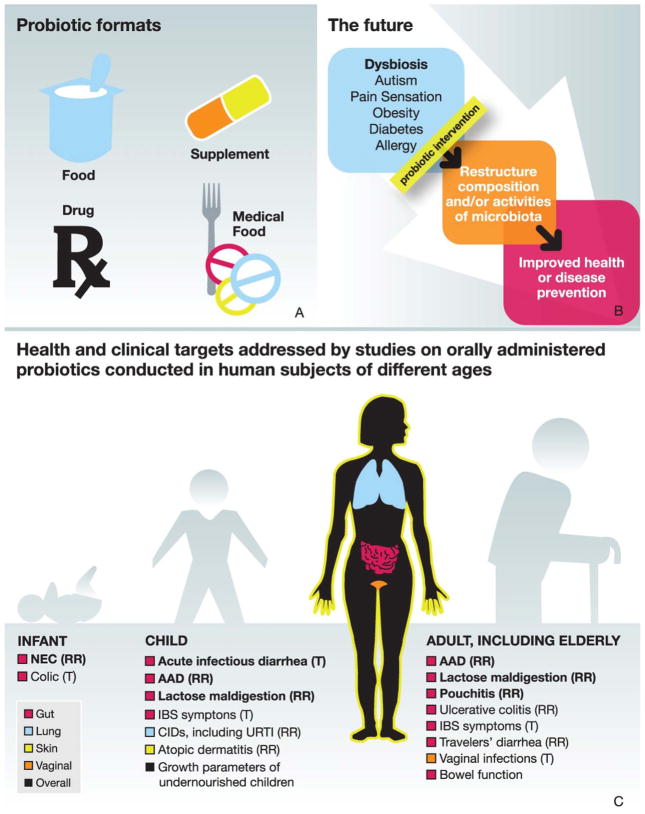
Probiotics are derived from traditional fermented foods, from beneficial commensals or from the environment. They act through diverse mechanisms affecting the composition or function of the commensal microbiota and by altering host epithelial and immunological responses. Certain probiotic interventions have shown promise in selected clinical conditions where aberrant microbiota have been reported, such as atopic dermatitis, necrotising enterocolitis, pouchitis and possibly irritable bowel syndrome. However, no studies have been conducted that can causally link clinical improvements to probiotic-induced microbiota changes. Whether a disease-prone microbiota pattern can be remodelled to a more robust, resilient and disease-free state by probiotic administration remains a key unanswered question. Progress in this area will be facilitated by: optimising strain, dose and product formulations, including protective commensal species; matching these formulations with selectively responsive subpopulations; and identifying ways to manipulate diet to modify bacterial profiles and metabolism.
Overview
The claims and statistics of this paper haven’t been checked yet.
Run the check — free, no account needed. It reads the open-access text and checks the sources it cites.
Integrity signals
Registry
Cites
Statistics
Figures
Verification
Claims the paper makes
The claims and statistics of this paper haven’t been checked yet.
Run the check — free, no account needed. It reads the open-access text and checks the sources it cites.
Claims other papers make about this one
Each is checked against this paper’s own text: does it say what the citing paper says it does?
In the citing paper
“FMT introduces a complete, stable, and durable community of gut microbiota [26] , unlike probiotics, that temporarily alter the metabolic, or immunologic activity, of the native gut microbiota [27] .”
From Intestinal microbiota in health and disease: Role of bifidobacteria in gut homeostasis (2014) · cites this paper as [27]
In the citing paper
“the use of probiotics in preventive medicine to keep a healthy intestinal function is well documented”
From Intestinal microbiota in health and disease: Role of bifidobacteria in gut homeostasis (2014) · cites this paper as [27]
Self-check
Percentages, sums and reported differences re-computed from the paper’s own numbers.
The self-check needs the paper’s full text.
Citations
Cites
Longstreth, G. F., Thompson, W. G., Chey, W. D., Houghton, L. A., Mearin, F., & Spiller, R. C. (2006) · Gastroenterology · doi:10.1053/j.gastro.2005.11.061 · Cited by 4,856
Dominguez-Bello, M. G., Costello, E. K., Contreras, M., Magris, M., Hidalgo, G., Fierer, N., & Knight, R. (2010) · Proceedings of the National Academy of Sciences · doi:10.1073/pnas.1002601107 · Cited by 4,774 · cited 1×
“92 Factors associated with allergy such as birth delivery mode (caesarean section vs vaginal delivery), 93 antibiotic use in the newborn and infant, and non-breast-milk diets are also associated with shifts in the gut microbiota.”
BackgroundInduction of Colonic Regulatory T Cells by Indigenous Clostridium Species
Atarashi, K., Tanoue, T., Shima, T., Imaoka, A., Kuwahara, T., Momose, Y., Cheng, G., Yamasaki, S., Saito, T., Ohba, Y., et al. (2011) · Science · doi:10.1126/science.1198469 · Cited by 3,752
Global, regional, and national causes of child mortality in 2008: a systematic analysis
Black, R. E., Cousens, S. N., Johnson, H. L., Lawn, J. E., Rudan, I., Bassani, D. G., Jha, P., Campbell, H. J., Walker, C. L. F., Cibulskis, R. E., et al. (2010) · The Lancet · doi:10.1016/s0140-6736(10)60549-1 · Cited by 3,062
Vrieze, A., Van Nood, E., Holleman, F., Salojärvi, J., Kootte, R. S., Bartelsman, J. F. W. M., Dallinga–Thie, G. M., Ackermans, M. T., Serlie, M. J., Oozeer, R., et al. (2012) · Gastroenterology · doi:10.1053/j.gastro.2012.06.031 · Cited by 2,913 · cited 1×
“Recently, faecal microbiota transplant from non-diabetic donors infused into the duodenum of patients with the metabolic syndrome improved their insulin sensitivity, highlighting the broad potential of this intervention.(116) However, cocktails of defined microbes imparting key functionalities may provide a more accep…”
BackgroundNeu, J., & Walker, W. A. (2011) · New England Journal of Medicine · doi:10.1056/nejmra1005408 · Cited by 2,141
Fusobacterium nucleatum infection is prevalent in human colorectal carcinoma
Castellarin, M., Warren, R. L., Freeman, J. D., Dreolini, L., Krzywinski, M., Strauss, J., Barnes, R., Watson, P., Allen-Vercoe, E., Moore, R. A., et al. (2012) · Genome Research · doi:10.1101/gr.126516.111 · Cited by 2,043 · cited 1×
“Others have analysed the microbiology in patients with CRC and suggested that the bacterial diversity is less,(72) altered(73) 74 or accompanied by high levels of Fusobacterium nucleatum sequences.(75) Studies in rodents have concentrated on probiotic effects on precancerous lesions and tumours.”
BackgroundMicrobial Influences in Inflammatory Bowel Diseases
Sartor, R. B. (2008) · Gastroenterology · doi:10.1053/j.gastro.2007.11.059 · Cited by 1,927
Self-citationThe Toll-like receptor 2 pathway establishes colonization by a commensal of the human microbiota
Round, J. L., Lee, S. M., Li, J., Tran, G., Jabri, B., Chatila, T. A., & Mazmanian, S. K. (2011) · Science · doi:10.1126/science.1206095 · Cited by 1,604
O’Mahony, L., McCarthy, J., Kelly, P., Hurley, G., Luo, F., Chen, K., O’Sullivan, G. C., Kiely, B., Collins, J. K., Shanahan, F., et al. (2005) · Gastroenterology · doi:10.1053/j.gastro.2004.11.050 · Cited by 1,448
Self-citation
Cited by
Sorted by citations
Items 201–300 of 503
Beneficial effect and mechanism of walnut oligopeptide on Lactobacillus plantarum Z7
Ding, T., & Li, Y. (2021) · Food Science & Nutrition · doi:10.1002/fsn3.2029 · Cited by 31
Tan, X., Mao, L., Huang, C., Yang, W., Guo, J., Chen, Z., & Chen, Z. (2021) · Bioengineered · doi:10.1080/21655979.2021.1940614 · Cited by 32
“Caco-2, human epithelial colorectal adenocarcinoma cells; LGG, Lactobacillus rhamnosus GG; B.caccae, Bacteroides caccae; CRC, Colorectal cancer; CR, Colorectum; Fn, Fusobacterium nucleatum; GDC, Genomic Data Commons Data Portal. mostly regulate metabolic processes to participate in CRC carcinogenesis and progression.”
BackgroundInfluentialBifidobacteria and Their Health-Promoting Effects
Hidalgo-Cantabrana, C., Delgado, S., Ruíz, L., Ruas‐Madiedo, P., Sánchez, B., & Margollés, A. (2018) · ASM Press eBooks · doi:10.1128/9781555819705.ch3 · Cited by 32
Ngamsomchat, A., Kaewkod, T., Konkit, M., Tragoolpua, Y., Bovonsombut, S., & Chitov, T. (2022) · Foods · doi:10.3390/foods11070934 · Cited by 36
“International food safety organisations and those from the United States and Canada (WHO, US FDA and Health Canada) have established principles for assessment of the safety of human probiotics [5].”
BackgroundChaikham, P., Kemsawasd, V., & Seesuriyachan, P. (2016) · LWT · doi:10.1016/j.lwt.2016.12.013 · Cited by 31
Ni, Y., Wong, V. H. Y., Tai, W. C. S., Li, J., Wong, W. Y., Lee, M. M. L., Fong, F. L. Y., El-Nezami, H., & Panagiotou, G. (2017) · Journal of Applied Microbiology · doi:10.1111/jam.13386 · Cited by 29
“Probiotics belonging to Lactobacillus and Bifidobacterium have shown their virtue towards digestive disorders and gastrointestinal tract diseases (van Baarlen et al. 2013; Sanders et al. 2013), while the use in CRC is still under extensive investigation.”
BackgroundMousa, W. K., Mousa, S., Ghemrawi, R., Obaid, D. E. E., Sarfraz, M., Chehadeh, F., & Husband, S. (2023) · International Journal of Molecular Sciences · doi:10.3390/ijms241813783 · Cited by 36
“These regulations should include various aspects such as; (1) excluding probiotics from over-the-counter medications, (2) implementation of detailed safety studies focusing on antibiotic resistance genes [83], (3) comprehensive assessment of their interactions with other gut microbes including enhancement or suppressi…”
BackgroundProbiotic Supplements and Food Products: A Comparative Approach
Meybodi, N. M., & Mortazavian, A. M. (2017) · Biochemistry & Pharmacology Open Access · doi:10.4172/2167-0501.1000227 · Cited by 32
Hagen, P. C., & Skelley, J. W. (2019) · The Journal of Pediatric Pharmacology and Therapeutics · doi:10.5863/1551-6776-24.1.10 · Cited by 30
Duan, C., Tang, X., Wang, W., Qian, W., Fu, X., Deng, X., Zhou, S., Han, C., & Hou, X. (2020) · International Journal of Molecular Medicine · doi:10.3892/ijmm.2020.4780 · Cited by 30
Maternal perspectives on the use of probiotics in infants: a cross-sectional survey
Bridgman, S. L., Azad, M. B., Field, C. J., Letourneau, N. L., Johnston, D. W., Kaplan, B. J., & Kozyrskyj, A. L. (2014) · BMC Complementary and Alternative Medicine · doi:10.1186/1472-6882-14-366 · Cited by 30
Bailey, J. R., Vince, V., Williams, N., & Cogan, T. A. (2017) · Beneficial Microbes · doi:10.3920/bm2016.0110 · Cited by 29
“Trials have mainly focussed on Lactobacillus and Bifidobacteria spp. and, for Crohn’s disease patients, have not produced the beneficial effects anticipated, with no consistent effects seen in treating active disease or preventing relapse of disease (Sanders et al., 2013).”
BackgroundMichael, H., Paim, F. C., Langel, S. N., Miyazaki, A., Fischer, D. D., Chepngeno, J., Amimo, J. O., Deblais, L., Rajashekara, G., Saif, L. J., et al. (2021) · mSphere · doi:10.1128/msphere.00074-21 · Cited by 32
“and have been used to treat enteric infections (7) and ulcerative colitis (8) in children.”
BackgroundRandazzo, C. L., Pino, A., Ricciardi, L., Romano, C., Comito, D., Arena, E., Saitta, S., & Caggia, C. (2014) · Journal of Applied Microbiology · doi:10.1111/jam.12685 · Cited by 29
“Up to now, a large number of probiotics have been promoted with health claims, based on several characteristics of selected strains, mainly belonging to Lactobacillus and Bifidobacterium genera (Soccol et al. 2010; Sanders et al. 2013).”
BackgroundBiodiversity of Intestinal Lactic Acid Bacteria in the Healthy Population
Mikelsaar, M., Sepp, E., Štšepetova, J., Songisepp, E., & Mändar, R. (2016) · Advances in experimental medicine and biology · doi:10.1007/5584_2016_3 · Cited by 29
“10), several probiotics of different genera and species may help to maintain the colonization resistance of the gut against invasion of pathogens, ensure or activate the immune system, and modulate the epithelial barrier function and host metabolism with its products, thus participating in creating healthy intestinal…”
BackgroundAn Innovative Approach to Hospital Sanitization Using Probiotics: In Vitro and Field Trials
Fauci, V. L. (2015) · Journal of Microbial & Biochemical Technology · doi:10.4172/1948-5948.1000198 · Cited by 29
“Probiotic studies have attracted considerable interest in recent literature, particularly in view of increased bacterial resistance [3,5-7].”
BackgroundOh, N. S., Joung, J. Y., Lee, J. Y., Kim, Y., & Kim, S. H. (2017) · Journal of Agricultural and Food Chemistry · doi:10.1021/acs.jafc.7b01339 · Cited by 32
The dichotomy between functional and functionalized foods – A critical characterization of concepts
Frumuzachi, O., Flanagan, A., Rohn, S., & Mocan, A. (2025) · Food Research International · doi:10.1016/j.foodres.2025.116173 · Cited by 35
Potential Health-Promoting Effects of Probiotics in Dairy Beverages
Shori, A. B., Baba, A. S., & Muniandy, P. (2019) · Elsevier eBooks · doi:10.1016/b978-0-12-816687-1.00005-9 · Cited by 33
Yao, P., Cui, M., Wang, H., Gao, H., Wang, L., Yang, T., & Cheng, Y. (2015) · Gastroenterology Research and Practice · doi:10.1155/2016/9186232 · Cited by 28
“Probiotics are bacteria of human intestinal origin which are a key player in maintaining the normal function of the gastrointestinal tract [16].”
BackgroundM, K. I. M. (2015) · Journal of Bioequivalence & Bioavailability · doi:10.4172/jbb.1000212 · Cited by 28
Okada, Y., Tsuzuki, Y., Takajo, T., Furuhashi, H., Higashiyama, M., Watanabe, C., Shirakabe, K., Kurihara, C., Komoto, S., Tomita, K., et al. (2017) · Journal of Gastroenterology · doi:10.1007/s00535-017-1362-x · Cited by 28
“Clinical trials of probiotics on inflammatory bowel diseases (IBDs) including Crohn’s disease (CD) and ulcerative colitis (UC) are increasingly under scrutiny [1, 2].”
BackgroundGong, J., Bai, T., Zhang, L., Qian, W., Song, J., & Hou, X. (2017) · PLoS ONE · doi:10.1371/journal.pone.0189257 · Cited by 28
Coelho-Rocha, N. D., de Castro, C. P., de Jesus, L. C. L., Leclercq, S. Y., Sandes, S. H. C., Nunes, Á. C., Azevedo, V., Drumond, M. M., & Mancha-Agresti, P. D. C. (2018) · Frontiers in Microbiology · doi:10.3389/fmicb.2018.02398 · Cited by 29
“Some strains are classified as probiotic, promoting them to be beneficial for consumer health (Sanders et al., 2013).”
BackgroundA Critical Review on the Role of Probiotics in Lung Cancer Biology and Prognosis
Ashique, S., Mishra, N., Garg, A., Kumar, N., Khan, Z., Mohanto, S., Chellappan, D. K., Farid, A., & Taghizadeh‐Hesary, F. (2024) · Archivos de Bronconeumología · doi:10.1016/j.arbres.2024.04.030 · Cited by 29
Practical approaches to probiotics use
Taïbi, A., & Comelli, E. M. (2014) · Applied Physiology, Nutrition, and Metabolism · doi:10.1139/apnm-2013-0490 · Cited by 28
Development of a Novel Oral Delivery Vehicle for Probiotics
Enck, K., Banks, S. R., Yadav, H., Welker, M. E., & Opara, E. C. (2020) · Current Pharmaceutical Design · doi:10.2174/1381612826666200210111925 · Cited by 27
Memon, F. U., Yang, Y., Leghari, I. H., Lv, F., Soliman, A. M., Zhang, W., & Si, H. (2021) · Genes · doi:10.3390/genes12040536 · Cited by 27
“Several studies have shown that the probiotic microbes improve nutrient digestibility, maintain gut homeostasis by balancing gut microbiota, improve gut barrier integrity, defend against various intestinal pathogen invasion and adhesion, and modulate humoral and cellular immunity [33,34].”
BackgroundAbenavoli, L., Scarpellini, E., Paravati, M. R., Scarlata, G. G. M., Boccuto, L., Tilocca, B., Roncada, P., & Luzza, F. (2023) · Nutrients · doi:10.3390/nu15163569 · Cited by 30
“Probiotics are defined as alive microorganisms beneficially affecting the host [11,45].”
Backgroundder Vaart, I. B.-V., Heath, M. D., Guagnini, F., & Kramer, M. F. (2015) · Beneficial Microbes · doi:10.3920/bm2015.0051 · Cited by 27
“Sanders and Floch (Floch, 2014; Floch et al., 2011; Sanders et al., 2013) made recent overviews of the existing evidence for probiotics in different target groups.”
BackgroundHuman microbiome versus food-borne pathogens: friend or foe
Josephs‐Spaulding, J., Beeler, E., & Singh, O. V. (2016) · Applied Microbiology and Biotechnology · doi:10.1007/s00253-016-7523-7 · Cited by 27
“…organisms such as Streptococcus thermophiles, L. rhamnosus, Lactobacillus acidophilus, Lactobacillus casei (Bolotin et al. 2004; Iyer et al. 2010; Sanders et al. 2013; Auclair et al. 2015), and the family Bifidobacterium tend to be just as common as pathogens and are of great importance to food,…”
InfluentialHuang, L., Wu, Y., Fan, Y., Su, Y., Liu, Z., Bai, J., Zhao, X., Li, Y., Xie, X., Zhang, J., et al. (2024) · Critical Reviews in Food Science and Nutrition · doi:10.1080/10408398.2024.2387328 · Cited by 26
“Probiotics are crucial for maintaining the balance and stability of the intestinal flora and have the capacity to alleviate a variety of diseases (Sanders et al. 2013).”
Joseph, J., & Law, C. A. (2018) · Neuroscience & Biobehavioral Reviews · doi:10.1016/j.neubiorev.2018.11.010 · Cited by 26
“Probiotics have shown significant promise for improving atopic dermatitis, necrotizing enterocolitis, pouchitis, and irritable bowel syndrome - IBS (Sanders et al., 2013), which is postulated to be a gut-brain dysregulation disorder (Blankstein et al.”
InfluentialLiu, T., Xiao, Y., Yin, J., Yi, T., Zhou, Z., Hsiang, T., Tang, Q., & Chen, W. (2020) · Frontiers in Microbiology · doi:10.3389/fmicb.2020.00929 · Cited by 26
“, 2017) and human/animal diseases (Barratt, 2000; Sanders et al., 2013) share similarities in that they are mainly via the antagonistic action of microorganisms on pathogen growth.”
BackgroundBibliometric analysis of subject trends and knowledge structures of gut microbiota
Yue, Y., Fan, X., Zhang, Q., Lu, Y.-P., Wu, S., Wang, S., Yu, M., Cui, C., & Sun, Z. (2020) · World Journal of Clinical Cases · doi:10.12998/wjcc.v8.i13.2817 · Cited by 27
Improving the Viability of Probiotic Bacteria in Yoghurt by Homogenization
Massoud, R., Fadaei, V., Khosravi‐Darani, K., & Nikbakht, H. R. (2015) · Journal of Food Processing and Preservation · doi:10.1111/jfpp.12551 · Cited by 26
Pathogen-induced secretory diarrhea and its prevention
Anand, S. K., Mandal, S., Patil, P., & Tomar, S. K. (2016) · European Journal of Clinical Microbiology & Infectious Diseases · doi:10.1007/s10096-016-2726-5 · Cited by 26
Seo, M., Heo, J.-Y., Yoon, J. H., Kim, S., Kang, Y.-M., Yu, J., Cho, S., & Kim, H. (2017) · PLoS ONE · doi:10.1371/journal.pone.0184547 · Cited by 26
Sun, R., Wang, Y., Lv, Z., Li, H., Zhang, S., Dang, Q., Zhao, X., Yue, T., & Yuan, Y. (2024) · International Journal of Biological Macromolecules · doi:10.1016/j.ijbiomac.2024.131899 · Cited by 25
Michael, H., Paim, F. C., Miyazaki, A., Langel, S. N., Fischer, D. D., Chepngeno, J., Goodman, S. D., Rajashekara, G., Saif, L. J., & Vlasova, A. N. (2021) · PLoS ONE · doi:10.1371/journal.pone.0246193 · Cited by 23
“Probiotics are increasingly used to enhance oral vaccine responses and to treat enteric infections [11] and ulcerative colitis in children [12].”
BackgroundQiao, J., Zeng, R., Chen, Q., Zheng, D., Hao, P.-L., Liu, X., Zhao, F., & Zhang, X. (2023) · Nano Letters · doi:10.1021/acs.nanolett.3c00657 · Cited by 24
Yin, X., Yan, Y., Kim, E. B., Lee, B., & Marco, M. L. (2014) · Journal of Dairy Science · doi:10.3168/jds.2013-7477 · Cited by 24
Demers‐Mathieu, V., St‐Gelais, D., Audy, J., Laurin, E. L., & Fliss, I. (2016) · Journal of Functional Foods · doi:10.1016/j.jff.2016.04.025 · Cited by 24
Möller, C. M., Olsa, E. J. A., Ginty, A. T., Rapelje, A. L., Tindall, C. L., Holesh, L. A., Petersen, K. L., & Conklin, S. M. (2017) · Psychosomatic Medicine · doi:10.1097/psy.0000000000000489 · Cited by 23
“can be consumed in supplemental form, and are increasingly recognized as playing multiple, yet poorly understood, roles in both physical and mental health and disease (1-7).”
BackgroundAlamdary, S. Z., Bakhshi, B., & Soudi, S. (2018) · PLoS ONE · doi:10.1371/journal.pone.0196941 · Cited by 24
Anand, S. K., Mandal, S., Singh, K. S., Patil, P., & Tomar, S. K. (2018) · LWT · doi:10.1016/j.lwt.2018.08.061 · Cited by 24
Deng, X., Zheng, C., Wang, S., Yang, R. L., Liu, Z., & Chen, T. (2020) · Oncology Reports · doi:10.3892/or.2020.7463 · Cited by 24
Larsen, O. F. A., & van de Burgwal, L. (2021) · Frontiers in Microbiology · doi:10.3389/fmicb.2021.784797 · Cited by 22
Wu, F., Cheng, Y., Zhou, J., Liu, X., Lin, R., Xiang, S., Liu, Z., & Wang, C. (2023) · International Journal of Biological Macromolecules · doi:10.1016/j.ijbiomac.2023.123320 · Cited by 23
Medical doctors’ perceptions on probiotics: Lack of efficacy data hampers innovation
Flach, J., Dias, A., Rademaker, S. H. M., van der Waal, M. B., Claassen, E., & Larsen, O. F. A. (2017) · PharmaNutrition · doi:10.1016/j.phanu.2017.06.004 · Cited by 23
Pawnobiome: manipulation of the hologenome within one host generation and beyond
Voss, J. D., Leon, J. C., Dhurandhar, N. V., & Robb, F. T. (2015) · Frontiers in Microbiology · doi:10.3389/fmicb.2015.00697 · Cited by 22
“hologenome within one host generation and beyond”
BackgroundInfluentialAnalysis of the intestinal microbial community altered during rotavirus infection in suckling mice
Zhao, W., Yu, M. L., Tao, X., Cheng, M.-H., Liu, C. C., Liu, Y., & Li, Y. (2021) · Virology Journal · doi:10.1186/s12985-021-01727-5 · Cited by 22
“Probiotics have been increasingly used to enhance the oral vaccine reactions and treat some intestinal infection and inflammatory of GI in children [40].”
BackgroundUnexpected immunoregulation effects of D-lactate, different from L-lactate
Yan, Y., Xu, R., Li, X., Yao, Z., Zhang, H., Li, H., & Chen, W. (2022) · Food and Agricultural Immunology · doi:10.1080/09540105.2022.2068508 · Cited by 21
“…bacteria has received considerable attention of medical and biological research in recent years for its improvement on health through its metabolites consumption (Bezkorovainy, 2001; Garrote et al., 2000; Golowczyc et al., 2007; Holzapfel et al., 1995; Kakisu et al., 2012; Sanders et al., 2013).”
BackgroundEndo, A., Teräsjärvi, J. T., & Salminen, S. (2014) · International Journal of Food Microbiology · doi:10.1016/j.ijfoodmicro.2014.01.006 · Cited by 22
Junaid, M., Lu, H., Li, Y., Liu, Y., Din, A. U., Qi, Z., Xiong, Y., & Yan, J. (2024) · Genes · doi:10.3390/genes15040435 · Cited by 22
“Numerous research studies have demonstrated that probiotic microorganisms can improve the digestion of nutrients, maintain the balance of gut bacteria, strengthen the gut barrier integrity, fend off harmful organisms, and modulate both humoral and cellular immune responses [55].”
BackgroundEnrichment of Beverages With Health Beneficial Ingredients
Kasapoğlu, K. N., Daşkaya-Dikmen, C., Yavuz-Düzgün, M., Karaça, A. C., & Özçelik, B. (2019) · Elsevier eBooks · doi:10.1016/b978-0-12-816687-1.00003-5 · Cited by 21
Profermin is Efficacious in Patients with Active Ulcerative Colitis—A Randomized Controlled Trial
Krag, A. A., Munkholm, P., Israelsen, H., von Ryberg, B., Andersen, K. K., & Bendtsen, F. (2013) · Inflammatory Bowel Diseases · doi:10.1097/01.mib.0000437046.26036.db · Cited by 21
“term).(4) Because Profermin is a disease-specific FSMP/medical food, the documentation must prove an effect that cannot be achieved by the modification of the normal diet alone or by standard FSMP’s.”
BackgroundInfluentialHayes, C. L., Natividad, J. M., Jury, J., Martín, R., Langella, P., & Verdu, E. F. (2014) · Beneficial Microbes · doi:10.3920/bm2013.0039 · Cited by 21
“Inflammatory bowel disease (IBD) represents a group of gastrointestinal inflammatory disorders of which the two most common forms are ulcerative colitis and Crohn’s disease.”
BackgroundInfluentialAdvances in Gut Microbiome Research and Relevance to Pediatric Diseases
Albenberg, L. G., & Kelsen, J. R. (2016) · The Journal of Pediatrics · doi:10.1016/j.jpeds.2016.08.044 · Cited by 20
“There may be some efficacy in UC, particularly in patients who have pouchitis, where probiotics can be an effective strategy to prevent relapse after successful antibiotic treatment.(87) A recent Cochrane review also suggested a potential role for treatment with a particular probiotic, VSL#3, in maintenance of remissi…”
BackgroundSánchez, E., Nieto, J. C., Vidal, S., Santiago, A., Martínez, X., Sancho, F. J., Sancho‐Bru, P., Mirelis, B., Corominola, H., Juárez, C., et al. (2017) · Scientific Reports · doi:10.1038/srep45712 · Cited by 21
Lee, B., Tachon, S., Eigenheer, R. A., Phinney, B. S., & Marco, M. L. (2015) · Journal of Proteome Research · doi:10.1021/acs.jproteome.5b00387 · Cited by 24
Zhao, N., Liu, J., Yang, F., Ji, X., Li, C., Lv, S., & Wang, S. (2020) · Journal of Agricultural and Food Chemistry · doi:10.1021/acs.jafc.0c05260 · Cited by 20
Yan, Y., Xiu, L., Yang, Q., Zhang, H., Hettinga, K. A., Li, H., & Chen, W. (2022) · Molecular Nutrition & Food Research · doi:10.1002/mnfr.202200196 · Cited by 20
Impact of Prebiotics, Probiotics and Gut Derived Metabolites on Host Immunity
Wu, R., Jeffrey, M. P., Johnson‐Henry, K. C., Green-Johnson, J. M., & Sherman, P. M. (2016) · LymphoSign Journal · doi:10.14785/lymphosign-2016-0012 · Cited by 22
Self-citationVelikova, T. V., Tumangelova-Yuzeir, K. D., Georgieva, R., Ivanova‐Todorova, E., Karaivanova, E., Nakov, V., Nakov, R., & Kyurkchiev, D. S. (2020) · Nutrients · doi:10.3390/nu12061706 · Cited by 20
“In line with this, several animal and human studies have focused on manipulating the gastrointestinal microbiota with diet and probiotics [4].”
Backgroundda Silva, W. M., Oliveira, L. D. C., Soares, S. D. C., de Sousa, C. S., Tavares, G. C., Rezende, C. P., Pereira, F. L., Ghosh, P., Figueiredo, H. C. P., & Azevedo, V. (2019) · Frontiers in Microbiology · doi:10.3389/fmicb.2019.00759 · Cited by 19
“Identification of Strain-Specific Proteins Studies have shown that probiotic activities generated by bacteria during the probiotic therapy are associated with strain-specific factors (Hungin et al., 2013; Sanders et al., 2013).”
BackgroundProbiotics: A gut response to the COVID-19 pandemic but what does the evidence show?
Brahma, S., Naik, A. S., & Lordan, R. (2022) · Clinical Nutrition ESPEN · doi:10.1016/j.clnesp.2022.08.023 · Cited by 21
“Despite these regulatory issues, interest surrounding probiotics and their potential benefits have not waned and probiotics are among the main products intentionally consumed by humans to beneficially affect the gut microbiome to improve health [7,8].”
Probiotics in primary care: A survey of health professionals
Jordan, D., Johnson, N., & Thomas, L. V. (2015) · Practice Nursing · doi:10.12968/pnur.2015.26.11.550 · Cited by 19
Gut Microbiomics—A Solution to Unloose the Gordian Knot of Biological Effects of Ionizing Radiation
Zhang, A., & Steen, T. Y. (2017) · Journal of Heredity · doi:10.1093/jhered/esx059 · Cited by 17
Probiotics Upregulate Trefoil Factors and Downregulate Pepsinogen in the Mouse Stomach
Khoder, G., Al-Yassir, F., Menhali, A. A., Saseedharan, P., Sugathan, S., Tomasetto, C., & Karam, S. M. (2019) · International Journal of Molecular Sciences · doi:10.3390/ijms20163901 · Cited by 19
“Therefore, probiotics are now incorporated into an expanding array of food products, nutritional supplements, and pharmaceutical compounds [5].”
BackgroundChaikham, P., & Rattanasena, P. (2016) · Food Bioscience · doi:10.1016/j.fbio.2016.12.005 · Cited by 20
“…have been described to include: antimicrobial activity, prevention and treatment of diarrhea, relief of symptoms caused by lactose intolerance, anti-mutagenic/anticarcinogenic activities, lowering blood cholesterol level and stimulation of the immune system (Chaikham, 2015; Sanders et al., 2013).”
BackgroundŠpiljak, B., Ozretić, P., Rogulj, A. A., Brzak, B. L., Brailo, V., Škerlj, M., & Juras, D. V. (2024) · Applied Sciences · doi:10.3390/app142311405 · Cited by 19
The Future of Probiotics for Disorders of the Brain-Gut Axis
Quigley, E. M. M., & Shanahan, F. (2014) · Advances in experimental medicine and biology · doi:10.1007/978-1-4939-0897-4_19 · Cited by 18
Self-citationGeorgieva, M., Georgiev, K., & Dobromirov, P. (2015) · InTech eBooks · doi:10.5772/61337 · Cited by 18
Nutrients, Bioactive Compounds, and Health Benefits of Functional and Medicinal Beverages
Akyüz, E. Y., Üstün‐Aytekin, Ö., Bayram, B., & Tutar, Y. (2019) · Elsevier eBooks · doi:10.1016/b978-0-12-816842-4.00006-x · Cited by 19
Salgado, P. R., Giorgio, L. D., Musso, Y. S., & Mauri, A. N. (2019) · Elsevier eBooks · doi:10.1016/b978-0-12-814130-4.00009-9 · Cited by 30
European General Practitioners perceptions on probiotics: Results of a multinational survey
van der Geest, A. M., Flach, J., Claassen, E., Sijlmans, A. W., van de Burgwal, L., & Larsen, O. F. A. (2020) · PharmaNutrition · doi:10.1016/j.phanu.2020.100178 · Cited by 18
Glutamine deficiency links clindamycin-induced dysbiosis and intestinal barrier dysfunction in mice
Mao, J., Yan, Y., Li, H., Shen, X., Zhang, H., Li, H., & Chen, W. (2020) · British Journal Of Nutrition · doi:10.1017/s0007114520004195 · Cited by 17
“Resilience to external perturbations is a fundamental property of gut microbial communities, and gut microbiome is generally stable within healthy adult individuals(24).”
BackgroundGarcía-Santos, J. A., Nieto-Ruíz, A., García-Ricobaraza, M., Cerdó, T., & Campoy, C. (2023) · International Journal of Molecular Sciences · doi:10.3390/ijms24119427 · Cited by 18
“However, these conclusions should be taken with caution due to the existence of major limitations concerning the inclusion of studies with a small sample size and the use of different strains of probiotics [83].”
BackgroundYogurt Alleviates Imiquimod-Induced Psoriasis by Activating the Lactate/GPR81 Signaling Axis in Mice
Qian, J., Li, X., Yin, Z., Dai, Y., Zhang, H., Li, H., Peng, C., & Chen, W. (2024) · Journal of Agricultural and Food Chemistry · doi:10.1021/acs.jafc.3c05049 · Cited by 18
Probiotics and necrotizing enterocolitis
Fleming, P., Hall, N. J., & Eaton, S. D. (2015) · Pediatric Surgery International · doi:10.1007/s00383-015-3790-0 · Cited by 18
“stool also reported that its administration was associated with a reduction in apnoea and vomiting [50].”
BackgroundBonvicini, F., Pagnotta, E., Punzo, A., Calabria, D., Simoni, P., Mirasoli, M., Passerini, N., Bertoni, S., Ugolini, L., Lazzeri, L., et al. (2020) · Nutrients · doi:10.3390/nu12103064 · Cited by 17
“Recent studies in cellular and animal models focus on the e ff ects of probiotics (live bacteria that o ff er benefits to the host) on various disease states, including inflammatory bowel diseases (IBD) [10].”
Probiotics/Prebiotics in Viral Respiratory Infections: Implication for Emerging Pathogens
Heidari, Z., Tajbakhsh, A., Hayat, S. M. G., Moattari, A., Razban, V., Berenjian, A., Savardashtaki, A., & Negahdaripour, M. (2021) · Recent Patents on Biotechnology · doi:10.2174/1872208315666210419103742 · Cited by 17
Zhang, J., Zhang, X., Wu, X., Zhou, C., Liu, Z., Luo, X., Zhang, L., Chen, W., & Yang, Y. (2025) · Advanced Science · doi:10.1002/advs.202504784 · Cited by 16
Nutritional Care of Preterm Infants
Koletzko, B. V., Poindexter, B. B., & Uauy, R. D. (2016) · Cited by 16
Asha, M. K., Debraj, D., Dethe, S., Bhaskar, A., Nithyanantham, M., & Mundkinajeddu, D. (2016) · Journal of Dietary Supplements · doi:10.1080/19390211.2016.1223257 · Cited by 16
“Probiotics were reported to be beneficial in the management of irritable bowel syndrome, infectious diarrhea and necrotizing enterocolitis among others (Sanders et al., 2013).”
BackgroundFunctional Food: Probiotic as Health Booster
Roy, P., & Kumar, V. (2018) · Journal of Food Nutrition and Population Health · doi:10.21767/2577-0586.100042 · Cited by 17
“Probiotics microorganism containing functional food gained vital importance in the prevention of various gutassociated disorders, urogenital, and respiratory infections [6].”
BackgroundFreedman, S. B., Sherman, P. M., Willan, A., Johnson, D., Gouin, S., Schuh, S., & (PERC), O. B. O. P. E. R. C. (2015) · Clinical Pediatrics · doi:10.1177/0009922815569200 · Cited by 16
“Intravenous rehydration fluids, yes, n (%) 4 (7) 3 (5) .”
InfluentialSelf-citationMagge, S., & Wolf, J. L. (2013) · Women s Health · doi:10.2217/whe.13.57 · Cited by 16
“Probiotics have been used in a variety of GI disorders including IBS, Clostridium difficile colitis and inflammatory bowel disease [22,23].”
BackgroundKemsawasd, V., & Chaikham, P. (2018) · LWT · doi:10.1016/j.lwt.2018.03.027 · Cited by 16
Kareem, R. A., Razavi, S. H., & Mousavi, Z. E. (2024) · Applied Biochemistry and Biotechnology · doi:10.1007/s12010-024-05105-z · Cited by 15
Fehlbaum, S., Chassard, C., Schwab, C., Voolaid, M., Fourmestraux, C., Derrien, M., & Lacroix, C. (2019) · Frontiers in Nutrition · doi:10.3389/fnut.2019.00184 · Cited by 16
“The trial was of a small sample size and it was found that one patient in the probiotic group developed CDI compared to three in the control group (30).”
BackgroundInfluentialMiljković, M., Bertani, I., Fira, D., Jovčić, B., Novović, K., Venturi, V., & Kojić, M. (2016) · Frontiers in Microbiology · doi:10.3389/fmicb.2016.01422 · Cited by 15
Correlating the Gut Microbiome to Health and Disease
Marques, T. M., Holster, S., Wall, R., König, J., Brummer, R. J., & de Vos, W. M. (2016) · Elsevier eBooks · doi:10.1016/b978-0-12-802304-4.00012-8 · Cited by 13
Turkish Guidelines for Diagnosis and Treatment of Allergic Rhinitis (ART)
Ecevit, M. C., Özcan, M., Can, İ. H., Tatar, E. Ç., Özer, S., Esen, E., Atan, D., Göde, S., Elsürer, Ç., Eryılmaz, A., et al. (2021) · Turkish Archives of Otorhinolaryngology · doi:10.4274/tao.2021.suppl.1 · Cited by 14
Michael, H., Miyazaki, A., Langel, S. N., Amimo, J. O., Kick, M. K., Chepngeno, J., Paim, F. C., Fischer, D. D., Rajashekara, G., Saif, L. J., et al. (2022) · Vaccines · doi:10.3390/vaccines10010083 · Cited by 13
Babina, K., Salikhova, D., Polyakova, M., Zaytsev, A., Egiazaryan, A., & Novozhilova, N. (2023) · Dentistry Journal · doi:10.3390/dj11050119 · Cited by 13
Ryan, V., Bailey, T. W., Liu, D., Vemulapalli, T. H., Cooper, B. R., Cox, A. D., & Bhunia, A. K. (2021) · Microbial Pathogenesis · doi:10.1016/j.micpath.2021.104752 · Cited by 14
Hati, S., Ramanuj, K., Basaiawmoit, B., Sreeja, V., Maurya, R., Bishnoi, M., Kondepudi, K. K., & Mishra, B. K. (2023) · Brazilian Journal of Microbiology · doi:10.1007/s42770-023-01093-0 · Cited by 14
“There are many uses for probiotics, one of which is the treatment of acute diarrhea [7].”
BackgroundMamun, A. A., Geng, P., Wang, S., Shao, C., & Xiao, J. (2024) · Pharmacological Research · doi:10.1016/j.phrs.2024.107559 · Cited by 15
Metadata
- Authors
- Sanders, M. E., Guarner, F., Guerrant, R., Holt, P. R., Quigley, E. M., Sartor, R. B., Sherman, P. M., & Mayer, E. A.
- Affiliations
- Dairy & Food Culture Technologies, Centennial, Colorado, USA
- Vall d'Hebron Hospital Universitari (ES)
- University of Virginia (US)
- Rockefeller University (US)
- Houston Methodist (US)
- University of North Carolina at Chapel Hill (US)
- University of Toronto (CA)
- University of California, Los Angeles (US)
- Corresponding author
- Mayer, Emeran A
- ORCID
- Venue
- Gut
- Publisher
- BMJ
- Published
- 2013-03-08
- Volume
- 62
- Issue
- 5
- Pages
- 787-796
- ISSN
- 0017-5749 (ISSN-L)
- 1468-3288
- PMC
- PMC4351195
- OpenAlex
- W2148017101
- Cited by
- 503
- References
- 134
- Citations by year
- 2026: 18 · 2025: 23 · 2024: 20 · 2023: 29 · 2022: 29 · 2021: 34 · 2020: 37 · 2019: 29 · 2018: 44 · 2017: 46 · 2016: 52 · 2015: 58 · 2014: 61 · 2013: 22
- FWCI
- 8.55
- Type
- journal article
- Language
- en
- Open access
- hybrid
- doi.org
- Licence
- cc-by-nc
- Locations
- Gut (publishedVersion, cc-by-nc)
- PubMed (publishedVersion)
- Europe PMC (PubMed Central) (acceptedVersion, cc-by-nc)
- PubMed Central (acceptedVersion, cc-by-nc)
- Carolina Digital Repository (University of North Carolina at Chapel Hill) (submittedVersion)
- eScholarship (California Digital Library) (submittedVersion)
- eScholarship (California Digital Library) (submittedVersion, cc-by-nc)
- HighWire Press Open Archive (submittedVersion)
- UNC Libraries
- Funders
- Procter and Gamble
- Mead Johnson Nutrition
- Danone
- Ironwood Pharmaceuticals, Incorporated
- Alimentary Health
- Instituto Danone
- Norgine
- National Institute of Diabetes and Digestive and Kidney Diseases (R01DK048351, U01DK082370)
- Topics
- Life Sciences › Agricultural and Biological Sciences › Food Science › Probiotics and Fermented Foods
- Life Sciences › Biochemistry, Genetics and Molecular Biology › Molecular Biology › Gut microbiota and health
- Health Sciences › Nursing › Nutrition and Dietetics › Infant Nutrition and Health
- Keywords
- probiotics, gut microbiota, commensal microbiota, atopic dermatitis, necrotizing enterocolitis, pouchitis, irritable bowel syndrome, host immune response, diet and microbiome, microbiota resilience
- MeSH terms
- Colitis, Ulcerative, Crohn Disease, Cross Infection, Diarrhea, Female, Health Status, Humans, Hypersensitivity, Vaginitis, Colorectal Neoplasms, Meta-Analysis as Topic, Evidence-Based Medicine, Probiotics, Enterocolitis, Necrotizing, Irritable Bowel Syndrome
About these checks
Registry, retraction, Cites and statistics results are computed, not judged, with one exception: a printed reference that no index lists is read once by a model before it counts as a citation error. Claims are extracted by a model and kept only when their quote appears verbatim in the text; each cited source is then checked, with a model’s help, for whether it says what the claim relies on. Those verdicts can be wrong — read the claim’s quote and the cited source before relying on one.
Statistics and arithmetic are recomputed, not judged.
Confidence bands are shown only for fields calibrated on our annotated test set. None is calibrated yet, so no band is shown.
What counts as a claim ›How we measure confidence ›How we check this ›
Are you an author, or do you see a problem with this page? Request a review
