

The DOI matches its Crossref record; 133 of the 134 references it cites were found in a registry or an index.
An update on the use and investigation of probiotics in health and disease
Open accessAbstract
Probiotics are derived from traditional fermented foods, from beneficial commensals or from the environment. They act through diverse mechanisms affecting the composition or function of the commensal microbiota and by altering host epithelial and immunological responses. Certain probiotic interventions have shown promise in selected clinical conditions where aberrant microbiota have been reported, such as atopic dermatitis, necrotising enterocolitis, pouchitis and possibly irritable bowel syndrome. However, no studies have been conducted that can causally link clinical improvements to probiotic-induced microbiota changes. Whether a disease-prone microbiota pattern can be remodelled to a more robust, resilient and disease-free state by probiotic administration remains a key unanswered question. Progress in this area will be facilitated by: optimising strain, dose and product formulations, including protective commensal species; matching these formulations with selectively responsive subpopulations; and identifying ways to manipulate diet to modify bacterial profiles and metabolism.
Overview
The claims and statistics of this paper haven’t been checked yet.
Run the check — free, no account needed. It reads the open-access text and checks the sources it cites.
Integrity signals
Registry
Cites
Statistics
Figures
Verification
Claims the paper makes
The claims and statistics of this paper haven’t been checked yet.
Run the check — free, no account needed. It reads the open-access text and checks the sources it cites.
Claims other papers make about this one
Each is checked against this paper’s own text: does it say what the citing paper says it does?
In the citing paper
“FMT introduces a complete, stable, and durable community of gut microbiota [26] , unlike probiotics, that temporarily alter the metabolic, or immunologic activity, of the native gut microbiota [27] .”
From Intestinal microbiota in health and disease: Role of bifidobacteria in gut homeostasis (2014) · cites this paper as [27]
In the citing paper
“the use of probiotics in preventive medicine to keep a healthy intestinal function is well documented”
From Intestinal microbiota in health and disease: Role of bifidobacteria in gut homeostasis (2014) · cites this paper as [27]
Self-check
Percentages, sums and reported differences re-computed from the paper’s own numbers.
The self-check needs the paper’s full text.
Citations
Cites
Longstreth, G. F., Thompson, W. G., Chey, W. D., Houghton, L. A., Mearin, F., & Spiller, R. C. (2006) · Gastroenterology · doi:10.1053/j.gastro.2005.11.061 · Cited by 4,856
Dominguez-Bello, M. G., Costello, E. K., Contreras, M., Magris, M., Hidalgo, G., Fierer, N., & Knight, R. (2010) · Proceedings of the National Academy of Sciences · doi:10.1073/pnas.1002601107 · Cited by 4,774 · cited 1×
“92 Factors associated with allergy such as birth delivery mode (caesarean section vs vaginal delivery), 93 antibiotic use in the newborn and infant, and non-breast-milk diets are also associated with shifts in the gut microbiota.”
BackgroundInduction of Colonic Regulatory T Cells by Indigenous Clostridium Species
Atarashi, K., Tanoue, T., Shima, T., Imaoka, A., Kuwahara, T., Momose, Y., Cheng, G., Yamasaki, S., Saito, T., Ohba, Y., et al. (2011) · Science · doi:10.1126/science.1198469 · Cited by 3,752
Global, regional, and national causes of child mortality in 2008: a systematic analysis
Black, R. E., Cousens, S. N., Johnson, H. L., Lawn, J. E., Rudan, I., Bassani, D. G., Jha, P., Campbell, H. J., Walker, C. L. F., Cibulskis, R. E., et al. (2010) · The Lancet · doi:10.1016/s0140-6736(10)60549-1 · Cited by 3,062
Vrieze, A., Van Nood, E., Holleman, F., Salojärvi, J., Kootte, R. S., Bartelsman, J. F. W. M., Dallinga–Thie, G. M., Ackermans, M. T., Serlie, M. J., Oozeer, R., et al. (2012) · Gastroenterology · doi:10.1053/j.gastro.2012.06.031 · Cited by 2,913 · cited 1×
“Recently, faecal microbiota transplant from non-diabetic donors infused into the duodenum of patients with the metabolic syndrome improved their insulin sensitivity, highlighting the broad potential of this intervention.(116) However, cocktails of defined microbes imparting key functionalities may provide a more accep…”
BackgroundNeu, J., & Walker, W. A. (2011) · New England Journal of Medicine · doi:10.1056/nejmra1005408 · Cited by 2,141
Fusobacterium nucleatum infection is prevalent in human colorectal carcinoma
Castellarin, M., Warren, R. L., Freeman, J. D., Dreolini, L., Krzywinski, M., Strauss, J., Barnes, R., Watson, P., Allen-Vercoe, E., Moore, R. A., et al. (2012) · Genome Research · doi:10.1101/gr.126516.111 · Cited by 2,043 · cited 1×
“Others have analysed the microbiology in patients with CRC and suggested that the bacterial diversity is less,(72) altered(73) 74 or accompanied by high levels of Fusobacterium nucleatum sequences.(75) Studies in rodents have concentrated on probiotic effects on precancerous lesions and tumours.”
BackgroundMicrobial Influences in Inflammatory Bowel Diseases
Sartor, R. B. (2008) · Gastroenterology · doi:10.1053/j.gastro.2007.11.059 · Cited by 1,927
Self-citationThe Toll-like receptor 2 pathway establishes colonization by a commensal of the human microbiota
Round, J. L., Lee, S. M., Li, J., Tran, G., Jabri, B., Chatila, T. A., & Mazmanian, S. K. (2011) · Science · doi:10.1126/science.1206095 · Cited by 1,604
O’Mahony, L., McCarthy, J., Kelly, P., Hurley, G., Luo, F., Chen, K., O’Sullivan, G. C., Kiely, B., Collins, J. K., Shanahan, F., et al. (2005) · Gastroenterology · doi:10.1053/j.gastro.2004.11.050 · Cited by 1,448
Self-citation
Cited by
Sorted by citations
Items 101–200 of 503
Osteomicrobiology: A New Cross-Disciplinary Research Field
Ohlsson, C., & Sjögren, K. (2017) · Calcified Tissue International · doi:10.1007/s00223-017-0336-6 · Cited by 75
“They may also positively affect immune responses in the host gastrointestinal tract to promote health [37].”
BackgroundYao, F., Jia, R., Huang, H., Yu, Y. Q., Lü, M., Bai, L., Ding, Y., & Zheng, P. (2019) · Archives of Medical Science · doi:10.5114/aoms.2019.86611 · Cited by 71
“Probiotics such as Lactobacillus paracasei N1115 (N1115) are live microorganisms with health benefits to the hosts when consumed in adequate amounts [11].”
BackgroundMultispecies probiotic protects gut barrier function in experimental models
Vivinus-Nébot, M. (2014) · World Journal of Gastroenterology · doi:10.3748/wjg.v20.i22.6832 · Cited by 72
Zhao, H., Jia, L., Yan, Q., Deng, Q., & Wei, B. (2020) · Frontiers in Physiology · doi:10.3389/fphys.2020.561061 · Cited by 69
“Previous studies have reported that probiotics can alleviate the symptoms of many intestinal diseases, such as acute and chronic diarrhea, inflammatory bowel disease, and irritable bowel syndrome, because of their ability to regulate the balance of intestinal flora, maintain the intestinal barrier function, regulate i…”
BackgroundRusso, F. (2014) · World Journal of Gastroenterology · doi:10.3748/wjg.v20.i37.13258 · Cited by 69
Marques, T. M., Cryan, J. F., Shanahan, F., Fitzgerald, G. F., Ross, R. P., Dinan, T. G., & Stanton, C. (2013) · Innovative Food Science & Emerging Technologies · doi:10.1016/j.ifset.2013.10.016 · Cited by 68
Immunomodulation to Prevent or Treat Neonatal Sepsis: Past, Present, and Future
Schüller, S. S., Kramer, B. W. W., Villamor, E., Spittler, A., Berger, A., & Levy, O. (2018) · Frontiers in Pediatrics · doi:10.3389/fped.2018.00199 · Cited by 70
van den Nieuwboer, M., van de Burgwal, L., & Claassen, E. (2015) · PharmaNutrition · doi:10.1016/j.phanu.2015.09.003 · Cited by 67
Najgebauer‐Lejko, D. (2014) · Dairy Science and Technology · doi:10.1007/s13594-014-0165-6 · Cited by 66
“…alleviation of gastrointestinal complaints, reduction of lactose intolerance, lowering serum cholesterol level, anticarcinogenic activity, prevention of urogenital infections, reduction of allergic symptoms, stimulation of the immune system, etc. (FAO/WHO 2006; Sanders et al. 2013).”
BackgroundProbiotics and their role in gastrointestinal cancers prevention and treatment; an overview.
Javanmard, A., Ashtari, S., Sabet, B., Davoodi, S. H., Rostami‐Nejad, M., Akbari, M. E., Niaz, A., & Mortazavian, A. M. (2018) · Gastroenterology and hepatology from bed to bench. · Cited by 75
Romanin, D., Llopis, S., Genovés, S., Martorell, P., Ramón, D., Garrote, G. L., & Rumbo, M. (2015) · Beneficial Microbes · doi:10.3920/bm2015.0066 · Cited by 67
“Such complexity has circumscribed the application of probiotics to empiric approaches to complement conventional therapy in specific pathologies (Sanders et al., 2013).”
BackgroundJohnson, B. R., Hymes, J. P., Sanozky-Dawes, R., Henriksen, E. D., Barrangou, R., & Klaenhammer, T. R. (2015) · Applied and Environmental Microbiology · doi:10.1128/aem.01968-15 · Cited by 66
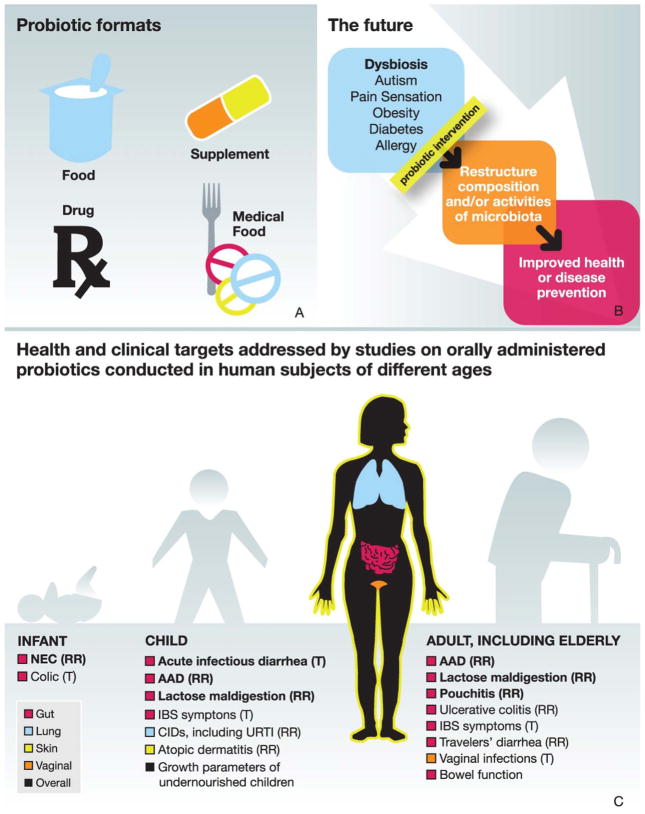
“Some beneficial actions of these organisms are strain specific and can be harnessed to treat or reduce the risk of multiple maladies, including acute infectious diarrhea, irritable bowel syndrome, vaginal infections, ulcerative colitis, lactose maldigestion, and necrotizing enterocolitis (4).”
BackgroundFlux, M. C., & Lowry, C. A. (2019) · Neurobiology of Disease · doi:10.1016/j.nbd.2019.104578 · Cited by 70
Han, X., Liu, Q., Li, Y., Zhang, M., Liu, K., Kwok, L.-Y., Zhang, H., & Zhang, W. (2025) · Trends in Food Science & Technology · doi:10.1016/j.tifs.2025.104938 · Cited by 64
Spontaneously Induced Prophages in Lactobacillus gasseri Contribute to Horizontal Gene Transfer
Baugher, J., Durmaz, E., & Klaenhammer, T. R. (2014) · Applied and Environmental Microbiology · doi:10.1128/aem.04092-13 · Cited by 66
“Species of LAB are commensal bacteria of the human gastrointestinal, oral, and vaginal tracts and are also utilized as starter cultures in dairy, vegetable, wine, and meat fermentations and as probiotics (2).”
BackgroundA comprehensive review of food gels: formation mechanisms, functions, applications, and challenges
Liu, B., Yang, H., Zhu, C., Xiao, J., Cao, H., Simal‐Gándara, J., Li, Y., Fan, D., & Deng, J. (2022) · Critical Reviews in Food Science and Nutrition · doi:10.1080/10408398.2022.2108369 · Cited by 67
“Probiotics have beneficial health effects on the host and are therapeutic candidates for diseases (Hill et al. 2014; Sanders et al. 2013).”
BackgroundReygagne, P., Bastien, P., Couavoux, M. P., Philippe, D., Renouf, M., Castiel‐Higounenc, I., & Guéniche, A. (2017) · Beneficial Microbes · doi:10.3920/bm2016.0144 · Cited by 62
“…in diseases other than those related to the gastrointestinal tract are increasingly recognised such as microbiota-influenced conditions of diabetes, metabolic syndrome, obesity, atherosclerosis, type 1 diabetes, autism, allergy, asthma, atopic disease and depression (Sanders et al. , 2013).”
Screening of Different Probiotic Strains for Their In Vitro Ability to Metabolise Oxalates
Mogna, L., Pane, M., Nicola, S., & Raiteri, E. (2014) · Journal of Clinical Gastroenterology · doi:10.1097/mcg.0000000000000228 · Cited by 62
Selenium-Enriched Saccharomyces cerevisiae Reduces the Progression of Colorectal Cancer
Abedi, J., Saatloo, M. V., Nejati, V., Hobbenaghi, R., Tukmechi, A., Nami, Y., & Khosroushahi, A. Y. (2018) · Biological Trace Element Research · doi:10.1007/s12011-018-1270-9 · Cited by 63
“Besides, probiotics are also effective through different mechanisms including immune response improvement in some diseases such as necrotizing enterocolitis and possibly irritable bowel syndrome [23].”
Probiotics: Health benefits, food application, and colonization in the human gastrointestinal tract
Lau, L. Y. J., & Quek, S. Y. (2024) · Food Bioengineering · doi:10.1002/fbe2.12078 · Cited by 70
Hypocholesterolaemic effect and anti-hypertensive properties of probiotics and prebiotics: A review
Miremadi, F., Sherkat, F., & Stojanovska, L. (2016) · Journal of Functional Foods · doi:10.1016/j.jff.2016.06.016 · Cited by 60
Kandasamy, S., Vlasova, A. N., Fischer, D. D., Chattha, K. S., Shao, L., Kumar, A., Langel, S. N., Rauf, A., Huang, H., Rajashekara, G., et al. (2017) · Frontiers in Immunology · doi:10.3389/fimmu.2017.00334 · Cited by 60
“The beneficial effects of probiotics in reducing the severity of RV diarrhea and modulating viral immunity were observed in randomized clinical studies (18) and experimental studies in animal models (19) (Table 1).”
BackgroundHagland, H. R., & Søreide, K. (2014) · Cancer Letters · doi:10.1016/j.canlet.2014.02.026 · Cited by 59
“course and improving health [111].”
Marras, L., Caputo, M., Bisicchia, S., Soato, M., Bertolino, G., Vaccaro, S., & Inturri, R. (2021) · Microorganisms · doi:10.3390/microorganisms9040836 · Cited by 61
Szajewska, H., & Hojsak, I. (2020) · Postgraduate Medicine · doi:10.1080/00325481.2020.1731214 · Cited by 60
Emerging science of the human microbiome
Jones, M. L., Ganopolsky, J. G., Martoni, C., Labbé, A., & Prakash, S. (2014) · Gut Microbes · doi:10.4161/gmic.29810 · Cited by 57
Johnson‐Henry, K. C., Pinnell, L. J., Waskow, A., Irrazábal, T., Martín, A., Hausner, M., & Sherman, P. M. (2014) · Journal of Nutrition · doi:10.3945/jn.114.195081 · Cited by 57
Self-citationProbiotics in early life: a preventative and treatment approach
Hashemi, A., Villa, C., & Comelli, E. M. (2016) · Food & Function · doi:10.1039/c5fo01148e · Cited by 58
Islam, Z., Uddin, M. E., Rahman, M. T., Islam, M. A., & Harun‐ur‐Rashid, M. (2021) · Small Ruminant Research · doi:10.1016/j.smallrumres.2021.106532 · Cited by 56
An Update on the Effects of Probiotics on Gastrointestinal Cancers
Davoodvandi, A., Fallahi, F., Tamtaji, O. R., Tajiknia, V., Banikazemi, Z., Fathizadeh, H., Abbasi‐Kolli, M., Aschner, M., Ghandali, M., Sahebkar, A., et al. (2021) · Frontiers in Pharmacology · doi:10.3389/fphar.2021.680400 · Cited by 59
Diet alters probiotic L actobacillus persistence and function in the intestine
Tachon, S., Lee, B., & Marco, M. L. (2013) · Environmental Microbiology · doi:10.1111/1462-2920.12297 · Cited by 59
Chemoprevention by Probiotics During 1,2-Dimethylhydrazine-Induced Colon Carcinogenesis in Rats
Walia, S., Kamal, R., Dhawan, D. K., & Kanwar, S. S. (2018) · Digestive Diseases and Sciences · doi:10.1007/s10620-018-4949-z · Cited by 54
Gut Microbiota and Probiotics/Synbiotics for Modulation of Immunity in Critically Ill Patients
Shimizu, K., Ojima, M., & Ogura, H. (2021) · Nutrients · doi:10.3390/nu13072439 · Cited by 56
“Probiotics, most commonly Lactobacillus and Bifidobacterium, have been shown to have preventive effects in many kinds of diseases, including antibiotic-induced diarrhea, acute diarrhea, and necrotizing enterocolitis [35].”
BackgroundGut Microbiota: The Next-Gen Frontier in Preventive and Therapeutic Medicine?
Nagpal, R., Yadav, H., & Marotta, F. (2014) · Frontiers in Medicine · doi:10.3389/fmed.2014.00015 · Cited by 59
Schmitz, S. S., Werling, D., & Allenspach, K. (2015) · PLoS ONE · doi:10.1371/journal.pone.0120779 · Cited by 53
“They are frequently commensal bacteria, but can also be sourced from fermented foods or the environment [24].”
BackgroundSánchez, E., Nieto, J. C., Boullosa, A., Vidal, S., Sancho, F. J., Rossi, G., Sancho‐Bru, P., Oms, R., Mirelis, B., Juárez, C., et al. (2014) · Liver International · doi:10.1111/liv.12566 · Cited by 52
“First, different probiotics can produce different effects in a given experimental or clinical situation (12, 15).”
BackgroundSingh, B. P., & Vij, S. (2018) · Food Bioscience · doi:10.1016/j.fbio.2018.01.002 · Cited by 52
Cabello-Olmo, M., Oneca, M., Torre, P., Sáinź, N., Moreno-Aliaga, M. J., Guruceaga, E., Cano, J. V. D., Encı́o, I., Barajas, M., & Araña, M. (2019) · Nutrients · doi:10.3390/nu11102530 · Cited by 58
“As not all the strains belonging to the same specie shares exactly the same beneficial effect [28,29], probably because of tiny differences in their physical and chemical properties [110], a full and comprehensive identification of the multi-species consortia of microorganisms presents in FFP, preferably up to strain…”
BackgroundAlemu, B. K., Azeze, G. G., Wu, L., Lau, S. L., Wang, C. C., & Wang, Y. (2023) · American Journal of Obstetrics & Gynecology MFM · doi:10.1016/j.ajogmf.2023.101148 · Cited by 52
Enteric microbiota leads to new therapeutic strategies for ulcerative colitis
Chen, W.-X. (2014) · World Journal of Gastroenterology · doi:10.3748/wjg.v20.i42.15657 · Cited by 52
Grujović, M. Ž., Semedo‐Lemsaddek, T., & Marković, K. G. (2025) · Foods · doi:10.3390/foods14173088 · Cited by 61
“Lastly, probiotics can influence the immune system, potentially enhancing resistance to pathogens and improving outcomes related to food allergies [19].”
Anti-viral Effect of Bifidobacterium adolescentis against Noroviruses
Li, D., Breiman, A., LePendu, J., & Uyttendaele, M. (2016) · Frontiers in Microbiology · doi:10.3389/fmicb.2016.00864 · Cited by 50
“…the human and animal host directly, by preventing the infection and combating the causative agent of the intestinal disorder, or indirectly, by balancing the disrupted equilibrium of the enteric flora and augmenting the host’s immune responses (Maragkoudakis et al., 2010; Sanders et al., 2013).”
BackgroundDietary Lactate Supplementation Protects against Obesity by Promoting Adipose Browning in Mice
Yao, Z., Yan, Y., Zheng, X., Wang, M., Zhang, H., Li, H., & Chen, W. (2020) · Journal of Agricultural and Food Chemistry · doi:10.1021/acs.jafc.0c05899 · Cited by 49
Immunomodulation properties of multi-species fermented milks
Foligné, B., Parayre, S., Cheddani, R., Famelart, M., Madec, M., Plé, C., Breton, J., Dewulf, J., Jan, G., & Deutsch, S. (2015) · Food Microbiology · doi:10.1016/j.fm.2015.04.002 · Cited by 49
Gut Microbiota in HIV Infection: Implication for Disease Progression and Management
Nwosu, F. C., Avershina, E., Wilson, R., & Rudi, K. (2014) · Gastroenterology Research and Practice · doi:10.1155/2014/803185 · Cited by 49
“Although a direct relationship betweenmicrobial translocation andHIVdisease progressionmay seem to exist [26, 39] especially in the chronic phase of the infection [12], it remains clear that HIV itself fuels disease progression by initiating a proinflammatory environment in the GIT and inflicting damage on the mucosal…”
BackgroundZhang, L., Han, H., Li, X., Chen, C., Xie, X., Su, G., Ye, S., Wang, C., He, Q., Wang, F., et al. (2021) · Therapeutic Advances in Gastroenterology · doi:10.1177/17562848211035670 · Cited by 48
Influence of gastrointestinal stress on autoinducer-2 activity of twoLactobacillusspecies
Yeo, S., Park, H., Ji, Y., Park, S., Yang, J., Lee, J., Mathara, J. M., Shin, H., & Holzapfel, W. H. (2015) · FEMS Microbiology Ecology · doi:10.1093/femsec/fiv065 · Cited by 48
“…is defined as “a live microorganism that, when administered in adequate amounts, confer a health benefit on the host” [FAO/WHO, 2001], by prevention and/or treatment of several chronic or acute disorders related to the gastrointestinal tract (GIT) (Kaur et al., 2009; Sanders et al., 2013).”
BackgroundGut microbiota and inflammatory bowel disease: the role of antibiotics in disease management
Kerman, D. H., & Deshpande, A. R. (2014) · Postgraduate Medicine · doi:10.3810/pgm.2014.07.2779 · Cited by 47
Fuloria, S., Mehta, J., Talukdar, M. P., Sekar, M., Gan, S. H., Subramaniyan, V., Rani, N. N. I. M., Begum, M. Y., Chidambaram, K., Nordin, R. B., et al. (2022) · Frontiers in Microbiology · doi:10.3389/fmicb.2022.950913 · Cited by 57
Production and Biomedical Applications of Probiotic Biosurfactants
Fariq, A., & Saeed, A. (2016) · Current Microbiology · doi:10.1007/s00284-015-0978-4 · Cited by 48
Vitexin Protects against Dextran Sodium Sulfate-Induced Colitis in Mice and Its Potential Mechanisms
Zhang, J., Liang, F., Chen, Z., Chen, Y., Yuan, J., Xiong, Q., Hou, S., Huang, S. M., Liu, C., & Liang, J. (2022) · Journal of Agricultural and Food Chemistry · doi:10.1021/acs.jafc.2c05177 · Cited by 45
Baralić, K., Živančević, K., Božić, D., & Đukić-Ćosić, D. (2022) · Food and Chemical Toxicology · doi:10.1016/j.fct.2022.113582 · Cited by 49
Potential Impact of Probiotic Consumption on the Bioactivity of Dietary Phytochemicals
Rossi, M., Amaretti, A., Leonardi, A., Raimondi, S., Simone, M., & Quartieri, A. (2013) · Journal of Agricultural and Food Chemistry · doi:10.1021/jf402722m · Cited by 45
Allergy in Children in Hand Versus Machine Dishwashing
Hesselmar, B., Hicke-Roberts, A., & Wennergren, G. (2015) · PEDIATRICS · doi:10.1542/peds.2014-2968 · Cited by 47
Artificial Magnetic Bacteria: Living Magnets at Room Temperature
Martı́n, M., Carmona, F., Cuesta, R., Rondón, D., Gálvez, N., & Dominguez-Vera, J. M. (2014) · Advanced Functional Materials · doi:10.1002/adfm.201303754 · Cited by 45
Quaresma, M. P., Damasceno, S., Monteiro, C. E. D. S., Lima, F. J. B., Mendes, T. S., Lima, M. D. S., Justino, P. F. C., Barbosa, A. L. D. R., de Souza, M. H. L. P., de Souza, E. P., et al. (2019) · Nutrition and Cancer · doi:10.1080/01635581.2019.1675719 · Cited by 45
Gut microbiome, gut function, and probiotics: Implications for health
Hajela, N., Ramakrishna, B., Nair, G. B., Abraham, P., Gopalan, S., & Ganguly, N. K. (2015) · Indian Journal of Gastroenterology · doi:10.1007/s12664-015-0547-6 · Cited by 47
“However, given the heterogeneity of symptoms of IBS, studies that focus on specific strains for specific IBS-related symptoms would provide a greater insight for strain-specific benefits of probiotics in this condition [75].”
BackgroundSaneian, H., Pourmoghaddas, Z., Roohafza, H., & Gholamrezaei, A. (2015) · Gastroenterology and hepatology from bed to bench. · Cited by 43
Effects of the Modulation of Microbiota on the Gastrointestinal Immune System and Bowel Function
Kanauchi, O., Andoh, A., & Mitsuyama, K. (2013) · Journal of Agricultural and Food Chemistry · doi:10.1021/jf402441f · Cited by 45
Reductase-Labile Peptidic Supramolecular Hydrogels Aided in Oral Delivery of Probiotics
Chen, J., Zhang, P., Wu, C., Yao, Q., Cha, R., & Gao, Y. (2023) · ACS Applied Materials & Interfaces · doi:10.1021/acsami.3c04408 · Cited by 41
Effect of dietary Bacillus coagulans on the performance and intestinal microbiota of weaned piglets
Sun, T., Miao, H., Zhang, C., Wang, Y., Liu, S., Jiao, P., Li, W., Li, Y., & Huang, Z. (2022) · animal · doi:10.1016/j.animal.2022.100561 · Cited by 40
Probiotic Bacterial and Fungal Strains: Claims with Evidence
Szajewska, H., Konarska, Z., & Kołodziej, M. (2016) · Digestive Diseases · doi:10.1159/000443359 · Cited by 43
Aceti, A., Gori, D., Barone, G., Callegari, M. L., Fantini, M. P., Indrio, F., Maggio, L., Meneghin, F., Morelli, L., Zuccotti, G., et al. (2016) · Nutrients · doi:10.3390/nu8080471 · Cited by 40
“Probiotics are live microorganisms which, when ingested in adequate amounts, confer a health benefit to the host, by modifying the composition and function of gut microbiota and the immunological responses in the host [10].”
BackgroundLiu, Y., Liu, J., Zhang, D., Ge, K., Wang, P., Liu, H., Fang, G., & Wang, S. (2017) · Journal of Agricultural and Food Chemistry · doi:10.1021/acs.jafc.7b02870 · Cited by 41
Hooshyar, Y., Kenari, A. A., Paknejad, H., & Gandomi, H. (2020) · Probiotics and Antimicrobial Proteins · doi:10.1007/s12602-020-09645-8 · Cited by 40
Crohn’s disease specific pancreatic antibodies: clinical and pathophysiological challenges
Roggenbuck, D., Reinhold, D., Schierack, P., Bogdanos, D. P., Conrad, K., & Laass, M. W. (2014) · Clinical Chemistry and Laboratory Medicine (CCLM) · doi:10.1515/cclm-2013-0801 · Cited by 39
Epigenomics and the Microbiota
Alenghat, T. (2014) · Toxicologic Pathology · doi:10.1177/0192623314553805 · Cited by 42
“Further, investigation into probiotics has significantly expanded in order to identify potential cocktails of commensal bacteria or bacteria-derived products that can beneficially regulate the immune system, confer protection against infections, or aid in digestion (Sanders et al. 2013).”
BackgroundYu, G., Hu, N., Wang, L., Wang, C., Han, X., Humphry, M. S., Ravel, J., Abnet, C. C., Taylor, P. R., & Goldstein, A. M. (2017) · International Journal of Cancer · doi:10.1002/ijc.30700 · Cited by 42
Growth Mode and Carbon Source Impact the Surfaceome Dynamics of Lactobacillus rhamnosus GG
Savijoki, K., Nyman, T. A., Kainulainen, V., Miettinen, I., Siljamäki, P., Fallarero, A., Sandholm, J. A., Satokari, R. M., & Varmanen, P. (2019) · Frontiers in Microbiology · doi:10.3389/fmicb.2019.01272 · Cited by 39
“Probiotic bacteria, applied in various aspects of the food and pharmaceutical industries (Sanders et al., 2013; Goldenberg et al., 2017), exploit sophisticated strategies to enable the utilization of many nutrients, maintain viability and adherence to mucosal surfaces, and modulate host immunity in a beneficial way du…”
BackgroundFu, R., Liang, C., Chen, D., Yan, H., Tian, G., Zheng, P., He, J., Yu, J., Mao, X., Huang, Z., et al. (2021) · Journal of Animal Physiology and Animal Nutrition · doi:10.1111/jpn.13529 · Cited by 39
Microbial Contamination of Food: Probiotics and Postbiotics as Potential Biopreservatives
Zavišić, G., Ristić, S., Petricevic, S. M., Janković, D. L., & Petković, B. B. (2024) · Foods · doi:10.3390/foods13162487 · Cited by 41
“…are effective in combating foodborne pathogens, there are challenges in characterizing and elucidating the underlying molecular mechanisms of action and in developing potential delivery strategies that could maintain the viability and functionality of the probiotic in the target organ [40].”
BackgroundWhether viable and dead probiotic are equally efficacious?
Sarkar, S. (2018) · Nutrition & Food Science · doi:10.1108/nfs-07-2017-0151 · Cited by 38
Zhai, Z., Torres‐Fuentes, C., Heeney, D. D., & Marco, M. L. (2019) · Journal of Agricultural and Food Chemistry · doi:10.1021/acs.jafc.8b06657 · Cited by 40
Živković, M., Hidalgo-Cantabrana, C., Kojić, M., Gueimonde, M., Golić, N., & Ruas‐Madiedo, P. (2015) · Food Research International · doi:10.1016/j.foodres.2015.05.012 · Cited by 39
Probiotics, Prebiotics, and Fibers in Nutritive and Functional Beverages
Raman, M., Ambalam, P. S., & Doble, M. (2019) · Elsevier eBooks · doi:10.1016/b978-0-12-816842-4.00009-5 · Cited by 40
Lu, W.-W., Chen, X., Ni, J.-L., Sheng-liang, Z., Fei, A., & Wang, X. (2021) · Annals of Palliative Medicine · doi:10.21037/apm-21-429 · Cited by 40
“Probiotics and their mechanism The World Health Organization defines probiotics as live microorganisms that can give the host health benefits (28).”
BackgroundPrato cheese as suitable carrier for Lactobacillus acidophilus La5 and Bifidobacterium Bb12
Chaves, K. S., & Gigante, M. L. (2015) · International Dairy Journal · doi:10.1016/j.idairyj.2015.08.009 · Cited by 36
Wu, Z. F., Wu, J., Cao, P., Jin, Y., Pan, D., Zeng, X., & Guo, Y. (2017) · Journal of Dairy Science · doi:10.3168/jds.2017-12640 · Cited by 36
“Lactic acid bacteria ( LAB ) have potential probiotic use as food-grade fermentation starters (Sanders et al., 2013).”
BackgroundShelf life and quality of probiotic yogurt produced with Lactobacillus acidophilus and Gobdin
Ertem, H., & Çakmakçı, S. (2017) · International Journal of Food Science & Technology · doi:10.1111/ijfs.13653 · Cited by 36
“…infections, alleviating lactose intolerance, preventing gastrointestinal diseases, lowering serum cholesterol levels, providing anticarcinogenic activity, reducing allergens and improving disease resistance (FAO/WHO, 2001; Sanders et al., 2013; NajgebauerLejko, 2014; Mishra et al., 2015).”
BackgroundEffects of temperature, diet and genotype-induced variations on the gut microbiota of abalone
Wang, X., Tang, B., Luo, X., Ke, C., Huang, M., You, W., & Wang, Y. (2020) · Aquaculture · doi:10.1016/j.aquaculture.2020.735269 · Cited by 36
Precise probiotic therapy: Advances, bottlenecks, and the road to microbiome-informed nutrition
Jiang, Y., Jiang, S., Wang, Z., Zhu, P., Zhang, J., Teng, F., & Huang, S. (2026) · Gut Microbes · doi:10.1080/19490976.2026.2623359 · Cited by 41
“4,37 The success of probiotic colonization is largely determined by the existing microbial community, which can either promote or impede the establishment and function of introduced strains.”
The Role of Intestinal Microbiota in Acute Graft-versus-Host Disease
Chen, Y., Zhao, Y., Cheng, Q., Wu, D., & Liu, H. (2015) · Journal of Immunology Research · doi:10.1155/2015/145859 · Cited by 37
“Some of the beneficial impacts of probiotics have been scientifically documented, and three main categories of probiotics contributing to host health have been described [83, 88, 89].”
BackgroundFilling the Gaps: Current Research Directions for a Rational Use of Probiotics in Preterm Infants
Aceti, A., Beghetti, I., Maggio, L., Martini, S., Faldella, G., & Corvaglia, L. (2018) · Nutrients · doi:10.3390/nu10101472 · Cited by 35
“In addition, despite a generally clear association between dysbiosis and disease, the causality and reversal of disease in response to probiotic-induced changes in gut microbiota have not yet been demonstrated [19].”
BackgroundPatrone, V., Molinari, P., & Morelli, L. (2016) · International Journal of Food Microbiology · doi:10.1016/j.ijfoodmicro.2016.08.012 · Cited by 34
Bravo-Santano, N., Boll, E. J., Capern, L. C., Cieplak, T., Keleszade, E., Letek, M., & Costabile, A. (2020) · Antibiotics · doi:10.3390/antibiotics9120849 · Cited by 37
“Due to their characteristics, probiotics are good candidates for preventing and treating gastrointestinal infections and acute diarrhea [1].”
BackgroundMicrobiota Targeted Interventions of Probiotic Lactobacillus as an Anti-Ageing Approach: A Review
Ishaq, M., Khan, A., Bacha, A. S., Shah, T., Hanif, A., Ahmad, A. A., Ke, W., Li, F., Din, A. U., Ding, Z., et al. (2021) · Antioxidants · doi:10.3390/antiox10121930 · Cited by 34
Bi, Z., Cui, E., Yao, Y., Chang, X., Wang, X., Zhang, Y., Xu, G., Zhuang, H., & Hua, Z. (2022) · Frontiers in Microbiology · doi:10.3389/fmicb.2022.927277 · Cited by 34
Four types of B ifidobacteria trigger autophagy response in intestinal epithelial cells
Lin, R., Jiang, Y., Zhao, X. Y., Guan, Y., Qian, W., Fu, X. C., Ren, H. Y., & Hou, X. H. (2014) · Journal of Digestive Diseases · doi:10.1111/1751-2980.12179 · Cited by 36
Fermented Dairy Products Modulate Citrobacter rodentium–Induced Colonic Hyperplasia
Collins, J. W., Chervaux, C., Raymond, B., Derrien, M., Brazeilles, R., Kosta, A., Chambaud, I., Crepin, V. F., & Frankel, G. M. (2014) · The Journal of Infectious Diseases · doi:10.1093/infdis/jiu205 · Cited by 34
“ments, or medical foods [1, 3], and are defined as live microorganisms that confer a health benefit to the host, aside from general nutrition [4].”
BackgroundThe Crosstalk Between Gut Microbiota and Obesity and Related Metabolic Disorders
Xu, W., Nie, Y., Yang, Z., & Lü, N. (2016) · Future Microbiology · doi:10.2217/fmb-2015-0024 · Cited by 35
Flach, J., van der Waal, M., Kardinaal, A., Schloesser, J., Ruijschop, R., & Claassen, E. (2018) · Cogent Food & Agriculture · doi:10.1080/23311932.2018.1452839 · Cited by 37
“For instance, the consumption of certain probiotic strains is associated with a decreased risk for antibiotic-associated diarrhea (AAD) or upper respiratory infections (Hao, Lu, Dong, Huang, & Wu, 2011; Sanders et al., 2013).”
BackgroundPlavec, T. V., Kuchař, M., Benko, A., Lišková, V., Černý, J., Berlec, A., & Malý, P. (2019) · Microorganisms · doi:10.3390/microorganisms7050152 · Cited by 33
“The composition of microbiota could be influenced by food management and prebiotic supplementation [37]; alternatively, supplementation with probiotic lactic acid bacteria that belong to the phylum Firmicutes was also established as beneficial [38].”
BackgroundUpdate on Strategies of Probiotics for the Prevention and Treatment of Colorectal Cancer
Tang, G., & Zhang, L. (2020) · Nutrition and Cancer · doi:10.1080/01635581.2020.1865420 · Cited by 32
“incidence (3), and it is also the fourth most common cause of death in cancers (4).”
BackgroundOh, B., Kim, J. W., & Kim, B. S. (2016) · Helicobacter · doi:10.1111/hel.12306 · Cited by 36
Gupta, M., & Bajaj, B. K. (2017) · Probiotics and Antimicrobial Proteins · doi:10.1007/s12602-017-9306-6 · Cited by 34
Immunostimulatory Activity of Lactococcus lactis subsp. lactis CAB701 Isolated from Jeju Cabbage
Jeong, H., Kim, S., Hwang, U.-S., Choi, H.-J., & Park, Y. (2023) · Microorganisms · doi:10.3390/microorganisms11071718 · Cited by 34
“By introducing beneficial bacteria into the gastrointestinal (GI) tract, probiotics can help restore the gut microbiota balance and promote digestion and nutrient absorption [3].”
BackgroundLiu, Y., Hoang, T. K., Taylor, C. M., Park, E. S., Freeborn, J., Luo, M., Roos, S., & Rhoads, J. M. (2021) · American Journal of Physiology-Gastrointestinal and Liver Physiology · doi:10.1152/ajpgi.00072.2021 · Cited by 35
Engineering the human gut commensal Bacteroides thetaiotaomicron with synthetic biology
Lai, Y., Hayashi, N., & Lu, T. K. (2022) · Current Opinion in Chemical Biology · doi:10.1016/j.cbpa.2022.102178 · Cited by 31
Production of a Functional Frozen Yogurt Fortified with Bifidobacterium spp.
Abdelazez, A., Muhammad, Z., Zhang, Q.-X., Zhu, Z.-T., Abdel-Motaal, H., Sami, R., & Meng, X. (2017) · BioMed Research International · doi:10.1155/2017/6438528 · Cited by 32
Gut Microbiota Alteration After Long-Term Consumption of Probiotics in the Elderly
Gao, R., Zhang, X., Huang, L., Shen, R., & Qin, H. (2018) · Probiotics and Antimicrobial Proteins · doi:10.1007/s12602-018-9403-1 · Cited by 32
Metadata
- Authors
- Sanders, M. E., Guarner, F., Guerrant, R., Holt, P. R., Quigley, E. M., Sartor, R. B., Sherman, P. M., & Mayer, E. A.
- Affiliations
- Dairy & Food Culture Technologies, Centennial, Colorado, USA
- Vall d'Hebron Hospital Universitari (ES)
- University of Virginia (US)
- Rockefeller University (US)
- Houston Methodist (US)
- University of North Carolina at Chapel Hill (US)
- University of Toronto (CA)
- University of California, Los Angeles (US)
- Corresponding author
- Mayer, Emeran A
- ORCID
- Venue
- Gut
- Publisher
- BMJ
- Published
- 2013-03-08
- Volume
- 62
- Issue
- 5
- Pages
- 787-796
- ISSN
- 0017-5749 (ISSN-L)
- 1468-3288
- PMC
- PMC4351195
- OpenAlex
- W2148017101
- Cited by
- 503
- References
- 134
- Citations by year
- 2026: 18 · 2025: 23 · 2024: 20 · 2023: 29 · 2022: 29 · 2021: 34 · 2020: 37 · 2019: 29 · 2018: 44 · 2017: 46 · 2016: 52 · 2015: 58 · 2014: 61 · 2013: 22
- FWCI
- 8.55
- Type
- journal article
- Language
- en
- Open access
- hybrid
- doi.org
- Licence
- cc-by-nc
- Locations
- Gut (publishedVersion, cc-by-nc)
- PubMed (publishedVersion)
- Europe PMC (PubMed Central) (acceptedVersion, cc-by-nc)
- PubMed Central (acceptedVersion, cc-by-nc)
- Carolina Digital Repository (University of North Carolina at Chapel Hill) (submittedVersion)
- eScholarship (California Digital Library) (submittedVersion)
- eScholarship (California Digital Library) (submittedVersion, cc-by-nc)
- HighWire Press Open Archive (submittedVersion)
- UNC Libraries
- Funders
- Procter and Gamble
- Mead Johnson Nutrition
- Danone
- Ironwood Pharmaceuticals, Incorporated
- Alimentary Health
- Instituto Danone
- Norgine
- National Institute of Diabetes and Digestive and Kidney Diseases (R01DK048351, U01DK082370)
- Topics
- Life Sciences › Agricultural and Biological Sciences › Food Science › Probiotics and Fermented Foods
- Life Sciences › Biochemistry, Genetics and Molecular Biology › Molecular Biology › Gut microbiota and health
- Health Sciences › Nursing › Nutrition and Dietetics › Infant Nutrition and Health
- Keywords
- probiotics, gut microbiota, commensal microbiota, atopic dermatitis, necrotizing enterocolitis, pouchitis, irritable bowel syndrome, host immune response, diet and microbiome, microbiota resilience
- MeSH terms
- Colitis, Ulcerative, Crohn Disease, Cross Infection, Diarrhea, Female, Health Status, Humans, Hypersensitivity, Vaginitis, Colorectal Neoplasms, Meta-Analysis as Topic, Evidence-Based Medicine, Probiotics, Enterocolitis, Necrotizing, Irritable Bowel Syndrome
About these checks
Registry, retraction, Cites and statistics results are computed, not judged, with one exception: a printed reference that no index lists is read once by a model before it counts as a citation error. Claims are extracted by a model and kept only when their quote appears verbatim in the text; each cited source is then checked, with a model’s help, for whether it says what the claim relies on. Those verdicts can be wrong — read the claim’s quote and the cited source before relying on one.
Statistics and arithmetic are recomputed, not judged.
Confidence bands are shown only for fields calibrated on our annotated test set. None is calibrated yet, so no band is shown.
What counts as a claim ›How we measure confidence ›How we check this ›
Are you an author, or do you see a problem with this page? Request a review
