

The DOI matches its Crossref record; 133 of the 134 references it cites were found in a registry or an index.
An update on the use and investigation of probiotics in health and disease
Open accessAbstract
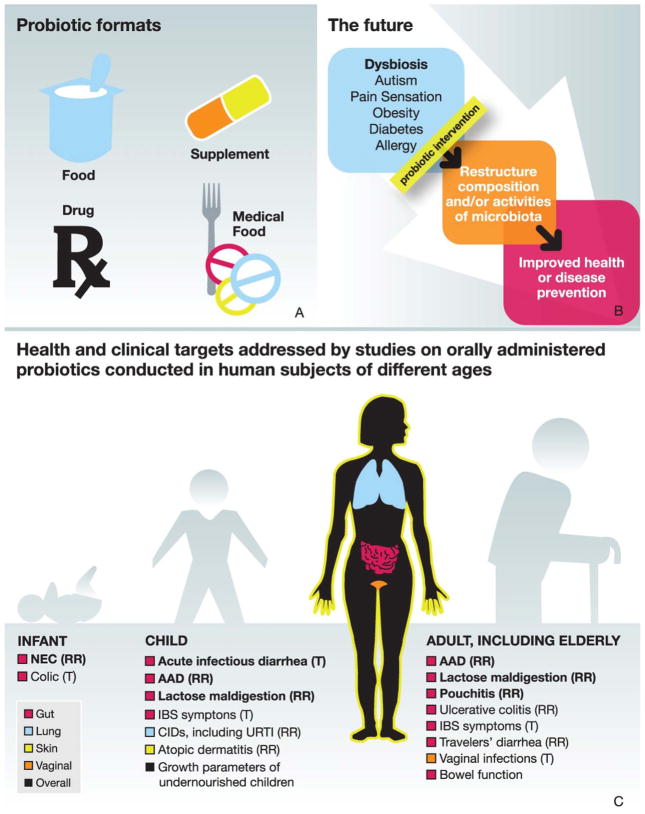
Probiotics are derived from traditional fermented foods, from beneficial commensals or from the environment. They act through diverse mechanisms affecting the composition or function of the commensal microbiota and by altering host epithelial and immunological responses. Certain probiotic interventions have shown promise in selected clinical conditions where aberrant microbiota have been reported, such as atopic dermatitis, necrotising enterocolitis, pouchitis and possibly irritable bowel syndrome. However, no studies have been conducted that can causally link clinical improvements to probiotic-induced microbiota changes. Whether a disease-prone microbiota pattern can be remodelled to a more robust, resilient and disease-free state by probiotic administration remains a key unanswered question. Progress in this area will be facilitated by: optimising strain, dose and product formulations, including protective commensal species; matching these formulations with selectively responsive subpopulations; and identifying ways to manipulate diet to modify bacterial profiles and metabolism.
Overview
The claims and statistics of this paper haven’t been checked yet.
Run the check — free, no account needed. It reads the open-access text and checks the sources it cites.
Integrity signals
Registry
Cites
Statistics
Figures
Verification
Claims the paper makes
The claims and statistics of this paper haven’t been checked yet.
Run the check — free, no account needed. It reads the open-access text and checks the sources it cites.
Claims other papers make about this one
Each is checked against this paper’s own text: does it say what the citing paper says it does?
In the citing paper
“FMT introduces a complete, stable, and durable community of gut microbiota [26] , unlike probiotics, that temporarily alter the metabolic, or immunologic activity, of the native gut microbiota [27] .”
From Intestinal microbiota in health and disease: Role of bifidobacteria in gut homeostasis (2014) · cites this paper as [27]
In the citing paper
“the use of probiotics in preventive medicine to keep a healthy intestinal function is well documented”
From Intestinal microbiota in health and disease: Role of bifidobacteria in gut homeostasis (2014) · cites this paper as [27]
Self-check
Percentages, sums and reported differences re-computed from the paper’s own numbers.
The self-check needs the paper’s full text.
Citations
Cites
Longstreth, G. F., Thompson, W. G., Chey, W. D., Houghton, L. A., Mearin, F., & Spiller, R. C. (2006) · Gastroenterology · doi:10.1053/j.gastro.2005.11.061 · Cited by 4,856
Dominguez-Bello, M. G., Costello, E. K., Contreras, M., Magris, M., Hidalgo, G., Fierer, N., & Knight, R. (2010) · Proceedings of the National Academy of Sciences · doi:10.1073/pnas.1002601107 · Cited by 4,774 · cited 1×
“92 Factors associated with allergy such as birth delivery mode (caesarean section vs vaginal delivery), 93 antibiotic use in the newborn and infant, and non-breast-milk diets are also associated with shifts in the gut microbiota.”
BackgroundInduction of Colonic Regulatory T Cells by Indigenous Clostridium Species
Atarashi, K., Tanoue, T., Shima, T., Imaoka, A., Kuwahara, T., Momose, Y., Cheng, G., Yamasaki, S., Saito, T., Ohba, Y., et al. (2011) · Science · doi:10.1126/science.1198469 · Cited by 3,752
Global, regional, and national causes of child mortality in 2008: a systematic analysis
Black, R. E., Cousens, S. N., Johnson, H. L., Lawn, J. E., Rudan, I., Bassani, D. G., Jha, P., Campbell, H. J., Walker, C. L. F., Cibulskis, R. E., et al. (2010) · The Lancet · doi:10.1016/s0140-6736(10)60549-1 · Cited by 3,062
Vrieze, A., Van Nood, E., Holleman, F., Salojärvi, J., Kootte, R. S., Bartelsman, J. F. W. M., Dallinga–Thie, G. M., Ackermans, M. T., Serlie, M. J., Oozeer, R., et al. (2012) · Gastroenterology · doi:10.1053/j.gastro.2012.06.031 · Cited by 2,913 · cited 1×
“Recently, faecal microbiota transplant from non-diabetic donors infused into the duodenum of patients with the metabolic syndrome improved their insulin sensitivity, highlighting the broad potential of this intervention.(116) However, cocktails of defined microbes imparting key functionalities may provide a more accep…”
BackgroundNeu, J., & Walker, W. A. (2011) · New England Journal of Medicine · doi:10.1056/nejmra1005408 · Cited by 2,141
Fusobacterium nucleatum infection is prevalent in human colorectal carcinoma
Castellarin, M., Warren, R. L., Freeman, J. D., Dreolini, L., Krzywinski, M., Strauss, J., Barnes, R., Watson, P., Allen-Vercoe, E., Moore, R. A., et al. (2012) · Genome Research · doi:10.1101/gr.126516.111 · Cited by 2,043 · cited 1×
“Others have analysed the microbiology in patients with CRC and suggested that the bacterial diversity is less,(72) altered(73) 74 or accompanied by high levels of Fusobacterium nucleatum sequences.(75) Studies in rodents have concentrated on probiotic effects on precancerous lesions and tumours.”
BackgroundMicrobial Influences in Inflammatory Bowel Diseases
Sartor, R. B. (2008) · Gastroenterology · doi:10.1053/j.gastro.2007.11.059 · Cited by 1,927
Self-citationThe Toll-like receptor 2 pathway establishes colonization by a commensal of the human microbiota
Round, J. L., Lee, S. M., Li, J., Tran, G., Jabri, B., Chatila, T. A., & Mazmanian, S. K. (2011) · Science · doi:10.1126/science.1206095 · Cited by 1,604
O’Mahony, L., McCarthy, J., Kelly, P., Hurley, G., Luo, F., Chen, K., O’Sullivan, G. C., Kiely, B., Collins, J. K., Shanahan, F., et al. (2005) · Gastroenterology · doi:10.1053/j.gastro.2004.11.050 · Cited by 1,448
Self-citation
Cited by
Sorted by citations
Inflammation-induced cancer: Crosstalk between tumours, immune cells and microorganisms
Elinav, E., Nowarski, R., Thaiss, C. A., Hu, B., Jin, C., & Flavell, R. A. (2013) · Nature reviews. Cancer · doi:10.1038/nrc3611 · Cited by 2,000
Gut microbiota and IBD: causation or correlation?
Ni, J., Wu, G. D., Albenberg, L., & Tomov, V. T. (2017) · Nature Reviews Gastroenterology & Hepatology · doi:10.1038/nrgastro.2017.88 · Cited by 1,778
Gut microbes and the brain: paradigm shift in neuroscience
Mayer, E. A., Knight, R., Mazmanian, S. K., Cryan, J. F., & Tillisch, K. (2014) · The Journal of Neuroscience · doi:10.1523/jneurosci.3299-14.2014 · Cited by 1,033
“Surprisingly, there has been a paucity of studies in animals or humans with prebiotics, although specific prebiotics have been shown to increase brain BDNF levels (Savignac et al., 2013).”
BackgroundSelf-citationIntestinal microbiota in health and disease: Role of bifidobacteria in gut homeostasis
Tojo, R. (2014) · World Journal of Gastroenterology · doi:10.3748/wjg.v20.i41.15163 · Cited by 533
Maldonado-Gómez, M. X., Martínez, I., Bottacini, F., O’Callaghan, A., Ventura, M., van Sinderen, D., Hillmann, B., Vangay, P., Knights, D., Hutkins, R. W., et al. (2016) · Cell Host & Microbe · doi:10.1016/j.chom.2016.09.001 · Cited by 517
“However, the degree to which clinical improvements have been causally linked to probiotic-induced microbiota changes has not been established (Sanders et al., 2013).”
Brain gut microbiome interactions and functional bowel disorders
Mayer, E. A., Savidge, T., & Shulman, R. J. (2014) · Gastroenterology · doi:10.1053/j.gastro.2014.02.037 · Cited by 496
Self-citationBifidobacteria and Their Health-Promoting Effects
Hidalgo-Cantabrana, C., Delgado, S., Ruiz, L., Ruas-Madiedo, P., Sánchez, B., & Margolles, A. (2017) · Microbiology Spectrum · doi:10.1128/microbiolspec.bad-0010-2016 · Cited by 490
“The positive effects that bifidobacteria could exert on human health have been extensively reviewed during the past few years (83, 106, 107).”
BackgroundEngineered E. coli Nissle 1917 for the delivery of matrix-tethered therapeutic domains to the gut
Praveschotinunt, P., Duraj‐Thatte, A., Gelfat, I., Bahl, F., Chou, D. B., & Joshi, N. S. (2019) · Nature Communications · doi:10.1038/s41467-019-13336-6 · Cited by 467
Probiotic supplements might not be universally-effective and safe: A review
Kothari, D., Patel, S., & Kim, S.-K. (2019) · Biomedicine & Pharmacotherapy · doi:10.1016/j.biopha.2018.12.104 · Cited by 445
Probiotics, prebiotics, and postbiotics in health and disease
Ji, J., Jin, W., Liu, S., Jiao, Z., & Li, X. (2023) · MedComm · doi:10.1002/mco2.420 · Cited by 449
“90 They can also produce antimicrobial substances and other metabolites that can directly or indirectly influence host health.”
BackgroundTrends in dairy and non-dairy probiotic products - a review
Kumar, B. V., Vijayendra, S. V. N., & Reddy, O. V. S. (2015) · Journal of Food Science and Technology · doi:10.1007/s13197-015-1795-2 · Cited by 380
“Some health benefits of probiotics have been reviewed recently (Sanders et al. 2013).”
BackgroundModulatory Effects of Probiotics During Pathogenic Infections With Emphasis on Immune Regulation
Raheem, A., Liang, L., Zhang, G., & Cui, S. (2021) · Frontiers in Immunology · doi:10.3389/fimmu.2021.616713 · Cited by 323
Manipulating the gut microbiota to maintain health and treat disease
Scott, K. P., Antoine, J., Midtvedt, T., & van Hemert, S. (2015) · Microbial Ecology in Health and Disease · doi:10.3402/mehd.v26.25877 · Cited by 293
“Some probiotic interventions have an impact on disease and digestive symptoms (8, 9) and the identification of specific health-promoting bacteria from metagenomic-based studies will provide novel candidates for probiotic intervention.”
BackgroundProbiotics for prevention of atopic diseases in infants: systematic review and meta-analysis
Zuccotti, G., Meneghin, F., Aceti, A., Barone, G., Callegari, M. L., Mauro, A. D., Fantini, M. P., Gori, D., Indrio, F., Maggio, L., et al. (2015) · Allergy · doi:10.1111/all.12700 · Cited by 276
“Probiotics are live micro-organisms which, when ingested in adequate amounts, confer a health benefit to the host through an interaction with gut microbiota (10).”
BackgroundFungal Signature in the Gut Microbiota of Pediatric Patients With Inflammatory Bowel Disease
Chehoud, C., Albenberg, L. G., Judge-Golden, C. P., Hoffmann, C., Grunberg, S., Bittinger, K. L., Baldassano, R. N., Lewis, J. D., Bushman, F. D., & Wu, G. D. (2015) · Inflammatory Bowel Diseases · doi:10.1097/mib.0000000000000454 · Cited by 265
Borrelli, A., Bonelli, P., Tuccillo, F. M., Goldfine, I. D., Evans, J. L., Buonaguro, F. M., & Mancini, A. (2018) · Redox Biology · doi:10.1016/j.redox.2018.01.009 · Cited by 271
“Probiotics were defined by the World Health Organization in 2001 as “live microorganisms that, when administered in adequate amounts, confer a health benefit on the host” [101,102].”
BackgroundProbiotics for the Prevention of Antibiotic‐Associated Diarrhea in Children
Szajewska, H., Canani, R. B., Guarino, A., Hojsak, I., Indrio, F., Kolaček, S., Orel, R., Shamir, R., Vandenplas, Y., van Goudoever, J. B., et al. (2015) · Journal of Pediatric Gastroenterology and Nutrition · doi:10.1097/mpg.0000000000001081 · Cited by 264
“Finally, depending on the country, the same probiotic microorganism(s) may be available as food supplements, available as registered pharmaceutical products, and/or incorporated into foods (10).”
BackgroundUse of Probiotics for Management of Acute Gastroenteritis
Szajewska, H., Guarino, A., Hojsak, I., Indrio, F., Kolaček, S., Shamir, R., Vandenplas, Y., & Weizman, Z. (2014) · Journal of Pediatric Gastroenterology and Nutrition · doi:10.1097/mpg.0000000000000320 · Cited by 267
McFarland, L. V. (2014) · BMJ Open · doi:10.1136/bmjopen-2014-005047 · Cited by 235
“With the advent of these newer metagenomic tools, the role of probiotics in the restoration of normal microbiota is being revisited.(29) In light of new guidance documents and recommendations, the goal of this systematic review is to determine how claims for the restoration of the normal microbiota and the correction…”
Effects of the gut microbiota on bone mass
Ohlsson, C., & Sjögren, K. (2014) · Trends in Endocrinology and Metabolism · doi:10.1016/j.tem.2014.11.004 · Cited by 242
Transmission of the gut microbiota: spreading of health
Browne, H. P., Neville, B. A., Forster, S. C., & Lawley, T. D. (2017) · Nature Reviews Microbiology · doi:10.1038/nrmicro.2017.50 · Cited by 232
Demers, M., Dagnault, A., & Desjardins, J. (2014) · Clinical Nutrition · doi:10.1016/j.clnu.2013.10.015 · Cited by 209
Probiotics for prevention and treatment of respiratory tract infections in children
Wang, Y., Li, X., Ge, T., Xiao, Y., Liao, Y., Cui, Y., Zhang, Y., Ho, W., Yu, G., & Zhang, T. (2016) · Medicine · doi:10.1097/md.0000000000004509 · Cited by 209
“, yogurts, kefirs, or a drug).([15]) Probiotics may exert a wide range of beneficial effects, such as balancing the host gut microbiota and interacting with the innate and adaptive immune system, which may promote resistance against pathogens.”
Microbiota-gut-brain signalling in Parkinson's disease: Implications for non-motor symptoms
Felice, V. D., Quigley, E. M., Sullivan, A. M., O'Keeffe, G. W., & O'Mahony, S. M. (2016) · Parkinsonism & Related Disorders · doi:10.1016/j.parkreldis.2016.03.012 · Cited by 205
Self-citationLiang, D., Leung, R. K., Guan, W., & Au, W. W. (2018) · Gut Pathogens · doi:10.1186/s13099-018-0230-4 · Cited by 206
“However, no studies have been conducted to address clinical beneficiary from probiotics intervention [81].”
BackgroundDiet Supplementation, Probiotics, and Nutraceuticals in SARS-CoV-2 Infection: A Scoping Review
Infusino, F., Marazzato, M., Mancone, M., Fedele, F., Mastroianni, C. M., Severino, P., Ceccarelli, G., Santinelli, L., Cavarretta, E., Marullo, A. G. M., et al. (2020) · Nutrients · doi:10.3390/nu12061718 · Cited by 205
Role of Gut Microbiome in Autism Spectrum Disorder and Its Therapeutic Regulation
Taniya, M. A., Chung, H.-J., Al Mamun, A., Alam, S., Aziz, M. A., Emon, N. U., Islam, M. M., Hong, S.-T. S., Podder, B. R., Ara Mimi, A., et al. (2022) · Frontiers in Cellular and Infection Microbiology · doi:10.3389/fcimb.2022.915701 · Cited by 207
Wacklin, P., Laurikka, P., Lindfors, K., Collin, P., Salmi, T. T., Lähdeaho, M., Saavalainen, P., Mäki, M., Mättö, J., Kurppa, K., et al. (2014) · The American Journal of Gastroenterology · doi:10.1038/ajg.2014.355 · Cited by 206
Development of the Pediatric Gut Microbiome: Impact on Health and Disease
Ihekweazu, F. D., & Versalovic, J. A. (2018) · The American Journal of the Medical Sciences · doi:10.1016/j.amjms.2018.08.005 · Cited by 205
“However, many of these studies vary in their specific conclusions, likely due to inadequate sample sizes, weak study design, and the use of various probiotic strains making comparisons difficult.(117) In an effort to clarify which organisms were potentially effective in improving IBS symptoms, Ortiz-Lucas et al(118)sp…”
Folk to functional: An explorative overview of rice-based fermented foods and beverages in India
Ray, M., Ghosh, K., Singh, S. N., & Mondal, K. C. (2016) · Journal of Ethnic Foods · doi:10.1016/j.jef.2016.02.002 · Cited by 199
He, B., Hoang, T. K., Wang, T., Ferris, M., Taylor, C. M., Tian, X., Luo, M., Tran, D. Q., Zhou, J., Tatevian, N., et al. (2017) · Journal of Experimental Medicine · doi:10.1084/jem.20160961 · Cited by 196
Probiotics from research to market: the possibilities, risks and challenges
Foligné, B., Daniel, C., & Pot, B. (2013) · Current Opinion in Microbiology · doi:10.1016/j.mib.2013.06.008 · Cited by 212
Yang, X., Yang, J., Ye, Z., Zhang, G., Nie, W., Cheng, H., Peng, M., Zhang, K., Liu, J., Zhang, Z., et al. (2022) · ACS Nano · doi:10.1021/acsnano.1c09681 · Cited by 198
Microbial-Based and Microbial-Targeted Therapies for Inflammatory Bowel Diseases
Oka, A., & Sartor, R. B. (2020) · Digestive Diseases and Sciences · doi:10.1007/s10620-020-06090-z · Cited by 188
Self-citationFassio, F., Facioni, M. S., & Guagnini, F. (2018) · Nutrients · doi:10.3390/nu10111599 · Cited by 175
“A window of opportunity therefore exists to develop probiotic-containing foods and food supplements that can help ameliorate the symptoms of lactose intolerance, and this is considered one of the fields with the most supporting evidence and the strongest potential for the effective use of probiotics [45].”
BackgroundYan, F., & Polk, D. B. (2020) · Frontiers in Immunology · doi:10.3389/fimmu.2020.01428 · Cited by 181
“Although probiotics have been recommended for adjunctive therapy for inducing and maintaining a remission of pouchitis and UC (57, 58), the clinical efficacy of probiotics for inducing and maintaining a remission of UC is limited.”
BackgroundThe gut microbiome and mental health: implications for anxiety- and trauma-related disorders
Malan-Muller, S., Valles-Colomer, M., Raes, J., Lowry, C. A., Seedat, S., & Hemmings, S. M. J. (2018) · OMICS: A Journal of Integrative Biology · doi:10.1089/omi.2017.0077 · Cited by 161
“The effects of probiotics on the structure and function of the human gut microbiota have only been studied with a few spe-cific bacterial strains; the effects of these treatments on clinical symptoms remain to be fully elucidated (Sanders et al., 2013).”
Wan, M. L. Y., Forsythe, S. J., & El-Nezami, H. S. (2018) · Critical Reviews in Food Science and Nutrition · doi:10.1080/10408398.2018.1490885 · Cited by 185
“Probiotics act through diverse mechanisms that influence the composition or function of gut microbiota, and also affecting host epithelial and immune responses (Sanders et al. 2013).”
BackgroundSugahara, H., Odamaki, T., Fukuda, S., Kato, T., Xiao, J.-Z., Abe, F., Kikuchi, J., & Ohno, H. (2015) · Scientific Reports · doi:10.1038/srep13548 · Cited by 169
“…to the host when administered in adequate amounts (FAO/WHO 2002), and they have been demonstrated to improve intestinal conditions toward the amelioration of irritable bowel syndrome and inflammatory bowel disease to prevent infectious diarrhea and inhibit severe necrotizing enterocolitis 1–3 .”
Molecular mechanisms of postbiotics in colorectal cancer prevention and treatment
Rad, A. H., Maleki, L. A., Kafil, H. S., & Abbasi, A. (2020) · Critical Reviews in Food Science and Nutrition · doi:10.1080/10408398.2020.1765310 · Cited by 172
“…Boonprasom, and Niamsup 2009) Lactobacillus pentosus B281 and Lactobacillus plantarum B282 Cell-free supernatant Caco-2 # Cell proliferation (Saxami et al. 2016) Bacillus polyfermenticus KU3 Indeterminate LoVo, HT-29 and AGS # Cell proliferation ( Lee et al. 2015) Lactobacillus casei…”
BackgroundGut microbiota, the pharmabiotics they produce and host health
Patterson, E., Cryan, J. F., Fitzgerald, G. F., Ross, R. P., Dinan, T. G., & Stanton, C. (2014) · Proceedings of The Nutrition Society · doi:10.1017/s0029665114001426 · Cited by 174
“Dietary interventions with probiotics and prebiotics, due to the dynamic nature of the gut microbial ecosystem, have become an attractive means of selfmanipulating the microbiota to improve health status, and have been extensively reviewed((27,28)).”
BackgroundSzajewska, H., Skórka, A., Ruszczyński, M., & Gieruszczak‐Białek, D. (2013) · Alimentary Pharmacology & Therapeutics · doi:10.1111/apt.12403 · Cited by 163
“of the issues, also issues worth addressing when planning clinical trials on probiotics, were recently discussed elsewhere.(3)”
BackgroundFunctional Dynamics of the Gut Microbiome in Elderly People during Probiotic Consumption
Eloe-Fadrosh, E. A., Brady, A., Crabtree, J., Drabek, E. F., Ma, B., Mahurkar, A., Ravel, J., Haverkamp, M., Fiorino, A.-M., Botelho, C., et al. (2015) · mBio · doi:10.1128/mbio.00231-15 · Cited by 160
“The majority of randomized clinical trials (RCTs) to evaluate the in vivo health benefits of probiotic species have focused on a variety of clinical indicators from the human host; to date, few studies have focused on the impact of probiotic consumption on the resident gastrointestinal microbiota on a community-wide s…”
BackgroundThe Infant Gut Microbiome: Evidence for Obesity Risk and Dietary Intervention
Koleva, P. T., Bridgman, S. L., & Kozyrskyj, A. L. (2015) · Nutrients · doi:10.3390/nu7042237 · Cited by 158
“Moreover, there are still many questions that need to be answered, including which probiotic strains and dosage, timing of probiotic administration, and concurrent infant diet are optimal [101].”
Backgroundvan Hemert, S., Breedveld, A. C., Rovers, J. M. P., Vermeiden, J. P. W., Witteman, B. J. M., Smits, M. G., & de Roos, N. M. (2014) · Frontiers in Neurology · doi:10.3389/fneur.2014.00241 · Cited by 150
“For other clinical conditions, like atopic dermatitis, IBD, and IBS the results from clinical trials have been inconsistent (82, 83).”
Chong, E. S. L. (2013) · World Journal of Microbiology and Biotechnology · doi:10.1007/s11274-013-1499-6 · Cited by 154
“…syndrome, pouchitis, ulcerative colitis, E. S. L. Chong (&) Institute of Food, Nutrition and Human Health, Massey University, PO Box 11222, Palmerston North 4442, New Zealand e-mail: esther_swee@yahoo.com.sg necrotizing enterocolitis and Crohn disease (Sanders et al. 2013; Verna and Lucak 2010).”
BackgroundBacteriocin production: A relatively unharnessed probiotic trait?
Hegarty, J. W., Guinane, C. M., Ross, R. P., Hill, C., & Cotter, P. D. (2016) · F1000Research · doi:10.12688/f1000research.9615.1 · Cited by 141
Implication of Fructans in Health: Immunomodulatory and Antioxidant Mechanisms
Franco‐Robles, E., & López, M. G. (2015) · The Scientific World JOURNAL · doi:10.1155/2015/289267 · Cited by 137
“These effects may be revealed through changes in bacterial populations or metabolic activity [26].”
BackgroundFeng, K., Huang, R.-M., Wu, R., Wei, Y., Zong, M., Linhardt, R. J., & Wu, H. (2019) · Food Chemistry · doi:10.1016/j.foodchem.2019.125977 · Cited by 131
Flach, J., van der Waal, M. B., van den Nieuwboer, M., Claassen, E., & Larsen, O. F. A. (2018) · Critical Reviews in Food Science and Nutrition · doi:10.1080/10408398.2017.1334624 · Cited by 131
“…2014a; Van den Nieuwboer et al., 2014b; Van den Nieuwboer et al., 2015; FDA, 2016) and a reduced risk for antibiotic-associated diarrhea (AAD), necrotizing enterocolitis (NEC) and inflammatory bowel disorders (IBD) is consistently observed in clinical research (Sanders et al., 2013; Floch, 2014).”
Resulton behalf of the Italian Society of Neonatology, Aceti, A., Gori, D., Barone, G., Callegari, M. L., Mauro, A. D., Fantini, M. P., Indrio, F., Maggio, L., Meneghin, F., et al. (2015) · The Italian Journal of Pediatrics/Italian journal of pediatrics · doi:10.1186/s13052-015-0199-2 · Cited by 130
“Probiotics are live–microorganisms which, when ingested in adequate amounts, confer a health-benefit to the host through an interaction with gut microbiota [4].”
BackgroundPotential role of probiotics in the management of gastric ulcer
Khoder, G., Menhali, A. A., Al-Yassir, F., & Karam, S. M. (2016) · Experimental and Therapeutic Medicine · doi:10.3892/etm.2016.3293 · Cited by 129
“1 and Lactobacillus rhamnosus GG can exert the same antiproliferative and proapoptotic effects on cancer cells in vitro (84).”
Rajkumar, H., Kumar, M., Das, N., Kumar, S. N., Challa, H. R., & Nagpal, R. (2015) · Journal of Cardiovascular Pharmacology and Therapeutics · doi:10.1177/1074248414555004 · Cited by 128
Th17 Cells as Potential Probiotic Therapeutic Targets in Inflammatory Bowel Diseases
Owaga, E., Hsieh, R., Mugendi, B., Masuku, S., Shih, C., & Chang, J. (2015) · International Journal of Molecular Sciences · doi:10.3390/ijms160920841 · Cited by 130
“Consequently, upon consumption, probiotic bacteria or cell wall components are internalized by M cells to interact with dendritic cells, which further influence the polarization of T-cell responses (Th1, Th2, or regulatory T cells) [40].”
BackgroundTargeting gut microbiota in hepatocellular carcinoma: probiotics as a novel therapy
Wan, M. L. Y., & El-Nezami, H. S. (2018) · HepatoBiliary Surgery and Nutrition · doi:10.21037/hbsn.2017.12.07 · Cited by 120
“com The popularity of probiotics has expanded exponentially recently, due to their health promoting effects and their abilities to prevent or treat different diseases (54,55).”
BackgroundModulation of microbiota as treatment for intestinal inflammatory disorders: An uptodate
Gallo, A., Passaro, G., Gasbarrini, A., Landolfi, R., & Montalto, M. (2016) · World Journal of Gastroenterology · doi:10.3748/wjg.v22.i32.7186 · Cited by 122
Li, R., Zhang, Y., Polk, D. B., Tomasula, P. M., Yan, F., & Liu, L. (2016) · Journal of Controlled Release · doi:10.1016/j.jconrel.2016.04.009 · Cited by 118
Yang, Y. P., Xia, Y., Chen, H., Hong, L., Feng, J., Yang, J., Yang, Z., Shi, C., Wu, W., Gao, R., et al. (2016) · Oncotarget · doi:10.18632/oncotarget.7045 · Cited by 124
“Therefore, oral administration of probiotics may be beneficial to the patients who are candidates for colorectal surgery [13, 14], however, the postoperative clinical benefit in maintaining balance of gut microbiota remains largely unexplored and unknown [15-19].”
BackgroundKandasamy, S., Vlasova, A. N., Fischer, D. D., Kumar, A., Chattha, K. S., Rauf, A., Shao, L., Langel, S. N., Rajashekara, G., & Saif, L. J. (2016) · The Journal of Immunology · doi:10.4049/jimmunol.1501705 · Cited by 113
“inflammatory diseases of the gastrointestinal (GI) tract in children (13).”
BackgroundThe biological activities of postbiotics in gastrointestinal disorders
Abbasi, A., Rad, A. H., Ghasempour, Z., Sabahi, S., Kafil, H. S., Hasannezhad, P., Saadat, Y. R., & Shahbazi, N. (2021) · Critical Reviews in Food Science and Nutrition · doi:10.1080/10408398.2021.1895061 · Cited by 114
“…possible presence of biological and/or non-biological contaminants, and health-promoting claims (general and specific) (Aguilar-Toal a et al. 2018; Sanders et al. 2013) BB12 can prevent the development of biofilms induced by Streptococcus mutans in dental cavities to a significant extent…”
BackgroundWu, Y., Shao, Y., Song, B., Zhen, W., Wang, Z., Guo, Y., Shahid, M. S., & Nie, W. (2018) · Journal of Animal Science and Biotechnology/Journal of animal science and biotechnology · doi:10.1186/s40104-017-0220-2 · Cited by 109
Cheow, W. S., Kiew, T. Y., & Hadinoto, K. (2014) · Carbohydrate Polymers · doi:10.1016/j.carbpol.2014.01.036 · Cited by 107
Yan, F., Liu, L., Cao, H., Moore, D. J., Washington, M. K., Wang, B., Peek, R. M., Acra, S. A., & Polk, D. B. (2016) · Mucosal Immunology · doi:10.1038/mi.2016.43 · Cited by 106
“However, a number of metaanalyses vary in their conclusions on the effectiveness of probiotics on disease prevention and treatment.(15) Therefore, hypothesis-driven clinical trials using optimal strains, dose, and delivery and treatment protocols are needed.”
Irritable bowel syndrome symptom severity improves equally with probiotic and placebo
Lyra, A., Hillilä, M., Huttunen, T., Männikkö, S., Taalikka, M., Tennilä, J., Tarpila, A., Lahtinen, S., Ouwehand, A. C., & Veijola, L. (2016) · World Journal of Gastroenterology · doi:10.3748/wjg.v22.i48.10631 · Cited by 106
Aceti, A., Maggio, L., Beghetti, I., Gori, D., Barone, G., Callegari, M. L., Fantini, M. P., Indrio, F., Meneghin, F., Morelli, L., et al. (2017) · Nutrients · doi:10.3390/nu9080904 · Cited by 106
“Probiotics, defined as live micro-organisms that confer health benefits to the host through an interaction with gut microbiota and immune function when administered at adequate doses [9], have been proposed as potential tools to prevent NEC and LOS [10].”
BackgroundZhen, W., Shao, Y., Gong, X., Wu, Y., Geng, Y., Wang, Z., & Guo, Y. (2018) · Poultry Science · doi:10.3382/ps/pey119 · Cited by 104
Practical aspects of the use of probiotics in pig production: A review
Barba-Vidal, E., Martín-Orúe, S. M., & Castillejos, L. (2019) · Livestock Science · doi:10.1016/j.livsci.2019.02.017 · Cited by 119
The administration of probiotics and synbiotics in immune compromised adults: is it safe?
van den Nieuwboer, M., Brummer, R. J., Guarner, F., Morelli, L., Cabana, M. D., & Claassen, E. (2014) · Beneficial Microbes · doi:10.3920/bm2014.0079 · Cited by 99
“A high number of randomised trials have been conducted to prove probiotic efficacy with contradicting results (Sanders et al., 2013).”
BackgroundResultSelf-citationNeufeld, K. M., O’Mahony, S. M., Hoban, A. E., Waworuntu, R. V., Berg, B. M., Dinan, T. G., & Cryan, J. F. (2017) · Nutritional Neuroscience · doi:10.1080/1028415x.2017.1397875 · Cited by 98
The Effect of Probiotics and Gut Microbiota on Th17 Cells
Tanabe, S. (2013) · International Reviews of Immunology · doi:10.3109/08830185.2013.839665 · Cited by 102
“[14], and updated articles by other groups are also available [15, 16].”
BackgroundTLR Signaling Modulates Side Effects of Anticancer Therapy in the Small Intestine
Frank, M., Hennenberg, E. M., Eyking, A., Rünzi, M., Gerken, G., Scott, P., Parkhill, J., Walker, A. W., & Cario, E. (2015) · The Journal of Immunology · doi:10.4049/jimmunol.1402481 · Cited by 98
“Probiotic strains may constitute an alternative to reduce chemotoxicity (69); however, large-scale and randomized, placebo-controlled clinical trials are currently lacking.”
BackgroundChaikham, P. (2015) · Food Bioscience · doi:10.1016/j.fbio.2015.07.006 · Cited by 94
Sugahara, H., Yao, R., Odamaki, T., & Xiao, J. (2017) · Beneficial Microbes · doi:10.3920/bm2016.0158 · Cited by 94
Probiotics in digestive diseases: focus on Lactobacillus GG.
Pace, F., Pace, M., & Quartarone, G. (2015) · PubMed · Cited by 89
Kim, J., Hlaing, S. P., Lee, J., Saparbayeva, A., Kim, S., Hwang, D. S., Lee, E. H., Yoon, I., Yun, H., Kim, M., et al. (2021) · Carbohydrate Polymers · doi:10.1016/j.carbpol.2021.118462 · Cited by 96
Chua, L. L., Rajasuriar, R., Azanan, M. S., Abdullah, N. K., Tang, M. S., Lee, S. C., Woo, Y. L., Lim, Y. A. L., Ariffin, H., & Loke, P. (2017) · Microbiome · doi:10.1186/s40168-017-0250-1 · Cited by 94
“probiotics [73]), fecal transplantation [74] and helminth colonization [75, 76] are being investigated, which may be applicable to ALL survivors in the future.”
BackgroundDiling, C., Yang, X., Chaoqun, Z., Yang, J., Xiaocui, T., Jun, C., Shuai, O., & Yizhen, X. (2017) · Oncotarget · doi:10.18632/oncotarget.20689 · Cited by 90
“Oncotarget85845www.impactjournals.com/oncotarget Immune factors play a predominant role in the pathogenesis of IBDs.”
BackgroundInfluentialProbiotics-mediated suppression of cancer
So, S. S. Y., Wan, M. L. Y., & El-Nezami, H. S. (2016) · Current Opinion in Oncology · doi:10.1097/cco.0000000000000342 · Cited by 94
Safety of probiotics and synbiotics in children under 18 years of age
van den Nieuwboer, M., Brummer, R. J., Guarner, F., Morelli, L., Cabana, M., & Claassen, E. (2015) · Beneficial Microbes · doi:10.3920/bm2014.0157 · Cited by 83
Self-citationProbiotics and blood pressure: current insights
Sudha, R., & Upadrasta, A. (2016) · Integrated Blood Pressure Control · doi:10.2147/ibpc.s73246 · Cited by 88
“Introduction Probiotics have gained significant importance in the last few decades for their health promoting roles in the prevention and prophylaxis of various gut associated disorders, urogenital, and respiratory infections.(1) They have also been shown to positively affect the host immune system through immunoglobu…”
BackgroundAnti-influenza Activity of a Bacillus subtilis Probiotic Strain
Starosila, D., Рыбалко, С. Л., Varbanetz, L., Ivanskaya, N. V., & Sorokulova, I. B. (2017) · Antimicrobial Agents and Chemotherapy · doi:10.1128/aac.00539-17 · Cited by 82
“Probiotic bacteria show efficacy in the treatment and prevention of different gastrointestinal conditions, including inflammatory bowel disease, irritable bowel syndrome, necrotizing enterocolitis (7), acute diarrhea (8), and antibiotic-associated diarrhea (9, 10).”
BackgroundFuture for probiotic science in functional food and dietary supplement development
Neef, A., & Sanz, Y. (2013) · Current Opinion in Clinical Nutrition & Metabolic Care · doi:10.1097/mco.0b013e328365c258 · Cited by 82
“com microbiota modulation and that a microbiota predisposing to disease can be reshaped by probiotic administration to reduce the disease incidence in humans [5].”
BackgroundEskandarzadeh, S., Effatpanah, M., Khosravi‐Darani, K., Askari, R., Hosseini, A. F., Reisian, M., & Jazayeri, S. (2019) · Nutritional Neuroscience · doi:10.1080/1028415x.2019.1598669 · Cited by 83
Our extended microbiome: The human-relevant metabolites and biology of fermented foods
Caffrey, E. B., Sonnenburg, J. L., & Devkota, S. (2024) · Cell Metabolism · doi:10.1016/j.cmet.2024.03.007 · Cited by 87
Shen, X. P., Liu, L., Peek, R. M., Acra, S. A., Moore, D. J., Wilson, K. T., He, F., Polk, D. B., & Yan, F. (2018) · Mucosal Immunology · doi:10.1038/s41385-018-0034-3 · Cited by 90
“Although probiotics are recommended for use for several diseases, such as infectious diarrhea and antibiotic-associated diarrhea in children 47, 48 , it should be noted that the effectiveness of probiotics on diseases at different ages might vary 49, 50 .”
Probiotic and synbiotic safety in infants under two years of age
van den Nieuwboer, M., Claassen, E., Morelli, L., Guarner, F., & Brummer, R. J. (2014) · Beneficial Microbes · doi:10.3920/bm2013.0046 · Cited by 78
“This might be attributable to different study populations (and power of the study) and conditions, probiotic strains, dosage and study duration (Sanders et al., 2013).”
BackgroundSelf-citationGargari, G., Taverniti, V., Balzaretti, S., Ferrario, C., Gardana, C., Simonetti, P., & Guglielmetti, S. (2016) · Applied and Environmental Microbiology · doi:10.1128/aem.01753-16 · Cited by 82
“However, although numerous studies have demonstrated the efficacy of different probiotic preparations in a number of pathological conditions (3), the potential benefits associated with probiotic consumption by the general (healthy) population remain unclear (4).”
BackgroundLinking microbiota and respiratory disease
Hauptmann, M., & Schaible, U. E. (2016) · FEBS Letters · doi:10.1002/1873-3468.12421 · Cited by 77
The Role of Bacteria, Probiotics and Diet in Irritable Bowel Syndrome
Harper, A. J., Naghibi, M., & Garcha, D. S. (2018) · Foods · doi:10.3390/foods7020013 · Cited by 82
“This may be the reason for the variable results observed in human clinical studies in IBS with probiotics to date [75].”
ResultKang, Y., Cai, Y., & Yang, Y. X. (2021) · Liver Cancer · doi:10.1159/000521358 · Cited by 78
Kemsawasd, V., Chaikham, P., & Rattanasena, P. (2016) · Food Bioscience · doi:10.1016/j.fbio.2016.09.001 · Cited by 75
King, S., Tancredi, D. J., Lenoir‐Wijnkoop, I., Gould, K. M., Vann, H., Connors, G., Sanders, M. E., Linder, J. A., Shane, A. L., & Merenstein, D. (2018) · European Journal of Public Health · doi:10.1093/eurpub/cky185 · Cited by 76
Self-citationAttenuation of Colitis by Lactobacillus casei BL23 Is Dependent on the Dairy Delivery Matrix
Lee, B., Yin, X., Griffey, S. M., & Marco, M. L. (2015) · Applied and Environmental Microbiology · doi:10.1128/aem.01360-15 · Cited by 79
Hidalgo-Cantabrana, C., Algieri, F., Rodríguez‐Nogales, A., Vezza, T., Martínez‐Camblor, P., Margollés, A., Ruas‐Madiedo, P., & Gálvez, J. (2016) · Frontiers in Microbiology · doi:10.3389/fmicb.2016.00868 · Cited by 76
“World Gastroenterology Organisation, 2011; Sanders et al., 2013).”
BackgroundSaviano, A., Brigida, M., Migneco, A., Gunawardena, G., Zanza, C., Candelli, M., Franceschi, F., & Ojetti, V. (2021) · Medicina · doi:10.3390/medicina57070643 · Cited by 73
“Emerging evidence showed that probiotic activities and effects are strain and dose related [53,54].”
BackgroundYang, J., Peng, M., Tan, S., Ge, S., Li, X., Zhou, T., Liu, W., Zhang, K., Zhang, Z., Liu, J., et al. (2023) · ACS Central Science · doi:10.1021/acscentsci.3c00227 · Cited by 73
Kim, H. K., Rutten, N. B. M. M., der Vaart, I. B.-V., Niers, L. E. M., Choi, Y. H., Rijkers, G. T., & van Hemert, S. (2015) · Beneficial Microbes · doi:10.3920/bm2015.0056 · Cited by 75
“…shown to be effective in the prevention and/or management of disorders such as necrotising enterocolitis, acute infectious diarrhoea, antibiotic-associated diarrhoea, inflammatory bowel disease (pouchitis and ulcerative colitis) and lactose maldigestion (Floch et al. , 2011; Sanders et al. , 2013).”
Impact of genomics on the field of probiotic research: historical perspectives to modern paradigms
Johnson, B. R., & Klaenhammer, T. R. (2014) · Antonie van Leeuwenhoek · doi:10.1007/s10482-014-0171-y · Cited by 79
“This systematic analysis reflects a notable caveat that must be made in probiotic research; namely, that probiotic activities are strain-specific (Hungin et al. 2013; Sanders et al. 2013).”
BackgroundInfluentialZhao, J., Ling, Y., Zhang, R., Ke, C., & Hong, G. (2018) · Aquaculture · doi:10.1016/j.aquaculture.2018.05.011 · Cited by 72
Review: Are we using probiotics correctly in post-weaning piglets?
Barba-Vidal, E., Martín-Orúe, S. M., & Castillejos, L. (2018) · animal · doi:10.1017/s1751731118000873 · Cited by 72
“In addition, we will eventually be able to identify the most appropriate strain (or strains) to use as specific probiotic treatments for a particular situation depending on the targeted microbial ecosystem (Sanders et al., 2013).”
Metadata
- Authors
- Sanders, M. E., Guarner, F., Guerrant, R., Holt, P. R., Quigley, E. M., Sartor, R. B., Sherman, P. M., & Mayer, E. A.
- Affiliations
- Dairy & Food Culture Technologies, Centennial, Colorado, USA
- Vall d'Hebron Hospital Universitari (ES)
- University of Virginia (US)
- Rockefeller University (US)
- Houston Methodist (US)
- University of North Carolina at Chapel Hill (US)
- University of Toronto (CA)
- University of California, Los Angeles (US)
- Corresponding author
- Mayer, Emeran A
- ORCID
- Venue
- Gut
- Publisher
- BMJ
- Published
- 2013-03-08
- Volume
- 62
- Issue
- 5
- Pages
- 787-796
- ISSN
- 0017-5749 (ISSN-L)
- 1468-3288
- PMC
- PMC4351195
- OpenAlex
- W2148017101
- Cited by
- 503
- References
- 134
- Citations by year
- 2026: 18 · 2025: 23 · 2024: 20 · 2023: 29 · 2022: 29 · 2021: 34 · 2020: 37 · 2019: 29 · 2018: 44 · 2017: 46 · 2016: 52 · 2015: 58 · 2014: 61 · 2013: 22
- FWCI
- 8.55
- Type
- journal article
- Language
- en
- Open access
- hybrid
- doi.org
- Licence
- cc-by-nc
- Locations
- Gut (publishedVersion, cc-by-nc)
- PubMed (publishedVersion)
- Europe PMC (PubMed Central) (acceptedVersion, cc-by-nc)
- PubMed Central (acceptedVersion, cc-by-nc)
- Carolina Digital Repository (University of North Carolina at Chapel Hill) (submittedVersion)
- eScholarship (California Digital Library) (submittedVersion)
- eScholarship (California Digital Library) (submittedVersion, cc-by-nc)
- HighWire Press Open Archive (submittedVersion)
- UNC Libraries
- Funders
- Procter and Gamble
- Mead Johnson Nutrition
- Danone
- Ironwood Pharmaceuticals, Incorporated
- Alimentary Health
- Instituto Danone
- Norgine
- National Institute of Diabetes and Digestive and Kidney Diseases (R01DK048351, U01DK082370)
- Topics
- Life Sciences › Agricultural and Biological Sciences › Food Science › Probiotics and Fermented Foods
- Life Sciences › Biochemistry, Genetics and Molecular Biology › Molecular Biology › Gut microbiota and health
- Health Sciences › Nursing › Nutrition and Dietetics › Infant Nutrition and Health
- Keywords
- probiotics, gut microbiota, commensal microbiota, atopic dermatitis, necrotizing enterocolitis, pouchitis, irritable bowel syndrome, host immune response, diet and microbiome, microbiota resilience
- MeSH terms
- Colitis, Ulcerative, Crohn Disease, Cross Infection, Diarrhea, Female, Health Status, Humans, Hypersensitivity, Vaginitis, Colorectal Neoplasms, Meta-Analysis as Topic, Evidence-Based Medicine, Probiotics, Enterocolitis, Necrotizing, Irritable Bowel Syndrome
About these checks
Registry, retraction, Cites and statistics results are computed, not judged, with one exception: a printed reference that no index lists is read once by a model before it counts as a citation error. Claims are extracted by a model and kept only when their quote appears verbatim in the text; each cited source is then checked, with a model’s help, for whether it says what the claim relies on. Those verdicts can be wrong — read the claim’s quote and the cited source before relying on one.
Statistics and arithmetic are recomputed, not judged.
Confidence bands are shown only for fields calibrated on our annotated test set. None is calibrated yet, so no band is shown.
What counts as a claim ›How we measure confidence ›How we check this ›
Are you an author, or do you see a problem with this page? Request a review
