

Stool consistency is strongly associated with gut microbiota richness and composition, enterotypes and bacterial growth rates
Open accessThe DOI matches its Crossref record; 49 of the 49 references it cites were found in a registry or an index.
Abstract
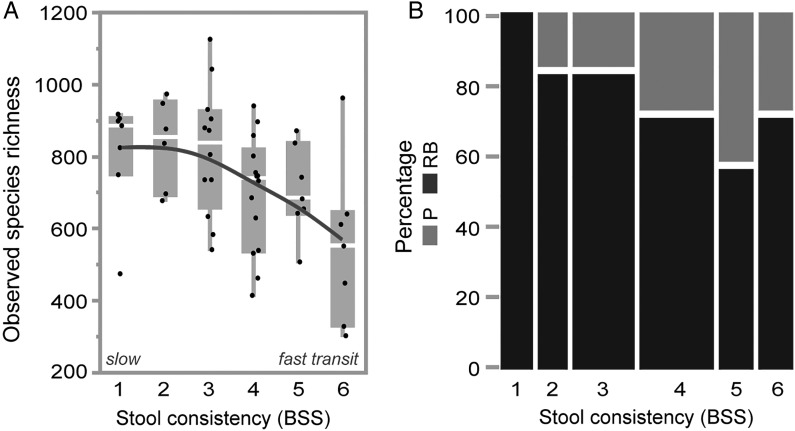
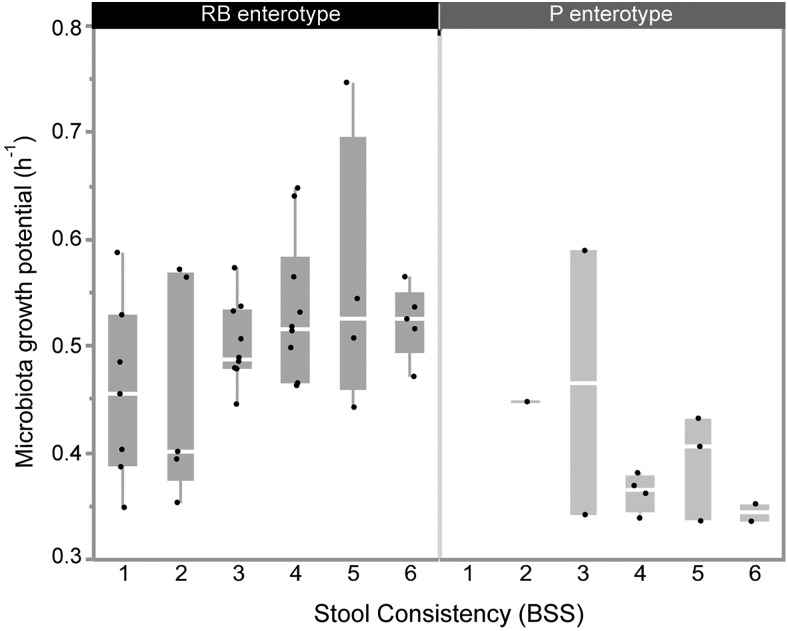
Objective: The assessment of potentially confounding factors affecting colon microbiota composition is essential to the identification of robust microbiome based disease markers. Here, we investigate the link between gut microbiota variation and stool consistency using Bristol Stool Scale classification, which reflects faecal water content and activity, and is considered a proxy for intestinal colon transit time. Design: Through 16S rDNA Illumina profiling of faecal samples of 53 healthy women, we evaluated associations between microbiome richness, Bacteroidetes:Firmicutes ratio, enterotypes, and genus abundance with self-reported, Bristol Stool Scale-based stool consistency. Each sample’s microbiota growth potential was calculated to test whether transit time acts as a selective force on gut bacterial growth rates. Results: Stool consistency strongly correlates with all known major microbiome markers. It is negatively correlated with species richness, positively associated to the Bacteroidetes:Firmicutes ratio, and linked to Akkermansia and Methanobrevibacter abundance. Enterotypes are distinctly distributed over the BSS-scores. Based on the correlations between microbiota growth potential and stool consistency scores within both enterotypes, we hypothesise that accelerated transit contributes to colon ecosystem differentiation. While shorter transit times can be linked to increased abundance of fast growing species in Ruminococcaceae- Bacteroides samples, hinting to a washout avoidance strategy of faster replication, this trend is absent in Prevotella -enterotyped individuals. Within this enterotype adherence to host tissue therefore appears to be a more likely bacterial strategy to cope with washout. Conclusions: The strength of the associations between stool consistency and species richness, enterotypes and community composition emphasises the crucial importance of stool consistency assessment in gut metagenome-wide association studies.
Overview
The claims and statistics of this paper haven’t been checked yet.
Free: it reads the open-access text and checks the first 5 claims that cite a source we can check. Create a free account to check every claim.
Integrity signals
Registry
Cites
Statistics
Figures
Verification
Claims the paper makes
The claims and statistics of this paper haven’t been checked yet.
Free: it reads the open-access text and checks the first 5 claims that cite a source we can check. Create a free account to check every claim.
Claims other papers make about this one
Each is checked against this paper’s own text: does it say what the citing paper says it does?
The cited source says what the claim attributes to it.
In the citing paper
“For instance, one study demonstrated that individuals with a loose stool had lower microbial richness and higher abundance of the Prevotella enterotype compared to those with harder stools, whose fecal samples were enriched with the Ruminococcaceae-Bacteroides enterotype [86].”
From A Clinical Outcome of the Anti-PD-1 Therapy of Melanoma in Polish Patients Is Mediated by Population-Specific Gut Microbiome Composition (2022) · cites this paper as [86]
In the citing paper
“Several studies have reported a positive relationship between prolonged colon transit times, with increased richness and diversity of the fecal microbiome in adults without prior history of GI disorders160,161.”
From The gut Microbiome in adult and pediatric functional gastrointestinal disorders (2019) · cites this paper as [161]
In the citing paper
“Moreover, it was also indicated that stool consistency and frequency were associated with gut microbiota richness and composition [86,87].”
From A Clinical Outcome of the Anti-PD-1 Therapy of Melanoma in Polish Patients Is Mediated by Population-Specific Gut Microbiome Composition (2022) · cites this paper as [86]
Self-check
Percentages, sums and reported differences re-computed from the paper’s own numbers.
The self-check needs the paper’s full text.
Citations
Cites
phyloseq: An R Package for Reproducible Interactive Analysis and Graphics of Microbiome Census Data
McMurdie, P. J., & Holmes, S. (2013) · PLoS ONE · doi:10.1371/journal.pone.0061217 · Cited by 21,322
A human gut microbial gene catalogue established by metagenomic sequencing
MetaHIT Consortium, Qin, J., Li, R., Raes, J., Arumugam, M., Burgdorf, K. S., Manichanh, C., Nielsen, T., Pons, N., Levenez, F., et al. (2010) · Nature · doi:10.1038/nature08821 · Cited by 11,624
Self-citationDiet rapidly and reproducibly alters the human gut microbiome
David, L. A., Maurice, C. F., Carmody, R. N., Gootenberg, D. B., Button, J. E., Wolfe, B. E., Ling, A. V., Devlin, A. S., Varma, Y., Fischbach, M. A., et al. (2014) · Nature · doi:10.1038/nature12820 · Cited by 10,100
Human gut microbiome viewed across age and geography
Yatsunenko, T., Rey, F. E., Manary, M. J., Trehan, I., Dominguez-Bello, M. G., Contreras, M., Magris, M., Hidalgo, G., Baldassano, R. N., Anokhin, A. P., et al. (2012) · Nature · doi:10.1038/nature11053 · Cited by 7,815
Enterotypes of the human gut microbiome
MetaHIT Consortium (additional members), Arumugam, M., Raes, J., Pelletier, E., Le Paslier, D., Yamada, T., Mende, D. R., Fernandes, G. R., Tap, J., Bruls, T., et al. (2011) · Nature · doi:10.1038/nature09944 · Cited by 7,548
Self-citationLinking long-term dietary patterns with gut microbial enterotypes
Wu, G. D., Chen, J., Hoffmann, C., Bittinger, K., Chen, Y.-Y., Keilbaugh, S. A., Bewtra, M., Knights, D., Walters, W. A., Knight, R., et al. (2011) · Science · doi:10.1126/science.1208344 · Cited by 6,513
De Filippo, C., Cavalieri, D., Di Paola, M., Ramazzotti, M., Poullet, J. B., Massart, S., Collini, S., Pieraccini, G., & Lionetti, P. (2010) · Proceedings of the National Academy of Sciences · doi:10.1073/pnas.1005963107 · Cited by 5,579
Diversity, stability and resilience of the human gut microbiota
Lozupone, C. A., Stombaugh, J. I., Gordon, J. I., Jansson, J. K., & Knight, R. (2012) · Nature · doi:10.1038/nature11550 · Cited by 5,533
Longstreth, G. F., Thompson, W. G., Chey, W. D., Houghton, L. A., Mearin, F., & Spiller, R. C. (2006) · Gastroenterology · doi:10.1053/j.gastro.2005.11.061 · Cited by 4,856
Richness of human gut microbiome correlates with metabolic markers
Le Chatelier, E., Nielsen, T., Qin, J., Prifti, E., Hildebrand, F., Falony, G., Almeida, M., Arumugam, M., Batto, J.-M., Kennedy, S., et al. (2013) · Nature · doi:10.1038/nature12506 · Cited by 4,662
Self-citation
Cited by
Items 301–400 of 1,000
COVID-19 and the Gut Microbiome: More than a Gut Feeling
van der Lelie, D., & Taghavi, S. (2020) · mSystems · doi:10.1128/msystems.00453-20 · Cited by 47
Swann, J. R., Rajilić-Stojanović, M. D., Salonen, A., Sakwińska, O., Gill, C. M., Meynier, A., Fança‐Berthon, P., Schelkle, B., Segata, N., Shortt, C., et al. (2020) · European Journal of Nutrition · doi:10.1007/s00394-020-02232-1 · Cited by 59
Depicting the composition of gut microbiota in children with tic disorders: an exploratory study
Xi, W., Gao, X., Zhao, H., Luo, X., Li, J., Tan, X., Wang, L., Zhao, J., Wang, J., Yang, G., et al. (2021) · Journal of Child Psychology and Psychiatry · doi:10.1111/jcpp.13409 · Cited by 53
Evidence-Based Clinical Guidelines for Chronic Constipation 2023
Ihara, E., Manabe, N., Ohkubo, H., Ogasawara, N., Ogino, H., Kakimoto, K., Kanazawa, M., Kawahara, H., Kusano, C., Kuribayashi, S., et al. (2024) · Digestion · doi:10.1159/000540912 · Cited by 98
“…bacteria are believed to contribute to chronic constipation include (1) the composition of intestinal bacteria contributing to stool hardness [71]; (2) short-chain fatty acids produced by intestinal bacteria in fl uencing nerve activity to stimulate production of polypeptide YY [72], and…”
Lista, S., Munafò, A., Caraci, F., Imbimbo, C., Emanuele, E., Minoretti, P., Pinto-Fraga, J., Merino-País, M., Crespo‐Escobar, P., López‐Ortiz, S., et al. (2025) · Ageing Research Reviews · doi:10.1016/j.arr.2025.102659 · Cited by 51
Blatchford, P., Stoklosinski, H., Eady, S., Wallace, A., Butts, C., Gearry, R., Gibson, G., & Ansell, J. (2017) · Journal of Nutritional Science · doi:10.1017/jns.2017.52 · Cited by 45
“Both patterns agree with a study assessing microbiota composition and stool consistency((32)).”
Microbial treatment: the potential application for Parkinson’s disease
Fang, X. (2018) · Neurological Sciences · doi:10.1007/s10072-018-3641-6 · Cited by 49
Kakiuchi, T., Mizoe, A., Yamamoto, K., Imamura, I., Hashiguchi, K., Kawakubo, H., Yamaguchi, D., Fujioka, Y., Nakayama, A., Okuda, M., et al. (2020) · Helicobacter · doi:10.1111/hel.12690 · Cited by 45
Zapała, B., Stefura, T., Wójcik-Pędziwiatr, M., Kabut, R., Bałajewicz-Nowak, M., Milewicz, T., Dudek, A., Stój, A., & Rudzińska-Bar, M. (2021) · Journal of Clinical Medicine · doi:10.3390/jcm10235698 · Cited by 44
Boekhorst, J., Venlet, N. V., Procházková, N., Hansen, M. L., Lieberoth, C. B., Bahl, M. I., Lauritzen, L., Pedersen, O. B., Licht, T. R., Kleerebezem, M., et al. (2022) · Microbiome · doi:10.1186/s40168-022-01418-5 · Cited by 51
Zhang, Y., Song, F., Yang, M., Chen, C., Cui, J., Xing, M., Dai, Y., Li, M., Cao, Y., Lu, L., et al. (2024) · Advanced Science · doi:10.1002/advs.202306297 · Cited by 50
Han, K., Yao, Y., Dong, S., Jin, S., Xiao, H., Wu, H., & Zeng, M. (2017) · Food & Function · doi:10.1039/c6fo01632d · Cited by 45
Westreich, S. T., Ardeshir, A., Alkan, Z., Kable, M. E., Korf, I. F., & Lemay, D. G. (2019) · Microbiome · doi:10.1186/s40168-019-0664-z · Cited by 54
Gut microbiota and voluntary alcohol consumption
Segovia‐Rodríguez, L., Echeverry‐Alzate, V., Rincón‐Pérez, I., Calleja‐Conde, J., Bühler, K., Giné, E., Albert, J., Hinojosa, J. A., Huertas, E., Gómez‐Gallego, F., et al. (2022) · Translational Psychiatry · doi:10.1038/s41398-022-01920-2 · Cited by 47
“Some researchers have verified this and stool consistency has been associated with gut microbiota richness, composition, enterotypes and bacterial growth rates [35].”
BackgroundHung, L. Y., Parathan, P., Boonma, P., Wu, Q., Wang, Y., Haag, A., Luna, R. A., Bornstein, J. C., Savidge, T. C., & Foong, J. P. P. (2020) · American Journal of Physiology-Gastrointestinal and Liver Physiology · doi:10.1152/ajpgi.00088.2020 · Cited by 43
Deng, Z., Meng, C., Huang, H., Song, S., Fu, L., & Fu, Z. (2022) · Food & Function · doi:10.1039/d2fo01161a · Cited by 49
Fecal microbiota transplantation for gastrointestinal disorders
Malikowski, T. M., Khanna, S., & Pardi, D. S. (2016) · Current Opinion in Gastroenterology · doi:10.1097/mog.0000000000000326 · Cited by 47
Gut Microbiota and Microbiota-Related Metabolites as Possible Biomarkers of Cognitive Aging
Ticinesi, A., Nouvenne, A., Tana, C., Prati, B., & Meschi, T. (2019) · Advances in experimental medicine and biology · doi:10.1007/978-3-030-25650-0_8 · Cited by 52
Microbiotyping the Sinonasal Microbiome
Bassiouni, A., Paramasivan, S., Shiffer, A., Dillon, M. R., Cope, E. K., Cooksley, C. M., Ramezanpour, M., Moraitis, S., Ali, M. J., Bleier, B. S., et al. (2020) · Frontiers in Cellular and Infection Microbiology · doi:10.3389/fcimb.2020.00137 · Cited by 45
“350 Several papers have correlated gut enterotypes with various clinical variables.(24,25) Despite this, 351 enterotyping as an approach to population stratification has not been without its controversies.”
BackgroundWang, L., Liu, L., Liu, X., Xiang, M., Zhou, L., Huang, C., Shen, Z., & Miao, L. (2020) · Pharmacological Research · doi:10.1016/j.phrs.2020.104979 · Cited by 46
Lu, G., Yu, X., Jiang, W., Luo, Q., Tong, J., Fan, S., Chai, L., Gao, D., Qiao, T., Wang, R., et al. (2022) · Frontiers in Endocrinology · doi:10.3389/fendo.2022.893164 · Cited by 51
“Fecal samples were snap-frozen with liquid nitrogen following collection and stored at -80°C (Haier, DW86L626, China) (14).”
MethodCaenepeel, C., Deleu, S., Vázquez-Castellanos, J. F., Arnauts, K., Braekeleire, S., Machiels, K., Baert, F., Mana, F., Pouillon, L., Hindryckx, P., et al. (2024) · Clinical Gastroenterology and Hepatology · doi:10.1016/j.cgh.2024.05.017 · Cited by 51
Self-citationMicrobiome sequencing: challenges and opportunities for molecular medicine
Clavel, T., Lagkouvardos, I., & Hiergeist, A. (2016) · Expert Review of Molecular Diagnostics · doi:10.1080/14737159.2016.1184574 · Cited by 46
“The scheme simply depicts the problematic on the basis of a few milestone papers with original statements wherever available [25,49-58], and should thus be seen only as an illustration of the standardization issues in microbiome research addressed in the text.”
BackgroundMazzawi, T. R. E., Hausken, T., Hov, J. R., Valeur, J., Sangnes, D. A., El‐Salhy, M., Gilja, O. H., Hatlebakk, J. G., & Lied, G. A. (2019) · Scandinavian Journal of Gastroenterology · doi:10.1080/00365521.2019.1624815 · Cited by 46
“The inverse relation between the severity of IBS symptoms (IBS-SSS) and low microbial richness (Figure 5) is consistent with previous publications [41,42].”
BackgroundResultTechnological tools and strategies for culturing human gut microbiota in engineered in vitro models
Sardelli, L., Perottoni, S., Tunesi, M., Boeri, L., Fusco, F., Petrini, P., Albani, D., & Giordano, C. (2021) · Biotechnology and Bioengineering · doi:10.1002/bit.27816 · Cited by 43
The impact of device-assisted therapies on the gut microbiome in Parkinson’s disease
Lubomski, M., Xu, X., Holmes, A. J., Yang, J. Y. H., Sue, C. M., & Davis, R. L. (2021) · Journal of Neurology · doi:10.1007/s00415-021-10657-9 · Cited by 48
Gubert, C., Love, C. J., Kodikara, S., Mei Liew, J. J., Renoir, T., Lê Cao, K.-A., & Hannan, A. J. (2022) · iScience · doi:10.1016/j.isci.2021.103687 · Cited by 41
Designs and methodologies to recreate in vitro human gut microbiota models
Biagini, F., Daddi, C., Calvigioni, M., Maria, C. D., Zhang, Y. S., Ghelardi, E., & Vozzi, G. (2022) · Bio-Design and Manufacturing · doi:10.1007/s42242-022-00210-6 · Cited by 45
“is reasonable to deduce that the composition of the human gut microbiota is linked to transit time [32, 33].”
BackgroundIrritable bowel syndrome: new insights into symptom mechanisms and advances in treatment
Spiller, R. (2016) · F1000Research · doi:10.12688/f1000research.7992.1 · Cited by 41
Šket, R., Treichel, N. S., Debevec, T., Eiken, O., Mekjavić, I. B., Schloter, M., Vital, M., Chandler, J., Tiedje, J. M., Murovec, B., et al. (2017) · Frontiers in Physiology · doi:10.3389/fphys.2017.00250 · Cited by 44
“…the role of exercise as a modulator of the gut microbiome has received attention as a possibility of reducing the risk for several metabolic, inflammatory and neoplastic diseases for inactive individuals (Pham et al., 2012; van Dijk et al., 2012; Egan and Zierath, 2013; Cronin et al., 2016).”
BackgroundConducting metagenomic studies in microbiology and clinical research
Martin, T. C., Visconti, A., Spector, T. D., & Falchi, M. (2018) · Applied Microbiology and Biotechnology · doi:10.1007/s00253-018-9209-9 · Cited by 48
Paepe, K. D., Verspreet, J., Rezaei, M. N., Hidalgo‐Martinez, S., Meysman, F. J. R., de Walle, D. V., Dewettinck, K., Courtin, C. M., & de Wiele, T. V. (2019) · Food & Function · doi:10.1039/c8fo01272e · Cited by 44
Hegade, V. S., Pechlivanis, A., McDonald, J. A. K., Rees, D., Corrigan, M., Hirschfield, G. M., Taylor-Robinson, S. D., Holmes, E. C., Marchesi, J. R., Kendrick, S. F. W., et al. (2019) · Liver International · doi:10.1111/liv.14069 · Cited by 43
Bonfiglio, F., Liu, X., Smillie, C. S., Pandit, A., Kurilshikov, A., Bacigalupe, R., Zheng, T., Nim, H. T., García‐Etxebarria, K., Bujanda, L., et al. (2021) · Cell Genomics · doi:10.1016/j.xgen.2021.100069 · Cited by 50
Self-citationGut microbiota and physical exercise in obesity and diabetes – A systematic review
da Silva, J. S. C., Seguro, C. S., & Naves, M. M. V. (2022) · Nutrition Metabolism and Cardiovascular Diseases · doi:10.1016/j.numecd.2022.01.023 · Cited by 49
Effect of Bacillus subtilis C-3102 on loose stools in healthy volunteers
Hatanaka, M., Yamamoto, K., Suzuki, N., Iio, S.-I., Takara, T., Morita, H., TAKIMOTO, T., & Nakamura, T. (2018) · Beneficial Microbes · doi:10.3920/bm2017.0103 · Cited by 41
Schwensen, H. F., Kan, C., Treasure, J. L., Høiby, N., & Sjögren, M. (2018) · Eating and Weight Disorders - Studies on Anorexia Bulimia and Obesity · doi:10.1007/s40519-018-0499-9 · Cited by 43
Sun, X., Liu, Y., Jiang, P., Song, S., & Ai, C. (2020) · International Journal of Biological Macromolecules · doi:10.1016/j.ijbiomac.2020.12.024 · Cited by 40
The Gut Microbiome in Anorexia Nervosa: Friend or Foe?
Ghenciulescu, A., Park, R. J., & Burnet, P. W. J. (2021) · Frontiers in Psychiatry · doi:10.3389/fpsyt.2020.611677 · Cited by 45
Sex Difference of Gut Microbiota
Kim, N. (2022) · Springer eBooks · doi:10.1007/978-981-19-0120-1_22 · Cited by 49
New Understanding on the Pathophysiology and Treatment of Constipation in Parkinson’s Disease
Xu, J., Wang, L., Chen, X., & Le, W. (2022) · Frontiers in Aging Neuroscience · doi:10.3389/fnagi.2022.917499 · Cited by 46
Huang, M., Dong, J., Yang, S., Xiao, M., Guo, H., Zhang, J., & Wang, D. (2023) · The Science of The Total Environment · doi:10.1016/j.scitotenv.2023.161637 · Cited by 40
Kosuwon, P., Lao-araya, M., Uthaisangsook, S., Lay, C., Bindels, J., Knol, J., & Chatchatee, P. (2018) · Beneficial Microbes · doi:10.3920/bm2017.0110 · Cited by 38
Therapeutic Effects of Prebiotics on Constipation: A Schematic Review
Naseer, M., Poola, S., Uraz, S., & Tahan, V. (2020) · Current Clinical Pharmacology · doi:10.2174/1574884715666200212125035 · Cited by 38
Gubert, C., Kong, G., Uzungil, V., Zeleznikow-Johnston, A., Burrows, E. L., Renoir, T., & Hannan, A. J. (2020) · Frontiers in Cell and Developmental Biology · doi:10.3389/fcell.2020.582320 · Cited by 42
“…Developmental Biology | www.frontiersin.org 11 October 2020 | Volume 8 | Article 582320 We didn’t see any difference in fecal water content, fecal output or gastrointestinal transit time, which have been interrelated with gut microbiota composition (Kashyap et al., 2013; Vandeputte et al., 2016).”
BackgroundBragg, M., Freeman, E. W., Lim, H. C., Songsasen, N., & Muletz‐Wolz, C. R. (2020) · Frontiers in Microbiology · doi:10.3389/fmicb.2020.590212 · Cited by 40
Natural Products for the Prevention and Control of the COVID-19 Pandemic: Sustainable Bioresources
Singla, R. K., He, X., Chopra, H., Tsagkaris, C., Shen, L., Kamal, M. A., & Shen, B. (2021) · Frontiers in Pharmacology · doi:10.3389/fphar.2021.758159 · Cited by 45
“Various pro-inflammatory markers have been detected and investigated within the last years (Vandeputte et al., 2016).”
BackgroundGut Microbiota in Nutrition and Health with a Special Focus on Specific Bacterial Clusters
Bresser, L. R. F., de Goffau, M. C., Levin, E., & Nieuwdorp, M. (2022) · Cells · doi:10.3390/cells11193091 · Cited by 44
“Constipation more commonly occurs in females and their bowel movements tend to be slower [63], resulting, on average, in lower Bristol stool scale scores [64] and accompanying gut microbiome compositions.”
Backgroundvan der Vossen, E. W. J., Davids, M., Bresser, L. R. F., Galenkamp, H., van den Born, B. H., Zwinderman, A. H., Levin, E., Nieuwdorp, M., & de Goffau, M. C. (2023) · Microbiome · doi:10.1186/s40168-023-01488-z · Cited by 46
“(2016), who observed an association between looser stool samples and the Prevotella enterotype, and with the fact that women more commonly suffer from constipation, have longer transit times and score slightly lower on the Bristol stool scale score (harder stool) [40, 41], we observe that the BBB cluster and CMO troph…”
BackgroundChen, Z.-H., Yuan, X., Tu, T.-T., Wang, L., Mao, Y.-H., Luo, Y., Qiu, S., & Song, A.-X. (2024) · International Journal of Biological Macromolecules · doi:10.1016/j.ijbiomac.2024.131910 · Cited by 40
Digestive tract methanodrome: Physiological roles of human microbiota-associated methanogens
Guindo, C. O., Drancourt, M., & Grine, G. (2020) · Microbial Pathogenesis · doi:10.1016/j.micpath.2020.104425 · Cited by 41
Mucosa-associated gut microbiome in Japanese patients with functional constipation
Sugitani, Y., Inoüe, R., Inatomi, O., Nishida, A., Morishima, S., Imai, T., Kawahara, M., Naito, Y., & Andoh, A. (2020) · Journal of Clinical Biochemistry and Nutrition · doi:10.3164/jcbn.20-93 · Cited by 38
Castañeda, S., Muñoz, M., Villamizar, X., Hernández, P. C., Arteaga, L. R. V., Tito, R. Y., & Ramírez, J. D. (2020) · Parasites & Vectors · doi:10.1186/s13071-020-04392-9 · Cited by 40
Self-citationFaecal Metabolomics in Paediatric Inflammatory Bowel Disease: A Systematic Review
Jagt, J. Z., Verburgt, C. M., de Vries, R., de Boer, N. K. H., Benninga, M. A., de Jonge, W. J., Limbergen, J. V., & de Meij, T. G. J. (2022) · Journal of Crohn s and Colitis · doi:10.1093/ecco-jcc/jjac079 · Cited by 42
Connell, M., Shin, A., James-Stevenson, T. N., Xu, H., Imperiale, T. F., & Herron, J. (2018) · Neurogastroenterology & Motility · doi:10.1111/nmo.13427 · Cited by 41
Characteristics of the Gut Microbiome and Serum Metabolome in Patients with Functional Constipation
Wang, J., Wang, L., Yu, Q., Tang, N., Mei, C., Zhang, H., Wang, G., Lu, J., & Chen, W. (2023) · Nutrients · doi:10.3390/nu15071779 · Cited by 44
“For example, the dominant microbiome in firmer stool samples is the Ruminococcaceae–Bacteroides enterotype [10].”
BackgroundAbbasi, A., Bazzaz, S., da Cruz, A. G., Khorshidian, N., Saadat, Y. R., Sabahi, S., Ozma, M. A., Lahouty, M., Aslani, R., & Mortazavian, A. M. (2023) · Probiotics and Antimicrobial Proteins · doi:10.1007/s12602-023-10118-x · Cited by 40
“Among these are the improvement of depressive-like behavior in chronically stressed-out mice [167], upregulation of serotonin (i.e., 5-HT) metabolism in RIN-14B and Caco-2 cells [168], antitumorigenesis and anti-inflammatory action in DSS/azoxymethane-treated animals [169], and restoring abnormal…”
Meldrum, O. W., Donaldson, G. C., Narayana, J. K., Ivan, F. X., Jaggi, T. K., Aogáin, M. M., Finney, L., Allinson, J. P., Wedzicha, J. A., & Chotirmall, S. H. (2024) · American Journal of Respiratory and Critical Care Medicine · doi:10.1164/rccm.202306-1060oc · Cited by 39
“Therefore, future microbiome studies should consider incorporating measures of mucus consistency to identify disease markers, as mucus consistency could potentially represent a confounding variable (53, 54).”
Obesity, Motility, Diet, and Intestinal Microbiota—Connecting the Dots
Fayfman, M., Flint, K. L., & Srinivasan, S. (2019) · Current Gastroenterology Reports · doi:10.1007/s11894-019-0680-y · Cited by 39
Beale, D. J., Nguyen, T. V., Shah, R., Bissett, A. B., Nahar, A., Smith, M. D., González-Astudillo, V., Braun, C., Baddiley, B., & Vardy, S. (2022) · Metabolites · doi:10.3390/metabo12080747 · Cited by 37
Krogsgaard, L. R., Munck, L. K., Bytzer, P. M., & Wildt, S. (2019) · Scandinavian Journal of Gastroenterology · doi:10.1080/00365521.2019.1599064 · Cited by 40
“terial richness [30], stool form could contribute as a possible”
BackgroundGong, L., Liu, F., Liu, J., & Wang, J. (2023) · International Journal of Biological Macromolecules · doi:10.1016/j.ijbiomac.2023.128835 · Cited by 46
Gut Microbiome Structure and Association with Host Factors in a Korean Population
Lim, M. Y., Hong, S. P., Bang, S.-J., Chung, W., Shin, J., Kim, J., & Nam, Y. (2021) · mSystems · doi:10.1128/msystems.00179-21 · Cited by 47
Is Gut Microbiota a Key Player in Epilepsy Onset? A Longitudinal Study in Drug-Naive Children
Ceccarani, C., Viganò, I., Ottaviano, E., Redaelli, M. G., Severgnini, M., Vignoli, A., & Borghi, E. (2021) · Frontiers in Cellular and Infection Microbiology · doi:10.3389/fcimb.2021.749509 · Cited by 42
“According to literature data, gut transit time could impact on Akkermansia relative abundance as has been demonstrated that it positively correlates with transit time and stool firmness (Vandeputte et al., 2016; Asnicar et al., 2021).”
BackgroundGut Metagenome as a Potential Diagnostic and Predictive Biomarker in Slow Transit Constipation
Tian, H., Ye, C., Yang, B. K., Cui, J., Zheng, Z., Wu, C., Zhou, S., Lv, X., Qin, N., Qin, H., et al. (2022) · Frontiers in Medicine · doi:10.3389/fmed.2021.777961 · Cited by 38
“found that stool consistency is associated with the richness and composition of gut microbiota as well as enterotypes and bacterial growth rates (10).”
BackgroundOral and intestinal dysbiosis in Parkinson's disease
Berthouzoz, E., Lazarević, V., Zekeridou, A., Jiménez, M. C., Debove, I., Aybek, S., Schrenzel, J., Burkhard, P. R., & Fleury, V. (2023) · Revue Neurologique · doi:10.1016/j.neurol.2022.12.010 · Cited by 40
Zaccaria, E., Klaassen, T., Alleleyn, A. M. E., Boekhorst, J., Smokvina, T., Kleerebezem, M., & Troost, F. J. (2023) · Microbiome · doi:10.1186/s40168-023-01491-4 · Cited by 42
Chen, S., Ou, Y., Zhao, L., Li, Y., Qiao, Z., Hao, Y., & Ren, F. (2019) · Journal of Neurogastroenterology and Motility · doi:10.5056/jnm17085 · Cited by 42
Tanaka, Y., Yamashita, R., Kawashima, J., Mori, H., Kurokawa, K., Fukuda, S., Gotoh, Y., Nakamura, K., Hayashi, T., Kasahara, Y., et al. (2022) · Journal of Gastroenterology · doi:10.1007/s00535-022-01888-2 · Cited by 41
“In a fecal metagenomic analysis by Vandeputte et al. [19], increased Bacteroidetes were detected in watery stools in non-IBS healthy subjects.”
BackgroundInfluentialIs Stool Frequency Associated with the Richness and Community Composition of Gut Microbiota?
Kwon, H. J., Lim, J. H., Kang, D., Lim, S., Park, S. J., & Kim, J. H. (2019) · Intestinal Research · doi:10.5217/ir.2018.00149 · Cited by 33
“Vandeputte et al.(13) identified that the Prevotella enterotype is more correlated with loose stool, while the Ruminococcaceae-Bacteroides enterotype dominates the harder stool.”
BackgroundResultInfluentialMin, U.-G., Jin, Y.-J., Jang, Y. J., Lim, J.-H., & Kim, B. (2024) · Frontiers in Nutrition · doi:10.3389/fnut.2024.1302093 · Cited by 37
Fecal microbiota transplantation, a tool to transfer healthy longevity
Novelle, M. G., Naranjo-Martínez, B., Lopez-Canovas, J. L., & Díaz‐Ruiz, A. (2024) · Ageing Research Reviews · doi:10.1016/j.arr.2024.102585 · Cited by 37
“…et al., 2021; Chakrabarti et al., 2022; Collins et al., 2012; Cryan and Dinan, 2012; Cryan et al., 2019) and to reduce the gut transit time and to change stool consistency, all of them linked to gut microbiome remodeling (Minnebo et al., 2023; Prochazkova et al., 2023; Vandeputte et al., 2016).”
How can probiotic improve irritable bowel syndrome symptoms?
Horvat, I. B., Gobin, I., Kresović, A., & Hauser, G. (2021) · World Journal of Gastrointestinal Surgery · doi:10.4240/wjgs.v13.i9.923 · Cited by 40
Hofman, D. L., Kudla, U., Miqdady, M. S., Nguyễn, T. V. H., Morán‐Ramos, S., & Vandenplas, Y. (2022) · Nutrients · doi:10.3390/nu14050974 · Cited by 38
Cerdó, T., Ruiz-Rodriguez, A., Acuña, I., Nieto-Ruíz, A., Diéguez, E., Sepúlveda-Valbuena, N., Escudero-Marín, M., García-Santos, J. A., García-Ricobaraza, M., Herrmann, F., et al. (2022) · Clinical Nutrition · doi:10.1016/j.clnu.2022.05.013 · Cited by 39
The Gut Microbiome and Its Implication in the Mucosal Digestive Disorders
Bozomitu, L. I., Miron, I. C., Răileanu, A. A., Lupu, A., Păduraru, G., Marcu, F. M., Buga, A. M. L., Rusu, D. C., Dragan, F., & Lupu, V. V. (2022) · Biomedicines · doi:10.3390/biomedicines10123117 · Cited by 47
“In contrast, the abundance of Prevotella was reported to be associated with longer transit times [94].”
BackgroundPietrzak, B., Tomela, K., Olejnik-Schmidt, A., Galus, Ł., Mackiewicz, J., Kaczmarek, M., Mackiewicz, A., & Schmidt, M. (2022) · Cancers · doi:10.3390/cancers14215369 · Cited by 36
“Moreover, it was also indicated that stool consistency and frequency were associated with gut microbiota richness and composition [86,87].”
BackgroundRelationship among Parkinson’s disease, constipation, microbes, and microbiological therapy
Yuan, X.-Y., Chen, Y., & Liu, Z. (2024) · World Journal of Gastroenterology · doi:10.3748/wjg.v30.i3.225 · Cited by 36
“A correlation was found between the genus Akkermansia , particularly Akkermansia muciniphila , and colon transit time[104].”
Effects of antipsychotics on intestinal motility in zebrafish larvae
de Alvarenga, K. A. F., Sacramento, E. K., Rosa, D. V., Souza, B. R., de Rezende, V. B., & Romano‐Silva, M. A. (2016) · Neurogastroenterology & Motility · doi:10.1111/nmo.13006 · Cited by 32
Zarkasi, K. Z., Taylor, R. S., Glencross, B. D., Abell, G. C. J., Tamplin, M. L., & Bowman, J. P. (2017) · Research in Microbiology · doi:10.1016/j.resmic.2017.07.003 · Cited by 32
Eady, S. L., Wallace, A. J., Butts, C. A., HEDDERLEY, D. I., Drummond, L., Ansell, J., & Gearry, R. B. (2019) · Journal of Nutritional Science · doi:10.1017/jns.2019.14 · Cited by 37
Cytometric fingerprints of gut microbiota predict Crohn’s disease state
Rubbens, P., Props, R., Kerckhof, F., Boon, N., & Waegeman, W. (2020) · The ISME Journal · doi:10.1038/s41396-020-00762-4 · Cited by 37
Jalanka, J., Gunn, D., Singh, G., Krishnasamy, S., Lingaya, M. R., Crispie, F., Finnegan, L., Cotter, P. D., James, L., Nowak, A., et al. (2022) · Gut · doi:10.1136/gutjnl-2021-326828 · Cited by 34
Guo, Q., Gao, Z., Zhao, L., Wang, H., Luo, Z., Vandeputte, D., He, L., Li, M., Di, S., Liu, Y., et al. (2023) · Diabetes · doi:10.2337/db23-0447 · Cited by 45
Self-citationGut microbiota and Parkinson’s disease
Wang, L., Cui, Y., Han, B., Du, Y., Salewala, K. S., Wang, S., Zhao, W., Zhang, H., Wang, S., Xu, X., et al. (2024) · Chinese Medical Journal · doi:10.1097/cm9.0000000000003318 · Cited by 39
Quantifying the varying harvest of fermentation products from the human gut microbiota
Arnoldini, M., Sharma, R., Moresi, C., Chure, G., Chabbey, J., Slack, E. M. C., & Cremer, J. (2025) · Cell · doi:10.1016/j.cell.2025.07.005 · Cited by 42
Caminero, A., Tropini, C., Valles‐Colomer, M., Shung, D. L., Gibbons, S. M., Surette, M. G., Sokol, H., Tomeo, N. J., Alenghat, T., Awoniyi, M., et al. (2025) · Nature Reviews Gastroenterology & Hepatology · doi:10.1038/s41575-025-01100-9 · Cited by 47
Gilbert, J. A., & Alverdy, J. C. (2015) · Gut · doi:10.1136/gutjnl-2015-310043 · Cited by 31
Inulin prebiotic: is it all about bifidobacteria?
Claus, S. P. (2017) · Gut · doi:10.1136/gutjnl-2017-313800 · Cited by 34
Gastroparesis and lipid metabolism-associated dysbiosis in Wistar-Kyoto rats
Dalziel, J. E., Fraser, K., Young, W., McKenzie, C. M., Bassett, S. A., & Roy, N. C. (2017) · American Journal of Physiology-Gastrointestinal and Liver Physiology · doi:10.1152/ajpgi.00008.2017 · Cited by 39
“Furthermore, other studies have shown 72 that changes in GI transit can be associated with altered microbiota profiles (49) and may be 73 reflected in circulating metabolite profiles (41).”
BackgroundFecal Microbiota Transplantation and Its Potential Therapeutic Uses in Gastrointestinal Disorders
Heath, R. D., Cockerell, C., Mankoo, R., Ibdah, J. A., & Tahan, V. (2017) · Northern Clinics of Istanbul · doi:10.14744/nci.2017.10692 · Cited by 36
Henson, M. A., & Phalak, P. (2018) · PLoS Computational Biology · doi:10.1371/journal.pcbi.1006558 · Cited by 36
Viral species richness and composition in young children with loose or watery stool in Ethiopia
Aiemjoy, K., Altan, E., Aragie, S., Wittberg, D. M., Phan, T. G., Deng, X., Chanyalew, M., Tadesse, Z., Callahan, E. K., Delwart, E., et al. (2019) · BMC Infectious Diseases · doi:10.1186/s12879-019-3674-3 · Cited by 33
“For example, a study of the fecal bacterial microbiome according to self-reported BSFS stool consistency and found that women with looser stool had fewer distinct bacterial species compared to women with firmer stool [13].”
BackgroundWatanabe, S., Kameoka, S., Shinozaki, N. O., Ryuichi, K. U. B. O., Nishida, A., Kuriyama, M., & Takeda, A. (2021) · Bioscience of Microbiota Food and Health · doi:10.12938/bmfh.2020-038 · Cited by 38
Host factors facilitating SARS‐CoV‐2 virus infection and replication in the lungs
Boutin, S., Hildebrand, D., Boulant, S., Kreuter, M., Rüter, J., Pallerla, S. R., Velavan, T. P., & Nurjadi, D. (2021) · Cellular and Molecular Life Sciences · doi:10.1007/s00018-021-03889-5 · Cited by 38
Metagenomic Analysis of the Pediatric-Onset Multiple Sclerosis Gut Microbiome
Mirza, A., Zhu, F., Knox, N., Forbes, J. D., Domselaar, G. V., Bernstein, C. N., Graham, M., Marrie, R. A., Hart, J., Yeh, E. A., et al. (2021) · Neurology · doi:10.1212/wnl.0000000000013245 · Cited by 35
“We also matched participants with MS and controls for multiple characteristics, including stool consistency, which is thought to be a major confounder in gut microbiome research and is seldom considered in MS studies.(47,48) In addition to relative abundance, we were also able to quantify the prevalence of gut microbi…”
ResultWhat the Gut Tells the Brain—Is There a Link between Microbiota and Huntington’s Disease?
Wronka, D., Karlik, A., Misiorek, J. O., & Przybył, Ł. (2023) · International Journal of Molecular Sciences · doi:10.3390/ijms24054477 · Cited by 34
“This result may suggest a very precise regulation of water absorption [100].”
BackgroundAdamberg, S., & Adamberg, K. (2024) · Heliyon · doi:10.1016/j.heliyon.2024.e31134 · Cited by 34
“Often, low transit rate and low BSS accompany with high abundance of Akkermansia [17,45].”
Mortensen, M. S., Jensen, B. H., Williams, J. V. A., Brejnrod, A., Andersen, L. O., Röser, D., Andreassen, B. U., Petersen, A. M., Stensvold, C. R., Sørensen, S. J., et al. (2018) · BMC Microbiology · doi:10.1186/s12866-018-1367-5 · Cited by 32
Kers, J. G., Fischer, E. A. J., Stegeman, A., Smidt, H., & Velkers, F. C. (2019) · Microorganisms · doi:10.3390/microorganisms7100431 · Cited by 30
Metadata
- Authors
- Vandeputte, D., Falony, G., Vieira-Silva, S., Tito, R. Y., Joossens, M., & Raes, J.
- Affiliations
- Vrije Universiteit Brussel (BE)
- KU Leuven (BE)
- Department of Microbiology and Immunology, KU Leuven, Rega Institute, Leuven, Belgium
- Corresponding author
- Raes, Jeroen
- Venue
- Gut
- Publisher
- BMJ
- Published
- 2015-06-11
- Volume
- 65
- Issue
- 1
- Pages
- 57-62
- ISSN
- 0017-5749 (ISSN-L)
- 1468-3288
- PMC
- PMC4717365
- OpenAlex
- W2178459747
- Cited by
- 1,028
- References
- 49
- Citations by year
- 2026: 80 · 2025: 83 · 2024: 116 · 2023: 105 · 2022: 120 · 2021: 134 · 2020: 112 · 2019: 94 · 2018: 76 · 2017: 60 · 2016: 42 · 2015: 6
- FWCI
- 26.62
- Type
- journal article
- Language
- en
- Open access
- hybrid
- doi.org
- Licence
- cc-by-nc
- Locations
- Gut (publishedVersion, cc-by-nc)
- PubMed Central (publishedVersion, cc-by-nc)
- PubMed (publishedVersion)
- Socio-Environmental Systems Modeling (acceptedVersion, cc-by-nc)
- Lirias (submittedVersion, cc-by-nc)
- Ghent University Academic Bibliography (Ghent University) (submittedVersion)
- Digital Access to Libraries (submittedVersion)
- VUBIR (Vrije Universiteit Brussel) (submittedVersion)
- Funders
- European Commission (305312, 267139)
- Fonds Wetenschappelijk Onderzoek
- KU Leuven
- Vlaamse regering (IWT130359)
- FP7 People: Marie-Curie Actions
- Topics
- Life Sciences › Biochemistry, Genetics and Molecular Biology › Molecular Biology › Gut microbiota and health
- Health Sciences › Medicine › Gastroenterology › Gastrointestinal motility and disorders
- Physical Sciences › Environmental Science › Ecology › Microbial Community Ecology and Physiology
- Keywords
- stool consistency, Bristol stool scale, gut microbiota, enterotypes, microbial richness, Firmicutes/Bacteroidetes ratio, Akkermansia, Methanobrevibacter, Ruminococcaceae, Bacteroides, Prevotella, bacterial growth rate, colonic transit time, fecal water content, women
- MeSH terms
- Gastrointestinal Microbiome, Adult, Feces, Female, Gastrointestinal Transit, Humans, Middle Aged, Self Report, Healthy Volunteers
About these checks
Registry, retraction, Cites and statistics results are computed, not judged, with one exception: a printed reference that no index lists is read once by a model before it counts as a citation error. Claims are extracted by a model and kept only when their quote appears verbatim in the text; each cited source is then checked, with a model’s help, for whether it says what the claim relies on. Those verdicts can be wrong — read the claim’s quote and the cited source before relying on one.
Statistics and arithmetic are recomputed, not judged.
Confidence bands are shown only for fields calibrated on our annotated test set. None is calibrated yet, so no band is shown.
What counts as a claim ›How we measure confidence ›How we check this ›
Are you an author, or do you see a problem with this page? Request a review
Data sources
Bibliographic data: Semantic Scholar, OpenAlex, Crossref.
Contains information from the Semantic Scholar Academic Graph Datasets, made available under the ODC Attribution License (ODC-BY 1.0).
Semantic Scholar’s data is described in: Kinney, R., et al. (2023). The Semantic Scholar Open Data Platform. arXiv:2301.10140.
