

Stool consistency is strongly associated with gut microbiota richness and composition, enterotypes and bacterial growth rates
Open accessThe DOI matches its Crossref record; 49 of the 49 references it cites were found in a registry or an index.
Abstract
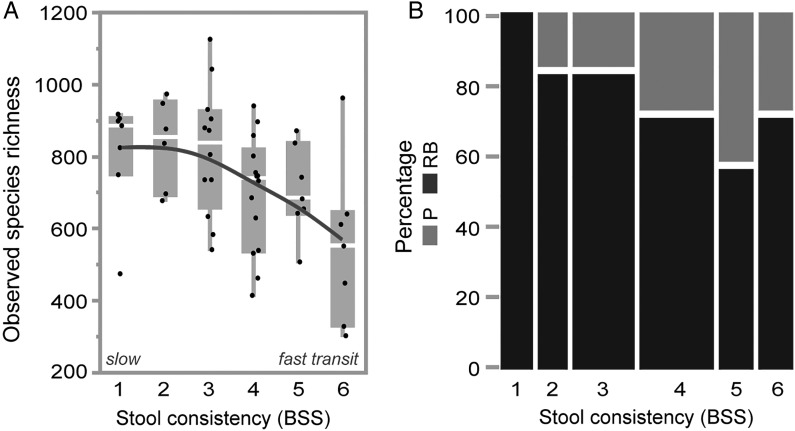
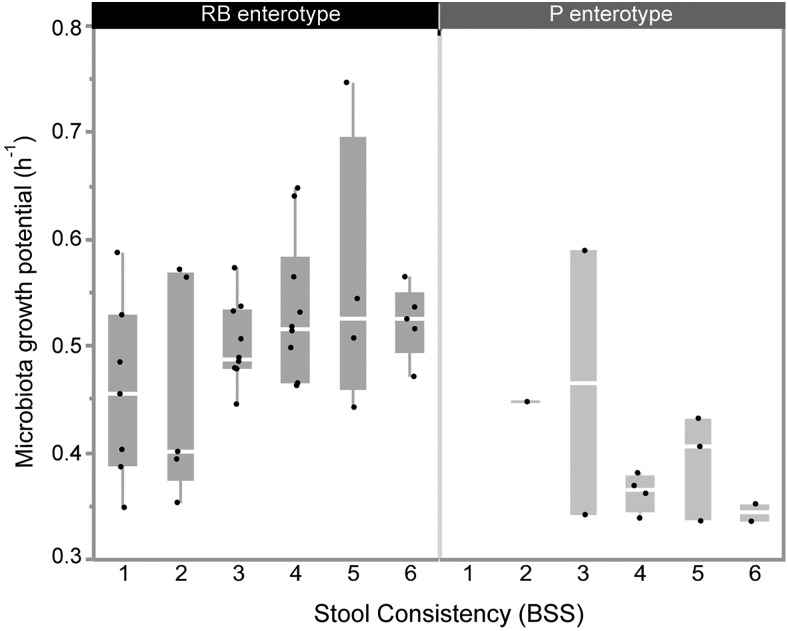
Objective: The assessment of potentially confounding factors affecting colon microbiota composition is essential to the identification of robust microbiome based disease markers. Here, we investigate the link between gut microbiota variation and stool consistency using Bristol Stool Scale classification, which reflects faecal water content and activity, and is considered a proxy for intestinal colon transit time. Design: Through 16S rDNA Illumina profiling of faecal samples of 53 healthy women, we evaluated associations between microbiome richness, Bacteroidetes:Firmicutes ratio, enterotypes, and genus abundance with self-reported, Bristol Stool Scale-based stool consistency. Each sample’s microbiota growth potential was calculated to test whether transit time acts as a selective force on gut bacterial growth rates. Results: Stool consistency strongly correlates with all known major microbiome markers. It is negatively correlated with species richness, positively associated to the Bacteroidetes:Firmicutes ratio, and linked to Akkermansia and Methanobrevibacter abundance. Enterotypes are distinctly distributed over the BSS-scores. Based on the correlations between microbiota growth potential and stool consistency scores within both enterotypes, we hypothesise that accelerated transit contributes to colon ecosystem differentiation. While shorter transit times can be linked to increased abundance of fast growing species in Ruminococcaceae- Bacteroides samples, hinting to a washout avoidance strategy of faster replication, this trend is absent in Prevotella -enterotyped individuals. Within this enterotype adherence to host tissue therefore appears to be a more likely bacterial strategy to cope with washout. Conclusions: The strength of the associations between stool consistency and species richness, enterotypes and community composition emphasises the crucial importance of stool consistency assessment in gut metagenome-wide association studies.
Overview
The claims and statistics of this paper haven’t been checked yet.
Free: it reads the open-access text and checks the first 5 claims that cite a source we can check. Create a free account to check every claim.
Integrity signals
Registry
Cites
Statistics
Figures
Verification
Claims the paper makes
The claims and statistics of this paper haven’t been checked yet.
Free: it reads the open-access text and checks the first 5 claims that cite a source we can check. Create a free account to check every claim.
Claims other papers make about this one
Each is checked against this paper’s own text: does it say what the citing paper says it does?
The cited source says what the claim attributes to it.
In the citing paper
“For instance, one study demonstrated that individuals with a loose stool had lower microbial richness and higher abundance of the Prevotella enterotype compared to those with harder stools, whose fecal samples were enriched with the Ruminococcaceae-Bacteroides enterotype [86].”
From A Clinical Outcome of the Anti-PD-1 Therapy of Melanoma in Polish Patients Is Mediated by Population-Specific Gut Microbiome Composition (2022) · cites this paper as [86]
In the citing paper
“Several studies have reported a positive relationship between prolonged colon transit times, with increased richness and diversity of the fecal microbiome in adults without prior history of GI disorders160,161.”
From The gut Microbiome in adult and pediatric functional gastrointestinal disorders (2019) · cites this paper as [161]
In the citing paper
“Moreover, it was also indicated that stool consistency and frequency were associated with gut microbiota richness and composition [86,87].”
From A Clinical Outcome of the Anti-PD-1 Therapy of Melanoma in Polish Patients Is Mediated by Population-Specific Gut Microbiome Composition (2022) · cites this paper as [86]
Self-check
Percentages, sums and reported differences re-computed from the paper’s own numbers.
The self-check needs the paper’s full text.
Citations
Cites
phyloseq: An R Package for Reproducible Interactive Analysis and Graphics of Microbiome Census Data
McMurdie, P. J., & Holmes, S. (2013) · PLoS ONE · doi:10.1371/journal.pone.0061217 · Cited by 21,322
A human gut microbial gene catalogue established by metagenomic sequencing
MetaHIT Consortium, Qin, J., Li, R., Raes, J., Arumugam, M., Burgdorf, K. S., Manichanh, C., Nielsen, T., Pons, N., Levenez, F., et al. (2010) · Nature · doi:10.1038/nature08821 · Cited by 11,624
Self-citationDiet rapidly and reproducibly alters the human gut microbiome
David, L. A., Maurice, C. F., Carmody, R. N., Gootenberg, D. B., Button, J. E., Wolfe, B. E., Ling, A. V., Devlin, A. S., Varma, Y., Fischbach, M. A., et al. (2014) · Nature · doi:10.1038/nature12820 · Cited by 10,100
Human gut microbiome viewed across age and geography
Yatsunenko, T., Rey, F. E., Manary, M. J., Trehan, I., Dominguez-Bello, M. G., Contreras, M., Magris, M., Hidalgo, G., Baldassano, R. N., Anokhin, A. P., et al. (2012) · Nature · doi:10.1038/nature11053 · Cited by 7,815
Enterotypes of the human gut microbiome
MetaHIT Consortium (additional members), Arumugam, M., Raes, J., Pelletier, E., Le Paslier, D., Yamada, T., Mende, D. R., Fernandes, G. R., Tap, J., Bruls, T., et al. (2011) · Nature · doi:10.1038/nature09944 · Cited by 7,548
Self-citationLinking long-term dietary patterns with gut microbial enterotypes
Wu, G. D., Chen, J., Hoffmann, C., Bittinger, K., Chen, Y.-Y., Keilbaugh, S. A., Bewtra, M., Knights, D., Walters, W. A., Knight, R., et al. (2011) · Science · doi:10.1126/science.1208344 · Cited by 6,513
De Filippo, C., Cavalieri, D., Di Paola, M., Ramazzotti, M., Poullet, J. B., Massart, S., Collini, S., Pieraccini, G., & Lionetti, P. (2010) · Proceedings of the National Academy of Sciences · doi:10.1073/pnas.1005963107 · Cited by 5,579
Diversity, stability and resilience of the human gut microbiota
Lozupone, C. A., Stombaugh, J. I., Gordon, J. I., Jansson, J. K., & Knight, R. (2012) · Nature · doi:10.1038/nature11550 · Cited by 5,533
Longstreth, G. F., Thompson, W. G., Chey, W. D., Houghton, L. A., Mearin, F., & Spiller, R. C. (2006) · Gastroenterology · doi:10.1053/j.gastro.2005.11.061 · Cited by 4,856
Richness of human gut microbiome correlates with metabolic markers
Le Chatelier, E., Nielsen, T., Qin, J., Prifti, E., Hildebrand, F., Falony, G., Almeida, M., Arumugam, M., Batto, J.-M., Kennedy, S., et al. (2013) · Nature · doi:10.1038/nature12506 · Cited by 4,662
Self-citation
Cited by
Items 601–700 of 1,000
Marshall-Jones, Z. V., Patel, K. V., Fernandez, J. C., Lonsdale, Z. N., Haydock, R., Staunton, R. H., Amos, G. C. A., & Watson, P. (2024) · Scientific Reports · doi:10.1038/s41598-024-51338-7 · Cited by 14
“This is in line with previous research associating the faecal microbiome with the faecal scores 42 .”
ResultSchneider, E., Schmidt, R., Cryan, J. F., & Hilbert, A. (2024) · International Journal of Eating Disorders · doi:10.1002/eat.24326 · Cited by 15
Holtmann, G., Moniruzzaman, M., & Shah, A. (2025) · Digestive Diseases · doi:10.1159/000543845 · Cited by 13
Dennis-Wall, J. C., Burns, A. M., Solch-Ottaiano, R. J., Ukhanova, M., Dahl, W. J., Christman, M. C., Boileau, T. W.-M., Brauchla, M. C., Shin, J.-E., Nieves, C., et al. (2019) · Journal of Functional Foods · doi:10.1016/j.jff.2019.103438 · Cited by 12
Zhong, P., Zhou, J., Fan, Y.-T., Guo, M.-F., Zhu, H., Zhou, S.-S., Zhu, J., Zhang, H., Zhou, G.-R., Miao, X., et al. (2022) · Journal of Ethnopharmacology · doi:10.1016/j.jep.2022.115601 · Cited by 13
The analysis of gut microbiota in patients with bile acid diarrhoea treated with colesevelam
Kumar, A., Quraishi, M. N., Al-Hassi, H. O., El‐Asrag, M. E., Segal, J. P., Jain, M., Steed, H., Butterworth, J. R., Farmer, A. D., McLaughlin, J. T., et al. (2023) · Frontiers in Microbiology · doi:10.3389/fmicb.2023.1134105 · Cited by 14
“Ruminococcus has also been consistently associated with firmer stools and a longer colonic transit time (Falony et al., 2016; Vandeputte et al., 2016; Asnicar et al., 2021; Steenackers et al., 2022).”
BackgroundLi, J., Yu, X., Xu, X., Tang, P., Bi, S., Ren, X., Shi, Y., Wu, J., & Lao, F. (2023) · Food Science and Human Wellness · doi:10.1016/j.fshw.2023.03.048 · Cited by 11
Dangoor, I., Stanić, D., Reshef, L., Pešić, V., & Gophna, U. (2021) · Microorganisms · doi:10.3390/microorganisms9091938 · Cited by 11
Gut microbiota in Parkinson’s disease patients: hospital-based study
Khedr, E. M., Ali, A. M., Daef, E., Hassan, H. M., Alaa, A., & Gamea, A. (2021) · The Egyptian Journal of Neurology Psychiatry and Neurosurgery · doi:10.1186/s41983-021-00407-z · Cited by 13
Arai, Y.-C. P., Shiro, Y., Funak, Y., Kasugaii, K., Omichi, Y., Sakurai, H., Matsubara, T., Inoue, M., Shimo, K., Saisu, H., et al. (2018) · Anesthesiology and Pain Medicine · doi:10.5812/aapm.69275 · Cited by 18
“Several researchers reported that stool consistency is profoundly linked to gut microbiome (GM) abundance and composition, enterotypes, and bacterial growth (4-7).”
BackgroundInoue, S., Sassa, N., Kato, T., Yamauchi, Y., Hirabayashi, T., Yuguchi, Y., Maeda, M., Soeda, Y., Hattori, R., & Gotoh, M. (2020) · International Journal of Urology · doi:10.1111/iju.14367 · Cited by 11
Yoshimura, E., Hamada, Y., Hatamoto, Y., Nakagata, T., Nanri, H., Nakayama, Y., Hayashi, T., Suzuki, I., Ando, T., Ishikawa‐Takata, K., et al. (2023) · Obesity · doi:10.1002/oby.23935 · Cited by 11
“In addition, we found that high counts of Bacteroides spp., which belong to the phylum Bac-teroidota [23], were associated with a shorter intestinal transit time although other reports stated the contrary [26, 27, 30].”
BackgroundSenthakumaran, T., Tannæs, T. M., Moen, A. E. F., Brackmann, S. A., Jahanlu, D., Rounge, T. B., Bemanian, V., & Tunsjø, H. S. (2024) · Molecular Oncology · doi:10.1002/1878-0261.13700 · Cited by 11
Wang, Y., Zhai, X., Wang, Z., Gao, C., Mi, S.-C., Tang, W., Fu, X.-M., Li, H.-B., Yue, L., Li, P., et al. (2024) · World Journal of Gastrointestinal Oncology · doi:10.4251/wjgo.v16.i10.4209 · Cited by 11
Song, Y., Liu, X., Feng, Y., Liu, G., & Duan, Y. (2025) · International Journal of Biological Macromolecules · doi:10.1016/j.ijbiomac.2025.144013 · Cited by 12
Claypool, J., Lindved, G., Myers, P. N., Ward, T., Nielsen, H. B., & Blount, K. (2025) · Gut Microbes · doi:10.1080/19490976.2025.2520412 · Cited by 12
Compo, N. R., Mieles-Rodriguez, L., & Gomez, D. E. (2021) · Comparative Medicine · doi:10.30802/aalas-cm-20-000080 · Cited by 11
Ghosh, J., Sanyal, P., Singh, K., Choudhury, S. R., & Koner, S. (2023) · Acta Scientific Gastrointestinal Disorders · doi:10.31080/asgis.2023.06.0516 · Cited by 11
Watanabe, D., Murakami, H., Ohno, H., Tanisawa, K., Konishi, K., Todoroki-Mori, K., Tsunematsu, Y., Sato, M., Ogata, Y., Miyoshi, N., et al. (2021) · BMC Microbiology · doi:10.1186/s12866-021-02255-6 · Cited by 11
Colonic TRPV4 overexpression is related to constipation severity
Mihara, H., Uchida, K., Watanabe, Y., Nanjo, S., Sakumura, M., Motoo, I., Ando, T., Minemura, M., Muhammad, J. S., Yamamoto, H., et al. (2023) · BMC Gastroenterology · doi:10.1186/s12876-023-02647-0 · Cited by 10
Zamora-Gasga, V. M., Cárdenas-Castro, A. P., Montalvo‐González, E., Loarca-Piña, M. G. F., Vázquez‐Landaverde, P. A., Tovar, J., & Sáyago‐Ayerdi, S. G. (2017) · International Journal of Food Sciences and Nutrition · doi:10.1080/09637486.2017.1416458 · Cited by 12
“The presence of these compounds, retained in the non-solid phase of faeces, has led to the use of faecal water to determine the potentially toxic environment to which the lumen is exposed (Weir et al. 2013; Vandeputte et al. 2015).”
BackgroundTracking the hologenome dynamics in aquatic invertebrates by the holo-2bRAD approach
Ma, C., Xu, C., Zhang, T., Mu, Q., Lv, J., Xing, Q., Yang, Z., Xu, Z., Guan, Y., Chen, C., et al. (2024) · Communications Biology · doi:10.1038/s42003-024-06509-7 · Cited by 9
“Meanwhile, feces, containing the DNA of both the host and microorganisms from the intestine, can provide useful information about gastrointestinal health 34 and was also demonstrated to be an extremely valuable source of samples in hologenomic analysis 35 .”
Wiese, M., Yan, H., Nielsen, D. S., Williams, A. R., Lynegaard, J. C., Weber, N. R., & Amdi, C. (2020) · Animals · doi:10.3390/ani10061073 · Cited by 10
Fecal microbiota in congenital chloride diarrhea and inflammatory bowel disease
Wedenoja, S., Saarikivi, A., Mälkönen, J., Leskinen, S., Lehto, M. J., Adeshara, K. A., Tuokkola, J., Nikkonen, A., Merras‐Salmio, L., Höyhtyä, M., et al. (2022) · PLoS ONE · doi:10.1371/journal.pone.0269561 · Cited by 11
“However, we found no increase in microbiota richness in CLD, previously linked to lose stools [46], or suppression of Lactobacillus species, the alteration associated with a high salt diet [24, 25].”
Segers, C., Mysara, M., Coolkens, A., Baatout, S., Leys, N., Lebeer, S., Verslegers, M., & Mastroleo, F. (2022) · Applied Microbiology · doi:10.3390/applmicrobiol2030049 · Cited by 8
Gut physiology meets microbiome science
Daniel, H. (2022) · Gut Microbiome · doi:10.1017/gmb.2022.10 · Cited by 9
Xing, M., Gao, H., Yao, L., Wang, L., Zhang, C., Zhu, L., & Cui, D. (2023) · Frontiers in Endocrinology · doi:10.3389/fendo.2023.1190954 · Cited by 11
Brimienė, I., Šiaudinytė, M., Burokas, A., & Grikšienė, R. (2023) · Menopause The Journal of The North American Menopause Society · doi:10.1097/gme.0000000000002259 · Cited by 9
Sakai, S. A., Aoshima, M., Sawada, K., Horasawa, S., Yoshikawa, A., Fujisawa, T., Kadowaki, S., Denda, T., Matsuhashi, N., Yasui, H., et al. (2022) · Frontiers in Cellular and Infection Microbiology · doi:10.3389/fcimb.2022.925444 · Cited by 13
“At each taxon level, ICI responders with NSCLC and RCC had a higher abundance of Akkermansia, Intestinimonas, and Alistipes (Routy et al., 2018; Derosa et al., 2022), and the responders with MMe and NSCLC also had many methanogenic archaea and Methanobrevibacter, respectively (Simpson et al., 2020; Song et al., 2020).”
BackgroundSteppeler, C., Sødring, M. S., & Paulsen, J. E. (2016) · BMC Cancer · doi:10.1186/s12885-016-2874-0 · Cited by 9
“For instance, the Bacteroidetes: Firmicutes ratio which was previously found to be increased by dietary heme [51], is positively correlated with stool consistency in humans [52].”
BackgroundStool consistency is significantly associated with pain perception
Shiro, Y., Arai, Y.-C. P., Ikemoto, T., & Hayashi, K. (2017) · PLoS ONE · doi:10.1371/journal.pone.0182859 · Cited by 12
Shimizu, Y., Inoue, M., Yasuda, N., Yamagishi, K., Iwasaki, M., Tsugane, S., & Sawada, N. (2023) · Public Health · doi:10.1016/j.puhe.2023.05.019 · Cited by 9
Wang, L., Zhang, C., Fan, S., Wang, J., Zhou, W., Zhou, Z., Liu, Y., Wang, Q., Liu, W., & Dai, X. (2024) · Microbiology Spectrum · doi:10.1128/spectrum.03639-23 · Cited by 16
“Vandeputte et al. reported that the genus Collins is highly abundant in the intestines of constipated people (35).”
BackgroundMachado, J. L. P., Schaan, A. P., Mamede, I., & Fernandes, G. D. R. (2025) · Frontiers in Microbiomes · doi:10.3389/frmbi.2025.1506387 · Cited by 13
“The lack of consistent exclusion criteria, such as accounting for recent diarrhea or constipation, can further exacerbate the heterogeneity observed in microbial diversity and abundance (Vandeputte et al., 2016; Park et al., 2024).”
Puhlmann, M.-L., Wegh, C. A. M., van der Zalm, S. C. C., Dam, V., Doolan, A., Meyer, D., Belzer, C., Vaughan, E. E., Benninga, M. A., & Smidt, H. (2025) · BMC Gastroenterology · doi:10.1186/s12876-025-04409-6 · Cited by 12
“Alterations in gut microbiota composition have been associated with hard stools and slow intestinal transit times [13, 14].”
Molina, R. A., Villar, M. D., Miranda, M. H., Maldonado, N. C., Vignolo, G. M., & Nader-Macías, M. E. (2023) · PubMed Central · Cited by 19
Characteristics of the Gut Microbiota in Young Adults with Autism Spectrum Disorder
Pang, X., Zhang, Q., Wang, Y., Zhan, Y., Guo, M., Chen, B., Quan, L., & Zheng, H. (2023) · Journal of Integrative Neuroscience · doi:10.31083/j.jin2206141 · Cited by 12
“Third, we did not record intestinal transit time, which is a direct indicator of GI symptoms and plays a role in shaping gut microbiota [ 50].”
Practical guidelines for gut microbiome analysis in microbiota-gut-brain axis research
Valles‐Colomer, M., Falony, G., Vieira‐Silva, S., & Raes, J. (2019) · Behavioral and Brain Sciences · doi:10.1017/s0140525x18002881 · Cited by 8
Self-citationThe Human Gut Microbiota in all its States: From Disturbance to Resilience
Tap, J., Ruppé, É., & Derrien, M. (2021) · Elsevier eBooks · doi:10.1016/b978-0-12-819265-8.00039-5 · Cited by 9
TRYPTOPHAN: A KEY METABOLITE OF HOMEOSTASIS AND A REGULATOR OF BODY FUNCTIONS
Sheibak, V. M., & Pauliukavets, A. Y. (2021) · Hepatology and Gastroenterology · doi:10.25298/2616-5546-2021-5-2-143-149 · Cited by 12
Smith, D. A., Palacios-Pérez, M., & Jheeta, S. (2022) · Life · doi:10.3390/life12020287 · Cited by 9
Imidazole Propionate is Increased in Diabetes and Associated with Stool Consistency
Wu, B., Tan, L., Wang, W., Feng, X., & Yan, D. (2022) · Diabetes Metabolic Syndrome and Obesity · doi:10.2147/dmso.s362715 · Cited by 9
Water activity does not shape the microbiota in the human colon
Vandeputte, D., Falony, G., D’hoe, K., Vieira‐Silva, S., & Raes, J. (2017) · Gut · doi:10.1136/gutjnl-2016-313530 · Cited by 11
Self-citationAn archaeal compound as a driver of Parkinson’s disease pathogenesisPreprint
Wilmes, P., Trezzi, J., Aho, V. T. E., Jäger, C., Schade, S., Janzen, A., Hickl, O., Kunath, B. J., Thomas, M. H., Schmit, K. J., et al. (2022) · Research Square · doi:10.21203/rs.3.rs-1827631/v1 · Cited by 13
Johnson-Martínez, J. P., Diener, C., Levine, A. E., Wilmanski, T. M., Suskind, D. L., Ralevski, A., Hadlock, J., Magis, A. T., Hood, L., Rappaport, N., et al. (2023) · bioRxiv (Cold Spring Harbor Laboratory) · doi:10.1101/2023.03.04.531100 · Cited by 8
Wu, L.-Q., Yuan, Q., Wu, L., Xia, H. H., Zhong, M., Liu, T., Ye, X., Luo, D.-P., Xu, J., Xie, W.-R., et al. (2023) · BMC Gastroenterology · doi:10.1186/s12876-023-02929-7 · Cited by 7
“Recently, several studies [6, 33–37] have demonstrated a correlation between stool consistency and several members of the fecal microbiota composition, such as the Bacteroidetes to Firmicutes ratio and the abundance of Bifidobacterium , Fusicatenibacter , Paraprevotella , and Lachnoanaerobaculum .”
MethodCruz, A. K., Alves, M. A., Andrésson, Þ., Bayless, A. L., Bloodsworth, K., Bowden, J. A., Bullock, K. H., Burnet, M., Neto, F. C., Choy, A. H., et al. (2024) · Metabolomics · doi:10.1007/s11306-024-02185-0 · Cited by 9
“Its composition is influenced by factors such as diet, use of antibiotics, inflammation status, physical activity, and body weight (Erlandson et al., 2021; Journey et al., 2020; Monda et al., 2017; Vandeputte et al., 2016; Wang et al., 2023).”
Schult, D., Gassner, C., Thur, N., Hennig, C., Fricke, L., Liotta, L., Weidlich, S., Matchado, M. S., Stecher, B., Arps, L., et al. (2025) · Inflammatory Bowel Diseases · doi:10.1093/ibd/izaf185 · Cited by 12
Understanding the human gut microbiome: from composition to disease association
Alali, M. A., & Shori, A. B. (2026) · Frontiers in Microbiomes · doi:10.3389/frmbi.2026.1717288 · Cited by 14
Belo, T. C. A., Santos, N. C. D. M., Souto, B. S., Rosa, C. P., Santos, A. D. S., Oliveira, K. C., Corsetti, P. P., & de Almeida, L. A. (2022) · Microbes and Infection · doi:10.1016/j.micinf.2022.105080 · Cited by 12
Pihelgas, S., Ehala-Aleksejev, K., Kuldjärv, R., Jõeleht, A., Kazantseva, J., & Adamberg, K. (2024) · FEMS Microbes · doi:10.1093/femsmc/xtae001 · Cited by 8
“At the same time , we ha ve to pay attention that a high le v el of the abundance of Akkermansia is associated with constipation and longer gut transit time (Vandeputte et al. 2016 , Asnicar et al. 2021 ).”
BackgroundLin, T., Wu, C., Fan, Y., Chang, Y., Ho, H. J., & Chen, Y. (2022) · Annals of Allergy Asthma & Immunology · doi:10.1016/j.anai.2021.12.016 · Cited by 8
Looijesteijn, E., Brouwer, R. W. W., Schoemaker, R., Ulfman, L. H., Ham, S. L., Jeurink, P. V., Karaglani, E., van IJcken, W. F. J., & Μanios, Y. (2022) · BMC Nutrition · doi:10.1186/s40795-022-00575-y · Cited by 9
“Gut microbiota composition could also play a role since significant associations have been found between stool consistency and microbial richness in adults [21, 22].”
BackgroundGut microbiota and pediatric patients with spina bifida and neurogenic bowel dysfunction
Rendeli, C., Paradiso, V. F., Bucci, V., Cretì, G., D’Aleo, C. M., Lisi, G., Lombardi, L., Marte, A., Masnata, G., Migliazza, L., et al. (2022) · Child s Nervous System · doi:10.1007/s00381-022-05688-0 · Cited by 9
“Among healthy subjects, microbiome was found to be mostly influenced by transit time and stool consistency [30, 31], age [32], body mass index [33], dietary habits [34], and medical treatment [27].”
BackgroundXiao, F., Wang, Y., Ludwig, T. G., Li, X., Chen, S., Sun, N., Zheng, Y., Huysentruyt, K., Vandenplas, Y., & Zhang, T. (2023) · Acta Paediatrica · doi:10.1111/apa.16731 · Cited by 11
Nawroth, J. C., Giez, C., Klimovich, A. V., Kanso, E. A., & Bosch, T. C. G. (2023) · eLife · doi:10.7554/elife.83637 · Cited by 8
Deciphering the Impact of Defecation Frequency on Gut Microbiome Composition and Diversity
Park, G., Kim, S., Lee, W., Kim, G., & Shin, H. (2024) · International Journal of Molecular Sciences · doi:10.3390/ijms25094657 · Cited by 7
“A variety of factors associated with bowel movements, including the colonic transit time [14], and stool consistency [15], have been reported to affect the gut microbiome.”
BackgroundBhushan, B., Eslavath, M. R., Yadav, A. P., Srivastava, A. K., Reddy, M. P. K., Norboo, T., Kumar, B., Singh, S., & Ganju, L. (2021) · Journal of Proteins and Proteomics · doi:10.1007/s42485-021-00077-8 · Cited by 8
Ruan, S.-F., Li, Y., Ning, Z., Li, Y., Liu, Q., Fang, W., Jiang, X., Luo, J., Gao, H., To, W. L. W., et al. (2025) · Pharmacological Research · doi:10.1016/j.phrs.2025.107810 · Cited by 6
Vázquez-Castellanos, J. F., Maciel, L. F., Wauters, L. I., Gregory, A., Oudenhove, L. V., Geboers, K., Verbeke, K., Smokvina, T., Tack, J. F., Vanuytsel, T., et al. (2025) · npj Biofilms and Microbiomes · doi:10.1038/s41522-025-00776-w · Cited by 11
Self-citationThe gut as a central hub for multi-organ crosstalk in aging
Zhang, X., Li, R., Gao, Y., Zhang, W., Ni, T., & Liu, Y. (2026) · Cellular and Molecular Life Sciences · doi:10.1007/s00018-026-06129-w · Cited by 9
Chung, H. C., Gaynanova, I., & Ni, Y. (2022) · The Annals of Applied Statistics · doi:10.1214/21-aoas1598 · Cited by 10
“motivating data from Vandeputte et al. (2017), or transformed compositional microbiome data via the modified central log-ratio transformation (Yoon et al.”
MethodTemporal stability of fecal metabolomic profiles in irritable bowel syndrome
Iribarren, C., Savolainen, O. I., Sapnara, M., Törnblom, H., Simrén, M., Magnusson, M. K., & Öhman, L. (2024) · Neurogastroenterology & Motility · doi:10.1111/nmo.14741 · Cited by 6
“27,28 Longitudinally, some studies demonstrate a stable day- to-day core microbiota regardless of bowel movement fluctuations, 26,29,30 which supports the potential of fecal microbiota as a biomarker 3 and the validity of single-point fecal sampling.”
BackgroundWu, J., Dong, L., Sun, Y., Zhao, X., Gan, J., & Wang, Z. (2024) · Nutrients · doi:10.3390/nu16060855 · Cited by 14
Chen, G., Wu, X., Zhu, H., Li, K., Zhang, J., Sun, S., Wang, H., Wang, M., Shao, B., Li, H., et al. (2024) · Journal of Gastroenterology · doi:10.1007/s00535-024-02148-1 · Cited by 8
“Thus, they would be more comprehensively reflect the metabolic activities of both microbes and the body [34].”
BackgroundThe gut microbiome in Huntington disease: A review
Patil, R. S., Vyas, S. G., Quazi, W. T., Tembhurnikar, H. J., Milmile, P. S., & Umekar, M. J. (2021) · GSC Biological and Pharmaceutical Sciences · doi:10.30574/gscbps.2021.15.3.0180 · Cited by 6
Microbiome–Gut Dissociation: Investigating the Origins of Obesity
Smith, D. G., & Jheeta, S. (2021) · Gastrointestinal Disorders · doi:10.3390/gidisord3040017 · Cited by 7
Batista, L., Robles, V., Manichanh, C., Ruiz, L., Guagnozzi, D., Batet, F. P., Guarner, F., & Fernández‐Bañares, F. (2022) · BMC Gastroenterology · doi:10.1186/s12876-022-02392-w · Cited by 7
“In fact, there is a well-known association between stool form (as measured by the Bristol stool scale) and species richness, which reaches its minimum in diarrhoea-afflicted subjects [20].”
BackgroundChen, X., Hu, C., Yan, C., Tao, E., Zhu, Z., Shu, X., Guo, R. C., & Jiang, M. (2023) · Scientific Reports · doi:10.1038/s41598-023-34792-7 · Cited by 7
“Previous studies have shown that the physical and chemical compositions, water content, pH, microbiota, and intestinal contents of feces were also different 15,58,59 .”
Dynamic nature of viral and bacterial communities in human faeces
Shkoporov, A. N., O’Regan, O., Smith, L., Khokhlova, E. V., Draper, L. A., Ross, R. P., & Hill, C. (2023) · iScience · doi:10.1016/j.isci.2023.108778 · Cited by 9
“11,15 Importantly, the absolute abundance of Prevotella was reported as relatively well conserved across populations, making high relative abundance of Prevotella a feature typically found in samples with low total microbial loads.”
BackgroundErhardt, R., Steels, E., Harnett, J., Taing, M., & Steadman, K. J. (2024) · European Journal of Nutrition · doi:10.1007/s00394-023-03292-9 · Cited by 6
Li, Y., & Tong, W. (2024) · Neurogastroenterology & Motility · doi:10.1111/nmo.14795 · Cited by 7
“27 That is, a low carbohydrate intake may be associated with a high risk of harder stool consistency due to the decreased abundance of Prevotella in the stool.”
BackgroundPaturi, G., Mishra, S. S., HEDDERLEY, D. I., & Monro, J. A. (2021) · Journal of Functional Foods · doi:10.1016/j.jff.2021.104565 · Cited by 8
Wang, G., Cong, D., Ju, H., Sun, J., Li, C., Zhang, Z., Chu, Y., & Wu, X. (2021) · Medicine · doi:10.1097/md.0000000000027932 · Cited by 7
“The increased CTT has been linked to enhanced proteolytic fermentation and associated production of potentially deleterious metabolites.([32]) Another study found that the diversity and richness of gut microbiota correlated much more strongly with CTT than with other phenotypic measures including waist circumference,…”
BackgroundClarke, G. A. (2020) · Expert Review of Gastroenterology & Hepatology · doi:10.1080/17474124.2020.1754796 · Cited by 6
“Future studies will need to take greater account of gastrointestinal transit time and other essential gastrointestinal measures capable of influencing gut microbiota assessments [44].”
BackgroundAssociation between exercise and changes in gut microbiota profile: a review
Khaledi, M., Darvishi, M., Sameni, F., Shahrjerdi, S., Karami, E., Barahui, N., Hemmati, J., Hasheminasab, M. S., Sanae, M.-J., Akhavan‐Sigari, R., et al. (2023) · Sport Sciences for Health · doi:10.1007/s11332-023-01132-1 · Cited by 7
“It was recently described that stool consistency is an excellent biological marker for different types of diversity and population constitution [31].”
Saville, S. H., Younes, J. A., Paraskevakos, G., & Venema, K. (2017) · Beneficial Microbes · doi:10.1163/18762891-bja00056 · Cited by 8
Gut Microbiota and Alzheimer Disease
Huarcaya, L. R. D. (2025) · Acta Neurologica Taiwanica · doi:10.4103/ant.ant_113_0046 · Cited by 5
Singh, R. G., Aoki, F., Seuma, M. A. R.-P., Aguiló, M., Washida, M., Espadaler, J., Al‐Wahsh, H., Crowley, D. C., Guthrie, N., Evans, M., et al. (2025) · Journal of Dietary Supplements · doi:10.1080/19390211.2025.2507610 · Cited by 6
Ilie, O., Văcărean-Trandafir, I.-C., Amărandi, R.-M., Nita, I.-B., Dobrin, R., Doroftei, M., Ivanov, I.-C., Săvuţă, G., Kirov, B., & Doroftei, B. (2025) · Frontiers in Neuroscience · doi:10.3389/fnins.2025.1654995 · Cited by 7
Patridge, E. V., Gorakshakar, A., Molusky, M. M., Ogundijo, O., Julian, C., Hu, L., Antoine, G., Vuyisich, M., Wohlman, R., & Banavar, G. S. (2025) · BMC Gastroenterology · doi:10.1186/s12876-025-04205-2 · Cited by 6
“One explanation for this is that faster gut transit times are associated with an altered microbiome [91] and altered fecal metabolites [92], and it is possible that the gut is impacted to a greater degree with IBS-D.”
Interpreting UniFrac with absolute abundance: a conceptual and practical guide
Pendleton, A., & Schmidt, M. L. (2026) · ISME Communications · doi:10.1093/ismeco/ycaf250 · Cited by 6
“These approaches improve detection of functionally relevant taxa and mitigate the compositional constr aints imposed by sequencing [1, 2].”
Cameron, S. J. S., Edwards, A., Lambert, R. J., Stroud, M. A., & Mur, L. A. J. (2023) · International Journal of Molecular Sciences · doi:10.3390/ijms24054850 · Cited by 5
“Stool consistency has previously been shown to be a major determinant of the composition of the stool microbiota, likely associated with transit time through the gastrointestinal tract [26].”
BackgroundGut microbiota and child behavior in early puberty: does child sex play a role?
Ou, Y., Rots, E., Belzer, C., Smidt, H., & de Weerth, C. (2023) · Gut Microbes · doi:10.1080/19490976.2023.2278222 · Cited by 6
Lu, G., Gao, D., Liu, Y., Yu, X., Jiang, W. H., & Lv, Z. (2024) · BMC Medicine · doi:10.1186/s12916-024-03528-3 · Cited by 5
“Fecal samples were snap-frozen with liquid nitrogen, collected, and stored at − 80 °C (Haier, DW-86L626, China) [14].”
MethodProfiling the fecal microbiome and its modulators across the lifespan in the Netherlands
Boverhoff, D., Kool, J., Pijnacker, R., Ducarmon, Q. R., Zeller, G., Shetty, S. A., Sie, S., Mulder, A. C., van der Klis, F. R. M., Franz, E., et al. (2024) · Cell Reports · doi:10.1016/j.celrep.2024.114729 · Cited by 5
Beauchemin, E. T., Hunter, C., & Maurice, C. F. (2024) · mSphere · doi:10.1128/msphere.00825-24 · Cited by 7
“…gut bacteria may be replicating more during IBD flares than during remission (5), and that fast replication is one strategy some gut bacteria use to maintain or increase their biomass when cell turnover and intestinal sloughing are high (27), as occurs in DSS-induced colitis (13, 78, 128, 129).”
AI for rapid identification of major butyrate-producing bacteria in rhesus macaques (Macaca mulatta)
Maaskant, A., Lee, D., Ngo, H., Montijn, R. C., Bakker, J., Langermans, J. A. M., & Levin, E. (2025) · Animal Microbiome · doi:10.1186/s42523-025-00410-2 · Cited by 7
“Microbial enterotypes are correlated with both fecal consistency and color [80, 81].”
Oliver, L., Malagón, M., Ramió‐Pujol, S., Sánchez-Vizcaino, M., Sánchez-Algans, R., Lacosta, E., Sáez, M., Serra‐Pagès, M., Aldeguer, X., Garcia-Gil, L. J., et al. (2025) · Frontiers in Microbiomes · doi:10.3389/frmbi.2025.1512257 · Cited by 5
“Conversely, others have reported that an increase in A. muciniphila may be associated with stool fi rmness, making it more prevalent in individuals with slow transit (Vandeputte et al., 2016).”
Remodelling the gut ecosystem: a dysbiosis model to elucidate gut-organ axis dynamics in mice
Krishnapriya, Kishanchand, D. K., Rishikesh, R., Venkatachalam, S., Alikunju, A. P., Deepti, A., Sivan, U., & Sasidharan, B. C. P. (2025) · Physiology & Behavior · doi:10.1016/j.physbeh.2025.115000 · Cited by 6
Zhang, J., Ren, G., Li, M., Lu, P., & Yi, S. (2019) · Case Reports in Hematology · doi:10.1155/2019/4505238 · Cited by 5
Yoshino, A., Nakamura, Y., Hashiguchi, S., Ishida, S., Mano, R., Nakamura, S., Kita, R., Seto, M., Takata, T., Ishikura, H., et al. (2022) · Journal of Clinical Medicine · doi:10.3390/jcm11051167 · Cited by 5
“An elevated BSFS value suggests an impairment of the gut microbial community [21], thus leading to the development of a number of diseases in the gastrointestinal tract [22].”
BackgroundZhou, J., & Ho, V. (2023) · Nutrients · doi:10.3390/nu15224786 · Cited by 7
“Oscillospira is generally a slow-growing organism and has been associated with slow transit constipation, a condition in which slower-replicating organisms persist in the gut and avoid being eliminated [35].”
BackgroundTannock, G. W. (2024) · Gut Microbes Reports · doi:10.1080/29933935.2024.2376543 · Cited by 5
Parasites in Human Stool: To Ignore or Not To Ignore?
Butters, C. T., Yeoh, D. K., & Curtis, N. C. (2019) · The Pediatric Infectious Disease Journal · doi:10.1097/inf.0000000000002323 · Cited by 5
“Stool consistency itself might directly correlate with microbial richness.(2) The increasing use of molecular techniques has allowed the rapid simultaneous identification of bacteria, viruses and parasites within stool.”
BackgroundSex- and Gender-related Issues of Gut Microbiota in Gastrointestinal Tract Diseases
Kim, N. (2021) · Korean Journal of Gastroenterology · doi:10.4166/kjg.2021.409 · Cited by 5
Cheemala, S. C., Syed, S., Bibi, R., Suhail, M. B., Dhakecha, M. D., Subhan, M., Mahmood, M. S., Shabbir, A., Islam, H., & Islam, R. (2024) · Journal of Advances in Medicine and Medical Research · doi:10.9734/jammr/2024/v36i75483 · Cited by 8
A place for vitamin supplementation and functional food in bariatric surgery?
Aron‐Wisnewsky, J., & Clément, K. (2019) · Current Opinion in Clinical Nutrition & Metabolic Care · doi:10.1097/mco.0000000000000602 · Cited by 6
Variability and Stability of the Human Gut Microbiome
Flint, H. J. (2020) · Fascinating life sciences · doi:10.1007/978-3-030-43246-1_6 · Cited by 7
Wnt5A Signaling Regulates Gut Bacterial Survival and T Cell Homeostasis
Sengupta, S., Jati, S., Maity, S., & Sen, M. (2022) · mSphere · doi:10.1128/msphere.00507-22 · Cited by 4
Metadata
- Authors
- Vandeputte, D., Falony, G., Vieira-Silva, S., Tito, R. Y., Joossens, M., & Raes, J.
- Affiliations
- Vrije Universiteit Brussel (BE)
- KU Leuven (BE)
- Department of Microbiology and Immunology, KU Leuven, Rega Institute, Leuven, Belgium
- Corresponding author
- Raes, Jeroen
- Venue
- Gut
- Publisher
- BMJ
- Published
- 2015-06-11
- Volume
- 65
- Issue
- 1
- Pages
- 57-62
- ISSN
- 0017-5749 (ISSN-L)
- 1468-3288
- PMC
- PMC4717365
- OpenAlex
- W2178459747
- Cited by
- 1,028
- References
- 49
- Citations by year
- 2026: 80 · 2025: 83 · 2024: 116 · 2023: 105 · 2022: 120 · 2021: 134 · 2020: 112 · 2019: 94 · 2018: 76 · 2017: 60 · 2016: 42 · 2015: 6
- FWCI
- 26.62
- Type
- journal article
- Language
- en
- Open access
- hybrid
- doi.org
- Licence
- cc-by-nc
- Locations
- Gut (publishedVersion, cc-by-nc)
- PubMed Central (publishedVersion, cc-by-nc)
- PubMed (publishedVersion)
- Socio-Environmental Systems Modeling (acceptedVersion, cc-by-nc)
- Lirias (submittedVersion, cc-by-nc)
- Ghent University Academic Bibliography (Ghent University) (submittedVersion)
- Digital Access to Libraries (submittedVersion)
- VUBIR (Vrije Universiteit Brussel) (submittedVersion)
- Funders
- European Commission (305312, 267139)
- Fonds Wetenschappelijk Onderzoek
- KU Leuven
- Vlaamse regering (IWT130359)
- FP7 People: Marie-Curie Actions
- Topics
- Life Sciences › Biochemistry, Genetics and Molecular Biology › Molecular Biology › Gut microbiota and health
- Health Sciences › Medicine › Gastroenterology › Gastrointestinal motility and disorders
- Physical Sciences › Environmental Science › Ecology › Microbial Community Ecology and Physiology
- Keywords
- stool consistency, Bristol stool scale, gut microbiota, enterotypes, microbial richness, Firmicutes/Bacteroidetes ratio, Akkermansia, Methanobrevibacter, Ruminococcaceae, Bacteroides, Prevotella, bacterial growth rate, colonic transit time, fecal water content, women
- MeSH terms
- Gastrointestinal Microbiome, Adult, Feces, Female, Gastrointestinal Transit, Humans, Middle Aged, Self Report, Healthy Volunteers
About these checks
Registry, retraction, Cites and statistics results are computed, not judged, with one exception: a printed reference that no index lists is read once by a model before it counts as a citation error. Claims are extracted by a model and kept only when their quote appears verbatim in the text; each cited source is then checked, with a model’s help, for whether it says what the claim relies on. Those verdicts can be wrong — read the claim’s quote and the cited source before relying on one.
Statistics and arithmetic are recomputed, not judged.
Confidence bands are shown only for fields calibrated on our annotated test set. None is calibrated yet, so no band is shown.
What counts as a claim ›How we measure confidence ›How we check this ›
Are you an author, or do you see a problem with this page? Request a review
Data sources
Bibliographic data: Semantic Scholar, OpenAlex, Crossref.
Contains information from the Semantic Scholar Academic Graph Datasets, made available under the ODC Attribution License (ODC-BY 1.0).
Semantic Scholar’s data is described in: Kinney, R., et al. (2023). The Semantic Scholar Open Data Platform. arXiv:2301.10140.
