

Stool consistency is strongly associated with gut microbiota richness and composition, enterotypes and bacterial growth rates
Open accessThe DOI matches its Crossref record; 49 of the 49 references it cites were found in a registry or an index.
Abstract
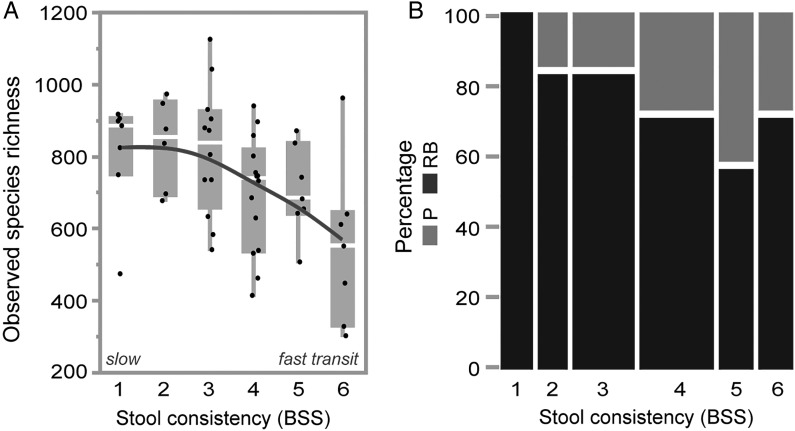
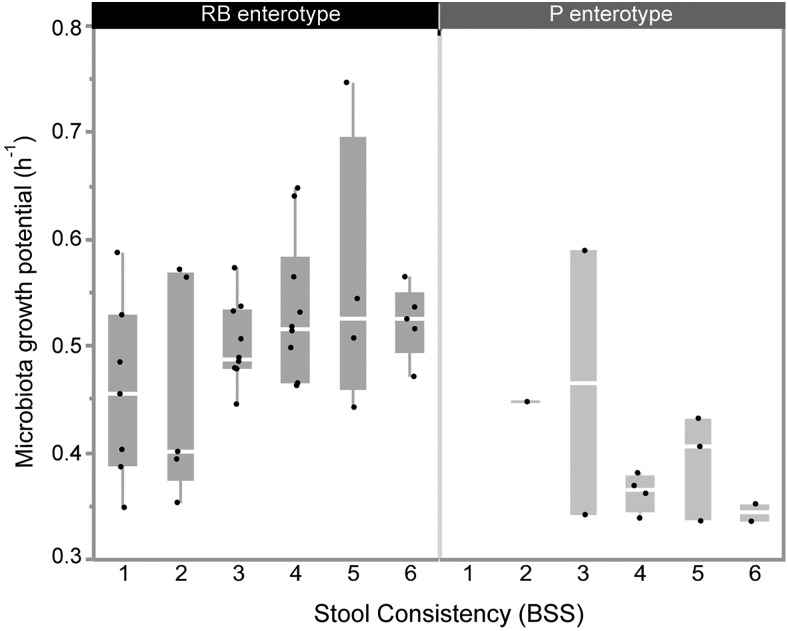
Objective: The assessment of potentially confounding factors affecting colon microbiota composition is essential to the identification of robust microbiome based disease markers. Here, we investigate the link between gut microbiota variation and stool consistency using Bristol Stool Scale classification, which reflects faecal water content and activity, and is considered a proxy for intestinal colon transit time. Design: Through 16S rDNA Illumina profiling of faecal samples of 53 healthy women, we evaluated associations between microbiome richness, Bacteroidetes:Firmicutes ratio, enterotypes, and genus abundance with self-reported, Bristol Stool Scale-based stool consistency. Each sample’s microbiota growth potential was calculated to test whether transit time acts as a selective force on gut bacterial growth rates. Results: Stool consistency strongly correlates with all known major microbiome markers. It is negatively correlated with species richness, positively associated to the Bacteroidetes:Firmicutes ratio, and linked to Akkermansia and Methanobrevibacter abundance. Enterotypes are distinctly distributed over the BSS-scores. Based on the correlations between microbiota growth potential and stool consistency scores within both enterotypes, we hypothesise that accelerated transit contributes to colon ecosystem differentiation. While shorter transit times can be linked to increased abundance of fast growing species in Ruminococcaceae- Bacteroides samples, hinting to a washout avoidance strategy of faster replication, this trend is absent in Prevotella -enterotyped individuals. Within this enterotype adherence to host tissue therefore appears to be a more likely bacterial strategy to cope with washout. Conclusions: The strength of the associations between stool consistency and species richness, enterotypes and community composition emphasises the crucial importance of stool consistency assessment in gut metagenome-wide association studies.
Overview
The claims and statistics of this paper haven’t been checked yet.
Free: it reads the open-access text and checks the first 5 claims that cite a source we can check. Create a free account to check every claim.
Integrity signals
Registry
Cites
Statistics
Figures
Verification
Claims the paper makes
The claims and statistics of this paper haven’t been checked yet.
Free: it reads the open-access text and checks the first 5 claims that cite a source we can check. Create a free account to check every claim.
Claims other papers make about this one
Each is checked against this paper’s own text: does it say what the citing paper says it does?
The cited source says what the claim attributes to it.
In the citing paper
“For instance, one study demonstrated that individuals with a loose stool had lower microbial richness and higher abundance of the Prevotella enterotype compared to those with harder stools, whose fecal samples were enriched with the Ruminococcaceae-Bacteroides enterotype [86].”
From A Clinical Outcome of the Anti-PD-1 Therapy of Melanoma in Polish Patients Is Mediated by Population-Specific Gut Microbiome Composition (2022) · cites this paper as [86]
In the citing paper
“Several studies have reported a positive relationship between prolonged colon transit times, with increased richness and diversity of the fecal microbiome in adults without prior history of GI disorders160,161.”
From The gut Microbiome in adult and pediatric functional gastrointestinal disorders (2019) · cites this paper as [161]
In the citing paper
“Moreover, it was also indicated that stool consistency and frequency were associated with gut microbiota richness and composition [86,87].”
From A Clinical Outcome of the Anti-PD-1 Therapy of Melanoma in Polish Patients Is Mediated by Population-Specific Gut Microbiome Composition (2022) · cites this paper as [86]
Self-check
Percentages, sums and reported differences re-computed from the paper’s own numbers.
The self-check needs the paper’s full text.
Citations
Cites
phyloseq: An R Package for Reproducible Interactive Analysis and Graphics of Microbiome Census Data
McMurdie, P. J., & Holmes, S. (2013) · PLoS ONE · doi:10.1371/journal.pone.0061217 · Cited by 21,322
A human gut microbial gene catalogue established by metagenomic sequencing
MetaHIT Consortium, Qin, J., Li, R., Raes, J., Arumugam, M., Burgdorf, K. S., Manichanh, C., Nielsen, T., Pons, N., Levenez, F., et al. (2010) · Nature · doi:10.1038/nature08821 · Cited by 11,624
Self-citationDiet rapidly and reproducibly alters the human gut microbiome
David, L. A., Maurice, C. F., Carmody, R. N., Gootenberg, D. B., Button, J. E., Wolfe, B. E., Ling, A. V., Devlin, A. S., Varma, Y., Fischbach, M. A., et al. (2014) · Nature · doi:10.1038/nature12820 · Cited by 10,100
Human gut microbiome viewed across age and geography
Yatsunenko, T., Rey, F. E., Manary, M. J., Trehan, I., Dominguez-Bello, M. G., Contreras, M., Magris, M., Hidalgo, G., Baldassano, R. N., Anokhin, A. P., et al. (2012) · Nature · doi:10.1038/nature11053 · Cited by 7,815
Enterotypes of the human gut microbiome
MetaHIT Consortium (additional members), Arumugam, M., Raes, J., Pelletier, E., Le Paslier, D., Yamada, T., Mende, D. R., Fernandes, G. R., Tap, J., Bruls, T., et al. (2011) · Nature · doi:10.1038/nature09944 · Cited by 7,548
Self-citationLinking long-term dietary patterns with gut microbial enterotypes
Wu, G. D., Chen, J., Hoffmann, C., Bittinger, K., Chen, Y.-Y., Keilbaugh, S. A., Bewtra, M., Knights, D., Walters, W. A., Knight, R., et al. (2011) · Science · doi:10.1126/science.1208344 · Cited by 6,513
De Filippo, C., Cavalieri, D., Di Paola, M., Ramazzotti, M., Poullet, J. B., Massart, S., Collini, S., Pieraccini, G., & Lionetti, P. (2010) · Proceedings of the National Academy of Sciences · doi:10.1073/pnas.1005963107 · Cited by 5,579
Diversity, stability and resilience of the human gut microbiota
Lozupone, C. A., Stombaugh, J. I., Gordon, J. I., Jansson, J. K., & Knight, R. (2012) · Nature · doi:10.1038/nature11550 · Cited by 5,533
Longstreth, G. F., Thompson, W. G., Chey, W. D., Houghton, L. A., Mearin, F., & Spiller, R. C. (2006) · Gastroenterology · doi:10.1053/j.gastro.2005.11.061 · Cited by 4,856
Richness of human gut microbiome correlates with metabolic markers
Le Chatelier, E., Nielsen, T., Qin, J., Prifti, E., Hildebrand, F., Falony, G., Almeida, M., Arumugam, M., Batto, J.-M., Kennedy, S., et al. (2013) · Nature · doi:10.1038/nature12506 · Cited by 4,662
Self-citation
Cited by
Items 401–500 of 1,000
Adamberg, K., & Adamberg, S. (2018) · Microbial Ecology in Health and Disease · doi:10.1080/16512235.2018.1549922 · Cited by 36
“The same taxa and Akkermansia were related to harder stools in another study (n = 56) [33].”
BackgroundThe composition of faecal microbiota is related to the amount and variety of dietary fibres
Adamberg, K., Jaagura, M., Aaspõllu, A., Nurk, E., & Adamberg, S. (2020) · International Journal of Food Sciences and Nutrition · doi:10.1080/09637486.2020.1727864 · Cited by 31
Acidic pH enhances butyrate production from pectin by faecal microbiota
Raba, G., Adamberg, S., & Adamberg, K. (2021) · FEMS Microbiology Letters · doi:10.1093/femsle/fnab042 · Cited by 29
Pierro, F. D. (2021) · Microorganisms · doi:10.3390/microorganisms9112341 · Cited by 35
Altered gut microbiota in individuals with episodic and chronic migraine
Yong, D., Lee, H., Min, H.-G., Kim, K., Oh, H., & Chu, M. K. (2023) · Scientific Reports · doi:10.1038/s41598-023-27586-4 · Cited by 38
Metabolic models of human gut microbiota: Advances and challenges
Garza, D. R., Gonze, D., Zafeiropoulos, H., Liu, B., & Faust, K. (2023) · Cell Systems · doi:10.1016/j.cels.2022.11.002 · Cited by 32
Duysburgh, C., Miclotte, L., Green, J. B., Watts, K. T., Sardi, M. I., Chakrabarti, A., Khafipour, E., & Marzorati, M. (2024) · Frontiers in Microbiology · doi:10.3389/fmicb.2024.1358456 · Cited by 35
Sardá, F. A. H., Giuntini, E. B., de Oliveira, A. F., de Souza, G. S. F., do Prado, S. B. R., Taddei, C. R., TADINI, C. C., Bittinger, K. L., Bushman, F. D., de Menezes, E. W., et al. (2025) · npj Biofilms and Microbiomes · doi:10.1038/s41522-025-00817-4 · Cited by 37
“There is ample evidence of inulin ’ s potential to improve bowel function 21,51,58 , although reports on SCFA measured concentration upon inulin consumption vary greatly, ranging from a lack of detectable effect to changes in speci fi c SCFA, all the way to changes in the total pool of SCFA…”
InfluentialAssociation Between Gut Microbiota and Delirium in Acutely Ill Older Adults
Garcez, F. B., de Alencar, J. C. G., Fernández, S. S. M., Avelino‐Silva, V. I., Sabino, É. C., Martins, R. C. R., Franco, L. A. M., Ribeiro, S. M. L., de Souza, H. P., & Avelino‐Silva, T. J. (2023) · The Journals of Gerontology Series A · doi:10.1093/gerona/glad074 · Cited by 35
Zhang, T., Liu, W., Lu, H., Cheng, T., Wang, L., Wang, G., Zhang, H., & Chen, W. (2023) · Critical Reviews in Food Science and Nutrition · doi:10.1080/10408398.2023.2278155 · Cited by 33
“For example, the abundance of Methanobrevibacter , Akkermansia , and Oscillospira increases with increasing stool hardness (Chen et al. 2020c; Vandeputte et al. 2016).”
Liu, D., Li, T., Zheng, H., Yin, X., Chen, M., Liao, Z., Hu, M., Luo, Z., Lu, B., Li, Y., et al. (2017) · RSC Advances · doi:10.1039/c7ra07651g · Cited by 31
Gong, J., Bai, T., Zhang, L., Qian, W., Song, J., & Hou, X. (2017) · PLoS ONE · doi:10.1371/journal.pone.0189257 · Cited by 33
CLOUD: a non-parametric detection test for microbiome outliers
Montassier, E., Al‐Ghalith, G. A., Hillmann, B., Viskocil, K., Kabage, A. J., McKinlay, C. E., Sadowsky, M. J., Khoruts, A., & Knights, D. (2018) · Microbiome · doi:10.1186/s40168-018-0514-4 · Cited by 29
“These included five patients from a published dataset who suffered from multiply recurrent Clostridium difficile infection (CDI) refractory to standard antibiotic therapies (patients CD1 to CD5) and were treated with fecal microbiota transplantation (FMT) [9].”
BackgroundTakayama, K., Takahara, C., Tabuchi, N., & Okamura, N. (2019) · Scientific Reports · doi:10.1038/s41598-019-40278-2 · Cited by 29
Validity of an observational assessment tool for multifaceted evaluation of faecal condition
Ohno, H., Murakami, H., Tanisawa, K., Konishi, K., & Miyachi, M. (2019) · Scientific Reports · doi:10.1038/s41598-019-40178-5 · Cited by 33
Rifkin, R. F., Vikram, S., Ramond, J., Rey‐Iglesia, A., Brand, T. B., Porraz, G., Val, A., Hall, G., Woodborne, S. M., Bailly, M. L., et al. (2020) · Microbiome · doi:10.1186/s40168-020-00832-x · Cited by 31
The microbiome can predict mucosal healing in small intestine in patients with Crohn’s disease
Hattori, S., Nakamura, M., Yamamura, T., Maeda, K., Sawada, T., Mizutani, Y., Yamamoto, K., Ishikawa, T., Furukawa, K., Ohno, E., et al. (2020) · Journal of Gastroenterology · doi:10.1007/s00535-020-01728-1 · Cited by 28
Lemay, D. G., Baldiviez, L. M., Chin, E. L., Spearman, S. S., Cervantes, E., Woodhouse, L. R., Keim, N. L., Stephensen, C. B., & Laugero, K. D. (2021) · Journal of Nutrition · doi:10.1093/jn/nxab019 · Cited by 36
Stiernborg, M., Debelius, J. W., Yang, L. L., Skott, E., Millischer, V., Giacobini, M., Melas, P. A., Boulund, F., & Lavebratt, C. (2023) · Brain Behavior and Immunity · doi:10.1016/j.bbi.2023.03.012 · Cited by 32
Chen, P., Wu, Z., Zhao, Y., Yan, W., Xu, R., Yan, L., & Li, H. (2015) · Genomics Data · doi:10.1016/j.gdata.2015.12.019 · Cited by 28
The impact of storage conditions on human stool 16S rRNA microbiome composition and diversity
Carruthers, L. V., Arinaitwe, M., Adriko, M., Faust, C. L., Tukahebwa, E. M., Hall, L. J., Ranford-Cartwright, L. C., & Lamberton, P. H. L. (2019) · PeerJ · doi:10.7717/peerj.8133 · Cited by 35
“This may explain why Gorzelak et al. 428 (2015) and Vandeputte et al. (2016) obtained significant differences as their samples were 429 collected from adults, who presumably produced larger stool specimens at the lower end of the 430 Bristol stool chart than the LMIC child samples collected in this…”
BackgroundResultAltamirano, Á., Saa, P. A., & Garrido, D. A. (2020) · Computational and Structural Biotechnology Journal · doi:10.1016/j.csbj.2020.11.035 · Cited by 28
Mobile Technologies for the Discovery, Analysis, and Engineering of the Global Microbiome
Ballard, Z. S., Brown, C., & Özcan, A. (2018) · ACS Nano · doi:10.1021/acsnano.7b08660 · Cited by 28
Kim, M. G., Jo, K., Chang, Y. B., Suh, H. J., & Hong, K. (2020) · Journal of Personalized Medicine · doi:10.3390/jpm10040161 · Cited by 29
McLeod, A., Bernabé, B. P., Xia, Y., Sanchez-Flack, J., Lamar, M., Schiffer, L. A., Castellanos, K., Fantuzzi, G., Maki, P. M., Fitzgibbon, M., et al. (2023) · PLoS ONE · doi:10.1371/journal.pone.0280211 · Cited by 27
“In our study, the ASV showing the most consistent relationship with cognition was Methanobrevibacter a hydrogen-consuming methanogenic archaeon.”
BackgroundInfluentialKey Bacteria in the Gut Microbiota Network for the Transition between Sedentary and Active Lifestyle
Castellanos, N. P., Díez, G. G., Almagro, C. A., Bressa, C., Bailén, M., González-Soltero, R., Pérez, M., & Larrosa, M. (2020) · Microorganisms · doi:10.3390/microorganisms8050785 · Cited by 30
“The presence of Roseburia is related to a more frequent intestinal transit, which could also explain why Roseburia species were representative of the ACT network, as ACT people usually have a greater intestinal transit [18], which could be a selective force on gut bacterial growth rates [19].”
BackgroundKiecolt‐Glaser, J. K., Wilson, S. J., Shrout, M. R., Madison, A. A., Andridge, R., Peng, J., Malarkey, W. B., & Bailey, M. T. (2021) · Psychoneuroendocrinology · doi:10.1016/j.psyneuen.2021.105132 · Cited by 26
Significance of gut microbiota in alcoholic and non-alcoholic fatty liver diseases
Sharma, S. P., Suk, K. T., & Kim, D. J. (2021) · World Journal of Gastroenterology · doi:10.3748/wjg.v27.i37.6161 · Cited by 31
Low Doses of Sucralose Alter Fecal Microbiota in High-Fat Diet-Induced Obese Rats
Zhang, M., Chen, J., Yang, M., Cheng, Q., Liu, Y., Qi, Y., Feng, R., Yang, M., Liu, W., & Ma, J. (2021) · Frontiers in Nutrition · doi:10.3389/fnut.2021.787055 · Cited by 26
“It is noteworthy that the osmolarities of solutions were different, which could mediate gastrointestinal motility directly and further affect community composition of intestinal flora (31).”
BackgroundMurillo, T., Schneider, D., Heistermann, M., Daniel, R., & Fichtel, C. (2022) · Scientific Reports · doi:10.1038/s41598-022-25733-x · Cited by 31
A narrative review from gut to lungs: non-small cell lung cancer and the gastrointestinal microbiome
Shah, H., & Ng, T. L. (2023) · Translational Lung Cancer Research · doi:10.21037/tlcr-22-595 · Cited by 27
“Their study rationale was based on prior studies showing improved fecal microbiome diversity and composition associated with normal Bristol Stool Scale-based stool consistency and frequency (75,76).”
Total Transit Time and Probiotic Persistence in Healthy Adults: A Pilot Study
Tremblay, A., Auger, J., Alyousif, Z., Calero, S. E. C., Mathieu, O., Rivero‐Mendoza, D., Elmaoui, A., Dahl, W. J., & Tompkins, T. A. (2023) · Journal of Neurogastroenterology and Motility · doi:10.5056/jnm22031 · Cited by 27
Eukaryotic and Prokaryotic Microbiota Interactions
Kodio, A., Menu, E., & Ranque, S. (2020) · Microorganisms · doi:10.3390/microorganisms8122018 · Cited by 28
“Other factors potentially influencing the bacterial intestinal microbiome include diet (animal proteins, fatty acids, carbohydrates, processed foods, dietary fibres) [6–8], age [5], stool consistency [9,10], physiological and metabolic status [11,12], medical practices (e.”
Lohning, A. E., Kidachi, Y., Kamiie, K., Sasaki, K., Ryoyama, K., & Yamaguchi, H. (2021) · European Journal of Medicinal Chemistry · doi:10.1016/j.ejmech.2021.113250 · Cited by 26
Wegl, G., Grabner, N., Köstelbauer, A., Klose, V., & Ghanbari, M. (2021) · Frontiers in Microbiology · doi:10.3389/fmicb.2021.627539 · Cited by 30
Association of Gut Hormones and Microbiota with Vascular Dysfunction in Obesity
Rovella, V., Rodia, G., Daniele, F. D., Cardillo, C., Campia, U., Noce, A., Candi, E., Della‐Morte, D., & Tesauro, M. (2021) · Nutrients · doi:10.3390/nu13020613 · Cited by 25
Tomkovich, S., Taylor, A., King, J., Colovas, J., Bishop, L., McBride, K., Royzenblat, S. K., Lesniak, N. A., Bergin, I. L., & Schloss, P. D. (2021) · mSphere · doi:10.1128/msphere.00629-21 · Cited by 25
Exercise for the Diabetic Gut—Potential Health Effects and Underlying Mechanisms
Valder, S., & Brinkmann, C. K. (2022) · Nutrients · doi:10.3390/nu14040813 · Cited by 29
Gut microbiome and daytime function in Chinese patients with major depressive disorder
Zhang, Q., Yun, Y., An, H., Zhao, W., Ma, T., Wang, Z., & Yang, F. (2022) · Journal of Psychosomatic Research · doi:10.1016/j.jpsychores.2022.110787 · Cited by 27
Déru, V., Bouquet, A., Zemb, O., Blanchet, B., Almeida, M. L. D., Cauquil, L., Carillier‐Jacquin, C., & Gilbert, H. (2022) · Journal of Animal Science · doi:10.1093/jas/skac183 · Cited by 38
A Shigella species variant is causally linked to intractable functional constipation
Chen, X., Qiu, T.-T., Wang, Y., Xu, L.-Y., Sun, J., Jiang, Z., Zhao, W. H., Tao, T., Zhou, Y., Wei, L., et al. (2022) · Journal of Clinical Investigation · doi:10.1172/jci150097 · Cited by 27
Clinical Management of the Microbiome in Irritable Bowel Syndrome
Andrews, C. N., Sidani, S., & Marshall, J. K. (2020) · Journal of the Canadian Association of Gastroenterology · doi:10.1093/jcag/gwz037 · Cited by 27
Yuan, M., Zhang, Z., Liu, T., Hua, F., Liu, Y., & Chen, K. (2024) · Foods · doi:10.3390/foods13132157 · Cited by 23
Krüger, K., Myeonghyun, Y., van der Wielen, N., Kok, D. E. G., Hooiveld, G. J. E. J., Keshtkar, S., Bruin, M. D.-D., Balvers, M. G. J., Grootte-Bromhaar, M., Mudde, K., et al. (2024) · Scientific Reports · doi:10.1038/s41598-024-75477-z · Cited by 30
Tang, G., Carr, A. V., Perez, C., Sarmiento, K. R., Levy, L., Lampe, J. W., Diener, C., & Gibbons, S. M. (2025) · mSystems · doi:10.1128/msystems.00984-25 · Cited by 27
“…could have much higher total bacterial biomass in their gut than a carnivore with constipation, but this might not be apparent when looking at wet weight-normalized microbial load) (31, 40, 41), and it is important to have biomass estimates that are independent of moisture content and transit time.”
Prebiotics and Gut Health: Mechanisms, Clinical Evidence, and Future Directions
Monteiro, C. R. A. V., Bogéa, E. G., Campos, C. D. L., Filho, J. L. P., Almeida, V. S. S., Vale, A. Á. M., de Azevedo-Santos, A. P. S., & Monteiro‐Neto, V. (2026) · Nutrients · doi:10.3390/nu18030372 · Cited by 41
“This principle is mechanistically supported by studies showing that the in vitro fermentability of prebiotics, such as inulin and FOS, directly correlates with the baseline levels of bifi-dobacteria in fecal inocula [83,84].”
Kapoor, M. P., Koido, M., Kawaguchi, M., Timm, D. A., Ozeki, M., Yamada, M., Mitsuya, T., & Ōkubo, T. (2020) · Journal of Functional Foods · doi:10.1016/j.jff.2020.104067 · Cited by 25
Corbin, K. D., Krajmalnik‐Brown, R., Carnero, E. Á., Bock, C., Emerson, R., Rittmann, B. E., Marcus, A. K., Davis, T. L., Dirks, B., Ilhan, Z. E., et al. (2020) · Contemporary Clinical Trials Communications · doi:10.1016/j.conctc.2020.100646 · Cited by 21
Eustis, S. J., McCall, M. W., Murphy, E. A., & Wirth, M. D. (2021) · Journal of the Academy of Consultation-Liaison Psychiatry · doi:10.1016/j.jaclp.2021.08.008 · Cited by 26
Chanderraj, R., Brown, C. A., Hinkle, K. J., Falkowski, N. R., Woods, R. J., & Dickson, R. P. (2022) · Microbiome · doi:10.1186/s40168-021-01190-y · Cited by 23
“Previous studies have shown that gut bacterial density increases with increased gut transit time [7].”
Breugelmans, T., Arras, W., Boen, L.-E., Borms, E., Kamperdijk, L., Man, J. D., de Vijver, E. V., Gils, A. V., Winter, B. Y. D., Moes, N. D., et al. (2022) · Inflammatory Bowel Diseases · doi:10.1093/ibd/izac217 · Cited by 23
Aizpurua, O., Dunn, R. R., Hansen, L. H., Gilbert, M. T. P., & Alberdi, A. (2023) · Critical Reviews in Biotechnology · doi:10.1080/07388551.2023.2254933 · Cited by 27
“Where possible, researchers should also aim for similar stool consistency across individuals [26].”
The Gut Microbiota and Chronic Pain
Pak, R. J., Cho, M. S., Pride, K., & Abd-Elsayed, A. A. (2024) · Current Pain and Headache Reports · doi:10.1007/s11916-024-01221-x · Cited by 25
“Changes in intestinal motility then may affect stool microbial richness and composition [12].”
A neuroscience perspective of the gut theory of Parkinson's disease
Smith, L. M., & Parr‐Brownlie, L. C. (2018) · European Journal of Neuroscience · doi:10.1111/ejn.13869 · Cited by 26
Renelies‐Hamilton, J., Noguera-Julián, M., Parera, M., Paredes, R., Pacheco, L., Dacal, E., Saugar, J. M., Rubio, J. M., Poulsen, M., Köster, P. C., et al. (2019) · Infection Genetics and Evolution · doi:10.1016/j.meegid.2019.104010 · Cited by 25
The influence of the gastrointestinal microbiome on infant colic
Chaib, A. O., Levy, E. I., Chaib, M. O., & Vandenplas, Y. (2020) · Expert Review of Gastroenterology & Hepatology · doi:10.1080/17474124.2020.1791702 · Cited by 26
Sato, K., Hara‐Chikuma, M., Yasui, M., Inoue, J., & Kim, Y. (2024) · iScience · doi:10.1016/j.isci.2024.109903 · Cited by 34
Yu, L. C. (2024) · Life Sciences · doi:10.1016/j.lfs.2024.123153 · Cited by 29
Bersanelli, M., Santoni, M., Ticinesi, A., & Buti, S. (2019) · Targeted Oncology · doi:10.1007/s11523-019-00643-7 · Cited by 24
Use of Changestat for Growth Rate Studies of Gut Microbiota
Adamberg, K., Raba, G., & Adamberg, S. (2020) · Frontiers in Bioengineering and Biotechnology · doi:10.3389/fbioe.2020.00024 · Cited by 23
Personal diet–microbiota interactions and weight loss
Roager, H. M., & Christensen, L. H. (2022) · Proceedings of The Nutrition Society · doi:10.1017/s0029665122000805 · Cited by 27
Wang, X., Yu, J., & Zhang, X. (2022) · Molecules · doi:10.3390/molecules27217637 · Cited by 22
Schlüter, J., Djuković, A., Taylor, B. P., Yan, J., Duan, C., Hussey, G. A., Liao, C., Sharma, S., Fontana, E., Amoretti, L. A., et al. (2023) · Cell Host & Microbe · doi:10.1016/j.chom.2023.05.027 · Cited by 26
Kim, H., Jeong, E., Park, C., Lee, J.-S., Kim, W. J., Yu, K., Suh, H. J., Ahn, Y., & Moon, S. (2023) · International Journal of Biological Macromolecules · doi:10.1016/j.ijbiomac.2023.126560 · Cited by 23
Microscopic colitis—microbiome, barrier function and associated diseases
van Hemert, S., Skonieczna‐Żydecka, K., Łoniewski, I., Szredzki, P., & Marlicz, W. M. (2018) · Annals of Translational Medicine · doi:10.21037/atm.2017.03.83 · Cited by 25
Genome‐wide association studies: utility and limitations for research in physiology
Ciochetti, N. P., Lugli‐Moraes, B., da Silva, B. S., & Rovaris, D. L. (2023) · The Journal of Physiology · doi:10.1113/jp284241 · Cited by 33
“For example, PGS for relevant physiological traits such as blood pressure (Vaura et al., 2021), eGFR (Zhou et al., 2023) and many others have emerged as promising approaches for risk prediction for endophenotypes and diseases, with the potential to be applied in clinical practice for stratification…”
The role of the gut microbiome in disorders of gut–brain interaction
Gawey, B. J., Mars, R. A. T., & Kashyap, P. (2024) · FEBS Journal · doi:10.1111/febs.17200 · Cited by 32
Johnson-Martínez, J. P., Diener, C., Levine, A. E., Wilmanski, T. M., Suskind, D. L., Ralevski, A., Hadlock, J., Magis, A. T., Hood, L., Rappaport, N., et al. (2024) · Cell Reports Medicine · doi:10.1016/j.xcrm.2024.101646 · Cited by 37
First insights into microbial changes within an Inflammatory Bowel Disease Family Cohort study
Rausch, P., Ratjen, I., Tittmann, L., Enderle, J., Wacker, E. M., Jaeger, K., Rühlemann, M. C., Franzpötter, K., Ellul, P., Kruse, R., et al. (2025) · Gut Microbes · doi:10.1080/19490976.2025.2559119 · Cited by 22
Valdivia‐Garcia, M., Chappell, K. E., Camuzeaux, S., Olmo‐García, L., der Sluis, V. H.-V., Radhakrishnan, S. T., Stephens, H. L., Bouri, S., Braz, L. M. D. C., Williams, H. R. T., et al. (2022) · Journal of Pharmaceutical and Biomedical Analysis · doi:10.1016/j.jpba.2022.115060 · Cited by 25
Lee, A., Lee, J. Y., Jung, S.-W., Shin, S. Y., Ryu, H. S., Jang, S.-H., Kwon, J. G., & Kim, Y. S. (2023) · Korean Journal of Gastroenterology · doi:10.4166/kjg.2023.028 · Cited by 30
Park, C., Yun, K., Chu, J. M., Lee, J. Y., Hong, C. P., Nam, Y. D., Jeong, J.-U., Han, K., & Ahn, Y. J. (2020) · The Journal of Microbiology · doi:10.1007/s12275-020-0092-6 · Cited by 19
Nestel, N., Hvass, J. D., Bahl, M. I., Hansen, L. H., Krych, Ł., Nielsen, D. S., Dragsted, L. O., & Roager, H. M. (2021) · Frontiers in Nutrition · doi:10.3389/fnut.2020.594850 · Cited by 24
“However, high gut microbial α-diversity can be confounded by a long intestinal transit time (ITT) (9, 10), which favors growth of slow-growing species and thereby increase microbial richness (11).”
BackgroundDoes Day-to-Day Variability in Stool Consistency Link to the Fecal Microbiota Composition?
Vork, L., Penders, J., Jalanka, J., Bojić, S., van Kuijk, S. M. J., Salonen, A., de Vos, W. M., Rajilić-Stojanović, M. D., Weerts, Z. Z. R. M., Masclee, A., et al. (2021) · Frontiers in Cellular and Infection Microbiology · doi:10.3389/fcimb.2021.639667 · Cited by 18
“An increase in abundance of members of the Methanobacteriaceae and Verrucomicrobiaceae, and the Enterobacteriaceae and Christensenellaceae families in association with firmer stools has been described (Tigchelaar et al., 2016; Vandeputte et al., 2016; Vandeputte et al., 2017; Jalanka et al., 2019).”
BackgroundRectal swabs are a reliable method of assessing the colonic microbiome
Turner, G. A., O’Grady, M. J., Hudson, D. T., Morgan, X. C., Frizelle, F., & Purcell, R. V. (2022) · International Journal of Medical Microbiology · doi:10.1016/j.ijmm.2022.151549 · Cited by 23
Scheperjans, F. (2017) · Movement Disorders · doi:10.1002/mds.27197 · Cited by 22
Katayama, Y., Yamada, T., Tanimura, K., Yoshimura, A., Takeda, T., Chihara, Y., Tamiya, N., Kaneko, Y., Uchino, J., & Takayama, K. (2019) · Thoracic Cancer · doi:10.1111/1759-7714.12969 · Cited by 20
Sokou, R., Moschari, E., Palioura, A. E., Palioura, A.-P., Mpakosi, A., Αδαμακίδου, Θ., Vlachou, E. D., Theodoraki, M., Iacovidou, N. M., & Tsartsalis, A. N. (2024) · Microorganisms · doi:10.3390/microorganisms12081564 · Cited by 23
Gut microbiome pattern impacts treatment response in primary biliary cholangitis
Liu, Q., Huang, B., Zhou, Y., Wei, Y., Li, Y., Li, B., Li, Y., Zhang, J., Qian, Q., Chen, R., et al. (2024) · Med · doi:10.1016/j.medj.2024.08.003 · Cited by 24
Mukherjee, A., Farsi, D. N., García-Gutiérrez, E., Akan, E., Salas-Millán, J. Á., Angelovski, L., Bintsis, Τ., Gérard, A., Güley, Z., Kabakcı, S. A., et al. (2025) · Frontiers in Nutrition · doi:10.3389/fnut.2025.1668889 · Cited by 27
Zhang, Z., Li, D., & Tang, R. (2019) · Microorganisms · doi:10.3390/microorganisms7030076 · Cited by 23
Dietary Fiber and Gut Microbiota
Senés‐Guerrero, C., Hernandez, M. S. G., Gamboa, R. G., & García‐Cayuela, T. (2020) · Food engineering series · doi:10.1007/978-3-030-38654-2_12 · Cited by 33
Nguyen, V. T. T., Sallbach, J., Guilherme, M. D. S., & Endres, K. (2021) · International Journal of Molecular Sciences · doi:10.3390/ijms22031015 · Cited by 22
Parkinson’s Disease and the Metal–Microbiome–Gut–Brain Axis: A Systems Toxicology Approach
Forero-Rodríguez, L. J., Josephs‐Spaulding, J., Flor, S., Pinzón, A. M., & Kaleta, C. (2021) · Antioxidants · doi:10.3390/antiox11010071 · Cited by 26
“Generally, this microbe is known to confer several benefits to humans such as inciting longer gastrointestinal passage times [28,29], improving the GI barrier functioning [30], and improving anti-inflammatory status [31].”
BackgroundBrauckmann, V., Nambiar, S., Potthoff, A. V., Höxtermann, S., Wach, J., Kayser, A., Tiemann, C., Schuppe, A.-K., Brockmeyer, N. H., & Skaletz‐Rorowski, A. (2022) · Journal of the European Academy of Dermatology and Venereology · doi:10.1111/jdv.18006 · Cited by 20
Oh, H., Min, U.-G., Jang, H.-J., Kim, N., Lim, J., Chalita, M., & Chun, J. (2022) · The Journal of Microbiology · doi:10.1007/s12275-022-1526-0 · Cited by 23
“In addition, the association of stool consistency frequency with the gut microbiome has been reported in several previous studies on humans (Tigchelaar et al., 2016; Vandeputte et al., 2016; Kwon et al., 2019).”
ResultFecal microbiota in pediatric depression and its relation to bowel habits
Zhou, Y., Zhang, X., Pan, L., Zhang, W.-W., Chen, F., Hu, S., & Jiang, H. (2022) · Journal of Psychiatric Research · doi:10.1016/j.jpsychires.2022.03.037 · Cited by 22
The gut mucin-microbiota interactions: a missing key to optimizing endurance performance
Clark, A. P., & Mach, N. (2023) · Frontiers in Physiology · doi:10.3389/fphys.2023.1284423 · Cited by 23
“It spans over 2,000 bacterial species (Donaldson et al., 2015; Jousset et al., 2017) and various archaea, eukaryotic taxa, and viruses, with a density of ~40 – 300 billion microorganisms in the colon (Vandeputte et al., 2016).”
BackgroundTurner, B. R. H., Jenkinson, P. I., Huttman, M. M., & Mullish, B. H. (2024) · Alcoholism Clinical and Experimental Research · doi:10.1111/acer.15396 · Cited by 31
Mirza, A., Zhu, F., Knox, N., Black, L. J., Daly, A., Bonner, C., Domselaar, G. V., Bernstein, C. N., Marrie, R. A., Hart, J., et al. (2024) · Communications Medicine · doi:10.1038/s43856-024-00565-0 · Cited by 24
Reproducibility of assessing fecal microbiota in chronic constipation
Parthasarathy, G., Chen, J., Chia, N., O’Connor, H. M., Gaskins, H. R., & Bharucha, A. E. (2017) · Neurogastroenterology & Motility · doi:10.1111/nmo.13172 · Cited by 21
A primer on investigating the role of the microbiome in brain and cognitive development
Kelsey, C. M., Dreisbach, C., Alhusen, J. L., & Großmann, T. (2018) · Developmental Psychobiology · doi:10.1002/dev.21778 · Cited by 22
Butyrate production in patients with end-stage renal disease
Terpstra, M. L., Sinnige, M. J., Hugenholtz, F., Sengers, H. P., Remmerswaal, E. B. M., Geerlings, S. E., & Bemelman, F. J. (2019) · International Journal of Nephrology and Renovascular Disease · doi:10.2147/ijnrd.s200297 · Cited by 22
O’Donovan, C. M., Connor, B., Madigan, S. M., Cotter, P. D., & Sullivan, O. O. (2020) · Travel Medicine and Infectious Disease · doi:10.1016/j.tmaid.2020.101553 · Cited by 21
Zubeldia‐Varela, E., Barber, D., Barbas, C., Pérez‐Gordo, M., & Rojo, D. (2020) · Journal of Pharmaceutical and Biomedical Analysis · doi:10.1016/j.jpba.2020.113592 · Cited by 21
Does Malaria Cause Diarrhoea? A Systematic Review
Sey, I. C. M., Ehimiyein, A. M., Bottomley, C., Riley, E. M., & Mooney, J. P. (2020) · Frontiers in Medicine · doi:10.3389/fmed.2020.589379 · Cited by 23
Non-Celiac Gluten Sensitivity and Irritable Bowel Disease: Looking for the Culprits
Koumbi, L., Γιουλεμέ, Ό., & Vassilopoulou, Ε. (2020) · Current Developments in Nutrition · doi:10.1093/cdn/nzaa176 · Cited by 21
“Increased methane production in IBS-C patients, however, correlates with microbial overgrowth of the methanobacteriales Clostridiales or Prevotella species, which further reduces food transition, by an average of 59% in animal models (45, 44, 72).”
BackgroundBristol Stool Scale as a Determinant of Hepatic Encephalopathy Management in Patients With Cirrhosis
Duong, N. K., Shrestha, S., Park, D., Shahab, O., Fagan, A., Malpaya, Z., Gallagher, M. L., Morris, A., Davis, B., & Bajaj, J. S. (2021) · The American Journal of Gastroenterology · doi:10.14309/ajg.0000000000001550 · Cited by 20
Intestinal permeability, food antigens and the microbiome: a multifaceted perspective
Valitutti, F., Mennini, M., Monacelli, G., Fagiolari, G., Piccirillo, M., Nardo, G. D., & Cara, G. D. (2025) · Frontiers in Allergy · doi:10.3389/falgy.2024.1505834 · Cited by 29
The significance of the gut microbiome in children with functional constipation
Kwiatkowska, M., & Krogulska, A. (2021) · Advances in Clinical and Experimental Medicine · doi:10.17219/acem/131215 · Cited by 22
Metadata
- Authors
- Vandeputte, D., Falony, G., Vieira-Silva, S., Tito, R. Y., Joossens, M., & Raes, J.
- Affiliations
- Vrije Universiteit Brussel (BE)
- KU Leuven (BE)
- Department of Microbiology and Immunology, KU Leuven, Rega Institute, Leuven, Belgium
- Corresponding author
- Raes, Jeroen
- Venue
- Gut
- Publisher
- BMJ
- Published
- 2015-06-11
- Volume
- 65
- Issue
- 1
- Pages
- 57-62
- ISSN
- 0017-5749 (ISSN-L)
- 1468-3288
- PMC
- PMC4717365
- OpenAlex
- W2178459747
- Cited by
- 1,028
- References
- 49
- Citations by year
- 2026: 80 · 2025: 83 · 2024: 116 · 2023: 105 · 2022: 120 · 2021: 134 · 2020: 112 · 2019: 94 · 2018: 76 · 2017: 60 · 2016: 42 · 2015: 6
- FWCI
- 26.62
- Type
- journal article
- Language
- en
- Open access
- hybrid
- doi.org
- Licence
- cc-by-nc
- Locations
- Gut (publishedVersion, cc-by-nc)
- PubMed Central (publishedVersion, cc-by-nc)
- PubMed (publishedVersion)
- Socio-Environmental Systems Modeling (acceptedVersion, cc-by-nc)
- Lirias (submittedVersion, cc-by-nc)
- Ghent University Academic Bibliography (Ghent University) (submittedVersion)
- Digital Access to Libraries (submittedVersion)
- VUBIR (Vrije Universiteit Brussel) (submittedVersion)
- Funders
- European Commission (305312, 267139)
- Fonds Wetenschappelijk Onderzoek
- KU Leuven
- Vlaamse regering (IWT130359)
- FP7 People: Marie-Curie Actions
- Topics
- Life Sciences › Biochemistry, Genetics and Molecular Biology › Molecular Biology › Gut microbiota and health
- Health Sciences › Medicine › Gastroenterology › Gastrointestinal motility and disorders
- Physical Sciences › Environmental Science › Ecology › Microbial Community Ecology and Physiology
- Keywords
- stool consistency, Bristol stool scale, gut microbiota, enterotypes, microbial richness, Firmicutes/Bacteroidetes ratio, Akkermansia, Methanobrevibacter, Ruminococcaceae, Bacteroides, Prevotella, bacterial growth rate, colonic transit time, fecal water content, women
- MeSH terms
- Gastrointestinal Microbiome, Adult, Feces, Female, Gastrointestinal Transit, Humans, Middle Aged, Self Report, Healthy Volunteers
About these checks
Registry, retraction, Cites and statistics results are computed, not judged, with one exception: a printed reference that no index lists is read once by a model before it counts as a citation error. Claims are extracted by a model and kept only when their quote appears verbatim in the text; each cited source is then checked, with a model’s help, for whether it says what the claim relies on. Those verdicts can be wrong — read the claim’s quote and the cited source before relying on one.
Statistics and arithmetic are recomputed, not judged.
Confidence bands are shown only for fields calibrated on our annotated test set. None is calibrated yet, so no band is shown.
What counts as a claim ›How we measure confidence ›How we check this ›
Are you an author, or do you see a problem with this page? Request a review
Data sources
Bibliographic data: Semantic Scholar, OpenAlex, Crossref.
Contains information from the Semantic Scholar Academic Graph Datasets, made available under the ODC Attribution License (ODC-BY 1.0).
Semantic Scholar’s data is described in: Kinney, R., et al. (2023). The Semantic Scholar Open Data Platform. arXiv:2301.10140.
