

Stool consistency is strongly associated with gut microbiota richness and composition, enterotypes and bacterial growth rates
Open accessThe DOI matches its Crossref record; 49 of the 49 references it cites were found in a registry or an index.
Abstract
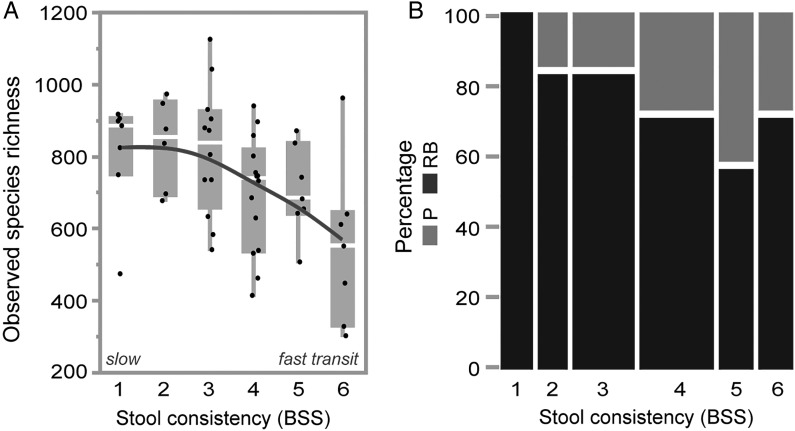
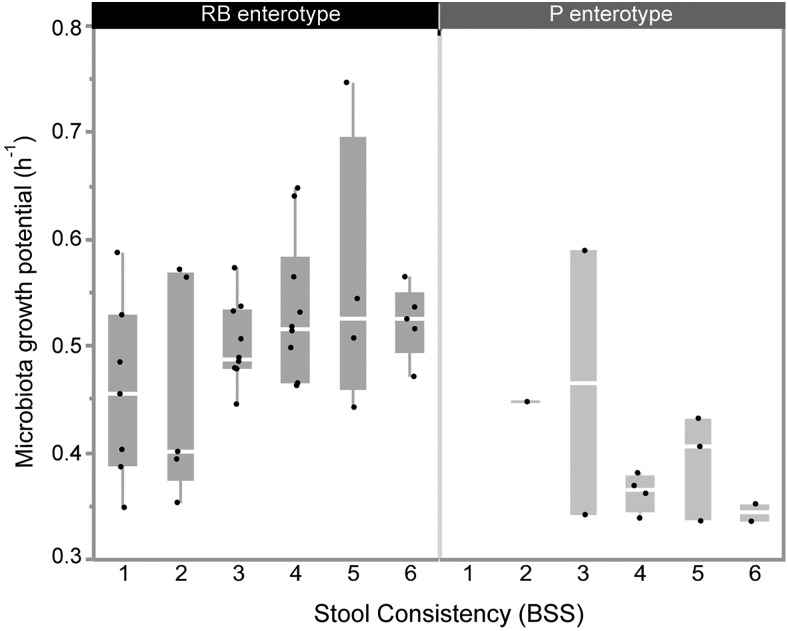
Objective: The assessment of potentially confounding factors affecting colon microbiota composition is essential to the identification of robust microbiome based disease markers. Here, we investigate the link between gut microbiota variation and stool consistency using Bristol Stool Scale classification, which reflects faecal water content and activity, and is considered a proxy for intestinal colon transit time. Design: Through 16S rDNA Illumina profiling of faecal samples of 53 healthy women, we evaluated associations between microbiome richness, Bacteroidetes:Firmicutes ratio, enterotypes, and genus abundance with self-reported, Bristol Stool Scale-based stool consistency. Each sample’s microbiota growth potential was calculated to test whether transit time acts as a selective force on gut bacterial growth rates. Results: Stool consistency strongly correlates with all known major microbiome markers. It is negatively correlated with species richness, positively associated to the Bacteroidetes:Firmicutes ratio, and linked to Akkermansia and Methanobrevibacter abundance. Enterotypes are distinctly distributed over the BSS-scores. Based on the correlations between microbiota growth potential and stool consistency scores within both enterotypes, we hypothesise that accelerated transit contributes to colon ecosystem differentiation. While shorter transit times can be linked to increased abundance of fast growing species in Ruminococcaceae- Bacteroides samples, hinting to a washout avoidance strategy of faster replication, this trend is absent in Prevotella -enterotyped individuals. Within this enterotype adherence to host tissue therefore appears to be a more likely bacterial strategy to cope with washout. Conclusions: The strength of the associations between stool consistency and species richness, enterotypes and community composition emphasises the crucial importance of stool consistency assessment in gut metagenome-wide association studies.
Overview
The claims and statistics of this paper haven’t been checked yet.
Free: it reads the open-access text and checks the first 5 claims that cite a source we can check. Create a free account to check every claim.
Integrity signals
Registry
Cites
Statistics
Figures
Verification
Claims the paper makes
The claims and statistics of this paper haven’t been checked yet.
Free: it reads the open-access text and checks the first 5 claims that cite a source we can check. Create a free account to check every claim.
Claims other papers make about this one
Each is checked against this paper’s own text: does it say what the citing paper says it does?
The cited source says what the claim attributes to it.
In the citing paper
“For instance, one study demonstrated that individuals with a loose stool had lower microbial richness and higher abundance of the Prevotella enterotype compared to those with harder stools, whose fecal samples were enriched with the Ruminococcaceae-Bacteroides enterotype [86].”
From A Clinical Outcome of the Anti-PD-1 Therapy of Melanoma in Polish Patients Is Mediated by Population-Specific Gut Microbiome Composition (2022) · cites this paper as [86]
In the citing paper
“Several studies have reported a positive relationship between prolonged colon transit times, with increased richness and diversity of the fecal microbiome in adults without prior history of GI disorders160,161.”
From The gut Microbiome in adult and pediatric functional gastrointestinal disorders (2019) · cites this paper as [161]
In the citing paper
“Moreover, it was also indicated that stool consistency and frequency were associated with gut microbiota richness and composition [86,87].”
From A Clinical Outcome of the Anti-PD-1 Therapy of Melanoma in Polish Patients Is Mediated by Population-Specific Gut Microbiome Composition (2022) · cites this paper as [86]
Self-check
Percentages, sums and reported differences re-computed from the paper’s own numbers.
The self-check needs the paper’s full text.
Citations
Cites
phyloseq: An R Package for Reproducible Interactive Analysis and Graphics of Microbiome Census Data
McMurdie, P. J., & Holmes, S. (2013) · PLoS ONE · doi:10.1371/journal.pone.0061217 · Cited by 21,322
A human gut microbial gene catalogue established by metagenomic sequencing
MetaHIT Consortium, Qin, J., Li, R., Raes, J., Arumugam, M., Burgdorf, K. S., Manichanh, C., Nielsen, T., Pons, N., Levenez, F., et al. (2010) · Nature · doi:10.1038/nature08821 · Cited by 11,624
Self-citationDiet rapidly and reproducibly alters the human gut microbiome
David, L. A., Maurice, C. F., Carmody, R. N., Gootenberg, D. B., Button, J. E., Wolfe, B. E., Ling, A. V., Devlin, A. S., Varma, Y., Fischbach, M. A., et al. (2014) · Nature · doi:10.1038/nature12820 · Cited by 10,100
Human gut microbiome viewed across age and geography
Yatsunenko, T., Rey, F. E., Manary, M. J., Trehan, I., Dominguez-Bello, M. G., Contreras, M., Magris, M., Hidalgo, G., Baldassano, R. N., Anokhin, A. P., et al. (2012) · Nature · doi:10.1038/nature11053 · Cited by 7,815
Enterotypes of the human gut microbiome
MetaHIT Consortium (additional members), Arumugam, M., Raes, J., Pelletier, E., Le Paslier, D., Yamada, T., Mende, D. R., Fernandes, G. R., Tap, J., Bruls, T., et al. (2011) · Nature · doi:10.1038/nature09944 · Cited by 7,548
Self-citationLinking long-term dietary patterns with gut microbial enterotypes
Wu, G. D., Chen, J., Hoffmann, C., Bittinger, K., Chen, Y.-Y., Keilbaugh, S. A., Bewtra, M., Knights, D., Walters, W. A., Knight, R., et al. (2011) · Science · doi:10.1126/science.1208344 · Cited by 6,513
De Filippo, C., Cavalieri, D., Di Paola, M., Ramazzotti, M., Poullet, J. B., Massart, S., Collini, S., Pieraccini, G., & Lionetti, P. (2010) · Proceedings of the National Academy of Sciences · doi:10.1073/pnas.1005963107 · Cited by 5,579
Diversity, stability and resilience of the human gut microbiota
Lozupone, C. A., Stombaugh, J. I., Gordon, J. I., Jansson, J. K., & Knight, R. (2012) · Nature · doi:10.1038/nature11550 · Cited by 5,533
Longstreth, G. F., Thompson, W. G., Chey, W. D., Houghton, L. A., Mearin, F., & Spiller, R. C. (2006) · Gastroenterology · doi:10.1053/j.gastro.2005.11.061 · Cited by 4,856
Richness of human gut microbiome correlates with metabolic markers
Le Chatelier, E., Nielsen, T., Qin, J., Prifti, E., Hildebrand, F., Falony, G., Almeida, M., Arumugam, M., Batto, J.-M., Kennedy, S., et al. (2013) · Nature · doi:10.1038/nature12506 · Cited by 4,662
Self-citation
Cited by
Multi-omics of the gut microbial ecosystem in inflammatory bowel diseases
Lloyd-Price, J., Arze, C., Ananthakrishnan, A. N., Schirmer, M., Avila-Pacheco, J., Poon, T. W., Andrews, E., Ajami, N. J., Bonham, K. S., Brislawn, C. J., et al. (2019) · Nature · doi:10.1038/s41586-019-1237-9 · Cited by 3,143
Current understanding of the human microbiome
Gilbert, J. A., Blaser, M. J., Caporaso, J. G., Jansson, J. K., Lynch, S. V., & Knight, R. (2018) · Nature Medicine · doi:10.1038/nm.4517 · Cited by 2,609
Population-level analysis of gut microbiome variation
Falony, G., Joossens, M., Vieira-Silva, S., Wang, J., Darzi, Y., Faust, K., Kurilshikov, A., Bonder, M. J., Valles-Colomer, M., Vandeputte, D., et al. (2016) · Science · doi:10.1126/science.aad3503 · Cited by 2,400
Self-citationMicrobial tryptophan catabolites in health and disease
Roager, H. M., & Licht, T. R. (2018) · Nature Communications · doi:10.1038/s41467-018-05470-4 · Cited by 2,236
Human gut microbiome: Hopes, threats and promises
Cani, P. D. (2018) · Gut · doi:10.1136/gutjnl-2018-316723 · Cited by 1,386
Martin, C. R., Osadchiy, V., Kalani, A., & Mayer, E. A. (2018) · Cellular and Molecular Gastroenterology and Hepatology · doi:10.1016/j.jcmgh.2018.04.003 · Cited by 1,284
Enterotypes in the landscape of gut microbial community composition
Costea, P. I., Hildebrand, F., Arumugam, M., Bäckhed, F., Blaser, M. J., Bushman, F. D., de Vos, W. M., Ehrlich, S. D., Fraser, C. M., Hattori, M., et al. (2017) · Nature Microbiology · doi:10.1038/s41564-017-0072-8 · Cited by 1,138
Self-citationQuantitative microbiome profiling links gut community variation to microbial load
Vandeputte, D., Kathagen, G., D’hoe, K., Vieira-Silva, S., Valles-Colomer, M., Sabino, J., Wang, J., Tito, R. Y., De Commer, L., Darzi, Y., et al. (2017) · Nature · doi:10.1038/nature24460 · Cited by 1,218
Self-citationAkkermansia muciniphila: paradigm for next-generation beneficial microorganisms
Cani, P. D., Depommier, C., Derrien, M., Everard, A., & de Vos, W. M. (2022) · Nature Reviews Gastroenterology & Hepatology · doi:10.1038/s41575-022-00631-9 · Cited by 1,192
Gut Microbiome: Profound Implications for Diet and Disease
Hills, R., Pontefract, B., Mishcon, H., Black, C., Sutton, S., & Theberge, C. (2019) · Nutrients · doi:10.3390/nu11071613 · Cited by 1,092
Enck, P., Aziz, Q., Barbara, G., Farmer, A. D., Fukudo, S., Mayer, E. A., Niesler, B., Quigley, E. M. M., Rajilić-Stojanović, M., Schemann, M., et al. (2016) · Nature Reviews Disease Primers · doi:10.1038/nrdp.2016.14 · Cited by 997
New evidences on the altered gut microbiota in autism spectrum disorders
Strati, F., Cavalieri, D., Albanese, D., De Felice, C., Donati, C., Hayek, J., Jousson, O., Leoncini, S., Renzi, D., Calabrò, A., et al. (2017) · Microbiome · doi:10.1186/s40168-017-0242-1 · Cited by 1,040
Interaction between drugs and the gut microbiome
Weersma, R. K., Zhernakova, A., & Fu, J. (2020) · Gut · doi:10.1136/gutjnl-2019-320204 · Cited by 961
The Human Gut Microbiome: From Association to Modulation
Schmidt, T. S. B., Raes, J., & Bork, P. (2018) · Cell · doi:10.1016/j.cell.2018.02.044 · Cited by 845
Self-citationThe Intestinal Microbiota in Colorectal Cancer.
Tilg, H., Adolph, T. E., Gerner, R. R., & Moschen, A. R. (2018) · Cancer Cell · doi:10.1016/j.ccell.2018.03.004 · Cited by 777
Impact of commonly used drugs on the composition and metabolic function of the gut microbiota
Vich Vila, A., Collij, V., Sanna, S., Sinha, T., Imhann, F., Bourgonje, A. R., Mujagic, Z., Jonkers, D. M. A. E., Masclee, A. A. M., Fu, J., et al. (2020) · Nature Communications · doi:10.1038/s41467-019-14177-z · Cited by 791
Interplay between the human gut microbiome and host metabolism
Visconti, A., Le Roy, C. I., Rosa, F., Rossi, N., Martin, T. C., Mohney, R. P., Li, W., de Rinaldis, E., Bell, J. T., Venter, J. C., et al. (2019) · Nature Communications · doi:10.1038/s41467-019-12476-z · Cited by 782
Ren, Z., Li, A., Jiang, J., Zhou, L., Yu, Z., Lu, H., Xie, H., Chen, X., Shao, L., Zhang, R., et al. (2019) · Gut · doi:10.1136/gutjnl-2017-315084 · Cited by 764
The fecal metabolome as a functional readout of the gut microbiome
Zierer, J., Jackson, M. A., Kastenmüller, G., Mangino, M., Long, T., Telenti, A., Mohney, R. P., Small, K. S., Bell, J. T., Steves, C. J., et al. (2018) · Nature Genetics · doi:10.1038/s41588-018-0135-7 · Cited by 733
The Human Gut Virome Is Highly Diverse, Stable, and Individual Specific
Shkoporov, A. N., Clooney, A. G., Sutton, T. D. S., Ryan, F. J., Daly, K. M., Nolan, J. A., McDonnell, S. A., Khokhlova, E. V., Draper, L. A., Forde, A., et al. (2019) · Cell Host & Microbe · doi:10.1016/j.chom.2019.09.009 · Cited by 737
Environmental factors shaping the gut microbiome in a Dutch population
Gacesa, R., Kurilshikov, A., Vich Vila, A., Sinha, T., Klaassen, M. A. Y., Bolte, L. A., Andreu-Sánchez, S., Chen, L., Collij, V., Hu, S., et al. (2022) · Nature · doi:10.1038/s41586-022-04567-7 · Cited by 735
From hairballs to hypotheses–biological insights from microbial networks
Röttjers, L., & Faust, K. (2018) · FEMS Microbiology Reviews · doi:10.1093/femsre/fuy030 · Cited by 714
Romano, S., Savva, G. M., Bedarf, J. R., Charles, I. G., Hildebrand, F., & Narbad, A. (2021) · npj Parkinson's Disease · doi:10.1038/s41531-021-00156-z · Cited by 707
Alcohol, liver disease and the gut microbiota
Bajaj, J. S. (2019) · Nature Reviews Gastroenterology & Hepatology · doi:10.1038/s41575-018-0099-1 · Cited by 697
Tap, J., Derrien, M., Törnblom, H., Brazeilles, R., Cools-Portier, S., Doré, J., Störsrud, S., Le Nevé, B., Öhman, L., & Simrén, M. (2017) · Gastroenterology · doi:10.1053/j.gastro.2016.09.049 · Cited by 642
Sex differences in gut microbiota
Kim, Y. S., Unno, T., Kim, B.-Y., & Park, M.-S. (2020) · The World Journal of Men s Health · doi:10.5534/wjmh.190009 · Cited by 610
The Gut–Brain Axis and the Microbiome: Mechanisms and Clinical Implications
Osadchiy, V., Martin, C. R., & Mayer, E. A. (2019) · Clinical Gastroenterology and Hepatology · doi:10.1016/j.cgh.2018.10.002 · Cited by 555
“Impaired migrating motor complex regularity can result in bacterial overgrowth, whereas increased intestinal transit times strongly correlate with stool microbial richness and composition.(48,49) The ANS also regulates the integrity of the intestinal mucus layer by modulating goblet cell function, as well as intercell…”
BackgroundHeintz‐Buschart, A., Pandey, U., Wicke, T., Sixel‐Döring, F., Janzen, A., Sittig‐Wiegand, E., Trenkwalder, C., Oertel, W. H., Mollenhauer, B., & Wilmes, P. (2018) · Movement Disorders · doi:10.1002/mds.27105 · Cited by 554
Prebiotic inulin-type fructans induce specific changes in the human gut microbiota
Vandeputte, D., Falony, G., Vieira-Silva, S., Wang, J., Sailer, M., Theis, S., Verbeke, K., & Raes, J. (2017) · Gut · doi:10.1136/gutjnl-2016-313271 · Cited by 554
Self-citationDeciphering microbial interactions in synthetic human gut microbiome communities
Venturelli, O. S., Carr, A. V., Fisher, G., Hsu, R. H., Lau, R., Bowen, B. P., Hromada, S., Northen, T., & Arkin, A. P. (2018) · Molecular Systems Biology · doi:10.15252/msb.20178157 · Cited by 544
Species–function relationships shape ecological properties of the human gut microbiome
Vieira-Silva, S., Falony, G., Darzi, Y., Lima-Mendez, G., Garcia Yunta, R., Okuda, S., Vandeputte, D., Valles-Colomer, M., Hildebrand, F., Chaffron, S., et al. (2016) · Nature Microbiology · doi:10.1038/nmicrobiol.2016.88 · Cited by 483
Self-citationOscillospira - a candidate for the next-generation probiotics
Yang, J., Li, Y., Wen, Z., Liu, W., Meng, L., & Huang, H. (2021) · Gut Microbes · doi:10.1080/19490976.2021.1987783 · Cited by 471
“It has been shown that fast colonic transit times select for fast-growing microbes, while slower transit/constipation allows slower replicating organisms to remain in the lumen and avoid being eluted.(13) Oscillospira showed high abundance in this case, most likely due to its slow growth and thus benefiting from a slo…”
BackgroundColonic transit time is related to bacterial metabolism and mucosal turnover in the gut
Roager, H. M., Hansen, L. B. S., Bahl, M. I., Frandsen, H. L., Carvalho, V., Gøbel, R. J., Dalgaard, M. D., Plichta, D. R., Sparholt, M. H., Vestergaard, H., et al. (2016) · Nature Microbiology · doi:10.1038/nmicrobiol.2016.93 · Cited by 449
Whole-Virome Analysis Sheds Light on Viral Dark Matter in Inflammatory Bowel Disease
Clooney, A. G., Sutton, T. D. S., Shkoporov, A. N., Holohan, R. K., Daly, K. M., O’Regan, O., Ryan, F. J., Draper, L. A., Plevy, S. E., Ross, R. P., et al. (2019) · Cell Host & Microbe · doi:10.1016/j.chom.2019.10.009 · Cited by 452
A next generation probiotic, Akkermansia muciniphila
Zhai, Q., Feng, S., Arjan, N., & Chen, W. (2019) · Critical Reviews in Food Science and Nutrition · doi:10.1080/10408398.2018.1517725 · Cited by 434
“The abundance of A. muciniphila decreased significantly in IBD patients (Png et al. 2010; Ravel et al. 2012; Vigsnaes et al. 2012), but increased in DSS-treated C57BL/6 and STAT1 / mouse modes (Håkansson et al. 2015).”
BackgroundOscillospira and related bacteria – From metagenomic species to metabolic features
Gophna, U., Konikoff, T., & Nielsen, H. B. (2017) · Environmental Microbiology · doi:10.1111/1462-2920.13658 · Cited by 409
“It has been suggested that faster colonic transit times select for faster growing microbes, while slower transit/constipation allows for slower replicating organisms to be maintained in the lumen and avoid washout (Vandeputte et al., 2016).”
BackgroundMicrobial network disturbances in relapsing refractory Crohn’s disease
Swiss IBD Cohort Investigators, Yilmaz, B., Juillerat, P., Øyås, O., Ramon, C., Bravo, F. D., Franc, Y., Fournier, N., Michetti, P., Mueller, C., et al. (2019) · Nature Medicine · doi:10.1038/s41591-018-0308-z · Cited by 428
Major microbiota dysbiosis in severe obesity: fate after bariatric surgery
Aron-Wisnewsky, J., Prifti, E., Belda, E., Ichou, F., Kayser, B. D., Dao, M. C., Verger, E. O., Hedjazi, L., Bouillot, J.-L., Chevallier, J.-M., et al. (2019) · Gut · doi:10.1136/gutjnl-2018-316103 · Cited by 418
The Influence of the Gut Microbiome on Host Metabolism Through the Regulation of Gut Hormone Release
Martin, A. M., Sun, E. W., Rogers, G. B., & Keating, D. J. (2019) · Frontiers in Physiology · doi:10.3389/fphys.2019.00428 · Cited by 384
Host genetics and the rumen microbiome jointly associate with methane emissions in dairy cows
Difford, G. F., Plichta, D. R., Løvendahl, P., Lassen, J., Noel, S. J., Højberg, O., Wright, A.-D. G., Zhu, Z., Kristensen, L., Nielsen, H. B., et al. (2018) · PLOS Genetics · doi:10.1371/journal.pgen.1007580 · Cited by 382
“Subsequent work using stool consistency and opaque markers as proxies for colonic transit time found all three metrics and disease phenotypes are partially confounded with colonic transit time[62,63].”
BackgroundDietary Fiber and Intestinal Health of Monogastric Animals
Jha, R., Fouhse, J. M., Tiwari, U. P., Li, L., & Willing, B. P. (2019) · Frontiers in Veterinary Science · doi:10.3389/fvets.2019.00048 · Cited by 382
What defines a healthy gut microbiome?
Van Hul, M., Cani, P. D., Petitfils, C., De Vos, W. M., Tilg, H., & El-Omar, E. M. (2024) · Gut · doi:10.1136/gutjnl-2024-333378 · Cited by 369
Microbial nutrient niches in the gut
Pereira, F. C., & Berry, D. (2017) · Environmental Microbiology · doi:10.1111/1462-2920.13659 · Cited by 369
“Indeed, longer gut transit times and increased stool consistency (which is positively correlated with transit time) are associated with higher microbial richness (Roager et al., 2016; Vandeputte et al., 2016), suggesting that K-strategists are supported by longer periods of low nutrient conditions.”
BackgroundGut microbiota in Parkinson's disease: Temporal stability and relations to disease progression
Aho, V. T. E., Pereira, P. A. B., Voutilainen, S., Paulin, L., Pekkonen, E., Auvinen, P., & Scheperjans, F. (2019) · eBioMedicine · doi:10.1016/j.ebiom.2019.05.064 · Cited by 361
“Additionally, the inverse correlation between the BPS stool consistency scale and richness, analogous to a previously reported inverse correlation between richness and the Bristol Stool Scale [58], was also stronger in control subjects than PD patients.”
ResultEndurance exercise and gut microbiota: A review
Mach, N., & Fuster-Botella, D. (2017) · Journal of Sport and Health Science · doi:10.1016/j.jshs.2016.05.001 · Cited by 361
Autism-related dietary preferences mediate autism-gut microbiome associations
Yap, C. X., Henders, A. K., Alvares, G. A., Wood, D. L. A., Krause, L., Tyson, G. W., Restuadi, R., Wallace, L., McLaren, T., Hansell, N. K., et al. (2021) · Cell · doi:10.1016/j.cell.2021.10.015 · Cited by 350
“We replicated a previously reported (Hadizadeh et al., 2017; Vandeputte et al., 2016; Zhernakova et al., 2016) inverse relationship between stool consistency and taxonomic diversity (b = 0.41 p = 3.7e-3 without covariates, FDR-significant) (Table S3) that was robust to covariates (Figure S8C; Table…”
BackgroundInfluentialGut microbiota in early pediatric multiple sclerosis: a case−control study
Tremlett, H., Fadrosh, D. W., Faruqi, A. A., Zhu, F., Hart, J., Roalstad, S., Graves, J., Lynch, S., Waubant, E., & the US Network of Pediatric MS Centers (2016) · European Journal of Neurology · doi:10.1111/ene.13026 · Cited by 347
Microbiota composition and metabolism are associated with gut function in Parkinson's disease
Cirstea, M. S., Yu, A. C., Golz, E., Sundvick, K., Kliger, D., Radisavljevic, N., Foulger, L. H., Mackenzie, M., Huan, T., Finlay, B. B., et al. (2020) · Movement Disorders · doi:10.1002/mds.28052 · Cited by 326
Müller, M., Canfora, E., & Blaak, E. (2018) · Nutrients · doi:10.3390/nu10030275 · Cited by 329
“In healthy women, softer stool was associated with increased abundance of Bacteroides while firmer stool was associated with increased abundance of methane-producing archaea and increased species richness [77].”
BackgroundMicrobiome 101: Studying, Analyzing, and Interpreting Gut Microbiome Data for Clinicians
Allaband, C., McDonald, D., Vázquez-Baeza, Y., Minich, J. J., Tripathi, A., Brenner, D. A., Loomba, R., Smarr, L., Sandborn, W. J., Schnabl, B., et al. (2019) · Clinical Gastroenterology and Hepatology · doi:10.1016/j.cgh.2018.09.017 · Cited by 318
Advancing human gut microbiota research by considering gut transit time
Procházková, N., Falony, G., Dragsted, L. O., Licht, T. R., Raes, J., & Roager, H. M. (2023) · Gut · doi:10.1136/gutjnl-2022-328166 · Cited by 308
“12 74 The Prevotella enterotype, known to prevail on fibre-rich diets, 3 has been associated with loose stools while the opposite has been observed for the Ruminococcaceae enterotype, 17 75 which has been characterised by increased proteolytic capacity.”
BackgroundSelf-citationMack, I., Cuntz, U., Grämer, C., Niedermaier, S., Pohl, C., Schwiertz, A., Zimmermann, K., Zipfel, S., Enck, P., & Penders, J. (2016) · Scientific Reports · doi:10.1038/srep26752 · Cited by 313
Takagi, T., Naito, Y., Inoue, R., Kashiwagi, S., Uchiyama, K., Mizushima, K., Tsuchiya, S., Dohi, O., Yoshida, N., Kamada, K., et al. (2019) · Journal of Gastroenterology · doi:10.1007/s00535-018-1488-5 · Cited by 314
The Relationship Between the Human Genome and Microbiome Comes into View
Goodrich, J. K., Davenport, E. R., Clark, A. G., & Ley, R. E. (2017) · Annual Review of Genetics · doi:10.1146/annurev-genet-110711-155532 · Cited by 311
“, these taxa and alpha-diversity are higher in hard stool) (67).”
BackgroundKieffer, D. A., Piccolo, B. D., Vaziri, N. D., Liu, S., Lau, W. L., Khazaeli, M., Nazertehrani, S., Moore, M. E., Marco, M. L., Martin, R. J., et al. (2016) · American Journal of Physiology-Renal Physiology · doi:10.1152/ajprenal.00513.2015 · Cited by 308
The gut microbiome and obesity
John, G. K., & Mullin, G. E. (2016) · Current Oncology Reports · doi:10.1007/s11912-016-0528-7 · Cited by 304
Ge, X., Ding, C., Zhao, W., Xu, L., Tian, H., Gong, J., Zhu, M., Li, J., & Li, N. (2017) · Journal of Translational Medicine · doi:10.1186/s12967-016-1105-4 · Cited by 274
McBurney, M. I., Davis, C., Fraser, C. M., Schneeman, B. O., Huttenhower, C., Verbeke, K., Walter, J., & Latulippe, M. E. (2019) · The Journal of Nutrition · doi:10.1093/jn/nxz154 · Cited by 282
The gut microbiome and hypertension
O’Donnell, J. A., Zheng, T., Meric, G., & Marques, F. Z. (2023) · Nature Reviews Nephrology · doi:10.1038/s41581-022-00654-0 · Cited by 281
The gut microbiome in Alzheimer’s disease: what we know and what remains to be explored
Chandra, S., Sisodia, S. S., & Vassar, R. J. (2023) · Molecular Neurodegeneration · doi:10.1186/s13024-023-00595-7 · Cited by 278
“It will also be important that stool collection protocols are standardized, and stool consistency is accounted for as this can alter GMB composition results [17].”
BackgroundUniversality of human microbial dynamics
Bashan, A., Gibson, T. E., Friedman, J., Carey, V. J., Weiss, S. T., Hohmann, E. L., & Liu, Y.-Y. (2016) · Nature · doi:10.1038/nature18301 · Cited by 270
“A liquid stool (with high BSS value) may affect the ecology of the microbiome due to the large amount of water and the shorter transit time in the gut[2, 11].”
Vieira-Silva, S., Sabino, J., Valles-Colomer, M., Falony, G., Kathagen, G., Caenepeel, C., Cleynen, I., van der Merwe, S., Vermeire, S., & Raes, J. (2019) · Nature Microbiology · doi:10.1038/s41564-019-0483-9 · Cited by 268
Self-citationGao, R., Zhu, C., Li, H., Yin, M., Pan, C., Huang, L., Kong, C., Wang, X., Zhang, Y., Qu, S., et al. (2018) · Obesity · doi:10.1002/oby.22088 · Cited by 258
Rethinking healthy eating in light of the gut microbiome
Armet, A. M., Deehan, E. C., O’Sullivan, A. F., Mota, J. F., Field, C. J., Prado, C. M., Lucey, A. J., & Walter, J. (2022) · Cell Host & Microbe · doi:10.1016/j.chom.2022.04.016 · Cited by 252
Cerdá, B., Pérez, M., Pérez-Santiago, J. D., Tornero-Aguilera, J. F., González-Soltero, R., & Larrosa, M. (2016) · Frontiers in Physiology · doi:10.3389/fphys.2016.00051 · Cited by 247
“…levels, increases resistance to pathogen infection, decreases the incidence of colon cancer (Zhu et al., 2011; Kumar et al., 2012), and exerts anti-inflammatory effects at local and systemic levels, improving the development of a controlled and protective immune system (Villena and Kitazawa, 2014).”
Proteobacteria explain significant functional variability in the human gut microbiome
Bradley, P. H., & Pollard, K. S. (2017) · Microbiome · doi:10.1186/s40168-017-0244-z · Cited by 249
Impact of Sample Type and DNA Isolation Procedure on Genomic Inference of Microbiome Composition
Knudsen, B. E., Bergmark, L., Munk, P., Lukjancenko, O., Priemé, A., Aarestrup, F. M., & Pamp, S. J. (2016) · mSystems · doi:10.1128/msystems.00095-16 · Cited by 248
Tulkens, J., De Wever, O., & Hendrix, A. (2020) · Nature Protocols · doi:10.1038/s41596-019-0236-5 · Cited by 245
Heritable components of the human fecal microbiome are associated with visceral fat
Beaumont, M., Goodrich, J. K., Jackson, M. A., Yet, I., Davenport, E. R., Vieira-Silva, S., Debelius, J., Pallister, T., Mangino, M., Raes, J., et al. (2016) · Genome Biology · doi:10.1186/s13059-016-1052-7 · Cited by 244
Self-citationIdentifying biases and their potential solutions in human microbiome studies
Nearing, J. T., Comeau, A. M., & Langille, M. G. I. (2021) · Microbiome · doi:10.1186/s40168-021-01059-0 · Cited by 240
“For example, biopsies often have higher levels of human DNA and do not account for impacts on community composition during the transit of stool in the colon [13, 14].”
BackgroundPractical considerations for large-scale gut microbiome studies
Vandeputte, D., Tito, R. Y., Vanleeuwen, R., Falony, G., & Raes, J. (2017) · FEMS Microbiology Reviews · doi:10.1093/femsre/fux027 · Cited by 238
“…host genotype (Frank et al. 2011), nutrition (Kau et al. 2011), inflammation (Cani et al. 2008) and antibiotic usage (Lozupone et al. 2012) to stool consistency (Vandeputte et al. 2016), but this list is still expanding and the relative importance of these and other unknown factors remains unclear.”
BackgroundSelf-citationCronin, O., Barton, W., Skuse, P., Penney, N. C., Garcia-Perez, I., Murphy, E. F., Woods, T., Nugent, H., Fanning, A., Melgar, S., et al. (2018) · mSystems · doi:10.1128/msystems.00044-18 · Cited by 232
Ge, X., Zhao, W., Ding, C., Tian, H., Xu, L., Wang, H., Ni, L., Jiang, J., Gong, J., Zhu, W., et al. (2017) · Scientific Reports · doi:10.1038/s41598-017-00612-y · Cited by 232
Baldini, F., Hertel, J., Sandt, E., Thinnes, C. C., Neuberger-Castillo, L., Pavelka, L., Betsou, F., Krüger, R., Thiele, I., on behalf of the NCER-PD Consortium, et al. (2020) · BMC Biology · doi:10.1186/s12915-020-00775-7 · Cited by 230
Tito, R. Y., Chaffron, S., Caenepeel, C., Lima-Mendez, G., Wang, J., Vieira-Silva, S., Falony, G., Hildebrand, F., Darzi, Y., Rymenans, L., et al. (2019) · Gut · doi:10.1136/gutjnl-2018-316106 · Cited by 227
Self-citationVandeputte, D., De Commer, L., Tito, R. Y., Kathagen, G., Sabino, J., Vermeire, S., Faust, K., & Raes, J. (2021) · Nature Communications · doi:10.1038/s41467-021-27098-7 · Cited by 215
Self-citationMicrobiome profiling reveals gut dysbiosis in a transgenic mouse model of Huntington's disease
Kong, G., Cao, K.-A. L., Judd, L. M., Li, S., Renoir, T., & Hannan, A. J. (2020) · Neurobiology of Disease · doi:10.1016/j.nbd.2018.09.001 · Cited by 212
“One of the factors affecting microbial diversity is colonic transit time, which can affect the bioavailability and absorption of various by-products and water by the microbes which could alter gut microbiota composition (Roager et al., 2016; Vandeputte et al., 2015).”
A Review of Microbiota and Irritable Bowel Syndrome: Future in Therapies
Rodiño-Janeiro, B. K., Vicario, M., Alonso-Cotoner, C., Pascua-García, R., & Santos, J. (2018) · Advances in Therapy · doi:10.1007/s12325-018-0673-5 · Cited by 214
“The increased production of methane in constipated patients could be related to microbial overgrowth because Methanobacteriales detection is associated with microbial richness within the enterotype Clostridiales, which is further associated with slower transit [39, 48, 49].”
Background(2020) · Progress in Molecular Biology and Translational Science · doi:10.1016/bs.pmbts.2020.04.003 · Cited by 212
Blue poo: impact of gut transit time on the gut microbiome using a novel marker
Asnicar, F., Leeming, E. R., Dimidi, E., Mazidi, M., Franks, P. W., Al Khatib, H., Valdes, A. M., Davies, R., Bakker, E., Francis, L., et al. (2021) · Gut · doi:10.1136/gutjnl-2020-323877 · Cited by 207
Holvoet, T., Joossens, M., Vázquez-Castellanos, J. F., Christiaens, E., Heyerick, L., Boelens, J., Verhasselt, B., van Vlierberghe, H., De Vos, M., Raes, J., et al. (2021) · Gastroenterology · doi:10.1053/j.gastro.2020.07.013 · Cited by 201
Self-citationWernimont, S. M., Radosevich, J., Jackson, M. I., Ephraim, E., Badri, D. V., MacLeay, J. M., Jewell, D. E., & Suchodolski, J. S. (2020) · Frontiers in Microbiology · doi:10.3389/fmicb.2020.01266 · Cited by 207
Ghoshal, U. C., Shukla, R., & Ghoshal, U. (2017) · Gut and Liver · doi:10.5009/gnl16126 · Cited by 204
“Similar observation has been reproduced in another recent study.(72) Since many patients with IBS might be taking PPIs due to overlapping dyspepsia, and PPI intake may influence development of SIBO, this may be one factor predicting occurrence of SIBO among patients with IBS.”
ResultGut Bacteriophage: Current Understanding and Challenges
Sutton, T. D. S., & Hill, C. (2019) · Frontiers in Endocrinology · doi:10.3389/fendo.2019.00784 · Cited by 202
Kaczmarek, J. L., Musaad, S. M., & Holscher, H. D. (2017) · The American Journal of Clinical Nutrition · doi:10.3945/ajcn.117.156380 · Cited by 200
Emerging Technologies for Gut Microbiome Research
Arnold, J. W., Roach, J., & Azcarate-Peril, M. A. (2016) · Trends in Microbiology · doi:10.1016/j.tim.2016.06.008 · Cited by 198
“Bayesian approaches to OTU selection, such as MicrobeDMM [104], are proving successful in a number of studies [104,105].”
Laursen, M. F., Bahl, M. I., Michaelsen, K. F., & Licht, T. R. (2017) · Frontiers in Microbiology · doi:10.3389/fmicb.2017.00356 · Cited by 197
“Recent studies reveal that an important determinant of high microbial diversity in adult fecal samples is a long intestinal transit time (Vandeputte et al., 2015; Falony et al., 2016; Roager et al., 2016).”
BackgroundLai, Z.-L., Tseng, C.-H., Ho, H. J., Cheung, C. K. Y., Lin, J.-Y., Chen, Y.-J., Cheng, F.-C., Hsu, Y.-C., Lin, J.-T., El-Omar, E. M., et al. (2018) · Scientific Reports · doi:10.1038/s41598-018-33893-y · Cited by 192
Dynamics of the normal gut microbiota: A longitudinal one-year population study in Sweden
Olsson, L. M., Boulund, F., Nilsson, S., Khan, M. T., Gummesson, A., Fagerberg, L., Engstrand, L., Perkins, R., Uhlén, M., Bergström, G., et al. (2022) · Cell Host & Microbe · doi:10.1016/j.chom.2022.03.002 · Cited by 194
Modelling approaches for studying the microbiome
Kumar, M., Ji, B., Zengler, K., & Nielsen, J. (2019) · Nature Microbiology · doi:10.1038/s41564-019-0491-9 · Cited by 193
Alterations in the gut microbiotas of children with food sensitization in early life
Chen, C., Chen, K., Kong, M., Chang, H., & Huang, J. (2016) · Pediatric Allergy and Immunology · doi:10.1111/pai.12522 · Cited by 189
Gut Protozoa: Friends or Foes of the Human Gut Microbiota?
Chabé, M., Lokmer, A., & Ségurel, L. (2017) · Trends in Parasitology · doi:10.1016/j.pt.2017.08.005 · Cited by 188
Ticinesi, A., Milani, C., Guerra, A., Allegri, F., Lauretani, F., Nouvenne, A., Mancabelli, L., Lugli, G. A., Turroni, F., Duranti, S., et al. (2018) · Gut · doi:10.1136/gutjnl-2017-315734 · Cited by 185
Linking gut microbiota, metabolic syndrome and economic status based on a population-level analysis
He, Y., Wu, W., Wu, S., Zheng, H.-M., Li, P., Sheng, H.-F., Chen, M.-X., Chen, Z.-H., Ji, G.-Y., Zheng, Z.-D.-X., et al. (2018) · Microbiome · doi:10.1186/s40168-018-0557-6 · Cited by 185
Self-citationHughes, R. L., & Holscher, H. D. (2021) · Advances in Nutrition · doi:10.1093/advances/nmab077 · Cited by 183
Li, H.-L., Lu, L., Wang, X.-S., Qin, L.-Y., Wang, P., Qiu, S.-P., Wu, H., Huang, F., Zhang, B.-B., Shi, H.-L., et al. (2017) · Frontiers in Cellular and Infection Microbiology · doi:10.3389/fcimb.2017.00455 · Cited by 183
“Healthy gastrointestinal microbiota characterized by high rich and diverse bacteria (Vandeputte et al., 2016) interacts with mucosal epithelium and is responsible for normal substance metabolism, immune response and intestinal angiogenesis (Stringer et al.”
BackgroundBattaglioli, E. J., Hale, V. L., Chen, J., Jeraldo, P., Ruiz-Mojica, C., Schmidt, B. A., Rekdal, V. M., Till, L. M., Huq, L., Smits, S. A., et al. (2018) · Science Translational Medicine · doi:10.1126/scitranslmed.aam7019 · Cited by 172
Diet, nutrients and the microbiome
(2020) · Progress in Molecular Biology and Translational Science · doi:10.1016/bs.pmbts.2020.04.006 · Cited by 170
Boertien, J. M., Pereira, P. A. B., Aho, V. T. E., & Scheperjans, F. (2019) · Journal of Parkinson’s Disease · doi:10.3233/jpd-191711 · Cited by 170
“Where the most objective measurement, 377 using radio-opaque markers [44], can be unattainable 378 for large-scale microbiome studies, more objective 379 measurements of stool frequency and consistency 380 can be obtained through a stool diary and the Bris381 tol Stool Chart [45, 46].”
MethodExamining the healthy human microbiome concept
Joos, R., Boucher, K., Lavelle, A., Arumugam, M., Blaser, M. J., Claesson, M. J., Clarke, G., Cotter, P. D., De Sordi, L., Dominguez-Bello, M. G., et al. (2025) · Nature Reviews Microbiology · doi:10.1038/s41579-024-01107-0 · Cited by 166
“…although many of the major environmental determinants of host health also impact the features of the microbiome, some may have a more direct and specific influence on the microbiome, such as pet ownership 67,68 , medication usage and frequency 69 , gut transit time 70–72 and cohabitation 49 .”
Self-citation
Metadata
- Authors
- Vandeputte, D., Falony, G., Vieira-Silva, S., Tito, R. Y., Joossens, M., & Raes, J.
- Affiliations
- Vrije Universiteit Brussel (BE)
- KU Leuven (BE)
- Department of Microbiology and Immunology, KU Leuven, Rega Institute, Leuven, Belgium
- Corresponding author
- Raes, Jeroen
- Venue
- Gut
- Publisher
- BMJ
- Published
- 2015-06-11
- Volume
- 65
- Issue
- 1
- Pages
- 57-62
- ISSN
- 0017-5749 (ISSN-L)
- 1468-3288
- PMC
- PMC4717365
- OpenAlex
- W2178459747
- Cited by
- 1,028
- References
- 49
- Citations by year
- 2026: 80 · 2025: 83 · 2024: 116 · 2023: 105 · 2022: 120 · 2021: 134 · 2020: 112 · 2019: 94 · 2018: 76 · 2017: 60 · 2016: 42 · 2015: 6
- FWCI
- 26.62
- Type
- journal article
- Language
- en
- Open access
- hybrid
- doi.org
- Licence
- cc-by-nc
- Locations
- Gut (publishedVersion, cc-by-nc)
- PubMed Central (publishedVersion, cc-by-nc)
- PubMed (publishedVersion)
- Socio-Environmental Systems Modeling (acceptedVersion, cc-by-nc)
- Lirias (submittedVersion, cc-by-nc)
- Ghent University Academic Bibliography (Ghent University) (submittedVersion)
- Digital Access to Libraries (submittedVersion)
- VUBIR (Vrije Universiteit Brussel) (submittedVersion)
- Funders
- European Commission (305312, 267139)
- Fonds Wetenschappelijk Onderzoek
- KU Leuven
- Vlaamse regering (IWT130359)
- FP7 People: Marie-Curie Actions
- Topics
- Life Sciences › Biochemistry, Genetics and Molecular Biology › Molecular Biology › Gut microbiota and health
- Health Sciences › Medicine › Gastroenterology › Gastrointestinal motility and disorders
- Physical Sciences › Environmental Science › Ecology › Microbial Community Ecology and Physiology
- Keywords
- stool consistency, Bristol stool scale, gut microbiota, enterotypes, microbial richness, Firmicutes/Bacteroidetes ratio, Akkermansia, Methanobrevibacter, Ruminococcaceae, Bacteroides, Prevotella, bacterial growth rate, colonic transit time, fecal water content, women
- MeSH terms
- Gastrointestinal Microbiome, Adult, Feces, Female, Gastrointestinal Transit, Humans, Middle Aged, Self Report, Healthy Volunteers
About these checks
Registry, retraction, Cites and statistics results are computed, not judged, with one exception: a printed reference that no index lists is read once by a model before it counts as a citation error. Claims are extracted by a model and kept only when their quote appears verbatim in the text; each cited source is then checked, with a model’s help, for whether it says what the claim relies on. Those verdicts can be wrong — read the claim’s quote and the cited source before relying on one.
Statistics and arithmetic are recomputed, not judged.
Confidence bands are shown only for fields calibrated on our annotated test set. None is calibrated yet, so no band is shown.
What counts as a claim ›How we measure confidence ›How we check this ›
Are you an author, or do you see a problem with this page? Request a review
Data sources
Bibliographic data: Semantic Scholar, OpenAlex, Crossref.
Contains information from the Semantic Scholar Academic Graph Datasets, made available under the ODC Attribution License (ODC-BY 1.0).
Semantic Scholar’s data is described in: Kinney, R., et al. (2023). The Semantic Scholar Open Data Platform. arXiv:2301.10140.
