

Stool consistency is strongly associated with gut microbiota richness and composition, enterotypes and bacterial growth rates
Open accessThe DOI matches its Crossref record; 49 of the 49 references it cites were found in a registry or an index.
Abstract
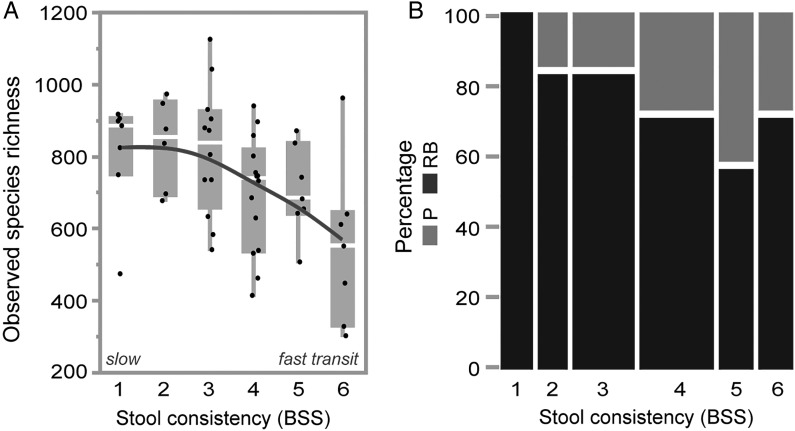
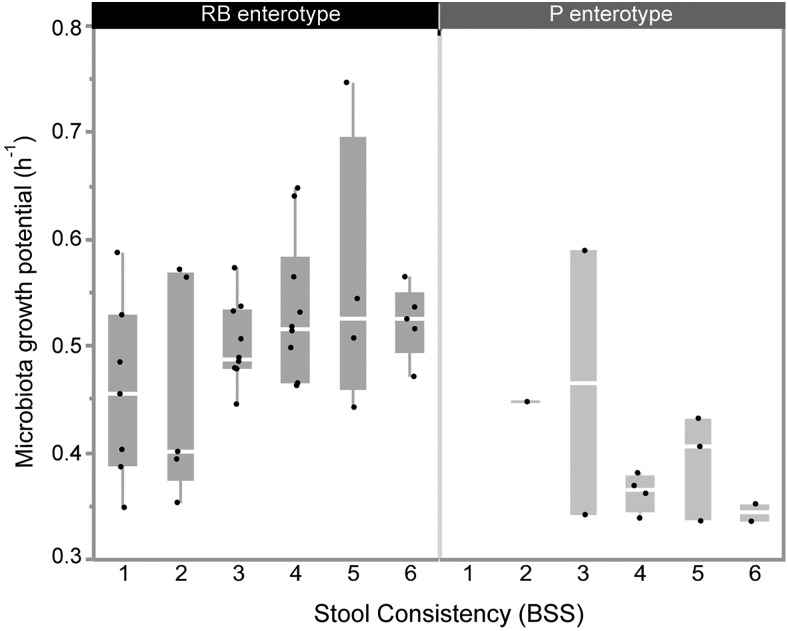
Objective: The assessment of potentially confounding factors affecting colon microbiota composition is essential to the identification of robust microbiome based disease markers. Here, we investigate the link between gut microbiota variation and stool consistency using Bristol Stool Scale classification, which reflects faecal water content and activity, and is considered a proxy for intestinal colon transit time. Design: Through 16S rDNA Illumina profiling of faecal samples of 53 healthy women, we evaluated associations between microbiome richness, Bacteroidetes:Firmicutes ratio, enterotypes, and genus abundance with self-reported, Bristol Stool Scale-based stool consistency. Each sample’s microbiota growth potential was calculated to test whether transit time acts as a selective force on gut bacterial growth rates. Results: Stool consistency strongly correlates with all known major microbiome markers. It is negatively correlated with species richness, positively associated to the Bacteroidetes:Firmicutes ratio, and linked to Akkermansia and Methanobrevibacter abundance. Enterotypes are distinctly distributed over the BSS-scores. Based on the correlations between microbiota growth potential and stool consistency scores within both enterotypes, we hypothesise that accelerated transit contributes to colon ecosystem differentiation. While shorter transit times can be linked to increased abundance of fast growing species in Ruminococcaceae- Bacteroides samples, hinting to a washout avoidance strategy of faster replication, this trend is absent in Prevotella -enterotyped individuals. Within this enterotype adherence to host tissue therefore appears to be a more likely bacterial strategy to cope with washout. Conclusions: The strength of the associations between stool consistency and species richness, enterotypes and community composition emphasises the crucial importance of stool consistency assessment in gut metagenome-wide association studies.
Overview
The claims and statistics of this paper haven’t been checked yet.
Free: it reads the open-access text and checks the first 5 claims that cite a source we can check. Create a free account to check every claim.
Integrity signals
Registry
Cites
Statistics
Figures
Verification
Claims the paper makes
The claims and statistics of this paper haven’t been checked yet.
Free: it reads the open-access text and checks the first 5 claims that cite a source we can check. Create a free account to check every claim.
Claims other papers make about this one
Each is checked against this paper’s own text: does it say what the citing paper says it does?
The cited source says what the claim attributes to it.
In the citing paper
“For instance, one study demonstrated that individuals with a loose stool had lower microbial richness and higher abundance of the Prevotella enterotype compared to those with harder stools, whose fecal samples were enriched with the Ruminococcaceae-Bacteroides enterotype [86].”
From A Clinical Outcome of the Anti-PD-1 Therapy of Melanoma in Polish Patients Is Mediated by Population-Specific Gut Microbiome Composition (2022) · cites this paper as [86]
In the citing paper
“Several studies have reported a positive relationship between prolonged colon transit times, with increased richness and diversity of the fecal microbiome in adults without prior history of GI disorders160,161.”
From The gut Microbiome in adult and pediatric functional gastrointestinal disorders (2019) · cites this paper as [161]
In the citing paper
“Moreover, it was also indicated that stool consistency and frequency were associated with gut microbiota richness and composition [86,87].”
From A Clinical Outcome of the Anti-PD-1 Therapy of Melanoma in Polish Patients Is Mediated by Population-Specific Gut Microbiome Composition (2022) · cites this paper as [86]
Self-check
Percentages, sums and reported differences re-computed from the paper’s own numbers.
The self-check needs the paper’s full text.
Citations
Cites
phyloseq: An R Package for Reproducible Interactive Analysis and Graphics of Microbiome Census Data
McMurdie, P. J., & Holmes, S. (2013) · PLoS ONE · doi:10.1371/journal.pone.0061217 · Cited by 21,322
A human gut microbial gene catalogue established by metagenomic sequencing
MetaHIT Consortium, Qin, J., Li, R., Raes, J., Arumugam, M., Burgdorf, K. S., Manichanh, C., Nielsen, T., Pons, N., Levenez, F., et al. (2010) · Nature · doi:10.1038/nature08821 · Cited by 11,624
Self-citationDiet rapidly and reproducibly alters the human gut microbiome
David, L. A., Maurice, C. F., Carmody, R. N., Gootenberg, D. B., Button, J. E., Wolfe, B. E., Ling, A. V., Devlin, A. S., Varma, Y., Fischbach, M. A., et al. (2014) · Nature · doi:10.1038/nature12820 · Cited by 10,100
Human gut microbiome viewed across age and geography
Yatsunenko, T., Rey, F. E., Manary, M. J., Trehan, I., Dominguez-Bello, M. G., Contreras, M., Magris, M., Hidalgo, G., Baldassano, R. N., Anokhin, A. P., et al. (2012) · Nature · doi:10.1038/nature11053 · Cited by 7,815
Enterotypes of the human gut microbiome
MetaHIT Consortium (additional members), Arumugam, M., Raes, J., Pelletier, E., Le Paslier, D., Yamada, T., Mende, D. R., Fernandes, G. R., Tap, J., Bruls, T., et al. (2011) · Nature · doi:10.1038/nature09944 · Cited by 7,548
Self-citationLinking long-term dietary patterns with gut microbial enterotypes
Wu, G. D., Chen, J., Hoffmann, C., Bittinger, K., Chen, Y.-Y., Keilbaugh, S. A., Bewtra, M., Knights, D., Walters, W. A., Knight, R., et al. (2011) · Science · doi:10.1126/science.1208344 · Cited by 6,513
De Filippo, C., Cavalieri, D., Di Paola, M., Ramazzotti, M., Poullet, J. B., Massart, S., Collini, S., Pieraccini, G., & Lionetti, P. (2010) · Proceedings of the National Academy of Sciences · doi:10.1073/pnas.1005963107 · Cited by 5,579
Diversity, stability and resilience of the human gut microbiota
Lozupone, C. A., Stombaugh, J. I., Gordon, J. I., Jansson, J. K., & Knight, R. (2012) · Nature · doi:10.1038/nature11550 · Cited by 5,533
Longstreth, G. F., Thompson, W. G., Chey, W. D., Houghton, L. A., Mearin, F., & Spiller, R. C. (2006) · Gastroenterology · doi:10.1053/j.gastro.2005.11.061 · Cited by 4,856
Richness of human gut microbiome correlates with metabolic markers
Le Chatelier, E., Nielsen, T., Qin, J., Prifti, E., Hildebrand, F., Falony, G., Almeida, M., Arumugam, M., Batto, J.-M., Kennedy, S., et al. (2013) · Nature · doi:10.1038/nature12506 · Cited by 4,662
Self-citation
Cited by
Items 201–300 of 1,000
A Review of the Relationship between Gut Microbiome and Obesity
Zsálig, D., Berta, A., Tóth, V., Szabó, Z., Klara, S. M., Figler, M., Pusztafalvi, H., & Polyák, É. (2023) · Applied Sciences · doi:10.3390/app13010610 · Cited by 89
“It also plays a key role in the regulation of intestinal transit, thereby influencing the amount of nutrients and energy absorbed from food [8].”
Gut Microbiota Associations with Metabolic Health and Obesity Status in Older Adults
Zhong, X., Harrington, J. M., Millar, S., Perry, I. J., O’Toole, P. W., & Phillips, C. M. (2020) · Nutrients · doi:10.3390/nu12082364 · Cited by 80
Bazzocchi, G., Turroni, S., Bulzamini, M. C., D’Amico, F., Bava, A., Castiglioni, M., Cagnetta, V., Losavio, E., Cazzaniga, M., Terenghi, L., et al. (2021) · Scientific Reports · doi:10.1038/s41598-021-92027-z · Cited by 86
Yang, Z., Ye, S., Xu, Z., Su, H., Tian, X., Han, B. R., Shen, B., Liao, Q., Xie, Z., & Hong, Y. (2021) · Food Research International · doi:10.1016/j.foodres.2021.110569 · Cited by 76
Shi, J.-X., Wang, Y., He, J., Li, P., Jin, R., Wang, K., Xu, X., Hao, J., Zhang, Y., Liu, H., et al. (2017) · The FASEB Journal · doi:10.1096/fj.201700034r · Cited by 82
A gene catalogue of the Sprague-Dawley rat gut metagenome
Pan, H., Guo, R., Zhu, J., Wang, Q., Ju, Y., Xie, Y., Zheng, Y., Wang, Z., Li, T., Liu, Z., et al. (2018) · GigaScience · doi:10.1093/gigascience/giy055 · Cited by 80
“Even though the fecal microbiota differs from the microbiota in the upper parts of the digestive tract, fecal samples represent an available proxy for the microbiota in other locations of the gut, and the potential in relation to using signatures or markers of the fecal microbiota for diagnosis and stratification of p…”
Videnska, P., Smerkova, K., Zwinsova, B., Popovici, V., Micenkova, L., Sedlar, K., & Budinska, E. (2019) · Scientific Reports · doi:10.1038/s41598-019-49520-3 · Cited by 72
Vanhaecke, T., Bretin, O., Poirel, M., & Tap, J. (2021) · Journal of Nutrition · doi:10.1093/jn/nxab312 · Cited by 85
Gut microbiota: a new avenue to reveal pathological mechanisms of constipation
Yang, L., Wang, Y., Zhang, Y. L., Li, W., Jiang, S., Qian, D., & Duan, J. (2022) · Applied Microbiology and Biotechnology · doi:10.1007/s00253-022-12197-2 · Cited by 82
The importance of cohort studies in the post-GWAS era
Wijmenga, C., & Zhernakova, A. (2018) · Nature Genetics · doi:10.1038/s41588-018-0066-3 · Cited by 86
Emotional well-being and gut microbiome profiles by enterotype
Lee, S., Yoon, S.-H., Jung, Y., Kim, N., Min, U.-G., Chun, J., & Choi, I. (2020) · Scientific Reports · doi:10.1038/s41598-020-77673-z · Cited by 82
Xu, Y., Shao, M., Fang, X., Tang, W., Zhou, C., Hu, X., Zhang, X., & Su, K. (2021) · Brain Behavior and Immunity · doi:10.1016/j.bbi.2021.09.014 · Cited by 76
Smilowitz, J. T., Moya, J., Breck, M. A., Cook, C., Fineberg, A., Angkustsiri, K., & Underwood, M. A. (2017) · BMC Pediatrics · doi:10.1186/s12887-017-0886-9 · Cited by 71
“In addition to infant age and diet [36, 39], stool consistency was recently reported to be associated with the intestinal bacterial species richness, enterotypes (or microbial classification), and community composition in adults [43].”
BackgroundThe gut microbiota in pediatric multiple sclerosis and demyelinating syndromes
Tremlett, H. L., Zhu, F., Arnold, D. L., Bar‐Or, A., Bernstein, C. N., Bonner, C., Forbes, J. D., Graham, M., Hart, J., Knox, N., et al. (2021) · Annals of Clinical and Translational Neurology · doi:10.1002/acn3.51476 · Cited by 73
Zhu, Z., Han, Y., Ding, Y., Zhu, B., Song, S., & Xiao, H. (2021) · Comprehensive Reviews in Food Science and Food Safety · doi:10.1111/1541-4337.12754 · Cited by 71
Gut Microbiome Signatures of Risk and Prodromal Markers of Parkinson Disease
Heinzel, S., Aho, V. T. E., Suenkel, U., von Thaler, A., Schulte, C., Deuschle, C., Paulin, L., Hantunen, S., Brockmann, K., Eschweiler, G. W., et al. (2021) · Annals of Neurology · doi:10.1002/ana.26128 · Cited by 68
Analysis of gut microbiome and metabolite characteristics in patients with slow transit constipation
Tian, H., Chen, Q., Yang, B., Qin, H., & Li, N. (2021) · Digestive Diseases and Sciences · doi:10.1007/s10620-020-06500-2 · Cited by 68
The effect of fiber and prebiotics on children’s gastrointestinal disorders and microbiome
Wegh, C. A. M., Schoterman, M. H. C., Vaughan, E. E., Belzer, C., & Benninga, M. A. (2017) · Expert Review of Gastroenterology & Hepatology · doi:10.1080/17474124.2017.1359539 · Cited by 80
“rearing attitudes, low fiber intake, and the gut microbiota composition [67, 68].”
Dobranowski, P., Tang, C., Sauvé, J. P., Menzies, S. C., & Sly, L. M. (2019) · Gut Microbes · doi:10.1080/19490976.2018.1560767 · Cited by 71
“Specifically, reductions in small bowel motility have been found in Crohn’s disease patients; increased motility has been associated with microbial dysbiosis, suggesting that a faster transit time selects for fast growing bacterial species.(17) However, mice receiving a high fat diet display intestinal dysbiosis that…”
BackgroundMartoni, C. J., Evans, M., Chow, C. T., Chan, L. S., & Leyer, G. (2019) · Journal of Digestive Diseases · doi:10.1111/1751-2980.12797 · Cited by 67
Bacterial growth, flow, and mixing shape human gut microbiota density and composition
Arnoldini, M., Cremer, J., & Hwa, T. (2018) · Gut Microbes · doi:10.1080/19490976.2018.1448741 · Cited by 81
Ding, C., Fan, W., Gu, L., Tian, H., Ge, X., Gong, J., Nie, Y., & Li, N. (2018) · Gastroenterology report · doi:10.1093/gastro/gox036 · Cited by 65
Park, J., Kato, K., Murakami, H., Hosomi, K., Tanisawa, K., Nakagata, T., Ohno, H., Konishi, K., Kawashima, H., Chen, Y.-A., et al. (2021) · BMC Microbiology · doi:10.1186/s12866-021-02215-0 · Cited by 72
“Furthermore, intestinal transit time, which is measured directly or assessed using Bristol Stool Scale (BSS) scores [24], is also a factor influencing the composition and diversity of gut microbiota [25, 26].”
MethodBifidobacterium longum relieves constipation by regulating the intestinal barrier of mice
Wang, L., Chai, M., Wang, J., Yu, Q., Wang, G., Zhang, H., Zhao, J., & Chen, W. (2022) · Food & Function · doi:10.1039/d1fo04151g · Cited by 73
Kragsnæs, M. S., Kjeldsen, J., Horn, H. C., Munk, H. L., Pedersen, F. M., Holt, H. M., Stengaard‐Pedersen, K., Holm, D. K., Glerup, H., Andersen, V. C., et al. (2018) · BMJ Open · doi:10.1136/bmjopen-2017-019231 · Cited by 71
Damanti, S., Azzolino, D., Roncaglione, C., Arosio, B., Rossi, P. D., & Cesari, M. (2019) · Nutrients · doi:10.3390/nu11091991 · Cited by 91
Chiu, Y.-C., Lee, S., Liu, C., Lin, R. C.-J., Huang, Y., Lan, T.-Y., & Wu, L. S.-H. (2021) · PLoS ONE · doi:10.1371/journal.pone.0249944 · Cited by 71
The Microbiome in Primary Sclerosing Cholangitis: Current Evidence and Potential Concepts
Hov, J., & Karlsen, T. (2017) · Seminars in Liver Disease · doi:10.1055/s-0037-1608801 · Cited by 65
The human microbiome in health and disease: hype or hope
Falony, G., Vandeputte, D., Caenepeel, C., Vieira‐Silva, S., Daryoush, T., Vermeire, S., & Raes, J. (2019) · Acta Clinica Belgica · doi:10.1080/17843286.2019.1583782 · Cited by 80
“colon microorganisms are required to either maintain a sufficient duplication rate or to adhere to/colonize host intestinal tissues [9,10].”
BackgroundInfluentialSelf-citationGicquelais, R. E., Bohnert, A. M., Thomas, L., & Foxman, B. (2020) · Scientific Reports · doi:10.1038/s41598-020-76570-9 · Cited by 69
Multi-Omics Analyses Show Disease, Diet, and Transcriptome Interactions With the Virome
Mihindukulasuriya, K. A., Mars, R. A. T., Johnson, A. J., Ward, T., Priya, S., Lekatz, H. R., Kalari, K. R., Droit, L., Zheng, T., Blekhman, R., et al. (2021) · Gastroenterology · doi:10.1053/j.gastro.2021.06.077 · Cited by 64
Potential proton pump inhibitor–related adverse effects
Perry, I. E., Sonu, I. S., Scarpignato, C., Akiyama, J., Hongo, M., & Vega, K. J. (2020) · Annals of the New York Academy of Sciences · doi:10.1111/nyas.14428 · Cited by 76
Bacteria and Methanogens in the Human Microbiome: a Review of Syntrophic Interactions
Djemai, K., Drancourt, M., & Alou, M. T. (2021) · Microbial Ecology · doi:10.1007/s00248-021-01796-7 · Cited by 72
Gut microbiota, 1013 new pieces in the Parkinson's disease puzzle
Scheperjans, F. (2016) · Current Opinion in Neurology · doi:10.1097/wco.0000000000000389 · Cited by 63
Does the microbiome and virome contribute to myalgic encephalomyelitis/chronic fatigue syndrome?
Newberry, F., Hsieh, S.-Y., Wileman, T., & Carding, S. R. (2018) · Clinical Science · doi:10.1042/cs20171330 · Cited by 69
Characterization of gut contractility and microbiota in patients with severe chronic constipation
Рашидовна, Я. Д., Ulfatovich, S. M., Андреевич, С. К., Arzamastseva, A. A., Shaidullov, I. F., Markelova, M., Grigoryeva, T. V., Karpukhin, O. Y., & Ситдикова, Г. Ф. (2020) · PLoS ONE · doi:10.1371/journal.pone.0235985 · Cited by 62
Stool frequency is associated with gut microbiota composition
Hadizadeh, F., Walter, S., Belheouane, M., Bonfiglio, F., Heinsen, F.-A., Andreasson, A., Agreus, L., Engstrand, L., Baines, J. F., Rafter, J., et al. (2017) · Gut · doi:10.1136/gutjnl-2016-311935 · Cited by 62
Xu, Y., Wang, J., Wu, X., Jing, H., Zhang, S., Hu, Z., Rao, L., Chang, Q., Wang, L., & Zhang, Z. (2023) · Gut Microbes · doi:10.1080/19490976.2023.2168101 · Cited by 61
Diet‐derived microbial metabolites in health and disease
Roager, H. M., & Dragsted, L. O. (2019) · Nutrition Bulletin · doi:10.1111/nbu.12396 · Cited by 61
Xu, Y., Jing, H., Wang, J., Zhang, S., Chang, Q., Li, Z., Wu, X., & Zhang, Z. (2022) · Frontiers in Microbiology · doi:10.3389/fmicb.2022.800604 · Cited by 79
“It facilitates the identification of dominant bacteria and their associations with others in a particular ecology, which play vital roles in maintaining ecological homeostasis such as microbial diversity (Vazquez-Castellanos et al., 2018).”
BackgroundAasmets, O., Krigul, K. L., Lüll, K., Metspalu, A., & Org, E. (2022) · Nature Communications · doi:10.1038/s41467-022-28464-9 · Cited by 61
Fecal Microbiome Does Not Represent Whole Gut Microbiome
Ahn, J., Lkhagva, E., Jung, S., Kim, H., Chung, H., & Hong, S. (2023) · Cellular Microbiology · doi:10.1155/2023/6868417 · Cited by 80
Microbial Modulation of the Development and Physiology of the Enteric Nervous System
Joly, A., Leulier, F., & Vadder, F. D. (2020) · Trends in Microbiology · doi:10.1016/j.tim.2020.11.007 · Cited by 70
Microbiota dysbiosis and its pathophysiological significance in bowel obstruction
Hegde, S., Lin, Y.-M., Golovko, G., Khanipov, K., Cong, Y., Savidge, T., Fofanov, Y., & Shi, X.-Z. P. (2018) · Scientific Reports · doi:10.1038/s41598-018-31033-0 · Cited by 64
Structure of the Mucosal and Stool Microbiome in Lynch Syndrome
Yan, Y., Drew, D. A., Markowitz, A. J., Lloyd‐Price, J., Abu-Ali, G., Nguyen, L. H., Tran, C., Chung, D. C., Gilpin, K. K., Meixell, D. A., et al. (2020) · Cell Host & Microbe · doi:10.1016/j.chom.2020.03.005 · Cited by 67
“In this population, a subset of mucosal clades associated with liquid stools (decreased Clostridiales clades, Bifidobacterium, and Micrococcus) was in agreement with previous reports (Vandeputte et al., 2016), although Yan et al.”
The influence of the gut microbiome on BCG-induced trained immunity
Stražar, M., Mourits, V. P., Koeken, V. A. C. M., de Bree, L. C. J., Moorlag, S. J. C. F. M., Joosten, L. A. B., van Crevel, R., Vlamakis, H. C., Netea, M. G., & Xavier, R. J. (2021) · Genome biology · doi:10.1186/s13059-021-02482-0 · Cited by 67
Ebrahim, Z., Proost, S., Tito, R. Y., Raes, J., Glorieux, G., Moosa, M. R., & Blaauw, R. (2022) · Nutrients · doi:10.3390/nu14040805 · Cited by 69
Self-citationHollister, E. B., Cain, K. C., Shulman, R. J., Jarrett, M. E., Burr, R. L., Ko, C. W., Zia, J. K., Han, C. J., & Heitkemper, M. M. (2020) · Journal of Clinical Gastroenterology · doi:10.1097/mcg.0000000000001107 · Cited by 65
Haworth, S. E., White, K. S., Côté, S. D., & Shafer, A. B. A. (2019) · FEMS Microbiology Ecology · doi:10.1093/femsec/fiz095 · Cited by 64
Schäpe, S. S., Krause, J. L., Engelmann, B., Fritz‐Wallace, K., Schattenberg, F., Liu, Z., Müller, S., Jehmlich, N., Rolle-Kampczyk, U. E., Herberth, G., et al. (2019) · Microorganisms · doi:10.3390/microorganisms7120641 · Cited by 66
Intestinal Microbiota in Hirschsprung Disease
Neuvonen, M. I., Korpela, K., Kyrklund, K., Salonen, A., de Vos, W. M., Rintala, R. J., & Pakarinen, M. P. (2018) · Journal of Pediatric Gastroenterology and Nutrition · doi:10.1097/mpg.0000000000001999 · Cited by 61
Chey, W. D., Shah, E. D., & DuPont, H. L. (2020) · Therapeutic Advances in Gastroenterology · doi:10.1177/1756284819897531 · Cited by 63
Yuan, X., Chang, C., Chen, X., & Li, K. (2021) · Journal of Translational Medicine · doi:10.1186/s12967-021-03009-8 · Cited by 61
Chen, L., Zhang, G., Li, G., Wang, W., Ge, Z., Yang, Y., He, X., Liu, Z., Zhang, Z., Mai, Q., et al. (2022) · Nature Metabolism · doi:10.1038/s42255-022-00547-3 · Cited by 61
Vidal-Martinez, G., Chin, B., Camarillo, C., Herrera, G. V., Yang, B., Sarosiek, I., & Perez, R. G. (2019) · Journal of Parkinson’s Disease · doi:10.3233/jpd-191693 · Cited by 57
“0426) was found between the mean BSFS consistency and frequency, similar to previous findings by others [39].”
ResultGut Microbiome Analysis for Personalized Nutrition: The State of Science
Simon, M., Sina, C., Ferrario, P. G., Daniel, H., & Working Group “Personalized Nutrition” of the German Nutrition Society (2022) · Molecular Nutrition & Food Research · doi:10.1002/mnfr.202200476 · Cited by 66
Prebiotic Wheat Bran Fractions Induce Specific Microbiota Changes
D’hoe, K., Conterno, L., Fava, F., Falony, G., Vieira‐Silva, S., Vermeiren, J., Tuohy, K. M., & Raes, J. (2018) · Frontiers in Microbiology · doi:10.3389/fmicb.2018.00031 · Cited by 57
“However, some recent findings have associated high community richness indices to hard stools (Vandeputte et al., 2016), prolonged transit times (Roager et al., 2016), and enhanced proteolytic fermentation (Macfarlane et al., 1989; Roager et al., 2016), suggesting a less straightforward association…”
BackgroundSelf-citationDeng, Z., Fu, Z., Yan, W., Nie, K., Ding, L., Ma, D., Huang, H., Li, T., Xie, J., & Fu, L. (2021) · Food Research International · doi:10.1016/j.foodres.2021.110273 · Cited by 61
Efficacy of Synbiotics in Patients with Slow Transit Constipation: A Prospective Randomized Trial
Ding, C., Ge, X., Zhang, X., Tian, H., Wang, H., Gu, L., Gong, J., Zhu, W., & Li, N. (2016) · Nutrients · doi:10.3390/nu8100605 · Cited by 55
“Intestinal microbiota analysis has already shown that microbiota are associated with colonic transit, stool frequency, and stool consistency in humans [30,32].”
BackgroundMethodA data-driven approach for predicting the impact of drugs on the human microbiome
Algavi, Y. M., & Borenstein, E. (2023) · Nature Communications · doi:10.1038/s41467-023-39264-0 · Cited by 54
Targeting gut microbiota to alleviate neuroinflammation in Alzheimer’s disease
Nguyen, V. T. T., & Endres, K. (2022) · Advanced Drug Delivery Reviews · doi:10.1016/j.addr.2022.114418 · Cited by 61
Social Influences on Prevotella and the Gut Microbiome of Young Monkeys
Amaral, W. Z., Lubach, G. R., Proctor, A., Lyte, M., Phillips, G. J., & Coe, C. L. (2017) · Psychosomatic Medicine · doi:10.1097/psy.0000000000000454 · Cited by 53
Revisiting the intestinal microbiome and its role in Diarrhea and constipation
Iancu, M. A., Profir, M., Roşu, O. A., Ionescu, R. F., Cretoiu, S. M., & Gaspar, B. S. (2023) · Microorganisms · doi:10.3390/microorganisms11092177 · Cited by 53
Gut Microbiome and Modulation of CNS Function
Osadchiy, V., Martin, C. R., & Mayer, E. A. (2019) · Comprehensive Physiology · doi:10.1002/cphy.c180031 · Cited by 53
Mucosa-associated gut microbiota reflects clinical course of ulcerative colitis
Nishihara, Y., Ogino, H., Tanaka, M., Ihara, E., Fukaura, K., Nishioka, K., Chinen, T., Tanaka, Y., Nakayama, J., Kang, D., et al. (2021) · Scientific Reports · doi:10.1038/s41598-021-92870-0 · Cited by 60
Ramos, C. I., Armani, R. G., Canziani, M. E. F., Dolenga, C. J. R., Nakao, L. S., Campbell, K. L., & Cuppari, L. (2019) · Journal of Renal Nutrition · doi:10.1053/j.jrn.2019.02.004 · Cited by 58
Prophylactic use of probiotics for gastrointestinal disorders in children
Perceval, C. J., Szajewska, H., Indrio, F., Weizman, Z., & Vandenplas, Y. (2019) · The Lancet Child & Adolescent Health · doi:10.1016/s2352-4642(19)30182-8 · Cited by 57
Tannock, G. W., & Liu, Y. (2019) · Journal of the Royal Society of New Zealand · doi:10.1080/03036758.2019.1657471 · Cited by 59
Downs, I. A., Aroniadis, O. C., Kelly, L., & Brandt, L. J. (2017) · Journal of Clinical Gastroenterology · doi:10.1097/mcg.0000000000000924 · Cited by 61
Rollet, M., Bohn, T., Vahid, F., & on behalf of the ORISCAV Working Group (2021) · Nutrients · doi:10.3390/nu14010122 · Cited by 62
Functional constipation and the effect of prebiotics on the gut microbiota: a review
Erhardt, R., Harnett, J., Steels, E., & Steadman, K. J. (2022) · British Journal Of Nutrition · doi:10.1017/s0007114522003853 · Cited by 56
Tap, J., Lejzerowicz, F., Cotillard, A., Pichaud, M., McDonald, D. T., Song, S. J., Knight, R. D., Veiga, P., & Derrien, M. (2023) · Nature Communications · doi:10.1038/s41467-023-38558-7 · Cited by 68
“…enriched branch associated with the region of birth (a proxy for lifestyle and dietary habits) and the Bacteroides -enriched branch with medical history and lower exercise, and a lower bowel movement frequency was associated with the Akkermansia branch, in line with previous studies 42,43 .”
Constipation and the Microbiome: Lumen Versus Mucosa!
Quigley, E. M. M., & Spiller, R. E. (2015) · Gastroenterology · doi:10.1053/j.gastro.2015.12.023 · Cited by 52
Ge, X., Tian, H., Ding, C., Gu, L., Yao, W., Gong, J., Zhu, W., Li, N., & Li, J. (2016) · Archives of Medical Research · doi:10.1016/j.arcmed.2016.06.005 · Cited by 55
Can Gut Microbiota Composition Predict Response to Dietary Treatments?
Biesiekierski, J. R., Jalanka, J., & Staudacher, H. M. (2019) · Nutrients · doi:10.3390/nu11051134 · Cited by 62
Zou, H., Wang, D., Ren, H., Chen, P., Fang, C., Shi, Z., Zhang, P., Wang, J., Wang, J., Cai, K., et al. (2020) · Nutrients · doi:10.3390/nu12030631 · Cited by 53
Luque, A., & Silveira, C. B. (2020) · mSystems · doi:10.1128/msystems.00353-20 · Cited by 61
“…lysogenic commitment time played a paramount role in the findings of the model because the duplication time of gut bacteria in vivo is significantly slower than the duplication time of gut bacterial isolates in pure cultures (Heinken et al. , 2013; Myhrvold et al. , 2015; Vandeputte et al. , 2016).”
BackgroundAlterations of Gut Bacteria in Hirschsprung Disease and Hirschsprung-Associated Enterocolitis
Chantakhow, S., Khorana, J., Tepmalai, K., Boonchooduang, N., Chattipakorn, N., & Chattipakorn, S. C. (2021) · Microorganisms · doi:10.3390/microorganisms9112241 · Cited by 58
Elie, C., Perret, M., Hage, H., Sentausa, E., Hesketh, A., Louis, K., Fritah, A., Leissner, P., Vachon, C., Rostaing, H., et al. (2023) · Scientific Reports · doi:10.1038/s41598-023-33959-6 · Cited by 63
Minnebo, Y., Delbaere, K., Goethals, V., Raes, J., de Wiele, T. V., & Paepe, K. D. (2023) · Microbiome · doi:10.1186/s40168-023-01691-y · Cited by 59
Self-citationEslami, M., Naderian, R., Bahar, A., Babaeizad, A., Gheshlagh, S. R., Oksenych, V., & Tahmasebi, H. (2025) · Frontiers in Immunology · doi:10.3389/fimmu.2025.1559480 · Cited by 60
A brief period of sleep deprivation leads to subtle changes in mouse gut microbiota
Aidy, S. E., Bolsius, Y. G., Raven, F., & Havekes, R. (2019) · Journal of Sleep Research · doi:10.1111/jsr.12920 · Cited by 54
Sundin, J., Aziz, I., Nordlander, S., Polster, A. V., Hu, Y. O. O., Hugerth, L. W., Pennhag, A. A. L., Engstrand, L. G., Törnblom, H., Simrén, M., et al. (2020) · Scientific Reports · doi:10.1038/s41598-020-57468-y · Cited by 57
Typing of the Gut Microbiota Community in Japanese Subjects
Takagi, T., Inoüe, R., Oshima, A., Sakazume, H., Ogawa, K., Tominaga, T., Mihara, Y., Sugaya, T., Mizushima, K., Uchiyama, K., et al. (2022) · Microorganisms · doi:10.3390/microorganisms10030664 · Cited by 54
“The R enterotype is prevalent in hard stools, whereas the P enterotype is associated with loose stool [9].”
BackgroundLu, D., Pi, Y., Ye, H., Wu, Y., Bai, Y., Lian, S., Han, D., Ni, D., Zou, X., Zhao, J., et al. (2022) · Nutrients · doi:10.3390/nu14122511 · Cited by 57
“Stool consistency and defecation frequency were associated with gut microbial richness in women, and the related bacterial groups were involved in colonic fermentation [10,24].”
BackgroundMethodInfluentialXu, X., Ocansey, D. K. W., Pei, B., Zhang, Y., Wang, N., Wang, Z., & Mao, F. (2023) · European journal of medical research · doi:10.1186/s40001-023-01257-6 · Cited by 53
Intestinal Microbiome in Irritable Bowel Syndrome before and after Gut-Directed Hypnotherapy
Peter, J., Fournier, C., Keip, B., Rittershaus, N., Stephanou-Rieser, N., Durdevic, M., Dejaco, C., Michalski, M., & Moser, G. (2018) · International Journal of Molecular Sciences · doi:10.3390/ijms19113619 · Cited by 48
Mechanisms underlying effects of kiwifruit on intestinal function shown by MRI in healthy volunteers
Wilkinson‐Smith, V., Dellschaft, N., Ansell, J., Hoad, C., Marciani, L., Gowland, P., & Spiller, R. (2019) · Alimentary Pharmacology & Therapeutics · doi:10.1111/apt.15127 · Cited by 49
Obesity: A New Adverse Effect of Antibiotics?
Fiol, F. D. S. D., Balcão, V. M., Barberato-Filho, S., Lopes, L. C., & Bergamaschi, C. D. C. (2018) · Frontiers in Pharmacology · doi:10.3389/fphar.2018.01408 · Cited by 52
“Beyond the exaggerated clinical use in children, we are still exposed to significant amounts of antibiotics in the water we drink (Donoghue, 2003; Yang and Carlson, 2003; Andersson and Hughes, 2014; Venkatesan and Halden, 2014) and even before we are born.”
BackgroundMao, Y.-H., Song, A.-X., Li, L., Siu, K., Yao, Z., & Wu, J. (2019) · International Journal of Biological Macromolecules · doi:10.1016/j.ijbiomac.2019.12.072 · Cited by 49
Wang, R., Sun, J., Li, G., Zhang, M., Niu, T., Kang, X., Zhao, H., Chen, J., Sun, E., & Li, Y. (2021) · Beneficial Microbes · doi:10.3920/bm2020.0023 · Cited by 48
Shouval, R., Waters, N. R., Gomes, A. L. C., Brambilla, C. Z., Fei, T., Devlin, S. M., Nguyen, C. L., Markey, K. A., Dai, A., Slingerland, J. B., et al. (2022) · Clinical Cancer Research · doi:10.1158/1078-0432.ccr-22-1254 · Cited by 56
Sources of gut microbiota variation in a large longitudinal Finnish infant cohort
Jokela, R., Ponsero, A. J., Dikareva, E., Wei, X., Kolho, K., Korpela, K., de Vos, W. M., & Salonen, A. (2023) · EBioMedicine · doi:10.1016/j.ebiom.2023.104695 · Cited by 59
Microglia and gut microbiota: A double-edged sword in Alzheimer's disease
Bano, N., Khan, S., Ahamad, S., Kanshana, J. S., Dar, N. J., Khan, S. J., Nazir, A., & Bhat, S. A. (2024) · Ageing Research Reviews · doi:10.1016/j.arr.2024.102515 · Cited by 53
González-Sanmiguel, J., Schuh, C. M. A. P., Muñoz-Montesino, C., Contreras‐Kallens, P., Aguayo, L. G., & Aguayo, S. D. (2020) · Cells · doi:10.3390/cells9112476 · Cited by 51
Response of the human gut and saliva microbiome to urbanization in Cameroon
Lokmer, A., Aflalo, S., Amougou, N., Lafosse, S., Froment, A., Tabe, F. E., Poyet, M., Groussin, M., Said-Mohamed, R., & Ségurel, L. (2020) · Scientific Reports · doi:10.1038/s41598-020-59849-9 · Cited by 46
LaBouyer, M., Holtrop, G., Horgan, G. W., Gratz, S. W., Belenguer, Á., Smith, N., Walker, A. W., Duncan, S. H., Johnstone, A. M., Louis, P., et al. (2022) · Gut Microbiome · doi:10.1017/gmb.2022.1 · Cited by 50
“More recently, longer gut transit times correlated with higher microbial diversity and species richness (Roager et al., 2016; Vandeputte et al., 2016).”
BackgroundDown for the count: Cryptosporidium infection depletes the gut microbiome in Coquerel’s sifakas
McKenney, E. A., Greene, L. K., Drea, C. M., & Yoder, A. D. (2017) · Microbial Ecology in Health and Disease · doi:10.1080/16512235.2017.1335165 · Cited by 63
“In a study on healthy women, researchers found that microbial richness and abundance of specific OTUs were decreased in stool samples with higher (more liquid) scores on the Bristol Stool Scale [50].”
BackgroundBaiCD gene cluster abundance is negatively correlated with Clostridium difficile infection
Solbach, P., Chhatwal, P., Woltemate, S., Tacconelli, E., Buhl, M., Gerhard, M., Thoeringer, C. K., Vehreschild, M. J. G. T., Jazmati, N., Rupp, J., et al. (2018) · PLOS ONE · doi:10.1371/journal.pone.0196977 · Cited by 46
Diverticular Disease: a Gut Microbiota Perspective
Ticinesi, A., Nouvenne, A., Corrente, V., Tana, C., Mario, F. D., & Meschi, T. (2019) · Journal of Gastrointestinal and Liver Diseases · doi:10.15403/jgld-277 · Cited by 52
Metadata
- Authors
- Vandeputte, D., Falony, G., Vieira-Silva, S., Tito, R. Y., Joossens, M., & Raes, J.
- Affiliations
- Vrije Universiteit Brussel (BE)
- KU Leuven (BE)
- Department of Microbiology and Immunology, KU Leuven, Rega Institute, Leuven, Belgium
- Corresponding author
- Raes, Jeroen
- Venue
- Gut
- Publisher
- BMJ
- Published
- 2015-06-11
- Volume
- 65
- Issue
- 1
- Pages
- 57-62
- ISSN
- 0017-5749 (ISSN-L)
- 1468-3288
- PMC
- PMC4717365
- OpenAlex
- W2178459747
- Cited by
- 1,028
- References
- 49
- Citations by year
- 2026: 80 · 2025: 83 · 2024: 116 · 2023: 105 · 2022: 120 · 2021: 134 · 2020: 112 · 2019: 94 · 2018: 76 · 2017: 60 · 2016: 42 · 2015: 6
- FWCI
- 26.62
- Type
- journal article
- Language
- en
- Open access
- hybrid
- doi.org
- Licence
- cc-by-nc
- Locations
- Gut (publishedVersion, cc-by-nc)
- PubMed Central (publishedVersion, cc-by-nc)
- PubMed (publishedVersion)
- Socio-Environmental Systems Modeling (acceptedVersion, cc-by-nc)
- Lirias (submittedVersion, cc-by-nc)
- Ghent University Academic Bibliography (Ghent University) (submittedVersion)
- Digital Access to Libraries (submittedVersion)
- VUBIR (Vrije Universiteit Brussel) (submittedVersion)
- Funders
- European Commission (305312, 267139)
- Fonds Wetenschappelijk Onderzoek
- KU Leuven
- Vlaamse regering (IWT130359)
- FP7 People: Marie-Curie Actions
- Topics
- Life Sciences › Biochemistry, Genetics and Molecular Biology › Molecular Biology › Gut microbiota and health
- Health Sciences › Medicine › Gastroenterology › Gastrointestinal motility and disorders
- Physical Sciences › Environmental Science › Ecology › Microbial Community Ecology and Physiology
- Keywords
- stool consistency, Bristol stool scale, gut microbiota, enterotypes, microbial richness, Firmicutes/Bacteroidetes ratio, Akkermansia, Methanobrevibacter, Ruminococcaceae, Bacteroides, Prevotella, bacterial growth rate, colonic transit time, fecal water content, women
- MeSH terms
- Gastrointestinal Microbiome, Adult, Feces, Female, Gastrointestinal Transit, Humans, Middle Aged, Self Report, Healthy Volunteers
About these checks
Registry, retraction, Cites and statistics results are computed, not judged, with one exception: a printed reference that no index lists is read once by a model before it counts as a citation error. Claims are extracted by a model and kept only when their quote appears verbatim in the text; each cited source is then checked, with a model’s help, for whether it says what the claim relies on. Those verdicts can be wrong — read the claim’s quote and the cited source before relying on one.
Statistics and arithmetic are recomputed, not judged.
Confidence bands are shown only for fields calibrated on our annotated test set. None is calibrated yet, so no band is shown.
What counts as a claim ›How we measure confidence ›How we check this ›
Are you an author, or do you see a problem with this page? Request a review
Data sources
Bibliographic data: Semantic Scholar, OpenAlex, Crossref.
Contains information from the Semantic Scholar Academic Graph Datasets, made available under the ODC Attribution License (ODC-BY 1.0).
Semantic Scholar’s data is described in: Kinney, R., et al. (2023). The Semantic Scholar Open Data Platform. arXiv:2301.10140.
