

Stool consistency is strongly associated with gut microbiota richness and composition, enterotypes and bacterial growth rates
Open accessThe DOI matches its Crossref record; 49 of the 49 references it cites were found in a registry or an index.
Abstract
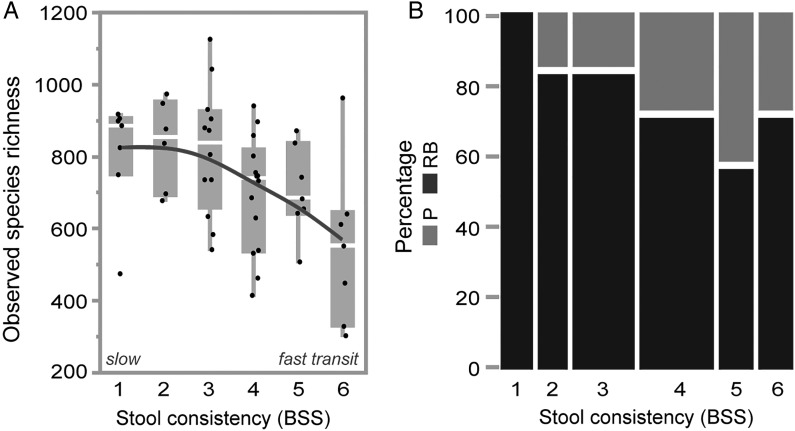
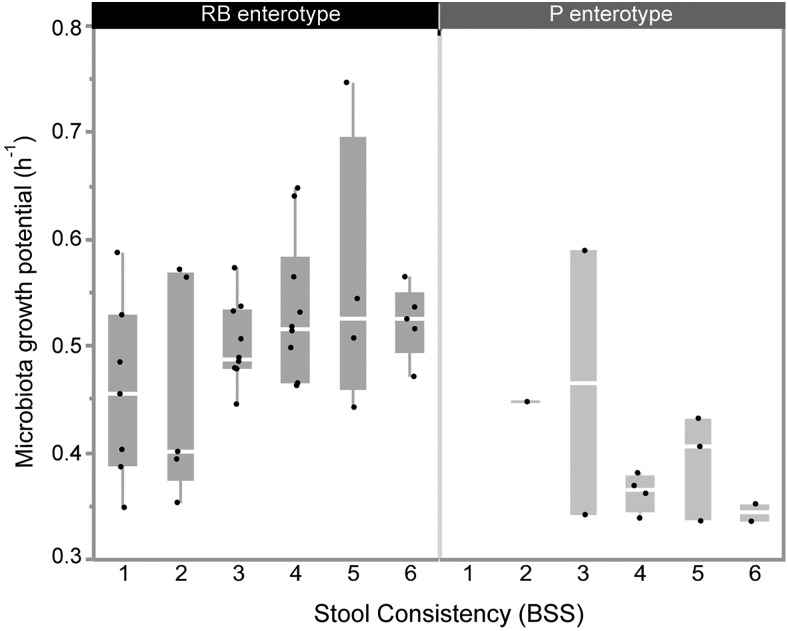
Objective: The assessment of potentially confounding factors affecting colon microbiota composition is essential to the identification of robust microbiome based disease markers. Here, we investigate the link between gut microbiota variation and stool consistency using Bristol Stool Scale classification, which reflects faecal water content and activity, and is considered a proxy for intestinal colon transit time. Design: Through 16S rDNA Illumina profiling of faecal samples of 53 healthy women, we evaluated associations between microbiome richness, Bacteroidetes:Firmicutes ratio, enterotypes, and genus abundance with self-reported, Bristol Stool Scale-based stool consistency. Each sample’s microbiota growth potential was calculated to test whether transit time acts as a selective force on gut bacterial growth rates. Results: Stool consistency strongly correlates with all known major microbiome markers. It is negatively correlated with species richness, positively associated to the Bacteroidetes:Firmicutes ratio, and linked to Akkermansia and Methanobrevibacter abundance. Enterotypes are distinctly distributed over the BSS-scores. Based on the correlations between microbiota growth potential and stool consistency scores within both enterotypes, we hypothesise that accelerated transit contributes to colon ecosystem differentiation. While shorter transit times can be linked to increased abundance of fast growing species in Ruminococcaceae- Bacteroides samples, hinting to a washout avoidance strategy of faster replication, this trend is absent in Prevotella -enterotyped individuals. Within this enterotype adherence to host tissue therefore appears to be a more likely bacterial strategy to cope with washout. Conclusions: The strength of the associations between stool consistency and species richness, enterotypes and community composition emphasises the crucial importance of stool consistency assessment in gut metagenome-wide association studies.
Overview
The claims and statistics of this paper haven’t been checked yet.
Free: it reads the open-access text and checks the first 5 claims that cite a source we can check. Create a free account to check every claim.
Integrity signals
Registry
Cites
Statistics
Figures
Verification
Claims the paper makes
The claims and statistics of this paper haven’t been checked yet.
Free: it reads the open-access text and checks the first 5 claims that cite a source we can check. Create a free account to check every claim.
Claims other papers make about this one
Each is checked against this paper’s own text: does it say what the citing paper says it does?
The cited source says what the claim attributes to it.
In the citing paper
“For instance, one study demonstrated that individuals with a loose stool had lower microbial richness and higher abundance of the Prevotella enterotype compared to those with harder stools, whose fecal samples were enriched with the Ruminococcaceae-Bacteroides enterotype [86].”
From A Clinical Outcome of the Anti-PD-1 Therapy of Melanoma in Polish Patients Is Mediated by Population-Specific Gut Microbiome Composition (2022) · cites this paper as [86]
In the citing paper
“Several studies have reported a positive relationship between prolonged colon transit times, with increased richness and diversity of the fecal microbiome in adults without prior history of GI disorders160,161.”
From The gut Microbiome in adult and pediatric functional gastrointestinal disorders (2019) · cites this paper as [161]
In the citing paper
“Moreover, it was also indicated that stool consistency and frequency were associated with gut microbiota richness and composition [86,87].”
From A Clinical Outcome of the Anti-PD-1 Therapy of Melanoma in Polish Patients Is Mediated by Population-Specific Gut Microbiome Composition (2022) · cites this paper as [86]
Self-check
Percentages, sums and reported differences re-computed from the paper’s own numbers.
The self-check needs the paper’s full text.
Citations
Cites
phyloseq: An R Package for Reproducible Interactive Analysis and Graphics of Microbiome Census Data
McMurdie, P. J., & Holmes, S. (2013) · PLoS ONE · doi:10.1371/journal.pone.0061217 · Cited by 21,322
A human gut microbial gene catalogue established by metagenomic sequencing
MetaHIT Consortium, Qin, J., Li, R., Raes, J., Arumugam, M., Burgdorf, K. S., Manichanh, C., Nielsen, T., Pons, N., Levenez, F., et al. (2010) · Nature · doi:10.1038/nature08821 · Cited by 11,624
Self-citationDiet rapidly and reproducibly alters the human gut microbiome
David, L. A., Maurice, C. F., Carmody, R. N., Gootenberg, D. B., Button, J. E., Wolfe, B. E., Ling, A. V., Devlin, A. S., Varma, Y., Fischbach, M. A., et al. (2014) · Nature · doi:10.1038/nature12820 · Cited by 10,100
Human gut microbiome viewed across age and geography
Yatsunenko, T., Rey, F. E., Manary, M. J., Trehan, I., Dominguez-Bello, M. G., Contreras, M., Magris, M., Hidalgo, G., Baldassano, R. N., Anokhin, A. P., et al. (2012) · Nature · doi:10.1038/nature11053 · Cited by 7,815
Enterotypes of the human gut microbiome
MetaHIT Consortium (additional members), Arumugam, M., Raes, J., Pelletier, E., Le Paslier, D., Yamada, T., Mende, D. R., Fernandes, G. R., Tap, J., Bruls, T., et al. (2011) · Nature · doi:10.1038/nature09944 · Cited by 7,548
Self-citationLinking long-term dietary patterns with gut microbial enterotypes
Wu, G. D., Chen, J., Hoffmann, C., Bittinger, K., Chen, Y.-Y., Keilbaugh, S. A., Bewtra, M., Knights, D., Walters, W. A., Knight, R., et al. (2011) · Science · doi:10.1126/science.1208344 · Cited by 6,513
De Filippo, C., Cavalieri, D., Di Paola, M., Ramazzotti, M., Poullet, J. B., Massart, S., Collini, S., Pieraccini, G., & Lionetti, P. (2010) · Proceedings of the National Academy of Sciences · doi:10.1073/pnas.1005963107 · Cited by 5,579
Diversity, stability and resilience of the human gut microbiota
Lozupone, C. A., Stombaugh, J. I., Gordon, J. I., Jansson, J. K., & Knight, R. (2012) · Nature · doi:10.1038/nature11550 · Cited by 5,533
Longstreth, G. F., Thompson, W. G., Chey, W. D., Houghton, L. A., Mearin, F., & Spiller, R. C. (2006) · Gastroenterology · doi:10.1053/j.gastro.2005.11.061 · Cited by 4,856
Richness of human gut microbiome correlates with metabolic markers
Le Chatelier, E., Nielsen, T., Qin, J., Prifti, E., Hildebrand, F., Falony, G., Almeida, M., Arumugam, M., Batto, J.-M., Kennedy, S., et al. (2013) · Nature · doi:10.1038/nature12506 · Cited by 4,662
Self-citation
Cited by
Items 701–800 of 1,000
Shared and disease-specific host gene-microbiome interactions across human diseasesPreprint
Priya, S., Burns, M. B., Ward, T., Mars, R. A. T., Adamowicz, E. M., Lock, E. F., Kashyap, P., Knights, D., & Blekhman, R. (2021) · bioRxiv (Cold Spring Harbor Laboratory) · doi:10.1101/2021.03.29.437589 · Cited by 5
Procházková, N., Laursen, M. F., Barbera, G. L., Tsekitsidi, E., Jørgensen, M. S., Rasmussen, M. A., Raes, J., Licht, T. R., Dragsted, L. O., & Roager, H. M. (2024) · bioRxiv (Cold Spring Harbor Laboratory) · doi:10.1101/2024.01.23.574598 · Cited by 5
“Gut transit time accounts for a large proportion of both inter-and intra-individual variation in the microbiome composition of healthy populations 5–8 .”
BackgroundSelf-citationBharani, K. K., Devarasetti, A. K., Bobbili, R., Khurana, A., Hanuman, D. D. V., Gudepu, R., & Guda, S. (2025) · Frontiers in Veterinary Science · doi:10.3389/fvets.2024.1491989 · Cited by 4
Hjørne, A. P., Mortensen, M. S., Licht, T. R., & Laursen, M. F. (2025) · Gut Microbiome · doi:10.1017/gmb.2025.5 · Cited by 6
“…between the groups, which contrasts with observations from humans, where increased transit time consistently has been linked to increased alpha diversity (Roager et al., 2016; Vandeputte et al., 2016; Müller et al., 2019; Asnicar et al., 2021; Boekhorst et al., 2022; Procházková et al., 2024).”
InfluentialJankowski, W., Mizielińska, M., & Nawrotek, P. (2025) · Applied Sciences · doi:10.3390/app15105330 · Cited by 6
“One study found a significant correlation be-tween enterotype and stool consistency—a Prevotella enterotype was linked to looser stools, while a different microbial profile, defined by the authors as a Ruminococcaceae – Bacteroides enterotype, yielded harder and dryer stools [50].”
Liu, J., Ye, Z., Zhang, Y., You, S., Sun, S., Lu, L., Su, W., Liu, J., Pu, J., Pan, H., et al. (2025) · Scientific Reports · doi:10.1038/s41598-025-07812-x · Cited by 5
A comprehensive atlas of the bonobo gut bacteriome and its associated host and exposome factors
Torfs, J. R. R., Kreyer, M., Wittouck, S., Ahannach, S., Fruth, B., Lebeer, S., Eens, M., & Staes, N. (2025) · Cell Reports · doi:10.1016/j.celrep.2025.116128 · Cited by 6
From microbes to medicine: How microbiota profiling is shaping the future of cancer therapy
Abdolshahi, A., Naderian, R., Tahmasebi, H., Paraandavaji, E., Hemmati, M. A., Kashanipoor, S., & Eslami, M. (2025) · Gene Reports · doi:10.1016/j.genrep.2025.102402 · Cited by 6
Commensal enteric virome regulates intestinal carbohydrate digestion and absorption
Lin, F., Li, L., He, Y., Xu, S., Mo, Q., Cao, W., Fu, A., & Li, W. (2026) · Cell Host & Microbe · doi:10.1016/j.chom.2026.01.019 · Cited by 10
Microbiota-derived metabolites as nutritional signals in insulin resistance and obesity
Gupta, R., Saini, P., Srivastava, V., Ittishree, Manikandan, P., Singh, R., & Zargar, A. A. (2026) · Clinical Nutrition ESPEN · doi:10.1016/j.clnesp.2026.103279 · Cited by 4
Xie, J., Zhang, J., Zhang, L., & Chen, X. (2026) · Frontiers in Microbiology · doi:10.3389/fmicb.2026.1740680 · Cited by 5
“…specifically, the concurrent collection of fecal and blood samples should be standardized to capture precise acute post-exercise windows versus chronic baseline adaptations, supported by meticulous documentation of factors such as intestinal transit time and fecal pH (Vandeputte et al., 2016).”
Conley, T. E., Duncan, A., Modasia, A. A., Ford, A. C., Pritchard, D. M., Hildebrand, F., Warren, F. J., Spiller, R. E., & Probert, C. S. (2026) · Alimentary Pharmacology & Therapeutics · doi:10.1111/apt.70677 · Cited by 6
Pauwels, A., Devolder, L., Falony, G., D’haeseleer, M., Nagels, G., Remoortel, A. V., Derrien, M., D'hooghe, M. B., & Raes, J. (2026) · Gut Microbes · doi:10.1080/19490976.2026.2681876 · Cited by 5
“14,22,75 Also, Akkermansia abundance was not increased in MS in our QMP analysis.”
Self-citationDrug-Induced Microbiome Changes: Considerations in Pregnancy
White, N. D. (2022) · American Journal of Lifestyle Medicine · doi:10.1177/15598276221130259 · Cited by 5
“Polyethylene glycol use is associated with an increased abundance of Bacteroides in mice; however, an increase in Bacteroides species is also observed in individuals with rapid intestinal transit time, independent of laxative use.(23) Therefore, the microbiome changes associated with laxative use may be an indirect ef…”
BackgroundBrown, K. L., Ganswindt, A., Steenkamp, G., & Tordiffe, A. S. W. (2023) · Animals · doi:10.3390/ani13172783 · Cited by 4
“Considering the purported link with intestinal microbiota composition [72,73],”
BackgroundTursi, A., Piovani, D., Brandimarte, G., Mario, F. D., Elisei, W., Picchio, M., Figlioli, G., Bassotti, G., Allegretta, L., Annunziata, M. L., et al. (2024) · Intestinal Research · doi:10.5217/ir.2024.00046 · Cited by 5
Nichols, B., Russell, R. K., Short, B., Papadopoulou, R., Focht, G., Ijaz, U. Z., Walters, T. D., Sładek, M., Hansen, R., Mack, D. R., et al. (2024) · Inflammatory Bowel Diseases · doi:10.1093/ibd/izae199 · Cited by 5
“9 In a population-level analysis of gut microbiome variation in nearly 4000 people, stool consistency showed the largest effect size and superseded the effects diet and certain diseases may have.”
Galligan, D. E., Payne, L., Sullivan, D., Lokeshappa, M. B., Ziser, L., Nunn, L., Wallace, L. M., Andersen, I., Howarth, S., Kato, A., et al. (2025) · BMJ Open · doi:10.1136/bmjopen-2024-091676 · Cited by 5
Na, E., Moon, K. H., & Lim, S. (2020) · Combinatorial Chemistry & High Throughput Screening · doi:10.2174/1386207323666200615143627 · Cited by 4
Impact of exclusive enteral nutrition on the gut microbiome of children with medical complexity
Beauchamp‐Walters, J., Aleti, G., Herrera, L., Debelius, J. W., Lima, N., Dalal, P. B., Hong, S., Knight, R. D., & Rhee, K. E. (2022) · Journal of Parenteral and Enteral Nutrition · doi:10.1002/jpen.2392 · Cited by 4
Cheng, S., Cui, H., Zhang, J., Wang, Q., & Duan, Z. (2024) · Scientific Reports · doi:10.1038/s41598-024-51497-7 · Cited by 5
“A study showed that with the decrease in fecal moisture, community diversity decreased and reached the lowest value among individuals with diarrhea 19 .”
BackgroundGut Microbes in Parkinson's Disease
Markidi, A., Elford, J. D., Berkers, C. R., Kraneveld, A. D., & Perez‐Pardo, P. (2024) · Elsevier eBooks · doi:10.1016/b978-0-323-99971-7.00002-3 · Cited by 4
Diminished representation of vitamin-B12-producing bacteria in constipated elders with frailty
Zhao, L., Deng, X., Ding, N., Liu, Y., Ma, Y., Li, J., Wang, S., Ji, X., Wang, J., Wang, D., et al. (2024) · iScience · doi:10.1016/j.isci.2024.110403 · Cited by 4
Panicucci, C., Casalini, S., Fiorito, G., Rinaldi, A. B., Biagioli, V., Cangelosi, D., Brolatti, N., Principi, E., Baratto, S., Pedemonte, M., et al. (2025) · Molecular Neurobiology · doi:10.1007/s12035-025-04974-7 · Cited by 4
“…with the Bris-tol stool form scale (BSFS), a validated tool to assess stool form, which classifies human feces into seven consistency categories, with lower scores associated with hard stools and longer colon transit times, and highest scores corresponding to loose stools and fast transit [38, 39].”
Travel to the tropics: Impact on gut microbiota
Mlangeni, T., Jian, C., Häkkinen, H. K., de Vos, W. M., Salonen, A., & Kantele, A. (2025) · Travel Medicine and Infectious Disease · doi:10.1016/j.tmaid.2025.102869 · Cited by 5
Ryu, J. E., Shin, S. Y., Ahn, J., Moon, J. M., Joo, H. J., Seo, J., Kim, J., Lee, Y.-B., Jeong, Y., Cho, J.-Y., et al. (2025) · Digestive and Liver Disease · doi:10.1016/j.dld.2025.07.011 · Cited by 7
Aatsinki, A., Kråkström, M., Salonen, K., Isokääntä, H., Paul, A., Bastiaanssen, T. F. S., Lahti, L., Lukkarinen, M. M., Munukka, E., Paunio, T., et al. (2026) · Gut Microbiology · doi:10.1016/j.gutmic.2026.100013 · Cited by 5
Su, T., Liu, R., Long, Y., Quan, S., Lai, S., Wang, L., Si, J., & Chen, S. (2018) · Current Microbiology · doi:10.1007/s00284-017-1378-8 · Cited by 4
Ruiz‐González, C., Cardona, D., Rodríguez-Arrastia, M. J., Ropero‐Padilla, C., Rueda‐Ruzafa, L., Carvajal, F., Sánchez‐Labraca, N., Mota, A. A., & Román, P. (2022) · Research in Nursing & Health · doi:10.1002/nur.22209 · Cited by 6
Wegh, C. A. M., Schoterman, M. H. C., Vaughan, E. E., van der Zalm, S. C. C., Smidt, H., Belzer, C., & Benninga, M. A. (2024) · Trials · doi:10.1186/s13063-024-08050-8 · Cited by 7
Techniques for Phenotyping the Gut Microbiota Metabolome
Zubeldia‐Varela, E., Raczkowska, B. A., Ferrer, M., Pérez‐Gordo, M., & Rojo, D. (2019) · Elsevier eBooks · doi:10.1016/b978-0-12-815249-2.00004-x · Cited by 7
Kazemi, A., & Djafarian, K. (2021) · Elsevier eBooks · doi:10.1016/b978-0-12-817935-2.00048-9 · Cited by 6
Current understanding of gut microbiota in tackling COVID-19
Sumathi, S. H., Suganya, K., Swathi, K., Sudha, B., & Sneha, S. (2021) · Annals of Phytomedicine An International Journal · doi:10.21276/ap.covid19.2021.10.1.15 · Cited by 3
“So, the modification of gut microbiota is directly related to immune dysfunction (Vandeputte et al., 2016).”
BackgroundLogor, N. T., Manoppo, J. I. C., & Tatura, S. N. N. (2021) · Jurnal Biomedik JBM · doi:10.35790/jbm.13.2.2021.31782 · Cited by 4
Houben, T., Penders, J., Oligschlaeger, Y., dos Reis, I. M., Bonder, M. J., Koonen, D. P. Y., Fu, J., Hofker, M. H., & Shiri‐Sverdlov, R. (2019) · Scientific Reports · doi:10.1038/s41598-019-51525-x · Cited by 3
Behairi, N., Samer, A., Sahraoui, L., Mataam, D. H., Trari, R., Flissi, B., Belguendouz, H., Amir, Z.-C., & Touil–Boukoffa, C. (2024) · Journal of Neuroimmunology · doi:10.1016/j.jneuroim.2024.578374 · Cited by 4
Duysburgh, C., Miclotte, L., Greyling, A., Pyle, S., Dixon, R., & Marzorati, M. (2024) · Food Bioscience · doi:10.1016/j.fbio.2024.105150 · Cited by 3
Xu, F., Che, Z., Qiao, J., Han, P., Miao, N., Dai, X., Fu, Y., Li, X., & Zhu, M. (2024) · Current Issues in Molecular Biology · doi:10.3390/cimb46120819 · Cited by 3
“In addition to gene-related factors, the metabolism and intestinal microorganism composition can also affect the generation process of complex traits [22–25].”
Sinimeri, D., Childs, C. E., & Golm, D. (2025) · Nutrition Bulletin · doi:10.1111/nbu.12734 · Cited by 4
“Stool consistency measured by the Bristol Stool Scale has demonstrated strong correlations with gut microbiota richness and composition (Vandeputte et al. 2016), which are widely considered as a proxy of gastrointestinal health (Lloyd-Price et al. 2016).”
Managing Constipation and Its Risks in Parkinson’s Disease: Is There a Role for Dietary Fiber?
Beke, M., & Dahl, W. J. (2025) · Canadian Journal of Dietetic Practice and Research · doi:10.3148/cjdpr-2025-015 · Cited by 3
Xiao, P., Song, T., Li, X. L., Xiao, Y. M., Wang, R. X., Song, F., Li, D., Zhang, A. H., Wang, Y., & Zhang, T. (2025) · Frontiers in Nutrition · doi:10.3389/fnut.2025.1579668 · Cited by 6
Bai, X., Xu, L., Wang, K., Chen, L., Bai, T., Li, P., Chu, W., & Song, C. (2025) · Probiotics and Antimicrobial Proteins · doi:10.1007/s12602-025-10732-x · Cited by 3
Wang, C., Yao, S., Tian, B., Zhao, Z., Wang, Y., Li, X., Li, X., & Huang, Q. (2025) · Neuroscience Research · doi:10.1016/j.neures.2025.104983 · Cited by 3
Chue, K. M., Wong, S. H., Zuo, T., & Ali, Y. (2025) · Molecular Metabolism · doi:10.1016/j.molmet.2025.102289 · Cited by 6
“However, many studies have shown that the stool microbiome may not be representative of the diverse gut microbiome [128] and can be affected by stool consistency [129,130].”
Prospective association between the gut microbiome and incident hypertension: a 20-year cohort study
Yeo, L.-F., Palmu, J., Havulinna, A. S., Pärnänen, K. M. M., Salomaa, V. V., Lahti, L., Knight, R. D., & Niiranen, T. (2026) · Journal of Hypertension · doi:10.1097/hjh.0000000000004254 · Cited by 3
Bacterial constipation: Mucin-degrading intestinal commensal bacteria cause constipation
Hamaguchi, T., Gibo, N., Ohara, M., Ito, M., Ogura, T., Takeda, J., Nishiwaki, H., Zhao, F., Kinoshita-Daitoku, R., Hattori, M., et al. (2026) · Gut Microbes · doi:10.1080/19490976.2025.2596809 · Cited by 5
Yu, B., Zhao, W.-W., Tao, L., & Li, K. (2026) · Frontiers in Microbiology · doi:10.3389/fmicb.2026.1800520 · Cited by 8
“Vandeputte et al. (2016) demonstrated in a large-scale cohort study that stool consistency was strongly associated with gut microbiota richness and composition, with hard stools (an indicator of constipation) correlating with lower microbial richness. β -Diversity analysis revealed significant…”
Riley, T. M., Nagpal, R., Dawson, M. A., Hughes, D., Lee, Y., Kris‐Etherton, P. M., & Berryman, C. E. (2026) · Clinical Nutrition ESPEN · doi:10.1016/j.clnesp.2026.103414 · Cited by 3
CFP/Yit: An Inbred Mouse Strain with Slow Gastrointestinal Transit
Wagai, G., Togao, M., Kurakawa, T., Nishizaki, H., Otsuka, J., Ohta‐Takada, Y., Kurita, A., Suzuki, T., & Kawakami, K. (2024) · Digestive Diseases and Sciences · doi:10.1007/s10620-024-08420-x · Cited by 3
“…and lower abundance of Bacteroidota or a higher F/B ratio have been reported in constipation mouse models, mice with delayed GIT [5, 42, 43], and patients with constipation [44–46]; however, opposite findings have also been reported in constipated mice [13, 38, 40, 41, 47, 48] and humans [49, 50].”
Digestive health: functional foods for a happy gut
Pathak, V. A., Deokar, G. S., Kshirsagar, S. J., Kulkarni, K. S., Sultanbawa, Y. F., & Nirmal, N. P. (2025) · Elsevier eBooks · doi:10.1016/b978-0-443-28862-3.00004-2 · Cited by 3
Yoshimura, E., Hamada, Y., Hatamoto, Y., Nakagata, T., Nanri, H., Nakayama, Y., Iwasaka, C., Hayashi, T., Suzuki, I., Ando, T., et al. (2025) · Gut Microbes · doi:10.1080/19490976.2025.2514137 · Cited by 3
“33,34 Although these studies were cross-sectional and not directly comparable, the observed discrepancy might be partly attributable to the short duration of the intervention period.”
Biomarkers of Total Dietary Fiber Intake: A Challenge to Meet
Natella, F., Devirgiliis, C., Roselli, M., Sette, S., Bo’, C. D., Cioffi, I., Polito, A., & Canali, R. (2025) · Nutrition Reviews · doi:10.1093/nutrit/nuaf095 · Cited by 4
Dohi, O., Yasuda, T., Takagi, T., Iwai, N., Uchiyama, K., Mizushima, K., Inoüe, R., Naito, Y., & Itoh, Y. (2025) · Digestive Diseases and Sciences · doi:10.1007/s10620-025-09228-z · Cited by 4
“Furthermore, a European study has reported that the abundance of the genus Akkermansia is inversely correlated with the BSS, increasing with stool firmness [25].”
Raja, S. S., Costello, S. P., Rayner, C. K., Day, A. S., Portmann, L., Uylaki, W., Wheeler, R., Saxon, S., Tucker, E. C., Fon, J., et al. (2025) · Journal of Crohn s and Colitis · doi:10.1093/ecco-jcc/jjaf169 · Cited by 3
Wei, H., Hu, Y., & Yang, L. (2021) · Archives of Medical Science · doi:10.5114/aoms/143780 · Cited by 4
“It was also found that patients with progressive PD showed a lower count of Bi-fidobacterium species in their fecal specimens [46], and constipation and stool consistency are associated with intestinal flora diversity and abundance of different bacteria species [47].”
Peng, L. V., Cooper, J., Costa, P. D. M., & Chong, P.-W. (2022) · Frontiers in Nutrition · doi:10.3389/fnut.2022.790045 · Cited by 5
Microbiota-diet interactions: towards personalized nutrition
Larrosa, M., Martínez‐López, S., González‐Rodríguez, L. G., Loria‐Kohen, V., & de Lucas, B. (2022) · Nutrición Hospitalaria · doi:10.20960/nh.04309 · Cited by 11
A Fine-Grained Image Classification Approach for Dog Feces Using MC-SCMNet under Complex Backgrounds
Liang, J., Cai, W., Xu, Z., Zhou, G., Li, L., & Xiang, Z. (2023) · Animals · doi:10.3390/ani13101660 · Cited by 6
Okada, M., Pehlivan, M. J., Miskovic-Wheatley, J., Barakat, S., Griffiths, K., Touyz, S., Simpson, S. J., Maguire, S., & Holmes, A. (2023) · Frontiers in Public Health · doi:10.3389/fpubh.2023.1281855 · Cited by 2
Lactulose: the Advantages and Place of the Drug in Clinical Recommendations
Bordin, D. S., Indeykina, L. K., Vinnitskaya, E. V., Danilov, M. A., & Ea, S. (2023) · Effective Pharmacotherapy · doi:10.33978/2307-3586-2023-19-35-42-49 · Cited by 8
Kaufman, P., O’Meara, K., & Hawrelak, J. A. (2024) · Gut Microbes Reports · doi:10.1080/29933935.2024.2379475 · Cited by 9
“10, 32 Alpha-diversity is a measurement of the quality of the microbiota, often Due to the mechanism of actions of prebiotics and probiotics, they may be a non-pharmaceutical safe and effective method for reducing the risk of CID and improving gut microbiota quality, balance and diversity.”
Adam, B., & Ayad, O. (2024) · Pharmacy · doi:10.3390/pharmacy12050141 · Cited by 4
“We had considered the works by others who had indicated that stool frequency alone was not sufficient for identifying constipation [25], and that stool consistency better correlated with colonic transit time [26].”
BackgroundRole of Computational Biology in Microbiome Research
Noor, F., Khurshid, M., Aslam, B., & Ashfaq, U. A. (2024) · Springer eBooks · doi:10.1007/978-981-97-3790-1_4 · Cited by 3
Is Fibre an Effective Strategy to Improve Laxation in Long-Term Care Residents?
Dahl, W. J., & Mendoza, D. R. (2018) · Canadian Journal of Dietetic Practice and Research · doi:10.3148/cjdpr-2017-028 · Cited by 3
Smith, D. A., Palacios-Pérez, M., & Jheeta, S. (2022) · Gastrointestinal Disorders · doi:10.3390/gidisord4030012 · Cited by 3
Long-term diosmectite use does not alter the gut microbiota in adults with chronic diarrhea
Silva, K. D., Guilly, S., Thirion, F., Chatelier, E. L., Pons, N., Roume, H., Quinquis, B., Ehrlich, S. D., Bekkat, N., Mathiex‐Fortunet, H., et al. (2022) · BMC Microbiology · doi:10.1186/s12866-022-02464-7 · Cited by 10
Gnotobiotic experimentation helps define symbiogenesis in vertebrate evolution
Tannock, G. W. (2023) · New Zealand Journal of Zoology · doi:10.1080/03014223.2023.2169943 · Cited by 4
“Gut transit time is likely to be a major influence because bacteria whose doubling time is not compatible with the rate of passage of digesta through the large bowel will be ‘washed-out’ of the system (Tigchelaar et al. 2016; Vandeputte et al. 2016; Müller et al. 2020; Asnicar et al. 2021).”
Aoyama, T., Fukumoto, A., Shigita, K., Asayama, N., Mukai, S., & Nagata, S. (2020) · BMC Gastroenterology · doi:10.1186/s12876-020-01382-0 · Cited by 3
Yan, J., Liao, C., Taylor, B. P., Fontana, E., Amoretti, L. A., Wright, R. J., Dai, A., Waters, N. R., Peled, J. U., Taur, Y., et al. (2021) · bioRxiv (Cold Spring Harbor Laboratory) · doi:10.1101/2021.08.23.457365 · Cited by 3
Fecal microbiome does not represent whole gut microbiomePreprint
Chung, H., Lkhagva, E., Jung, S., Kim, H.-J., & Hong, S.-T. (2022) · Research Square · doi:10.21203/rs.3.rs-1672628/v1 · Cited by 3
MetaIBS - large-scale amplicon-based meta analysis of irritable bowel syndromePreprint
Carcy, S., Ostner, J., Tran, V., Menden, M. P., & Müller, C. L. (2024) · bioRxiv (Cold Spring Harbor Laboratory) · doi:10.1101/2024.01.22.575775 · Cited by 3
Gut Archaeal Biomarkers in Colorectal Cancer Prediction: A Tale of Opportunity and Prudence
Tito, R. Y., & Raes, J. (2024) · Gastroenterology · doi:10.1053/j.gastro.2024.11.019 · Cited by 2
Self-citationThe human gut metacommunity as a conceptual aid in the development of precision medicine
Tannock, G. W. (2024) · Frontiers in Microbiology · doi:10.3389/fmicb.2024.1469543 · Cited by 2
Sarrabayrouse, G., Joulain, C., Bessoles, S., Chiron, A., Abina, A. M., & Hacein‐Bey‐Abina, S. (2025) · Frontiers in Immunology · doi:10.3389/fimmu.2024.1465410 · Cited by 4
Improved Key Microbial Biomarker Discovery Using Ensemble Statistical Methods
Pirovano, W., Gangopadhyay, Y., Baak, M. L., de Leeuw, C., Bongoni, R., & Klaassens, E. S. (2025) · Advanced Gut & Microbiome Research · doi:10.1155/agm3/9676659 · Cited by 3
“…several studies link the increased presence of Akkermansia to a modi fi ed immune response (Zhai et al. [116]) and constipation (Vandeputte et al. [117]), more investigations are required to understand the exact role of the di ff erent Akkermansia (sub)species in the progression of PD and other…”
Hillman, E. B. M., Baumgartner, M., Carson, D., Amos, G. C. A., Wazir, I., Khan, H. A., Khan, M. A., Rijpkema, S. G. T., Walters, J. R. F., Wellington, E. M. H., et al. (2025) · Neurogastroenterology & Motility · doi:10.1111/nmo.70075 · Cited by 4
Jørgensen, A. B., Almer, L., Brandstrup, B., & Friis-Hansen, L. J. (2025) · Scientific Reports · doi:10.1038/s41598-025-12506-5 · Cited by 2
“Furthermore, stool consistency is correlated with species richness, with liquefied stool having the lowest richness 27 .”
Rehena, J., Harun, A. B., Bayazid, A. A., Hasan, M. F., Sultana, T., Nahar, A., Saha, J., Tito, M. H., Singha, S., Siddiki, S. H. M. F., et al. (2025) · Veterinary Research Communications · doi:10.1007/s11259-025-10864-z · Cited by 2
“This novel finding suggests that harder stool may create gut conditions favorable for parasite colonization, potentially due to slower transit time or changes in the intestinal environment (Vandeputte et al. 2016).”
Henningsen, K., Gaskell, S. K., Young, P., Mika, A. S., Henry, R., & Costa, R. J. S. (2025) · Nutrients · doi:10.3390/nu17203275 · Cited by 5
Zhao, H., Lu, X., Ye, Y., Li, W., Ye, H., Long, Z., Zhang, X., Wu, J., & Wang, J. (2025) · Scientific Reports · doi:10.1038/s41598-025-26439-6 · Cited by 4
“In the context of constipation, the genus Oscillospira tends to exhibit high abundance 58,59 , a finding consistent with the results of this study.”
The Japanese gut microbiome: ecology, uniqueness, and impact on health and disease
Nishijima, S., Hattori, M., & Nagata, N. (2026) · Proceedings of the Japan Academy Series B · doi:10.2183/pjab.102.006 · Cited by 4
Krüger, K., van der Veen, H., Beigy, M., O’Donovan, S. D., van Riel, N. A. W., Remie, L. B., Aarts, E., Steegenga, W. T., Smeets, P. A. M., van Trijp, M. P. H., et al. (2026) · Frontiers in Nutrition · doi:10.3389/fnut.2026.1738622 · Cited by 4
Alshatari, S. S., & Ziarno, M. (2026) · Nutrients · doi:10.3390/nu18111762 · Cited by 5
“Animal studies showing loss of polyphenol-induced metabolic benefits in A. muciniphila -depleted mice [32] support its central role in mediating polyphenol effects.”
Schierwagen, R., Carraturo, F., Iyappan, A., Brol, M. J., Druart, C., Israelsen, M. E., Hassani, Z., Legent, K., Godoy, Y., Vecchi, C., et al. (2026) · Nature Reviews Gastroenterology & Hepatology · doi:10.1038/s41575-026-01229-1 · Cited by 2
Schokker, D., Visscher, J., & Woelders, H. (2021) · Animals · doi:10.3390/ani11113012 · Cited by 2
Multi-Omics Analysis to Generate Hypotheses for Mild Health Problems in Monkeys
Hamano, F., Tokuoka, S. M., Ishibashi, M., Yokoi, Y., Tourlousse, D. M., Kita, Y., Sekiguchi, Y., Yasui, H., Shimizu, T., & Oda, Y. (2021) · Metabolites · doi:10.3390/metabo11100701 · Cited by 2
Output Consistency Scale to Standardize Ostomate Output Description in Clinical Practice and Studies
Izard, J. (2021) · Academic Journal of Gastroenterology & Hepatology · doi:10.33552/ajgh.2021.03.000554 · Cited by 2
Bu, W., Dong, G., Dai, W.-W., Zhang, G.-X., Liu, H.-M., Ju, X., Li, R.-P., & Yuan, B. (2022) · Journal of Drug Delivery Science and Technology · doi:10.1016/j.jddst.2022.103262 · Cited by 2
Gonzalez-Mercado, V. J., Lim, S. J., & Aouizerat, B. E. (2023) · Biological Research For Nursing · doi:10.1177/10998004231159623 · Cited by 2
Fayfman, M., Gewirtz, A. T., Delaroque, C., Blanco, G., Gibanica, S., Srinivasan, S., & Chassaing, B. (2023) · Metabolism Open · doi:10.1016/j.metop.2023.100256 · Cited by 5
“Gastrointestinal side effects associated with metformin are similar to those seen in irritable bowel syndrome, another condition that has been linked with microbial dysbiosis in the gut [22 – 25].”
BackgroundMa, X., Brinker, E. J., Lea, C. R., Delmain, D., Chamorro, E. D., Martin, D. R., Graff, E. C., & Wang, X. (2024) · Frontiers in Microbiology · doi:10.3389/fmicb.2024.1337917 · Cited by 4
Lado, T. F., Stephen, A. A., Jibi, W. F., & Moilinga, P. T. (2024) · African Journal of Ecology · doi:10.1111/aje.13299 · Cited by 2
Pitfalls in gut single-cell eukaryote research
Tito, R. Y., & Stensvold, C. R. (2025) · Trends in Parasitology · doi:10.1016/j.pt.2024.12.011 · Cited by 3
Self-citationA Novel Rat Model for Inflammatory Gut–Brain Interactions in Parkinson's Disease
Kendall, G. E., Underwood, C. F., & Parr‐Brownlie, L. C. (2025) · European Journal of Neuroscience · doi:10.1111/ejn.16667 · Cited by 4
Sekikawa, T., Li, Y., & Takara, T. (2025) · Journal of Dietary Supplements · doi:10.1080/19390211.2025.2539878 · Cited by 3
“Specifically, the Prevotella enterotype was more common in those with soft stools, whereas the Ruminococcus and Bacteroides enterotypes were more common in those with hard stools (Vandeputte et al. 2016).”
Wilson, S. M., Kang, Y., Wren, J. F., Menton, J. F., Vinay, E., Millette, M., Kelly, M. R., Xie, Z., Miller, M. J., & Swanson, K. S. (2025) · Journal of Animal Science · doi:10.1093/jas/skaf251 · Cited by 4
Position statement of the Microbiota International Clinical Society
Palazzi, C. M., Ciampaglia, G., Binato, B., Ragazzini, M., Bertuccioli, A., Cavecchia, I., Matera, M., Cazzaniga, M., Zonzini, G. B., Zerbinati, N., et al. (2025) · Frontiers in Microbiomes · doi:10.3389/frmbi.2025.1657750 · Cited by 3
Microbiome and Chronic Pelvic Pain
Bazzocchi, G., Balloni, M., & Turroni, S. (2020) · Urodynamics, neurourology and pelvic floor dysfunctions · doi:10.1007/978-3-030-56387-5_11 · Cited by 2
Tungland, B. C. (2018) · Elsevier eBooks · doi:10.1016/b978-0-12-814649-1.00005-3 · Cited by 4
Wu, S., Chen, P., Zou, Y., Jiang, L., Geng, H., Yan, R., Wang, S., & Zhu, L. (2019) · Journal of Traditional Chinese Medical Sciences · doi:10.1016/j.jtcms.2019.07.002 · Cited by 2
Metadata
- Authors
- Vandeputte, D., Falony, G., Vieira-Silva, S., Tito, R. Y., Joossens, M., & Raes, J.
- Affiliations
- Vrije Universiteit Brussel (BE)
- KU Leuven (BE)
- Department of Microbiology and Immunology, KU Leuven, Rega Institute, Leuven, Belgium
- Corresponding author
- Raes, Jeroen
- Venue
- Gut
- Publisher
- BMJ
- Published
- 2015-06-11
- Volume
- 65
- Issue
- 1
- Pages
- 57-62
- ISSN
- 0017-5749 (ISSN-L)
- 1468-3288
- PMC
- PMC4717365
- OpenAlex
- W2178459747
- Cited by
- 1,028
- References
- 49
- Citations by year
- 2026: 80 · 2025: 83 · 2024: 116 · 2023: 105 · 2022: 120 · 2021: 134 · 2020: 112 · 2019: 94 · 2018: 76 · 2017: 60 · 2016: 42 · 2015: 6
- FWCI
- 26.62
- Type
- journal article
- Language
- en
- Open access
- hybrid
- doi.org
- Licence
- cc-by-nc
- Locations
- Gut (publishedVersion, cc-by-nc)
- PubMed Central (publishedVersion, cc-by-nc)
- PubMed (publishedVersion)
- Socio-Environmental Systems Modeling (acceptedVersion, cc-by-nc)
- Lirias (submittedVersion, cc-by-nc)
- Ghent University Academic Bibliography (Ghent University) (submittedVersion)
- Digital Access to Libraries (submittedVersion)
- VUBIR (Vrije Universiteit Brussel) (submittedVersion)
- Funders
- European Commission (305312, 267139)
- Fonds Wetenschappelijk Onderzoek
- KU Leuven
- Vlaamse regering (IWT130359)
- FP7 People: Marie-Curie Actions
- Topics
- Life Sciences › Biochemistry, Genetics and Molecular Biology › Molecular Biology › Gut microbiota and health
- Health Sciences › Medicine › Gastroenterology › Gastrointestinal motility and disorders
- Physical Sciences › Environmental Science › Ecology › Microbial Community Ecology and Physiology
- Keywords
- stool consistency, Bristol stool scale, gut microbiota, enterotypes, microbial richness, Firmicutes/Bacteroidetes ratio, Akkermansia, Methanobrevibacter, Ruminococcaceae, Bacteroides, Prevotella, bacterial growth rate, colonic transit time, fecal water content, women
- MeSH terms
- Gastrointestinal Microbiome, Adult, Feces, Female, Gastrointestinal Transit, Humans, Middle Aged, Self Report, Healthy Volunteers
About these checks
Registry, retraction, Cites and statistics results are computed, not judged, with one exception: a printed reference that no index lists is read once by a model before it counts as a citation error. Claims are extracted by a model and kept only when their quote appears verbatim in the text; each cited source is then checked, with a model’s help, for whether it says what the claim relies on. Those verdicts can be wrong — read the claim’s quote and the cited source before relying on one.
Statistics and arithmetic are recomputed, not judged.
Confidence bands are shown only for fields calibrated on our annotated test set. None is calibrated yet, so no band is shown.
What counts as a claim ›How we measure confidence ›How we check this ›
Are you an author, or do you see a problem with this page? Request a review
Data sources
Bibliographic data: Semantic Scholar, OpenAlex, Crossref.
Contains information from the Semantic Scholar Academic Graph Datasets, made available under the ODC Attribution License (ODC-BY 1.0).
Semantic Scholar’s data is described in: Kinney, R., et al. (2023). The Semantic Scholar Open Data Platform. arXiv:2301.10140.
