

Stool consistency is strongly associated with gut microbiota richness and composition, enterotypes and bacterial growth rates
Open accessThe DOI matches its Crossref record; 49 of the 49 references it cites were found in a registry or an index.
Abstract
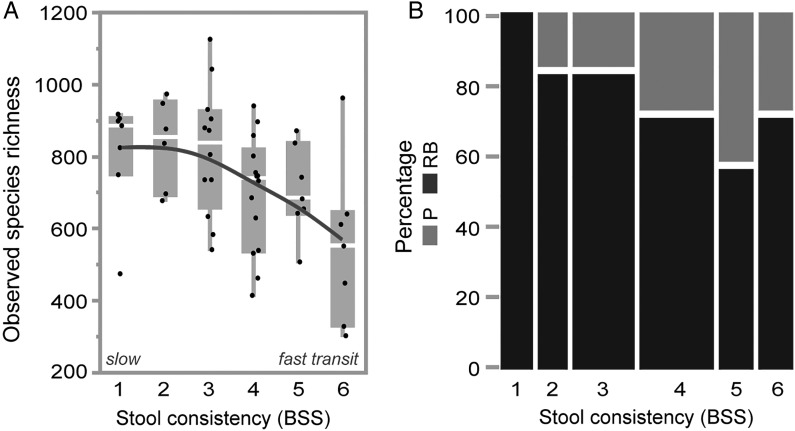
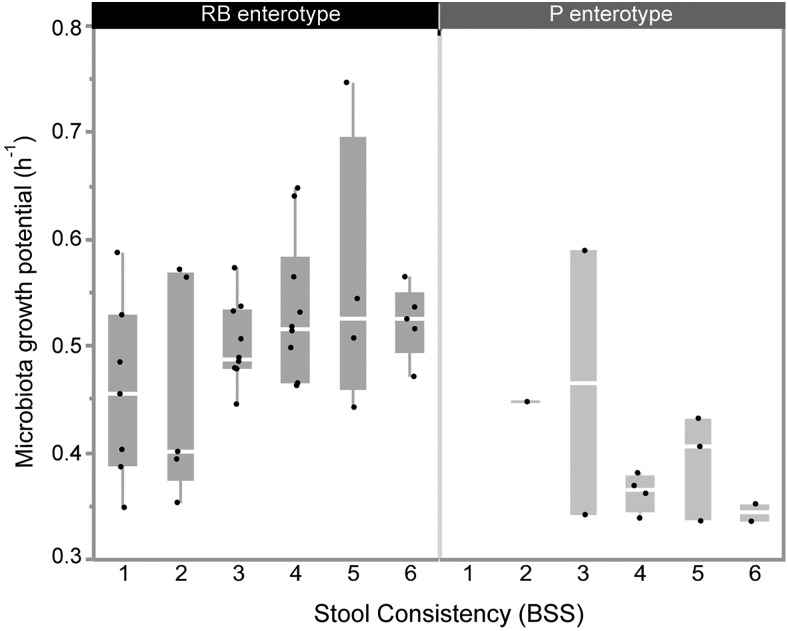
Objective: The assessment of potentially confounding factors affecting colon microbiota composition is essential to the identification of robust microbiome based disease markers. Here, we investigate the link between gut microbiota variation and stool consistency using Bristol Stool Scale classification, which reflects faecal water content and activity, and is considered a proxy for intestinal colon transit time. Design: Through 16S rDNA Illumina profiling of faecal samples of 53 healthy women, we evaluated associations between microbiome richness, Bacteroidetes:Firmicutes ratio, enterotypes, and genus abundance with self-reported, Bristol Stool Scale-based stool consistency. Each sample’s microbiota growth potential was calculated to test whether transit time acts as a selective force on gut bacterial growth rates. Results: Stool consistency strongly correlates with all known major microbiome markers. It is negatively correlated with species richness, positively associated to the Bacteroidetes:Firmicutes ratio, and linked to Akkermansia and Methanobrevibacter abundance. Enterotypes are distinctly distributed over the BSS-scores. Based on the correlations between microbiota growth potential and stool consistency scores within both enterotypes, we hypothesise that accelerated transit contributes to colon ecosystem differentiation. While shorter transit times can be linked to increased abundance of fast growing species in Ruminococcaceae- Bacteroides samples, hinting to a washout avoidance strategy of faster replication, this trend is absent in Prevotella -enterotyped individuals. Within this enterotype adherence to host tissue therefore appears to be a more likely bacterial strategy to cope with washout. Conclusions: The strength of the associations between stool consistency and species richness, enterotypes and community composition emphasises the crucial importance of stool consistency assessment in gut metagenome-wide association studies.
Overview
The claims and statistics of this paper haven’t been checked yet.
Free: it reads the open-access text and checks the first 5 claims that cite a source we can check. Create a free account to check every claim.
Integrity signals
Registry
Cites
Statistics
Figures
Verification
Claims the paper makes
The claims and statistics of this paper haven’t been checked yet.
Free: it reads the open-access text and checks the first 5 claims that cite a source we can check. Create a free account to check every claim.
Claims other papers make about this one
Each is checked against this paper’s own text: does it say what the citing paper says it does?
The cited source says what the claim attributes to it.
In the citing paper
“For instance, one study demonstrated that individuals with a loose stool had lower microbial richness and higher abundance of the Prevotella enterotype compared to those with harder stools, whose fecal samples were enriched with the Ruminococcaceae-Bacteroides enterotype [86].”
From A Clinical Outcome of the Anti-PD-1 Therapy of Melanoma in Polish Patients Is Mediated by Population-Specific Gut Microbiome Composition (2022) · cites this paper as [86]
In the citing paper
“Several studies have reported a positive relationship between prolonged colon transit times, with increased richness and diversity of the fecal microbiome in adults without prior history of GI disorders160,161.”
From The gut Microbiome in adult and pediatric functional gastrointestinal disorders (2019) · cites this paper as [161]
In the citing paper
“Moreover, it was also indicated that stool consistency and frequency were associated with gut microbiota richness and composition [86,87].”
From A Clinical Outcome of the Anti-PD-1 Therapy of Melanoma in Polish Patients Is Mediated by Population-Specific Gut Microbiome Composition (2022) · cites this paper as [86]
Self-check
Percentages, sums and reported differences re-computed from the paper’s own numbers.
The self-check needs the paper’s full text.
Citations
Cites
phyloseq: An R Package for Reproducible Interactive Analysis and Graphics of Microbiome Census Data
McMurdie, P. J., & Holmes, S. (2013) · PLoS ONE · doi:10.1371/journal.pone.0061217 · Cited by 21,322
A human gut microbial gene catalogue established by metagenomic sequencing
MetaHIT Consortium, Qin, J., Li, R., Raes, J., Arumugam, M., Burgdorf, K. S., Manichanh, C., Nielsen, T., Pons, N., Levenez, F., et al. (2010) · Nature · doi:10.1038/nature08821 · Cited by 11,624
Self-citationDiet rapidly and reproducibly alters the human gut microbiome
David, L. A., Maurice, C. F., Carmody, R. N., Gootenberg, D. B., Button, J. E., Wolfe, B. E., Ling, A. V., Devlin, A. S., Varma, Y., Fischbach, M. A., et al. (2014) · Nature · doi:10.1038/nature12820 · Cited by 10,100
Human gut microbiome viewed across age and geography
Yatsunenko, T., Rey, F. E., Manary, M. J., Trehan, I., Dominguez-Bello, M. G., Contreras, M., Magris, M., Hidalgo, G., Baldassano, R. N., Anokhin, A. P., et al. (2012) · Nature · doi:10.1038/nature11053 · Cited by 7,815
Enterotypes of the human gut microbiome
MetaHIT Consortium (additional members), Arumugam, M., Raes, J., Pelletier, E., Le Paslier, D., Yamada, T., Mende, D. R., Fernandes, G. R., Tap, J., Bruls, T., et al. (2011) · Nature · doi:10.1038/nature09944 · Cited by 7,548
Self-citationLinking long-term dietary patterns with gut microbial enterotypes
Wu, G. D., Chen, J., Hoffmann, C., Bittinger, K., Chen, Y.-Y., Keilbaugh, S. A., Bewtra, M., Knights, D., Walters, W. A., Knight, R., et al. (2011) · Science · doi:10.1126/science.1208344 · Cited by 6,513
De Filippo, C., Cavalieri, D., Di Paola, M., Ramazzotti, M., Poullet, J. B., Massart, S., Collini, S., Pieraccini, G., & Lionetti, P. (2010) · Proceedings of the National Academy of Sciences · doi:10.1073/pnas.1005963107 · Cited by 5,579
Diversity, stability and resilience of the human gut microbiota
Lozupone, C. A., Stombaugh, J. I., Gordon, J. I., Jansson, J. K., & Knight, R. (2012) · Nature · doi:10.1038/nature11550 · Cited by 5,533
Longstreth, G. F., Thompson, W. G., Chey, W. D., Houghton, L. A., Mearin, F., & Spiller, R. C. (2006) · Gastroenterology · doi:10.1053/j.gastro.2005.11.061 · Cited by 4,856
Richness of human gut microbiome correlates with metabolic markers
Le Chatelier, E., Nielsen, T., Qin, J., Prifti, E., Hildebrand, F., Falony, G., Almeida, M., Arumugam, M., Batto, J.-M., Kennedy, S., et al. (2013) · Nature · doi:10.1038/nature12506 · Cited by 4,662
Self-citation
Cited by
Items 501–600 of 1,000
Borkent, J., Ioannou, M., Neijzen, D., Haarman, B. C. M., & Sommer, I. E. (2024) · Schizophrenia Bulletin · doi:10.1093/schbul/sbae188 · Cited by 28
“20,21 Notably, microbiota interactions with sex hormones, like estrogens and testosterone, influence its composition and activity in a sex-specific manner.”
Tronstad, R. R., Kummen, M., Holm, K., von Volkmann, H. L., Anmarkrud, J. A., Høivik, M. L., Moum, B. A., Gilja, O. H., Hausken, T., Baines, J. F., et al. (2017) · Inflammatory Bowel Diseases · doi:10.1097/mib.0000000000001264 · Cited by 19
Prolonged intestinal transit and diarrhea in patients with an activating GUCY2C mutation
von Volkmann, H. L., Brønstad, I., Gilja, O. H., Tronstad, R. R., Sangnes, D. A., Nortvedt, R., Hausken, T., Dimcevski, G., Fiskerstrand, T., & Nylund, K. (2017) · PLoS ONE · doi:10.1371/journal.pone.0185496 · Cited by 20
Qian, G., & Ho, J. W. K. (2020) · Biophysical Reviews · doi:10.1007/s12551-020-00724-2 · Cited by 23
“Harder stool is dominated by Ruminococcaceae-Bacteroides (RB) enterotype whilst softer stool samples reveal enrichment of Prevotella (Vandeputte et al. 2016).”
BackgroundCook, J., Lehne, C., Weiland, A., Archid, R., Ritze, Y., Bauer, K., Zipfel, S., Penders, J., Enck, P., & Mack, I. (2020) · Nutrients · doi:10.3390/nu12082396 · Cited by 23
Matsuda, K., Akiyama, T., Tsujibe, S., Oki, K., Gawad, A., & Fujimoto, J. (2021) · Scientific Reports · doi:10.1038/s41598-021-81783-7 · Cited by 23
Sampling Strategies for Three-Dimensional Spatial Community Structures in IBD Microbiota Research
Zhang, S., Cao, X., & Huang, H. (2017) · Frontiers in Cellular and Infection Microbiology · doi:10.3389/fcimb.2017.00051 · Cited by 21
“It has been suggested that stool consistency is strongly associated with gut microbiota diversity (Vandeputte et al., 2016).”
BackgroundThe Oral–Gut Microbiota Axis as a Mediator of Frailty and Sarcopenia
Azzolino, D., Schianca, M. C., Bottalico, L., Colella, M., Felicetti, A., Perna, S., Terranova, L., García-Godoy, F., Rondanelli, M., Passarelli, P. C., et al. (2025) · Nutrients · doi:10.3390/nu17152408 · Cited by 23
Malagón, M., Ramió‐Pujol, S., Serrano, M., Serra‐Pagès, M., Amoedo, J., Oliver, L., Bahí, A., Mas-De-Xaxars, T., Torrealba, L., Gilabert, P., et al. (2019) · Alimentary Pharmacology & Therapeutics · doi:10.1111/apt.15251 · Cited by 30
Stobernack, T., de Vries, S. P. W., Pereira, R. R., Pelsser, L. M. J., ter Braak, C. J. F., Aarts, E., van Baarlen, P., Kleerebezem, M., Frankena, K., & Hontelez, S. (2019) · BMJ Open · doi:10.1136/bmjopen-2019-029422 · Cited by 22
Alyousif, Z., Rivero‐Mendoza, D., Auger, J., Carvalho, V. D., Amos, S., Sims, C. A., & Dahl, W. J. (2020) · Current Developments in Nutrition · doi:10.1093/cdn/nzaa005 · Cited by 22
Yan, J., Yu, W., Wang, G., Lu, C., Liu, C., Jiang, L., Jiang, Z., Liang, Z., & Liu, D. (2022) · Genomics · doi:10.1016/j.ygeno.2022.110527 · Cited by 20
Meijer, S., Pasquinelli, E., Renzi, S., Lavasani, S., Nouri, M., Erlandsson, L., Cavalieri, D., & Hansson, S. R. (2023) · Biomolecules · doi:10.3390/biom13020346 · Cited by 21
“muciniphila abundance is positively correlated with colon transit time [65].”
BackgroundJiang, Y. L., Guo, H., Sun, M., Jiang, C., Jiang, S., Mu, G., Tuo, Y., & Gao, P. (2023) · Food & Function · doi:10.1039/d3fo00222e · Cited by 18
Effect of Probiotic-Fortified Infant Formula on Infant Gut Health and Microbiota Modulation
Eor, J. Y., Lee, C. S., Moon, S. H., Cheon, J. Y., Pathiraja, D., Park, B., Shin, M. J., Kim, J.-Y., Kim, S., Noh, Y., et al. (2023) · Food Science of Animal Resources · doi:10.5851/kosfa.2023.e26 · Cited by 19
Baaleman, D. F., Wegh, C. A. M., de Leeuw, T. J. M., van Etten‐Jamaludin, F. S., Vaughan, E. E., Schoterman, M. H. C., Belzer, C., Smidt, H., Tabbers, M. M., Benninga, M. A., et al. (2023) · The Journal of Pediatrics · doi:10.1016/j.jpeds.2023.113559 · Cited by 22
Impact of the lipase inhibitor orlistat on the human gut microbiota
Uehira, Y., Ueno, H., Miyamoto, J., Kimura, I., Ishizawa, Y., Iijima, H., Muroga, S., Fujita, T., Sakai, S., Samukawa, Y., et al. (2023) · Obesity Research & Clinical Practice · doi:10.1016/j.orcp.2023.08.005 · Cited by 20
Lu, G., Gao, D., Jiang, W., Yu, X., Tong, J., Liu, X., Qiao, T., Wang, R., Zhang, M., Wang, S., et al. (2024) · European Journal of Nuclear Medicine and Molecular Imaging · doi:10.1007/s00259-024-06688-9 · Cited by 18
“Fecal samples were snap-frozen with liquid nitrogen, collected, and stored at − 80 °C (Haier, DW-86L626, China) [12].”
MethodDiet and the gut microbiome: from hype to hypothesis
Daniel, H. (2020) · British Journal Of Nutrition · doi:10.1017/s0007114520001142 · Cited by 19
“In various studies, the richness of the faecal microbiome as assessed by relative species abundance showed a clear associationwith the BSS score and, in turn, stool consistency is related to stool water content(12,13).”
BackgroundDahl, W. J., Hung, W., Ford, A., Suh, J. H., Auger, J., Nagulesapillai, V., & Wang, Y. (2020) · Nutrition Research · doi:10.1016/j.nutres.2020.05.004 · Cited by 20
Bouferraa, Y., Chedid, A., Amhaz, G., Lakkiss, A. E., Mukherji, D., Temraz, S. N., & Shamseddine, A. I. (2021) · International Journal of Molecular Sciences · doi:10.3390/ijms22158036 · Cited by 18
Kim, M. C., Lee, S., Park, J. K., Park, J., Lee, D., Park, J., Kim, B.-Y., Cho, M. S., Kim, T.-Y., Park, H. Y., et al. (2021) · Journal of Medicinal Food · doi:10.1089/jmf.2020.4746 · Cited by 18
“32 The intake of probiotic-rich foods was not restricted, which could have also been a contributory factor.”
Basic Microbiome Analysis: Analytical Steps from Sampling to Sequencing
Ece, G. T., Aktaş, A., Özyurt, Ö. K., Demirbakan, H., Alışkan, H. E., Sağlık, İ., Zorbozan, O., Duran, A. Ç., Uğur, A. R., ÖCAL, D. N., et al. (2026) · Microorganisms · doi:10.3390/microorganisms14020387 · Cited by 35
“…variation alters microbiota profiles The first complete bowel movement of the day is recommended Stool consistency/intestinal transit time [16,18] Reduced species richness is observed in liquid stools Stool consistency should be reported using the Bristol Stool Scale Homogenization…”
Gut microbiota of Parkinson’s disease in an appendectomy cohort: a preliminary study
Nakahara, K., Nakane, S., Ishii, K., Ikeda, T., & Ando, Y. (2023) · Scientific Reports · doi:10.1038/s41598-023-29219-2 · Cited by 21
Renall, N., Lawley, B., Vatanen, T., Merz, B., Douwes, J. E., Corbin, M., Morenga, L. T., Kruger, R., Breier, B. H., & Tannock, G. W. (2023) · Gut Microbes · doi:10.1080/19490976.2023.2178801 · Cited by 19
“, Akkermansia muciniphila, Ruminococcus bromii, and Methanobacter smithii and is consistent with the observations of Vandeputte and colleagues.(42) They found an increased abundance of methane-producing bacteria (Methanobrevibacter), Akkermansia, and Ruminococaceae in association with stool consistency indicative of s…”
ResultLuo, M., Xie, P., Deng, X., Fan, J., & Xiong, L. (2023) · Nutrients · doi:10.3390/nu15214502 · Cited by 17
Position paper on transanal irrigation in chronic non-organic constipation
Bazzocchi, G., Corazziari, E. S., Staiano, A., Bassotti, G., Bellini, M., Chiarioni, G., D’Alba, L., & Scarpato, E. (2024) · Digestive and Liver Disease · doi:10.1016/j.dld.2024.02.006 · Cited by 23
Novel sequencing technologies to support industrial biotechnology
Costessi, A., van den Bogert, B., May, A., van Themaat, E. V. L., Roubos, J. A., Kolkman, M. A. B., Butler, D., & Pirovano, W. (2018) · FEMS Microbiology Letters · doi:10.1093/femsle/fny103 · Cited by 19
Faber, W., Stolwijk-Swüste, J. M., van Ginkel, F., Nachtegaal, J., Zoetendal, E. G., Winkels, R. M., & Witteman, B. J. M. (2021) · Journal of Clinical Medicine · doi:10.3390/jcm10081598 · Cited by 18
Tanaka, Y., Kiuchi, M., Higashimura, Y., Naito, Y., & Koyama, K. (2021) · Medical Gas Research · doi:10.4103/2045-9912.318858 · Cited by 19
Fecal short‐chain fatty acids vary by sex and amyloid status
Kuehn, J. F., Zhang, Q., Heston, M. B., Kang, J. W., Harding, S. J., Davenport‐Sis, N. J., Peter, D. C., Kerby, R. L., Vemuganti, V., Schiffmann, E. C., et al. (2025) · Alzheimer s & Dementia · doi:10.1002/alz.70877 · Cited by 23
“27 For the current study, participants were included in biomarker and cognitive analyses if they had completed fecal sample collection and had biomarker and cognitive assessments proximal to the time of fecal collection, including amyloid or tau PET neuroimaging data within 5 years and cognitive…”
Standards for Collection, Preservation, and Transportation of Fecal Samples in TCM Clinical Trials
Su, W., Du, Y., Lian, F., Wu, H., Zhang, X., Yang, W., Duan, Y., Pan, Y., Liu, W., Wu, A., et al. (2022) · Frontiers in Cellular and Infection Microbiology · doi:10.3389/fcimb.2022.783682 · Cited by 22
“The collection procedures, preservation temperature, preservation status, and transportation conditions all impact the diversity and integrity of the fecal samples and will ultimately influence the microbiome profile results (Vandeputte et al., 2016; Wu et al., 2019).”
BackgroundReitano, E., Francone, E., Bona, E., Follenzi, A., & Gentilli, S. (2022) · Digestive Diseases and Sciences · doi:10.1007/s10620-022-07600-x · Cited by 21
Identification of Gut Microbiome and Metabolites Associated with Acute Diarrhea in Cats
Bai, H., Liu, T., Wang, S., Gong, W., Shen, L., Zhang, S., & Wang, Z. (2023) · Microbiology Spectrum · doi:10.1128/spectrum.00590-23 · Cited by 22
“Fecal scoring criteria were divided into seven categories: 1, granular; 2, sausage-like but with surface clumps; 3, sausage-like but with cracks on the surface; 4, snake-like with a smooth surface; 5, marshmallow-like with clear edges and semisolid consistency; 6, porridge-like without a regular shape; and 7, liquid w…”
BackgroundFrequency of Bowel Movements and Risk of Diverticulitis
Jovani, M., Ma, W., Staller, K. D., Joshi, A. D., Liu, P., Nguyen, L. H., Lochhead, P. J., Cao, Y., Tam, I., Wu, K., et al. (2021) · Clinical Gastroenterology and Hepatology · doi:10.1016/j.cgh.2021.01.003 · Cited by 19
Diet and Gut Microbiome and the “Chicken or Egg” Problem
Daniel, H. (2022) · Frontiers in Nutrition · doi:10.3389/fnut.2021.828630 · Cited by 18
“The increased prevalence of the phylum Bacteroidetes with longer gut transit times had been observed before and similarly also an increase in Akkermansia muciniphila (20).”
BackgroundEnrico, V. T., Vo, N. N., Methé, B. A., Morris, A., & Sowa, G. (2022) · European Spine Journal · doi:10.1007/s00586-022-07429-y · Cited by 21
Ciaula, A. D., Grattagliano, I., & Portincasa, P. (2016) · Journal of Digestive Diseases · doi:10.1111/1751-2980.12415 · Cited by 17
Grosen, A. K., Mikkelsen, S., Hindhede, L., Paaske, S. E., Baunwall, S. M. D., Hansen, M. M., Dahlerup, J. F., Mortensen, M. S., Licht, T. R., Boldsen, J. K., et al. (2025) · The Lancet Microbe · doi:10.1016/j.lanmic.2024.101034 · Cited by 21
Association of distinct microbial and metabolic signatures with microscopic colitis
Chen, S.-Y., Kim, H., Nzabarushimana, É., Shen, J., Williams, K., Gurung, J., McGoldrick, J., Burke, K. E., Yarze, J. C., Nguyen, L. H., et al. (2025) · Nature Communications · doi:10.1038/s41467-025-59566-9 · Cited by 17
“Second, by adopting multiple control groups, we decreased the possibility of confounding by stool consistency 11 .”
Examination of hydrogen cross-feeders using a colonic microbiota model
Smith, N. W., Shorten, P. R., Altermann, E., Roy, N. C., & McNabb, W. C. (2021) · BMC Bioinformatics · doi:10.1186/s12859-020-03923-6 · Cited by 18
Laxative use and mortality in patients on haemodialysis: a prospective cohort study
Honda, Y., Itano, S., Kugimiya, A., Kubo, E., Yamada, Y., Kimachi, M., Shibagaki, Y., & Ikenoue, T. (2021) · BMC Nephrology · doi:10.1186/s12882-021-02572-y · Cited by 18
Redefining Clostridioides difficile infection antibiotic response and clinical outcomes
Gonzales-Luna, A. J., Skinner, A. M., Alonso, C. D., Bouza, E., Cornely, O. A., de Meij, T. G. J., Drew, R. J., Garey, K. W., Gerding, D. N., Johnson, S., et al. (2023) · The Lancet Infectious Diseases · doi:10.1016/s1473-3099(23)00047-6 · Cited by 16
Gut microbiome associated with low anterior resection syndrome after rectal cancer surgery
Kim, M. J., Park, S., Park, J. W., Choi, J., Kim, H. J., Lim, H., Ryoo, S., Park, K. J., Ji, Y., & Jeong, S. (2023) · Scientific Reports · doi:10.1038/s41598-023-34557-2 · Cited by 17
Kim, N.-Y., Kim, K., Yang, H.-J., Jeong, S.-J., Han, A., & Cha, Y. (2023) · Food & Function · doi:10.1039/d2fo04111a · Cited by 17
Bao, C., Wei, M., Pan, H., Wen, M., Liu, Z., Xu, Y., & Jiang, H. (2023) · Frontiers in Nutrition · doi:10.3389/fnut.2023.1184311 · Cited by 17
Wang, H., & Wang, Y. (2024) · Canadian Journal of Infectious Diseases and Medical Microbiology · doi:10.1155/2024/8640014 · Cited by 20
“People with diferent enterotypes may metabolize and store energy diferently [10].”
BackgroundBeaumont, M., Jaoui, D., Douard, V., Mat, D. J. L., Koeth, F., Goustard, B., Mayeur, C., Mondot, S., Hovaghimian, A., Feunteun, S. L., et al. (2017) · Molecular Nutrition & Food Research · doi:10.1002/mnfr.201700078 · Cited by 20
“muciniphila has been shown to be more prevalent in humans with slow transit time [54] reinforcing the view that emulsion structure is likely to have impacted transit time.”
BackgroundHe, K., Ma, H., Xu, H., Zou, Z., Feng, M., Li, X., & Ye, X. (2017) · Journal of Functional Foods · doi:10.1016/j.jff.2017.04.041 · Cited by 17
Germinated soy germ extract ameliorates obesity through beige fat activation
Kim, H., Choi, E.-J., Kim, H. S., Choi, C.-W., Choi, S., Kim, S., Seo, W. D., & Hee, S. (2019) · Food & Function · doi:10.1039/c8fo02252f · Cited by 16
Shrestha, A., Metzler-Zebeli, B. U., Karembé, H., Šperling, D., Koger, S., & Joachim, A. (2020) · Frontiers in Microbiology · doi:10.3389/fmicb.2020.00983 · Cited by 16
Metzler-Zebeli, B. U., Klinsoda, J., Vötterl, J. C., & Verhovsek, D. (2020) · Microorganisms · doi:10.3390/microorganisms8071073 · Cited by 17
“The bacterial diversity is commonly used as a measure for the stability of the gut microbiota, with a higher diversity representing a greater stability [36].”
BackgroundFouhse, J. M., Gänzle, M. G., Beattie, A. D., Vasanthan, T., & Zijlstra, R. T. (2017) · Journal of Nutrition · doi:10.3945/jn.117.255851 · Cited by 18
Krukowski, H., Valkenburg, S., Vila, A. V., Maciel, L. F., Vázquez-Castellanos, J. F., Gryp, T., Joossens, M., Biesen, W. V., Verbeke, F., Derrien, M., et al. (2026) · Nature Microbiology · doi:10.1038/s41564-026-02259-w · Cited by 21
“This observation is in line with previously reported ITT-associated ecosystem maturation across the Bact1–Rum axis in healthy individuals 33–35 , and aligns with the ecological gradient captured by PC2, which similarly links reduced faecal moisture with proteolytic community composition.”
Self-citationBastard, Q. L., Chevallier, P., & Montassier, E. (2021) · World Journal of Gastroenterology · doi:10.3748/wjg.v27.i45.7792 · Cited by 15
The metabolic potential of the paediatric-onset multiple sclerosis gut microbiome
Mirza, A., Zhu, F., Knox, N., Forbes, J. D., Bonner, C., Domselaar, G. V., Bernstein, C. N., Graham, M., Marrie, R. A., Hart, J., et al. (2022) · Multiple Sclerosis and Related Disorders · doi:10.1016/j.msard.2022.103829 · Cited by 16
Radisavljevic, N., Cirstea, M. S., Bauer, K. C., Lo, C., Metcalfe‐Roach, A., Bozorgmehr, T., Bar‐Yoseph, H., & Finlay, B. B. (2022) · Journal of Parkinson s Disease · doi:10.3233/jpd-223165 · Cited by 17
“1I), also indicative of slower transit through the GI tract [36].”
Turjeman, S., Pekarsky, S., Corl, A. B., Kamath, P. L., Getz, W. M., Bowie, R. C. K., Markin, Y. M., & Nathan, R. (2022) · Molecular Ecology Resources · doi:10.1111/1755-0998.13708 · Cited by 17
“Similarly, sedated birds may defaecate less frequently, which may affect microbiota composition (Vandeputte et al., 2016).”
BackgroundXue, Y., Huang, X., Ou, Z., Wu, Y., Li, Q., Huang, X., Wen, M., Yang, Y., Situ, B., & Zheng, L. (2023) · Journal of Visualized Experiments · doi:10.3791/65574 · Cited by 19
Time from feeding impacts farmed Atlantic salmon (Salmo salar) gut microbiota and faecal score
Reid, C. E., Bissett, A. B., Huynh, C., Bowman, J. P., & Taylor, R. S. (2023) · Aquaculture · doi:10.1016/j.aquaculture.2023.740174 · Cited by 14
Dysbiosis in inflammatory bowel diseases: egg, not chicken
Stange, E. F. (2024) · Frontiers in Medicine · doi:10.3389/fmed.2024.1395861 · Cited by 15
Wang, J., Ren, M., Fu, L., Liu, L., Zhang, X., Sun, Y., & Liu, L. (2024) · Food Bioscience · doi:10.1016/j.fbio.2024.105218 · Cited by 20
Das Darmmikrobiom bei der Parkinson-Krankheit
Bedarf, J. R., Hildebrand, F., Goeser, F., Bork, P., & Wüllner, U. (2018) · Der Nervenarzt · doi:10.1007/s00115-018-0601-6 · Cited by 27
The Human Microbiome in Health and Disease
Arnold, W., Hill, E. S., Fei, N., Yee, A. L., Garcia, M. S., Cralle, L. E., & Gilbert, J. A. (2018) · Springer eBooks · doi:10.1007/978-3-319-96830-8_39 · Cited by 15
Yan, J., Liao, C., Taylor, B. P., Fontana, E., Amoretti, L. A., Wright, R. J., Littmann, E. R., Dai, A., Waters, N. R., Peled, J. U., et al. (2022) · Scientific Data · doi:10.1038/s41597-022-01302-9 · Cited by 22
Ichikawa, N., Sasaki, H., Lyu, Y., Furuhashi, S., Watabe, A., Imamura, M., Hayashi, K., & Shibata, S. (2021) · Metabolites · doi:10.3390/metabo12010020 · Cited by 16
Vila-Nova, T. M. S., Barbosa, K. B. F., Freire, A. R. S., Cintra, D. E., Silva, D. G., Rodrigues, T. M. D. A., Costa, B. M., & Aragao, L. (2023) · Journal of Functional Foods · doi:10.1016/j.jff.2023.105931 · Cited by 17
Tan, S., Zhang, W., Zeng, P., Yang, Y., Chen, S., Li, Y., Bian, Y., & Chen, X. (2024) · European Journal of Gastroenterology & Hepatology · doi:10.1097/meg.0000000000002786 · Cited by 16
“Additionally, the distribution of specific thick-walled bacterial phyla such as Faecalibacterium, Lactococcus, and Roseburia correlates notably with colonic transit [72].”
BackgroundA review of the pathogenesis of epilepsy based on the microbiota-gut-brain-axis theory
Yang, W., Cui, H., Wang, C., Wang, X., Yan, C., & Cheng, W. (2024) · Frontiers in Molecular Neuroscience · doi:10.3389/fnmol.2024.1454780 · Cited by 19
“Gut transport time is strongly correlated with microbial abundance and composition (Vandeputte et al., 2016), and increased gut transport time reduces bacterial biomass and diversity in the distal gut region (Tottey et al., 2017).”
BackgroundIGUDESMAN, D. A., Sweeney, M., Carroll, I. M., Mayer‐Davis, E. J., & Bulik, C. M. (2019) · Gastroenterology Clinics of North America · doi:10.1016/j.gtc.2019.04.003 · Cited by 15
Machine Learning Supports Automated Digital Image Scoring of Stool Consistency in Diapers
Ludwig, T. G., Oukid, I., Wong, J., Ting, S., Huysentruyt, K., Roy, P., Foussat, A. C., & Vandenplas, Y. (2020) · Journal of Pediatric Gastroenterology and Nutrition · doi:10.1097/mpg.0000000000003007 · Cited by 13
Deutsch, L., & Stres, B. (2021) · Metabolites · doi:10.3390/metabo11030172 · Cited by 14
“Other recent communications [8,9,17,18] focused on BSS stool consistency in (healthy) male and female subjects due to its established correlation with colonic transit time, inflammation, microbiome and metabolome characteristics that are of clinical relevance in numerous gastrointestinal conditions.”
InfluentialCharacterization of fecal metabolome changes in patients with obstructive sleep apnea
Dong, Y., Wang, P., Lin, J., Han, C., Jiao, J., Zuo, K., Chen, M., Yang, X., Cai, J., Jiang, H., et al. (2021) · Journal of Clinical Sleep Medicine · doi:10.5664/jcsm.9668 · Cited by 20
Microbial Associations With Microscopic Colitis
Sun, S., Blakley, I., Fodor, A. A., Keku, T. O., Woosley, J. T., Peery, A. F., & Sandler, R. S. (2022) · Clinical and Translational Gastroenterology · doi:10.14309/ctg.0000000000000528 · Cited by 14
Physiology of the Colon and Its Measurement
Bharucha, A. E., & Camilleri, M. (2019) · Elsevier eBooks · doi:10.1016/b978-0-323-40232-3.00144-8 · Cited by 20
Long-term impact of fecal transplantation in healthy volunteersPreprint
Goloshchapov, O. V., Olekhnovich, E. I., Sv, S., Moiseev, I., Kucher, М. A., Fedorov, D. E., Pavlenko, A. V., Manolov, A. I., Валерьевич, Г. В., Veselovsky, V. A., et al. (2019) · bioRxiv (Cold Spring Harbor Laboratory) · doi:10.1101/671644 · Cited by 13
Gut dysbiosis is linked to severe steatosis and enhances its diagnostic performance in MASLD
Borges‐Canha, M., Centelles-Lodeiro, J., Leite, A. R., Correia-Chaves, J., Lourenço, I. M., von Hafe, M., Vale, C., Martins, D., Silva, C., Ferreira, A. C., et al. (2025) · eGastroenterology · doi:10.1136/egastro-2025-100204 · Cited by 16
Self-citationMendez, D. F. G., Sanabria, J., Wist, J., & Holmes, E. C. (2023) · Journal of Agricultural and Food Chemistry · doi:10.1021/acs.jafc.2c08146 · Cited by 13
Kulecka, M., Żeber‐Lubecka, N., Bałabas, A., Czarnowski, P., Bagińska, K., Głowienka, M., Kluska, A., Piątkowska, M., Dąbrowska, M., Waker, E., et al. (2023) · Frontiers in Cellular and Infection Microbiology · doi:10.3389/fcimb.2023.1190910 · Cited by 15
“…reported these enterotypes in diarrheal children (Mobeen et al., 2018) and colorectal cancer patients (Schubert et al., 2014; Milani et al., 2016; Vandeputte et al., 2016; Jiang et al., 2017; Zaneveld et al., Frontiers in Cellular and Infection Microbiology 10 2017; Aarnoutse et al., 2019; Yang…”
BackgroundSingh, A., Banerjee, T., Shukla, S. K., Upadhyay, S., & Verma, A. (2023) · Scientific Reports · doi:10.1038/s41598-023-39382-1 · Cited by 12
Bulygin, I., Shatov, V. M., Rykachevsky, A., Raiko, A., Bernstein, A., Burnaev, E. V., & Gelfand, M. S. (2023) · PeerJ · doi:10.7717/peerj.15838 · Cited by 20
Fu Brick Tea as a Staple Food Supplement Attenuates High Fat Diet Induced Obesity in Mice
Wu, D., Zhao, H., Guo, L., Liu, X., Yan, L., Liu, Q., Cao, W., Chen, X., & Gao, X. (2023) · Foods · doi:10.3390/foods12244488 · Cited by 12
“However, mice in the orlistat-treated group had the lowest Shannon index, likely due to the fact that orlistat induced fatty diarrhea in mice, resulting in lower concentrations of colonic contents [54].”
BackgroundHerter, J., Stübing, F., Lüth, V. M., Zimmermann, J., Lederer, A., Hannibal, L., Huber, R., & Storz, M. A. (2024) · Annals of Medicine · doi:10.1080/07853890.2024.2305693 · Cited by 15
“…parameters or well-being. then again, energy intake in vegans in our study was slightly higher as expected compared to free-living vegans. the lack of gut microbiota richness analyses, which are associated with stool consistency, is another weakness that will be subject to future analyses [54].”
ResultTemperature-dependent differences in mouse gut motility are mediated by stress
Han, A., Hudson-Paz, C., Robinson, B. G., Becker, L. S., Jacobson, A. R., Kaltschmidt, J. A., Garrison, J. L., Bhatt, A. S., & Monack, D. M. (2024) · Lab Animal · doi:10.1038/s41684-024-01376-5 · Cited by 12
Elevated Aβ aggregates in feces from Alzheimer’s disease patients: a proof-of-concept study
Pils, M., Dybala, A., Schaffrath, A., Rehn, F., Kutzsche, J., Blömeke, L., Tusche, M., Özdüzenciler, P., Bujnicki, T., Kraemer‐Schulien, V., et al. (2024) · Alzheimer s Research & Therapy · doi:10.1186/s13195-024-01597-3 · Cited by 15
“Therefore, changes in both water content and pH value are directly reflected in the Bristol scale [35, 39].”
BackgroundLigustilide Prevents Radiation Enteritis by Targeting Gch1/BH4/eNOS to Improve Intestinal Ischemia
Yan, T., Guo, S., Zhang, T., Zhang, Z., Liu, A., Zhang, S., Xu, Y., Qi, Y., Zhao, W., Wang, Q., et al. (2021) · Frontiers in Pharmacology · doi:10.3389/fphar.2021.629125 · Cited by 12
“Frontiers in Pharmacology | www.frontiersin.org April 2021 | Volume 12 | Article 6291259 are only symptomatic and supportive drugs, such as glutamine, that promote the repair of intestinal epithelial cells, but their effectiveness is still controversial (Vidal-Casariego et al., 2015).”
BackgroundThe Influence of Diet and Sex on the Gut Microbiota of Lean and Obese JCR:LA-cp Rats
Resch, C. T., Parikh, M., Austria, J. A., Proctor, S. D., Netticadan, T., Blewett, H., & Pierce, G. N. (2021) · Microorganisms · doi:10.3390/microorganisms9051037 · Cited by 13
“fatty acids (SCFAs) from indigestible fiber by bacterial fermentation [4], and (c) regulating intestinal transit, hence impacting the absorbable energy from the diet [5].”
BackgroundOdintsova, V. Y., Klimenko, N. S., Tyakht, A., Игоревна, В. О., Popov, V., Alexeev, D. G., & Berezhnaya, Y. (2021) · Journal of Functional Foods · doi:10.1016/j.jff.2021.104572 · Cited by 12
Alteration of Serum Metabolites in Women of Reproductive Age with Chronic Constipation
Liu, S., Yang, C., Li, H., Bai, X., Hu, T., Xue, X., An, J., Zhang, Y., & Dong, X. (2021) · Medical Science Monitor · doi:10.12659/msm.934117 · Cited by 12
Labenz, J., Borkenstein, D., Heil, F. J., Madisch, A., Tappe, U., Schmidt, H., Terjung, B., Klymiuk, I., Horvath, A., Gross, M., et al. (2023) · Frontiers in Oncology · doi:10.3389/fonc.2022.1078315 · Cited by 15
Sugihara, N., Okada, Y., Tomioka, A., Ito, S., Tanemoto, R., Nishii, S., Mizoguchi, A., Inaba, K., Hanawa, Y., Horiuchi, K., et al. (2023) · Gut and Liver · doi:10.5009/gnl220100 · Cited by 12
“45 Thus, effect of changes of microbiota by I-6 could be caused just secondary to improvement of IBS symptoms.”
BackgroundBlottière, H. M., & Dore, J. M. (2016) · médecine/sciences · doi:10.1051/medsci/20163211009 · Cited by 23
Kaur, A., Tunçil, Y. E., Sikaroodi, M., Gillevet, P. M., Patterson, J. A., Keshavarzian, A., & Hamaker, B. R. (2018) · Bioactive Carbohydrates and Dietary Fibre · doi:10.1016/j.bcdf.2018.01.001 · Cited by 14
Pérez-Muñoz, M. E., Sugden, S., Harmsen, H. J. M., Hart, B. A. ‘., Laman, J. D., & Walter, J. (2021) · iScience · doi:10.1016/j.isci.2021.102709 · Cited by 12
Smith, D. A., Jheeta, S., Fuentes, H. V., & Palacios-Pérez, M. (2022) · Life · doi:10.3390/life12081197 · Cited by 15
Specific contributions of segmental transit times to gut microbiota composition
Steenackers, N., Falony, G., Augustijns, P., der Schueren, B. V., Vanuytsel, T., Vieira‐Silva, S., Wauters, L. I., Raes, J., & Matthys, C. (2021) · Gut · doi:10.1136/gutjnl-2021-325916 · Cited by 12
Self-citationChallenges and Opportunities in Analyzing Cancer-Associated Microbiomes
Chia, M., Pop, M., Salzberg, S. L., & Nagarajan, N. (2025) · Cancer Research · doi:10.1158/0008-5472.can-24-3629 · Cited by 12
Alexander, C., Brauchla, M. C., Sanoshy, K. D., Blonquist, T. M., Maloney, G. N., Mah, E., Kelley-Garvin, K., Chen, O., Liska, D. J., Shin, J.-E., et al. (2022) · British Journal Of Nutrition · doi:10.1017/s0007114522002951 · Cited by 12
Peng, X., Li, J., Wu, Y., Dai, H., Lynn, H., & Zhang, X. (2022) · Healthcare · doi:10.3390/healthcare11010029 · Cited by 11
“Moreover, stool consistency is closely correlate with major microbiome markers [17] and compositional chan es in gut microbiot [18,19].”
BackgroundInfluentialGuidelines for microbiome studies in renal physiology
Muralitharan, R. R., Snelson, M., Méric, G., Coughlan, M. T., & Marques, F. Z. (2023) · American Journal of Physiology-Renal Physiology · doi:10.1152/ajprenal.00072.2023 · Cited by 12
Metadata
- Authors
- Vandeputte, D., Falony, G., Vieira-Silva, S., Tito, R. Y., Joossens, M., & Raes, J.
- Affiliations
- Vrije Universiteit Brussel (BE)
- KU Leuven (BE)
- Department of Microbiology and Immunology, KU Leuven, Rega Institute, Leuven, Belgium
- Corresponding author
- Raes, Jeroen
- Venue
- Gut
- Publisher
- BMJ
- Published
- 2015-06-11
- Volume
- 65
- Issue
- 1
- Pages
- 57-62
- ISSN
- 0017-5749 (ISSN-L)
- 1468-3288
- PMC
- PMC4717365
- OpenAlex
- W2178459747
- Cited by
- 1,028
- References
- 49
- Citations by year
- 2026: 80 · 2025: 83 · 2024: 116 · 2023: 105 · 2022: 120 · 2021: 134 · 2020: 112 · 2019: 94 · 2018: 76 · 2017: 60 · 2016: 42 · 2015: 6
- FWCI
- 26.62
- Type
- journal article
- Language
- en
- Open access
- hybrid
- doi.org
- Licence
- cc-by-nc
- Locations
- Gut (publishedVersion, cc-by-nc)
- PubMed Central (publishedVersion, cc-by-nc)
- PubMed (publishedVersion)
- Socio-Environmental Systems Modeling (acceptedVersion, cc-by-nc)
- Lirias (submittedVersion, cc-by-nc)
- Ghent University Academic Bibliography (Ghent University) (submittedVersion)
- Digital Access to Libraries (submittedVersion)
- VUBIR (Vrije Universiteit Brussel) (submittedVersion)
- Funders
- European Commission (305312, 267139)
- Fonds Wetenschappelijk Onderzoek
- KU Leuven
- Vlaamse regering (IWT130359)
- FP7 People: Marie-Curie Actions
- Topics
- Life Sciences › Biochemistry, Genetics and Molecular Biology › Molecular Biology › Gut microbiota and health
- Health Sciences › Medicine › Gastroenterology › Gastrointestinal motility and disorders
- Physical Sciences › Environmental Science › Ecology › Microbial Community Ecology and Physiology
- Keywords
- stool consistency, Bristol stool scale, gut microbiota, enterotypes, microbial richness, Firmicutes/Bacteroidetes ratio, Akkermansia, Methanobrevibacter, Ruminococcaceae, Bacteroides, Prevotella, bacterial growth rate, colonic transit time, fecal water content, women
- MeSH terms
- Gastrointestinal Microbiome, Adult, Feces, Female, Gastrointestinal Transit, Humans, Middle Aged, Self Report, Healthy Volunteers
About these checks
Registry, retraction, Cites and statistics results are computed, not judged, with one exception: a printed reference that no index lists is read once by a model before it counts as a citation error. Claims are extracted by a model and kept only when their quote appears verbatim in the text; each cited source is then checked, with a model’s help, for whether it says what the claim relies on. Those verdicts can be wrong — read the claim’s quote and the cited source before relying on one.
Statistics and arithmetic are recomputed, not judged.
Confidence bands are shown only for fields calibrated on our annotated test set. None is calibrated yet, so no band is shown.
What counts as a claim ›How we measure confidence ›How we check this ›
Are you an author, or do you see a problem with this page? Request a review
Data sources
Bibliographic data: Semantic Scholar, OpenAlex, Crossref.
Contains information from the Semantic Scholar Academic Graph Datasets, made available under the ODC Attribution License (ODC-BY 1.0).
Semantic Scholar’s data is described in: Kinney, R., et al. (2023). The Semantic Scholar Open Data Platform. arXiv:2301.10140.
