

Stool consistency is strongly associated with gut microbiota richness and composition, enterotypes and bacterial growth rates
Open accessThe DOI matches its Crossref record; 49 of the 49 references it cites were found in a registry or an index.
Abstract
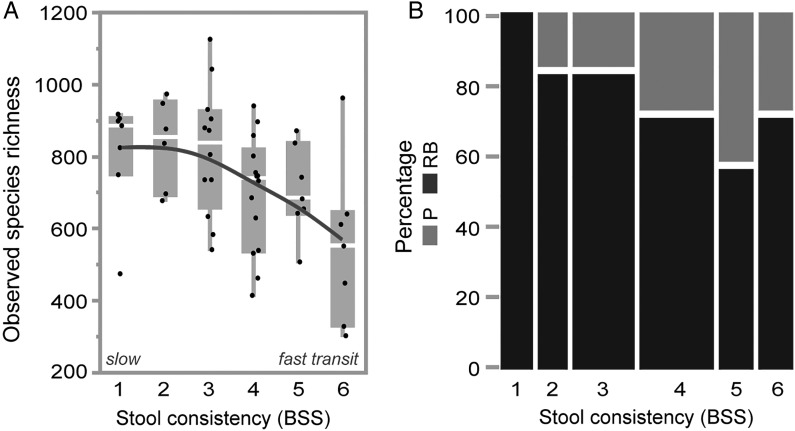
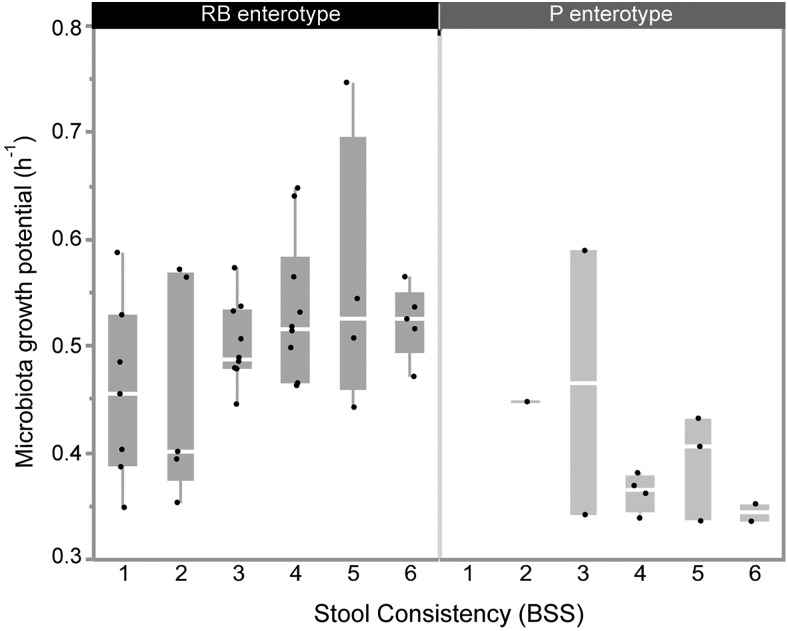
Objective: The assessment of potentially confounding factors affecting colon microbiota composition is essential to the identification of robust microbiome based disease markers. Here, we investigate the link between gut microbiota variation and stool consistency using Bristol Stool Scale classification, which reflects faecal water content and activity, and is considered a proxy for intestinal colon transit time. Design: Through 16S rDNA Illumina profiling of faecal samples of 53 healthy women, we evaluated associations between microbiome richness, Bacteroidetes:Firmicutes ratio, enterotypes, and genus abundance with self-reported, Bristol Stool Scale-based stool consistency. Each sample’s microbiota growth potential was calculated to test whether transit time acts as a selective force on gut bacterial growth rates. Results: Stool consistency strongly correlates with all known major microbiome markers. It is negatively correlated with species richness, positively associated to the Bacteroidetes:Firmicutes ratio, and linked to Akkermansia and Methanobrevibacter abundance. Enterotypes are distinctly distributed over the BSS-scores. Based on the correlations between microbiota growth potential and stool consistency scores within both enterotypes, we hypothesise that accelerated transit contributes to colon ecosystem differentiation. While shorter transit times can be linked to increased abundance of fast growing species in Ruminococcaceae- Bacteroides samples, hinting to a washout avoidance strategy of faster replication, this trend is absent in Prevotella -enterotyped individuals. Within this enterotype adherence to host tissue therefore appears to be a more likely bacterial strategy to cope with washout. Conclusions: The strength of the associations between stool consistency and species richness, enterotypes and community composition emphasises the crucial importance of stool consistency assessment in gut metagenome-wide association studies.
Overview
The claims and statistics of this paper haven’t been checked yet.
Free: it reads the open-access text and checks the first 5 claims that cite a source we can check. Create a free account to check every claim.
Integrity signals
Registry
Cites
Statistics
Figures
Verification
Claims the paper makes
The claims and statistics of this paper haven’t been checked yet.
Free: it reads the open-access text and checks the first 5 claims that cite a source we can check. Create a free account to check every claim.
Claims other papers make about this one
Each is checked against this paper’s own text: does it say what the citing paper says it does?
The cited source says what the claim attributes to it.
In the citing paper
“For instance, one study demonstrated that individuals with a loose stool had lower microbial richness and higher abundance of the Prevotella enterotype compared to those with harder stools, whose fecal samples were enriched with the Ruminococcaceae-Bacteroides enterotype [86].”
From A Clinical Outcome of the Anti-PD-1 Therapy of Melanoma in Polish Patients Is Mediated by Population-Specific Gut Microbiome Composition (2022) · cites this paper as [86]
In the citing paper
“Several studies have reported a positive relationship between prolonged colon transit times, with increased richness and diversity of the fecal microbiome in adults without prior history of GI disorders160,161.”
From The gut Microbiome in adult and pediatric functional gastrointestinal disorders (2019) · cites this paper as [161]
In the citing paper
“Moreover, it was also indicated that stool consistency and frequency were associated with gut microbiota richness and composition [86,87].”
From A Clinical Outcome of the Anti-PD-1 Therapy of Melanoma in Polish Patients Is Mediated by Population-Specific Gut Microbiome Composition (2022) · cites this paper as [86]
Self-check
Percentages, sums and reported differences re-computed from the paper’s own numbers.
The self-check needs the paper’s full text.
Citations
Cites
phyloseq: An R Package for Reproducible Interactive Analysis and Graphics of Microbiome Census Data
McMurdie, P. J., & Holmes, S. (2013) · PLoS ONE · doi:10.1371/journal.pone.0061217 · Cited by 21,322
A human gut microbial gene catalogue established by metagenomic sequencing
MetaHIT Consortium, Qin, J., Li, R., Raes, J., Arumugam, M., Burgdorf, K. S., Manichanh, C., Nielsen, T., Pons, N., Levenez, F., et al. (2010) · Nature · doi:10.1038/nature08821 · Cited by 11,624
Self-citationDiet rapidly and reproducibly alters the human gut microbiome
David, L. A., Maurice, C. F., Carmody, R. N., Gootenberg, D. B., Button, J. E., Wolfe, B. E., Ling, A. V., Devlin, A. S., Varma, Y., Fischbach, M. A., et al. (2014) · Nature · doi:10.1038/nature12820 · Cited by 10,100
Human gut microbiome viewed across age and geography
Yatsunenko, T., Rey, F. E., Manary, M. J., Trehan, I., Dominguez-Bello, M. G., Contreras, M., Magris, M., Hidalgo, G., Baldassano, R. N., Anokhin, A. P., et al. (2012) · Nature · doi:10.1038/nature11053 · Cited by 7,815
Enterotypes of the human gut microbiome
MetaHIT Consortium (additional members), Arumugam, M., Raes, J., Pelletier, E., Le Paslier, D., Yamada, T., Mende, D. R., Fernandes, G. R., Tap, J., Bruls, T., et al. (2011) · Nature · doi:10.1038/nature09944 · Cited by 7,548
Self-citationLinking long-term dietary patterns with gut microbial enterotypes
Wu, G. D., Chen, J., Hoffmann, C., Bittinger, K., Chen, Y.-Y., Keilbaugh, S. A., Bewtra, M., Knights, D., Walters, W. A., Knight, R., et al. (2011) · Science · doi:10.1126/science.1208344 · Cited by 6,513
De Filippo, C., Cavalieri, D., Di Paola, M., Ramazzotti, M., Poullet, J. B., Massart, S., Collini, S., Pieraccini, G., & Lionetti, P. (2010) · Proceedings of the National Academy of Sciences · doi:10.1073/pnas.1005963107 · Cited by 5,579
Diversity, stability and resilience of the human gut microbiota
Lozupone, C. A., Stombaugh, J. I., Gordon, J. I., Jansson, J. K., & Knight, R. (2012) · Nature · doi:10.1038/nature11550 · Cited by 5,533
Longstreth, G. F., Thompson, W. G., Chey, W. D., Houghton, L. A., Mearin, F., & Spiller, R. C. (2006) · Gastroenterology · doi:10.1053/j.gastro.2005.11.061 · Cited by 4,856
Richness of human gut microbiome correlates with metabolic markers
Le Chatelier, E., Nielsen, T., Qin, J., Prifti, E., Hildebrand, F., Falony, G., Almeida, M., Arumugam, M., Batto, J.-M., Kennedy, S., et al. (2013) · Nature · doi:10.1038/nature12506 · Cited by 4,662
Self-citation
Cited by
Items 101–200 of 1,000
Cremer, J., Arnoldini, M., & Hwa, T. (2017) · Proceedings of the National Academy of Sciences · doi:10.1073/pnas.1619598114 · Cited by 167
“5), recent epidemiological studies have shown that BSS is the major explanatory variable for microbiota composition in healthy humans (43, 44): Higher BSS scores (less colonic water uptake) correspond to a higher relative abundance of Bacteroidetes.”
BackgroundDoherty, M. K., Ding, T., Koumpouras, C., Telesco, S. E., Monast, C., Das, A., Brodmerkel, C., & Schloss, P. D. (2018) · mBio · doi:10.1128/mbio.02120-17 · Cited by 165
Priya, S., Burns, M. B., Ward, T., Mars, R. A. T., Adamowicz, B., Lock, E. F., Kashyap, P. C., Knights, D., & Blekhman, R. (2022) · Nature Microbiology · doi:10.1038/s41564-022-01121-z · Cited by 165
IBS and IBD — separate entities or on a spectrum?
Spiller, R., & Major, G. (2016) · Nature Reviews Gastroenterology & Hepatology · doi:10.1038/nrgastro.2016.141 · Cited by 163
Impact of Westernized Diet on Gut Microbiota in Children on Leyte Island
Nakayama, J., Yamamoto, A., Palermo-Conde, L. A., Higashi, K., Sonomoto, K., Tan, J., & Lee, Y.-K. (2017) · Frontiers in Microbiology · doi:10.3389/fmicb.2017.00197 · Cited by 164
“…of Prevotella or Bacteroides within or across cohort, or further within individual over time (Wu et al., 2011; Ou et al., 2013; Ding and Schloss, 2014; Lim et al., 2014; Zhang et al., 2014, 2015; Nakayama et al., 2015; Trosvik and de Muinck, 2015; Vandeputte et al., 2015; Oki et al., 2016).”
BackgroundThe gut Microbiome in adult and pediatric functional gastrointestinal disorders
Shin, A., Preidis, G. A., Shulman, R., & Kashyap, P. C. (2019) · Clinical Gastroenterology and Hepatology · doi:10.1016/j.cgh.2018.08.054 · Cited by 163
Christensen, L., Vuholm, S., Roager, H. M., Nielsen, D. S., Krych, L., Kristensen, M., Astrup, A., & Hjorth, M. F. (2019) · The Journal of Nutrition · doi:10.1093/jn/nxz198 · Cited by 162
Determinants of IBD Heritability: Genes, Bugs, and More
Turpin, W., Goethel, A., Bedrani, L., & Croitoru, M. (2018) · Inflammatory Bowel Diseases · doi:10.1093/ibd/izy085 · Cited by 162
The gut microbiome and mental health: implications for anxiety- and trauma-related disorders
Malan-Muller, S., Valles-Colomer, M., Raes, J., Lowry, C. A., Seedat, S., & Hemmings, S. M. J. (2018) · OMICS: A Journal of Integrative Biology · doi:10.1089/omi.2017.0077 · Cited by 161
“These findings highlight the importance of taking confounding factors (such as medication, diet, and stool consistency) into account in microbiota studies (Falony et al., 2016), as these factors could explain the conflicting results.”
InfluentialSelf-citationGut physiology and environment explain variations in human gut microbiome composition and metabolism
Procházková, N., Laursen, M. F., Barbera, G. L., Tsekitsidi, E., Jørgensen, M. S., Rasmussen, M. A., Raes, J., Licht, T. R., Dragsted, L. O., & Roager, H. M. (2024) · Nature Microbiology · doi:10.1038/s41564-024-01856-x · Cited by 210
“Among these, dicarboxylic acids including pimelic acid were associated with longer ITT and/or higher pH, and bacteria consistently associated with constipation 8,9,28 .”
Self-citationRojo, D., Méndez-García, C., Raczkowska, B. A., Bargiela, R., Moya, A., Ferrer, M., & Barbas, C. (2017) · FEMS Microbiology Reviews · doi:10.1093/femsre/fuw046 · Cited by 157
Moody microbes or fecal phrenology: what do we know about the microbiota-gut-brain axis?
Forsythe, P., Kunze, W., & Bienenstock, J. (2016) · BMC Medicine · doi:10.1186/s12916-016-0604-8 · Cited by 156
“Even variables such as stool consistency can have an impact on the microbiome profile measurements [91], and should be taken into account.”
Piyathilake, C. J., Ollberding, N. J., Kumar, R., Macaluso, M., Alvarez, R. D., & Morrow, C. D. (2016) · Cancer Prevention Research · doi:10.1158/1940-6207.capr-15-0350 · Cited by 154
“These methods have been used in numerous studies to cluster samples into "community types" or "enterotypes" (46,47,48, 49) and readily implemented in commonly used software programs including Mothur and R (16,50).”
MethodThe multiple sclerosis gut microbiota: A systematic review
Mirza, A., Forbes, J. D., Zhu, F., Bernstein, C. N., Van Domselaar, G., Graham, M., Waubant, E., & Tremlett, H. (2020) · Multiple Sclerosis and Related Disorders · doi:10.1016/j.msard.2019.101427 · Cited by 151
Tito, R. Y., Verbandt, S., Vázquez, M. A., Lahti, L., Verspecht, C., Lloréns‐Rico, V., Vieira‐Silva, S., Arts, J., Falony, G., Dekker, E., et al. (2024) · Nature Medicine · doi:10.1038/s41591-024-02963-2 · Cited by 180
“For example, moisture content, a proxy for transit time, remains uncontrolled despite showing the biggest explanatory power for overall gut microbiota variation in multiple cohorts 16,17 .”
InfluentialSelf-citationProbiotics for Parkinson’s Disease
Gazerani, P. (2019) · International Journal of Molecular Sciences · doi:10.3390/ijms20174121 · Cited by 151
Pan, R., Wang, L., Xu, X., Chen, Y., Wang, H., Wang, G., Zhao, J., & Chen, W. (2022) · Nutrients · doi:10.3390/nu14183704 · Cited by 149
“The gut microbiota can regulate the expression of aquaporin; the Prevotella (P) enterotype is thought to improve the fecal water content and accelerate gut transit [84].”
BackgroundVan den Bossche, L., Hindryckx, P., Devisscher, L., Devriese, S., Van Welden, S., Holvoet, T., Vilchez-Vargas, R., Vital, M., Pieper, D. H., Vanden Bussche, J., et al. (2017) · Applied and Environmental Microbiology · doi:10.1128/aem.02766-16 · Cited by 146
“However, although reduced richness and diversity of the gut microbiota have been associated with human disease (37–39), it seems unlikely that this effect is also clinically relevant; the clinical outcome in UDCA-treated mice was similar to that of mice that were treated with TUDCA or GUDCA.”
Microbiota and mucosal defense in IBD: an update
Stange, E. F., & Schroeder, B. O. (2019) · Expert Review of Gastroenterology & Hepatology · doi:10.1080/17474124.2019.1671822 · Cited by 159
“observed may simply be due to diarrhea secondary to IBD [34].”
BackgroundIncreased abundance of proteobacteria in aggressive Crohn’s disease seven years after diagnosis
Vester-Andersen, M. K., Mirsepasi‐Lauridsen, H. C., Prosberg, M. V., Mortensen, C., Träger, C., Skovsen, K., Thorkilgaard, T., Nøjgaard, C., Vind, I., Krogfelt, K. A., et al. (2019) · Scientific Reports · doi:10.1038/s41598-019-49833-3 · Cited by 155
Understanding the physiology of human defaecation and disorders of continence and evacuation
Heitmann, P. T., Vollebregt, P. F., Knowles, C. H., Lunniss, P. J., Dinning, P. G., & Scott, S. M. (2021) · Nature Reviews Gastroenterology & Hepatology · doi:10.1038/s41575-021-00487-5 · Cited by 171
Irritable Bowel Syndrome and the Gut Microbiome: A Comprehensive Review
Shaikh, S. D., Sun, N. Z., Canakis, A., Park, W. Y., & Weber, H. C. (2023) · Journal of Clinical Medicine · doi:10.3390/jcm12072558 · Cited by 193
“There is evidence that the total number of species and bacterial colonies in the small bowel correlates with looser stool based on the Bristol stool scale [83], which may explain why patients with SIBO and IBS can experience loose stools.”
BackgroundFecal Microbiota Transplantation (FMT) as an Adjunctive Therapy for Depression—Case Report
Doll, J. P. K., Vázquez-Castellanos, J. F., Schaub, A.-C., Schweinfurth, N., Kettelhack, C., Schneider, E., Yamanbaeva, G., Mählmann, L., Brand, S., Beglinger, C., et al. (2022) · Frontiers in Psychiatry · doi:10.3389/fpsyt.2022.815422 · Cited by 158
Self-citationDietary Protein and Muscle in Aging People: The Potential Role of the Gut Microbiome
Ni Lochlainn, M., Bowyer, R. C. E., & Steves, C. J. (2018) · Nutrients · doi:10.3390/nu10070929 · Cited by 138
“Furthermore, moderate exercise has been shown to increase intestinal mobility [126], which is known to affect gut microbiota [127,128].”
BackgroundDietary Protein and Muscle in Aging People: The Potential Role of the Gut Microbiome
Ni Lochlainn, M., Bowyer, R. C. E., & Steves, C. J. (2018) · doi:10.20944/preprints201806.0152.v1 · Cited by 138
He, K., Hu, Y., Ma, H., Zou, Z., Xiao, Y., Yang, Y., Feng, M., Li, X., & Ye, X. (2016) · Biochimica et Biophysica Acta (BBA) - Molecular Basis of Disease · doi:10.1016/j.bbadis.2016.06.006 · Cited by 145
Probiotics synergized with conventional regimen in managing Parkinson’s disease
Sun, H., Zhao, F., Liu, Y., Ma, T., Jin, H., Quan, K., Leng, B., Zhao, J., Yuan, X., Li, Z., et al. (2022) · npj Parkinson's Disease · doi:10.1038/s41531-022-00327-6 · Cited by 136
How to Count Our Microbes? The Effect of Different Quantitative Microbiome Profiling Approaches
Galazzo, G., van Best, N., Benedikter, B. J., Janssen, K. J. H., Bervoets, L., Driessen, C., Oomen, M., Lucchesi, M., van Eijck, P. H., Becker, H. E. F., et al. (2020) · Frontiers in Cellular and Infection Microbiology · doi:10.3389/fcimb.2020.00403 · Cited by 153
Bednarska, O., Walter, S. A., Casado-Bedmar, M., Ström, M., Salvo-Romero, E., Vicario, M., Mayer, E. A., & Keita, Å. V. (2017) · Gastroenterology · doi:10.1053/j.gastro.2017.06.051 · Cited by 132
Kang, C., Zhang, Y., Zhu, X., Liu, K., Wang, X., Chen, M., Wang, J., Chen, H., Hui, S., Huang, L., et al. (2016) · The Journal of Clinical Endocrinology & Metabolism · doi:10.1210/jc.2016-2786 · Cited by 131
Akkermansia muciniphila: a novel functional microbe with probiotic properties
Gómez-Gallego, C., Pohl, S., Salminen, S., De Vos, W. M., & Kneifel, W. (2016) · Beneficial Microbes · doi:10.3920/bm2016.0009 · Cited by 130
Tian, H., Ge, X., Nie, Y., Yang, L., Ding, C., McFarland, L. V., Zhang, X., Chen, Q., Gong, J., & Li, N. (2017) · PLOS ONE · doi:10.1371/journal.pone.0171308 · Cited by 129
Müller, M., Hermes, G. D. A., Canfora, E. E., Smidt, H., Masclee, A., Zoetendal, E. G., & Blaak, E. E. (2019) · American Journal of Physiology-Gastrointestinal and Liver Physiology · doi:10.1152/ajpgi.00283.2019 · Cited by 147
Lahtinen, P., Jalanka, J., Hartikainen, A. K., Mattila, E. J., Hillilä, M. T., Punkkinen, J., Koskenpato, J., Anttila, V., Tillonen, J., Satokari, R. M., et al. (2020) · Alimentary Pharmacology & Therapeutics · doi:10.1111/apt.15740 · Cited by 139
Chen, Y.-R., Zheng, H.-M., Zhang, G.-X., Chen, F.-L., Chen, L.-D., & Yang, Z.-C. (2020) · Scientific Reports · doi:10.1038/s41598-020-66369-z · Cited by 127
Gut microbiota-motility interregulation: insights from in vivo, ex vivo and in silico studies
Waclawiková, B., Codutti, A., Alim, K., & Aidy, S. E. (2022) · Gut Microbes · doi:10.1080/19490976.2021.1997296 · Cited by 148
Low-Dose Lactulose as a Prebiotic for Improved Gut Health and Enhanced Mineral Absorption
Karakan, T., Tuohy, K. M., & Solingen, G. J.-V. (2021) · Frontiers in Nutrition · doi:10.3389/fnut.2021.672925 · Cited by 148
Nishijima, S., Stankevič, E., Aasmets, O., Schmidt, T., Nagata, N., Keller, M. I., Ferretti, P., Juel, H. B., Fullam, A., Robbani, S. M., et al. (2024) · Cell · doi:10.1016/j.cell.2024.10.022 · Cited by 148
Tottey, W., Feria-Gervasio, D., Gaci, N., Laillet, B., Pujos, E., Martin, J.-F., Sebedio, J.-L., Sion, B., Jarrige, J.-F., Alric, M., et al. (2017) · Journal of Neurogastroenterology and Motility · doi:10.5056/jnm16042 · Cited by 125
“However, in vivo data on the effect of constipation and slow transit time in the general population and on their gut microbiota are sparse.(3) Moreover, it is difficult to differentiate the effects due to transit time from other factors such as diet.”
BackgroundInfluentialExploring the gut microbiota: lifestyle choices, disease associations, and personal genomics
Matute, S. P., & Iyavoo, S. (2023) · Frontiers in Nutrition · doi:10.3389/fnut.2023.1225120 · Cited by 155
The regional diversity of gut microbiome along the GI tract of male C57BL/6 mice
Lkhagva, E., Chung, H., Hong, J., Tang, W. H. W., Lee, S., Hong, S.-T., & Lee, S. (2021) · BMC Microbiology · doi:10.1186/s12866-021-02099-0 · Cited by 132
Klimenko, N. S., Tyakht, A. V., Popenko, A. S., Vasiliev, A. S., Altukhov, I. A., Ischenko, D. S., Shashkova, T. I., Efimova, D. A., Nikogosov, D. A., Osipenko, D. A., et al. (2018) · Nutrients · doi:10.3390/nu10050576 · Cited by 123
Richness and ecosystem development across faecal snapshots of the gut microbiota
Falony, G., Vieira‐Silva, S., & Raes, J. (2018) · Nature Microbiology · doi:10.1038/s41564-018-0143-5 · Cited by 132
Self-citationLuo, Y., Lan, C., Li, H., Ouyang, Q., Kong, F., Wu, A., Ren, Z., Tian, G., Cai, J., Yu, B., et al. (2022) · npj Biofilms and Microbiomes · doi:10.1038/s41522-022-00338-4 · Cited by 138
Predicting butyrate- and propionate-forming bacteria of gut microbiota from sequencing data
Kircher, B., Woltemate, S., Gutzki, F. M., Schlüter, D., Geffers, R., Bähre, H., & Vital, M. (2022) · Gut Microbes · doi:10.1080/19490976.2022.2149019 · Cited by 140
Bundgaard-Nielsen, C., Knudsen, J., Leutscher, P. D. C., Lauritsen, M. B., Nyegaard, M., Hagstrøm, S., & Sørensen, S. (2020) · Gut Microbes · doi:10.1080/19490976.2020.1748258 · Cited by 117
Gut microbiota and old age: Modulating factors and interventions for healthy longevity
Coman, V., & Vodnar, D. C. (2020) · Experimental Gerontology · doi:10.1016/j.exger.2020.111095 · Cited by 118
Gut microbiota changes and its potential relations with thyroid carcinoma
Yu, X., Jiang, W. H., Kosik, R. O., Song, Y., Luo, Q., Qiao, T., Tong, J., Liu, S., Deng, C., Qin, S., et al. (2021) · Journal of Advanced Research · doi:10.1016/j.jare.2021.04.001 · Cited by 128
Gut microbiota composition associated with stool consistency
Tigchelaar, E. F., Bonder, M. J., Jankipersadsing, S. A., Fu, J., Wijmenga, C., & Zhernakova, A. (2016) · Gut · doi:10.1136/gutjnl-2015-310328 · Cited by 115
Bacteriocins and bacteriophage; a narrow-minded approach to food and gut microbiology
Mills, S., Ross, R. P., & Hill, C. (2017) · FEMS Microbiology Reviews · doi:10.1093/femsre/fux022 · Cited by 128
Gut microbiome variation is associated to Multiple Sclerosis phenotypic subtypes
Reynders, T., Devolder, L., Valles‐Colomer, M., Van Remoortel, A., Joossens, M., De Keyser, J., Nagels, G., D’hooghe, M., & Raes, J. (2020) · Annals of Clinical and Translational Neurology · doi:10.1002/acn3.51004 · Cited by 113
Self-citationTirelle, P., Breton, J., Riou, G., Déchelotte, P., Coëffier, M., & Ribet, D. (2020) · BMC Microbiology · doi:10.1186/s12866-020-02018-9 · Cited by 130
Swine gut microbiota and its interaction with host nutrient metabolism
Wang, H., Xu, R., Zhang, H., Su, Y., & Zhu, W. (2020) · Animal nutrition · doi:10.1016/j.aninu.2020.10.002 · Cited by 127
“Interestingly, a plethora of studies revealed that the composition and functions of the gut microbiota are highly related to intestine motility (Roager et al., 2016; Saad et al., 2010; Vandeputte et al., 2016).”
BackgroundHoek, M. J. A. V., & Merks, R. M. H. (2017) · BMC Systems Biology · doi:10.1186/s12918-017-0430-4 · Cited by 107
Hu, T., Wen, P., Fu, H.-Z., Guangyue, L., Liao, S., & Zou, Y. (2019) · Food & Function · doi:10.1039/c9fo00132h · Cited by 111
Mills, S., Yang, B. K., Smith, G., Stanton, C., & Ross, R. P. (2023) · Gut Microbes · doi:10.1080/19490976.2023.2186098 · Cited by 126
Gut microbiome in chronic rheumatic and inflammatory bowel diseases: Similarities and differences
Salem, F., Kindt, N., Marchesi, J. R., Netter, P., Lopez, A., Kokten, T., Danese, S., Jouzeau, J.-Y., Peyrin-Biroulet, L., & Moulin, D. (2019) · United European Gastroenterology Journal · doi:10.1177/2050640619867555 · Cited by 103
He, X., Parenti, M., Grip, T., Lönnerdal, B. L., Timby, N., Domellöf, M., Hernell, O., & Slupsky, C. M. (2019) · Scientific Reports · doi:10.1038/s41598-019-47953-4 · Cited by 121
The Oral and Gut Bacterial Microbiomes: Similarities, Differences, and Connections
Maki, K. A., Kazmi, N., Barb, J. J., & Ames, N. J. (2020) · Biological Research For Nursing · doi:10.1177/1099800420941606 · Cited by 120
“For example, transit time, diet characteristics and many pharmaceutical treatments influence the microbiome across individuals (Falony et al., 2016; Vandeputte et al., 2016).”
BackgroundUnderstanding the host-microbe interactions using metabolic modeling
Jansma, J., & Aidy, S. E. (2021) · Microbiome · doi:10.1186/s40168-020-00955-1 · Cited by 117
Montagnani, M., Bottalico, L., Potenza, M. A., Charitos, I. A., Topi, S., Colella, M., & Santacroce, L. (2023) · International Journal of Molecular Sciences · doi:10.3390/ijms241210322 · Cited by 120
Small Intestinal Bacterial Overgrowth and Other Intestinal Disorders
Ghoshal, U. C., & Ghoshal, U. (2017) · Gastroenterology Clinics of North America · doi:10.1016/j.gtc.2016.09.008 · Cited by 139
Gut microbiota-gonadal axis: the impact of gut microbiota on reproductive functions
Ashonibare, V. J., Akorede, B. A., Ashonibare, P. J., Akhigbe, T. M., & Akhigbe, R. E. (2024) · Frontiers in Immunology · doi:10.3389/fimmu.2024.1346035 · Cited by 117
Carco, C., Young, W., Gearry, R. B., Talley, N. J., McNabb, W. C., & Roy, N. C. (2020) · Frontiers in Cellular and Infection Microbiology · doi:10.3389/fcimb.2020.00468 · Cited by 99
“…et al., 2006; Rana et al., 2012; Darkoh et al., 2014; Barbaro et al., 2016; Seyedmirzaee et al., 2016; Choghakhori et al., 2017; Bennet et al., 2018; Vara et al., 2018), and a decrease in the concentration of the anti-inflammatory cytokine IL-10 (Macsharry et al., 2008; Choghakhori et al., 2017)…”
BackgroundGobert, A. P., Sagrestani, G., Delmas, E., Wilson, K. T., Verriere, T. G., Dapoigny, M., Del’homme, C., & Bernalier-Donadille, A. (2016) · Scientific Reports · doi:10.1038/srep39399 · Cited by 98
Roles of Gut Microbiota and Metabolites in Pathogenesis of Functional Constipation
Wang, J.-K., & Yao, S.-K. (2021) · Evidence-Based Complementary and Alternative Medicine · doi:10.1155/2021/5560310 · Cited by 98
Recent Developments along the Analytical Process for Metabolomics Workflows
González-Riaño, C., Dudzik, D., García, A., Gil-de-la-Fuente, A., Gradillas, A., Godzień, J., López‐Gonzálvez, Á., Rey-Stolle, F., Rojo, D., Rupérez, F. J., et al. (2019) · Analytical Chemistry · doi:10.1021/acs.analchem.9b04553 · Cited by 106
Retracted: Gut Microbiome Signatures of Risk and Prodromal Markers of Parkinson Disease
Heinzel, S., Aho, V. T. E., Suenkel, U., von Thaler, A., Schulte, C., Deuschle, C., Paulin, L., Hantunen, S., Brockmann, K., Eschweiler, G. W., et al. (2020) · Annals of Neurology · doi:10.1002/ana.25788 · Cited by 95
RetractedHolmes, Z. C., Silverman, J. D., Dressman, H. K., Wei, Z., Dallow, E. P., Armstrong, S., Seed, P. C., Rawls, J. F., & David, L. A. (2020) · mBio · doi:10.1128/mbio.00914-20 · Cited by 116
“Variation in donor prebiotic response could also have biological origins due to physiological differences between people (e.g., efficiency of food digestion, consistency of stool [69]) or differences in diet, which can lead to variation in stool microbial load and nutrient content (70).”
Wegh, C. A. M., Baaleman, D. F., Tabbers, M. M., Smidt, H., & Benninga, M. A. (2021) · The Journal of Pediatrics · doi:10.1016/j.jpeds.2021.09.010 · Cited by 135
Chung, W. S. F., Walker, A. W., Bosscher, D., Garcia-Campayo, V., Wagner, J., Parkhill, J., Duncan, S. H., & Flint, H. J. (2020) · BMC Microbiology · doi:10.1186/s12866-020-01968-4 · Cited by 93
Enterotype May Drive the Dietary-Associated Cardiometabolic Risk Factors
de Moraes, A. C. F., Fernandes, G. R., da Silva, I. T., Almeida-Pititto, B., Gomes, E. P., Pereira, A. D. C., & Ferreira, S. R. G. (2017) · Frontiers in Cellular and Infection Microbiology · doi:10.3389/fcimb.2017.00047 · Cited by 93
“Recently, the influence of fecal consistency with gut microbiota richness and composition and bacterial growth rates has been raised (Vandeputte et al., 2016).”
BackgroundJones, J. C., Reinke, S. N., Alishum, A., Palmer, D. J., & Christophersen, C. T. (2021) · Scientific Reports · doi:10.1038/s41598-021-93031-z · Cited by 104
Liao, C., Rolling, T., Djuković, A., Fei, T., Mishra, V., Liu, H., Lindberg, C., Dai, L., Zhai, B., Peled, J. U., et al. (2024) · Nature Microbiology · doi:10.1038/s41564-024-01680-3 · Cited by 103
“Previous studies have linked stool consistency and the gut micro-biome 28 .”
Shining Light on Human Gut Bacteriophages
Guerin, E., & Hill, C. (2020) · Frontiers in Cellular and Infection Microbiology · doi:10.3389/fcimb.2020.00481 · Cited by 90
“The disparity between relative and absolute quantification in microbiome profiling can be significant (Stämmler et al., 2016; Vandeputte et al., 2017).”
BackgroundVariation and transmission of the human gut microbiota across multiple familial generations
Valles-Colomer, M., Bacigalupe, R., Vieira-Silva, S., Suzuki, S., Darzi, Y., Tito, R. Y., Yamada, T., Segata, N., Raes, J., & Falony, G. (2021) · Nature Microbiology · doi:10.1038/s41564-021-01021-8 · Cited by 90
Self-citationMechanisms of the intestinal and urinary microbiome in kidney stone disease
Miller, A. W., Penniston, K. L., Fitzpatrick, K., Agudelo, J., Tasian, G., & Lange, D. (2022) · Nature Reviews Urology · doi:10.1038/s41585-022-00647-5 · Cited by 89
Yasukawa, Z., Inoue, R., Ozeki, M., Okubo, T., Takagi, T., Honda, A., & Naito, Y. (2019) · Nutrients · doi:10.3390/nu11092170 · Cited by 89
Varesi, A., Campagnoli, L. I. M., Fahmideh, F., Pierella, E., Romeo, M., Ricevuti, G., Nicoletta, M., Chirumbolo, S., & Pascale, A. (2022) · International Journal of Molecular Sciences · doi:10.3390/ijms232012289 · Cited by 88
Red Wine Consumption Associated With Increased Gut Microbiota α-Diversity in 3 Independent Cohorts
Roy, C. I. L., Wells, P. M., Si, J., Raes, J., Bell, J. T., & Spector, T. D. (2019) · Gastroenterology · doi:10.1053/j.gastro.2019.08.024 · Cited by 88
Self-citationMolecular Mechanisms of Microbiota-Mediated Pathology in Irritable Bowel Syndrome
Mishima, Y., & Ishihara, S. (2020) · International Journal of Molecular Sciences · doi:10.3390/ijms21228664 · Cited by 101
“Findings related to the latter are supported by results showing that abnormalities in bowel transit and stool consistency in IBS patients alter gut microbial richness, composition, and metabolic profile [54,55], and that low-grade mucosal inflammation in affected patients can also alter enteric microbial composition […”
ResultGottlieb, K., Wacher, V., Sliman, J., & Pimentel, M. (2016) · Alimentary Pharmacology & Therapeutics · doi:10.1111/apt.13469 · Cited by 89
“Enterotypes were distinctly distributed over the BSS scores: Within the RB enterotype, found in harder stool samples, the abundance of Methanobrevibacter and Akkermansia was positively correlated with colon transit time.(10) The results of another microbiome study analysing 273 faecal samples showed that only patients…”
ResultThe Gut and Parkinson’s Disease: Hype or Hope?
Scheperjans, F., Derkinderen, P., & Borghammer, P. (2018) · Journal of Parkinson’s Disease · doi:10.3233/jpd-181477 · Cited by 86
“Another potential confounder is colonic dysmotility, which may independently affect microbiota composition [60, 74].”
BackgroundThe Effects of Weaning Methods on Gut Microbiota Composition and Horse Physiology
Mach, N., Foury, A., Kittelmann, S., Reigner, F., Moroldo, M., Ballester, M., Esquerré, D., Rivière, J., Sallé, G., Gérard, P., et al. (2017) · Frontiers in Physiology · doi:10.3389/fphys.2017.00535 · Cited by 117
“…appears to be specifically associated with different host phenotypes in humans (Arumugam et al., 2011; Wu et al., 2011; Koren et al., 2013; Vandeputte et al., 2016), chimpanzees (Moeller et al., 2012), mice Frontiers in Physiology | www.frontiersin.org 15 July 2017 | Volume 8 | Article…”
BackgroundWang, L., Wu, Y., Zhuang, L., Chen, X., Min, H., Song, S., Liang, Q., Li, A., & Gao, Q. (2019) · PLoS ONE · doi:10.1371/journal.pone.0218490 · Cited by 92
An investigation into physical frailty as a link between the gut microbiome and cognitive health
Verdi, S., Jackson, M. A., Beaumont, M., Bowyer, R. C. E., Bell, J. T., Spector, T. D., & Steves, C. J. (2018) · Frontiers in Aging Neuroscience · doi:10.3389/fnagi.2018.00398 · Cited by 82
“Amounting evidence links prolonged inflammation to cognitive disorders and dementia risk (Sartori et al., 2012; Vida et al., 2018).”
BackgroundThe Clinical Link between Human Intestinal Microbiota and Systemic Cancer Therapy
Aarnoutse, R., Ziemons, J., Penders, J., Rensen, S. S., de Vos-Geelen, J., & Smidt, M. L. (2019) · International Journal of Molecular Sciences · doi:10.3390/ijms20174145 · Cited by 83
“(2016) showed that stool consistency was strongly associated with microbiota richness as well as with community composition and abundance of specific enterotypes [65].”
BackgroundMicrobiome changes: an indicator of Parkinson’s disease?
Haikal, C., Chen, Q.-Q., & Li, J.-Y. (2019) · Translational Neurodegeneration · doi:10.1186/s40035-019-0175-7 · Cited by 83
“Transit time has a clear effect on fecal consistency, which is known to have the highest impact on microbiota composition [36, 38].”
BackgroundLong-term impact of fecal transplantation in healthy volunteers
Goloshchapov, O. V., Olekhnovich, E. I., Sv, S., Moiseev, I., Kucher, М. A., Fedorov, D. E., Pavlenko, A. V., Manolov, A. I., Валерьевич, Г. В., Veselovsky, V. A., et al. (2019) · BMC Microbiology · doi:10.1186/s12866-019-1689-y · Cited by 94
Poulsen, C. S., Kaas, R. S., Aarestrup, F. M., & Pamp, S. J. (2021) · Microbiology Spectrum · doi:10.1128/spectrum.01387-21 · Cited by 90
Wang, L., Wang, L., Tian, P., Wang, B., Cui, S., Zhao, J., Zhang, H., Qian, L., Wang, Q., Chen, W., et al. (2022) · Food & Function · doi:10.1039/d1fo03896f · Cited by 81
Gut Colonization by Methanogenic Archaea Is Associated with Organic Dairy Consumption in Children
van de Pol, J. A. A., van Best, N., Mbakwa, C. A., Thijs, C. T., Savelkoul, P. H. M., Arts, I. C. W., Hornef, M. W., Mommers, M., & Penders, J. (2017) · Frontiers in Microbiology · doi:10.3389/fmicb.2017.00355 · Cited by 86
“…and metabolic diseases such as colorectal cancer, inflammatory bowel disease, irritable bowel syndrome, constipation, and obesity (Haines et al., 1977; Pimentel et al., 2003; Kim et al., 2012; Blais Lecours et al., 2014; Triantafyllou et al., 2014; Mbakwa et al., 2015; Vandeputte et al., 2016).”
BackgroundResultNissen, L., Casciano, F., & Gianotti, A. (2020) · FEMS Microbiology Letters · doi:10.1093/femsle/fnaa097 · Cited by 99
“The main limitation of simplified microbial communities is the minor stability over long-time procedure than complex ones (Vandeputte et al. 2016).”
BackgroundKhan, N., Lindner, S., Gomes, A. L. C., Devlin, S. M., Shah, G. L., Sung, A. D., Sauter, C. S., Landau, H. J., Dahi, P. B., Perales, M., et al. (2020) · Blood · doi:10.1182/blood.2020006923 · Cited by 86
Gargari, G., Taverniti, V., Balzaretti, S., Ferrario, C., Gardana, C., Simonetti, P., & Guglielmetti, S. (2016) · Applied and Environmental Microbiology · doi:10.1128/aem.01753-16 · Cited by 79
Mack, I., Penders, J., Cook, J., Dugmore, J., Mazurak, N., & Enck, P. (2018) · Current Neuropharmacology · doi:10.2174/1570159x16666180118101354 · Cited by 79
“A change in the gastrointestinal transit time itself may cause altered microbial community structures in the gut [54].”
BackgroundMicrobiota: a novel regulator of pain
Defaye, M., Gervason, S., Altier, C., Berthon, J., Ardid, D., Filaire, E., & Carvalho, F. A. (2019) · Journal of Neural Transmission · doi:10.1007/s00702-019-02083-z · Cited by 88
Rodríguez-Daza, M.-C., & de Vos, W. M. (2022) · International Journal of Molecular Sciences · doi:10.3390/ijms24010045 · Cited by 98
Spontaneous body contractions are modulated by the microbiome of Hydra
Murillo‐Rincón, A. P., Klimovich, A. V., Pemöller, E., Taubenheim, J., Mortzfeld, B. M., Augustin, R., & Bosch, T. C. G. (2017) · Scientific Reports · doi:10.1038/s41598-017-16191-x · Cited by 94
Gut Microbiome: Profound Implications for Diet and Disease
Hills, R. D., Pontefract, B., Mishcon, H. R., Black, C. A., Sutton, S. C., & Theberge, C. R. (2022) · Kompass Nutrition & Dietetics · doi:10.1159/000523712 · Cited by 87
Metadata
- Authors
- Vandeputte, D., Falony, G., Vieira-Silva, S., Tito, R. Y., Joossens, M., & Raes, J.
- Affiliations
- Vrije Universiteit Brussel (BE)
- KU Leuven (BE)
- Department of Microbiology and Immunology, KU Leuven, Rega Institute, Leuven, Belgium
- Corresponding author
- Raes, Jeroen
- Venue
- Gut
- Publisher
- BMJ
- Published
- 2015-06-11
- Volume
- 65
- Issue
- 1
- Pages
- 57-62
- ISSN
- 0017-5749 (ISSN-L)
- 1468-3288
- PMC
- PMC4717365
- OpenAlex
- W2178459747
- Cited by
- 1,028
- References
- 49
- Citations by year
- 2026: 80 · 2025: 83 · 2024: 116 · 2023: 105 · 2022: 120 · 2021: 134 · 2020: 112 · 2019: 94 · 2018: 76 · 2017: 60 · 2016: 42 · 2015: 6
- FWCI
- 26.62
- Type
- journal article
- Language
- en
- Open access
- hybrid
- doi.org
- Licence
- cc-by-nc
- Locations
- Gut (publishedVersion, cc-by-nc)
- PubMed Central (publishedVersion, cc-by-nc)
- PubMed (publishedVersion)
- Socio-Environmental Systems Modeling (acceptedVersion, cc-by-nc)
- Lirias (submittedVersion, cc-by-nc)
- Ghent University Academic Bibliography (Ghent University) (submittedVersion)
- Digital Access to Libraries (submittedVersion)
- VUBIR (Vrije Universiteit Brussel) (submittedVersion)
- Funders
- European Commission (305312, 267139)
- Fonds Wetenschappelijk Onderzoek
- KU Leuven
- Vlaamse regering (IWT130359)
- FP7 People: Marie-Curie Actions
- Topics
- Life Sciences › Biochemistry, Genetics and Molecular Biology › Molecular Biology › Gut microbiota and health
- Health Sciences › Medicine › Gastroenterology › Gastrointestinal motility and disorders
- Physical Sciences › Environmental Science › Ecology › Microbial Community Ecology and Physiology
- Keywords
- stool consistency, Bristol stool scale, gut microbiota, enterotypes, microbial richness, Firmicutes/Bacteroidetes ratio, Akkermansia, Methanobrevibacter, Ruminococcaceae, Bacteroides, Prevotella, bacterial growth rate, colonic transit time, fecal water content, women
- MeSH terms
- Gastrointestinal Microbiome, Adult, Feces, Female, Gastrointestinal Transit, Humans, Middle Aged, Self Report, Healthy Volunteers
About these checks
Registry, retraction, Cites and statistics results are computed, not judged, with one exception: a printed reference that no index lists is read once by a model before it counts as a citation error. Claims are extracted by a model and kept only when their quote appears verbatim in the text; each cited source is then checked, with a model’s help, for whether it says what the claim relies on. Those verdicts can be wrong — read the claim’s quote and the cited source before relying on one.
Statistics and arithmetic are recomputed, not judged.
Confidence bands are shown only for fields calibrated on our annotated test set. None is calibrated yet, so no band is shown.
What counts as a claim ›How we measure confidence ›How we check this ›
Are you an author, or do you see a problem with this page? Request a review
Data sources
Bibliographic data: Semantic Scholar, OpenAlex, Crossref.
Contains information from the Semantic Scholar Academic Graph Datasets, made available under the ODC Attribution License (ODC-BY 1.0).
Semantic Scholar’s data is described in: Kinney, R., et al. (2023). The Semantic Scholar Open Data Platform. arXiv:2301.10140.
