

Stool consistency is strongly associated with gut microbiota richness and composition, enterotypes and bacterial growth rates
Open accessThe DOI matches its Crossref record; 49 of the 49 references it cites were found in a registry or an index.
Abstract
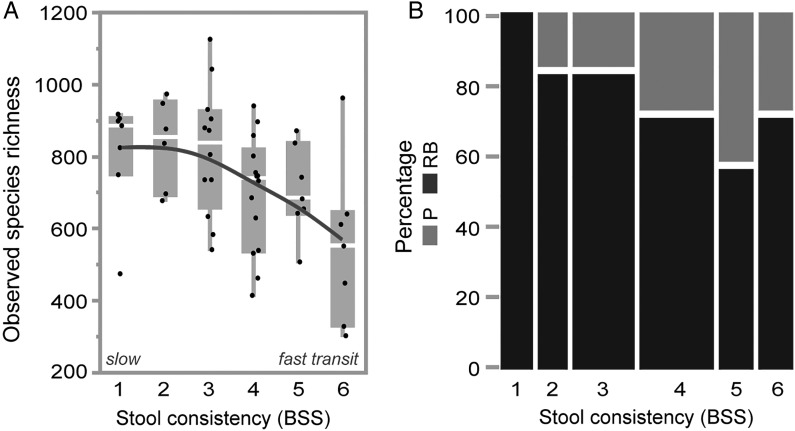
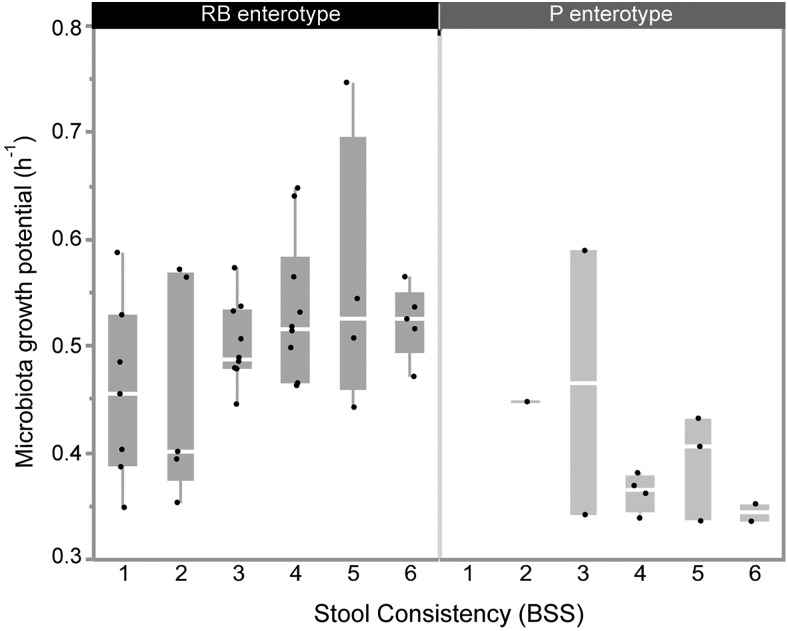
Objective: The assessment of potentially confounding factors affecting colon microbiota composition is essential to the identification of robust microbiome based disease markers. Here, we investigate the link between gut microbiota variation and stool consistency using Bristol Stool Scale classification, which reflects faecal water content and activity, and is considered a proxy for intestinal colon transit time. Design: Through 16S rDNA Illumina profiling of faecal samples of 53 healthy women, we evaluated associations between microbiome richness, Bacteroidetes:Firmicutes ratio, enterotypes, and genus abundance with self-reported, Bristol Stool Scale-based stool consistency. Each sample’s microbiota growth potential was calculated to test whether transit time acts as a selective force on gut bacterial growth rates. Results: Stool consistency strongly correlates with all known major microbiome markers. It is negatively correlated with species richness, positively associated to the Bacteroidetes:Firmicutes ratio, and linked to Akkermansia and Methanobrevibacter abundance. Enterotypes are distinctly distributed over the BSS-scores. Based on the correlations between microbiota growth potential and stool consistency scores within both enterotypes, we hypothesise that accelerated transit contributes to colon ecosystem differentiation. While shorter transit times can be linked to increased abundance of fast growing species in Ruminococcaceae- Bacteroides samples, hinting to a washout avoidance strategy of faster replication, this trend is absent in Prevotella -enterotyped individuals. Within this enterotype adherence to host tissue therefore appears to be a more likely bacterial strategy to cope with washout. Conclusions: The strength of the associations between stool consistency and species richness, enterotypes and community composition emphasises the crucial importance of stool consistency assessment in gut metagenome-wide association studies.
Overview
The claims and statistics of this paper haven’t been checked yet.
Free: it reads the open-access text and checks the first 5 claims that cite a source we can check. Create a free account to check every claim.
Integrity signals
Registry
Cites
Statistics
Figures
Verification
Claims the paper makes
The claims and statistics of this paper haven’t been checked yet.
Free: it reads the open-access text and checks the first 5 claims that cite a source we can check. Create a free account to check every claim.
Claims other papers make about this one
Each is checked against this paper’s own text: does it say what the citing paper says it does?
The cited source says what the claim attributes to it.
In the citing paper
“For instance, one study demonstrated that individuals with a loose stool had lower microbial richness and higher abundance of the Prevotella enterotype compared to those with harder stools, whose fecal samples were enriched with the Ruminococcaceae-Bacteroides enterotype [86].”
From A Clinical Outcome of the Anti-PD-1 Therapy of Melanoma in Polish Patients Is Mediated by Population-Specific Gut Microbiome Composition (2022) · cites this paper as [86]
In the citing paper
“Several studies have reported a positive relationship between prolonged colon transit times, with increased richness and diversity of the fecal microbiome in adults without prior history of GI disorders160,161.”
From The gut Microbiome in adult and pediatric functional gastrointestinal disorders (2019) · cites this paper as [161]
In the citing paper
“Moreover, it was also indicated that stool consistency and frequency were associated with gut microbiota richness and composition [86,87].”
From A Clinical Outcome of the Anti-PD-1 Therapy of Melanoma in Polish Patients Is Mediated by Population-Specific Gut Microbiome Composition (2022) · cites this paper as [86]
Self-check
Percentages, sums and reported differences re-computed from the paper’s own numbers.
The self-check needs the paper’s full text.
Citations
Cites
phyloseq: An R Package for Reproducible Interactive Analysis and Graphics of Microbiome Census Data
McMurdie, P. J., & Holmes, S. (2013) · PLoS ONE · doi:10.1371/journal.pone.0061217 · Cited by 21,322
A human gut microbial gene catalogue established by metagenomic sequencing
MetaHIT Consortium, Qin, J., Li, R., Raes, J., Arumugam, M., Burgdorf, K. S., Manichanh, C., Nielsen, T., Pons, N., Levenez, F., et al. (2010) · Nature · doi:10.1038/nature08821 · Cited by 11,624
Self-citationDiet rapidly and reproducibly alters the human gut microbiome
David, L. A., Maurice, C. F., Carmody, R. N., Gootenberg, D. B., Button, J. E., Wolfe, B. E., Ling, A. V., Devlin, A. S., Varma, Y., Fischbach, M. A., et al. (2014) · Nature · doi:10.1038/nature12820 · Cited by 10,100
Human gut microbiome viewed across age and geography
Yatsunenko, T., Rey, F. E., Manary, M. J., Trehan, I., Dominguez-Bello, M. G., Contreras, M., Magris, M., Hidalgo, G., Baldassano, R. N., Anokhin, A. P., et al. (2012) · Nature · doi:10.1038/nature11053 · Cited by 7,815
Enterotypes of the human gut microbiome
MetaHIT Consortium (additional members), Arumugam, M., Raes, J., Pelletier, E., Le Paslier, D., Yamada, T., Mende, D. R., Fernandes, G. R., Tap, J., Bruls, T., et al. (2011) · Nature · doi:10.1038/nature09944 · Cited by 7,548
Self-citationLinking long-term dietary patterns with gut microbial enterotypes
Wu, G. D., Chen, J., Hoffmann, C., Bittinger, K., Chen, Y.-Y., Keilbaugh, S. A., Bewtra, M., Knights, D., Walters, W. A., Knight, R., et al. (2011) · Science · doi:10.1126/science.1208344 · Cited by 6,513
De Filippo, C., Cavalieri, D., Di Paola, M., Ramazzotti, M., Poullet, J. B., Massart, S., Collini, S., Pieraccini, G., & Lionetti, P. (2010) · Proceedings of the National Academy of Sciences · doi:10.1073/pnas.1005963107 · Cited by 5,579
Diversity, stability and resilience of the human gut microbiota
Lozupone, C. A., Stombaugh, J. I., Gordon, J. I., Jansson, J. K., & Knight, R. (2012) · Nature · doi:10.1038/nature11550 · Cited by 5,533
Longstreth, G. F., Thompson, W. G., Chey, W. D., Houghton, L. A., Mearin, F., & Spiller, R. C. (2006) · Gastroenterology · doi:10.1053/j.gastro.2005.11.061 · Cited by 4,856
Richness of human gut microbiome correlates with metabolic markers
Le Chatelier, E., Nielsen, T., Qin, J., Prifti, E., Hildebrand, F., Falony, G., Almeida, M., Arumugam, M., Batto, J.-M., Kennedy, S., et al. (2013) · Nature · doi:10.1038/nature12506 · Cited by 4,662
Self-citation
Cited by
Items 801–900 of 1,000
Nagahara, H., Nagahara, M., Ohmi, N., Takahashi, Y., & Takara, T. (2020) · Functional Foods in Health and Disease · doi:10.31989/ffhd.v10i5.686 · Cited by 4
Wood, A., Glynn, T. K., & Cahalin, L. P. (2022) · Journal of Womenʼs Health Physical Therapy · doi:10.1097/jwh.0000000000000249 · Cited by 3
Management of Bowel Dysfunction in Patients with Central Nervous System Diseases
Bazzocchi, G., Balloni, M., Poletti, E., Manara, R., Mongardi, P., Vicchi, M., Fragalà, E., Demertzis, E., Manzan, A., & Bazo, H. A. C. (2019) · Urodynamics, neurourology and pelvic floor dysfunctions · doi:10.1007/978-3-030-29775-6_7 · Cited by 2
Na, E., & Lim, S. (2022) · Biocell · doi:10.32604/biocell.2022.019807 · Cited by 2
Blottière, H. M., & Dore, J. M. (2016) · Wiley eBooks · doi:10.1002/9781118982907.ch3 · Cited by 3
Bulygin, I., Shatov, V. M., Rykachevsky, A., Rayko, A., Bernstein, A., Burnaev, E. V., & Gelfand, M. S. (2021) · bioRxiv (Cold Spring Harbor Laboratory) · doi:10.1101/2021.11.04.467087 · Cited by 2
“Numerous studies claimed correlations between enterotypes and diet [40], [11], [55], [67], [49], [39], [54], [87], [85], inflammatory gut diseases [81], [10], [52], [22], [13], [31], [20], mental health [46], acne [21], stool composition [76], [78], colorectal cancer [74], circulatory diseases [38], [26], [23], psoria…”
BackgroundDéru, V., Bouquet, A., Zemb, O., Blanchet, B., Almeida, M. L. D., Cauquil, L., Carillier‐Jacquin, C., & Gilbert, H. (2021) · bioRxiv (Cold Spring Harbor Laboratory) · doi:10.1101/2021.11.15.468583 · Cited by 2
Wegh, C. A. M., Schoterman, M. H. C., Vaughan, E. E., Smidt, H., Belzer, C., & Benninga, M. A. (2022) · Research Square · doi:10.21203/rs.3.rs-1611041/v1 · Cited by 2
van den Belt, M., van de Put, M., Yüksel, E., Lee, D., van Eeden, F., van Straaten, J. P., Pintar, N., Balen, B., Anđelić, M., Rijnaarts, I., et al. (2025) · medRxiv · doi:10.1101/2025.08.05.25332853 · Cited by 7
Colorectal Diseases and Gut Microbiome
Kim, N. (2024) · Springer eBooks · doi:10.1007/978-981-97-0130-8_6 · Cited by 4
Otaru, N., Pugin, B., Plüss, S., Hojsak, I., Braegger, C., & Lacroix, C. (2024) · Microbiome Research Reports · doi:10.20517/mrr.2023.75 · Cited by 1
Graham, E., McKeen, S., Lewis, E. D., Evans, M., Li, Z., Henning, S. M., Jopson, N., Gu, J. L., & Rosendale, D. (2024) · Bioactive Carbohydrates and Dietary Fibre · doi:10.1016/j.bcdf.2024.100436 · Cited by 1
Association of constipation with the survival of patients with idiopathic interstitial pneumonias
Takuma, S., Mori, K., Karayama, M., Inoue, Y., Yasui, H., Hozumi, H., Suzuki, Y., Furuhashi, K., Fujisawa, T., Enomoto, N., et al. (2024) · Respiratory Investigation · doi:10.1016/j.resinv.2024.10.010 · Cited by 1
Understanding Bowel Habits and Stool Form Among Indian Adolescents: A Descriptive Study
Jha, S., Verma, S., & Bhatnagar, S. (2025) · Cureus · doi:10.7759/cureus.79299 · Cited by 1
Dietary convergence induces individual responses in faecal microbiome composition
Vermeulen, A., Bootsma, E., Proost, S., Vieira‐Silva, S., Kathagen, G., Vázquez-Castellanos, J. F., Tito, R. Y., Sabino, J., Vermeire, S., Matthys, C., et al. (2025) · eGastroenterology · doi:10.1136/egastro-2024-100161 · Cited by 5
“The offset resulting in maximum correlation of the rotation was selected for each individual, and the offset was used as an estimate of lag time.”
Self-citationConstipation: assessment and management
Nazarko, L. (2025) · British Journal of Healthcare Assistants · doi:10.12968/bjha.2025.19.6.131 · Cited by 1
Liu, W., Wang, J., Xue, Y., Li, J., Huang, Y., Zhu, S., Wang, L., Wang, G., Chen, W., & Zhao, J. (2025) · Beneficial Microbes · doi:10.1163/18762891-bja00085 · Cited by 2
Gut Microbiota Dynamics in Obesity and Metabolic Regulation
Farhood, A. H., & Shalal, S. H. (2025) · Academia Open · doi:10.21070/acopen.10.2025.12579 · Cited by 1
“Additionally, they metabolize xenobiotics, inhibit colonization by pathogenic microorganisms, preserve he health and stability of the intestinal epithelium, and contribute to the development of a well-functioning immune system [12].”
Aidarova, A., Carels, M., Haegman, M., Driege, Y., Timmermans, S., Damme, E. V., Aguilera‐Lizarraga, J., Viola, M. F., Collaço, R. D. C., Manils, J., et al. (2025) · EMBO Molecular Medicine · doi:10.1038/s44321-025-00321-4 · Cited by 1
“Differences in stool and mucosal microbiota composition have also been observed between healthy people and patients with chronic constipation (Parthasarathy et al, 2016; Vandeputte et al, 2016).”
Osredkar, J., Fabjan, T., Kumer, K., Vrhovšek, M. J., Giebułtowicz, J., Bobrowska‐Korczak, B., Avguštin, G., & Godnov, U. (2025) · International Journal of Molecular Sciences · doi:10.3390/ijms262110475 · Cited by 2
Chantakhow, S., Kunasol, C., Khorana, J., Tepmalai, K., Chattipakorn, N., & Chattipakorn, S. C. (2026) · Korean Journal of Pediatrics · doi:10.3345/cep.2025.01886 · Cited by 1
“…While some animal models have reported increased microbial richness in obstructed segments due to delayed transit time and luminal stasis, 10,20) our cohort showed compositional separation even against sympto - matic children with HSCR-like constipation, supporting a disease-specific…”
Song, Z., Kim, M., Lee, J., Kwon, T. H., Kim, J., Kim, J. Y., Kim, S.-G., Kim, S., Jun, B., Lee, S. H., et al. (2026) · Nature Protocols · doi:10.1038/s41596-025-01296-9 · Cited by 1
Hu, B., Chen, Y., Gong, X., Chen, Y., Luo, S., & Zhang, X. (2026) · The Journal of Nutritional Biochemistry · doi:10.1016/j.jnutbio.2026.110272 · Cited by 1
Shintani, T., Sakiyama, S., Ami, Y., Shintani, H., & Kurihara, S. (2026) · Journal of Applied Glycoscience · doi:10.5458/jag.7301101 · Cited by 1
“This could be attrib - uted to the effects of GlcN on improving”
Towards standardization in pig microbiome research based on a comprehensive twenty-year review
Enokela, S. O., Yergaliyev, T., Flisikowski, K., Hornburg, S. C., Reyer, H., Tetens, J., Wimmers, K., Zentek, J., & Camarinha-Silva, A. (2026) · Animal Microbiome · doi:10.1186/s42523-026-00541-0 · Cited by 2
“For instance, the physical consistency of fecal samples, such as diarrheic versus formed stools, has been shown to significantly impact microbiota richness and composition [49], emphasizing the need for careful documentation and standardization of sample consistency in gut microbiota studies.”
Wang, Y., Jian, C., Maina, N. H., Salonen, A., & de Vos, W. M. (2026) · Advances in food and nutrition research · doi:10.1016/bs.afnr.2026.03.008 · Cited by 1
Sordillo, A., Heldrich, J., Turcotte, R., & Sheth, R. U. (2026) · Pets · doi:10.3390/pets3020019 · Cited by 1
Intestinal transit time phenotype is not transferred through gut microbiota transplantation
Hjørne, A. P., Moretti, C. H., Greiner, T. U., Procházková, N., Roager, H. M., Mortensen, M. S., Bäckhed, F., Licht, T. R., & Laursen, M. F. (2026) · PeerJ · doi:10.7717/peerj.21064 · Cited by 1
“…transit time (TT), which varies from around 12 h to more than 72 h in healthy individuals ( Procházková et al., 2024 ), contributes to gut microbiome variation in humans ( Vandeputte et al., 2016 ; Falony et al., 2016 ; Müller et al., 2019 ; Asnicar et al., 2021 ; Procházková et al., 2024 ).”
InfluentialRuple, H. K., Schintgen, L., Haasis, E., Bubeck, A. M., Schlaudt, S., Ewertz, A., Dobeleit, C.-S., Soltow, Y., Lorentz, A., & Fricke, W. F. (2026) · Cell Reports · doi:10.1016/j.celrep.2026.117624 · Cited by 2
Intestinal microbiota and stress: how much do we know so far
Hyder, N., & Raza, M. L. (2026) · Critical Reviews in Microbiology · doi:10.1080/1040841x.2026.2706149 · Cited by 1
Tracing the Evolutionary Origin of the Gut–Brain Axis
Bosch, T. C. G. (2018) · Springer eBooks · doi:10.1007/978-3-319-95954-2_4 · Cited by 1
Neurodevelopment, Intestinal Function, and Autism
Yu, E. C.-L. (2018) · Neonatal and Pediatric Medicine · doi:10.4172/2572-4983.1000166 · Cited by 1
“Transit time is a key determinant and stool consistency strongly associated with gut microbiota richness and composition [70].”
BackgroundThe gut microbiota and obesity
Blottière, H. M. (2017) · Europe PMC (PubMed Central) · Cited by 3
ASSESSMENT OF THE INTESTINAL MICROBIOTA IN ADULTS WITH EROSIVE ESOPHAGITIS
Baima, D. C., Carvalho, N. S., Barbuti, R. C., & Navarro-Rodríguez, T. (2021) · Arquivos de Gastroenterologia · doi:10.1590/s0004-2803.202100000-29 · Cited by 3
Mabwi, H. A., Komba, E. V. G., Mwaikono, K. S., Hitayezu, E., Mauliasari, I. R., Jin, J. B., Pan, C., & Hyun, K. (2022) · Journal of Applied Biological Chemistry · doi:10.3839/jabc.2022.009 · Cited by 2
West, M. L., HART, S. G. E., Loughman, A., Jacka, F. N., Staudacher, H. M., Abbaspour, A., Phillipou, A., Ruusunen, A. A., & Rocks, T. (2023) · International Journal of Eating Disorders · doi:10.1002/eat.24033 · Cited by 1
Procedures for sampling of small and larger samples of microbiome
Adetunji, J. B., Michael, O. S., Adetunji, C. O., Ajayi, O. O., & Ogundolie, F. A. (2024) · Elsevier eBooks · doi:10.1016/b978-0-323-91190-0.00003-5 · Cited by 1
Wu, F., Yang, Z., & Ren, X. (2025) · Diabetes Metabolic Syndrome and Obesity · doi:10.2147/dmso.s571753 · Cited by 1
Guntiyastutik, E., Sugiarto, S., & Nuhrawangsa, A. M. P. (2020) · Indonesian Journal of Human Nutrition · doi:10.21776/ub.ijhn.2020.007.01.1 · Cited by 1
Akkermansia mucinifila and the part that it plays in metabolic disturbance
Fadieienko, G. D., & Gridnyev, O. (2020) · Ukrainian Therapeutical Journal · doi:10.30978/utj2020-4-55 · Cited by 2
Diet, Microbiome, Inflammation, and Cancer
Zhang, X., & Daniel, C. R. (2021) · Physiology in health and disease · doi:10.1007/978-3-030-67951-4_11 · Cited by 1
Medication and Health Risks Associated With Neglected Side Effects on Gut Microbiota
Velikova, T. V., Nakov, R., & Ianiro, G. (2021) · Elsevier eBooks · doi:10.1016/b978-0-12-819265-8.00074-7 · Cited by 1
Genetic control of methane emission, feed efficiency and metagenomics in dairy cattle
Difford, G. F. (2018) · doi:10.18174/458036 · Cited by 2
“Subsequent work using stool consistency and opaque markers as proxies for colonic transit time found all three metrics and disease phenotypes are partially confounded with colonic transit time (Roager et al., 5 Host and rumen microbiome 153 2016; Vandeputte et al., 2016).”
BackgroundLooijesteijn, E., Brouwer, R. W. W., Schoemaker, R., Ulfman, L. H., Ham, S. L., Jeurink, P. V., Karaglani, E., van IJcken, W. F. J., & Μanios, Y. (2022) · Research Square · doi:10.21203/rs.3.rs-1280415/v1 · Cited by 1
Turjeman, S. C., Pekarsky, S., Corl, A. B., Kamath, P. L., Getz, W. M., Bowie, R. C. K., Markin, Y. M., & Nathan, R. (2022) · bioRxiv (Cold Spring Harbor Laboratory) · doi:10.1101/2022.02.17.480865 · Cited by 1
“Similarly, sedated birds may defecate less frequently, and time in the digestive tract is known to affect microbiota composition (Vandeputte et al., 2016).”
BackgroundWang, D., Zhu, W., Pan, Y., Wang, T., Jiang, Y., Liang, L., Fan, S., Yan, H., Costa, C. D., Zhang, X., et al. (2022) · Research Square · doi:10.21203/rs.3.rs-1505710/v1 · Cited by 1
Park, J., Kato, K., Murakami, H., Hosomi, K., Tanisawa, K., Nakagata, T., Ohno, H., Konishi, K., Kawashima, H., Chen, Y., et al. (2020) · Research Square · doi:10.21203/rs.3.rs-103500/v1 · Cited by 1
Organoid based models to study the role of gut microbiota metabolites in post-weaning diarrhea
van der Hee, B. (2023) · doi:10.18174/630692 · Cited by 1
Okada, M., Pehlivan, M., Miskovic‐Wheatley, J., Barakat, S., Griffiths, K. R., Touyz, S. W., Simpson, S. J., Maguire, S., & Holmes, A. J. (2023) · Research Square · doi:10.21203/rs.3.rs-3127132/v1 · Cited by 1
Morwani‐Mangnani, J., Ducarmon, Q. R., Zeller, G., Deelen, J., Beekman, M., & Slagboom, P. E. (2024) · medRxiv · doi:10.1101/2024.11.05.24316744 · Cited by 1
“Similarly, healthier stool consistency, reflecting optimal gut transit time and microbial activity, correlates with a more balanced and diverse microbiome (18).”
BackgroundBowman, J. P. (2024) · bioRxiv (Cold Spring Harbor Laboratory) · doi:10.1101/2024.11.23.625002 · Cited by 1
The Role of Short Chain Fatty Acids in Obesity
Rahat-Rozenbloom, S. (2016) · TSpace (University of Toronto)
Microbiota profiling in gastrointestinal health and disease
Tedjo (2018) · Research Publications (Maastricht University) · doi:10.26481/dis.20180301dt
Kaczmarek, J. L. (2018) · Illinois Digital Environment for Access to Learning and Scholarship (University of Illinois at Urbana-Champaign)
The development of early life gut microbiota in health and allergic disease
Wopereis, H. (2019) · doi:10.18174/468890
“mounting evidence that modifications in the pattern of microbial exposure early in life represents a critical factor underlying the development of an allergic phenotype (54-57), such as the protective effects observed for exposure to siblings or a farming environment (58, 59).”
BackgroundResultStuhlkonsistenz erlaubt Rückschlüsse auf die Darmflora
Pampel, S. L. (2019) · Info Diabetologie · doi:10.1007/s15034-019-1520-8
The Wonderful World of Poo: The Turdome and Beyond
Nice, E. C. (2019) · Australian Journal of Chemistry · doi:10.1071/ch19225 · Cited by 1
Watanabe, S., Kameoka, S., Shinozaki, N. O., Kubo, R., Nishida, A., Kuriyama, M., & Takeda, A. K. (2020) · bioRxiv (Cold Spring Harbor Laboratory) · doi:10.1101/2020.02.25.965459
“[29], we found a significant association between the bowel habits (stool shape and defecation frequency) and gut microbiota diversity.”
BackgroundWho Inhabits Our Gut? Introducing the Human Gut Microbiota
Flint, H. J. (2020) · Fascinating life sciences · doi:10.1007/978-3-030-43246-1_5
[Progresses on the effects and mechanisms of stress on gut microbiota].
Song, L., Zhang, J., & Duan, L.-P. (2020) · PubMed · Cited by 2
Predominance of Extreme Environmental Conditions at High Altitude in Modulating Human Gut MicrobiotaPreprint
Bhushan, B., Eslavath, M. R., Yadav, A. P., Srivastava, A. K., Reddy, M. P., Norboo, T., Kumar, B., Ganju, L., & Singh, S. (2020) · doi:10.22541/au.159646791.16636826
Intestinal microbiota and broiler health: hype or hope?
Kers, A. (2020) · Utrecht University Repository (Utrecht University) · doi:10.33540/295 · Cited by 1
Bidirectional interactions of gut microbiome and medicinal products
Ткач, С. М. (2020) · Modern Gastroenterology · doi:10.30978/mg-2020-5-79 · Cited by 2
Wang, L., Liu, L., Liu, X., Xiang, M., Zhou, L., Huang, C., Shen, Z., & Miao, L. (2020) · Research Square · doi:10.21203/rs.3.rs-16493/v1
Satora, M., Rząsa, A., Rypuła, K., & Płoneczka‐Janeczko, K. (2020) · Postępy Higieny i Medycyny Doświadczalnej · doi:10.5604/01.3001.0014.6538
Elie, C., Perret, M., Louis, K., Fritah, A., Leissner, P., Vachon, C., Rostaing, H., Reynier, F., Gervasi, G., & Saliou, A. (2020) · Research Square · doi:10.21203/rs.3.rs-52279/v1 · Cited by 2
Watanabe, D., Murakami, H., Ohno, H., Tanisawa, K., Konishi, K., Todoroki-Mori, K., Tsunematsu, Y., Sato, M., Ogata, Y., Miyoshi, N., et al. (2020) · doi:10.21203/rs.3.rs-106339/v1
The Biochemical Linkage between Gut Microbiota and Obesity: a Mini Review
Al-Horani, R., & AbuMoh’d, M. F. (2020) · Human Physiology · doi:10.1134/s036211972006002x
Holtmann, G., Shah, A., & Morrison, M. (2021) · Journal of Investigative Medicine · doi:10.1136/jim-2021-001903
Multi-omics Analysis of Redox Imbalance-Related Mild Health Problems in MonkeysPreprint
Hamano, F., Tokuoka, S. M., Ishibashi, M., Yokoi, Y., Tourlousse, D. M., Kita, Y., Sekiguchi, Y., Yasui, H., Shimizu, T., & Oda, Y. (2021) · Research Square · doi:10.21203/rs.3.rs-453434/v1
Roice, T. (2021) · ScholarWorks (Central Washington University)
Associação entre microbioma intestinal e ocorrência de delirium em idosos agudamente enfermos
Carvalho, F. B. G. (2021) · Digital Library of Theses and Dissertations (Universidade de São Paulo) · doi:10.11606/t.5.2021.tde-09082021-085157
Gubert, C., Love, C. J., Kodikara, S., Liew, J. J. M., Renoir, T., Cao, K. L., & Hannan, A. J. (2021) · SSRN Electronic Journal · doi:10.2139/ssrn.3904352
“There were no changes in fecal water content, which has been associated with microbiota composition (Vandeputte et al., 2016), despite increased water intake in HDmice.”
BackgroundIntestinal microbiota assembly and dynamics in health and disease
Galazzo, G. (2021) · Research Publications (Maastricht University) · doi:10.26481/dis.20211105gg
Baima, D. C. (2020) · Digital Library of Theses and Dissertations (Universidade de São Paulo) · doi:10.11606/t.5.2020.tde-01072021-115140
Zafeiropoulou, K., Peters, E. G., Brinkman, D. J., Yim, A. Y. F. L., Smeets, B. J. J., Hakvoort, T. B. M., Levin, E., Davids, M., Luyer, M. D. P., de Jonge, W. J., et al. (2021) · medRxiv · doi:10.1101/2021.10.25.21265372
Moraes, B. D. G. D. C. (2021) · Digital Library of Theses and Dissertations (Universidade de São Paulo) · doi:10.11606/d.5.2021.tde-06122021-103022
Zaccaria, E., Klaassen, T., Alleleyn, A. M. E., Boekhorst, J., Smokvina, T., Kleerebezem, M., & Troost, F. J. (2021) · Research Square · doi:10.21203/rs.3.rs-1196536/v1
Social relationships: key to gut microbiome composition in wild redfronted lemurs?
Corrales, S. T. M. (2022) · eDiss (Georg-August-Universität Göttingen) · doi:10.53846/goediss-7766
Collecting samples for metagenomics
Jia, H. (2022) · Elsevier eBooks · doi:10.1016/b978-0-323-91369-0.00001-7
We may be Lost, but We're Making Good Time
Tannock, G. W. (2016) · Wiley eBooks · doi:10.1002/9781118801413.ch10
Wagner, A. (2018) · gynäkologie + geburtshilfe · doi:10.1007/s15013-018-1551-6
Satsangi, J. (2020) · Faculty Opinions – Post-Publication Peer Review of the Biomedical Literature · doi:10.3410/f.732845043.793569708
The nature of gut microbiota in early life: origin and impact of pioneer species
van Best, N. (2021) · Research Publications (Maastricht University) · doi:10.26481/dis.20210430nb
Gastrointestinal Motility; General Principles
Shahnavaz, N., Wiltjer, C. A., Hang, T.-V. P., & Srinivasan, S. (2019) · Elsevier eBooks · doi:10.1016/b978-0-12-801238-3.65884-1
Modelowe badania mikrobiomu świń według koncepcji wspólnego zdrowia „One Health” ludzi i zwierząt
Satora, M., Rząsa, A., Rypuła, K., & Płoneczka‐Janeczko, K. (2021) · Postępy Higieny i Medycyny Doświadczalnej · doi:10.5604/01.3001.0014.8758
Knudsen, J. K. (2021) · VBN Forskningsportal (Aalborg Universitet) · doi:10.54337/aau455013245
Effekt des Mikrobioms auf Statinwirkung und -nebenwirkung
Chakaroun, R. (2022) · Die Diabetologie · doi:10.1007/s11428-022-00951-z
Bundgaard‐Nielsen, C. (2021) · VBN Forskningsportal (Aalborg Universitet) · doi:10.54337/aau466210133
Pot, B., & Wolters, M. (2022) · Wageningen Academic Publishers eBooks · doi:10.3920/978-90-8686-933-6_11 · Cited by 1
Alsholi, D. M., SuleimanYacoub, G., Rehman, A. U., Khan, A. I., Deng, T., Alioui, Y., Elkharti, M., Xin, Y., & Wang, L. (2022) · Research Square · doi:10.21203/rs.3.rs-2310317/v1
The gut microbiome in health and disease: Inflammatory bowel diseases
El-Sahhar, S., & Varga‐Weisz, P. (2022) · Advances in ecological research/Advances in Ecological Research · doi:10.1016/bs.aecr.2022.09.005 · Cited by 1
Metabolome analysis for host–microbiota interactions
Ghosh, S., Lahiri, D., Nag, M., & Ray, R. R. (2023) · Elsevier eBooks · doi:10.1016/b978-0-323-95715-1.00009-1
Santiago-Jerez, I., Alvarado-Villamizar, N. P., Mora, Z. O.-C. C. J., Arraiz-Budovalchew, I., & Zerpa, S. (2023) · Investigación y Desarrollo en Ciencia y Tecnología de Alimentos · doi:10.29105/idcyta.v8i1.112
da Rocha, I. M. G. (2023) · Digital Library of Theses and Dissertations (Universidade de São Paulo) · doi:10.11606/t.5.2023.tde-23082023-154649 · Cited by 1
Iriki, H., Terashi, M., Minari, Y., & Tokui, N. (2023) · The Japanese Journal of Nutrition and Dietetics · doi:10.5264/eiyogakuzashi.81.260
Defecation During Hospitalization for Acute Coronary Syndrome and Future Cardiovascular EventsPreprint
Matsuzawa, Y., Tsujita, K., Gohbara, M., Ishii, M., Nakamura, T., Kondo, H., Yoshii, T., Sekii, R., Kirigaya, J., Terasaka, K., et al. (2023) · medRxiv · doi:10.1101/2023.12.07.23299700
Gong, Z., Li, T., Du, Y., Yan, H., Xu, M., Lian, Y., Wei, W., & Liu, T. (2023) · Research Square · doi:10.21203/rs.3.rs-3730536/v1 · Cited by 1
Metadata
- Authors
- Vandeputte, D., Falony, G., Vieira-Silva, S., Tito, R. Y., Joossens, M., & Raes, J.
- Affiliations
- Vrije Universiteit Brussel (BE)
- KU Leuven (BE)
- Department of Microbiology and Immunology, KU Leuven, Rega Institute, Leuven, Belgium
- Corresponding author
- Raes, Jeroen
- Venue
- Gut
- Publisher
- BMJ
- Published
- 2015-06-11
- Volume
- 65
- Issue
- 1
- Pages
- 57-62
- ISSN
- 0017-5749 (ISSN-L)
- 1468-3288
- PMC
- PMC4717365
- OpenAlex
- W2178459747
- Cited by
- 1,028
- References
- 49
- Citations by year
- 2026: 80 · 2025: 83 · 2024: 116 · 2023: 105 · 2022: 120 · 2021: 134 · 2020: 112 · 2019: 94 · 2018: 76 · 2017: 60 · 2016: 42 · 2015: 6
- FWCI
- 26.62
- Type
- journal article
- Language
- en
- Open access
- hybrid
- doi.org
- Licence
- cc-by-nc
- Locations
- Gut (publishedVersion, cc-by-nc)
- PubMed Central (publishedVersion, cc-by-nc)
- PubMed (publishedVersion)
- Socio-Environmental Systems Modeling (acceptedVersion, cc-by-nc)
- Lirias (submittedVersion, cc-by-nc)
- Ghent University Academic Bibliography (Ghent University) (submittedVersion)
- Digital Access to Libraries (submittedVersion)
- VUBIR (Vrije Universiteit Brussel) (submittedVersion)
- Funders
- European Commission (305312, 267139)
- Fonds Wetenschappelijk Onderzoek
- KU Leuven
- Vlaamse regering (IWT130359)
- FP7 People: Marie-Curie Actions
- Topics
- Life Sciences › Biochemistry, Genetics and Molecular Biology › Molecular Biology › Gut microbiota and health
- Health Sciences › Medicine › Gastroenterology › Gastrointestinal motility and disorders
- Physical Sciences › Environmental Science › Ecology › Microbial Community Ecology and Physiology
- Keywords
- stool consistency, Bristol stool scale, gut microbiota, enterotypes, microbial richness, Firmicutes/Bacteroidetes ratio, Akkermansia, Methanobrevibacter, Ruminococcaceae, Bacteroides, Prevotella, bacterial growth rate, colonic transit time, fecal water content, women
- MeSH terms
- Gastrointestinal Microbiome, Adult, Feces, Female, Gastrointestinal Transit, Humans, Middle Aged, Self Report, Healthy Volunteers
About these checks
Registry, retraction, Cites and statistics results are computed, not judged, with one exception: a printed reference that no index lists is read once by a model before it counts as a citation error. Claims are extracted by a model and kept only when their quote appears verbatim in the text; each cited source is then checked, with a model’s help, for whether it says what the claim relies on. Those verdicts can be wrong — read the claim’s quote and the cited source before relying on one.
Statistics and arithmetic are recomputed, not judged.
Confidence bands are shown only for fields calibrated on our annotated test set. None is calibrated yet, so no band is shown.
What counts as a claim ›How we measure confidence ›How we check this ›
Are you an author, or do you see a problem with this page? Request a review
Data sources
Bibliographic data: Semantic Scholar, OpenAlex, Crossref.
Contains information from the Semantic Scholar Academic Graph Datasets, made available under the ODC Attribution License (ODC-BY 1.0).
Semantic Scholar’s data is described in: Kinney, R., et al. (2023). The Semantic Scholar Open Data Platform. arXiv:2301.10140.
