

Effects of TPH2 gene variation and childhood trauma on the clinical and circuit-level phenotype of functional movement disorders
Open accessThe DOI matches its Crossref record; 47 of the 48 references it cites were found in a registry or an index.
Abstract
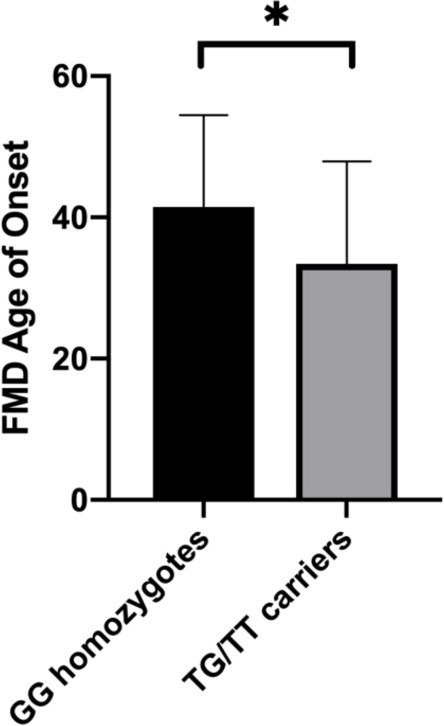
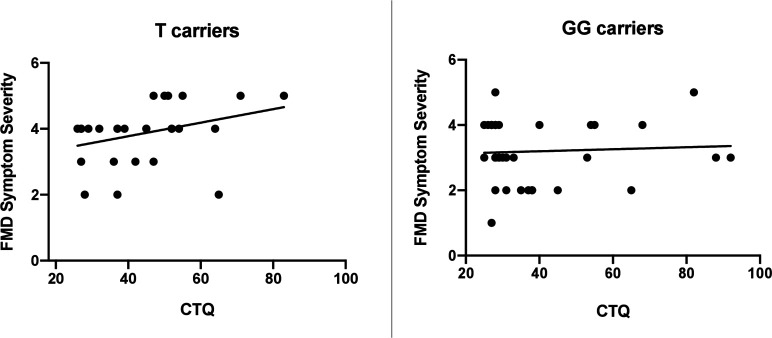
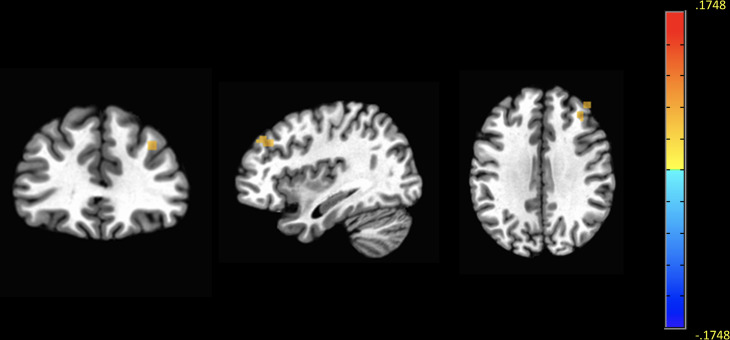
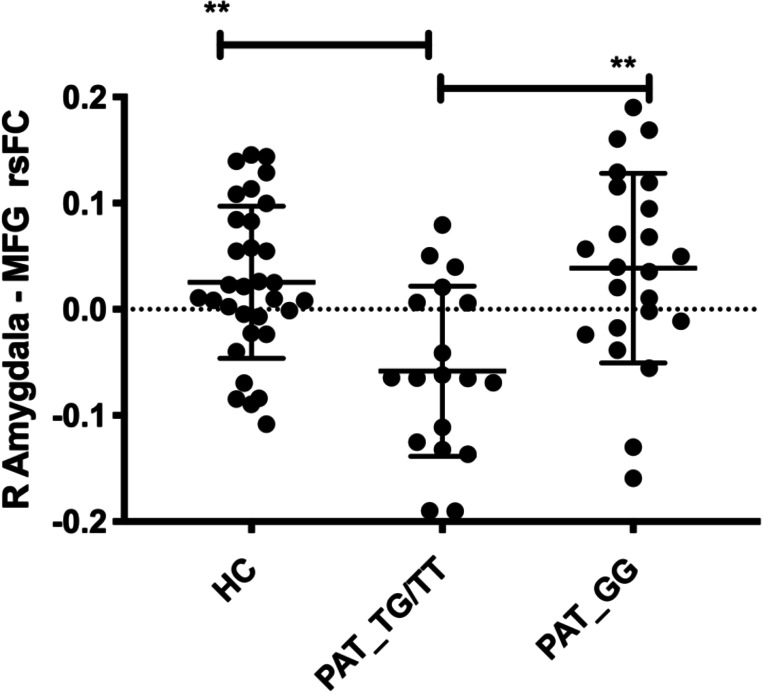
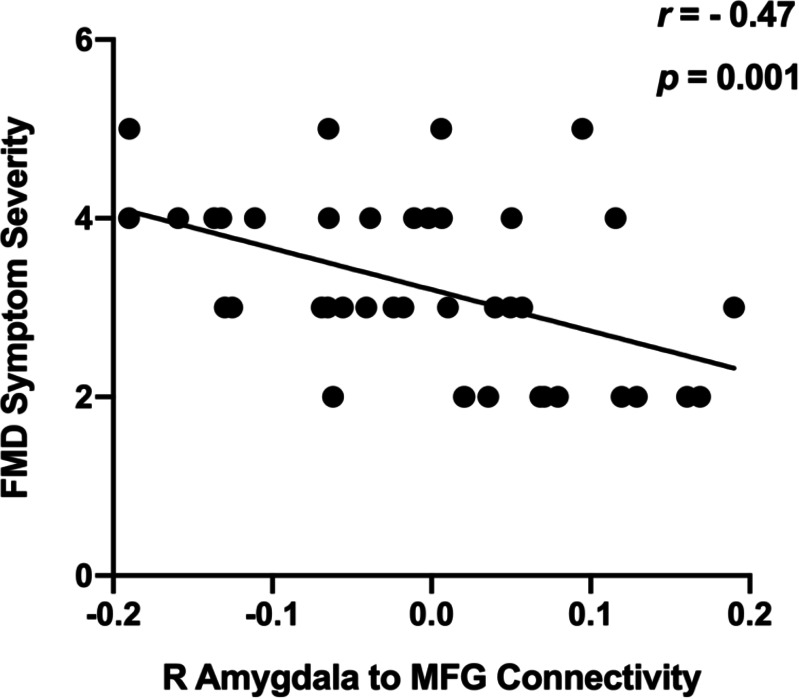
Background: Functional movement disorders (FMDs), part of the wide spectrum of functional neurological disorders (conversion disorders), are common and often associated with a poor prognosis. Nevertheless, little is known about their neurobiological underpinnings, particularly with regard to the contribution of genetic factors. Because FMD and stress-related disorders share a common core of biobehavioural manifestations, we investigated whether variants in stress-related genes also contributed, directly and interactively with childhood trauma, to the clinical and circuit-level phenotypes of FMD. Methods: Sixty-nine patients with a ‘clinically defined’ diagnosis of FMD were genotyped for 18 single-nucleotide polymorphisms (SNPs) from 14 candidate genes. FMD clinical characteristics, psychiatric comorbidity and symptomatology, and childhood trauma exposure were assessed. Resting-state functional connectivity data were obtained in a subgroup of 38 patients with FMD and 38 age-matched and sex-matched healthy controls. Amygdala–frontal connectivity was analysed using a whole-brain seed-based approach. Results: Among the SNPs analysed, a tryptophan hydroxylase 2 (TPH2) gene polymorphism—G703T—significantly predicted clinical and neurocircuitry manifestations of FMD. Relative to GG homozygotes, T carriers were characterised by earlier FMD age of onset and decreased connectivity between the right amygdala and the middle frontal gyrus. Furthermore, the TPH2 genotype showed a significant interaction with childhood trauma in predicting worse symptom severity. Conclusions: This is, to our knowledge, the first study showing that the TPH2 genotype may modulate FMD both directly and interactively with childhood trauma. Because both this polymorphism and early-life stress alter serotonin levels, our findings support a potential molecular mechanism modulating FMD phenotype.
Overview
The claims and statistics of this paper haven’t been checked yet.
Free: it reads the open-access text and checks the first 5 claims that cite a source we can check. Create a free account to check every claim.
Integrity signals
Registry
Cites
Statistics
Figures
Verification
Claims the paper makes
The claims and statistics of this paper haven’t been checked yet.
Free: it reads the open-access text and checks the first 5 claims that cite a source we can check. Create a free account to check every claim.
Self-check
Percentages, sums and reported differences re-computed from the paper’s own numbers.
The self-check needs the paper’s full text.
Citations
Cites
Hamilton, M. (1960) · Journal of Neurology, Neurosurgery & Psychiatry · doi:10.1136/jnnp.23.1.56 · Cited by 32,817
The assessment of anxiety states by rating
HAMILTON, M. (1959) · British Journal of Medical Psychology · doi:10.1111/j.2044-8341.1959.tb00467.x · Cited by 11,455
AFNI: Software for analysis and visualization of functional magnetic resonance neuroimages
Cox, R. W. (1996) · Computers and Biomedical Research · doi:10.1006/cbmr.1996.0014 · Cited by 10,913
Initial reliability and validity of a new retrospective measure of child abuse and neglect
(1994) · American Journal of Psychiatry · doi:10.1176/ajp.151.8.1132 · Cited by 3,577
Cognitive Reappraisal of Emotion: A Meta-Analysis of Human Neuroimaging Studies
Buhle, J. T., Silvers, J. A., Wager, T. D., Lopez, R., Onyemekwu, C., Kober, H., Weber, J., & Ochsner, K. N. (2014) · Cerebral Cortex · doi:10.1093/cercor/bht154 · Cited by 1,896
Structured Clinical Interview for DSM-III-R Personality Disorders
First, M. B., Spitzer, R. L., Gibbon, M., & Williams, J. B. W. (2012) · PsycTESTS Dataset · doi:10.1037/t07827-000 · Cited by 1,403
Amygdala–frontal connectivity during emotion regulation
Banks, S. J., Eddy, K. T., Angstadt, M., Nathan, P. J., & Phan, K. L. (2007) · Social Cognitive and Affective Neuroscience · doi:10.1093/scan/nsm029 · Cited by 1,187
Role of 5-HT in stress, anxiety, and depression
Graeff, F. G., Guimarães, F. S., De Andrade, T. G. C. S., & Deakin, J. F. W. (1996) · Pharmacology Biochemistry and Behavior · doi:10.1016/0091-3057(95)02135-3 · Cited by 984
Who is referred to neurology clinics?—The diagnoses made in 3781 new patients
Stone, J., Carson, A., Duncan, R., Roberts, R., Warlow, C., Hibberd, C., Coleman, R., Cull, R., Murray, G., Pelosi, A., et al. (2010) · Clinical Neurology and Neurosurgery · doi:10.1016/j.clineuro.2010.05.011 · Cited by 536
The Genetics of Stress-Related Disorders: PTSD, Depression, and Anxiety Disorders
Smoller, J. W. (2016) · Neuropsychopharmacology · doi:10.1038/npp.2015.266 · Cited by 480
Bernard, R., Kerman, I. A., Thompson, R. C., Jones, E. G., Bunney, W. E., Barchas, J. D., Schatzberg, A. F., Myers, R. M., Akil, H., & Watson, S. J. (2011) · Molecular Psychiatry · doi:10.1038/mp.2010.44 · Cited by 372
Emotional stimuli and motor conversion disorder
Voon, V., Brezing, C., Gallea, C., Ameli, R., Roelofs, K., LaFrance, W. C., & Hallett, M. (2010) · Brain · doi:10.1093/brain/awq054 · Cited by 353
Self-citationGenetic variation in cortico-amygdala serotonin function and risk for stress-related disease
Holmes, A. (2008) · Neuroscience & Biobehavioral Reviews · doi:10.1016/j.neubiorev.2008.03.006 · Cited by 264
Phenomenology and psychopathology related to psychogenic movement disorders.
Williams, D. T., Ford, B., & Fahn, S. (1995) · PubMed · Cited by 249
Addictions Biology: Haplotype-Based Analysis for 130 Candidate Genes on a Single Array
Hodgkinson, C. A., Yuan, Q., Xu, K., Shen, P.-H., Heinz, E., Lobos, E. A., Binder, E. B., Cubells, J., Ehlers, C. L., Gelernter, J., et al. (2008) · Alcohol and Alcoholism · doi:10.1093/alcalc/agn032 · Cited by 236
Self-citationImpaired self-agency in functional movement disorders: A resting-state fMRI study
Maurer, C. W., LaFaver, K., Ameli, R., Epstein, S. A., Hallett, M., & Horovitz, S. G. (2016) · Neurology · doi:10.1212/wnl.0000000000002940 · Cited by 227
Self-citationRobust and tissue-specific expression of TPH2 versus TPH1 in rat raphe and pineal gland
Patel, P. D., Pontrello, C., & Burke, S. (2004) · Biological Psychiatry · doi:10.1016/j.biopsych.2003.09.002 · Cited by 217
Pagliaccio, D., Luby, J. L., Bogdan, R., Agrawal, A., Gaffrey, M. S., Belden, A. C., Botteron, K. N., Harms, M. P., & Barch, D. M. (2014) · Neuropsychopharmacology · doi:10.1038/npp.2013.327 · Cited by 205
Endocannabinoid system, stress and HPA axis
Micale, V., & Drago, F. (2018) · European Journal of Pharmacology · doi:10.1016/j.ejphar.2018.07.039 · Cited by 189
Emotion-motion interactions in conversion disorder: An FMRI study
Aybek, S., Nicholson, T. R., O’Daly, O., Zelaya, F., Kanaan, R. A., & David, A. S. (2015) · PLOS ONE · doi:10.1371/journal.pone.0123273 · Cited by 183
Jabbi, M., Korf, J., Kema, I. P., Hartman, C., van der Pompe, G., Minderaa, R. B., Ormel, J., & den Boer, J. A. (2007) · Molecular Psychiatry · doi:10.1038/sj.mp.4001975 · Cited by 175
(2007) · The International Journal of Neuropsychopharmacology · doi:10.1017/s1461145706007437 · Cited by 174
Outcome measurement in functional neurological disorder: a systematic review and recommendations
Pick, S., Anderson, D. G., Asadi-Pooya, A. A., Aybek, S., Baslet, G., Bloem, B. R., Bradley-Westguard, A., Brown, R. J., Carson, A. J., Chalder, T., et al. (2020) · Journal of Neurology, Neurosurgery & Psychiatry · doi:10.1136/jnnp-2019-322180 · Cited by 171
Self-citationScheuch, K., Lautenschlager, M. M., Grohmann, M., Stahlberg, S., Kirchheiner, J., Zill, P., Heinz, A., Walther, D. J., & Priller, J. (2007) · Biological Psychiatry · doi:10.1016/j.biopsych.2007.01.015 · Cited by 151
Stress and functional neurological disorders: mechanistic insights
Keynejad, R. C., Frodl, T., Kanaan, R., Pariante, C., Reuber, M., & Nicholson, T. R. (2019) · Journal of Neurology, Neurosurgery & Psychiatry · doi:10.1136/jnnp-2018-318297 · Cited by 151
Resting-state functional connectivity in adults with childhood emotional maltreatment
van der Werff, S. J. A., Pannekoek, J. N., Veer, I. M., van Tol, M.-J., Aleman, A., Veltman, D. J., Zitman, F. G., Rombouts, S. A. R. B., Elzinga, B. M., & van der Wee, N. J. A. (2013) · Psychological Medicine · doi:10.1017/s0033291712002942 · Cited by 147
Barch, D., Pagliaccio, D., Belden, A., Harms, M. P., Gaffrey, M., Sylvester, C. M., Tillman, R., & Luby, J. (2016) · American Journal of Psychiatry · doi:10.1176/appi.ajp.2015.15081014 · Cited by 139
Lin, Y.-M. J., Chao, S.-C., Chen, T.-M., Lai, T.-J., Chen, J.-S., & Sun, H. S. (2007) · Archives of General Psychiatry · doi:10.1001/archpsyc.64.9.1015 · Cited by 121
Rating scale for psychogenic movement disorders: Scale development and clinimetric testing
Hinson, V. K., Cubo, E., Comella, C. L., Goetz, C. G., & Leurgans, S. (2005) · Movement Disorders · doi:10.1002/mds.20650 · Cited by 104
Spagnolo, P. A., Ramchandani, V. A., Schwandt, M. L., Kwako, L. E., George, D. T., Mayo, L. M., Hillard, C. J., & Heilig, M. (2016) · Alcoholism: Clinical and Experimental Research · doi:10.1111/acer.13210 · Cited by 104
Self-citationChen, G., & Miller, G. M. (2012) · American Journal of Medical Genetics Part B: Neuropsychiatric Genetics · doi:10.1002/ajmg.b.32023 · Cited by 97
Characteristics of 698 patients with dissociative seizures: A UK multicenter study
Goldstein, L. H., Robinson, E. J., Reuber, M., Chalder, T., Callaghan, H., Eastwood, C., Landau, S., McCrone, P., Medford, N., Mellers, J. D. C., et al. (2019) · Epilepsia · doi:10.1111/epi.16350 · Cited by 84
Hysteria; a clinical, prognostic and genetic study.
Ljungberg, L. (1957) · PubMed · Cited by 82
Jabbi, M., Kema, I. P., van der Pompe, G., te Meerman, G. J., Ormel, J., & den Boer, J. A. (2007) · Psychiatric Genetics · doi:10.1097/ypg.0b013e32808374df · Cited by 76
Hypothalamic-pituitary-adrenal axis genetic variation and early stress moderates amygdala function
Di Iorio, C. R., Carey, C. E., Michalski, L. J., Corral-Frias, N. S., Conley, E. D., Hariri, A. R., & Bogdan, R. (2017) · Psychoneuroendocrinology · doi:10.1016/j.psyneuen.2017.03.016 · Cited by 73
Biological and perceived stress in motor functional neurological disorders
Apazoglou, K., Mazzola, V., Wegrzyk, J., Frasca Polara, G., & Aybek, S. (2017) · Psychoneuroendocrinology · doi:10.1016/j.psyneuen.2017.08.023 · Cited by 72
Genotype over diagnosis in amygdala responsiveness: affective processing in social anxiety disorder
Furmark, T., Henningsson, S., Appel, L., Åhs, F., Linnman, C., Pissiota, A., Faria, V., Oreland, L., Bani, M., Pich, E. M., et al. (2009) · Journal of Psychiatry and Neuroscience · doi:10.1139/jpn.0904 · Cited by 72
Gender Differences in Functional Movement Disorders
Baizabal‐Carvallo, J. F., & Jankovic, J. (2020) · Movement Disorders Clinical Practice · doi:10.1002/mdc3.12864 · Cited by 67
Abnormal affective startle modulation in individuals with psychogenical movement disorder
Seignourel, P. J., Miller, K., Kellison, I., Rodriguez, R., Fernandez, H. H., Bauer, R. M., Bowers, D., & Okun, M. S. (2007) · Movement Disorders · doi:10.1002/mds.21451 · Cited by 56
Tryptophan hydroxylase-2: An emerging therapeutic target for stress disorders
Chen, G., & Miller, G. M. (2013) · Biochemical Pharmacology · doi:10.1016/j.bcp.2013.02.018 · Cited by 52
O'Connell, N., Nicholson, T. R., Wessely, S., & David, A. S. (2020) · Psychological Medicine · doi:10.1017/s0033291719000266 · Cited by 43
Familial psychogenic movement disorders
Stamelou, M., Cossu, G., Edwards, M. J., Murgia, D., Pareés, I., Melis, M., & Bhatia, K. P. (2013) · Movement Disorders · doi:10.1002/mds.25463 · Cited by 39
An Update on Psychogenic Movement Disorders
Ellenstein, A., Kranick, S. M., & Hallett, M. (2011) · Current Neurology and Neuroscience Reports · doi:10.1007/s11910-011-0205-z · Cited by 32
Self-citationSerotonin Transporter Gene Promoter Polymorphism and Somatoform Symptoms
Hennings, A., Zill, P., & Rief, W. (2009) · The Journal of Clinical Psychiatry · doi:10.4088/jcp.08m04613 · Cited by 30
Hahn, T., Heinzel, S., Notebaert, K., Dresler, T., Reif, A., Lesch, K., Jakob, P. M., Windmann, S., & Fallgatter, A. J. (2013) · NeuroImage · doi:10.1016/j.neuroimage.2013.05.037 · Cited by 23
Serotonin-related gene pathways associated with undifferentiated somatoform disorder
Koh, K. B., Choi, E. H., Lee, Y., & Han, M. (2011) · Psychiatry Research · doi:10.1016/j.psychres.2011.04.002 · Cited by 15
Khoury, S., Piltonen, M., Ton, A., Cole, T., Samoshkin, A., Smith, S. B., Belfer, I., Slade, G. D., Fillingim, R. B., Greenspan, J. D., et al. (2019) · Annals of Neurology · doi:10.1002/ana.25521 · Cited by 12
Cited by
Functional neurological disorder: new subtypes and shared mechanisms
Hallett, M., Aybek, S., Dworetzky, B. A., McWhirter, L., Staab, J. P., & Stone, J. (2022) · The Lancet Neurology · doi:10.1016/s1474-4422(21)00422-1 · Cited by 538
Self-citationNeuroimaging in functional neurological disorder: State of the field and research agenda
Perez, D. L., Nicholson, T. R., Asadi-Pooya, A. A., Bègue, I., Butler, M., Carson, A. J., David, A. S., Deeley, Q., Diez, I., Edwards, M. J., et al. (2021) · NeuroImage: Clinical · doi:10.1016/j.nicl.2021.102623 · Cited by 216
Self-citationA framework for understanding the pathophysiology of functional neurological disorder
Drane, D. L., Fani, N., Hallett, M., Khalsa, S. S., Perez, D. L., & Roberts, N. A. (2021) · CNS Spectrums · doi:10.1017/s1092852920001789 · Cited by 189
Self-citationA new science of emotion: implications for functional neurological disorder
Jungilligens, J., Paredes-Echeverri, S., Popkirov, S., Barrett, L. F., & Perez, D. L. (2022) · Brain · doi:10.1093/brain/awac204 · Cited by 164
Decade of progress in motor functional neurological disorder: Continuing the momentum
Perez, D. L., Edwards, M. J., Nielsen, G., Kozlowska, K., Hallett, M., & LaFrance, Jr. (2021) · Journal of Neurology, Neurosurgery & Psychiatry · doi:10.1136/jnnp-2020-323953 · Cited by 149
Self-citation
Metadata
- Authors
- Spagnolo, P. A., Norato, G., Maurer, C. W., Goldman, D., Hodgkinson, C., Horovitz, S., & Hallett, M.
- Affiliations
- National Institutes of Health (US)
- Stony Brook University (US)
- Corresponding author
- Spagnolo, Primavera A
- ORCID
- Venue
- Journal of Neurology, Neurosurgery & Psychiatry
- Publisher
- BMJ
- Published
- 2020-06-23
- Volume
- 91
- Issue
- 8
- Pages
- 814-821
- ISSN
- 0022-3050 (ISSN-L)
- 1468-330X
- PMC
- PMC7402460
- OpenAlex
- W3036162709
- Semantic Scholar
- 050df00712a7bbeb4c028b1fc91ce9987e751658
- Cited by
- 62
- References
- 48
- Citations by year
- 2026: 6 · 2025: 10 · 2024: 12 · 2023: 7 · 2022: 15 · 2021: 10 · 2020: 2
- FWCI
- 6.20
- Type
- journal article
- Language
- en
- Open access
- hybrid
- doi.org
- Licence
- Locations
- Journal of Neurology Neurosurgery & Psychiatry (publishedVersion, cc-by-nc)
- PubMed Central (publishedVersion, cc-by-nc)
- PubMed (publishedVersion)
- HighWire Press Open Archive (submittedVersion)
- Topics
- Health Sciences › Medicine › Psychiatry and Mental health › Psychosomatic Disorders and Their Treatments
- Health Sciences › Medicine › Clinical Neurology › Deep Brain Stimulation and Movement Disorders
- Life Sciences › Neuroscience › Cognitive Neuroscience › Functional Brain Connectivity Studies
- Keywords
- functional movement disorders, conversion disorder, TPH2 gene, tryptophan hydroxylase 2, childhood trauma, genetic susceptibility, resting-state functional connectivity, serotonin, age of onset, symptom severity, gene-environment interaction, psychiatric comorbidity
- MeSH terms
- Adult Survivors of Child Adverse Events, Adult, Amygdala, Conversion Disorder, Female, Homozygote, Humans, Magnetic Resonance Imaging, Male, Middle Aged, Movement Disorders, Psychiatric Status Rating Scales, Surveys and Questionnaires, Tryptophan Hydroxylase, Case-Control Studies, Prefrontal Cortex, Genetic Predisposition to Disease, Polymorphism, Single Nucleotide, Genetic Association Studies, Gene-Environment Interaction
About these checks
Registry, retraction, Cites and statistics results are computed, not judged, with one exception: a printed reference that no index lists is read once by a model before it counts as a citation error. Claims are extracted by a model and kept only when their quote appears verbatim in the text; each cited source is then checked, with a model’s help, for whether it says what the claim relies on. Those verdicts can be wrong — read the claim’s quote and the cited source before relying on one.
Statistics and arithmetic are recomputed, not judged.
Confidence bands are shown only for fields calibrated on our annotated test set. None is calibrated yet, so no band is shown.
What counts as a claim ›How we measure confidence ›How we check this ›
Are you an author, or do you see a problem with this page? Request a review
Data sources
Bibliographic data: Semantic Scholar, OpenAlex, Crossref.
Contains information from the Semantic Scholar Academic Graph Datasets, made available under the ODC Attribution License (ODC-BY 1.0).
Semantic Scholar’s data is described in: Kinney, R., et al. (2023). The Semantic Scholar Open Data Platform. arXiv:2301.10140.
