

The DOI matches its Crossref record; 104 of the 104 references it cites were found in a registry or an index.
Eliminating Explicit and Implicit Biases in Health Care: Evidence and Research Needs
Open accessAbstract
Health care providers hold negative explicit and implicit biases against marginalized groups of people such as racial and ethnic minoritized populations. These biases permeate the health care system and affect patients via patient–clinician communication, clinical decision making, and institutionalized practices. Addressing bias remains a fundamental professional responsibility of those accountable for the health and wellness of our populations. Current interventions include instruction on the existence and harmful role of bias in perpetuating health disparities, as well as skills training for the management of bias. These interventions can raise awareness of provider bias and engage health care providers in establishing egalitarian goals for care delivery, but these changes are not sustained, and the interventions have not demonstrated change in behavior in the clinical or learning environment. Unfortunately, the efficacy of these interventions may be hampered by health care providers’ work and learning environments, which are rife with discriminatory practices that sustain the very biases US health care professions are seeking to diminish. We offer a conceptual model demonstrating that provider-level implicit bias interventions should be accompanied by interventions that systemically change structures inside and outside the health care system if the country is to succeed in influencing biases and reducing health inequities.
Overview
The claims and statistics of this paper haven’t been checked yet.
Run the check — free, no account needed. It reads the open-access text and checks the sources it cites.
Integrity signals
Registry
Cites
Statistics
Figures
Verification
Claims the paper makes
The claims and statistics of this paper haven’t been checked yet.
Run the check — free, no account needed. It reads the open-access text and checks the sources it cites.
Claims other papers make about this one
Each is checked against this paper’s own text: does it say what the citing paper says it does?
The source backs part of the claim, not all of it — or backs it for a different population, condition or comparison.
In the citing paper
“By simulating scenarios that mirror real-life clinical decision-making processes, and through reading the multi-agent conversations, clinicians can be made aware of potential cognitive biases and how to correct them. This facilitates learning in a controlled, educational environment [25,26].”
From Mitigating cognitive biases in clinical decision-making through multi-agent conversations using large language models: simulation study (2024) · cites this paper as [26]
Experimental — accuracy not yet measured
Self-check
Percentages, sums and reported differences re-computed from the paper’s own numbers.
The self-check needs the paper’s full text.
Citations
Cites
Implicit social cognition: Attitudes, self-esteem, and stereotypes
Greenwald, A. G., & Banaji, M. R. (1995) · Psychological Review · doi:10.1037/0033-295x.102.1.4 · Cited by 6,682 · cited 1×
“Key terminology: What are implicit and explicit biases?—Implicit biases are unconscious mental processes that lead to associations and reactions that are automatic and without intention; actors have no awareness of the associations with a stimulus (41, 43) (Table 1).”
BackgroundPettigrew, T. F. (1998) · Annual Review of Psychology · doi:10.1146/annurev.psych.49.1.65 · Cited by 6,001
Understanding and using the Implicit Association Test: I. An improved scoring algorithm.
Greenwald, A. G., Nosek, B. A., & Banaji, M. R. (2003) · Journal of Personality and Social Psychology · doi:10.1037/0022-3514.85.2.197 · Cited by 5,815 · cited 1×
“Most researchers agree that the IAT has limitations (44).”
BackgroundEmotion regulation: affective, cognitive, and social consequences.
Gross, J. J. (2002) · Psychophysiology · doi:10.1017/s0048577201393198 · Cited by 4,890
Transformative learning: Theory to practice
Mezirow, J. (1997) · New Directions for Adult and Continuing Education · doi:10.1002/ace.7401 · Cited by 4,445 · cited 1×
“TLT transforms the individual’s existing paradigm by disrupting assumptions and then engaging in critical reflection and dialogue to interpret the disruptions (68).”
BackgroundUnderstanding and using the Implicit Association Test: III. Meta-analysis of predictive validity.
Greenwald, A. G., Poehlman, T. A., Uhlmann, E. L., & Banaji, M. R. (2009) · Journal of Personality and Social Psychology · doi:10.1037/a0015575 · Cited by 3,257 · cited 2×
“(45) described a word association test that identified implicit stereotype effects through indirect Vela et al.”
Levels of racism: a theoretic framework and a gardener's tale
(2000) · American Journal of Public Health · doi:10.2105/ajph.90.8.1212 · Cited by 2,626 · cited 2×
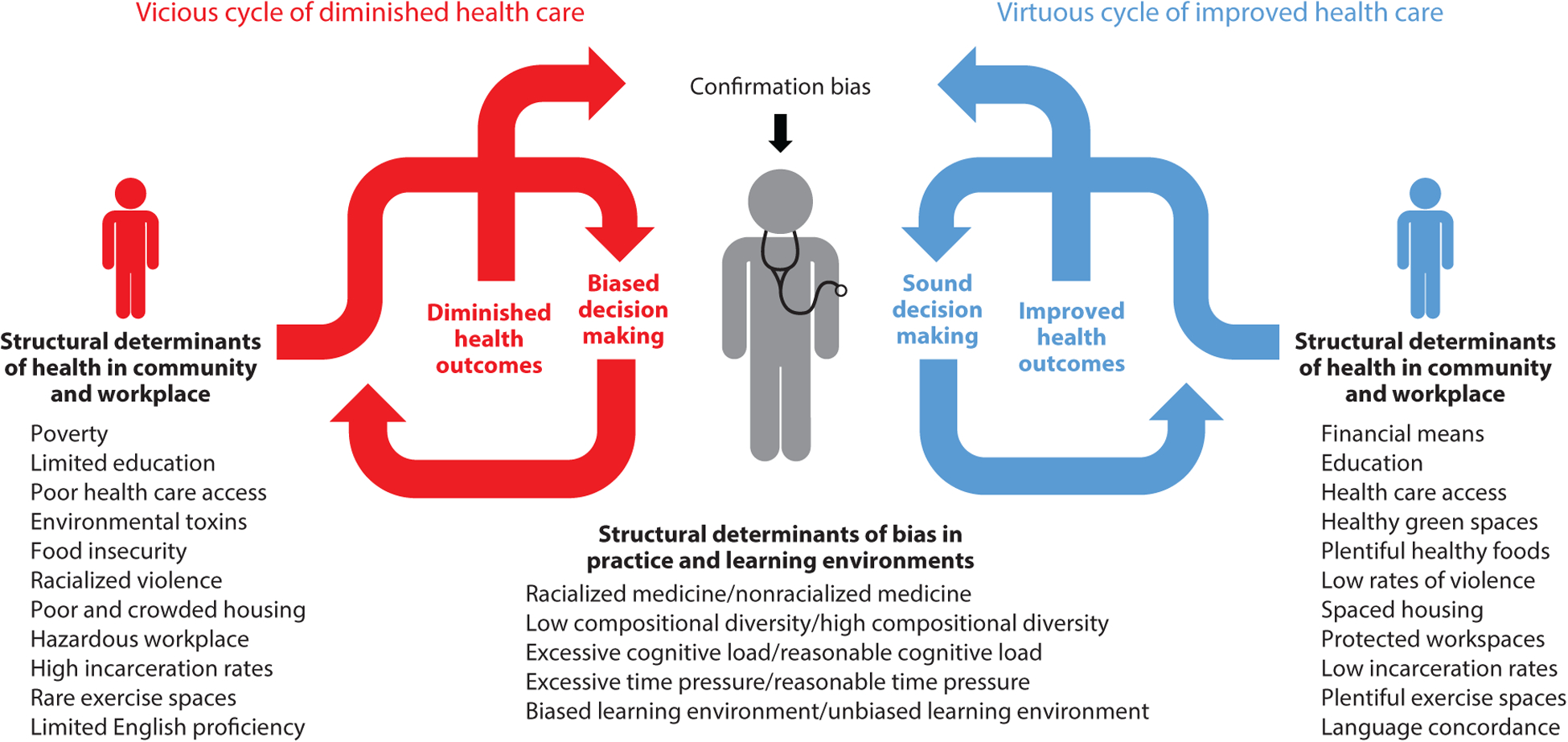
“Conceptual Model Based on Jones’s (54) allegory A Gardener’s Tale, we present a conceptual model of implicit biases of health care providers and the key structural factors affecting these biases (Figure 2).”
BackgroundImplicit bias in healthcare professionals: a systematic review
FitzGerald, C., & Hurst, S. (2017) · BMC Medical Ethics · doi:10.1186/s12910-017-0179-8 · Cited by 2,556 · cited 4×
“A similar reinforcing dynamic may exist for marginalized populations such as those who are overweight/obese, use wheelchairs, have limited English proficiency, have mental health illness, and belong to lower socioeconomic classes (29).”
BackgroundResultInfluentialHoffman, K. M., Trawalter, S., Axt, J. R., & Oliver, M. N. (2016) · Proceedings of the National Academy of Sciences · doi:10.1073/pnas.1516047113 · Cited by 2,486 · cited 1×
“(50) demonstrated in 2016 that White medical students and residents were more likely to believe that Black patients had thicker skin and smaller brains, and were more likely to rate Black patients as feeling less pain than and not needing the same levels of pain medications as White patients.”
BackgroundRacism and health: evidence and needed research
Williams, D. R., Lawrence, J. A., & Davis, B. A. (2019) · Annual Review of Public Health · doi:10.1146/annurev-publhealth-040218-043750 · Cited by 2,398
Research works printed but not linked: 8
- Figure 2. Percentage of applicants to U.S. medical schools by race/ethnicity (alone), academic year 2018–2019
- Blanchard J, 2004, J. Fam. Pract., 53, 721
- Hinton PR., 1993, The Perception of People
- Lee M, 2021, Can. Med. Educ. J., 12, e7
- National Academy of Sciences (US) NtAoEU, and Institute of Medicine (US) Committee on Maximizing the Potential of Women in Academic Science and Engineering, 2007, Beyond Bias and Barriers: Fulfilling the Potential of Women in Academic Science and Engineering
- Osta K, Implicit bias and structural racialization
- Poustchi Y, 2013, Fam. Med., 45, 345
- Staats C, 2015, State of the science: implicit bias review 2015
Cited by
Sorted by citations
Connelly‐Smith, L. S., Alquist, C. R., Aqui, N. A., Hofmann, J. C., Klingel, R., Onwuemene, O. A., Patriquin, C. J., Pham, H. P., Sanchez, A. P., Schneiderman, J., et al. (2023) · Journal of Clinical Apheresis · doi:10.1002/jca.22043 · Cited by 751
Ethical and Bias Considerations in Artificial Intelligence/Machine Learning
Hanna, M. G., Pantanowitz, L., Jackson, B., Palmer, O., Visweswaran, S., Pantanowitz, J., Deebajah, M., & Rashidi, H. H. (2025) · Modern Pathology · doi:10.1016/j.modpat.2024.100686 · Cited by 535
Sociodemographic biases in medical decision making by large language models
Omar, M., Soffer, S., Agbareia, R., Bragazzi, N. L., Apakama, D. U., Horowitz, C. R., Charney, A. W., Freeman, R., Kummer, B., Glicksberg, B. S., et al. (2025) · Nature Medicine · doi:10.1038/s41591-025-03626-6 · Cited by 173
“Biases can be explicit in a model’s output when different treatment recommendations are clearly tied to a patient’s sociodemographic attributes or implicit when the model’s recommendations shift without including overt acknowledgement of the sociodemographic influence 10 .”
Digital health equity frameworks and key concepts: a scoping review
Kim, K. K., & Backonja, U. (2025) · Journal of the American Medical Informatics Association · doi:10.1093/jamia/ocaf017 · Cited by 84
Racism against racialized migrants in healthcare in Europe: a scoping review
Pattillo, M., Stieglitz, S., Angoumis, K., & Gottlieb, N. (2023) · International Journal for Equity in Health · doi:10.1186/s12939-023-02014-1 · Cited by 86
“The implicit and explicit biases of policymakers, healthcare providers and professionals in other health-relevant positions can affect members of racialized groups on multiple levels, including patient–clinician communication, clinical decision-making, institutionalized practices and policies [24].”
Ke, Y., Yang, R., Lie, S. A., Lim, T. X. Y., Ning, Y., Li, I., Abdullah, H. R., Ting, D. S. W., & Liu, N. (2024) · Journal of Medical Internet Research · doi:10.2196/59439 · Cited by 64
“This facilitates learning in a controlled, educational environment [25,26].”
Slopen, N. B., Chang, A. R., Johnson, T. J., Anderson, A. T., Bate, A. M., Gilpin, S., Cohen, A., Jindal, M., Karbeah, J., Pachter, L. M., et al. (2024) · The Lancet Child & Adolescent Health · doi:10.1016/s2352-4642(23)00251-1 · Cited by 61
Thompson, J. P., Bujalka, H., McKeever, S., Lipscomb, A., Moore, S., Hill, N., Kinney, S., Cham, K. M., Martín, J. M. M., Bowers, P. J., et al. (2023) · BMC Medical Education · doi:10.1186/s12909-023-04371-5 · Cited by 59
“That is, in contrast to reviews of interventions to study or mitigate biases in healthcare professionals [56, 57], only one of the included studies in this review referred to service learning or patient/social contact as pedagogical strategies, despite evidence that such learning experiences can lead to bias mitigatio…”
ResultJi, J., Zhang, Y., Ma, Y., Jia, L., Cai, M., Li, Z., Zhang, T., & Guo, C. (2024) · Frontiers in Psychiatry · doi:10.3389/fpsyt.2024.1259290 · Cited by 51
Hu, X. Y., Walker, M. S., Stepanski, E. J., Kaplan, C. M., Martin, M. Y., Vidal, G. A., Schwartzberg, L. S., & Graetz, I. (2022) · JAMA Network Open · doi:10.1001/jamanetworkopen.2022.25485 · Cited by 54
Framework for Integrating Equity Into Machine Learning Models
Rojas, J. C., Fahrenbach, J. P., Makhni, S., Cook, S. C., Williams, J. S., Umscheid, C. A., & Chin, M. H. (2022) · CHEST Journal · doi:10.1016/j.chest.2022.02.001 · Cited by 51
Self-citationWeight stigma and bias: standards of care in overweight and obesity—2025
Bannuru, R. R. (2025) · BMJ Open Diabetes Research & Care · doi:10.1136/bmjdrc-2025-004962 · Cited by 47
“32 34 Multicomponent training is likely to yield more benefits than single-component interventions and is recommended when feasible to reduce implicit and explicit weight bias and subsequent harms.”
Recommendations for Reporting Research About Racial Disparities in Medical and Scientific Journals
Duncan, A. F., & Montoya‐Williams, D. (2024) · Archives of Pediatrics and Adolescent Medicine · doi:10.1001/jamapediatrics.2023.5718 · Cited by 38
Cary, M. P., Bessias, S., McCall, J., Pencina, M. J., Grady, S. D., Lytle, K. S., & Economou-Zavlanos, N. (2024) · Journal of Nursing Scholarship · doi:10.1111/jnu.13007 · Cited by 42
“…same accuracy when applied to other ethnicities (Hermansson & Kahan, 2018), while hidden bias may exist for patients who receive certain types of procedures or receive care in under-resourced settings, placing vulnerable populations at risk for inadequate or inappropriate care (Vela et al., 2022 ).”
Vrany, E. A., Hill‐Briggs, F., Ephraim, P. L., Myers, A. K., Garnica, P., & Fitzpatrick, S. L. (2023) · Frontiers in Endocrinology · doi:10.3389/fendo.2023.1083145 · Cited by 36
“Interventions to reduce bias in care increase provider awareness but do not result in sustained behavior change (76).”
BackgroundEthical challenges in autism genomics: Recommendations for researchers
Natri, H. M., Chapman, C. R., Heraty, S., Dwyer, P. S. R., Walker, N., Kapp, S. K., Dron, H. A., Martínez-Agosto, J. A., Mikkola, L., & Doherty, M. (2023) · European Journal of Medical Genetics · doi:10.1016/j.ejmg.2023.104810 · Cited by 29
Addressing Disparities in Acute Stroke Management and Prognosis
Denny, M. C., Rosendale, N., Gonzales, N. R., Leslie‐Mazwi, T. M., & Middleton, S. (2024) · Journal of the American Heart Association · doi:10.1161/jaha.123.031313 · Cited by 32
“44,45 48 Interventions in the health care setting to reduce implicit bias and mitigate its adverse impact on marginalized communities are few and to date have not demonstrated a sustained effect.”
BackgroundDiehr, J., Ogunyiola, A., & Dada, O. M. (2025) · Annals of GIS · doi:10.1080/19475683.2025.2473596 · Cited by 27
“For instance, a certain demographic may be over or underrepresented in the data, and the predictions generated can reflect or exacerbate these biases, leading to an unequal distribution of resources in disaster management (Vela et al. 2022).”
Is patients' trust in clinicians related to patient-clinician racial/ethnic or gender concordance?
Greene, J., Silver, D., Verrier, E., & Long, S. K. (2023) · Patient Education and Counseling · doi:10.1016/j.pec.2023.107750 · Cited by 26
Hagiwara, N., Duffy, C. M. C., Cyrus, J. W. W., Harika, N., Watson, G. S., & Green, T. (2024) · Science Advances · doi:10.1126/sciadv.ado5957 · Cited by 26
“…reviews that examined related topics, such as the prevalence of implicit bias in health care professionals ( 3 , 18 ), consequences of provider implicit bias ( 2 , 13 , 19 ), and the effectiveness of interventions in reducing implicit bias in general ( 20 ) and in health care specifically ( 21 ).”
Reducing Health Disparities in Asthma: How Can Progress Be Made
Baptist, A. P., Apter, A. J., Gergen, P. J., & Jones, B. L. (2023) · The Journal of Allergy and Clinical Immunology In Practice · doi:10.1016/j.jaip.2022.12.044 · Cited by 22
Rusiecki, J. M., Orlov, N. M., Dolan, J. A., Smith, M. P., Zhu, M., & Chin, M. H. (2023) · Academic Medicine · doi:10.1097/acm.0000000000005183 · Cited by 24
Self-citationPerceived Health Misinformation on Social Media and Public Trust in Health Care
Stimpson, J. P., Park, S., Adhikari, E. H., Nelson, D. B., & Ortega, A. N. (2025) · Medical Care · doi:10.1097/mlr.0000000000002180 · Cited by 20
Garrett, S. B., Jones, L., Montague, A., Fa-Yusuf, H., Harris-Taylor, J., Powell, B., Chan, E., Zamarripa, S., Hooper, S., & Chambers, B. D. (2023) · Health Equity · doi:10.1089/heq.2023.0126 · Cited by 20
“29,33,36,40,57,58 Our study yielded novel findings as well.”
Omar, M., Soffer, S., Agbareia, R., Bragazzi, N. L., Apakama, D. U., Horowitz, C. R., Charney, A. W., Freeman, R., Kummer, B. R., Glicksberg, B. S., et al. (2024) · medRxiv · doi:10.1101/2024.10.29.24316368 · Cited by 19
Anim, S. B., Spurlark, R. S., Turkson‐Ocran, R., Bohr, N. L., Soco, C., & Simonovich, S. D. (2023) · Journal of Racial and Ethnic Health Disparities · doi:10.1007/s40615-023-01751-x · Cited by 20
“…one of several SDoH that influences an individual’s health and serves as a significant psychosocial stressor for Black Americans as they experience more rac-ism than other racial ethnic groups, may contribute to the observed differences in health between Black Americans and Whites [12, 13].”
Epidemiological methods in transition: Minimizing biases in classical and digital approaches
Mesquita, S., Perfeito, L., Paolotti, D., & Gonçalves-Sá, J. (2025) · PLOS Digital Health · doi:10.1371/journal.pdig.0000670 · Cited by 22
Kitole, F. A., Ali, Z., Song, J., Ali, M. N., Fahlevi, M., Aljuaid, M. M., Heidler, P., Yahya, M., & Shahid, M. (2025) · Healthcare · doi:10.3390/healthcare13091063 · Cited by 17
“However, persistent biases against female providers in technical domains, such as surgery or advanced diagnostics, highlight systemic undervaluation of their competencies [73,76].”
Mendoza, F., Baidal, J. W., Fernández, C. R., & Flores, G. (2024) · Academic Pediatrics · doi:10.1016/j.acap.2023.12.013 · Cited by 17
LLM-Based Chatbot to Reduce Mental Illness Stigma in Healthcare Providers
Reátegui-Rivera, C. M., Smiley, A., & Finkelstein, J. (2025) · IEEE Annual Computing and Communication Workshop and Conference (CCWC) · doi:10.1109/ccwc62904.2025.10903778 · Cited by 16
“Common approaches include direct social contact with individuals who have faced and overcome stigmatized conditions [5], strategies for reducing implicit and explicit biases [6], and structural or policy interventions that foster inclusivity within healthcare settings.”
Equity, Diversity, and Inclusion in Radiation Oncology: A Bibliometric Analysis and Critical Review
Franco, P., Felice, F. D., Kaidar‐Person, O., Gabryś, D., Marta, G. N., Banini, M., Livi, L., Jagsi, R., Coles, C. E., Poortmans, P. M., et al. (2023) · International Journal of Radiation Oncology*Biology*Physics · doi:10.1016/j.ijrobp.2023.02.026 · Cited by 14
Howard, E., Gillispie-Bell, V., Olet, S., Glenn, B. A., Ammar, N., & Price‐Haywood, E. G. (2024) · Ochsner Journal · doi:10.31486/toj.23.0111 · Cited by 14
“32-34 More research is needed to determine if CMOM is offered at equitable rates for Black patients.”
BackgroundWinkle, L. J. V., Thornock, B. O., Schwartz, B. D., Horst, A., Fisher, J. A., & Michels, N. (2022) · Frontiers in Medicine · doi:10.3389/fmed.2022.976863 · Cited by 14
Schizophrenia spectrum stigma in healthcare: a systematic review
Kruse, E. A., & Dodell‐Feder, D. (2025) · Frontiers in Psychiatry · doi:10.3389/fpsyt.2025.1648957 · Cited by 21
Chin, M. H., Aburmishan, M. M., & Zhu, M. (2022) · BMC Medical Education · doi:10.1186/s12909-022-03139-7 · Cited by 12
“While we cite conceptual models and theoretical frameworks [11, 13, 15], our sense as standup comedians and educators is that the power of our workshop comes from the heart [6, 20].”
BackgroundMethodSelf-citationPrimary care physician use of patient race and polygenic risk scores in medical decision-making
Kerman, B. J., Brunette, C. A., Harris, E. J., Antwi, A. A., Lemke, A. A., & Vassy, J. L. (2023) · Genetics in Medicine · doi:10.1016/j.gim.2023.100800 · Cited by 12
Teotia, K., Jia, Y., Woite, N. L., Celi, L. A., de Matos, J. C. R. G., & Struja, T. (2024) · Journal of Biomedical Informatics · doi:10.1016/j.jbi.2024.104643 · Cited by 12
Evaluating for Evidence of Sociodemographic Bias in Conversational AI for Mental Health Support
Yeo, Y. H., Peng, Y., Mehra, M., Samaan, J. S., Hakimian, J. K., Clark, A., Suchak, K. K., Krut, Z., Andersson, T., Persky, S., et al. (2024) · Cyberpsychology Behavior and Social Networking · doi:10.1089/cyber.2024.0199 · Cited by 15
“Human therapists, who themselves are subject to biases, 32 set a realistic benchmark for AI performance in patient care.”
Liu, C., Zheng, J., Liu, Y., Wang, X., Zhang, Y., Yu, W., Yu, W., Yu, T., Jiang, W., Wang, D., et al. (2025) · International Journal for Equity in Health · doi:10.1186/s12939-025-02581-5 · Cited by 11
“Unlike preceding research that primarily focused on racial and gender biases [19, 20], this study broadens its scope to encompass potential biases related to educational attainment, income level, and health insurance status—factors that are also prevalent in healthcare services [12–14].”
Grammoustianou, Μ., Maccarone, S., Gillanders, E., Menvielle, G., Préau, M., Ginguené, S., Everhard, S., Delpierre, C., Guillemin, F., Vaz-Luís, I., et al. (2025) · EClinicalMedicine · doi:10.1016/j.eclinm.2025.103513 · Cited by 11
“100,104,105 As this field continues to evolve, many relevant studies have emerged since then (n = 28).”
Dovel, K. L., Paneno, R., Balakasi, K. T., Hubbard, J., Magaço, A., Phiri, K., Coates, T. J., & Cornell, M. (2023) · PLOS Global Public Health · doi:10.1371/journal.pgph.0001356 · Cited by 11
“For this secondary analysis, we developed a codebook based on existing literature on HCW perceptions of men in SSA [29], bias literature [30], and relevant constructs from SLB regarding HCW perceptions of clients [13].”
MethodUsing the Social Vulnerability Index to Analyze Statewide Health Disparities in Cholecystectomy
Abla, H., Collins, R. A., Dhanasekara, C. S., Shrestha, K., & Dissanaike, S. (2024) · Journal of Surgical Research · doi:10.1016/j.jss.2023.12.031 · Cited by 11
AI in the Field of Healthcare: A New Paradigm Examining Facilitators and Biases Through SEM-ANN
Tandon, U., Taneja, M., & Mittal, A. (2024) · International Journal of Human-Computer Interaction · doi:10.1080/10447318.2024.2375702 · Cited by 11
Tran, C., Pirotta, S., Hailu, H., Kandel, P., Skouteris, H., & Hill, B. (2025) · Obesity Reviews · doi:10.1111/obr.13933 · Cited by 10
Folorunsho, S. A. (2025) · Journal of Aging & Social Policy · doi:10.1080/08959420.2025.2528584 · Cited by 14
Pardasani, R., Vitullo, R., Harris, S., Yapici, H. O., & Beard, J. (2025) · Frontiers in Digital Health · doi:10.3389/fdgth.2025.1638424 · Cited by 11
Chin, M. H., Orlov, N. M., Callender, B. C., Dolan, J. A., Miller, D. C., Peek, M. E., Rusiecki, J. M., & Vela, M. B. (2022) · Academic Medicine · doi:10.1097/acm.0000000000004905 · Cited by 11
Self-citationvan Kolfschooten, H., & Pilottin, A. (2024) · Mayo Clinic Proceedings: Digital Health · doi:10.1016/j.mcpdig.2024.05.004 · Cited by 13
“18 Negative stereotypes can also affect the communication skills of health care professionals toward members of certain groups, thus impacting health outcomes.”
Challenges and Opportunities in Diagnosis and Management of Cardiometabolic Risk in Adolescents
Konuthula, D., Tan, M. M., & Burnet, D. L. (2023) · Current Diabetes Reports · doi:10.1007/s11892-023-01513-3 · Cited by 11
Azman, N. B. N., Zhou, T. W., & Shorey, S. (2023) · Nurse Education in Practice · doi:10.1016/j.nepr.2023.103820 · Cited by 11
Hatherley, J. J. (2024) · Journal of Medical Ethics · doi:10.1136/jme-2024-109905 · Cited by 10
“52 Moreover, many of the formal and informal regulatory mechanisms that purport to regulate implicit biases in human clinicians apply equally to medical ML systems (or to relevant stakeholders in the ML ecosystem).”
Kurup, C., Burston, A., Betihavas, V., & Jacob, E. R. (2025) · Nursing Open · doi:10.1002/nop2.70184 · Cited by 11
Amdani, S. M., Gossett, J. G., Chepp, V., Urschel, S., Asante‐Korang, A., & Dalton, J. E. (2024) · Pediatric Transplantation · doi:10.1111/petr.14704 · Cited by 10
What Should Antiracist Payment Reform Look Like?
Singletary, K. A., & Chin, M. H. (2023) · The AMA Journal of Ethic · doi:10.1001/amajethics.2023.55 · Cited by 10
Self-citationCapacity Strain and Racial Disparities in Hospital MortalityPreprint
Singh, M., & Venkataramani, A. S. (2022) · SSRN Electronic Journal · doi:10.2139/ssrn.4196324 · Cited by 10
Johnson, A., Swenson, K. S., Dillner, E., Klie, K. A., Duncan, R. W., Brandspigel, S., & Breen, K. (2024) · Journal of Midwifery & Women s Health · doi:10.1111/jmwh.13615 · Cited by 9
Ginsburg, S., Lingard, L. A., Sugumar, V., & Watling, C. (2024) · Academic Medicine · doi:10.1097/acm.0000000000005838 · Cited by 9
“Although educating faculty is necessary, it rarely has much enduring success in changing how people think 30,31 ; therefore, we should also teach learners how to optimize feedback-seeking requests.”
Vargas‐Uricoechea, H., & Wartofsky, L. (2024) · International Journal of Molecular Sciences · doi:10.3390/ijms25179218 · Cited by 11
“These conditions can cause symptoms similar to hypothyroidism and, therefore, in their presence (without identification or correction), they can eventually “dilute” the effect of the intervention [45–47].”
BackgroundMandangu, C., Ramos, A. M., Sengupta, M., Bender, R., El-Hayani, R., Hasan, I., Okechukwu, H., Anas, S., & Havsteen-Franklin, D. (2025) · Frontiers in Public Health · doi:10.3389/fpubh.2024.1469439 · Cited by 12
Interdisciplinary oral and primary health care for patients with disabilities
Etminan, S., Hammerdahl, E., Lesondak, L. M., Li, N., Patel, M., Mischler, M. J., Keehn, M., & Kirschner, K. (2025) · Frontiers in Medicine · doi:10.3389/fmed.2025.1619845 · Cited by 9
“Furthermore, because most participants were recruited through physician referrals, there is a potential selection bias favoring individuals already engaged in healthcare (41).”
Abbott, E. E., Rehman, T., Rosania, A. R., Lum, D. L., Taylor, T. B., Kirk, A., Taylor, R. A., Baker, E. F., Rabin, E., Padela, A. I., et al. (2025) · Journal of the American College of Emergency Physicians Open · doi:10.1016/j.acepjo.2025.100311 · Cited by 15
“30,49 Overarching principles like promoting open science practices (sharing data and code where appropriate to foster transparency and reproducibility), ensuring diversity in development teams and data sets, and prioritizing clear documentation of assumptions and limitations further contribute to…”
Howard, S., Campbell, P.-A., Montgomery, C. T., Tomlinson, S. B., Ojukwu, D. I., Chen, H. I., & Chin, M. H. (2023) · World Neurosurgery · doi:10.1016/j.wneu.2023.07.138 · Cited by 9
Self-citationGuglielmi, V., Capoccia, D., Russo, B., Lubrano, C., Mariani, S., Poggiogalle, E., Furia, G., Alizadeh, A. H., Patrizi, C., Sapienza, M., et al. (2023) · Frontiers in Endocrinology · doi:10.3389/fendo.2023.1249233 · Cited by 10
Physician Workforce Diversity Is Still Necessary and Achievable if It Is Intentionally Prioritized
Vereen, R. J., & Wolf, M. F. (2024) · Journal of Racial and Ethnic Health Disparities · doi:10.1007/s40615-024-01953-x · Cited by 9
“These biases impact recruiting, admissions, and medical education, which has downstream impacts on patient communication, clinical decision-making, and sys-tem practice [29–31].”
Singh, M., & Venkataramani, A. S. (2022) · National Bureau of Economic Research · doi:10.3386/w30380 · Cited by 12
“In addition, sustained multi-level approaches to address biases in care provision at all levels of strain (Vela et al., 2022) – which could include development and implementation of novel decision-support algorithms to improve allocation of care inputs to patients whose high mortality risks may be…”
BackgroundDoctor Decision Making and Patient Outcomes
Currie, J., MacLeod, W. B., & Musen, K. (2024) · National Bureau of Economic Research · doi:10.3386/w32788 · Cited by 13
Cultivating cultural competence in ICU communication
Siddiqui, S., & Metaxa, V. (2025) · Intensive Care Medicine · doi:10.1007/s00134-025-07829-w · Cited by 9
Reporting Sex and Gender Differences in Cardiovascular Research
Porter, K. F., Deb, B., Katyukha, A., Punnanithinont, N., Fradley, M. G., & Cook, S. C. (2024) · US Cardiology Review · doi:10.15420/usc.2024.18 · Cited by 8
Bhargava, A., & Ashwin, C. (2025) · Research in Autism · doi:10.1016/j.reia.2025.202547 · Cited by 8
Beyond Genetics: Exploring Lifestyle, Microbiome, and Social Determinants in Oral Cancer Development
Menon, A., Mutalik, V. S., Chen, Y., Ponamgi, S., Peela, S., Schroth, R. J., Ghavami, S., & Chelikani, P. (2025) · Cancers · doi:10.3390/cancers17071094 · Cited by 11
“Moreover, systemic biases in healthcare delivery can result in inequitable treatment for marginalized groups [130].”
Mundy, L. M., Judd, S. E., Clay, O. J., Howard, V. J., Durant, R. W., Ballard, E., & Crowe, M. G. (2025) · Journal of General Internal Medicine · doi:10.1007/s11606-025-09474-x · Cited by 8
The Perpetual Cycle of Racial Bias in Healthcare and Healthcare Education: A Systematic Review
Sorice, V., Mortimore, G., Faghy, M. A., Sorice, R., & Tegally, D. (2025) · Journal of Racial and Ethnic Health Disparities · doi:10.1007/s40615-025-02417-6 · Cited by 8
“Standardising clinical processes and protocols, particularly in high-stakes areas like emergency departments and triage, can help reduce the impact of conscious and unconscious bias on patient access and care quality [5, 56].”
Murza, K. A., & Buckley, P. C. (2023) · Language Speech and Hearing Services in Schools · doi:10.1044/2023_lshss-23-00081 · Cited by 8
Moyinoluwa, F. L. (2024) · British Journal of Multidisciplinary and Advanced Studies · doi:10.37745/bjmas.2022.0452 · Cited by 8
“(2022) studied the relationship between implicit bias and various factors in the healthcare system.”
BackgroundDerbyshire, D. W., & Keay, T. (2024) · Journal of Clinical Nursing · doi:10.1111/jocn.17097 · Cited by 7
Cotter, E. W., Dunford, A., Gilchrist, K., Yan, T., Deyton, L., & Essel, K. D. (2025) · Journal of Eating Disorders · doi:10.1186/s40337-025-01231-z · Cited by 7
“…term) through educational strategies such as engagement with others’ perspectives, opportunities for self-reflection, and increased opportunities for contact with minoritized groups [28–30], although structural and institutional changes are necessary to maintain improvements over time [31, 32].”
Identifying Bias at Scale in Clinical Notes Using Large Language Models
Apakama, D. U., Nguyen, K.-A.-N., Hyppolite, D., Soffer, S., Mudrik, A., Ling, E. J., Moses, A., Temnycky, I., Glasser, A., Anderson, R., et al. (2025) · Mayo Clinic Proceedings Digital Health · doi:10.1016/j.mcpdig.2025.100296 · Cited by 14
Thorndike, A. L., Peterson, L., Spitzer, S., Patel, S., Smithey, A., Moore, J. E., Cook, S. C., & Chin, M. H. (2023) · Frontiers in Public Health · doi:10.3389/fpubh.2023.1104843 · Cited by 7
Self-citationAn Ethics Action Plan for Rare Disease Care: Participatory Action Research Approach
Quintal, A., Carreau, I., Grenier, A., Hébert, C., Yergeau, C., Berthiaume, Y., & Racine, É. (2023) · Journal of Participatory Medicine · doi:10.2196/46607 · Cited by 8
“These activities aim to reduce biases [63,100,101].”
BackgroundLalika, M., McCoy, C. R., Jones, C., Bancos, I., Cooper, L. A., Hayes, S. N., Johnson, M. P., Kullo, I. J., Kumbamu, A., Noseworthy, P. A., et al. (2024) · Contemporary Clinical Trials · doi:10.1016/j.cct.2024.107600 · Cited by 8
Paccoud, I., Nazroo, J. Y., & Leist, A. K. (2022) · International Journal for Equity in Health · doi:10.1186/s12939-022-01709-1 · Cited by 7
“Due to structural inequalities and racism, healthcare providers may hold implicit (unconscious) and explicit biases towards certain minorities that pervade the healthcare system and negatively affect patients [33].”
BackgroundRacial and ethnic inequities in psychiatric inpatient building and unit assignment
Michaels, T. I., Thomas, E., Flaxer, J. M., Singal, S., Hanna, L. A., Meter, A. V., Tang, S. X., Kane, J. M., & Saito, E. (2023) · Psychiatry Research · doi:10.1016/j.psychres.2023.115560 · Cited by 7
Racial and Ethnic Disparities in Home Health Referral Among Adult Medicare Patients
Yakusheva, O., Lee, K. A., Keller, A. O., & Weiss, M. (2023) · Medical Care · doi:10.1097/mlr.0000000000001945 · Cited by 7
“39 It is important to stress that the abovementioned 4 root causes of the racial disparities in HHC referral potentially responsible for the fi ndings observed in our study — cultural appropriateness of assessments, patient preferences, ineffective communication, and clinician bias — are well within…”
BackgroundMarch, M. K., & Roberts, K. E. (2024) · BMC Musculoskeletal Disorders · doi:10.1186/s12891-024-08107-4 · Cited by 6
Khan, W. U., Alissa, M., Allemailem, K. S., Alrumaihi, F., Alharbi, H. O., Almansour, N. M., Aldaiji, L. A., Albalawi, M. J., Abouzied, A. S., Almousa, S., et al. (2024) · Current Problems in Cardiology · doi:10.1016/j.cpcardiol.2024.102964 · Cited by 6
Mulligan, D. J., Taylor, A., & Lamis, D. A. (2025) · Suicide and Life-Threatening Behavior · doi:10.1111/sltb.70003 · Cited by 7
Norris, K. L., Melton, M., Lopez, K., Rotellini, D., & Valentino, L. A. (2025) · Health Equity · doi:10.1089/heq.2024.0146 · Cited by 6
“21,22 Permeating the health care system, these biases impact patient – clinician communication, clinical decision making, level of care, and institutionalized practices.”
Beyond Traditional: Clearing the Roadblocks to Advancement in Academic Medicine
Ortega, P., Becker, M. L., Chan, T. M., & Manning, K. D. (2025) · Perspectives on Medical Education · doi:10.5334/pme.1681 · Cited by 7
Aziz, Z., Mazeh, A. C., Ilic, D., Ciardulli, M., Hadi, S. N. E., Camuccio, A., Moore, J., & Kiegaldie, D. (2026) · Nurse Education in Practice · doi:10.1016/j.nepr.2026.104711 · Cited by 4
Armstrong-Mensah, E. A., Rasheed, N., Williams, D., Moyer, K., Alema‐Mensah, E., & Tetteh, A. K. (2022) · Journal of Racial and Ethnic Health Disparities · doi:10.1007/s40615-022-01439-8 · Cited by 6
“The probability of marginalized racial and ethnic groups obtaining quality health care in Georgia depends to a great extent on the negative explicit and implicit biases and attitudes of health care providers [23].”
BackgroundPrussien, K. V., Faust, H. L., Crosby, L. E., Smith‐Whitley, K., Barakat, L. P., & Schwartz, L. A. (2024) · Pediatric Blood & Cancer · doi:10.1002/pbc.31156 · Cited by 6
Ending Unequal Treatment and Achieving Optimal Health for All
Benjamin, G. C., DeVoe, J. E., & Amankwah, F. K. (2024) · JAMA · doi:10.1001/jama.2024.14268 · Cited by 6
Wilson, M., Booker, S. Q., Saravanan, A., Singh, N., Pervis, B., Mahalage, G., & Knisely, M. R. (2024) · Pain Management Nursing · doi:10.1016/j.pmn.2024.10.016 · Cited by 6
Postoperative Outcomes After Breast Reduction: Do Racial Disparities Exist?
Knoedler, S. A., Schaschinger, T., Kiwanuka, H., Hamaguchi, R., Cherubino, M., Obed, D., Machens, H., Orgill, D. P., Panayi, A. C., & Kim, B. (2025) · Journal of Racial and Ethnic Health Disparities · doi:10.1007/s40615-025-02490-x · Cited by 6
“Variability in access to timely postoperative evaluations, inconsistencies in follow-up care, and potential health system biases in the provision of resources and attention to postoperative concerns could also influence postoperative outcomes [45].”
Linsenmeyer, M., & Long, G. (2023) · Medical Science Educator · doi:10.1007/s40670-023-01752-9 · Cited by 11
“But behaviors and beliefs can be negative, and we may behave in ways that are expressions of unconscious bias, even when those behaviors and biases are counter to our declared, conscious belief systems, such as with implicit bias [22].”
BackgroundCultural Responsiveness in Behavior Analysis: Provider and Recipient Perceptions in Ontario
O’Neill, P., Magnacca, C., Gunnarsson, K. F., Khokhar, N., Koudys, J., & Malkin, A. (2023) · Behavior Analysis in Practice · doi:10.1007/s40617-023-00825-w · Cited by 7
“Studies from other health care fields indicate that despite controlling for factors such as socioeconomic and insurance status, service providers still carry implicit racial biases towards non-White service recipients (Hall et al., 2015; Vela et al., 2022).”
Androcentric bias in surgical equipment - What challenges do women face?
Koo, Y. E., Allen, C., Ballantyne, A., & Yassaie, E. (2023) · The American Journal of Surgery · doi:10.1016/j.amjsurg.2023.09.049 · Cited by 6
Addressing gender inequalities in health: a comprehensive framework for policy and practice
Khaledian, Z., Tajvar, M., Takian, A., Yaseri, M., Hajizadeh, M., & Olyaeemanesh, A. (2025) · Discover Social Science and Health · doi:10.1007/s44155-025-00266-6 · Cited by 5
Evaluating a Codesign Process in Mental Health: ‘Harnessing the Power of Together’
Kehoe, M., Friebel, H., Rosie, K., Kremer, P. D., Shawyer, F., Meadows, G. N., & Ozols, I. (2025) · Health Expectations · doi:10.1111/hex.70371 · Cited by 5
“However, we found evidence that the issue of power existed in both implicit (unconscious) and explicit (conscious) bias [24].”
Shared decision making - a review of its evaluation, efficacy, and applicability in asthma
Piątkowska, A., Marszałek, K., Krupińska, N., Malaya, E., Adamczewska, M., Kuna, P., & Panek, M. (2025) · Frontiers in Medicine · doi:10.3389/fmed.2025.1639805 · Cited by 5
Metadata
- Authors
- Vela, M. B., Erondu, A. I., Smith, N. A., Peek, M. E., Woodruff, J. N., & Chin, M. H.
- Affiliations
- University of Illinois Chicago (US)
- University of California, Los Angeles (US)
- Hospital of the University of Pennsylvania (US)
- University of Chicago (US)
- ORCID
- Woodruff, James N.
- Venue
- Annual Review of Public Health
- Publisher
- Annual Reviews
- Published
- 2022-04-05
- Volume
- 43
- Issue
- 1
- Pages
- 477-501
- ISSN
- 0163-7525 (ISSN-L)
- 1545-2093
- PMC
- PMC9172268
- OpenAlex
- W4206528627
- Cited by
- 426
- References
- 102
- Citations by year
- 2026: 89 · 2025: 176 · 2024: 97 · 2023: 55 · 2022: 9
- FWCI
- 14.19
- Type
- journal article
- Language
- en
- Open access
- hybrid
- doi.org
- Locations
- Annual Review of Public Health (publishedVersion, cc-by)
- PubMed (publishedVersion)
- PubMed Central (acceptedVersion, cc-by)
- Funders
- National Institute of Diabetes and Digestive and Kidney Diseases (P30DK092949)
- Topics
- Health Sciences › Medicine › Public Health, Environmental and Occupational Health › Cultural Competency in Health Care
- Social Sciences › Sociology and Political Science › Racial and Ethnic Identity Research
- Social Sciences › Sociology and Political Science › Social and Intergroup Psychology
- Keywords
- implicit bias, explicit bias, healthcare workers, racial and ethnic minorities, health disparities, bias interventions, patient-clinician communication, clinical decision-making, organizational discrimination, structural change, conceptual model
- MeSH terms
- Attitude of Health Personnel, Communication, Health Personnel, Humans, Bias, Healthcare Disparities
About these checks
Registry, retraction, Cites and statistics results are computed, not judged, with one exception: a printed reference that no index lists is read once by a model before it counts as a citation error. Claims are extracted by a model and kept only when their quote appears verbatim in the text; each cited source is then checked, with a model’s help, for whether it says what the claim relies on. Those verdicts can be wrong — read the claim’s quote and the cited source before relying on one.
Statistics and arithmetic are recomputed, not judged.
Confidence bands are shown only for fields calibrated on our annotated test set. None is calibrated yet, so no band is shown.
What counts as a claim ›How we measure confidence ›How we check this ›
Are you an author, or do you see a problem with this page? Request a review
