

The DOI matches its Crossref record; 104 of the 104 references it cites were found in a registry or an index.
Eliminating Explicit and Implicit Biases in Health Care: Evidence and Research Needs
Open accessAbstract
Health care providers hold negative explicit and implicit biases against marginalized groups of people such as racial and ethnic minoritized populations. These biases permeate the health care system and affect patients via patient–clinician communication, clinical decision making, and institutionalized practices. Addressing bias remains a fundamental professional responsibility of those accountable for the health and wellness of our populations. Current interventions include instruction on the existence and harmful role of bias in perpetuating health disparities, as well as skills training for the management of bias. These interventions can raise awareness of provider bias and engage health care providers in establishing egalitarian goals for care delivery, but these changes are not sustained, and the interventions have not demonstrated change in behavior in the clinical or learning environment. Unfortunately, the efficacy of these interventions may be hampered by health care providers’ work and learning environments, which are rife with discriminatory practices that sustain the very biases US health care professions are seeking to diminish. We offer a conceptual model demonstrating that provider-level implicit bias interventions should be accompanied by interventions that systemically change structures inside and outside the health care system if the country is to succeed in influencing biases and reducing health inequities.
Overview
The claims and statistics of this paper haven’t been checked yet.
Run the check — free, no account needed. It reads the open-access text and checks the sources it cites.
Integrity signals
Registry
Cites
Statistics
Figures
Verification
Claims the paper makes
The claims and statistics of this paper haven’t been checked yet.
Run the check — free, no account needed. It reads the open-access text and checks the sources it cites.
Claims other papers make about this one
Each is checked against this paper’s own text: does it say what the citing paper says it does?
The source backs part of the claim, not all of it — or backs it for a different population, condition or comparison.
In the citing paper
“By simulating scenarios that mirror real-life clinical decision-making processes, and through reading the multi-agent conversations, clinicians can be made aware of potential cognitive biases and how to correct them. This facilitates learning in a controlled, educational environment [25,26].”
From Mitigating cognitive biases in clinical decision-making through multi-agent conversations using large language models: simulation study (2024) · cites this paper as [26]
Experimental — accuracy not yet measured
Self-check
Percentages, sums and reported differences re-computed from the paper’s own numbers.
The self-check needs the paper’s full text.
Citations
Cites
Implicit social cognition: Attitudes, self-esteem, and stereotypes
Greenwald, A. G., & Banaji, M. R. (1995) · Psychological Review · doi:10.1037/0033-295x.102.1.4 · Cited by 6,682 · cited 1×
“Key terminology: What are implicit and explicit biases?—Implicit biases are unconscious mental processes that lead to associations and reactions that are automatic and without intention; actors have no awareness of the associations with a stimulus (41, 43) (Table 1).”
BackgroundPettigrew, T. F. (1998) · Annual Review of Psychology · doi:10.1146/annurev.psych.49.1.65 · Cited by 6,001
Understanding and using the Implicit Association Test: I. An improved scoring algorithm.
Greenwald, A. G., Nosek, B. A., & Banaji, M. R. (2003) · Journal of Personality and Social Psychology · doi:10.1037/0022-3514.85.2.197 · Cited by 5,815 · cited 1×
“Most researchers agree that the IAT has limitations (44).”
BackgroundEmotion regulation: affective, cognitive, and social consequences.
Gross, J. J. (2002) · Psychophysiology · doi:10.1017/s0048577201393198 · Cited by 4,890
Transformative learning: Theory to practice
Mezirow, J. (1997) · New Directions for Adult and Continuing Education · doi:10.1002/ace.7401 · Cited by 4,445 · cited 1×
“TLT transforms the individual’s existing paradigm by disrupting assumptions and then engaging in critical reflection and dialogue to interpret the disruptions (68).”
BackgroundUnderstanding and using the Implicit Association Test: III. Meta-analysis of predictive validity.
Greenwald, A. G., Poehlman, T. A., Uhlmann, E. L., & Banaji, M. R. (2009) · Journal of Personality and Social Psychology · doi:10.1037/a0015575 · Cited by 3,257 · cited 2×
“(45) described a word association test that identified implicit stereotype effects through indirect Vela et al.”
Levels of racism: a theoretic framework and a gardener's tale
(2000) · American Journal of Public Health · doi:10.2105/ajph.90.8.1212 · Cited by 2,626 · cited 2×
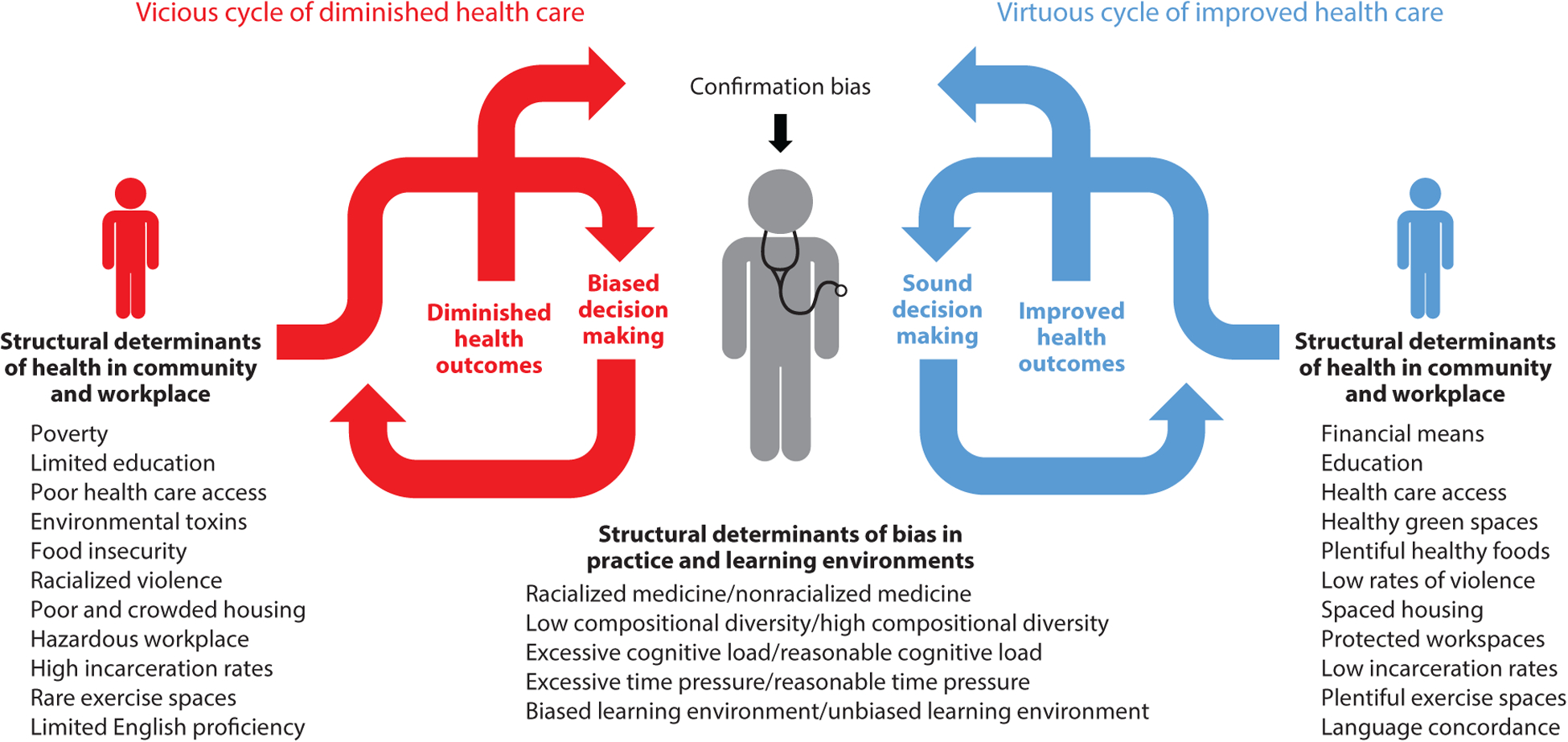
“Conceptual Model Based on Jones’s (54) allegory A Gardener’s Tale, we present a conceptual model of implicit biases of health care providers and the key structural factors affecting these biases (Figure 2).”
BackgroundImplicit bias in healthcare professionals: a systematic review
FitzGerald, C., & Hurst, S. (2017) · BMC Medical Ethics · doi:10.1186/s12910-017-0179-8 · Cited by 2,556 · cited 4×
“A similar reinforcing dynamic may exist for marginalized populations such as those who are overweight/obese, use wheelchairs, have limited English proficiency, have mental health illness, and belong to lower socioeconomic classes (29).”
BackgroundResultInfluentialHoffman, K. M., Trawalter, S., Axt, J. R., & Oliver, M. N. (2016) · Proceedings of the National Academy of Sciences · doi:10.1073/pnas.1516047113 · Cited by 2,486 · cited 1×
“(50) demonstrated in 2016 that White medical students and residents were more likely to believe that Black patients had thicker skin and smaller brains, and were more likely to rate Black patients as feeling less pain than and not needing the same levels of pain medications as White patients.”
BackgroundRacism and health: evidence and needed research
Williams, D. R., Lawrence, J. A., & Davis, B. A. (2019) · Annual Review of Public Health · doi:10.1146/annurev-publhealth-040218-043750 · Cited by 2,398
Research works printed but not linked: 8
- Figure 2. Percentage of applicants to U.S. medical schools by race/ethnicity (alone), academic year 2018–2019
- Blanchard J, 2004, J. Fam. Pract., 53, 721
- Hinton PR., 1993, The Perception of People
- Lee M, 2021, Can. Med. Educ. J., 12, e7
- National Academy of Sciences (US) NtAoEU, and Institute of Medicine (US) Committee on Maximizing the Potential of Women in Academic Science and Engineering, 2007, Beyond Bias and Barriers: Fulfilling the Potential of Women in Academic Science and Engineering
- Osta K, Implicit bias and structural racialization
- Poustchi Y, 2013, Fam. Med., 45, 345
- Staats C, 2015, State of the science: implicit bias review 2015
Cited by
Sorted by citations
Items 201–300 of 426
Diversity, Equity, and Inclusion
Nunez, A. T. (2025) · Springer eBooks · doi:10.1007/978-3-031-85765-2_13 · Cited by 2
McGrath, K., Grogan, C., Barron, A., Smith, I., Kanagarajah, S., Smith, S.-E., & Fisher, O. J. (2024) · Research Square · doi:10.21203/rs.3.rs-5242898/v1 · Cited by 2
LMSA Faculty/Physician Advisors: A Critical Partner in Supporting LHS+ Medical Students
Sánchez, J. P., Sandoval, E. H., Lucio, F., Mancías, P., Martinez, D. A., Nakae, S., Rasgado-Flores, H., Solá, O., Vela, M. B., Ellis, D., et al. (2023) · Sustainable development goals series · doi:10.1007/978-3-031-35020-7_9 · Cited by 1
Self-citationNational Institutes of Health R-series Grants portfolio of racism and healthcare, 2017–2022
Aponte, J., & Roldós, M. I. (2023) · BMC Public Health · doi:10.1186/s12889-023-17407-8 · Cited by 1
“Implicit bias permeates the healthcare system and affects patients in different ways, such as patient-clinician communication and rapport, trust towards providers, and/or clinical-decision making [49].”
BackgroundNovel Integration of a Health Equity Immersion Curriculum in Medical Training
Hotz, K. G., Silverstein, A., & Dalgo, A. (2024) · Journal of Medical Humanities · doi:10.1007/s10912-023-09839-5 · Cited by 1
“Without relating health disparities to the root causes and power structures that marginalize populations, these curricula may have the effect of naturalizing injustices (Tsai, Lindo, and Bridges 2021; Vela et al. 2022).”
Racial disparities in multiple myeloma and access to stem cell transplantation
Cook, J. (2024) · Blood Cancer Journal · doi:10.1038/s41408-024-01097-5 · Cited by 1
“Partnerships and engagement in underserved communities could additionally create opportunities for intergroup contact with minoritized populations to further manage biases [16].”
BackgroundRecognizing Unconscious Bias and Its Impact on Patient Care and Outcomes
Taylor, C. D., & Dossett, L. A. (2024) · Success in academic surgery · doi:10.1007/978-3-031-66011-5_23 · Cited by 1
Berkman, J. M., Budhu, J. A., Torres, J., & Saadi, A. (2024) · Springer eBooks · doi:10.1007/978-3-031-62727-9_1 · Cited by 1
The Role of the Mental Health Professional
Davoudian, T. (2024) · Springer eBooks · doi:10.1007/978-3-031-67474-7_9 · Cited by 1
Sharma, S., Huang, R. S., Malik, A., Bomide, H., Lee, C. P. S.-W., Khosa, F., & Yong-Hing, C. J. (2024) · Current Problems in Diagnostic Radiology · doi:10.1067/j.cpradiol.2024.10.031 · Cited by 1
The US health-care paradox: lifting the veil
Gao, Z., & Hollenbach, S. J. (2024) · The Lancet · doi:10.1016/s0140-6736(24)02416-4 · Cited by 1
Wilkinson, A., Findlay, H., Lawrence, J., & Deravin, L. M. (2024) · Australasian Emergency Care · doi:10.1016/j.auec.2024.11.002 · Cited by 2
Teti, M., Raybon, C. D., Spitz, S., Webb, S., Witt, J. S., & Metcalf-Wilson, K. (2024) · Frontiers in Reproductive Health · doi:10.3389/frph.2024.1386244 · Cited by 1
Disparities in Diagnosis, Treatment, and Outcomes in Pediatric Thyroid Cancer
Solis, R. N., Duffus, S. H., Bartz, S. K., & Belcher, R. H. (2025) · Endocrinology and Metabolism Clinics of North America · doi:10.1016/j.ecl.2025.02.001 · Cited by 1
Parent’s experiences of the impact of ethnicity and skin pigmentation on perinatal care.
Fair, F. J., Furness, A., Higginbottom, G. A., Oddie, S., & Soltani, H. (2025) · Ethnicity and Health · doi:10.1080/13557858.2025.2488893 · Cited by 1
“Research suggests that clinicians’ implicit bias and unconscious beliefs may influence their care of ethnic minority patients (Vela et al. 2022; Watson et al. 2019) and reports from racially minoritised women suggest racism as the root cause of less respect-ful treatment (Fernandez Turienzo et al.…”
Exploring undergraduate medical imaging students’ perception of clinical stressors in Ghana
Razak, W. A., & Asamoah, A. S. (2025) · Radiography · doi:10.1016/j.radi.2025.102963 · Cited by 1
Granberg, A., Lundqvist, L., Duberg, A., & Matérne, M. (2025) · BMC Health Services Research · doi:10.1186/s12913-025-12808-4 · Cited by 1
“These disparities stem from various barriers, including physical inaccessibility, communication challenges, and attitudinal biases among healthcare providers [2].”
Serendipity in Emergency Diagnostics: Near Miss of a Loa loa Case in a Swiss Hospital
Durussel, A., Pugnale, S., Galofaro, L., Magnin, J., Guéchi, Y., & Ribordy, V. (2025) · Clinical Case Reports · doi:10.1002/ccr3.70518 · Cited by 1
“These phenomena are exacerbated by stress and the urgent nature of emergency medicine [7].”
Closing the Gap: Addressing Racial Bias in Bystander CPR Administration
Tamirisa, K., Lowder, E., Mares, A. C., Jose, J., & Stimpson, J. P. (2025) · INQUIRY The Journal of Health Care Organization Provision and Financing · doi:10.1177/00469580251347867 · Cited by 1
“20 These biases contribute to lower administration of CPR to underrepresented racial and ethnic groups.”
Reassessing Gender Bias in Borderline Personality Disorder Diagnoses
Holmes, M., & Hughes, J. S. (2025) · Women & Therapy · doi:10.1080/02703149.2025.2515014 · Cited by 1
“…in multicultural training and ethical standards in recent years (American Counseling Association, 2014, Section e.5.c; Benuto et al., 2018), implicit bias remains a persistent concern in clinical practice, affecting diagnostic accuracy, communication, and treatment decisions (Vela et al., 2022).”
Palliative and End of Life Care for People with Substance Use Disorder and Behavioral Health Care
Wilson, L., Amirneni, S., & Kim, M. (2025) · Springer eBooks · doi:10.1007/978-3-031-88900-4_9 · Cited by 1
Delayed surgery among patients diagnosed with spinal disorders: Retrospective analysis
Aglio, L. S., Examond, T., Justice, S. A., Méndez-Pino, L., Mezzalira, E., Baez, L. A., Kelly-Aglio, N. J., Fields, K. G., Jamison, R. N., Edwards, R. R., et al. (2025) · PLoS ONE · doi:10.1371/journal.pone.0325810 · Cited by 1
Hunches that matter: the role of intuitive concern in medical understanding
Jacobs, K. A. (2025) · Frontiers in Psychology · doi:10.3389/fpsyg.2025.1508138 · Cited by 1
“…and this requires that medical professionalism stress the respective self-reflexive skills to be able to re-assess, i.e., to question one’s (cognitive, affective, conative, or generally evaluative) biases and to actively “ de biase” one’s thinking (Corrao and Argano, 2022; Vela et al., 2022).”
Rogers, S., & Winkle, L. J. V. (2025) · Frontiers in Medicine · doi:10.3389/fmed.2025.1636277 · Cited by 1
Drivers of Delayed Time to Surgery for Hip Fracture Patients: A Multi-Center Qualitative Study
Schultz, E., Welch, J. M., Cross, W. W., Shah, K. N., Mansuripur, P. K., Kain, M. S. H., Holte, P. K., Lee, B. J., Burn, M. B., Hall, K. E., et al. (2025) · Journal of the American Academy of Orthopaedic Surgeons · doi:10.5435/jaaos-d-25-00076 · Cited by 1
Skalisky, A. E., & Saftner, M. A. (2025) · Journal of Midwifery & Women s Health · doi:10.1111/jmwh.70011 · Cited by 1
“19,20 By equipping providers with antiracism training and strategies to deliver culturally competent care, health care systems can mitigate these biases and build trust with patients.”
Dullius, W. R., Michaelson, H. L., Nameghi, F. H., McCleary, L., Scortegagna, S. A., & O’Keefe-McCarthy, S. (2025) · Culture Health & Sexuality · doi:10.1080/13691058.2025.2539357 · Cited by 1
Emergency Nurses on the Frontline: Comprehensive Care for Sudden Births in Unconventional Settings
Yang, E. K., & Winokur, E. J. (2025) · Journal of Emergency Nursing · doi:10.1016/j.jen.2025.05.004 · Cited by 1
Spinrad, J., & Srivastava, S. (2025) · AI and Ethics · doi:10.1007/s43681-025-00808-3 · Cited by 1
Enhancing Product Emotional Experience Through Explicit-Implicit Interaction Design
Liu, X., Bi, W., Ke, P., Wang, Y., & Chen, L. (2025) · Journal of Organizational and End User Computing · doi:10.4018/joeuc.387832 · Cited by 1
Racial Bias in Multimodal Classification of Healthcare Data - Evidence from MIMIC-IV
Patel, S., Attarde, P., & Gupta, M. (2025) · IEEE Applied Sensing Conference (APSCON) · doi:10.1109/apscon63569.2025.11144427 · Cited by 1
“It exists in healthcare data due to the under-representation of various groups, historical inequalities, and biased data collection practices, resulting in unequal treatment and poorer health outcomes for marginalized populations [5].”
Viswalingam, V., & Kumar, D. (2025) · Elsevier eBooks · doi:10.1016/b978-0-443-33653-9.00014-4 · Cited by 1
Armendariz, K., & Ocasio-Stoutenburg, L. (2025) · Perspectives of the ASHA Special Interest Groups · doi:10.1044/2025_persp-24-00252 · Cited by 1
Ritika, R., Chhillar, R. S., Dalal, S., Dalal, S., Moorthi, I., Dubale, M., & Hashmi, A. (2025) · PLoS ONE · doi:10.1371/journal.pone.0334217 · Cited by 1
RetractedCurrent Challenges in Healthcare Delivery
Pamu, S., Sharma, A. M., -, S., Verma, A., Sharma, S., & Sharma, A. (2025) · BENTHAM SCIENCE PUBLISHERS eBooks · doi:10.2174/9798898811563125010005 · Cited by 1
Calia, C., Grant, L., Guerra, C., & Reid, C. L. (2025) · Reflective Practice · doi:10.1080/14623943.2025.2586133 · Cited by 1
“Unconscious biases or differing perspectives may lead to conflicts, especially at critical points in the clinical process (Vela et al., 2022).”
Thomas, A. R., Dörr, A., Schmiege, D., Gosch, J., Selle, C., Dittmer, U., Moebus, S., Schöler, L., Schmidt, T., Schoth, J., et al. (2025) · Heliyon · doi:10.1016/j.heliyon.2025.e44192 · Cited by 1
Price, M. A., Mulkern, P. J., Condon, M., Rakhilin, M., Johansen, K., Lyon, A. R., Saldana, L., Pachankis, J. E., Woodward, S. A., Roeder, K., et al. (2025) · Implementation Science Communications · doi:10.1186/s43058-025-00809-7 · Cited by 1
“Nonetheless, it is well-established that providers’ biases about health equity populations (e.g., racism) negatively affect patient engagement and healthcare outcomes [136–138].”
Tibebu, T., Balter, D. R., Hwang, S. W., To, M. J., Persaud, N., Juandó‐Prats, C., & Jenkinson, J. (2025) · BMC Family Practice · doi:10.1186/s12875-025-03106-3 · Cited by 1
“Implicit bias refers to attitudes, rooted in stereotypes and assumptions about cultural norms that unconsciously affect one’s understanding, actions, and decisions, while explicit bias is when these beliefs and attitudes are consciously endorsed [24, 25].”
Nursing in a multicultural world: Cultural competence and sensitivity as ethical imperatives
Cavite, F. A. M. (2025) · Annals of tropical research/Annals of tropical research (Visayas State University-Online) · doi:10.32945/atr47223.2025 · Cited by 1
The humanitarian-development nexus and its operationalization for health interventions in Mali
Qaddour, A., Prager, G., Yalcouye, A., Traore, A., Lindahl, C., & Spiegel, P. B. (2025) · Journal of International Humanitarian Action · doi:10.1186/s41018-025-00182-z · Cited by 1
“This research had some limitations, including potential recall, selection, and implicit bias (Vela et al. 2022; Althubaiti 2016).”
Racism in contraceptive care: ‘that trust barrier is really hard to build back up, rightfully so’
Zia, Y., Morse, S. M., Alvarez, A., Pineda, C., Somerson, E., Folse, C., Davis, K. A., Brandi, K., Mengesha, B. M., Harper, C. C., et al. (2025) · Culture Health & Sexuality · doi:10.1080/13691058.2025.2601176 · Cited by 1
Treatment Delays and Survival Divides: Race, Sex, and Early-Onset Colorectal Cancer Disparities
Meng-Han, T., Cortes, J. E., Lee, M., Sifuentes, H., & Bae, S. (2026) · Cancer Research Communications · doi:10.1158/2767-9764.crc-25-0659 · Cited by 1
“For male and NHB patients, structural and cultural barriers—such as systemic bias, socioeconomic challenges, and mistrust in healthcare—may continue to limit equitable care (27–29).”
Modderkolk, L., Schoon, Y., Touw, H. R. W., Stortelder, E., Voet, M., Engels, Y., & Wichmann, A. B. (2026) · PLoS ONE · doi:10.1371/journal.pone.0339353 · Cited by 1
Joseph, A. L., Oladimeji, B., Monkman, H., Minshall, S. R., Tan, M. C., & Quintana, Y. (2026) · Journal of Participatory Medicine · doi:10.2196/82944 · Cited by 1
“Both implicit bias (ie, unconscious mental processes leading to associations and reactions) and explicit bias (ie, conscious beliefs and attitudes) permeate health care systems through institutionalized practices, clinical decision-making, and clinician-to-patient communication [102-105].”
Doctor Decision-Making and Patient Outcomes
Currie, J., MacLeod, W. B., & Musen, K. (2026) · Journal of Economic Literature · doi:10.1257/jel.20251762 · Cited by 5
Saravanan, A., Liu, Y., Mooney, G., Fabusiwa, O., Booker, S. Q., Xueyuan, C., Merriwether, E. N., Zhao, B. R., Kushnick, M. R., Starkweather, A. R., et al. (2026) · Journal of Pain · doi:10.1016/j.jpain.2026.106261 · Cited by 1
Polat, A., DEMİRCİOĞLU, Z., & Küçükali, H. (2026) · BMC Public Health · doi:10.1186/s12889-026-27092-y · Cited by 1
“They expressed both explicit and implicit biases [47], particularly toward immigrants and individuals with lower educational attainment, often framing sociocultural practices as matters of personal or communal choice rather than as structurally conditioned behaviors.”
Alzahrani, F., & Alnezary, F. S. (2026) · Frontiers in Public Health · doi:10.3389/fpubh.2026.1763446 · Cited by 1
“Consequently, effective mitigation involves both individual awareness and supportive institutional systems, providing the foundation for the strategies out-lined in the following sections (10, 37).”
Forman, R., Das, G., Ader, J., Lyden, S., Tagge, R., Ovbiagele, B. I., & Naqvi, I. A. (2026) · Equity Neuroscience · doi:10.1016/j.neuros.2026.100052 · Cited by 1
Dong, L., Bogart, L. M., Vincent, T., Adekunle, T. E., Gilbert, M., Bai, J., Miller, P., Huilgol, S. S., & Ojikutu, B. O. (2026) · Patient Education and Counseling · doi:10.1016/j.pec.2026.109678 · Cited by 1
Alsaba, N., Hullick, C., Heath, R., Hobson, D., Mulholland, B. S., & Burkett, E. (2026) · Emergency Medicine Australasia · doi:10.1111/1742-6723.70295 · Cited by 1
“Implicit bias pervades the healthcare system, influencing patient care, treatment options and negatively impacting health outcomes [8].”
Theater-Based Program for Collective Healing Among Asian American Health Care Professionals
Li, E. Y., Xu, J. A., Ma, E., Ho, S. J., Yu, C. T., Han, J., Zarra, M. B., Barias, T., Amin, P. R., Ouyang, J. X., et al. (2026) · JAMA Network Open · doi:10.1001/jamanetworkopen.2026.25630 · Cited by 1
Diversity, Inclusion, and Remediation: Excellence Requires Equity
Davis, D. L. F., Bullock, J. L., Penner, J. C., & Chou, C. L. (2023) · Springer eBooks · doi:10.1007/978-3-031-32404-8_3 · Cited by 1
Sudmann, A., Echterhölter, A., Ramsauer, M., Retkowski, F., Schröter, J., & Waibel, A. (2023) · AI critique · doi:10.1515/9783839467664 · Cited by 5
Counselor bias and contraceptive counseling for women: a scoping review protocol
McMurtery, R. E., & Palokas, M. J. (2023) · JBI Evidence Synthesis · doi:10.11124/jbies-23-00170 · Cited by 1
Kowalski, S. L., Webber, E., Stocker‐Schneider, J., & Long, T. K. (2024) · Journal of Holistic Nursing · doi:10.1177/08980101241237109 · Cited by 1
“Re fl ection accompanying ABL can also be utilized for nursing students to help recognize biases which is a professional responsibility of health care providers to avoid health inequities and is essential to providing holistic nursing care (Vela et al., 2022).”
Perceptions of homelessness: Is there variation across medical careers and specialties?
Bronstein, D., Dobkin, F., Luo, Q., & Batra, S. (2024) · The Clinical Teacher · doi:10.1111/tct.13828 · Cited by 1
“11 Nonetheless, behaviour change at the individual level cannot occur without an awareness of existing bias and tailored training for all levels of education.”
McGrath, K., Grogan, C., Barron, A., Smith, I., Kanagarajah, S., Smith, S.-E., & Fisher, O. J. (2025) · npj Health Systems · doi:10.1038/s44401-024-00007-y · Cited by 5
To Abolish Stereotypes, You Need to Be Aware of Them First!
Ohlms, M. L., Braunreuther, A., Krumm, S., & Schäpers, P. (2025) · European Journal of Psychological Assessment · doi:10.1027/1015-5759/a000887 · Cited by 2
Caldeira, T. C. M., da Silva, L. E. S., Claro, R. M., Damião, J. D. J., Canella, D. S., & de Sousa, T. M. (2025) · Journal of Racial and Ethnic Health Disparities · doi:10.1007/s40615-025-02397-7 · Cited by 1
“Racial biases in medical training, healthcare providers’ perceptions, and systemic barriers may contribute to diagnostic gaps, leading to lower detection rates and inadequate health care for marginalized populations [24].”
Ahmed, S., Reichert, Z., Santillanes, G., Toomer, C., Tyler-Mills, S., Vontela, N., Hsia, J., Axeen, S., Kashani, S., Nakagawa, J., et al. (2025) · Western Journal of Emergency Medicine · doi:10.5811/westjem.39677 · Cited by 1
Wen, L., Zheng, J., Hu, N., Xu, W., Fang, Y., Ma, S., Xiong, H., Liu, Y., Guo, D., & Zhang, L. (2025) · BMJ Open · doi:10.1136/bmjopen-2024-088799 · Cited by 1
“Overcoming the hurdles in the comprehensive rollout of support initiatives is crucial for bolstering the well-being and resilience of healthcare professionals in varying healthcare settings.”
Regan, D., Bjornerud, M., Kiss, M. J., Morrison, M. A., & Morrison, T. G. (2025) · Obesities · doi:10.3390/obesities5020041 · Cited by 1
The future of disparities research in obstetric anesthesia
McCullough, D. (2023) · Canadian Journal of Anesthesia/Journal canadien d anesthésie · doi:10.1007/s12630-023-02447-w · Cited by 1
“how to permanently attenuate it, an area where there is also a paucity of data.(12) First, though, more information is needed on where disparate care exists.”
BackgroundChowdhury, D., Tong, C., Neiterman, E., Lopez, K. J., & Stolee, P. (2024) · Research Square · doi:10.21203/rs.3.rs-3952307/v1 · Cited by 2
Bonney, E. A., Bajaj, G. D., Darko, O. O., Avila, M. M., & Williams, B. M. (2024) · medRxiv · doi:10.1101/2024.10.02.24314778 · Cited by 1
Health Care Stereotype Threat: The Danger and Damage of Stigma and Discrimination in Health Care
Turpin, R. (2025) · American Journal of Public Health · doi:10.2105/ajph.2024.307989 · Cited by 1
Ageism, Dementia Stigma, and Disability in Hospital Settings
Ménard, A., & Fraser, S. (2025) · Springer eBooks · doi:10.1007/978-3-031-40858-8_322-1 · Cited by 1
Navigating Difficult Conversations in the Inpatient Setting: A Framework for Hospitalists
Dapaah-Afriyie, K. (2025) · Journal of Brown Hospital Medicine · doi:10.56305/001c.141104 · Cited by 1
Effects of Longevity on Changes in Returns to Education, Human Capital, and Economic Growth
Guliyeva, A. S. K., Nikitina, N. I., Gardanova, Z. R., & Ilgov, V. I. (2023) · Springer proceedings in business and economics · doi:10.1007/978-3-031-27785-6_18
Wagner, Z., Moucheraud, C., Shah, M., Wollum, A., Friedman, W., & Dow, W. H. (2023) · SSRN Electronic Journal · doi:10.2139/ssrn.4454889
“As such, reducing provider bias is complicated, and interventions that attempt to do so are nascent and show mixed results (Vela et al. , 2022 ).”
InfluentialOphthalmia Neonatorum, Helen Keller, and the Social Dimensions of Eye Disease
Harman, L. E., & Margo, C. E. (2023) · Cornea · doi:10.1097/ico.0000000000003332
“27,28 35 However, what is so remarkable about Keller ’ s 1909 essay is that a young, blind-deaf woman and an outsider to medicine was able to sense an unacceptable inconsistency in the delivery of basic health care.”
BackgroundNafiu, O. O. (2023) · Anesthesia & Analgesia · doi:10.1213/ane.0000000000006489
Bhattacharya, A., Camacho, D., Larson, J., & Chakraborty, P. (2023) · Social Work · doi:10.1007/978-3-031-42602-5_11-1
Health literacy strategies: a Caribbean approach
Herry, A. (2023) · International Journal of Family & Community Medicine · doi:10.15406/ijfcm.2023.07.00233
Alexander-Laine, A. (2024) · International Journal of Management and Humanities · doi:10.35940/ijmh.g1692.10070324
“Additionally, African American women are nearly 50% more likely to have high blood pressure than non-Hispanic white women [41].”
BackgroundDiversity, Equity, Inclusion, and Access: A Road Map for Athletic Trainers
Bates, T., & Lopez, R. M. (2024) · Journal of Athletic Training · doi:10.4085/1062-6050-0331.23
Blind spots in medical education – International perspectives
Tackett, S. A., Steinert, Y., Mirabal, S., Reed, D. A., Whitehead, C. R., & Wright, S. M. (2024) · Medical Teacher · doi:10.1080/0142159x.2024.2345271
“These may be impossible for any individual to fully overcome (Vela et al. 2022).”
Hatch, A., Shungu, N. P., Ford, M. E., & Toll, B. A. (2024) · Journal of the National Medical Association · doi:10.1016/j.jnma.2024.05.001
Diversity, Equity, and Inclusion
DeMartino, J., Katsuki, M. Y., & Ansbro, M. R. (2024) · Obstetrics and Gynecology Clinics of North America · doi:10.1016/j.ogc.2024.05.007
Casanova-Pérez, R., Bascom, E., Mohanraj, D., Apodaca, C., Lane, C., Vidyarthi, D., Yang, C. L., Pratt, W., Sabin, J., Weibel, N., et al. (2024) · doi:10.2196/preprints.64924
Perspectivas culturales relacionadas con la autogestión en personas con enfermedad crónica.
Sánchez, J. W. M., Valtier, M. C. G., Gutiérrez-Valverde, J. M., Rivera, S. G. S., Martínez, N. H., & Fonseca, M. P. (2024) · Dilemas contemporáneos Educación Política y Valores · doi:10.46377/dilemas.v12i1.4307
Addressing Bias in the Occupational Therapy Admissions Process
Lancaster, S., Woods, L., & Zachry, A. H. (2024) · Occupational Therapy In Health Care · doi:10.1080/07380577.2024.2397667
“In addition to the use of holistic admissions, there is a need to mitigate bias and stereotype threats to minimize their influence on the admissions process (Spencer et al., 2016; Vela et al., 2022).”
Mizel, M., Haas, A., Adams, J., Martino, S. C., Haviland, A. M., Ghosh-Dastidar, B., Dembosky, J. W., Williams, M., Abel, G. A., Maksut, J., et al. (2024) · BMJ Quality & Safety · doi:10.1136/bmjqs-2024-017430
“40 69 Having clear decision processes and requiring rationales for decisions reduces the influence of implicit bias by promoting evidence-based protocols and increasing organisational accountability.”
Goffigan‐Holmes, J., Allison, D. I., Warren, K., Nwagwu, C. D., & Nduom, E. K.-E. (2024) · Springer eBooks · doi:10.1007/978-3-031-63050-7_14
Assessing Facility Readiness to Provide Equitable Birthing Care in New York State: A Baseline Survey
Gowani, S., Kellachan, J., Enwere, C., & Kacica, M. A. (2024) · Journal of Public Health Management and Practice · doi:10.1097/phh.0000000000001997
“28 Because most NYS facilities have implicit bias, racial equity, or cultural competence training in place, the next step is for facilities to consider structural inequities within their system that contribute to bias.”
Responsibilities of Medical Professionals Amidst Geopolitical Conflict
Feldman, C. L., & Spence, N. Z. (2024) · Journal of General Internal Medicine · doi:10.1007/s11606-024-09189-5 · Cited by 1
Bhattacharya, A., Camacho, D., Larson, J., & Chakraborty, P. (2024) · Social Work · doi:10.1007/978-3-031-60383-9_11
Jaramillo, J. P., Hough, S., Walker, J., Hicks, T., Thomas, F. P., Ciammaichella, E., Harfenist, S., Tam, K., & Whitchurch, J. (2024) · Journal of Spinal Cord Medicine · doi:10.1080/10790268.2024.2426312
“…opportunities for improvement, including: increasing diversity of staff to reflect diverse patient populations served, ongoing efforts to reduce and eliminate biases, inclusion of health equity goals in healthcare programming, and delivering services in diverse, politically sensitive areas (6–9).”
Analyzing Patterns in Anesthesiology Residents' Exam Performance Using Data Mining Techniques
DACCPM, Karimian, M., Rahmatizadeh, S., Kohzadi, Z., Kohzadi, Z., Madadi, F., & Dabbagh, A. (2024) · Anesthesiology and Pain Medicine · doi:10.5812/aapm-151686
“There are three potential sources of bias in the study, which we describe briefly below (21, 22): - Content relevance: To address bias effectively, we meticulously ensured that our test content covered a range of topics, closely adhering to the national board's comprehensive blueprint.”
Cunningham, J. D. (2024) · Springer eBooks · doi:10.1007/978-3-031-76204-8_3
Racial equity in and through medical interaction scholarship: A scoping review
Venetis, M. K., Hull, S. J., Nolan-Cody, H., Austin, J. T., Salas, M. J., Mai, S., Shields, L., & Alvarez, C. F. (2025) · Patient Education and Counseling · doi:10.1016/j.pec.2025.108648
McLean, J., Chambers, P., Steventon, L., Cruickshank, S., & Nabhani‐Gebara, S. (2025) · BMJ Quality & Safety · doi:10.1136/bmjqs-2024-017560
“16 While there are increasing efforts to explore how treatments can be improved for people from MEG in Western societies, a holistic global review of this pressing matter does not yet exist.”
Tait, R. C. (2025) · Pain Medicine · doi:10.1093/pm/pnaf028
Salmond, S. W., Aktan, N. M., Pitts, S., Repsha, C. L., Manchester, J., Schill, K. O. A. C., & Allread, V. (2025) · Orthopaedic Nursing · doi:10.1097/nor.0000000000001107
“(Vela et al., 2022, p. 479) ● Assuming an 80-year-old patient cannot email, text, or research self-care using the internet.”
InfluentialÁlvarez‐Aguado, I., Córdova, V. V., Roselló‐Peñaloza, M., Farhang, M., Rivera, F. M.-L., Carrasco, F. G., & González, H. S. (2025) · British Journal of Learning Disabilities · doi:10.1111/bld.12653
Biais implicites, stéréotypes et disparité de prise en charge en pédiatrie
Guedj, R. (2025) · Perfectionnement en Pédiatrie · doi:10.1016/j.perped.2025.04.011
Metadata
- Authors
- Vela, M. B., Erondu, A. I., Smith, N. A., Peek, M. E., Woodruff, J. N., & Chin, M. H.
- Affiliations
- University of Illinois Chicago (US)
- University of California, Los Angeles (US)
- Hospital of the University of Pennsylvania (US)
- University of Chicago (US)
- ORCID
- Woodruff, James N.
- Venue
- Annual Review of Public Health
- Publisher
- Annual Reviews
- Published
- 2022-04-05
- Volume
- 43
- Issue
- 1
- Pages
- 477-501
- ISSN
- 0163-7525 (ISSN-L)
- 1545-2093
- PMC
- PMC9172268
- OpenAlex
- W4206528627
- Cited by
- 426
- References
- 102
- Citations by year
- 2026: 89 · 2025: 176 · 2024: 97 · 2023: 55 · 2022: 9
- FWCI
- 14.19
- Type
- journal article
- Language
- en
- Open access
- hybrid
- doi.org
- Locations
- Annual Review of Public Health (publishedVersion, cc-by)
- PubMed (publishedVersion)
- PubMed Central (acceptedVersion, cc-by)
- Funders
- National Institute of Diabetes and Digestive and Kidney Diseases (P30DK092949)
- Topics
- Health Sciences › Medicine › Public Health, Environmental and Occupational Health › Cultural Competency in Health Care
- Social Sciences › Sociology and Political Science › Racial and Ethnic Identity Research
- Social Sciences › Sociology and Political Science › Social and Intergroup Psychology
- Keywords
- implicit bias, explicit bias, healthcare workers, racial and ethnic minorities, health disparities, bias interventions, patient-clinician communication, clinical decision-making, organizational discrimination, structural change, conceptual model
- MeSH terms
- Attitude of Health Personnel, Communication, Health Personnel, Humans, Bias, Healthcare Disparities
About these checks
Registry, retraction, Cites and statistics results are computed, not judged, with one exception: a printed reference that no index lists is read once by a model before it counts as a citation error. Claims are extracted by a model and kept only when their quote appears verbatim in the text; each cited source is then checked, with a model’s help, for whether it says what the claim relies on. Those verdicts can be wrong — read the claim’s quote and the cited source before relying on one.
Statistics and arithmetic are recomputed, not judged.
Confidence bands are shown only for fields calibrated on our annotated test set. None is calibrated yet, so no band is shown.
What counts as a claim ›How we measure confidence ›How we check this ›
Are you an author, or do you see a problem with this page? Request a review
